Results for “dusty”
 Image
Image
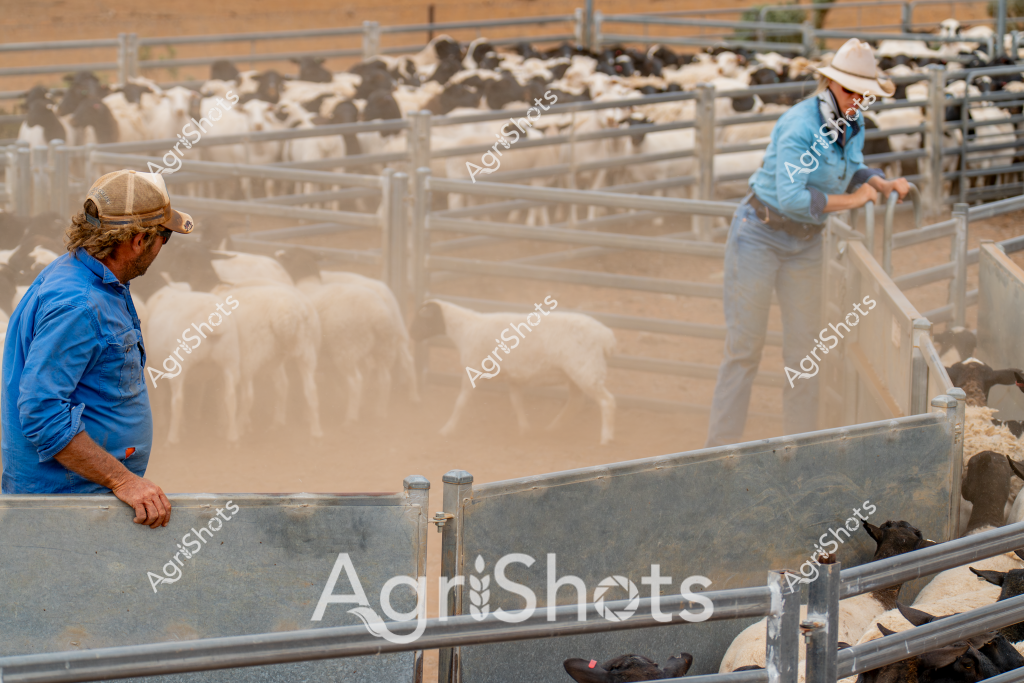
Two men working in a dusty livestock yard manage a flock of sheep, carefully guiding them through metal cattle yards under bright, arid conditions. A man in a blue long-sleeved shirt and tan cap stands near a metal gate, observing the livestock movement, while another man in a light blue shirt and white wide-brimmed hat actively manages the sheep behind metal fencing. The sheep - a mix of white and dark-colored animals - are clustered tightly in the holding pen, raising a fine cloud of dust around their woolly bodies. The landscape appears dry and sun-drenched, typical of Australian rural livestock management settings, with metal yard infrastructure providing structured containment for the animals. The workers' positioning and attentive postures suggest an experienced approach to stock handling, demonstrating the precise and methodical nature of sheep farming in challenging agricultural environments.
 Image
Image
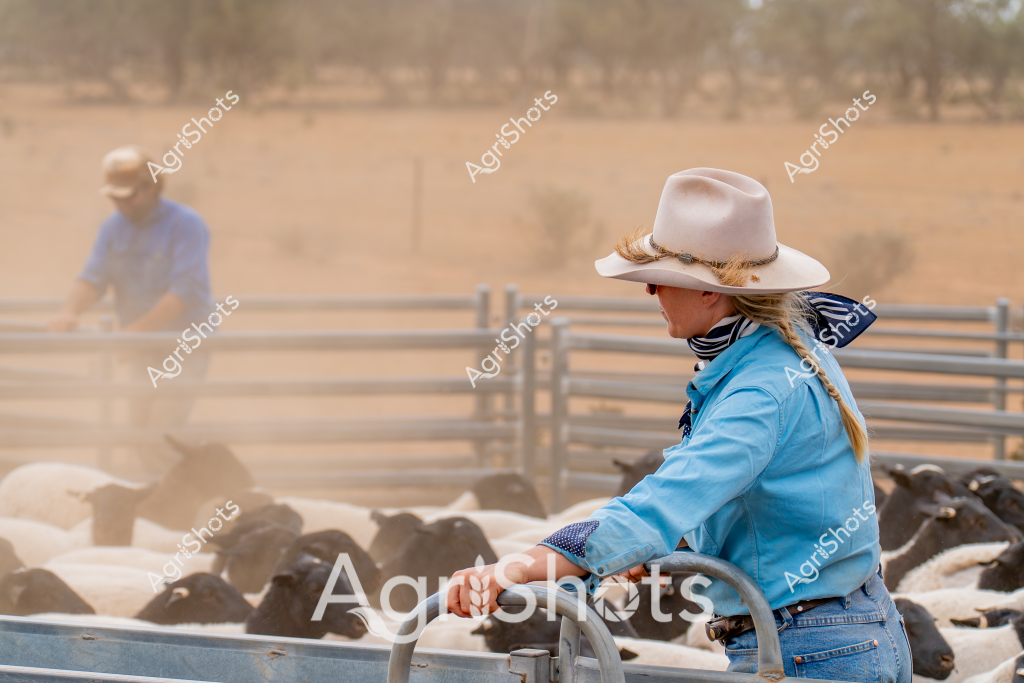
A woman stockman in a classic white wide-brimmed hat and blue jacket carefully manages a mob of black sheep within dusty metal livestock yards. Her blue work shirt and striped neck scarf indicate professional rural attire, while her positioning suggests experienced livestock handling. In the background, another worker is partially visible, also engaged in managing the animals during what appears to be a dry, sunlit mustering operation in an arid Australian paddock. The landscape is characterized by golden-brown earth, sparse vegetation, and wooden fence rails, capturing the challenging environmental conditions typical of extensive sheep farming regions. Dust rises around the sheep, highlighting the physical demands of stock management in rural Australia and showcasing the skill required to control and move livestock in harsh pastoral settings.
 Image
Image
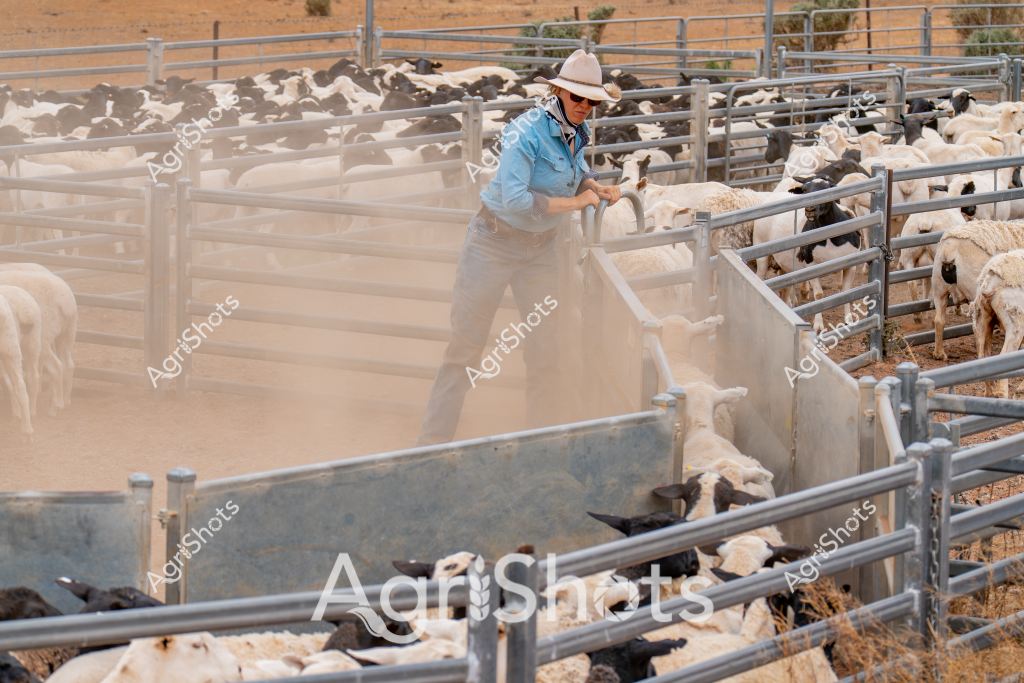
A woman stockman works diligently in a dusty sheep yard, managing a large flock of white and dark-colored sheep within metal livestock pens. Wearing a light blue work shirt, sun-protective hat, and standing amid swirling dust clouds, she carefully guides and sorts the sheep through the metal gates and sorting compartments. The arid landscape surrounding the yards suggests this is likely a rural station in one of Australia's drier agricultural regions, such as Western Queensland or Western New South Wales. Metal fencing creates a systematic grid of pens, allowing precise movement and management of the livestock herd. The woman's posture and focused movement indicate extensive experience in stock handling, demonstrating the skilled labor required in Australian sheep farming operations. Dry earth, sparse vegetation, and the metallic infrastructure of the yards create a stark, functional landscape that speaks to the challenging environments in which Australian livestock producers work.
 Image
Image
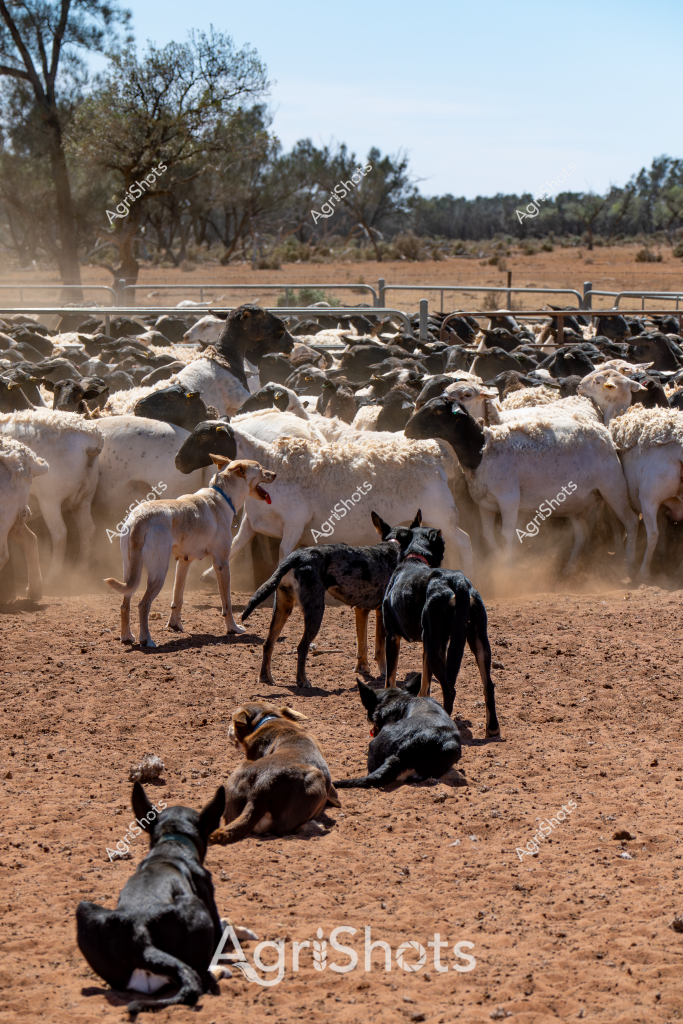
A classic Australian livestock mustering scene captures working dogs expertly managing a large flock of white and dark-colored sheep in a dusty, arid paddock. Several black and tan dogs are positioned strategically around the mob, some standing alert while others rest on the dry, reddish-brown earth. The sheep are densely packed within a metal yard fence, with trees and scrubland visible in the background, suggesting a typical Australian pastoral setting. The working dogs, likely Australian Kelpies or similar herding breeds, demonstrate the critical role of canine partners in managing livestock across vast rural properties. Their positioning shows practiced skill - some standing vigilant, others resting but ready to spring into action at a moment's notice. The dense dust cloud and tight grouping of sheep indicate active movement and controlled herding. The harsh, sunbaked landscape with its red soil and sparse vegetation is characteristic of inland Australian agricultural regions, likely in a state like Queensland or Western Australia. The scene captures the demanding nature of sheep farming in challenging environmental conditions, highlighting the resilience and expertise required in Australian pastoral agriculture.
 Image
Image
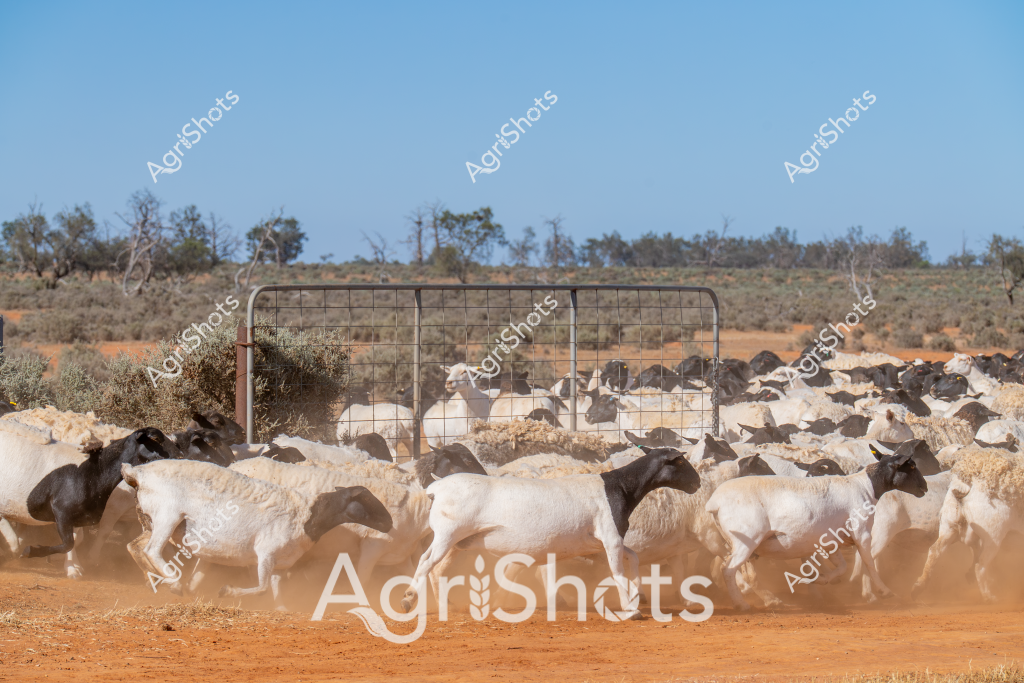
A large flock of white and black sheep crowds around a wire gate in a dusty, arid landscape typical of Australian outback stations. The mixed mob of sheep - likely a combination of Merino and potentially Black Dorper breeds - are kicking up red soil and fine dust as they move, creating a dynamic scene of rural agricultural activity. Sparse eucalyptus trees and low scrubland stretch across the background, with a clear blue sky overhead indicating a dry, hot day. The wire gate and surrounding fence suggest controlled livestock movement, a critical management technique in extensive grazing operations across remote Australian pastoral regions. The sheep's compact clustering and the surrounding landscape highlight the challenging environmental conditions of inland Australia, where careful stock management is essential for livestock survival and agricultural productivity.
 Image
Image
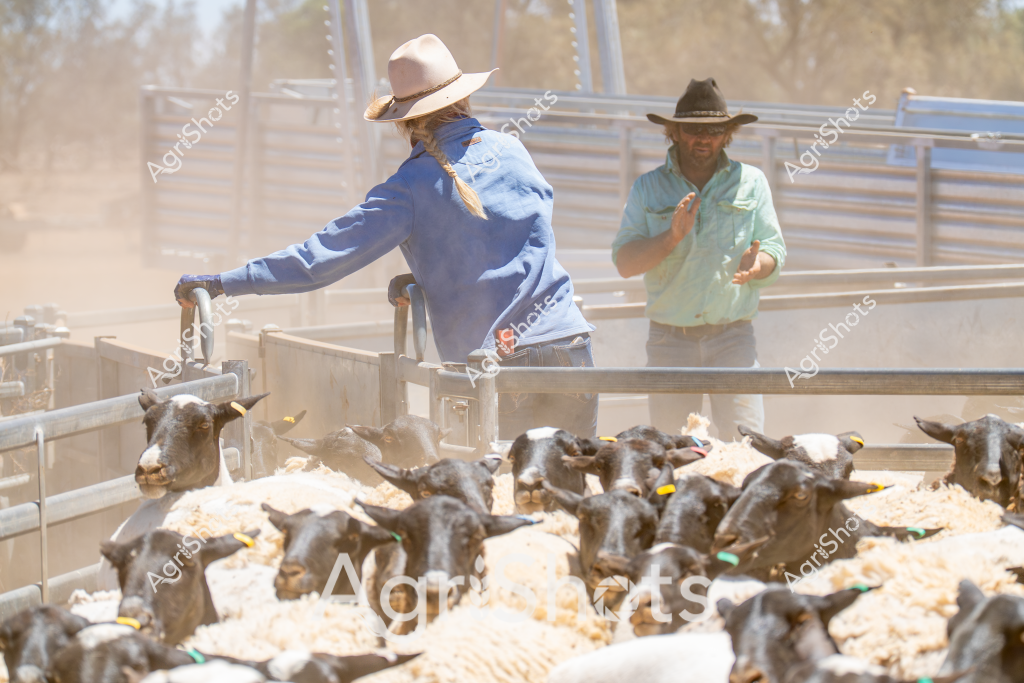
Two people manage a group of goats in a dusty livestock yard, with metal cattle panels creating a confined processing area. A woman wearing a blue jacket and wide-brimmed hat stands at one end of the pen, operating gate controls, while a man in a light green shirt stands nearby, appearing to assist with livestock movement. Multiple dark-colored goats are densely packed in the pen, their heads and bodies visible among wood shavings or straw bedding. Dust hangs in the air, suggesting active movement and handling of the animals, indicating this is likely a routine livestock management activity on an Australian farm or station. The metal yards provide a structured, professional environment for animal handling, with yellow ear tags visible on some of the goats, suggesting they are being sorted, counted, or prepared for veterinary treatment or sale.
 Image
Image
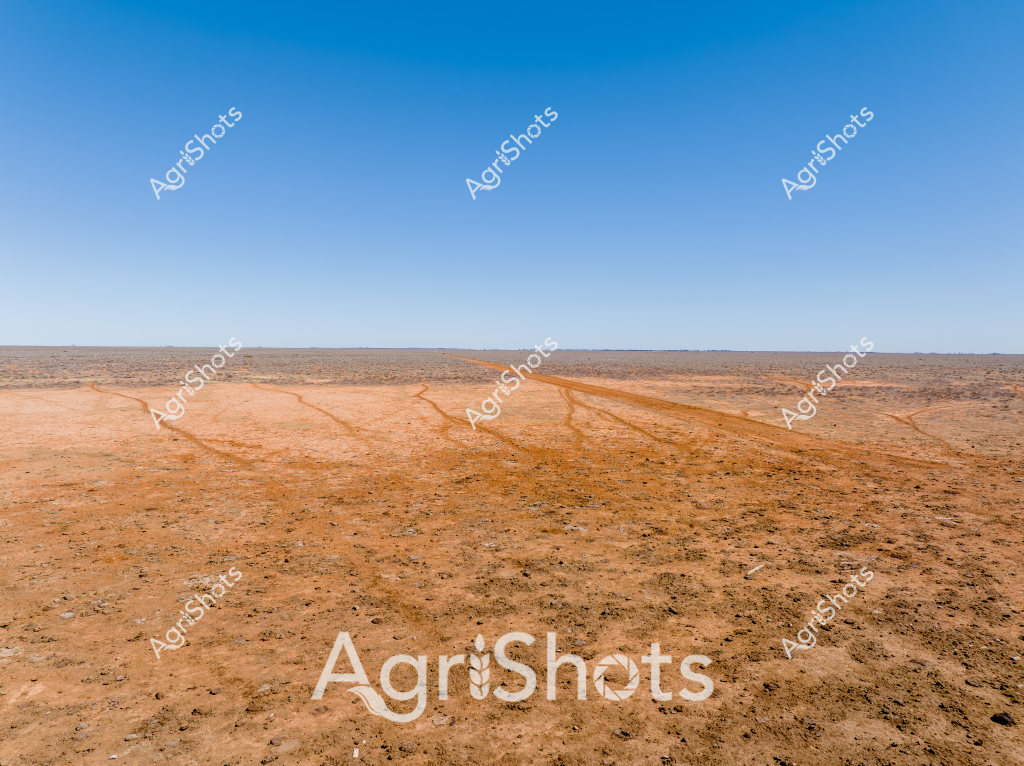
A vast, arid landscape stretches beneath an expansive blue sky, revealing a dry, reddish-orange terrain marked by faint vehicle tracks. The ground appears parched and barren, characteristic of drought-affected Australian outback regions, with rocky, sparse ground extending to a distant horizon. Multiple wheel tracks cut across the landscape, creating thin lines that snake through the dusty, sun-baked earth, suggesting recent vehicle movement across this remote and challenging terrain. The image captures the harsh environmental conditions typical of Australia's interior, where agricultural and pastoral activities must contend with extreme dry seasons and challenging landscape conditions. The stark contrast between the deep blue sky and the burnt-orange ground emphasizes the stark, unforgiving nature of this arid environment, highlighting the resilience required for survival and agricultural operations in such challenging regions.
 Image
Image
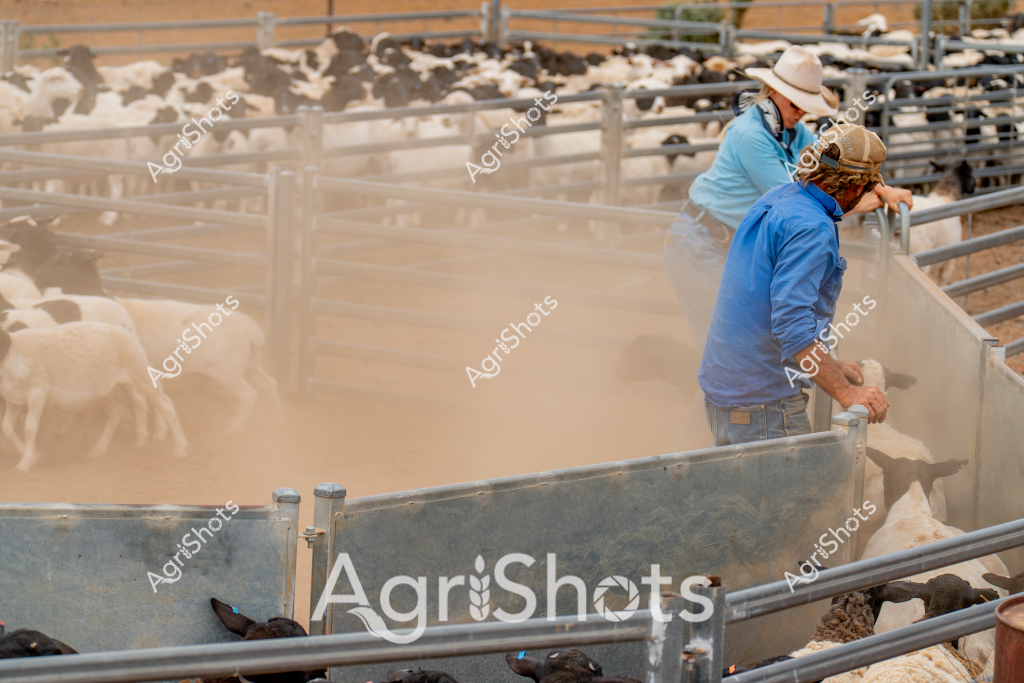
Two workers manage a dusty livestock yard, with sheep penned in metal fencing and dust swirling around their feet. A man in a white hat and light blue shirt and another worker in a blue jacket are positioned at different points of the curved metal livestock handling system, carefully controlling the movement of the sheep. The agricultural setting is characterized by metallic yard infrastructure, multiple paddocks, and a dry, dusty environment typical of Australian livestock management. Dust clouds rise around the animals, creating a hazy atmospheric effect that highlights the dynamic nature of stock handling. The workers appear focused and professional, demonstrating the skilled labor required in managing livestock in challenging rural conditions. The scene captures the essence of Australian sheep farming, with precision and careful animal management evident in every aspect of their work.
 Image
Image
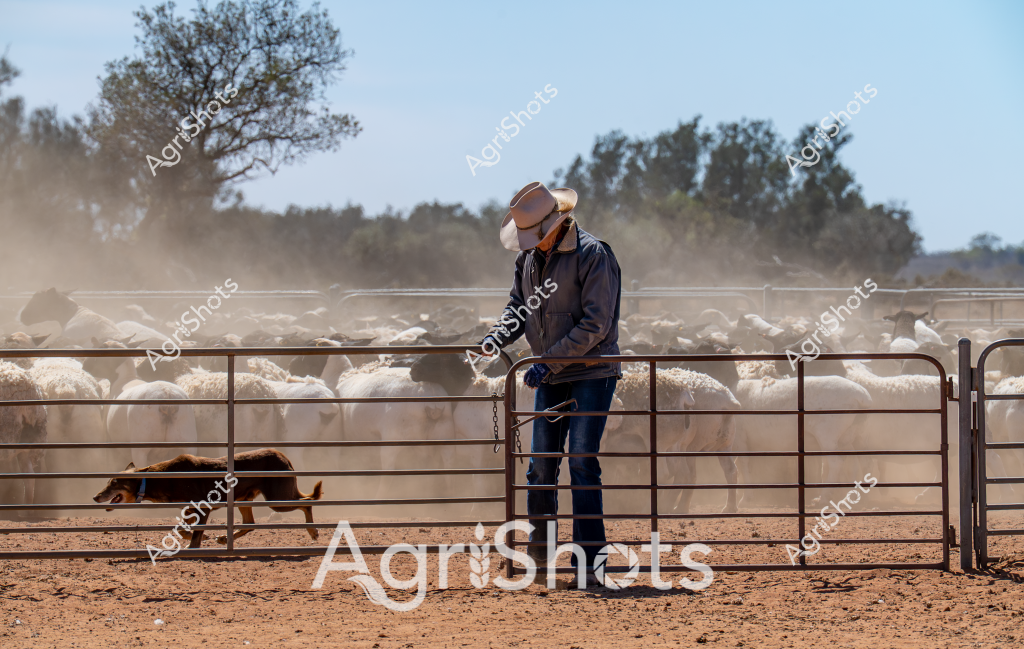
A seasoned man stockman stands amid a dusty sheep yard, carefully managing a flock of white sheep within metal livestock gates. A working dog moves purposefully near his feet, ready to assist with herding. The dry, reddish-brown paddock is surrounded by sparse trees and scrubland, creating a classic Australian rural scene with significant dust being kicked up by the densely packed sheep. The stockman wears a dark jacket, blue jeans, and a wide-brimmed hat, embodying the traditional attire of an experienced Australian livestock manager. The harsh, arid environment and tightly controlled livestock yard suggest this is likely a station or large pastoral property in one of Australia's inland regions, where careful stock management is critical to agricultural success.
 Image
Image
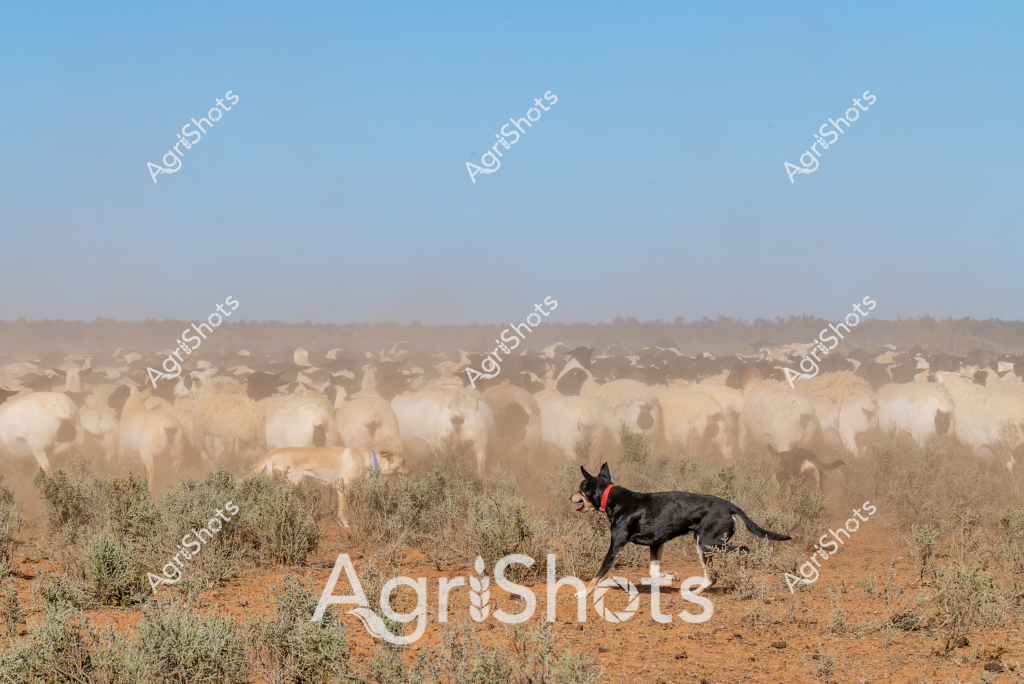
A black working dog expertly herds a large mob of light-colored goats through a dusty, arid landscape in rural Australia. The dense herd kicks up a substantial cloud of red dirt and dust, creating a hazy atmosphere across the sparse, scrubby terrain. Scattered low bushes and saltbush punctuate the reddish-orange ground, while a pale blue sky stretches overhead. The agile black dog, wearing a bright red collar, moves with precision around the goat herd, demonstrating the critical role of working dogs in managing livestock across challenging Australian outback environments. The scene captures the intense movement and dynamic interaction between the herding dog and the tightly clustered goats, highlighting the skill and partnership required in managing livestock across vast, challenging pastoral landscapes.
 Image
Image
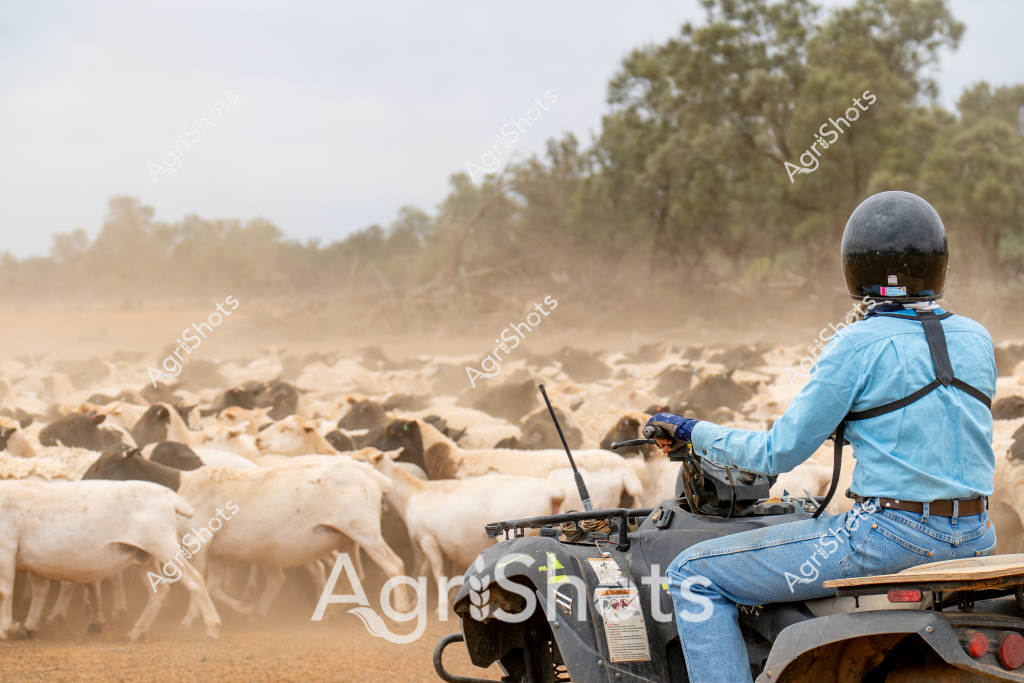
A man stockman seated on an all-terrain vehicle (ATV) manages a large herd of white and light-colored cattle in a dusty, tree-lined paddock. Wearing a blue shirt, jeans, and a protective helmet, he navigates the vehicle carefully among the densely packed livestock, raising a cloud of fine Australian dust. The cattle appear to be moving as a tight, cohesive group, suggesting an organized muster or stock movement typical of extensive pastoral operations. Trees line the distant horizon, creating a classic Australian rural landscape backdrop, while the dusty conditions hint at the dry, challenging environmental conditions often encountered in agricultural regions. The stockman's positioning on the ATV demonstrates modern livestock management techniques, replacing traditional horseback mustering with more efficient mechanized approaches. The scene captures the essence of Australian cattle farming - a blend of skill, technology, and adaptation to harsh rural environments. The dust, the dense herd, and the careful management by the stockman illustrate the demanding nature of livestock production in Australia's expansive agricultural landscapes.
 Image
Image
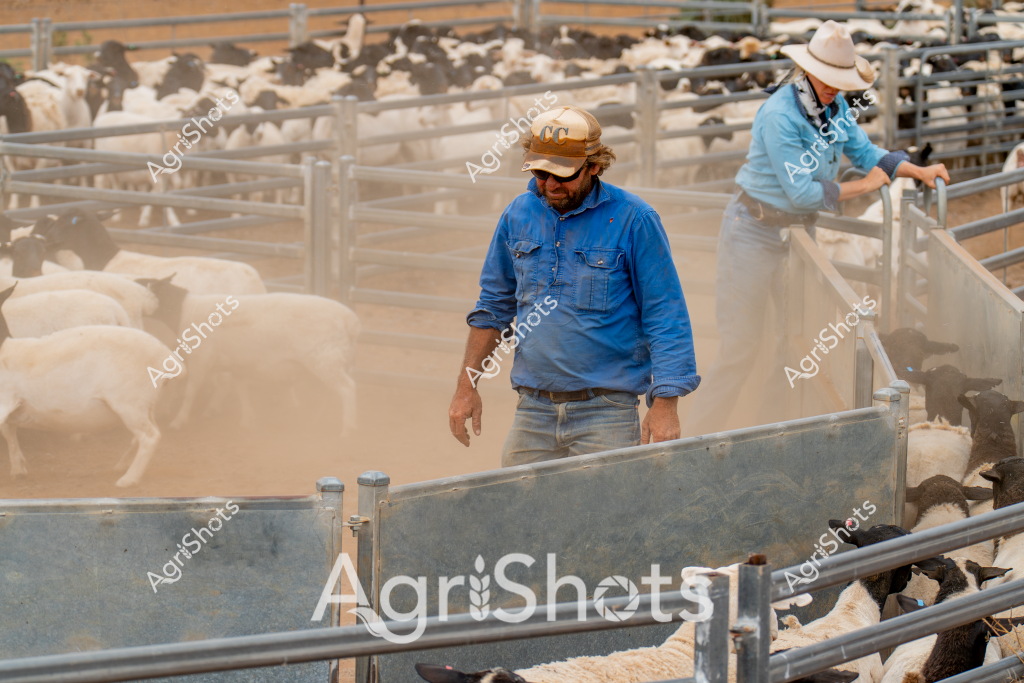
A man stockman in a blue work shirt and golden "CC" cap stands amid a dusty sheep yard, carefully monitoring a large flock of white sheep contained within metal livestock gates. Another worker in a light blue shirt and white hat can be seen in the background, managing the opposite side of the pen. The scene captures the intense concentration and precise movements required in rural livestock management, with fine dust rising around the animals and creating a soft, textured atmosphere. Multiple sheep of varying shades - white, cream, and some darker individuals - are densely packed within the metal yard infrastructure, highlighting the scale of this sheep management operation. The weathered metal gates, dust-covered ground, and focused demeanor of the stockmen convey the hardworking, pragmatic nature of Australian agricultural practices.
 Image
Image
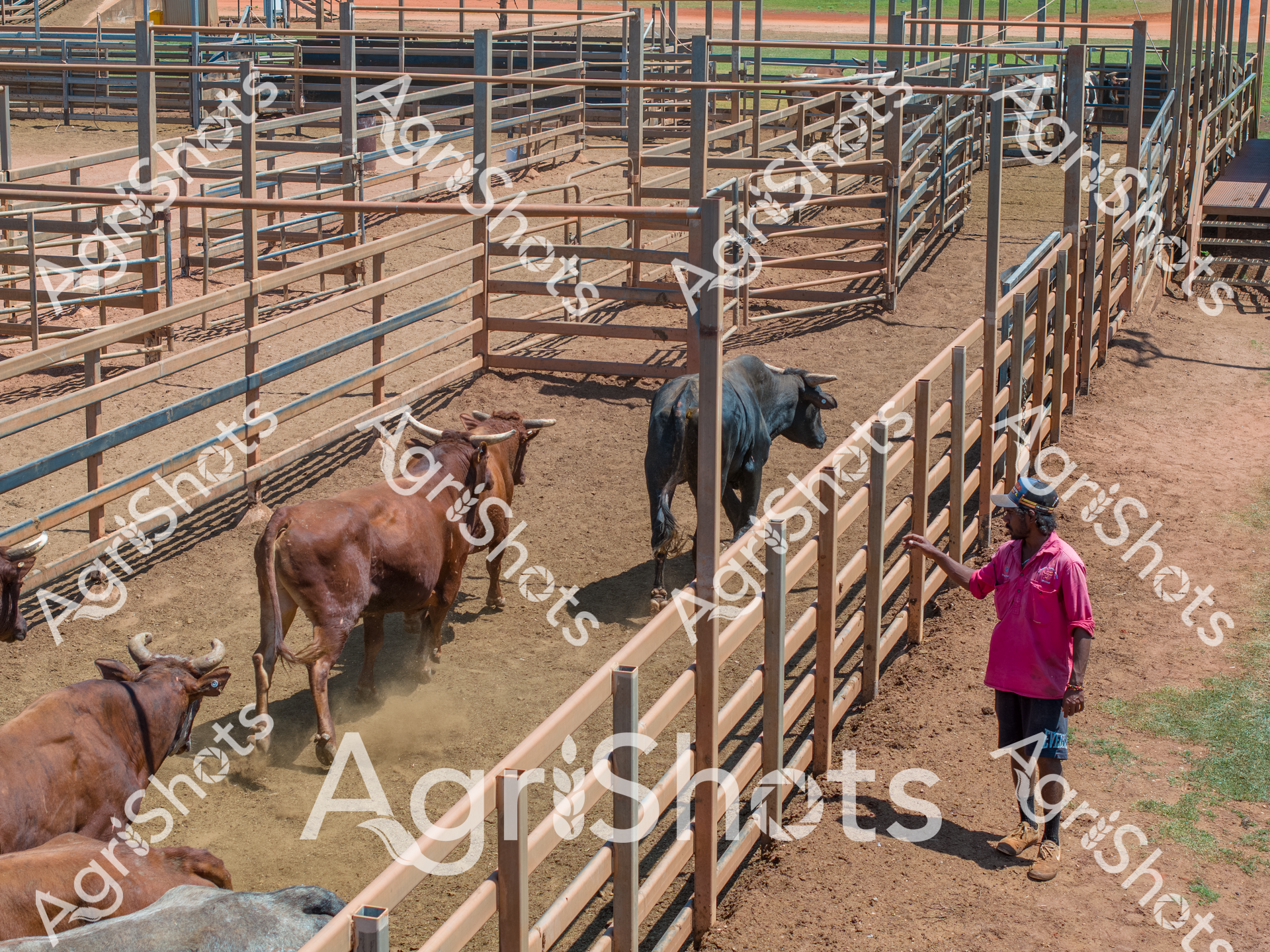
In the rugged Kimberley Region of Western Australia, cattle are carefully corralled in export yards, with a worker in a bright pink shirt overseeing the gathering. Multiple brown and black cattle stand in dusty metal pens, suggesting a spring cattle management operation typical of station life in WA. The scene captures the essential process of cattle counting and quarantine preparation for potential export.
 Image
Image
A thundering Claas header harvests golden canola in the sun-drenched Riverina region of New South Wales, kicking up a dramatic plume of dust across the dry summer landscape. The sophisticated agricultural machine, gleaming in green and silver, moves methodically through mature crop rows, its advanced Knuckey front attachment precisely cutting and gathering the valuable seed crop. Eucalyptus woodland frames the background, creating a quintessential Australian agricultural panorama of undulating golden stubble and silvery-green bush. The header's precision technology captures the modern agricultural approach - efficient, data-driven farming that transforms vast paddocks into economic opportunity with each methodical pass. Swirling dust clouds highlight the intense heat and mechanical power of harvest season, where weeks of careful crop management culminate in critical grain collection. The scene epitomizes Australian broadacre farming - a perfect marriage of technological innovation, environmental adaptation, and agricultural skill.
 Image
Image
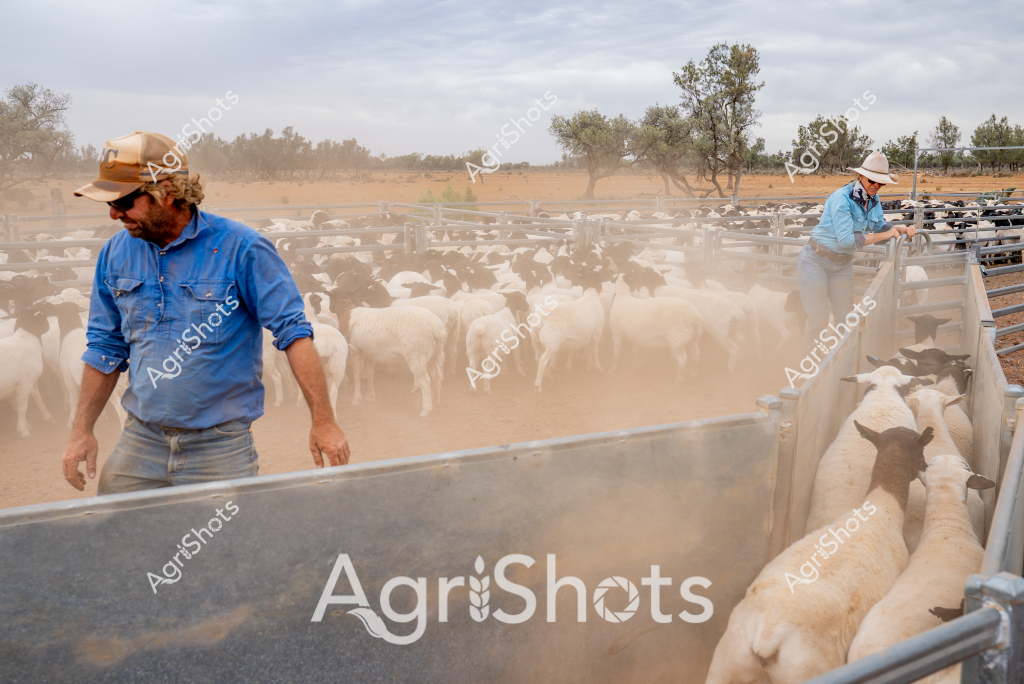
Two men managing a large flock of white sheep in a dusty, arid paddock with sparse trees on the horizon. A man in a blue work shirt and tan cap stands near a metal livestock yard, carefully guiding the sheep through the gates while another man in a light blue shirt and white hat works the opposite side of the yard. A dense cloud of ochre-colored dust rises around the animals, creating a dramatic atmosphere that highlights the challenging environmental conditions. The sheep appear to be tightly packed, moving methodically through the narrow metal race, suggesting a routine mustering or livestock management operation typical of Australian agricultural practices. The landscape looks dry and sparse, with scattered gum trees in the background indicating this is likely an inland pastoral region experiencing drought-like conditions. The workers' robust clothing and steady movements demonstrate the skilled and physically demanding nature of sheep farming in rural Australia.
 Image
Image
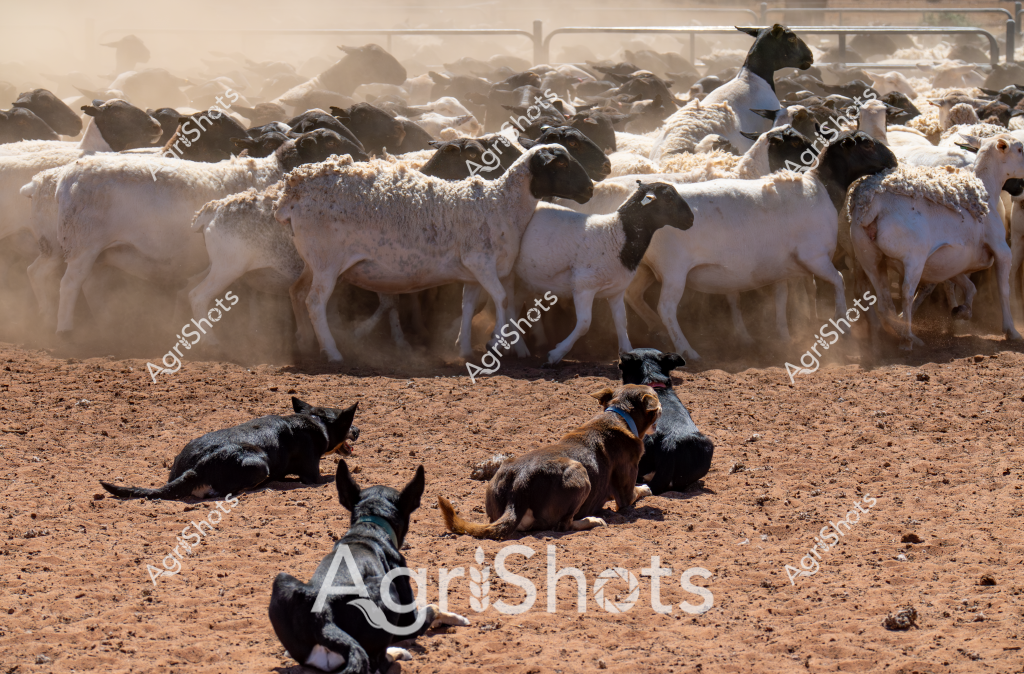
A large flock of white and black Dorper sheep stands tightly packed in a dusty livestock yard, kicking up a haze of dry earth in the background. In the foreground, several black working dogs lie resting on the reddish-brown dirt, cooling off after what appears to be an intense mustering session. The sheep, primarily white with black heads and markings typical of Dorper breed, are clustered together near metal yard fencing, creating a dense mass of woolly bodies. The scene captures the harsh conditions of an Australian pastoral setting, likely in a dry inland region such as Queensland or Western New South Wales. The ground is parched and cracked, indicating dry seasonal conditions, while the dust cloud suggests intense heat and arid environmental conditions. The working dogs, looking exhausted but alert, demonstrate the critical role of canine helpers in managing large livestock herds. The image powerfully illustrates the challenging environment of Australian sheep farming, where livestock management requires resilience and specialized skills. The tight grouping of the Dorper sheep and the strategically positioned working dogs showcase the coordinated effort required to handle livestock in demanding outback conditions.
 Image
Image
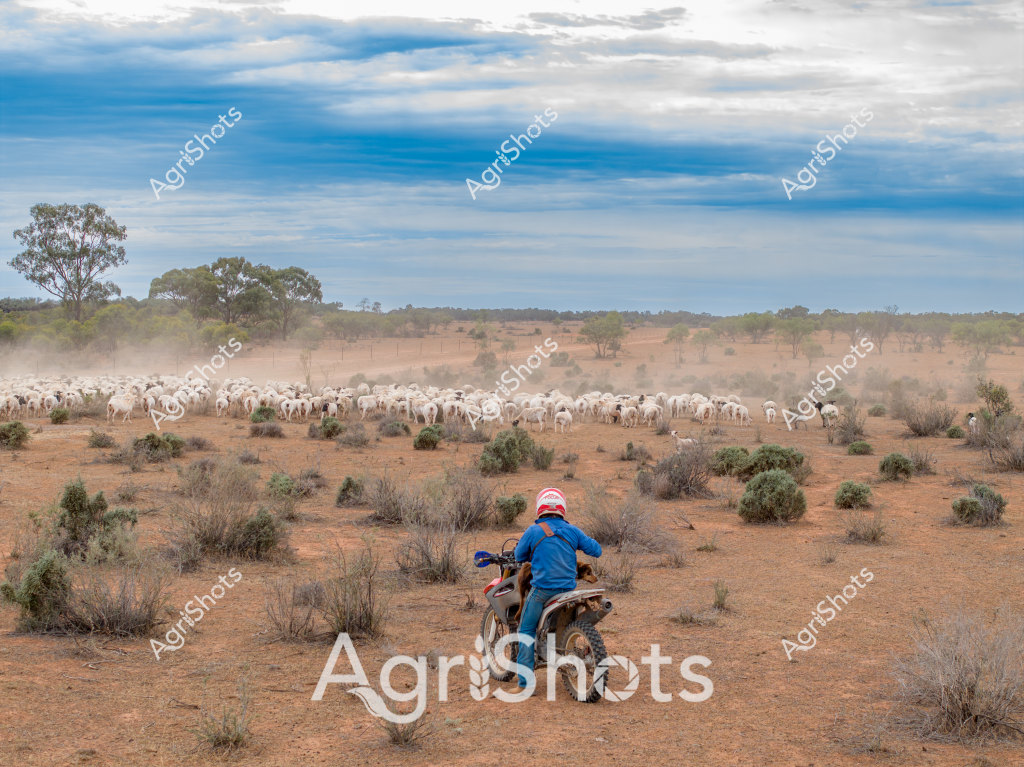
A motorcyclist herds a large flock of white sheep across a dry, expansive Australian outback landscape. The rider, wearing a blue jacket and distinctive helmet, navigates the dusty terrain on a trail bike, expertly guiding the sheep through sparse scrubland with scattered native bushes. The landscape is characterized by reddish-brown earth, low saltbush and bluebush shrubs, and eucalyptus trees dotting the distant horizon. Pale blue skies with soft cloud formations provide a dramatic backdrop to the pastoral scene, highlighting the challenging environment of inland Australia. A slight dust cloud rises from the sheep's movement, emphasizing the arid conditions and the dynamic nature of livestock mustering in remote agricultural regions. The image captures the quintessential Australian rural experience of managing livestock across vast, unforgiving landscapes.
 Image
Image
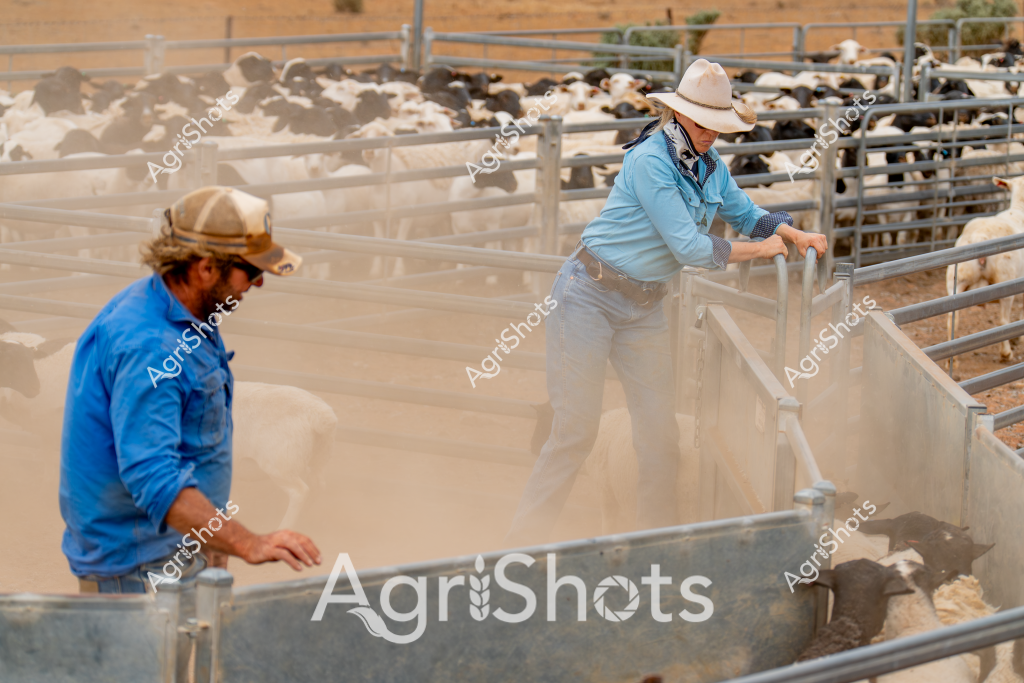
Two workers manage a dusty livestock holding yard in what appears to be an arid Australian agricultural setting. A woman in a blue long-sleeved shirt and light-colored wide-brimmed hat operates a metal gate in a livestock pen, while a man in a blue shirt and hat stands nearby, both working together to manage a large group of sheep or goats visible in the background behind metal livestock fencing. The environment is dry and sandy, with a pale brown landscape suggesting a drought-affected or inland region, potentially in Queensland or Western Australia. Dust rises around the workers, indicating active movement and handling of livestock in challenging environmental conditions. The workers' sturdy clothing - long-sleeved shirts, wide-brimmed hats, and practical work pants - reflects the standard attire for Australian rural agricultural workers managing livestock in harsh conditions.
 Image
Image
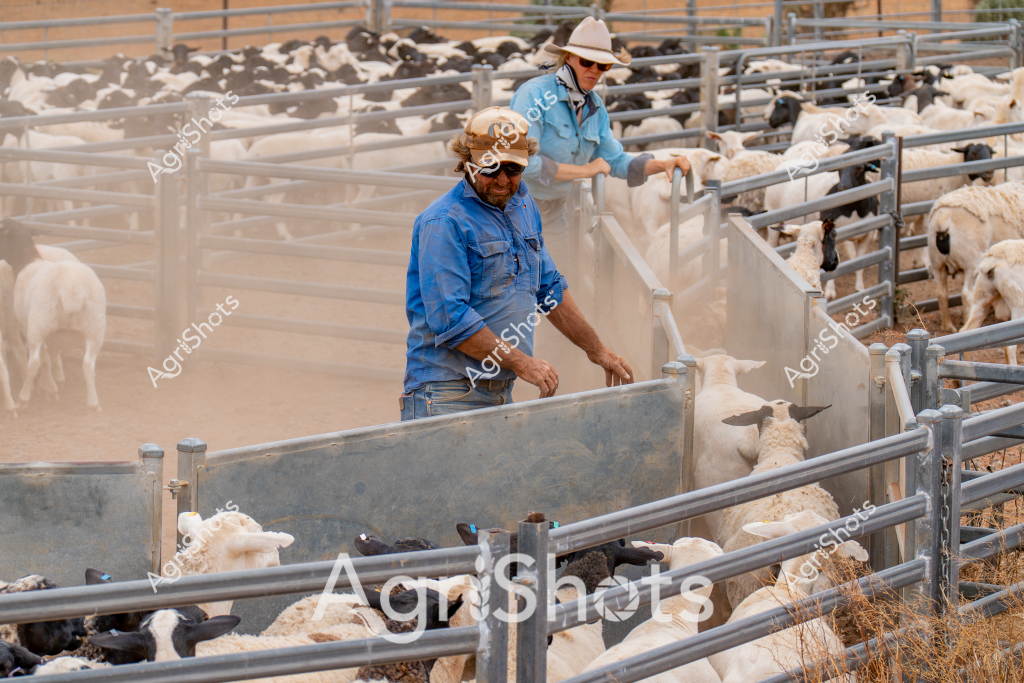
Two men working in a dusty sheep yard managing a flock of white and black sheep. One man in a blue work shirt stands in the foreground, carefully guiding sheep through metal livestock gates and fencing. Another man in a lighter blue shirt is positioned further back, helping to direct the movement of the animals. The yard appears to be a typical Australian farm setting, with dry ground and metal infrastructure designed for efficient livestock handling. Dust rises around the animals and workers, suggesting active movement and the challenging environmental conditions of rural agricultural operations. The workers wear wide-brimmed hats and sunglasses, standard protective gear for managing livestock in harsh Australian conditions. The metal yard system with multiple gates and sections allows for precise control and sorting of the sheep herd.
 Image
Image
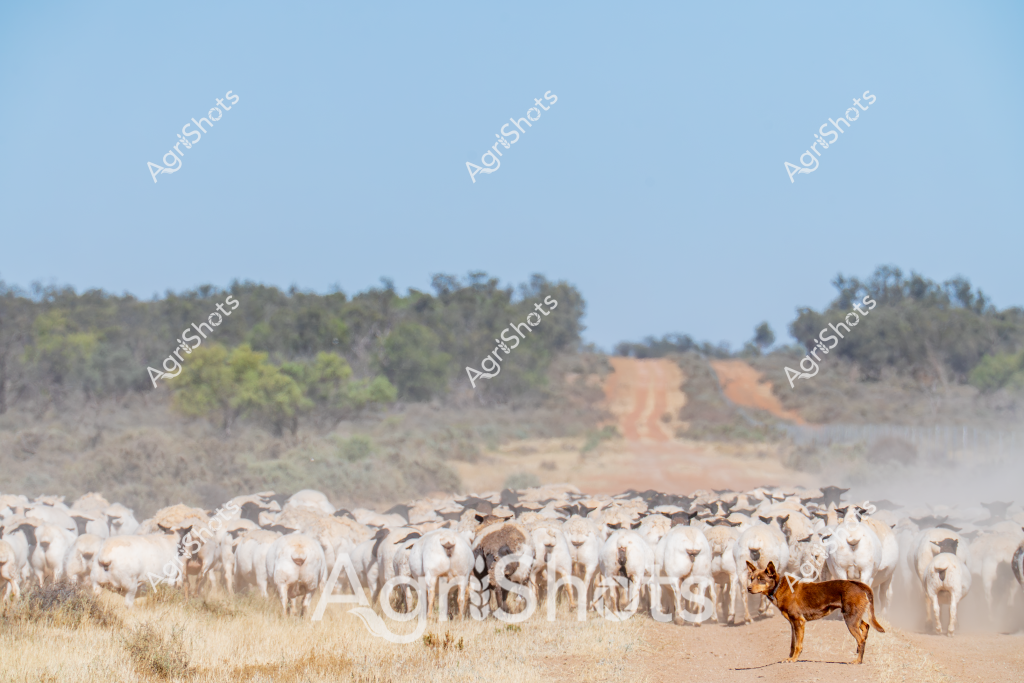
A dingo stands alert on a dusty rural track, watching over a large flock of white sheep being herded across an arid Australian landscape. The compact, reddish-brown canine appears vigilant and focused, positioned to the side of the sheep mob as they raise a cloud of fine dust along the dirt road. In the background, sparse eucalyptus trees and scrubland stretch toward a distant treeline under a clear blue sky, typical of an Australian pastoral setting. The image captures the essential working relationship between livestock guardian dogs and sheep herds, highlighting the dog's crucial role in managing and protecting the flock across vast, open grazing lands. The scene represents the rugged and challenging environment of Australian livestock farming, where animals and working dogs must be resilient and adaptable to survive in harsh conditions.
 Image
Image
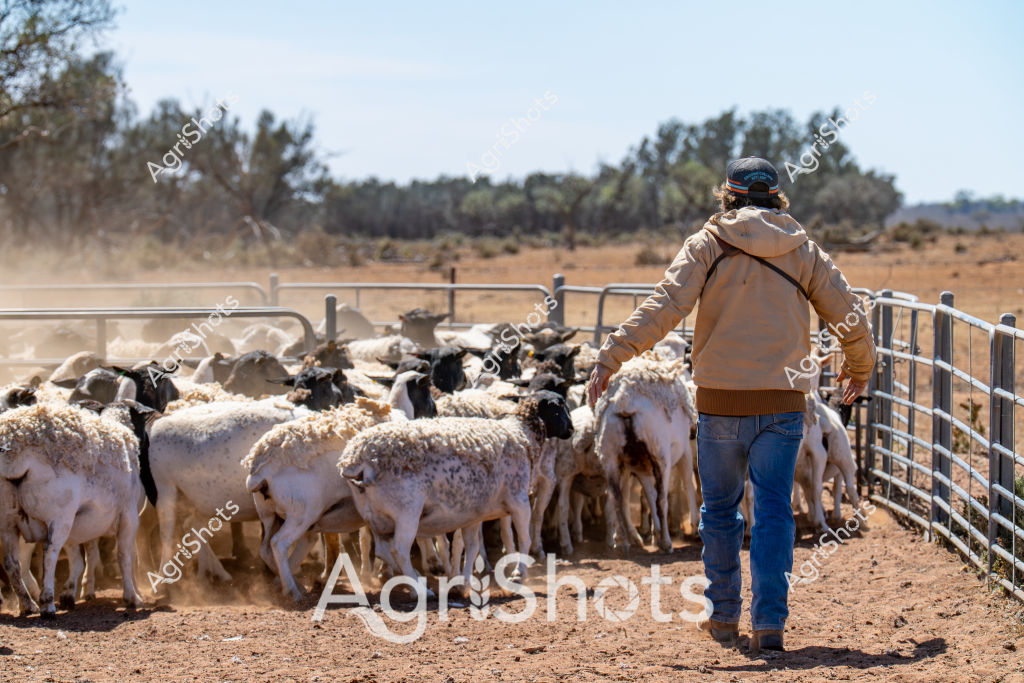
A skilled person managing a small flock of merino sheep through a dusty yards paddock in rural Australia. The stockman, wearing a tan jacket, blue jeans, and a knit cap, walks alongside the densely packed group of white and black sheep within metal livestock fencing. The surrounding landscape shows a dry, arid environment with sparse eucalyptus trees and golden-brown ground, typical of an Australian pastoral setting. Dust rises around the sheep's hooves as they move together, suggesting active mustering or yard management activities. The scene captures the everyday work of livestock management in a challenging rural landscape, highlighting the close relationship between farmers and their animals. The image reflects the resilience and practical skills required in Australian sheep farming, where careful handling and movement of livestock is critical to successful agricultural operations. The tight formation of the merino sheep and the controlled movement by the stockman demonstrate the expertise needed in managing livestock in harsh environmental conditions.
 Image
Image
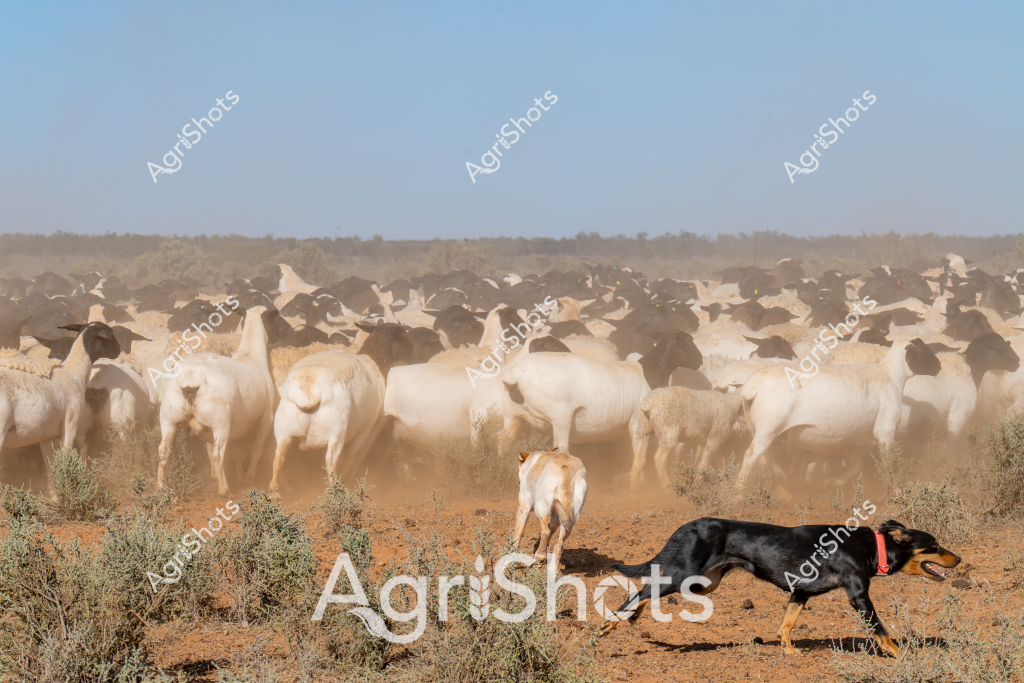
A large herd of light-colored sheep kicks up dust in a dry, arid landscape, with two working dogs herding the mob across a sparse, reddish-brown paddock. A black and tan dog runs alongside the herd, expertly guiding the sheep's movement with precision and skill. A lighter-colored dog stands slightly apart, also part of the mustering effort. The background reveals a line of trees and scrubby vegetation, creating a typical Australian outback pastoral scene. Dusty conditions and the tight grouping of the sheep suggest an experienced team of working dogs and likely a stockman managing this livestock movement across a challenging rural terrain. The image captures the essence of Australian sheep farming, highlighting the critical role of working dogs in managing large herds across expansive, dry landscapes.
 Image
Image
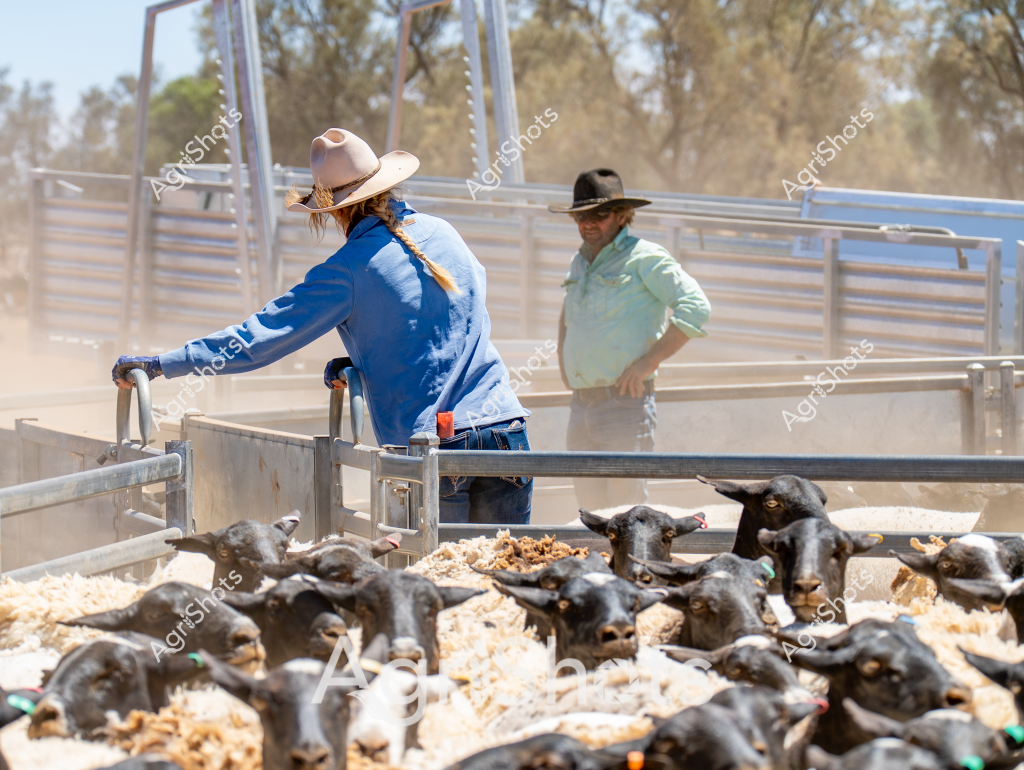
Two workers manage a group of black goats in a dusty livestock yard, with metal cattle panels and handling facilities surrounding them. A woman in a blue jacket and wide-brimmed hat operates the gate control, while a man in a light green shirt stands nearby observing the livestock. Multiple young black goats are clustered on straw bedding within the metal yard, some with colored ear tags indicating they are part of a managed herd. The scene is dry and sun-drenched, with trees and yard infrastructure visible in the background, suggesting this is a typical agricultural livestock management setting in rural Australia. Dust hangs in the air, highlighting the movement and activity of the goat handling process. The workers' attire - wide-brimmed hats, long-sleeved shirts, and practical work clothing - indicates professional agricultural practice and protection from the harsh Australian sun.
 Image
Image
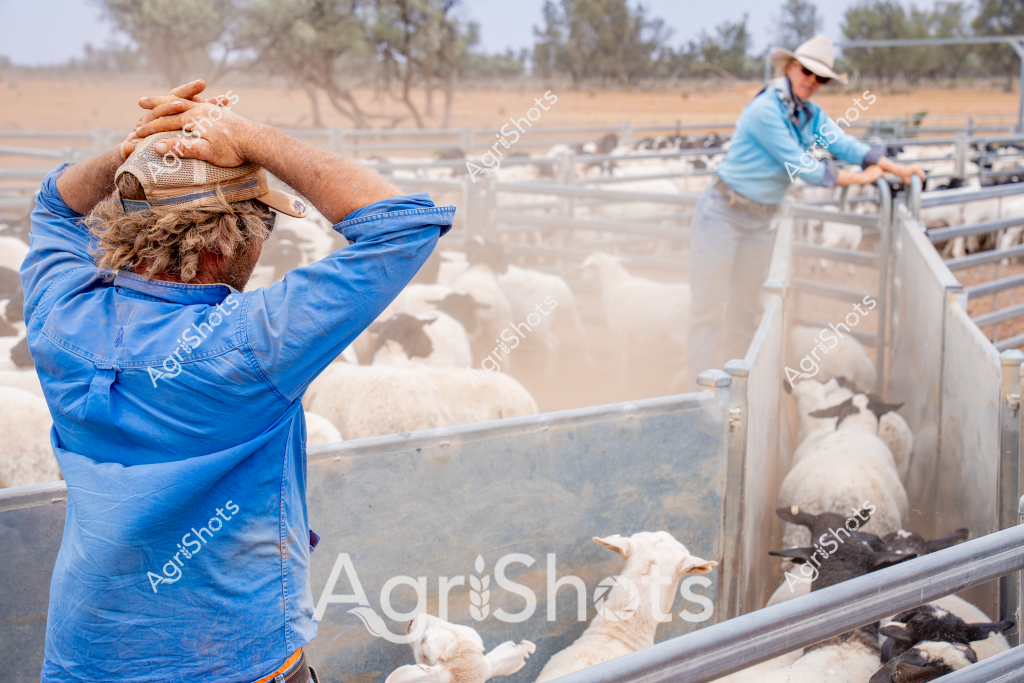
A woman in a blue shirt and wide-brimmed sun hat works in a dusty sheep yard, managing a flock of white sheep during what appears to be a warm, dry day. In the foreground, another worker wearing blue stands with hands clasped behind their head, suggesting physical exertion or momentary fatigue during the livestock management process. The metal livestock yards are filled with sheep, creating a cloud of dust as they move and shuffle within the confined space. Sparse trees and arid landscape are visible in the background, indicating this is likely a rural Australian farm setting during a dry season. The scene captures the demanding physical work of sheep farming, with workers managing livestock in challenging environmental conditions. The blue work shirts, wide-brimmed hats, and metal yard infrastructure are typical of Australian agricultural practices, highlighting the practical and resilient nature of rural farm work.