About this image
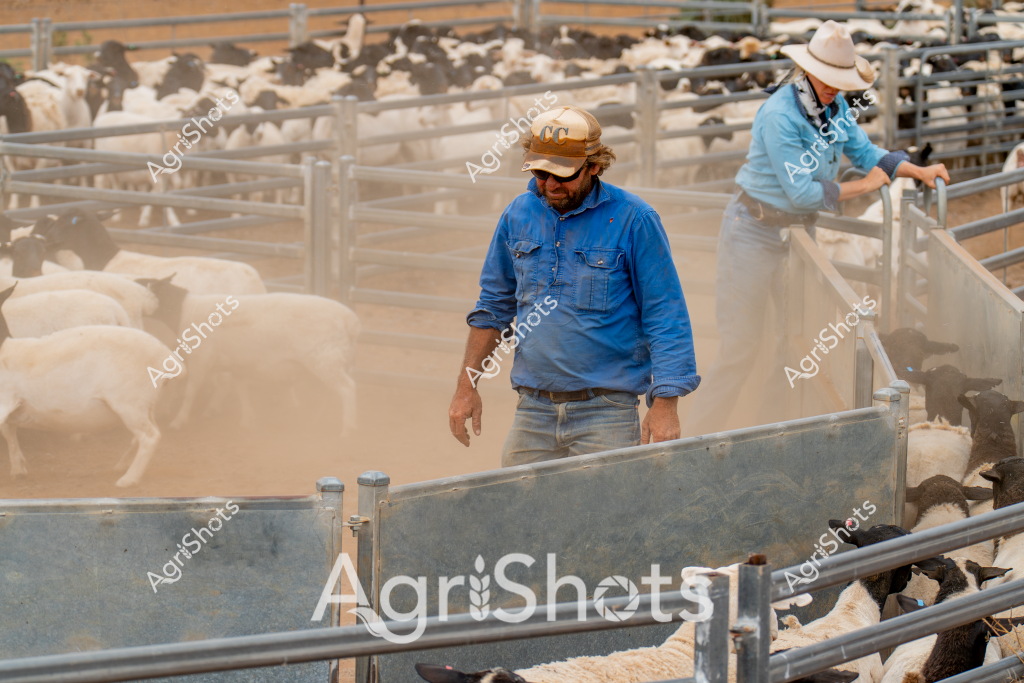
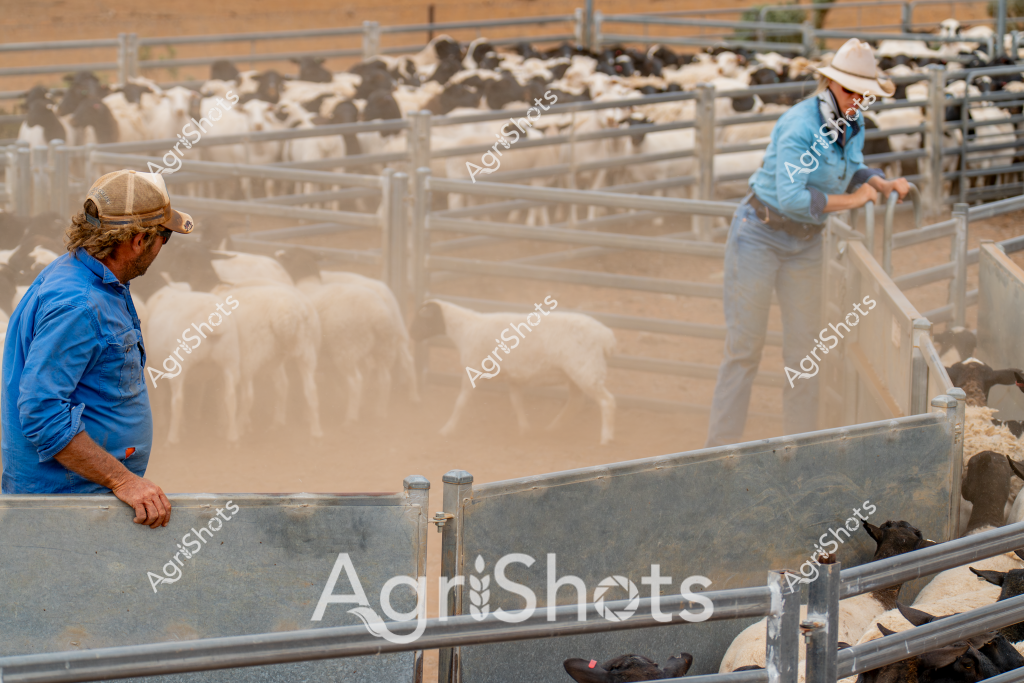
A man stockman in a blue work shirt and golden "CC" cap stands amid a dusty sheep yard, carefully monitoring a large flock of white sheep contained within metal livestock gates. Another worker in a light blue shirt and white hat can be seen in the background, managing the opposite side of the pen. The scene captures the intense concentration and precise movements required in rural livestock management, with fine dust rising around the animals and creating a soft, textured atmosphere. Multiple sheep of varying shades - white, cream, and some darker individuals - are densely packed within the metal yard infrastructure, highlighting the scale of this sheep management operation. The weathered metal gates, dust-covered ground, and focused demeanor of the stockmen convey the hardworking, pragmatic nature of Australian agricultural practices.
Similar media
 Image
Image
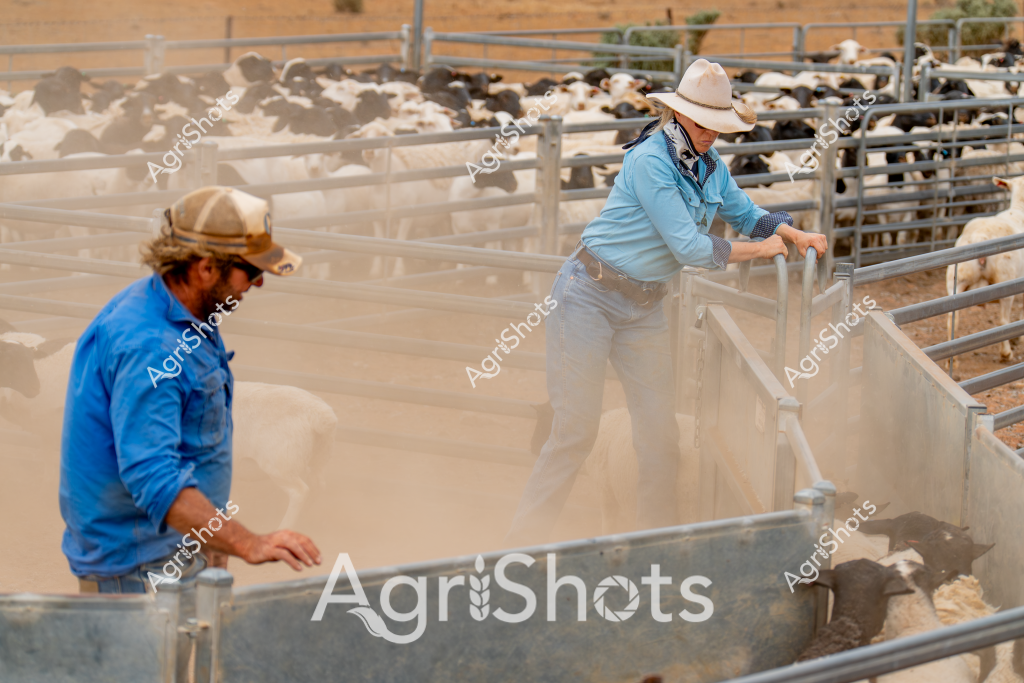
Two workers manage a dusty livestock holding yard in what appears to be an arid Australian agricultural setting. A woman in a blue long-sleeved shirt and light-colored wide-brimmed hat operates a metal gate in a livestock pen, while a man in a blue shirt and hat stands nearby, both working together to manage a large group of sheep or goats visible in the background behind metal livestock fencing. The environment is dry and sandy, with a pale brown landscape suggesting a drought-affected or inland region, potentially in Queensland or Western Australia. Dust rises around the workers, indicating active movement and handling of livestock in challenging environmental conditions. The workers' sturdy clothing - long-sleeved shirts, wide-brimmed hats, and practical work pants - reflects the standard attire for Australian rural agricultural workers managing livestock in harsh conditions.
 Image
Image
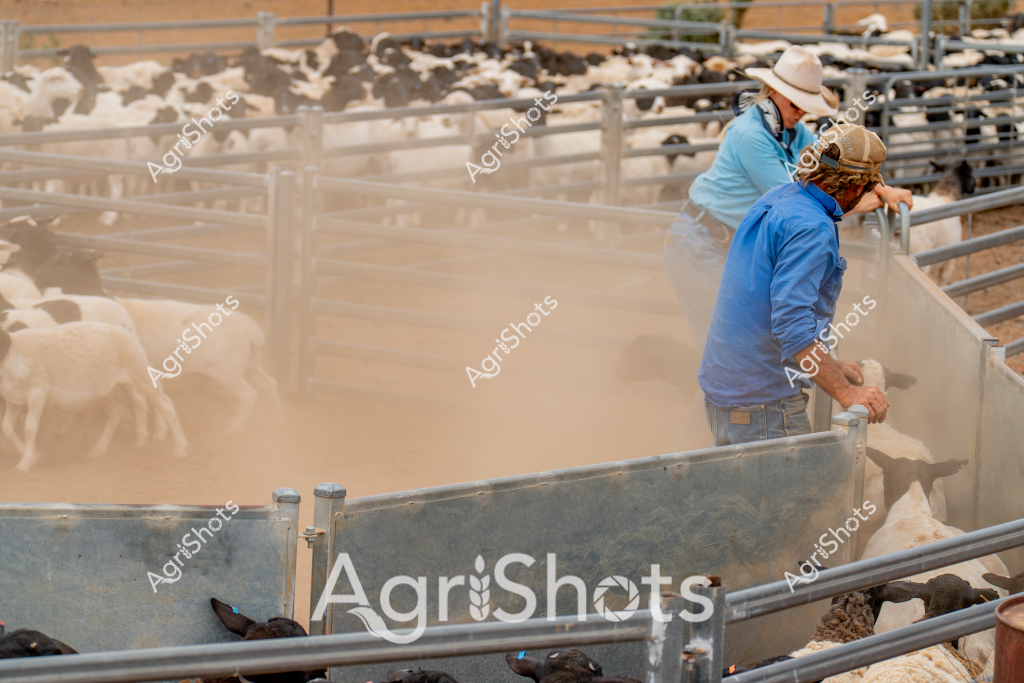
Two workers manage a dusty livestock yard, with sheep penned in metal fencing and dust swirling around their feet. A man in a white hat and light blue shirt and another worker in a blue jacket are positioned at different points of the curved metal livestock handling system, carefully controlling the movement of the sheep. The agricultural setting is characterized by metallic yard infrastructure, multiple paddocks, and a dry, dusty environment typical of Australian livestock management. Dust clouds rise around the animals, creating a hazy atmospheric effect that highlights the dynamic nature of stock handling. The workers appear focused and professional, demonstrating the skilled labor required in managing livestock in challenging rural conditions. The scene captures the essence of Australian sheep farming, with precision and careful animal management evident in every aspect of their work.
 Image
Image
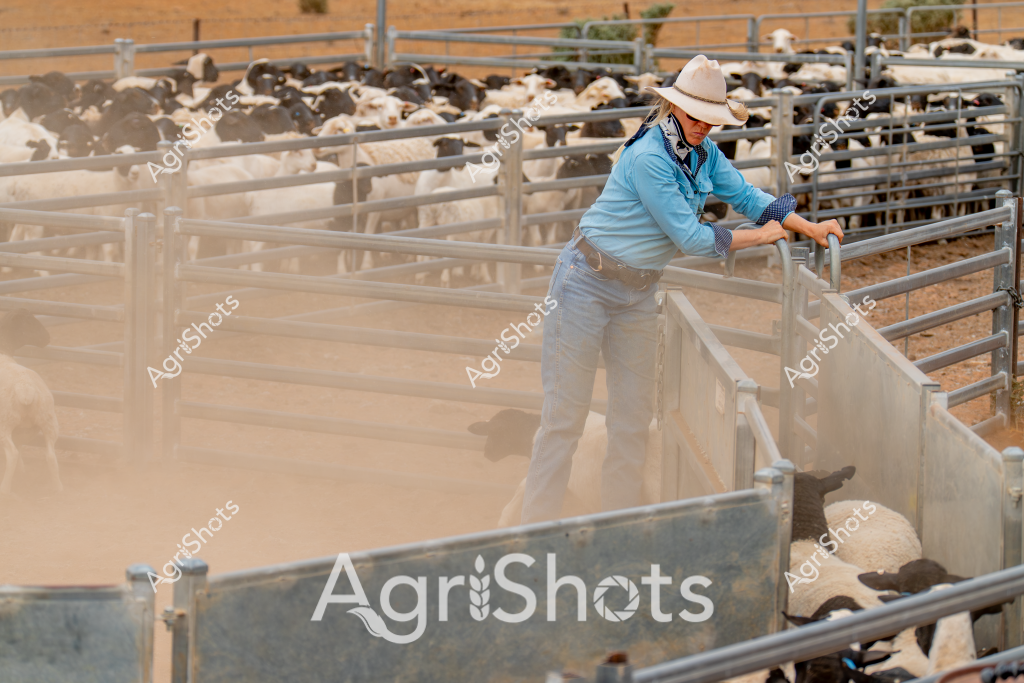
A woman stockman works diligently in a dusty livestock yard, managing a large herd of sheep enclosed in metal panel yards. Wearing a light blue long-sleeved shirt, faded blue jeans, and a wide-brimmed cream-colored hat, she leans over the metal gate, carefully monitoring the flock. Multiple sheep - a mix of white and dark-colored animals - are crowded into the connected yard sections, creating a dense cluster of woolly bodies against the dry, sandy ground. The environment suggests an arid region, likely in the Australian outback or a dry pastoral area, with harsh sunlight casting sharp shadows and creating a hazy, dust-filled atmosphere around the livestock handling area. Metal livestock yards with sturdy vertical panels provide structured containment, demonstrating professional stock management techniques typical of Australian sheep farming operations. The scene captures the precise, methodical work of livestock management, with the stockman positioned centrally in the frame, demonstrating the critical role of skilled workers in managing large sheep herds in challenging agricultural environments.
 Image
Image
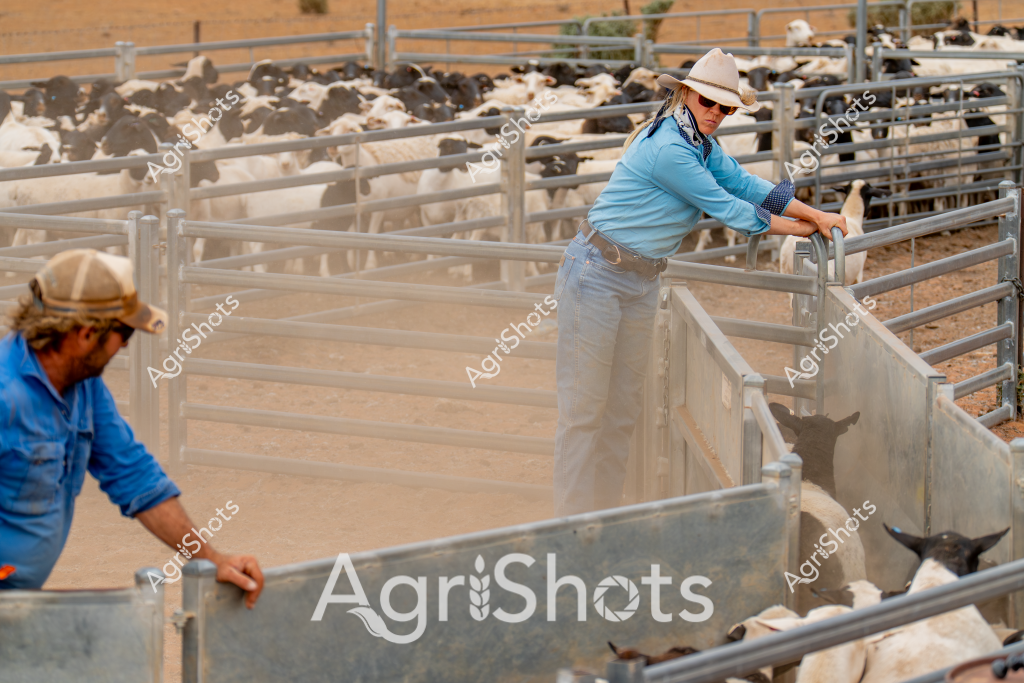
Two men working in a dusty livestock yard manage a flock of sheep, carefully guiding them through metal cattle yards under bright, arid conditions. A man in a blue long-sleeved shirt and tan cap stands near a metal gate, observing the livestock movement, while another man in a light blue shirt and white wide-brimmed hat actively manages the sheep behind metal fencing. The sheep - a mix of white and dark-colored animals - are clustered tightly in the holding pen, raising a fine cloud of dust around their woolly bodies. The landscape appears dry and sun-drenched, typical of Australian rural livestock management settings, with metal yard infrastructure providing structured containment for the animals. The workers' positioning and attentive postures suggest an experienced approach to stock handling, demonstrating the precise and methodical nature of sheep farming in challenging agricultural environments.
 Image
Image
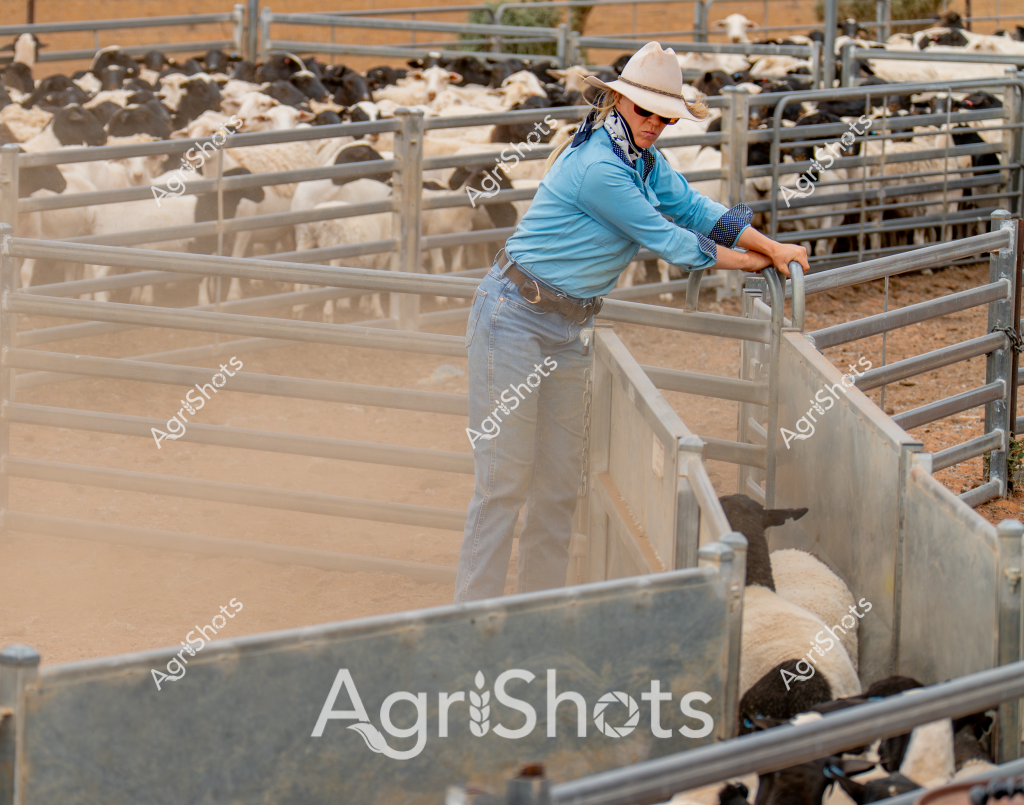
A woman stockman in a blue long-sleeved shirt and white cowboy hat carefully manages a mob of sheep in a metal livestock yard. The dusty, arid landscape surrounds the metal livestock handling facility, with multiple pens filled with white and dark-colored sheep. She leans over the metal gate, positioning herself to direct the movement of the animals through the narrow chute. Her posture suggests expert control and years of experience working with livestock in what appears to be a dry, rural Australian setting. The tight metal fencing, sunlight, and careful positioning of the stockwoman highlight the precision and skill required in managing sheep in challenging agricultural environments.
 Image
Image
A woman stockman in a blue long-sleeved shirt, white hat, and sunglasses works in a dry, dusty livestock yard managing a herd of goats. She leans against a metal gate in a carefully structured livestock pen, with multiple metal fencing sections visible. Another worker in a blue shirt can be seen partially in the foreground, also engaged in managing the goat herd. The landscape appears arid, with sandy ground and sparse vegetation, typical of an Australian pastoral setting. Multiple white and light-colored goats are contained within the metal yard sections, suggesting this is a professional livestock management operation in a rural, potentially remote region of Australia. The scene captures the practical, focused work of livestock management, with the stockwoman's professional posture and careful attention to the animals demonstrating the skilled nature of agricultural work. The metal infrastructure, protective clothing, and controlled environment highlight the systematic approach to animal handling in challenging agricultural landscapes.
 Image
Image
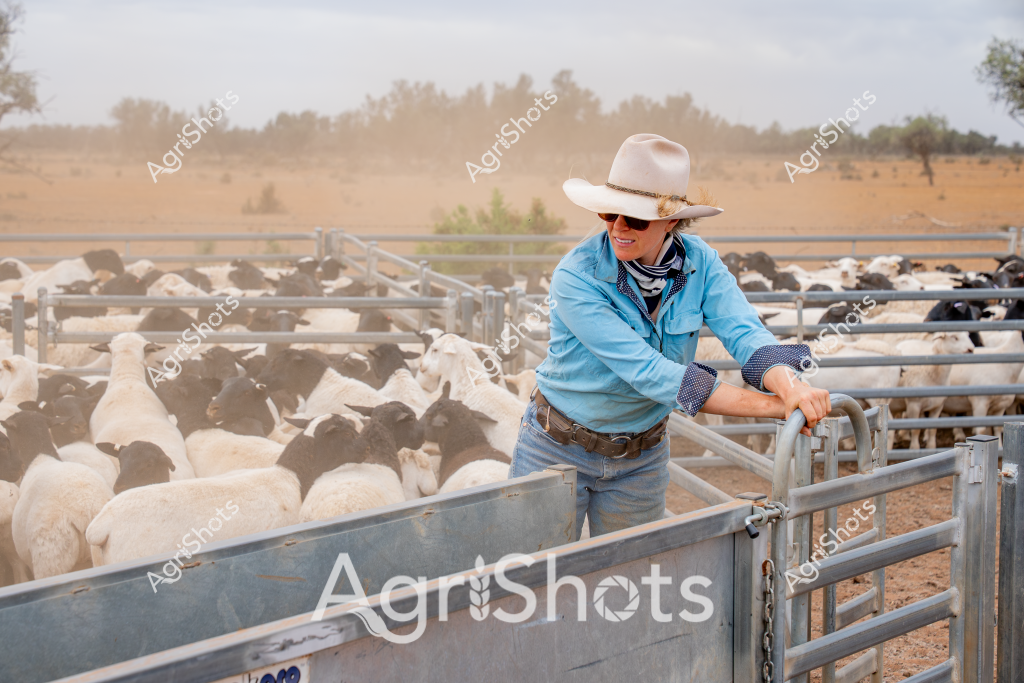
A woman stockman in a blue work shirt and wide-brimmed white hat leans against a metal livestock gate, carefully monitoring a large flock of sheep in a dusty paddock. The sheep - a mix of white and black woolly animals - are densely packed within metal yard panels, creating a textured landscape of livestock. The background reveals a dry, arid Australian rural landscape with scattered trees and golden-brown earth, suggesting challenging drought conditions. Her blue shirt, sunglasses, and relaxed posture indicate an experienced agricultural worker comfortable in the harsh rural environment. Dust hangs in the air, adding a sense of atmospheric texture to the scene and highlighting the challenging conditions of outback sheep farming. The metal livestock gates and fencing demonstrate the structured management of the agricultural property.
 Image
Image
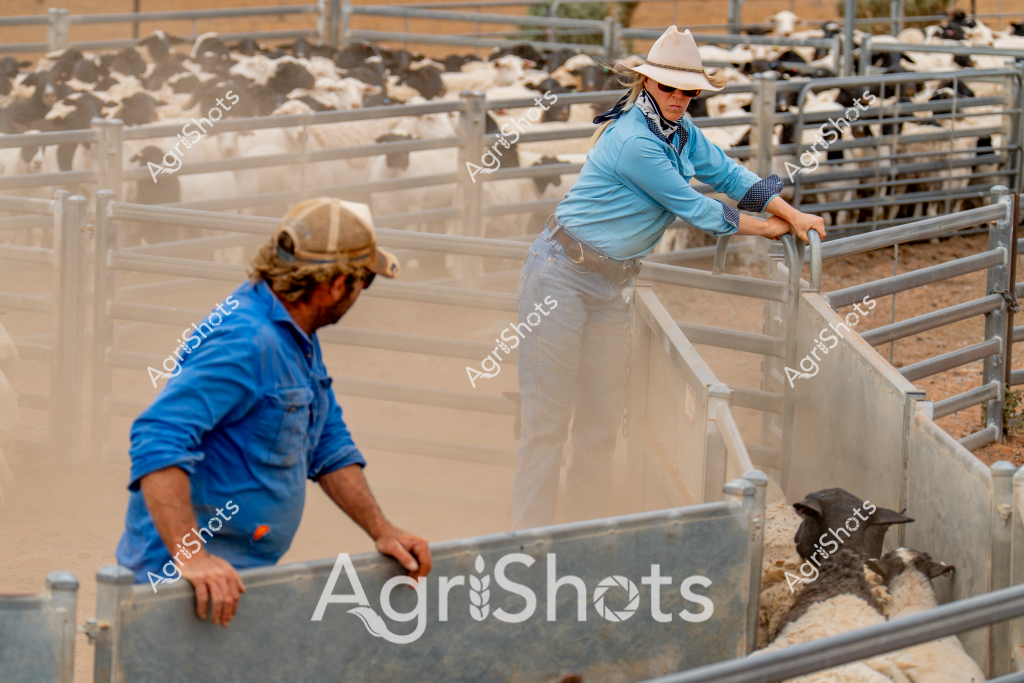
A woman stockman and a man worker are managing sheep in a dusty livestock yards, using metal cattle gates and pens to control the flock's movement. The woman wears a white wide-brimmed hat, light blue long-sleeved shirt, and light-colored trousers, leaning confidently on the metal yard fence. Her colleague in a blue work shirt stands nearby, carefully monitoring the sheep's positioning. Multiple sheep are visible in the background, clustered within the galvanized steel yard infrastructure. The scene captures the precision and skill of Australian livestock management, with fine dust particles hanging in the air and creating a soft, atmospheric light that highlights the rural working environment. The metallic fencing, practical workwear, and controlled movement of livestock demonstrate the professional approach to sheep handling in a dry, potentially arid agricultural setting.