About this image
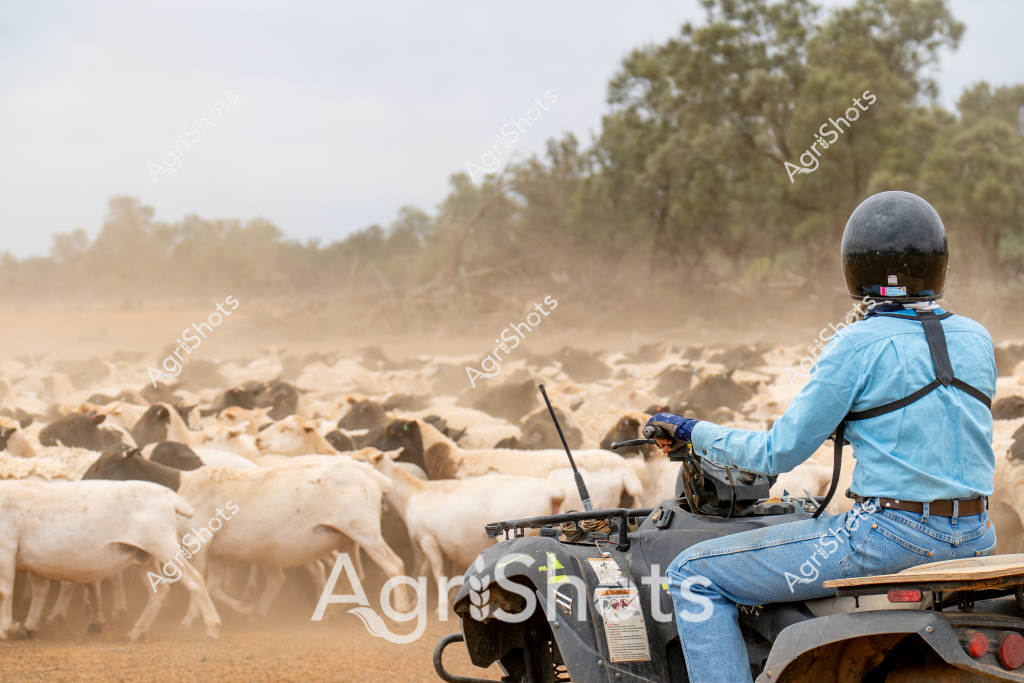
A man stockman seated on an all-terrain vehicle (ATV) manages a large herd of white and light-colored cattle in a dusty, tree-lined paddock. Wearing a blue shirt, jeans, and a protective helmet, he navigates the vehicle carefully among the densely packed livestock, raising a cloud of fine Australian dust. The cattle appear to be moving as a tight, cohesive group, suggesting an organized muster or stock movement typical of extensive pastoral operations. Trees line the distant horizon, creating a classic Australian rural landscape backdrop, while the dusty conditions hint at the dry, challenging environmental conditions often encountered in agricultural regions. The stockman's positioning on the ATV demonstrates modern livestock management techniques, replacing traditional horseback mustering with more efficient mechanized approaches. The scene captures the essence of Australian cattle farming - a blend of skill, technology, and adaptation to harsh rural environments. The dust, the dense herd, and the careful management by the stockman illustrate the demanding nature of livestock production in Australia's expansive agricultural landscapes.
Similar media
 Image
Image
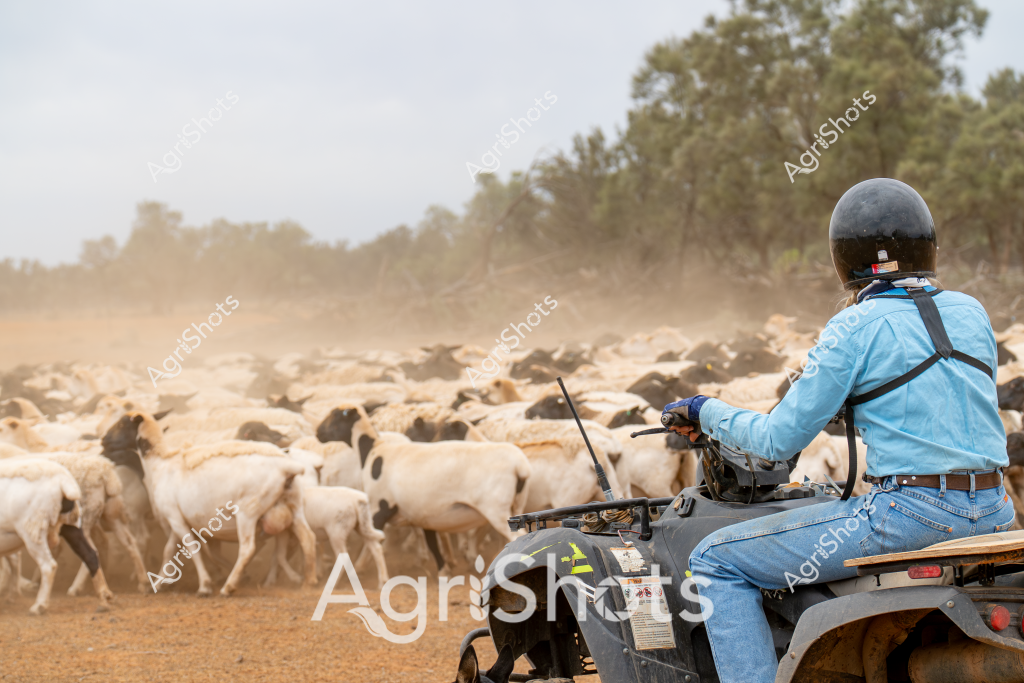
A man on an all-terrain vehicle (ATV) guides a large flock of white and mixed-colored goats across a dry, dusty paddock in rural Australia. Wearing a blue shirt, helmet, and carrying a radio, the livestock manager carefully steers the ATV through the herd, raising a cloud of fine dirt behind him. The landscape is characterized by sparse ground vegetation and distant eucalyptus trees, suggesting a dry pastoral region typical of Australia's inland areas. Dozens of goats move together in a tight cluster, their varied coat colors of white, tan, and brown creating a mottled appearance against the brown earth. The scene captures the challenging yet essential work of livestock management in an arid agricultural setting, highlighting the skill required to muster and control a large herd across open terrain. The dust and movement convey the dynamic nature of pastoral farming, with the ATV serving as a critical tool for modern livestock handling.
 Image
Image
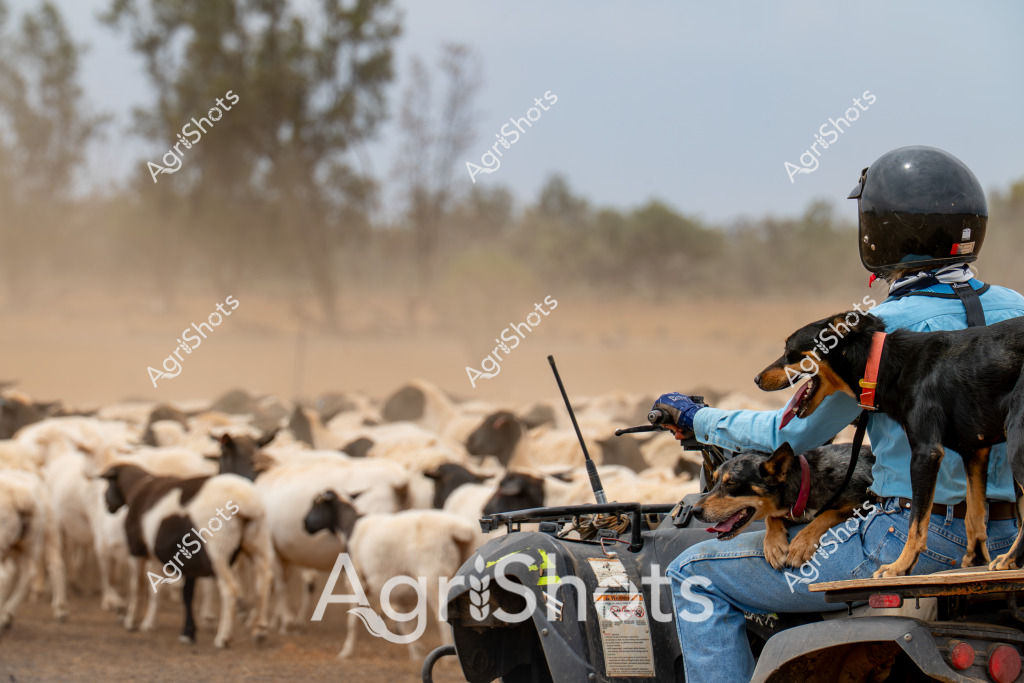
A stockman wearing a blue shirt and helmet sits on an all-terrain vehicle (ATV) with working dogs, mustering a large flock of mixed-breed sheep across a dusty, arid landscape in rural Australia. Two alert herding dogs perch on the ATV, their keen eyes tracking the movement of the sheep, which appear to be a combination of white and dark-fleeced animals. The dry paddock stretches out with sparse trees and golden-brown vegetation in the background, indicating challenging drought conditions typical of the Australian outback. Dust rises from the ground as the sheep move, creating a hazy atmosphere that speaks to the harsh environmental conditions faced by livestock and farmers. The scene captures the essential partnership between the stockman, his working dogs, and the sheep - a quintessential image of Australian agricultural resilience and traditional livestock management techniques.
 Image
Image
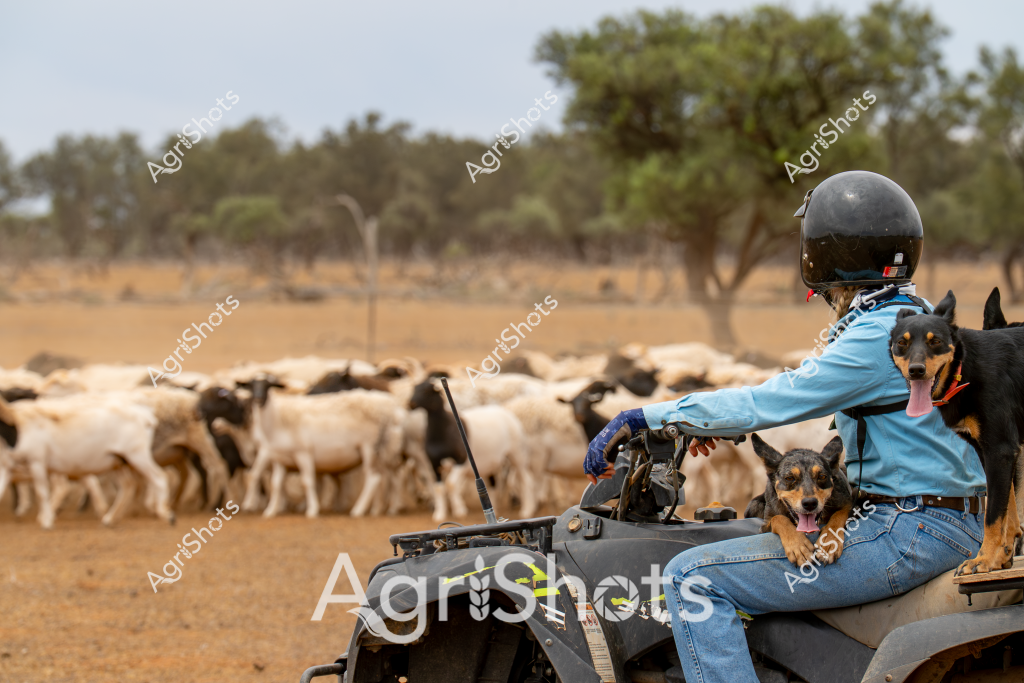
A woman herds a flock of white and dark-colored goats across a dry, dusty paddock using an all-terrain vehicle (ATV) in what appears to be an arid Australian rural landscape. Two working dogs accompany her on the ATV, both alert and ready to assist with livestock management. Sparse trees and golden-brown grasslands stretch into the background, indicating a typical Australian pastoral setting during a dry season. The woman wears a light blue long-sleeved shirt, protective helmet, and denim jeans, representing the practical attire of Australian livestock managers. The goat herd moves compactly across the open ground, showing the coordinated effort between the herder, her dogs, and the ATV in managing livestock in challenging environmental conditions. The scene captures the resilience and adaptability of Australian agricultural workers, demonstrating how modern technology and traditional herding practices combine to manage livestock in harsh rural environments. The ATV provides mobility and efficiency, while the working dogs remain critical partners in controlling and directing the animal movement.
 Image
Image
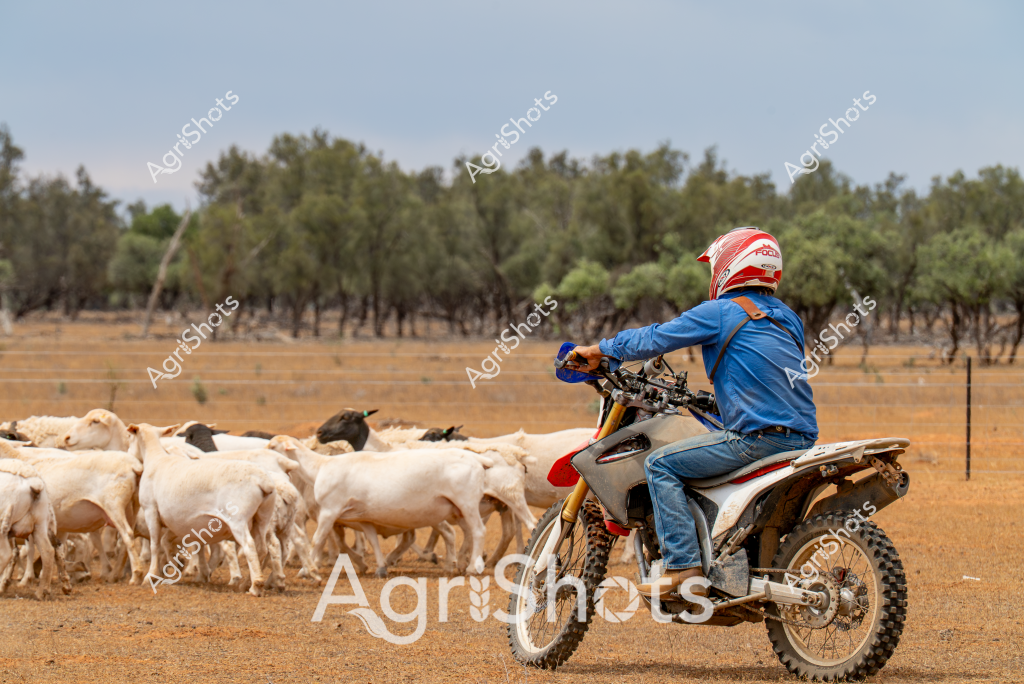
A man on a dirt bike carefully herds a flock of white sheep across a dry, golden paddock with scattered trees in the background. Wearing a blue long-sleeved shirt and a red and white helmet, the rider uses the motorcycle to guide the compact group of sheep, which appear to be predominantly light-colored with a few dark-marked animals mixed in. The landscape suggests an arid Australian rural setting, with sparse vegetation and a muted color palette of browns and greens. The dirt bike serves as a modern tool for livestock management, allowing the rider to efficiently move and control the sheep across the open terrain. This scene captures the essence of Australian pastoral farming, where technology and traditional livestock management techniques converge in the challenging outback environment.
 Image
Image
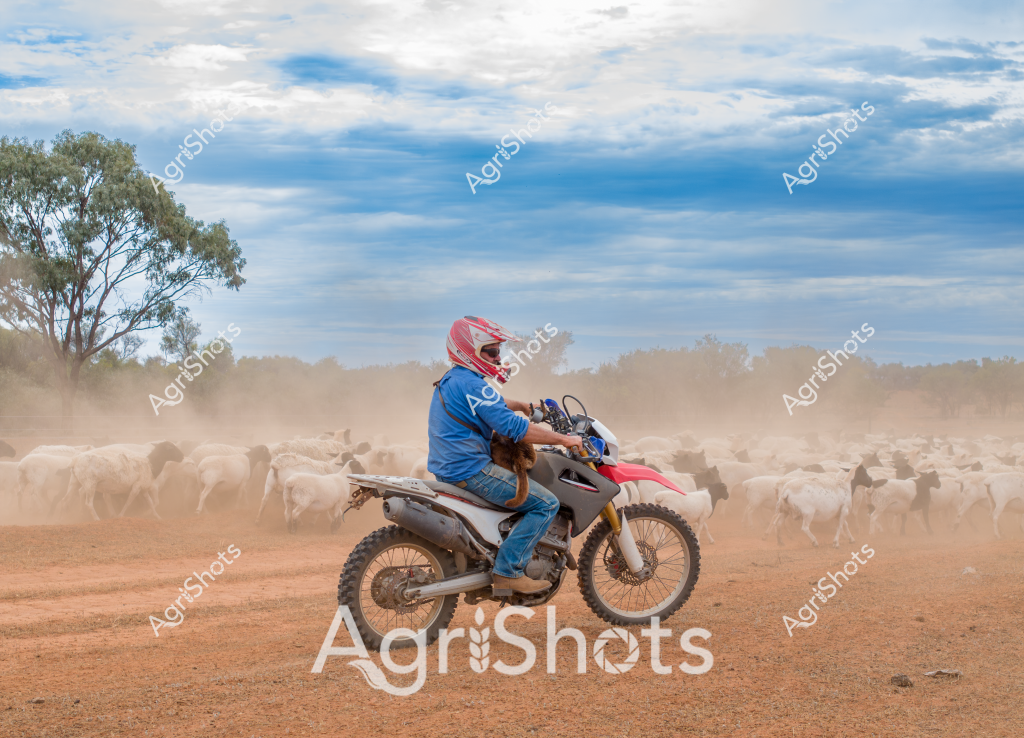
A skilled motorcyclist on a dirt bike navigates through a dusty livestock paddock, herding a large mob of white sheep across the arid Australian landscape. Wearing a red helmet and blue clothing, the rider skillfully maneuvers the motorcycle, kicking up a cloud of reddish-brown dust while keeping the sheep tightly grouped. Eucalyptus trees line the background under a expansive blue and white clouded sky, creating a quintessential Australian rural scene. The motorcycle serves as a modern herding tool, replacing traditional horseback mustering and demonstrating the adaptive nature of contemporary agricultural practices. The dry, compact ground and scattered vegetation highlight the challenging conditions of outback farming, where technology and human skill come together to manage livestock across vast, unforgiving terrain.
 Image
Image
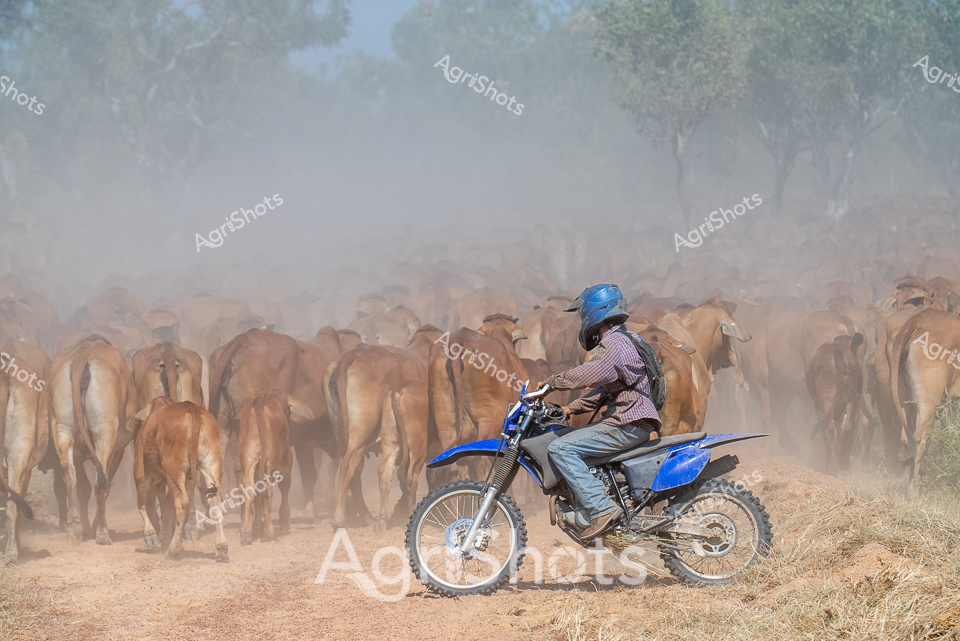
Kicking up a swirl of red dust, a stockman on a blue dirt bike navigates through a tightly packed herd of Brahman cattle across a rugged Kimberley station landscape. The dry season's harsh light casts a hazy golden-brown filter over the scene, highlighting the muscular, buff-colored cattle with their distinctive humped shoulders and loose skin - hallmarks of this heat-tolerant breed perfectly adapted to northern Australia's challenging environment. Wearing a blue safety helmet, sturdy work pants, and a checked shirt, the rider demonstrates the essential role of motorbikes in modern cattle mustering, guiding the herd with precision and minimal disruption. Sparse woodland trees blur in the background, their muted green forms a stark contrast to the parched earth and dusty atmosphere. This image captures the raw energy of Western Australian cattle station life - a testament to human skill, animal resilience, and the unforgiving beauty of the agricultural frontier. The scene pulses with movement, dust, and the quiet determination that defines outback cattle management.
 Image
Image
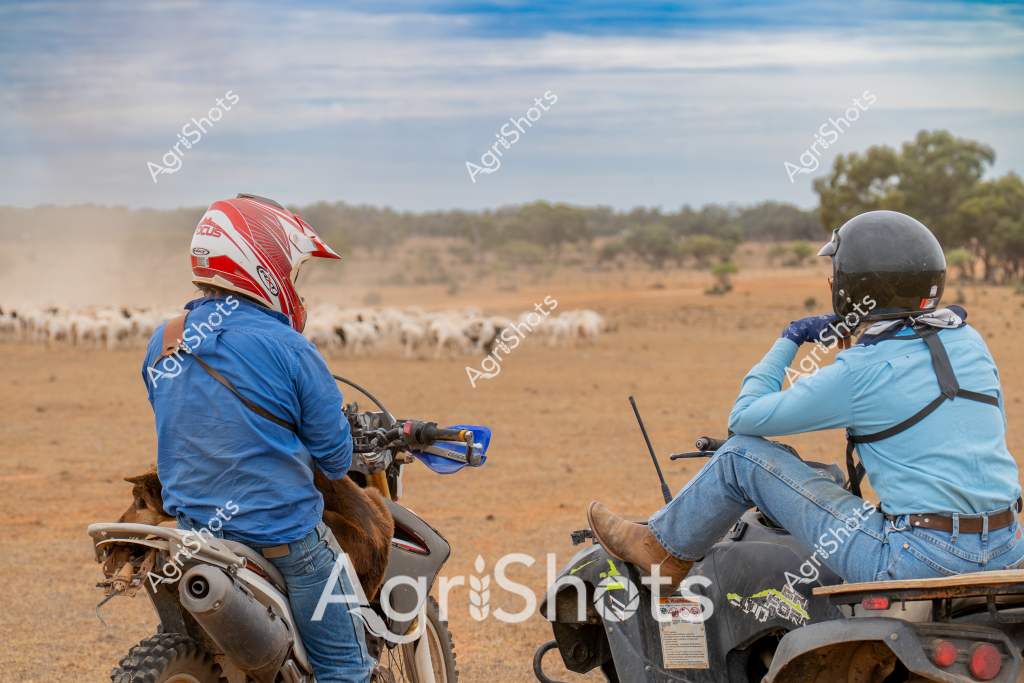
Two men on motorbikes survey a mob of white sheep across a dry, dusty paddock in rural Australia. The men wear blue shirts and protective helmets, with one in a red motocross helmet and the other in a black helmet, seated on an all-terrain vehicle and a motorcycle. The landscape is a typical Australian pastoral scene - golden-brown grass, sparse trees on the horizon, and a vast open sky with soft blue and white clouds. Several dozen sheep are grazing in the background, creating a light dust cloud as they move slowly across the arid terrain. The scene captures the essence of modern Australian livestock management, where motorcycles and quad bikes have replaced traditional horse-based mustering techniques. The dry conditions suggest this could be during a prolonged drought period, typical of many Australian agricultural regions.
 Image
Image
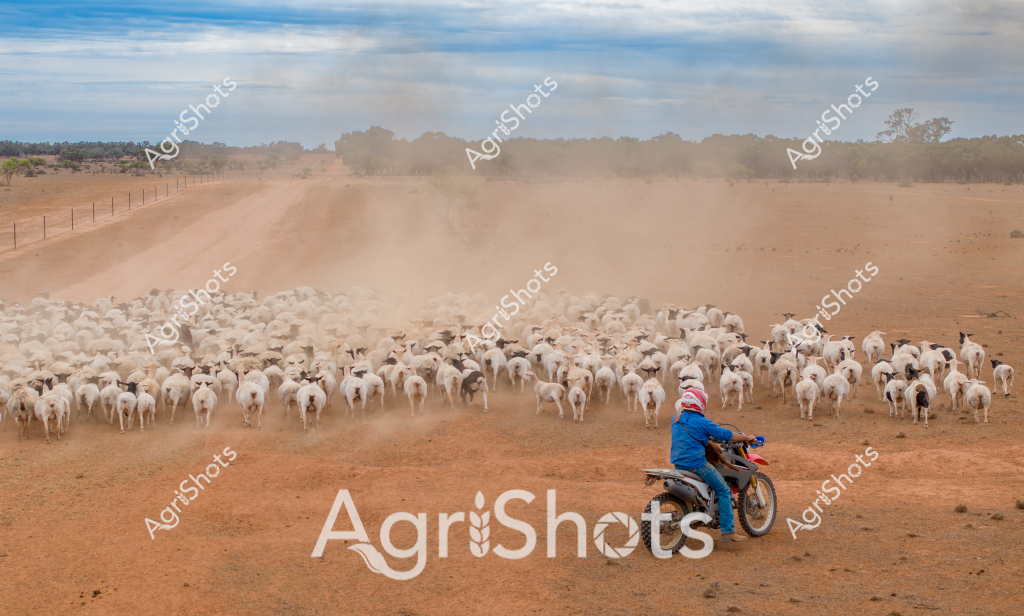
A man on a trail bike herds a large mob of white sheep across a dusty, arid landscape in what appears to be an expansive Australian pastoral setting. The rider, wearing a blue jacket and red cap, guides hundreds of sheep through a dry, reddish-brown paddock with sparse vegetation and a distant tree line. Clouds of ochre-colored dust rise behind the moving flock, creating a dramatic atmosphere that highlights the challenging environmental conditions. A fence line stretches into the distance, defining the property's boundary and adding perspective to the wide-open agricultural landscape. The image captures the essence of Australian sheep farming - a solitary stockman using modern transportation to muster livestock across a seemingly endless terrain, demonstrating the adaptability and resilience of rural agricultural practices. The scene powerfully illustrates the harsh beauty of Australian rangelands, where livestock management requires skill, determination, and the ability to work effectively in demanding environmental conditions. The motorcycle provides a nimble and efficient method of moving sheep, replacing traditional horse-based mustering with a more modern approach to rural work.