About this image
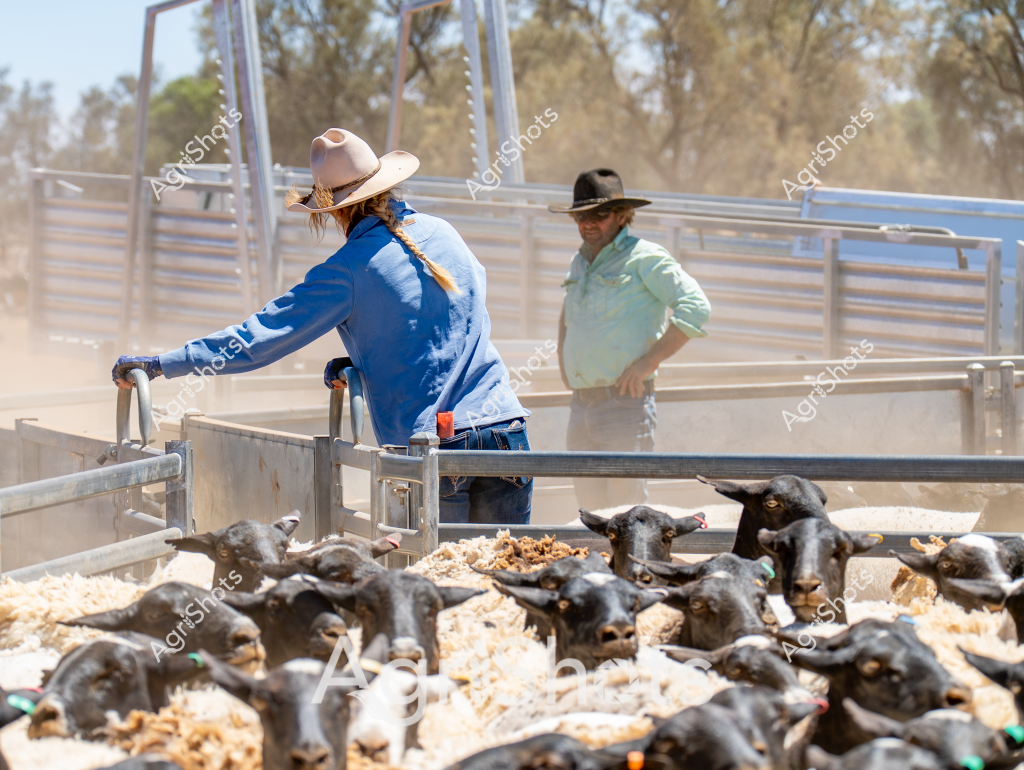
Two workers manage a group of black goats in a dusty livestock yard, with metal cattle panels and handling facilities surrounding them. A woman in a blue jacket and wide-brimmed hat operates the gate control, while a man in a light green shirt stands nearby observing the livestock. Multiple young black goats are clustered on straw bedding within the metal yard, some with colored ear tags indicating they are part of a managed herd. The scene is dry and sun-drenched, with trees and yard infrastructure visible in the background, suggesting this is a typical agricultural livestock management setting in rural Australia. Dust hangs in the air, highlighting the movement and activity of the goat handling process. The workers' attire - wide-brimmed hats, long-sleeved shirts, and practical work clothing - indicates professional agricultural practice and protection from the harsh Australian sun.
Similar media
 Image
Image
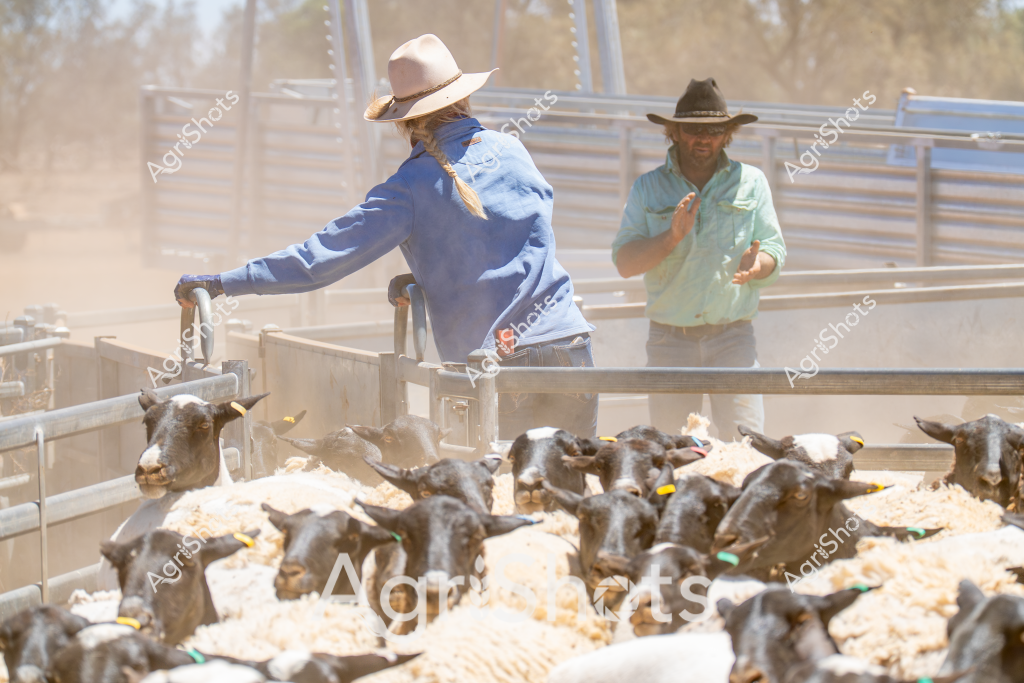
Two people manage a group of goats in a dusty livestock yard, with metal cattle panels creating a confined processing area. A woman wearing a blue jacket and wide-brimmed hat stands at one end of the pen, operating gate controls, while a man in a light green shirt stands nearby, appearing to assist with livestock movement. Multiple dark-colored goats are densely packed in the pen, their heads and bodies visible among wood shavings or straw bedding. Dust hangs in the air, suggesting active movement and handling of the animals, indicating this is likely a routine livestock management activity on an Australian farm or station. The metal yards provide a structured, professional environment for animal handling, with yellow ear tags visible on some of the goats, suggesting they are being sorted, counted, or prepared for veterinary treatment or sale.
 Image
Image
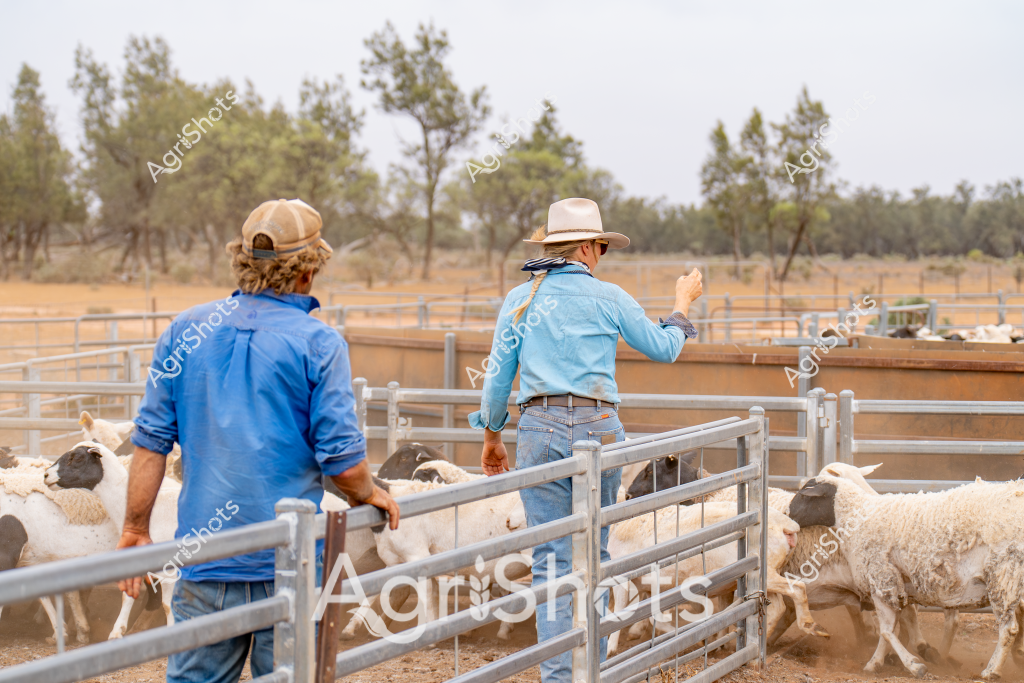
Two men farmers oversee a small flock of sheep in a dry, dusty livestock paddock surrounded by sparse eucalyptus trees. One man in a blue long-sleeved shirt and a tan cap stands near a metal livestock gate, while the other wearing a light blue shirt and wide-brimmed sun hat gestures toward the animals. Several white sheep with varying wool textures are visible within the metal stock yard fencing, highlighting the typical rural Australian agricultural setting. The landscape appears arid, with a muted color palette of golden-brown ground, gray-green trees, and washed-out sky, suggesting conditions typical of inland pastoral regions. The men's sturdy work clothing and attentive postures indicate an experienced approach to livestock management, carefully monitoring the small mob of sheep in their contained yard.
 Image
Image
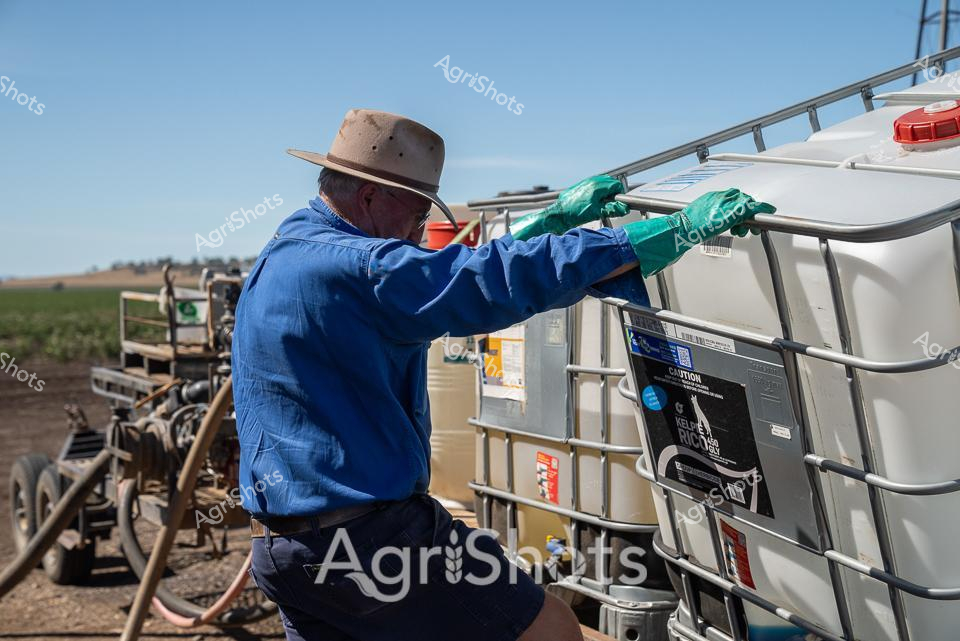
Sunlight bathes the rural landscape as an experienced agricultural worker carefully manages crop protection chemicals. Wearing a classic wide-brimmed Australian farmer's hat and a crisp blue work jacket, the worker meticulously handles a white industrial container, wearing protective green chemical-resistant gloves. Agricultural machinery and irrigation equipment sit in the background, suggesting a carefully maintained farming operation in a dry, expansive field typical of New South Wales. The worker's purposeful stance and careful handling demonstrate the precision and safety protocols essential in modern agricultural practice. Green fields stretch to the horizon, highlighting the careful stewardship of the land and the critical role of agricultural workers in managing crop health and productivity. The scene captures the intersection of advanced agricultural technology, personal expertise, and environmental responsibility that defines contemporary Australian farming.
 Image
Image
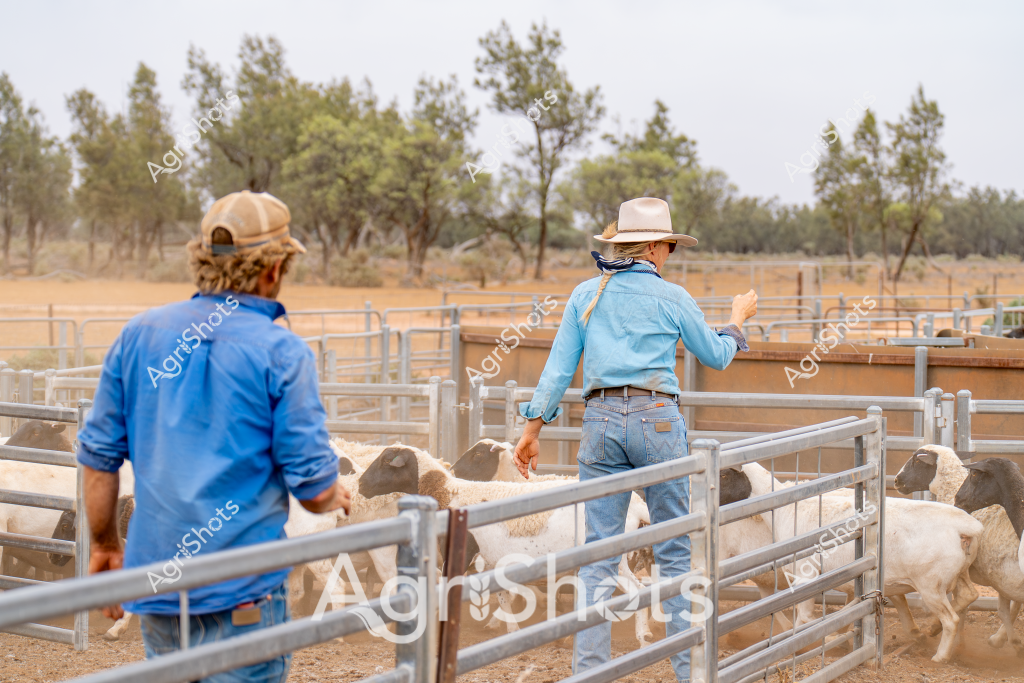
Two men working in a livestock yard, carefully managing a small herd of sheep within metal livestock pens. They are wearing typical rural workwear - blue long-sleeved shirts, wide-brimmed sun hats, and work jeans. One man faces away from the camera, standing near the metal gate, while the other is partially visible to the left side of the image. The setting appears to be a dry, arid paddock with sparse trees and scrubland in the background, suggesting this is likely in an inland Australian agricultural region. The metal yard panels create a systematic grid for controlling and moving the sheep, which appear to be light-colored, possibly Merino or other wool breed. The dusty ground and sparse vegetation indicate this could be during a dry season or in a drought-affected area. The scene captures the practical, no-nonsense approach of Australian livestock management, where farmers work efficiently to handle their stock in challenging environmental conditions.
 Image
Image
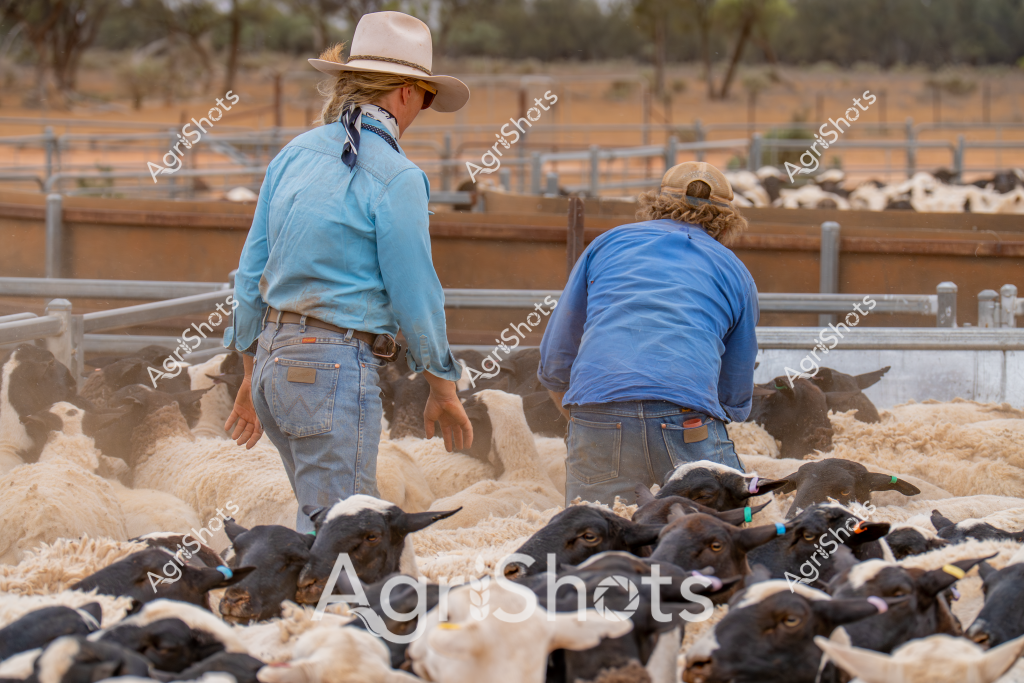
Two women workers manage a large flock of black and white sheep in a dusty livestock yard, wearing blue work shirts and wide-brimmed hats typical of Australian agricultural settings. The scene captures a moment of intense sheep handling, with the women carefully navigating through the densely packed animals, likely preparing them for shearing or movement between paddocks. The livestock yard features sturdy metal fencing in warm earth tones, creating a structured environment for managing the sheep herd. Black-faced sheep with white wool intermingle, creating a textured landscape of animal bodies against the dry, dusty ground. A wide-brimmed hat and blue work shirt provide protection from the harsh Australian sun, highlighting the practical clothing essential for rural workers. The image conveys the hard physical work and skill required in sheep farming, showcasing the close interaction between agricultural workers and the livestock in a quintessential Australian rural setting.
 Image
Image
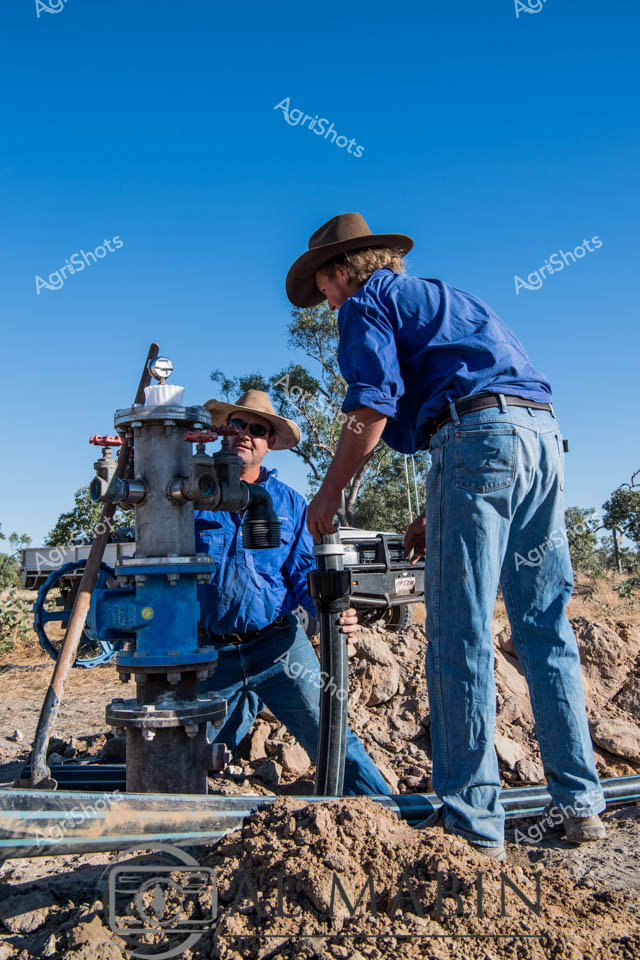
Remote Queensland Station Water Infrastructure Maintenance Rugged station workers wrestle with a critical water infrastructure component under a vast, cloudless azure sky. Dressed in characteristic blue work shirts and wide-brimmed akubra hats, these seasoned rural professionals carefully inspect and adjust a substantial bore water pump mounted amid rocky, sun-baked terrain. One worker crouches closely examining the industrial blue metallic pump mechanism, while his colleague stands attentively, ready to assist or provide guidance. The machinery - a robust industrial water pump with multiple pipe connections - represents the lifeline of agricultural operations in this unforgiving landscape. Surrounding rocky ground and scattered native vegetation highlight the challenging environment where reliable water infrastructure is crucial for pastoral survival. Their deliberate, expert movements suggest years of experience managing critical station resources, understanding that every mechanical adjustment could mean the difference between thriving and struggling livestock operations. The scene epitomizes the resilience and technical skill of Australian rural workers, who maintain complex systems in isolated locations where self-sufficiency isn't just a virtue - it's a necessity. Their coordinated effort captures the essence of outback station management: practical knowledge, teamwork, and unwavering dedication to keeping critical infrastructure operational.
 Image
Image
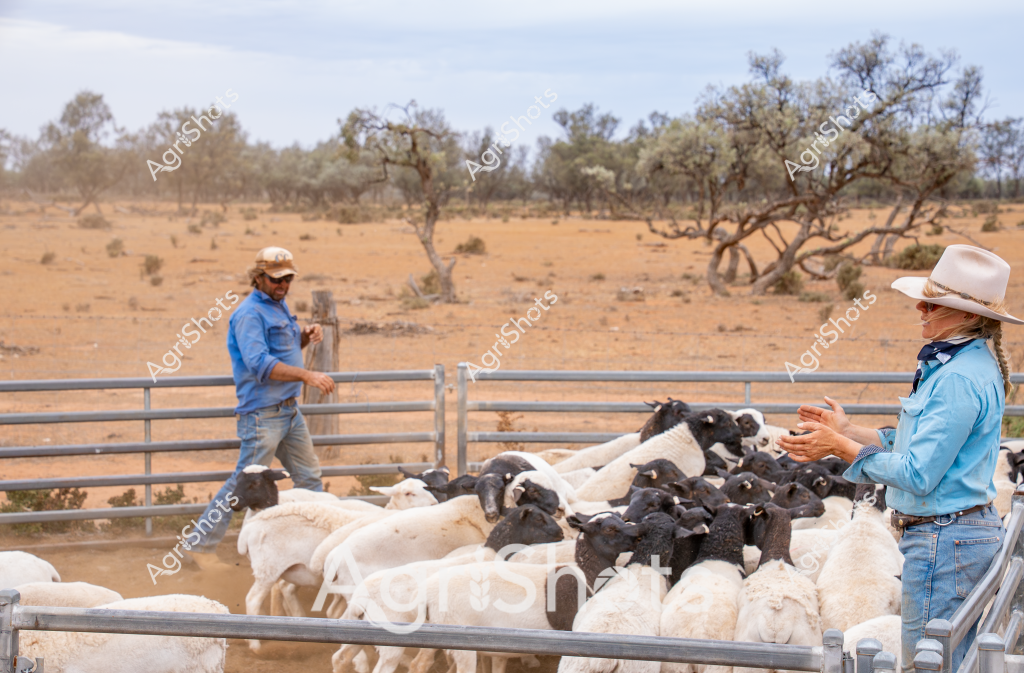
Two people manage a flock of black and white sheep in a dry, arid paddock with scattered eucalyptus trees. A woman in a light blue shirt and wide-brimmed hat and a man in a blue work shirt are positioned at opposite ends of a metal livestock yard, working together to control the herd. The landscape is typical of central Australian rangelands - reddish-brown earth, sparse vegetation, and twisted trees indicating harsh environmental conditions. The sheep, a mix of white and black woolly animals, are tightly packed within the metal yard panels, suggesting they are being sorted, counted, or prepared for movement. The scene captures the everyday work of Australian livestock management, highlighting the skill and teamwork required to handle livestock in challenging rural environments. The expansive background demonstrates the classic Australian pastoral setting - a sparse, open landscape with minimal ground cover, twisted native trees, and a muted, dusty color palette that speaks to the resilience of agricultural workers and animals in this demanding terrain. Their coordinated movements and professional demeanor illustrate the precision and experience required in sheep farming.
 Image
Image
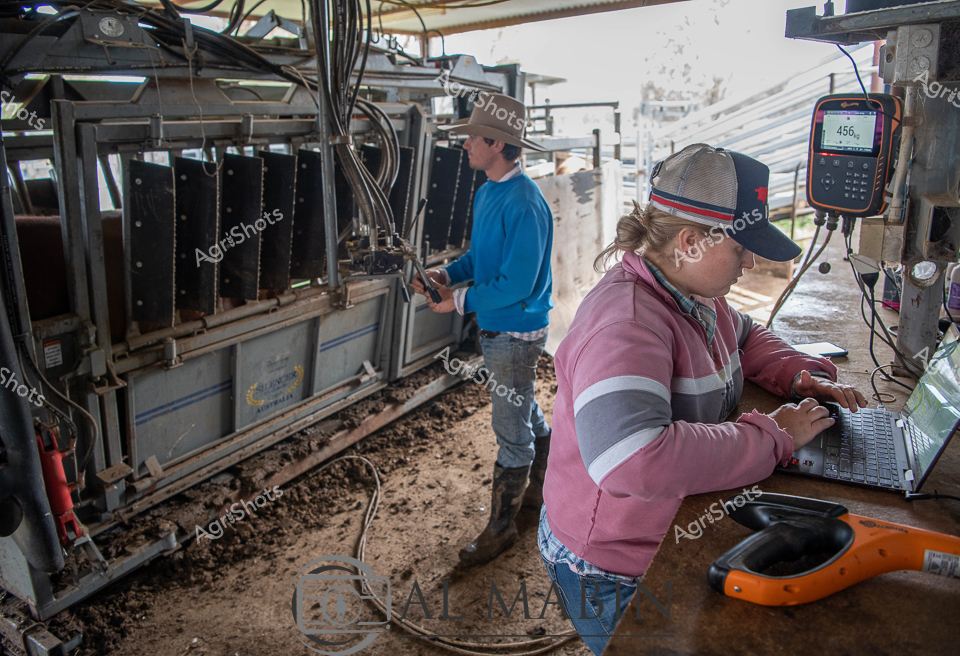
Precision livestock management unfolds in a weathered cattle handling facility, where agricultural technology meets hands-on expertise. A worker in a vibrant blue sweater operates the robust Gallagher cattle crush, carefully managing livestock movement and restraint. Beside him, a woman in a pink and grey jacket focuses intently on a laptop, meticulously recording data and tracking individual animal information on the digital screen. The industrial steel infrastructure surrounds them, with hydraulic systems, metal gates, and electronic monitoring equipment creating a high-tech workspace amid the dusty, utilitarian environment. Winter light filters across the shed, casting soft shadows on the concrete floor and highlighting the sophisticated safety equipment and vaccination protocols integral to modern agricultural practices. This scene powerfully illustrates the evolution of farming, where technical skill, digital innovation, and animal husbandry converge to ensure livestock health and operational efficiency.