About this image
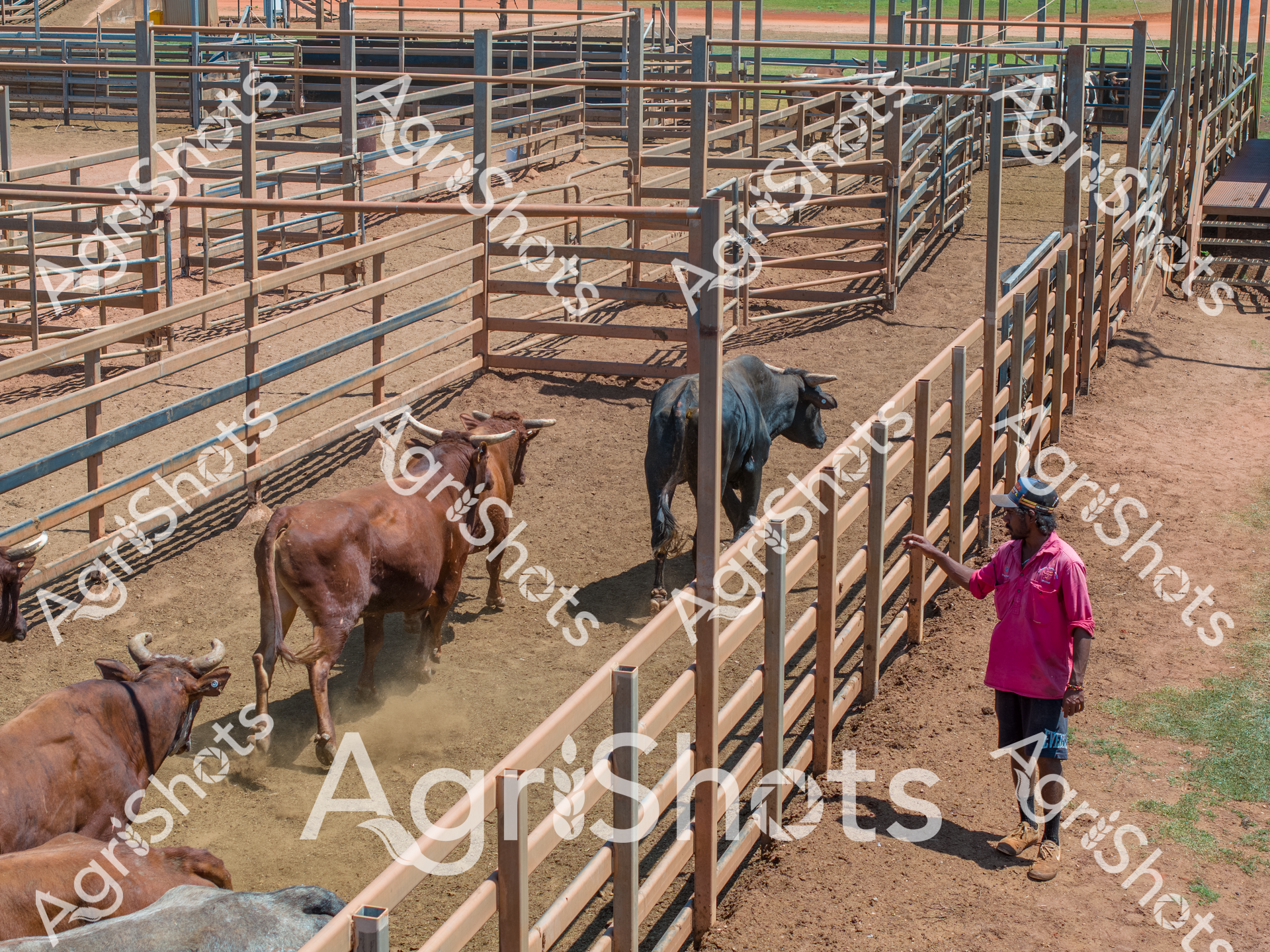
In the rugged Kimberley Region of Western Australia, cattle are carefully corralled in export yards, with a worker in a bright pink shirt overseeing the gathering. Multiple brown and black cattle stand in dusty metal pens, suggesting a spring cattle management operation typical of station life in WA. The scene captures the essential process of cattle counting and quarantine preparation for potential export.
Similar media
 Image
Image
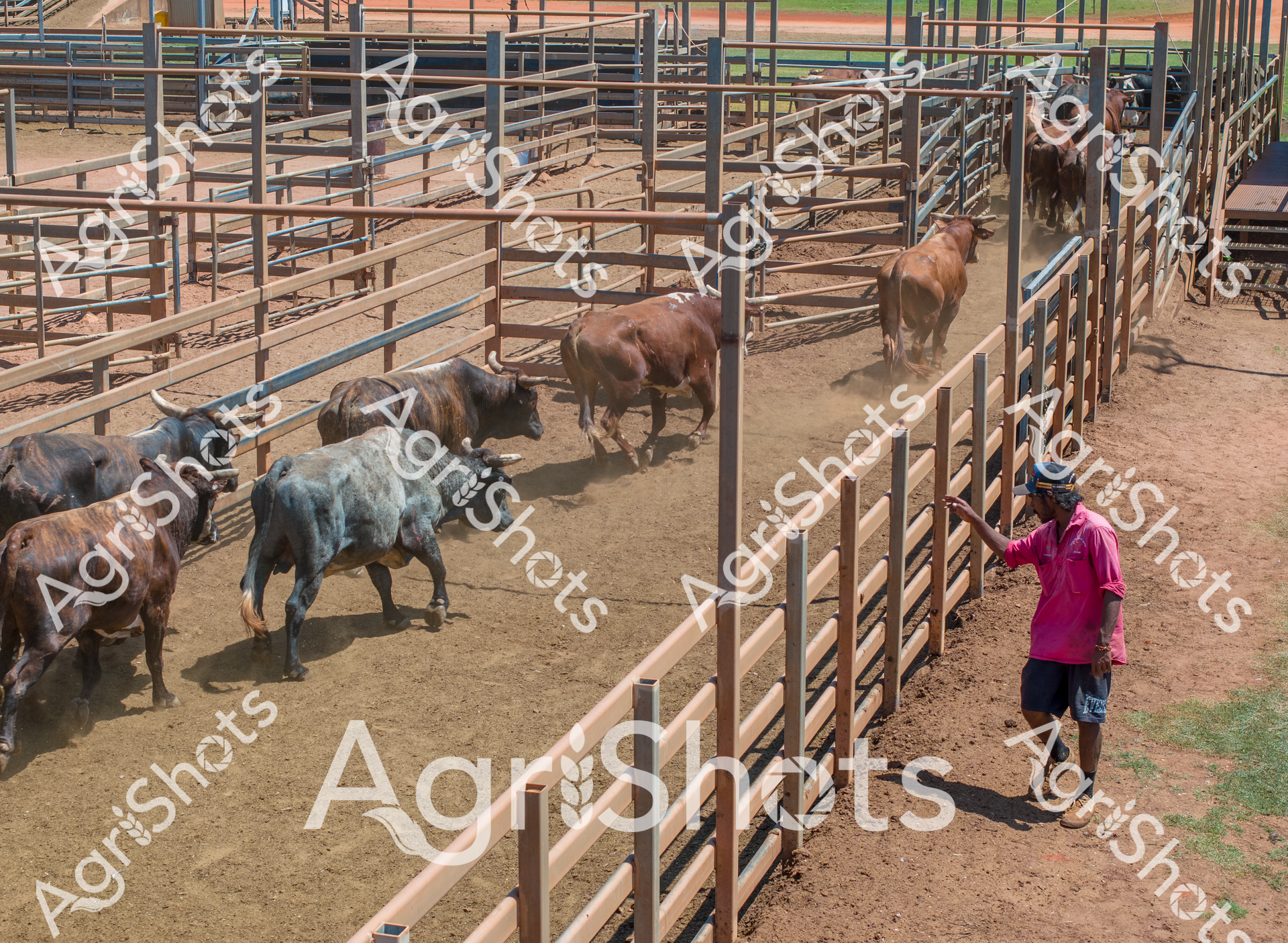
In the Kimberley Region of Western Australia, a man in a pink shirt oversees a group of cattle in a multi-compartment export yard. The herd consists of various colored cattle, including dark and reddish-brown animals, standing on a dusty pen with wooden fencing, likely during the spring season and preparing for potential quarantine or export.
 Image
Image
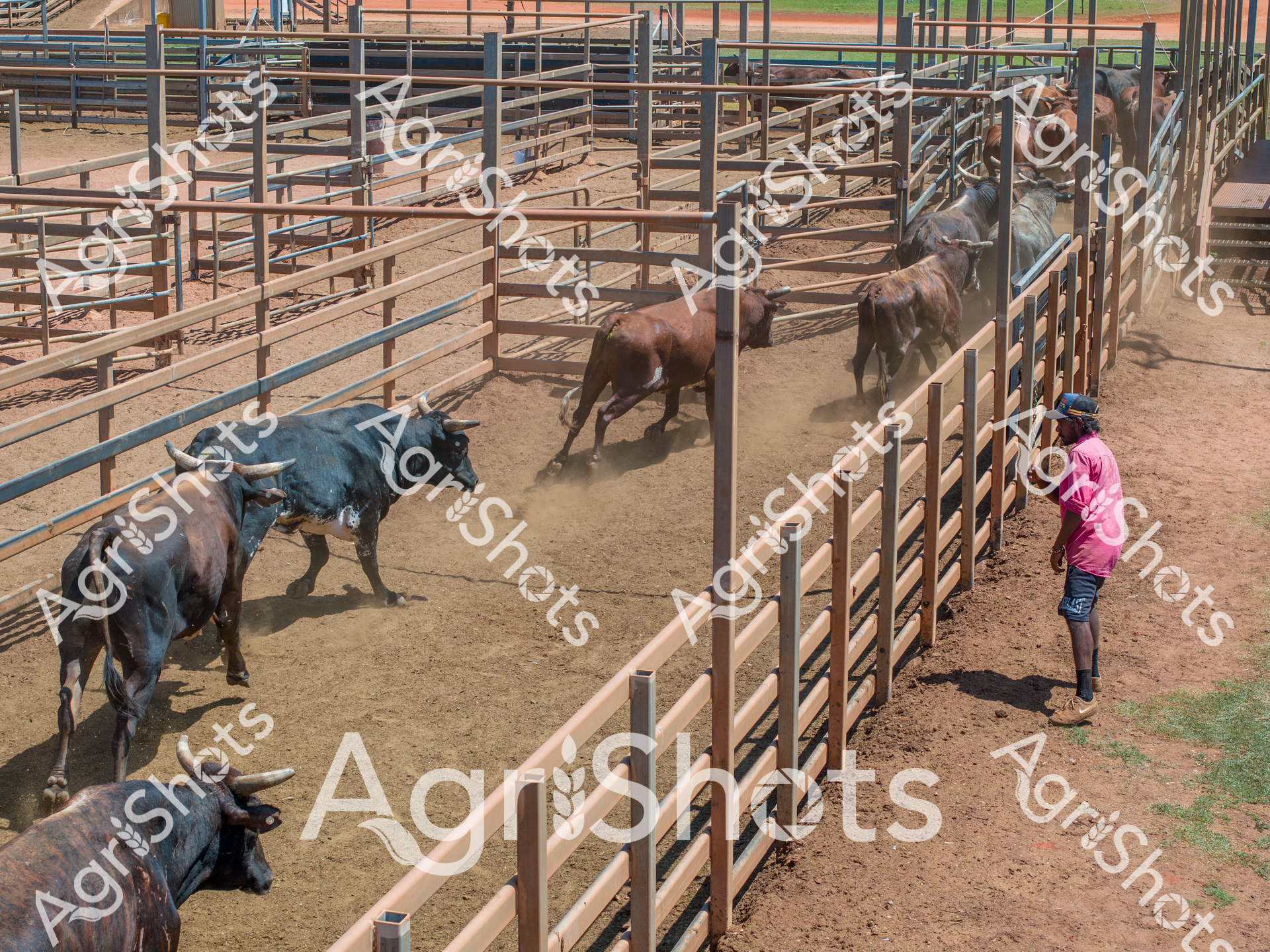
In the Kimberley Region of Western Australia, cattle are being sorted and counted in a series of wooden livestock pens. A person in a bright pink shirt stands near the fenced enclosures, overseeing a group of mixed-breed cattle, including black and brown animals, in a dusty holding yard during springtime.
 Image
Image
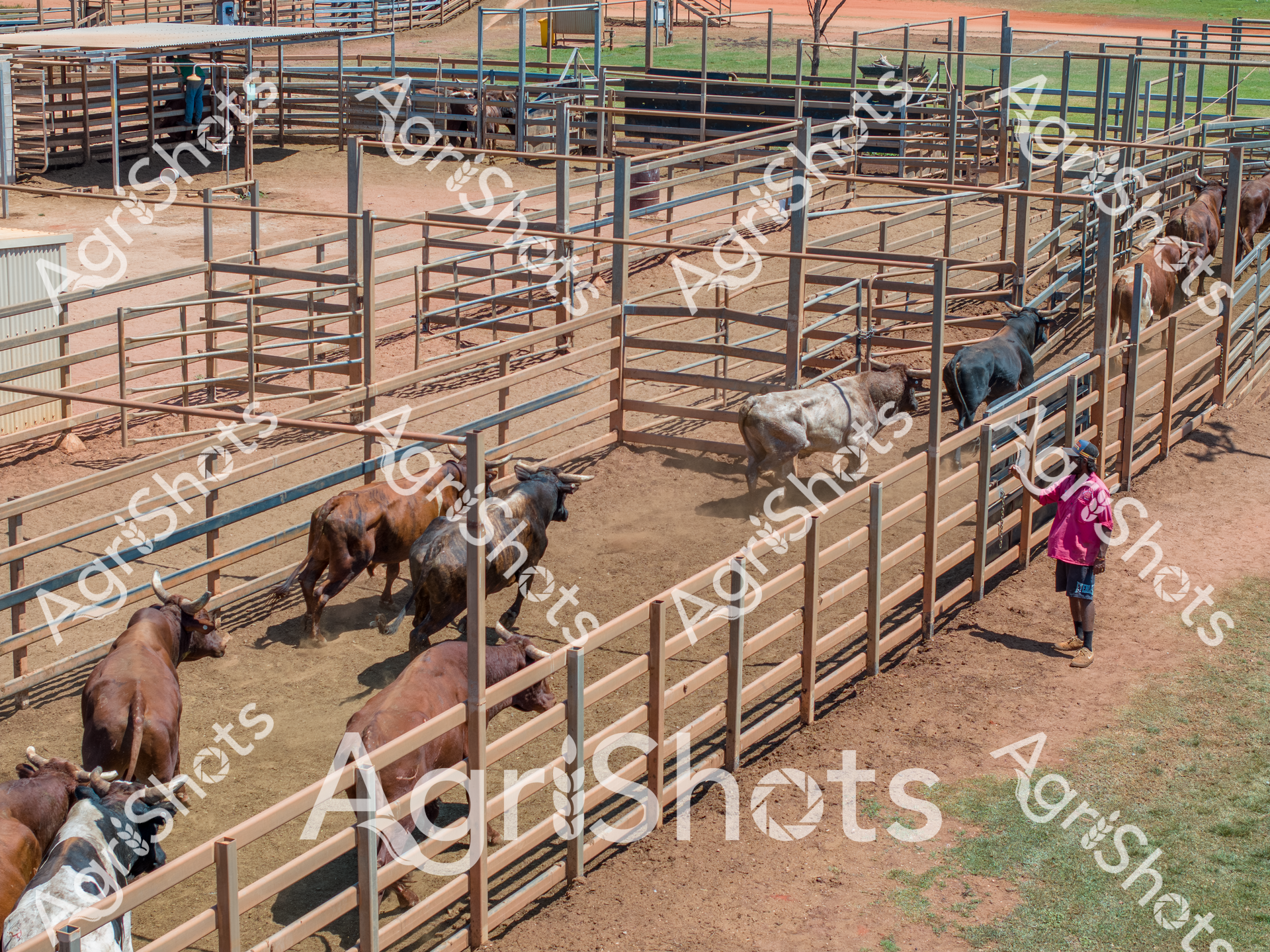
In the Kimberley Region of Western Australia, cattle are gathered in a large export yard with multiple interconnected pens. A person in a bright pink top is standing near the fenced area, appearing to be counting or monitoring the herd of mixed-breed cattle, which include brown, black, and white animals. The dusty, sun-baked landscape and extensive livestock infrastructure highlight the region's significant cattle farming industry.
 Image
Image
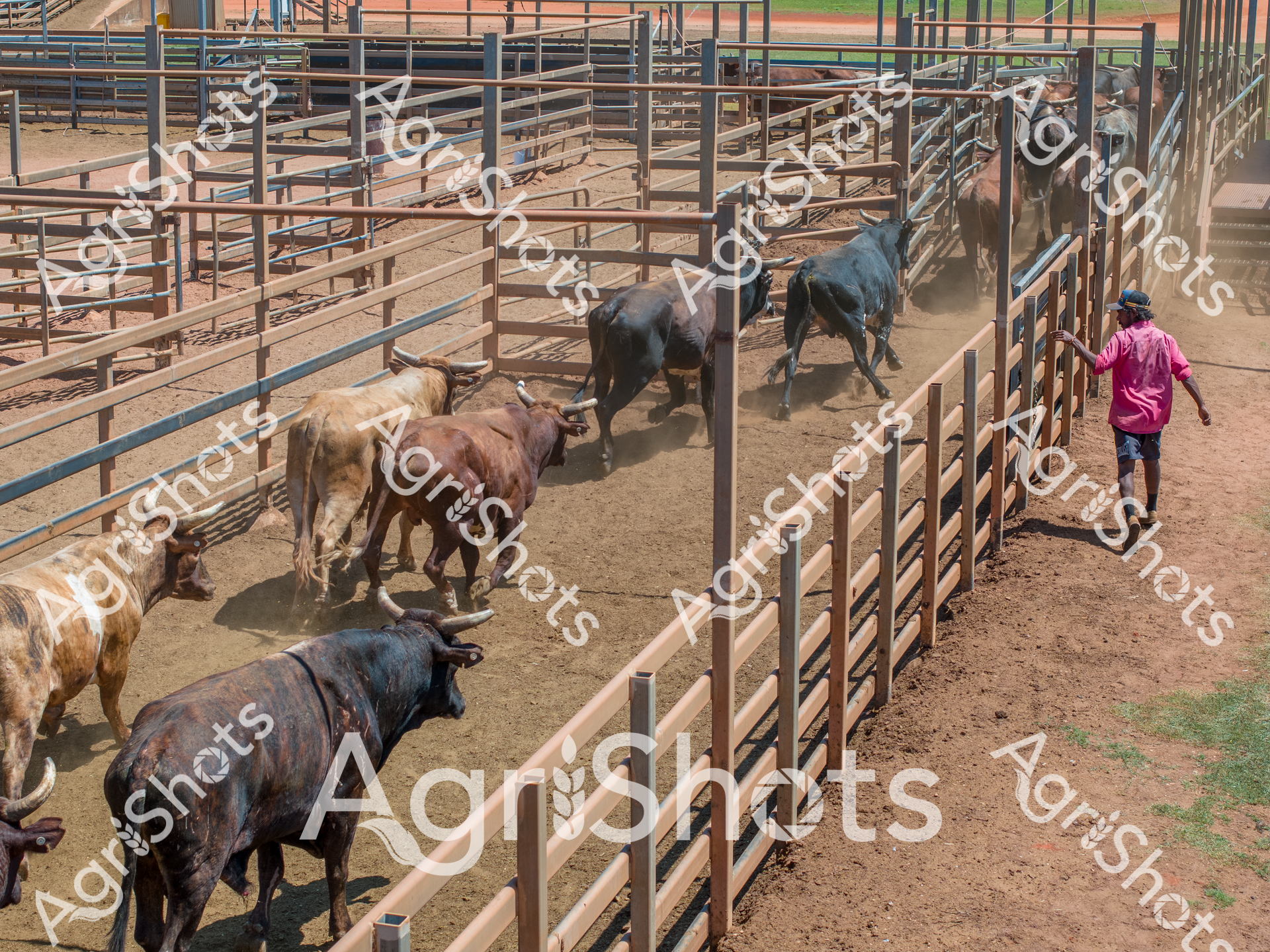
In the dusty cattle yards of Western Australia's Kimberley Region, a stockworker in a bright pink shirt carefully manages a group of mixed-breed cattle through narrow wooden holding pens. The scene captures the essential spring station work of sorting and preparing cattle for export, with dark and light-colored bulls and cows moving through the intricate fencing system under the hot Australian sun.
 Image
Image
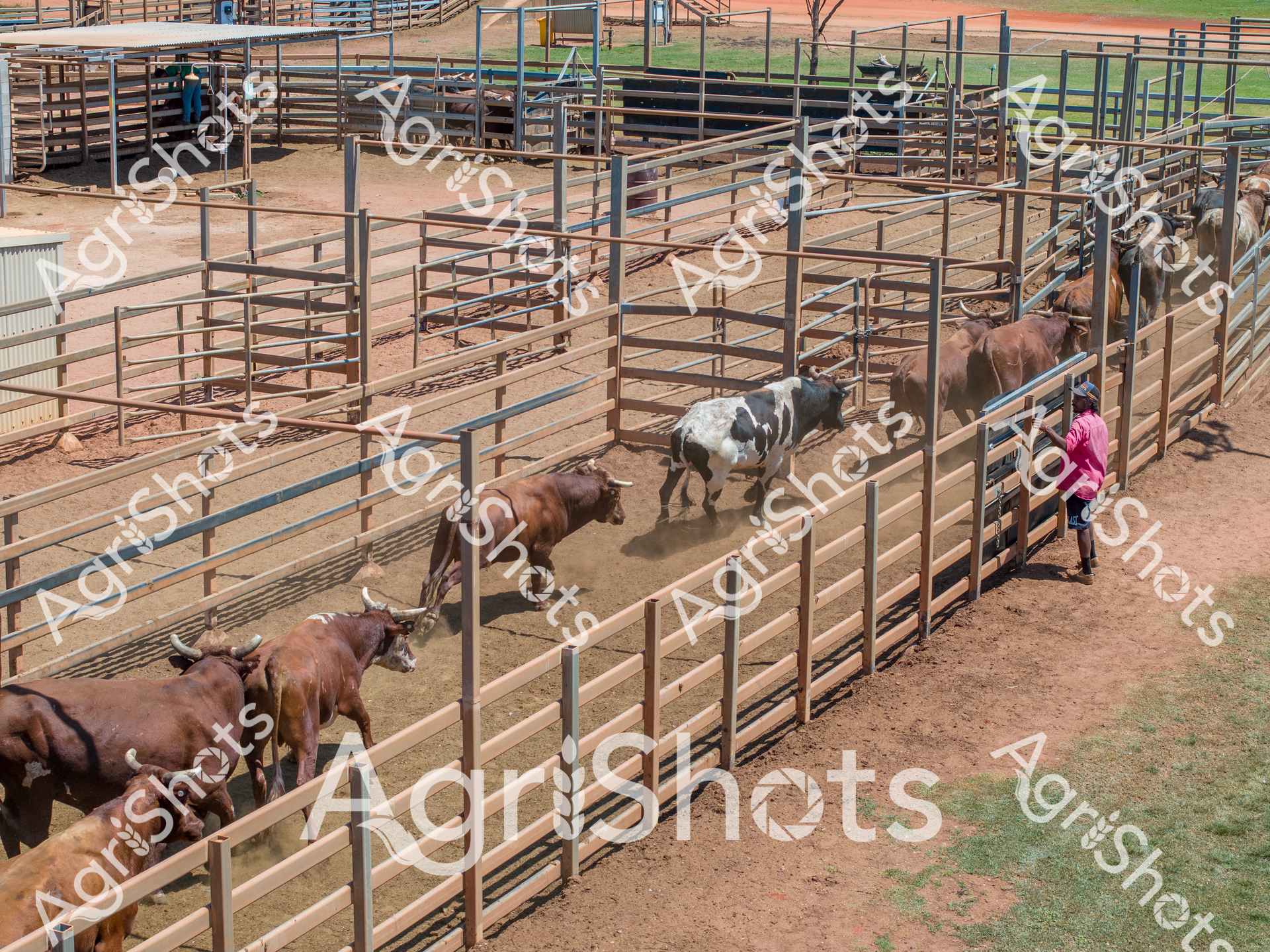
In the Kimberley Region of Western Australia, cattle are being sorted and counted in a large export yard with multiple metal pen enclosures. The herd includes several brown and one spotted cattle, with a person in a pink top managing the animals through the intricate fencing system. This scene captures the typical livestock management process at a remote station during springtime.
 Image
Image
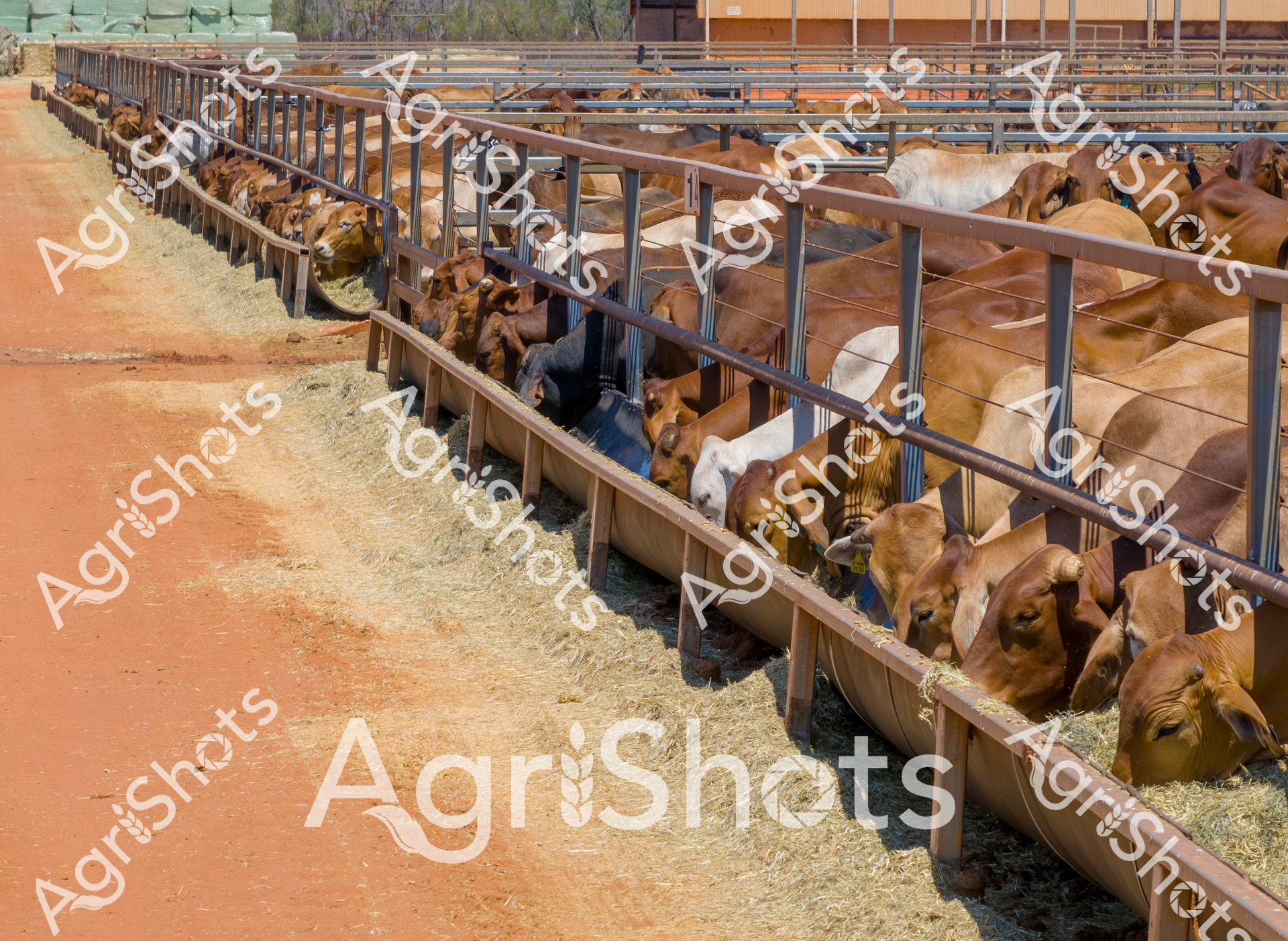
Rows of Brahman-type cattle stand in well-organized feed bunkers at a livestock export yard in Western Australia's Kimberley Region. The reddish-brown cattle are densely packed in metal-railed pens, eating hay on a rust-colored ground, representing modern large-scale agricultural cattle management practices in the region's spring season.
 Image
Image
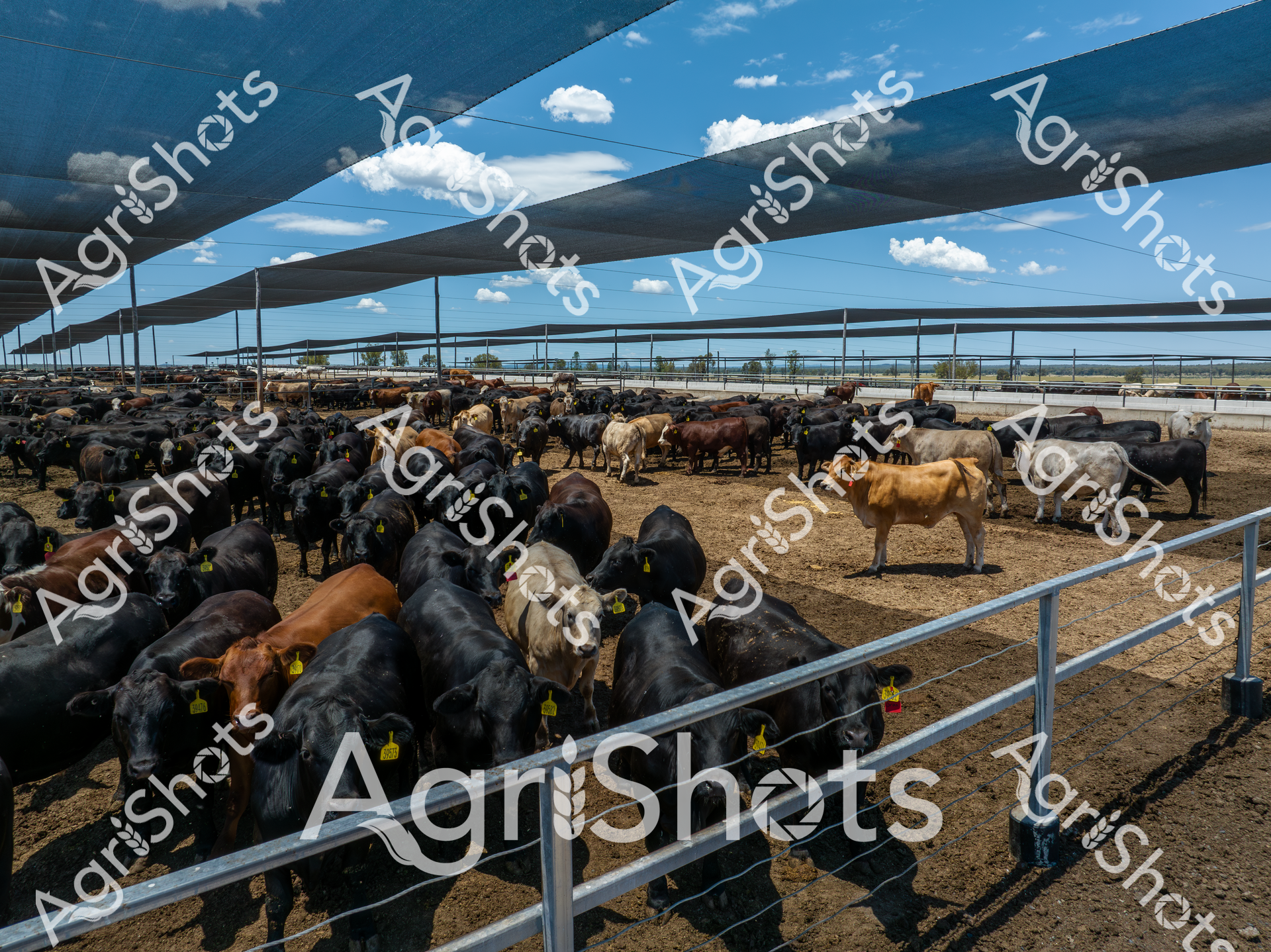
Muscled black Angus and rust-colored Brahman cattle cluster beneath expansive shade sails in a meticulously engineered feedlot in . The brutal Queensland summer beats down, but these cattle find respite under precisely angled dark mesh canopies that create a geometric landscape of protection. Yellow ear tags punctuate the herd, marking each animal with a standardized identification, while the compact paddock demonstrates modern agricultural precision. Dark soil and tight clustering reveal careful stock management, with animals standing close yet calm under the protective overhead structures. The brilliant blue sky and puffy white clouds provide a striking backdrop to this agricultural tableau, highlighting the strategic engineering that supports large-scale cattle production in challenging Australian climates. Each animal represents a carefully managed asset, part of a sophisticated agricultural ecosystem balancing animal welfare, productivity, and environmental adaptation.
 Image
Image
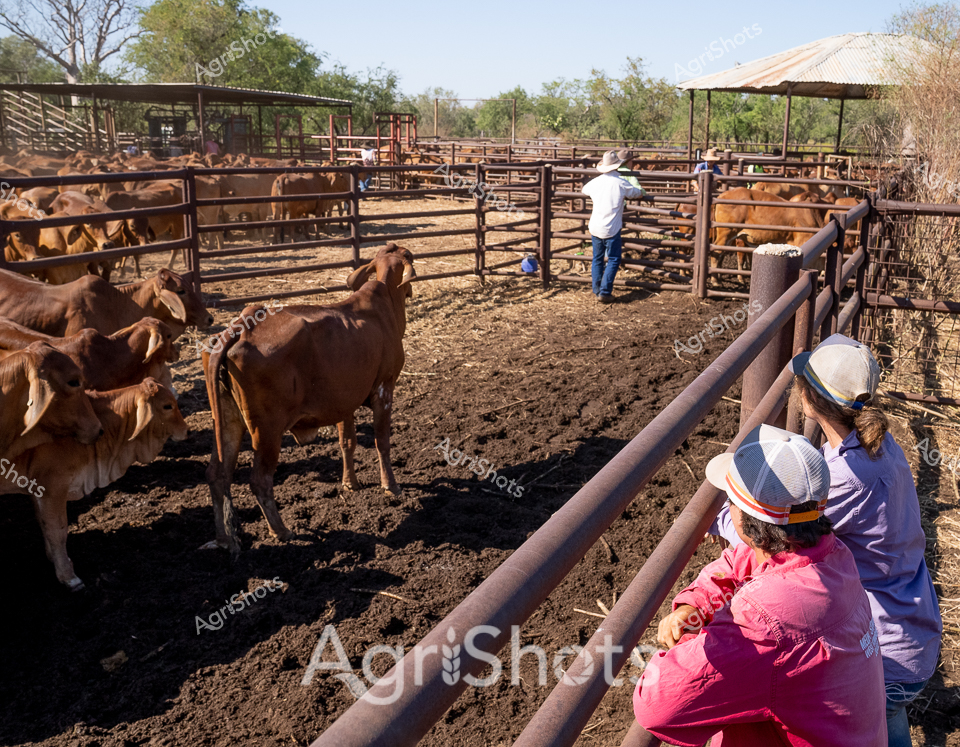
In the rugged Kimberley region of Western Australia, a quiet morning unfolds in the cattle yards. Burnished red Brahman cattle stand clustered in the dusty holding pens, their distinctive humped shoulders and loose skin reflecting generations of adaptation to harsh tropical conditions. Two workers dressed in practical station wear - one in a white shirt and wide-brimmed hat, another in a pink jacket and cap - navigate the metal rail fencing, preparing to draft and process the herd. The earthen ground is trampled and compact, telling stories of countless cattle movements, while the corrugated iron shelters and wooden yards speak to the pragmatic infrastructure of remote cattle stations. Soft winter light filters through sparse trees, casting long shadows across the scene and highlighting the powerful, lean bodies of these resilient cattle bred for surviving in challenging Australian pastoral landscapes.