Authentic Agrishots imagery
Search thousands of high-quality, watermarked stock photos and videos. License and download in full resolution.
Browse the collection
 Image
Image
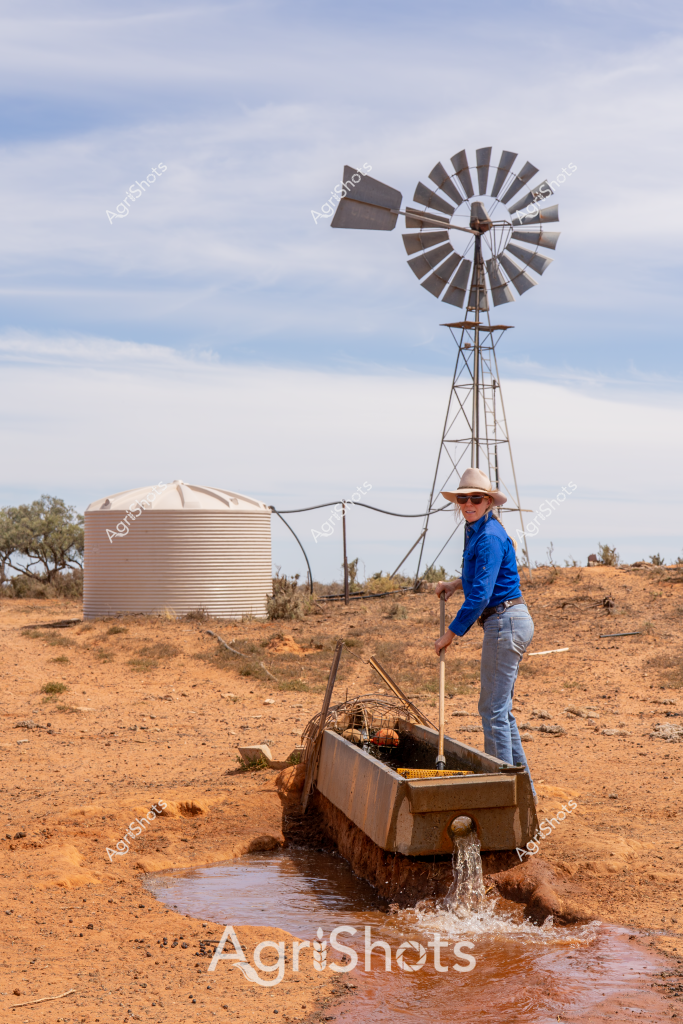
A woman in a blue long-sleeved shirt and wide-brimmed hat stands beside a windmill and water tank in a stark, arid Australian outback landscape. She is positioned near a rustic water trough where water is flowing, indicating a critical rural water infrastructure setup typical of remote pastoral properties. The scene captures the challenging environment of inland Australia, with reddish-brown soil, sparse vegetation, and a pale blue sky suggesting dry, hot conditions. The traditional windmill towers overhead, its metal blades positioned to catch wind and pump groundwater, while the corrugated steel water tank provides essential water storage. This image exemplifies the resilience and ingenuity of Australian farmers in managing water resources in harsh, drought-prone regions, showcasing the essential infrastructure that supports agricultural activities in remote areas.
 Image
Image
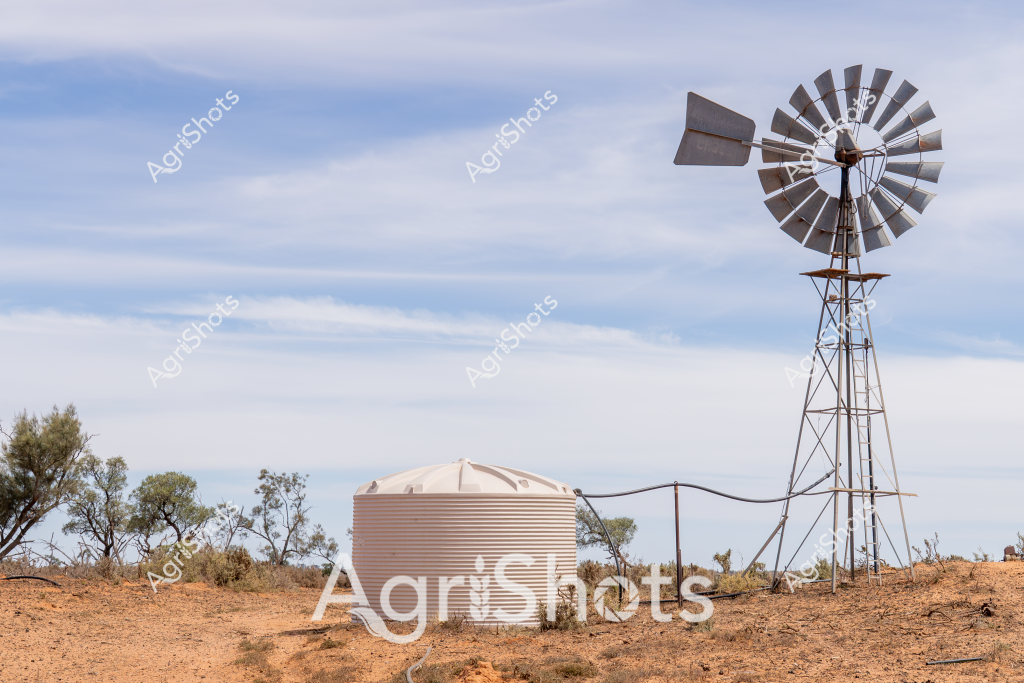
A classic Australian rural landscape captures a weathered windmill and water tank in an arid, drought-affected setting. The tall metal windmill stands prominently against a soft blue sky, its metal blades positioned to catch any available breeze. A corrugated steel water tank sits nearby, providing crucial water storage for the surrounding sparse landscape. Scattered native scrub and sparse trees dot the reddish-brown earth, highlighting the challenging environmental conditions typical of inland Australia. The scene embodies the resilience of rural infrastructure, with the windmill representing generations of agricultural adaptation to harsh, dry environments. The muted color palette of dusty browns, soft blues, and silvery metal tones speaks to the austere beauty of Australia's agricultural heartland.
 Image
Image
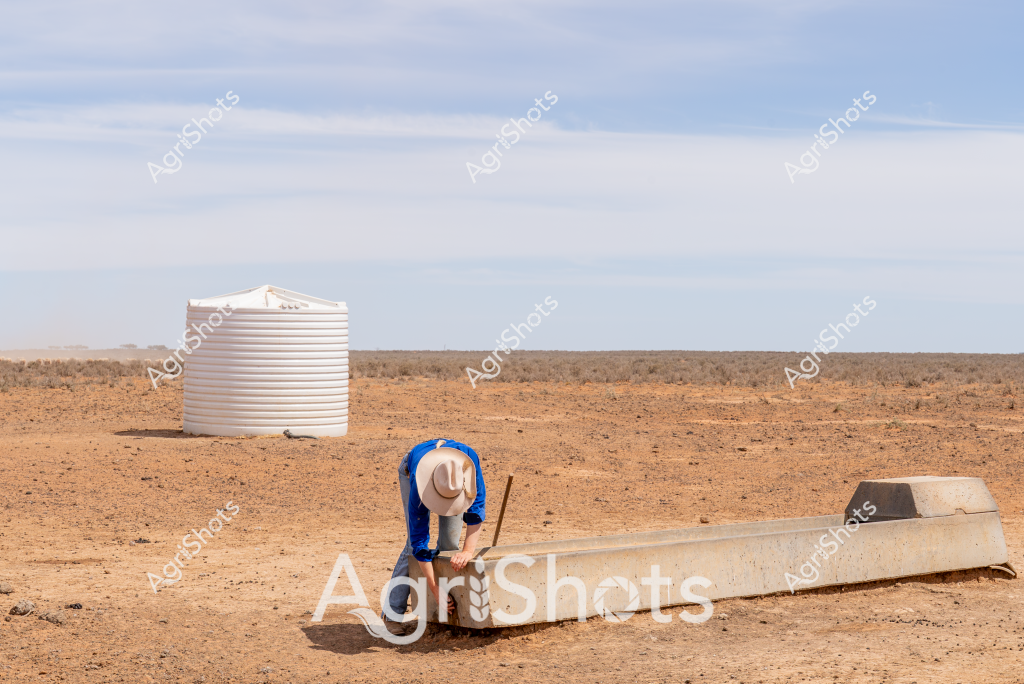
A man in a blue shirt and wide-brimmed hat bends over a concrete water trough in a sun-baked, arid landscape. The expansive paddock stretches to a distant horizon, with sparse, dry vegetation covering the reddish-brown earth. A large white water tank stands sentinel nearby, highlighting the critical importance of water infrastructure in this harsh, drought-affected environment. The scene captures the challenging conditions faced by farmers in rural Australia, with the lone figure working diligently to maintain essential water resources for livestock or agricultural needs. The pale blue sky and flat, open terrain emphasize the isolation and resilience required in such remote agricultural settings.
 Image
Image
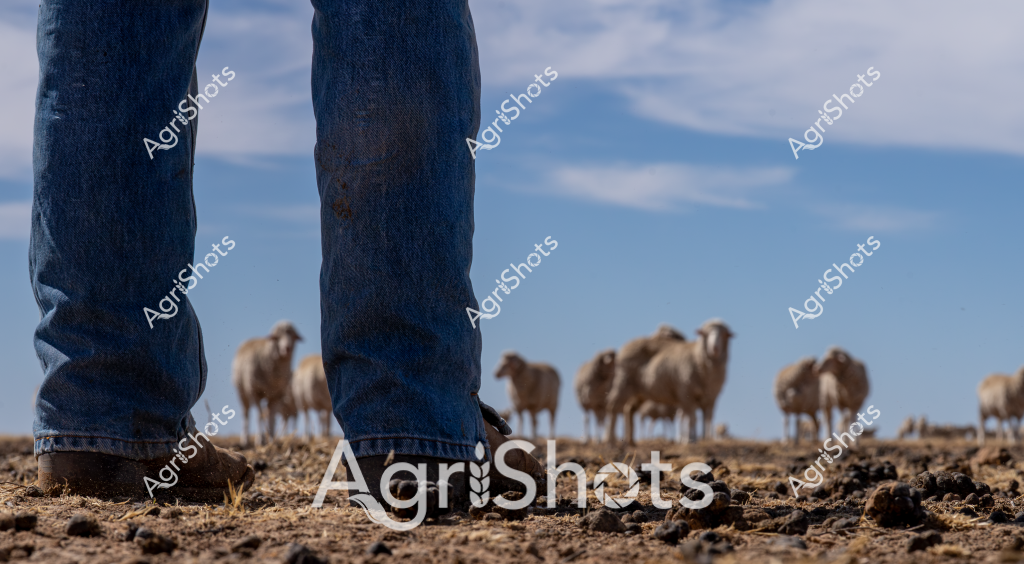
A close-up view of a man's denim-clad legs and boots stands in the foreground, with a flock of sheep grazing in the background under a soft blue sky. The ground is dry and rocky, typical of an arid Australian pastoral landscape, with sparse vegetation and a rugged terrain that stretches to the horizon. Several woolly sheep are clustered together, their tan and brown coats blending with the earthy tones of the paddock. The perspective emphasizes the scale of the landscape, with the human figure providing a sense of proportion against the expansive background. This image captures the essence of Australian sheep farming - the connection between the stockman and the flock, set against the challenging and beautiful rural environment.
 Image
Image
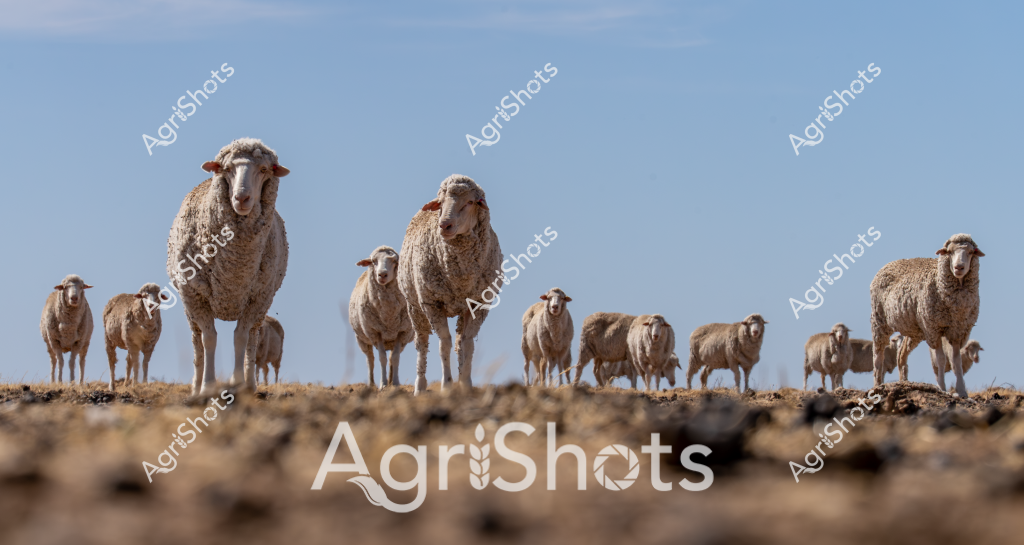
A flock of Merino sheep stands poised across a dry, rocky landscape under a clear blue sky, presenting a classic Australian pastoral scene. The woolly sheep, with their dense, creamy-white fleece, are strategically positioned at varying heights, creating a dynamic composition that highlights the breed's sturdy nature. Some sheep stand tall and alert, while others graze or move slowly across the barren ground, demonstrating the resilience of these animals in harsh agricultural environments. The foreground shows a rocky, dusty terrain typical of Australian rangelands, with stones and sparse ground cover indicating challenging farming conditions. The sheep's positioning suggests they are part of a carefully managed mob, potentially being moved between paddocks or prepared for shearing. Their thick, uniform fleece indicates these are high-quality Merino sheep, a breed renowned for producing some of the world's finest wool. The image captures the essence of Australian sheep farming - adaptability, endurance, and the intricate relationship between livestock and challenging landscapes. The clear sky and stark ground emphasize the open, expansive nature of rural Australian agricultural settings, where sheep farming remains a critical economic and cultural practice.
 Image
Image
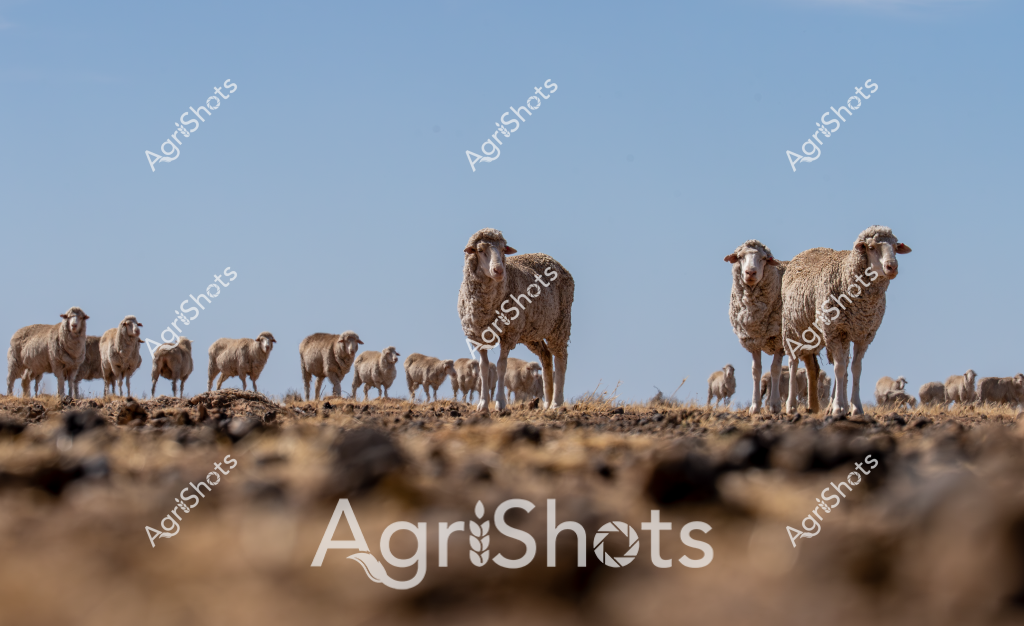
A flock of merino sheep stand confidently across a dry, rocky landscape under a clear blue sky. Several woolly sheep are positioned prominently in the foreground, with their dense, beige-colored fleece creating a textural contrast against the rugged ground. More sheep spread out behind them, creating a sense of depth and scale typical of Australian pastoral scenes. The animals appear alert, with some standing tall and others grazing, showcasing the hardy nature of merino sheep in challenging outback conditions. The low perspective emphasizes the sheep's robust form, with their muscular legs standing firmly on the weathered, stony terrain. This image captures the essence of Australian sheep farming - resilient animals adapted to harsh, arid environments that characterize much of the continent's agricultural landscape.
 Image
Image
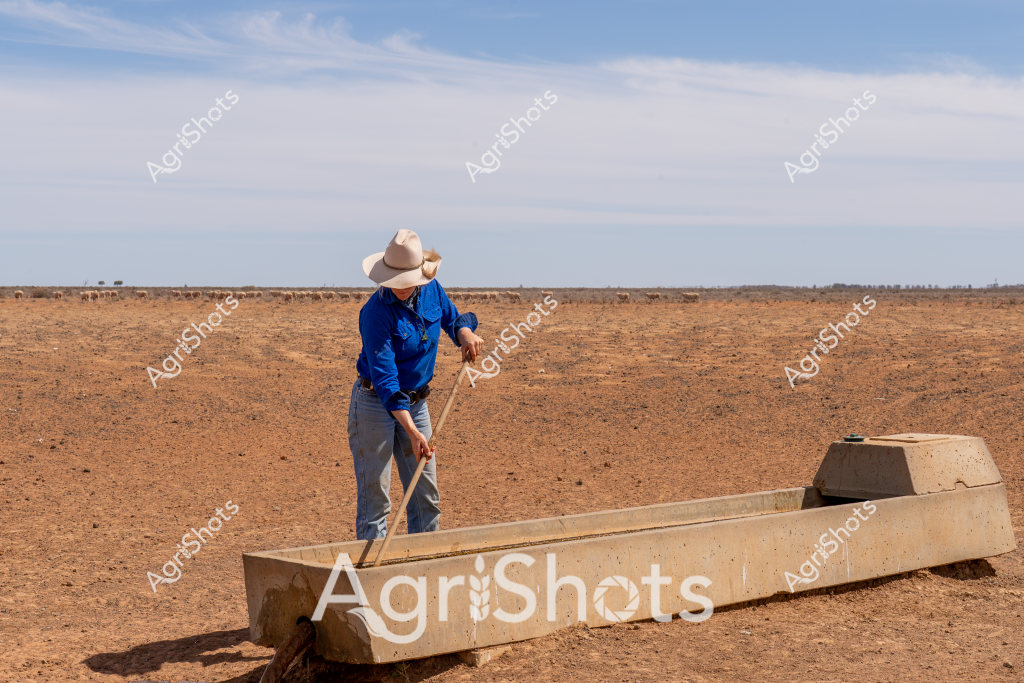
A man farmer stands beside a long concrete water trough in a dry, expansive pastoral landscape, wearing a light-colored wide-brimmed hat and a bright blue long-sleeved work shirt. The ground is a rich terracotta-colored earth, parched and cracked, stretching to a distant horizon where a small herd of cattle can be seen grazing. The concrete trough, a critical water infrastructure element, runs lengthwise across the foreground, with the farmer carefully using a long pole to manage or clean the water supply. The sky is a soft pale blue with wispy clouds, suggesting a hot, dry day typical of Australian agricultural regions during drought conditions. This image captures the resilience of farmers working in challenging environmental conditions, highlighting the importance of water management and infrastructure in sustaining livestock in arid landscapes.
 Image
Image
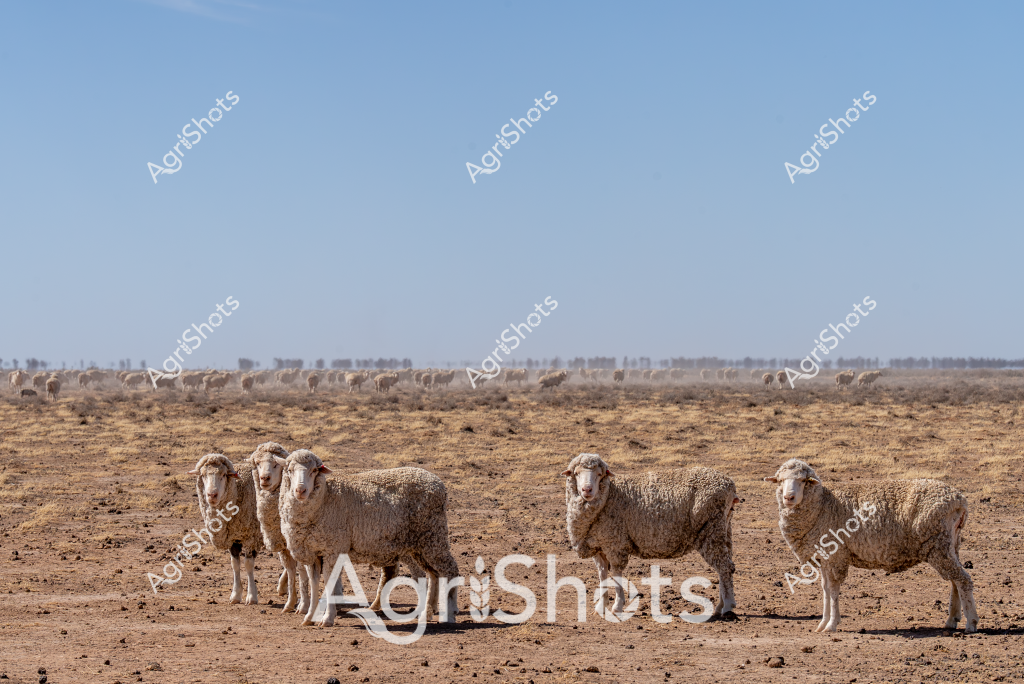
A small mob of Merino sheep stand clustered on a dry, dusty paddock under a clear blue sky, with more sheep visible in the distant background. The woolly white and cream-colored sheep appear hardy and well-conditioned, adapted to the arid Australian landscape. Sparse scrub and yellow-brown grassland stretch to the horizon, indicating challenging drought conditions typical of inland grazing regions. The sheep are standing relatively still, suggesting the harsh, unforgiving environment where water and feed are scarce. Their thick, dense fleece provides protection from the intense sunlight and heat, highlighting the resilience of Merino sheep in marginal agricultural zones. The expansive, open landscape communicates the vast scale of Australian sheep farming, where animals must survive in challenging terrain and climate conditions.
 Image
Image
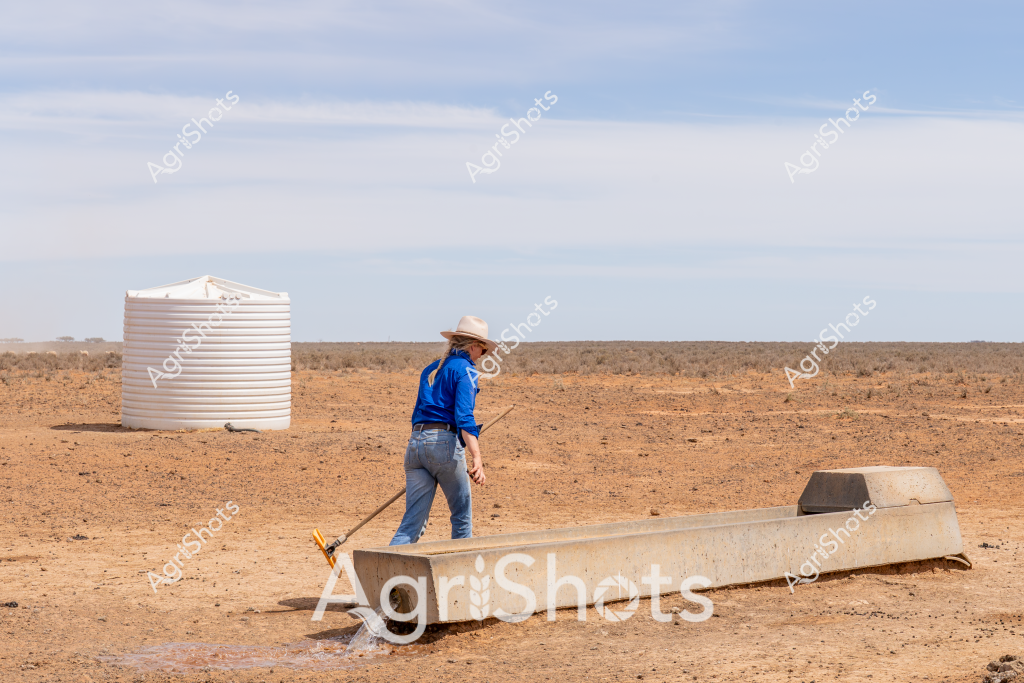
A woman in a blue long-sleeved shirt and wide-brimmed hat stands in a dry, expansive rural landscape, examining a concrete water trough beside a large white water storage tank. The arid paddock stretches to the horizon, with reddish-brown soil and sparse vegetation typical of drought-affected Australian agricultural regions. Her stance suggests careful inspection of critical water infrastructure, highlighting the challenges of managing agricultural resources in harsh, water-scarce environments. The wide-open landscape and essential water infrastructure underscore the resilience required in Australian farming, where water management is crucial for survival during extended dry periods.
 Image
Image
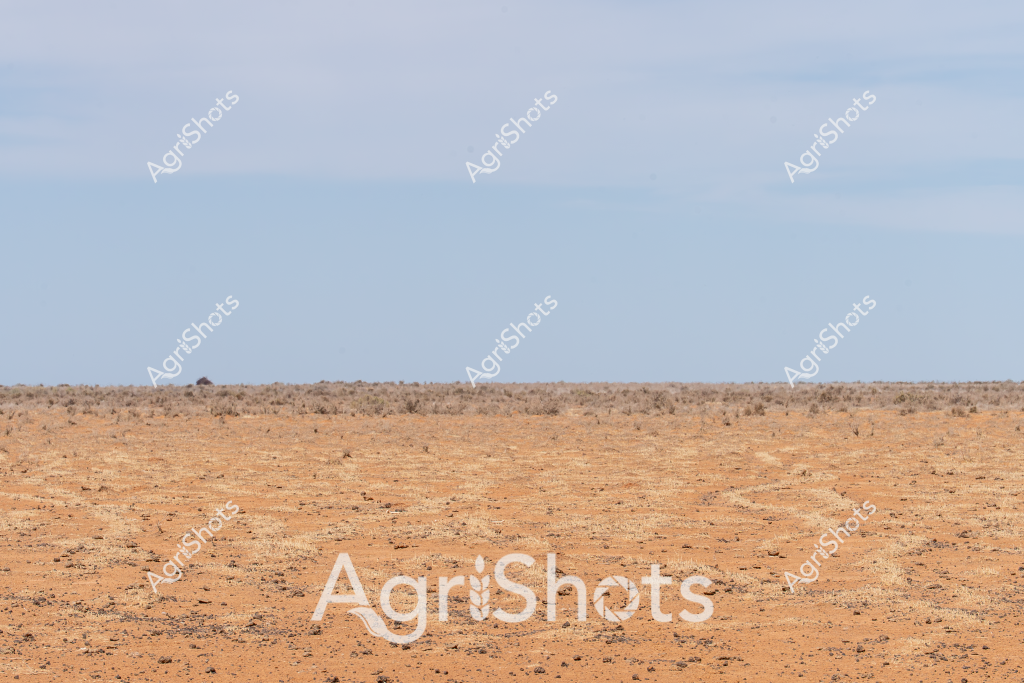
A barren, rust-colored landscape stretches beneath a pale blue sky, depicting an arid agricultural region experiencing severe drought conditions. The ground is parched and rocky, with sparse scattered low shrubs and minimal vegetation, creating a stark testimony to the harsh environmental challenges faced by Australian farmers. Small stones and compacted earth dominate the foreground, revealing a landscape that has been stripped of moisture and vitality. The horizon line is flat and uninterrupted, emphasizing the expansive and unforgiving nature of this drought-affected terrain. This image powerfully illustrates the environmental stress and resilience required in Australian agricultural landscapes, where farmers must constantly adapt to extreme climatic conditions. The scene captures the raw, uncompromising reality of drought - a critical challenge for agricultural production in Australia's interior regions. The monochromatic palette of burnt orange, dusty brown, and pale blue communicates the severity of water scarcity and its profound impact on rural ecosystems and agricultural sustainability.
 Image
Image
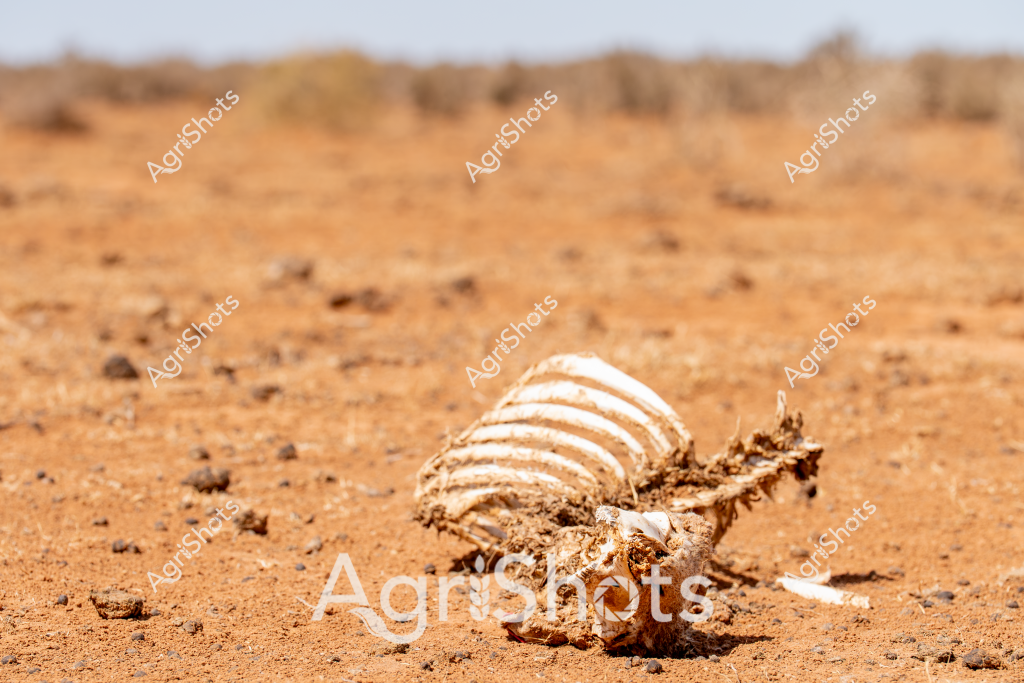
A bleached animal skeleton lies partially decomposed on a dry, reddish-orange desert landscape, revealing the stark ribcage and skeletal structure against the arid, rocky ground. The parched earth surrounding the bones is cracked and barren, with sparse vegetation and distant shrubs indicating an extreme drought environment typical of Australia's interior regions. Weathered and sun-bleached, the skeletal remains tell a grim story of survival and the unforgiving nature of the outback's harsh conditions. The monochromatic palette of rust-colored soil and white bone fragments creates a haunting visual that captures the raw, unrelenting reality of life and death in an uncompromising landscape. This image powerfully illustrates the challenging environmental conditions that test the resilience of both wildlife and agricultural systems in Australia's most arid zones.
 Image
Image
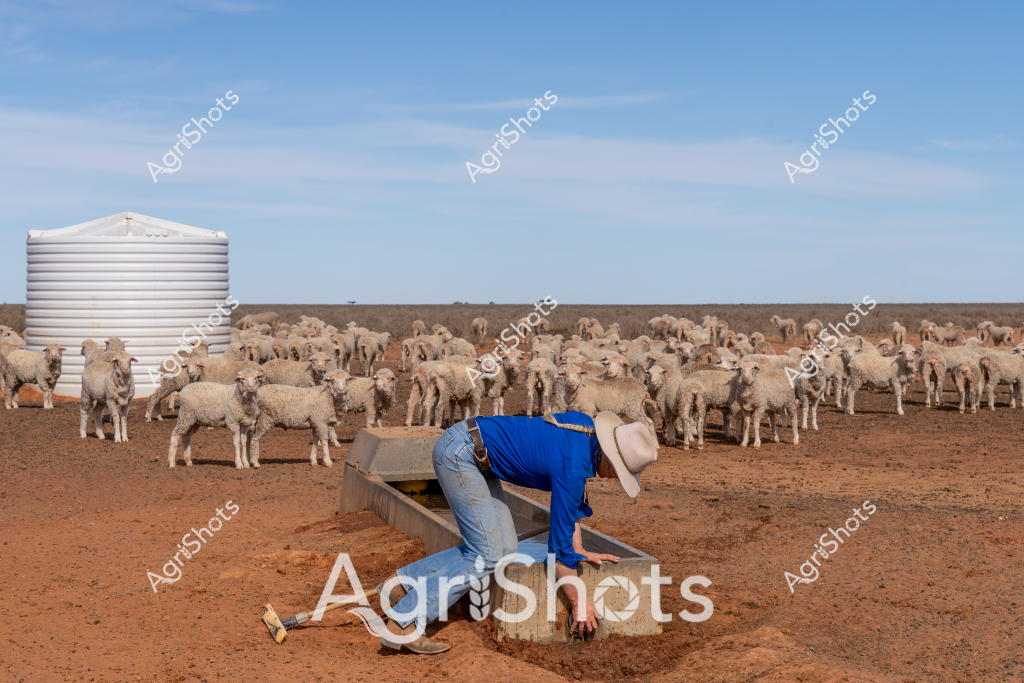
A man in a blue work shirt and wide-brimmed hat tends to a large flock of Merino sheep in a dry, arid landscape of central Australia. A large white water tank stands prominently in the background, while dozens of woolly sheep crowd the reddish-brown earth around a livestock water trough. The stockman is bent over, carefully managing the water supply for the flock, which appears to be a substantial breeding mob spread across the sparse paddock. The clear blue sky and open horizon emphasize the challenging environment of outback sheep farming, where water management is critical for livestock survival. Dusty ground and scattered vegetation highlight the harsh conditions of this rural agricultural setting, showcasing the resilience required in Australian sheep farming. The scene captures the essential daily work of a sheep station worker, demonstrating the careful husbandry needed to maintain livestock in a drought-prone landscape. The white water tank and metal trough are crucial infrastructure that enables sheep farming in these challenging environmental conditions.
 Image
Image
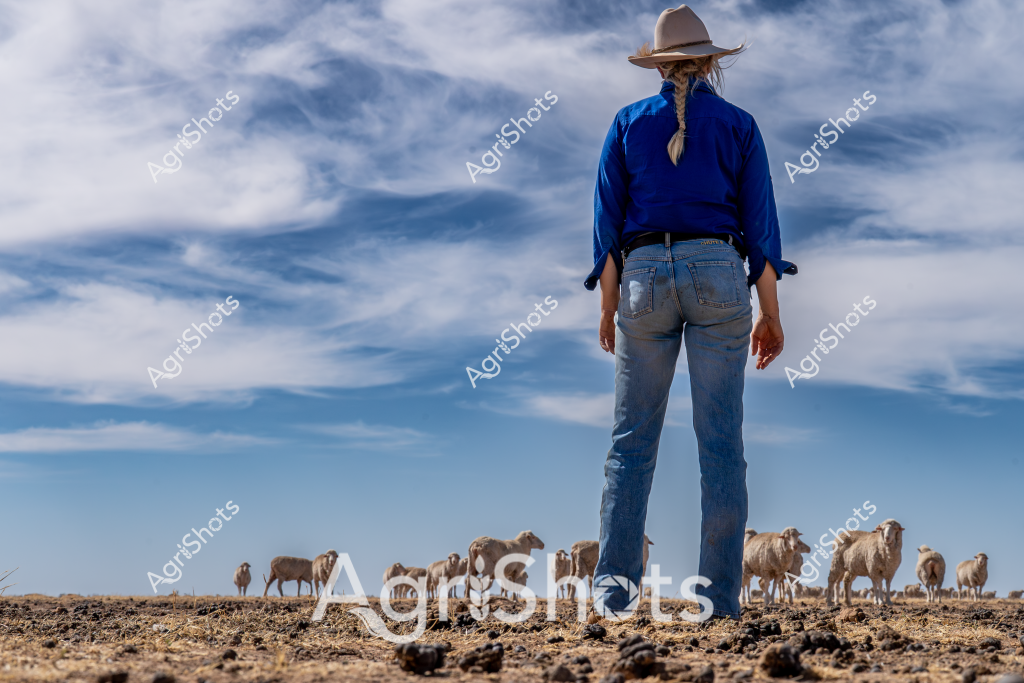
A woman stockman stands facing a flock of sheep in an arid, rocky landscape under a dramatic blue and white cloudy sky. Wearing a wide-brimmed hat and blue long-sleeved shirt with denim jeans, she surveys the livestock from behind, observing a group of woolly sheep grazing on the dry, stony ground. The expansive horizon and sparse terrain suggest this is a remote pastoral setting, likely in the Australian outback or a dry inland region. Her stance - feet planted firmly, back straight - communicates a sense of quiet confidence and connection to the land. The scattered flock of light-colored sheep moves slowly across the rocky paddock, creating a textural contrast between the soft woolly animals and the hard, weathered ground. This image captures the essence of Australian sheep farming - a solitary figure managing livestock in a challenging, beautiful environment that demands resilience and skill.
 Image
Image
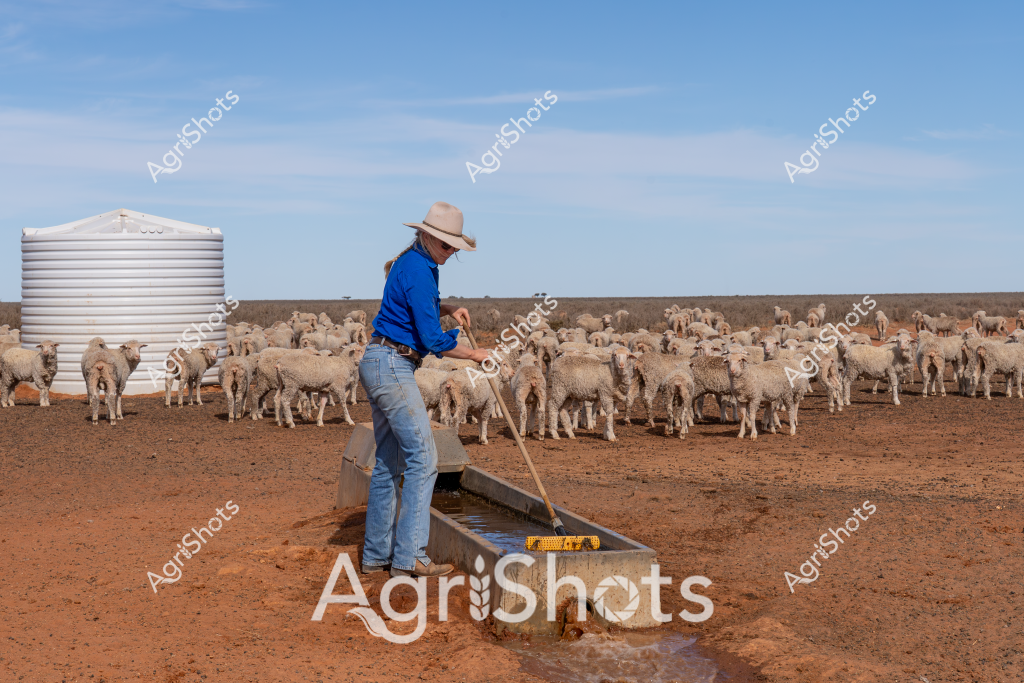
A woman in a blue long-sleeved shirt and wide-brimmed hat tends to a large flock of merino sheep in an arid Australian landscape. Standing beside a water trough near a large white water tank, she is surrounded by dozens of woolly sheep on a dry, reddish-brown earth paddock. The expansive background reveals a flat, sparse horizon typical of inland Australian pastoral regions, with a clear blue sky stretching overhead. Her stance suggests careful monitoring and management of the livestock, using the water trough to ensure the sheep remain hydrated in the harsh, dry environment. The white water tank and carefully positioned trough highlight the critical infrastructure required to support livestock in challenging agricultural conditions, demonstrating the resilience and strategic planning of Australian sheep farmers. The scene captures the essence of outback sheep farming - a solitary worker maintaining a flock in a demanding landscape, where water management and animal care are paramount to survival. The merino sheep, with their distinctive thick woolly coats, cluster around the water source, reflecting the symbiotic relationship between the farmer and the livestock in this unforgiving terrain.
 Image
Image
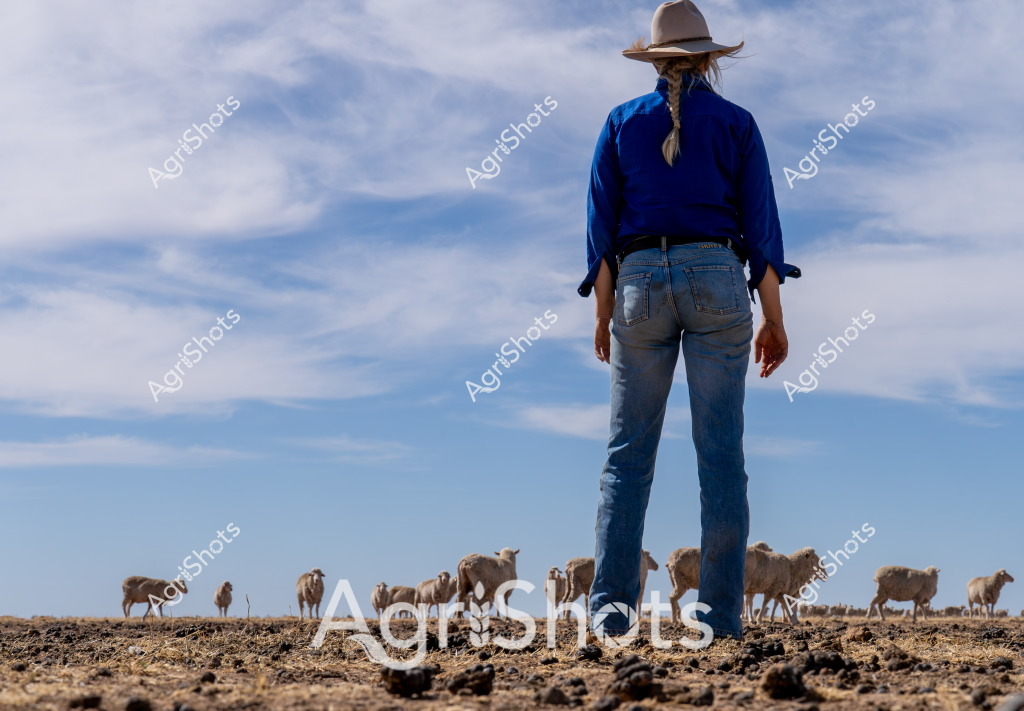
A woman livestock manager stands with her back to the camera, overlooking a flock of sheep grazing across a dry, rocky landscape. Wearing a wide-brimmed hat and a deep blue long-sleeved shirt with blue denim jeans, she surveys the terrain with a sense of quiet determination. The ground is rocky and sparse, with scattered stones and minimal vegetation, suggesting an arid or drought-affected region. A small herd of sheep, likely merino or crossbreed, graze cautiously across the foreground, their woolly forms creating a textural contrast against the barren earth. The sky is a soft blue with wispy clouds, stretching wide and expansive above the landscape, emphasizing the open nature of the pastoral setting. This image captures the solitary and challenging nature of livestock management in Australia's harsh rural environments, highlighting the connection between the shepherd and the land.
 Image
Image
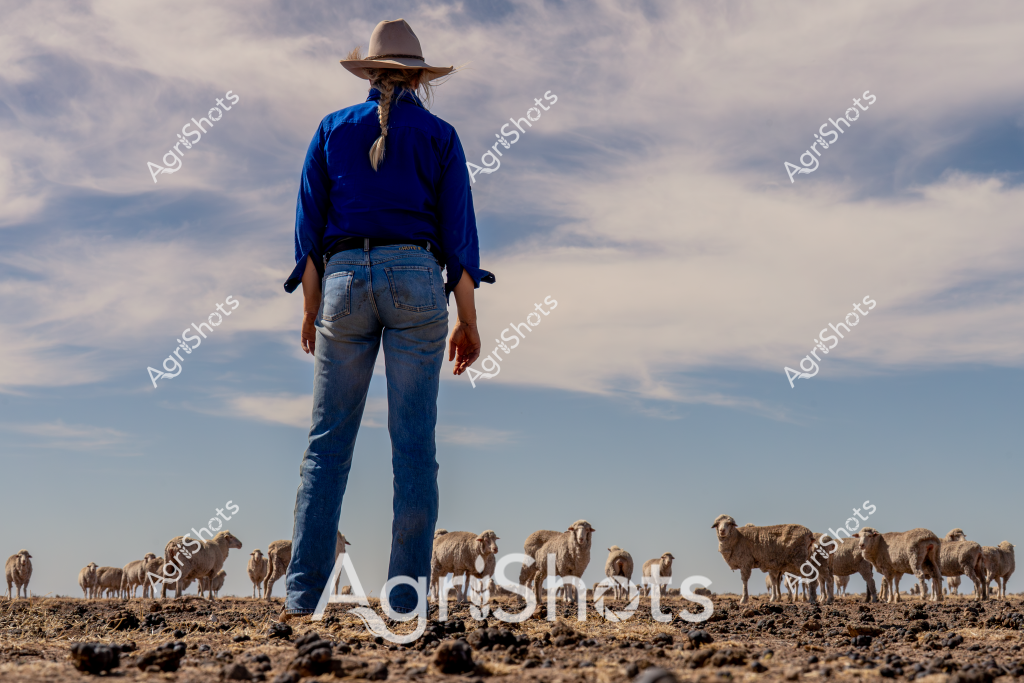
A woman stockman stands with her back to the camera, surveying a flock of merino sheep grazing on a dry, rocky landscape under an expansive cloudy sky. Wearing a royal blue long-sleeved shirt, blue jeans, and a wide-brimmed light-colored hat, she appears contemplative and watchful over the livestock. The sheep, clustered in groups across the barren ground, represent a typical Australian pastoral scene of resilience and careful management. The rocky terrain and scattered sheep suggest this is likely an arid or semi-arid region, possibly in western New South Wales or Queensland, where livestock farming requires significant skill and endurance. Her stance - solid, centered, and observant - communicates the quiet strength of Australian rural workers who maintain their herds in challenging environmental conditions. The image captures the essence of Australian agricultural life: a connection between a skilled stockwoman and the merino flock, set against a stark and beautiful landscape that speaks to the challenging yet profound nature of pastoral farming.
 Image
Image
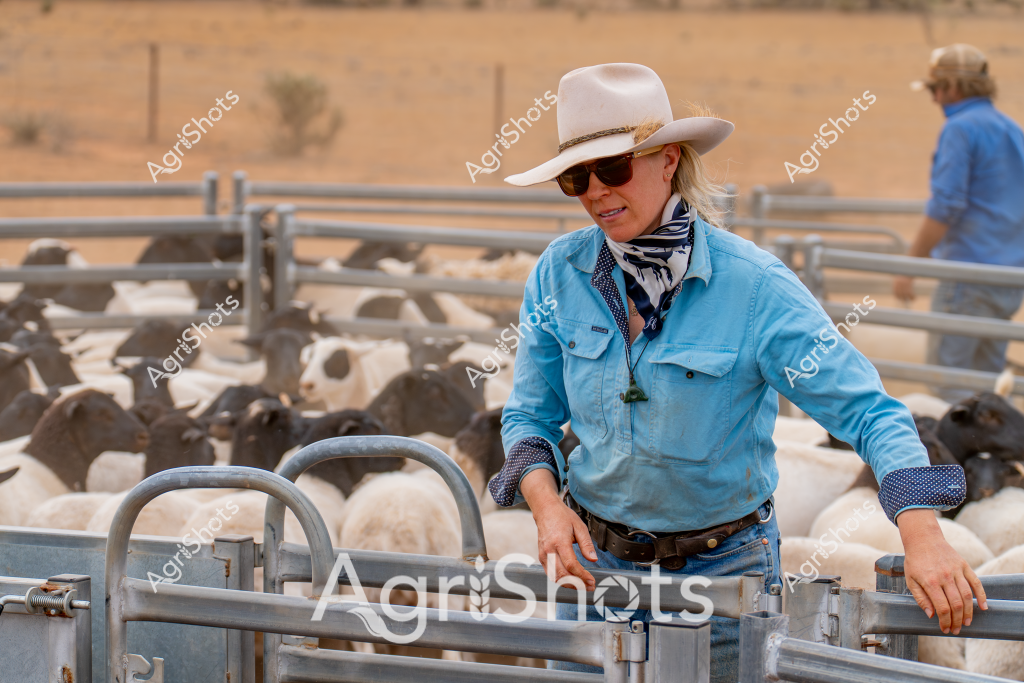
A woman stockman wearing a white wide-brimmed hat, blue work shirt, and sunglasses stands confidently in a sheep yard, surrounded by a herd of mixed-breed sheep. The metal livestock gates and fencing create a structured environment in what appears to be an arid, dusty rural Australian landscape. Her professional stance and carefully positioned hands suggest years of experience managing livestock, with her blue shirt and striped neck scarf indicating practical working attire suited to the harsh conditions. In the background, another worker in blue can be seen, highlighting the collaborative nature of sheep station operations. The dry, golden-brown paddock stretching behind the yards emphasizes the challenging environment of Australian agricultural settings, where skilled stockmen and women play a crucial role in managing livestock in demanding conditions.
 Image
Image
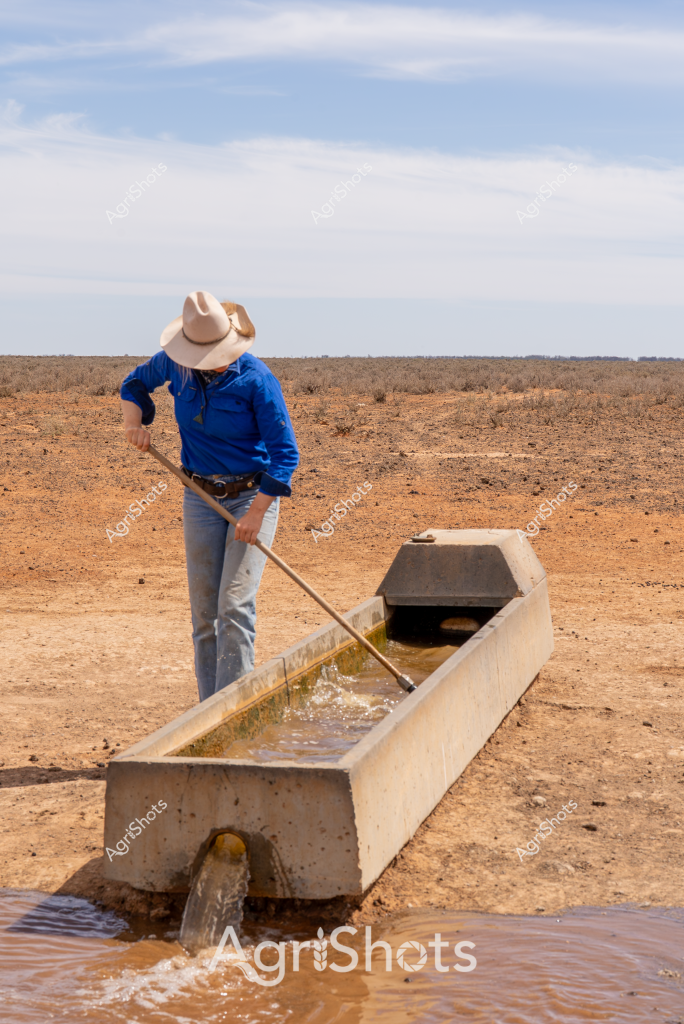
A woman in a blue long-sleeved shirt and wide-brimmed hat stands beside a concrete water trough in a parched, rust-colored landscape. She is carefully managing water flow, using a pole or implement to adjust the water running through the concrete channel. The surrounding terrain is a dry, barren expanse of reddish-brown earth with sparse vegetation, typical of an arid Australian agricultural region experiencing drought conditions. The concrete water infrastructure appears critical for livestock survival in this harsh environment, with water trickling from the trough into a pooling area below. The expansive, empty horizon and cloudless sky emphasize the stark, challenging landscape that farmers and graziers must navigate in rural Australia.
 Image
Image
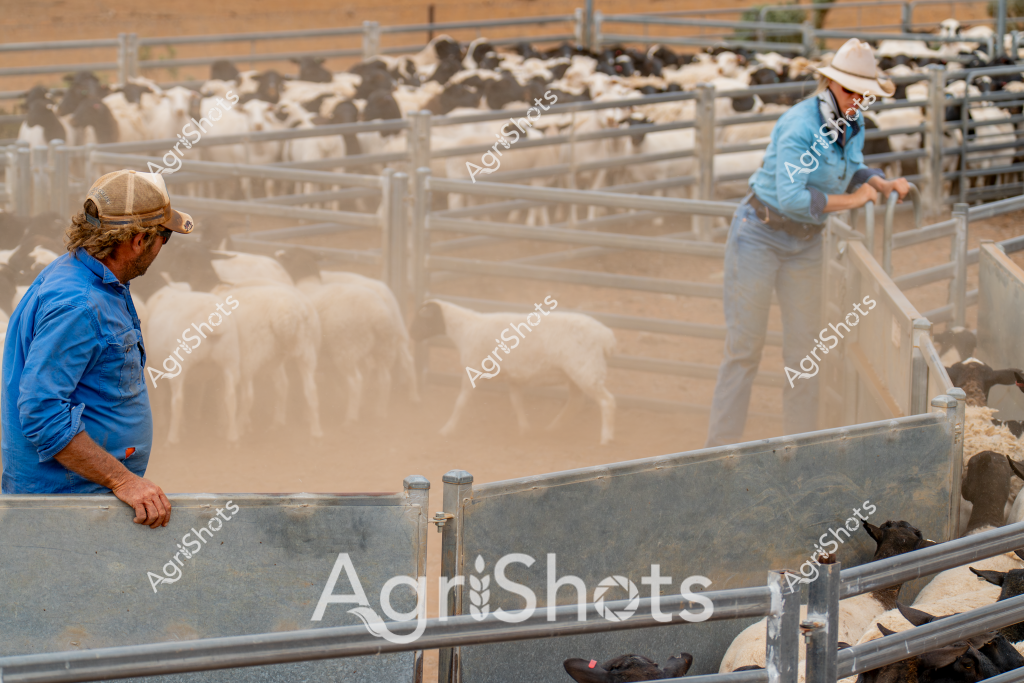
Two men working in a dusty livestock yard manage a flock of sheep, carefully guiding them through metal cattle yards under bright, arid conditions. A man in a blue long-sleeved shirt and tan cap stands near a metal gate, observing the livestock movement, while another man in a light blue shirt and white wide-brimmed hat actively manages the sheep behind metal fencing. The sheep - a mix of white and dark-colored animals - are clustered tightly in the holding pen, raising a fine cloud of dust around their woolly bodies. The landscape appears dry and sun-drenched, typical of Australian rural livestock management settings, with metal yard infrastructure providing structured containment for the animals. The workers' positioning and attentive postures suggest an experienced approach to stock handling, demonstrating the precise and methodical nature of sheep farming in challenging agricultural environments.
 Image
Image
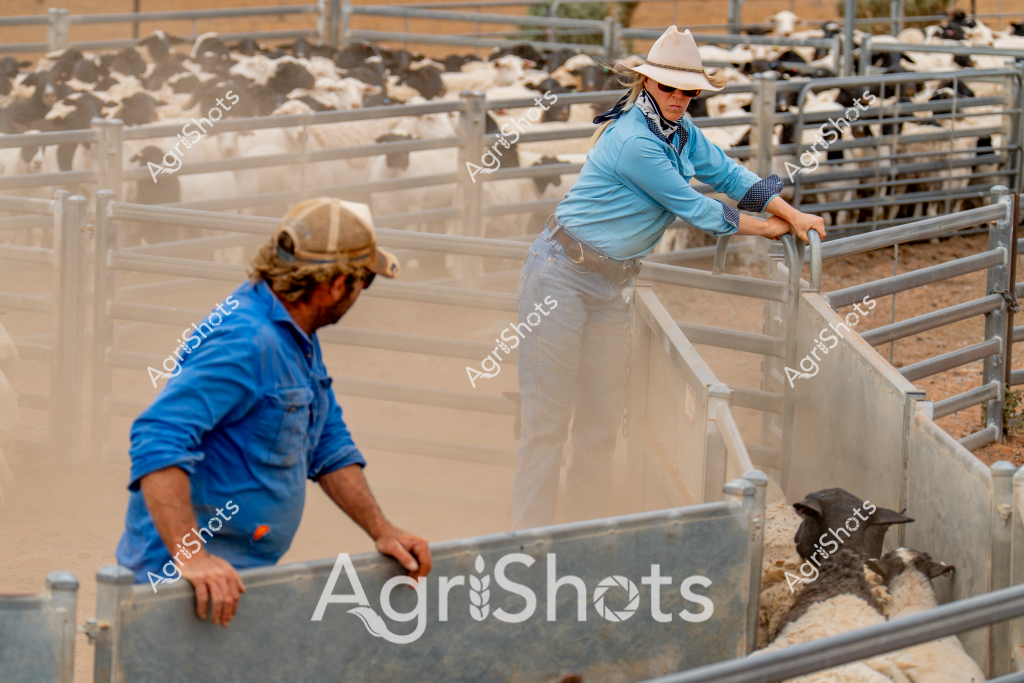
A woman stockman and a man worker are managing sheep in a dusty livestock yards, using metal cattle gates and pens to control the flock's movement. The woman wears a white wide-brimmed hat, light blue long-sleeved shirt, and light-colored trousers, leaning confidently on the metal yard fence. Her colleague in a blue work shirt stands nearby, carefully monitoring the sheep's positioning. Multiple sheep are visible in the background, clustered within the galvanized steel yard infrastructure. The scene captures the precision and skill of Australian livestock management, with fine dust particles hanging in the air and creating a soft, atmospheric light that highlights the rural working environment. The metallic fencing, practical workwear, and controlled movement of livestock demonstrate the professional approach to sheep handling in a dry, potentially arid agricultural setting.
 Image
Image
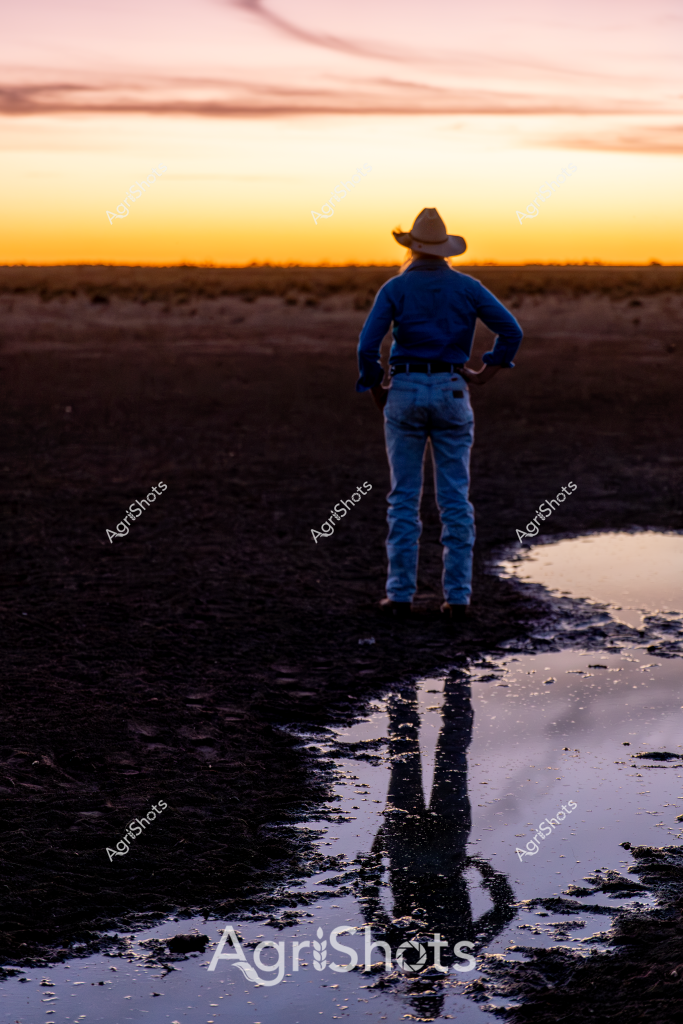
A man stockman stands silhouetted against a stunning sunset landscape, facing away from the camera in classic rural Australian attire. Wearing a wide-brimmed cowboy hat and blue work shirt with denim jeans, he surveys the expansive, arid horizon where golden yellow sky meets dark earth. His reflection is perfectly mirrored in a shallow water puddle in the foreground, creating a symmetrical composition that captures the solitary nature of outback life. The scene evokes a sense of quiet contemplation, with the figure seemingly paused at the boundary between land and twilight, embodying the introspective spirit of rural Australian workers. The low-angled light casts long shadows and creates a warm, amber-toned atmosphere that speaks to the rugged beauty of the agricultural landscape.
 Image
Image
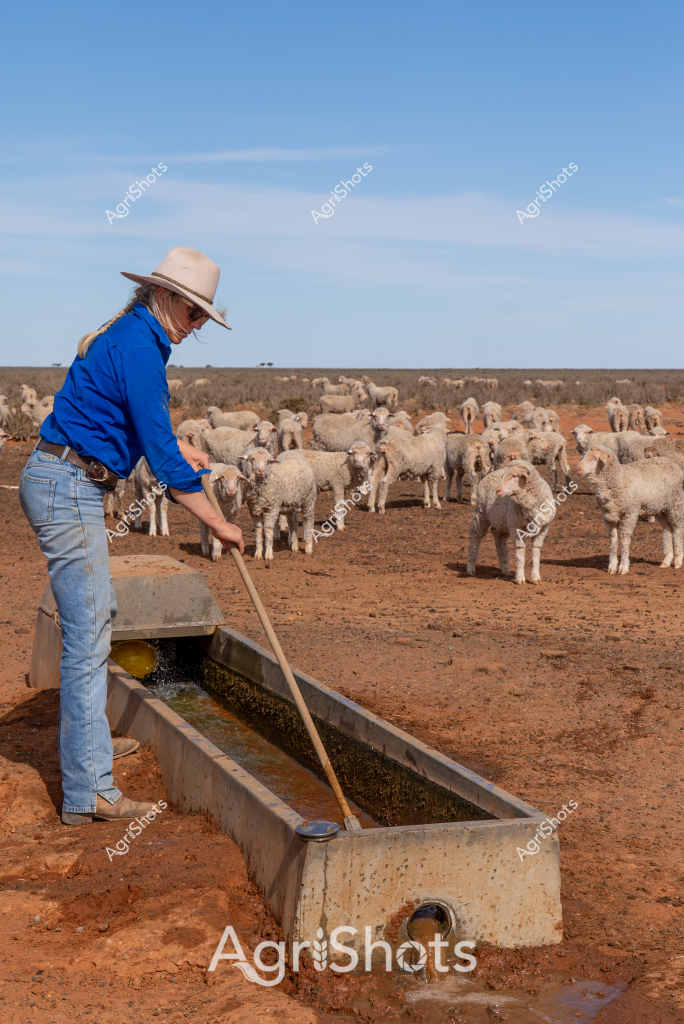
A woman stockman in a bright blue long-sleeved shirt and light blue jeans manages a flock of Merino sheep in an arid Australian landscape. Standing beside a concrete water trough, she uses a long pole to adjust or clean the water supply for the livestock. The dry, reddish-brown earth stretches to the horizon, dotted with dozens of woolly white sheep clustered together in the background. Her wide-brimmed light-colored hat provides protection from the intense sunlight, while the clear blue sky suggests a typical hot, dry day in the Australian outback. This scene captures the challenging yet essential work of managing livestock in harsh rural conditions, highlighting the critical role of water infrastructure in sustaining sheep farming in remote agricultural regions.
 Image
Image
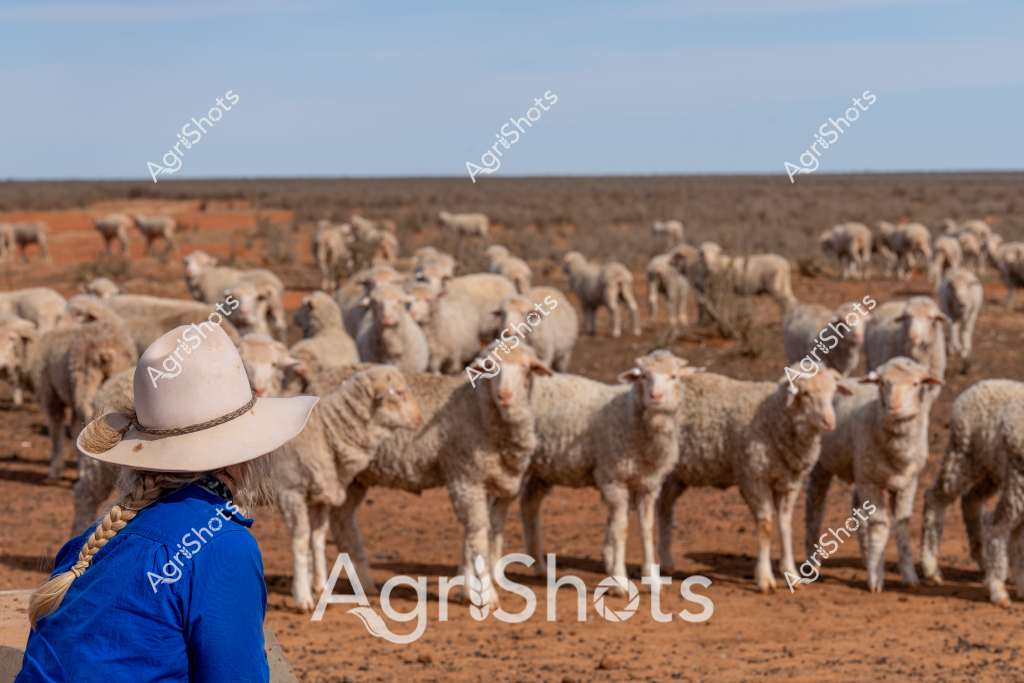
A woman stockman wearing a wide-brimmed light-colored hat and a bright blue long-sleeved shirt stands observing a large flock of Merino sheep grazing across a dry, reddish-brown paddock. The landscape stretches out to a flat horizon under a pale blue sky, typical of Australia's arid pastoral regions. Dozens of woolly white sheep are scattered across the dusty ground, their dense fleeces standing out against the ochre-colored earth. The scene captures the essence of sheep farming in rural Australia, showcasing the vast, open landscapes and the careful management required to maintain a healthy flock in challenging environmental conditions. The woman's positioning suggests she is monitoring the sheep, a critical task in maintaining the health and safety of the livestock in this harsh, expansive terrain.
 Image
Image
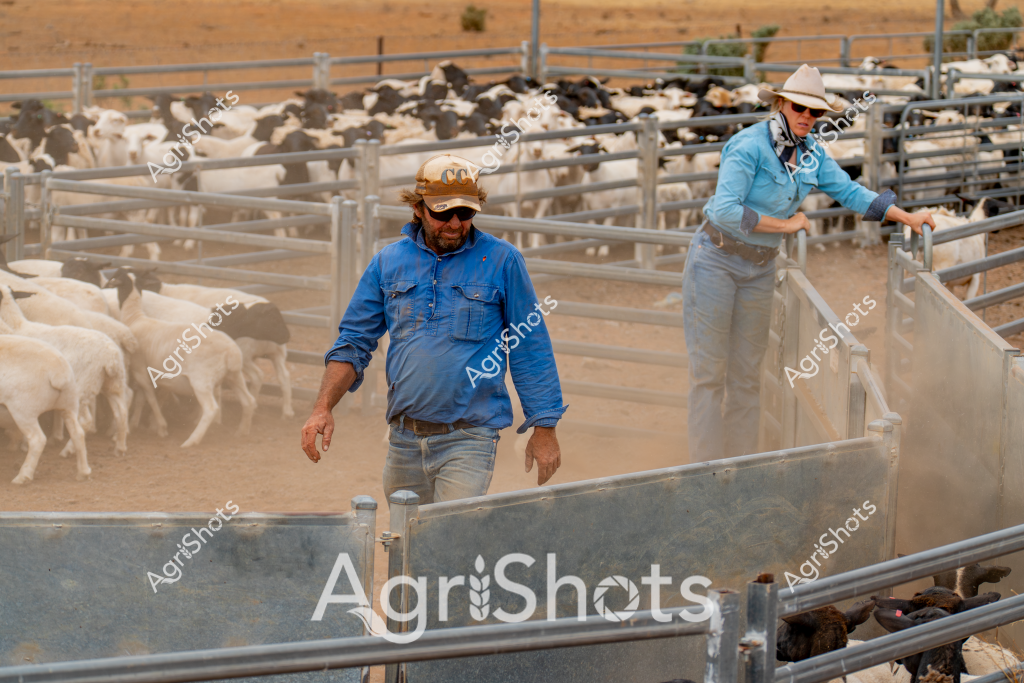
A man and a woman livestock managers work together in a dusty cattle yard, carefully managing a herd of white and dark-colored goats within metal livestock pens. The man, wearing a blue work shirt, brown cap, and sunglasses, walks along the metal gate, while a woman in a light blue shirt and white hat stands at another section of the fencing. The surrounding landscape appears arid, with dry golden grasslands and sparse vegetation visible in the background, suggesting this is likely a rural station or property in an inland region of Australia. Metallic livestock handling equipment creates a structured grid around the animals, who are clustered tightly within the enclosed spaces. The scene captures the careful, methodical approach of professional livestock management, highlighting the skill and teamwork required to handle and move herds in challenging agricultural environments.