Results for “Sheep Farming”
 Image
Image
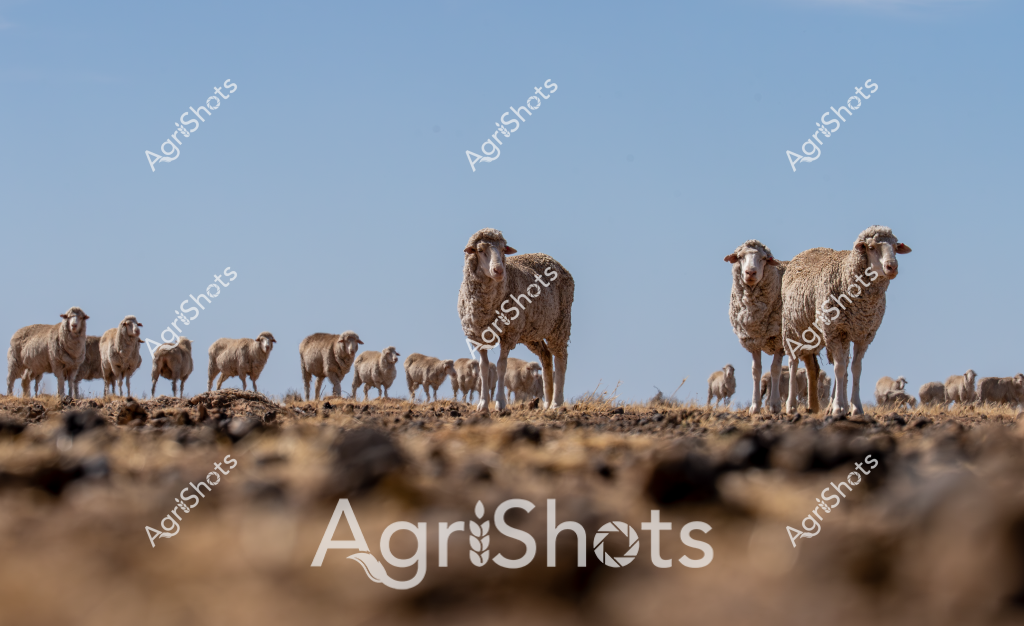
A flock of merino sheep stand confidently across a dry, rocky landscape under a clear blue sky. Several woolly sheep are positioned prominently in the foreground, with their dense, beige-colored fleece creating a textural contrast against the rugged ground. More sheep spread out behind them, creating a sense of depth and scale typical of Australian pastoral scenes. The animals appear alert, with some standing tall and others grazing, showcasing the hardy nature of merino sheep in challenging outback conditions. The low perspective emphasizes the sheep's robust form, with their muscular legs standing firmly on the weathered, stony terrain. This image captures the essence of Australian sheep farming - resilient animals adapted to harsh, arid environments that characterize much of the continent's agricultural landscape.
 Image
Image
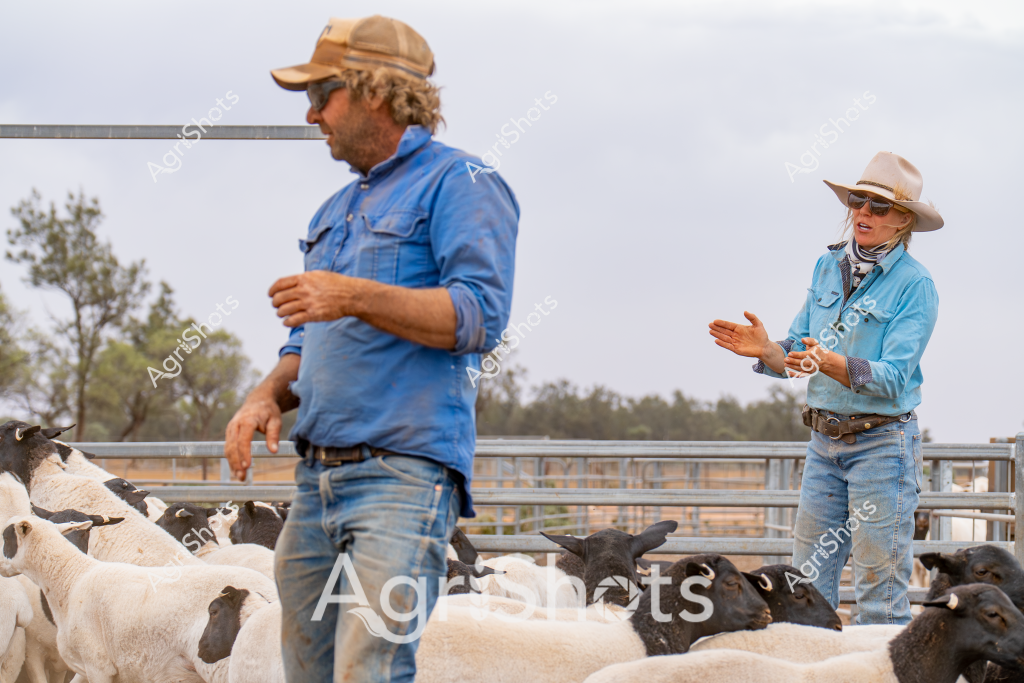
A woman and a man stockman work together in a livestock yard, managing a mixed flock of white and black sheep. Dressed in blue chambray shirts and wearing wide-brimmed hats for sun protection, they appear to be coordinating the movement and sorting of the sheep within metal livestock yards. The landscape in the background suggests an Australian rural setting, with scattered trees and an open sky creating a typical pastoral scene. Their body language indicates careful communication and collaboration, with the woman gesturing and the man positioned among the sheep, demonstrating the teamwork essential in livestock management. The sheep - a mix of white and black woolly animals - are clustered tightly within the yard's metal railings, ready for potential drafting, health checks, or preparation for movement.
 Image
Image
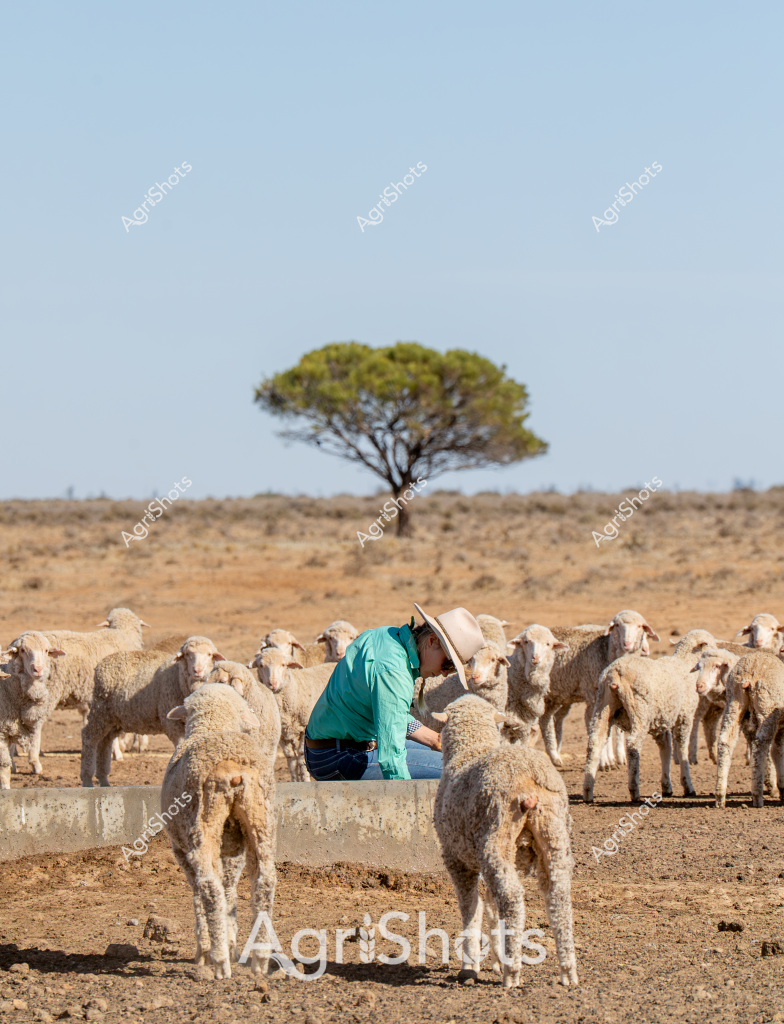
A dedicated woman stockman tends to a flock of Merino sheep in a sparse, arid landscape. Wearing a teal green shirt and a wide-brimmed sun hat, she carefully works among the woolly white sheep gathered around a concrete trough. The barren paddock stretches out to the horizon, with a single, distinctive acacia tree standing solitary against the pale blue sky, symbolizing the resilience of Australian pastoral life. The sheep, with their dense, cream-colored fleece, cluster tightly around the water source, highlighting the critical importance of water management in this dry environment. The ground is hard-packed and dusty, indicating challenging drought conditions typical of many Australian rural regions. The woman's posture and careful attention suggest years of experience in managing livestock in harsh agricultural settings. This image captures the essence of Australian sheep farming - the intimate relationship between the stockman and the flock, the stark beauty of the landscape, and the ongoing challenge of sustaining agriculture in a challenging environment. The scene speaks to the skill, dedication, and adaptability required in Australian pastoral agriculture.
 Image
Image
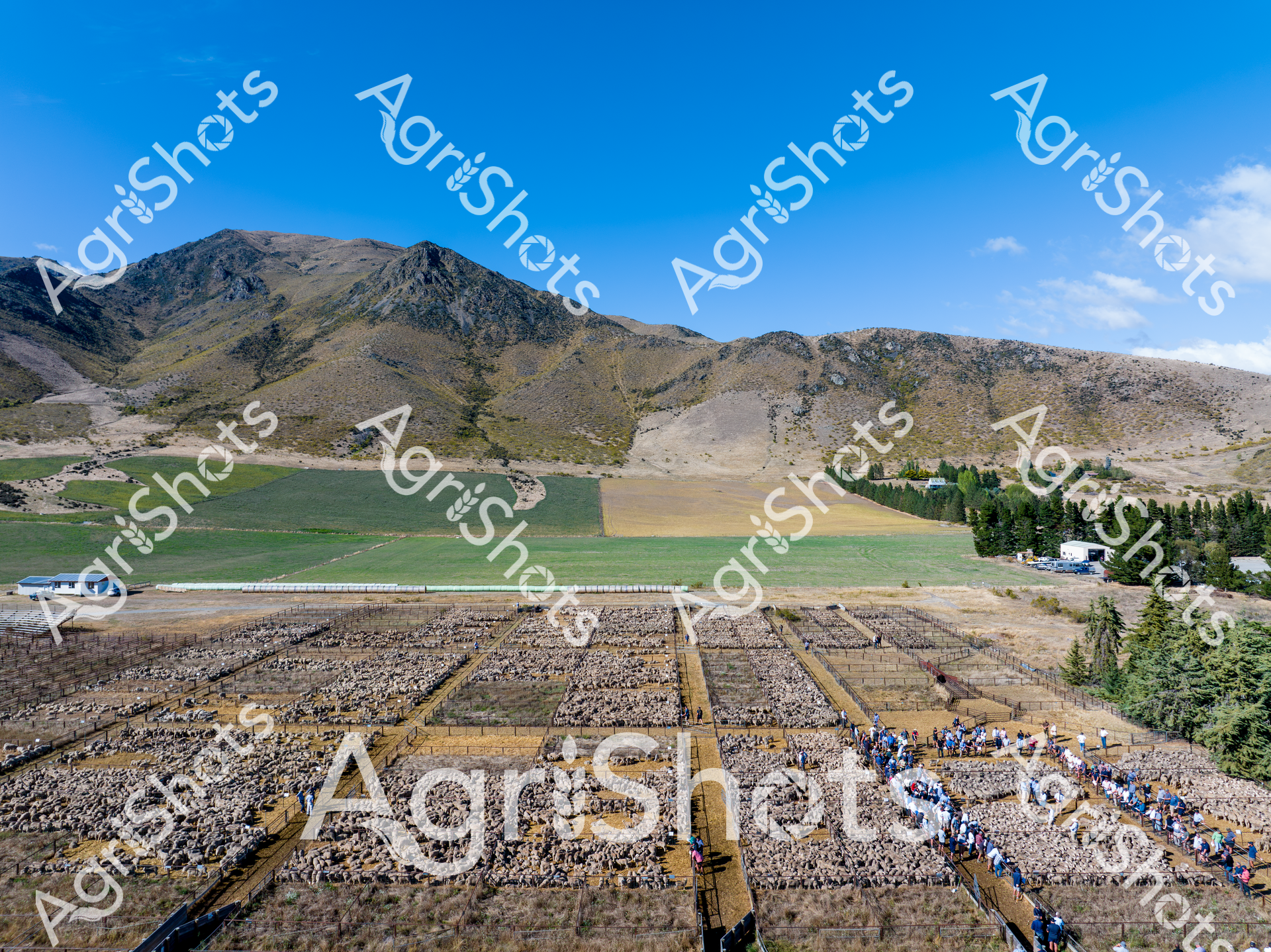
North Otago's high country sheep sale thunders with pastoral energy, a quintessential moment of New Zealand's agricultural heartland. Hundreds of Merino lambs cluster tightly in geometric wooden yard pens, their pale woolly bodies creating a textured mosaic against the golden and green paddocks. Livestock agents in navy and blue uniforms move strategically along narrow walkways, expertly managing the sale's complex choreography under a brilliant azure summer sky. Rugged mountain ranges frame the background, their tawny slopes rising dramatically and providing a classic South Island agricultural landscape context. This expansive aerial view captures the precision of stock management, where generations of farming expertise converge in a single, meticulously organized livestock sale. The scene radiates the quiet intensity of rural commerce, where each animal represents both economic potential and cultural heritage.
 Image
Image
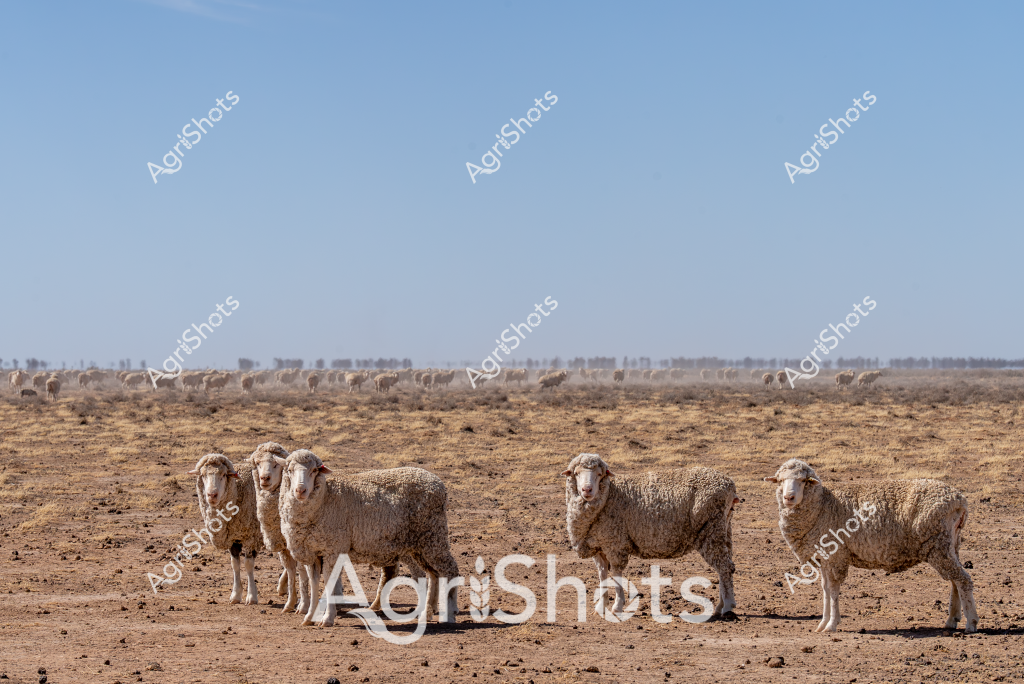
A small mob of Merino sheep stand clustered on a dry, dusty paddock under a clear blue sky, with more sheep visible in the distant background. The woolly white and cream-colored sheep appear hardy and well-conditioned, adapted to the arid Australian landscape. Sparse scrub and yellow-brown grassland stretch to the horizon, indicating challenging drought conditions typical of inland grazing regions. The sheep are standing relatively still, suggesting the harsh, unforgiving environment where water and feed are scarce. Their thick, dense fleece provides protection from the intense sunlight and heat, highlighting the resilience of Merino sheep in marginal agricultural zones. The expansive, open landscape communicates the vast scale of Australian sheep farming, where animals must survive in challenging terrain and climate conditions.
 Image
Image
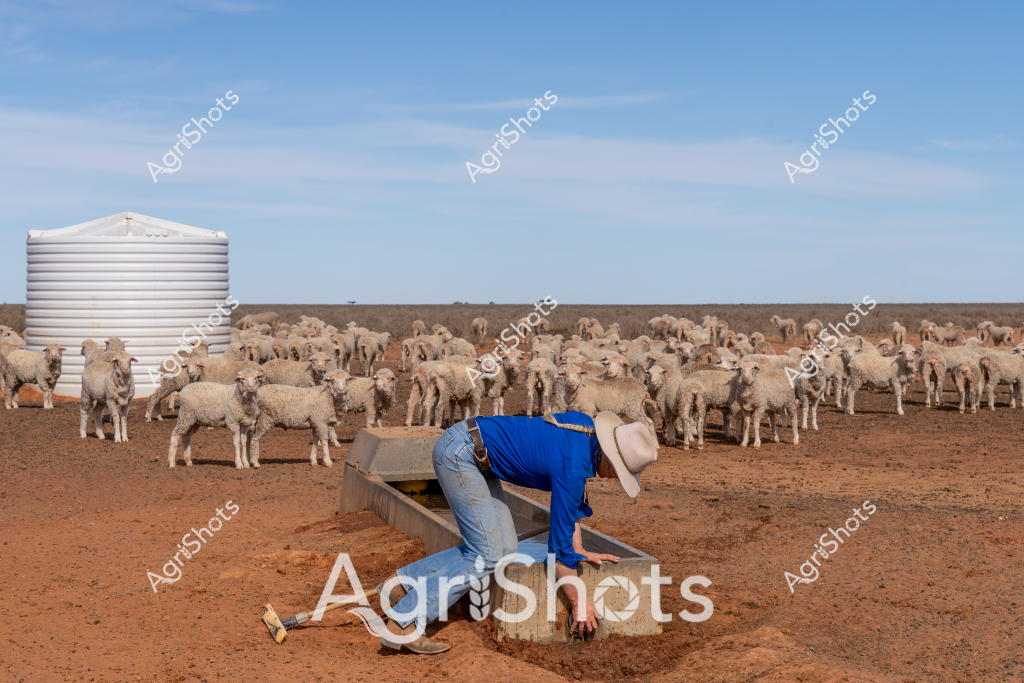
A man in a blue work shirt and wide-brimmed hat tends to a large flock of Merino sheep in a dry, arid landscape of central Australia. A large white water tank stands prominently in the background, while dozens of woolly sheep crowd the reddish-brown earth around a livestock water trough. The stockman is bent over, carefully managing the water supply for the flock, which appears to be a substantial breeding mob spread across the sparse paddock. The clear blue sky and open horizon emphasize the challenging environment of outback sheep farming, where water management is critical for livestock survival. Dusty ground and scattered vegetation highlight the harsh conditions of this rural agricultural setting, showcasing the resilience required in Australian sheep farming. The scene captures the essential daily work of a sheep station worker, demonstrating the careful husbandry needed to maintain livestock in a drought-prone landscape. The white water tank and metal trough are crucial infrastructure that enables sheep farming in these challenging environmental conditions.
 Image
Image
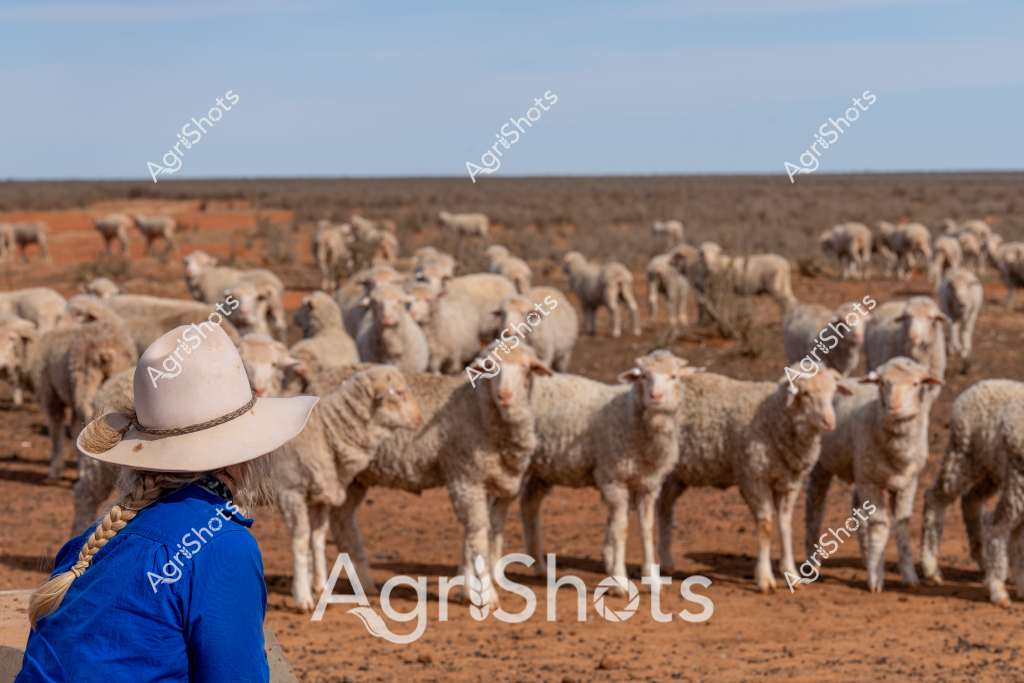
A woman stockman wearing a wide-brimmed light-colored hat and a bright blue long-sleeved shirt stands observing a large flock of Merino sheep grazing across a dry, reddish-brown paddock. The landscape stretches out to a flat horizon under a pale blue sky, typical of Australia's arid pastoral regions. Dozens of woolly white sheep are scattered across the dusty ground, their dense fleeces standing out against the ochre-colored earth. The scene captures the essence of sheep farming in rural Australia, showcasing the vast, open landscapes and the careful management required to maintain a healthy flock in challenging environmental conditions. The woman's positioning suggests she is monitoring the sheep, a critical task in maintaining the health and safety of the livestock in this harsh, expansive terrain.
 Image
Image
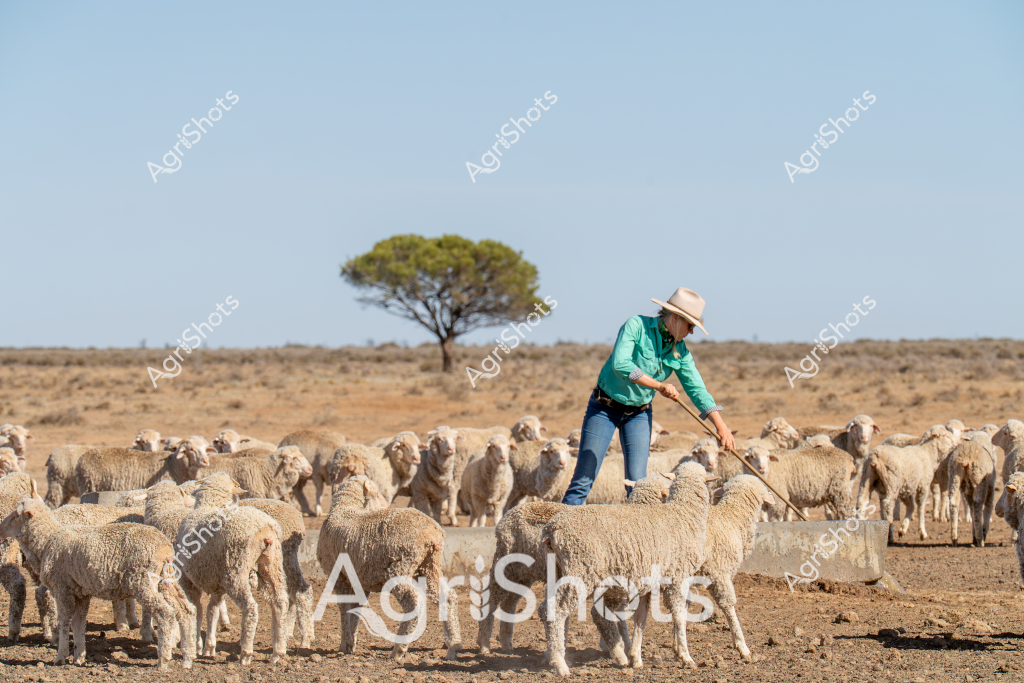
A woman stockman in a bright green long-sleeved shirt and wide-brimmed hat stands amidst a large flock of Merino sheep in a dry, sparse Australian outback landscape. The woolly flock covers the dusty ground, their cream-colored fleeces blending with the arid terrain, while a solitary tree stands in the distant background against a clear blue sky. The stockwoman uses a long herding stick to guide and manage the sheep, demonstrating the skilled and challenging work of livestock management in remote rural Australia. The scene captures the harsh beauty of the pastoral landscape, highlighting the resilience required in sheep farming and the expansive, unforgiving nature of the Australian interior. Her stance and positioning among the sheep reveal the close relationship between the livestock manager and the flock, a testament to the intricate skills of Australian agricultural workers.
 Image
Image
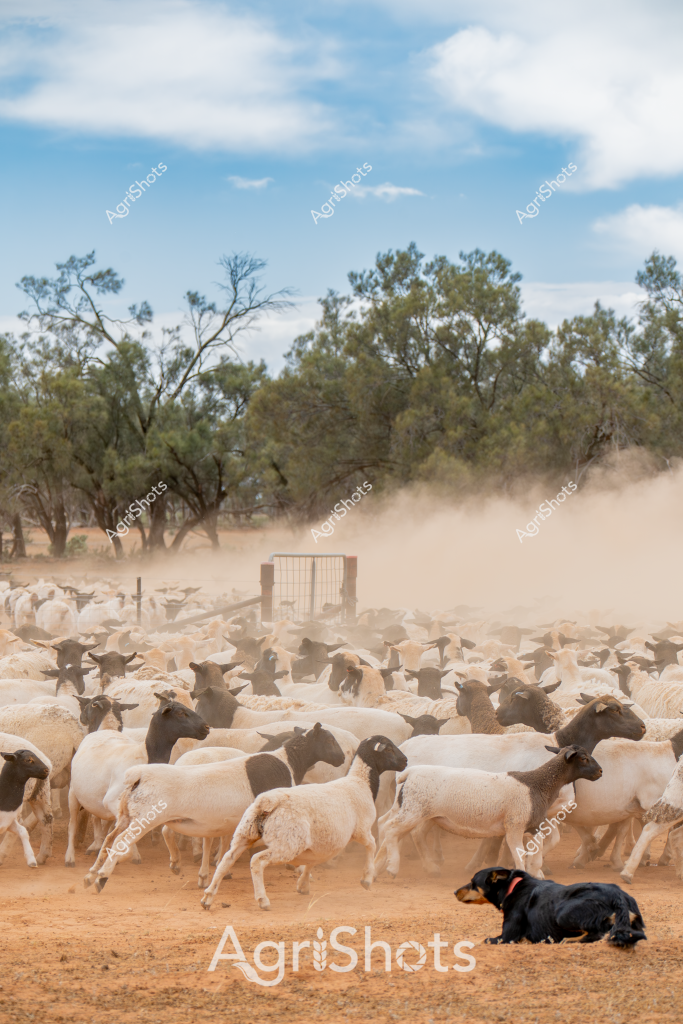
A large flock of white and dark-colored sheep kicks up dust in a dry rural Australian landscape, creating a dynamic scene of livestock management. A black working dog sits attentively in the foreground, carefully watching the mob as they move through a dusty yard near some sparse eucalyptus trees. The sheep appear to be Dorper or Merino breed, packed tightly together and creating a swirling cloud of fine earth particles around their woolly bodies. A wooden gate and fence structure is visible in the background, suggesting this is a managed stock handling area on a station or large rural property. The landscape is typical of Australia's arid or semi-arid regions, with muted earth tones, scattered trees, and a wide blue sky with light clouds overhead. The working dog's disciplined posture demonstrates the critical role of highly trained canines in managing large livestock herds across vast Australian agricultural landscapes.
 Image
Image
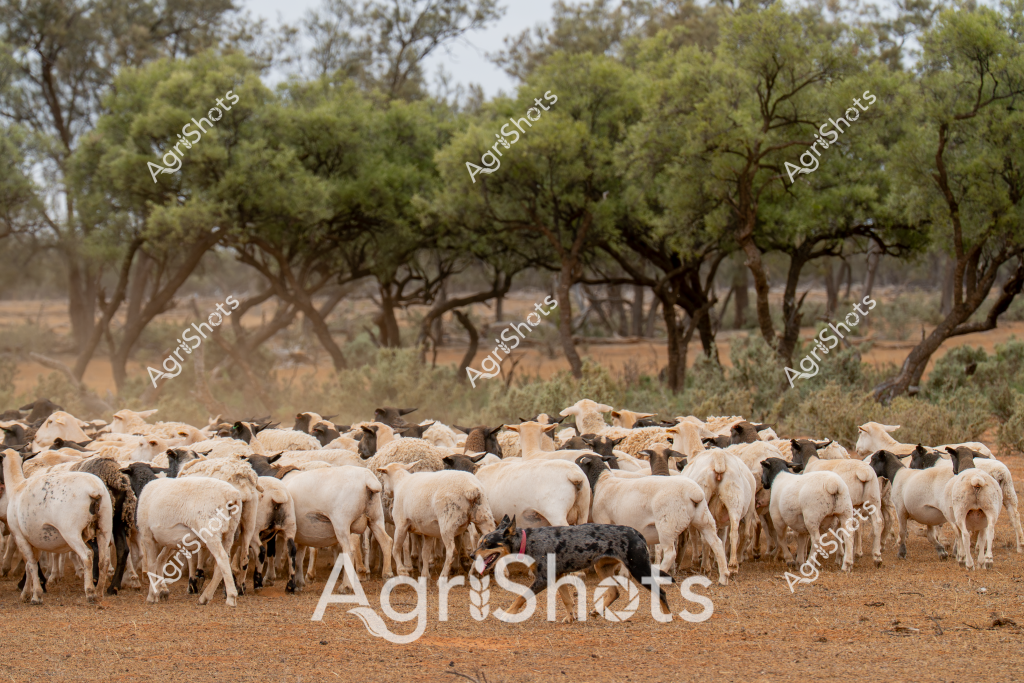
A vigilant working dog herds a large flock of white and dark-colored sheep in a classic Australian rural landscape. The dense mob of sheep, predominantly light-colored with some dark individuals, stands tightly clustered on dry, reddish-brown earth, surrounded by scattered gum trees and sparse native vegetation. A compact black and tan working dog, likely a Kelpie or Australian Cattle Dog, navigates carefully through the flock, demonstrating the critical role of livestock dogs in managing large herds across challenging pastoral environments. The background reveals a typical Australian bushland setting with mature eucalyptus trees creating a muted green and grey backdrop, their branches spreading wide across the arid landscape. The scene captures the essence of Australian sheep farming - a testament to the resilience of both animals and handlers in managing livestock across vast, challenging terrain. The tight grouping of sheep and the strategic positioning of the herding dog showcase the precision and skill required in rural agricultural practices.
 Image
Image
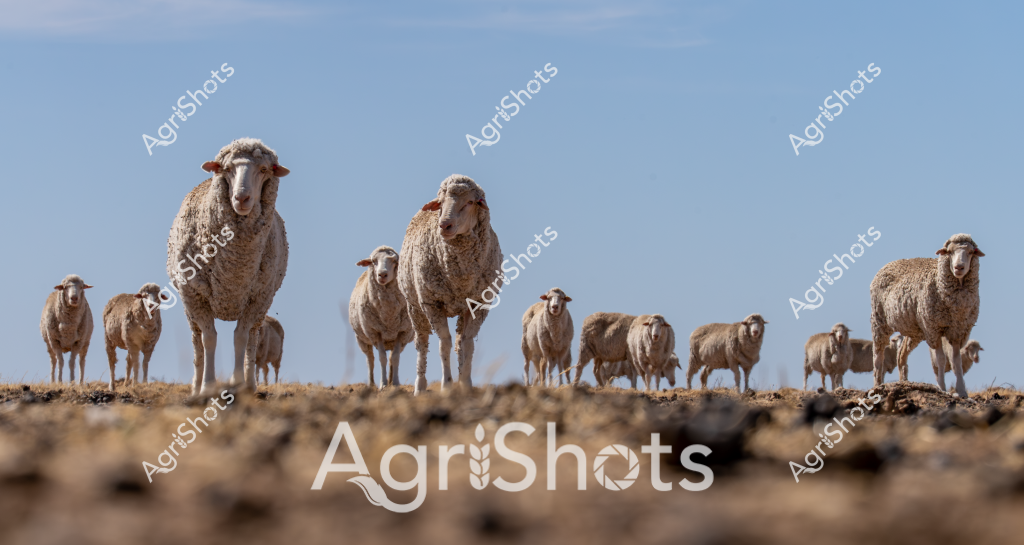
A flock of Merino sheep stands poised across a dry, rocky landscape under a clear blue sky, presenting a classic Australian pastoral scene. The woolly sheep, with their dense, creamy-white fleece, are strategically positioned at varying heights, creating a dynamic composition that highlights the breed's sturdy nature. Some sheep stand tall and alert, while others graze or move slowly across the barren ground, demonstrating the resilience of these animals in harsh agricultural environments. The foreground shows a rocky, dusty terrain typical of Australian rangelands, with stones and sparse ground cover indicating challenging farming conditions. The sheep's positioning suggests they are part of a carefully managed mob, potentially being moved between paddocks or prepared for shearing. Their thick, uniform fleece indicates these are high-quality Merino sheep, a breed renowned for producing some of the world's finest wool. The image captures the essence of Australian sheep farming - adaptability, endurance, and the intricate relationship between livestock and challenging landscapes. The clear sky and stark ground emphasize the open, expansive nature of rural Australian agricultural settings, where sheep farming remains a critical economic and cultural practice.
 Image
Image
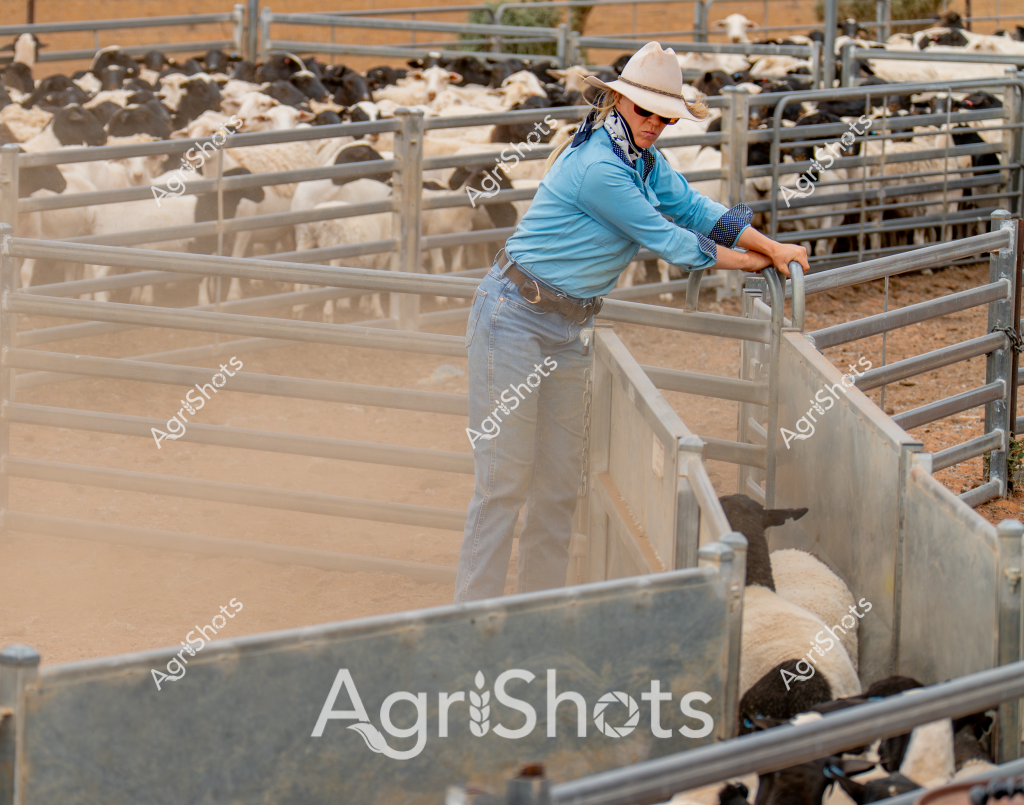
A woman stockman in a blue long-sleeved shirt and white cowboy hat carefully manages a mob of sheep in a metal livestock yard. The dusty, arid landscape surrounds the metal livestock handling facility, with multiple pens filled with white and dark-colored sheep. She leans over the metal gate, positioning herself to direct the movement of the animals through the narrow chute. Her posture suggests expert control and years of experience working with livestock in what appears to be a dry, rural Australian setting. The tight metal fencing, sunlight, and careful positioning of the stockwoman highlight the precision and skill required in managing sheep in challenging agricultural environments.
 Image
Image
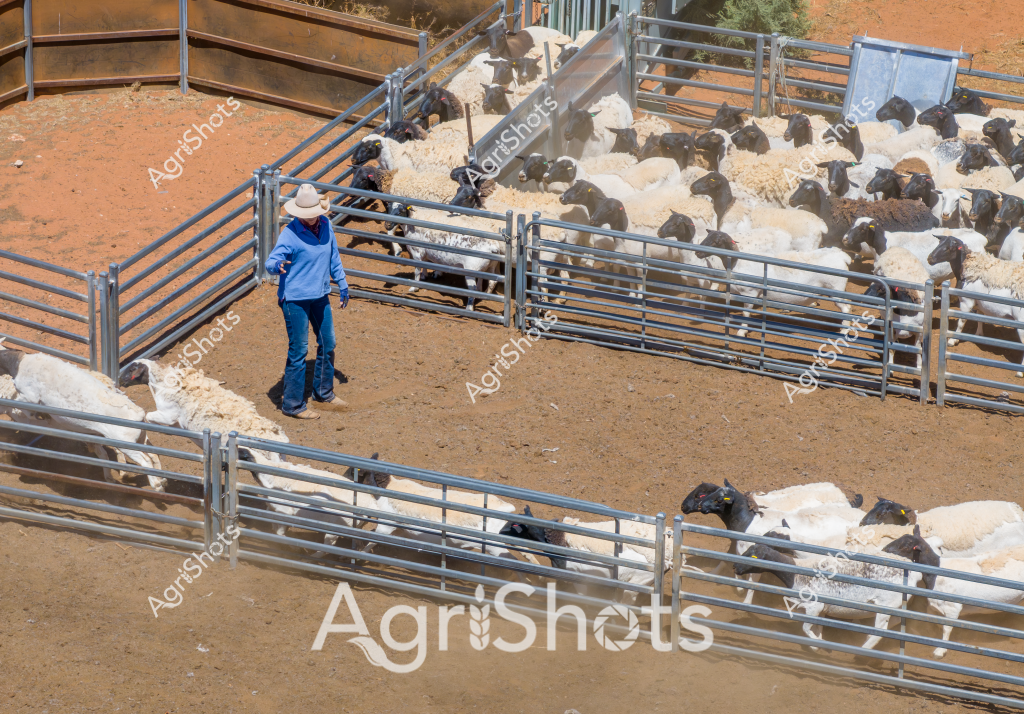
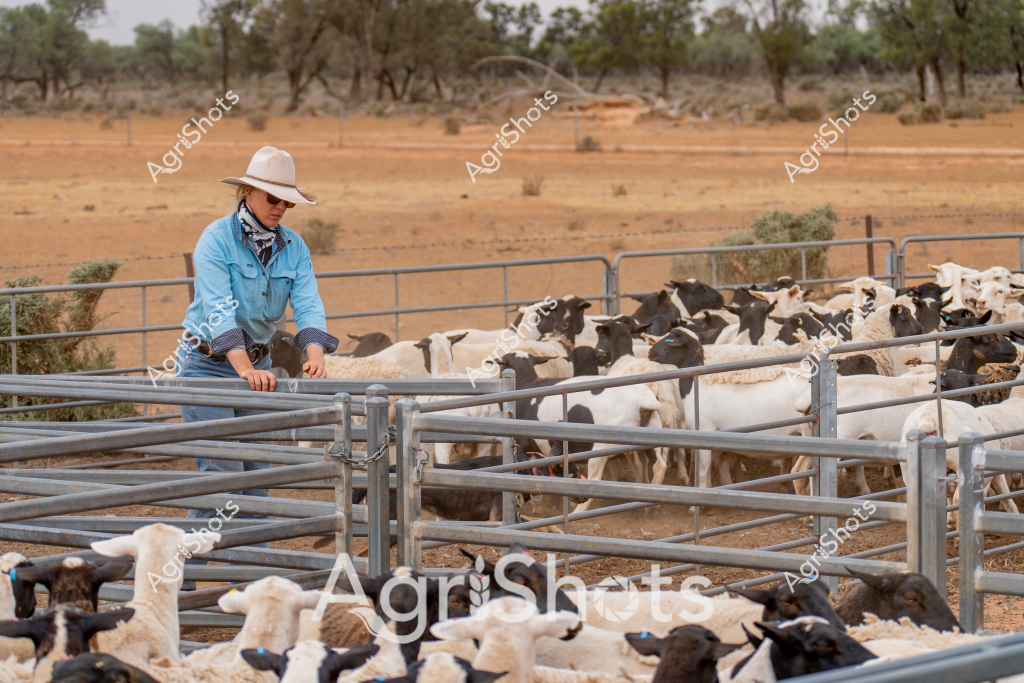
A woman in a blue jacket and white hat stands in a sheep yard, overseeing a large flock of black-faced and white sheep. Multiple metal livestock pens divide the dusty, reddish-brown paddock, creating organized sections for managing the sheep. The animals are densely clustered, with a mix of black-headed and white-fleeced sheep pressed against the metal gates and fencing. The landscape appears to be an arid or semi-arid region, likely in the Australian outback, with reddish soil and minimal vegetation visible. A gate or loading ramp is positioned in one of the pens, suggesting this is part of a livestock management operation, potentially for mustering, sorting, or preparing sheep for transport or shearing. The scene captures the precision and infrastructure of modern Australian sheep farming, with careful animal handling and controlled movement through carefully designed yards.
 Image
Image
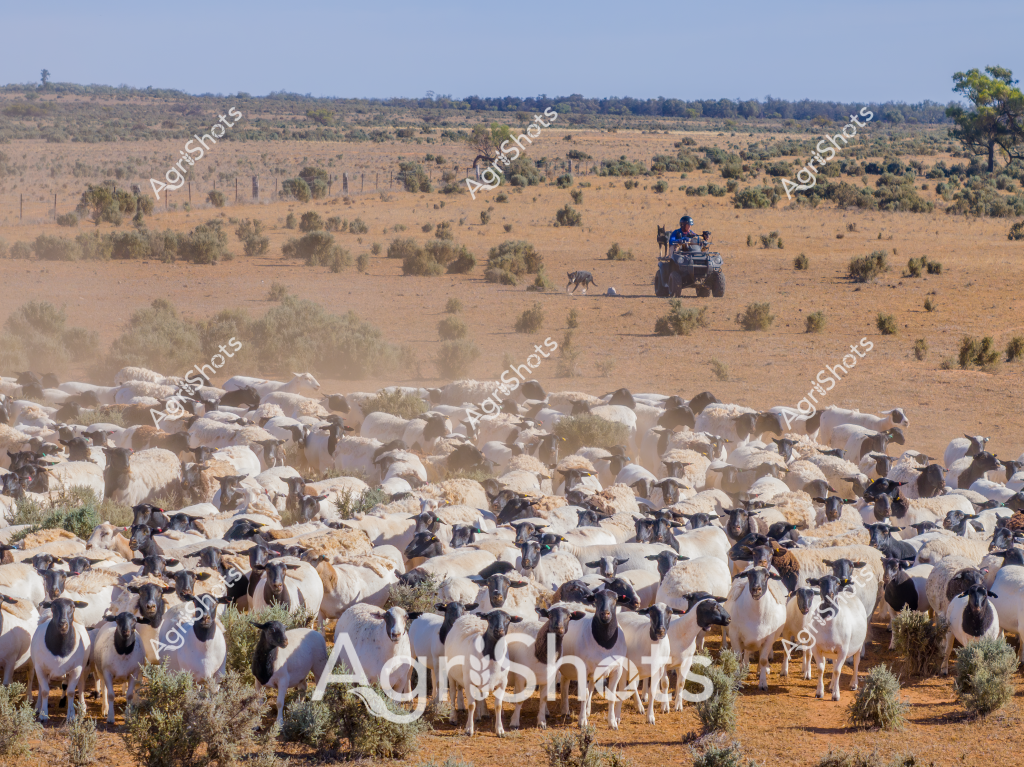
A large flock of white and black-faced sheep crowd together in an arid pastoral landscape, with sparse scrubland and dusty ground stretching to the distant horizon. A four-wheel drive vehicle and a working dog are visible in the background, indicating this is likely a station or large grazing property in inland Australia. The sheep appear to be Dorper or White Dorper breed, known for their hardiness in dry conditions, standing clustered among low saltbush and spinifex vegetation. A man in blue clothing sits on the quad bike, seemingly monitoring the mob as they graze and move across the parched landscape. The scene captures the essence of Australian sheep farming in a challenging, drought-affected environment, with the stark beauty of the arid rangelands providing a dramatic backdrop to the livestock operation. The image reveals the resilience of both the animals and the agricultural workers who manage them in harsh, unforgiving terrain. Dust rises around the sheep's feet, highlighting the dry conditions and the careful movement of the herd. The quad bike and working dog demonstrate the modern tools and techniques used in managing large flocks across extensive grazing properties.
 Image
Image
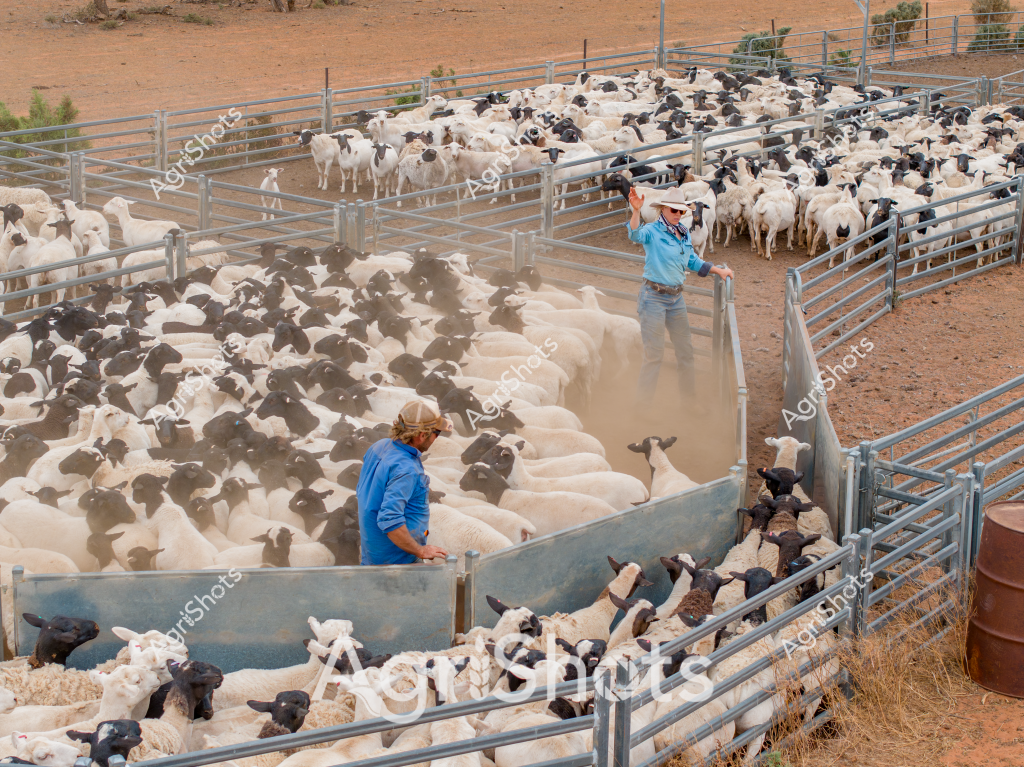
A dusty sheep yards scene captures two workers managing a large flock of black and white sheep in a metal livestock holding pen. A woman in a blue shirt and a man in a blue shirt and cap are strategically positioned within the fenced area, carefully directing and sorting the densely packed mob of sheep. The arid, reddish-brown ground and metal yard infrastructure suggest this is a typical livestock management scene in the Australian outback or pastoral region. Dozens of sheep - predominantly white with black faces and legs, characteristic of breeds like Merino or Dorper - are tightly clustered in different pens, creating a textured landscape of woolly bodies. Dust rises from the animals' movement, indicating active livestock handling during what appears to be a warm, dry day. The metal gates and sorting infrastructure demonstrate the sophisticated approach to sheep management in Australian agriculture, where precise handling and sorting are critical to pastoral operations.
 Image
Image
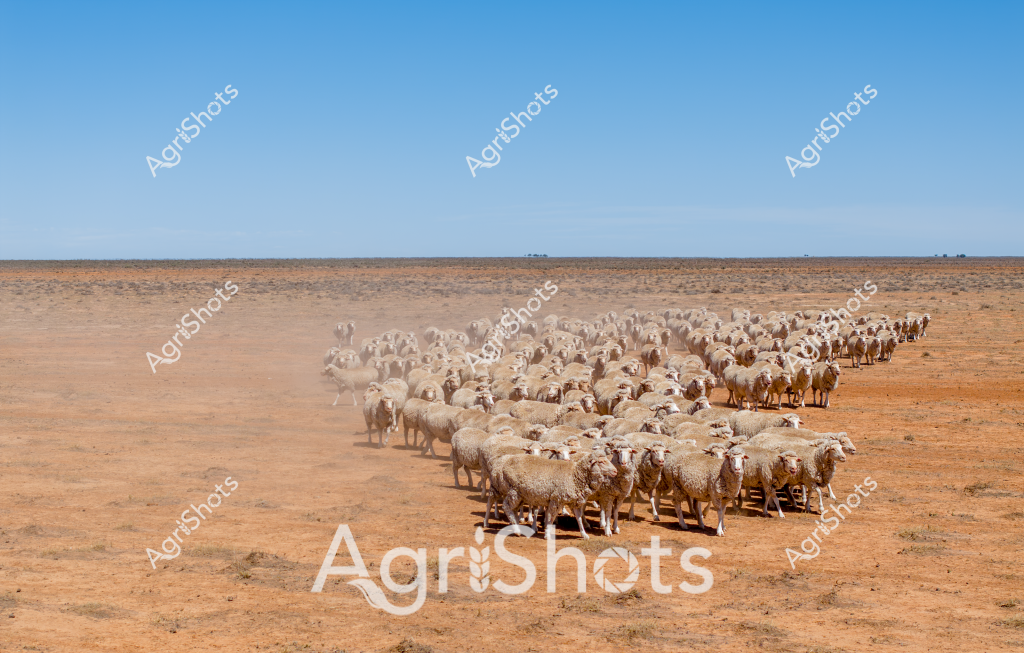
A large flock of Merino sheep traverses a dry, expansive pastoral landscape under a clear blue sky, kicking up dust as they move across the arid terrain. The densely packed mob of woolly sheep creates a tight, uniform group stretching across the ochre-colored ground, highlighting the resilience of Australian sheep farming in challenging drought conditions. The barren paddock extends to a distant horizon, with minimal vegetation and a stark landscape that emphasizes the harsh environmental conditions these livestock must endure. Dust billows around the sheep's legs, creating a misty effect that softens the edges of the flock and underscores the challenging dry environment typical of inland Australian grazing properties. The uniform white-cream coloration of the Merino sheep stands in sharp contrast to the reddish-brown earth, creating a powerful visual representation of Australia's extensive sheep farming industry and its ability to sustain livestock in marginal agricultural lands.
 Image
Image
A woman stockman surveys a flock of mixed-breed goats in a dry, sparse paddock typical of Australian outback conditions. Wearing a light blue long-sleeved shirt, white wide-brimmed hat, and sunglasses, she leans against metal livestock yards with a series of interconnected gates. The goats - a mixture of white, black, and brown animals - are tightly packed within the metal fencing, their varied coat colors creating a textured scene against the golden-brown earth and scattered eucalyptus trees in the background. The landscape suggests a drought-affected region, with parched ground and sparse vegetation highlighting the challenging environmental conditions faced by Australian farmers. Her professional stance and careful positioning demonstrate the skill required in managing livestock in harsh rural environments.
 Image
Image
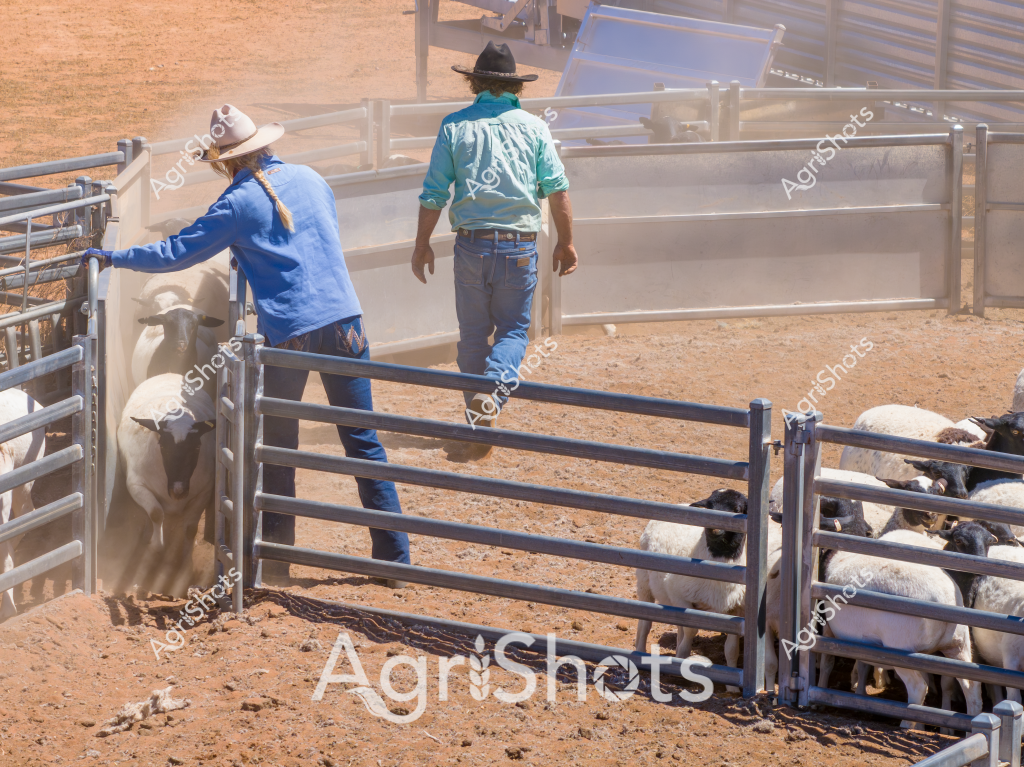
Two people work in a dusty livestock yard, managing sheep in metal holding pens. A woman in a blue jacket and a person in a turquoise shirt with a wide-brimmed hat are positioning themselves near the metal gates and fencing. The ground is a dry, packed earth color, typical of an arid Australian agricultural setting. Multiple white sheep are contained within the sturdy metal yard sections, suggesting this is a routine livestock management activity. The scene captures the practical, no-nonsense approach of Australian farm workers handling livestock in a challenging rural environment, with the metal infrastructure providing structured control and movement of the animals. The workers are positioned strategically around the pens, likely preparing to move, sort, or inspect the sheep. Their robust clothing - denim jeans, practical shirts, and protective hats - reflects the functional nature of agricultural work. The metallic gray of the livestock yards contrasts with the earthy tones of the ground and the white of the sheep, creating a typical Australian rural landscape scene focused on livestock management.
 Image
Image
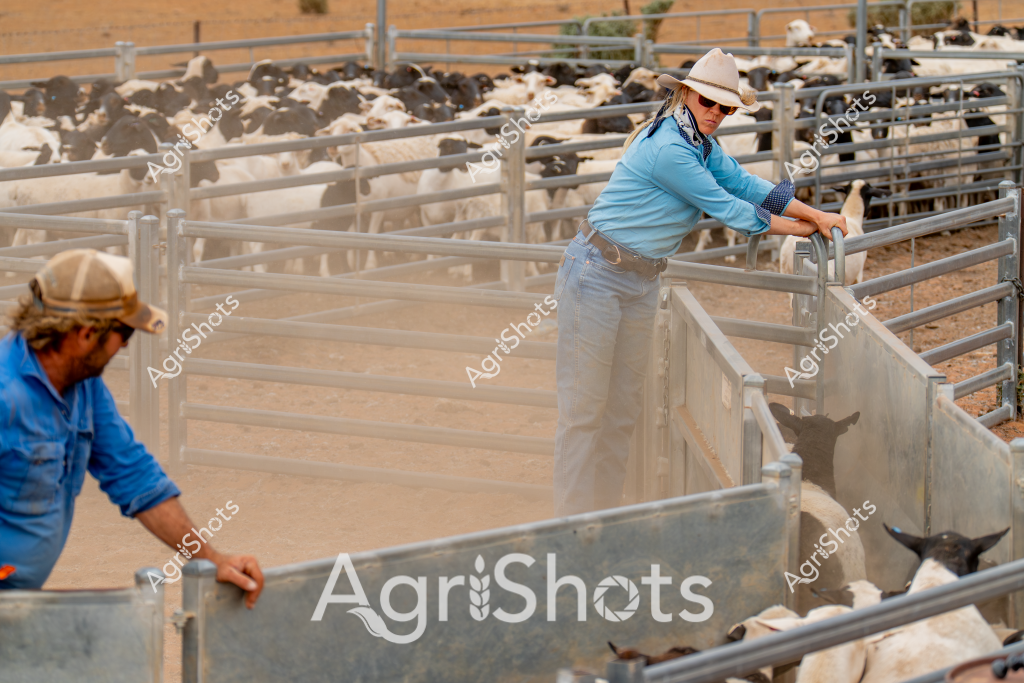
A woman stockman in a blue long-sleeved shirt, white hat, and sunglasses works in a dry, dusty livestock yard managing a herd of goats. She leans against a metal gate in a carefully structured livestock pen, with multiple metal fencing sections visible. Another worker in a blue shirt can be seen partially in the foreground, also engaged in managing the goat herd. The landscape appears arid, with sandy ground and sparse vegetation, typical of an Australian pastoral setting. Multiple white and light-colored goats are contained within the metal yard sections, suggesting this is a professional livestock management operation in a rural, potentially remote region of Australia. The scene captures the practical, focused work of livestock management, with the stockwoman's professional posture and careful attention to the animals demonstrating the skilled nature of agricultural work. The metal infrastructure, protective clothing, and controlled environment highlight the systematic approach to animal handling in challenging agricultural landscapes.
 Image
Image
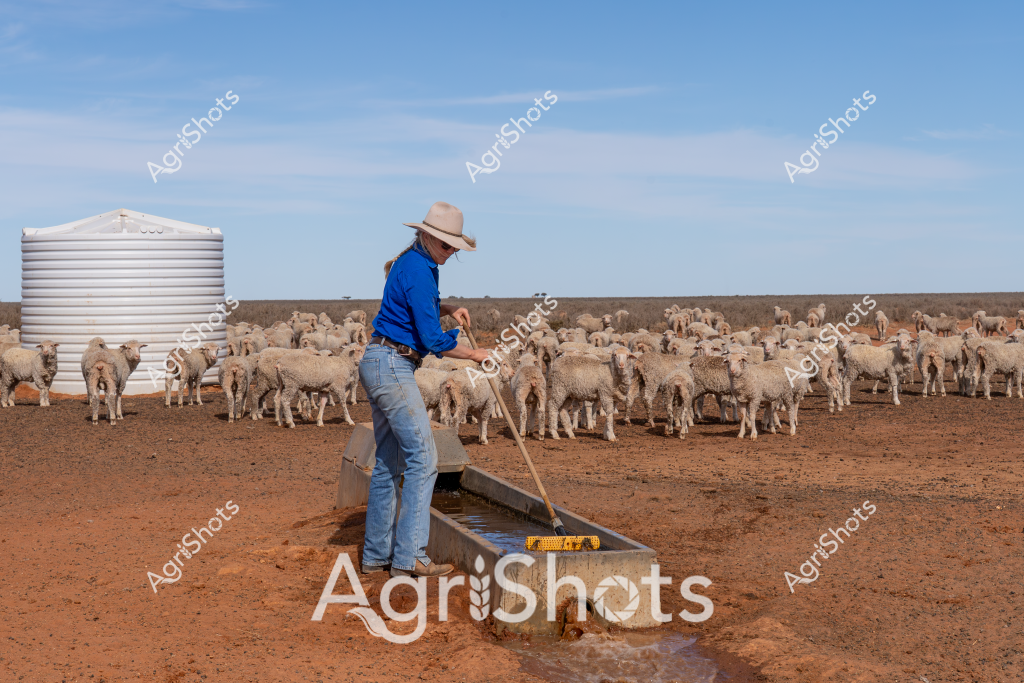
A woman in a blue long-sleeved shirt and wide-brimmed hat tends to a large flock of merino sheep in an arid Australian landscape. Standing beside a water trough near a large white water tank, she is surrounded by dozens of woolly sheep on a dry, reddish-brown earth paddock. The expansive background reveals a flat, sparse horizon typical of inland Australian pastoral regions, with a clear blue sky stretching overhead. Her stance suggests careful monitoring and management of the livestock, using the water trough to ensure the sheep remain hydrated in the harsh, dry environment. The white water tank and carefully positioned trough highlight the critical infrastructure required to support livestock in challenging agricultural conditions, demonstrating the resilience and strategic planning of Australian sheep farmers. The scene captures the essence of outback sheep farming - a solitary worker maintaining a flock in a demanding landscape, where water management and animal care are paramount to survival. The merino sheep, with their distinctive thick woolly coats, cluster around the water source, reflecting the symbiotic relationship between the farmer and the livestock in this unforgiving terrain.
 Image
Image
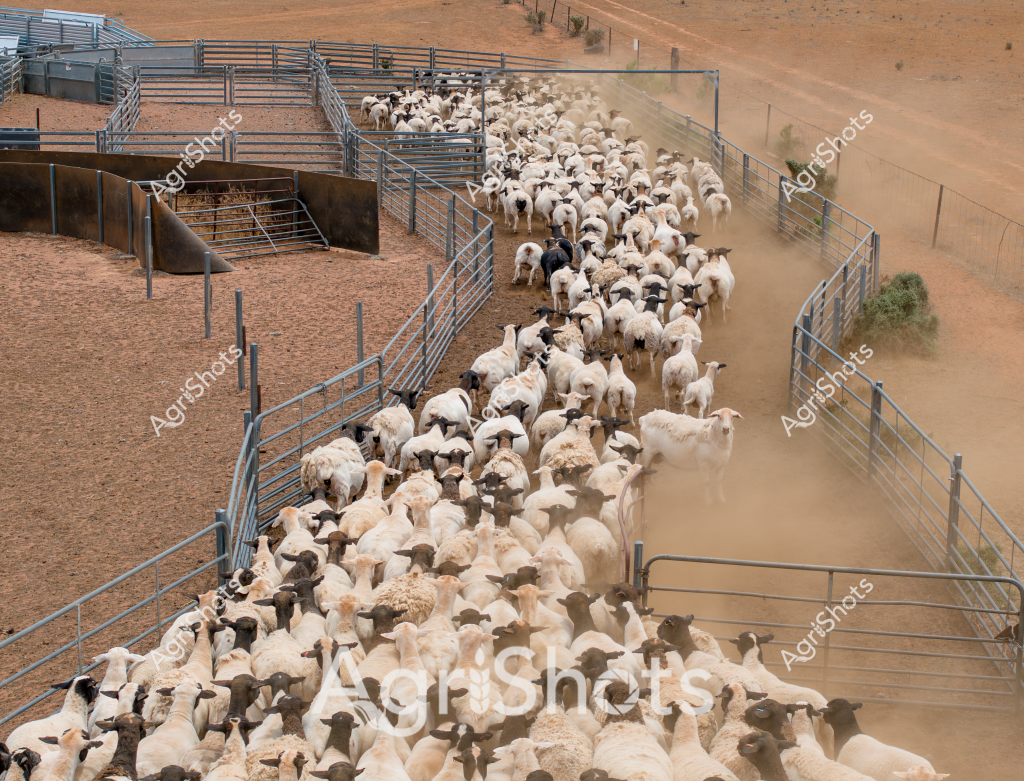
A large mob of Merino sheep moves through a carefully designed livestock handling system on a dry, dusty Australian pastoral property. The blue steel cattle yards create a structured pathway guiding the dense flock of white and black-faced sheep, moving steadily between metal gates and fenced channels. Fine dust rises from their hooves as they navigate the tight corral, highlighting the arid landscape surrounding the metal infrastructure. The precision of the yard design demonstrates modern Australian sheep management techniques, allowing efficient movement and control of the livestock. The image captures the scale and discipline of large-scale sheep farming in Australia's inland regions, where carefully engineered infrastructure supports agricultural productivity in challenging environmental conditions. The flock appears to be predominantly white Merino sheep, with several black-faced animals interspersed throughout, suggesting a mixed breeding program typical of Australian pastoral stations. The earthen ground and sparse vegetation in the background underscore the challenging agricultural environment where these sheep are raised.
 Image
Image
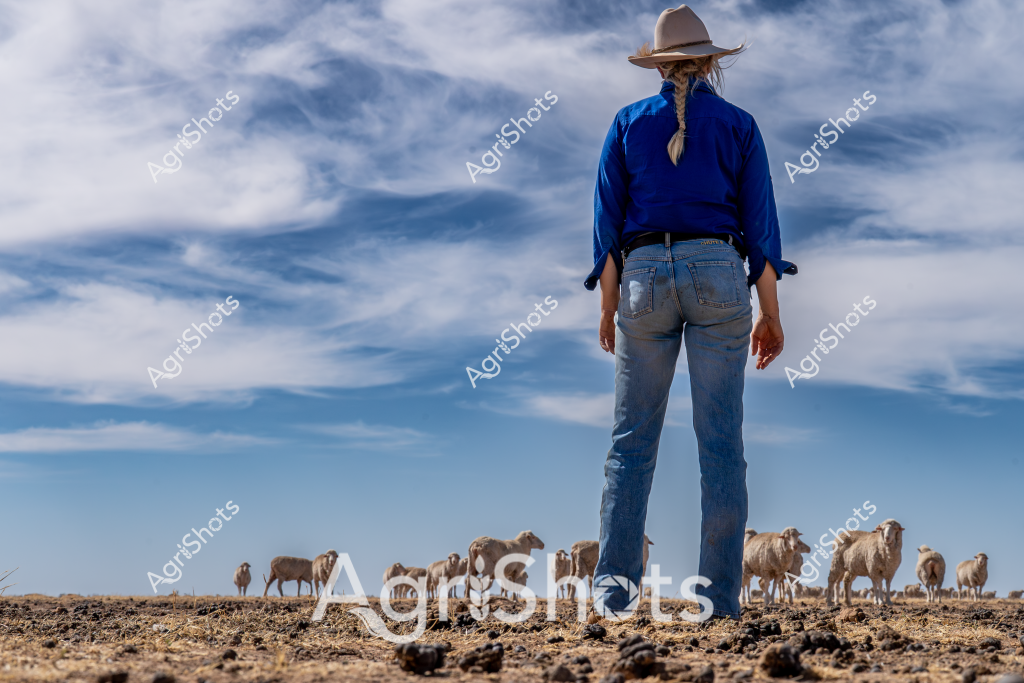
A woman stockman stands facing a flock of sheep in an arid, rocky landscape under a dramatic blue and white cloudy sky. Wearing a wide-brimmed hat and blue long-sleeved shirt with denim jeans, she surveys the livestock from behind, observing a group of woolly sheep grazing on the dry, stony ground. The expansive horizon and sparse terrain suggest this is a remote pastoral setting, likely in the Australian outback or a dry inland region. Her stance - feet planted firmly, back straight - communicates a sense of quiet confidence and connection to the land. The scattered flock of light-colored sheep moves slowly across the rocky paddock, creating a textural contrast between the soft woolly animals and the hard, weathered ground. This image captures the essence of Australian sheep farming - a solitary figure managing livestock in a challenging, beautiful environment that demands resilience and skill.
 Image
Image
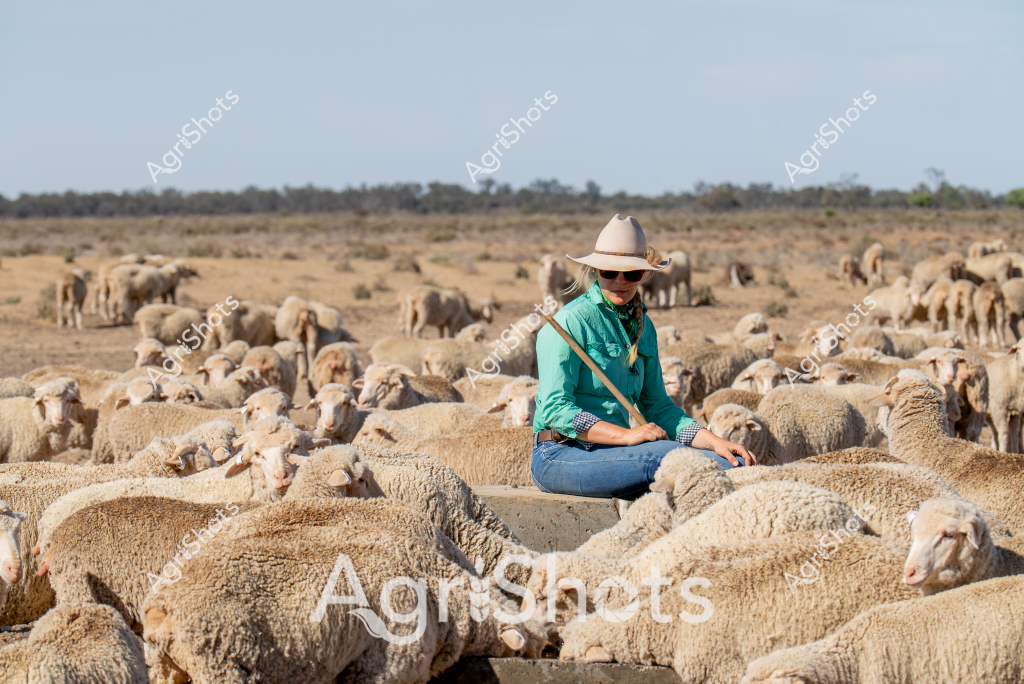
A woman shepherd sits calmly amid a large flock of merino sheep in a dry, expansive Australian paddock. Wearing a teal green shirt, blue jeans, and a wide-brimmed cowboy hat, she appears relaxed and in control, perched comfortably on the woolly backs of the closely packed sheep. The landscape is a stark, arid environment with scattered low vegetation and distant trees forming a muted horizon line under a pale blue sky. The merino sheep, with their dense, creamy-white fleece, are tightly clustered together, creating a textured landscape of woolly bodies. The woman seems at ease, almost blending into the flock, suggesting an intimate understanding of the livestock and the challenging rural environment. Her posture and positioning demonstrate the close relationship between Australian farmers and their animals, highlighting the skill and patience required in sheep farming. The scene captures the essence of rural Australian agricultural life - a resilient shepherd managing the flock in a harsh, sun-drenched landscape that requires both physical endurance and deep agricultural knowledge. The image speaks to the ongoing story of pastoral farming in Australia's challenging inland regions.
 Image
Image
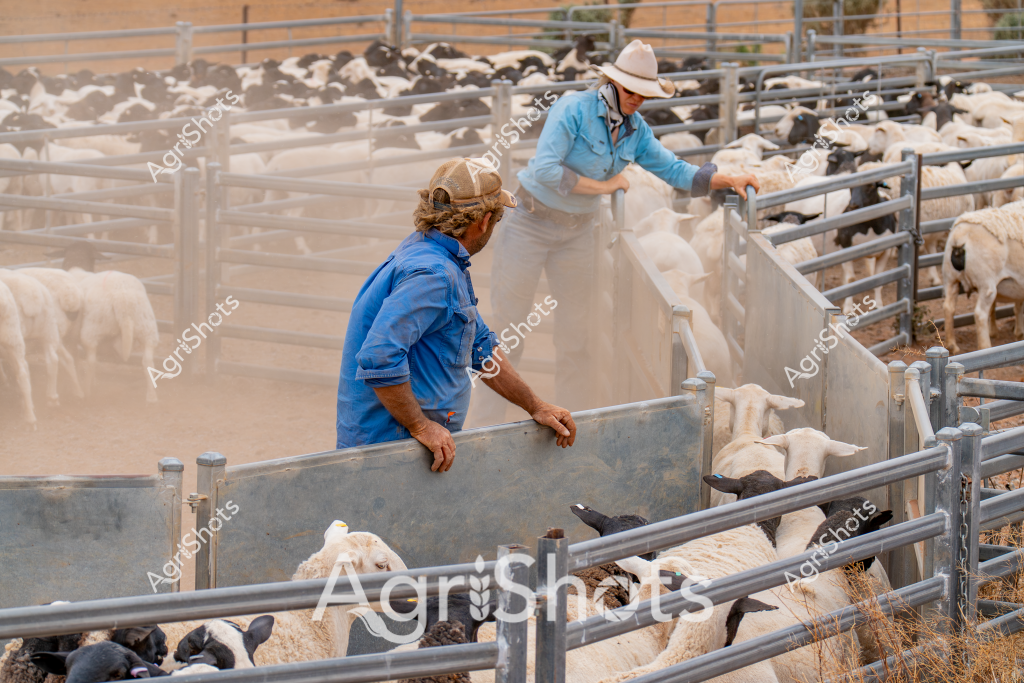
Two men farmers work together in a dusty sheep yard, carefully managing a flock of white and black sheep within metal livestock pens. One man in a blue shirt and cap stands near the gate, while another in a light blue shirt and white hat manages the gate and sheep movement. The metal yards are sturdy and well-constructed, with multiple interconnected pens allowing controlled livestock sorting and movement. Dust hangs in the air, indicating dry conditions typical of Australian agricultural landscapes, suggesting this is likely a rural station or farm in an arid or semi-arid region. The sheep appear to be a mixed breed, with white and darker-colored animals clustered together, waiting to be sorted or moved. The scene captures the practical, hands-on nature of Australian sheep farming, highlighting the skill and teamwork required in managing livestock in challenging environmental conditions.