About this image
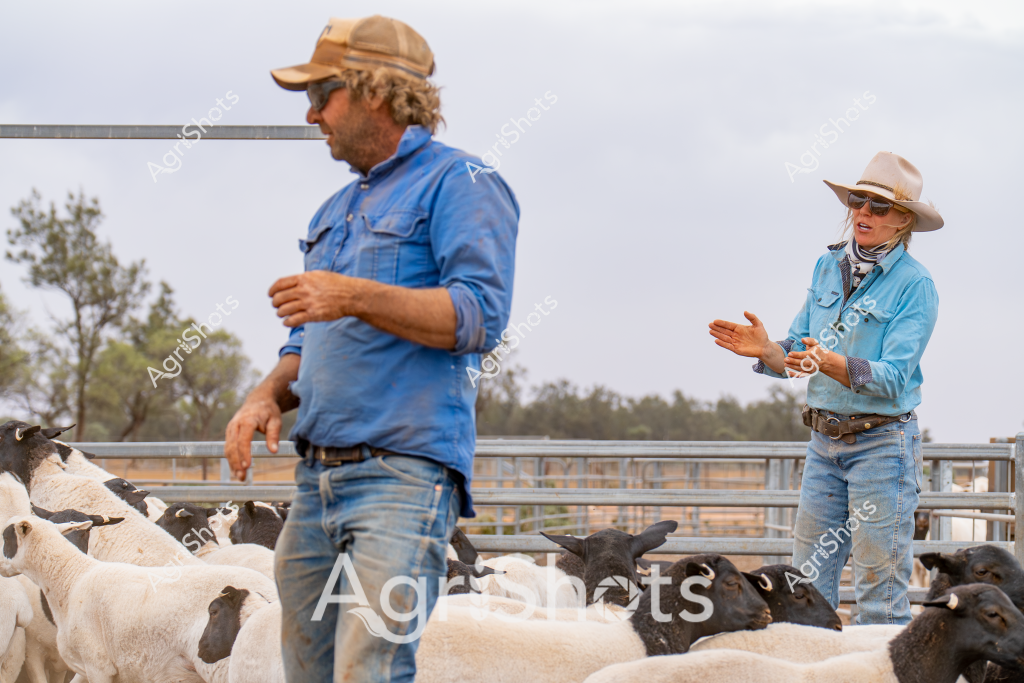
A woman and a man stockman work together in a livestock yard, managing a mixed flock of white and black sheep. Dressed in blue chambray shirts and wearing wide-brimmed hats for sun protection, they appear to be coordinating the movement and sorting of the sheep within metal livestock yards. The landscape in the background suggests an Australian rural setting, with scattered trees and an open sky creating a typical pastoral scene. Their body language indicates careful communication and collaboration, with the woman gesturing and the man positioned among the sheep, demonstrating the teamwork essential in livestock management. The sheep - a mix of white and black woolly animals - are clustered tightly within the yard's metal railings, ready for potential drafting, health checks, or preparation for movement.
Similar media
 Image
Image
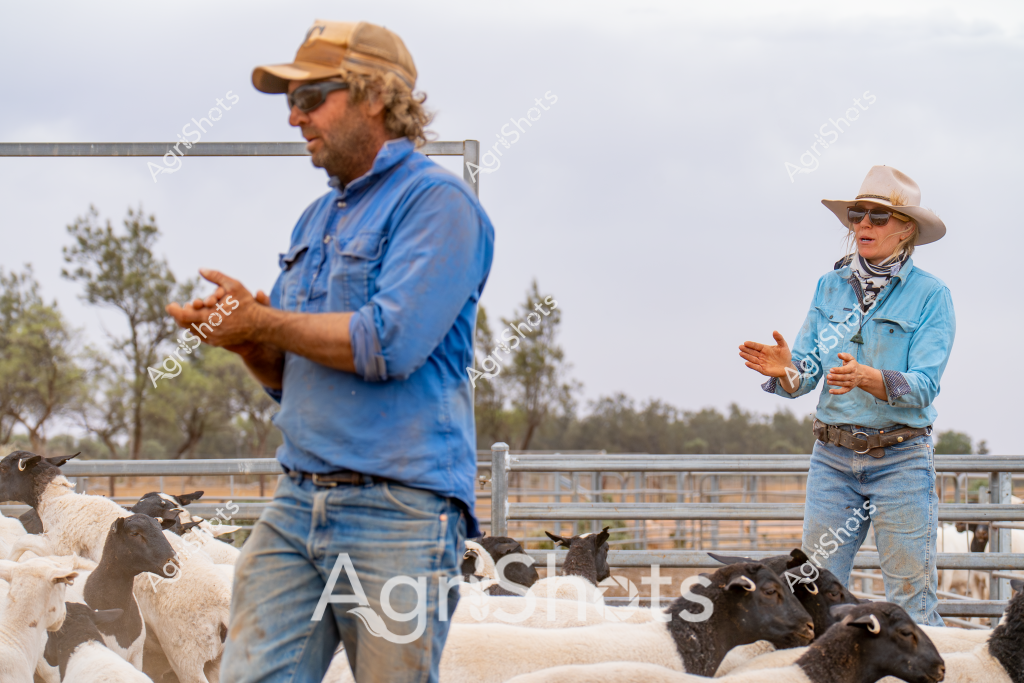
Two experienced farmers in blue work shirts and wide-brimmed hats manage a mixed flock of black and white sheep in a rural livestock yard. A man and a woman stand on opposite sides of a metal livestock pen, both using hand gestures to guide and control the movement of the sheep. The sheep appear to be a mix of dark and light-colored breeds, clustered tightly within the metal gate enclosure. The background reveals a sparse rural landscape with scattered trees and an overcast sky, typical of Australian agricultural settings. Both farmers are wearing practical farm attire - blue chambray shirts, denim jeans, and protective wide-brimmed hats with sunglasses, indicating their professional approach to livestock management. The scene captures the collaborative nature of sheep farming, where coordinated human interaction and careful animal handling are essential skills.
 Image
Image
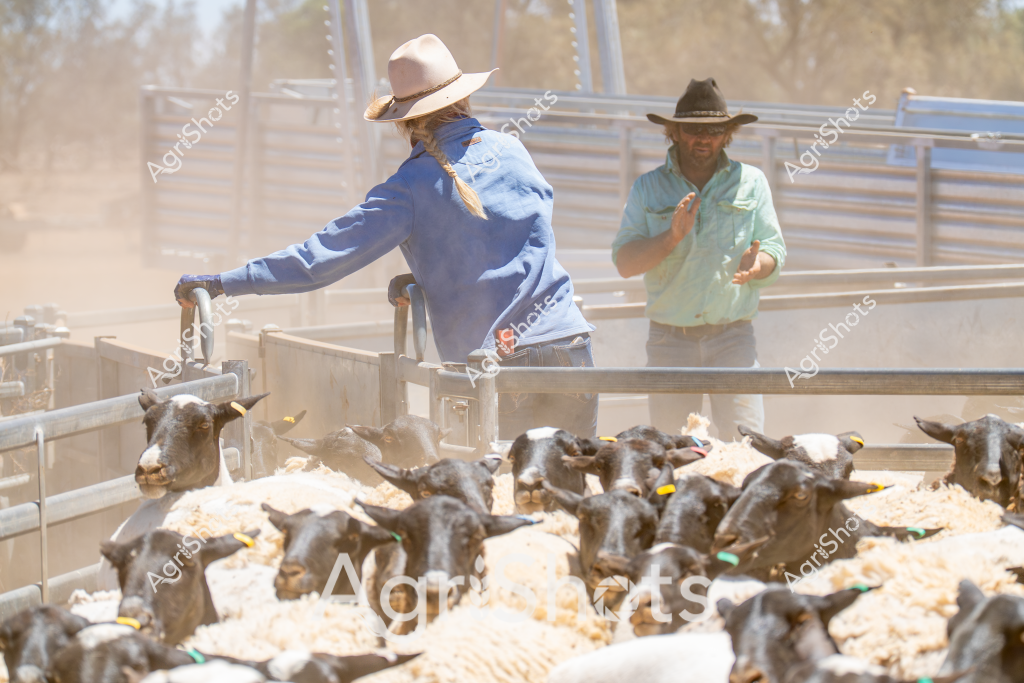
Two people manage a group of goats in a dusty livestock yard, with metal cattle panels creating a confined processing area. A woman wearing a blue jacket and wide-brimmed hat stands at one end of the pen, operating gate controls, while a man in a light green shirt stands nearby, appearing to assist with livestock movement. Multiple dark-colored goats are densely packed in the pen, their heads and bodies visible among wood shavings or straw bedding. Dust hangs in the air, suggesting active movement and handling of the animals, indicating this is likely a routine livestock management activity on an Australian farm or station. The metal yards provide a structured, professional environment for animal handling, with yellow ear tags visible on some of the goats, suggesting they are being sorted, counted, or prepared for veterinary treatment or sale.
 Image
Image
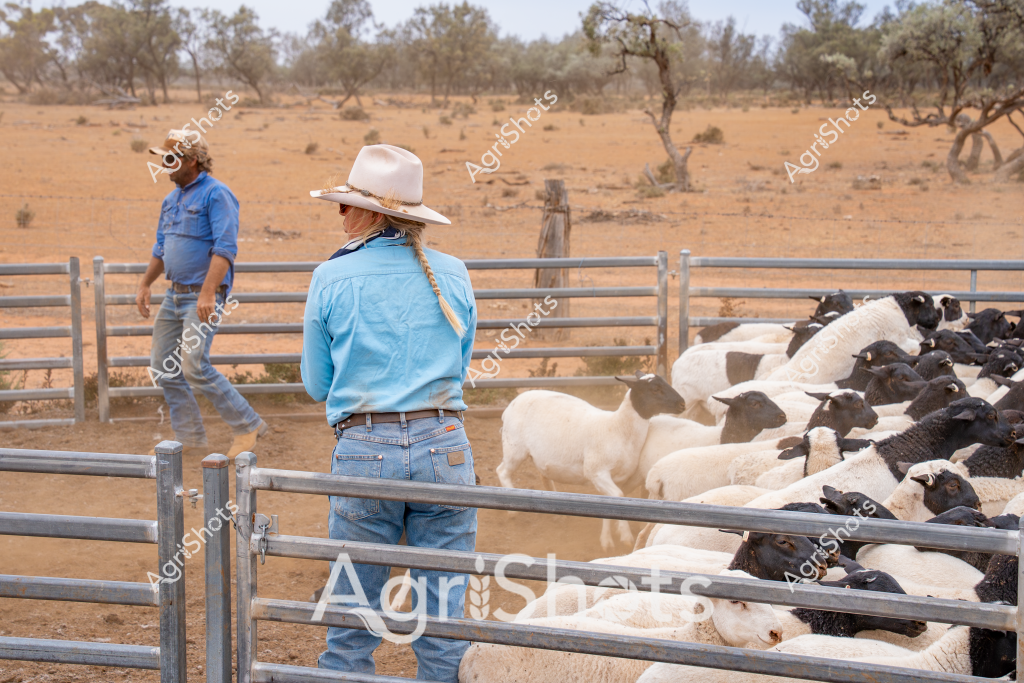
A woman stockman and a man stand near a livestock yard in a dry, arid Australian landscape. They are overlooking a group of sheep - a mix of white and black-fleeced animals - contained within metal livestock gates. The scene captures a typical outback pastoral setting, with sparse eucalyptus trees and reddish-brown earth stretching into the distance. The woman wears a light-colored wide-brimmed hat, blue denim jeans, and a blue long-sleeved shirt, standing with her back to the camera. The man, also in blue workwear, is positioned further along the fence. Their stance suggests they are assessing the livestock, which are tightly grouped within the metal yard panels. The surrounding landscape is classic Australian pastoral terrain - open, dusty paddock with scattered trees and minimal ground cover, indicating potential drought conditions. The metal livestock yards provide a structured border in this otherwise expansive, minimalist environment. The sheep appear healthy, with a good mix of white and darker-fleeced animals clustered together, demonstrating typical farm stock management in a challenging rural setting.
 Image
Image
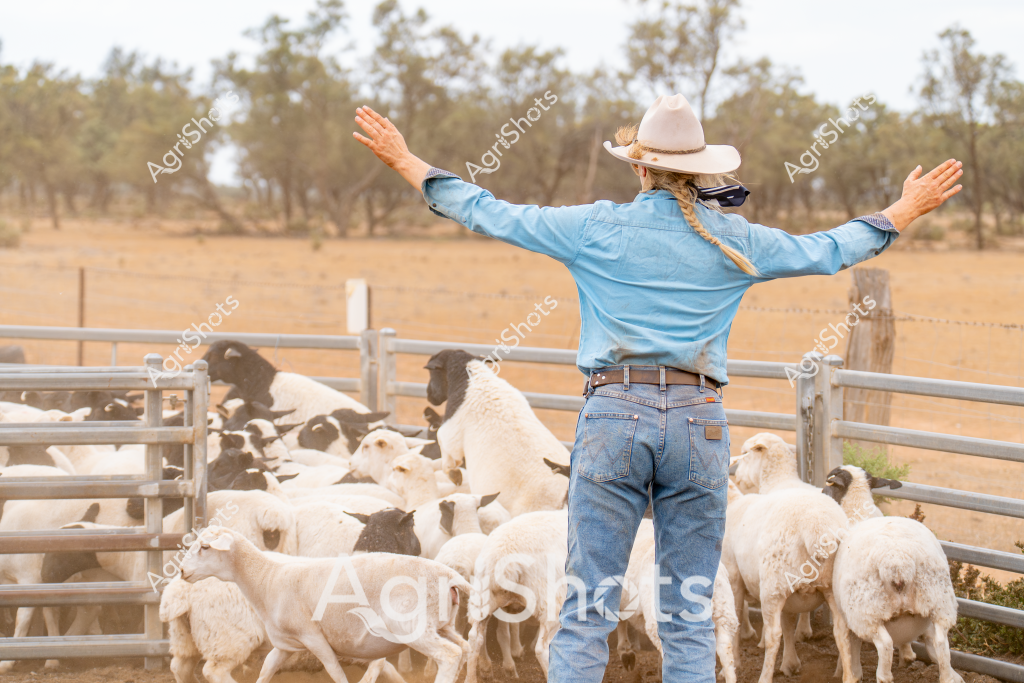
A woman farmer stands with outstretched arms in a classic Australian pastoral setting, facing a mob of white and black sheep contained within sturdy metal yard fencing. Wearing a light blue denim shirt, blue jeans, and a cream-colored wide-brimmed hat, she appears to be guiding or managing the livestock herd. The background reveals a typical arid Australian landscape with scattered eucalyptus trees and dry golden grasslands, characteristic of inland farming regions. Her braided hair and confident posture suggest an experienced stockwoman comfortable in the rugged rural environment. The sheep - a mix of white and dark-fleeced animals - are clustered near the fence, representing the diverse livestock typical of Australian sheep farming operations. This image captures the essence of rural agricultural work, showcasing the connection between a skilled farmer and the livestock in a challenging outback setting.
 Image
Image
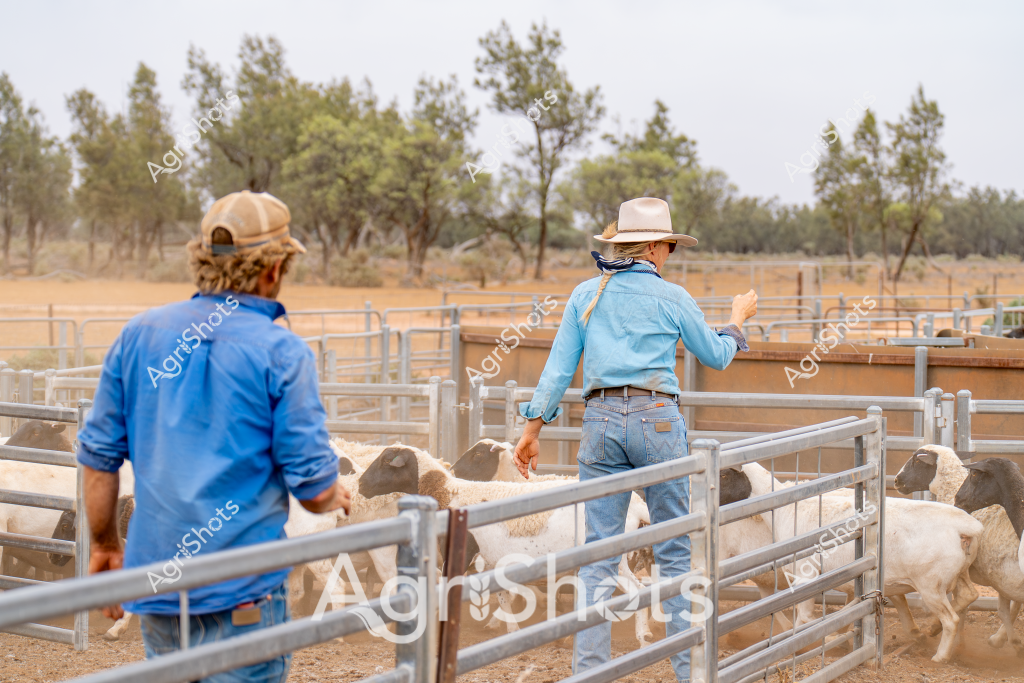
Two men working in a livestock yard, carefully managing a small herd of sheep within metal livestock pens. They are wearing typical rural workwear - blue long-sleeved shirts, wide-brimmed sun hats, and work jeans. One man faces away from the camera, standing near the metal gate, while the other is partially visible to the left side of the image. The setting appears to be a dry, arid paddock with sparse trees and scrubland in the background, suggesting this is likely in an inland Australian agricultural region. The metal yard panels create a systematic grid for controlling and moving the sheep, which appear to be light-colored, possibly Merino or other wool breed. The dusty ground and sparse vegetation indicate this could be during a dry season or in a drought-affected area. The scene captures the practical, no-nonsense approach of Australian livestock management, where farmers work efficiently to handle their stock in challenging environmental conditions.
 Image
Image
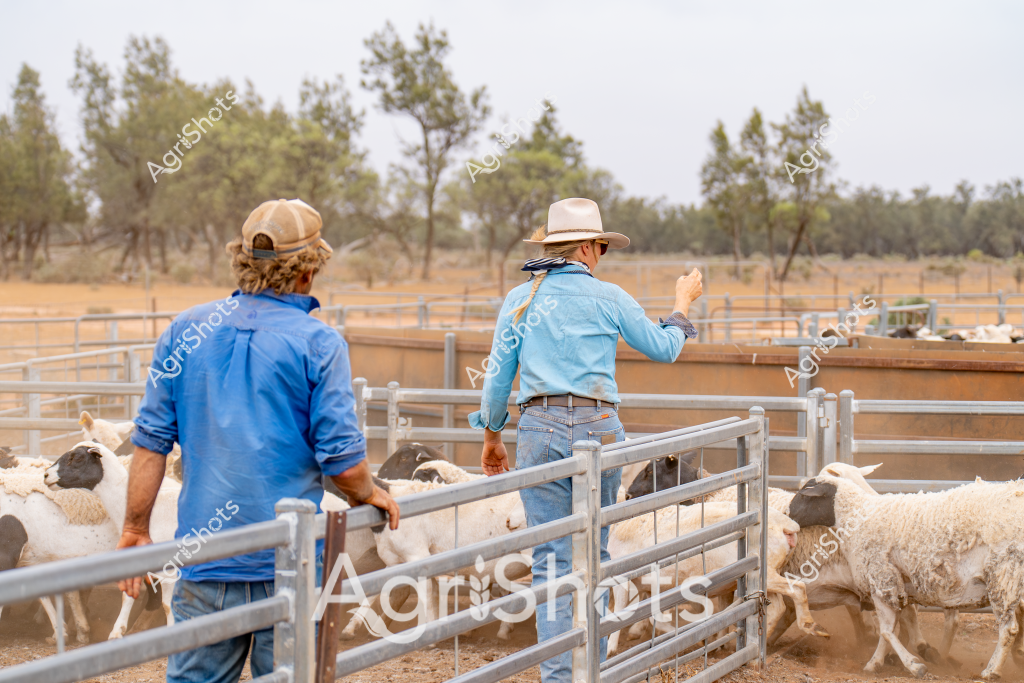
Two men farmers oversee a small flock of sheep in a dry, dusty livestock paddock surrounded by sparse eucalyptus trees. One man in a blue long-sleeved shirt and a tan cap stands near a metal livestock gate, while the other wearing a light blue shirt and wide-brimmed sun hat gestures toward the animals. Several white sheep with varying wool textures are visible within the metal stock yard fencing, highlighting the typical rural Australian agricultural setting. The landscape appears arid, with a muted color palette of golden-brown ground, gray-green trees, and washed-out sky, suggesting conditions typical of inland pastoral regions. The men's sturdy work clothing and attentive postures indicate an experienced approach to livestock management, carefully monitoring the small mob of sheep in their contained yard.
 Image
Image
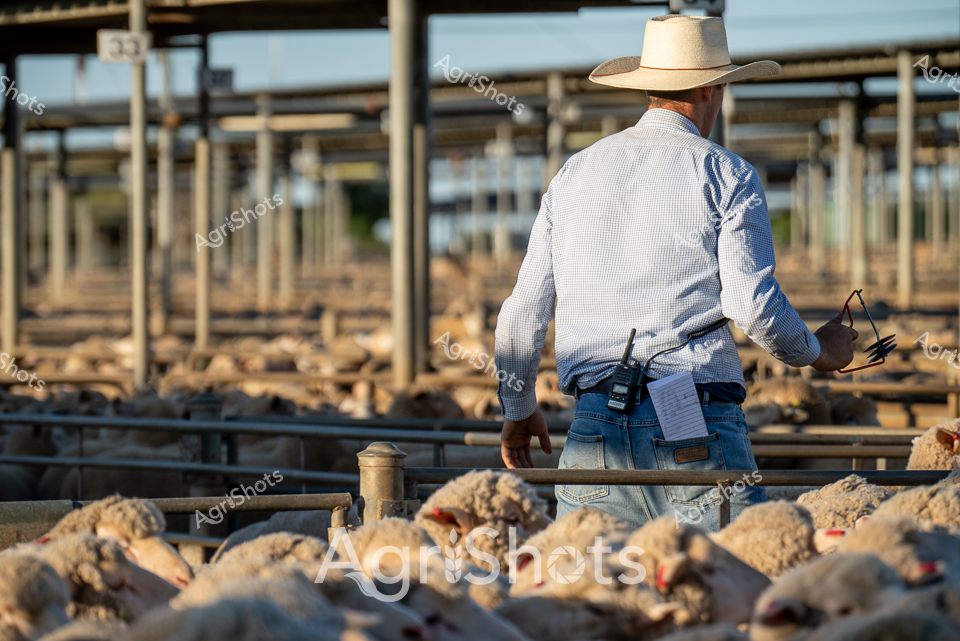
Bathed in the golden light of a crisp morning, a seasoned livestock agent stands sentinel among a sea of woolly merino sheep at a rural sale yard. Dressed in the classic uniform of the Australian bush - a pristine checked shirt, well-worn blue jeans, and a broad-brimmed cream akubra - the agent surveys the packed pens with quiet concentration. A handheld radio and stock lists tucked into his waistband hint at the complex logistics of rural livestock trading. The steel-railed yards stretch out behind him, numbered and organized, telling the story of countless agricultural transactions that form the backbone of rural economies. Soft morning light catches the lanolin-rich fleeces of the sheep, creating a textural landscape of cream and beige that fills the foreground, while the structural lines of the sale yard infrastructure provide a geometric backdrop. This image captures a quintessential moment in the Australian agricultural cycle - a point of connection between producers, buyers, and the livestock that are so central to the nation's rural identity.
 Image
Image
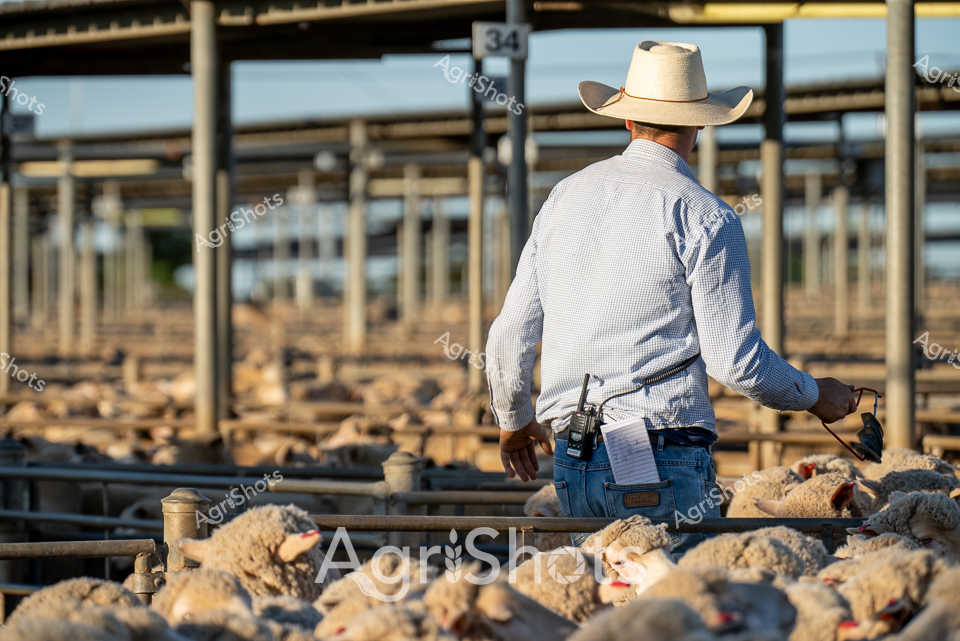
A seasoned livestock agent surveys a densely packed sale yard in the Riverina region of New South Wales, his back turned to the camera. Wearing a crisp checked button-up shirt, well-worn blue jeans, and a classic wide-brimmed sun hat, he stands amidst rows of robust merino sheep within metal livestock pens. A handheld radio and clipboard hang from his belt, signaling his professional readiness to manage the day's agricultural commerce. The golden morning light casts long shadows across the metal infrastructure, highlighting the woolly textures of dozens of sheep clustered tightly together, their fleeces ranging from cream to light tan. This scene captures the quintessential rhythm of rural Australian livestock trading - a moment of calculated observation and potential transaction, where each animal represents both economic opportunity and the enduring pastoral heritage of the region. The meticulous organization of the sale yards and the agent's purposeful stance communicate the serious business of agricultural trade.