About this image
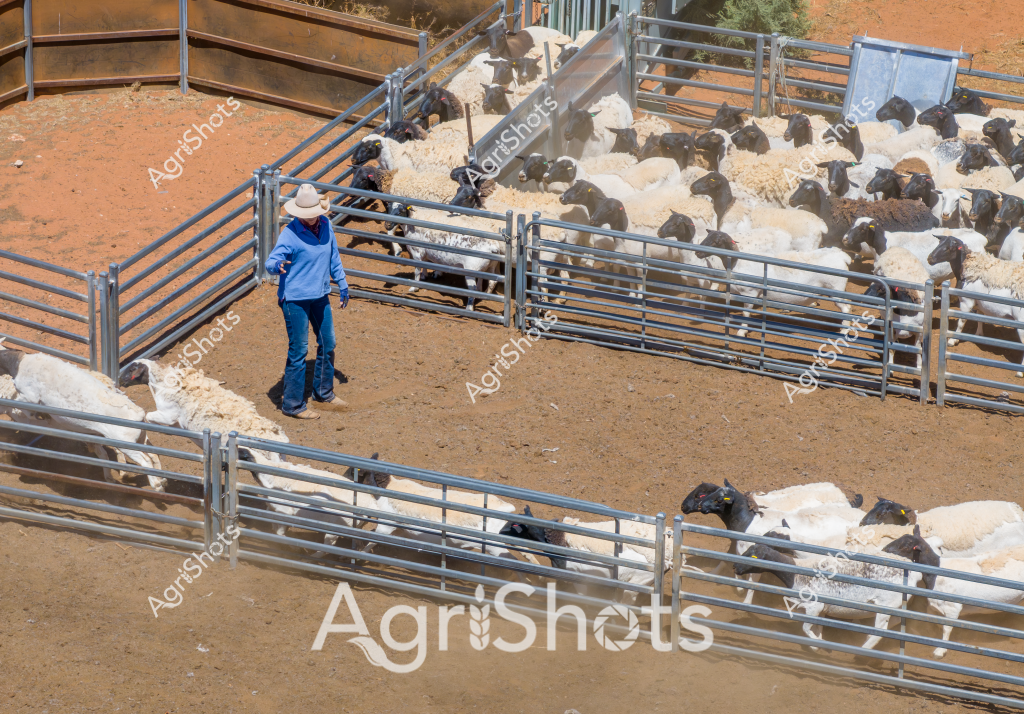
A woman in a blue jacket and white hat stands in a sheep yard, overseeing a large flock of black-faced and white sheep. Multiple metal livestock pens divide the dusty, reddish-brown paddock, creating organized sections for managing the sheep. The animals are densely clustered, with a mix of black-headed and white-fleeced sheep pressed against the metal gates and fencing. The landscape appears to be an arid or semi-arid region, likely in the Australian outback, with reddish soil and minimal vegetation visible. A gate or loading ramp is positioned in one of the pens, suggesting this is part of a livestock management operation, potentially for mustering, sorting, or preparing sheep for transport or shearing. The scene captures the precision and infrastructure of modern Australian sheep farming, with careful animal handling and controlled movement through carefully designed yards.
Similar media
 Image
Image
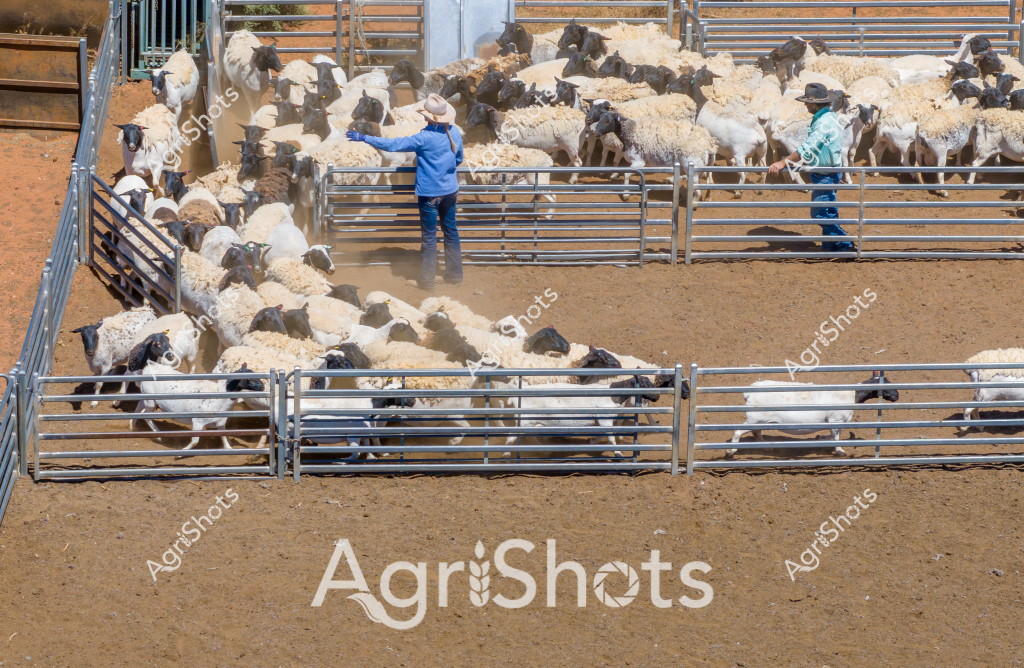
Two workers manage a large flock of sheep in a dusty livestock yard, carefully moving and sorting the animals through metal cattle gates and pens. A man in a blue long-sleeved shirt stands in the center of the enclosure, strategically positioning himself to guide the sheep's movement, while another worker in a light green shirt assists from a different section of the yard. The sheep appear to be a mixed flock of white and dark-colored animals, densely packed and creating clouds of dust as they shift between the metal rail compartments. The ground is a rich reddish-brown earth typical of Australian agricultural landscapes, likely indicating an inland or outback location. Metal livestock handling gates create a complex system of pathways and sorting areas, demonstrating the sophisticated infrastructure used in sheep management. The overhead view reveals the precise choreography of animal handling, with the workers using careful positioning and movement to control the flock's direction. This scene captures the essential skill and physical labor of livestock management, showcasing the intricate process of moving and sorting sheep in a professional agricultural setting. The dust, metal infrastructure, and coordinated human movements highlight the challenging and precise nature of Australian sheep farming.
 Image
Image
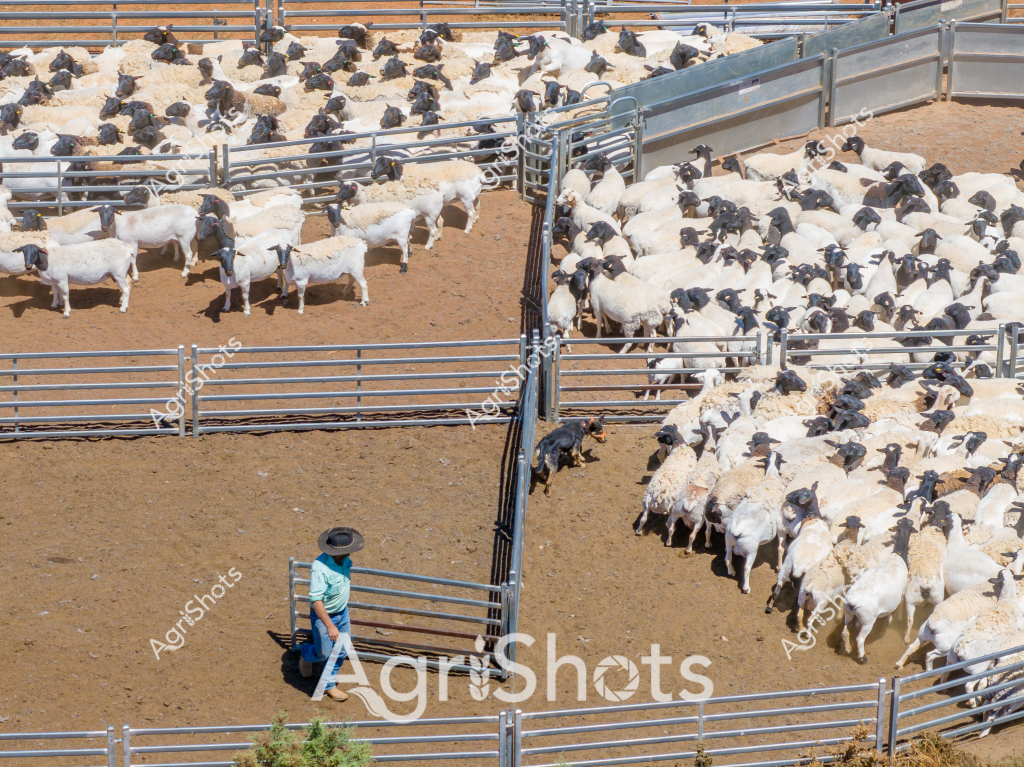
A large flock of black and white sheep are penned in a dry, sandy livestock yard, carefully managed by a stockman wearing a blue shirt and wide-brimmed hat. The sheep appear to be a mixed breed, with some pure white and others with distinct black heads and markings, typical of breeds like Dorper or Suffolk. Metal livestock panels divide the yard into separate pens, creating an organized system for sorting and managing the herd. The stockman stands near the fence, observing the tightly packed groups of sheep that fill multiple interconnected yards. The ground is a sandy brown color, suggesting an arid or semi-arid agricultural region, likely in inland Australia. The precise arrangement of the yards and the careful positioning of the livestock demonstrate professional farm management techniques used in Australian sheep production. The aerial perspective reveals the scale of the operation, with hundreds of sheep clustered together, their woolly bodies creating a textured landscape of white and gray against the earthy background. This scene captures the essence of Australian livestock farming - a blend of careful animal husbandry, strategic farm infrastructure, and adaptation to challenging rural environments.
 Image
Image
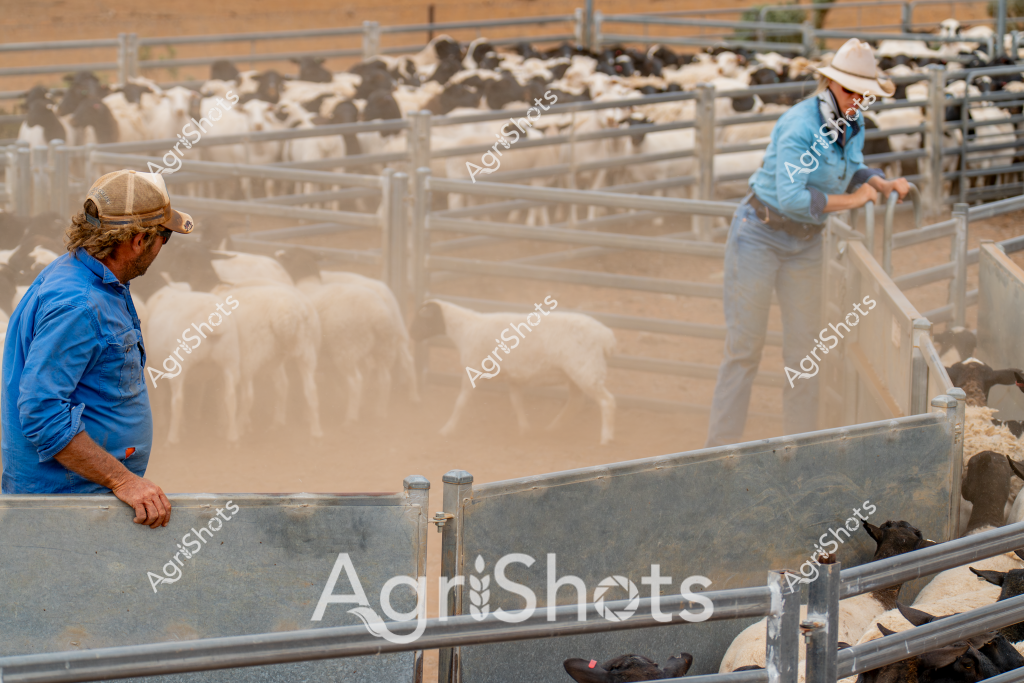
Two men working in a dusty livestock yard manage a flock of sheep, carefully guiding them through metal cattle yards under bright, arid conditions. A man in a blue long-sleeved shirt and tan cap stands near a metal gate, observing the livestock movement, while another man in a light blue shirt and white wide-brimmed hat actively manages the sheep behind metal fencing. The sheep - a mix of white and dark-colored animals - are clustered tightly in the holding pen, raising a fine cloud of dust around their woolly bodies. The landscape appears dry and sun-drenched, typical of Australian rural livestock management settings, with metal yard infrastructure providing structured containment for the animals. The workers' positioning and attentive postures suggest an experienced approach to stock handling, demonstrating the precise and methodical nature of sheep farming in challenging agricultural environments.
 Image
Image
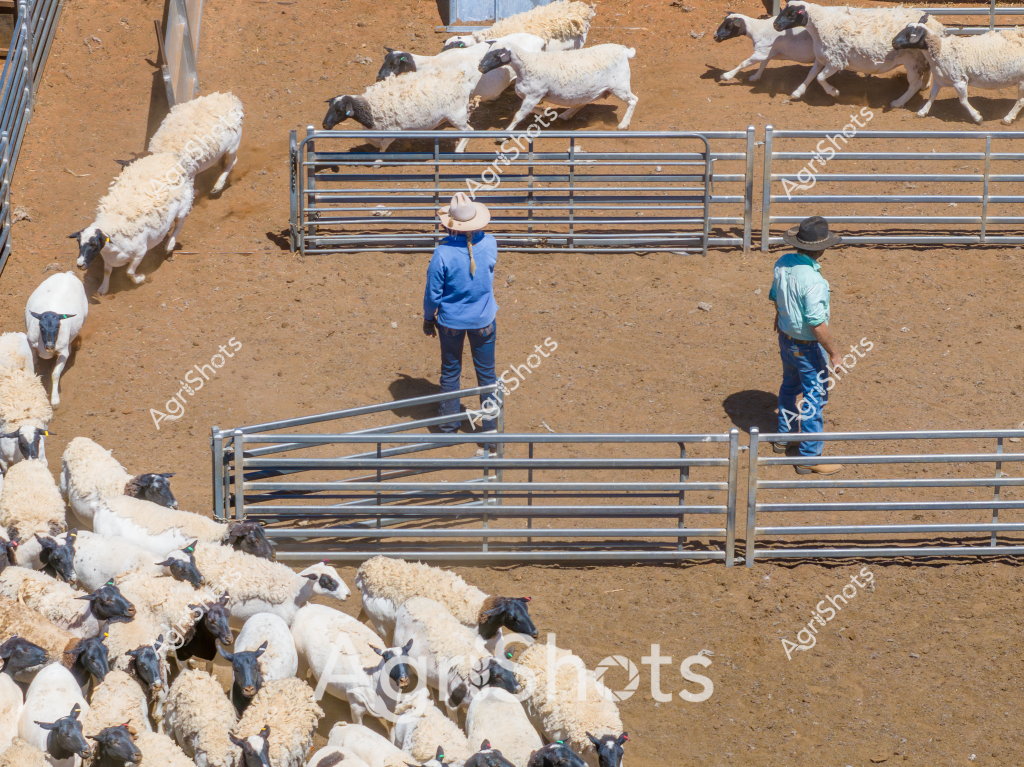
Two people are working with a flock of sheep in a dusty livestock yard, surrounded by metal cattle panels. A woman in a blue long-sleeved shirt and a man in a light blue-green shirt stand strategically positioned among numerous white and black-faced sheep, likely Merino or Dorper cross breeds. The animals are moving in small groups through the yard's metal gates and pens, suggesting a mustering or sorting operation typical of Australian sheep stations. The ground is a rich, rusty-orange dirt color, characteristic of arid or semi-arid agricultural regions, with the stark landscape highlighting the precision of the livestock management. The overhead view captures the methodical process of moving and managing sheep, demonstrating the skill and coordination required in Australian pastoral farming.
 Image
Image
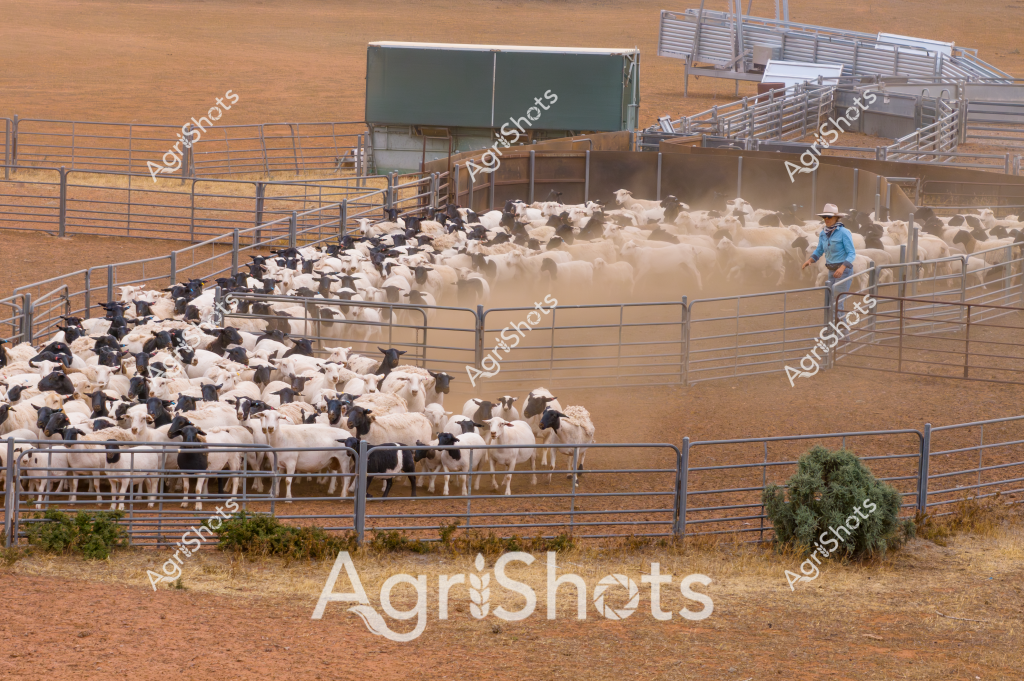
A large herd of white and black-faced sheep are gathered in a dusty livestock yard, managed by a man in a blue shirt and light-colored hat. Multiple metal livestock fencing panels create a complex holding area, with a green-roofed shed and additional silver metal yards visible in the background. The sheep appear densely packed, raising a cloud of fine golden-brown dust around their woolly bodies. A sparse bush and dry grassland surrounds the yard, indicating an arid agricultural setting typical of Australian livestock operations. The careful arrangement of the yards and the controlled movement of the sheep demonstrate professional livestock management techniques used in sheep farming. The scene captures the precision of contemporary Australian sheep farming, where infrastructure and skilled stockmanship enable efficient livestock handling. The man's positioning suggests he is carefully guiding or monitoring the sheep's movement through the yard's carefully designed gates and holding pens. The dust and dry landscape highlight the challenging environmental conditions typical of many Australian agricultural regions.
 Image
Image
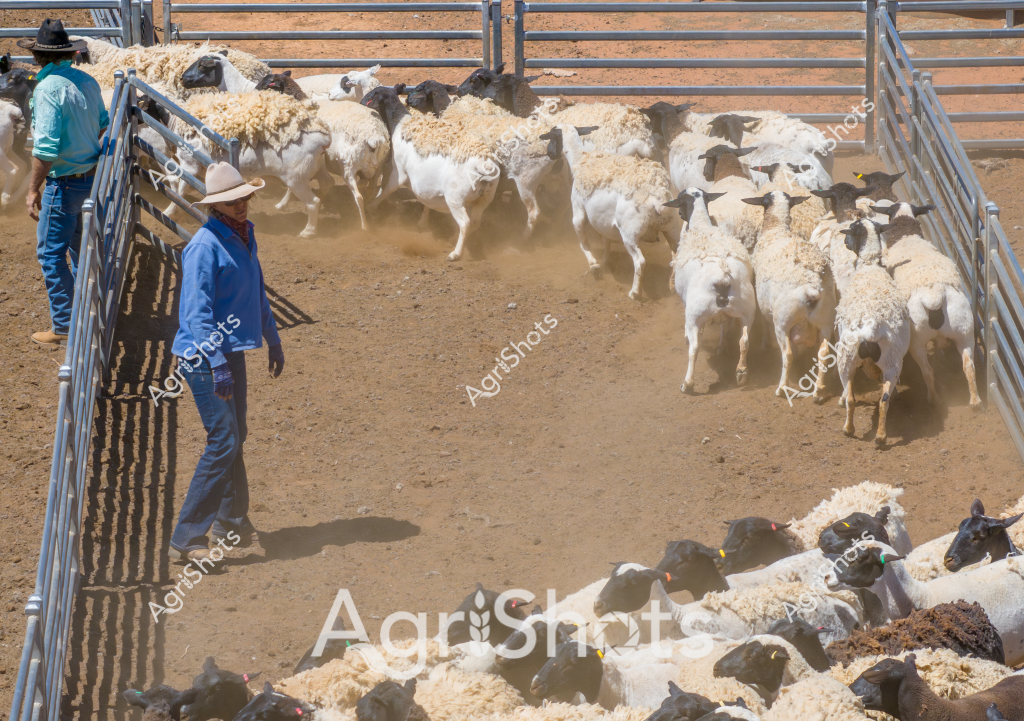
Two men in blue shirts and wide-brimmed hats manage a flock of white Merino sheep in a dusty livestock yard. The sheep, with their thick, woolly coats, are tightly packed into a metal-fenced holding area, kicking up clouds of dry earth as they move. One stockman stands near the fence, carefully observing the sheep's movement, while another assists in guiding the flock. The scene captures the intense activity of livestock management, with the animals tightly clustered and moving with nervous energy. Bright sunlight illuminates the yard, casting sharp shadows and highlighting the texture of the sheep's fleece against the parched ground. This image epitomizes the challenging and skilled work of Australian sheep farming, where careful handling and expert knowledge are crucial to managing livestock in arid conditions.
 Image
Image
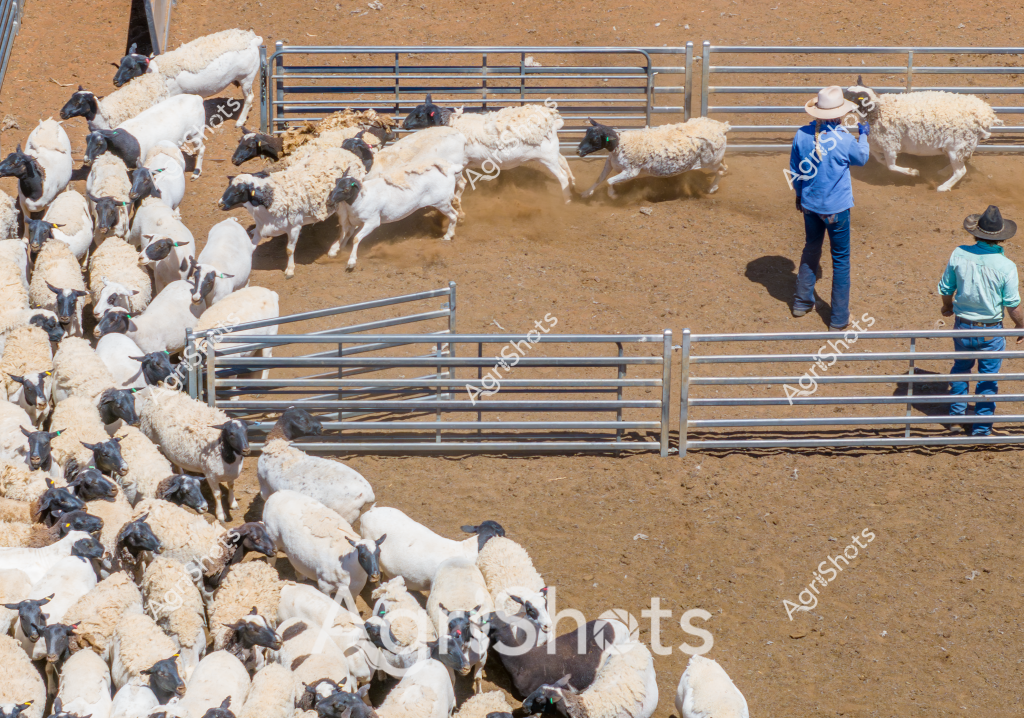
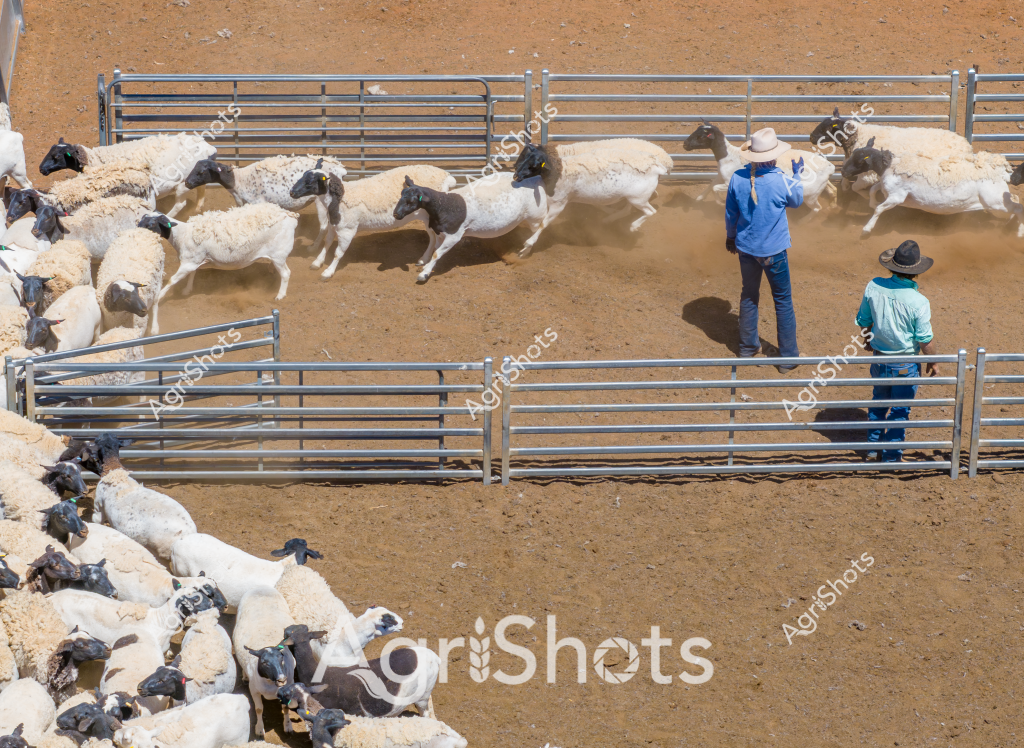
A dynamic sheep mustering scene unfolds in an arid Australian livestock yard, with a large flock of white and black-headed sheep moving through metal livestock gates. Two workers, a man in a blue shirt and another in a turquoise top and wide-brimmed hat, carefully manage the sheep's movement through the paddock's corral system. The sheep appear to be Dorper or Merino crossbreed, with distinctive black heads and white woolly bodies, clustered tightly and moving in coordinated groups across the dusty, sun-baked ground. The metal yard gates create a systematic pathway, guiding the livestock through different pens with precision. Shadows are sharp and defined, indicating bright midday sunlight typical of an Australian rural setting. The scene captures the expertise of stockmen in managing livestock, with their careful positioning and movement controlling the flow of the sheep herd. The environment suggests an inland pastoral station, with hard-packed earth and minimal vegetation, reflecting the challenging conditions of Australian sheep farming. The composition emphasizes the scale and complexity of sheep management, showcasing the critical role of skilled workers and infrastructure in moving and controlling livestock herds across vast agricultural landscapes.
 Image
Image
Two stockmen manage a group of white and dark-colored sheep in metal livestock yards during a stock handling operation. A man in a bright blue shirt and a man in a teal shirt stand near metal livestock gates, carefully directing a mob of sheep that appear to be Dorper or Merino cross breed. The dusty, sandy-colored yard provides a stark backdrop to the crisp movement of the sheep, which are densely clustered and actively moving between different pen sections. The precise metal fencing creates systematic pathways, demonstrating the structured approach to livestock management typical of Australian agricultural practices. Shadows cast by the workers and animals emphasize the midday sunlight and the controlled, methodical nature of the sheep mustering process.