About this image
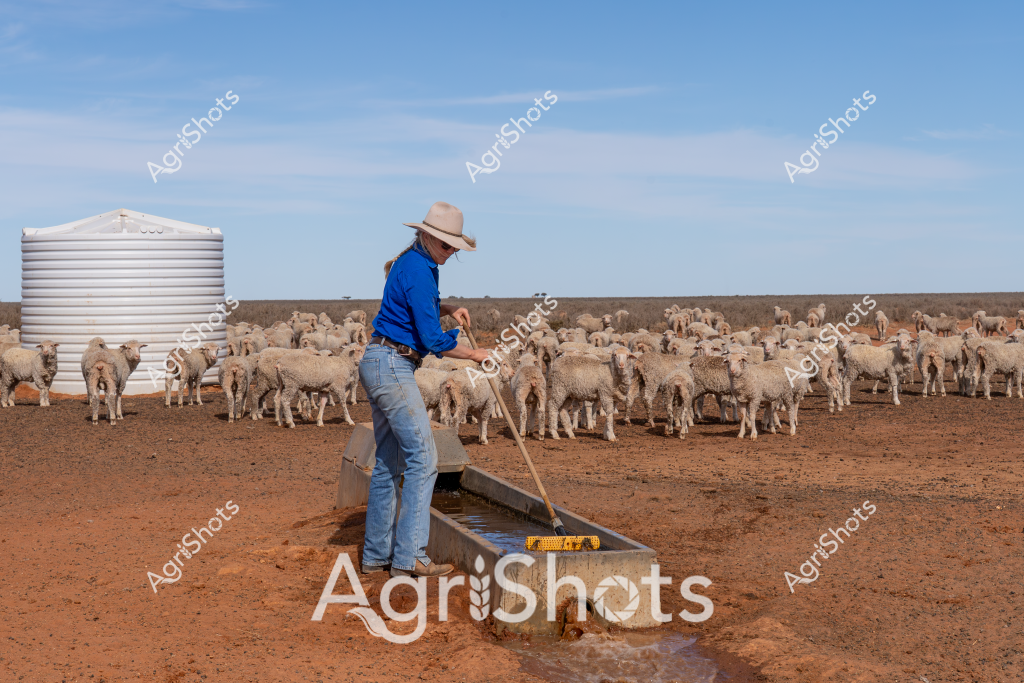
A woman in a blue long-sleeved shirt and wide-brimmed hat tends to a large flock of merino sheep in an arid Australian landscape. Standing beside a water trough near a large white water tank, she is surrounded by dozens of woolly sheep on a dry, reddish-brown earth paddock. The expansive background reveals a flat, sparse horizon typical of inland Australian pastoral regions, with a clear blue sky stretching overhead. Her stance suggests careful monitoring and management of the livestock, using the water trough to ensure the sheep remain hydrated in the harsh, dry environment. The white water tank and carefully positioned trough highlight the critical infrastructure required to support livestock in challenging agricultural conditions, demonstrating the resilience and strategic planning of Australian sheep farmers. The scene captures the essence of outback sheep farming - a solitary worker maintaining a flock in a demanding landscape, where water management and animal care are paramount to survival. The merino sheep, with their distinctive thick woolly coats, cluster around the water source, reflecting the symbiotic relationship between the farmer and the livestock in this unforgiving terrain.
Similar media
 Image
Image
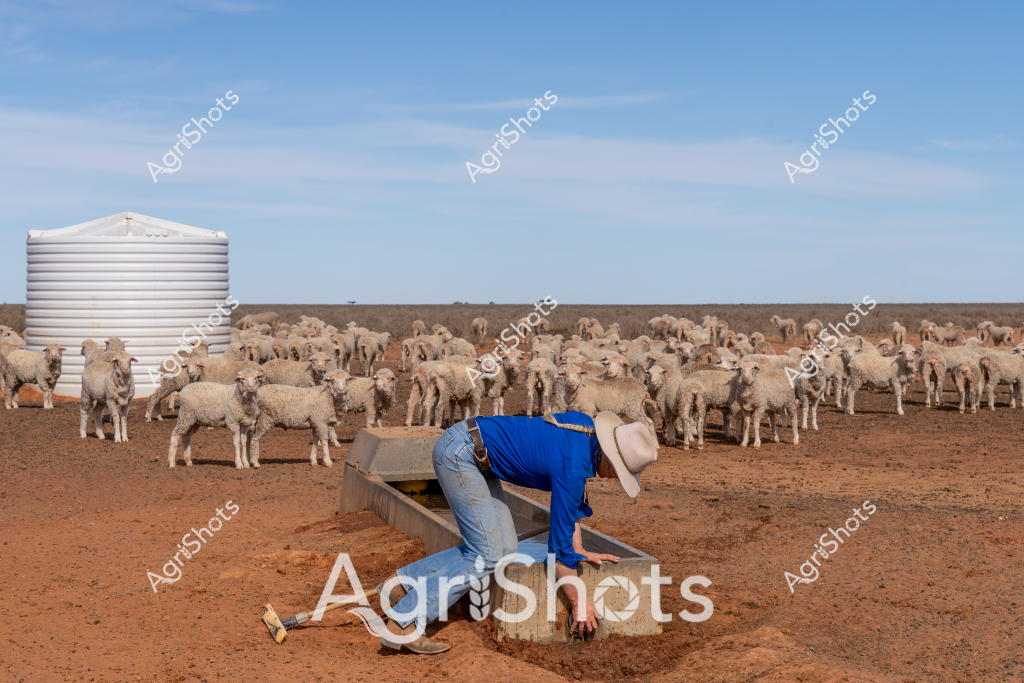
A man in a blue work shirt and wide-brimmed hat tends to a large flock of Merino sheep in a dry, arid landscape of central Australia. A large white water tank stands prominently in the background, while dozens of woolly sheep crowd the reddish-brown earth around a livestock water trough. The stockman is bent over, carefully managing the water supply for the flock, which appears to be a substantial breeding mob spread across the sparse paddock. The clear blue sky and open horizon emphasize the challenging environment of outback sheep farming, where water management is critical for livestock survival. Dusty ground and scattered vegetation highlight the harsh conditions of this rural agricultural setting, showcasing the resilience required in Australian sheep farming. The scene captures the essential daily work of a sheep station worker, demonstrating the careful husbandry needed to maintain livestock in a drought-prone landscape. The white water tank and metal trough are crucial infrastructure that enables sheep farming in these challenging environmental conditions.
 Image
Image
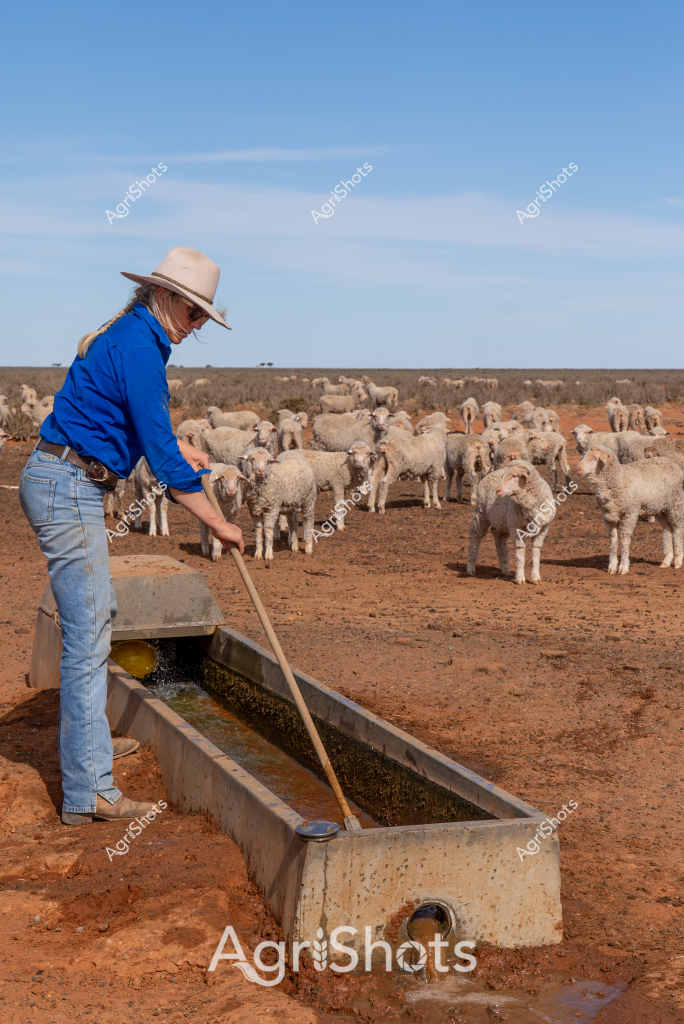
A woman stockman in a bright blue long-sleeved shirt and light blue jeans manages a flock of Merino sheep in an arid Australian landscape. Standing beside a concrete water trough, she uses a long pole to adjust or clean the water supply for the livestock. The dry, reddish-brown earth stretches to the horizon, dotted with dozens of woolly white sheep clustered together in the background. Her wide-brimmed light-colored hat provides protection from the intense sunlight, while the clear blue sky suggests a typical hot, dry day in the Australian outback. This scene captures the challenging yet essential work of managing livestock in harsh rural conditions, highlighting the critical role of water infrastructure in sustaining sheep farming in remote agricultural regions.
 Image
Image
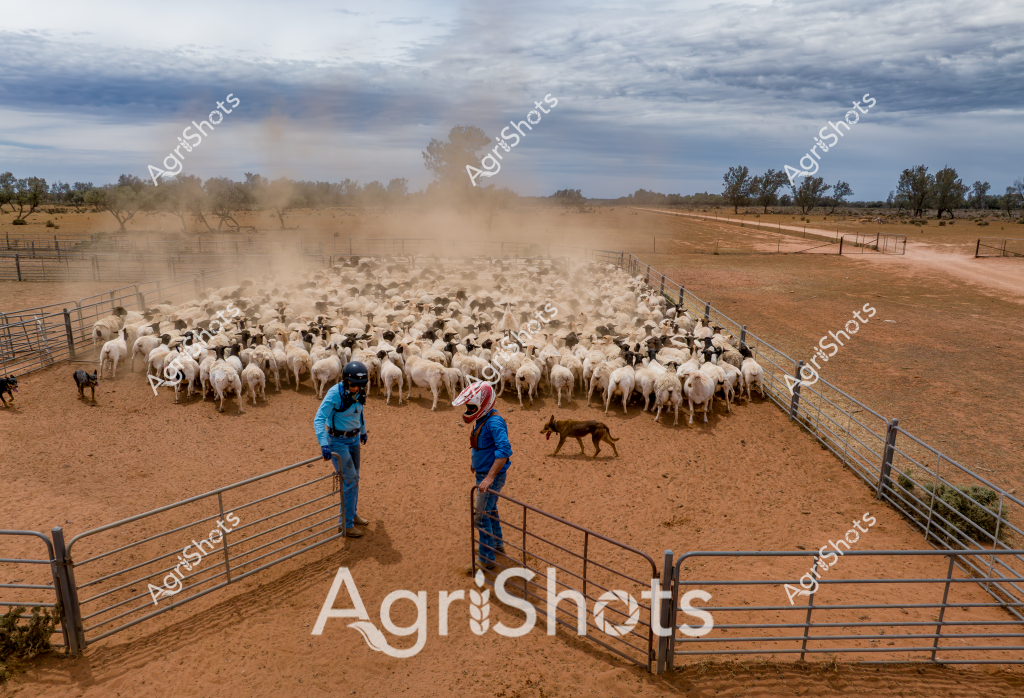
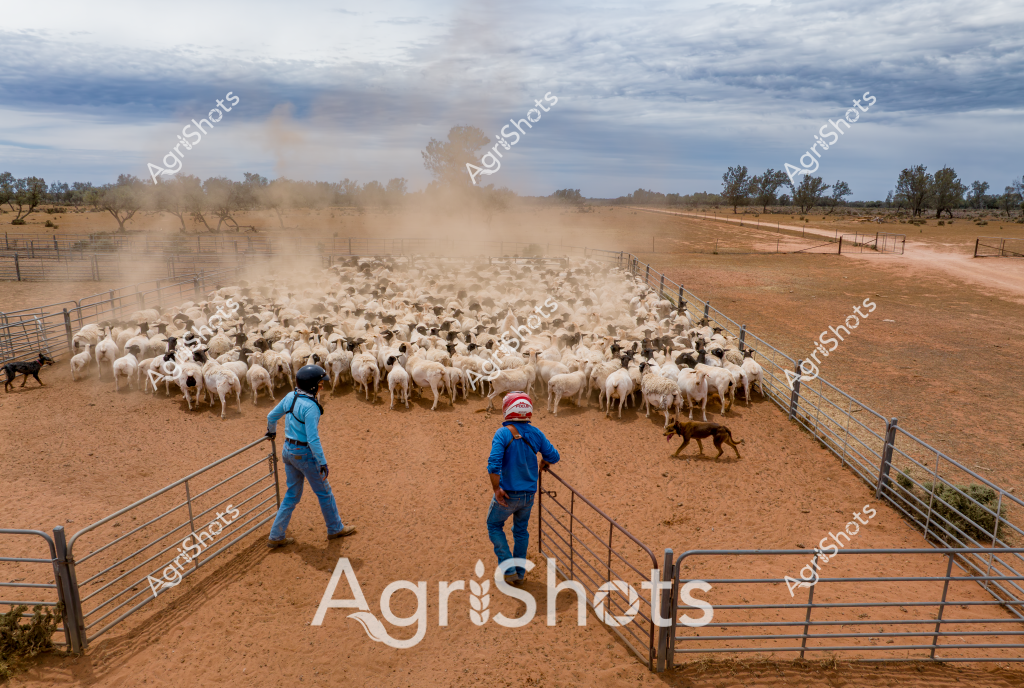
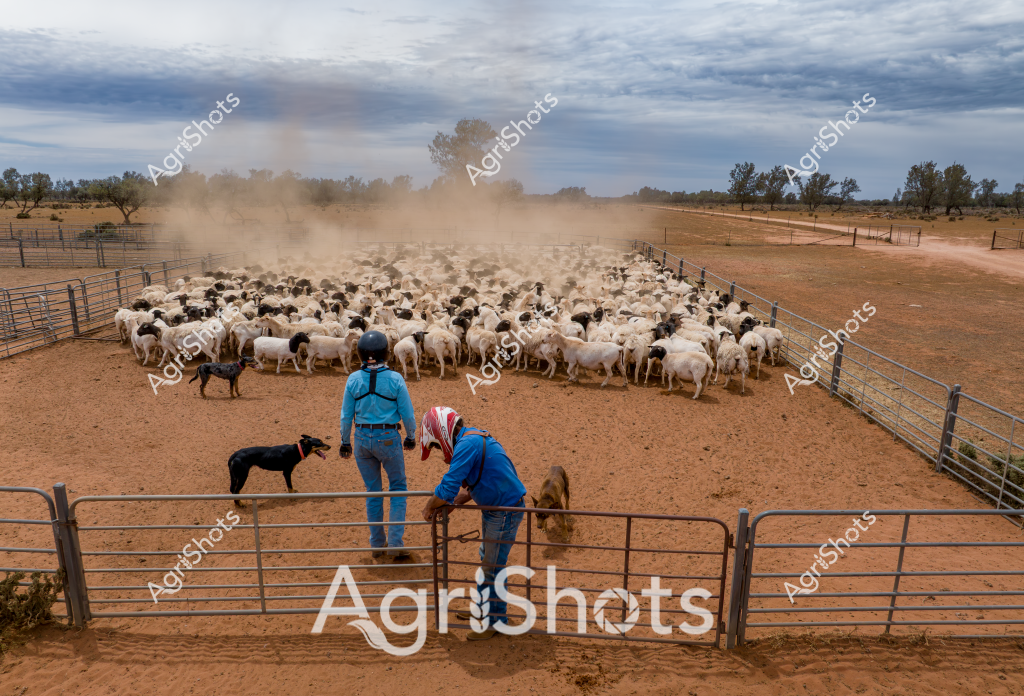
A dusty sheep mustering scene captures the essence of Australian pastoral life, with a large flock of white and black-faced sheep crowded into a dirt yard. Two men in blue work attire stand near the metal gates, overseeing the livestock operation under a dramatic cloudy sky. Herding dogs move strategically around the edges of the densely packed mob, helping to control the movement of the sheep. The arid landscape, with sparse trees and reddish-brown earth, highlights the challenging environment of rural Australian sheep farming. Dust billows around the flock, creating a hazy atmosphere that speaks to the hard work and skill required in managing livestock in this harsh terrain. The scene represents the traditional methods of sheep farming, with experienced stockmen and working dogs managing a large number of sheep in a compact yard.
 Image
Image
Two men in blue clothing and work boots manage a large flock of white sheep in a dry, dusty livestock yard during what appears to be a warm, overcast day. The sheep are tightly clustered, generating a cloud of reddish-brown dust as they move within the metal livestock fencing. Working dogs assist the stockmen, helping to control and direct the mob of sheep across the arid paddock with its sparse trees and fenced enclosures in the background. The scene captures a typical Australian sheep farming operation, likely in an inland region experiencing dry seasonal conditions. The stockmen's coordinated movements and their dogs' precise herding demonstrate the skill and experience required in managing large livestock herds in challenging agricultural environments. The loose, functional clothing - blue shirts, work pants, and practical footwear - reflects the pragmatic approach of professional livestock managers. The landscape suggests a rural property in an arid or semi-arid zone, with hard-packed earth, minimal vegetation, and a wide, cloudy sky typical of Australian pastoral regions. The fencing and yard infrastructure highlight the structured approach to livestock management, with carefully designed spaces to control and move sheep efficiently.
 Image
Image
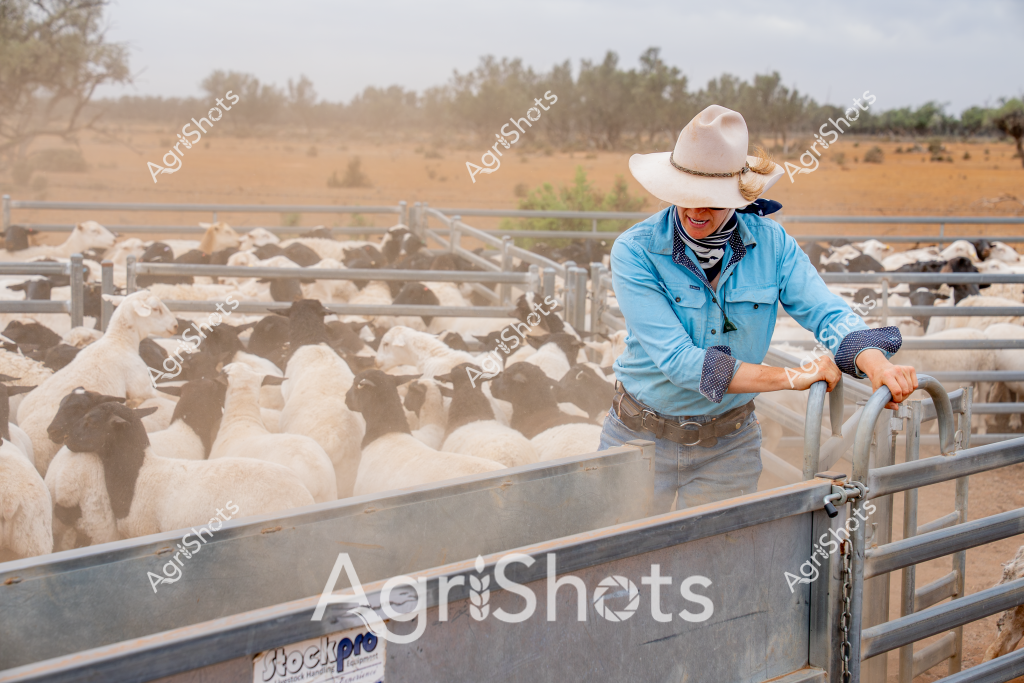
A woman stockman stands at a metal livestock gate, overseeing a large flock of sheep in a dusty rural paddock. Wearing a wide-brimmed light-colored hat, blue long-sleeved work shirt, and denim pants, she leans against a metal livestock trailer labeled "Block Pro". The sheep - a mix of white and dark-colored animals - are densely packed within metal yard panels, creating a textured landscape of woolly bodies and angular metal infrastructure. The background reveals a typical Australian pastoral scene: sparse trees, dry golden-brown ground, and a hazy horizon suggesting warm, arid conditions. Her posture suggests careful observation and professional control, embodying the quiet expertise of rural agricultural workers. Dust hangs in the air, adding a sense of atmospheric depth to the scene and highlighting the challenging environmental conditions of the landscape. The image captures a quintessential moment of livestock management, showcasing the connection between a skilled stockwoman and the flock in a classic Australian agricultural setting. Her attentive stance and the carefully arranged sheep yards speak to the precision and skill required in rural livestock operations.
 Image
Image
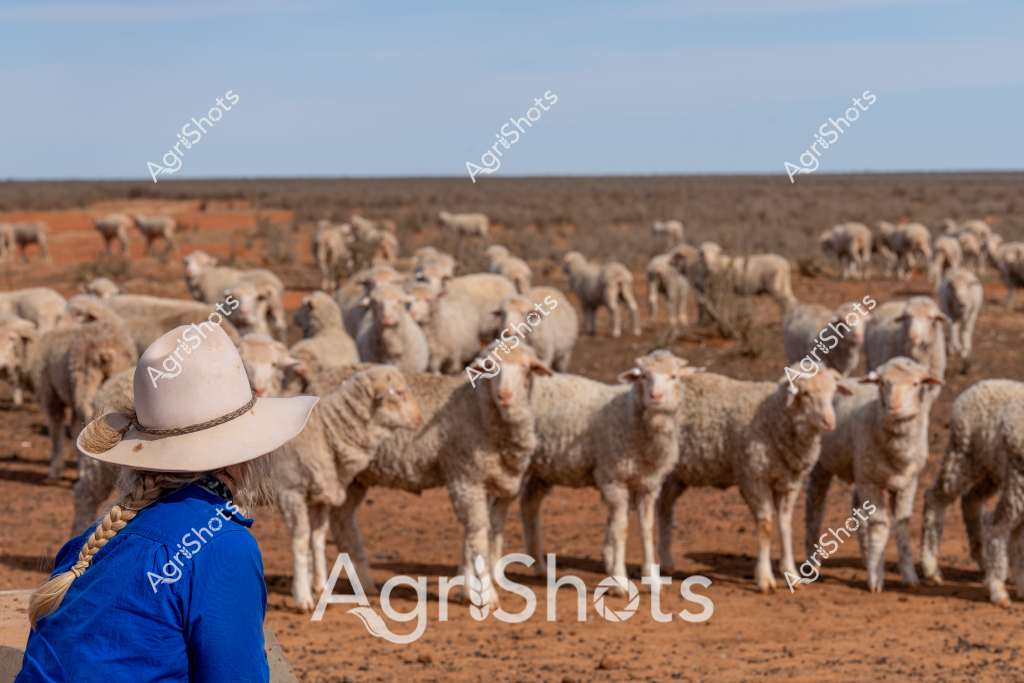
A woman stockman wearing a wide-brimmed light-colored hat and a bright blue long-sleeved shirt stands observing a large flock of Merino sheep grazing across a dry, reddish-brown paddock. The landscape stretches out to a flat horizon under a pale blue sky, typical of Australia's arid pastoral regions. Dozens of woolly white sheep are scattered across the dusty ground, their dense fleeces standing out against the ochre-colored earth. The scene captures the essence of sheep farming in rural Australia, showcasing the vast, open landscapes and the careful management required to maintain a healthy flock in challenging environmental conditions. The woman's positioning suggests she is monitoring the sheep, a critical task in maintaining the health and safety of the livestock in this harsh, expansive terrain.
 Image
Image
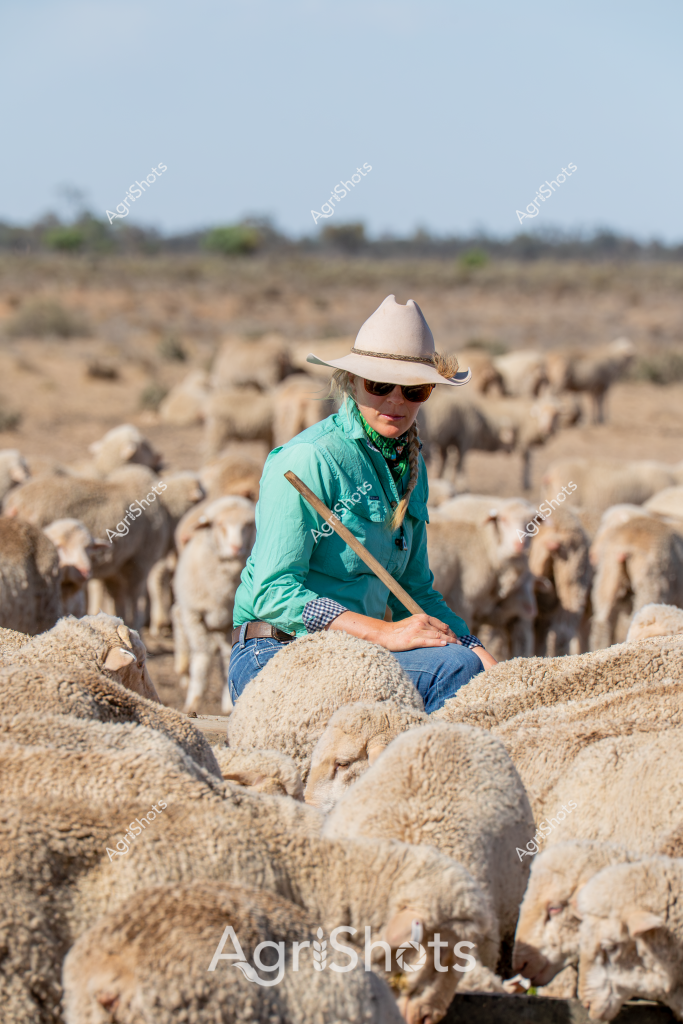
A woman stockman in a turquoise shirt and cream cowboy hat sits amid a large flock of Merino sheep in an arid Australian landscape. Wearing sunglasses and a green bandana, she rests on the woolly backs of the sheep, holding a long herding staff, demonstrating the traditional skills of rural sheep management. The landscape is a dusty, sparse paddock with scattered vegetation and distant trees on the horizon, typical of Australia's dry interior regions. The dense flock of cream-colored Merino sheep, known for their fine wool, are tightly clustered around her, creating a textural landscape of woolly bodies. Her posture suggests calm expertise, balancing comfortably among the animals she tends, embodying the resilience and skill of Australian rural workers. The muted earth tones of the background contrast with her bright turquoise shirt, creating a vibrant image of contemporary agricultural work.
 Image
Image
A substantial mob of white and dark-colored sheep crowd together, raising a fine cloud of reddish-brown dust against the overcast sky. A woman in blue clothing and a wide-brimmed hat stands near the metal gate, while another worker bends to interact with the livestock. Several working dogs are positioned around the flock, helping to control and direct the sheep's movements. The arid landscape features sparse trees in the background and metal livestock yards with multiple paddock sections, typical of Australian sheep station infrastructure. The scene captures the challenging and dynamic nature of sheep management in a dry rural environment, with the dust and tight grouping of animals suggesting active mustering or sorting activities.