About this image
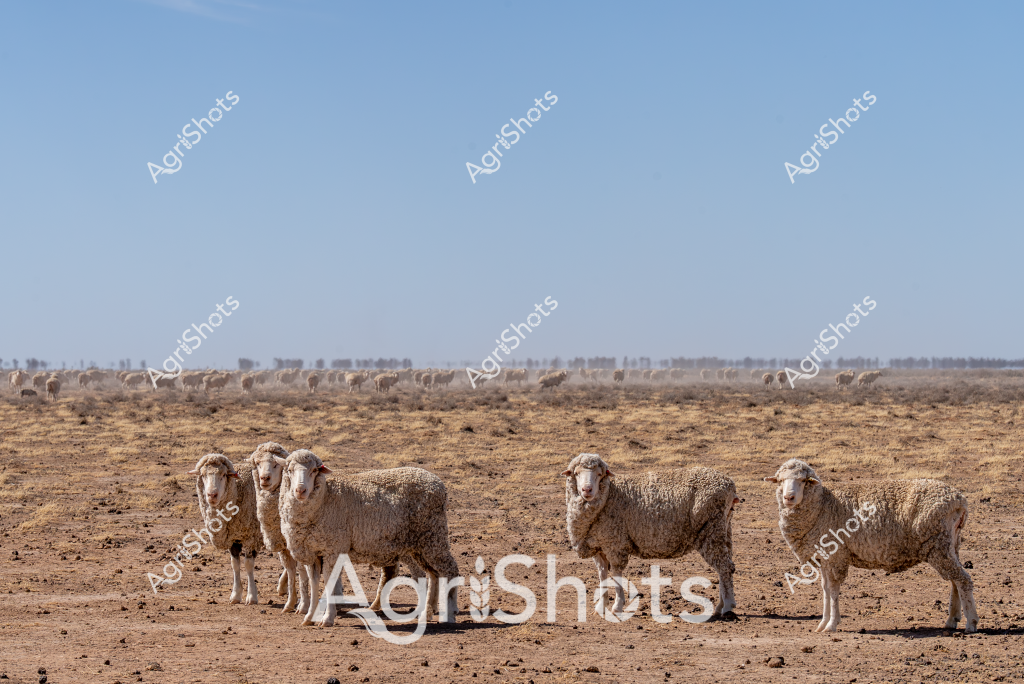
A small mob of Merino sheep stand clustered on a dry, dusty paddock under a clear blue sky, with more sheep visible in the distant background. The woolly white and cream-colored sheep appear hardy and well-conditioned, adapted to the arid Australian landscape. Sparse scrub and yellow-brown grassland stretch to the horizon, indicating challenging drought conditions typical of inland grazing regions. The sheep are standing relatively still, suggesting the harsh, unforgiving environment where water and feed are scarce. Their thick, dense fleece provides protection from the intense sunlight and heat, highlighting the resilience of Merino sheep in marginal agricultural zones. The expansive, open landscape communicates the vast scale of Australian sheep farming, where animals must survive in challenging terrain and climate conditions.
Similar media
 Image
Image
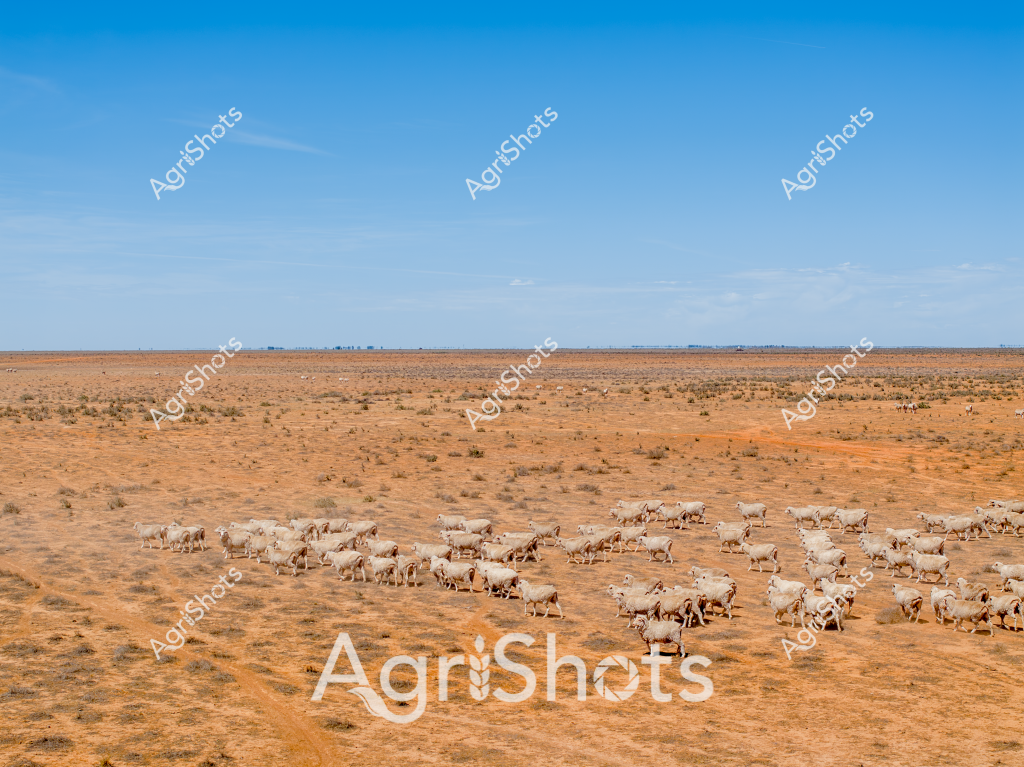
A vast, arid landscape stretches across the horizon, dotted with a substantial flock of white and brown sheep grazing on the dry, rusty-orange terrain. The sparse vegetation and expansive blue sky suggest this is a challenging drought-affected region, likely in outback Australia. The sheep, appearing to be a mixed breed of possibly Merino and crossbred stock, are clustered together, moving slowly across the parched ground in search of sparse vegetation. The landscape's monotone color palette - burnt oranges, pale yellows, and dusty browns - emphasizes the harsh environmental conditions these resilient livestock must endure. A distant line of low trees marks the horizon, providing the only break in the flat, unforgiving landscape that typifies many of Australia's extensive pastoral regions.
 Image
Image
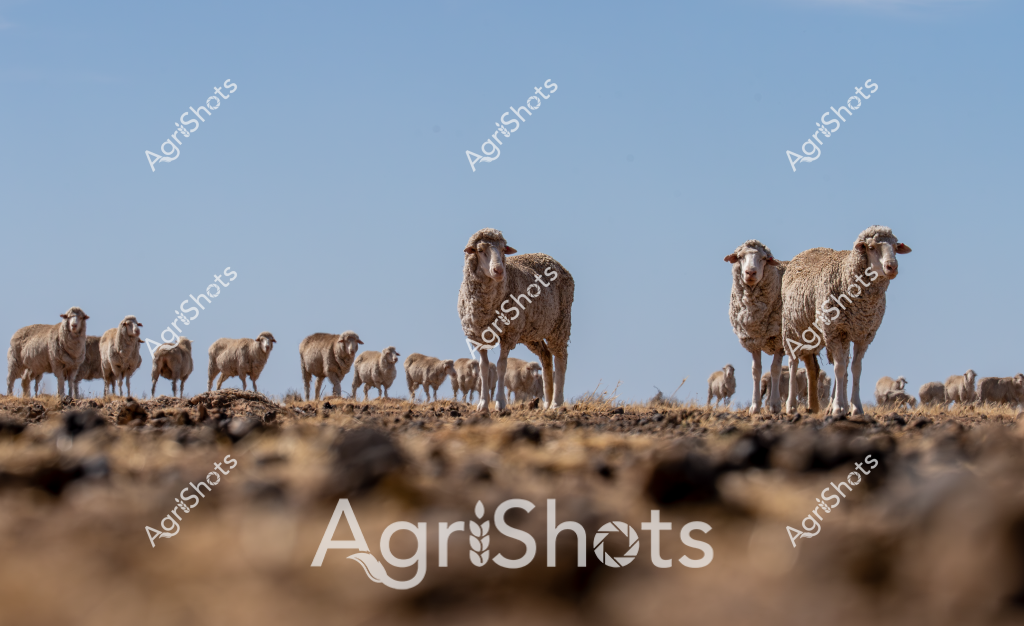
A flock of merino sheep stand confidently across a dry, rocky landscape under a clear blue sky. Several woolly sheep are positioned prominently in the foreground, with their dense, beige-colored fleece creating a textural contrast against the rugged ground. More sheep spread out behind them, creating a sense of depth and scale typical of Australian pastoral scenes. The animals appear alert, with some standing tall and others grazing, showcasing the hardy nature of merino sheep in challenging outback conditions. The low perspective emphasizes the sheep's robust form, with their muscular legs standing firmly on the weathered, stony terrain. This image captures the essence of Australian sheep farming - resilient animals adapted to harsh, arid environments that characterize much of the continent's agricultural landscape.
 Image
Image
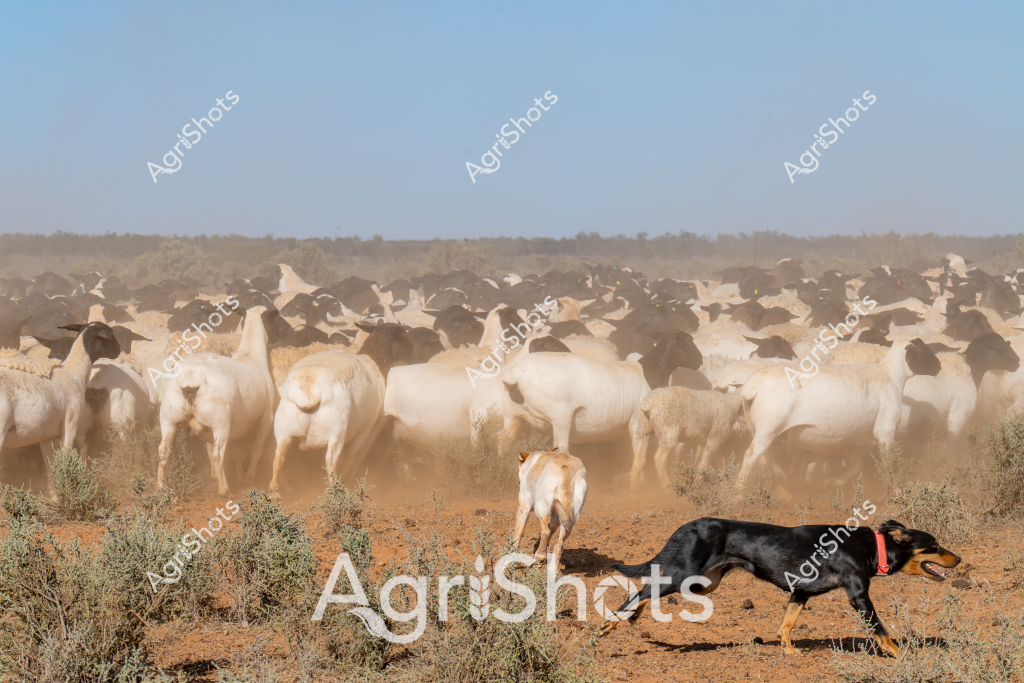
A large herd of light-colored sheep kicks up dust in a dry, arid landscape, with two working dogs herding the mob across a sparse, reddish-brown paddock. A black and tan dog runs alongside the herd, expertly guiding the sheep's movement with precision and skill. A lighter-colored dog stands slightly apart, also part of the mustering effort. The background reveals a line of trees and scrubby vegetation, creating a typical Australian outback pastoral scene. Dusty conditions and the tight grouping of the sheep suggest an experienced team of working dogs and likely a stockman managing this livestock movement across a challenging rural terrain. The image captures the essence of Australian sheep farming, highlighting the critical role of working dogs in managing large herds across expansive, dry landscapes.
 Image
Image
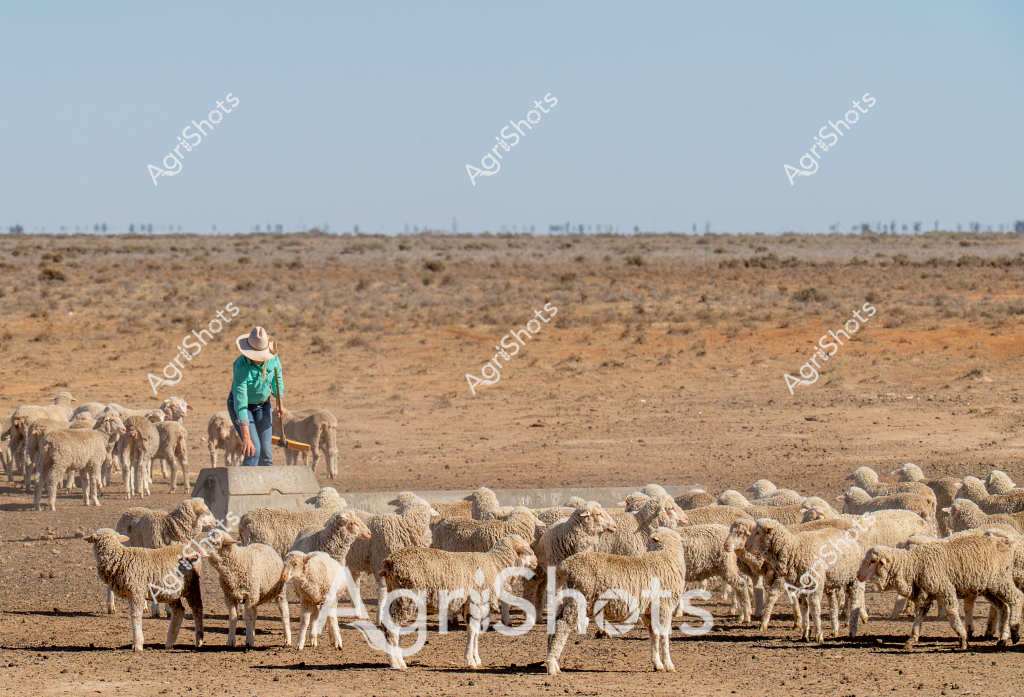
A woman stockman stands atop a concrete water trough, surrounded by a large flock of merino sheep in a dry, expansive outback landscape. The parched paddock stretches toward a distant horizon, with sparse vegetation and a pale blue sky indicating harsh drought conditions. Wearing a teal work shirt, white hat, and sturdy work pants, the stockman carefully monitors the sheep gathered around the water source. The woolly merino sheep, with their dense cream-colored fleece, cluster tightly around the trough, seeking water in the arid environment. The landscape is a palette of dusty browns and ochres, emphasizing the challenging conditions of rural Australian sheep farming. This image captures the resilience of both the livestock and the people who manage them in one of the world's most unforgiving agricultural environments.
 Image
Image
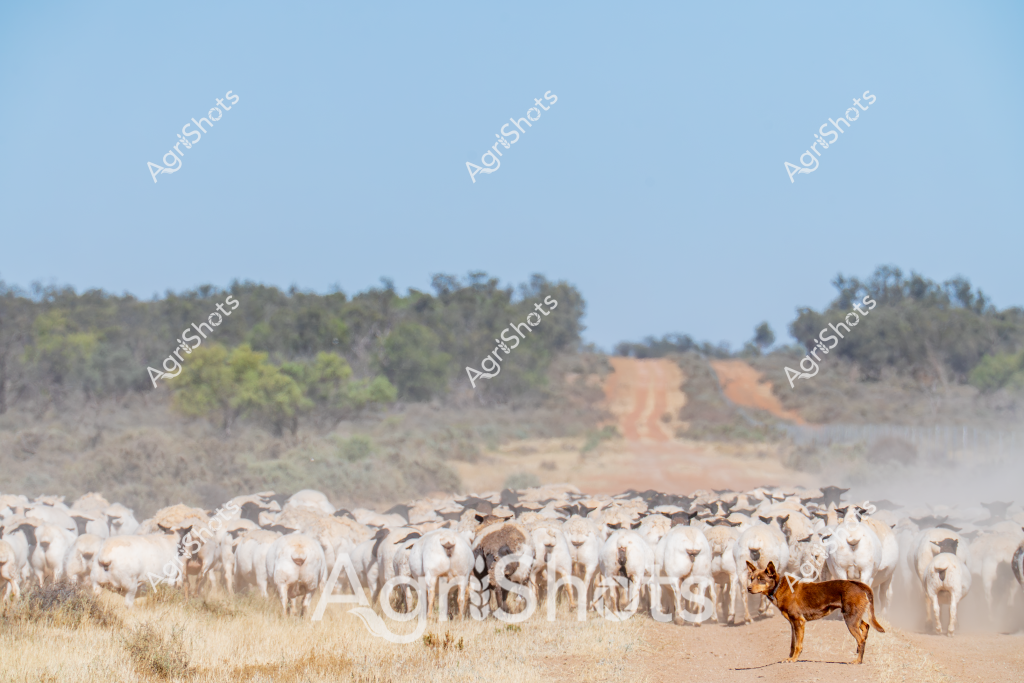
A dingo stands alert on a dusty rural track, watching over a large flock of white sheep being herded across an arid Australian landscape. The compact, reddish-brown canine appears vigilant and focused, positioned to the side of the sheep mob as they raise a cloud of fine dust along the dirt road. In the background, sparse eucalyptus trees and scrubland stretch toward a distant treeline under a clear blue sky, typical of an Australian pastoral setting. The image captures the essential working relationship between livestock guardian dogs and sheep herds, highlighting the dog's crucial role in managing and protecting the flock across vast, open grazing lands. The scene represents the rugged and challenging environment of Australian livestock farming, where animals and working dogs must be resilient and adaptable to survive in harsh conditions.
 Image
Image
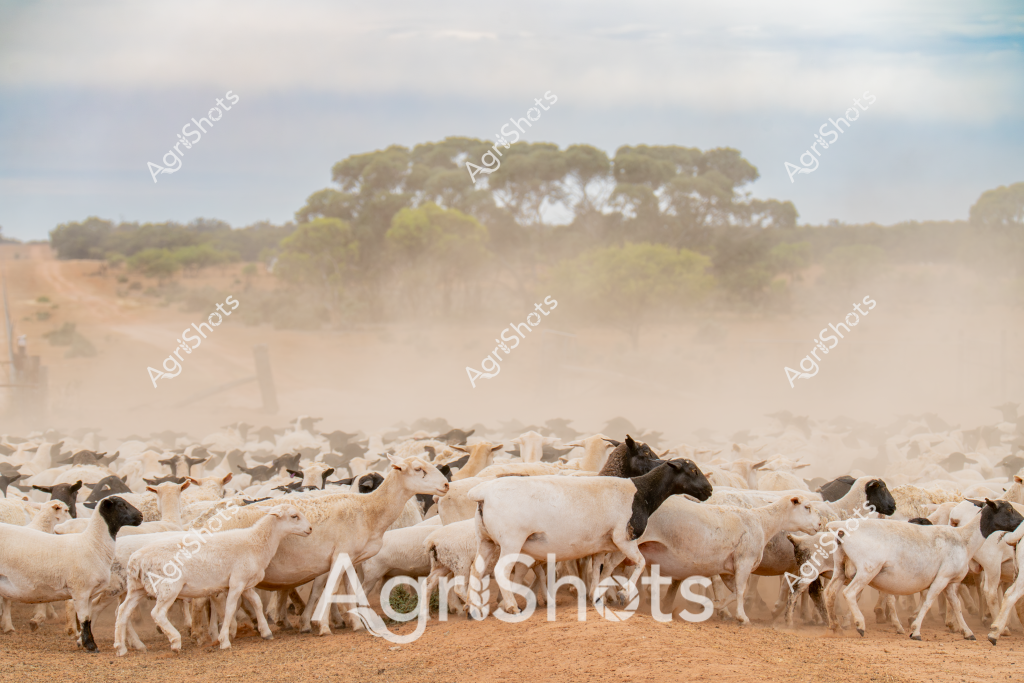
A large flock of light-colored sheep moves across a dusty rural landscape, kicking up a dense cloud of earthen particles. The mob comprises predominantly white sheep with some black-headed individuals scattered throughout the herd, creating a distinctive visual pattern against the dry, compacted ground. Sparse trees and vegetation line the distant horizon, suggesting an arid Australian pastoral setting, likely in a region experiencing dry seasonal conditions. The sheep appear to be moving with purpose, potentially being mustered by unseen livestock managers, their dense clustering indicating coordinated movement across the sparse paddock. The warm, muted color palette of beige earth, pale sheep, and soft green-gray vegetation captures the quintessential Australian rural landscape, highlighting the resilience of both the livestock and the environment. The scene evokes the challenging conditions of Australian sheep farming, where careful management and adaptation are critical to survival. The dust cloud surrounding the sheep emphasizes the intensity of their movement and the dry, potentially drought-affected terrain they traverse.
 Image
Image
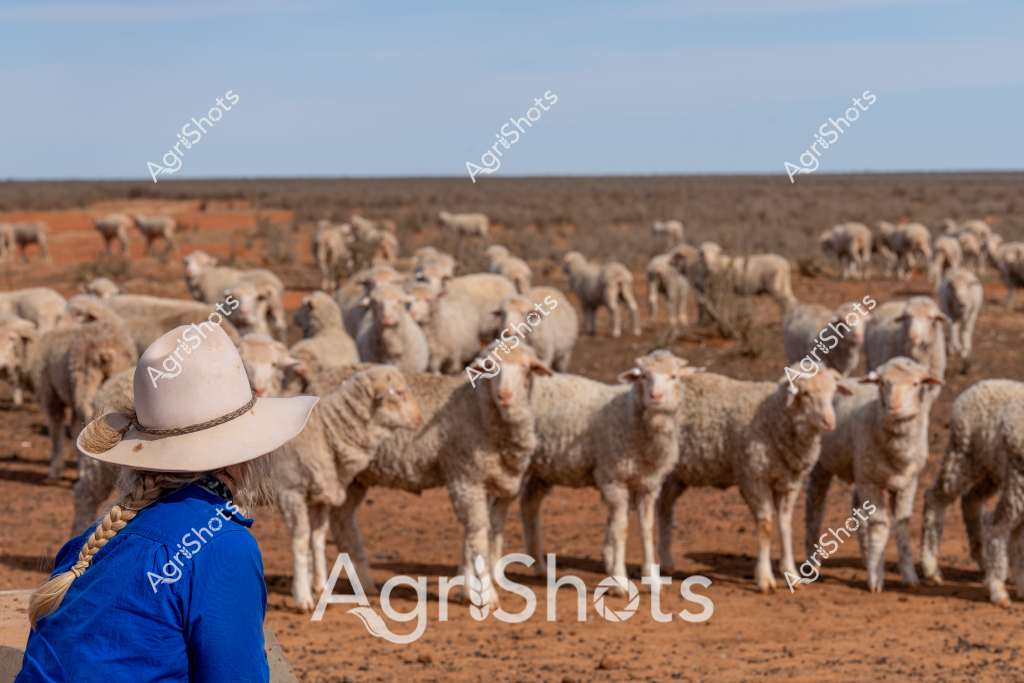
A woman stockman wearing a wide-brimmed light-colored hat and a bright blue long-sleeved shirt stands observing a large flock of Merino sheep grazing across a dry, reddish-brown paddock. The landscape stretches out to a flat horizon under a pale blue sky, typical of Australia's arid pastoral regions. Dozens of woolly white sheep are scattered across the dusty ground, their dense fleeces standing out against the ochre-colored earth. The scene captures the essence of sheep farming in rural Australia, showcasing the vast, open landscapes and the careful management required to maintain a healthy flock in challenging environmental conditions. The woman's positioning suggests she is monitoring the sheep, a critical task in maintaining the health and safety of the livestock in this harsh, expansive terrain.
 Image
Image
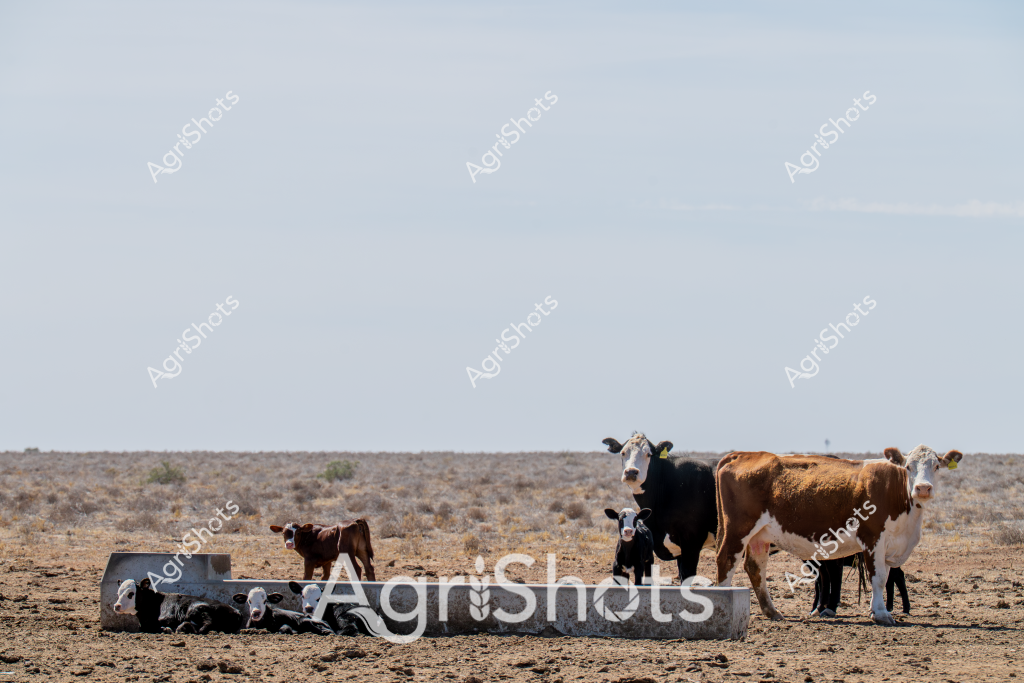
A small herd of cattle gather around a metal water trough in an arid, sparse landscape typical of Australia's dry interior. Two adult cows - one black and white, the other brown and white - stand near the trough, with a few smaller calves clustered around its base. The surrounding terrain is a dusty, rocky landscape with minimal vegetation, scattered low shrubs, and a pale gray-blue sky stretching to a distant horizon. These cattle appear to be seeking hydration in a challenging environment, highlighting the resilience of livestock in Australia's drought-prone regions. The sparse ground cover and metallic water infrastructure underscore the harsh conditions of outback pastoral farming, where water management is critical to livestock survival. The scene captures the essence of cattle farming in remote Australian landscapes, where animals must adapt to minimal resources and extreme environmental conditions. The mixture of cattle breeds and ages suggests this is likely a small family or station herd, carefully managed to survive in an unforgiving terrain.