Results for “work”
 Image
Image
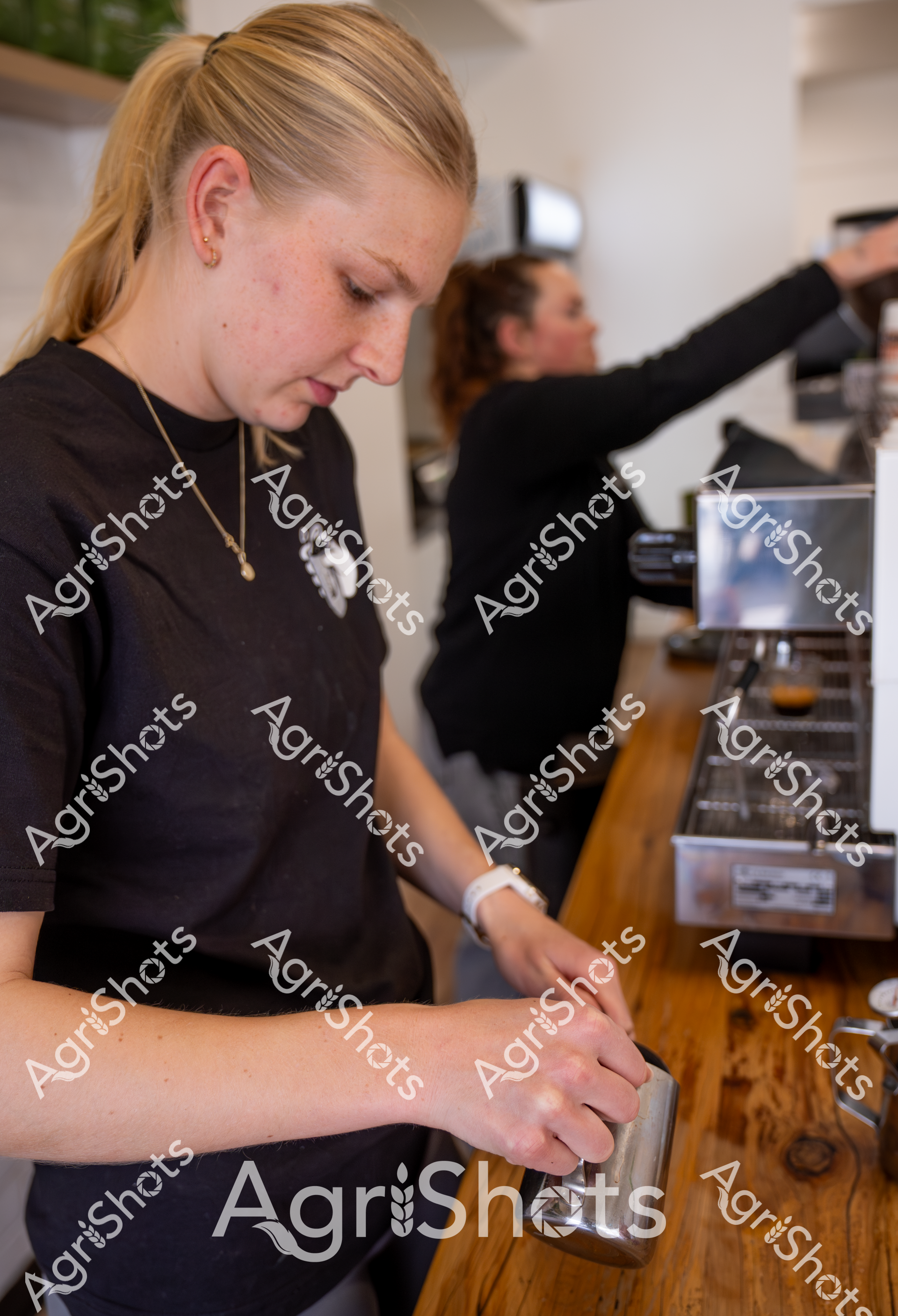
A woman in a black shirt works intently at an espresso machine in a coffee shop, focusing carefully on preparing a drink. Another woman can be seen in the background operating equipment. The setting appears to be a professional cafe environment with wooden countertops and modern coffee-making equipment.
 Image
Image
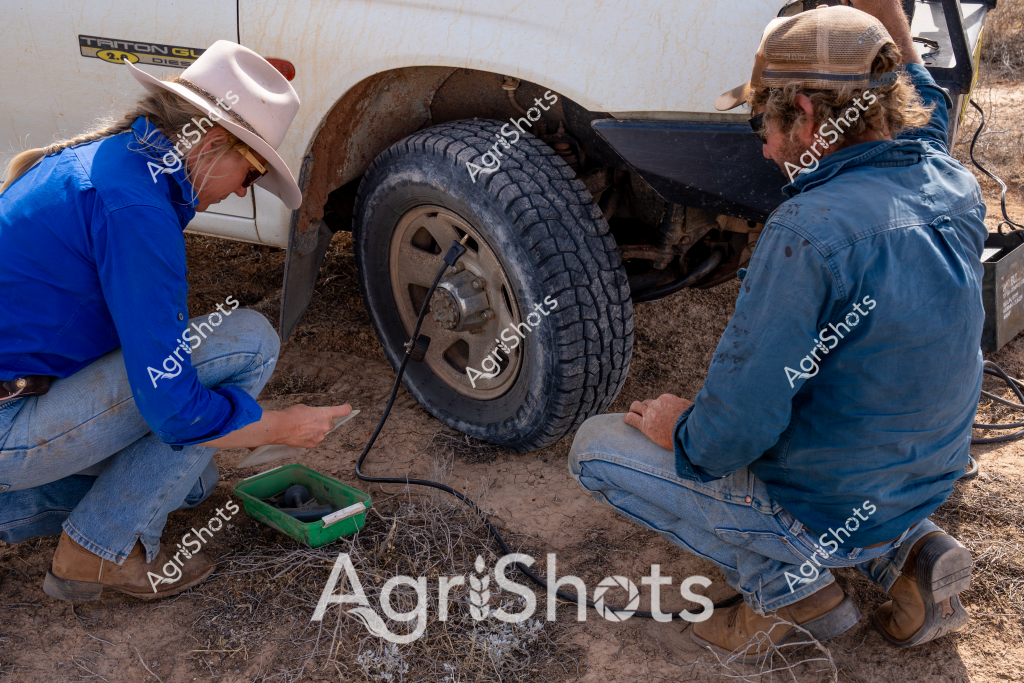
Two workers are carefully checking and inflating a tire on a white vehicle in a dusty rural setting. A woman wearing a white cowboy hat and blue long-sleeved shirt crouches on one side of the tire, while another worker in a denim jacket and cap sits on the opposite side. A green tool container is positioned nearby, suggesting a roadside repair or maintenance situation. The rugged terrain and casual work attire indicate this is likely taking place on a rural property or station, with the individuals demonstrating the practical problem-solving skills common in agricultural settings. Their close collaboration and focused postures highlight the teamwork required when dealing with unexpected mechanical issues in remote locations. The chunky all-terrain tire appears to be mounted on a robust wheel rim, and the surrounding ground is dry and covered with sparse vegetation, typical of an Australian rural landscape. Both workers are wearing practical, durable clothing suited to outdoor work, with blue denim and layered tops that provide protection from the elements.
 Image
Image
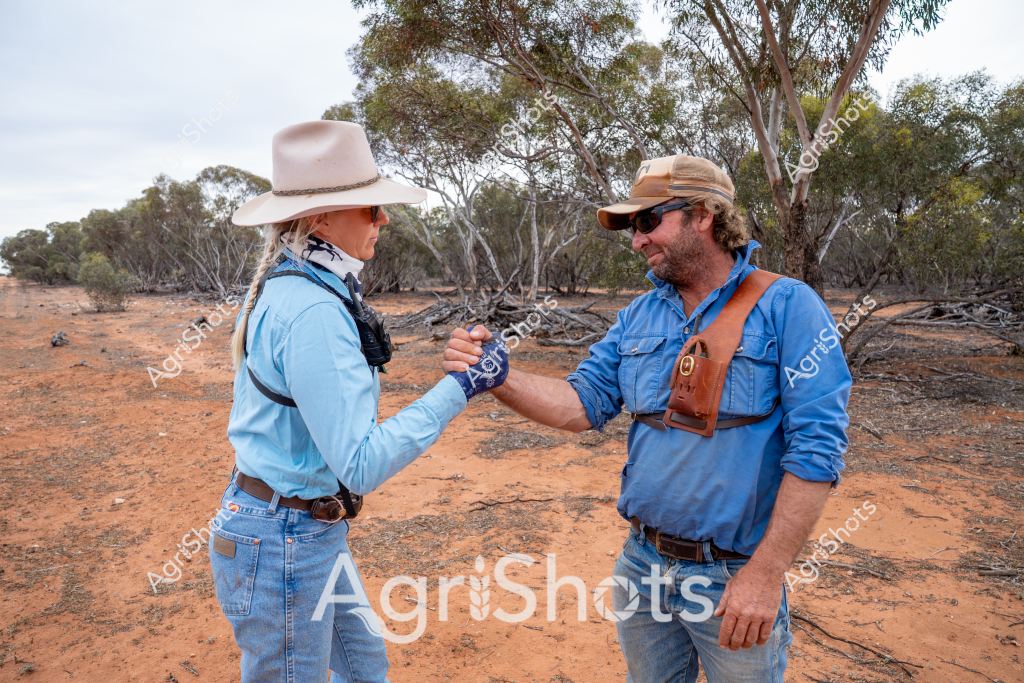
Two agricultural workers share a moment in a remote Australian landscape, standing on red earth surrounded by sparse eucalyptus trees. A woman wearing a wide-brimmed white hat and light blue work shirt stands facing a man in a blue work shirt, tan cap, and sunglasses. They are exchanging something - possibly water bottles or discussing field work - in what appears to be an arid, drought-affected region with scattered woodland in the background. The landscape is quintessentially Australian, with reddish soil, scattered fallen timber, and grey-green eucalyptus trees creating a stark, rugged backdrop. Both individuals are dressed in typical rural workwear - long-sleeved shirts, denim jeans, and protective headwear suited to harsh outdoor conditions. Their body language suggests a professional but collegial interaction, likely related to agricultural or environmental work in a challenging rural setting. The scene captures the resilience and camaraderie characteristic of Australian agricultural workers, who must navigate extreme environmental conditions while maintaining professional relationships and shared purpose in managing rural landscapes.
 Image
Image
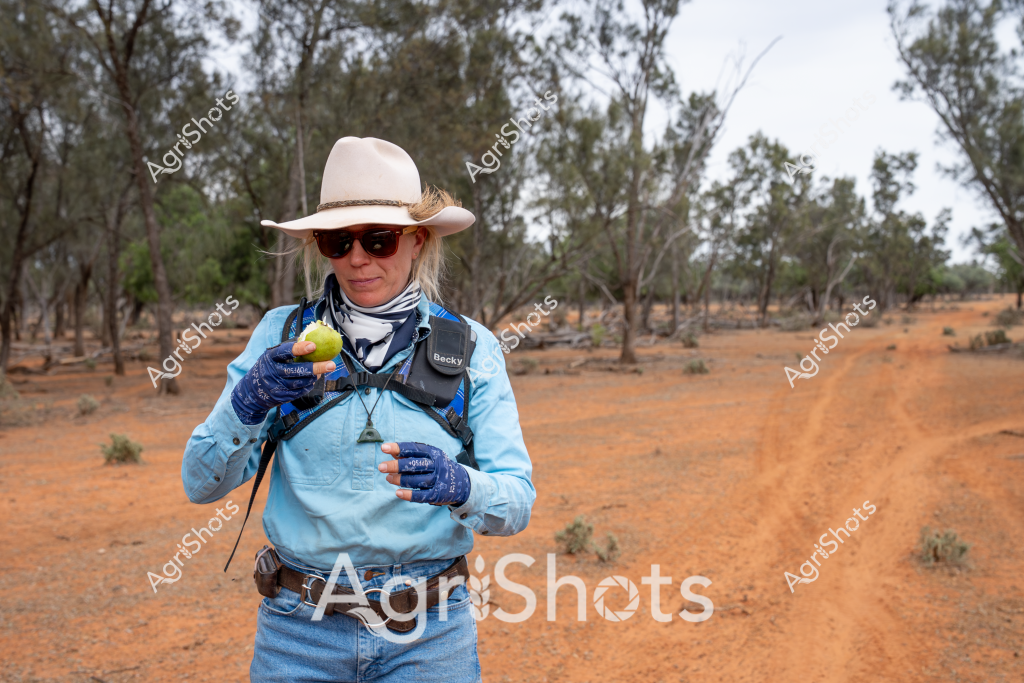
A woman agricultural researcher stands in an arid Australian landscape, wearing protective field gear and holding a piece of fruit. Dressed in a light blue long-sleeved shirt, blue denim jeans, and a wide-brimmed cream cowboy hat, she is equipped with blue work gloves and sunglasses. The background reveals a classic Australian bush setting with sparse eucalyptus trees and rich red-orange dirt road cutting through a dry woodland area. Her personal equipment includes a blue backpack labeled with her name, and she appears to be conducting field research or surveying in a remote rural environment. The landscape suggests drought conditions or a dry seasonal period, with minimal ground vegetation and a sparse, weathered tree line typical of inland Australian agricultural regions.
 Image
Image
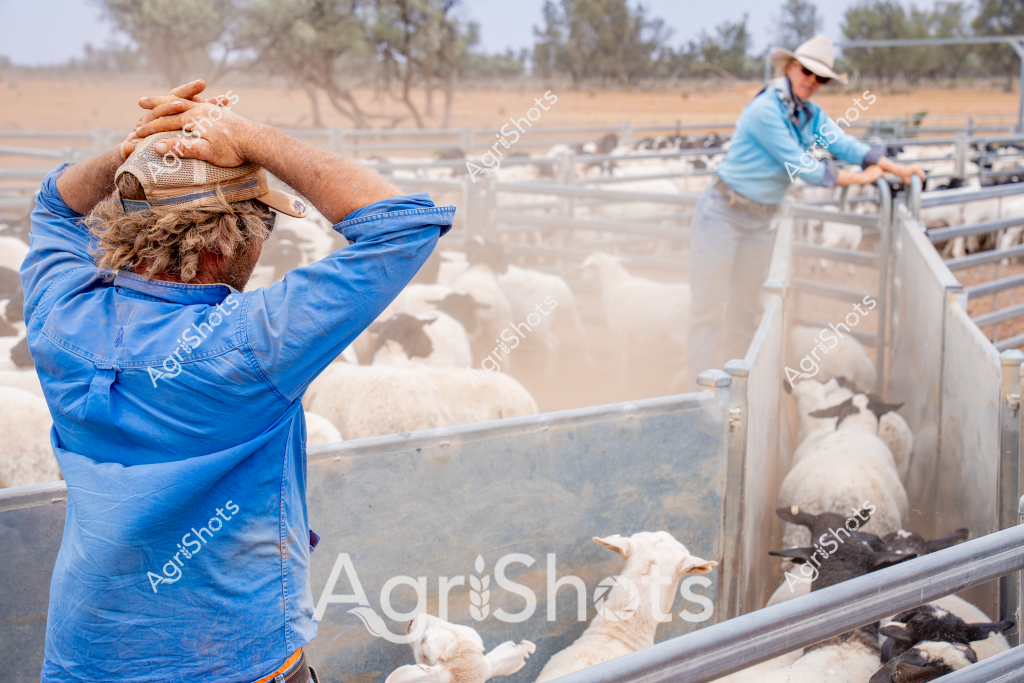
A woman in a blue shirt and wide-brimmed sun hat works in a dusty sheep yard, managing a flock of white sheep during what appears to be a warm, dry day. In the foreground, another worker wearing blue stands with hands clasped behind their head, suggesting physical exertion or momentary fatigue during the livestock management process. The metal livestock yards are filled with sheep, creating a cloud of dust as they move and shuffle within the confined space. Sparse trees and arid landscape are visible in the background, indicating this is likely a rural Australian farm setting during a dry season. The scene captures the demanding physical work of sheep farming, with workers managing livestock in challenging environmental conditions. The blue work shirts, wide-brimmed hats, and metal yard infrastructure are typical of Australian agricultural practices, highlighting the practical and resilient nature of rural farm work.
 Image
Image
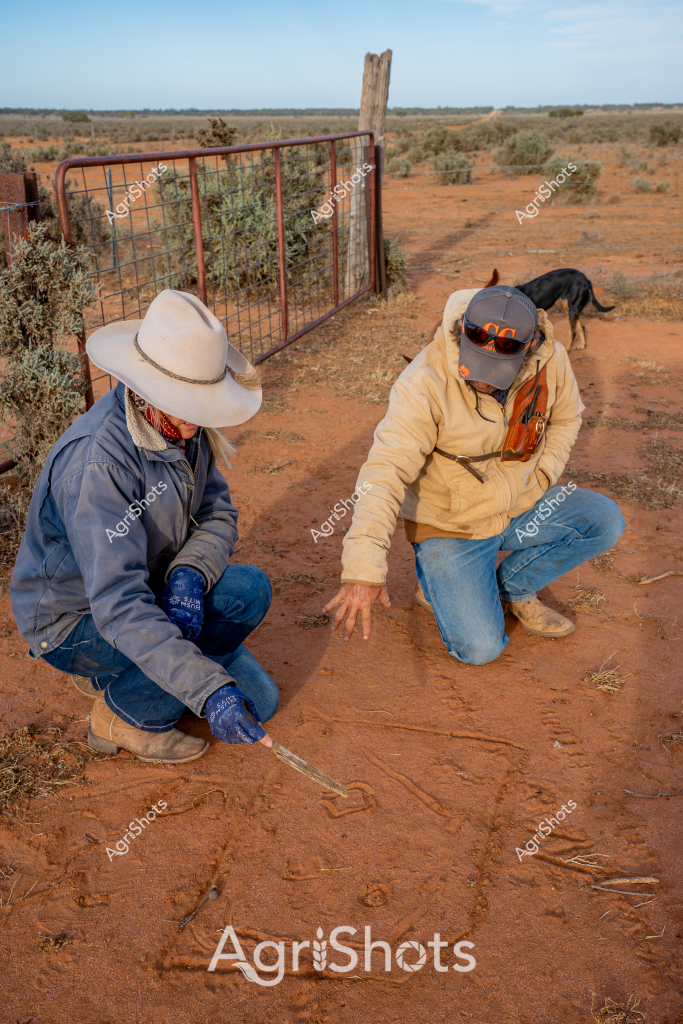
Two workers examine ground tracks in an arid Australian outback landscape, carefully studying animal or wildlife movement patterns. A man wearing a white wide-brimmed hat and blue work jacket and another worker in a light yellow jacket and cap crouch down on the deep rusty-red soil, intently tracing markings on the ground. A black dog stands in the background near a wire mesh gate, surveying the sparse landscape of low scrub and distant horizon. The environment suggests a remote station or rural property, with scattered saltbush and sparse vegetation typical of central Australian terrain. The workers appear to be conducting environmental tracking, wildlife monitoring, or land management research, demonstrating the meticulous observation skills required in rural Australian agricultural and conservation work. The scene captures the essence of outback fieldwork - two experienced professionals using close observation and local knowledge to understand subtle environmental indicators. Their careful postures and focused examination of ground tracks reveal the deep connection between agricultural workers and the landscape, highlighting the importance of detailed environmental understanding in managing remote Australian properties.
 Image
Image
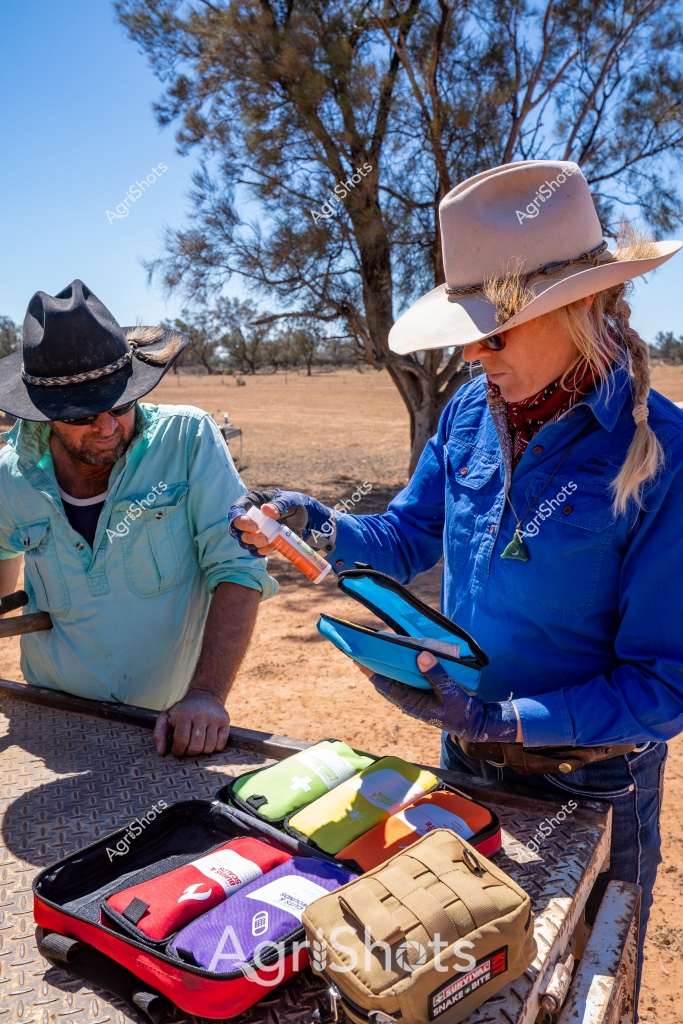
A woman and a man wearing wide-brimmed bush hats are working together in a dry, sun-drenched rural landscape, performing what appears to be a field medical or veterinary procedure. The woman, dressed in a bright blue work shirt, is carefully handling a medical implement while the man in a light blue shirt looks on. They are standing at a vehicle or utility tray with an organized first aid or field medical kit spread out, featuring several color-coded pouches and equipment. The background shows a classic Australian outback scene - sparse trees with a dusty, golden-brown ground stretching to the horizon under a clear blue sky. Their professional demeanor and well-organized equipment suggest they are likely agricultural workers, possibly veterinarians, researchers, or station staff conducting animal health checks or emergency field treatment. Their clothing - sturdy work shirts, protective hats, and practical work gear - is typical of rural Australian professionals who must be prepared for challenging outdoor conditions. The scene captures the meticulous and prepared nature of modern agricultural work, where health monitoring and rapid response are critical to maintaining livestock and farm operations.
 Image
Image
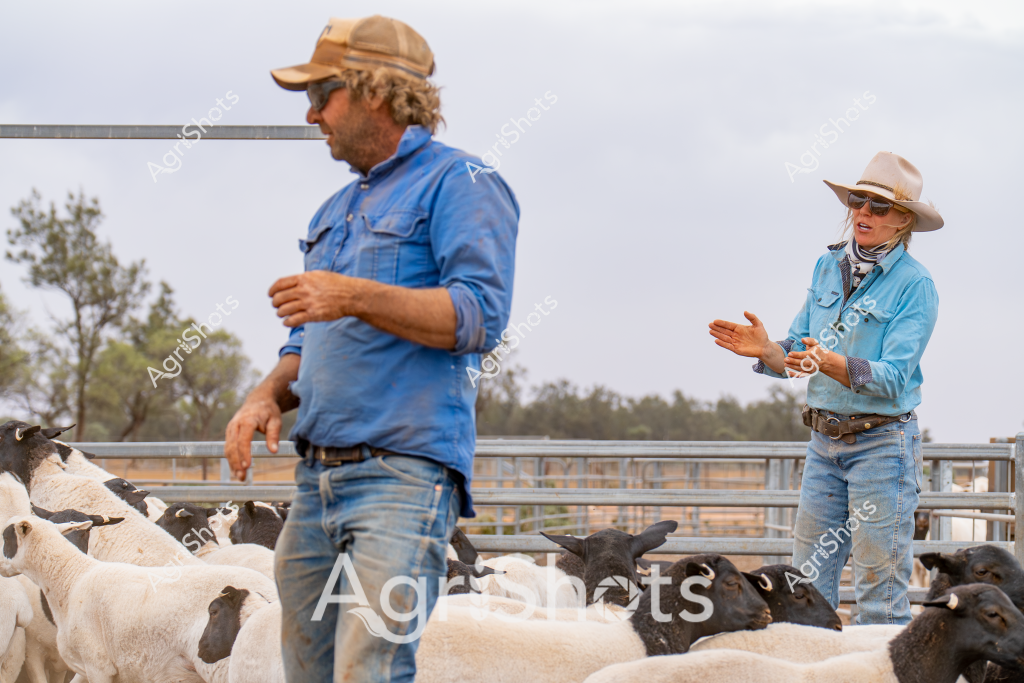
A woman and a man stockman work together in a livestock yard, managing a mixed flock of white and black sheep. Dressed in blue chambray shirts and wearing wide-brimmed hats for sun protection, they appear to be coordinating the movement and sorting of the sheep within metal livestock yards. The landscape in the background suggests an Australian rural setting, with scattered trees and an open sky creating a typical pastoral scene. Their body language indicates careful communication and collaboration, with the woman gesturing and the man positioned among the sheep, demonstrating the teamwork essential in livestock management. The sheep - a mix of white and black woolly animals - are clustered tightly within the yard's metal railings, ready for potential drafting, health checks, or preparation for movement.
 Image
Image
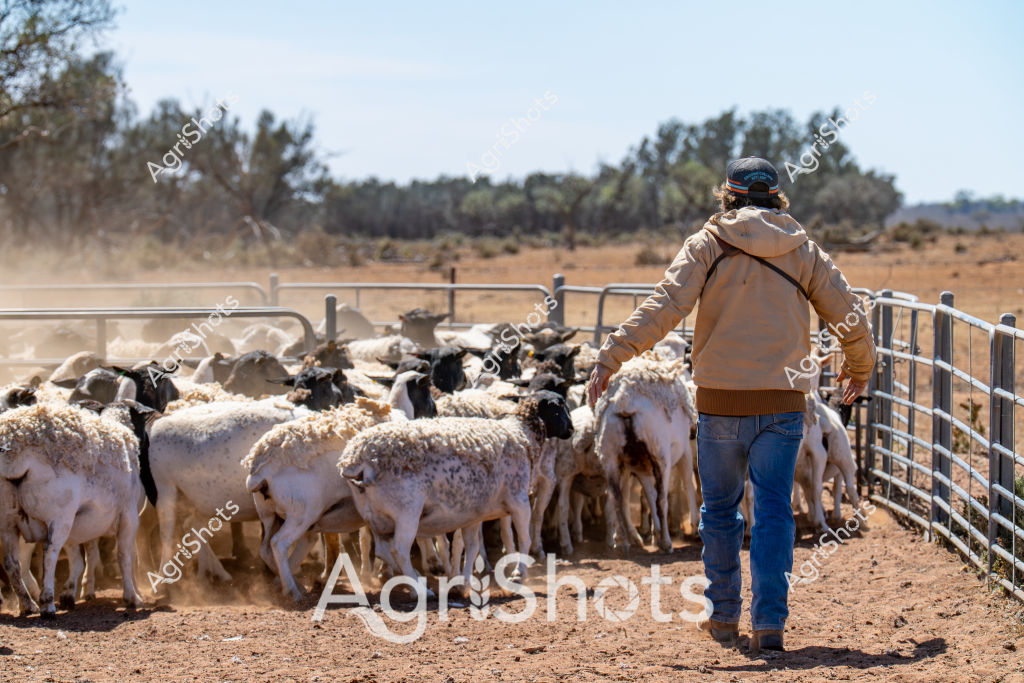
A skilled person managing a small flock of merino sheep through a dusty yards paddock in rural Australia. The stockman, wearing a tan jacket, blue jeans, and a knit cap, walks alongside the densely packed group of white and black sheep within metal livestock fencing. The surrounding landscape shows a dry, arid environment with sparse eucalyptus trees and golden-brown ground, typical of an Australian pastoral setting. Dust rises around the sheep's hooves as they move together, suggesting active mustering or yard management activities. The scene captures the everyday work of livestock management in a challenging rural landscape, highlighting the close relationship between farmers and their animals. The image reflects the resilience and practical skills required in Australian sheep farming, where careful handling and movement of livestock is critical to successful agricultural operations. The tight formation of the merino sheep and the controlled movement by the stockman demonstrate the expertise needed in managing livestock in harsh environmental conditions.
 Image
Image
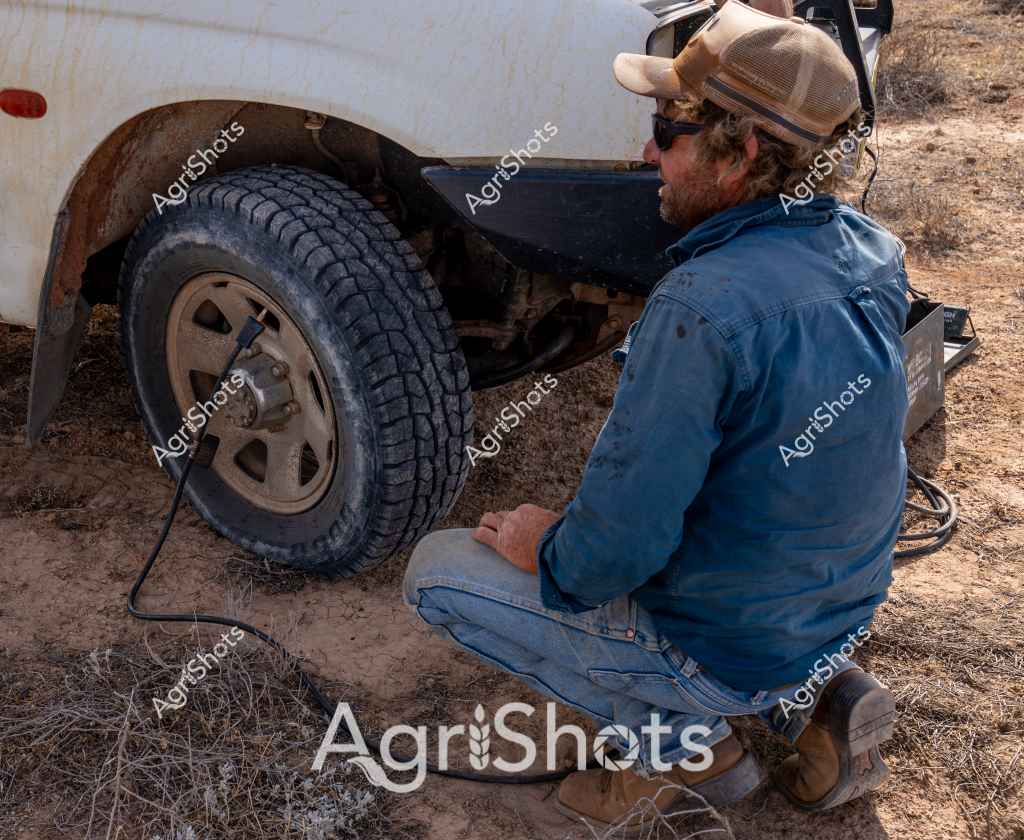
A man wearing a blue work jacket and tan cap carefully examines a vehicle tire while crouched on dry, rocky ground. The white vehicle has a rusted wheel arch, and the tire appears to be an all-terrain model with deep tread patterns suitable for rough rural terrain. He is wearing sunglasses and work boots, suggesting he is performing roadside maintenance or vehicle inspection in an isolated, arid landscape. The surrounding environment looks like a typical Australian outback or remote farming region, with sparse vegetation and dusty ground indicating challenging environmental conditions. The man's posture and attentive positioning suggest he is experienced in dealing with vehicle repairs in challenging outdoor settings.
 Image
Image
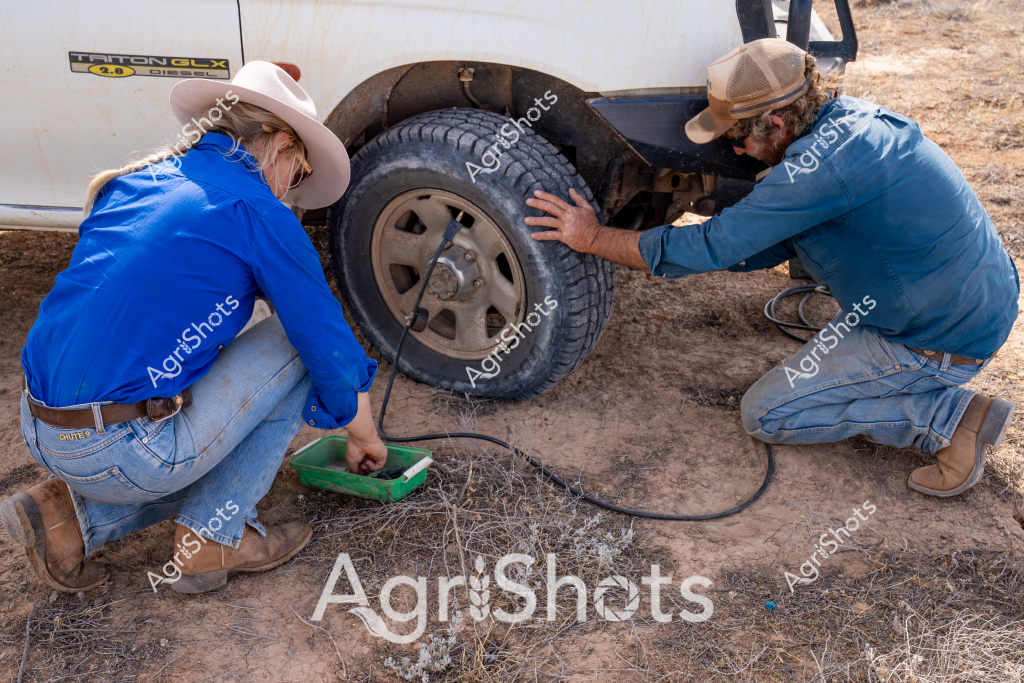
Two people in blue work shirts and cowboy hats are changing a tire on a white vehicle in a dry, dusty outdoor setting. A woman and a man are crouched beside a tire, carefully working together to inflate or adjust it using a green air pump and a black hose. They are wearing typical rural workwear - blue long-sleeved shirts, denim jeans, and wide-brimmed hats that provide protection from the sun. The ground around them is barren and covered in sparse, dry grass, suggesting an arid or drought-affected landscape typical of rural Australian regions. Their cooperative positioning and focused demeanor indicate they are experienced in handling vehicle maintenance in challenging outdoor conditions. The scene captures the practical, self-reliant spirit of rural workers who must be prepared to handle mechanical issues in remote locations. The white vehicle, likely a utility truck or farm vehicle, appears to be a Toyota model based on the partial "TRON" branding visible on the side, emphasizing the robust equipment used in agricultural settings.
 Image
Image
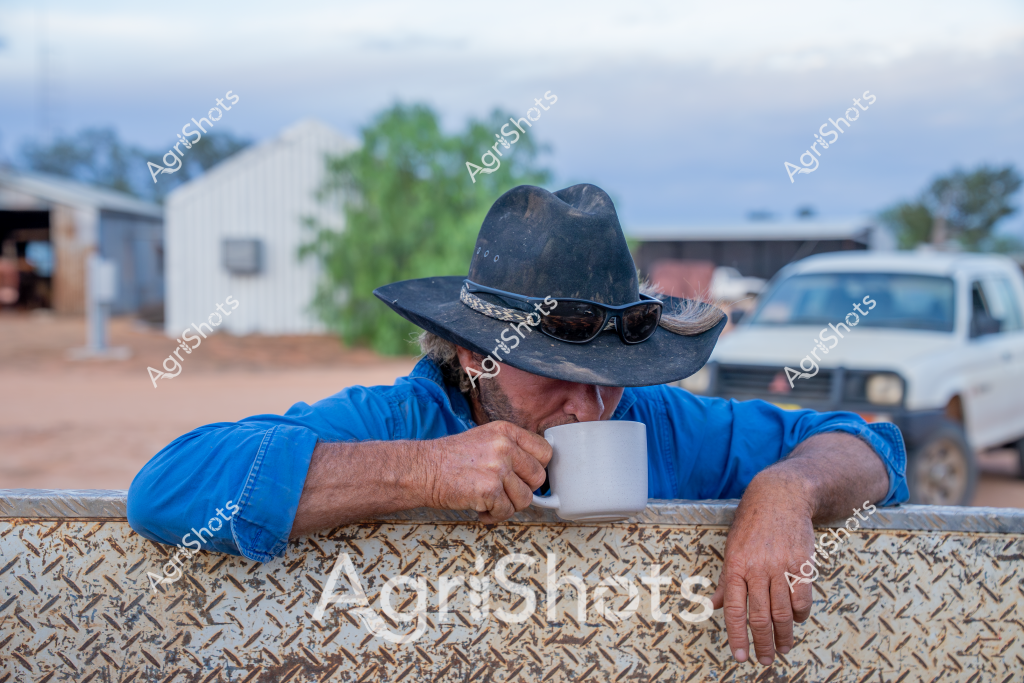
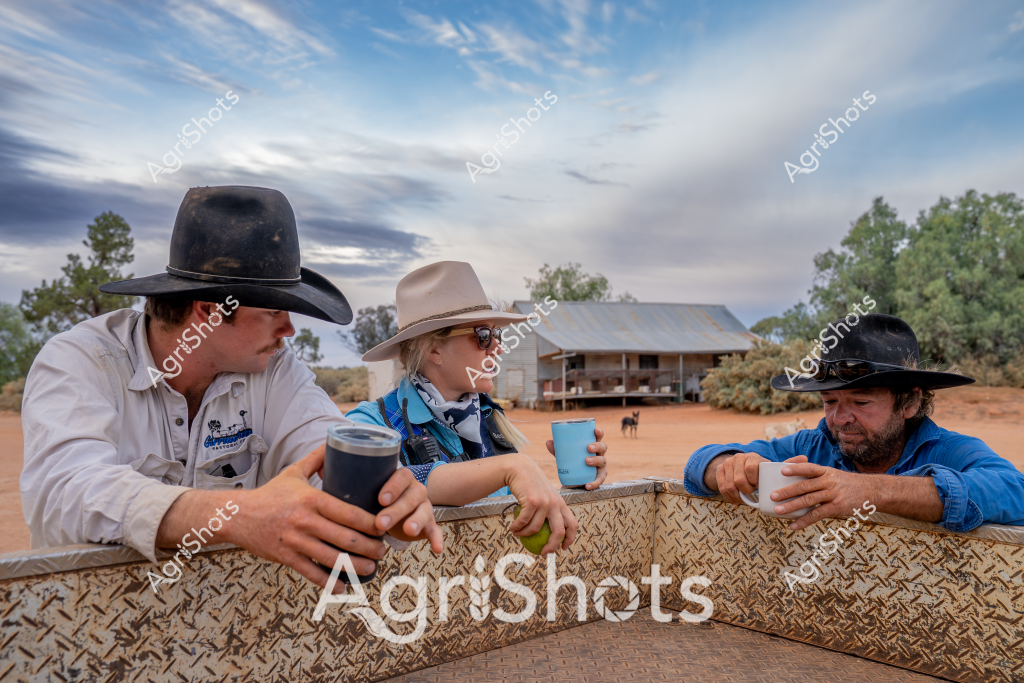
A weathered rural scene captures a man in a blue shirt and black wide-brimmed hat taking a contemplative coffee break. Leaning against a textured metal surface, he sips from a white mug while wearing sunglasses, creating a moment of quiet pause in a rural Australian setting. Behind him, a white utility vehicle and rural buildings suggest a farm or station environment. The overcast sky and sparse landscape hint at the challenging conditions of outback or rural Australia. His worn hands and classic bush attire - the iconic hat, blue work shirt, and sunglasses - speak to the resilience of Australian rural workers who endure long days and tough environmental conditions. The image embodies the spirit of rural Australian work culture: a moment of brief respite during a demanding day, surrounded by the practical infrastructure of farming life. The textured metal surface, dusty background, and understated posture of the worker convey a sense of quiet strength and endurance typical of agricultural communities.
 Image
Image
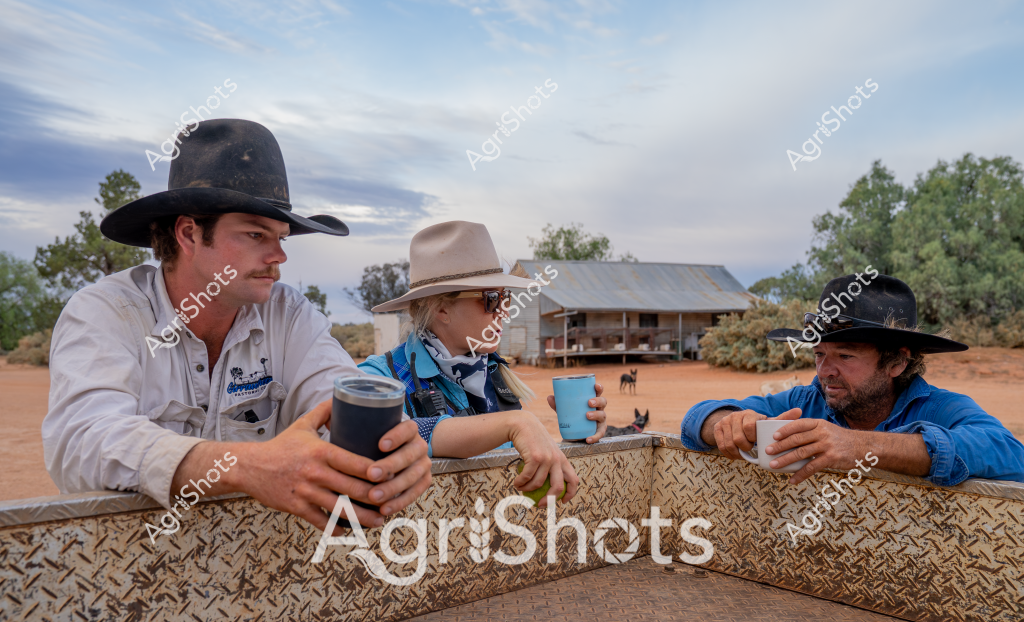
Three men wearing wide-brimmed Australian bush hats sit at a textured metal table in a remote rural setting, holding thermal mugs and sharing a moment of camaraderie. A weathered tin shed stands in the background, with sparse trees and an open dirt yard typical of an outback station or remote agricultural property. The sky is dramatic, with soft cloud formations creating a moody backdrop of blues and grays that suggest early morning or late afternoon light. The men are dressed in typical rural workwear - one in a white work shirt, another in a blue shirt, all wearing practical wide-brimmed hats that provide protection from the harsh Australian sun. Their posture and the shared moment around the table suggest a break from rural work, perhaps discussing the day's tasks or simply enjoying a moment of rest. A dog can be seen in the distant background, adding to the quintessential rural Australian scene. The landscape speaks of resilience - a dusty, open environment that characterizes much of Australia's agricultural heartland, where farming and station life demand strength and community. The textured metal table and the men's relaxed demeanor capture the essence of rural Australian working life, highlighting the social connections that are crucial to survival in challenging environments.
 Image
Image
Three men in rural Australian workwear share a break moment on a dusty outback station, their blue shirts and wide-brimmed hats reflecting the classic pastoral style. Seated at a textured metal surface with a rustic tin shed and wandering dog in the background, they hold thermal mugs, suggesting a moment of rest during a long working day. The landscape is quintessentially Australian - a sandy, ochre-colored ground punctuated by sparse grey-green bushes and a soft, cloud-streaked sky typical of the arid interior. One man wears a black cowboy-style hat, another a light cream fedora, while the third sports a similar dark hat, all wearing long-sleeved work shirts in white and blue tones. The scene captures the camaraderie and quiet resilience of rural workers, with the weathered shed and open landscape emphasizing the challenging environment of Australian agricultural work. Their relaxed postures and shared drinks represent a universal moment of connection in the demanding world of station life.
 Image
Image
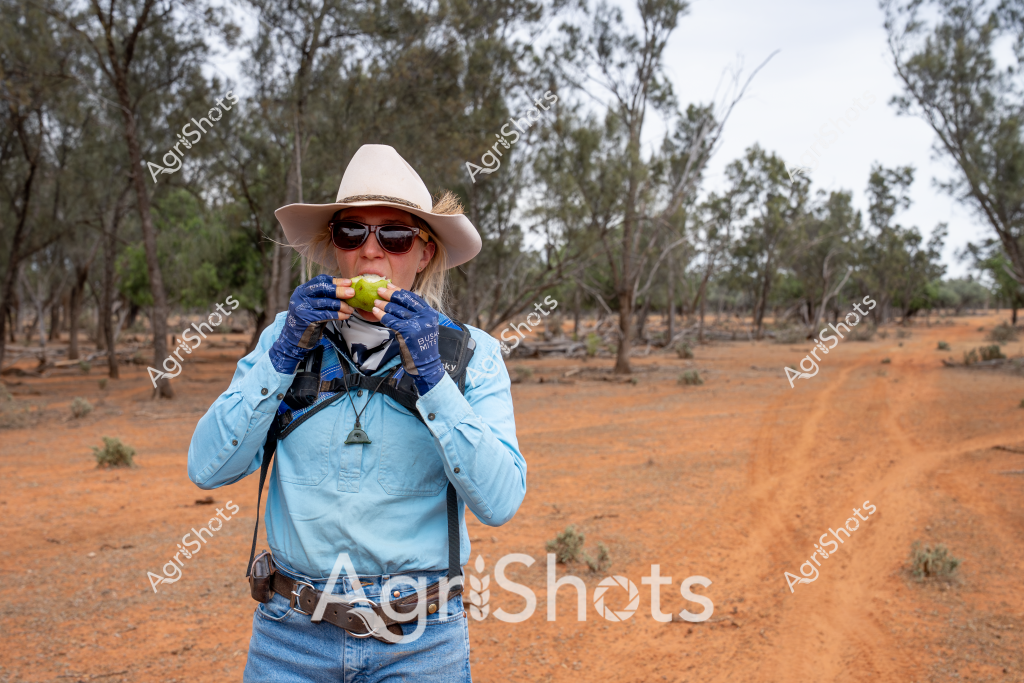
A woman in outback field gear takes a break during her work day, biting into a green apple amidst a dry, eucalyptus-lined landscape. Wearing a wide-brimmed cream hat, dark sunglasses, blue long-sleeved work shirt, and blue protective gloves, she stands on a rusty-orange dirt track surrounded by sparse bushland. Her blue work attire and robust accessories suggest she's likely an agricultural worker, possibly a station worker, ranger, or field researcher traversing a remote Australian landscape. The surrounding terrain appears typical of inland Australia - sparse grey-green trees, reddish soil, and a sense of arid expansiveness that characterizes many of the continent's rural regions. Her posture and equipment indicate she's taking a brief moment of respite, using the apple as a quick energy boost during what seems to be a challenging day of outdoor work in a harsh environment.
 Image
Image
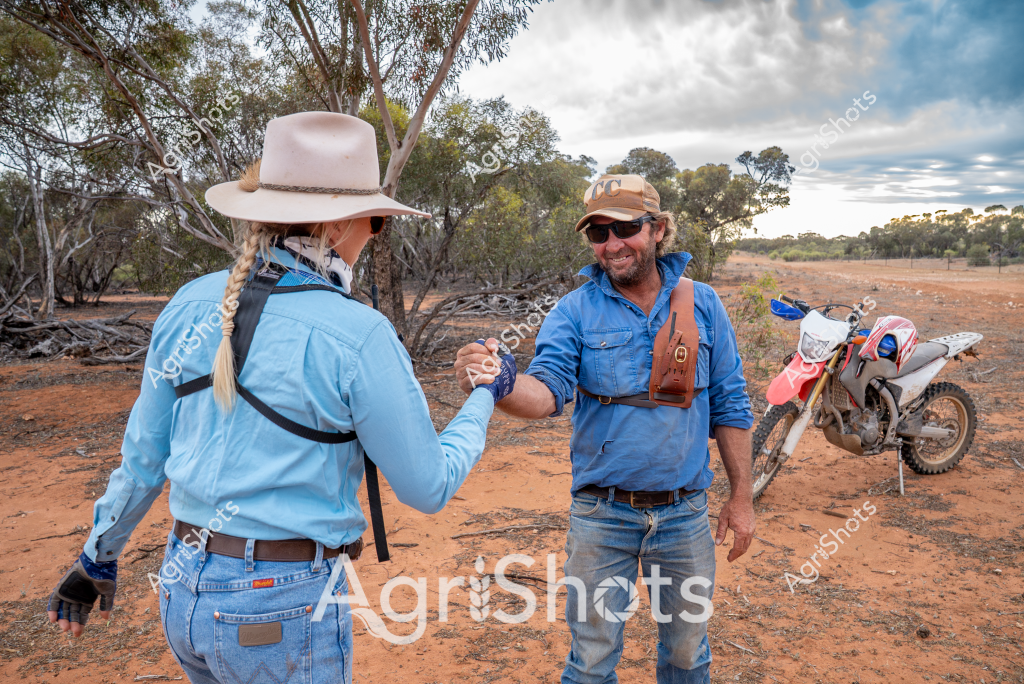
Two people stand in an arid Australian landscape, exchanging a friendly handshake or greeting. A woman wearing a wide-brimmed white hat and light blue work shirt faces a man in similar blue denim clothing, a tan cap, and sunglasses. Behind them, a dirt bike is parked near some scattered eucalyptus trees, suggesting they are likely rural workers or farmers conducting business in the rugged outback environment. The reddish-brown soil and sparse vegetation indicate this is likely a drought-affected region in inland Australia, with a cloudy sky adding to the atmospheric conditions. Their matching blue work shirts and relaxed body language suggest a professional relationship, possibly related to agricultural work or land management in a challenging rural setting.
 Image
Image
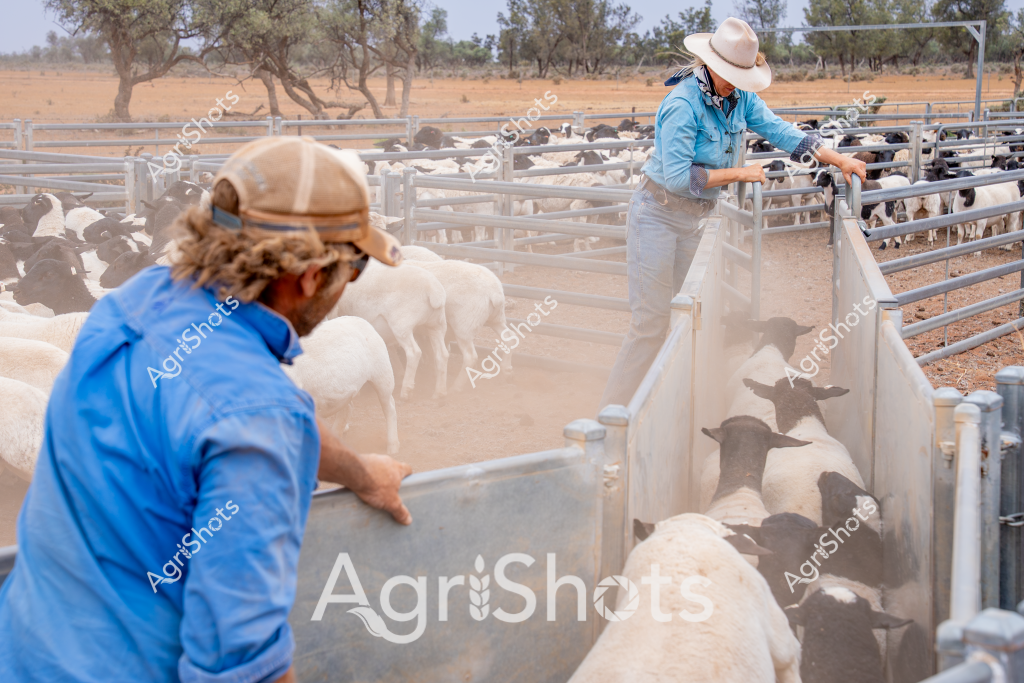
Two rural workers in blue shirts and wide-brimmed hats manage a herd of white goats in a dry, dusty livestock yard. The yard features metal livestock gates and pens, with sparse trees and arid landscape visible in the background. A woman in a light-colored hat and blue long-sleeved shirt stands near the gate, carefully managing the goat movement through a narrow chute. Another worker in a blue shirt observes from a nearby position, suggesting a collaborative approach to livestock handling. The scene captures the challenging environment of Australian pastoral agriculture, with red earth, metallic infrastructure, and resilient livestock reflecting the tough conditions of rural stock management. The workers' protective clothing - long-sleeved shirts, wide-brimmed hats, and sturdy work pants - indicates careful preparation for working in harsh, sun-exposed conditions typical of Australia's agricultural regions.
 Image
Image
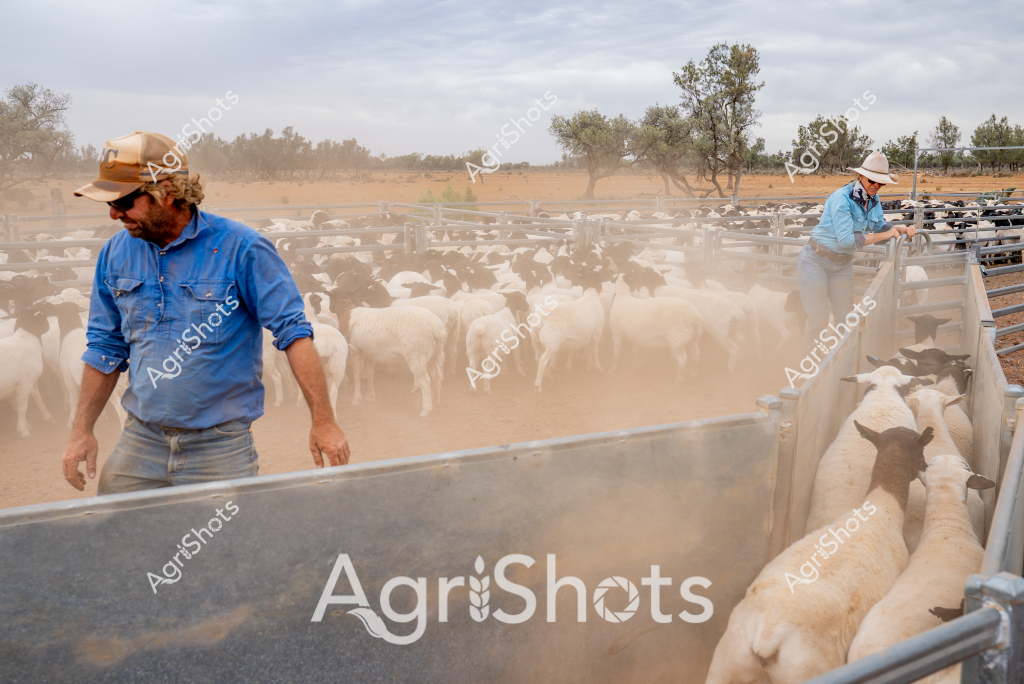
Two men managing a large flock of white sheep in a dusty, arid paddock with sparse trees on the horizon. A man in a blue work shirt and tan cap stands near a metal livestock yard, carefully guiding the sheep through the gates while another man in a light blue shirt and white hat works the opposite side of the yard. A dense cloud of ochre-colored dust rises around the animals, creating a dramatic atmosphere that highlights the challenging environmental conditions. The sheep appear to be tightly packed, moving methodically through the narrow metal race, suggesting a routine mustering or livestock management operation typical of Australian agricultural practices. The landscape looks dry and sparse, with scattered gum trees in the background indicating this is likely an inland pastoral region experiencing drought-like conditions. The workers' robust clothing and steady movements demonstrate the skilled and physically demanding nature of sheep farming in rural Australia.
 Image
Image
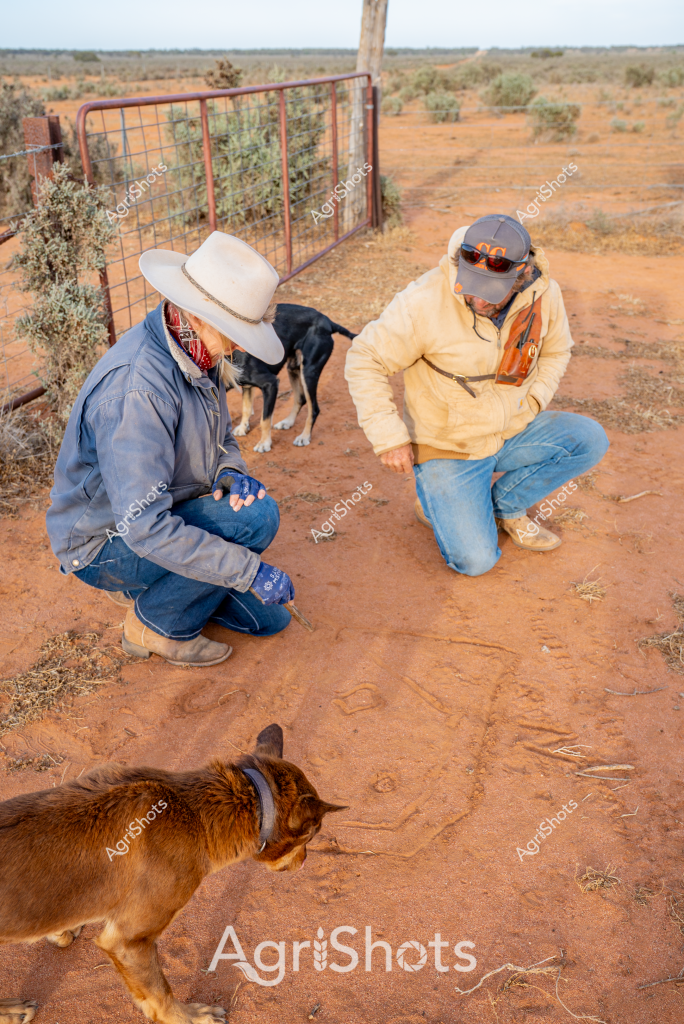
Two men work together in a dry, arid landscape, crouching on red earth surrounded by sparse desert vegetation. One wears a white wide-brimmed hat and blue denim work clothing, while the other is dressed in a light yellow jacket and wearing sunglasses and a cap. Multiple working dogs are present - a dark-colored dog and a reddish-brown dog with a collar, both attentive and close to their handlers. The scene captures a typical rural Australian outback setting, with a wire gate visible in the background and scrubby bushes dotting the reddish sandy ground. The men appear to be examining something on the ground, perhaps tracking, investigating animal signs, or discussing stock management. Their postures suggest collaboration and shared expertise in managing livestock or conducting rural work. The landscape is quintessentially Australian - a harsh, open terrain with minimal vegetation, characteristic of central or western regions where pastoral stations cover vast distances. The men's protective clothing - wide-brimmed hat, sunglasses, long sleeves - indicates adaptation to intense sunlight and challenging environmental conditions typical of remote agricultural areas. Their working dogs demonstrate the crucial role of canine companions in Australian rural work, likely trained for mustering, tracking, or providing support in managing livestock across expansive properties.
 Image
Image
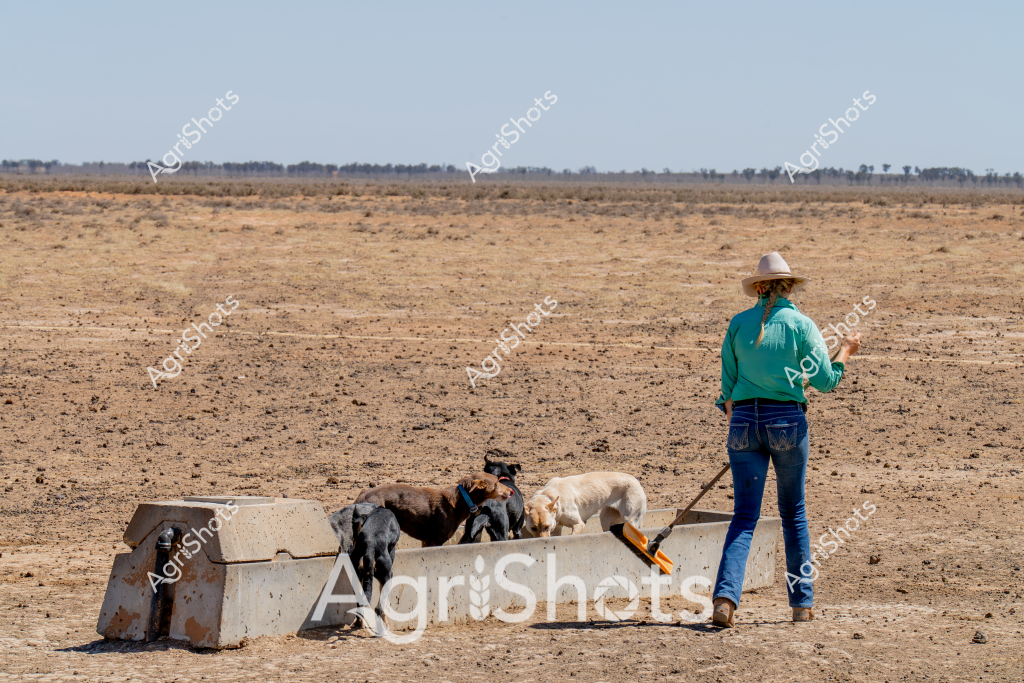
A woman stockman stands in a drought-affected paddock, managing a small group of working dogs near a concrete water trough. The landscape is a stark, dry expanse of reddish-brown earth stretching to a distant tree line, highlighting the harsh agricultural conditions. The woman wears a turquoise long-sleeved shirt, blue jeans, and a light-colored wide-brimmed hat, typical of rural Australian work attire. Several dogs of different colors - including black and tan - are gathered around the concrete water infrastructure, appearing to be working dogs trained to assist in livestock management. The barren background and dry ground illustrate the challenging environmental conditions faced by Australian farmers, with the scene capturing the resilience and daily work of agricultural workers in managing livestock during difficult drought periods. The image speaks to the ongoing challenges of rural Australian agriculture, showcasing the relationship between farmers, their working animals, and the demanding landscape. The concrete trough provides a critical water source in this arid environment, demonstrating the importance of water infrastructure in sustaining agricultural operations during dry seasons.
 Image
Image
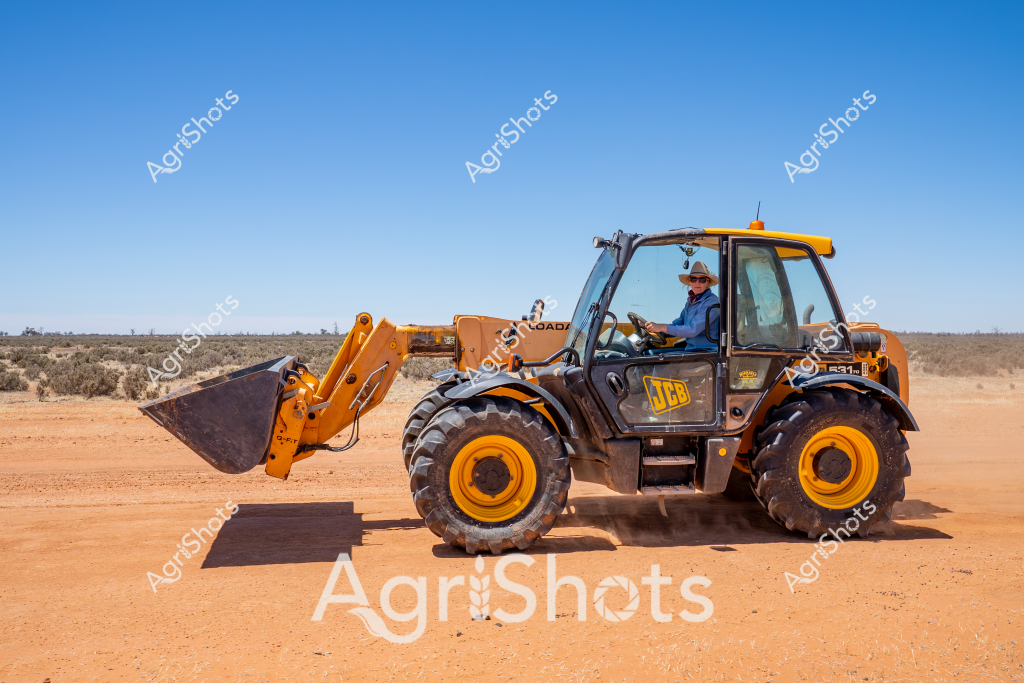
A JCB telehandler stands ready in a sun-drenched, arid landscape, its vibrant yellow and black color scheme contrasting sharply against the rich terracotta-colored dirt and sparse scrubland. A man wearing work attire and a broad-brimmed hat operates the heavy machinery, positioning the large front bucket against a clear blue sky. The robust agricultural vehicle features substantial chunky tyres designed for navigating challenging rural terrain, with the distinctive JCB branding prominently displayed on its side panel. The telehandler appears well-maintained and prepared for agricultural or construction work, typical of machinery used in remote Australian farming and resource extraction regions. Its muscular profile suggests powerful lifting capabilities, essential for tasks like moving materials, loading supplies, or supporting infrastructure development in challenging outback environments. The surrounding landscape hints at a remote location - possibly in Western Australia, South Australia, or the Northern Territory - with low scrub vegetation and a vast, open horizon stretching into the distance. The harsh, bright lighting and cloudless sky indicate midday conditions in a hot, dry agricultural or mining region.
 Image
Image
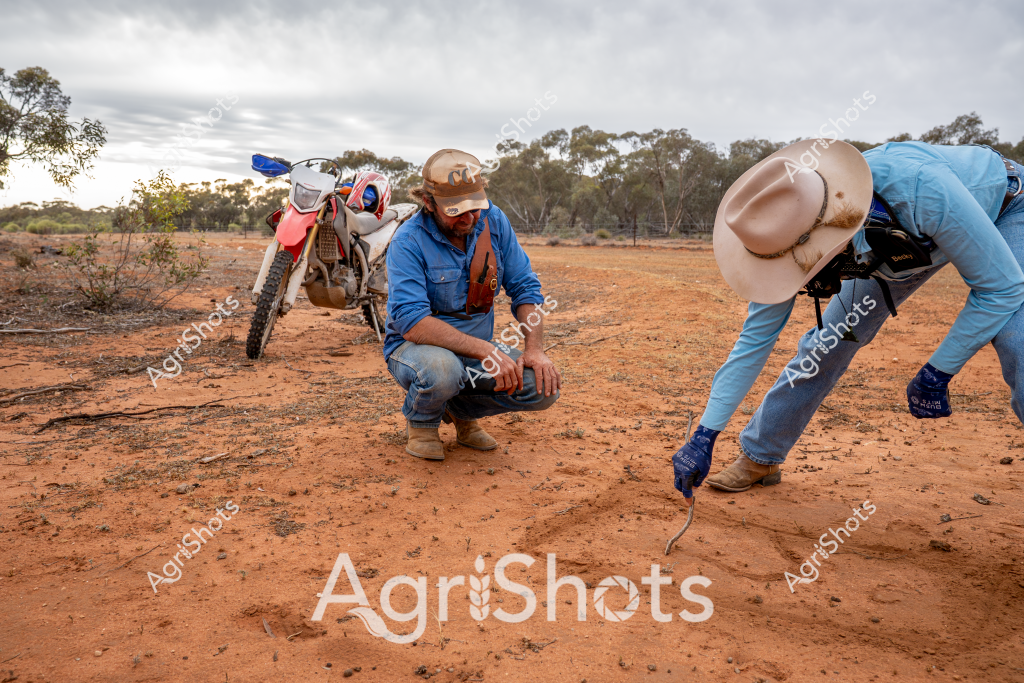
In the arid Australian outback, two men inspect the ground near a dirt bike, their clothing and posture revealing a deep connection to the rugged landscape. A man in a blue work shirt and tan hat crouches carefully, while another in light blue clothing and a broad-brimmed hat bends down, examining something on the red earth. A white and red dirt bike stands nearby, suggesting they've traveled some distance across this remote terrain. The scene captures the quintessential Australian rural working environment - a sparse landscape of reddish soil, scattered eucalyptus trees in the background, and an overcast sky creating a muted, atmospheric light. Their careful inspection could be related to soil conditions, tracking, or some agricultural assessment typical of station or farm work. The motorcycle indicates the vast distances that must be traversed in such remote regions, where traditional transportation methods meet modern rural technology. The men's attire - robust work shirts, protective hats, and sturdy boots - speaks to the practical necessities of working in harsh environmental conditions. Their focused postures suggest expertise and a methodical approach to understanding the landscape, embodying the resilience and problem-solving spirit characteristic of Australian rural workers.
 Image
Image
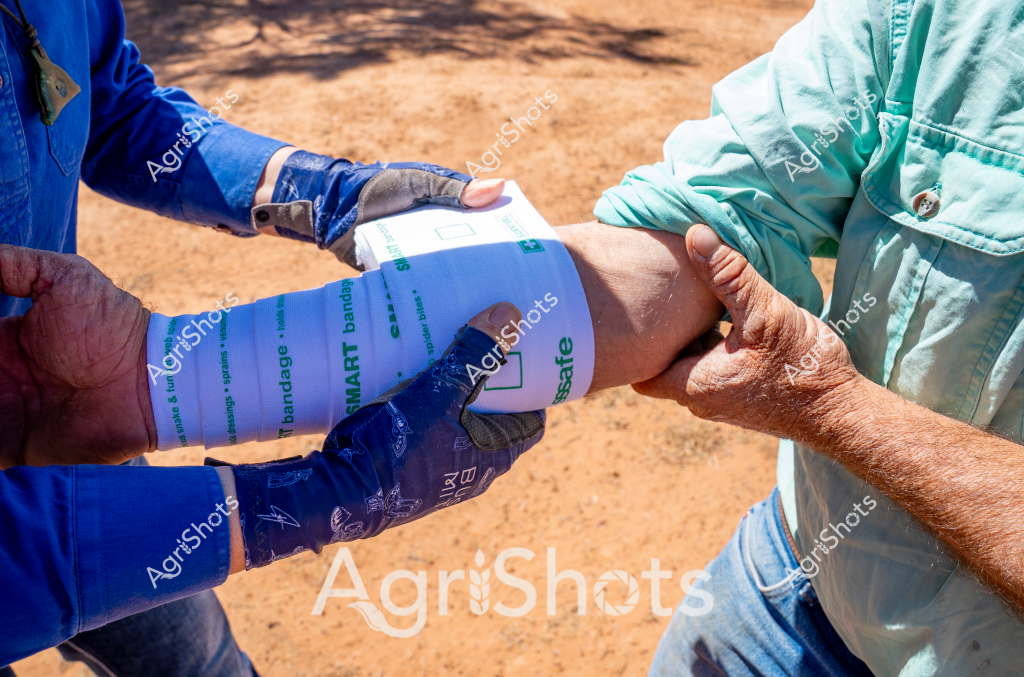
A man in blue work gloves carefully applies a white medical bandage to another person's arm in an outdoor setting with reddish-brown dirt ground and dappled sunlight. The detailed medical bandage appears to be a standard clinical wrap, with green text visible along its surface. Wearing protective blue long-sleeved work attire and gloves, the person applying the bandage demonstrates careful, professional technique while the recipient sits passively. The scene suggests a routine medical assessment or first aid treatment in a rural or agricultural environment, with the earthy background indicating an outdoor workplace setting. The hands appear weathered, suggesting experienced workers engaged in a practical healthcare moment.
 Image
Image
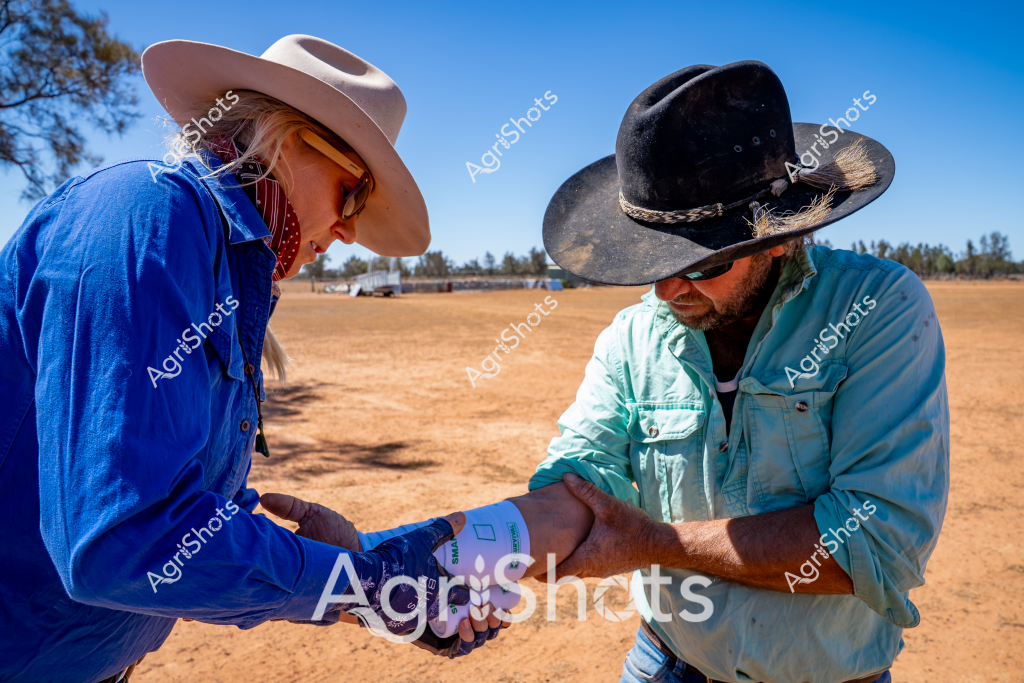
Two people stand in a dry, sun-drenched rural landscape, engaged in a close interaction. A woman wearing a blue long-sleeved shirt and a light cream cowboy hat is carefully examining the arm of a man in a light blue-green shirt and a dark wide-brimmed hat. Their posture suggests a professional medical or veterinary assessment, with the landscape of dusty ground and sparse trees in the background indicating an outback or rural Australian setting. The scene appears to capture a moment of agricultural health monitoring, potentially a routine check or treatment process. Both individuals are wearing protective work clothing typical of rural Australian settings - sturdy shirts, wide-brimmed hats for sun protection, and work gloves. The bright blue sky and arid ground suggest a hot, dry day in a farming or station environment. Their focused body language and close proximity indicate a professional interaction, likely related to livestock health, farm work, or medical assessment. The landscape behind them is characteristic of Australian agricultural regions - open, sparse, with a sense of expansive remote terrain typical of cattle stations or rural properties.