About this image
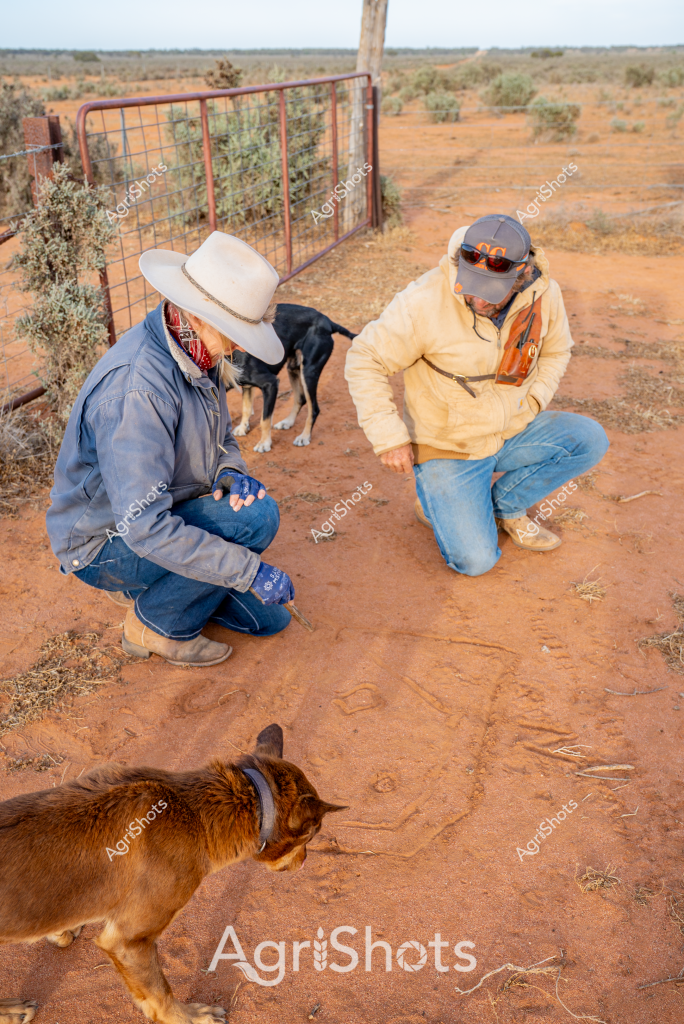
Two men work together in a dry, arid landscape, crouching on red earth surrounded by sparse desert vegetation. One wears a white wide-brimmed hat and blue denim work clothing, while the other is dressed in a light yellow jacket and wearing sunglasses and a cap. Multiple working dogs are present - a dark-colored dog and a reddish-brown dog with a collar, both attentive and close to their handlers. The scene captures a typical rural Australian outback setting, with a wire gate visible in the background and scrubby bushes dotting the reddish sandy ground. The men appear to be examining something on the ground, perhaps tracking, investigating animal signs, or discussing stock management. Their postures suggest collaboration and shared expertise in managing livestock or conducting rural work. The landscape is quintessentially Australian - a harsh, open terrain with minimal vegetation, characteristic of central or western regions where pastoral stations cover vast distances. The men's protective clothing - wide-brimmed hat, sunglasses, long sleeves - indicates adaptation to intense sunlight and challenging environmental conditions typical of remote agricultural areas. Their working dogs demonstrate the crucial role of canine companions in Australian rural work, likely trained for mustering, tracking, or providing support in managing livestock across expansive properties.
Similar media
 Image
Image
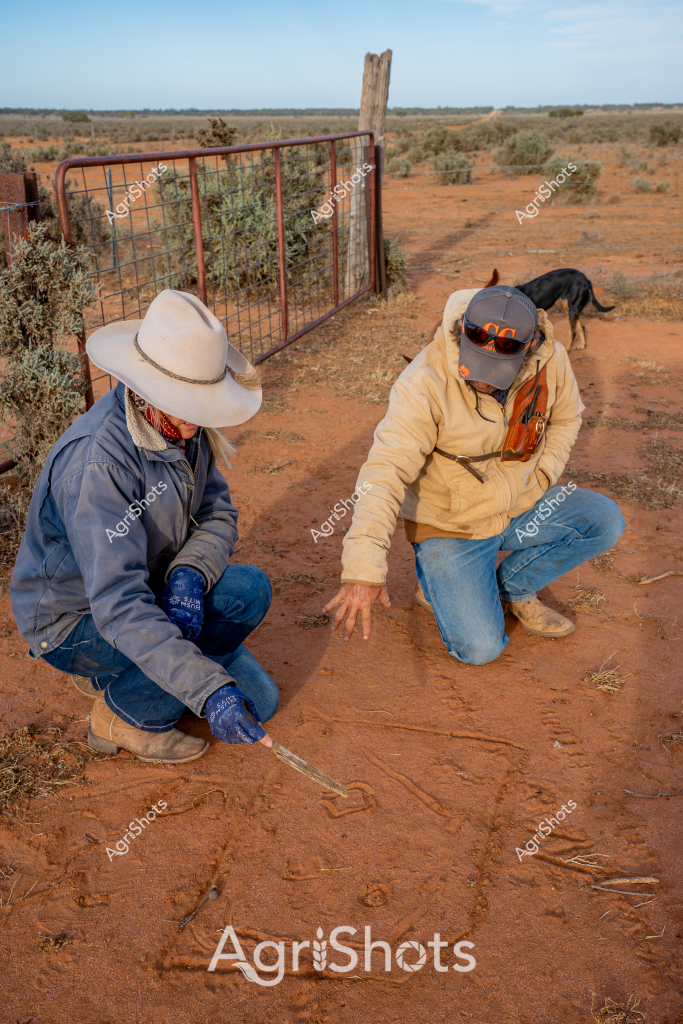
Two workers examine ground tracks in an arid Australian outback landscape, carefully studying animal or wildlife movement patterns. A man wearing a white wide-brimmed hat and blue work jacket and another worker in a light yellow jacket and cap crouch down on the deep rusty-red soil, intently tracing markings on the ground. A black dog stands in the background near a wire mesh gate, surveying the sparse landscape of low scrub and distant horizon. The environment suggests a remote station or rural property, with scattered saltbush and sparse vegetation typical of central Australian terrain. The workers appear to be conducting environmental tracking, wildlife monitoring, or land management research, demonstrating the meticulous observation skills required in rural Australian agricultural and conservation work. The scene captures the essence of outback fieldwork - two experienced professionals using close observation and local knowledge to understand subtle environmental indicators. Their careful postures and focused examination of ground tracks reveal the deep connection between agricultural workers and the landscape, highlighting the importance of detailed environmental understanding in managing remote Australian properties.
 Image
Image
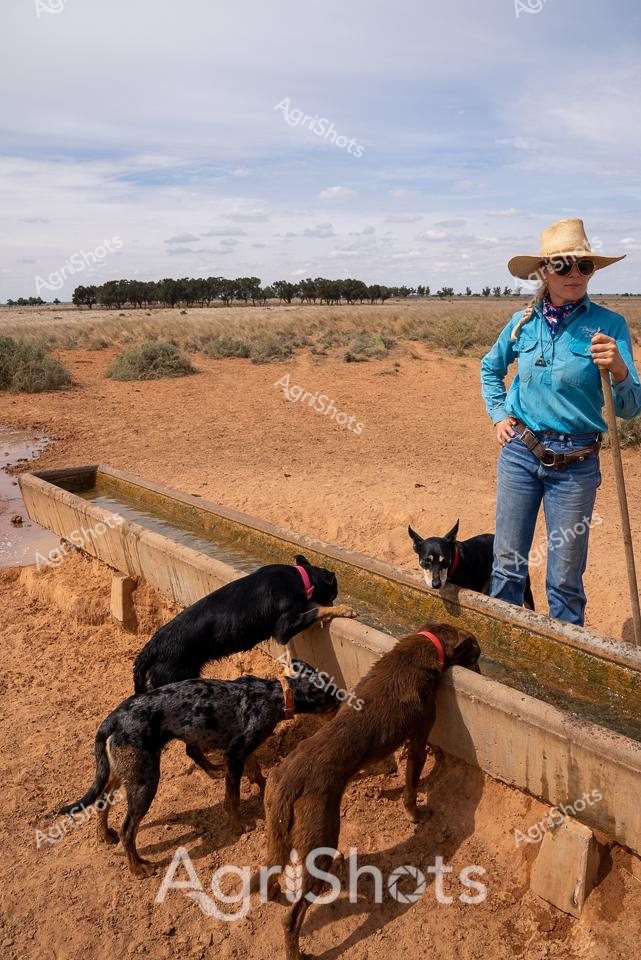
Beneath an expansive pale sky, a seasoned station hand stands sentinel in the arid rangelands of New South Wales, her weathered stance reflecting generations of pastoral experience. Wearing a crisp blue work shirt, classic wide-brimmed stockman's hat, and well-worn denim, she surveys a dusty paddock dotted with sparse saltbush scrub. Her working dogs - a mix of black, brown, and mottled cattle dogs - cluster around a concrete water trough, their alert postures and red collars signaling their working breed. The landscape speaks of resilience: rust-red earth, distant tree lines on the horizon, and the essential concrete water infrastructure that sustains livestock in this unforgiving environment. These dogs are more than companions; they're critical partners in managing stock across vast stations, embodying the collaborative spirit of Australian agricultural work. The scene captures a moment of quiet determination - a testament to the skill, endurance, and deep connection to land that defines rural Australian life.
 Image
Image
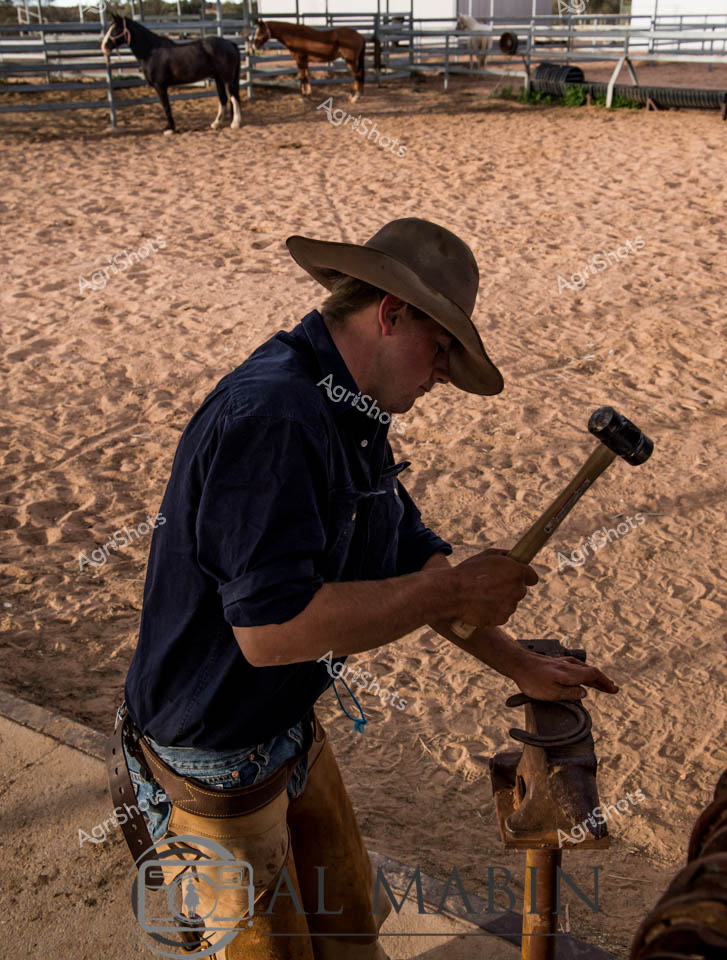
In the dusty, sun-baked cattle yards of a Queensland station, a stockman works with focused concentration, preparing to shoe a horse. Wearing a wide-brimmed akubra and dark blue work shirt, he stands amid the sandy ground, carefully positioning a horseshoe on an anvil. Two horses - one dark and one brown - wait patiently in the nearby paddock, framed by sturdy white stock fencing. The metallic ring of hammer against metal punctuates the quiet rural landscape, capturing the timeless rhythm of station life. Leather work belt, worn denim, and traditional farrier tools speak to generations of pastoral craftsmanship, where skill and patience are as essential as the equipment itself. The golden-brown earth, weathered equipment, and soft afternoon light create a quintessential Australian rural scene that embodies the resilience and practical expertise of outback horse handlers.
 Image
Image
A sunlit spring day unfolds across a dry Western Australian pastoral landscape, where a compassionate agricultural worker sits tenderly with a young black beef calf. Soft sandy earth stretches beneath scattered eucalyptus trees, with a herd of mixed-breed cattle grazing peacefully in the background - predominantly black Angus with a few brown cattle scattered among them. Wearing a crisp white work shirt, protective cap, and blue denim jeans, the worker displays a gentle connection with the calf, her posture relaxed yet attentive. The calf, marked with a bright yellow ear tag (U147), rests closely against her, suggesting a moment of care and connection typical of skilled livestock management. The scene captures the nuanced relationship between farmers and their animals, highlighting the quiet dedication required in beef cattle production. Warm sunlight, dusty terrain, and the calm demeanor of both human and animal evoke the resilience and compassion integral to Australian agricultural practice.
 Image
Image
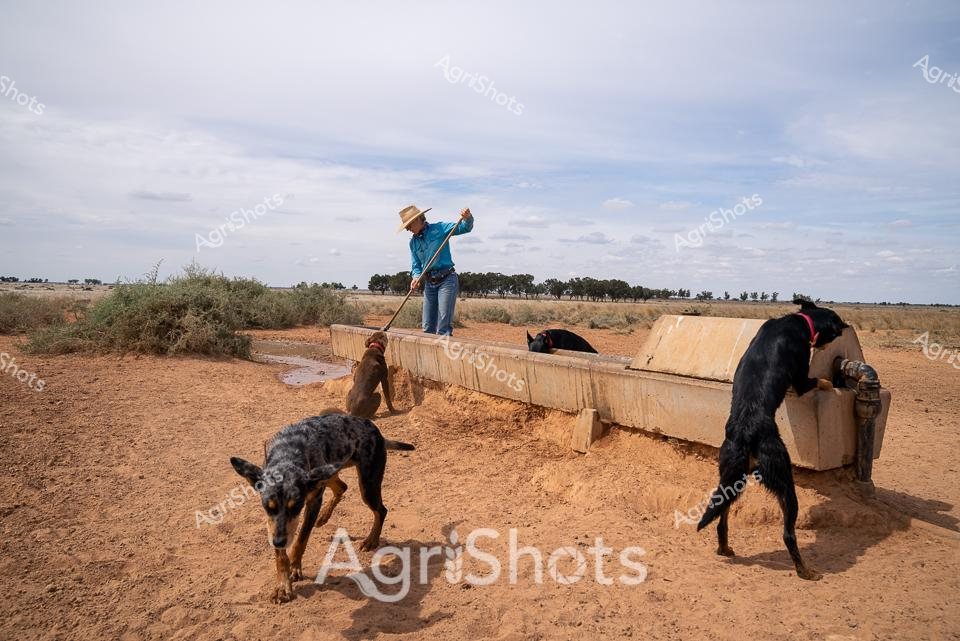
Dusty red earth and sun-bleached concrete define this quintessential Australian pastoral scene. A station hand in a wide-brimmed hat and blue work shirt stands atop a rural water trough, surrounded by hardy working dogs at a remote property in New South Wales. Black and mottled grey cattle dogs circle the water infrastructure, their lean muscular bodies testament to life in an arid landscape. Sparse saltbush and distant tree lines mark the horizon under a pale, cloud-streaked sky, capturing the vast openness of the station environment. The dogs move with practiced purpose, some peering into the trough while others await direction, embodying the unspoken communication between working animals and their handler. This image speaks to the resilience of rural Australian life - where water is precious, dogs are critical partners, and the landscape demands constant adaptation and skill.
 Image
Image
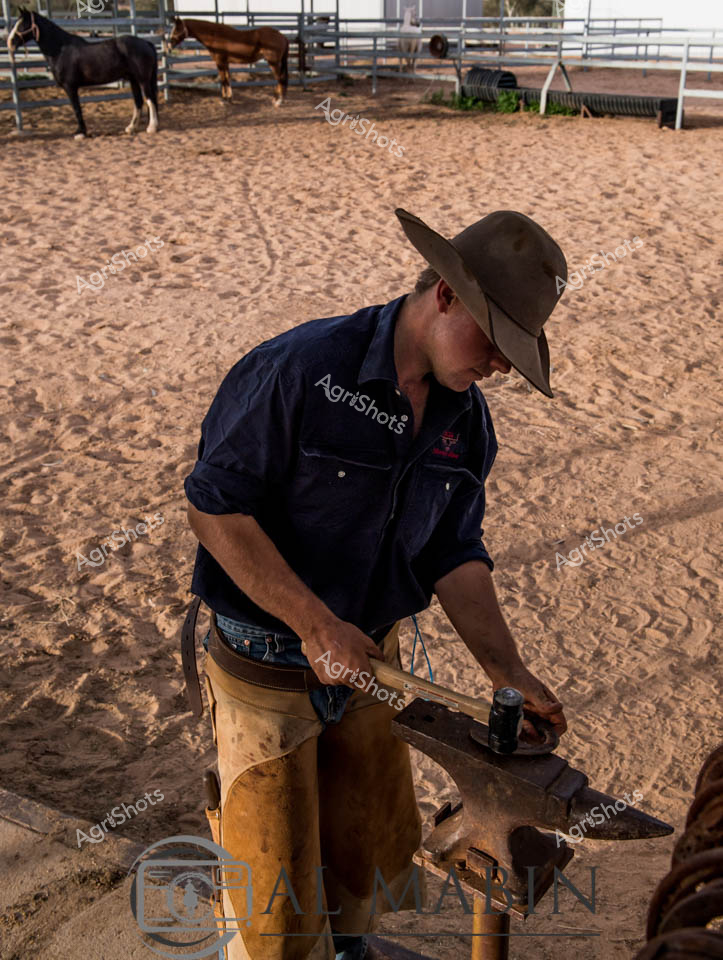
A stockman in a navy blue work shirt and wide-brimmed hat tends to a metalworking task in a sandy horse paddock, with two horses standing quietly in the background behind white rail fencing. The rugged landscape speaks of outback Queensland, where skilled station workers maintain essential equipment under the harsh sun. Wearing protective leather chaps and focused intently, the worker carefully handles an anvil, preparing to shoe or repair a piece of equipment critical to rural operations. The earthy palette of sandy ground, dark horse coats, and weathered work clothing captures the resilient spirit of Australian agricultural life. Soft morning light casts subtle shadows across the yard, highlighting the textures of sand, metal, and well-worn work gear. This image embodies the practical skills, concentration, and quiet dedication required in remote station work, where every task is performed with precision and purpose.
 Image
Image
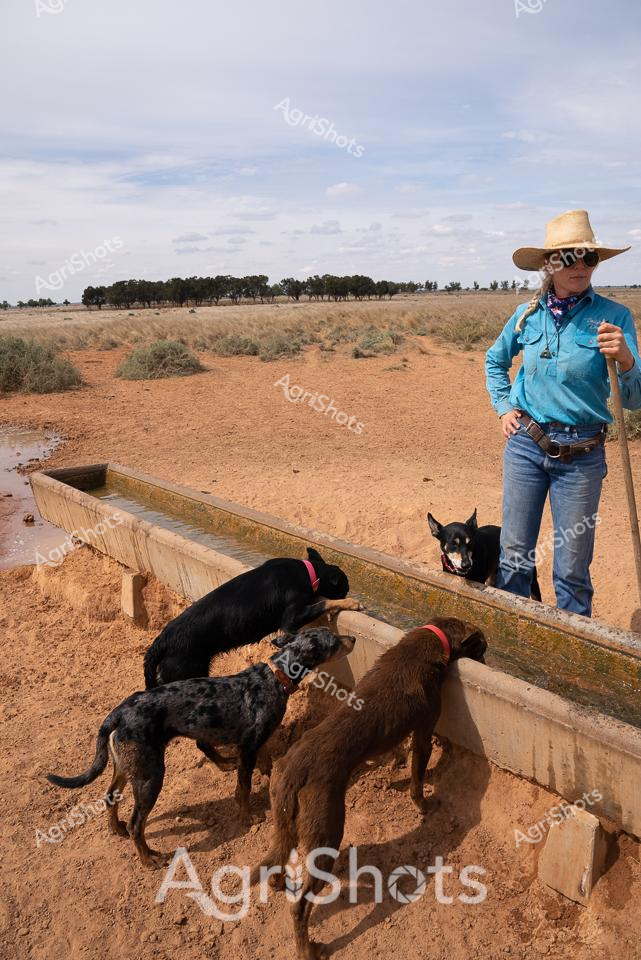
Rural resilience captures the essence of Australian pastoral life in this stark yet vibrant landscape. A station hand in classic work attire - crisp blue long-sleeved shirt, well-worn jeans, and a protective wide-brimmed akubra - stands beside a concrete water trough surrounded by the ochre earth of an arid paddock. Her working dogs cluster around the trough, their varied coats - black, mottled, and brown - contrasting against the dusty ground and weathered concrete. Sparse saltbush and distant tree lines define the horizon, revealing the challenging environment of what appears to be a remote New South Wales station. The dogs, alert and ready, demonstrate the critical partnership between workers and their canine companions in managing livestock across vast, unforgiving terrains. A sense of quiet determination permeates the scene - a testament to the enduring spirit of Australian agricultural workers who maintain life and productivity in some of the continent's most demanding landscapes.
 Image
Image
Beneath a vast, pale sky, a stockman stands sentinel over a sun-baked landscape, his azure work shirt and straw hat a beacon of resilience in the arid expanse of rural New South Wales. Four working dogs cluster around a weathered concrete water trough, their keen attention focused on their handler amid the russet earth and scattered saltbush. Black and brown canines—seasoned station dogs with muscular frames and alert postures—pause to drink, their red collars vibrant against the muted pastoral palette. The scene captures the essence of Australian agricultural life: a moment of quiet purpose where human and animal work in subtle harmony across an unforgiving terrain. Sparse trees line the distant horizon, suggesting the expansive nature of tthe station property, while the trough represents a critical lifeline in this dry environment. Every element speaks to the pragmatic endurance required of those who work the land—a testament to the skill and determination of Australia's agricultural workers and their loyal working companions.