About this image
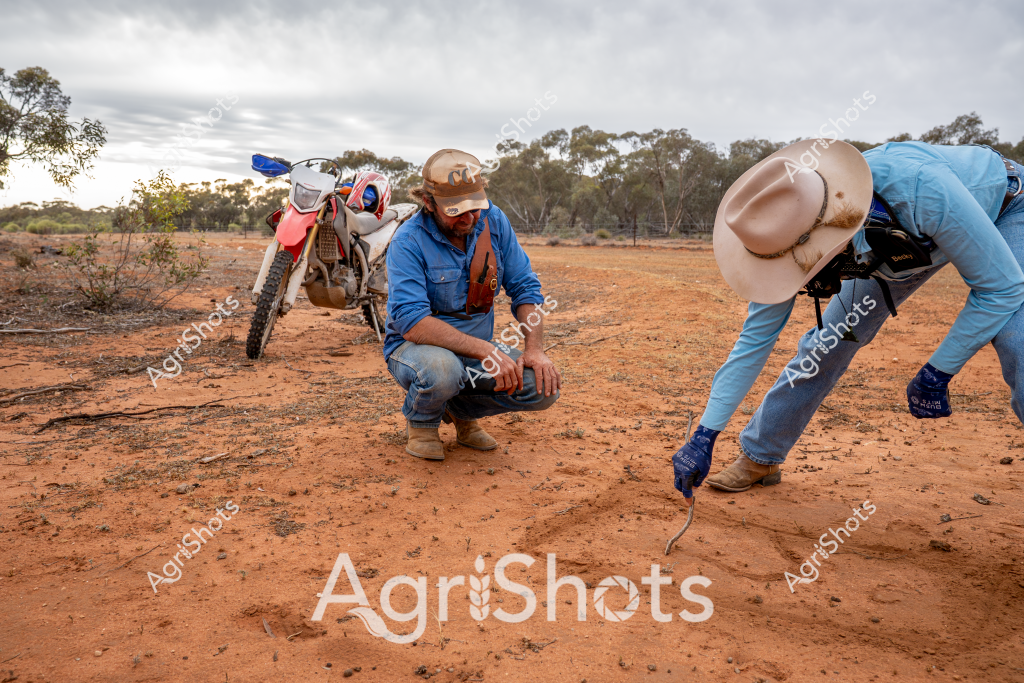
In the arid Australian outback, two men inspect the ground near a dirt bike, their clothing and posture revealing a deep connection to the rugged landscape. A man in a blue work shirt and tan hat crouches carefully, while another in light blue clothing and a broad-brimmed hat bends down, examining something on the red earth. A white and red dirt bike stands nearby, suggesting they've traveled some distance across this remote terrain. The scene captures the quintessential Australian rural working environment - a sparse landscape of reddish soil, scattered eucalyptus trees in the background, and an overcast sky creating a muted, atmospheric light. Their careful inspection could be related to soil conditions, tracking, or some agricultural assessment typical of station or farm work. The motorcycle indicates the vast distances that must be traversed in such remote regions, where traditional transportation methods meet modern rural technology. The men's attire - robust work shirts, protective hats, and sturdy boots - speaks to the practical necessities of working in harsh environmental conditions. Their focused postures suggest expertise and a methodical approach to understanding the landscape, embodying the resilience and problem-solving spirit characteristic of Australian rural workers.
Similar media
 Image
Image
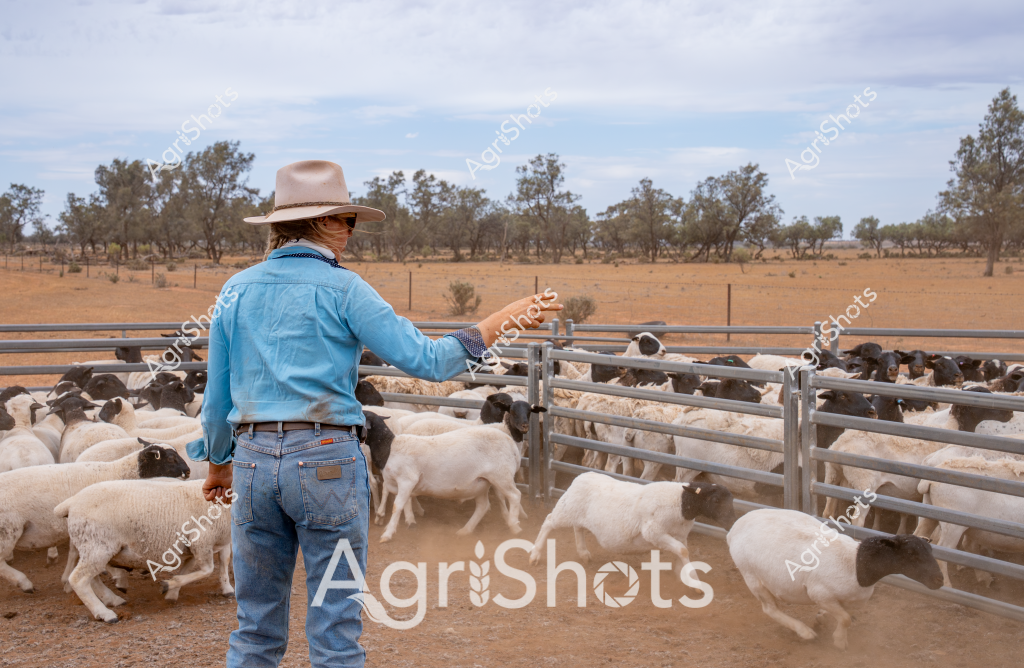
A woman stockman wearing a light blue long-sleeved shirt, blue jeans, and a wide-brimmed tan Akubra hat stands with her back to the camera, managing a flock of white and black-faced sheep in a dusty livestock yard. The paddock behind her is a classic Australian rural landscape, with sparse eucalyptus trees dotting a dry, golden-brown terrain under an overcast sky. Multiple metal livestock gates and fencing compartmentalize the yard, allowing the woman to control and sort the sheep with precision. The sheep - which appear to be a mixed breed, possibly including Merino and damara or dorper crosses - are densely packed within the metal pen, creating a bustling scene of agricultural activity. Her posture suggests calm expertise, with one arm extended to guide or manage the movement of the animals. The environment captures the quintessential Australian agricultural setting: a dry, challenging landscape where skilled stockmanship is essential for livestock management.
 Image
Image
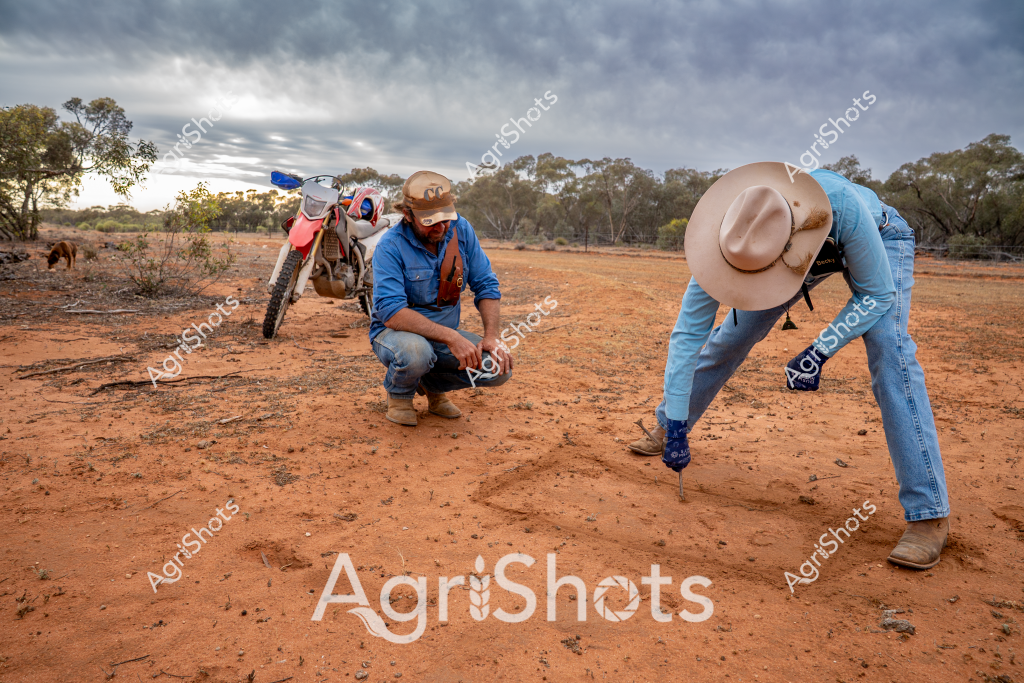
Two men explore a dry, red earth landscape with an off-road motorcycle, carefully examining the ground in a remote Australian outback setting. Wearing blue work shirts, denim jeans, and wide-brimmed hats typical of rural workers, they crouch intently on the parched, rust-colored soil, surrounded by sparse eucalyptus trees and scattered shrubs. A dirt bike is parked nearby, suggesting they might be checking property boundaries, tracking livestock, or investigating land conditions. The overcast sky creates a moody backdrop, with soft gray clouds hanging low over the arid terrain, emphasizing the challenging environmental conditions of the Australian interior. Their postures - one crouching, one bending - indicate a collaborative investigation, likely related to land management, agricultural survey, or environmental assessment in a harsh, drought-affected region. The scene captures the resilience and careful observation required in Australian rural work, where understanding the landscape is as crucial as any physical labor. The reddish earth, sparse vegetation, and the workers' attentive stance tell a story of agricultural adaptation in one of the world's most challenging farming environments.
 Image
Image
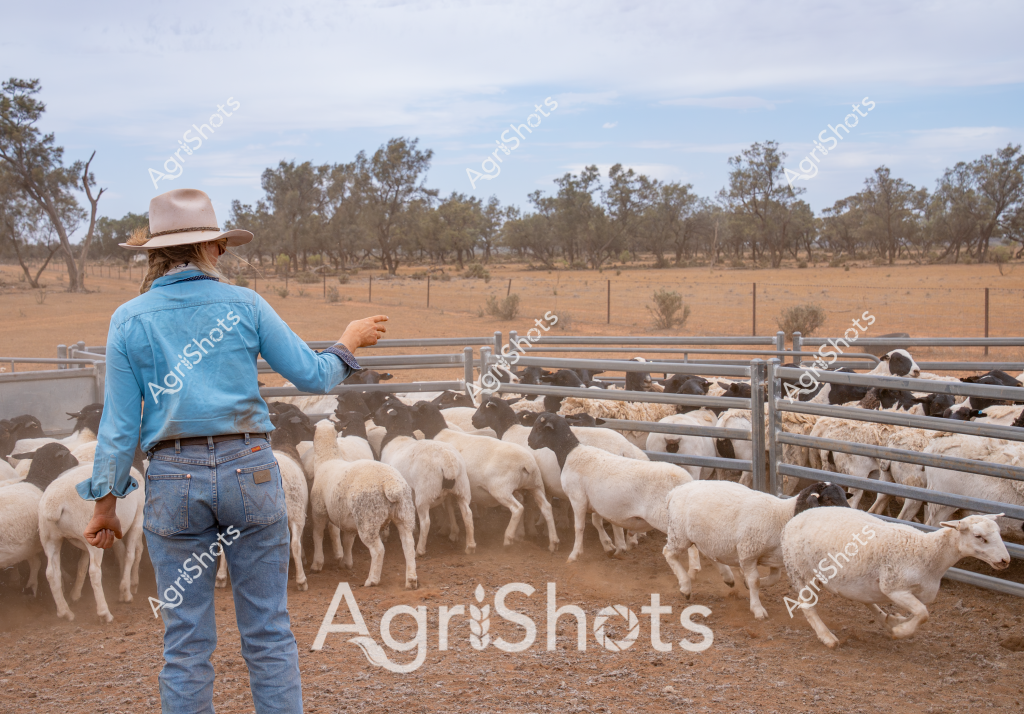
A woman stockman stands with her back to the camera, overseeing a mob of white lambs in a dusty livestock yard. Wearing a classic Australian farm uniform of a blue long-sleeved work shirt, faded blue jeans, and a light-colored wide-brimmed Akubra hat, she gestures with one hand while controlling the sheep's movement. The surrounding landscape is quintessential Australian outback - sparse eucalyptus trees scattered across a dry, golden-brown paddock with wire fencing defining the livestock area. The sheep, likely a white breed such as Merinos, are clustered tightly in a metal stock yard, creating a dynamic scene of rural agricultural activity. Dust rises from their movement, highlighting the arid conditions typical of Australian sheep farming regions. The woman's stance suggests years of experience managing livestock, her body language calm and authoritative as she guides the lambs. The background reveals a classic Australian pastoral setting - sparse trees, fenced paddocks, and wide-open skies with soft clouds creating a sense of expansive rural space. This image captures the essence of Australian sheep farming - resilience, skill, and a deep connection to the land.
 Image
Image
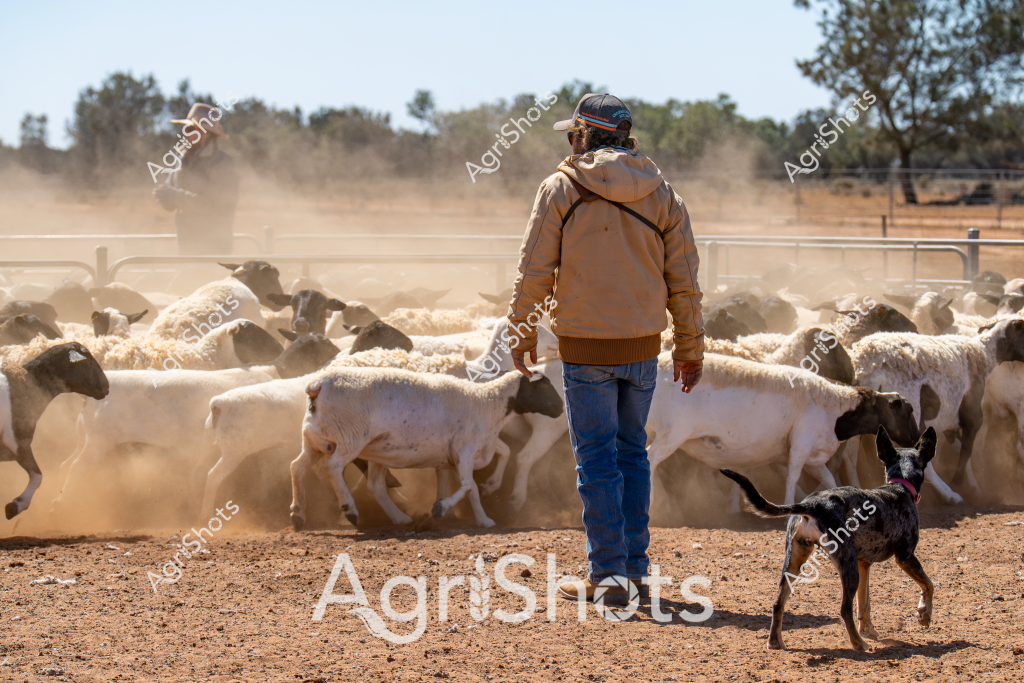
A man stockman stands amid a large flock of white sheep, surrounded by dust and dry paddock conditions. Wearing a tan jacket, blue jeans, and a cap, he is accompanied by a black working dog, likely a Kelpie, who helps manage the livestock. The sheep - a mix of white and dark-faced breeds, possibly Merino or crossbred - mill about in a confined area with metal livestock yards visible in the background. Dry, compacted earth and sparse vegetation suggest this is a typical Australian rural setting during drought or dry season. A light haze of dust rises from the movement of the sheep, creating an atmospheric scene that captures the challenging environmental conditions faced by Australian farmers. The stockman's positioning and the dog's stance demonstrate the skilled partnership between human, canine, and livestock in managing agricultural operations.
 Image
Image
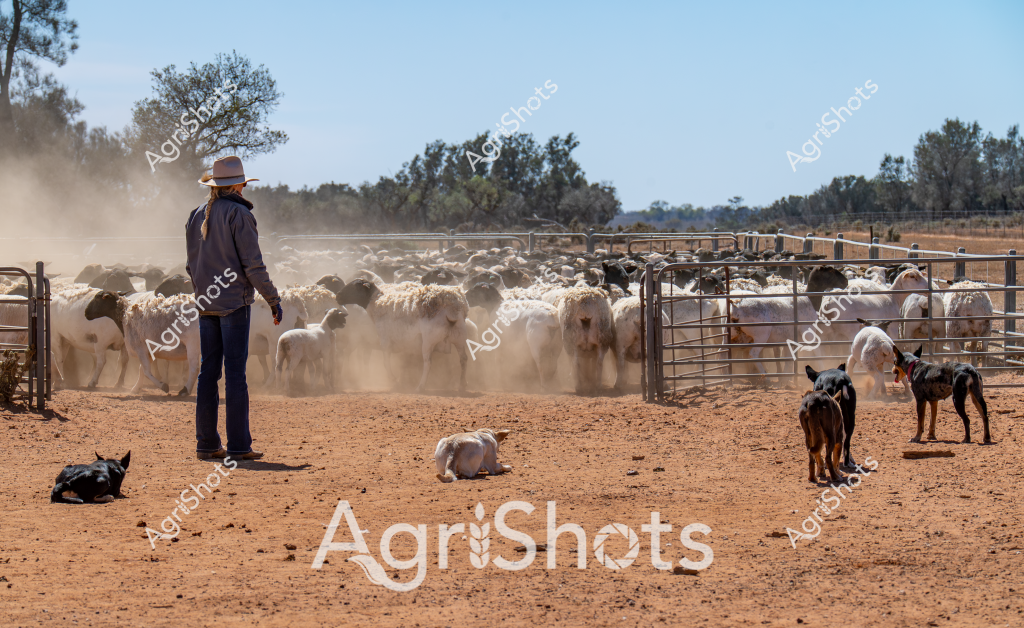
A stockman stands amid a dusty sheep paddock, overseeing a large flock of woolly sheep crowded into metal yard panels. Three working dogs are strategically positioned around the livestock - two standing alert and one resting on the dry, reddish earth. The scene captures a typical Australian sheep station environment, with sparse trees and bush landscape visible in the background under a clear blue sky. The person is wearing a wide-brimmed hat and dark clothing, standing sideways and watching the tightly packed mob of sheep raising dust as they shuffle within the metal gates. The sheep appear to be a mix of white and darker-colored animals, tightly clustered together. Several young lambs are visible among the adult sheep, indicating this is likely a breeding flock. The environment suggests an arid or semi-arid region, with the ground parched and covered in red dirt, characteristic of inland Australian pastoral landscapes. The working dogs - likely Australian Kelpies or similar herding breeds - demonstrate the critical role of canine assistance in managing large livestock mobs in challenging rural environments. This image powerfully represents the traditional practices of Australian sheep farming, highlighting the interdependence between humans, dogs, and livestock in managing agricultural operations across vast and demanding terrains.
 Image
Image
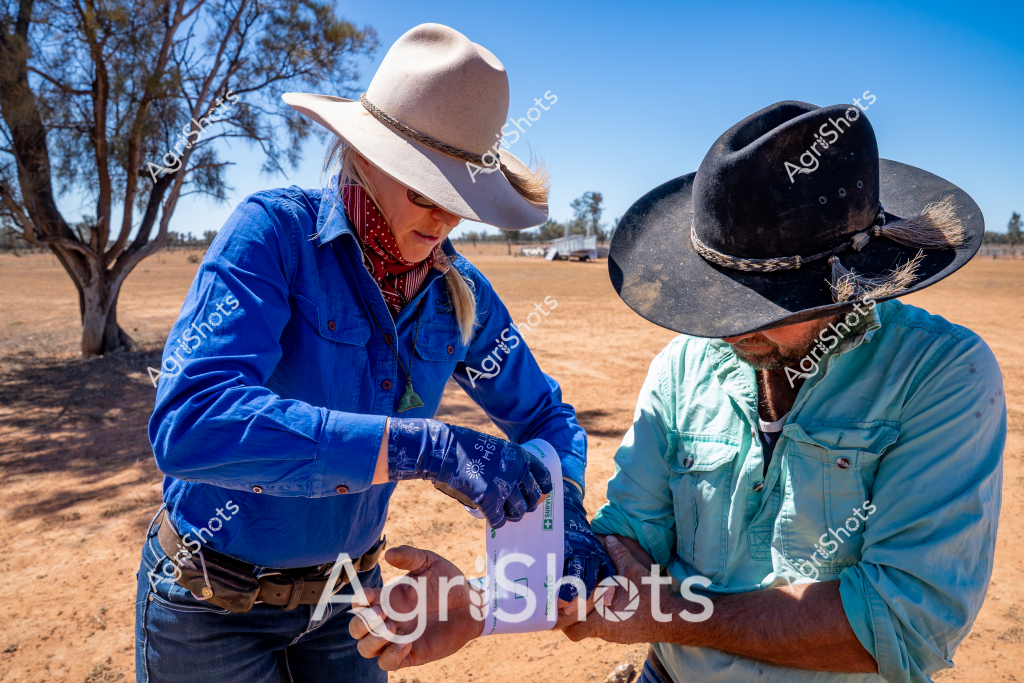
In the arid Australian outback, a woman in a bright blue work shirt and white wide-brimmed hat carefully handles what appears to be a sample or testing container alongside a man wearing a light turquoise shirt and a dark black stockman's hat. The dry, dusty landscape surrounds them, with a lone tree and parched ground stretching into the distance under a brilliant blue sky. Both workers are wearing protective gloves, suggesting they are conducting some form of agricultural testing or livestock health assessment. Their clothing - sturdy work shirts, robust hats, and practical work gear - speaks to the rugged nature of rural Australian agricultural work, where professionals must be prepared for harsh environmental conditions. The scene captures the essence of professional agricultural fieldwork, with careful attention to detail and protection against the unforgiving Australian rural environment.
 Image
Image
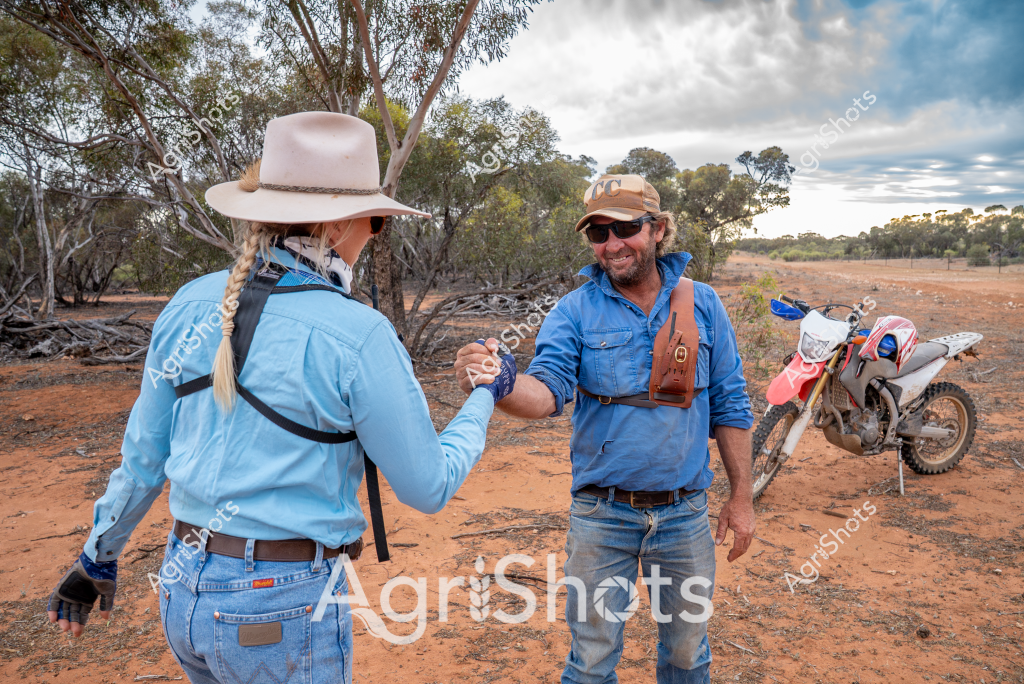
Two people stand in an arid Australian landscape, exchanging a friendly handshake or greeting. A woman wearing a wide-brimmed white hat and light blue work shirt faces a man in similar blue denim clothing, a tan cap, and sunglasses. Behind them, a dirt bike is parked near some scattered eucalyptus trees, suggesting they are likely rural workers or farmers conducting business in the rugged outback environment. The reddish-brown soil and sparse vegetation indicate this is likely a drought-affected region in inland Australia, with a cloudy sky adding to the atmospheric conditions. Their matching blue work shirts and relaxed body language suggest a professional relationship, possibly related to agricultural work or land management in a challenging rural setting.
 Image
Image
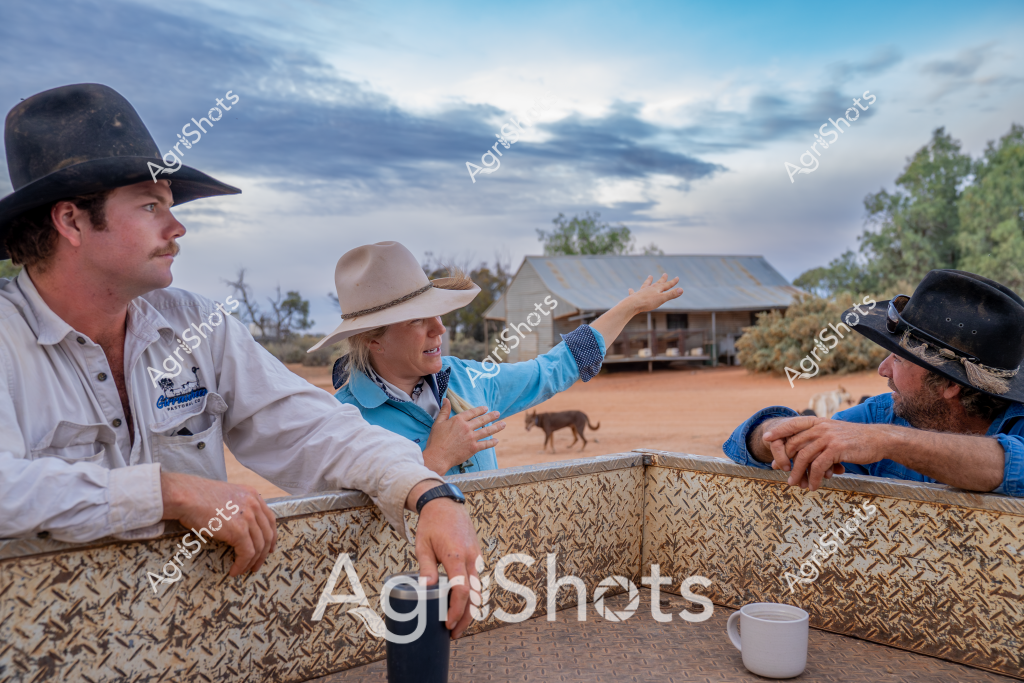
Three men in work attire stand around a textured metal fence, gazing across a dusty rural Australian station yard. A weathered tin shed sits in the background, with a dog wandering across the rich ochre-colored ground. One woman in a blue shirt gestures animatedly, pointing towards something off-frame, while the men in white and blue shirts wearing wide-brimmed work hats listen intently. A white coffee mug sits on the fence, suggesting a break in farm activities or a morning planning discussion. The cloudy sky suggests early morning or late afternoon, with soft light casting subtle shadows across the rustic rural landscape. The scene captures the collaborative nature of station life, with workers seemingly discussing farm operations or livestock management in a classic Australian outback setting.