Results for “dense”
 Image
Image
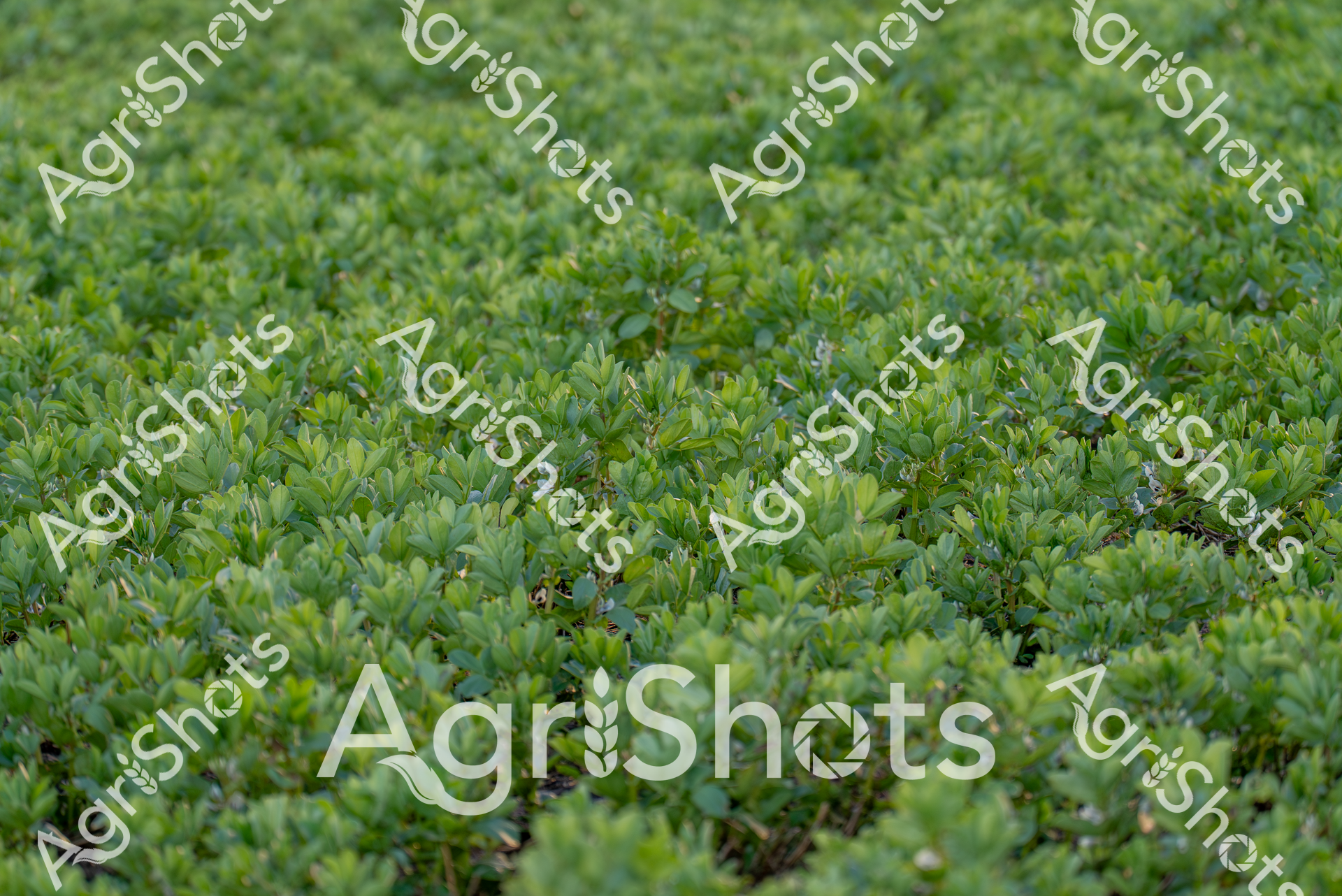
Lush green faba bean crop fills the frame, showcasing the vibrant winter agricultural landscape of South Australia's South East Region. The dense, uniform growth of the young plants demonstrates healthy crop development during the winter growing season, highlighting the region's robust agricultural practices.
 Image
Image
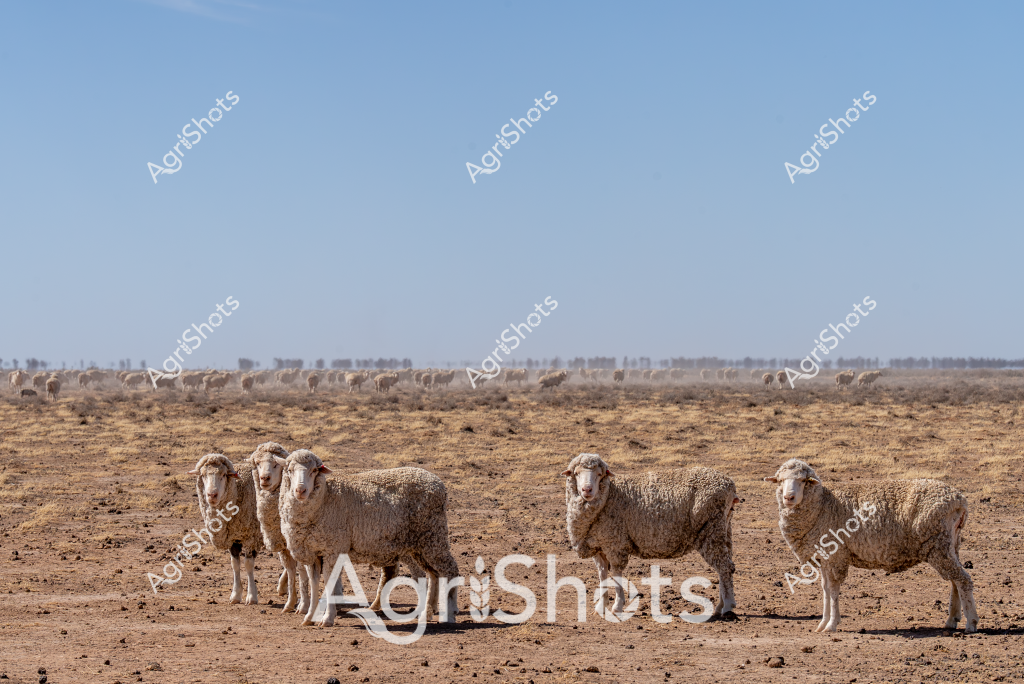
A small mob of Merino sheep stand clustered on a dry, dusty paddock under a clear blue sky, with more sheep visible in the distant background. The woolly white and cream-colored sheep appear hardy and well-conditioned, adapted to the arid Australian landscape. Sparse scrub and yellow-brown grassland stretch to the horizon, indicating challenging drought conditions typical of inland grazing regions. The sheep are standing relatively still, suggesting the harsh, unforgiving environment where water and feed are scarce. Their thick, dense fleece provides protection from the intense sunlight and heat, highlighting the resilience of Merino sheep in marginal agricultural zones. The expansive, open landscape communicates the vast scale of Australian sheep farming, where animals must survive in challenging terrain and climate conditions.
 Image
Image
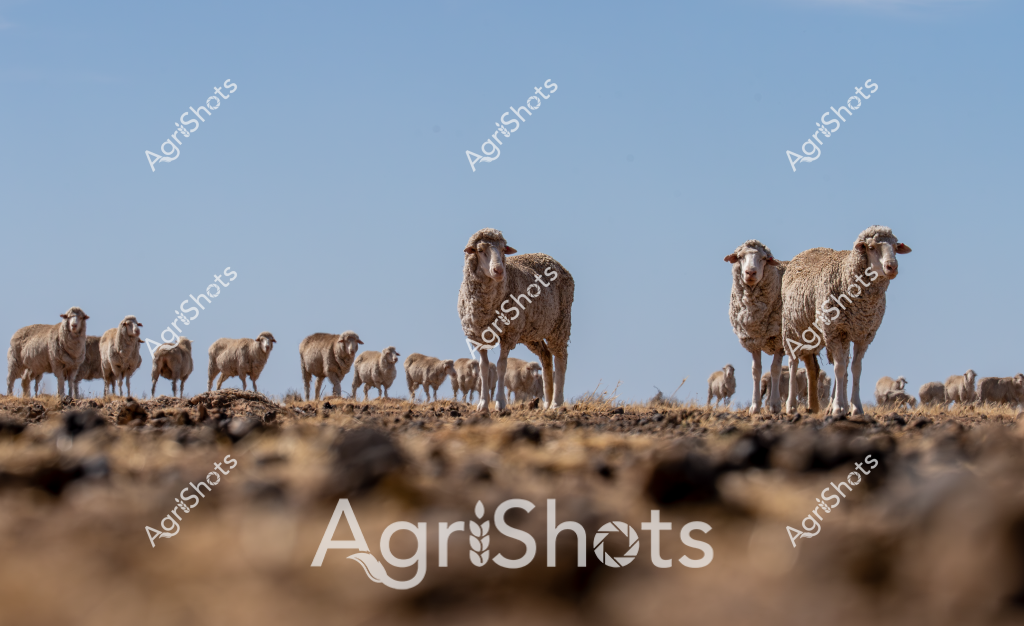
A flock of merino sheep stand confidently across a dry, rocky landscape under a clear blue sky. Several woolly sheep are positioned prominently in the foreground, with their dense, beige-colored fleece creating a textural contrast against the rugged ground. More sheep spread out behind them, creating a sense of depth and scale typical of Australian pastoral scenes. The animals appear alert, with some standing tall and others grazing, showcasing the hardy nature of merino sheep in challenging outback conditions. The low perspective emphasizes the sheep's robust form, with their muscular legs standing firmly on the weathered, stony terrain. This image captures the essence of Australian sheep farming - resilient animals adapted to harsh, arid environments that characterize much of the continent's agricultural landscape.
 Image
Image
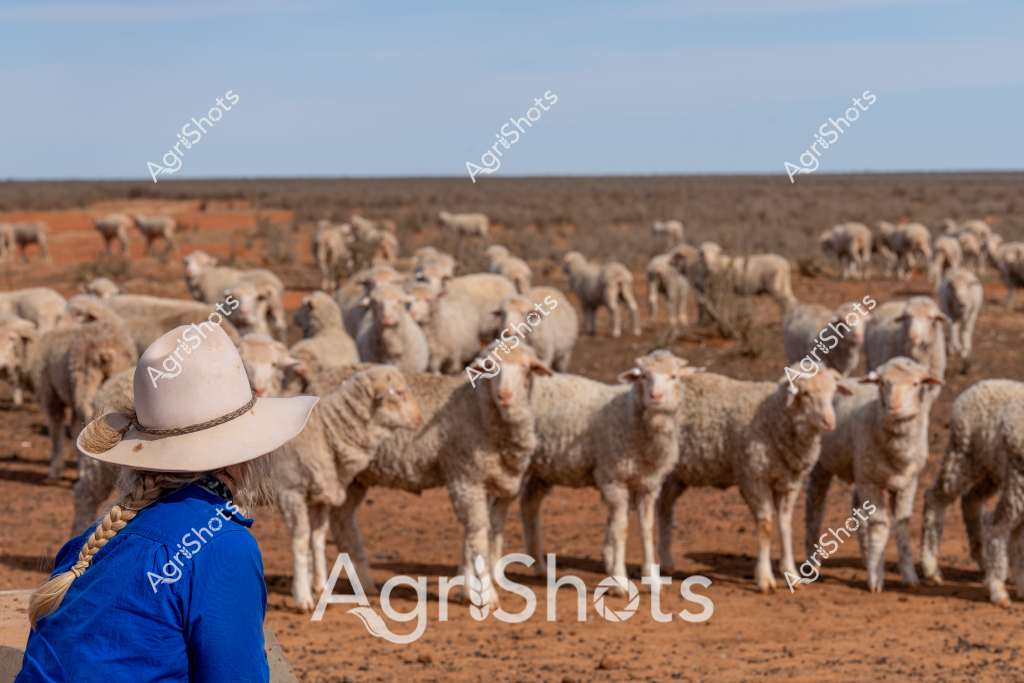
A woman stockman wearing a wide-brimmed light-colored hat and a bright blue long-sleeved shirt stands observing a large flock of Merino sheep grazing across a dry, reddish-brown paddock. The landscape stretches out to a flat horizon under a pale blue sky, typical of Australia's arid pastoral regions. Dozens of woolly white sheep are scattered across the dusty ground, their dense fleeces standing out against the ochre-colored earth. The scene captures the essence of sheep farming in rural Australia, showcasing the vast, open landscapes and the careful management required to maintain a healthy flock in challenging environmental conditions. The woman's positioning suggests she is monitoring the sheep, a critical task in maintaining the health and safety of the livestock in this harsh, expansive terrain.
 Image
Image
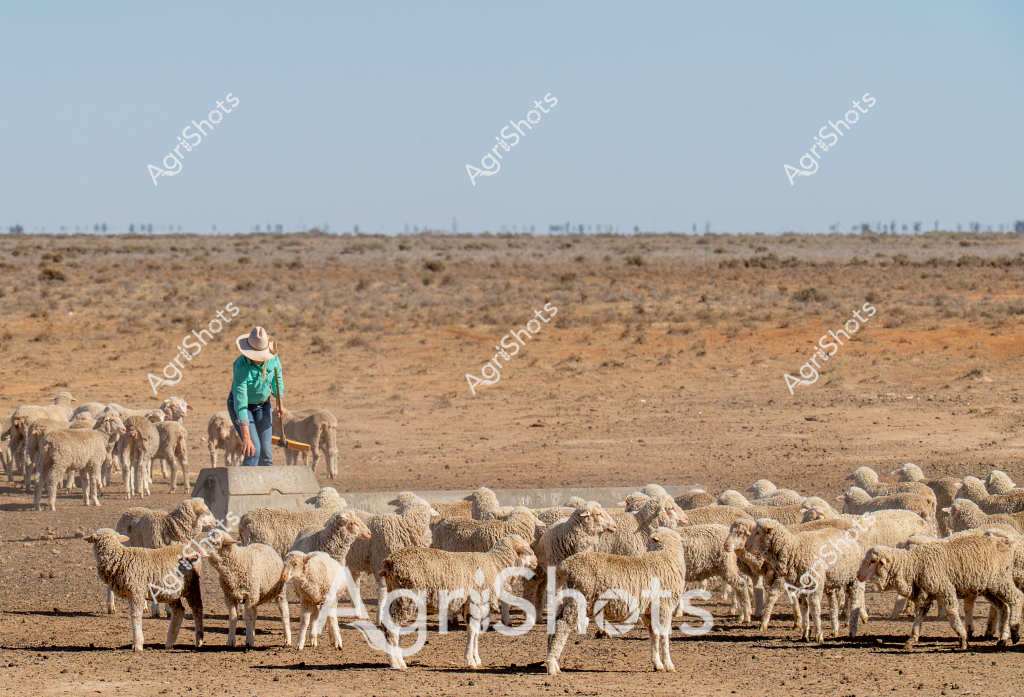
A woman stockman stands atop a concrete water trough, surrounded by a large flock of merino sheep in a dry, expansive outback landscape. The parched paddock stretches toward a distant horizon, with sparse vegetation and a pale blue sky indicating harsh drought conditions. Wearing a teal work shirt, white hat, and sturdy work pants, the stockman carefully monitors the sheep gathered around the water source. The woolly merino sheep, with their dense cream-colored fleece, cluster tightly around the trough, seeking water in the arid environment. The landscape is a palette of dusty browns and ochres, emphasizing the challenging conditions of rural Australian sheep farming. This image captures the resilience of both the livestock and the people who manage them in one of the world's most unforgiving agricultural environments.
 Image
Image
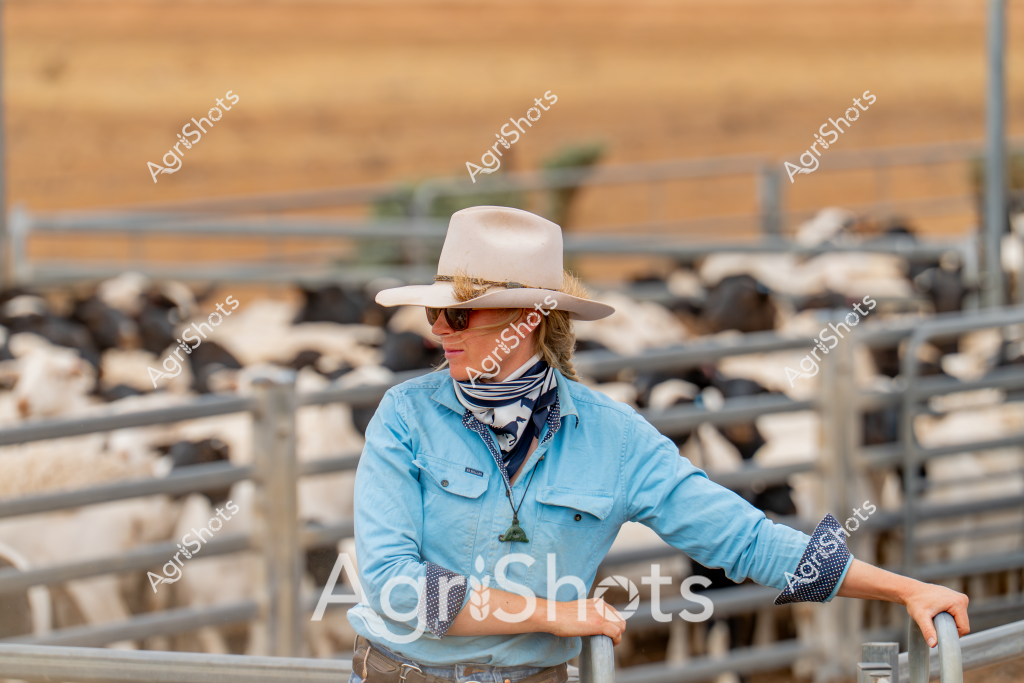
A woman stockman wearing a white wide-brimmed hat and sunglasses stands confidently in a livestock yard, leaning against metal fencing with a herd of sheep visible in the background. Dressed in a light blue work shirt with rolled-up sleeves and a striped neck scarf, she embodies the practical and resilient spirit of Australian rural workers. The metal yard panels create a structured environment, containing a dense flock of sheep with varying shades of white and gray wool. The warm, golden-toned background suggests a typical Australian pastoral landscape, likely during mid-morning or early afternoon. Her posture and attire reflect the professional and no-nonsense approach of contemporary livestock management, showcasing the ongoing role of skilled workers in managing agricultural operations.
 Image
Image
A classic Australian livestock mustering scene captures working dogs expertly managing a large flock of white and dark-colored sheep in a dusty, arid paddock. Several black and tan dogs are positioned strategically around the mob, some standing alert while others rest on the dry, reddish-brown earth. The sheep are densely packed within a metal yard fence, with trees and scrubland visible in the background, suggesting a typical Australian pastoral setting. The working dogs, likely Australian Kelpies or similar herding breeds, demonstrate the critical role of canine partners in managing livestock across vast rural properties. Their positioning shows practiced skill - some standing vigilant, others resting but ready to spring into action at a moment's notice. The dense dust cloud and tight grouping of sheep indicate active movement and controlled herding. The harsh, sunbaked landscape with its red soil and sparse vegetation is characteristic of inland Australian agricultural regions, likely in a state like Queensland or Western Australia. The scene captures the demanding nature of sheep farming in challenging environmental conditions, highlighting the resilience and expertise required in Australian pastoral agriculture.
 Image
Image
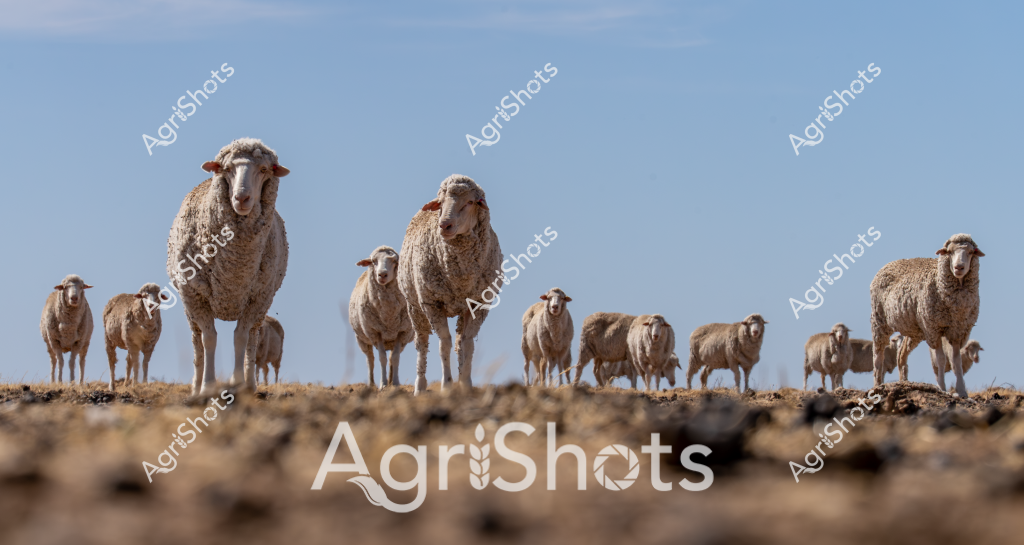
A flock of Merino sheep stands poised across a dry, rocky landscape under a clear blue sky, presenting a classic Australian pastoral scene. The woolly sheep, with their dense, creamy-white fleece, are strategically positioned at varying heights, creating a dynamic composition that highlights the breed's sturdy nature. Some sheep stand tall and alert, while others graze or move slowly across the barren ground, demonstrating the resilience of these animals in harsh agricultural environments. The foreground shows a rocky, dusty terrain typical of Australian rangelands, with stones and sparse ground cover indicating challenging farming conditions. The sheep's positioning suggests they are part of a carefully managed mob, potentially being moved between paddocks or prepared for shearing. Their thick, uniform fleece indicates these are high-quality Merino sheep, a breed renowned for producing some of the world's finest wool. The image captures the essence of Australian sheep farming - adaptability, endurance, and the intricate relationship between livestock and challenging landscapes. The clear sky and stark ground emphasize the open, expansive nature of rural Australian agricultural settings, where sheep farming remains a critical economic and cultural practice.
 Image
Image
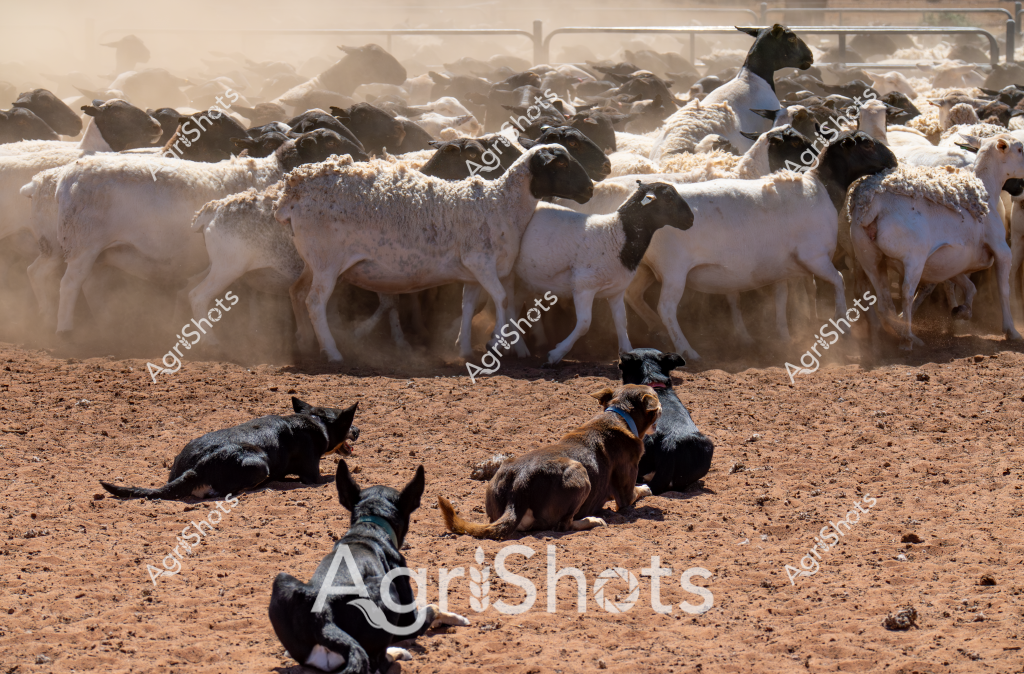
A large flock of white and black Dorper sheep stands tightly packed in a dusty livestock yard, kicking up a haze of dry earth in the background. In the foreground, several black working dogs lie resting on the reddish-brown dirt, cooling off after what appears to be an intense mustering session. The sheep, primarily white with black heads and markings typical of Dorper breed, are clustered together near metal yard fencing, creating a dense mass of woolly bodies. The scene captures the harsh conditions of an Australian pastoral setting, likely in a dry inland region such as Queensland or Western New South Wales. The ground is parched and cracked, indicating dry seasonal conditions, while the dust cloud suggests intense heat and arid environmental conditions. The working dogs, looking exhausted but alert, demonstrate the critical role of canine helpers in managing large livestock herds. The image powerfully illustrates the challenging environment of Australian sheep farming, where livestock management requires resilience and specialized skills. The tight grouping of the Dorper sheep and the strategically positioned working dogs showcase the coordinated effort required to handle livestock in demanding outback conditions.
 Image
Image
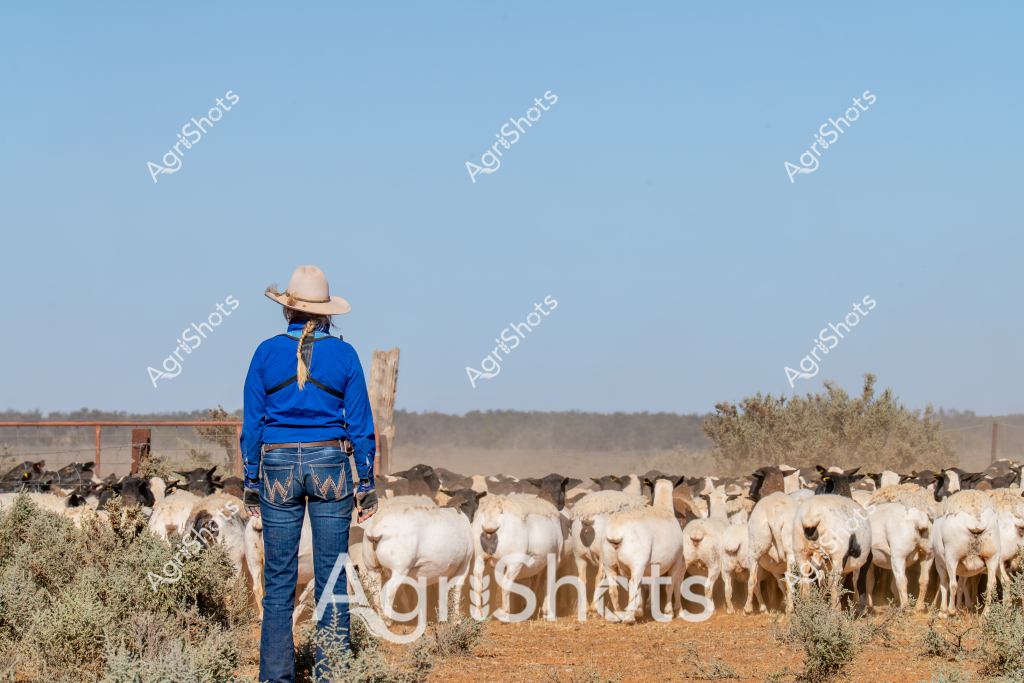
A woman stockman stands in a blue long-sleeved shirt and wide-brimmed hat, her back to the camera, overlooking a large herd of white sheep in an arid Australian paddock. The landscape is characterized by reddish-brown earth, scattered saltbush and low scrub, and a clear blue sky stretching to a distant horizon. Numerous sheep are clustered together, their white bodies creating a dense mass against the earthy background, suggesting a typical sheep station scene in rural Australia. A wooden fence and dusty conditions indicate this is likely an extensive grazing property, where livestock management requires skill and patience. The woman's stance - solid and watchful - speaks to the traditional role of stockmen in Australian agricultural practice, carefully monitoring and guiding the flock across the challenging outback terrain.
 Image
Image
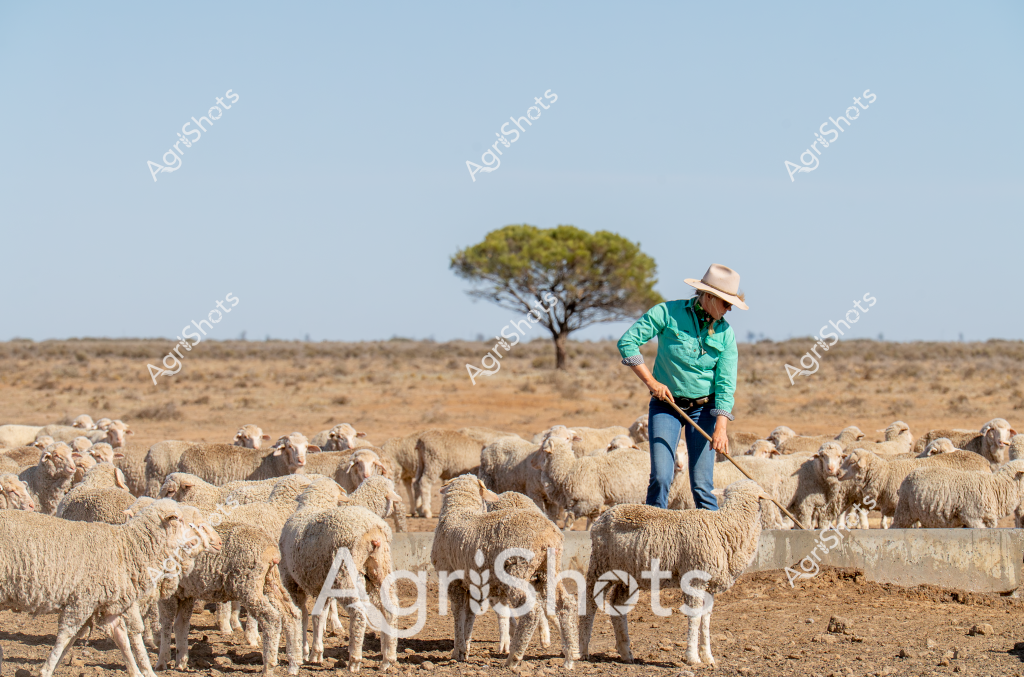
A man shepherd tends to a large flock of Merino sheep in a dry, sparse landscape characteristic of rural Australia. Wearing a broad-brimmed hat, green long-sleeved shirt, and blue jeans, he stands amidst dozens of woolly sheep near a concrete trough in an arid paddock. A solitary tree with a full green canopy punctuates the distant horizon, providing a stark contrast to the golden-brown earth and pale blue sky. The sheep cluster together, their dense fleece suggesting they are mature Merinos ready for shearing, highlighting the resilience of both the livestock and the shepherd in this challenging environment. The scene captures the essence of Australian pastoral farming - a lone worker carefully managing a valuable flock in a harsh, expansive landscape where water and vegetation are precious resources.
 Image
Image
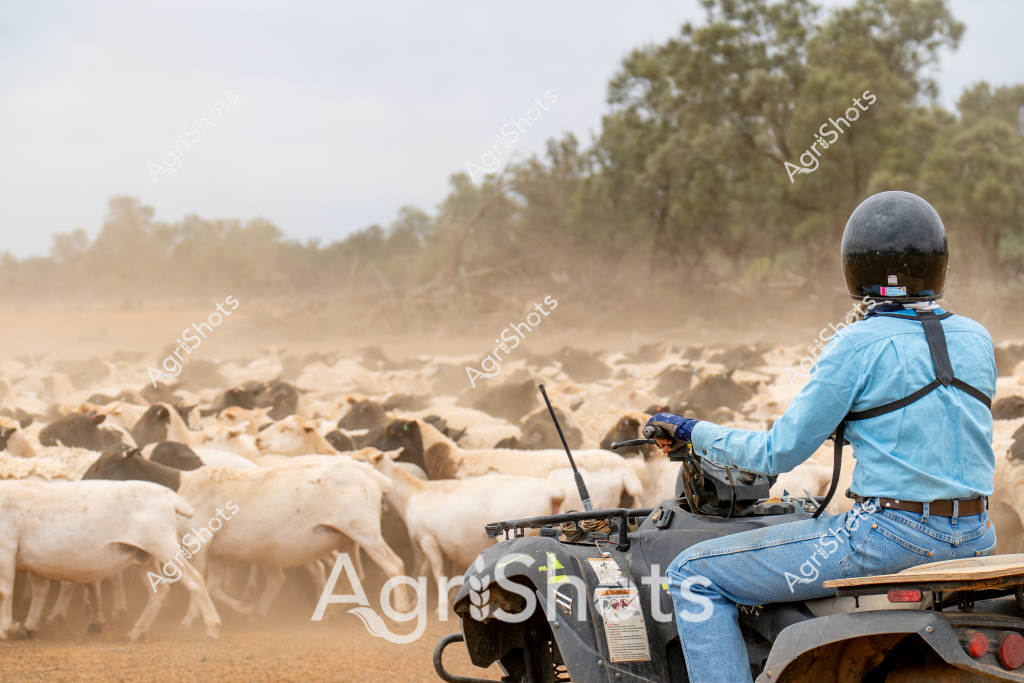
A man stockman seated on an all-terrain vehicle (ATV) manages a large herd of white and light-colored cattle in a dusty, tree-lined paddock. Wearing a blue shirt, jeans, and a protective helmet, he navigates the vehicle carefully among the densely packed livestock, raising a cloud of fine Australian dust. The cattle appear to be moving as a tight, cohesive group, suggesting an organized muster or stock movement typical of extensive pastoral operations. Trees line the distant horizon, creating a classic Australian rural landscape backdrop, while the dusty conditions hint at the dry, challenging environmental conditions often encountered in agricultural regions. The stockman's positioning on the ATV demonstrates modern livestock management techniques, replacing traditional horseback mustering with more efficient mechanized approaches. The scene captures the essence of Australian cattle farming - a blend of skill, technology, and adaptation to harsh rural environments. The dust, the dense herd, and the careful management by the stockman illustrate the demanding nature of livestock production in Australia's expansive agricultural landscapes.
 Image
Image
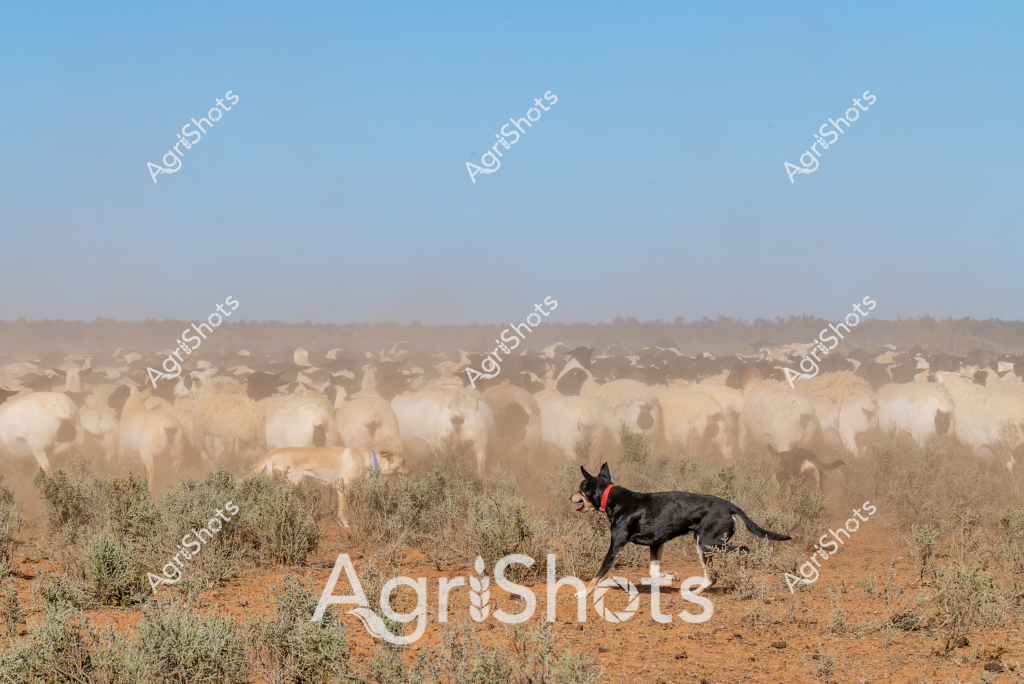
A black working dog expertly herds a large mob of light-colored goats through a dusty, arid landscape in rural Australia. The dense herd kicks up a substantial cloud of red dirt and dust, creating a hazy atmosphere across the sparse, scrubby terrain. Scattered low bushes and saltbush punctuate the reddish-orange ground, while a pale blue sky stretches overhead. The agile black dog, wearing a bright red collar, moves with precision around the goat herd, demonstrating the critical role of working dogs in managing livestock across challenging Australian outback environments. The scene captures the intense movement and dynamic interaction between the herding dog and the tightly clustered goats, highlighting the skill and partnership required in managing livestock across vast, challenging pastoral landscapes.
 Image
Image
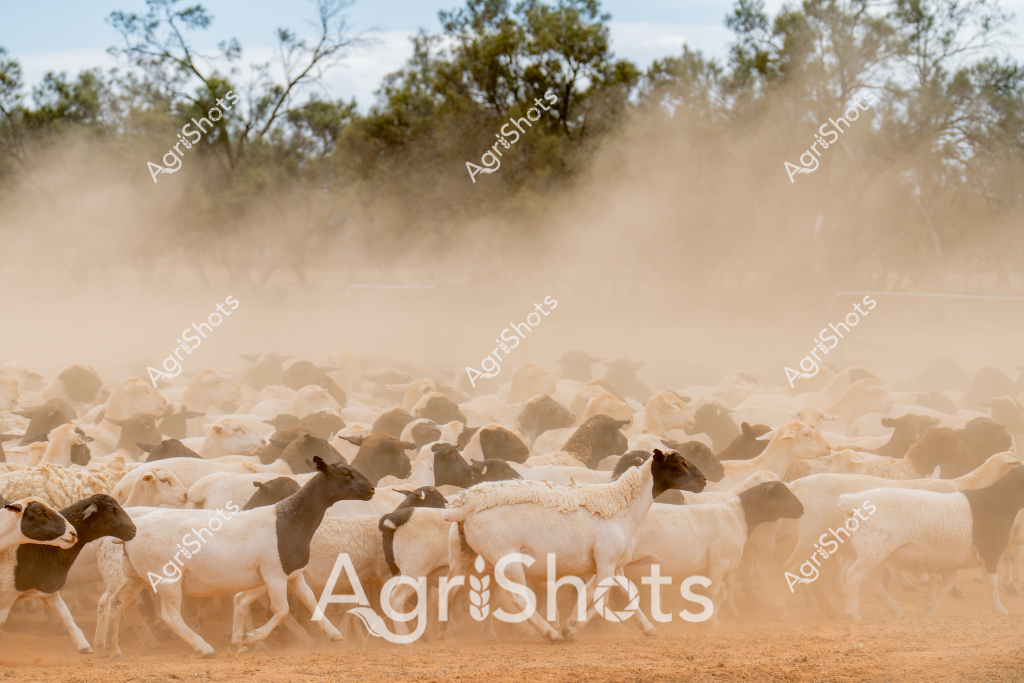
A large herd of sheep generates a massive dust cloud in a dry, arid Australian landscape. The flock consists of white and dark-colored sheep, tightly clustered together and kicking up ochre-colored earth beneath their hooves. Sparse eucalyptus trees and native scrub vegetation form a muted green backdrop against the dusty beige terrain. The dense mob of sheep appears to be moving or being mustered, creating a swirling cloud of fine dust that obscures parts of the landscape. The scene captures the harsh, dynamic environment of outback livestock management, where animals navigate challenging dry conditions with resilience. The image powerfully illustrates the intersection of livestock, landscape, and the demanding nature of Australian pastoral agriculture.
 Image
Image
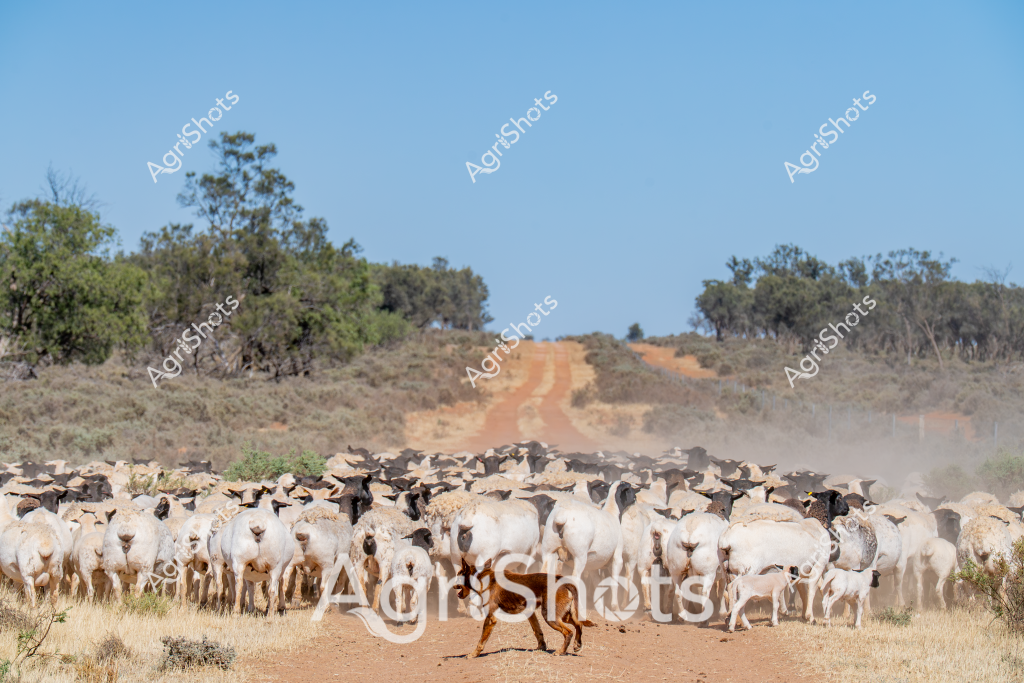
A large flock of white sheep occupies a dusty dirt road in a classic Australian outback landscape, with a working dog herding them across the terrain. Sparse eucalyptus trees and scrubland frame the scene, creating a golden-brown backdrop of dry grasslands typical of rural Australia. The compact mob of sheep - likely Merino or a similar white breed - are tightly clustered, creating a dense white mass against the ochre-colored earth. A lean, alert working dog, probably a Australian Kelpie, moves confidently in front of the flock, skillfully controlling their movement along the unsealed track. The clear blue sky and sparse vegetation suggest this is during a dry season, highlighting the challenging environmental conditions of pastoral regions. The image captures the quintessential Australian rural scene of livestock management, demonstrating the critical role of working dogs in mustering sheep across vast agricultural landscapes.
 Image
Image
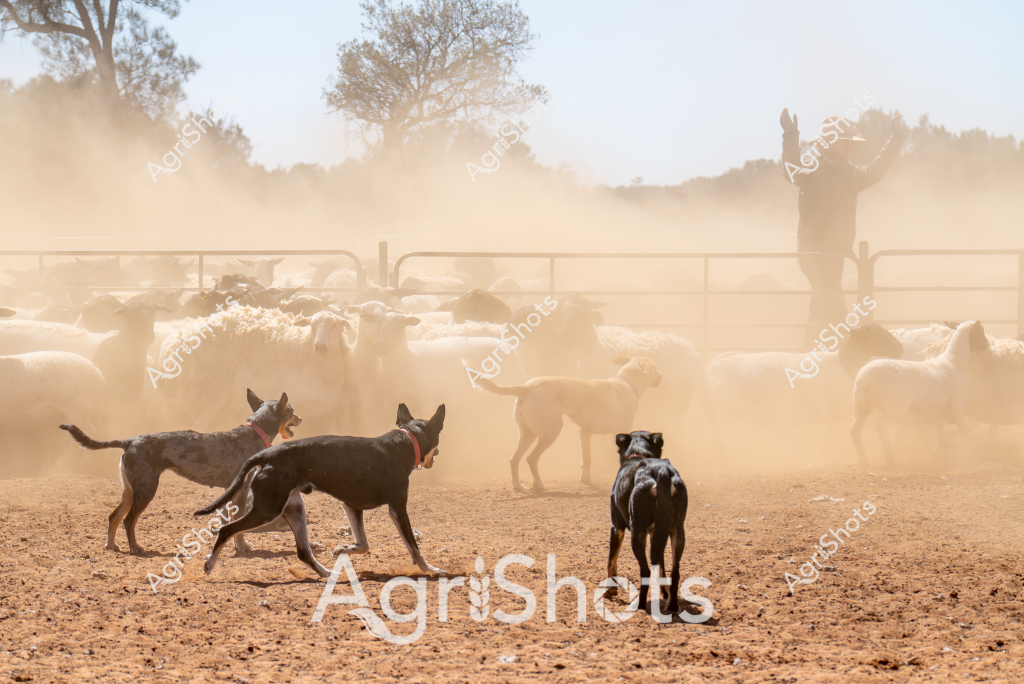
A dusty, sun-drenched livestock yard captures the intense work of three working dogs herding a large flock of sheep. Two dark-colored dogs, likely Australian Kelpies, stand alert in the foreground, their muscular bodies tense with concentration, while a third dog moves among the sheep in the background. A dense cloud of red-brown dust rises from the dry, packed earth, obscuring the distant fence line and trees, creating a hazy, atmospheric scene typical of Australian pastoral landscapes. The sheep - appearing to be a white wool breed, possibly Merinos - are tightly clustered within a fenced paddock, their woolly forms blending together in the dusty environment. The working dogs demonstrate the classic Australian farming technique of precise, controlled herding, moving strategically to manage the flock's movement and direction. One dog stands with an assertive posture, while another seems to be actively guiding the sheep, showcasing the incredible skill and training of these essential farm companions. The scene powerfully illustrates the challenging conditions of Australian livestock management, with the dry, dusty environment and the hard-working dogs highlighting the resilience required in rural agricultural settings. The image captures the raw, unfiltered essence of sheep farming in what appears to be an arid region, likely during a dry season.
 Image
Image
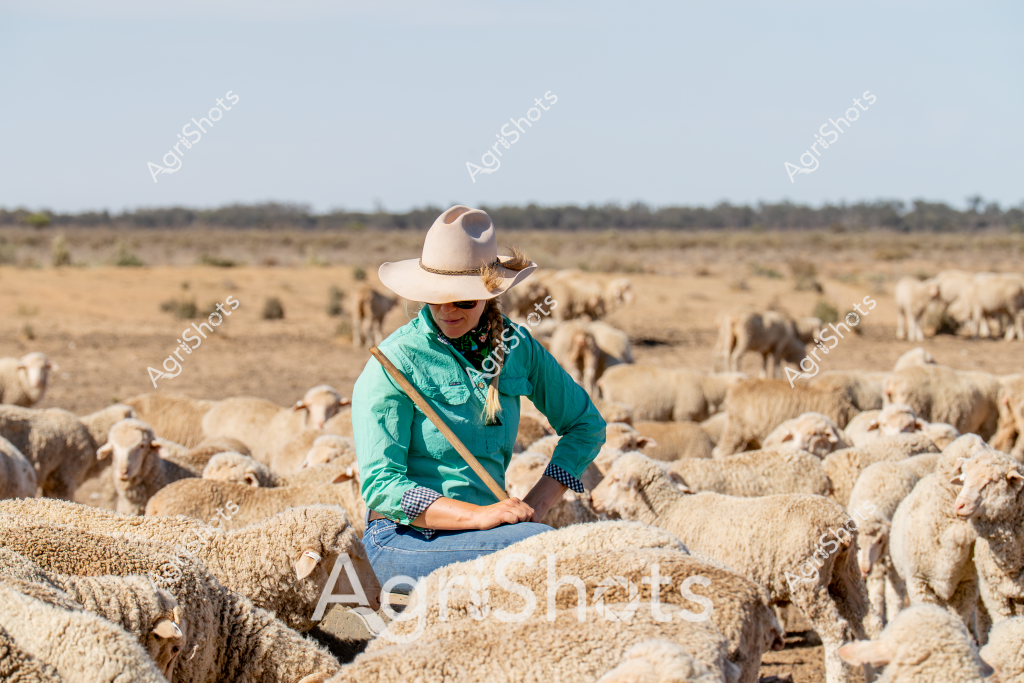
A woman shepherd sits among a large flock of Merino sheep in a dry, expansive Australian pastoral landscape. Wearing a wide-brimmed sun hat and a vibrant turquoise work shirt, she rests on a rocky outcrop surrounded by woolly white sheep that stretch across the golden-brown grasslands. The sparse, arid environment typical of Australian sheep country extends to the distant tree line, with a muted blue sky overhead suggesting the harsh midday heat. Her green shirt provides a striking contrast against the neutral tones of the landscape, while a wooden staff rests beside her, indicating her traditional shepherding role. The dense flock of Merino sheep, prized for their fine wool, demonstrates the resilience of both the livestock and the livestock manager in this challenging rural environment. The scene captures the essence of Australian sheep farming - a solitary figure managing a substantial flock in a vast, unforgiving landscape that requires skill, patience, and deep connection to the land and animals.
 Image
Image
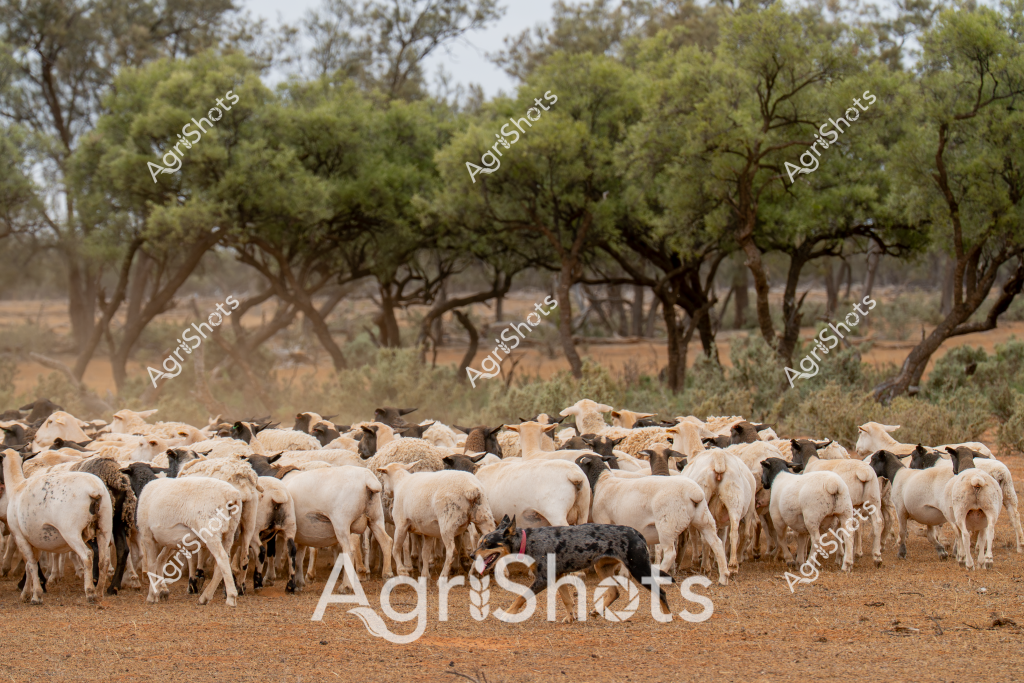
A vigilant working dog herds a large flock of white and dark-colored sheep in a classic Australian rural landscape. The dense mob of sheep, predominantly light-colored with some dark individuals, stands tightly clustered on dry, reddish-brown earth, surrounded by scattered gum trees and sparse native vegetation. A compact black and tan working dog, likely a Kelpie or Australian Cattle Dog, navigates carefully through the flock, demonstrating the critical role of livestock dogs in managing large herds across challenging pastoral environments. The background reveals a typical Australian bushland setting with mature eucalyptus trees creating a muted green and grey backdrop, their branches spreading wide across the arid landscape. The scene captures the essence of Australian sheep farming - a testament to the resilience of both animals and handlers in managing livestock across vast, challenging terrain. The tight grouping of sheep and the strategic positioning of the herding dog showcase the precision and skill required in rural agricultural practices.
 Image
Image
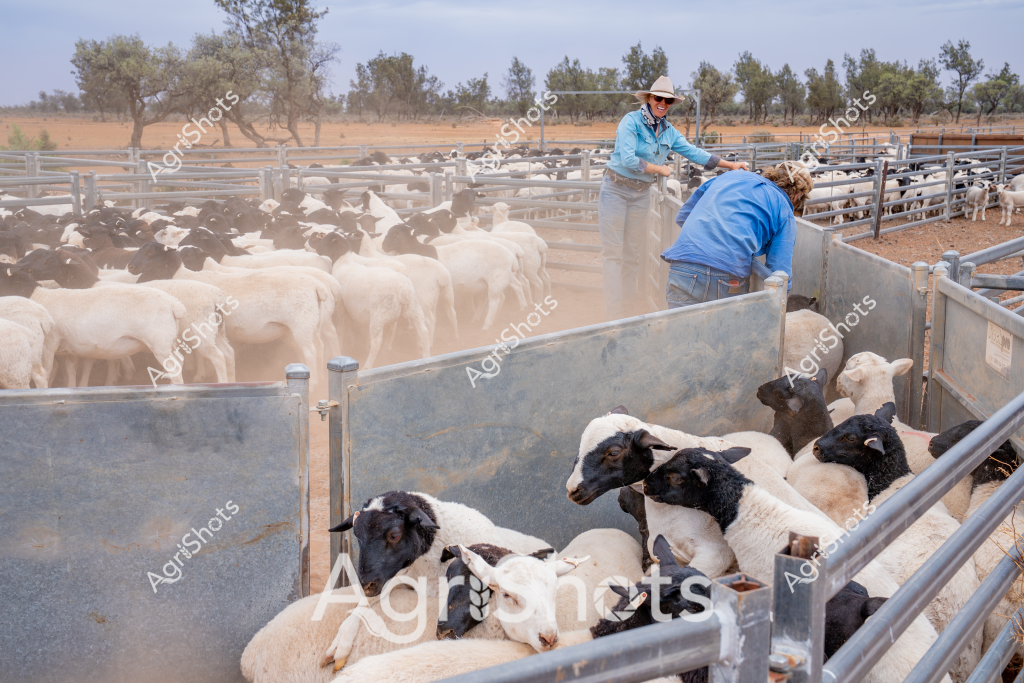
Two experienced workers manage a flock of black and white dorper sheep in a dusty rural yard during what appears to be a dry season in the Australian outback. A woman in a blue long-sleeved shirt and wide-brimmed hat stands near metal livestock yards, carefully guiding the sheep with another worker. The sheep are predominantly white with distinctive black head markings, typical of the dorper breed, which is well-adapted to arid Australian conditions. Multiple metal livestock pens contain the dense flock, with scattered trees and a sparse, reddish-brown landscape visible in the background, suggesting this is likely a station or large rural property in a drought-affected region. The workers move methodically, demonstrating the skill and precision required in managing livestock in challenging environmental conditions. Dust rises around the animals, highlighting the dry, harsh nature of the landscape and the resilience of both the sheep and the agricultural workers.
 Image
Image
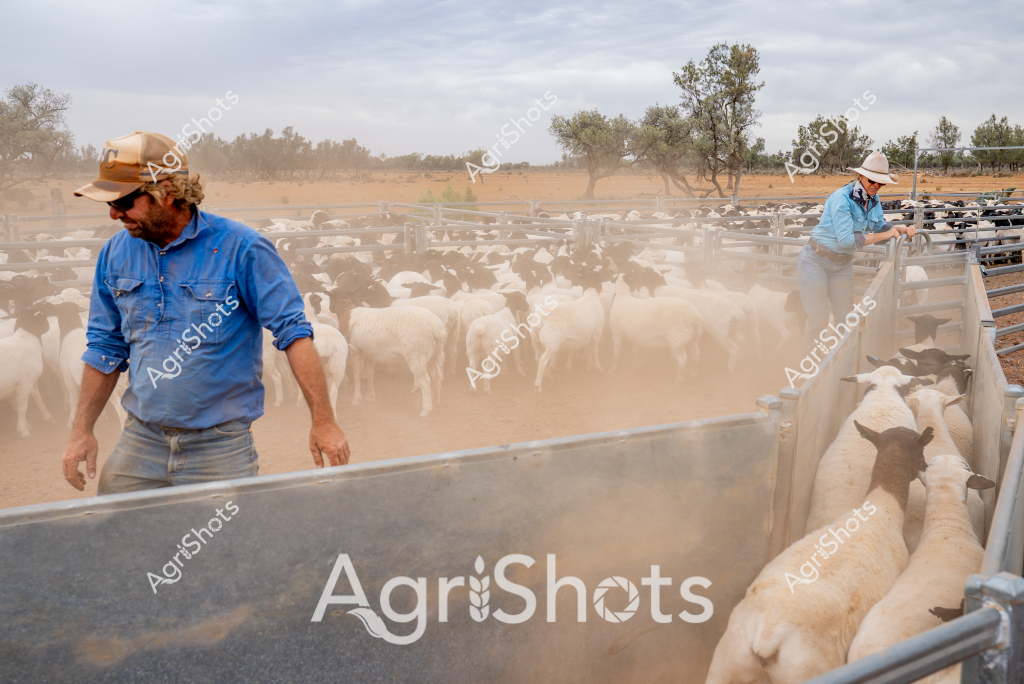
Two men managing a large flock of white sheep in a dusty, arid paddock with sparse trees on the horizon. A man in a blue work shirt and tan cap stands near a metal livestock yard, carefully guiding the sheep through the gates while another man in a light blue shirt and white hat works the opposite side of the yard. A dense cloud of ochre-colored dust rises around the animals, creating a dramatic atmosphere that highlights the challenging environmental conditions. The sheep appear to be tightly packed, moving methodically through the narrow metal race, suggesting a routine mustering or livestock management operation typical of Australian agricultural practices. The landscape looks dry and sparse, with scattered gum trees in the background indicating this is likely an inland pastoral region experiencing drought-like conditions. The workers' robust clothing and steady movements demonstrate the skilled and physically demanding nature of sheep farming in rural Australia.
 Image
Image
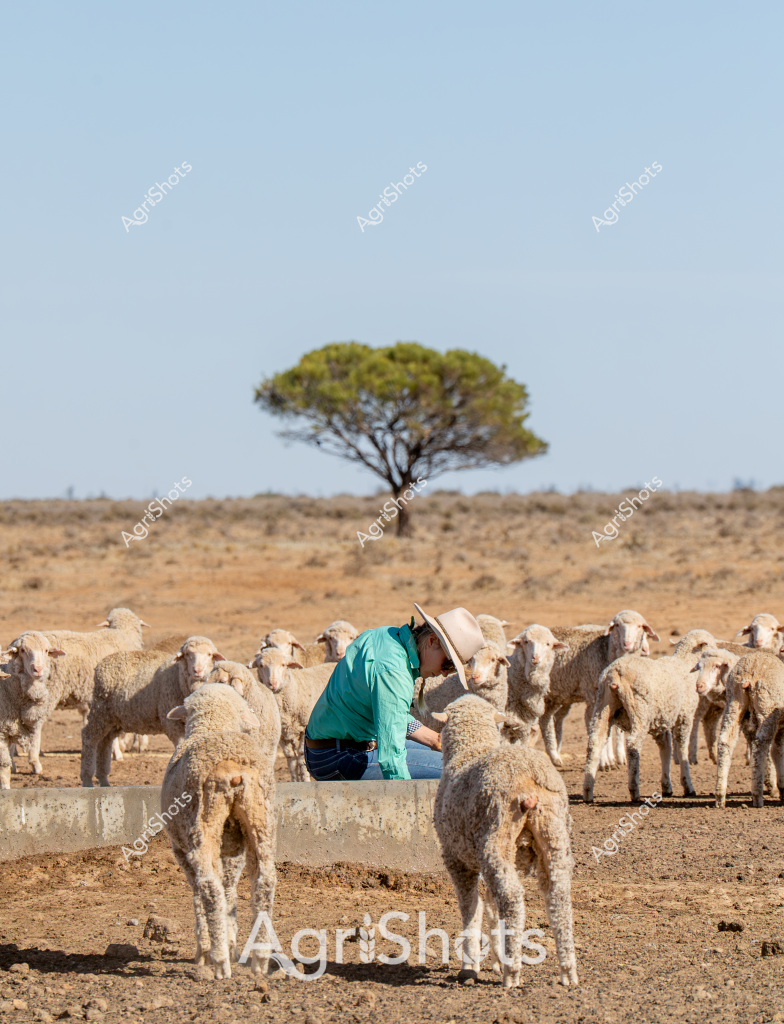
A dedicated woman stockman tends to a flock of Merino sheep in a sparse, arid landscape. Wearing a teal green shirt and a wide-brimmed sun hat, she carefully works among the woolly white sheep gathered around a concrete trough. The barren paddock stretches out to the horizon, with a single, distinctive acacia tree standing solitary against the pale blue sky, symbolizing the resilience of Australian pastoral life. The sheep, with their dense, cream-colored fleece, cluster tightly around the water source, highlighting the critical importance of water management in this dry environment. The ground is hard-packed and dusty, indicating challenging drought conditions typical of many Australian rural regions. The woman's posture and careful attention suggest years of experience in managing livestock in harsh agricultural settings. This image captures the essence of Australian sheep farming - the intimate relationship between the stockman and the flock, the stark beauty of the landscape, and the ongoing challenge of sustaining agriculture in a challenging environment. The scene speaks to the skill, dedication, and adaptability required in Australian pastoral agriculture.
 Image
Image
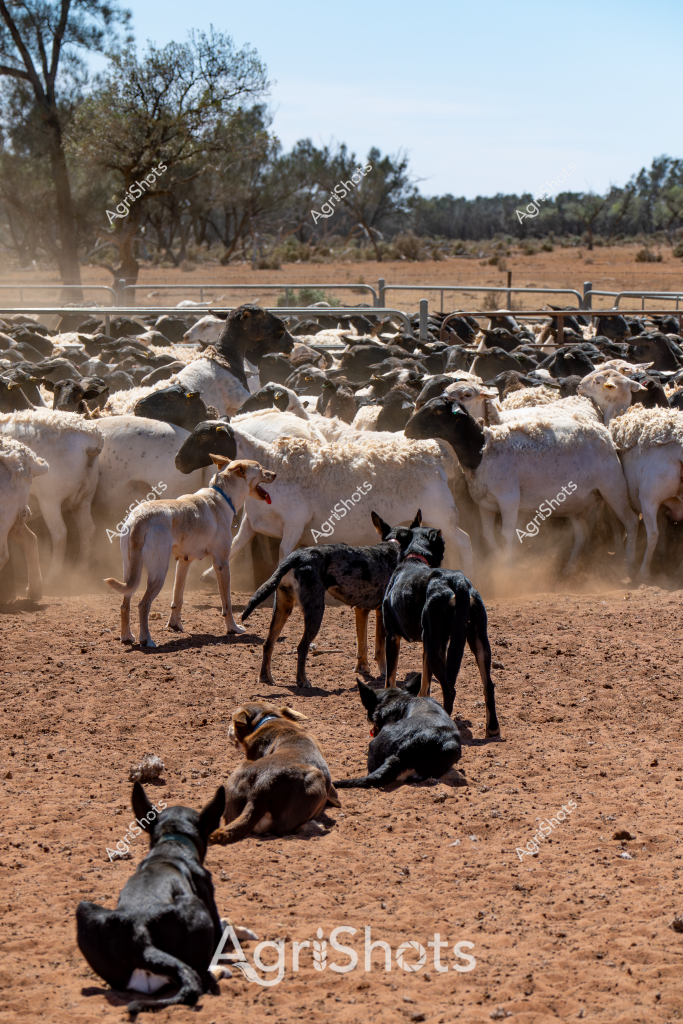
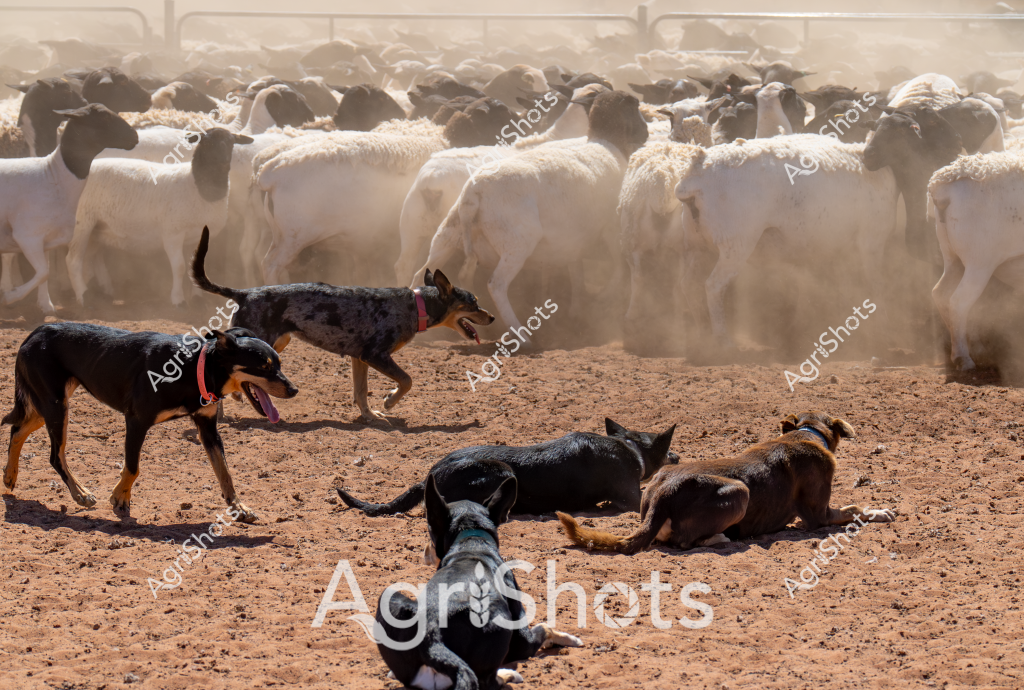
A classic Australian livestock herding scene unfolds, showcasing working dogs managing a large flock of white sheep in a dusty, arid paddock. Several hardy cattle dogs, including black and mottled grey breeds, are strategically positioned around the herd, with some standing alert and others resting on the dry, reddish-brown ground. The dense mob of sheep, predominantly white with dark faces, creates a cloud of dust as they cluster tightly together, suggesting an intense mustering or movement operation. The dogs appear to be experienced working dogs, wearing red collars and displaying a calm, disciplined approach to herding. Some dogs are standing, while others are lying down, indicating a well-trained team that understands their roles in managing the livestock. The barren, compacted earth and the swirling dust highlight the harsh conditions typical of Australian pastoral landscapes, where skilled dogs are crucial in moving and controlling large sheep herds across challenging terrain. This image captures the essence of Australian agricultural practice - the partnership between working dogs and farmers in managing livestock in demanding environmental conditions. The scene represents the resilience, skill, and teamwork required in Australia's extensive sheep farming industry.
 Image
Image
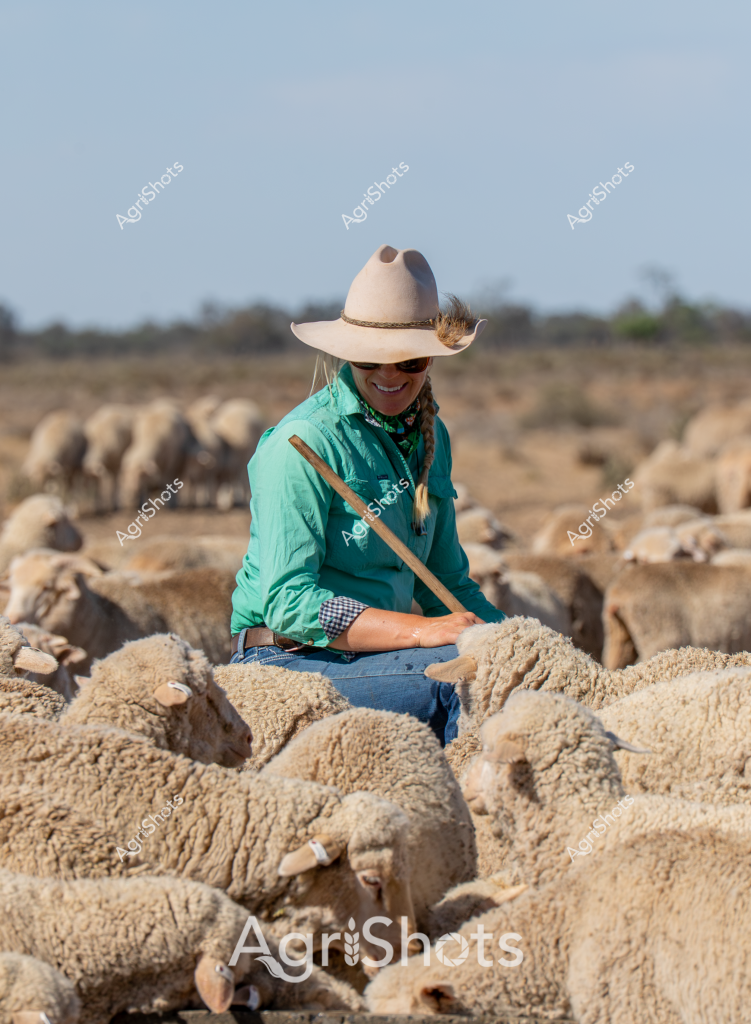
A woman sheep farmer sits amid a large flock of woolly Merino sheep in an arid Australian pastoral landscape. Wearing a classic wide-brimmed cream cowboy hat and a bright turquoise long-sleeved shirt, she appears relaxed yet focused, perched atop the dense mass of sheep. Her green shirt with a subtle print and blue jeans blend with the earthy, muted tones of the surrounding dry grasslands and distant scrubby vegetation. A wooden staff rests across her lap, suggesting her role in guiding and managing the flock. The sheep, with their thick, uniform cream-colored fleece, are tightly clustered, creating a textural landscape of woolly bodies that stretches across the foreground and background. The clear blue sky and open terrain evoke the quintessential Australian rural setting, highlighting the connection between the farmer and the livestock in this expansive, challenging environment.
 Image
Image
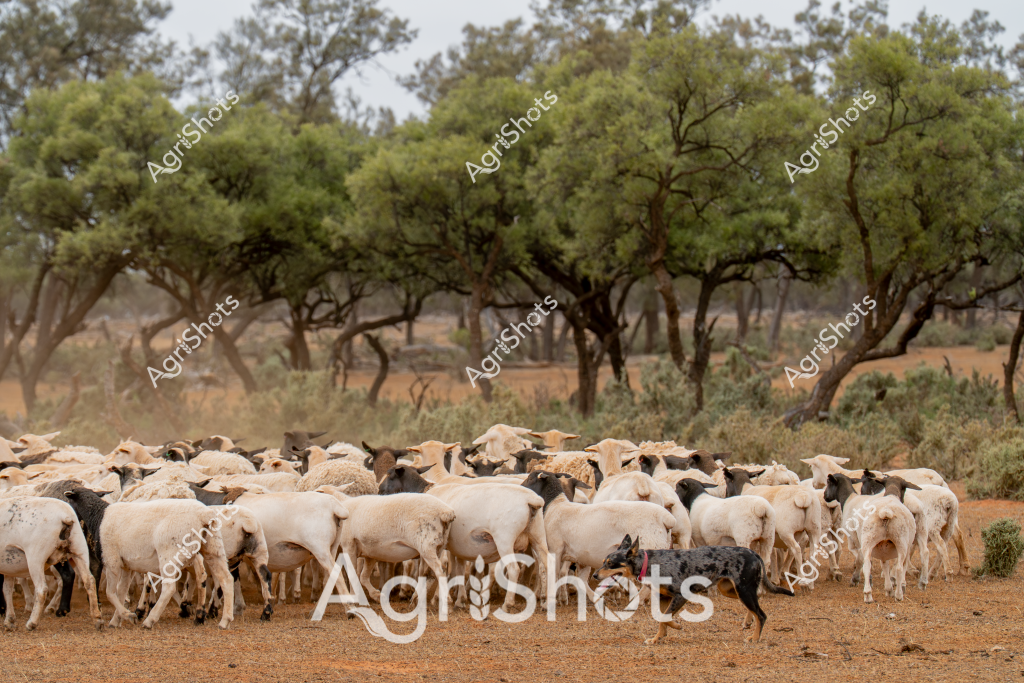
A working dog carefully herds a large flock of white and black sheep across a dry, dusty paddock in the Australian outback. The dense mob of sheep, predominantly white with some black-faced individuals, stands tightly clustered on reddish-brown earth, surrounded by scattered eucalyptus trees with their distinctive green foliage. A lone black and white cattle dog weaves strategically around the flock, demonstrating the classic Australian pastoral scene of livestock management in a challenging rural landscape. The trees provide a sparse backdrop, casting subtle shadows across the ground and highlighting the aridity of the environment. This image captures the essence of Australian sheep farming - a delicate balance of skilled animal husbandry, working dogs, and survival in a harsh, drought-prone landscape where every animal and blade of vegetation must be carefully managed. The scene reflects the resilience of Australian agricultural practices, where livestock are moved and managed with precision in environments that demand adaptability and skill from both human and animal workers. The contrast between the woolly sheep and the dry, sparse landscape underscores the challenges of sheep farming in rural Australia.