About this image
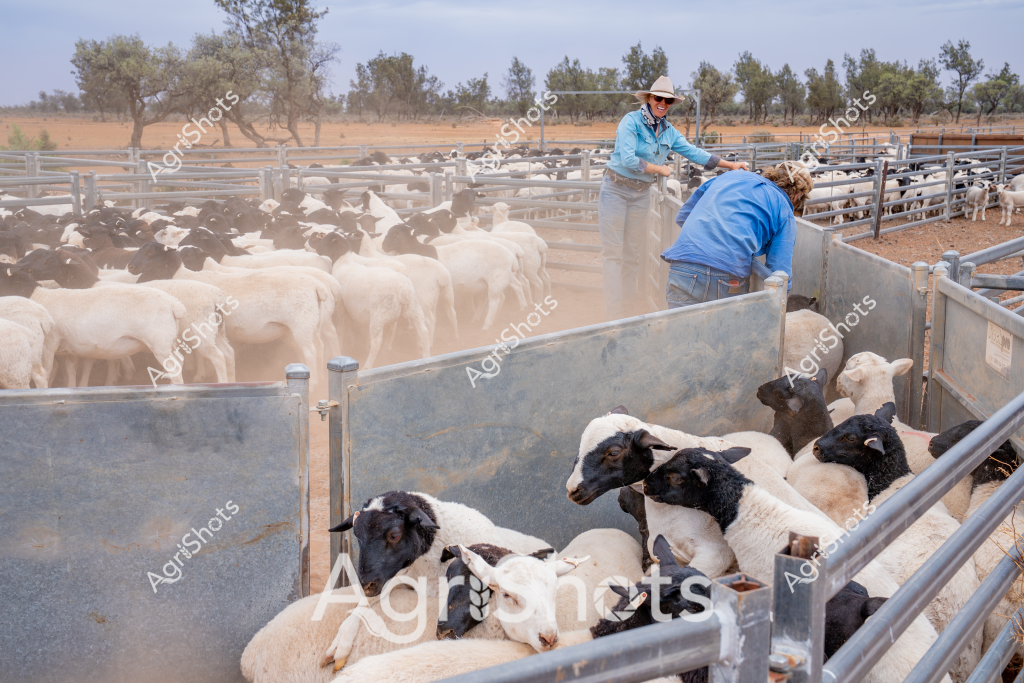
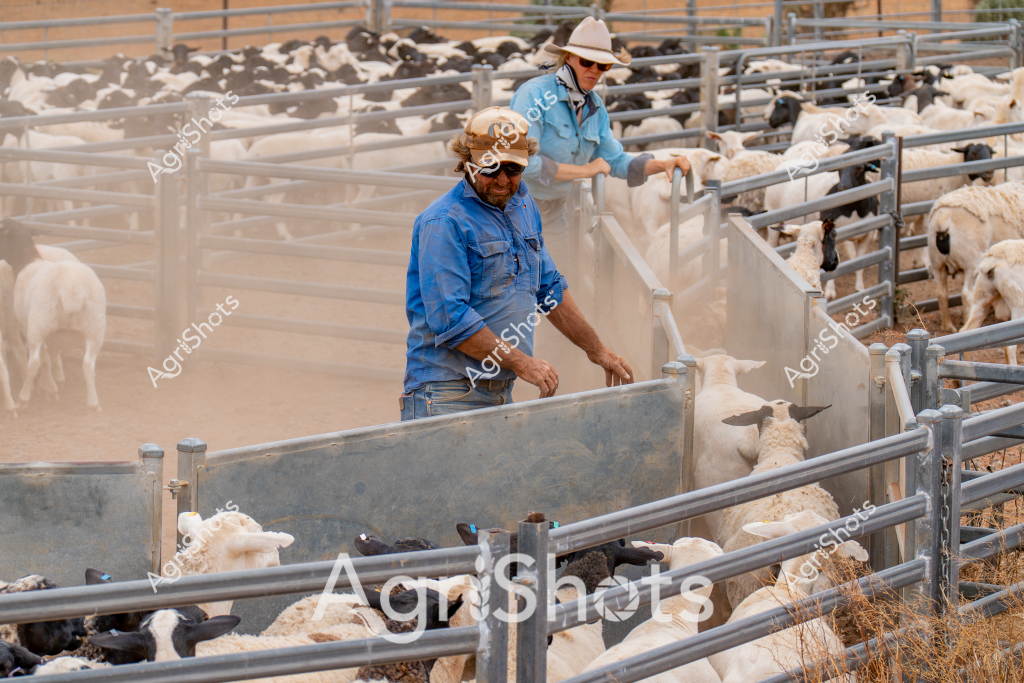
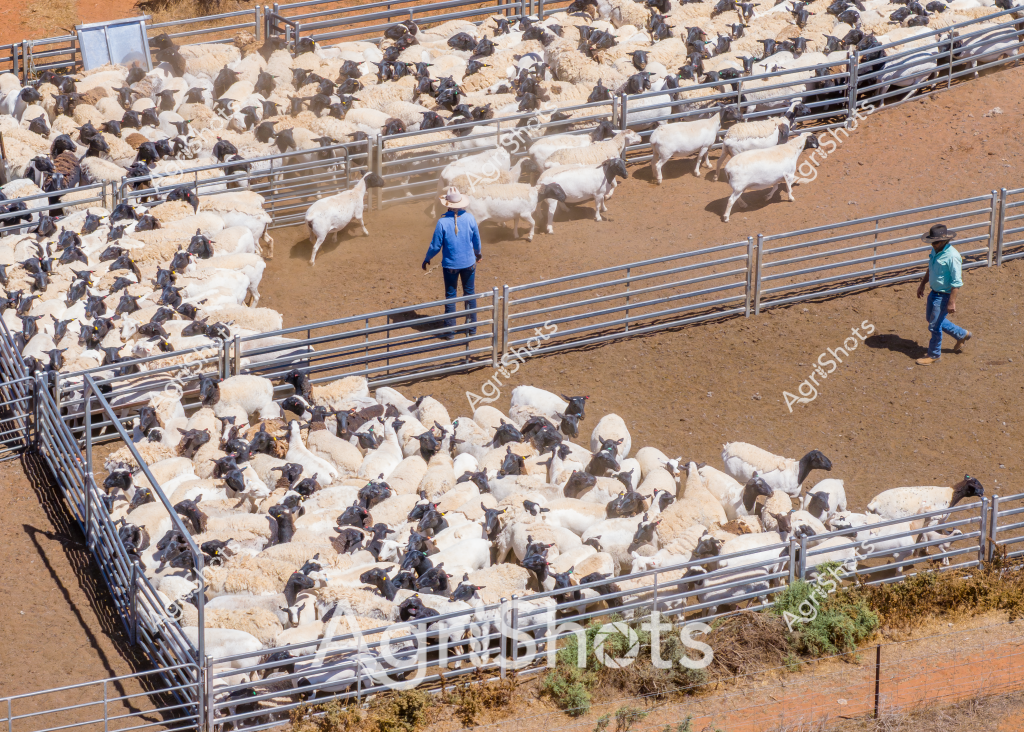
Two experienced workers manage a flock of black and white dorper sheep in a dusty rural yard during what appears to be a dry season in the Australian outback. A woman in a blue long-sleeved shirt and wide-brimmed hat stands near metal livestock yards, carefully guiding the sheep with another worker. The sheep are predominantly white with distinctive black head markings, typical of the dorper breed, which is well-adapted to arid Australian conditions. Multiple metal livestock pens contain the dense flock, with scattered trees and a sparse, reddish-brown landscape visible in the background, suggesting this is likely a station or large rural property in a drought-affected region. The workers move methodically, demonstrating the skill and precision required in managing livestock in challenging environmental conditions. Dust rises around the animals, highlighting the dry, harsh nature of the landscape and the resilience of both the sheep and the agricultural workers.
Similar media
 Image
Image
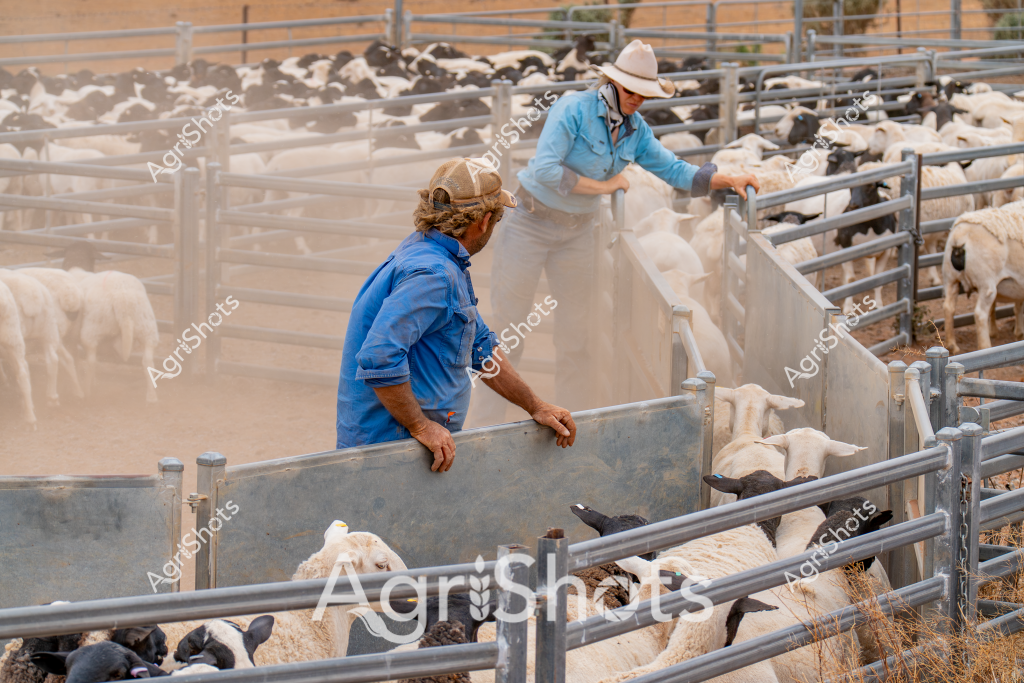
Two men farmers work together in a dusty sheep yard, carefully managing a flock of white and black sheep within metal livestock pens. One man in a blue shirt and cap stands near the gate, while another in a light blue shirt and white hat manages the gate and sheep movement. The metal yards are sturdy and well-constructed, with multiple interconnected pens allowing controlled livestock sorting and movement. Dust hangs in the air, indicating dry conditions typical of Australian agricultural landscapes, suggesting this is likely a rural station or farm in an arid or semi-arid region. The sheep appear to be a mixed breed, with white and darker-colored animals clustered together, waiting to be sorted or moved. The scene captures the practical, hands-on nature of Australian sheep farming, highlighting the skill and teamwork required in managing livestock in challenging environmental conditions.
 Image
Image
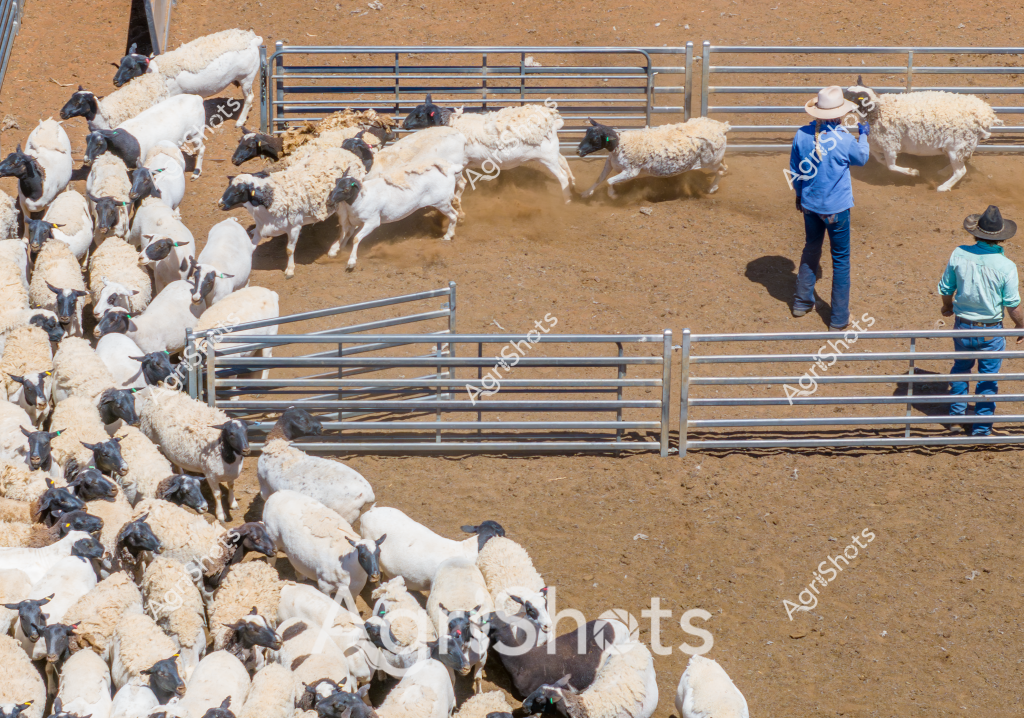
A dynamic sheep mustering scene unfolds in an arid Australian livestock yard, with a large flock of white and black-headed sheep moving through metal livestock gates. Two workers, a man in a blue shirt and another in a turquoise top and wide-brimmed hat, carefully manage the sheep's movement through the paddock's corral system. The sheep appear to be Dorper or Merino crossbreed, with distinctive black heads and white woolly bodies, clustered tightly and moving in coordinated groups across the dusty, sun-baked ground. The metal yard gates create a systematic pathway, guiding the livestock through different pens with precision. Shadows are sharp and defined, indicating bright midday sunlight typical of an Australian rural setting. The scene captures the expertise of stockmen in managing livestock, with their careful positioning and movement controlling the flow of the sheep herd. The environment suggests an inland pastoral station, with hard-packed earth and minimal vegetation, reflecting the challenging conditions of Australian sheep farming. The composition emphasizes the scale and complexity of sheep management, showcasing the critical role of skilled workers and infrastructure in moving and controlling livestock herds across vast agricultural landscapes.
 Image
Image
A man stockman wearing a white cowboy hat and blue work shirt manages a large flock of sheep in a dusty livestock yard. The metal cattle yards create a structured environment with multiple pens, surrounded by a dry, arid landscape typical of Australian pastoral regions. Numerous white and black sheep are densely packed within the metal fencing, creating a textured scene of agricultural activity. Dust rises around the working stockman as he carefully moves and directs the sheep, demonstrating the skill and physical demands of livestock management in challenging rural conditions. The harsh, golden-brown background suggests a hot, dry climate characteristic of inland Australian farming regions, highlighting the resilience required in agricultural work. The scene captures the essential work of livestock management, with the stockman's careful movements and the tightly controlled environment showing the precision of modern sheep farming practices. Sunlight and dust create a golden atmosphere, emphasizing the rugged nature of Australian agricultural landscapes and the ongoing work of managing livestock in challenging environmental conditions.
 Image
Image
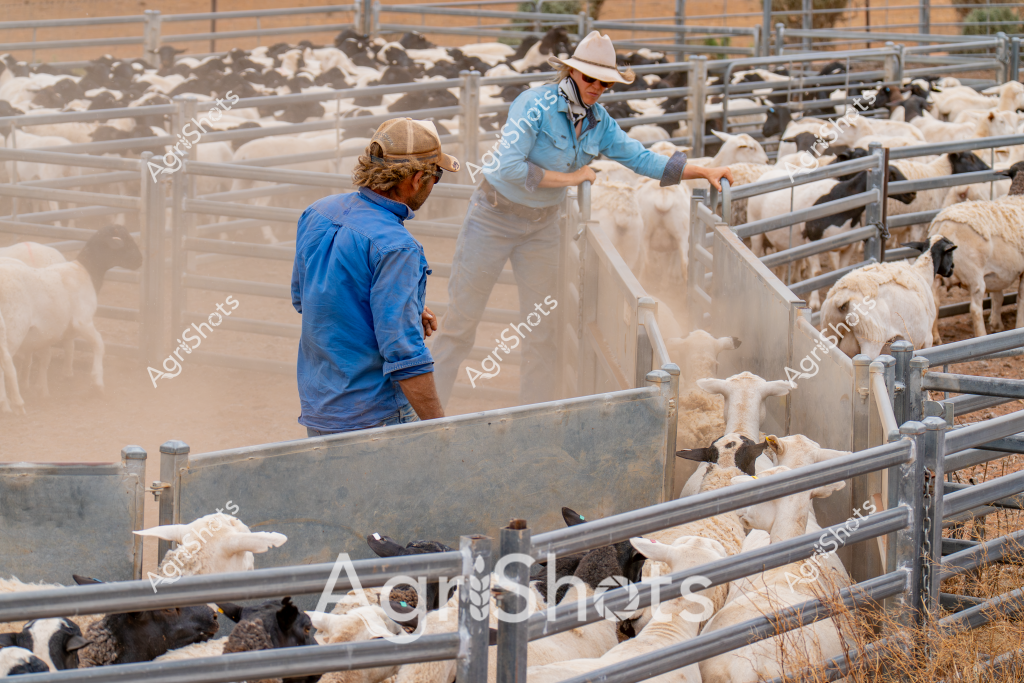
Two men working in a dusty sheep yard managing a flock of white and black sheep. One man in a blue work shirt stands in the foreground, carefully guiding sheep through metal livestock gates and fencing. Another man in a lighter blue shirt is positioned further back, helping to direct the movement of the animals. The yard appears to be a typical Australian farm setting, with dry ground and metal infrastructure designed for efficient livestock handling. Dust rises around the animals and workers, suggesting active movement and the challenging environmental conditions of rural agricultural operations. The workers wear wide-brimmed hats and sunglasses, standard protective gear for managing livestock in harsh Australian conditions. The metal yard system with multiple gates and sections allows for precise control and sorting of the sheep herd.
 Image
Image
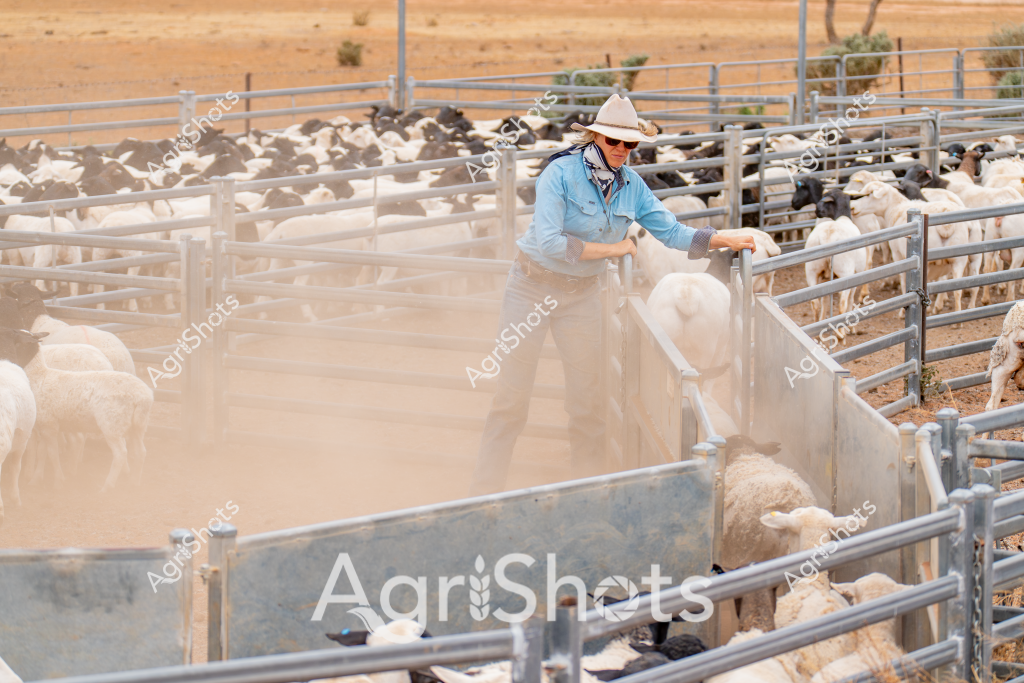
Two workers manage a flock of white and black sheep in a dusty livestock yard, demonstrating professional stock handling techniques. A woman in a light blue long-sleeved shirt and white wide-brimmed hat stands near the metal livestock gates, carefully controlling the sheep's movement, while a man in a blue shirt observes from another section of the pen. The metal livestock yards are filled with sheep of varying white and dark coloration, packed tightly within the galvanized steel fencing. Dry, golden dust rises around the animals, creating a hazy atmosphere that suggests an arid or semi-arid agricultural setting, typical of Australian sheep farming regions. The precise arrangement of the yards and the calm, methodical approach of the workers highlight the efficiency of modern livestock management practices. The scene captures the intricate work of sheep farming, where careful handling and infrastructure are critical to managing large flocks in challenging environmental conditions.
 Image
Image
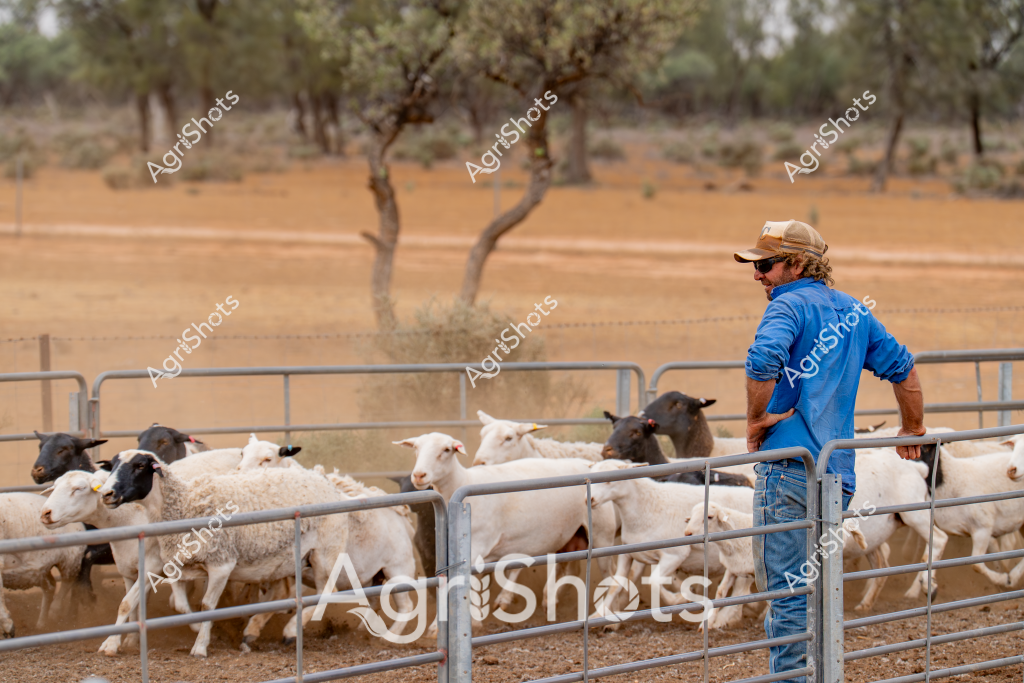
A stockman in a bright blue long-sleeved shirt and cap stands observing a mob of white and dark-colored sheep inside a metal livestock yard. The pastoral scene unfolds against a dry, dusty paddock with sparse trees and golden-brown ground typical of an Australian agricultural landscape. Multiple sheep - a mix of white and darker-colored animals - are clustered within the metal gate pens, suggesting a livestock management or handling operation. The stockman is positioned sideways, leaning against the fence and surveying the flock, demonstrating the quiet concentration required in sheep station work. Sparse, twisted trees in the background and the arid terrain indicate this is likely an inland region, possibly in Queensland or Western Australia, where sheep farming is a critical agricultural activity. The scene captures the essence of rural Australian livestock management - a solitary worker carefully monitoring a valuable agricultural asset in a challenging environmental setting.
 Image
Image
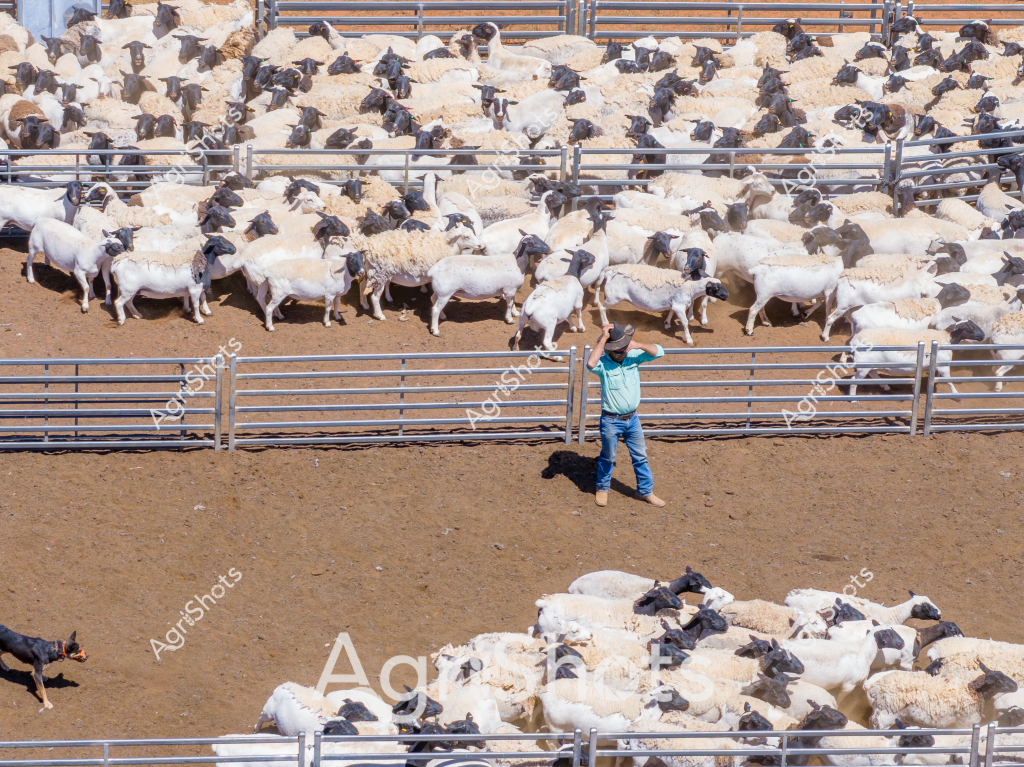
A large flock of white and black-faced sheep are packed tightly within multiple metal livestock yards, with a man in a blue shirt and hat standing among them. The sheep appear to be a mixed breed, likely Dorper or Merino cross, densely clustered across different pen sections on a dry, dusty ground. A working dog can be seen at the bottom left of the image, ready to assist with herding. The metal yard infrastructure creates geometric patterns, with horizontal rails dividing the livestock into controlled groups. The scene captures a typical Australian livestock management scenario, likely in a regional or station setting, where careful animal handling and mustering are essential agricultural practices. The stark contrast between the white sheep, tan ground, and blue-shirted stockman creates a visually striking representation of rural Australian livestock management.
 Image
Image
A large mob of white and dark-colored sheep are packed tightly into a series of metal livestock yards in a dry, arid landscape. Two men are working the yards - one wearing a blue shirt and the other in a teal-colored work shirt - carefully managing the sheep's movement between different pen sections. The ground is a dusty reddish-brown, typical of an Australian inland station or pastoral property, with sparse vegetation visible around the yard's perimeter. Metal stock fencing creates a systematic grid of pens, allowing for controlled livestock movement and management. The sheep appear to be a mixed flock, with predominantly white bodies and dark heads, likely a crossbreed or Merino-type breed common in Australian agriculture. The aerial perspective reveals the scale of the livestock operation, showcasing the precision and infrastructure required for managing large sheep herds in challenging rural environments.