Results for “Australian Cattle”
 Image
Image
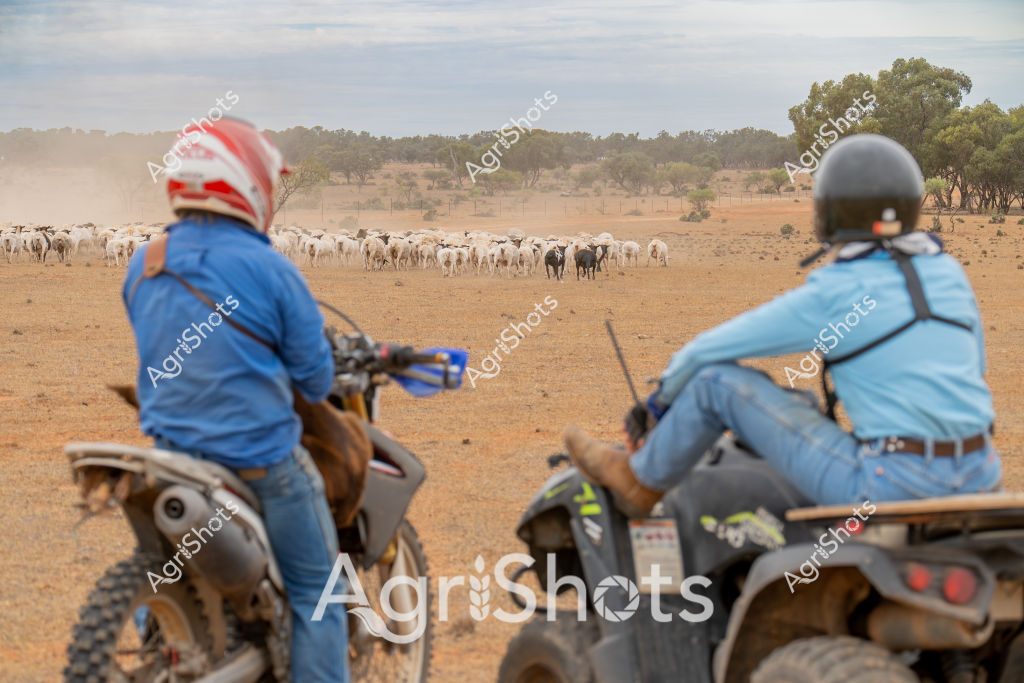
Two men on motorcycles muster a large herd of white and grey cattle across a dry, dusty paddock in what appears to be an arid or semi-arid region of Australia. The landscape is characterized by sparse eucalyptus trees on the horizon, reddish-brown earth, and minimal ground vegetation, suggesting challenging drought conditions. Both riders wear blue jackets and protective helmets, using their motorbikes to efficiently guide and move the livestock across the open terrain. The cattle are tightly grouped, moving as a cohesive mob through the sparse, sun-baked landscape. A light haze of dust rises behind the herd, indicating their movement and the dry environmental conditions. The scene captures the quintessential Australian agricultural practice of livestock management in a challenging rural environment.
 Image
Image
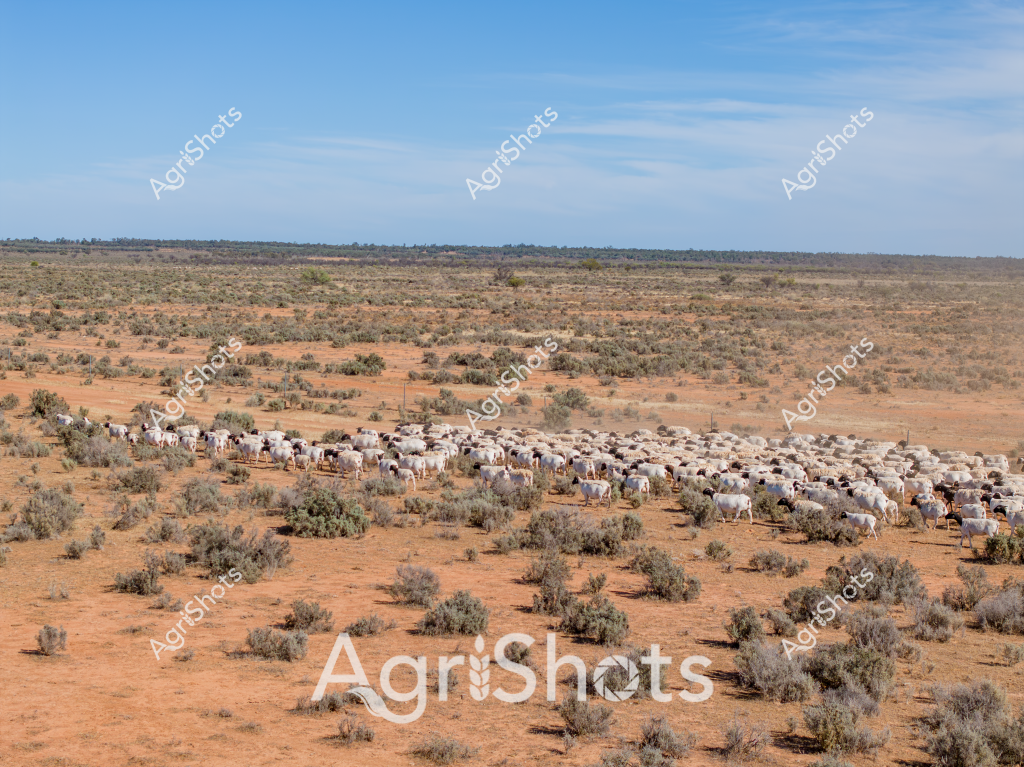
A large mob of white cattle graze across a vast, arid landscape in the Australian outback, their pale bodies standing out against the rusty orange soil and scattered gray-green scrubland. The expansive scene depicts a typical pastoral setting, with low saltbush and sparse vegetation stretching to a distant horizon under a soft blue sky. These appear to be Brahman or Brahman-cross cattle, well-adapted to the harsh conditions of Australia's inland regions, clustered together for protection and foraging across the dry pastoral station country. The landscape speaks to the challenging environmental conditions of central Australia, where livestock management requires resilience and strategic grazing practices. The wide-open terrain showcases the immense scale of Australian cattle stations, where herds roam across thousands of hectares of seemingly endless, rugged terrain.
 Image
Image
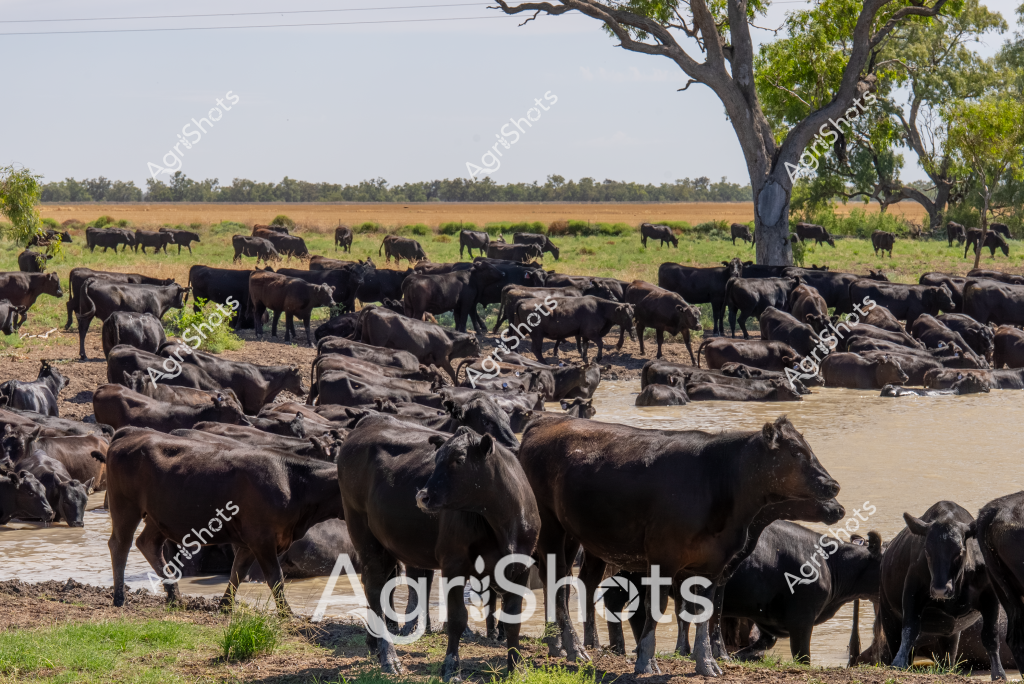
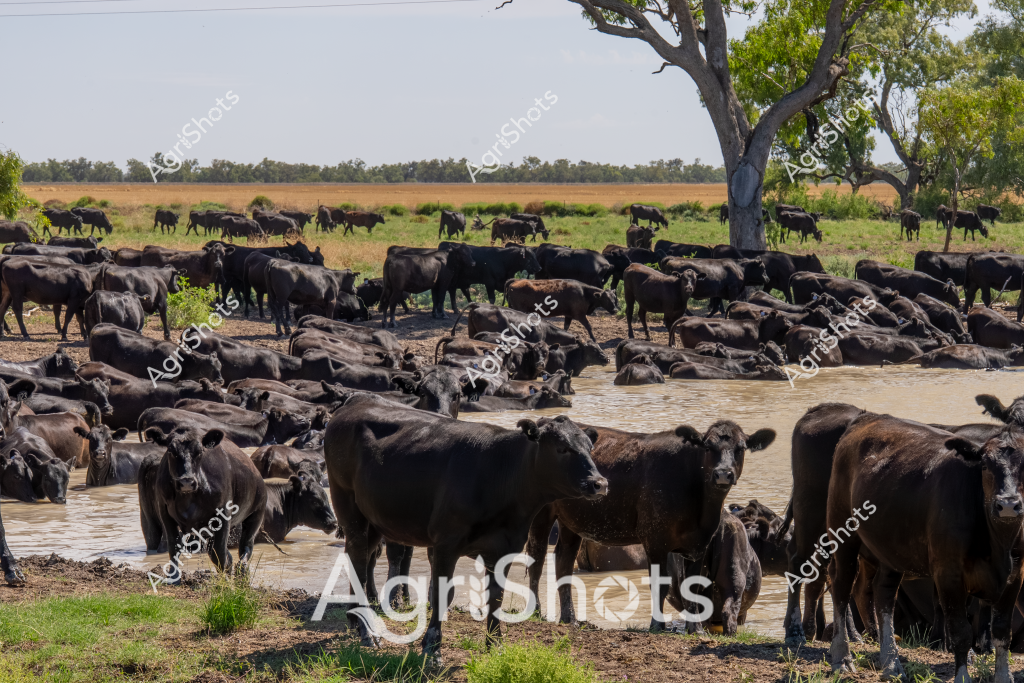
A large herd of black cattle cluster around a water source in a dry Australian pastoral landscape. The black bovines - likely Angus or Wagyu beef cattle - are strategically positioned both in the water and along the banks of a muddy waterhole. A large, weathered eucalyptus tree stands sentinel in the background, providing shade and a sense of scale to the expansive grassland and distant golden crop fields. Most of the cattle are standing in or near the water, demonstrating classic heat mitigation behavior by cooling themselves during what appears to be a hot day, likely in a Queensland or Northern Territory cattle station. Some animals are drinking, while others are partially submerged, helping regulate their body temperature in the intense Australian sun. The ground around the waterhole is trampled and bare, indicating frequent use by this substantial herd. The landscape suggests a typical Australian pastoral setting - wide open grasslands transitioning to crop fields in the distance, with scattered trees providing minimal shade. The scene captures the essence of extensive cattle farming in Australia, where managing water resources is critical to livestock survival, especially during warmer seasons.
 Image
Image
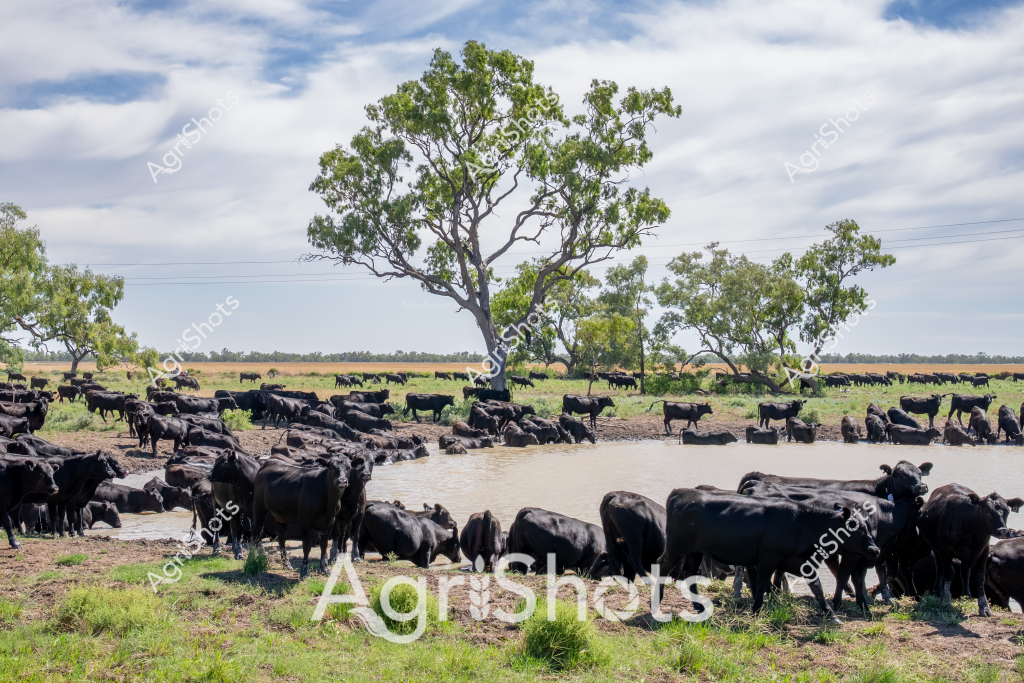
A large herd of black Angus cattle congregates around a water source on a rural Australian property, creating a bustling pastoral scene. The cattle are clustered densely around a muddy waterhole, with some standing in the water while others graze on the surrounding grassy paddock. A prominent gum tree stands in the background, providing shade and a sense of scale to the landscape. The sky is a soft blue with wispy clouds, suggesting a typical warm day in the Australian cattle country. Sparse trees dot the horizon, indicating this is likely a vast station or grazing property in Queensland or the Northern Territory. The black cattle create a strong visual contrast against the green and brown landscape, highlighting the robust nature of these beef cattle in their natural grazing environment.
 Image
Image
A large herd of black beef cattle congregate around a waterhole on a rural Australian property, seeking relief from the heat. The cattle, likely Angus or Wagyu breed, are densely packed in and around a muddy water source, with some standing in the water and others grazing on the surrounding grassland. A large, weathered eucalyptus tree provides sparse shade in the background, highlighting the dry, expansive landscape typical of northern Australian cattle stations. In the foreground, dozens of cattle stand knee-deep in the murky water, their black coats glistening in the bright sunlight. Some animals are drinking, while others simply stand to cool themselves, creating a dense cluster of bovine bodies. The surrounding landscape is a mix of dry golden grasses and patches of green vegetation, suggesting this may be during the late dry season or early wet season. The scene captures the essence of extensive cattle farming in Australia, where large herds are managed across vast, often arid landscapes. The waterhole serves as a critical resource for the cattle, demonstrating the importance of water management in Australian agricultural practices. The image portrays the resilience of both the cattle and the agricultural system that supports them in challenging environmental conditions.
 Image
Image
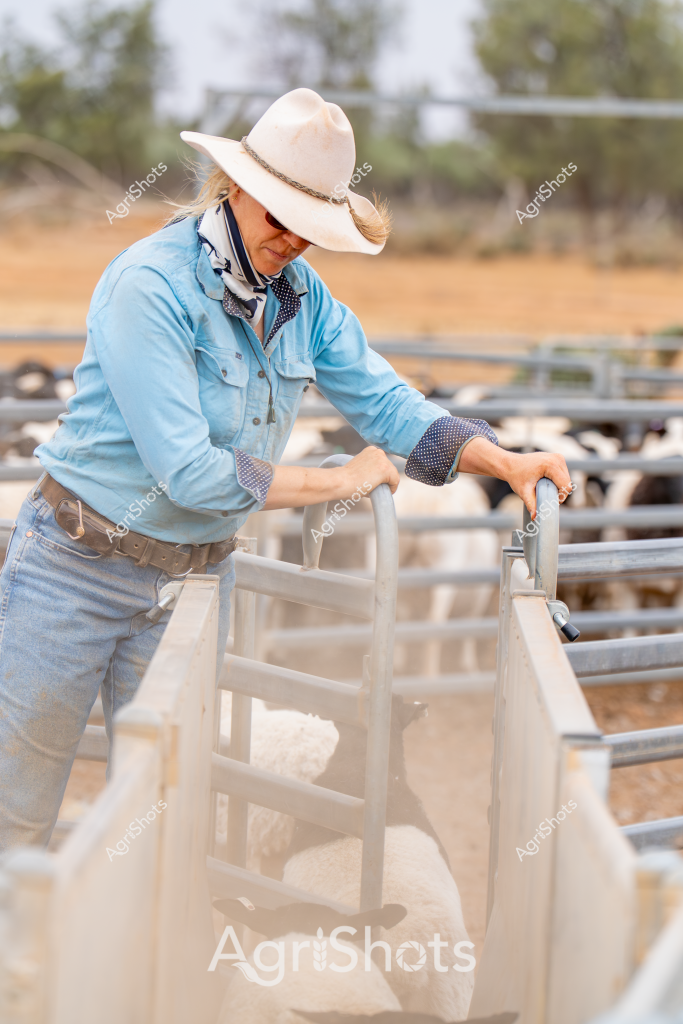
A woman stockman wearing a light blue long-sleeved shirt, pale cowboy hat, and denim jeans leans over a metal livestock gate in a dry, arid paddock setting. Her polka-dotted shirt cuffs and careful posture suggest she is working with livestock, carefully managing the gate in what appears to be a rural Australian cattle or sheep station environment. Dusty golden grasslands and scattered trees stretch into the background, with metal livestock yards creating structured boundaries. Her attentive stance and practical workwear reflect the professional approach of modern rural agricultural workers, demonstrating the hands-on nature of managing livestock in challenging Australian landscapes. The soft lighting and muted color palette capture the quiet concentration required in daily farming operations.
 Image
Image
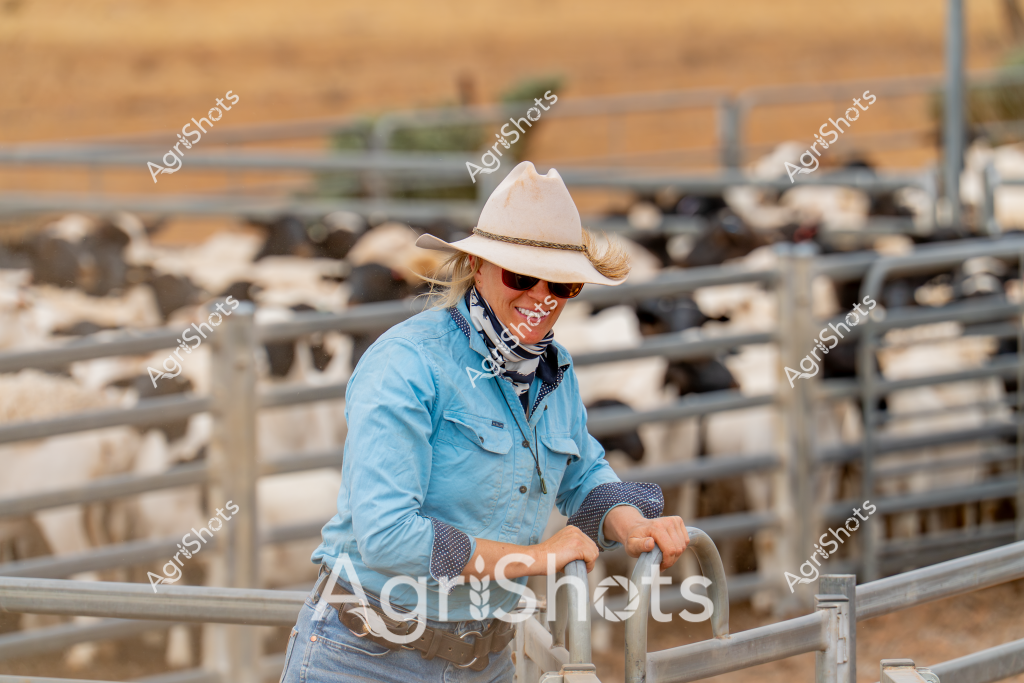
A woman livestock manager stands at the cattle yards, leaning on a metal gate with a herd of cattle visible in the background. Wearing a light blue work shirt, a cream-colored wide-brimmed hat, and sunglasses with a patterned neck covering, she embodies the professional rural worker. The paddock behind her appears dry and golden, typical of an Australian pastoral landscape, with wooden and metal fencing defining the stock yards. Her posture suggests focused attention, with hands resting on the gate as she surveys the livestock. The scene captures the essence of Australian cattle farming - a skilled worker managing livestock in an expansive, sun-drenched rural environment, demonstrating the resilience and practical expertise of agricultural workers.
 Image
Image
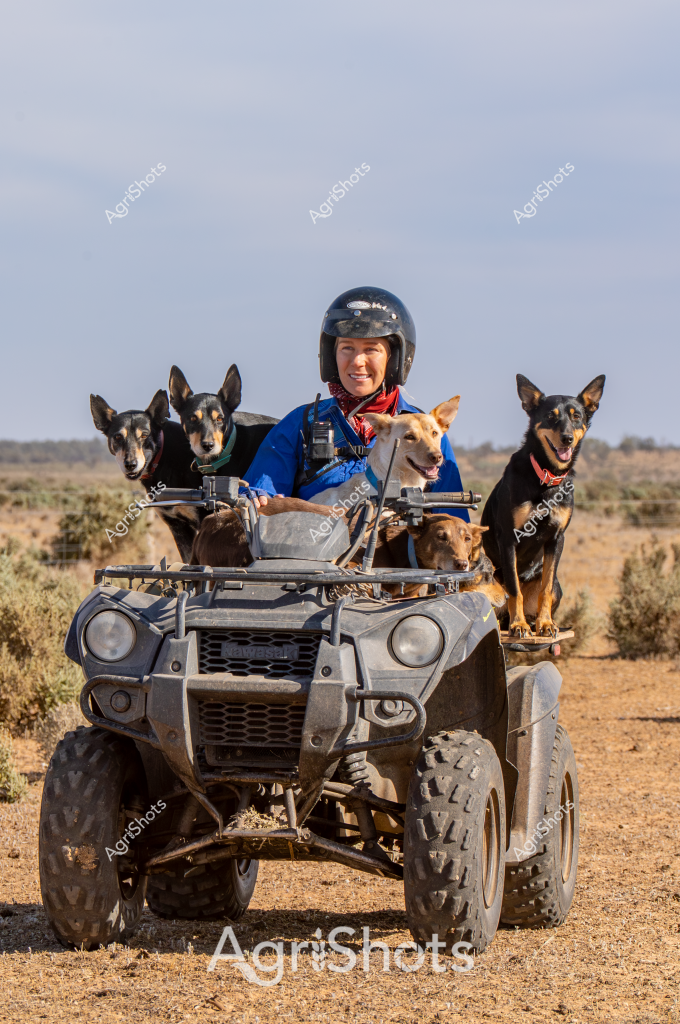
A woman wearing a blue jacket and protective helmet sits on an all-terrain vehicle (ATV) in an arid Australian landscape, accompanied by four alert working dogs. The rugged quad bike is positioned in a sparse desert environment with low scrubby vegetation and a muted blue sky in the background. Four dogs - a mix of what appear to be Australian cattle dog breeds - are positioned strategically around the vehicle, two on each side, looking attentive and ready for work. The scene captures the essence of rural Australian farm management, highlighting the partnership between a skilled worker and her highly trained canine companions in navigating challenging outback terrain. The dogs, wearing bandanas, demonstrate the close working relationship between humans and animals in agricultural settings, showcasing the adaptability and teamwork required in remote Australian landscapes. The image embodies the spirit of rural Australian agriculture - resilient, practical, and built on strong working partnerships between people, animals, and robust machinery designed to handle extreme environmental conditions.
 Image
Image
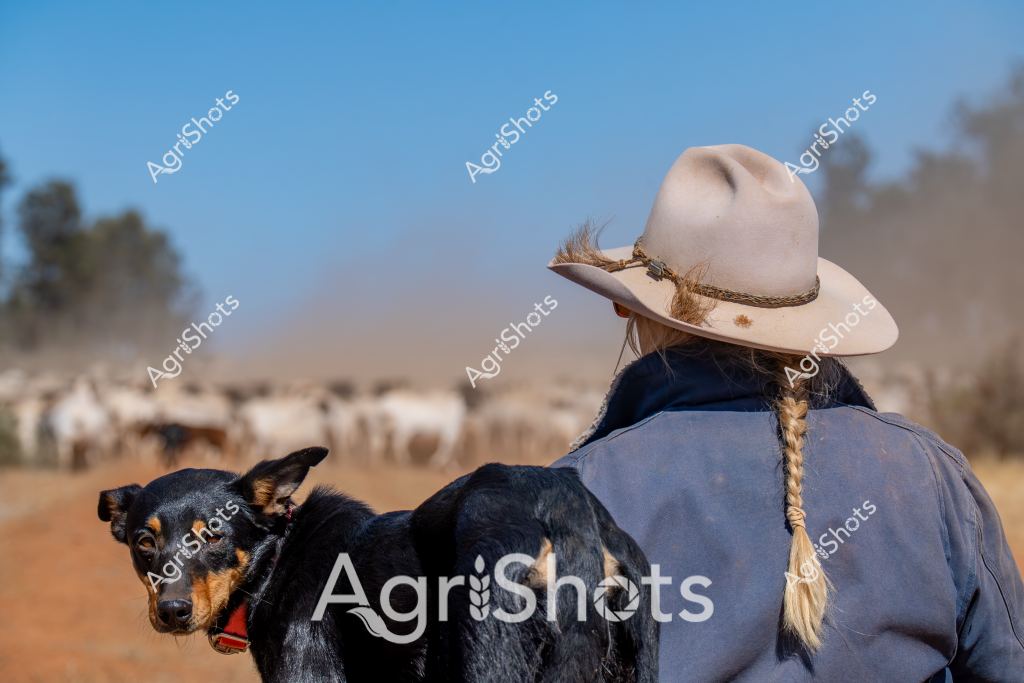
A woman stockman stands with her black and tan working dog, surveying a large herd of cattle in the dusty background of what appears to be an Australian cattle station. Wearing a classic wide-brimmed light-colored Akubra hat and a blue work jacket, she has her hair braided and is facing away from the camera, overlooking the expansive rural landscape. The ground is a rich reddish-brown, typical of inland Australian pastoral regions, with a few scattered trees and scrub visible on the distant horizon. A compact, alert working dog sits close to her, ready to assist with mustering or herding the cattle. The clear blue sky and dry environment suggest this is during the dry season, highlighting the challenging conditions of livestock management in rural Australia. The scene captures the essence of Australian pastoral life - a skilled stockwoman and her loyal canine companion managing cattle in a vast, arid landscape.
 Image
Image
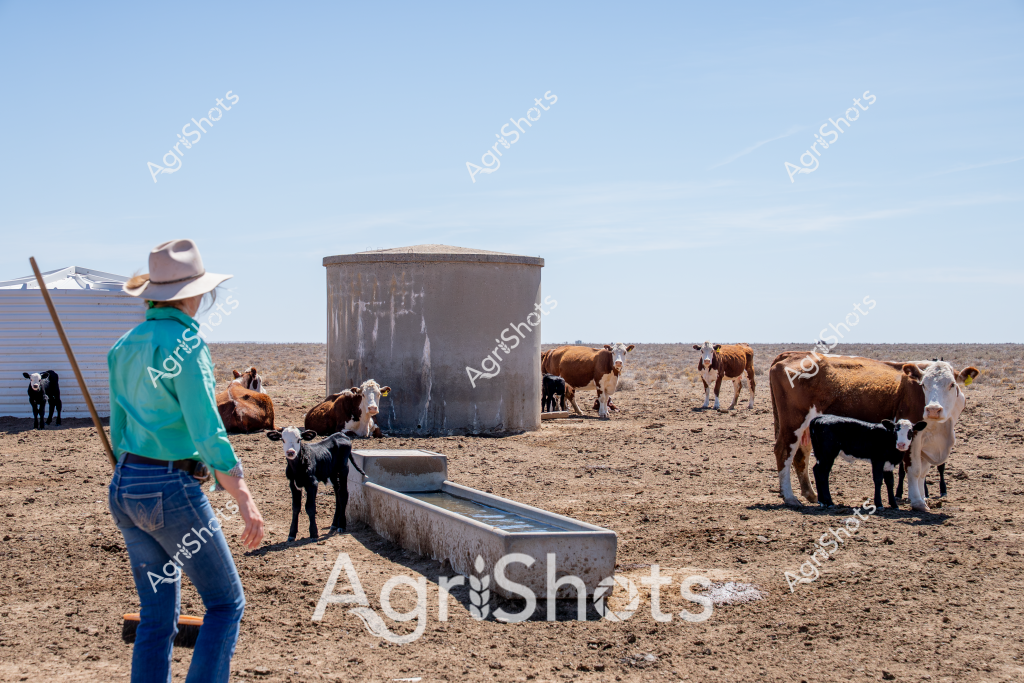
A man stockman in a turquoise shirt and wide-brimmed hat surveys a dry, arid cattle paddock with several brown and white beef cattle. A large grey water storage tank and concrete water trough stand in the center of the barren landscape, providing essential hydration for the small herd. Multiple cows and calves, including some black and some brown and white-marked animals, are scattered around the water infrastructure, indicating a typical rural Australian cattle station environment. The ground is dusty and brown, suggesting drought or dry seasonal conditions typical of Australia's interior regions. The stockman's stance - with a long stick or staff - suggests he is monitoring the livestock and checking their access to water in this harsh, open landscape.
 Image
Image
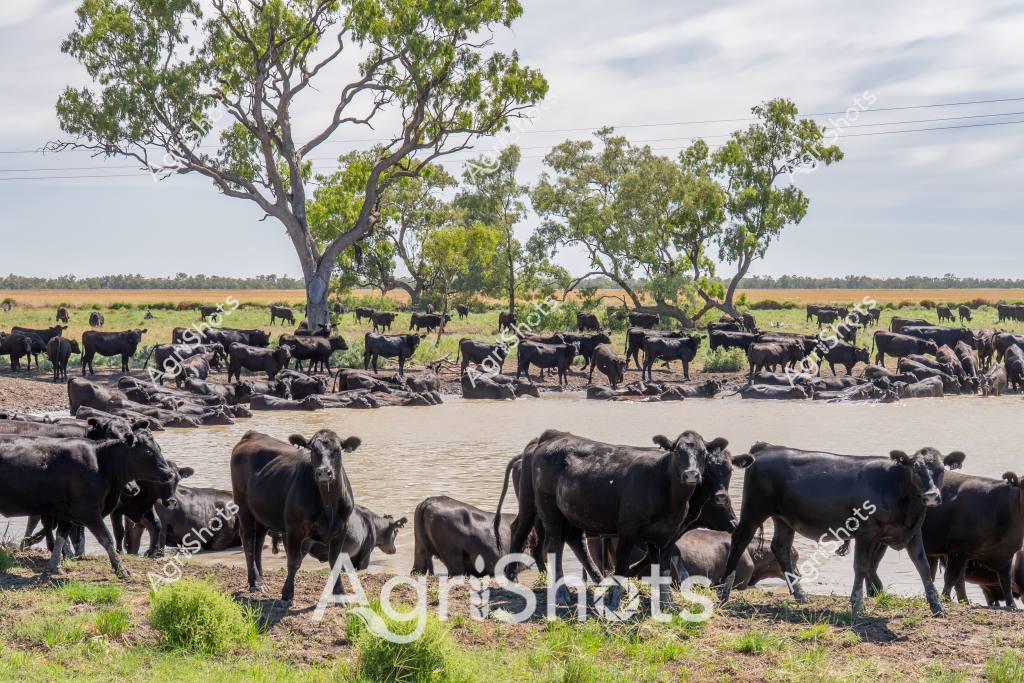
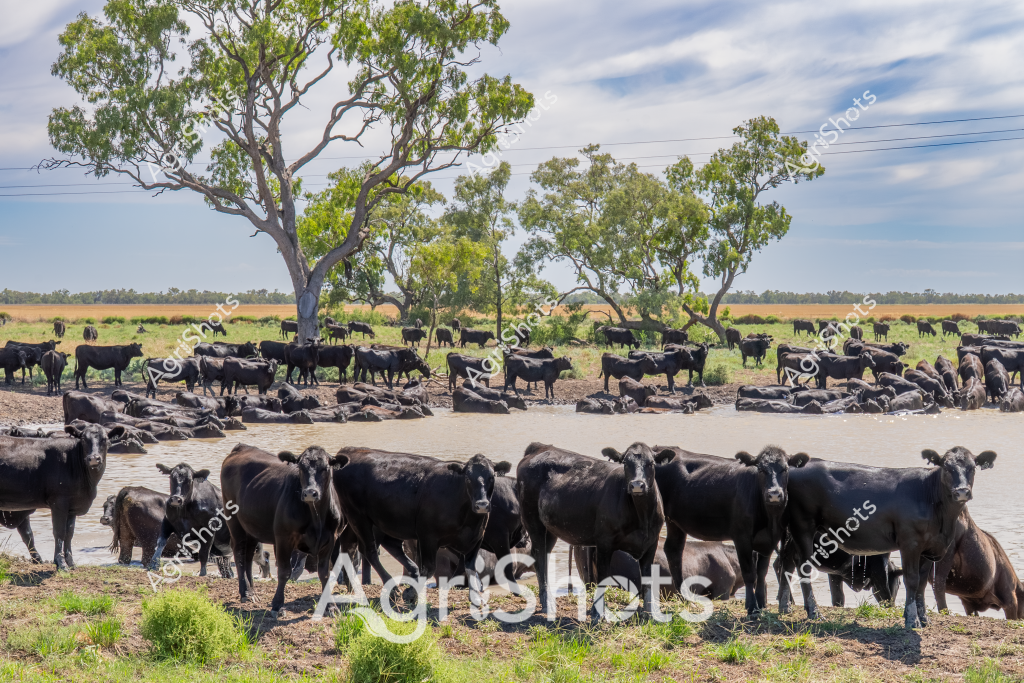
A large herd of black Angus cattle congregates around a water dam on a rural Australian property. The cattle stand both in and around the muddy water, seeking relief from the heat and maintaining hydration. Gnarled eucalyptus trees provide scattered shade across the expansive grassland paddock, with power lines visible in the distant background. The landscape appears typical of a Queensland or Northern Territory cattle station, with wide-open grazing lands and sparse tree coverage. Most of the cattle are adult cows and calves, tightly clustered around the water source, displaying typical herd behavior during the dry season. The image captures the resilience of Australian beef cattle in managing harsh rural environments, showcasing their adaptation to challenging agricultural conditions. The scene represents a classic moment in Australian cattle management, where access to water is critical for livestock survival. The black Angus breed, known for its hardiness, demonstrates remarkable heat tolerance in this arid landscape. The muddy dam and surrounding grasslands tell a story of survival and agricultural sustainability in Australia's challenging rural terrain.
 Image
Image
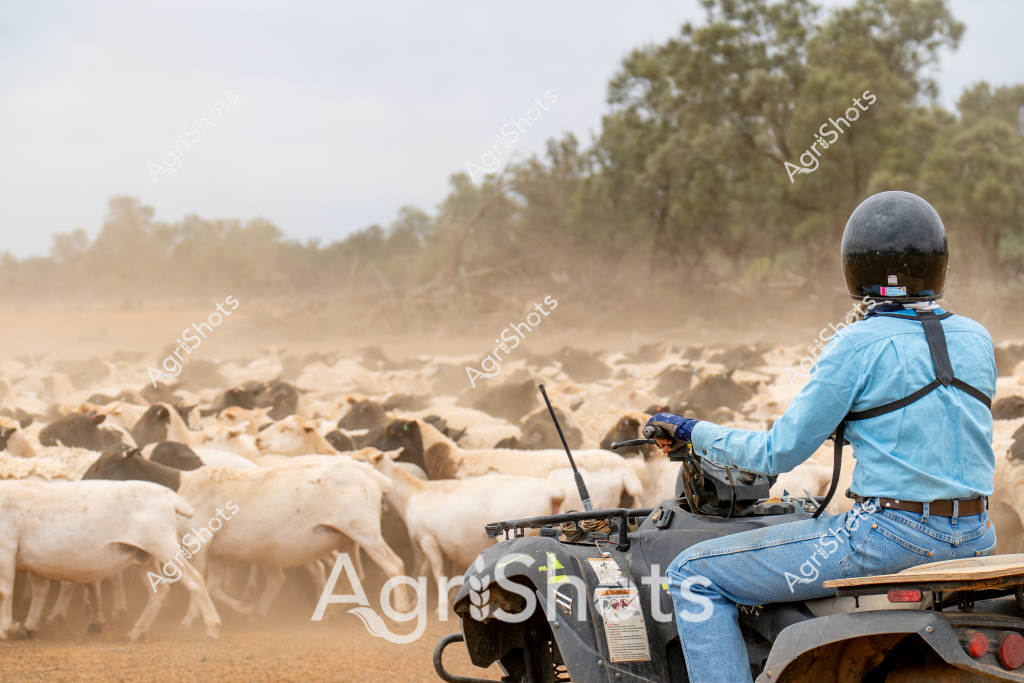
A man stockman seated on an all-terrain vehicle (ATV) manages a large herd of white and light-colored cattle in a dusty, tree-lined paddock. Wearing a blue shirt, jeans, and a protective helmet, he navigates the vehicle carefully among the densely packed livestock, raising a cloud of fine Australian dust. The cattle appear to be moving as a tight, cohesive group, suggesting an organized muster or stock movement typical of extensive pastoral operations. Trees line the distant horizon, creating a classic Australian rural landscape backdrop, while the dusty conditions hint at the dry, challenging environmental conditions often encountered in agricultural regions. The stockman's positioning on the ATV demonstrates modern livestock management techniques, replacing traditional horseback mustering with more efficient mechanized approaches. The scene captures the essence of Australian cattle farming - a blend of skill, technology, and adaptation to harsh rural environments. The dust, the dense herd, and the careful management by the stockman illustrate the demanding nature of livestock production in Australia's expansive agricultural landscapes.
 Image
Image
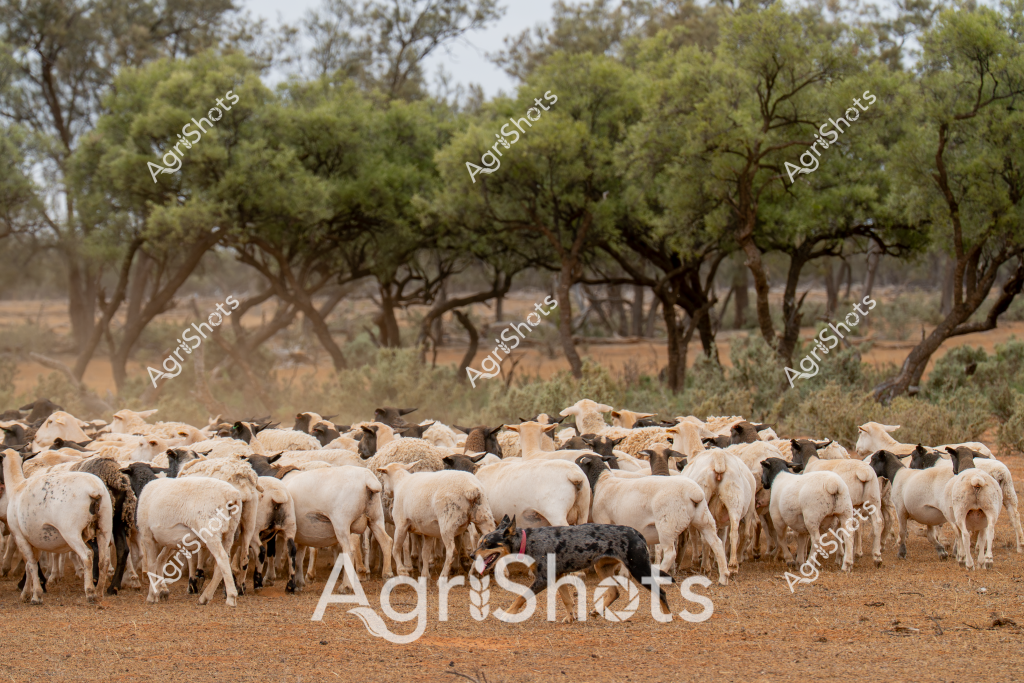
A vigilant working dog herds a large flock of white and dark-colored sheep in a classic Australian rural landscape. The dense mob of sheep, predominantly light-colored with some dark individuals, stands tightly clustered on dry, reddish-brown earth, surrounded by scattered gum trees and sparse native vegetation. A compact black and tan working dog, likely a Kelpie or Australian Cattle Dog, navigates carefully through the flock, demonstrating the critical role of livestock dogs in managing large herds across challenging pastoral environments. The background reveals a typical Australian bushland setting with mature eucalyptus trees creating a muted green and grey backdrop, their branches spreading wide across the arid landscape. The scene captures the essence of Australian sheep farming - a testament to the resilience of both animals and handlers in managing livestock across vast, challenging terrain. The tight grouping of sheep and the strategic positioning of the herding dog showcase the precision and skill required in rural agricultural practices.
 Image
Image
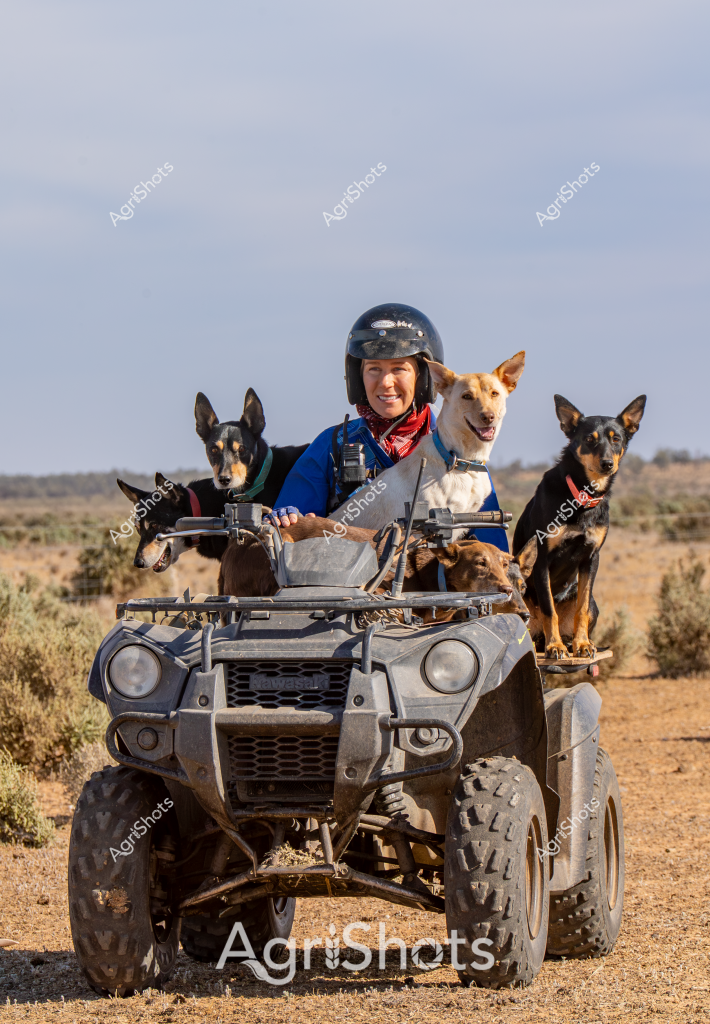
A woman in a blue jacket and black safety helmet sits on an all-terrain vehicle (ATV) accompanied by five working dogs in an arid Australian outback landscape. The rugged grey ATV is positioned in a sparse, rocky terrain with low scrubby vegetation and a pale sky in the background. Four dogs - appearing to be Australian cattle dogs or kelpies in black, tan, and cream colors - are positioned strategically around the vehicle, demonstrating their working dog training and discipline. The woman wears a bright red bandana and appears to be a livestock manager or rural worker, smiling confidently amid the remote setting. Her positioning and the dogs' placement suggest they are engaged in mustering, monitoring, or managing livestock across a challenging rural terrain typical of Australia's interior regions. The scene captures the essential partnership between skilled workers, their highly trained dogs, and robust agricultural equipment in navigating demanding outback environments.
 Image
Image
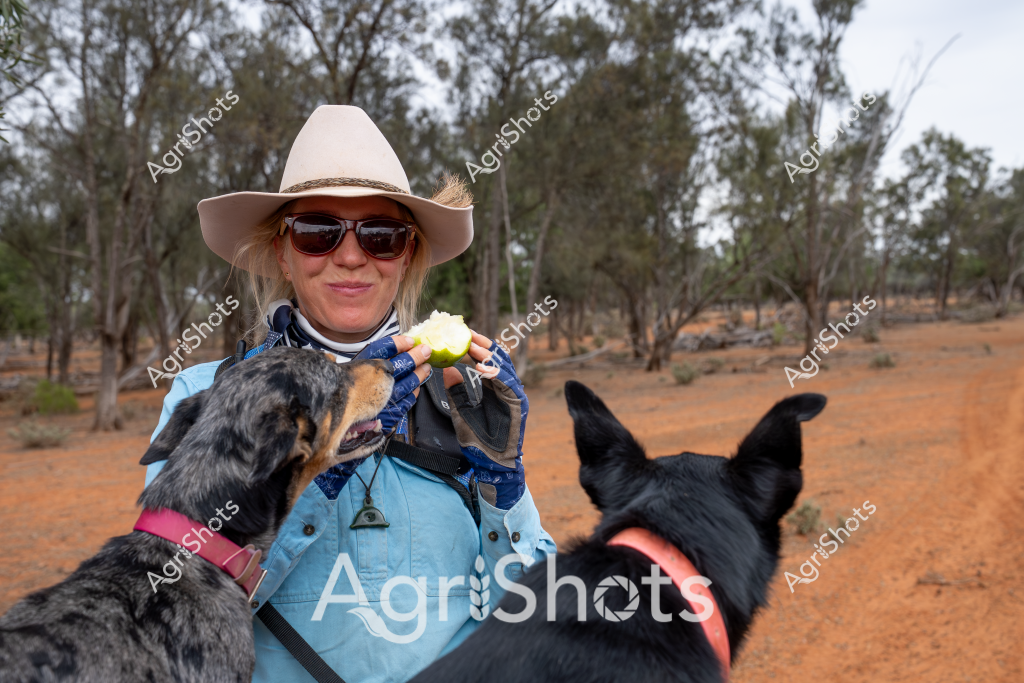
A woman stockman wearing a wide-brimmed hat and sunglasses stands in a dry, tree-lined Australian outback landscape, holding two dogs close to her. She is dressed in a light blue shirt and appears to be feeding or interacting with the dogs, one of which is a mottled grey and black color, and the other a solid black. The surrounding environment is typical of an arid rural setting, with reddish-brown soil, sparse trees, and a sense of rugged isolation characteristic of Australian pastoral regions. The woman is holding what looks like a piece of fruit or food, suggesting she might be caring for or rewarding her working dogs. Her attire - the wide-brimmed hat, sunglasses, and practical shirt - indicates she is likely a professional working in rural agriculture, possibly managing livestock or working on a remote station. The dogs appear to be working breeds, potentially Australian Cattle Dogs or similar herding breeds, positioned close to their handler in a way that suggests a strong working relationship. The scene captures a moment of connection between a skilled rural worker and her canine companions in the challenging Australian bush landscape.
 Image
Image
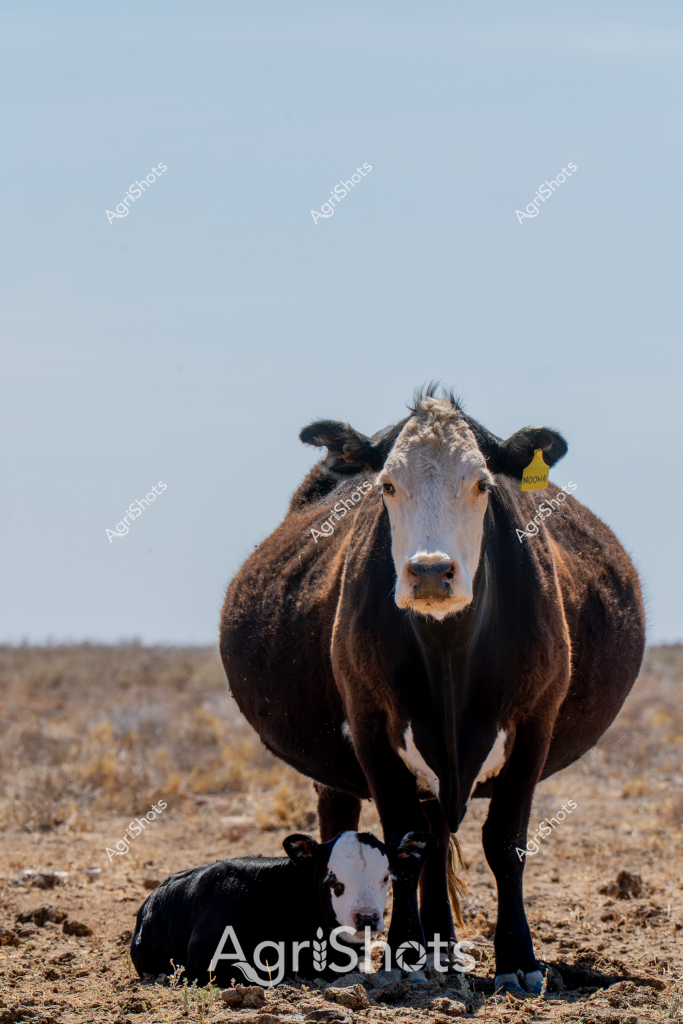
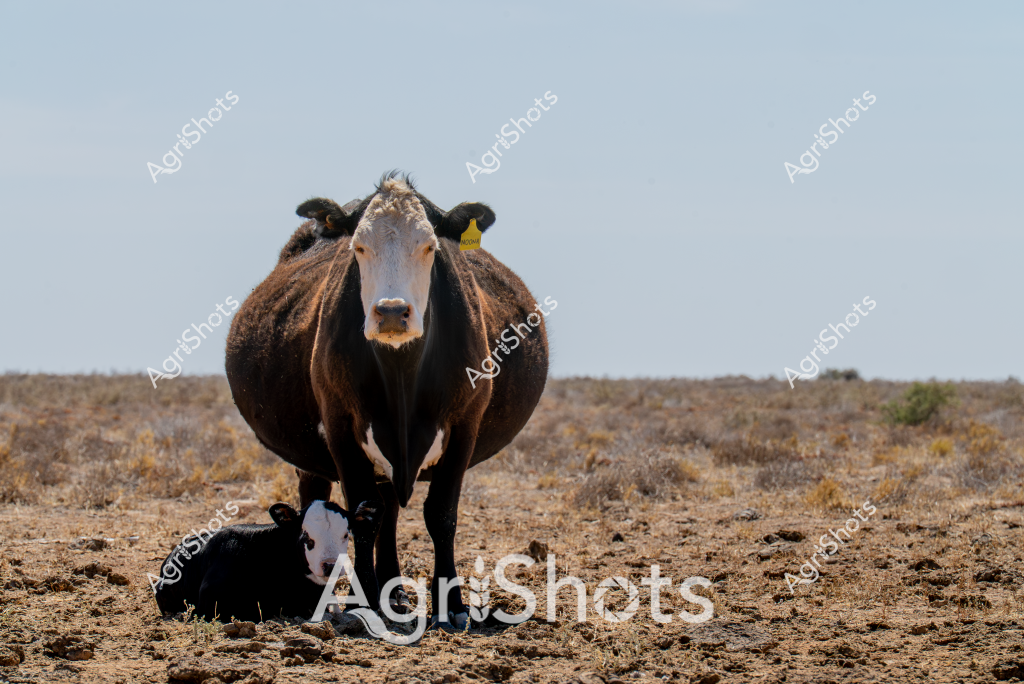
A robust black and white beef cow stands confidently in an arid, rocky landscape, with her newly born black and white calf resting at her feet. The mature cow wears a yellow ear tag, indicating she is part of a managed livestock herd, likely in a dry inland region of Australia. Her sturdy build and protective stance suggest she is a high-quality beef breed, possibly an Angus or Hereford cross, well-adapted to harsh pastoral conditions. The surrounding terrain is sparse and rocky, with minimal vegetation - characteristic of drought-affected or semi-arid grazing lands typical of central or western Australian cattle stations. The pale blue sky and flat horizon emphasize the expansive, unforgiving nature of the landscape. The cow's thick winter coat and the calf's close proximity to her mother hint at the challenges of survival in such an environment. The image captures a powerful moment of maternal protection and resilience, embodying the strength of Australian livestock and the enduring spirit of agricultural communities that thrive in challenging conditions. The close-up perspective allows viewers to appreciate the detailed markings, muscular structure, and stoic demeanor of this cattle breeding pair.
 Image
Image
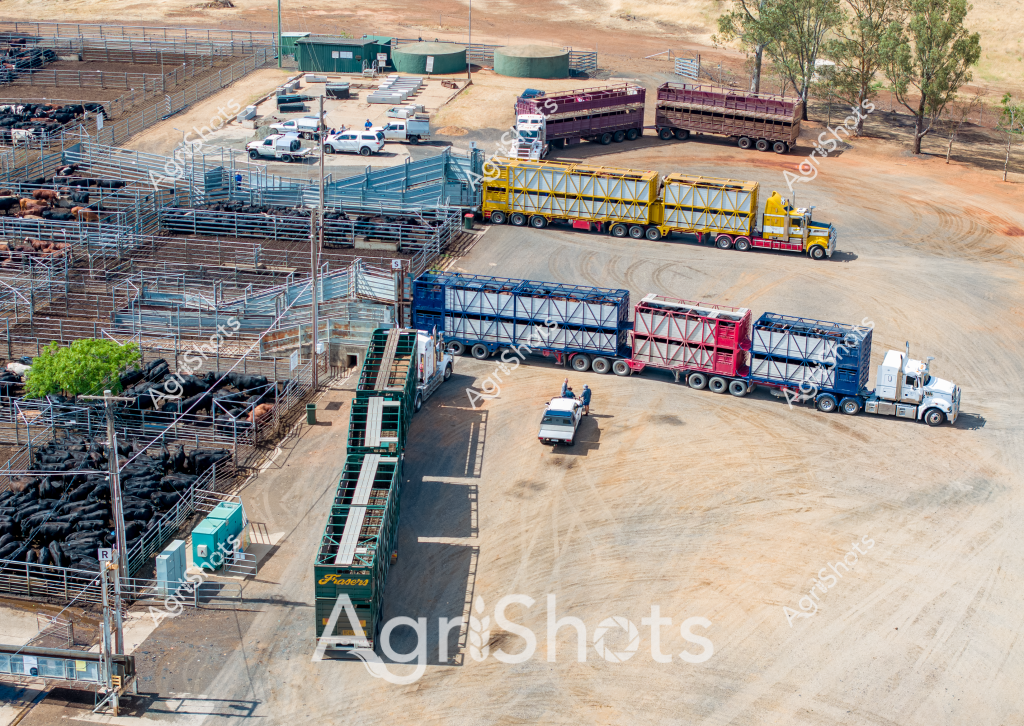
A bustling livestock transport hub captures the essence of Australia's robust cattle industry. Multiple large trucks with extended trailers are positioned within a dirt yard, surrounded by extensive metal cattle yards filled with black cattle. The scene is set in an arid landscape, with sparse trees and a green-roofed processing shed in the background, suggesting a remote cattle station in Western Australia or the Northern Territory. Yellow and white road trains with multiple linked trailers dominate the foreground, their robust design specifically engineered for long-distance livestock transportation across challenging rural terrain. The trucks are strategically parked near loading ramps, ready to transport cattle between properties or to processing facilities. Smaller utility vehicles are scattered around the yard, indicating active staff managing the livestock movement. The metal cattle yards are densely populated with black beef cattle, likely Angus or Wagyu breeds, standing in organized sections separated by robust galvanized steel fencing. The dusty, ochre-colored ground and sparse vegetation highlight the rugged environmental conditions typical of Australian cattle country. Sophisticated livestock handling infrastructure demonstrates the professional and efficient approach to cattle management in Australia's agricultural sector. This aerial view reveals the complex logistics and infrastructure required to support large-scale cattle transportation, showcasing the critical role of road transport in Australia's beef industry supply chain.
 Image
Image
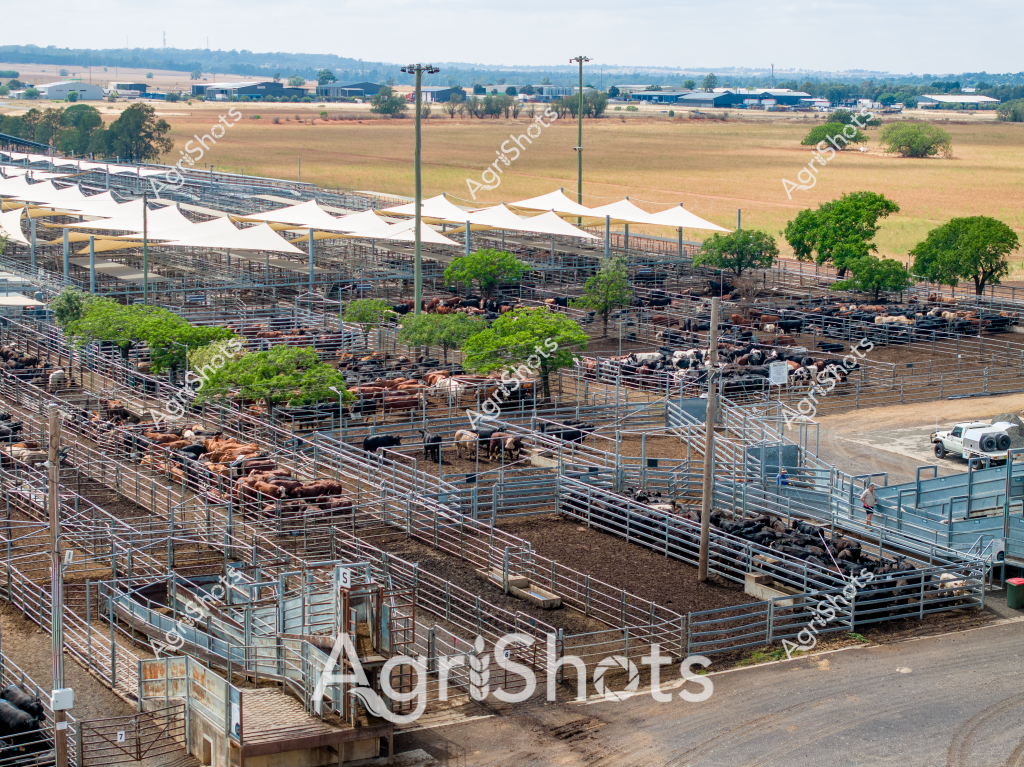
A comprehensive livestock holding facility spreads across a rural landscape, featuring multiple steel-fenced yards housing diverse cattle herds. White shade structures provide protection for the animals, while carefully positioned green trees offer additional shelter and visual breaks between the paddocks. Multiple breeds of cattle - including some with reddish-brown coats and others with darker markings - are grouped in separate enclosures, indicating a professional cattle management operation. Tall light poles provide illumination across the extensive yards, and a white utility vehicle is parked near the processing area, suggesting active agricultural management. The surrounding landscape reveals a broad, flat terrain with distant farm buildings and tree lines, typical of an Australian cattle station or agricultural precinct. The systematic layout demonstrates sophisticated livestock infrastructure, with meticulously organized zones for animal sorting, movement, and temporary holding.
 Image
Image
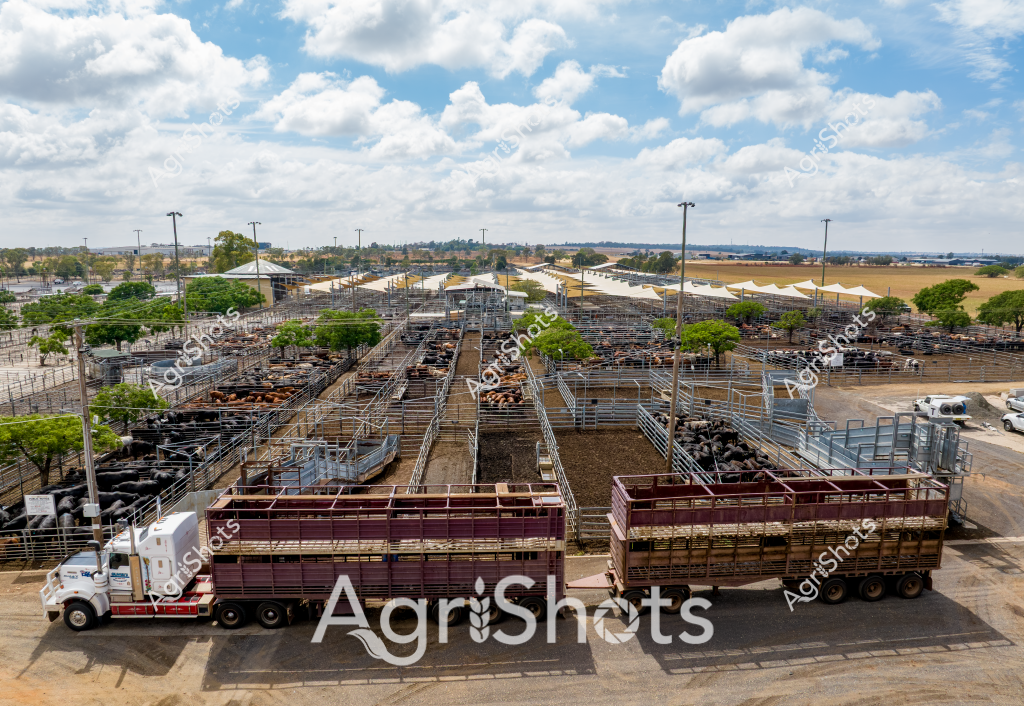
A sprawling livestock saleyard in an open rural landscape, with multiple metal cattle pens stretching across the scene under a bright, cloud-dotted sky. Rows of black cattle are penned in carefully organized enclosures, with green trees interspersed between the metal fencing and walkways. Two large livestock transport trucks with burgundy trailers are parked in the foreground, ready to load or unload cattle. The facility appears to be a modern, well-organized beef cattle operation, with high metal fencing, shade structures, and carefully planned infrastructure designed for efficient animal management. Tall light poles dot the landscape, providing illumination for round-the-clock operations, while the surrounding terrain shows a gently rolling horizon with farmland and distant treelines visible in the background. The scene captures the scale and precision of contemporary Australian cattle farming, showcasing the infrastructure required to manage large herds in a systematic and controlled environment. Metallic fencing, carefully arranged pens, and strategic placement of trees and shade structures demonstrate the sophisticated approach to livestock management in modern agricultural practices.
 Image
Image
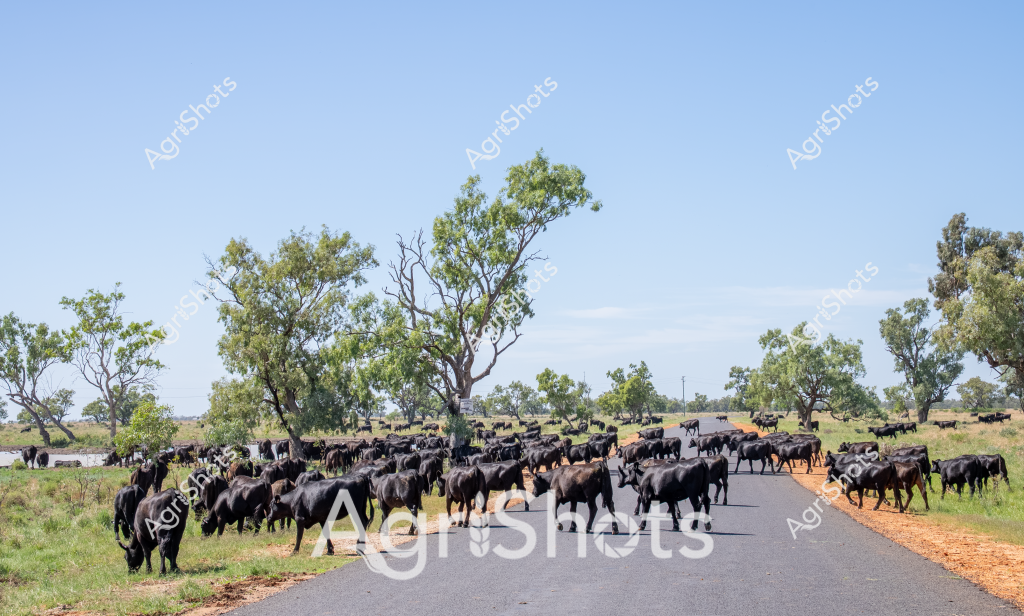
A large herd of black Angus cattle crosses a rural road, surrounded by scattered gum trees and dry grassland typical of an Australian pastoral landscape. The cattle occupy both sides of the bitumen road, creating a striking contrast between the dark animals and the light-colored earth and sky. Sparse eucalyptus trees dot the background, providing occasional shade for the cattle in what appears to be a warm, dry season. The landscape suggests this is likely a cattle station in Queensland or the Northern Territory, with a substantial breeding herd moving between paddocks. The clear blue sky and open terrain showcase the expansive nature of Australian cattle farming, where large herds can roam across extensive properties. The scene captures the essence of extensive cattle production, with a robust herd of black Angus demonstrating the scale and resilience of Australian livestock agriculture.
 Image
Image
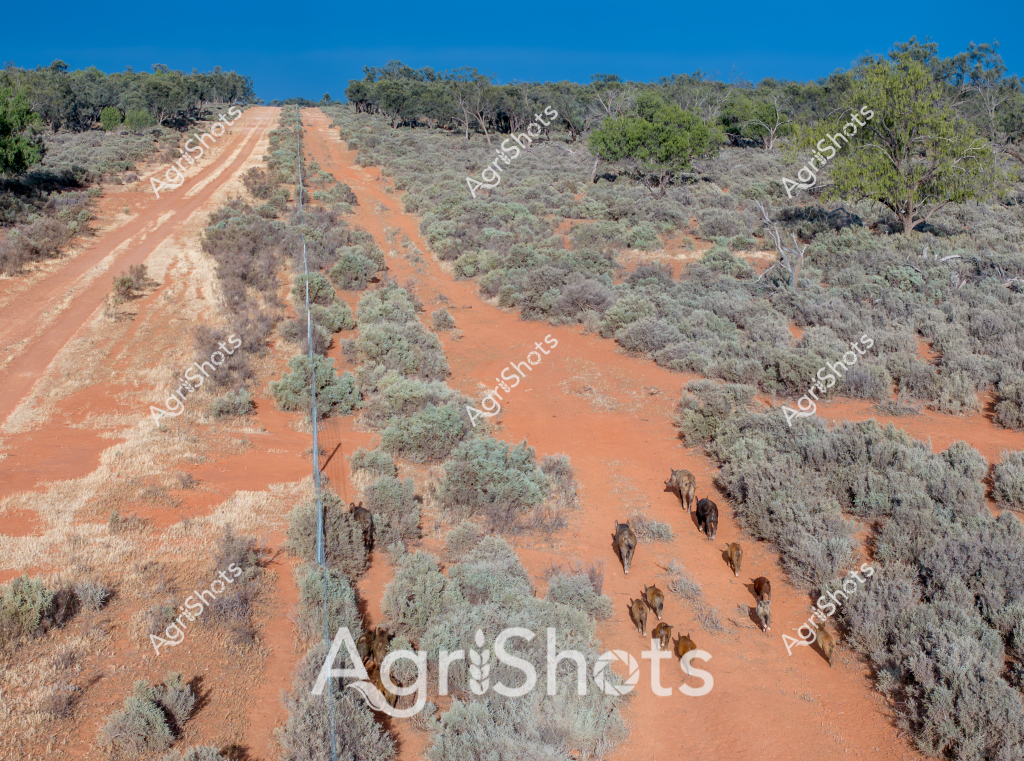
A stunning aerial view captures a small herd of cattle traversing a quintessential Australian outback dirt track, surrounded by rusty red earth and scattered grey-green shrubs. The unmade road cuts a stark line through the arid landscape, with native eucalyptus trees dotting the horizons and a deep blue sky overhead. Several cattle walk in single file along the track, their dark bodies creating a rhythmic pattern against the ochre-colored ground. The image exemplifies the vast, rugged terrain of inland Australia, where livestock management often involves navigating extensive, remote station country. Sparse vegetation and the characteristic red soil highlight the challenging environmental conditions of pastoral regions, showcasing the resilience required in Australian cattle farming. The aerial perspective provides a dramatic illustration of the immense scales and isolation inherent in Australian agricultural landscapes.
 Image
Image
A robust beef cow stands confidently on a dry, sparse pasture, her muscular body showcasing the resilience of Australian cattle breeding. She wears a yellow ear tag, indicating she's part of a managed herd, and is accompanied by a young black and white calf resting at her feet. The landscape appears arid and expansive, with scattered low vegetation and a pale blue horizon typical of Australia's rural rangelands. The cow's rich brown coat has deep variations in color, from almost black along her back to lighter shades across her belly and face. Her stance is protective, with the calf positioned closely beneath her, highlighting the maternal instincts crucial for survival in challenging agricultural environments. The ground is rocky and parched, suggesting this might be during a dry season or in a drought-affected region. The image captures the essence of Australian cattle farming - hardy animals adapted to tough conditions, representing the backbone of the nation's agricultural industry. The wide-open space and minimal vegetation underscore the challenging yet beautiful nature of extensive cattle grazing systems prevalent across Australia's interior.
 Image
Image
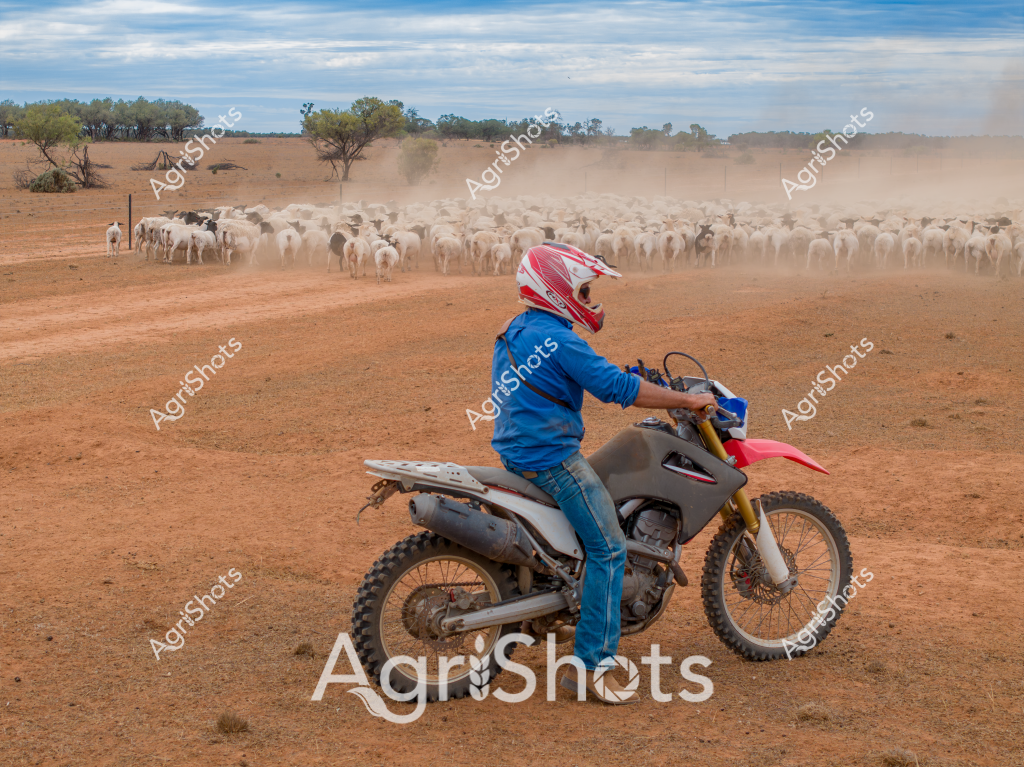
A stockman on a dirt bike herds a large mob of white cattle across a dusty, arid landscape in what appears to be an Australian outback station. Wearing a blue jacket and a red and white motocross helmet, the rider skillfully navigates the motorcycle through the dry paddock, guiding a substantial herd of cattle that kicks up a significant cloud of reddish dust. Sparse trees and native vegetation dot the horizon, highlighting the harsh, sun-baked terrain typical of northern Australian cattle country. The motorcycle, a red and white off-road model with knobby tires, is perfectly suited to the rugged landscape and the demands of mustering livestock across vast pastoral properties. The scene captures the essence of modern Australian cattle station operations, where motorcycles have largely replaced horses for mustering, demonstrating the ongoing adaptation of traditional farming practices to new technologies and challenging environmental conditions.
 Image
Image
A large herd of black Angus cattle congregates around a waterhole, seeking relief from the heat on a sprawling Australian cattle station. The animals cluster densely both in and around the water, with some standing on the muddy banks while others completely submerge themselves. Mature cows and younger calves mix together, creating a tight-knit group that demonstrates typical herd behavior in a semi-arid pastoral landscape. Gnarled eucalyptus trees provide sparse shade in the background, their twisted branches silhouetted against a pale sky with wispy clouds. The landscape suggests a northern Australian setting, likely in Queensland or the Northern Territory, where cattle stations can span thousands of hectares. The waterhole appears to be a critical resource, with the black cattle using it to cool down and stay hydrated in what looks like a hot, dry environment typical of extensive grazing operations.