About this image
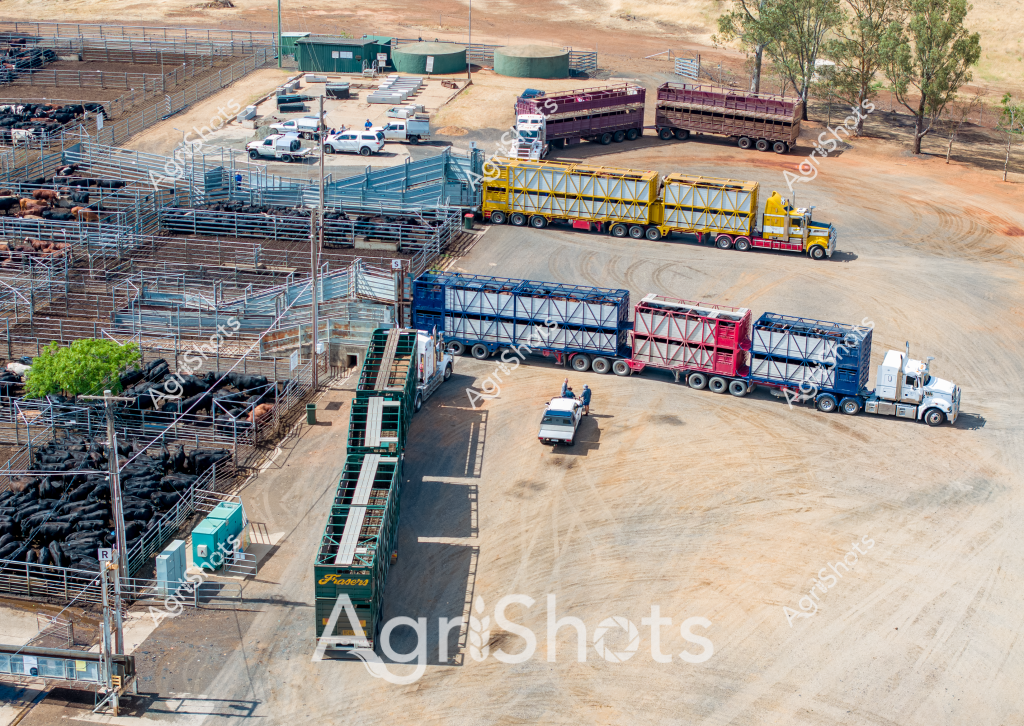
A bustling livestock transport hub captures the essence of Australia's robust cattle industry. Multiple large trucks with extended trailers are positioned within a dirt yard, surrounded by extensive metal cattle yards filled with black cattle. The scene is set in an arid landscape, with sparse trees and a green-roofed processing shed in the background, suggesting a remote cattle station in Western Australia or the Northern Territory. Yellow and white road trains with multiple linked trailers dominate the foreground, their robust design specifically engineered for long-distance livestock transportation across challenging rural terrain. The trucks are strategically parked near loading ramps, ready to transport cattle between properties or to processing facilities. Smaller utility vehicles are scattered around the yard, indicating active staff managing the livestock movement. The metal cattle yards are densely populated with black beef cattle, likely Angus or Wagyu breeds, standing in organized sections separated by robust galvanized steel fencing. The dusty, ochre-colored ground and sparse vegetation highlight the rugged environmental conditions typical of Australian cattle country. Sophisticated livestock handling infrastructure demonstrates the professional and efficient approach to cattle management in Australia's agricultural sector. This aerial view reveals the complex logistics and infrastructure required to support large-scale cattle transportation, showcasing the critical role of road transport in Australia's beef industry supply chain.
Similar media
 Image
Image
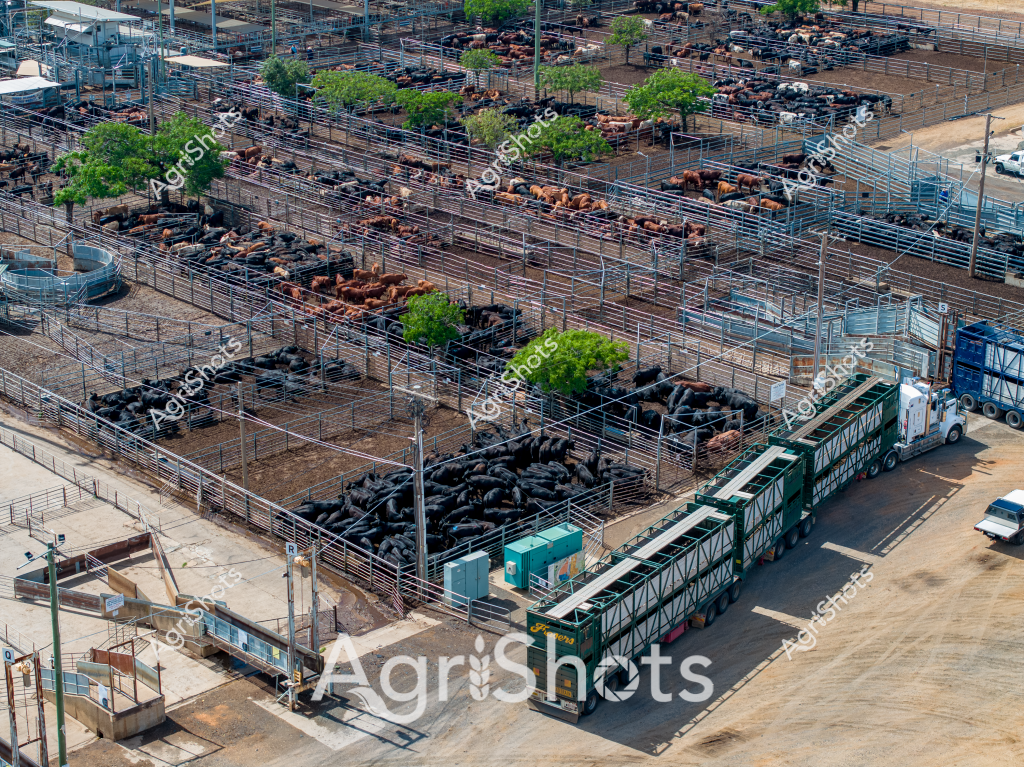
An expansive aerial view of a modern cattle saleyard reveals multiple interconnected metal-fenced paddocks densely populated with beef cattle. Rows of dark and reddish-brown cattle are strategically distributed across the compound, with small green trees and shade structures interspersed between the pens to provide relief from the harsh environment. A large green livestock transport trailer is positioned at the edge of the facility, ready for loading or unloading cattle, while industrial infrastructure including water tanks and processing equipment are visible throughout the site. The ground appears dry and compacted, typical of large-scale livestock management systems, with precise metal fencing creating a geometric pattern of controlled movement and segregation. The aerial perspective highlights the scale and industrial efficiency of modern beef cattle production, where large numbers of animals can be systematically managed, monitored, and prepared for market. Dusty earth tones and the structured layout emphasize the calculated approach to livestock farming in what appears to be an arid or semi-arid agricultural region.
 Image
Image
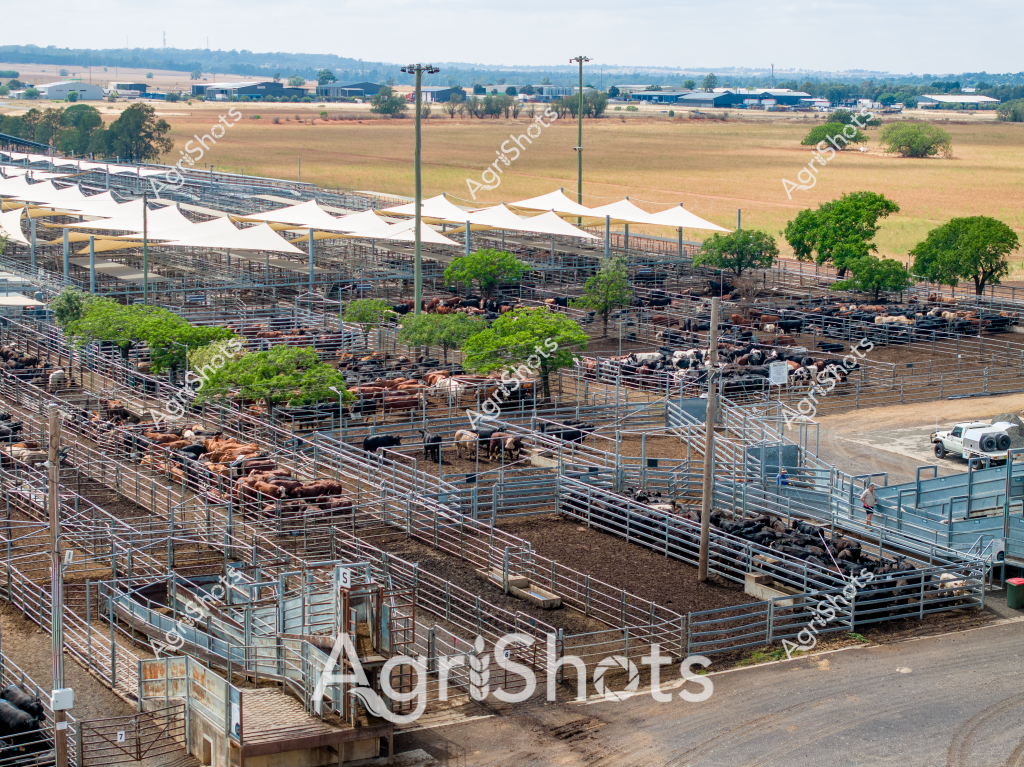
A comprehensive livestock holding facility spreads across a rural landscape, featuring multiple steel-fenced yards housing diverse cattle herds. White shade structures provide protection for the animals, while carefully positioned green trees offer additional shelter and visual breaks between the paddocks. Multiple breeds of cattle - including some with reddish-brown coats and others with darker markings - are grouped in separate enclosures, indicating a professional cattle management operation. Tall light poles provide illumination across the extensive yards, and a white utility vehicle is parked near the processing area, suggesting active agricultural management. The surrounding landscape reveals a broad, flat terrain with distant farm buildings and tree lines, typical of an Australian cattle station or agricultural precinct. The systematic layout demonstrates sophisticated livestock infrastructure, with meticulously organized zones for animal sorting, movement, and temporary holding.
 Image
Image
A comprehensive livestock loading operation unfolds at a modern cattle saleyard, with multiple steel-railed livestock pens housing numerous beef cattle under white shade structures. Two large livestock transport trucks - one white and one burgundy - are positioned for loading, with men in work attire moving between the trailers and pens. The cattle, a mix of brown and black breeds, are carefully sorted across different paddocks with green trees providing background shade. Surrounding the facility is a dry, open landscape with golden-brown pastures stretching toward the horizon, typical of an Australian agricultural setting. The scene captures the systematic efficiency of commercial cattle transportation, with carefully designed infrastructure supporting the movement of livestock across vast agricultural territories.
 Image
Image
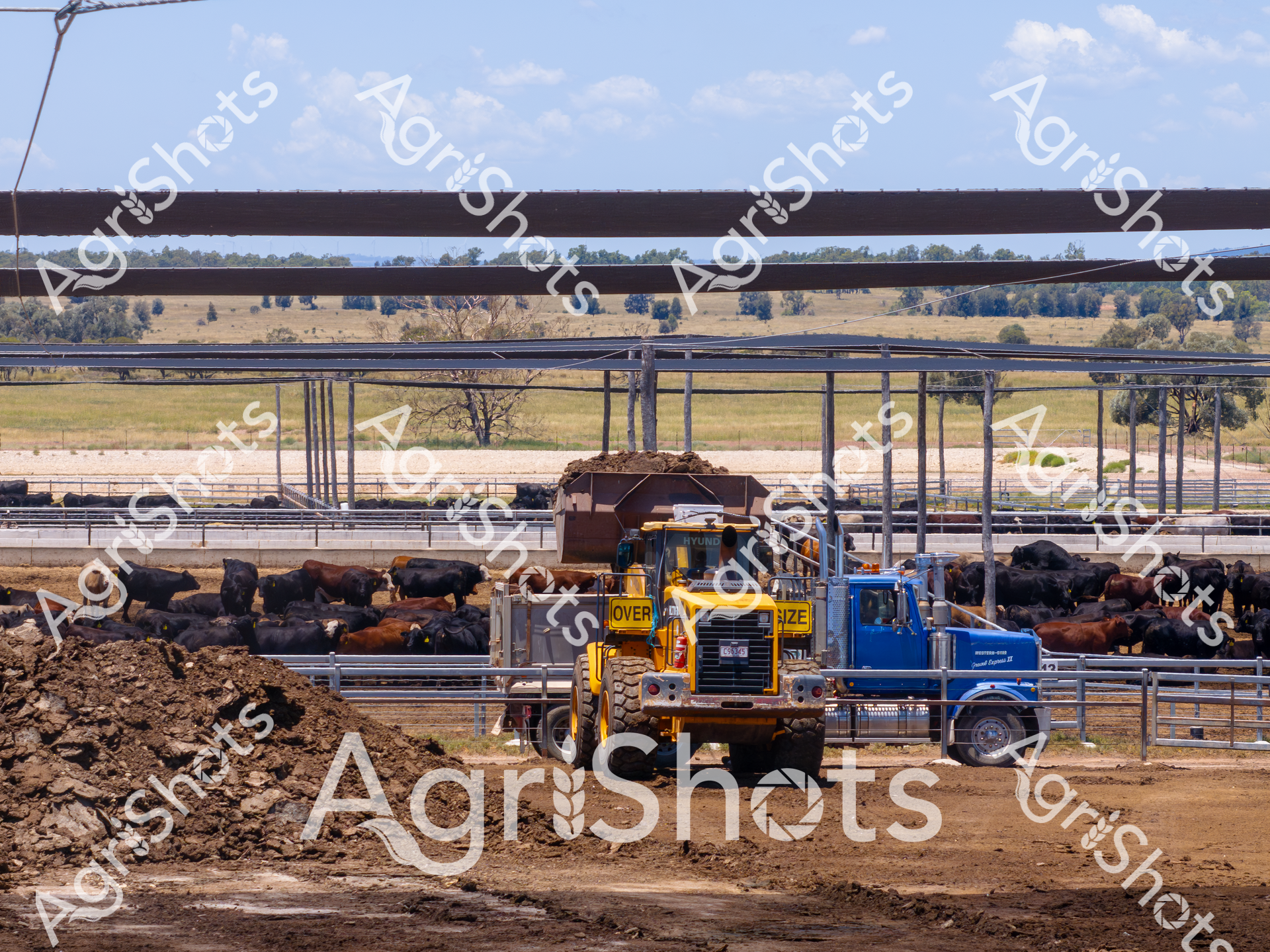
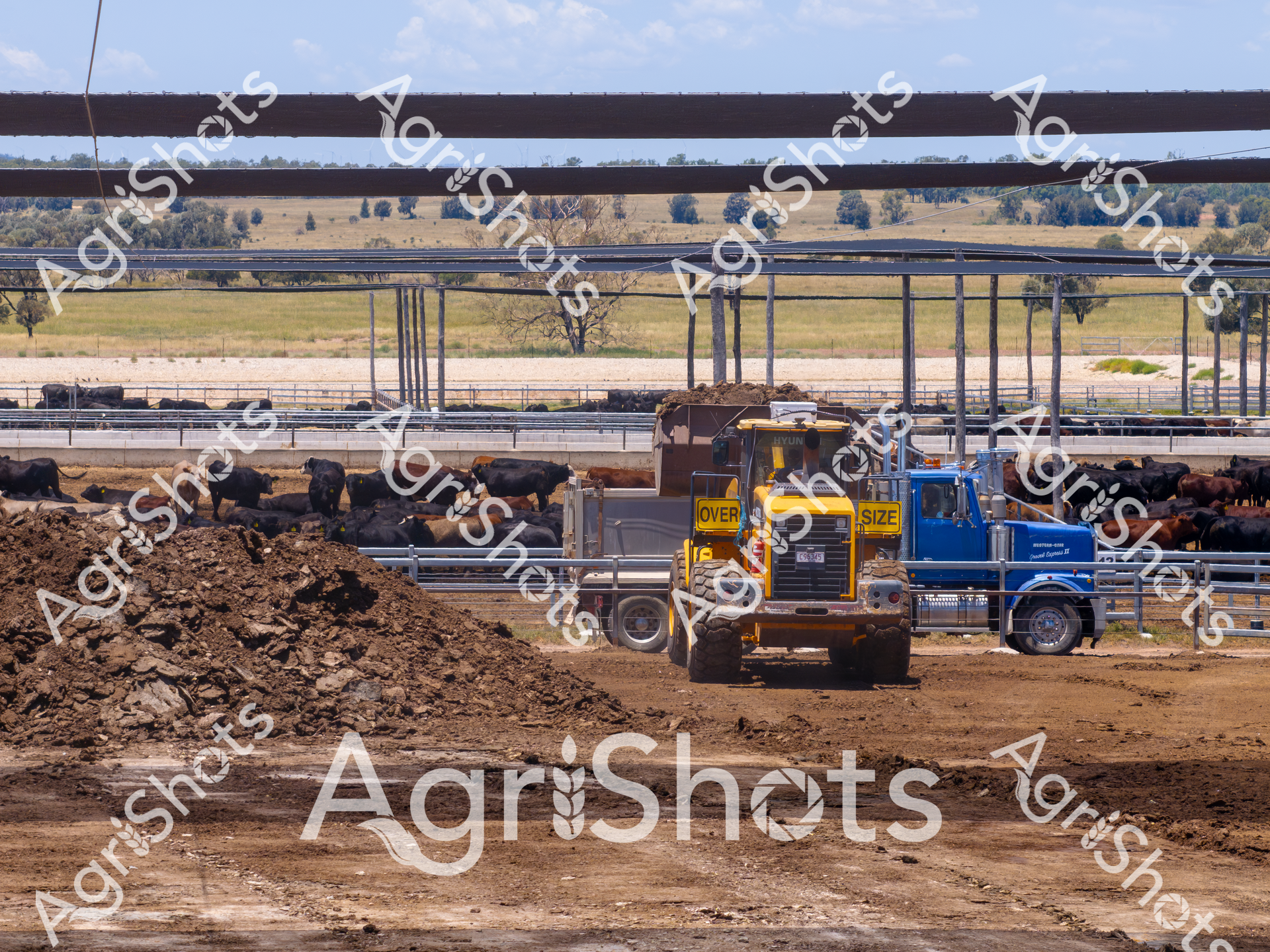
A robust yellow wheel loader and blue truck navigate the dusty cattle feedlot in Queensland, orchestrating an essential summer pen maintenance routine. Dozens of black and brown beef cattle cluster beneath metal shade structures, seeking respite from the intense Australian sun, while the heavy machinery methodically manages manure and soil in the foreground. The expansive pastoral landscape stretches beyond the feedlot's metal pens, with distant trees and golden grasslands creating a quintessential rural Australian backdrop. Mechanical precision meets agricultural necessity as the equipment carefully cleans and prepares the livestock holding areas, ensuring optimal conditions for the cattle's health and comfort. The scene captures the sophisticated infrastructure of modern Australian beef production, where technology and animal husbandry intersect under wide, cloudspeckled skies. Rich earth tones of brown and rust contrast sharply with the bright yellow and blue machinery, highlighting the dynamic energy of agricultural operations in Queensland's agricultural heartland.
 Image
Image
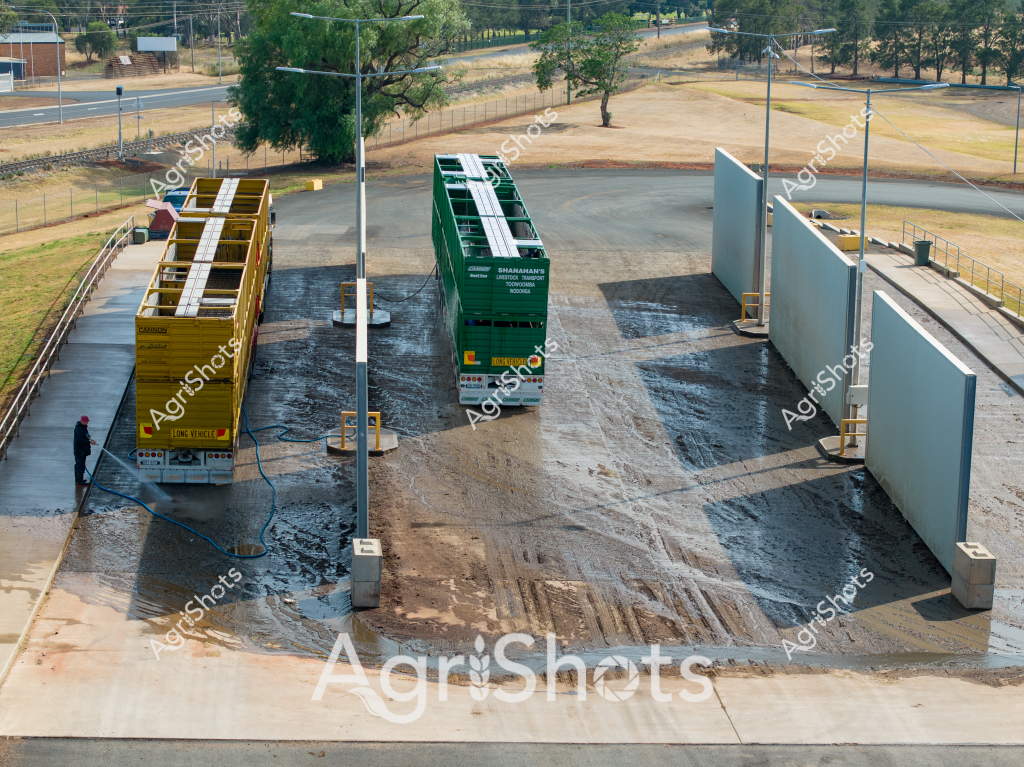
A detailed industrial scene captures a truck washing station with two large transport trailers positioned on a concrete wash pad. A person stands near one of the trucks, operating a high-pressure water hose to clean the vehicle's exterior. The yellow and green trailers are positioned precisely between concrete barriers and metal support structures, suggesting a systematic approach to vehicle maintenance and sanitation. The environment appears to be a rural or industrial setting, with dry grass and scattered trees visible in the background. The concrete wash pad shows evidence of extensive water use, with wet and muddy areas surrounding the trailers. Overhead lighting poles and a fence line indicate this is a purpose-built facility for truck cleaning and maintenance. The wash station demonstrates the meticulous care taken in maintaining commercial transport vehicles, with careful positioning and dedicated infrastructure for thorough cleaning. The scene captures the intersection of agricultural logistics and maintenance, highlighting the professional approach to vehicle upkeep in rural transportation operations. The surrounding landscape is typical of a dry agricultural area, with sparse vegetation and open space, suggesting this is likely in an Australian rural or semi-rural location. The careful design of the wash station reflects the importance of vehicle maintenance in agricultural and transport industries.
 Image
Image
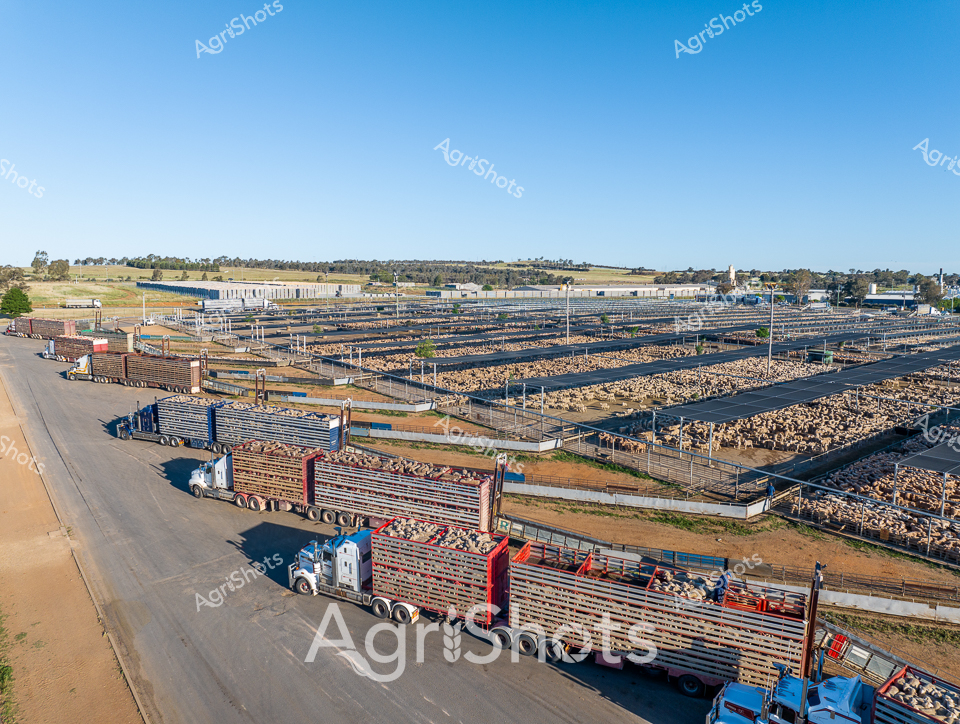
Sun-drenched saleyards pulse with the rhythmic energy of Australia's livestock economy, capturing a quintessential rural trading moment in regional New South Wales. Gleaming white and blue livestock transport trucks line the expansive dirt roadway, the tall cattle/sheep crates loaded and ready for movement, casting long shadows in the crisp morning light. Meticulously organized holding pens stretch across the landscape, filled with dense flocks of woolly sheep awaiting auction, their pale bodies creating a textured mosaic against the dusty earth and concrete walkways. Overhead, industrial-grade shade sails provide critical heat protection, highlighting the agricultural sector's sophisticated infrastructure and animal welfare considerations. The surrounding landscape reveals a classic Australian pastoral setting - undulating paddocks and distant eucalyptus trees framing the horizon, with rural industrial buildings completing the comprehensive agricultural ecosystem. This panoramic view encapsulates the complex logistics, economic activity, and methodical organization underlying Australia's critical sheep trading and agricultural supply chain.
 Image
Image
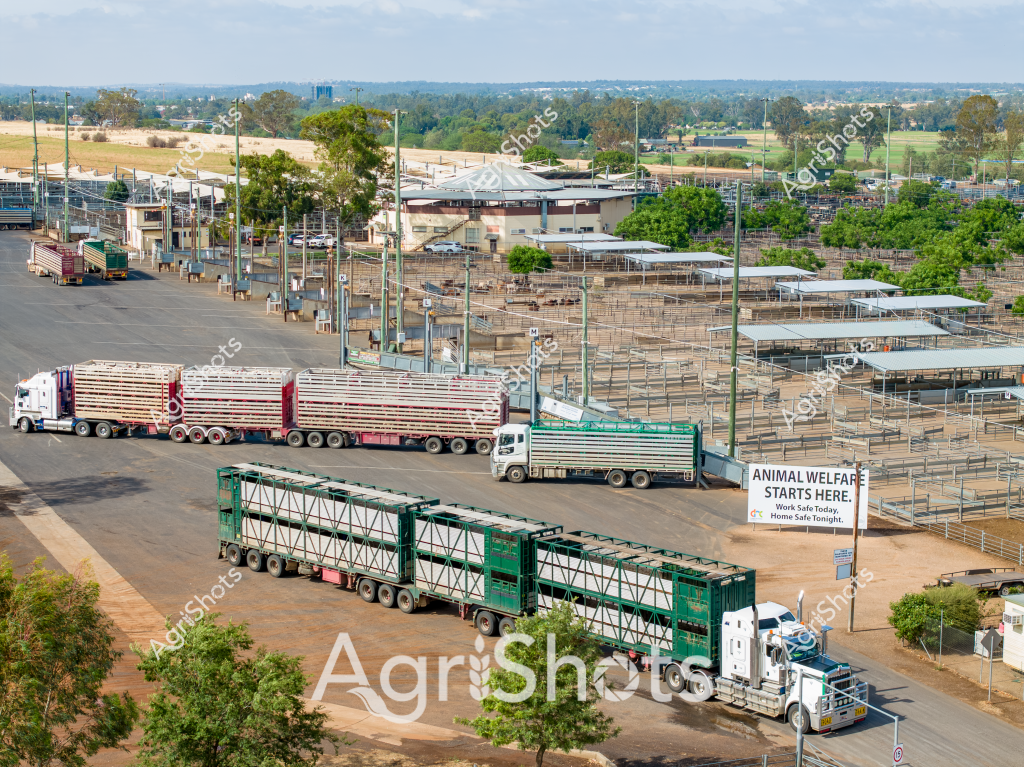
This image captures a comprehensive view of a modern livestock transportation and welfare facility, likely a livestock selling center or saleyards. Multiple large, multi-tiered livestock transport trucks are parked in the foreground, featuring green and white trailers specifically designed for animal transportation. The facility includes extensive metal livestock holding pens with white shade covers, creating a systematic layout for animal movement and management. A prominent "ANIMAL WELFARE STARTS HERE" sign emphasizes the facility's commitment to livestock care, with the additional text "Work Safe Today, Home Safe Tonight" suggesting a focus on both animal and worker safety. The surrounding landscape reveals a semi-rural setting with trees, distant buildings, and an expansive horizon typical of Australian agricultural regions. The transport trucks are heavy-duty, long-combination vehicles characteristic of Australian livestock logistics, engineered to safely transport large numbers of animals across vast distances. Multiple levels and compartments in the trailers allow for segregation and safe transport of different livestock groups. The facility's infrastructure demonstrates a highly organized approach to livestock management, with carefully designed infrastructure that prioritizes animal welfare and efficient transportation. The scene represents a critical node in Australia's livestock supply chain, where animals are prepared for transport, sale, or movement between agricultural properties. The meticulously planned layout and robust infrastructure highlight the professional standards of modern Australian livestock management.
 Image
Image
A bustling cattle feedlot in Queensland's Queensland pulses with agricultural activity during the height of summer. A yellow construction loader and blue truck navigate the densely packed cattle yards, performing critical pen maintenance and waste management operations. Rows of steel pens contain a mix of black and brown cattle, their bodies clustered under expansive shade sails that provide relief from the intense Australian sun. Mounds of rich, dark soil and manure indicate ongoing ground preparation, essential for maintaining hygiene and animal health in this large-scale agricultural environment. The landscape beyond the yards reveals a classic Australian pastoral backdrop - undulating grasslands dotted with scattered eucalyptus trees, stretching toward a pale blue horizon. The scene captures the sophisticated infrastructure and meticulous management required in modern beef production, where every detail of animal care and yard maintenance is carefully orchestrated.