About this image
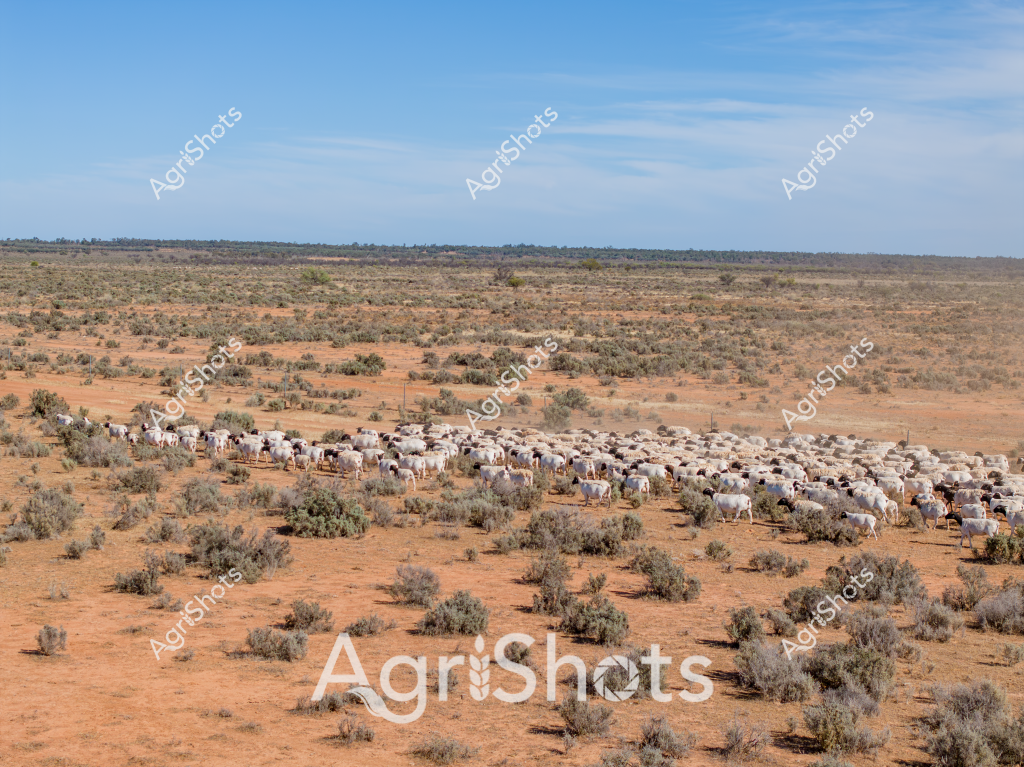
A large mob of white cattle graze across a vast, arid landscape in the Australian outback, their pale bodies standing out against the rusty orange soil and scattered gray-green scrubland. The expansive scene depicts a typical pastoral setting, with low saltbush and sparse vegetation stretching to a distant horizon under a soft blue sky. These appear to be Brahman or Brahman-cross cattle, well-adapted to the harsh conditions of Australia's inland regions, clustered together for protection and foraging across the dry pastoral station country. The landscape speaks to the challenging environmental conditions of central Australia, where livestock management requires resilience and strategic grazing practices. The wide-open terrain showcases the immense scale of Australian cattle stations, where herds roam across thousands of hectares of seemingly endless, rugged terrain.
Similar media
 Image
Image
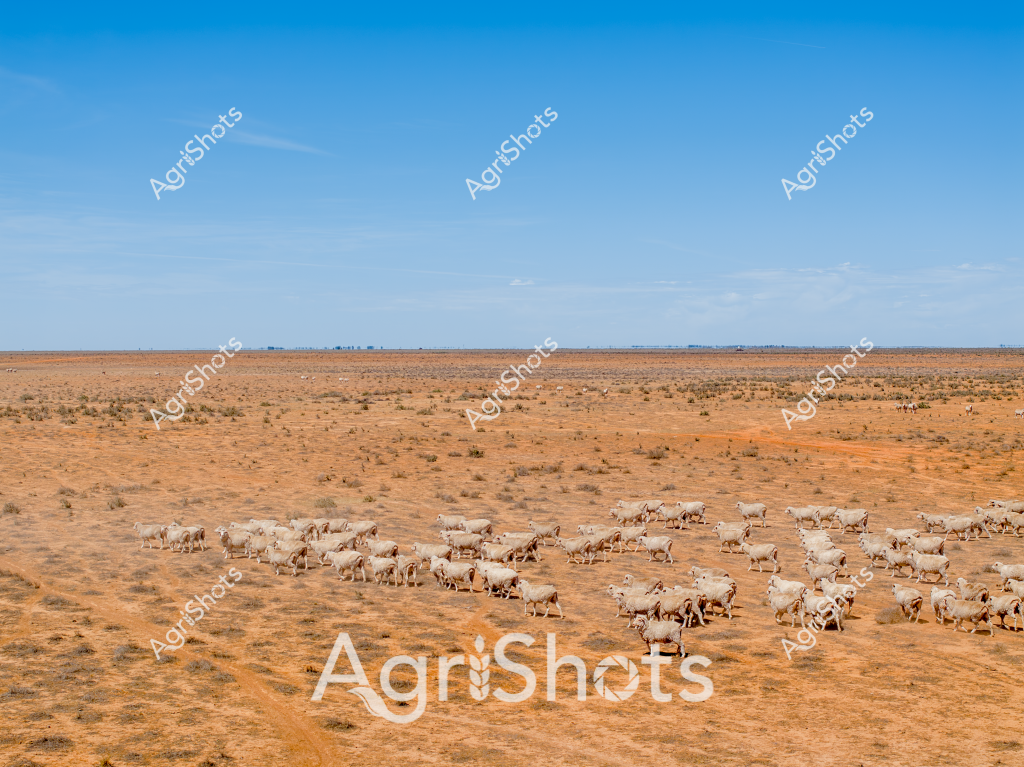
A vast, arid landscape stretches across the horizon, dotted with a substantial flock of white and brown sheep grazing on the dry, rusty-orange terrain. The sparse vegetation and expansive blue sky suggest this is a challenging drought-affected region, likely in outback Australia. The sheep, appearing to be a mixed breed of possibly Merino and crossbred stock, are clustered together, moving slowly across the parched ground in search of sparse vegetation. The landscape's monotone color palette - burnt oranges, pale yellows, and dusty browns - emphasizes the harsh environmental conditions these resilient livestock must endure. A distant line of low trees marks the horizon, providing the only break in the flat, unforgiving landscape that typifies many of Australia's extensive pastoral regions.
 Image
Image
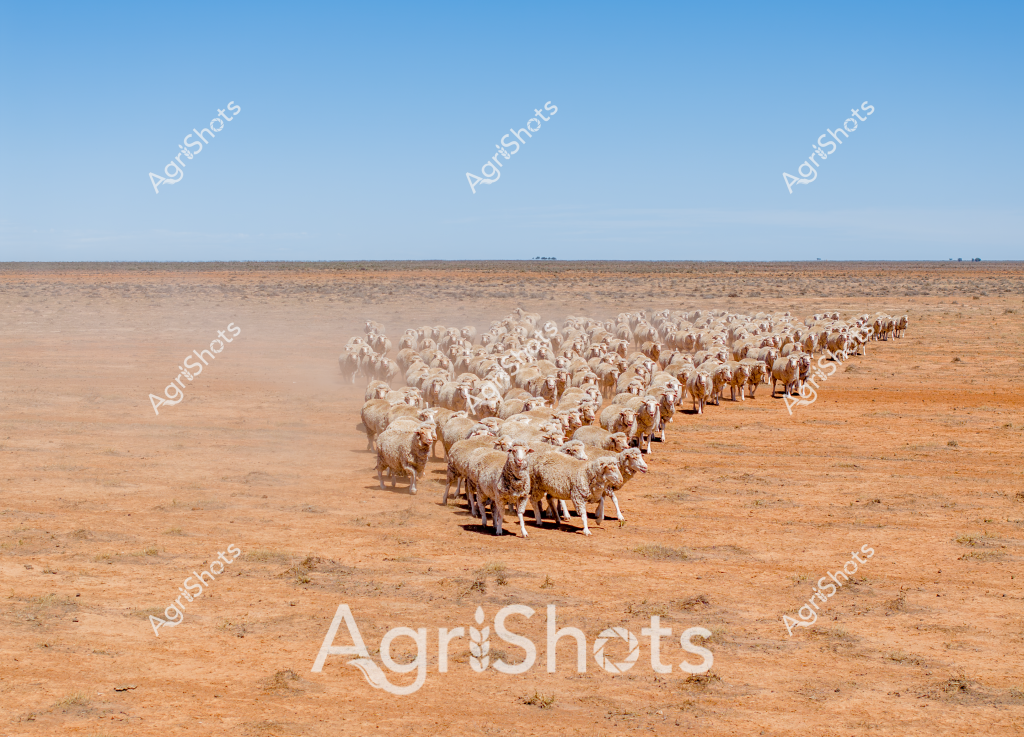
A large flock of Merino sheep stands tightly grouped in a stark, rust-colored landscape under a clear blue sky, showcasing the challenging conditions of an Australian outback station. The woolly white and cream-colored sheep create a dense, uniform mass against the arid, dusty ground, highlighting the resilience of both the animals and the agricultural enterprise. Sparse, low vegetation dots the surrounding terrain, emphasizing the harsh, dry environment typical of inland Australia. The sheep appear well-maintained, their thick fleeces suggesting they are being carefully managed despite the challenging drought-like conditions. The expansive horizon and flat landscape create a sense of isolation and vastness characteristic of large Australian pastoral properties. This image captures the essence of extensive sheep farming in Australia's challenging interior regions, where livestock management requires skill, persistence, and adaptation to extreme environmental conditions.
 Image
Image
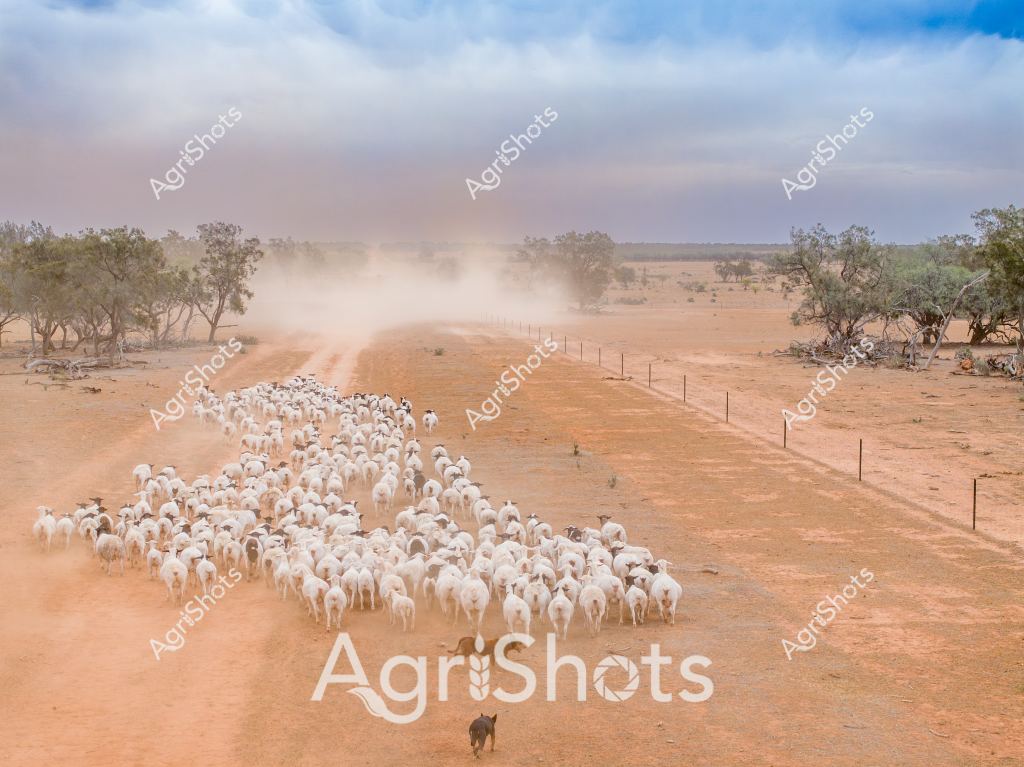
A vast, dusty landscape in outback Australia captures a large mob of white sheep being mustered along a dirt track, creating a billowing dust cloud behind the tightly packed herd. Sparse eucalyptus trees line the fenced road, their weathered branches framing the arid pastoral scene typical of inland grazing properties. A lone working dog trails behind the herd, helping to guide the sheep forward across the ochre-colored earth. The landscape speaks to the challenging conditions of Australian sheep farming, with the dry ground and sparse vegetation highlighting the resilience required to run livestock in this unforgiving environment. The sheep, likely Merino or a similar white-fleeced breed, move as a compact, woolly mass, kicking up a dramatic plume of red dust that softens the harsh landscape and creates a striking visual representation of cattle station life in rural Australia. The image powerfully captures the scale and drama of livestock mustering, showcasing the vast open spaces and the intricate process of moving sheep across remote pastoral lands. The fence line, dust, and sparse vegetation all tell a story of agricultural persistence in one of the world's most challenging farming environments.
 Image
Image
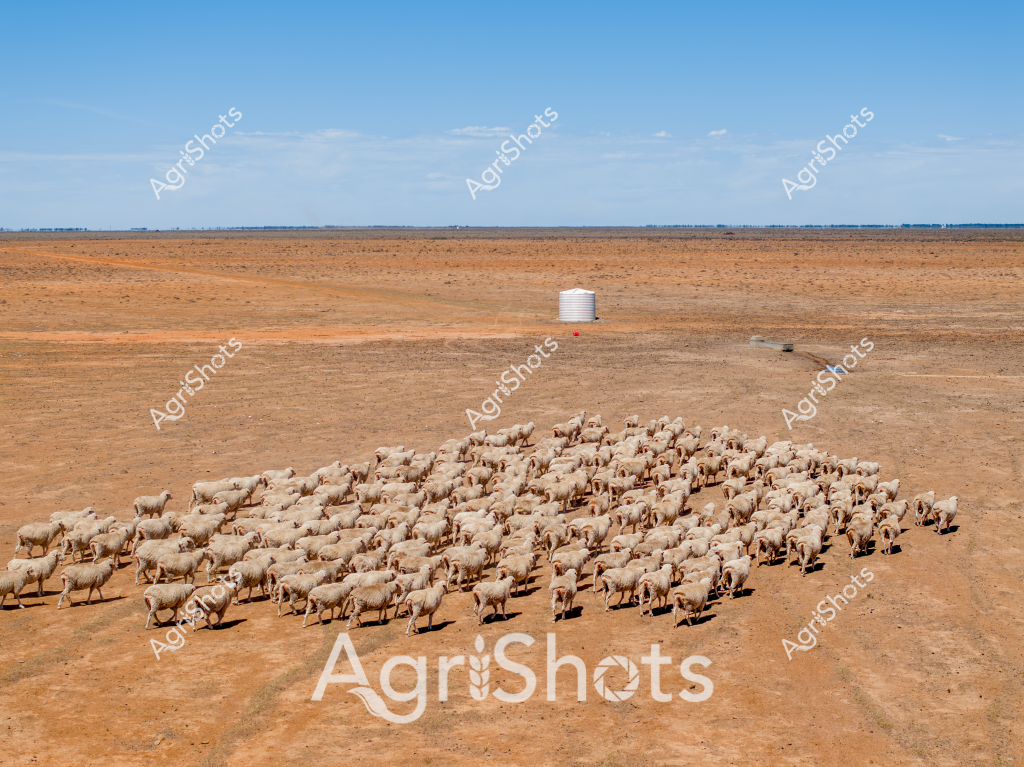
A large flock of Merino sheep huddles together in a stark, arid landscape under a clear blue sky. The dry, reddish-brown earth stretches to the horizon, punctuated by a single white water tank in the distance. The sheep appear tightly grouped, their woolly bodies creating a dense mass against the barren backdrop, highlighting the challenging drought conditions typical of Australian inland regions. A faint track leads toward the water tank, suggesting the animals are likely seeking hydration in this harsh environment. The image powerfully captures the resilience of Australian livestock farming, where animals must survive in extremely dry and unforgiving terrain. The uniform tan-colored landscape and the clustered sheep create a compelling visual narrative of survival and agricultural adaptation in one of the world's most challenging farming environments.
 Image
Image
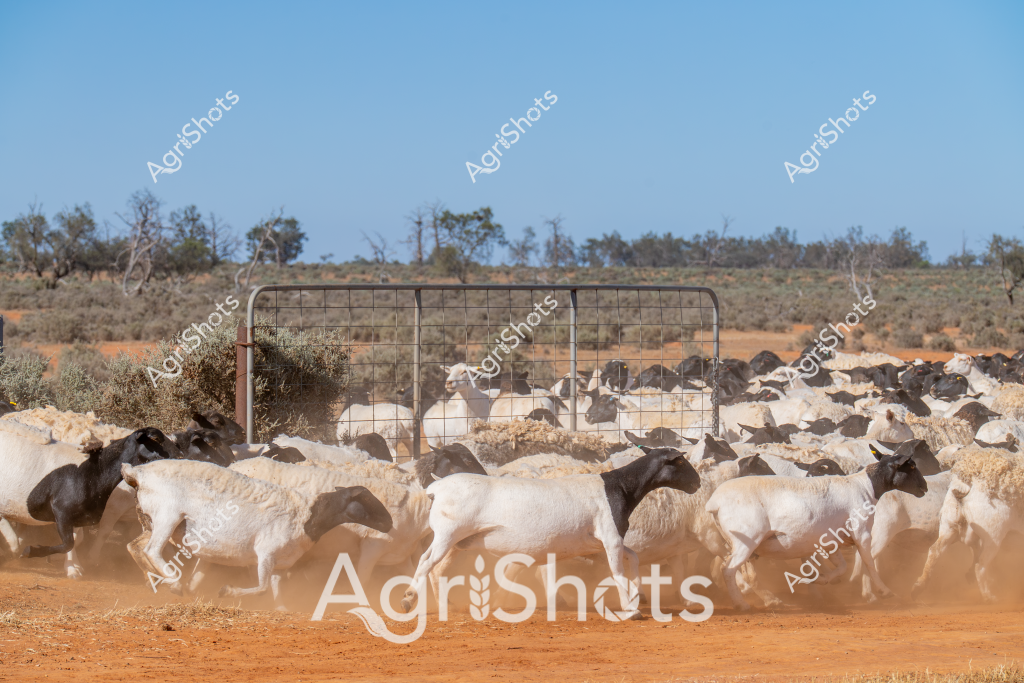
A large flock of white and black sheep crowds around a wire gate in a dusty, arid landscape typical of Australian outback stations. The mixed mob of sheep - likely a combination of Merino and potentially Black Dorper breeds - are kicking up red soil and fine dust as they move, creating a dynamic scene of rural agricultural activity. Sparse eucalyptus trees and low scrubland stretch across the background, with a clear blue sky overhead indicating a dry, hot day. The wire gate and surrounding fence suggest controlled livestock movement, a critical management technique in extensive grazing operations across remote Australian pastoral regions. The sheep's compact clustering and the surrounding landscape highlight the challenging environmental conditions of inland Australia, where careful stock management is essential for livestock survival and agricultural productivity.
 Image
Image
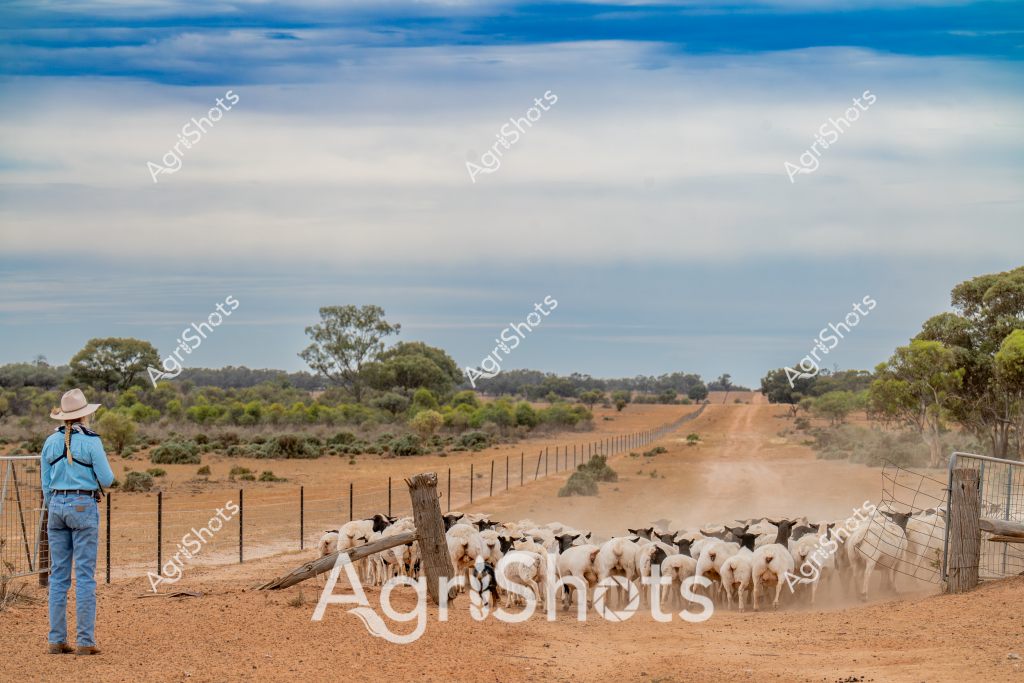
A seasoned stockman in a blue work shirt, wide-brimmed hat, and jeans stands observing a tightly clustered mob of white and black goats near a fence line on a dusty rural property. The goats are pressed against a wooden fence post, creating a dense cluster of woolly bodies in the dry, ochre-colored landscape. A long dirt track stretches into the distant horizon, lined with native eucalyptus trees and sparse bushland under a soft blue and cloudy sky. The scene captures the quintessential Australian pastoral setting - a vast, arid landscape where livestock management requires skill, patience, and intimate knowledge of the terrain. Dust rises subtly around the animals, suggesting recent movement or the inherent dryness of the environment. The composition highlights the connection between the lone stockman and the herd, embodying the resilience and solitary nature of agricultural work in remote Australian regions.
 Image
Image
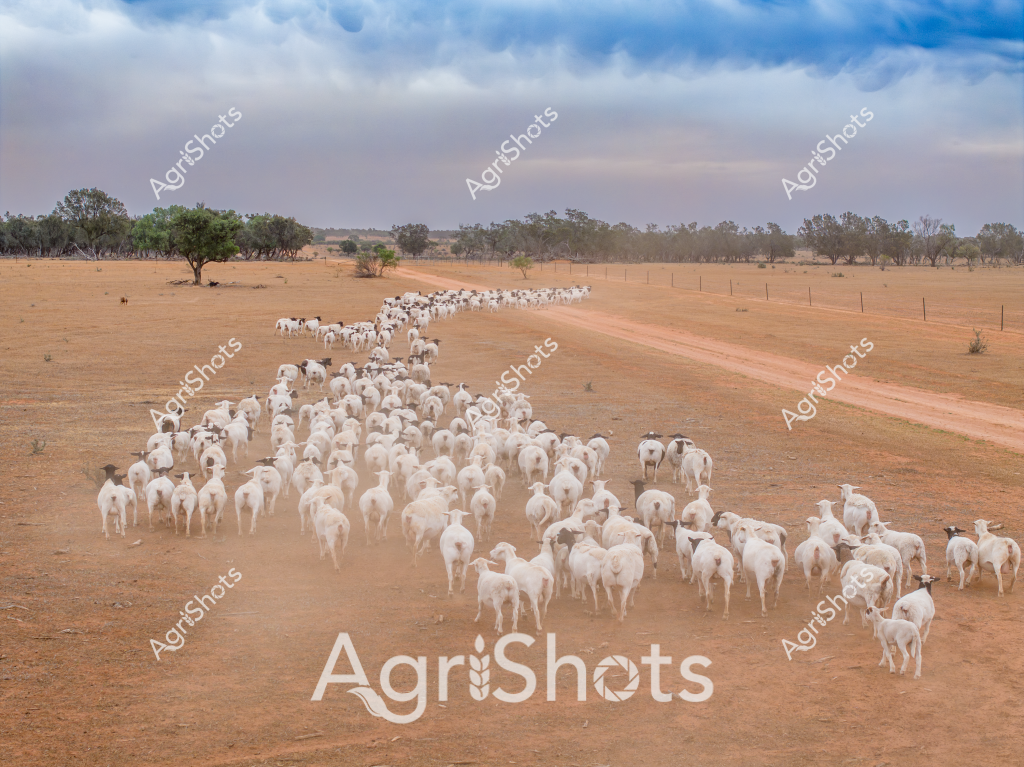
A large herd of white sheep moves across a dry, dusty paddock in what appears to be an Australian outback or pastoral landscape. The expansive terrain is characterized by sparse trees, reddish-brown earth, and a wide dirt track running alongside the flock. Scattered eucalyptus trees dot the horizon, creating a classic Australian rural scene with muted greens and browns contrasting against a cloudy sky with soft blue and gray tones. The sheep - likely Merino or a similar white wool breed - are tightly clustered, moving in a long, winding column across the parched landscape. Their pure white coats stand out starkly against the ochre-colored ground, creating a striking visual pattern of movement and density. The dusty environment suggests challenging drought conditions typical of many Australian agricultural regions. This image captures the essence of large-scale sheep farming in Australia, where herds are moved across vast properties to access grazing areas. The landscape speaks to the resilience of both the animals and the farmers who manage these extensive agricultural operations, navigating harsh environmental conditions with skill and determination.
 Image
Image
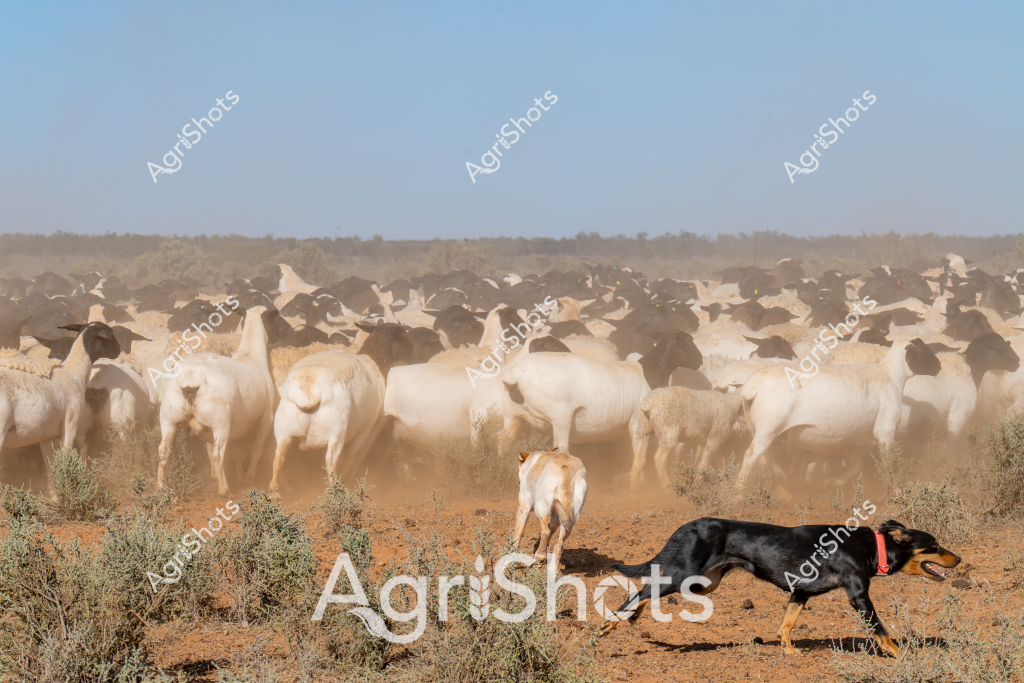
A large herd of light-colored sheep kicks up dust in a dry, arid landscape, with two working dogs herding the mob across a sparse, reddish-brown paddock. A black and tan dog runs alongside the herd, expertly guiding the sheep's movement with precision and skill. A lighter-colored dog stands slightly apart, also part of the mustering effort. The background reveals a line of trees and scrubby vegetation, creating a typical Australian outback pastoral scene. Dusty conditions and the tight grouping of the sheep suggest an experienced team of working dogs and likely a stockman managing this livestock movement across a challenging rural terrain. The image captures the essence of Australian sheep farming, highlighting the critical role of working dogs in managing large herds across expansive, dry landscapes.