Browse the collection
 Image
Image
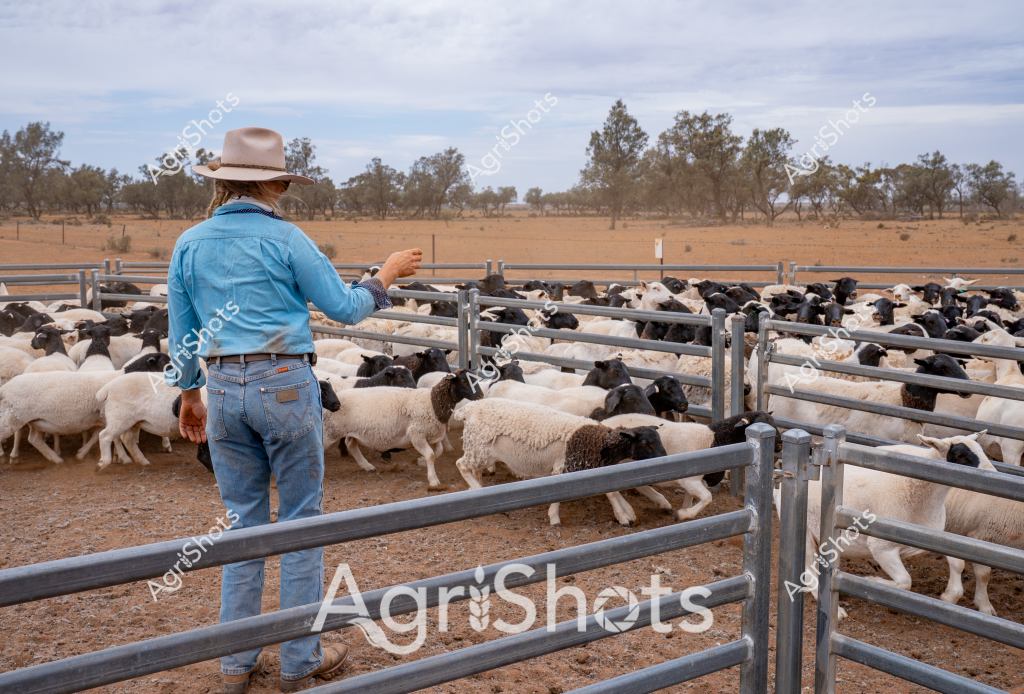
A man stockman stands in a dry, arid landscape, overseeing a large flock of black and white sheep within a metal livestock yard. Wearing a light blue long-sleeved shirt, faded blue jeans, and a wide-brimmed tan hat, he appears to be managing the mob of sheep in what looks like a typical Australian outback setting. Sparse eucalyptus trees dot the background, highlighting the sparse, golden-brown landscape that speaks to the challenging drought conditions of the region. The sheep - a mix of white and black-faced breeds, likely Dorper or Suffolk cross - are tightly packed within the steel paneled yards, creating a dense cluster of woolly bodies. The ground is dry and compacted, with minimal vegetation, emphasizing the harsh environmental conditions. The stockman's posture suggests careful observation and management, with one arm raised, potentially signaling or directing the movement of the livestock. This image captures the resilience of Australian agriculture, showcasing how farmers adapt to challenging landscapes and maintain the livestock operations under difficult environmental conditions. The scene epitomizes the daily work of a rural stockman, managing sheep in the unforgiving Australian interior.
 Image
Image
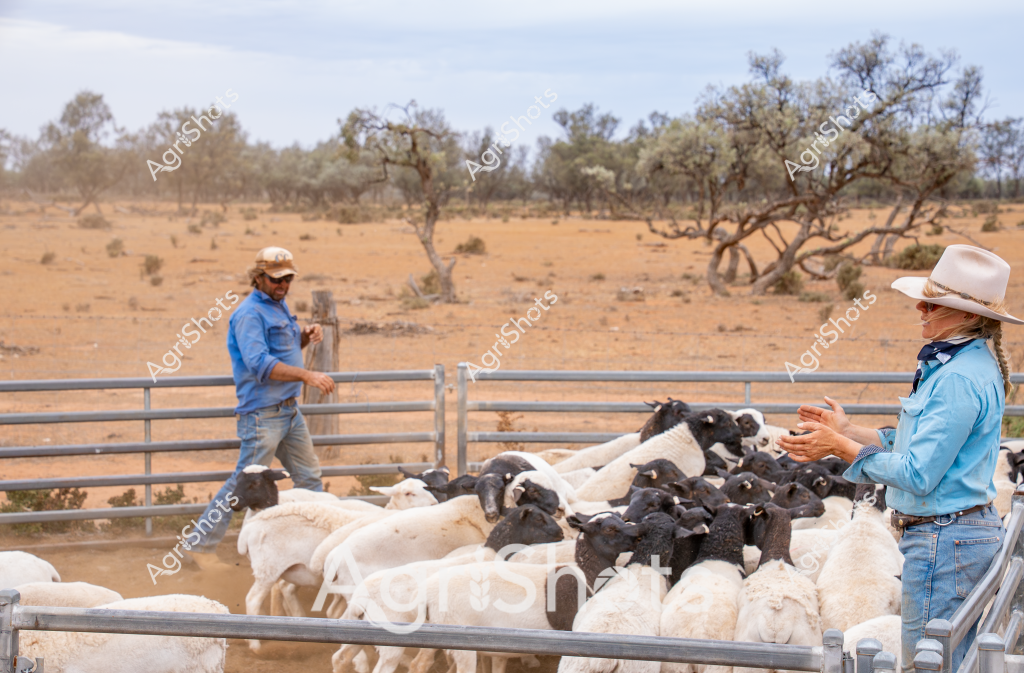
Two people manage a flock of black and white sheep in a dry, arid paddock with scattered eucalyptus trees. A woman in a light blue shirt and wide-brimmed hat and a man in a blue work shirt are positioned at opposite ends of a metal livestock yard, working together to control the herd. The landscape is typical of central Australian rangelands - reddish-brown earth, sparse vegetation, and twisted trees indicating harsh environmental conditions. The sheep, a mix of white and black woolly animals, are tightly packed within the metal yard panels, suggesting they are being sorted, counted, or prepared for movement. The scene captures the everyday work of Australian livestock management, highlighting the skill and teamwork required to handle livestock in challenging rural environments. The expansive background demonstrates the classic Australian pastoral setting - a sparse, open landscape with minimal ground cover, twisted native trees, and a muted, dusty color palette that speaks to the resilience of agricultural workers and animals in this demanding terrain. Their coordinated movements and professional demeanor illustrate the precision and experience required in sheep farming.
 Image
Image
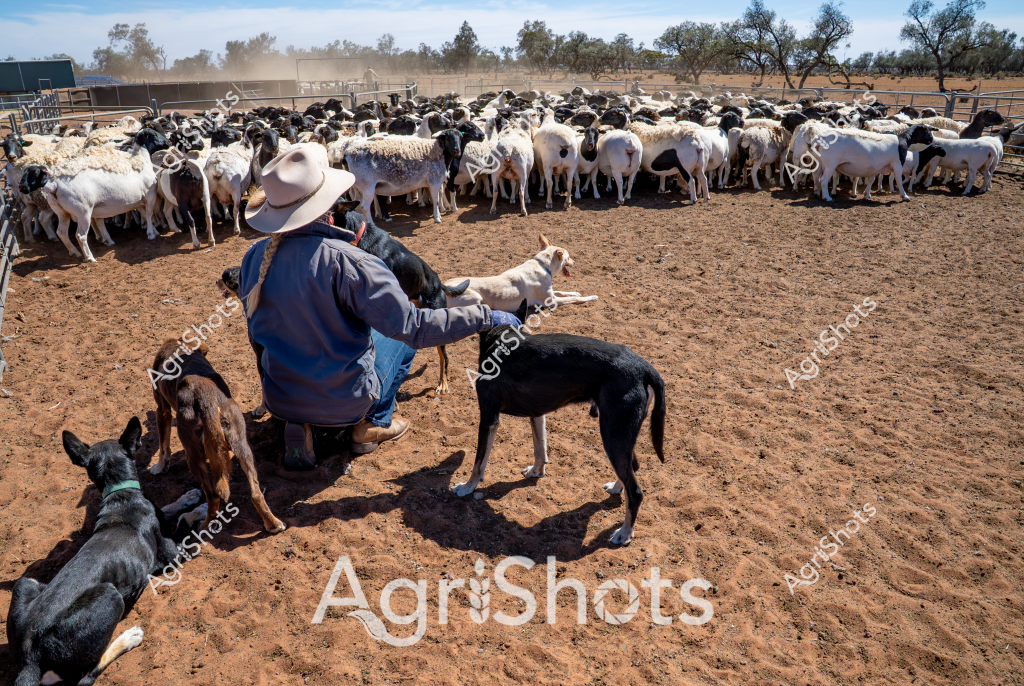
A skilled stockman wearing a wide-brimmed hat and blue work jacket manages a large herd of white goats in a dusty livestock yard. Several black working dogs sit attentively near him, ready to assist with herding. The compact goat herd is tightly clustered within metal livestock yards, with sparse trees and a clear blue sky visible in the background. The dry, reddish-brown earth and packed dirt yard indicate an arid Australian pastoral setting, likely in a regional Queensland or Northern Territory station. The stockman appears to be directing or preparing to move the herd, with his body language suggesting years of experienced livestock management. The goats, predominantly white with some black individuals, are clustered closely together, demonstrating the typical behavior of a well-managed mob.
 Image
Image
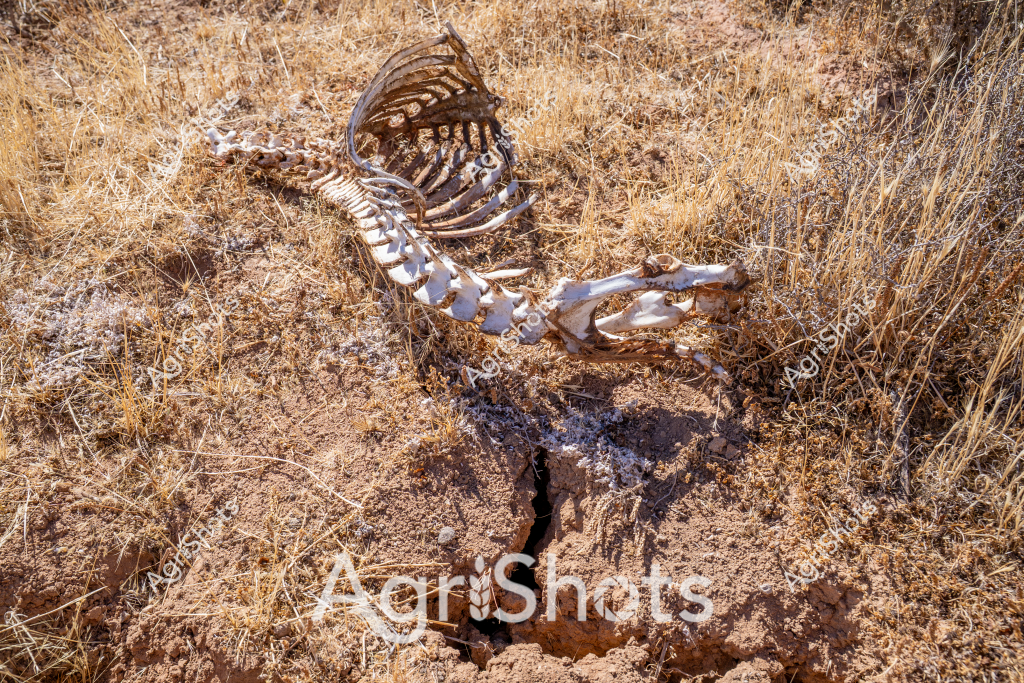
A skeletal remains of an animal lies exposed in a dry, golden grassland, partially nestled in a small eroded ground crack. The bleached white bones are fully articulated, showing the complete skeletal structure from skull to tail, with the ribcage prominently curved and limbs extended. Surrounding the skeleton is a landscape of drought-parched grass in shades of tan and brown, with sparse, weathered vegetation indicating harsh environmental conditions. The skeletal remains appear to have been naturally exposed by environmental processes, suggesting a potentially long period of decomposition in this arid setting. The stark white bones create a striking contrast against the muted, sun-bleached landscape, offering a raw and unfiltered glimpse of the natural cycle of life and death in an unforgiving ecosystem.
 Image
Image
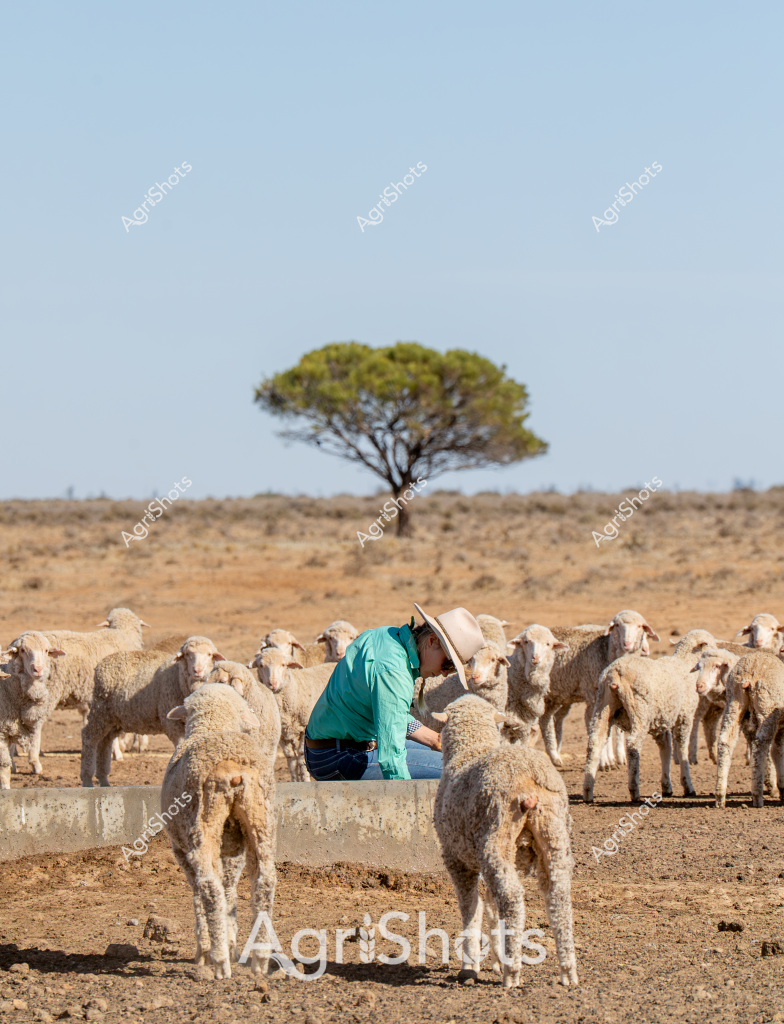
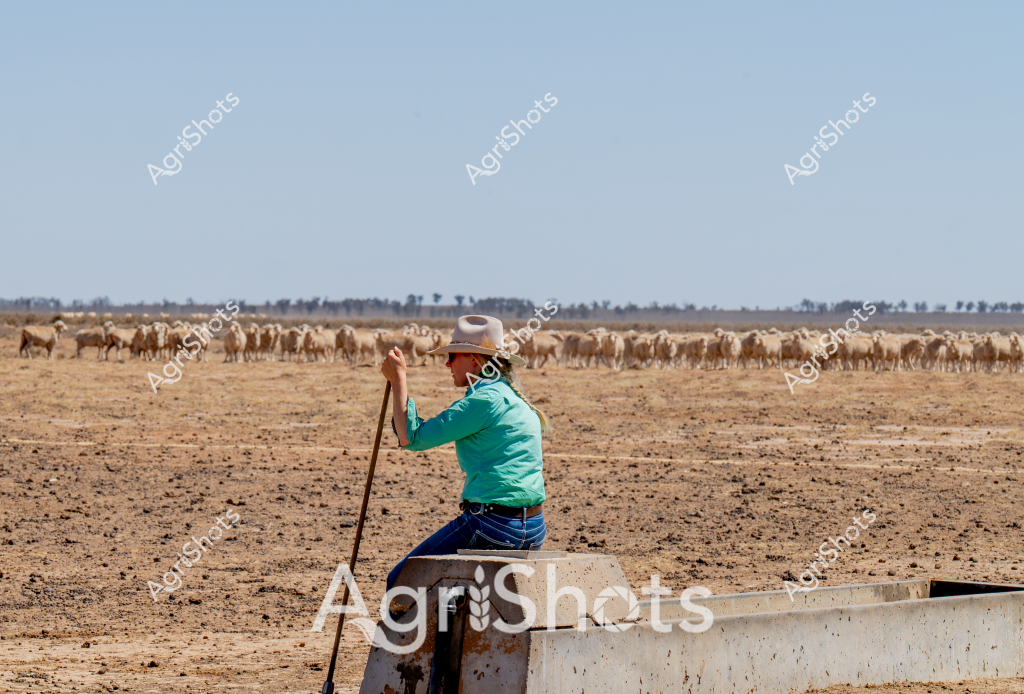
A dedicated woman stockman tends to a flock of Merino sheep in a sparse, arid landscape. Wearing a teal green shirt and a wide-brimmed sun hat, she carefully works among the woolly white sheep gathered around a concrete trough. The barren paddock stretches out to the horizon, with a single, distinctive acacia tree standing solitary against the pale blue sky, symbolizing the resilience of Australian pastoral life. The sheep, with their dense, cream-colored fleece, cluster tightly around the water source, highlighting the critical importance of water management in this dry environment. The ground is hard-packed and dusty, indicating challenging drought conditions typical of many Australian rural regions. The woman's posture and careful attention suggest years of experience in managing livestock in harsh agricultural settings. This image captures the essence of Australian sheep farming - the intimate relationship between the stockman and the flock, the stark beauty of the landscape, and the ongoing challenge of sustaining agriculture in a challenging environment. The scene speaks to the skill, dedication, and adaptability required in Australian pastoral agriculture.
 Image
Image
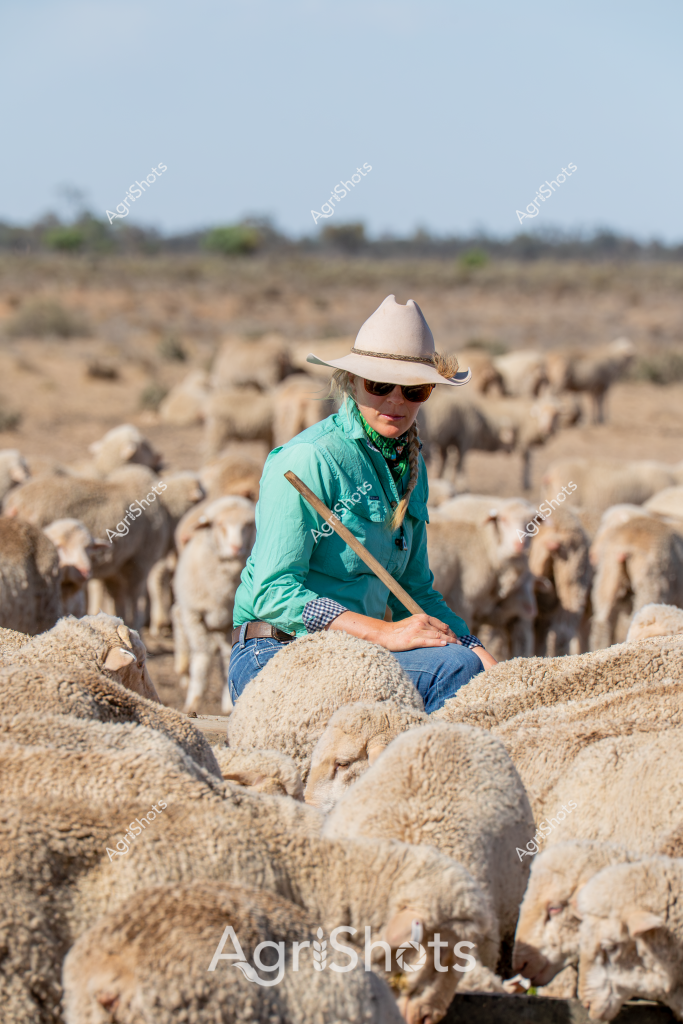
A woman stockman in a turquoise shirt and cream cowboy hat sits amid a large flock of Merino sheep in an arid Australian landscape. Wearing sunglasses and a green bandana, she rests on the woolly backs of the sheep, holding a long herding staff, demonstrating the traditional skills of rural sheep management. The landscape is a dusty, sparse paddock with scattered vegetation and distant trees on the horizon, typical of Australia's dry interior regions. The dense flock of cream-colored Merino sheep, known for their fine wool, are tightly clustered around her, creating a textural landscape of woolly bodies. Her posture suggests calm expertise, balancing comfortably among the animals she tends, embodying the resilience and skill of Australian rural workers. The muted earth tones of the background contrast with her bright turquoise shirt, creating a vibrant image of contemporary agricultural work.
 Image
Image
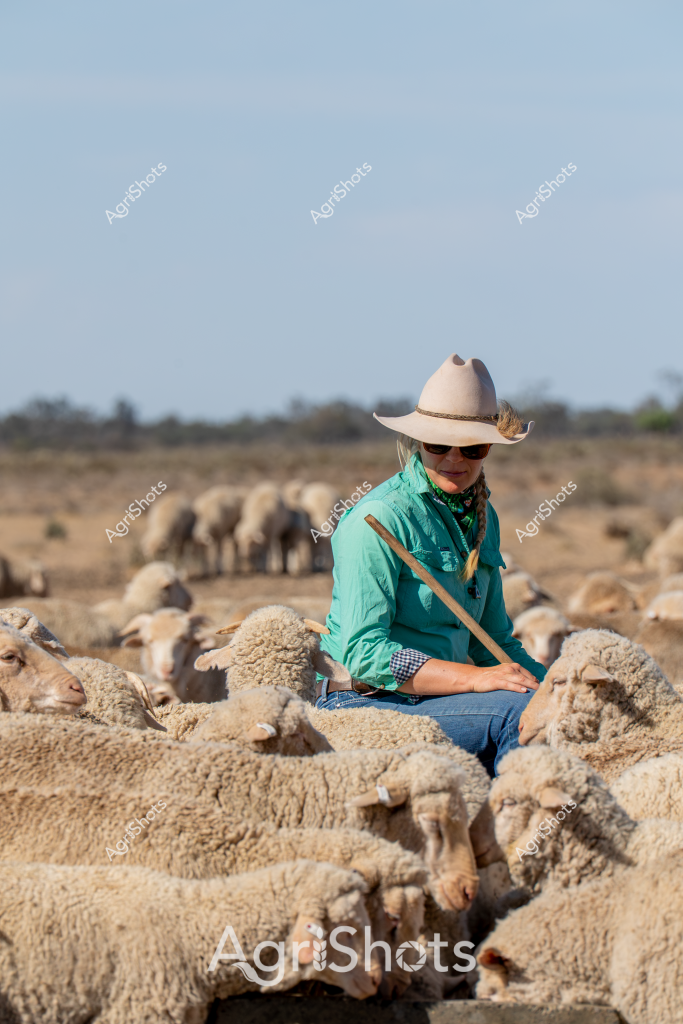
A woman stockman sits amid a flock of woolly Merino sheep in an arid Australian pastoral landscape. Wearing a light cream cowboy hat, turquoise long-sleeved shirt, and a green neckerchief, she appears relaxed and at ease surrounded by the livestock. The sheep densely populate the foreground and background, their thick fleece blending into the dry golden-brown grasslands and sparse vegetation. The clear blue sky and distant scrubland suggest this is likely a rural station in an inland region of Australia, possibly in Western Australia, New South Wales, or Queensland. Her positioning within the flock indicates a calm, confident approach to livestock management, demonstrating the close relationship between Australian farmers and their animals. The image captures the quiet resilience and connection to the land that characterizes rural agricultural work.
 Image
Image
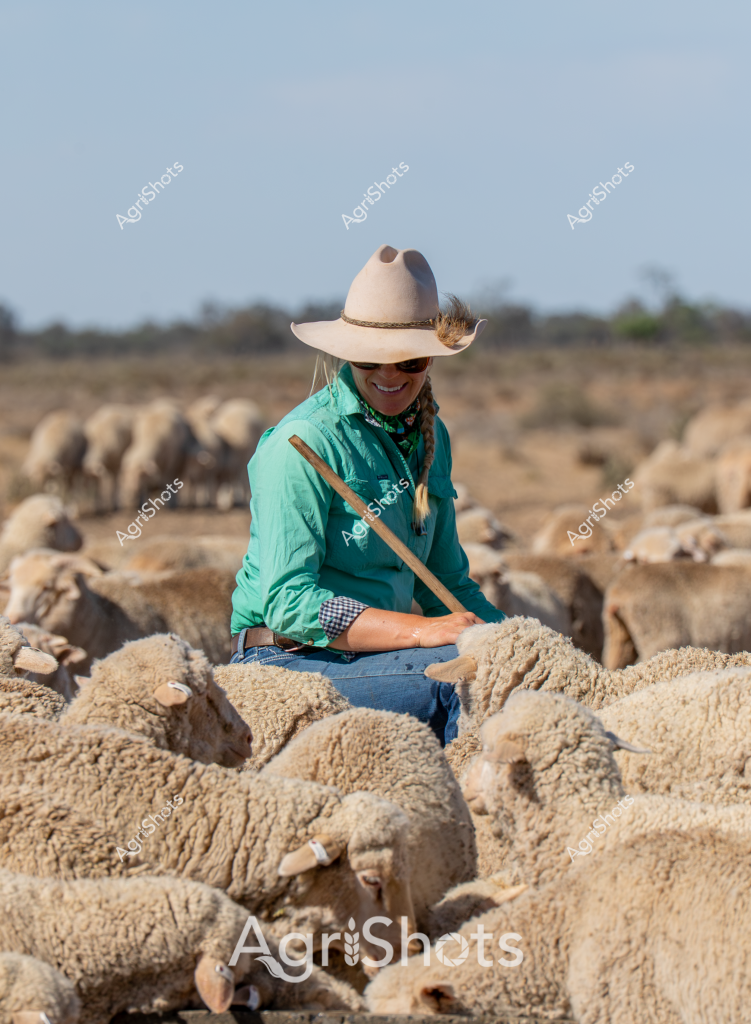
A woman sheep farmer sits amid a large flock of woolly Merino sheep in an arid Australian pastoral landscape. Wearing a classic wide-brimmed cream cowboy hat and a bright turquoise long-sleeved shirt, she appears relaxed yet focused, perched atop the dense mass of sheep. Her green shirt with a subtle print and blue jeans blend with the earthy, muted tones of the surrounding dry grasslands and distant scrubby vegetation. A wooden staff rests across her lap, suggesting her role in guiding and managing the flock. The sheep, with their thick, uniform cream-colored fleece, are tightly clustered, creating a textural landscape of woolly bodies that stretches across the foreground and background. The clear blue sky and open terrain evoke the quintessential Australian rural setting, highlighting the connection between the farmer and the livestock in this expansive, challenging environment.
 Image
Image
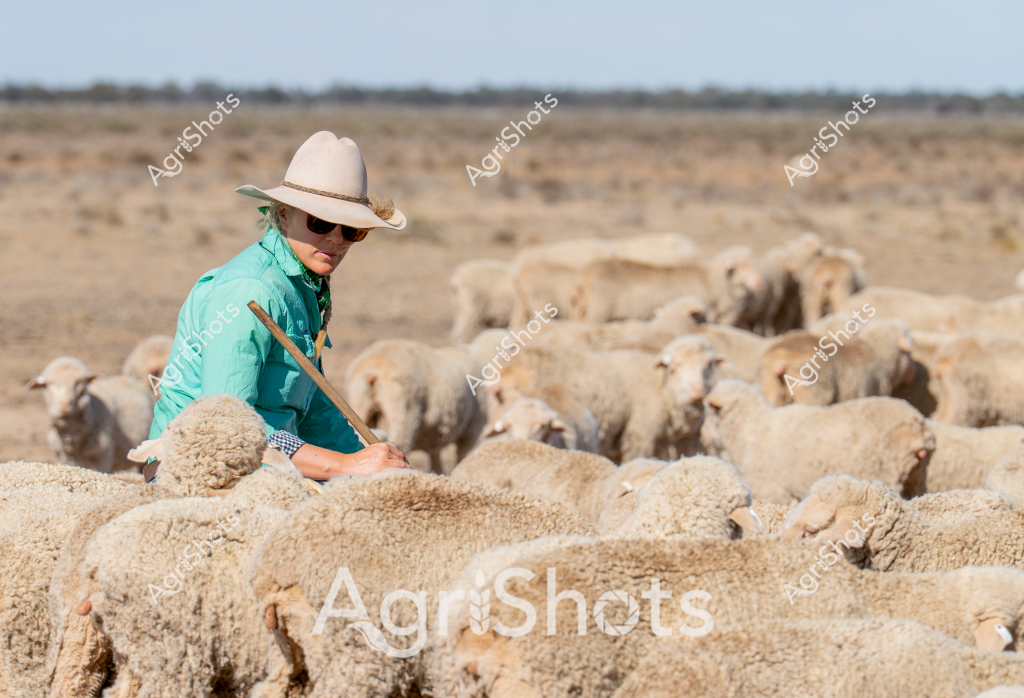
A woman stockman in a bright turquoise shirt and wide-brimmed sun hat carefully moves among a dense flock of Merino sheep in a dry, expansive Australian pastoral landscape. The woolly sheep, with their thick creamy fleece, are tightly clustered across the arid paddock, their bodies creating a uniform sea of soft texture against the dusty brown ground. She carries a long wooden stock stick, using it to gently guide and manage the flock, demonstrating the skilled and attentive work of a professional livestock manager in the harsh Australian outback. The surrounding environment is characteristically sparse - a wide horizon of muted greys and browns stretches out behind her, with scattered low scrub and distant treelines indicating the challenging agricultural terrain. Her protective clothing - sunhat, sunglasses, and long-sleeved shirt - speaks to the intense solar conditions typical of rural Australian sheep country. This scene captures the essence of Australian pastoral agriculture: a lone skilled worker carefully tending a valuable Merino wool flock in a demanding landscape, representing generations of agricultural expertise and resilience.
 Image
Image
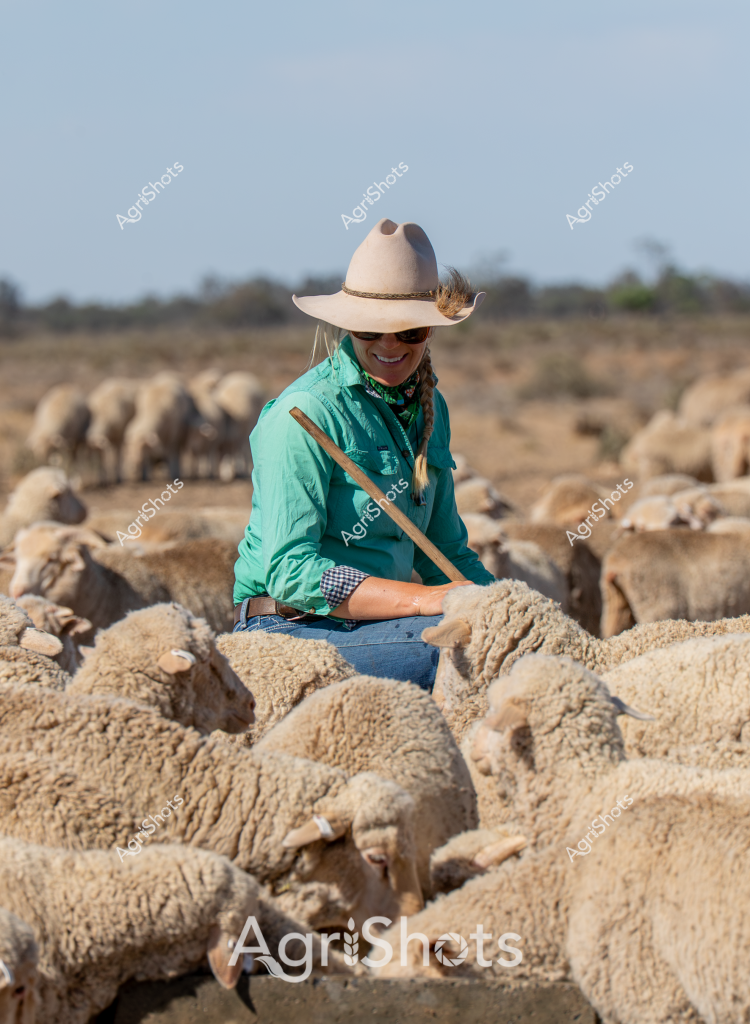
A woman shepherd sits among a flock of Merino sheep in a dry, sparse landscape, wearing a cream-colored wide-brimmed hat and a vibrant teal shirt. Her calm demeanor and confident posture suggest years of experience managing livestock across the Australian outback. The woolly sheep crowd around her, their thick fleeces a uniform beige that blends with the dusty, rocky terrain stretching to the distant horizon. Holding a herding staff and dressed in practical working attire - denim jeans and a checked shirt sleeve - she appears completely at ease in the midst of the flock. The clear sky and open landscape emphasize the isolation and challenging environment of sheep farming in rural Australia. Her outfit and positioning highlight the skill and resilience required to manage livestock in such demanding conditions, embodying the spirit of Australian agricultural workers.
 Image
Image
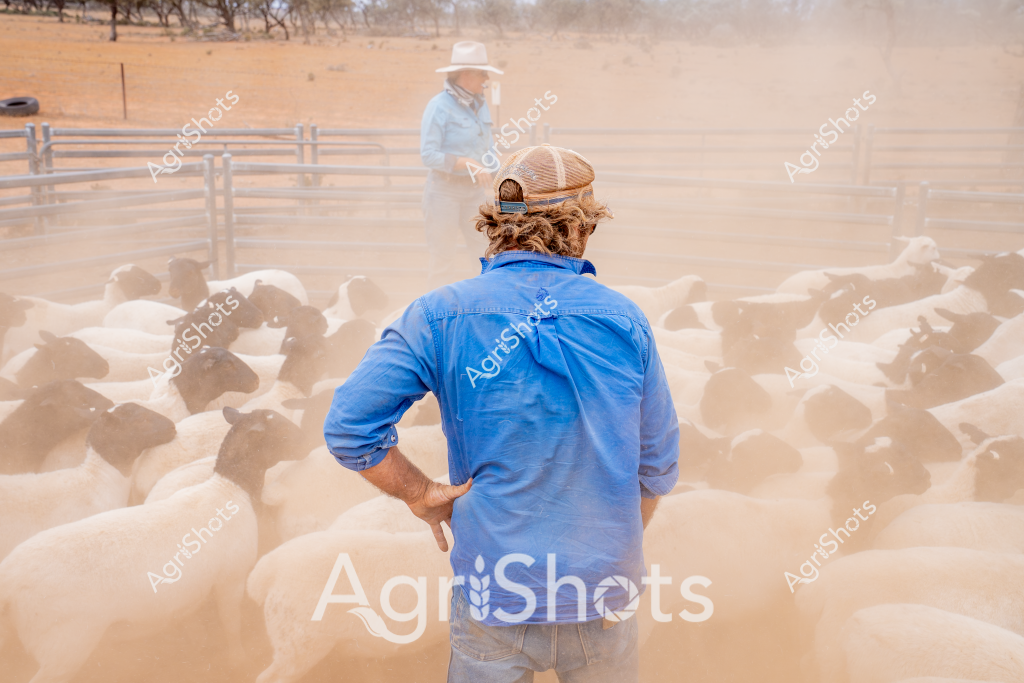
A stockman in a bright blue shirt and peaked cap stands among a large flock of sheep in a dusty rural paddock. Another person is visible in the background, blurred by the swirling dust kicked up by the sheep's movement. The scene captures the intensity of mustering, with the stockman standing firmly, hands on his hips, overseeing the tightly packed mob of sheep within a metal pipe rail yard. The landscape is dry and arid, with a sandy-colored ground and sparse vegetation visible in the distance. Dust billows around the sheep, creating a hazy atmosphere that speaks to the challenging conditions of Australian livestock management. The stockman's blue shirt stands out against the neutral tones of the environment, highlighting the human presence in this rugged agricultural setting. This image encapsulates the essence of sheep farming in regional Australia - the hard work, the dust, the vast open spaces, and the careful management of livestock in challenging environmental conditions. The scene conveys a sense of resilience and skill typical of Australian rural workers managing their herds in harsh landscapes.
 Image
Image
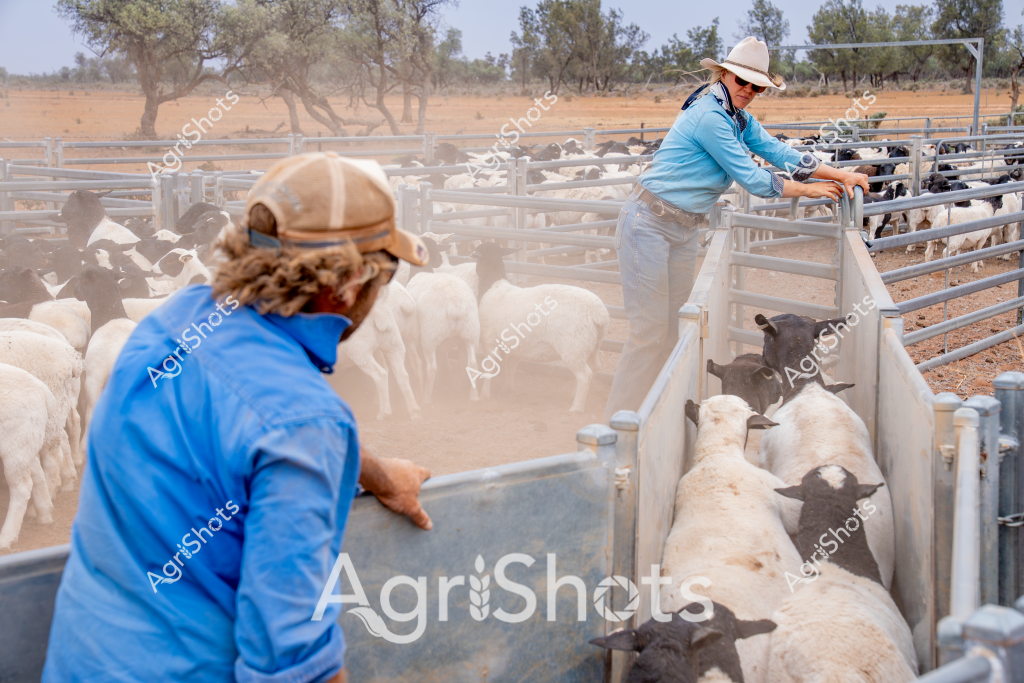
Two women livestock managers work together in a dusty sheep yard, carefully guiding a mob of white and black sheep through metal livestock gates and narrow race. Wearing blue long-sleeved shirts and wide-brimmed hats for sun protection, they move deliberately and professionally, managing the flow of animals in a dry, arid paddock with scattered eucalyptus trees in the background. The intense cloud of dust kicked up by the sheep's movement suggests a hot, dry day typical of Australian rural agricultural conditions. Metal livestock handling infrastructure allows precise movement and control of the flock, highlighting the skill and expertise required in modern sheep management. The rugged landscape and methodical work illustrate the challenging yet essential nature of livestock production in Australia's demanding rural environments.
 Image
Image
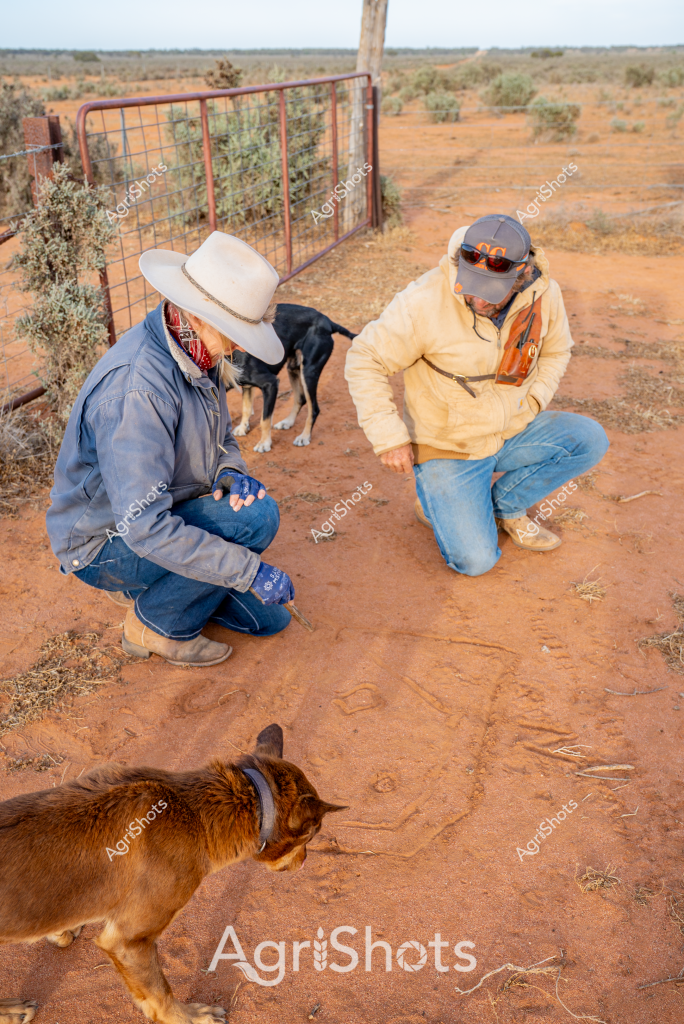
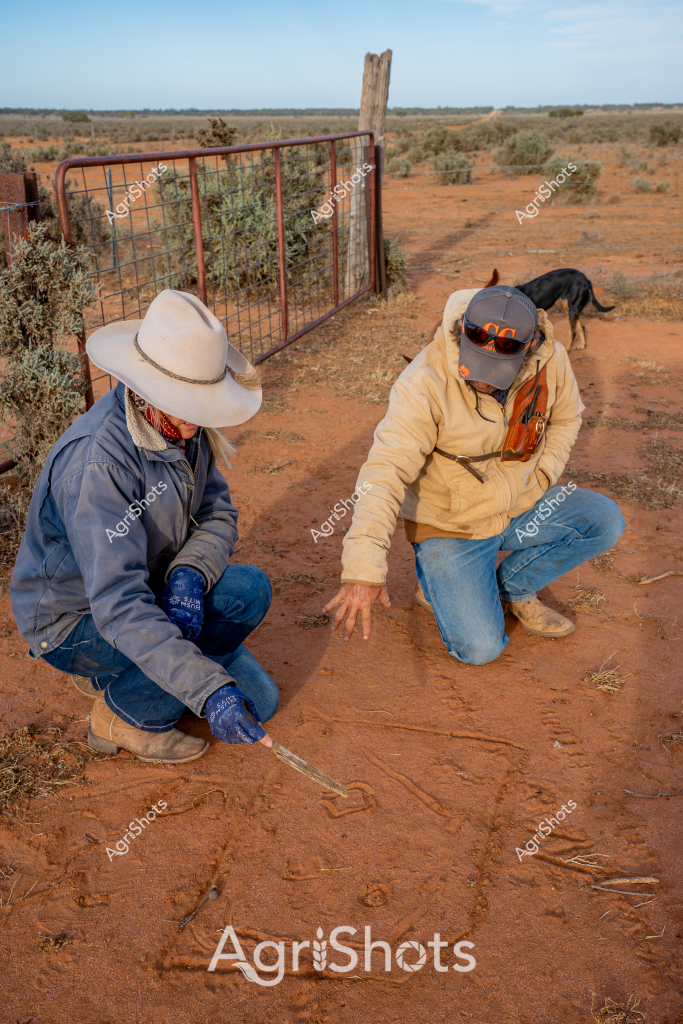
Two men work together in a dry, arid landscape, crouching on red earth surrounded by sparse desert vegetation. One wears a white wide-brimmed hat and blue denim work clothing, while the other is dressed in a light yellow jacket and wearing sunglasses and a cap. Multiple working dogs are present - a dark-colored dog and a reddish-brown dog with a collar, both attentive and close to their handlers. The scene captures a typical rural Australian outback setting, with a wire gate visible in the background and scrubby bushes dotting the reddish sandy ground. The men appear to be examining something on the ground, perhaps tracking, investigating animal signs, or discussing stock management. Their postures suggest collaboration and shared expertise in managing livestock or conducting rural work. The landscape is quintessentially Australian - a harsh, open terrain with minimal vegetation, characteristic of central or western regions where pastoral stations cover vast distances. The men's protective clothing - wide-brimmed hat, sunglasses, long sleeves - indicates adaptation to intense sunlight and challenging environmental conditions typical of remote agricultural areas. Their working dogs demonstrate the crucial role of canine companions in Australian rural work, likely trained for mustering, tracking, or providing support in managing livestock across expansive properties.
 Image
Image
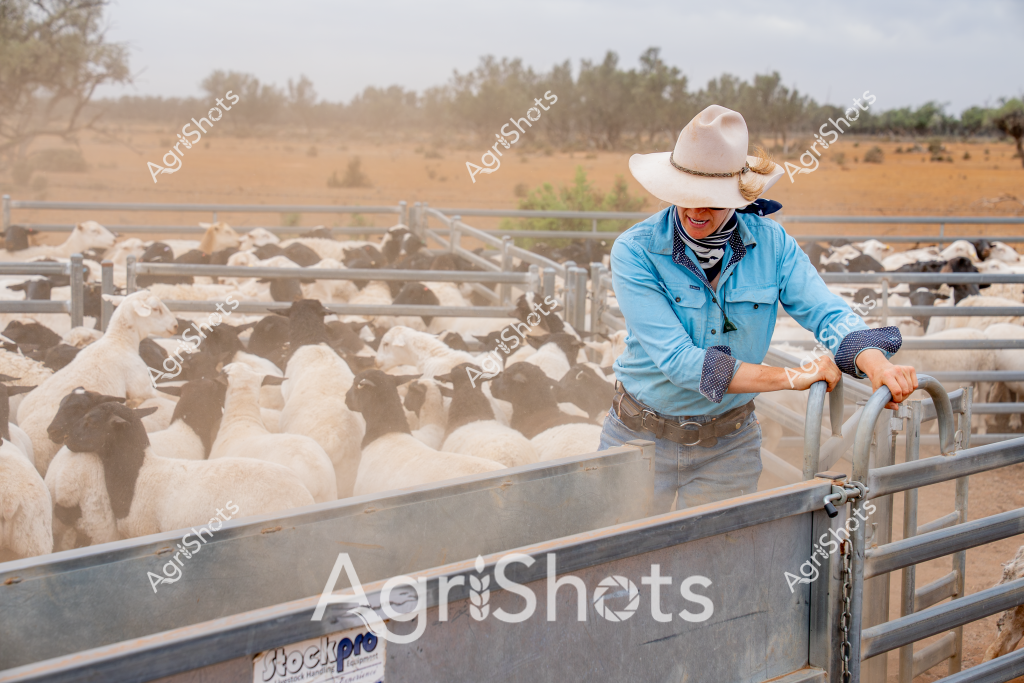
A woman stockman stands at a metal livestock gate, overseeing a large flock of sheep in a dusty rural paddock. Wearing a wide-brimmed light-colored hat, blue long-sleeved work shirt, and denim pants, she leans against a metal livestock trailer labeled "Block Pro". The sheep - a mix of white and dark-colored animals - are densely packed within metal yard panels, creating a textured landscape of woolly bodies and angular metal infrastructure. The background reveals a typical Australian pastoral scene: sparse trees, dry golden-brown ground, and a hazy horizon suggesting warm, arid conditions. Her posture suggests careful observation and professional control, embodying the quiet expertise of rural agricultural workers. Dust hangs in the air, adding a sense of atmospheric depth to the scene and highlighting the challenging environmental conditions of the landscape. The image captures a quintessential moment of livestock management, showcasing the connection between a skilled stockwoman and the flock in a classic Australian agricultural setting. Her attentive stance and the carefully arranged sheep yards speak to the precision and skill required in rural livestock operations.
 Image
Image
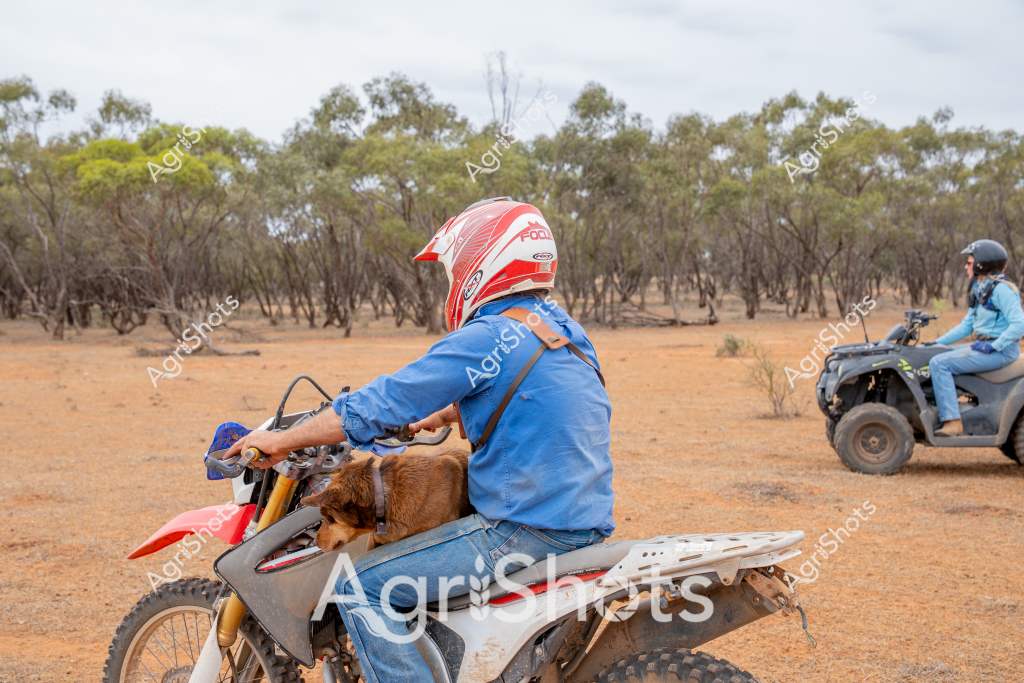
A man on a dirt bike navigates through a dry, open bushland setting, with a goat riding along in front of him. Wearing a red and white helmet and a blue long-sleeved shirt, the rider is seated on a red and white dirt bike with knobby off-road tires. In the background, another person can be seen operating an all-terrain vehicle (ATV) across the arid landscape. The environment is classic Australian outback - sparse eucalyptus trees scattered across a reddish-brown earth paddock, with dry ground and minimal ground cover indicating challenging drought or dry seasonal conditions. The rider is transporting the goat, likely moving it between paddocks or assisting with farm management tasks. The scene captures the rugged nature of rural Australian agricultural work, where versatile vehicles and adaptable farming practices are essential for managing livestock and navigating challenging terrain. The dirt bike provides mobility across uneven ground, demonstrating the practical and innovative approach to farm transportation in remote agricultural settings.
 Image
Image
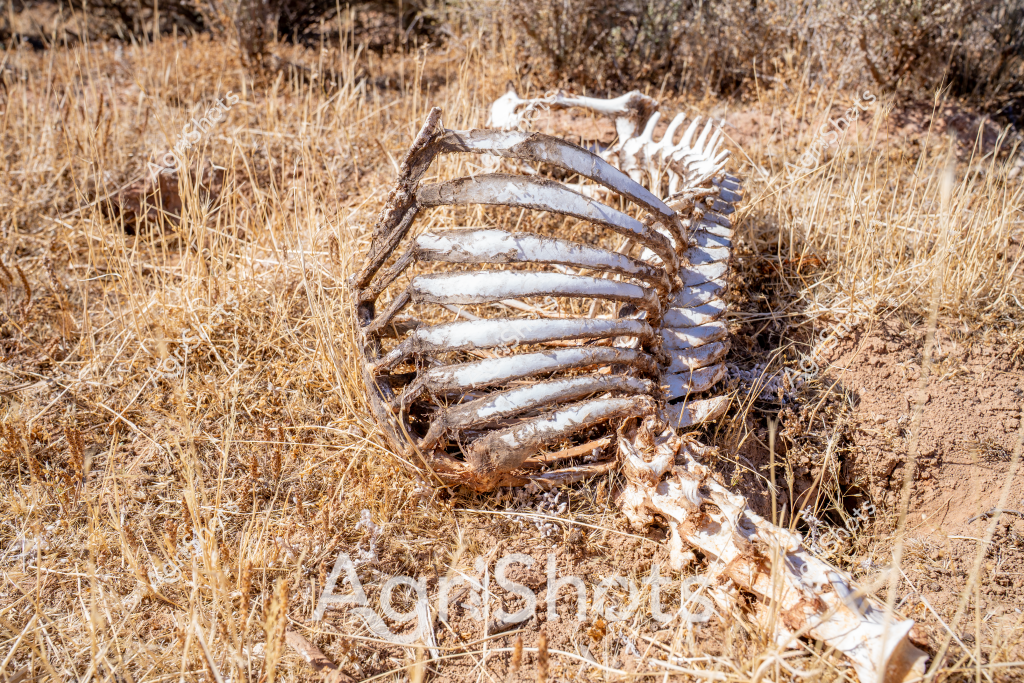
A skeletal ribcage of an animal, likely a large mammal, lies decomposing in dry golden grassland. The bleached white bones are fully exposed, with the curved ribs still connected to the spine, creating an arc-like structure against the sun-dried grass and sparse shrubs. The skeletal remains appear weathered and bleached by extended exposure to the elements, suggesting this is an arid or semi-arid landscape typical of Australian outback or pastoral regions. Scattered around the bones are tufts of dry, straw-colored grass, indicating a potentially drought-affected environment where vegetation is sparse and brittle. The stark white of the bones contrasts sharply with the muted browns and tans of the surrounding landscape, creating a powerful visual representation of the harsh ecological conditions and the cyclical nature of life and death in challenging agricultural terrain.
 Image
Image
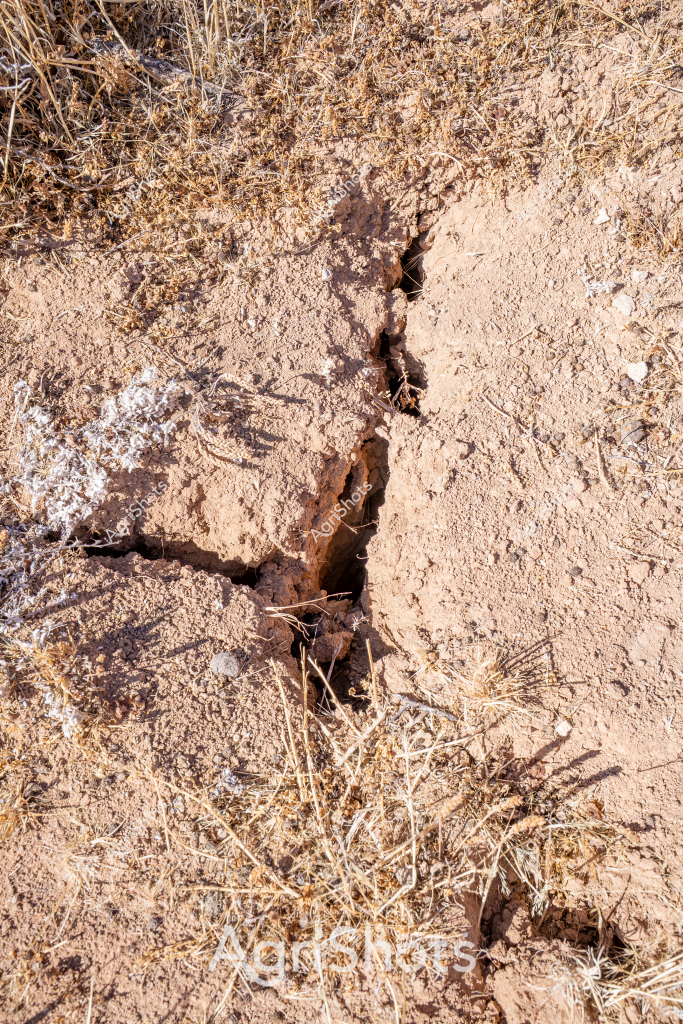
A deep, cracked earth reveals the harsh reality of drought conditions in this stark agricultural landscape. The ground is parched and fractured, with wide fissures splitting the dry, sandy soil, creating a network of deep crevices that stretch across the frame. Sparse, yellowed grass and dry vegetation cling to the edges of the cracking ground, highlighting the extreme dryness and water stress affecting the land. The earthy tones of tan, brown, and pale straw-colored vegetation emphasize the severity of the environmental conditions, presenting a raw and unforgiving portrayal of agricultural challenges during prolonged dry periods. This image powerfully captures the physical manifestation of drought, showing how the lack of moisture can literally tear the earth apart, creating a landscape that speaks to the resilience and hardship of Australian rural environments.
 Image
Image
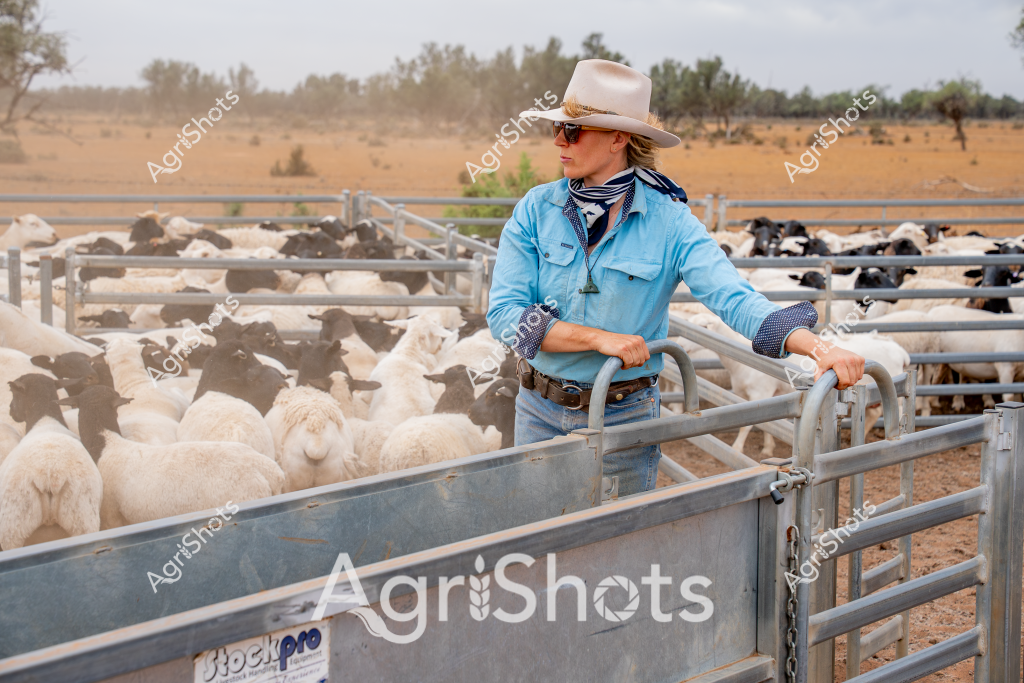
A woman stockman stands near metal livestock yards, surveying a flock of white and dark-colored sheep in a dry, arid landscape. Wearing a light blue long-sleeved shirt, a cream-colored wide-brimmed hat, and sunglasses, she leans against the metal gate of a 'Block Pro' livestock trailer. The surrounding paddock is a dusty golden-brown, with sparse trees and scrubland stretching to the horizon, indicating challenging drought conditions typical of Australian rural landscapes. The sheep are densely packed in separate yards, with white and dark-colored animals grouped together, suggesting careful livestock management. Her stance is watchful and professional, reflecting the expertise required in managing livestock in harsh agricultural environments. The blue of her shirt contrasts sharply with the muted tones of the dry landscape, highlighting the resilience of farmers working in challenging conditions. This image captures the essence of Australian agricultural life - a skilled stockwoman tending the flock in a demanding rural setting, embodying the strength and dedication of farmers who work closely with their animals in some of the country's most unforgiving terrains.
 Image
Image
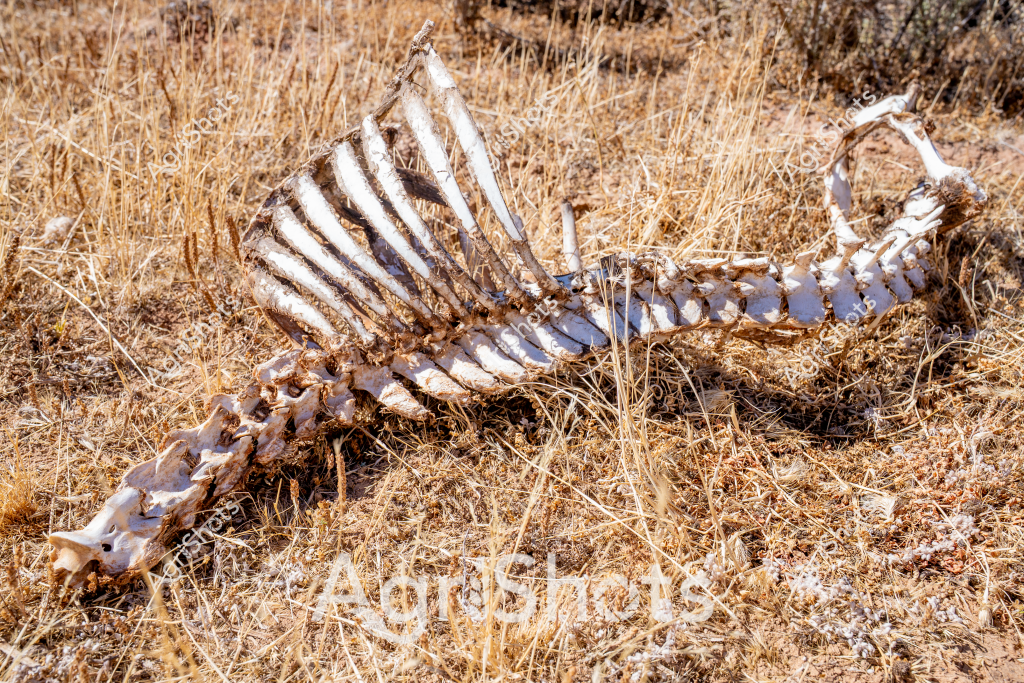
A skeletal remains of an animal, likely a large mammal, lies decomposing in dry golden grasslands. The bleached white bones are completely exposed, with vertebrae, ribs, and skeletal structure clearly visible against the sun-bleached grass and sparse shrubs. The skeleton appears weathered and scattered, suggesting it has been exposed to the elements for an extended period. The arid, drought-like environment indicates a harsh landscape where animal mortality is a natural part of the ecosystem's cycle. Subtle earth tones of browns and tans dominate the scene, creating a stark and somber portrait of the raw, unforgiving nature of an agricultural or wilderness landscape.
 Image
Image
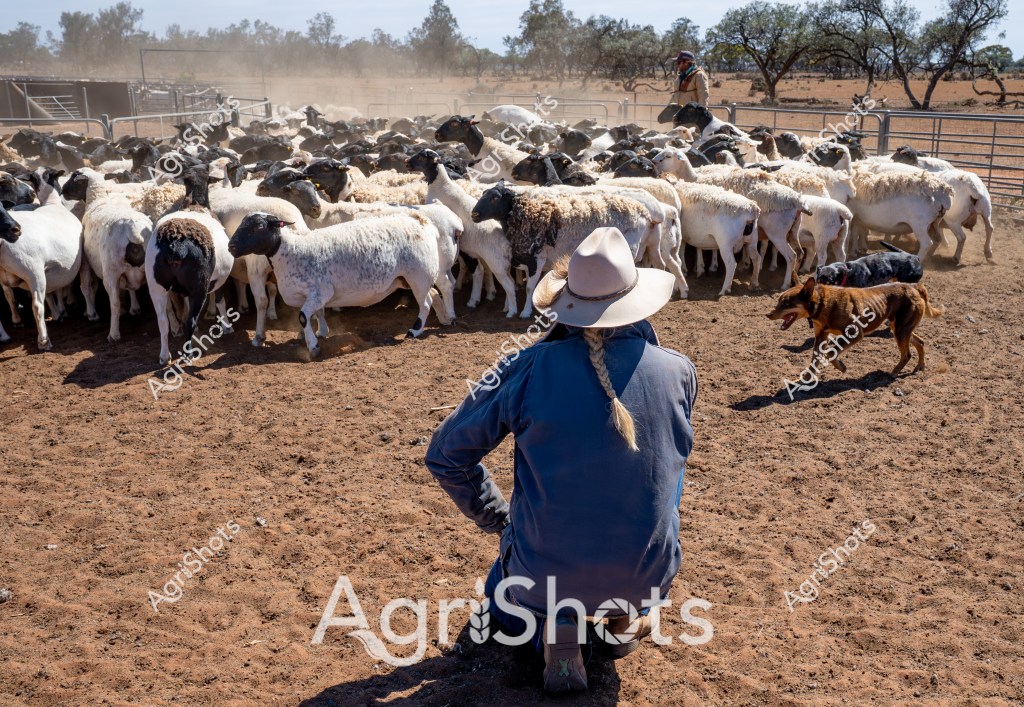
A woman stockman in a blue jacket and wide-brimmed hat stands with her back to the camera, overseeing a large mob of white and black-faced sheep in a dry, dusty yard. The livestock appear to be Dorper or Merino-cross sheep, tightly clustered within metal livestock panels in an arid Australian landscape. Sparse eucalyptus trees and a distant fenceline provide context to the rural setting, while a working dog moves along the periphery of the flock. The ground is hard-packed and reddish-brown, indicating dry conditions typical of inland pastoral regions. The scene captures the essence of Australian sheep farming, with the stockwoman's stance suggesting quiet control and years of experience managing livestock in challenging environments.
 Image
Image
Two workers examine ground tracks in an arid Australian outback landscape, carefully studying animal or wildlife movement patterns. A man wearing a white wide-brimmed hat and blue work jacket and another worker in a light yellow jacket and cap crouch down on the deep rusty-red soil, intently tracing markings on the ground. A black dog stands in the background near a wire mesh gate, surveying the sparse landscape of low scrub and distant horizon. The environment suggests a remote station or rural property, with scattered saltbush and sparse vegetation typical of central Australian terrain. The workers appear to be conducting environmental tracking, wildlife monitoring, or land management research, demonstrating the meticulous observation skills required in rural Australian agricultural and conservation work. The scene captures the essence of outback fieldwork - two experienced professionals using close observation and local knowledge to understand subtle environmental indicators. Their careful postures and focused examination of ground tracks reveal the deep connection between agricultural workers and the landscape, highlighting the importance of detailed environmental understanding in managing remote Australian properties.
 Image
Image
A woman stockman sits atop a concrete water trough, surveying a large herd of light-colored cattle grazing across a dry, dusty paddock under a pale blue sky. Wearing a green shirt, blue jeans, and a wide-brimmed hat, she leans on a long wooden stock stick, embodying the resilient spirit of Australian rural life. The landscape appears parched and sun-baked, with sparse vegetation and a distant line of trees marking the horizon, suggesting challenging drought conditions typical of inland Australia. The herd, likely beef cattle, spreads out across the expansive golden-brown landscape, their pale bodies creating a textured pattern against the arid ground. The scene captures the essence of pastoral management - a lone stockwoman monitoring the livestock in a harsh, unforgiving environment that demands constant vigilance and skill. Her posture and positioning reveal an intimate connection with the land and the animals, representing the enduring tradition of Australian agriculture. This image powerfully illustrates the challenging conditions faced by farmers and livestock managers in rural Australia, where survival depends on careful stewardship and adaptability in an often unforgiving landscape.
 Image
Image
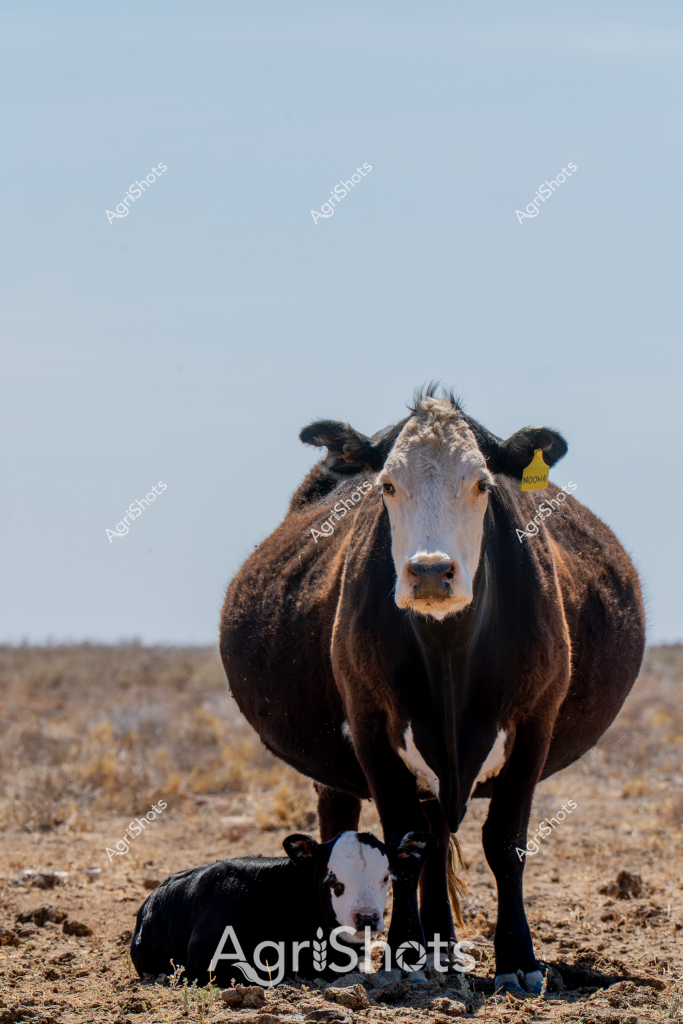
A robust black and white beef cow stands confidently in an arid, rocky landscape, with her newly born black and white calf resting at her feet. The mature cow wears a yellow ear tag, indicating she is part of a managed livestock herd, likely in a dry inland region of Australia. Her sturdy build and protective stance suggest she is a high-quality beef breed, possibly an Angus or Hereford cross, well-adapted to harsh pastoral conditions. The surrounding terrain is sparse and rocky, with minimal vegetation - characteristic of drought-affected or semi-arid grazing lands typical of central or western Australian cattle stations. The pale blue sky and flat horizon emphasize the expansive, unforgiving nature of the landscape. The cow's thick winter coat and the calf's close proximity to her mother hint at the challenges of survival in such an environment. The image captures a powerful moment of maternal protection and resilience, embodying the strength of Australian livestock and the enduring spirit of agricultural communities that thrive in challenging conditions. The close-up perspective allows viewers to appreciate the detailed markings, muscular structure, and stoic demeanor of this cattle breeding pair.
 Image
Image
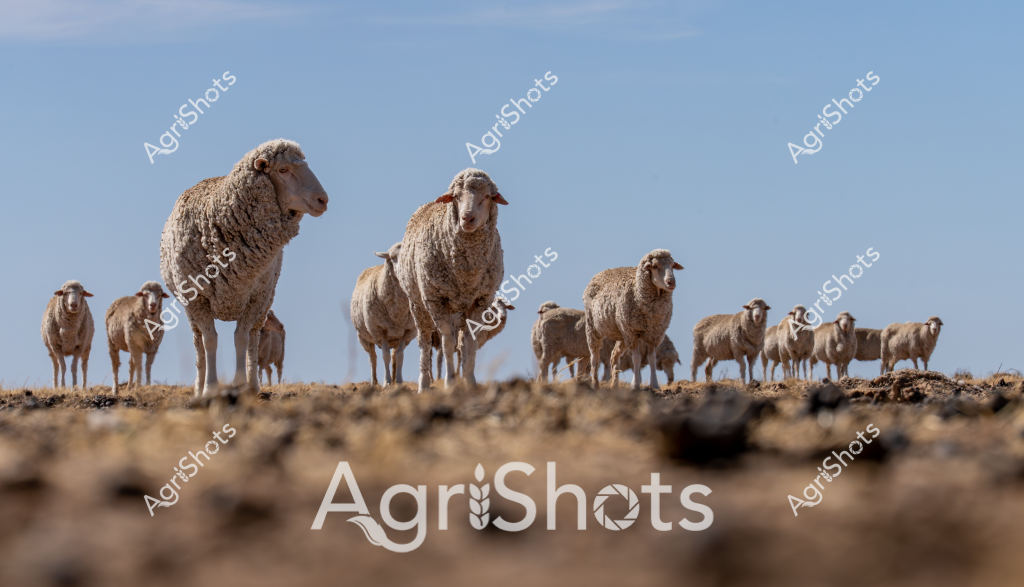
A majestic flock of Merino sheep stands poised across a dry, rocky landscape under a clear blue sky. The woolly animals are clustered in groups, with several larger sheep prominently positioned at different heights, creating a striking silhouette against the barren ground. Their dense, cream-colored fleece suggests these are mature sheep, likely on a vast Australian pastoral station during the dry season. The sheep appear alert and grouped together, displaying the characteristic tight clustering behavior of Merinos in open grazing lands. From the smallest lambs to the larger ewes and rams, the flock demonstrates the robust nature of this breed, which is renowned for its ability to thrive in harsh Australian agricultural environments. The foreground shows a rocky, dusty terrain typical of arid grazing regions, highlighting the resilience of both the landscape and the livestock. The composition captures the essence of Australian sheep farming - a testament to the endurance of both the animals and the farmers who manage them. The graduated positioning of the sheep, from smaller groups in the background to larger, more prominent individuals in the foreground, creates a sense of depth and scale that emphasizes the vastness of the Australian pastoral landscape.