About this image
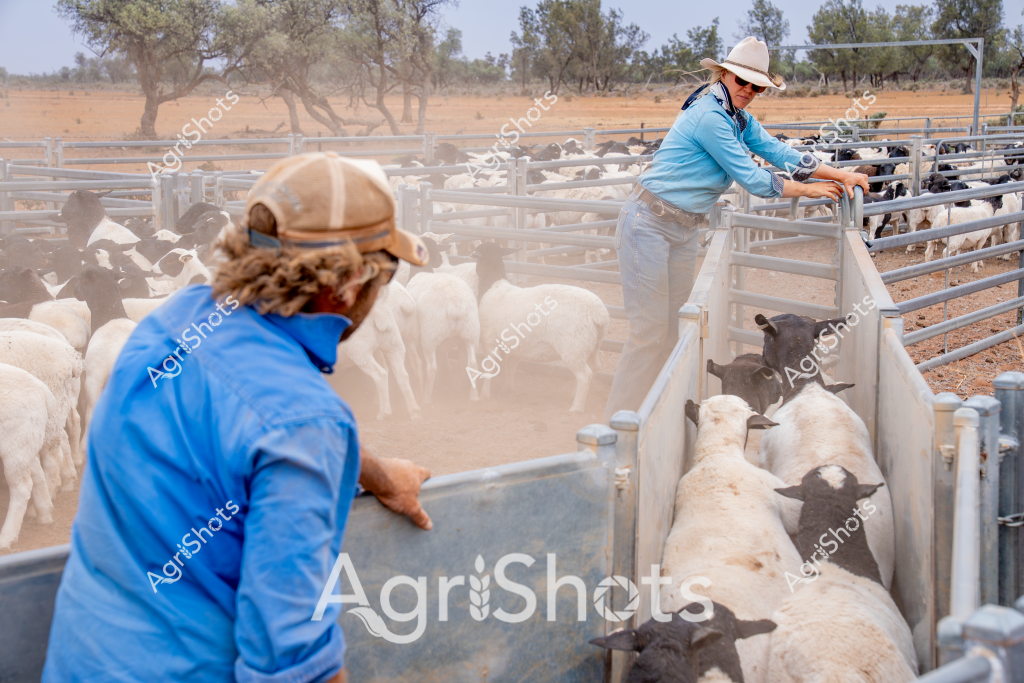
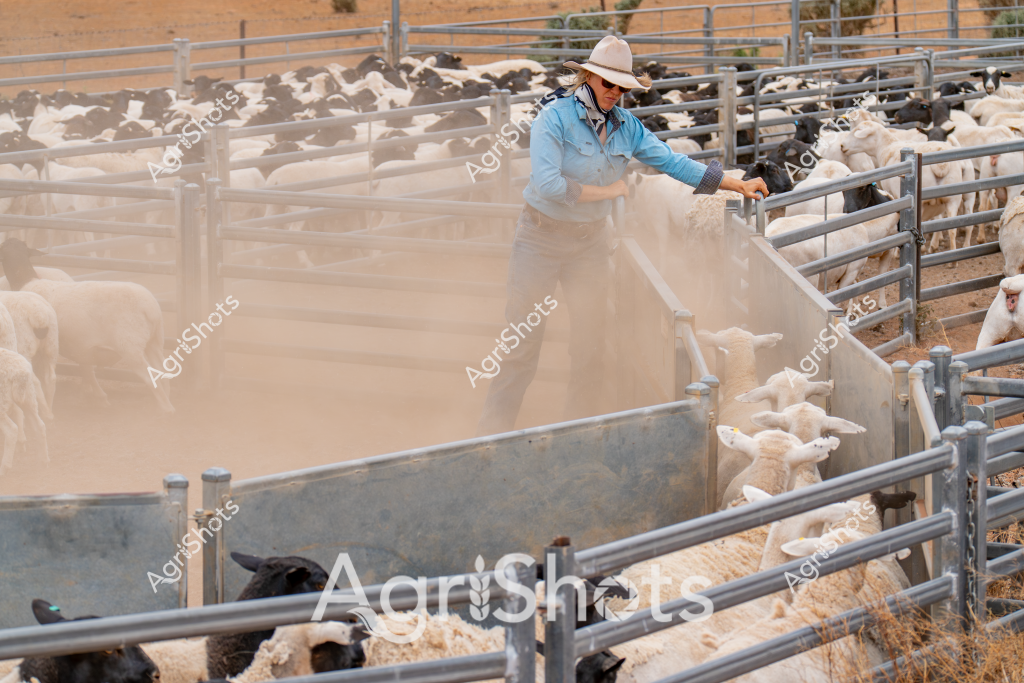
Two women livestock managers work together in a dusty sheep yard, carefully guiding a mob of white and black sheep through metal livestock gates and narrow race. Wearing blue long-sleeved shirts and wide-brimmed hats for sun protection, they move deliberately and professionally, managing the flow of animals in a dry, arid paddock with scattered eucalyptus trees in the background. The intense cloud of dust kicked up by the sheep's movement suggests a hot, dry day typical of Australian rural agricultural conditions. Metal livestock handling infrastructure allows precise movement and control of the flock, highlighting the skill and expertise required in modern sheep management. The rugged landscape and methodical work illustrate the challenging yet essential nature of livestock production in Australia's demanding rural environments.
Similar media
 Image
Image
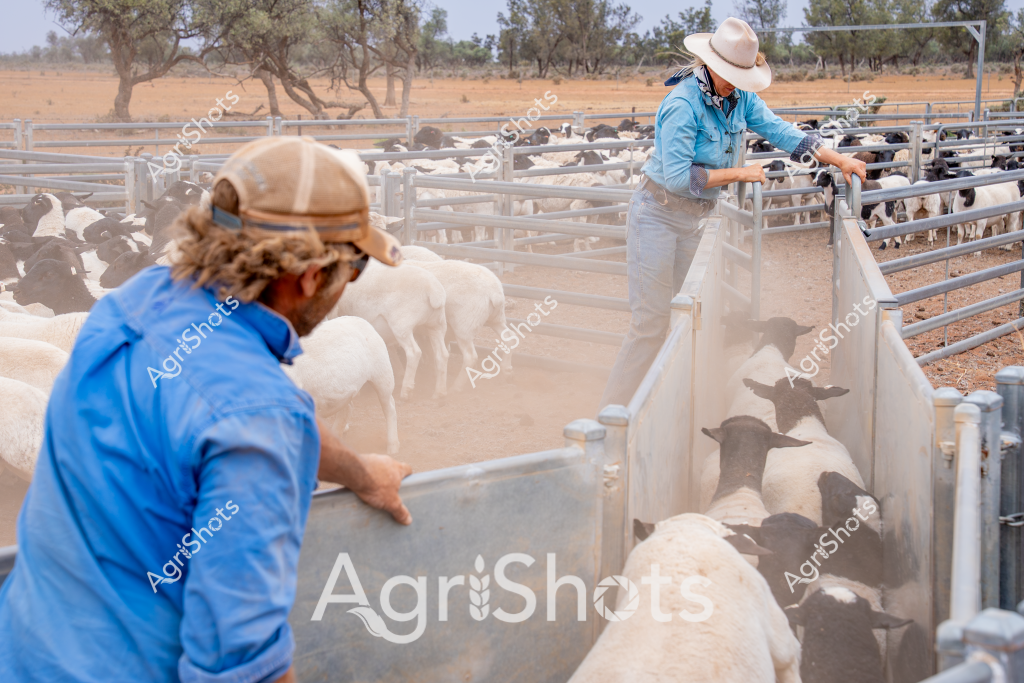
Two rural workers in blue shirts and wide-brimmed hats manage a herd of white goats in a dry, dusty livestock yard. The yard features metal livestock gates and pens, with sparse trees and arid landscape visible in the background. A woman in a light-colored hat and blue long-sleeved shirt stands near the gate, carefully managing the goat movement through a narrow chute. Another worker in a blue shirt observes from a nearby position, suggesting a collaborative approach to livestock handling. The scene captures the challenging environment of Australian pastoral agriculture, with red earth, metallic infrastructure, and resilient livestock reflecting the tough conditions of rural stock management. The workers' protective clothing - long-sleeved shirts, wide-brimmed hats, and sturdy work pants - indicates careful preparation for working in harsh, sun-exposed conditions typical of Australia's agricultural regions.
 Image
Image
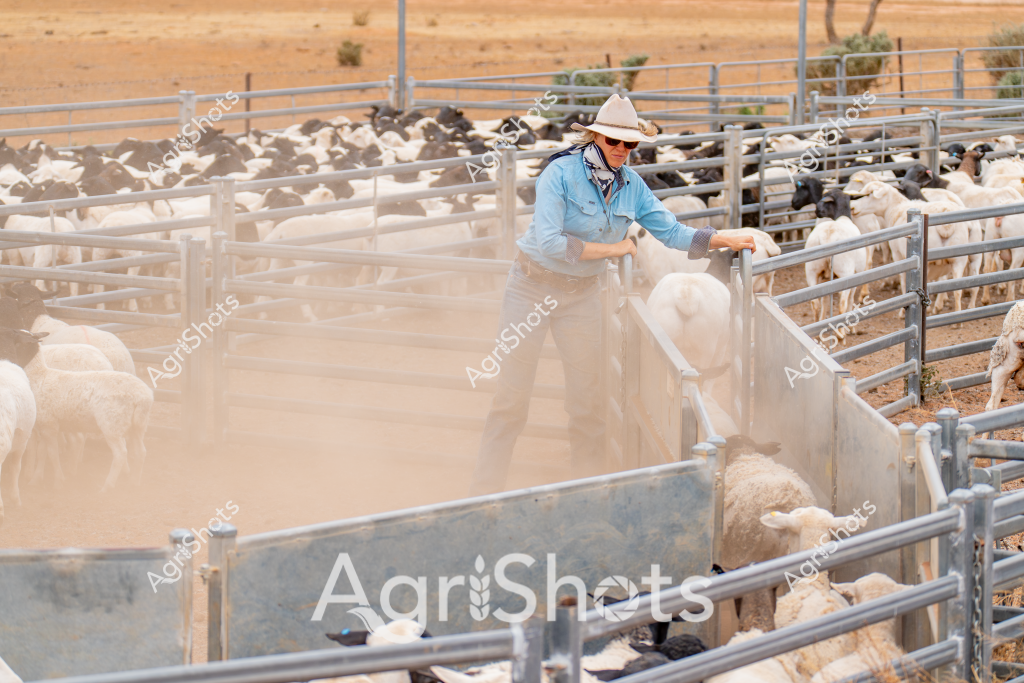
A man stockman wearing a white cowboy hat and blue work shirt manages a large flock of sheep in a dusty livestock yard. The metal cattle yards create a structured environment with multiple pens, surrounded by a dry, arid landscape typical of Australian pastoral regions. Numerous white and black sheep are densely packed within the metal fencing, creating a textured scene of agricultural activity. Dust rises around the working stockman as he carefully moves and directs the sheep, demonstrating the skill and physical demands of livestock management in challenging rural conditions. The harsh, golden-brown background suggests a hot, dry climate characteristic of inland Australian farming regions, highlighting the resilience required in agricultural work. The scene captures the essential work of livestock management, with the stockman's careful movements and the tightly controlled environment showing the precision of modern sheep farming practices. Sunlight and dust create a golden atmosphere, emphasizing the rugged nature of Australian agricultural landscapes and the ongoing work of managing livestock in challenging environmental conditions.
 Image
Image
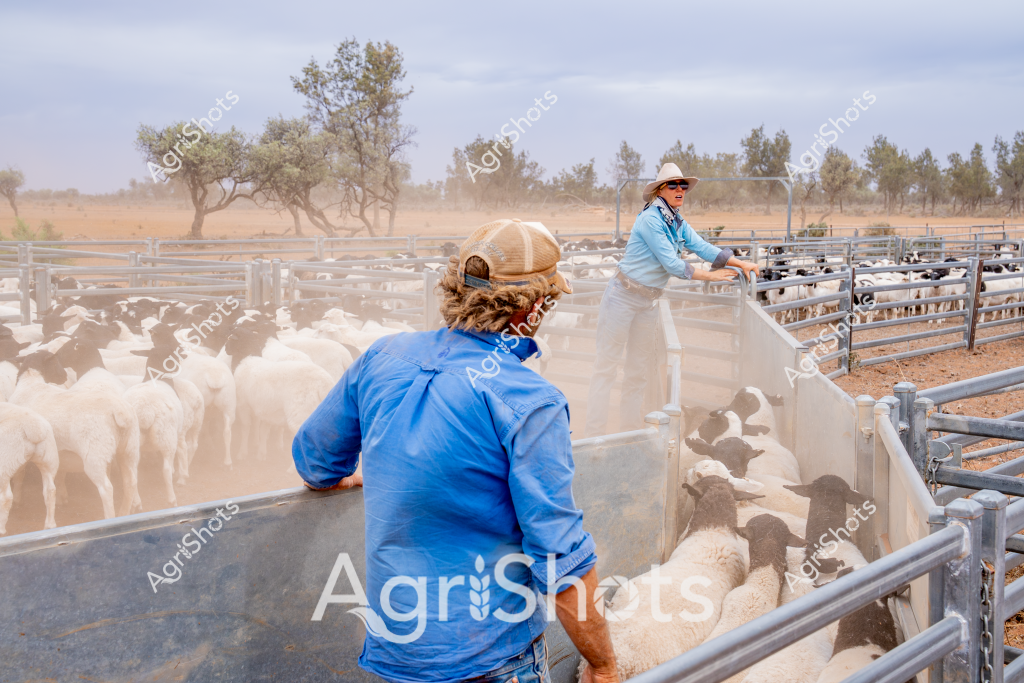
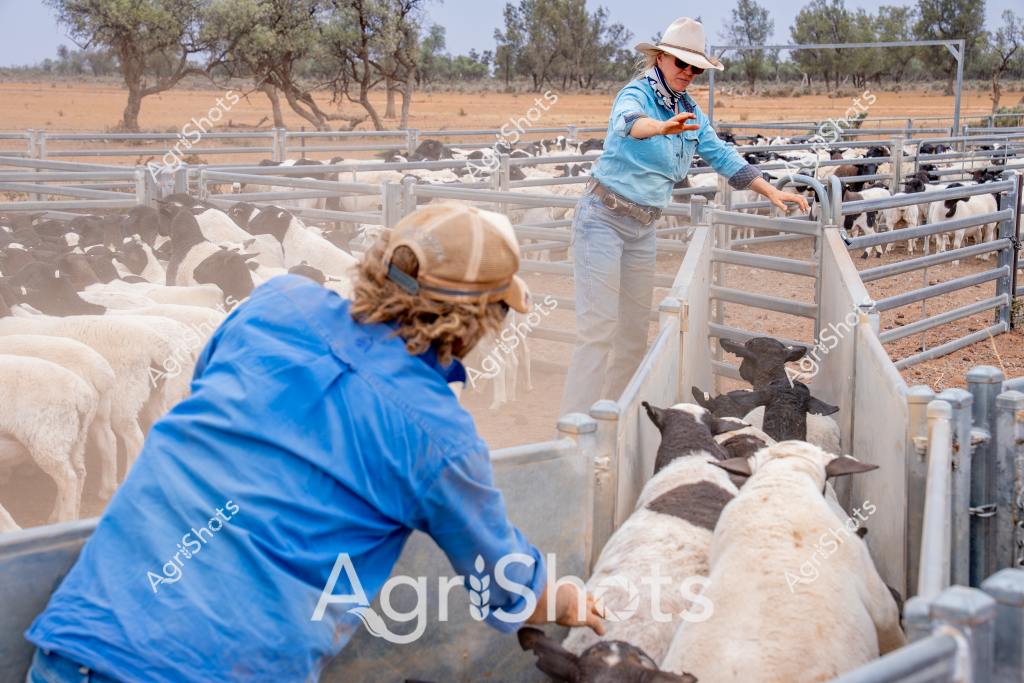
Two women working together in a dusty sheep yard, managing a flock of sheep during a dry, arid mustering operation. A woman in a blue long-sleeved shirt and wide-brimmed sun hat stands at one end of a metal livestock pen, while another woman in a blue work shirt faces away in the foreground. The landscape is a classic Australian pastoral scene, with sparse trees and red-brown earth visible in the background, indicating an inland station or rural property during what appears to be a hot, dry season. The metal livestock yards are filled with white sheep, creating a dense cluster of woolly bodies against the metal gates and fencing. Dust hangs in the air, suggesting active movement and the challenging environmental conditions typical of Australian sheep farming. The women are positioned strategically around the yards, likely coordinating the movement and sorting of the sheep, demonstrating the skilled and hands-on nature of livestock management in rural Australia. The scene captures the essence of agricultural work - teamwork, endurance, and precision in managing livestock under challenging environmental conditions. The blue work shirts, wide-brimmed hats, and professional handling of the livestock highlight the expertise and resilience of women in Australian agricultural industries.
 Image
Image
A woman stockman in a light blue long-sleeved shirt and wide-brimmed hat works in a dry, dusty livestock yard, carefully managing a group of white and black sheep through metal livestock gates. The arid landscape features scattered eucalyptus trees and reddish-brown earth, typical of an Australian rural station or pastoral property. Another worker in a bright blue jacket assists with moving the sheep through the narrow metal loading chute, raising dust around their legs as they guide the animals. The scene captures the precision and skill required in sheep handling, with the workers demonstrating professional livestock management techniques. Multiple sheep - a mix of white and darker-colored animals - are tightly packed in the metal yard, waiting to be sorted or moved. The environment suggests a hot, dry climate, with sparse vegetation and open paddocks stretching into the distance, reflecting the challenging conditions of Australian pastoral agriculture. The image exemplifies the daily work of stockpeople in managing livestock, showcasing the important role of human skill and experience in agricultural operations. The careful positioning of the workers, the sturdy metal infrastructure, and the dust-laden atmosphere all contribute to a powerful representation of Australian rural life and sheep farming.
 Image
Image
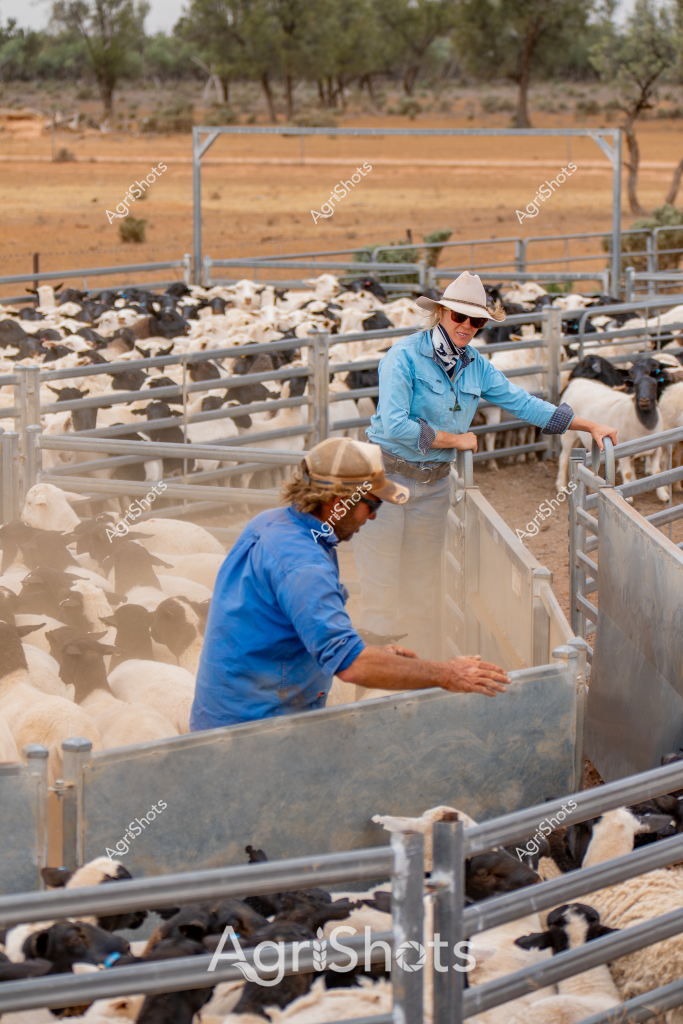
Two experienced stockmen manage a large herd of sheep in metal livestock yards during a dry, arid landscape setting. A woman wearing a wide-brimmed white hat and light blue long-sleeved shirt stands near the metal yard gates, while another worker in a blue jacket assists with moving the animals. The dusty paddock behind them contains sparse trees and golden-brown ground, typical of an Australian pastoral landscape. Multiple sheep - a mix of white and dark-colored animals - are densely packed within the metal yard compartments, waiting to be sorted or processed. The scene captures the precision and practical teamwork required in managing livestock in challenging rural conditions, highlighting the essential skills of Australian agricultural workers in handling large herds across expansive, dry terrain.
 Image
Image
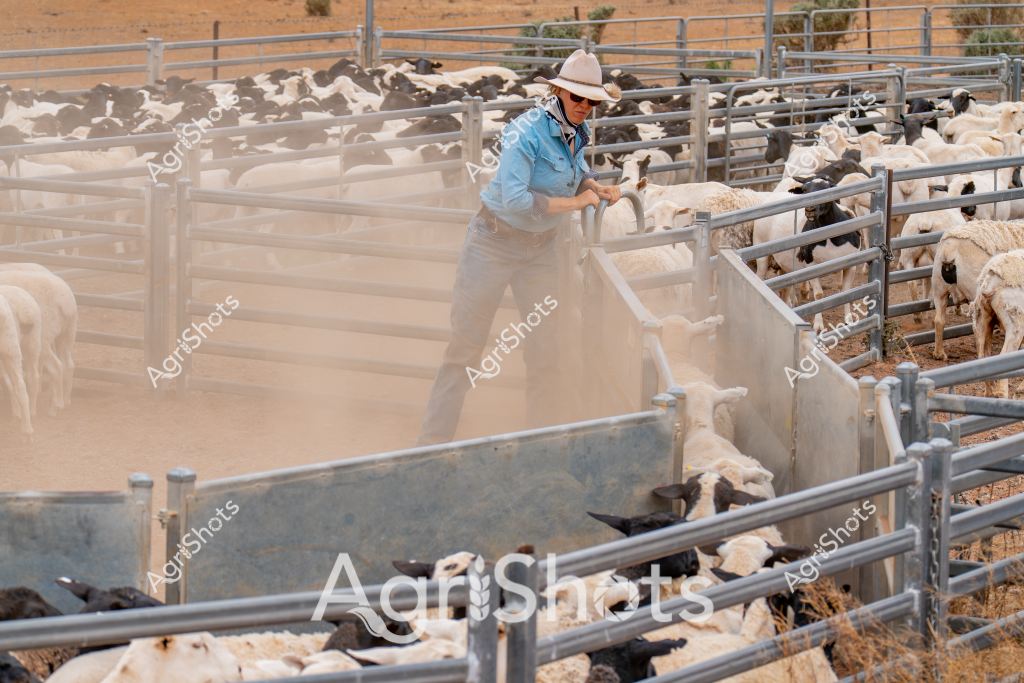
A woman stockman works diligently in a dusty sheep yard, managing a large flock of white and dark-colored sheep within metal livestock pens. Wearing a light blue work shirt, sun-protective hat, and standing amid swirling dust clouds, she carefully guides and sorts the sheep through the metal gates and sorting compartments. The arid landscape surrounding the yards suggests this is likely a rural station in one of Australia's drier agricultural regions, such as Western Queensland or Western New South Wales. Metal fencing creates a systematic grid of pens, allowing precise movement and management of the livestock herd. The woman's posture and focused movement indicate extensive experience in stock handling, demonstrating the skilled labor required in Australian sheep farming operations. Dry earth, sparse vegetation, and the metallic infrastructure of the yards create a stark, functional landscape that speaks to the challenging environments in which Australian livestock producers work.
 Image
Image
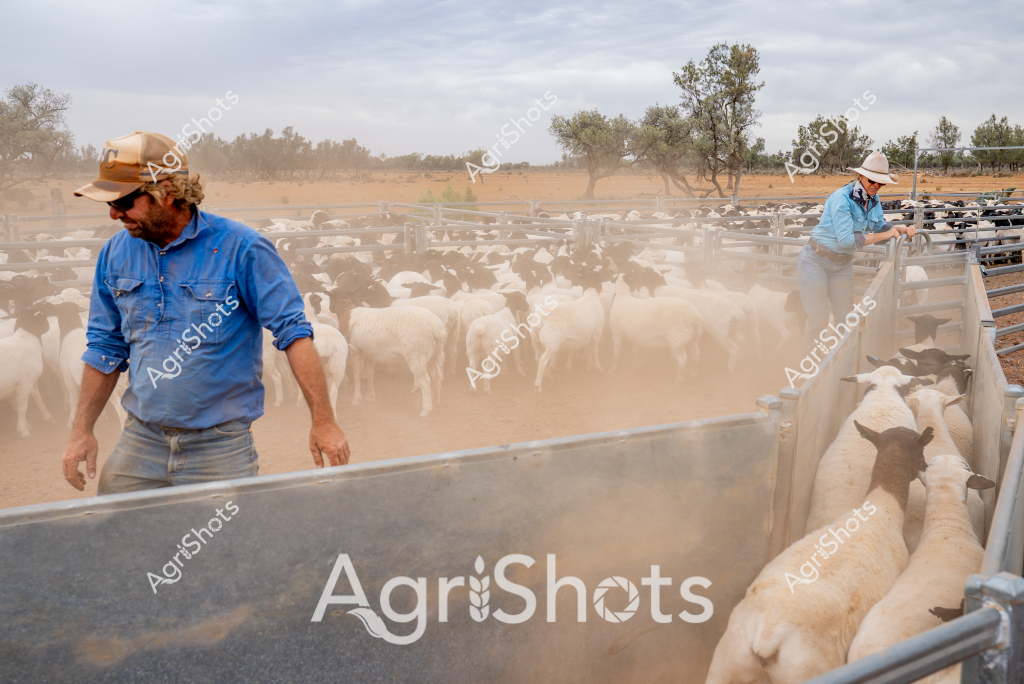
Two men managing a large flock of white sheep in a dusty, arid paddock with sparse trees on the horizon. A man in a blue work shirt and tan cap stands near a metal livestock yard, carefully guiding the sheep through the gates while another man in a light blue shirt and white hat works the opposite side of the yard. A dense cloud of ochre-colored dust rises around the animals, creating a dramatic atmosphere that highlights the challenging environmental conditions. The sheep appear to be tightly packed, moving methodically through the narrow metal race, suggesting a routine mustering or livestock management operation typical of Australian agricultural practices. The landscape looks dry and sparse, with scattered gum trees in the background indicating this is likely an inland pastoral region experiencing drought-like conditions. The workers' robust clothing and steady movements demonstrate the skilled and physically demanding nature of sheep farming in rural Australia.
 Image
Image
A woman stockman carefully manages a flock of sheep in a dust-filled livestock yard, surrounded by metal cattle panels and fencing. Wearing a light blue long-sleeved shirt and a wide-brimmed pale hat, she works among a mixed group of white and dark-colored sheep in a dry, arid landscape. The dusty environment suggests an Australian outback or inland pastoral setting, with the stockwoman methodically moving and sorting the animals through the narrow metal gate sections. Shadows and dust create a textured, atmospheric scene that captures the challenging conditions of sheep management in rural Australia. The metal yards provide structured containment, while the worker's experienced movements demonstrate the skill and precision required in livestock handling.