Results for “standing”
 Image
Image
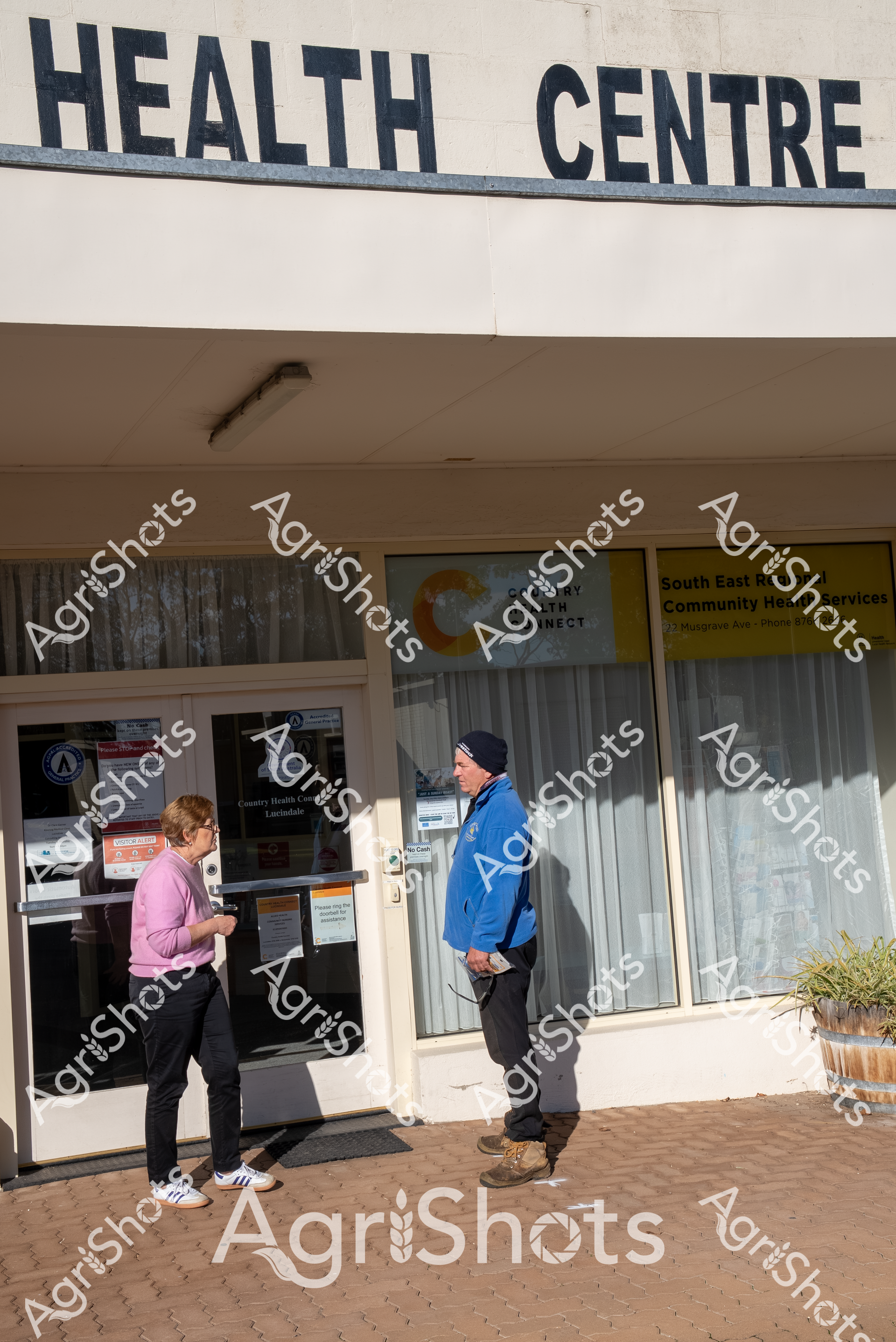
Two people stand outside a rural health centre on a sunny winter day. A woman in a pink sweater and a man in a blue jacket are positioned near the entrance of the South East Community Health Services building. The setting appears to be in a small town in South Australia, highlighting local healthcare access for rural communities.
 Image
Image
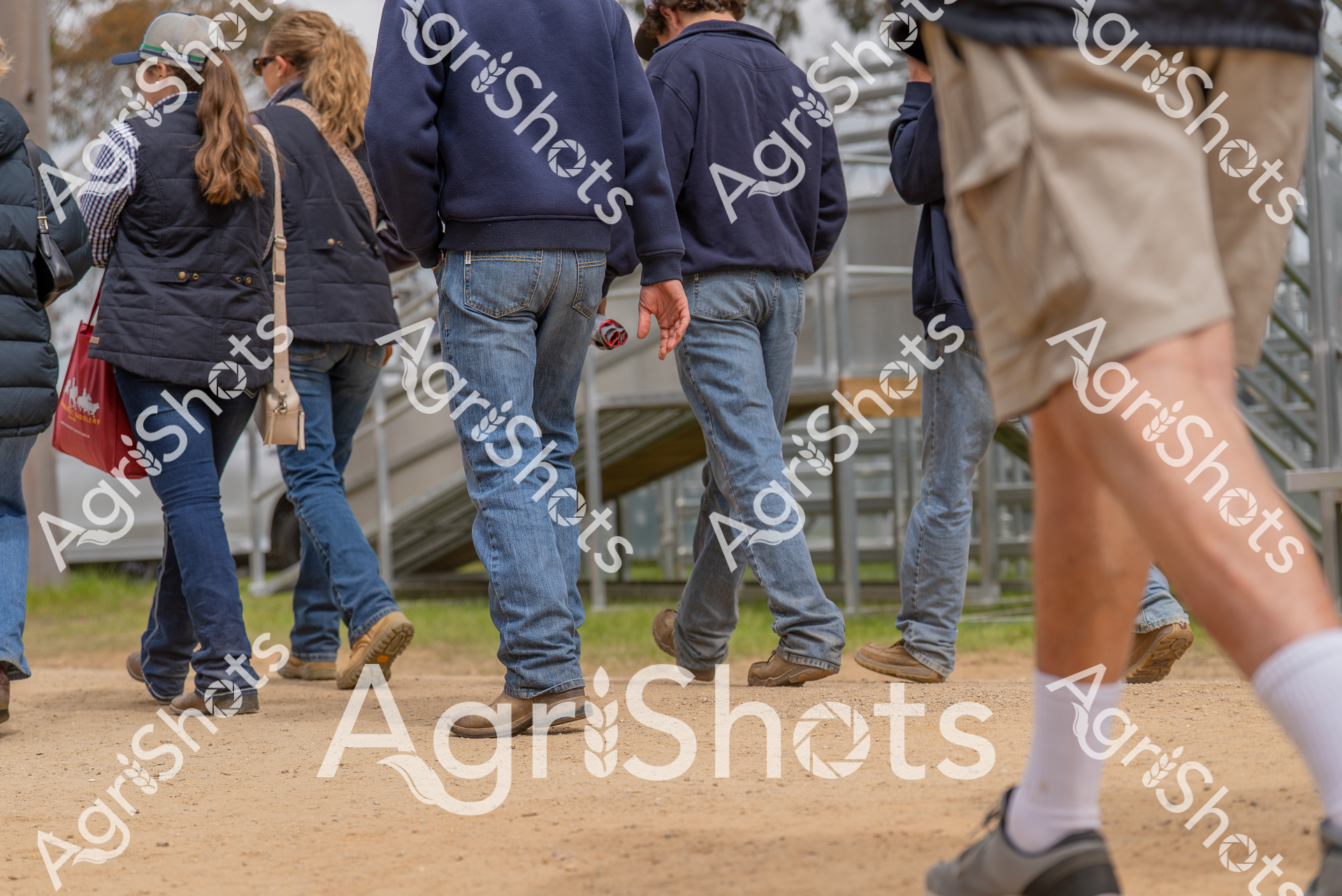
At the Henty Field Days in New South Wales, a group stands together on a dirt path, showcasing rural Australian agricultural event culture. Dressed in denim jeans and navy jackets, these attendees represent the Riverina region's farming community, capturing a slice of springtime agricultural networking and connection.
 Image
Image
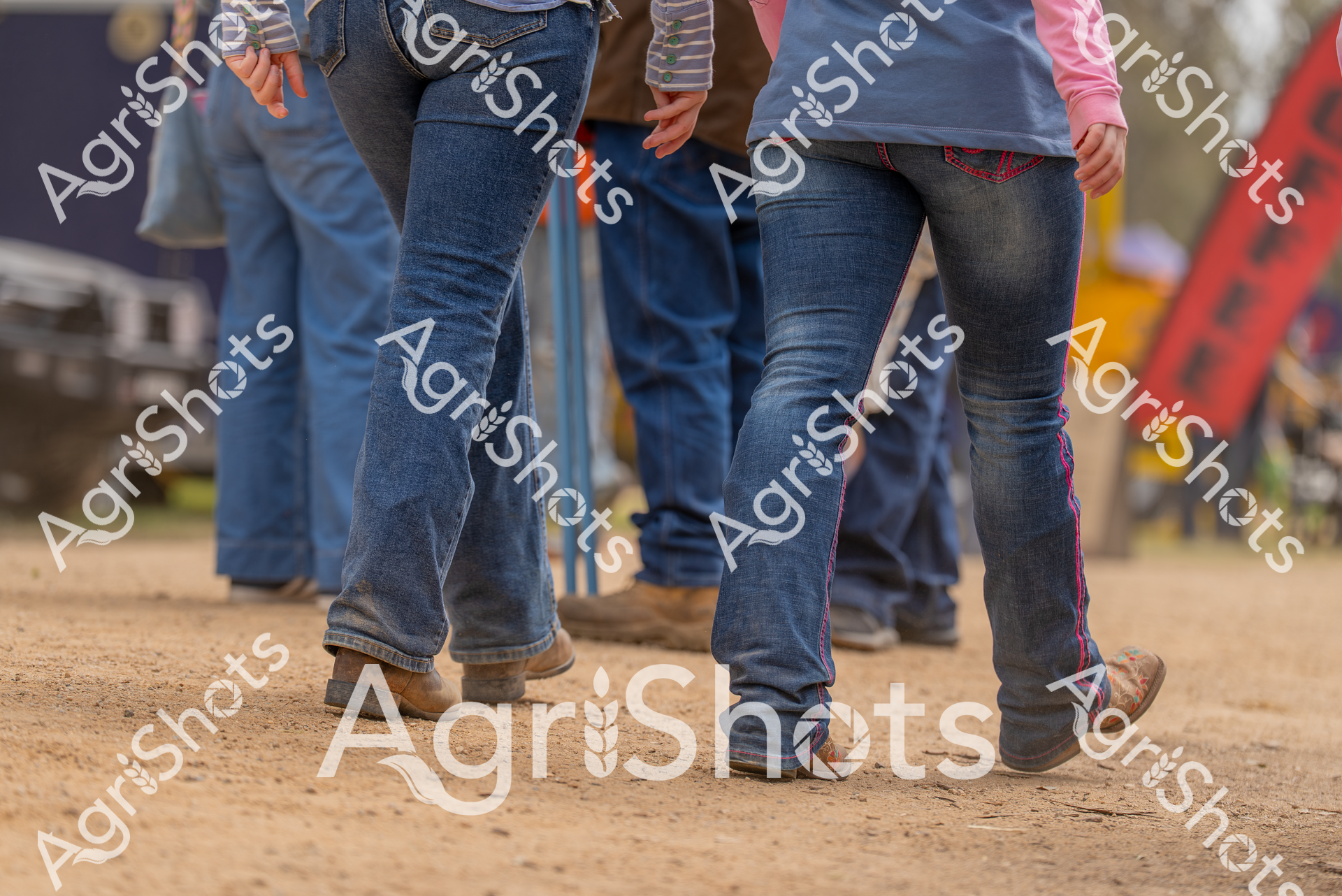
At the Henty Field Days in New South Wales, a group stands together on dusty ground, showcasing denim jeans and sturdy boots typical of the Riverina region's agricultural community. Their legs and footwear capture the practical, hardworking spirit of a spring agricultural event, highlighting the connection between people and the land.
 Image
Image
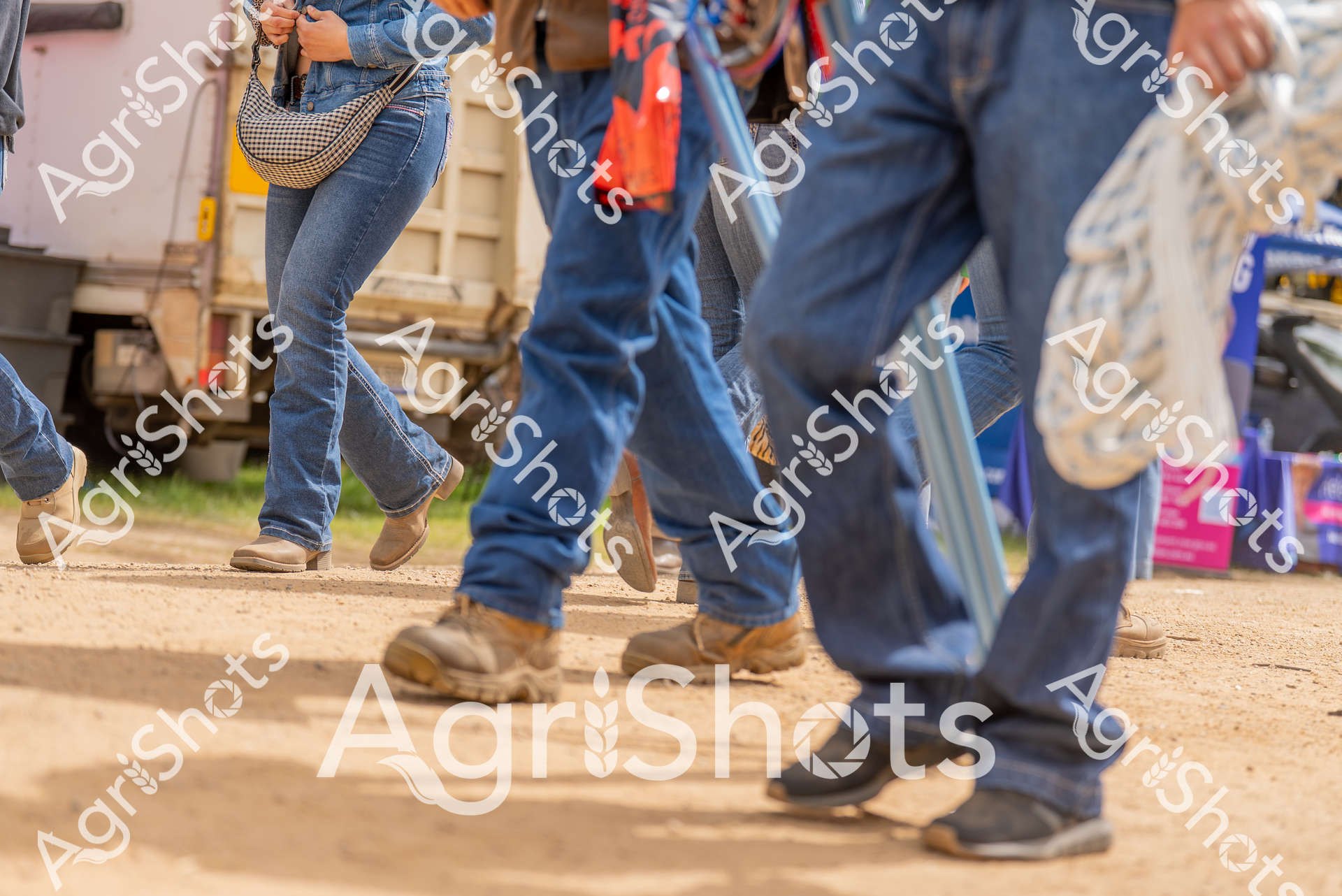
A group of people in denim jeans and work boots stand on dusty ground at what appears to be an agricultural event. The image focuses on their legs and feet, showcasing a typical scene from a farming or field day exhibition in rural New South Wales. The casual attire and setting suggest a relaxed, industry-focused gathering.
 Image
Image
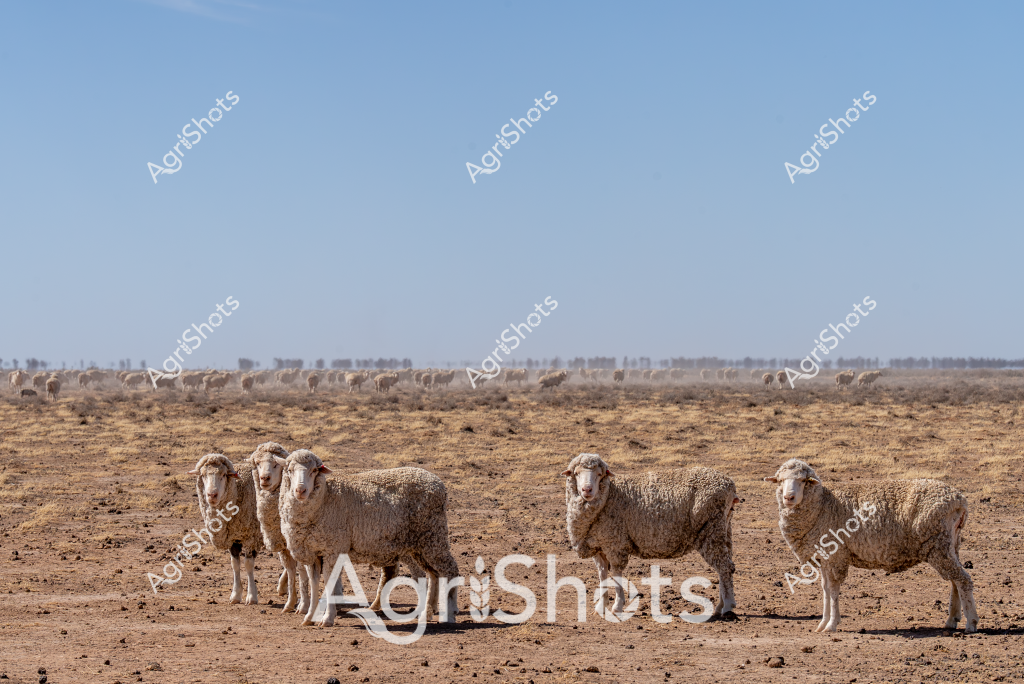
A small mob of Merino sheep stand clustered on a dry, dusty paddock under a clear blue sky, with more sheep visible in the distant background. The woolly white and cream-colored sheep appear hardy and well-conditioned, adapted to the arid Australian landscape. Sparse scrub and yellow-brown grassland stretch to the horizon, indicating challenging drought conditions typical of inland grazing regions. The sheep are standing relatively still, suggesting the harsh, unforgiving environment where water and feed are scarce. Their thick, dense fleece provides protection from the intense sunlight and heat, highlighting the resilience of Merino sheep in marginal agricultural zones. The expansive, open landscape communicates the vast scale of Australian sheep farming, where animals must survive in challenging terrain and climate conditions.
 Image
Image
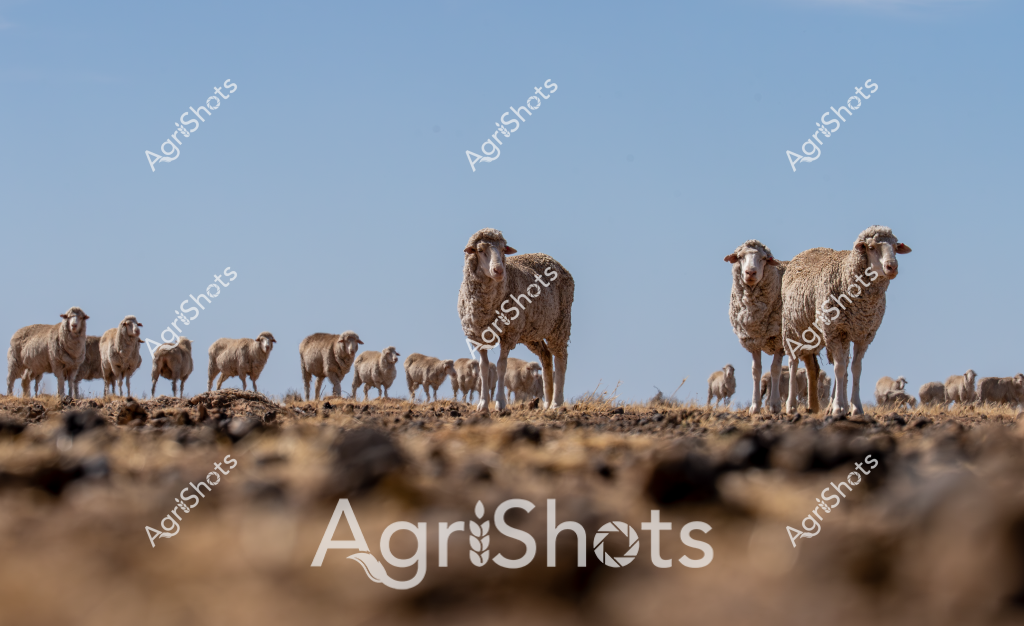
A flock of merino sheep stand confidently across a dry, rocky landscape under a clear blue sky. Several woolly sheep are positioned prominently in the foreground, with their dense, beige-colored fleece creating a textural contrast against the rugged ground. More sheep spread out behind them, creating a sense of depth and scale typical of Australian pastoral scenes. The animals appear alert, with some standing tall and others grazing, showcasing the hardy nature of merino sheep in challenging outback conditions. The low perspective emphasizes the sheep's robust form, with their muscular legs standing firmly on the weathered, stony terrain. This image captures the essence of Australian sheep farming - resilient animals adapted to harsh, arid environments that characterize much of the continent's agricultural landscape.
 Image
Image
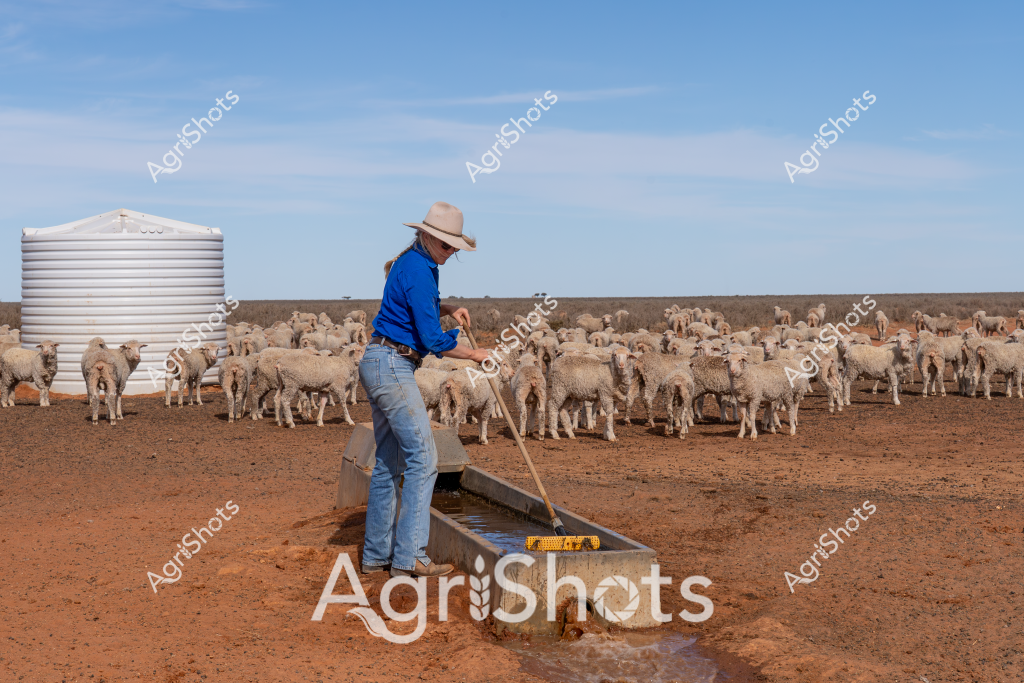
A woman in a blue long-sleeved shirt and wide-brimmed hat tends to a large flock of merino sheep in an arid Australian landscape. Standing beside a water trough near a large white water tank, she is surrounded by dozens of woolly sheep on a dry, reddish-brown earth paddock. The expansive background reveals a flat, sparse horizon typical of inland Australian pastoral regions, with a clear blue sky stretching overhead. Her stance suggests careful monitoring and management of the livestock, using the water trough to ensure the sheep remain hydrated in the harsh, dry environment. The white water tank and carefully positioned trough highlight the critical infrastructure required to support livestock in challenging agricultural conditions, demonstrating the resilience and strategic planning of Australian sheep farmers. The scene captures the essence of outback sheep farming - a solitary worker maintaining a flock in a demanding landscape, where water management and animal care are paramount to survival. The merino sheep, with their distinctive thick woolly coats, cluster around the water source, reflecting the symbiotic relationship between the farmer and the livestock in this unforgiving terrain.
 Image
Image
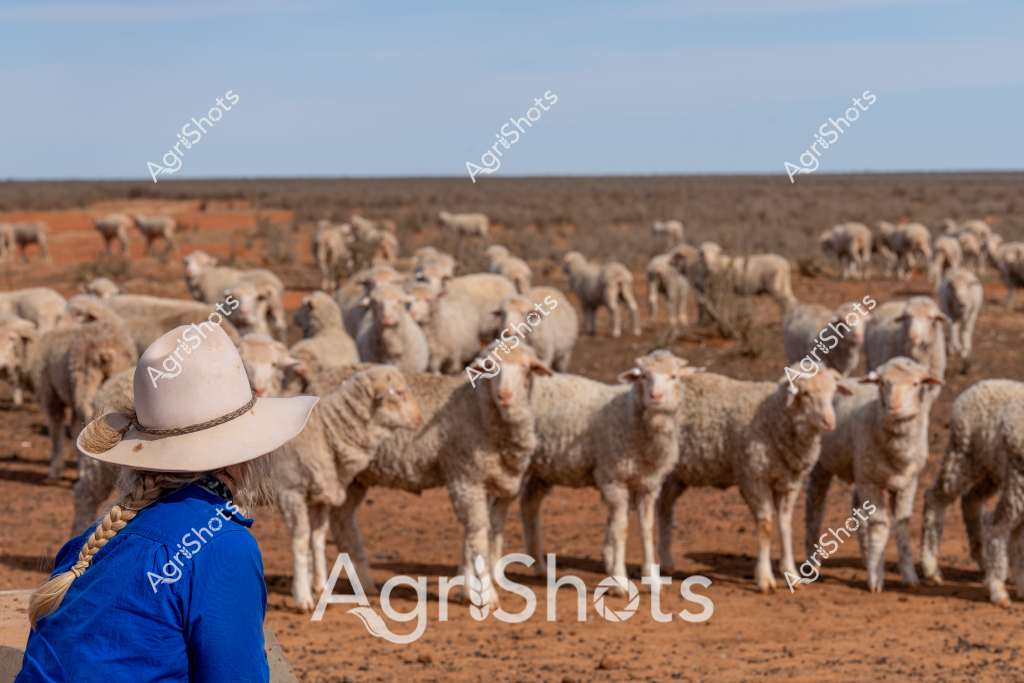
A woman stockman wearing a wide-brimmed light-colored hat and a bright blue long-sleeved shirt stands observing a large flock of Merino sheep grazing across a dry, reddish-brown paddock. The landscape stretches out to a flat horizon under a pale blue sky, typical of Australia's arid pastoral regions. Dozens of woolly white sheep are scattered across the dusty ground, their dense fleeces standing out against the ochre-colored earth. The scene captures the essence of sheep farming in rural Australia, showcasing the vast, open landscapes and the careful management required to maintain a healthy flock in challenging environmental conditions. The woman's positioning suggests she is monitoring the sheep, a critical task in maintaining the health and safety of the livestock in this harsh, expansive terrain.
 Image
Image
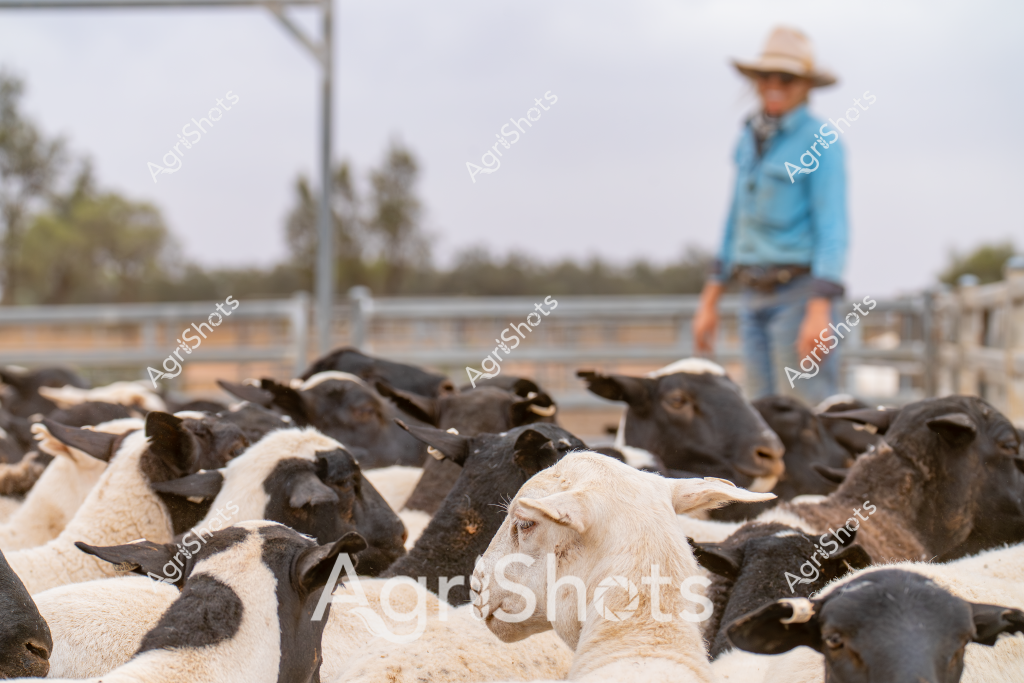
A group of black and white sheep cluster tightly in a livestock yard, with a man stockman standing in the background wearing a wide-brimmed hat and blue work shirt. The sheep appear to be a mix of dark-faced breeds, possibly Dorper or Suffolk crosses, with some white woolly sheep interspersed among the darker animals. The stockman stands casually near a metal fence, overlooking the mob of sheep with a calm, professional demeanor. The landscape is typical of an Australian pastoral setting - dry, with sparse trees and metal yards visible in the background, suggesting a rural station or farm environment. The lighting indicates it's likely a mid-morning or early afternoon scene, with a soft, even light casting subtle shadows across the dusty yard and tightly packed flock. The image captures the everyday work of livestock management, showcasing the close relationship between the stockman and the sheep, and the practical infrastructure of Australian agricultural operations. The tight clustering of the animals and the stockman's relaxed posture suggest a moment of calm during routine farm activities.
 Image
Image
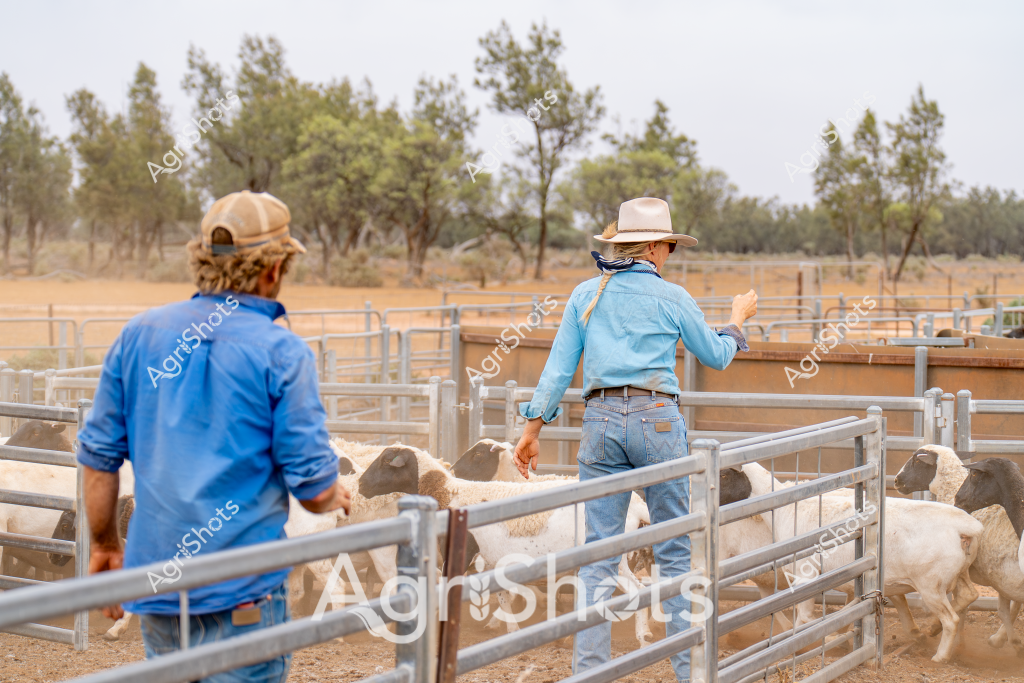
Two men working in a livestock yard, carefully managing a small herd of sheep within metal livestock pens. They are wearing typical rural workwear - blue long-sleeved shirts, wide-brimmed sun hats, and work jeans. One man faces away from the camera, standing near the metal gate, while the other is partially visible to the left side of the image. The setting appears to be a dry, arid paddock with sparse trees and scrubland in the background, suggesting this is likely in an inland Australian agricultural region. The metal yard panels create a systematic grid for controlling and moving the sheep, which appear to be light-colored, possibly Merino or other wool breed. The dusty ground and sparse vegetation indicate this could be during a dry season or in a drought-affected area. The scene captures the practical, no-nonsense approach of Australian livestock management, where farmers work efficiently to handle their stock in challenging environmental conditions.
 Image
Image
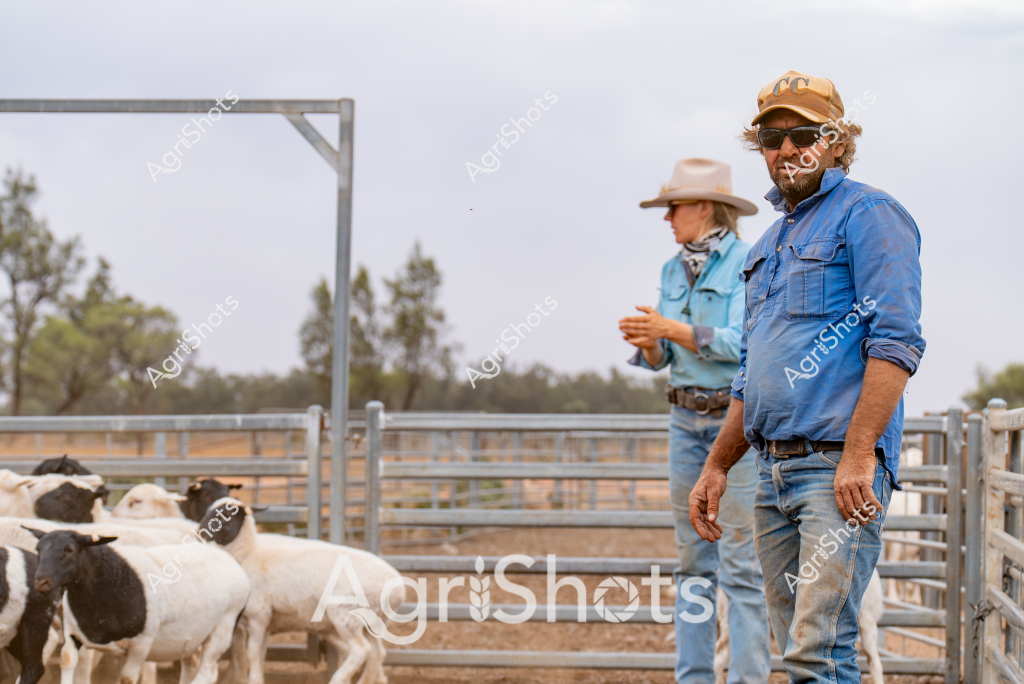
A seasoned man stockman and a woman worker supervise a small herd of black and white sheep in a rural livestock yard, surrounded by metal livestock fencing and distant eucalyptus trees. The man wears a tan cap, sunglasses, and a blue chambray work shirt with rolled-up sleeves, standing confidently in worn denim jeans and boots. His companion, wearing a light-colored wide-brimmed hat and a blue work shirt, stands nearby, both carefully observing the flock of mixed-color sheep clustered in the steel holding pen. The overcast sky and dusty ground suggest a typical Australian pastoral scene, highlighting the ongoing management of livestock in a challenging rural environment. Their professional stance and attentive posture demonstrate the careful husbandry and daily work required in managing a sheep production operation.
 Image
Image
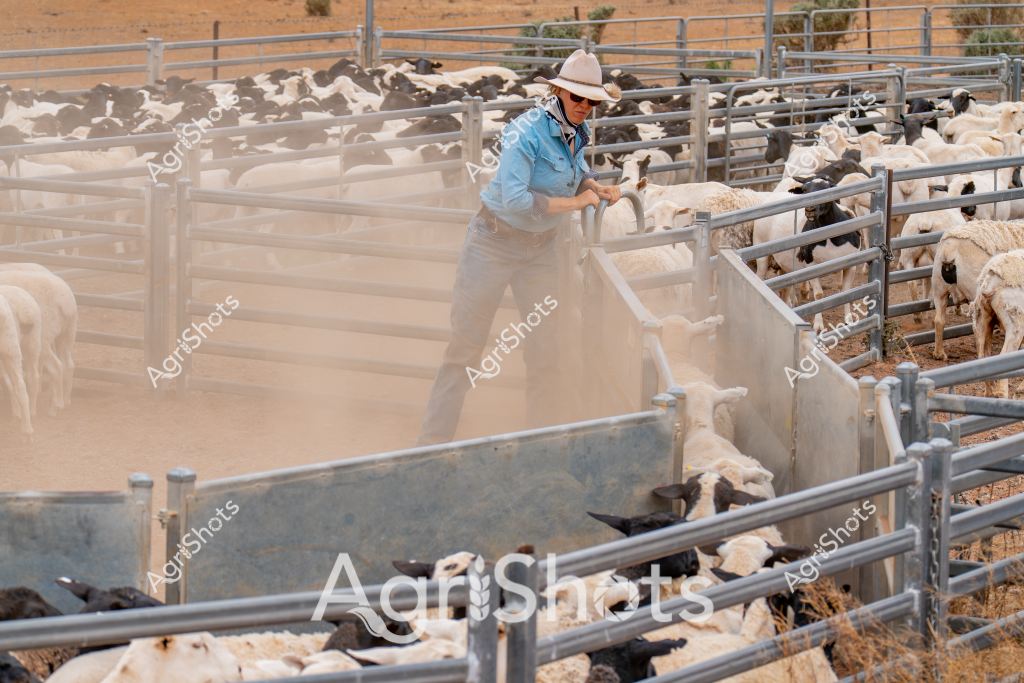
A woman stockman works diligently in a dusty sheep yard, managing a large flock of white and dark-colored sheep within metal livestock pens. Wearing a light blue work shirt, sun-protective hat, and standing amid swirling dust clouds, she carefully guides and sorts the sheep through the metal gates and sorting compartments. The arid landscape surrounding the yards suggests this is likely a rural station in one of Australia's drier agricultural regions, such as Western Queensland or Western New South Wales. Metal fencing creates a systematic grid of pens, allowing precise movement and management of the livestock herd. The woman's posture and focused movement indicate extensive experience in stock handling, demonstrating the skilled labor required in Australian sheep farming operations. Dry earth, sparse vegetation, and the metallic infrastructure of the yards create a stark, functional landscape that speaks to the challenging environments in which Australian livestock producers work.
 Image
Image
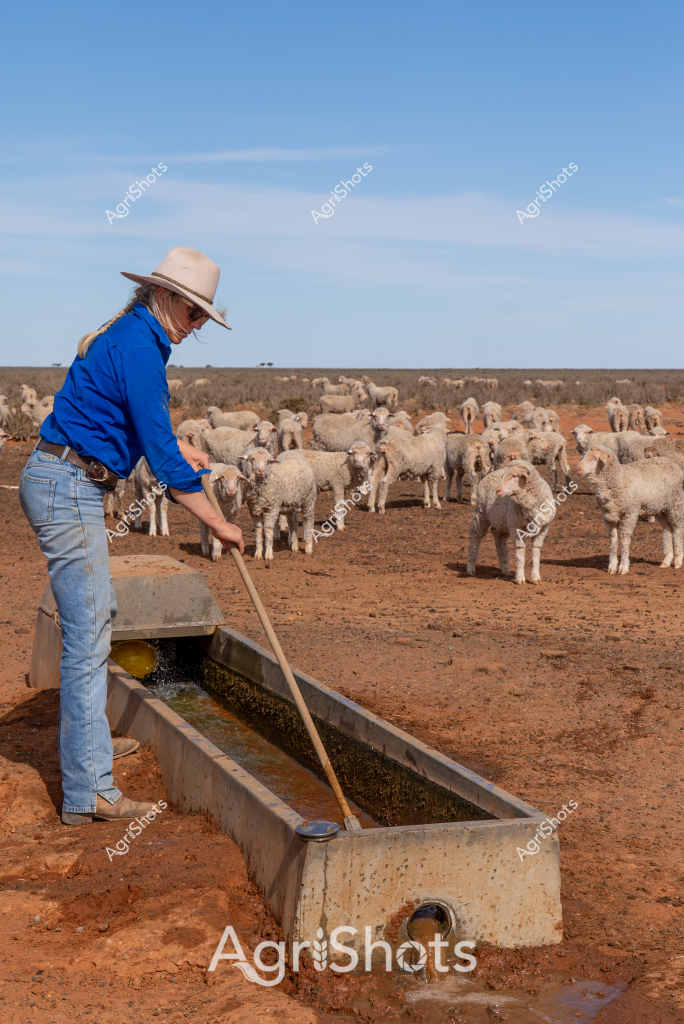
A woman stockman in a bright blue long-sleeved shirt and light blue jeans manages a flock of Merino sheep in an arid Australian landscape. Standing beside a concrete water trough, she uses a long pole to adjust or clean the water supply for the livestock. The dry, reddish-brown earth stretches to the horizon, dotted with dozens of woolly white sheep clustered together in the background. Her wide-brimmed light-colored hat provides protection from the intense sunlight, while the clear blue sky suggests a typical hot, dry day in the Australian outback. This scene captures the challenging yet essential work of managing livestock in harsh rural conditions, highlighting the critical role of water infrastructure in sustaining sheep farming in remote agricultural regions.
 Image
Image
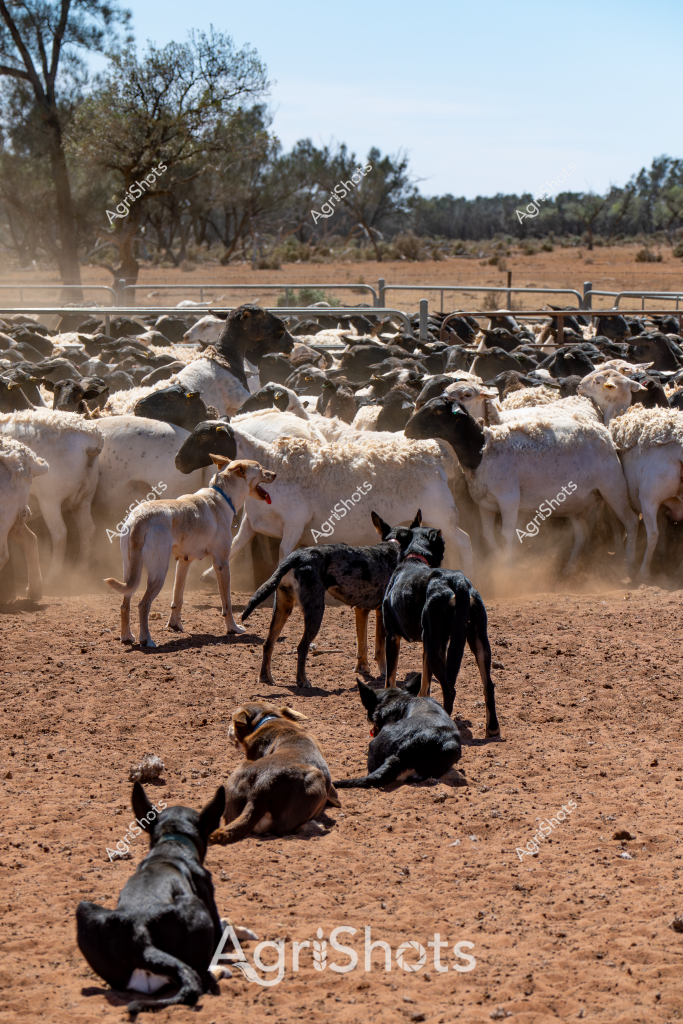
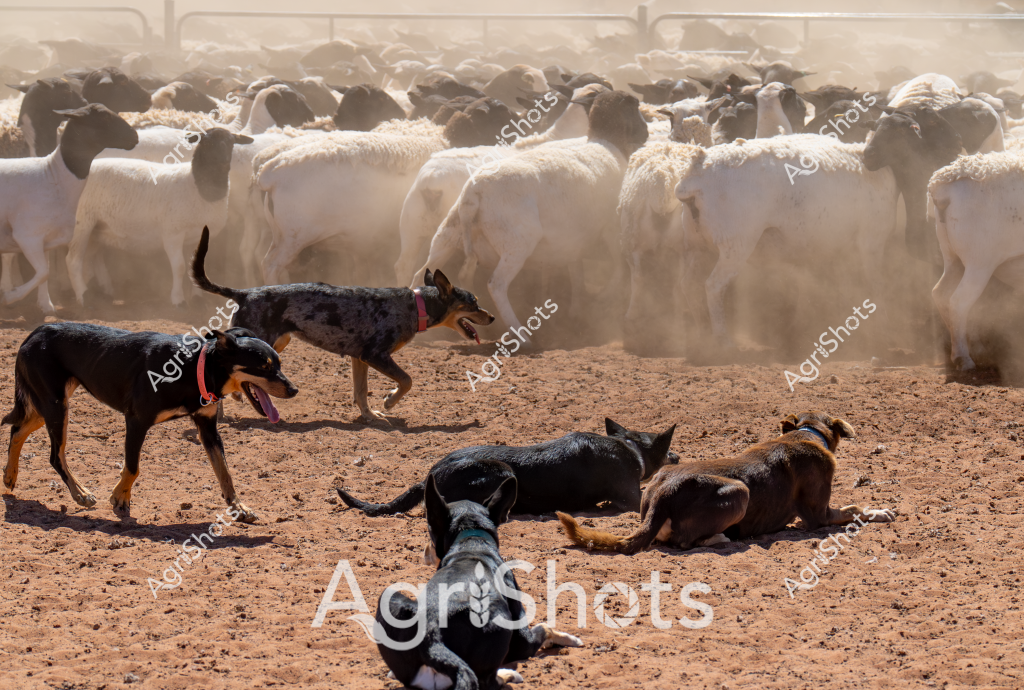
A classic Australian livestock mustering scene captures working dogs expertly managing a large flock of white and dark-colored sheep in a dusty, arid paddock. Several black and tan dogs are positioned strategically around the mob, some standing alert while others rest on the dry, reddish-brown earth. The sheep are densely packed within a metal yard fence, with trees and scrubland visible in the background, suggesting a typical Australian pastoral setting. The working dogs, likely Australian Kelpies or similar herding breeds, demonstrate the critical role of canine partners in managing livestock across vast rural properties. Their positioning shows practiced skill - some standing vigilant, others resting but ready to spring into action at a moment's notice. The dense dust cloud and tight grouping of sheep indicate active movement and controlled herding. The harsh, sunbaked landscape with its red soil and sparse vegetation is characteristic of inland Australian agricultural regions, likely in a state like Queensland or Western Australia. The scene captures the demanding nature of sheep farming in challenging environmental conditions, highlighting the resilience and expertise required in Australian pastoral agriculture.
 Image
Image
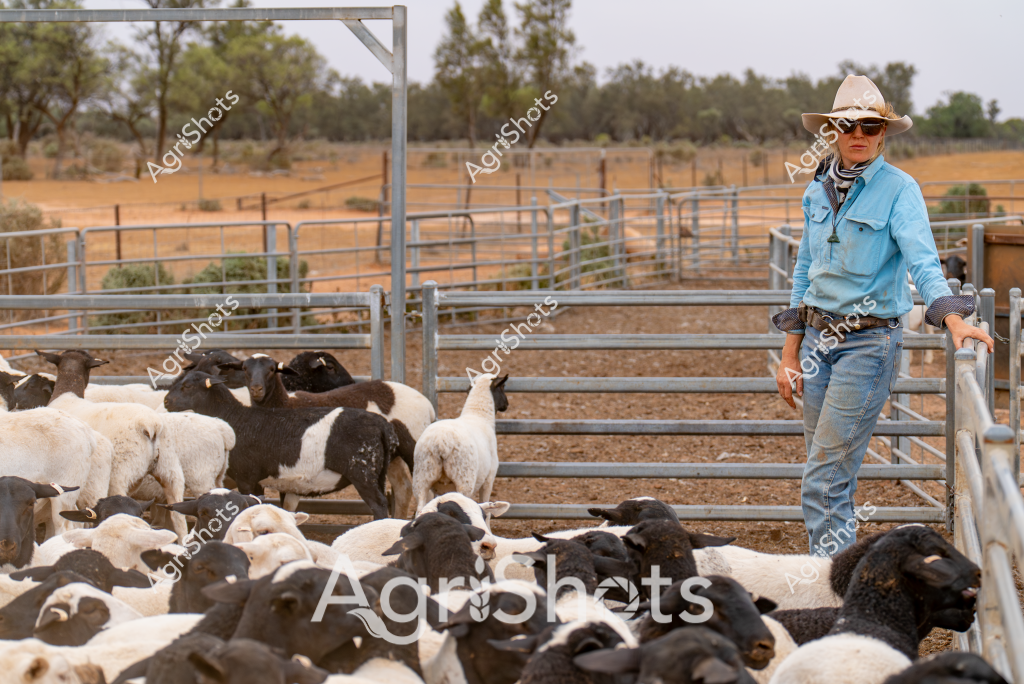
A woman stockman in classic rural attire - blue denim work shirt, jeans, and a light-colored cowboy hat - stands confidently beside metal livestock yards containing a mixed flock of black and white sheep. The paddock appears to be in an arid or semi-arid Australian agricultural setting, with sparse trees and golden-brown earth visible in the background. Multiple breeds of sheep are clustered together in the metal holding pens, with white and dark-colored animals standing and moving about, suggesting a routine livestock management scenario. The woman's stance is alert and professional, leaning against the metal gate, wearing sunglasses and embodying the skilled stockmanship typical of Australian rural workers. The landscape hints at a dry pastoral region, likely in inland Queensland or New South Wales, where sheep farming is a critical agricultural industry. The scene captures the essence of Australian livestock management - a lone stockwoman overseeing a diverse flock in a challenging rural environment, representing the resilience and expertise of agricultural workers in managing livestock under often harsh conditions.
 Image
Image
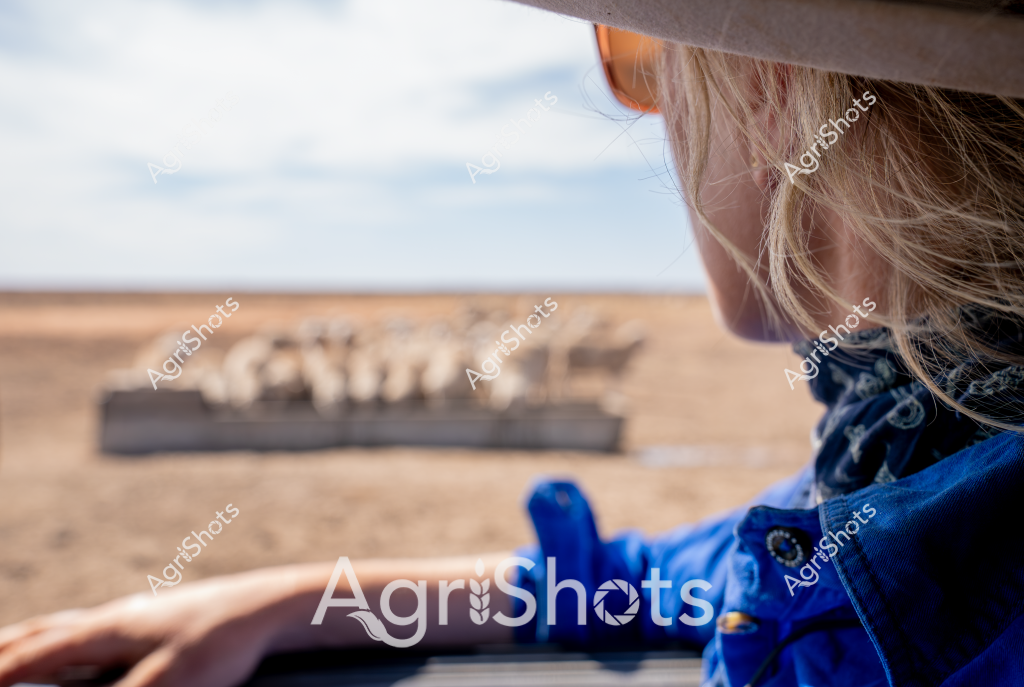
A woman in a blue jacket observes a flock of sheep in a dry, expansive landscape. She appears to be looking out over a dusty paddock where a group of light-colored sheep are standing near a long feeding trough. The background reveals a flat, arid terrain stretching to a pale, cloud-spotted horizon. The scene captures a moment of quiet observation, with the woman's perspective suggesting a connection to the agricultural landscape and the livestock. Her blonde hair is partially visible, and she seems to be monitoring the sheep, which are clustered together in the middle distance, highlighting the challenges of pastoral farming in an dry environment.
 Image
Image
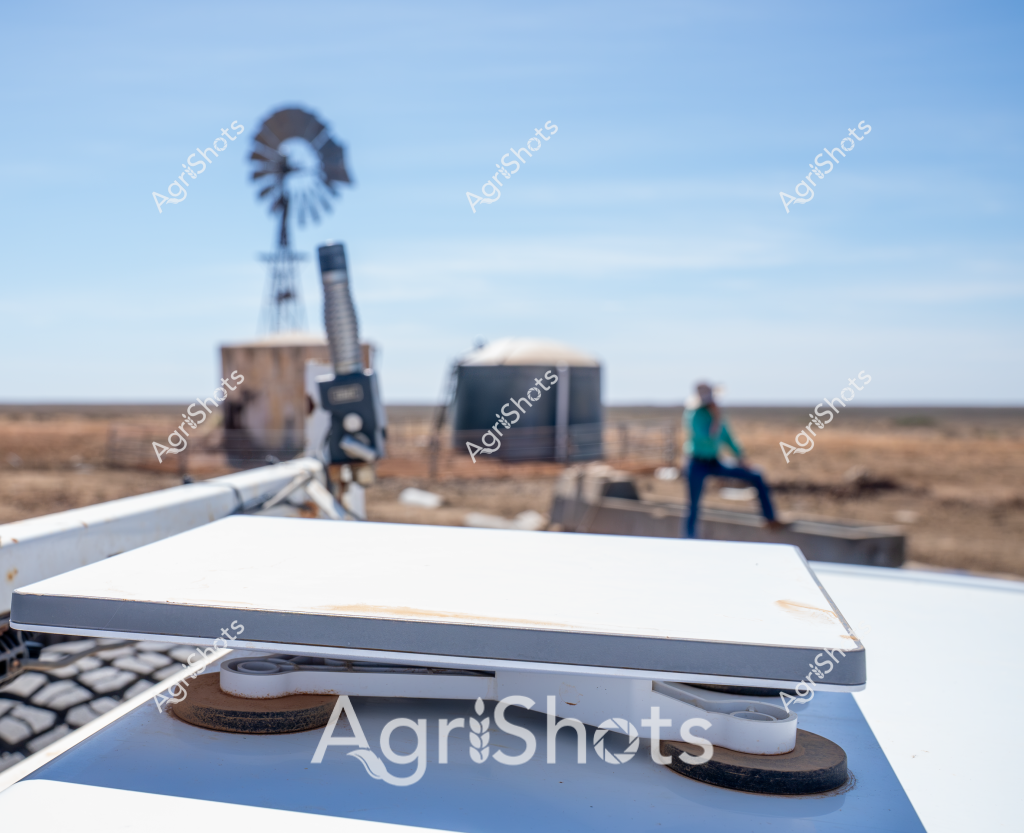
A rural scene captures an agricultural monitoring setup in a dry, expansive landscape, featuring a windmill and technical equipment in the background. In the foreground, a sophisticated white monitoring device with gray trim sits precisely positioned, its sensors and mounting points suggesting advanced data collection capabilities. A person wearing a teal-colored jacket stands near some equipment modules, indicating ongoing field research or environmental monitoring. The stark, arid terrain stretches to the horizon, with a classic Australian windmill standing tall against the clear blue sky, symbolizing traditional water management techniques alongside modern technological approaches. The muted earth tones of the landscape - browns and tans - contrast sharply with the crisp white of the monitoring equipment and the vibrant teal of the worker's clothing, creating a compelling visual narrative of contemporary agricultural science in action. The scene represents the intersection of traditional farming infrastructure and cutting-edge environmental monitoring technology, typical of agricultural research in Australia's challenging rural environments. The careful placement of equipment suggests precise data collection, potentially related to soil conditions, climate monitoring, or agricultural research.
 Image
Image
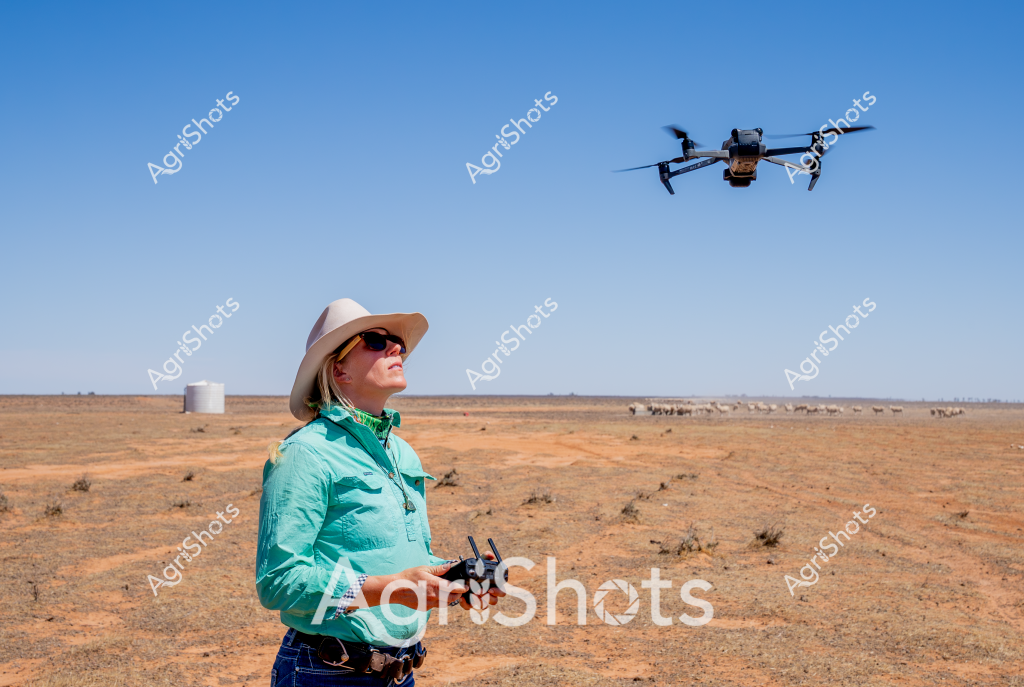
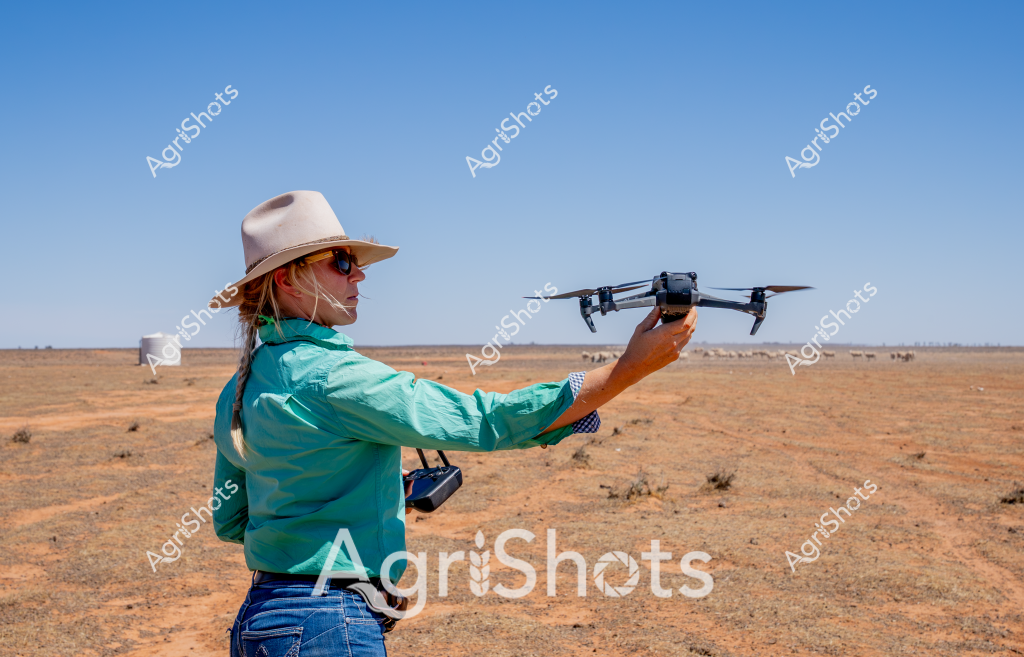
A woman in a turquoise shirt and wide-brimmed hat operates a drone in an arid, expansive Australian outback landscape. Standing confidently with a drone controller in her hands, she pilots an unmanned aerial vehicle (UAV) above a dry, reddish-brown paddock with scattered sparse vegetation. In the background, a distant water tank and a small herd of cattle can be seen, highlighting the remote agricultural setting. The clear blue sky and open terrain suggest this is a typical drone reconnaissance mission for modern farm management, likely used for monitoring livestock, assessing land conditions, or surveying crop and pasture health. Her protective clothing - including sunglasses and a wide-brimmed hat - demonstrates the harsh environmental conditions of rural Australian rangelands.
 Image
Image
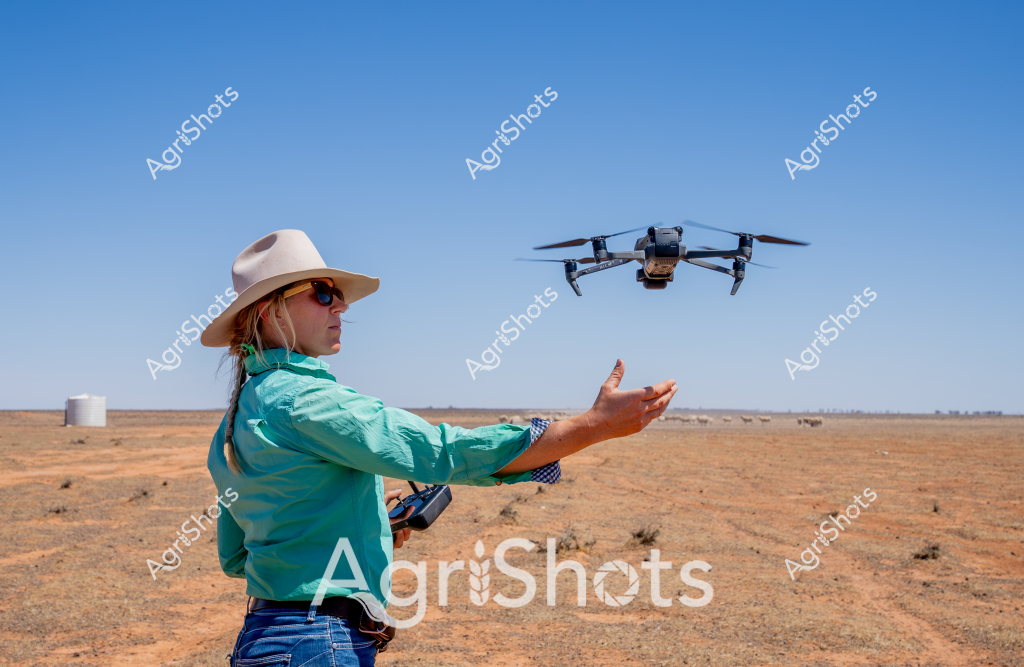
A woman in a turquoise long-sleeved shirt and wide-brimmed sun hat operates a drone in a stark, arid Australian landscape. Standing amid reddish-brown earth and sparse saltbush, she extends her hand to launch or guide a quadcopter drone, likely conducting agricultural surveying or monitoring. Wearing sunglasses to protect against the intense outback sunlight, she holds a remote control, demonstrating modern precision agricultural technology in a remote, dry environment. A white water tank is visible in the distant background, suggesting this is a rural station or farm property. The clear blue sky and open terrain highlight the expansive nature of Australian agricultural landscapes, where technological solutions are increasingly used to manage and understand challenging environmental conditions.
 Image
Image
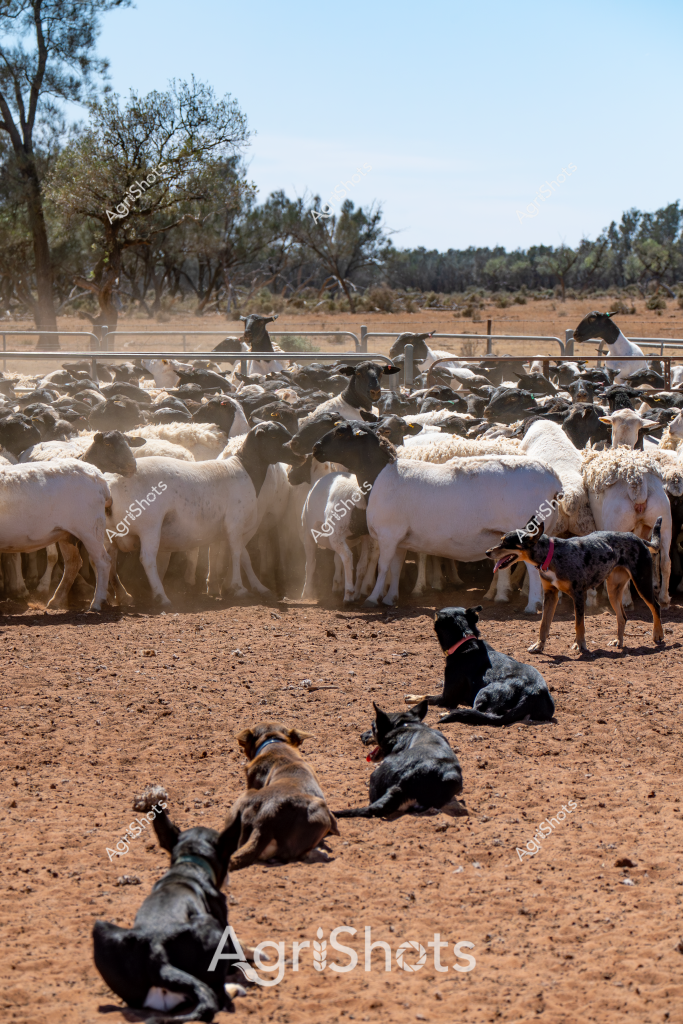
A typical Australian sheep station scene showcases a large mob of white sheep densely packed within a dusty yard, surrounded by metal livestock fencing. Several working dogs - black and brown in color - rest on the dry, reddish-brown earth in the foreground, vigilantly monitoring the flock. The dogs, appearing tired from mustering, are lying down in strategic positions around the yard, with some standing near the sheep. The landscape reveals a classic arid Australian setting, with sparse eucalyptus trees in the background and a clear blue sky overhead. The sheep, likely a Merino breed common in Australian agriculture, are tightly clustered, creating a cloud-like mass of white amid the swirling dust. A few dogs of different coat colors, including a black and a mottled grey/brown dog, are positioned to control and protect the herd. The image captures the essence of Australian pastoral farming - the hard work of livestock management, the partnership between skilled working dogs and farmers, and the challenging environmental conditions of rural Australia. The dry, compact ground and sparse vegetation highlight the resilience required in sheep farming across the continent's more arid regions.
 Image
Image
A woman in a teal shirt and wide-brimmed hat operates a drone in a sparse, arid Australian landscape. Standing amid reddish-orange earth with scattered low scrub, she holds a professional-grade quadcopter drone, preparing to launch it for aerial survey or monitoring purposes. Her blue jeans, sunhat, and sunglasses suggest practical agricultural field work attire, while the barren background indicates a potentially drought-affected region. In the distant background, a small herd of livestock can be seen grazing on the sparse vegetation, highlighting the challenging environmental conditions. The clear blue sky and open terrain emphasize the expansive nature of Australian agricultural landscapes, where technology like drones is increasingly used for farm management, crop monitoring, and livestock tracking.
 Image
Image
A classic Australian livestock herding scene unfolds, showcasing working dogs managing a large flock of white sheep in a dusty, arid paddock. Several hardy cattle dogs, including black and mottled grey breeds, are strategically positioned around the herd, with some standing alert and others resting on the dry, reddish-brown ground. The dense mob of sheep, predominantly white with dark faces, creates a cloud of dust as they cluster tightly together, suggesting an intense mustering or movement operation. The dogs appear to be experienced working dogs, wearing red collars and displaying a calm, disciplined approach to herding. Some dogs are standing, while others are lying down, indicating a well-trained team that understands their roles in managing the livestock. The barren, compacted earth and the swirling dust highlight the harsh conditions typical of Australian pastoral landscapes, where skilled dogs are crucial in moving and controlling large sheep herds across challenging terrain. This image captures the essence of Australian agricultural practice - the partnership between working dogs and farmers in managing livestock in demanding environmental conditions. The scene represents the resilience, skill, and teamwork required in Australia's extensive sheep farming industry.
 Image
Image
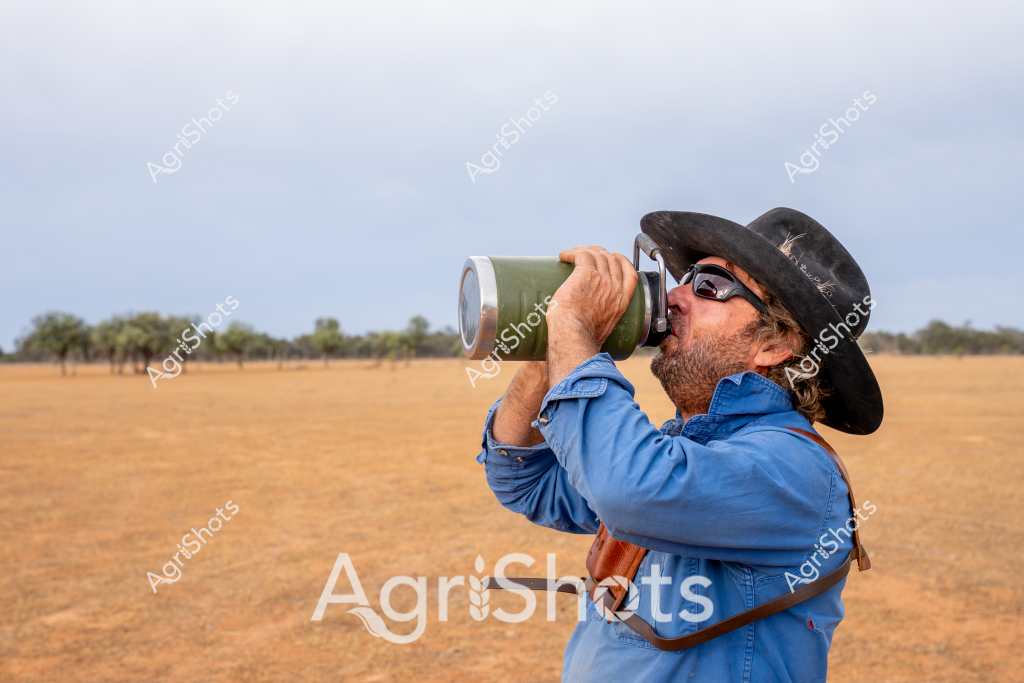
A man in a blue denim shirt and black wide-brimmed hat drinks intently from a large green water bottle while standing in a dry, golden grassland. The rugged landscape stretches out behind him, with scattered trees on the distant horizon and a pale, overcast sky creating a sense of vast, arid Australian countryside. Wearing sunglasses and displaying a weathered, unshaven appearance, the individual seems prepared for the harsh rural environment, embodying the resilient spirit of outback workers. His posture suggests he is taking a crucial water break during what appears to be a long, hot day of agricultural work. The parched field and his intense drinking pose capture the challenging conditions faced by rural workers in drought-affected regions.
 Image
Image
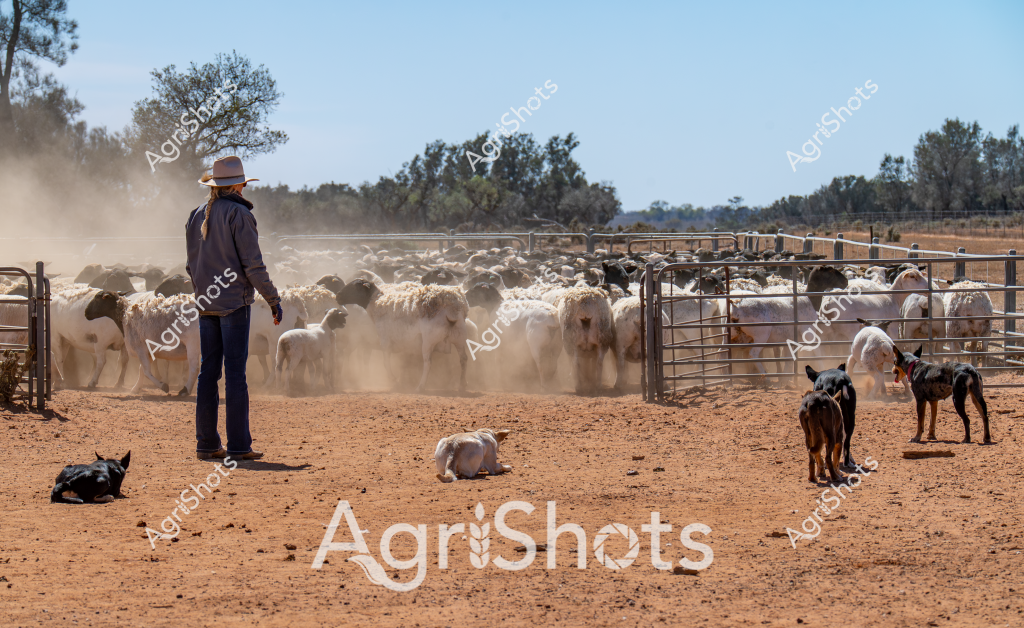
A stockman stands amid a dusty sheep paddock, overseeing a large flock of woolly sheep crowded into metal yard panels. Three working dogs are strategically positioned around the livestock - two standing alert and one resting on the dry, reddish earth. The scene captures a typical Australian sheep station environment, with sparse trees and bush landscape visible in the background under a clear blue sky. The person is wearing a wide-brimmed hat and dark clothing, standing sideways and watching the tightly packed mob of sheep raising dust as they shuffle within the metal gates. The sheep appear to be a mix of white and darker-colored animals, tightly clustered together. Several young lambs are visible among the adult sheep, indicating this is likely a breeding flock. The environment suggests an arid or semi-arid region, with the ground parched and covered in red dirt, characteristic of inland Australian pastoral landscapes. The working dogs - likely Australian Kelpies or similar herding breeds - demonstrate the critical role of canine assistance in managing large livestock mobs in challenging rural environments. This image powerfully represents the traditional practices of Australian sheep farming, highlighting the interdependence between humans, dogs, and livestock in managing agricultural operations across vast and demanding terrains.