Results for “rural infrastructure”
 Image
Image
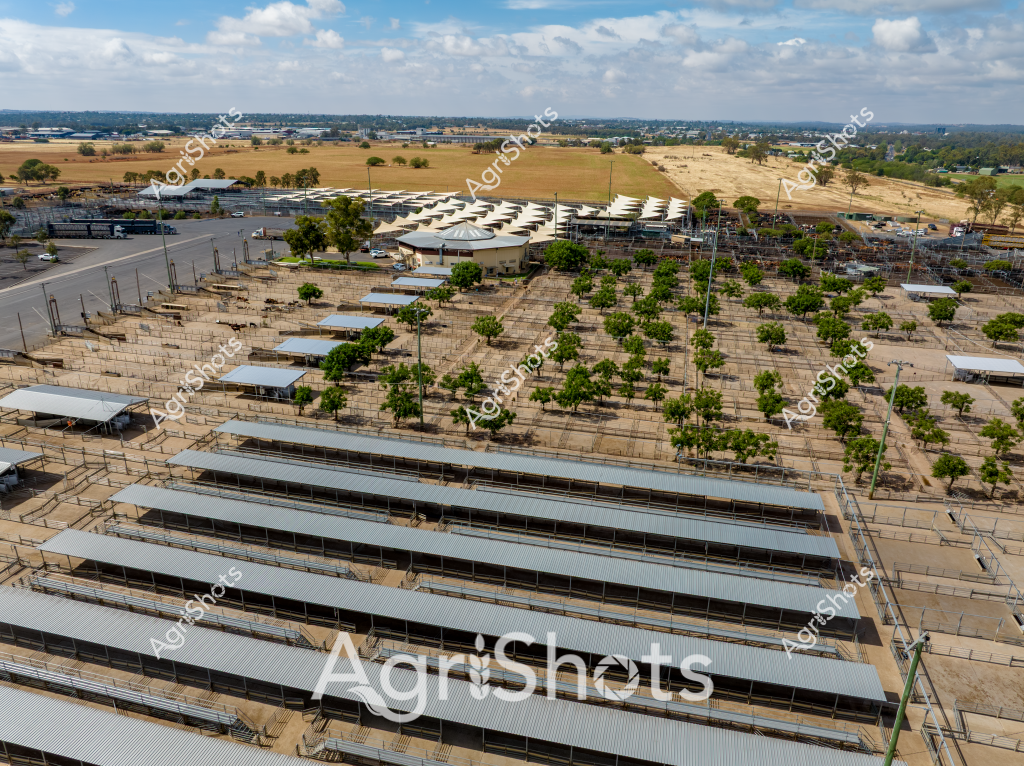
An expansive aerial view of a modern livestock facility reveals a systematic agricultural complex featuring multiple long, covered livestock sheds with metal roofing. Strategically planted trees are interspersed throughout the sandy-colored ground, providing shade and windbreaks across the extensive property. The facility appears designed for efficient animal management, with carefully constructed pens, walking areas, and sheltered spaces that maximize animal welfare and operational productivity. The landscape surrounding the facility is characterized by open paddocks and distant rural infrastructure, with a backdrop of golden fields and scattered trees extending to the horizon. Multiple metal-roofed structures of varying lengths are arranged in parallel rows, suggesting a highly organized approach to livestock management. Lightweight shade structures and carefully planned vegetation contribute to the facility's professional and considered design. The aerial perspective highlights the scale and precision of modern agricultural infrastructure, showcasing how contemporary farming operations integrate functional design with animal husbandry best practices. Fencing, access routes, and strategic building placement demonstrate a sophisticated approach to livestock management in what appears to be an arid or semi-arid Australian agricultural setting. The expansive view captures the intersection of engineering, animal care, and agricultural innovation, revealing a meticulously planned livestock facility that represents the advanced state of Australian agricultural practices.
 Image
Image
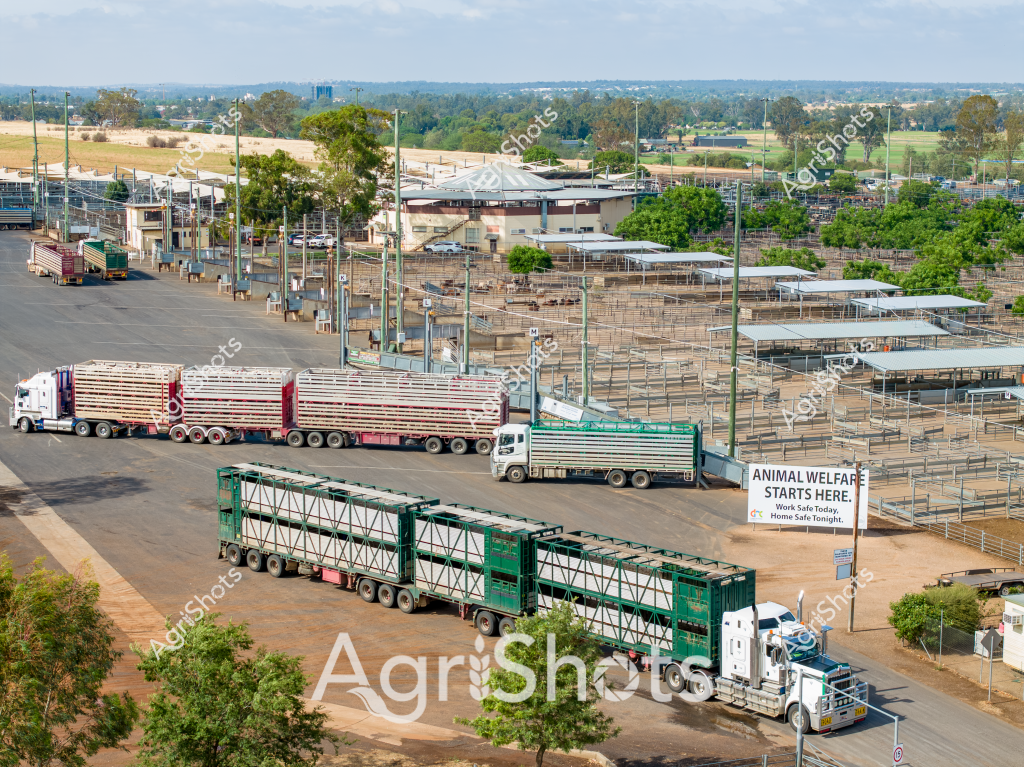
This image captures a comprehensive view of a modern livestock transportation and welfare facility, likely a livestock selling center or saleyards. Multiple large, multi-tiered livestock transport trucks are parked in the foreground, featuring green and white trailers specifically designed for animal transportation. The facility includes extensive metal livestock holding pens with white shade covers, creating a systematic layout for animal movement and management. A prominent "ANIMAL WELFARE STARTS HERE" sign emphasizes the facility's commitment to livestock care, with the additional text "Work Safe Today, Home Safe Tonight" suggesting a focus on both animal and worker safety. The surrounding landscape reveals a semi-rural setting with trees, distant buildings, and an expansive horizon typical of Australian agricultural regions. The transport trucks are heavy-duty, long-combination vehicles characteristic of Australian livestock logistics, engineered to safely transport large numbers of animals across vast distances. Multiple levels and compartments in the trailers allow for segregation and safe transport of different livestock groups. The facility's infrastructure demonstrates a highly organized approach to livestock management, with carefully designed infrastructure that prioritizes animal welfare and efficient transportation. The scene represents a critical node in Australia's livestock supply chain, where animals are prepared for transport, sale, or movement between agricultural properties. The meticulously planned layout and robust infrastructure highlight the professional standards of modern Australian livestock management.
 Image
Image
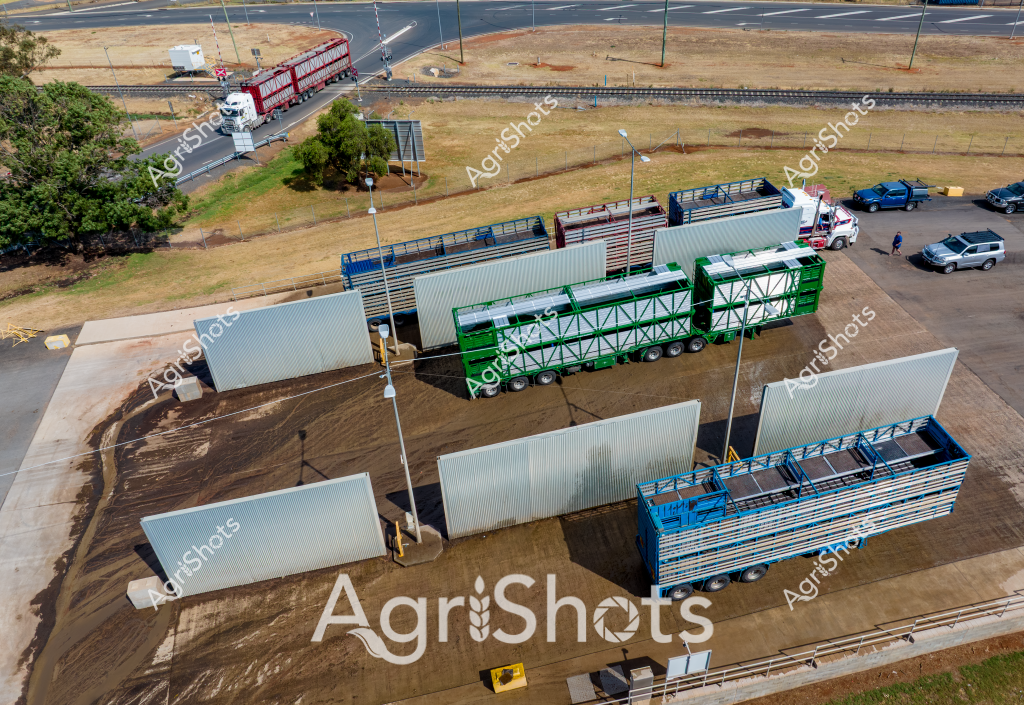
An aerial view of a transport and logistics hub showcases specialized livestock trailers designed for cattle transportation. Multiple multi-axle trucks with green, blue, and white animal transport containers are strategically positioned on a concrete hardstand area adjacent to railway lines. The scene reveals heavy-duty commercial vehicles with intricate steel framing and multiple decks, engineered to safely move livestock across Australian agricultural regions. Surrounding infrastructure includes grassy verges, bitumen roads, and railway tracks, indicating this is a professional livestock transportation staging area. Parked vehicles in the background suggest ongoing logistics operations, with the entire facility demonstrating the sophisticated infrastructure supporting Australia's cattle transport networks. The trailers feature robust steel construction with multiple levels, ventilation gaps, and secure railings - critical design elements for animal welfare during long-distance transportation. The green and blue color schemes of the trailers provide visual contrast against the dusty brown ground and gray infrastructure, highlighting the specialized nature of agricultural transport equipment.
 Image
Image
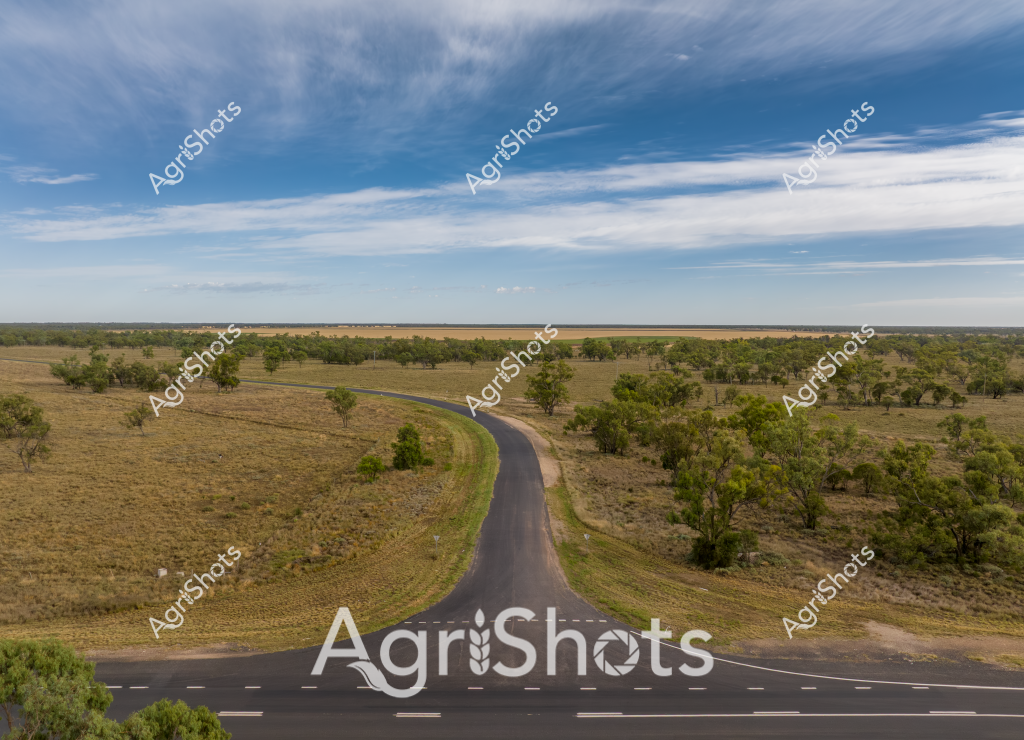
A winding rural road curves through a sprawling Australian landscape, cutting a smooth black asphalt path through golden grasslands and scattered eucalyptus woodland. The road follows a gentle bend, creating a striking visual perspective that draws the eye toward the distant horizon. Sparse trees dot the surrounding paddocks, their green canopies contrasting with the dry, sun-bleached grasses of what appears to be a typical Australian pastoral scene. Wispy cirrus clouds stretch across a vivid blue sky, creating a sense of expansive openness characteristic of the Australian countryside. The carefully constructed road suggests this is likely a key rural transport route, connecting agricultural properties and providing essential infrastructure for the region's farming communities. The landscape reveals the quintessential Australian rural terrain - a mix of open grazing land and scattered woodland, typical of regions across Queensland, New South Wales, or Western Australia's agricultural zones. The curving road's smooth surface and clear markings indicate careful infrastructure planning, essential for supporting the agricultural activities that define these regions.
 ▶ Video
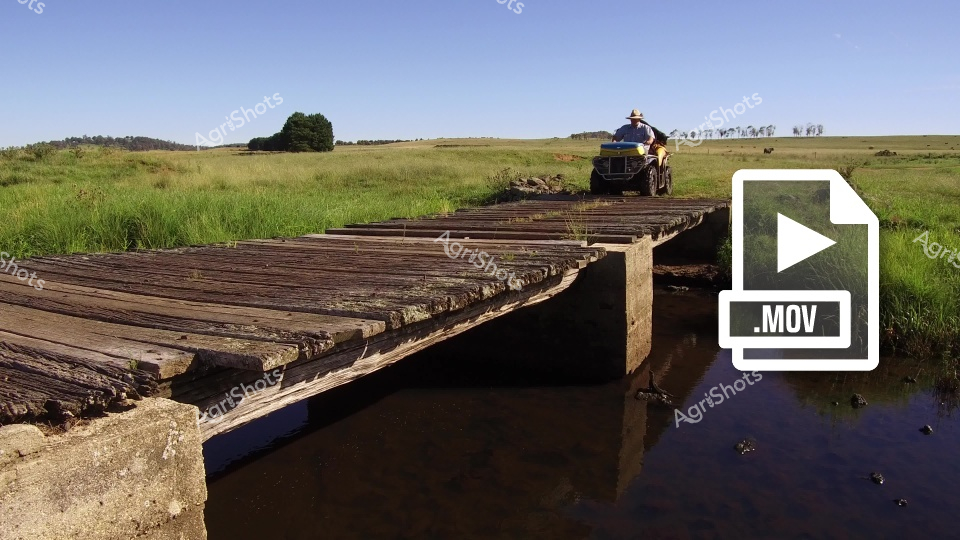
A weathered wooden bridge spans a creek crossing in the New South Wales countryside, providing rural infrastructure for agricultural access across the water. In the background, a man operates a tractor with an air cart attachment across the green pasture, while cattle graze peacefully in the distance. The pastoral landscape showcases typical farming operations, with the creek crossing serving as essential infrastructure for moving agricultural vehicles and equipment between paddocks during cattle and cropping activities.
 Image
Image
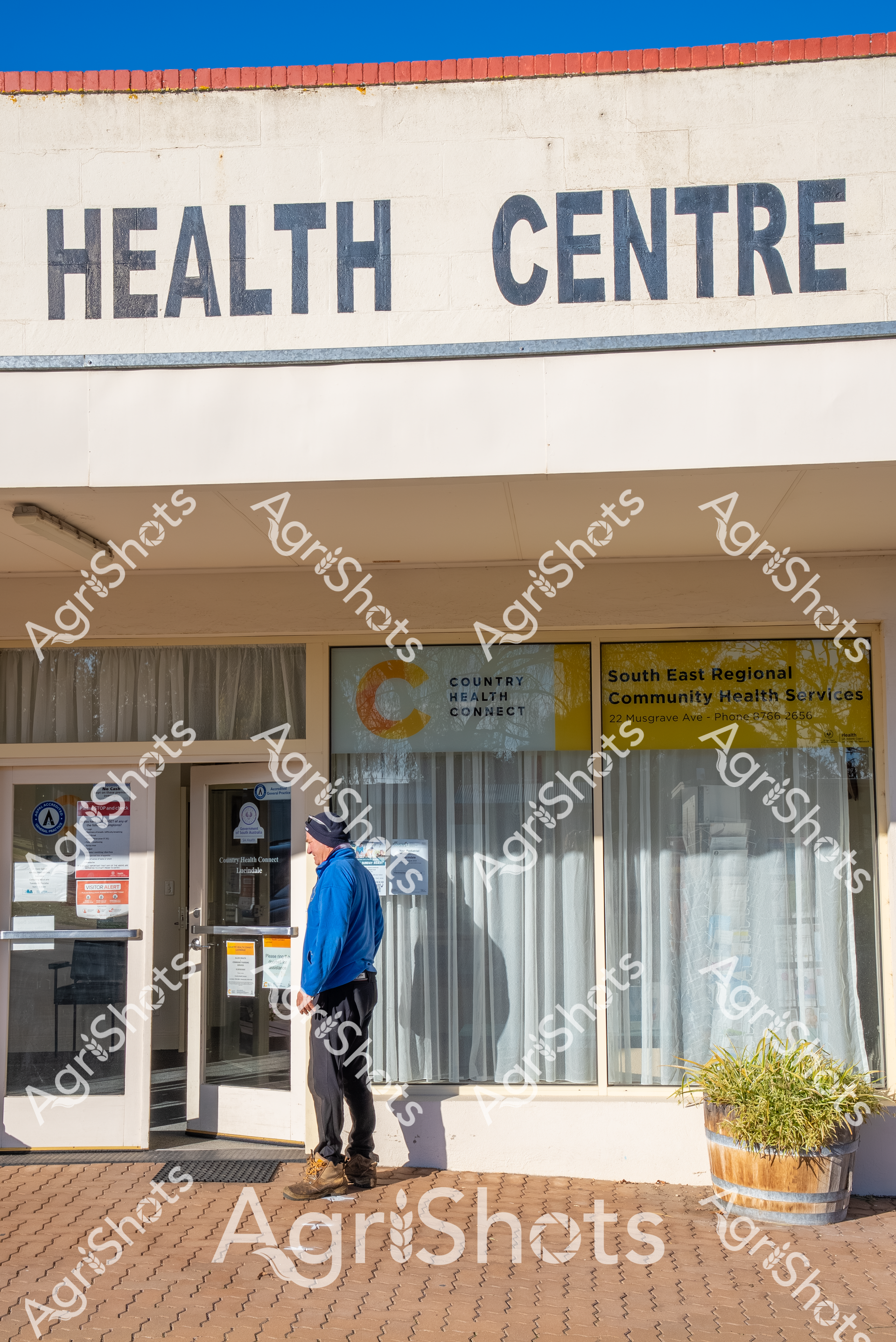
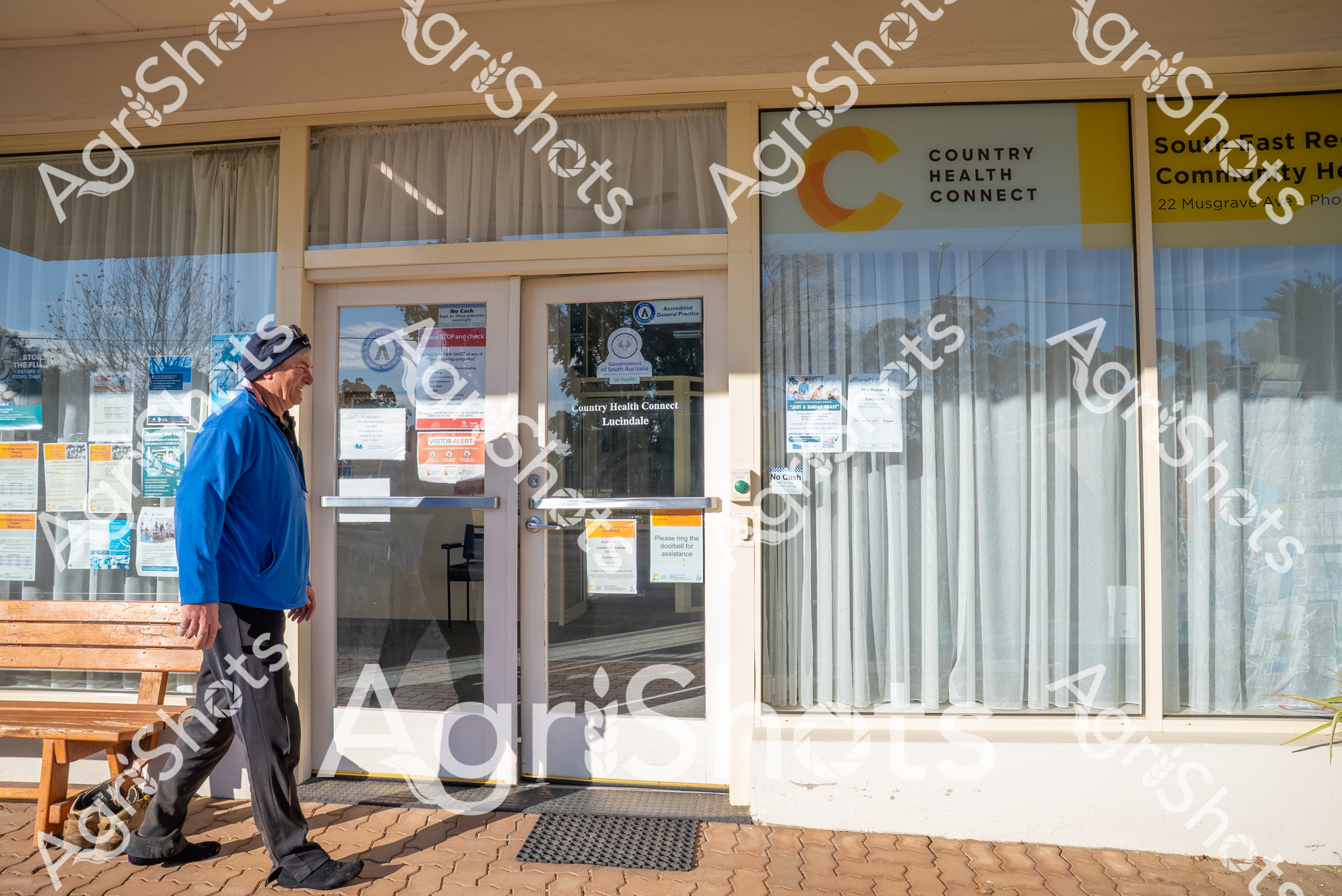
A person in a blue jacket stands outside a rural health centre, showcasing the South East Regional Community Health Services facility. The building features "Country Health Connect" signage and presents a welcoming entrance with brick paving and a potted plant, capturing the essence of community healthcare in a winter setting.
 Image
Image
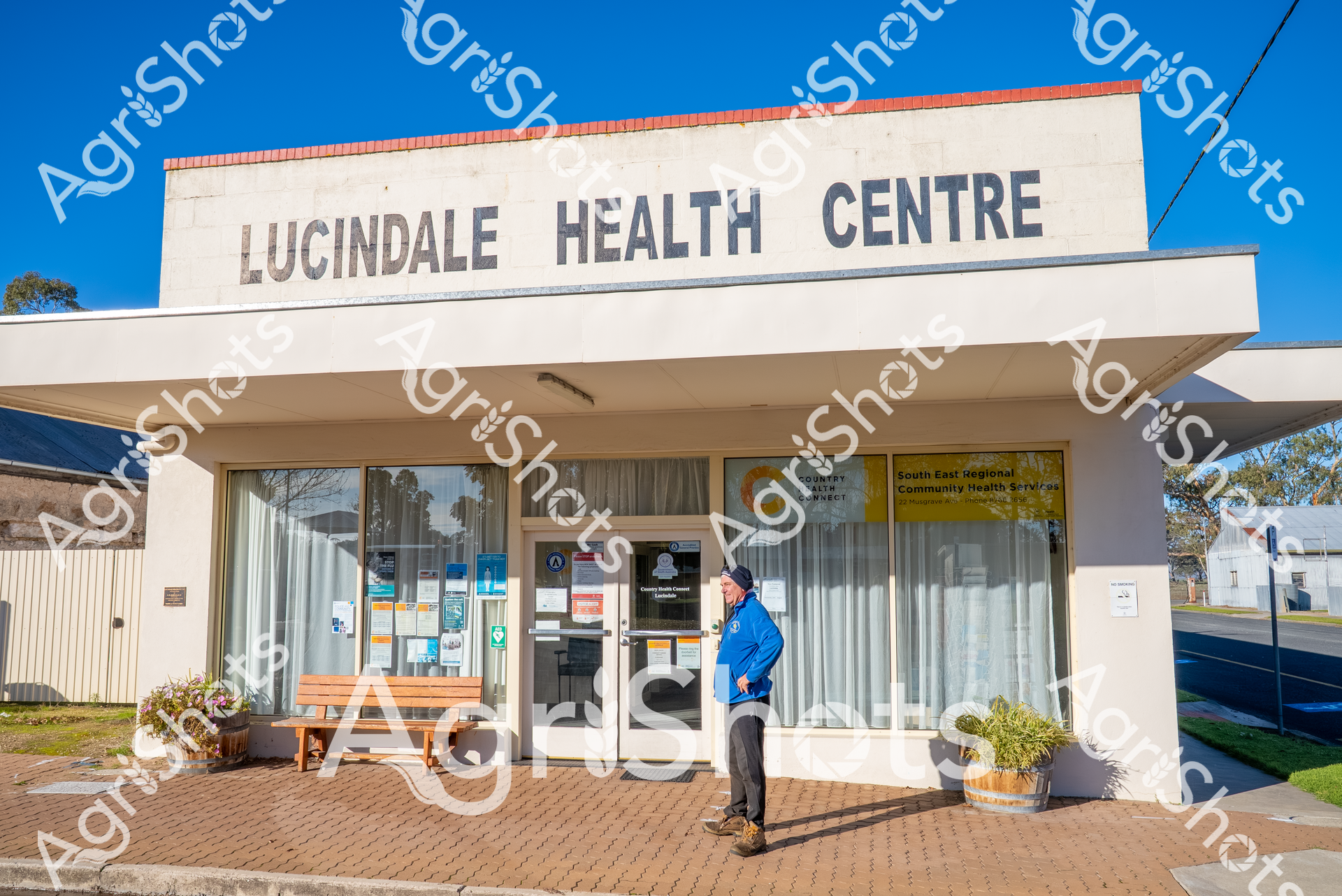
A rural health center stands in a quiet community, with a man in a blue jacket standing near the entrance. The Lucindale Health Centre, part of the South East Regional Community Health Services, offers medical support to this small town during the winter season. The building features glass windows, informational notices, and a welcoming wooden bench, reflecting the center's commitment to local healthcare and wellbeing.
 Image
Image
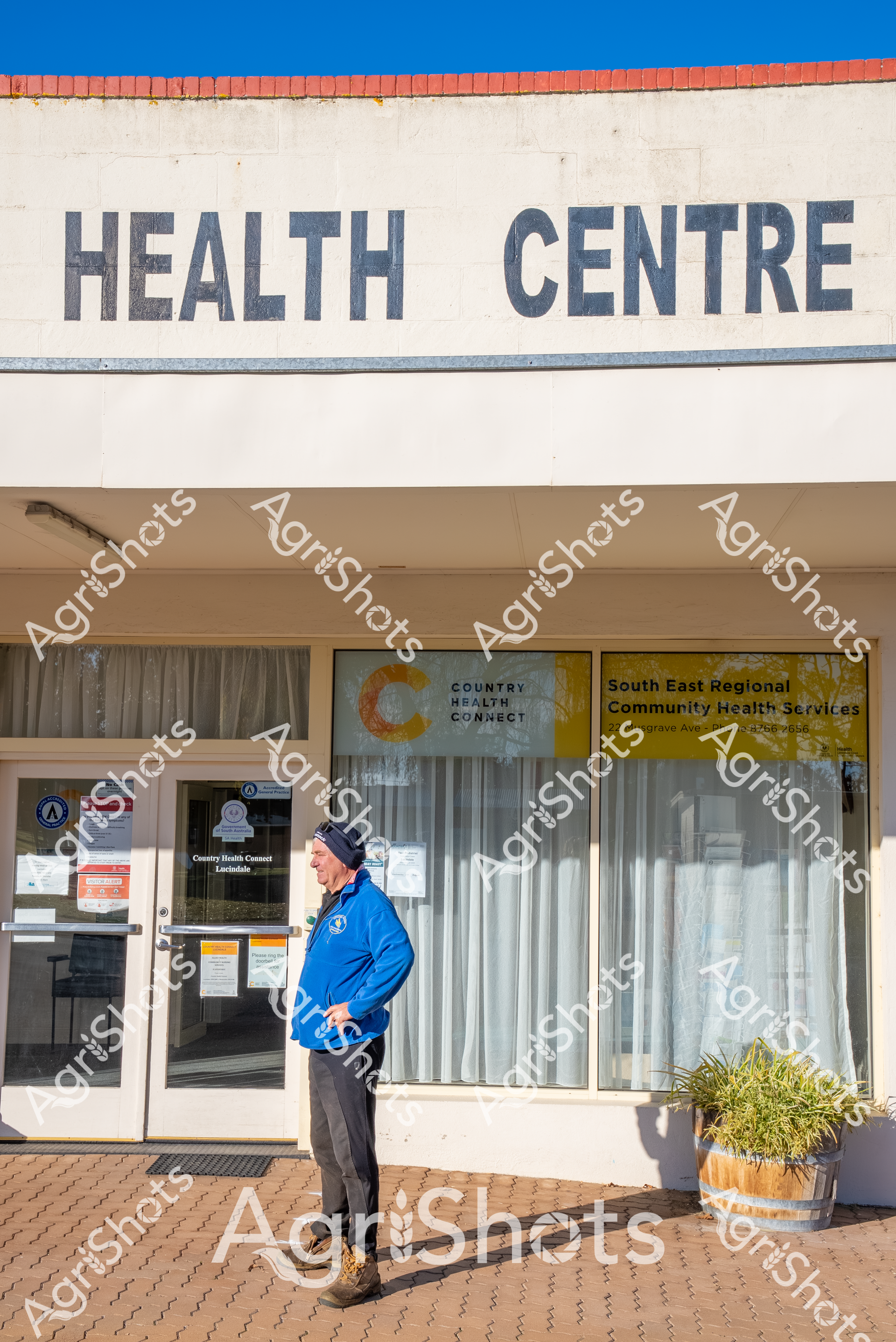
A person wearing a blue jacket and winter hat stands outside a rural health centre in South Australia. The building displays signage for Country Health Connect and South East Regional Community Health Services, reflecting the region's healthcare infrastructure. The scene captures the winter atmosphere of a small community medical facility.
 Image
Image
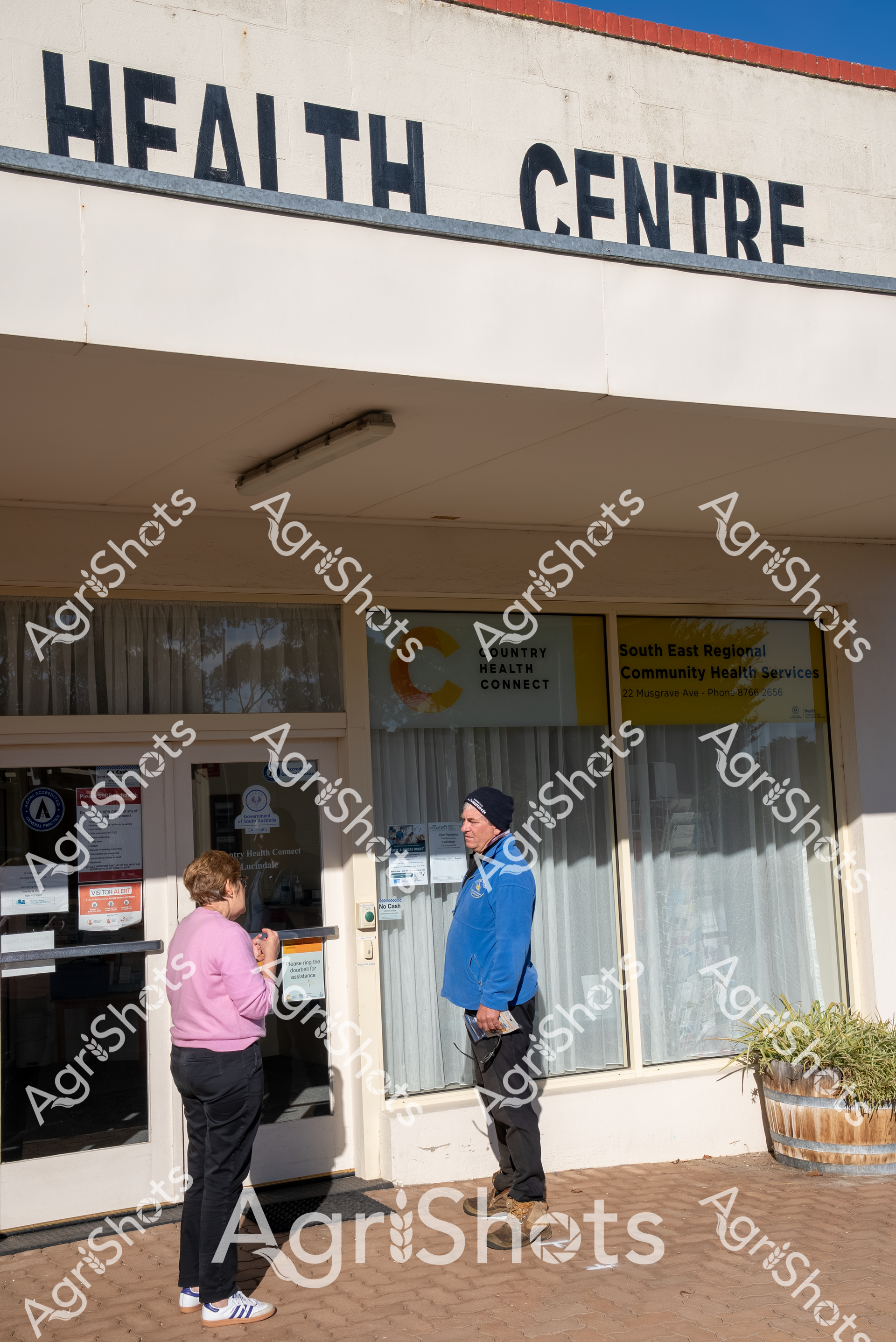
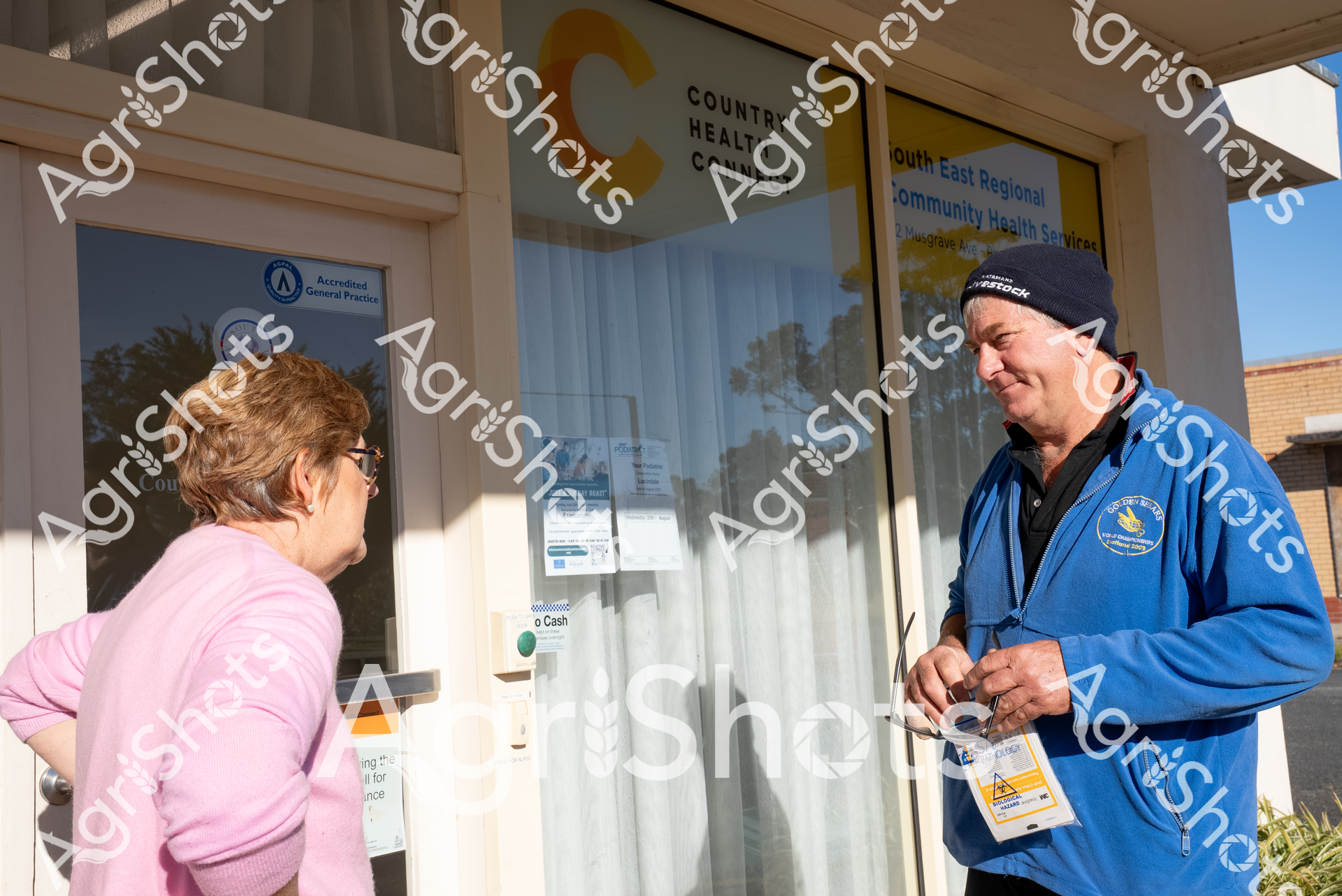
A woman in a pink sweater stands near the entrance of a Country Health medical center, speaking with a man in a blue jacket and black beanie. The scene appears to be at a rural community health service location in South Australia's South East Region during winter, capturing a moment of local healthcare interaction.
 Image
Image
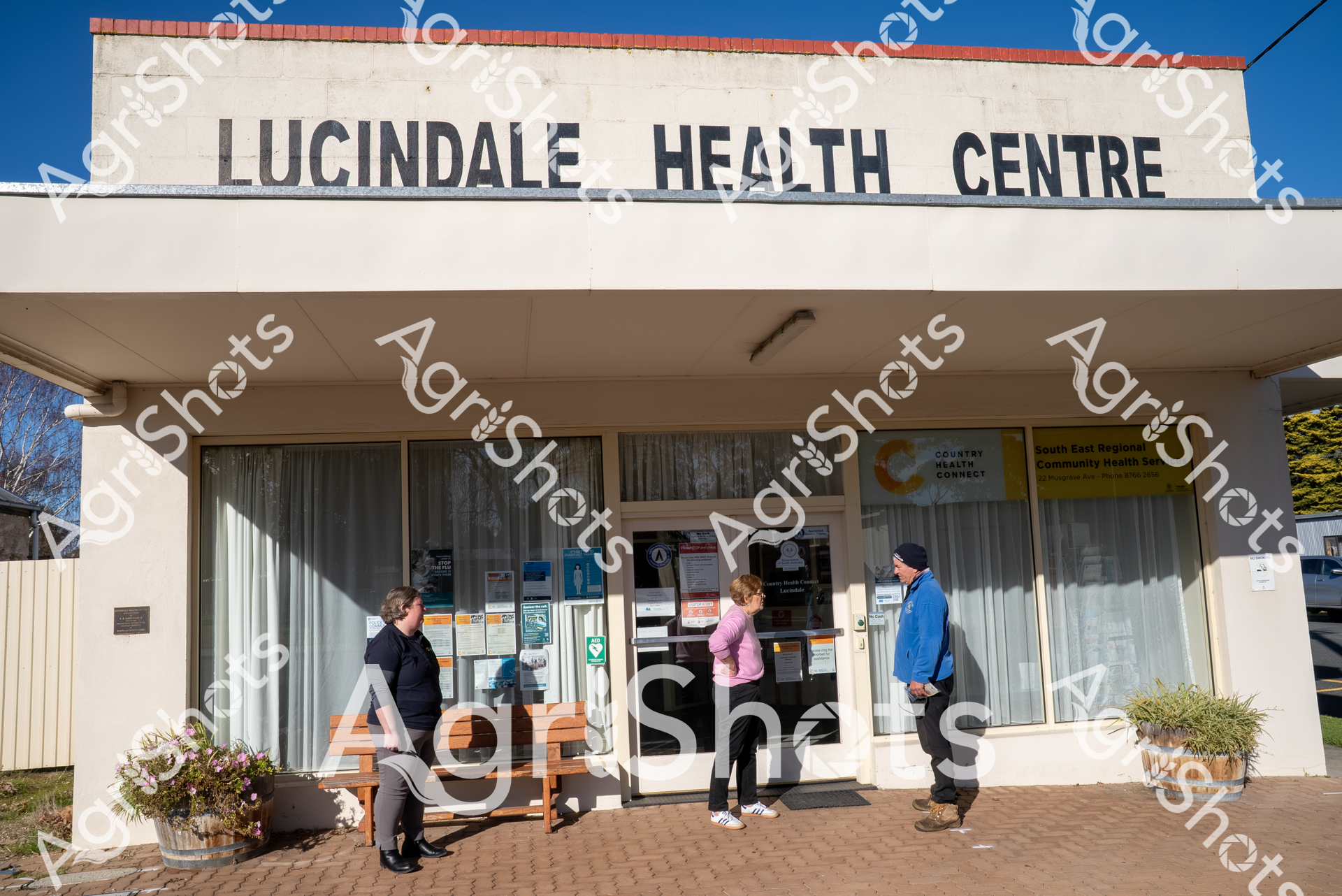
The Lucindale Health Centre stands on a sunny winter day, with three people near the entrance. Located in rural South Australia, this community health facility showcases the importance of local healthcare services in small regional towns. Potted flowers add a welcoming touch to the brick-paved entrance, while informational notices are displayed on the glass doors.
 Image
Image
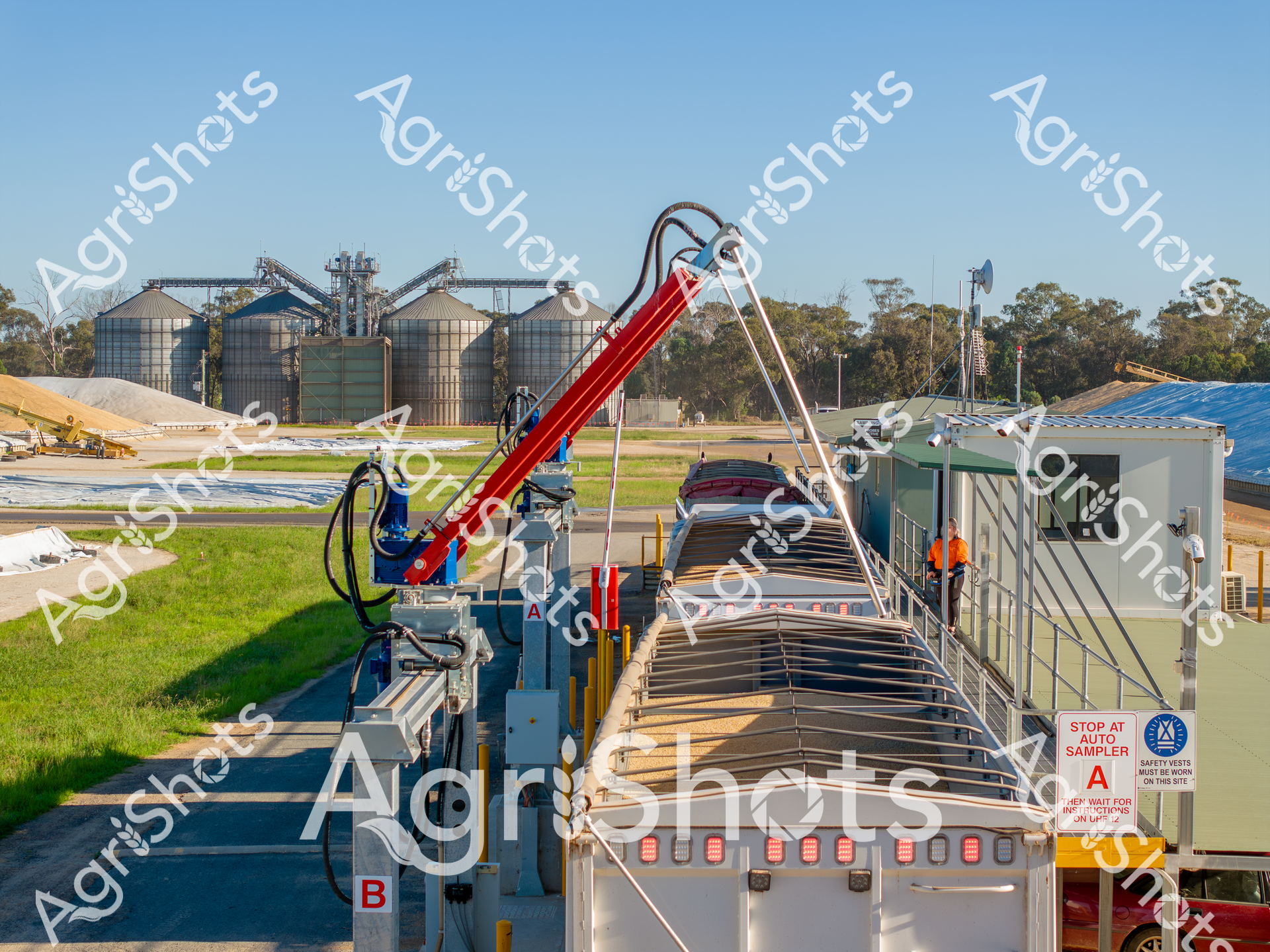
Grain sampling and testing station captures the precision of modern Australian agricultural logistics. A state-of-the-art auto sampler extends its bright red hydraulic arm over a long transport trailer loaded with harvested grain, positioned against the backdrop of massive steel grain silos in the Riverina region. Safety signage and high-visibility workwear mark this as a carefully managed grain intake and quality control point, with multiple technological systems ensuring accurate sampling and assessment. The clear summer sky and expansive grassland surrounding the facility highlight the industrial-scale infrastructure supporting Australia's critical grain export industry. Sophisticated equipment like the auto sampler represents the technological advancement of contemporary agricultural operations, transforming traditional harvest processes with automated, precise measurement techniques.
 Image
Image
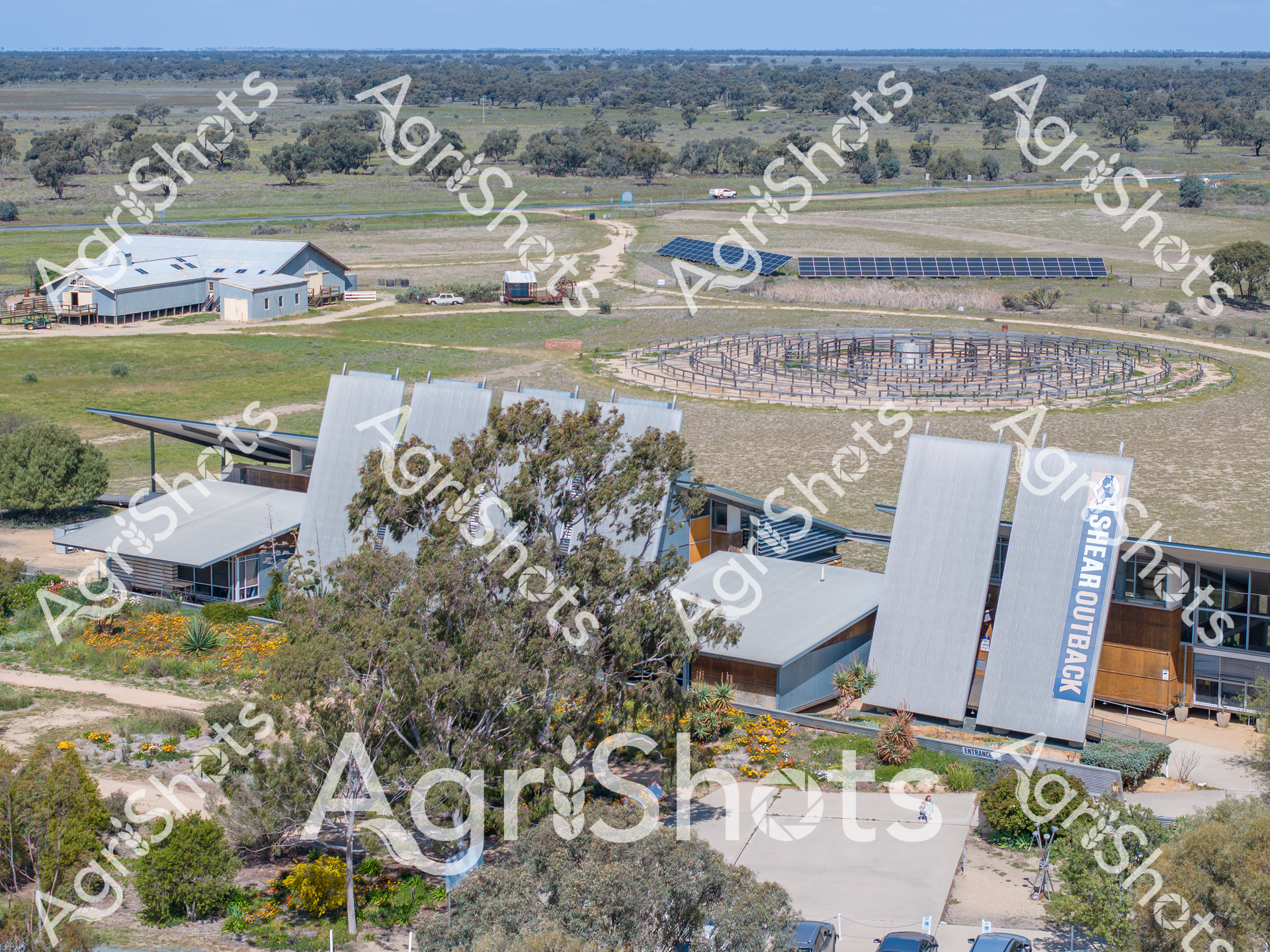
Scenic aerial view of Shear Outback, a premier agritourism destination in New South Wales' Riverina region. Modern architectural buildings blend with the expansive pastoral landscape, featuring solar panels, a circular livestock yard, and native Australian vegetation. The site showcases the region's rich sheep farming heritage, highlighting sustainable agricultural practices and cultural tourism.
 Image
Image
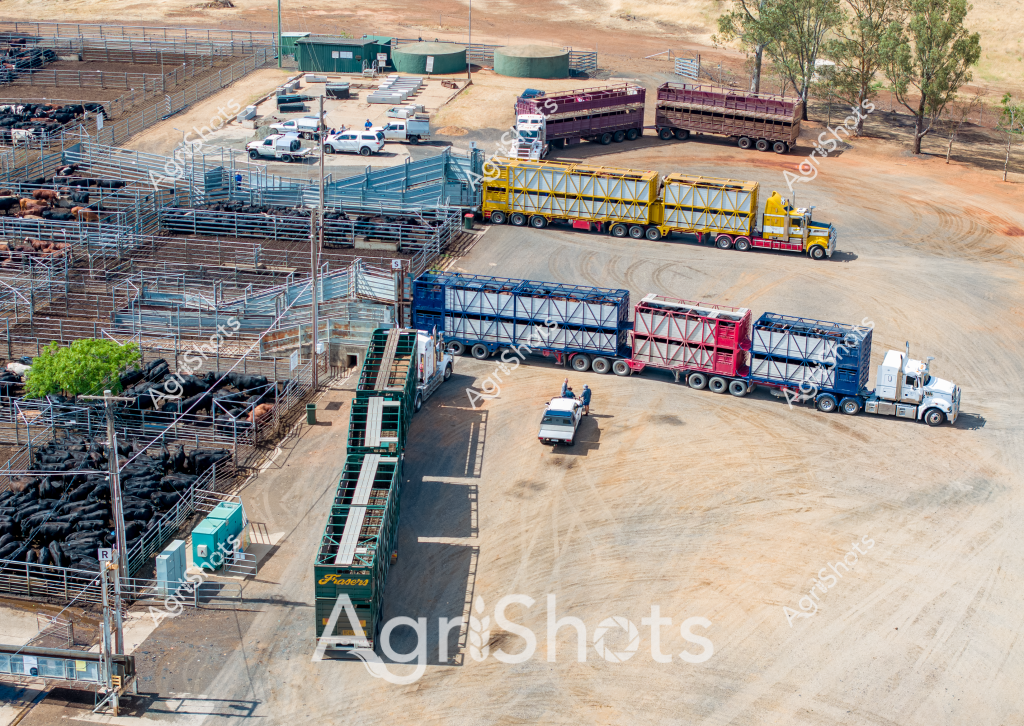
A bustling livestock transport hub captures the essence of Australia's robust cattle industry. Multiple large trucks with extended trailers are positioned within a dirt yard, surrounded by extensive metal cattle yards filled with black cattle. The scene is set in an arid landscape, with sparse trees and a green-roofed processing shed in the background, suggesting a remote cattle station in Western Australia or the Northern Territory. Yellow and white road trains with multiple linked trailers dominate the foreground, their robust design specifically engineered for long-distance livestock transportation across challenging rural terrain. The trucks are strategically parked near loading ramps, ready to transport cattle between properties or to processing facilities. Smaller utility vehicles are scattered around the yard, indicating active staff managing the livestock movement. The metal cattle yards are densely populated with black beef cattle, likely Angus or Wagyu breeds, standing in organized sections separated by robust galvanized steel fencing. The dusty, ochre-colored ground and sparse vegetation highlight the rugged environmental conditions typical of Australian cattle country. Sophisticated livestock handling infrastructure demonstrates the professional and efficient approach to cattle management in Australia's agricultural sector. This aerial view reveals the complex logistics and infrastructure required to support large-scale cattle transportation, showcasing the critical role of road transport in Australia's beef industry supply chain.
 Image
Image
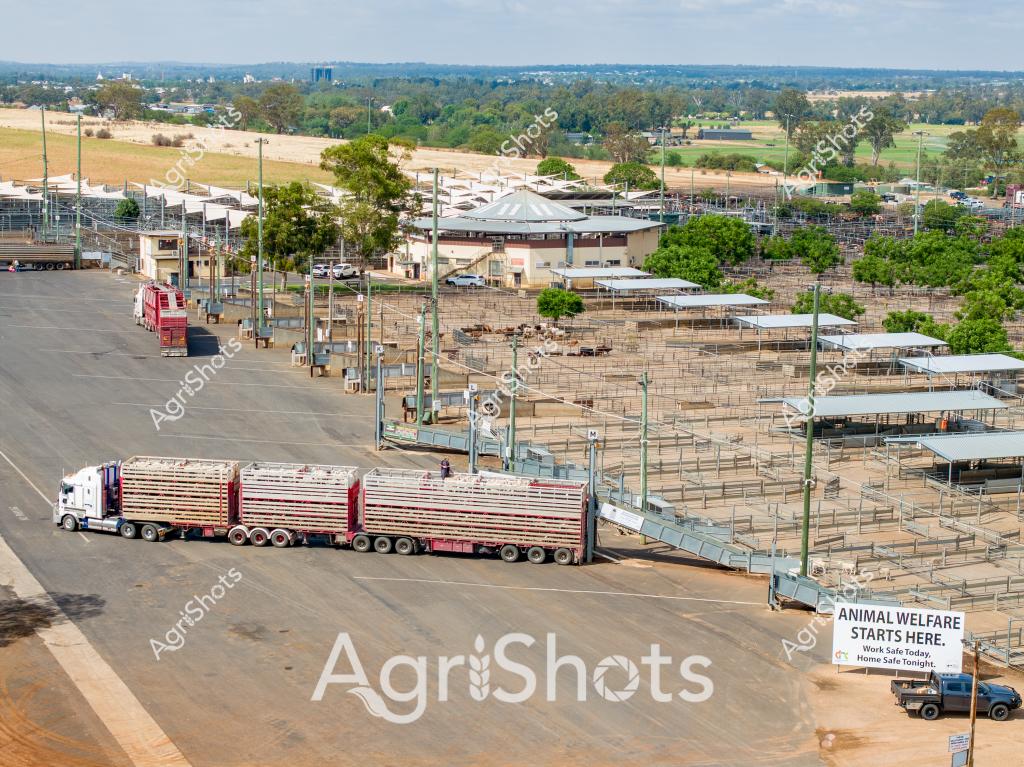
This image captures a comprehensive view of a livestock sale yard or agricultural processing facility, likely in an Australian rural setting. A large, multi-trailer livestock transport truck is positioned at the entry point of an expansive facility with multiple covered holding pens and infrastructure. The "Animal Welfare Starts Here" sign prominently indicates the facility's commitment to ethical livestock handling practices. The landscape reveals a broad agricultural setting with green trees and distant urban structures visible on the horizon, suggesting this is near a regional town or city. Multiple steel-framed holding pens with white shade covers are systematically arranged, demonstrating a modern, structured approach to livestock management. Green steel support poles create a grid-like framework throughout the facility, enabling efficient animal movement and processing. The transport truck appears to be a standard Australian road train configuration, with multiple trailers designed for long-distance livestock transportation, typical of cattle or sheep movements across vast pastoral regions. The facility's infrastructure suggests this is a sophisticated livestock sales yard, likely used for cattle or sheep auctions, with carefully designed loading ramps and holding areas to ensure animal welfare and efficient agricultural commerce. The scene represents a key node in Australia's agricultural supply chain, where livestock are professionally managed, transported, and traded with systematic precision and care.
 Image
Image
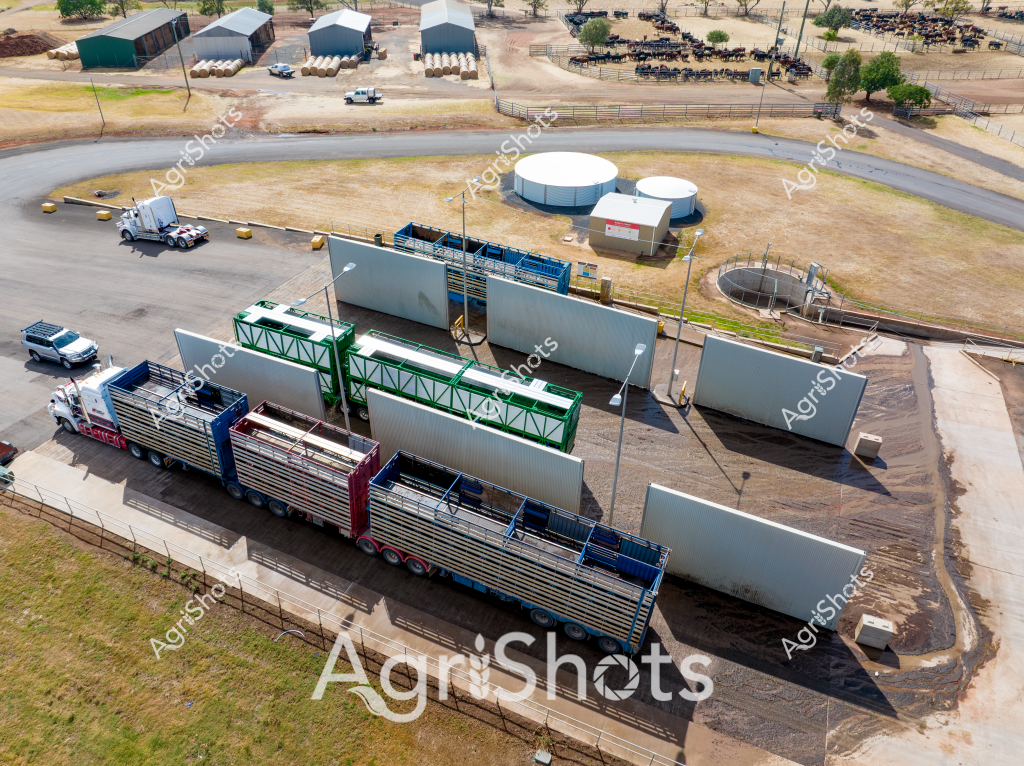
An aerial view of a livestock processing facility reveals a complex agricultural infrastructure designed for efficient cattle management. Large white modular walls and green-framed structures create a systematic loading and unloading area for semi-trailer trucks. White cylindrical water tanks and circular holding pens surround the central processing zone, indicating a modern cattle handling facility likely located in a dry, arid region with sparse vegetation and dusty ground. A semi-trailer truck is positioned within the loading zone, suggesting preparation for transporting livestock. The surrounding landscape features several industrial-style sheds with metal roofing in green and grey tones, and a series of fenced paddocks where numerous dark-colored cattle can be seen clustered together. The infrastructure demonstrates precision engineering typical of contemporary Australian agricultural operations, with carefully designed pathways, sturdy infrastructure, and strategic layout to maximize efficiency in livestock movement and processing. Gravel and concrete surfaces provide durable, functional spaces for heavy vehicle and animal traffic, reflecting the demanding environmental conditions of rural livestock production zones. The aerial perspective offers a comprehensive view of the facility's layout, highlighting the sophisticated systems developed to manage large-scale cattle operations in challenging agricultural environments.
 Image
Image
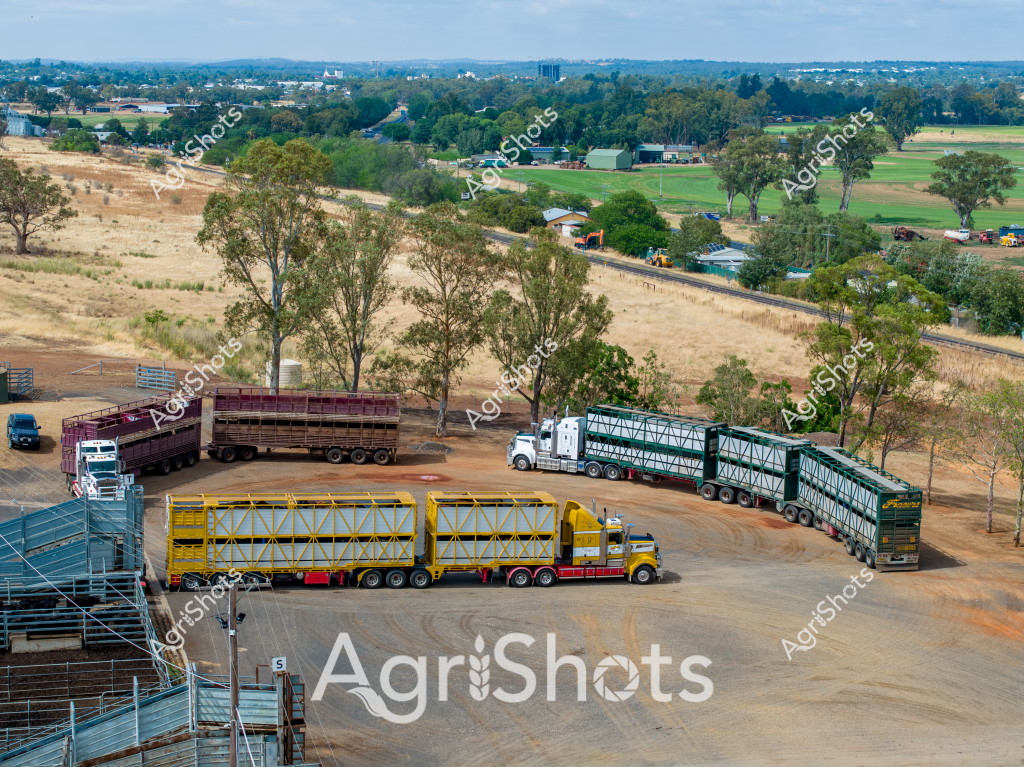
A detailed aerial view of a livestock transport depot in rural Australia, showcasing multiple large semi-trailers designed for cattle and livestock movement. The trucks feature distinctive yellow, white, and green trailers with multi-tiered livestock crates, parked on a dusty dirt yard surrounded by eucalyptus trees and expansive paddocks. The landscape reveals a patchwork of dry golden grasslands and green agricultural fields stretching to the distant horizon, with trees and rural infrastructure dotting the background. These specialized livestock transport vehicles, likely used for moving cattle between stations or to market, demonstrate the sophisticated logistics of Australia's extensive beef and livestock industry. The scene captures the scale and complexity of agricultural transportation in a typical rural Australian setting, with the multi-trailer trucks highlighting the substantial distances and specialized equipment required to move livestock across vast agricultural regions.
 Image
Image
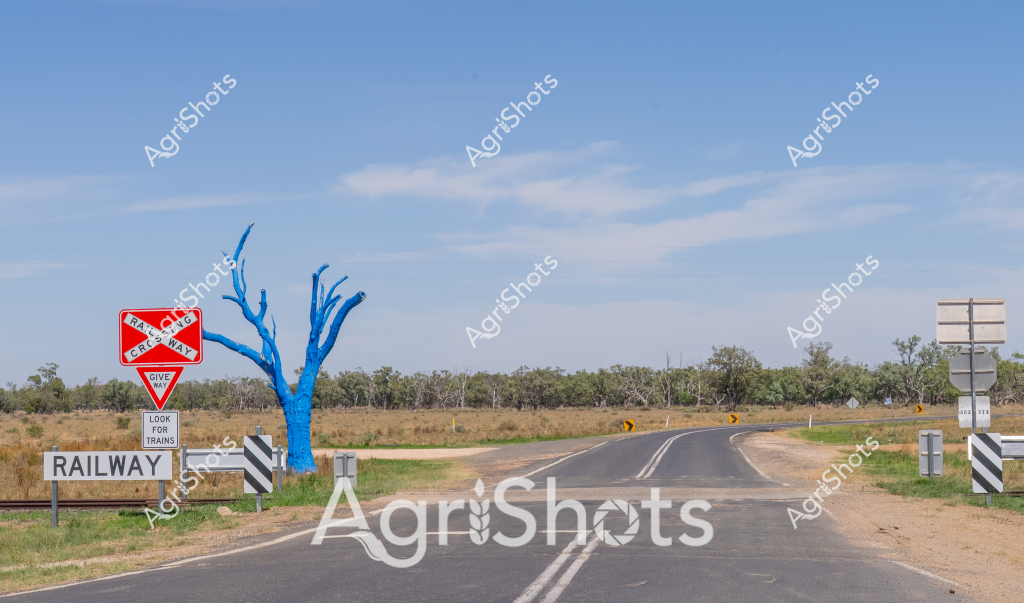
A striking rural railway crossing scene captures an isolated Australian landscape, with a vivid blue tree standing sentinel near a traffic sign. The winding asphalt road curves through a dry grassland setting, punctuated by roadside railway warning signs and distant eucalyptus trees. A "Give Way" and "Railway" sign alerts travelers to potential train crossings, emphasizing the safety infrastructure of rural transportation routes. The bright blue tree - likely an artistic installation or painted landmark - provides a surreal contrast against the muted landscape of golden grasses and soft blue sky. Roadside markers and gentle road curves suggest this is a remote agricultural region, typical of inland Australian terrain where transportation infrastructure connects sparse rural communities. The composition highlights the intersection of natural landscape and human-constructed pathways, with the unexpected blue tree adding an element of artistic intrigue to an otherwise utilitarian scene of rural road and rail infrastructure.
 Image
Image
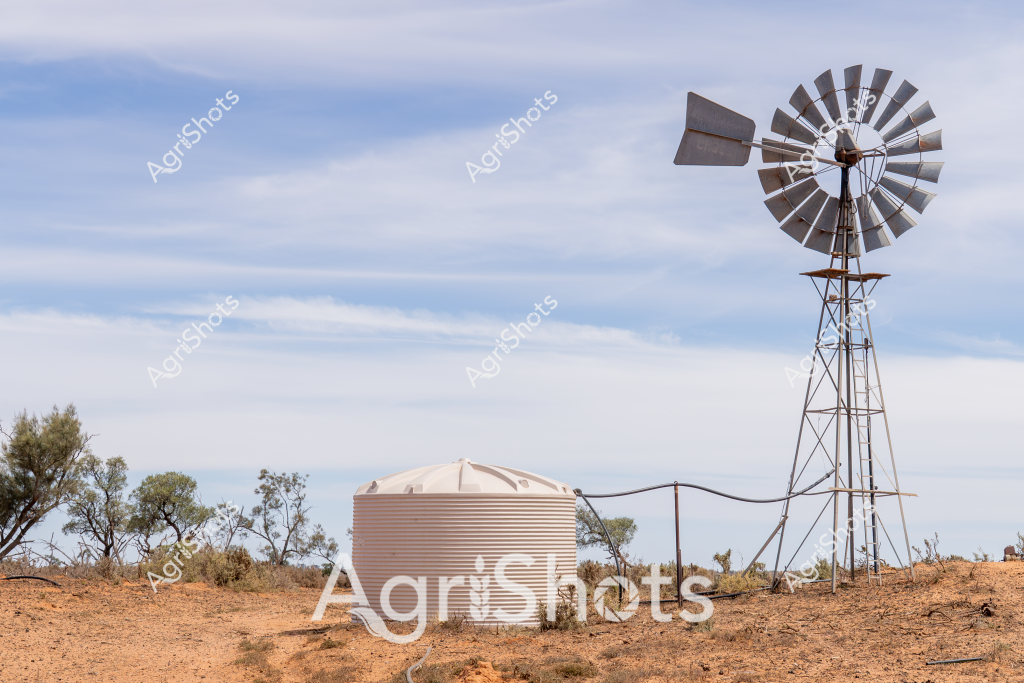
A classic Australian rural landscape captures a weathered windmill and water tank in an arid, drought-affected setting. The tall metal windmill stands prominently against a soft blue sky, its metal blades positioned to catch any available breeze. A corrugated steel water tank sits nearby, providing crucial water storage for the surrounding sparse landscape. Scattered native scrub and sparse trees dot the reddish-brown earth, highlighting the challenging environmental conditions typical of inland Australia. The scene embodies the resilience of rural infrastructure, with the windmill representing generations of agricultural adaptation to harsh, dry environments. The muted color palette of dusty browns, soft blues, and silvery metal tones speaks to the austere beauty of Australia's agricultural heartland.
 Image
Image
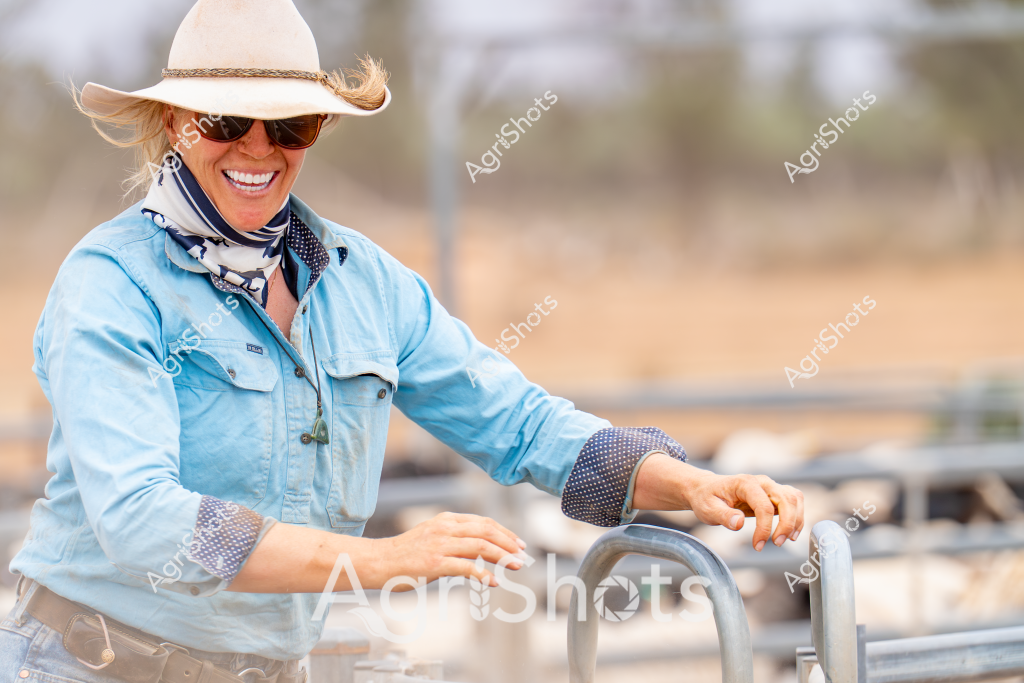
A woman farmer in a light blue chambray shirt and white wide-brimmed hat stands at a metal gate in an arid rural landscape. Her sunglasses and cheerful smile suggest confidence and enjoyment while working outdoors, with a blurred background of dry paddocks and scattered trees. She is wearing practical workwear with rolled chambray sleeves and a patterned navy scarf, typical of Australian agricultural attire. The soft focus and warm tones indicate this is likely a late morning or early afternoon scene during a dry season. Her relaxed but alert posture and positioning near rural infrastructure conveys her connection to the land and her professional role in managing the property.
 Image
Image
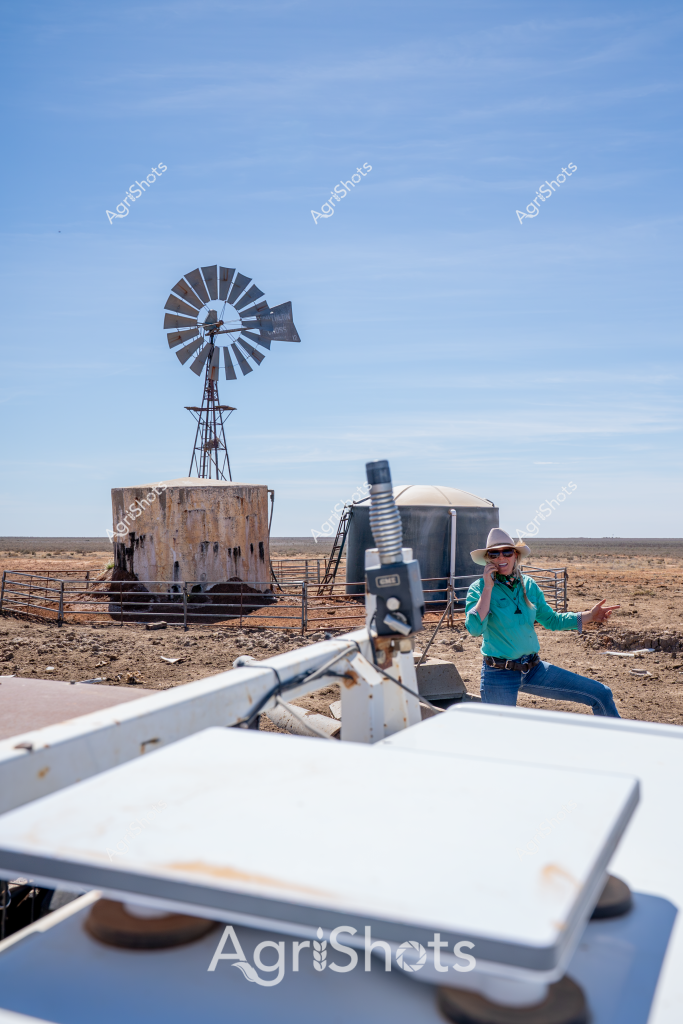
A woman in a turquoise shirt and wide-brimmed hat stands amid a stark, arid landscape, conducting agricultural field research or survey work near a classic windmill and water storage tank. The windmill, a quintessential feature of Australian rural infrastructure, rises against a clear blue sky, its metal blades poised to catch the slightest breeze. A white instrument or measurement device is mounted in the foreground, suggesting scientific data collection or environmental monitoring. The surrounding terrain is a palette of browns and tans - dry, compacted earth characteristic of drought-affected or semi-arid regions of Australia. This scene captures the resilience of agricultural workers and the essential infrastructure that supports farming in challenging environmental conditions, where water management and precise environmental measurements are critical to survival and productivity.
 Image
Image
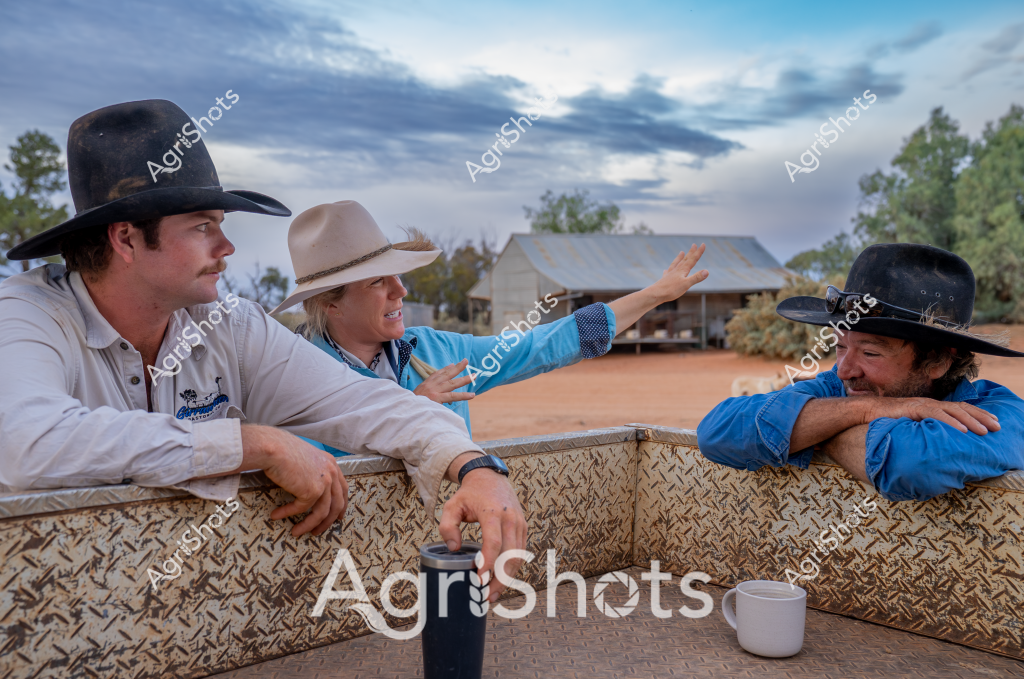
A group of three rural workers pause during their morning discussion, leaning against a textured metal utility vehicle with a rustic shed in the background. Two men and a woman, all wearing cowboy hats in black and beige, are dressed in blue and white work shirts typical of Australian rural attire. The landscape suggests an outback station or remote agricultural property, with a weathered tin shed and sparse trees visible under a cloudy dawn or dusk sky. A white coffee mug sits on the vehicle's surface, indicating a casual workplace moment of connection and conversation. The scene captures the collaborative spirit of Australian rural work, with the individuals appearing relaxed yet focused, their body language suggesting an ongoing discussion about station operations or daily tasks. The environment speaks to the rugged nature of Australian agricultural work - a dusty, open landscape with muted earth tones of red soil, gray-blue sky, and the weathered textures of rural infrastructure. Their attire and posture reflect generations of farming culture, where communication and teamwork are as critical to success as hard work and resilience.
 Image
Image
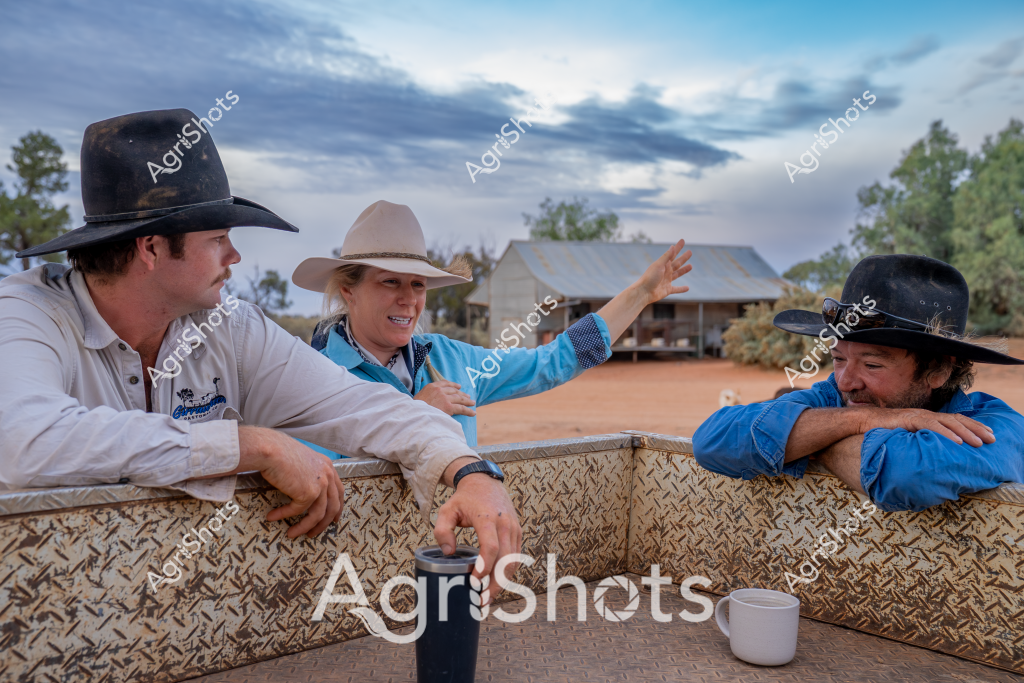
A scene of rural Australian life unfolds at a remote station, with three people in classic stockman attire leaning against a textured metal barrier. Two men and a woman, all wearing wide-brimmed hats and blue work shirts, are engaged in casual conversation with a rustic tin-roofed shed in the background. The landscape suggests an arid or semi-arid region, with reddish earth and sparse trees creating a classic outback setting. The individuals appear relaxed, with one woman in a light-colored hat gesturing animatedly while speaking to her companions. Their clothing - crisp blue work shirts and sturdy cowboy hats - speaks to the practical nature of station life. A coffee mug sits in the foreground, suggesting a moment of rest during a long working day. The cloudy sky adds depth to the scene, with soft blue and gray tones creating a moody backdrop to the rural setting. The metal barrier they're leaning on looks weathered, with a diamond-plate texture typical of rural infrastructure. This image captures the essence of Australian rural community - connection, communication, and the shared experience of working the land. The composition tells a story of camaraderie and the everyday moments that define life on a remote Australian station, where conversation and connection are as important as the work itself.