About this image
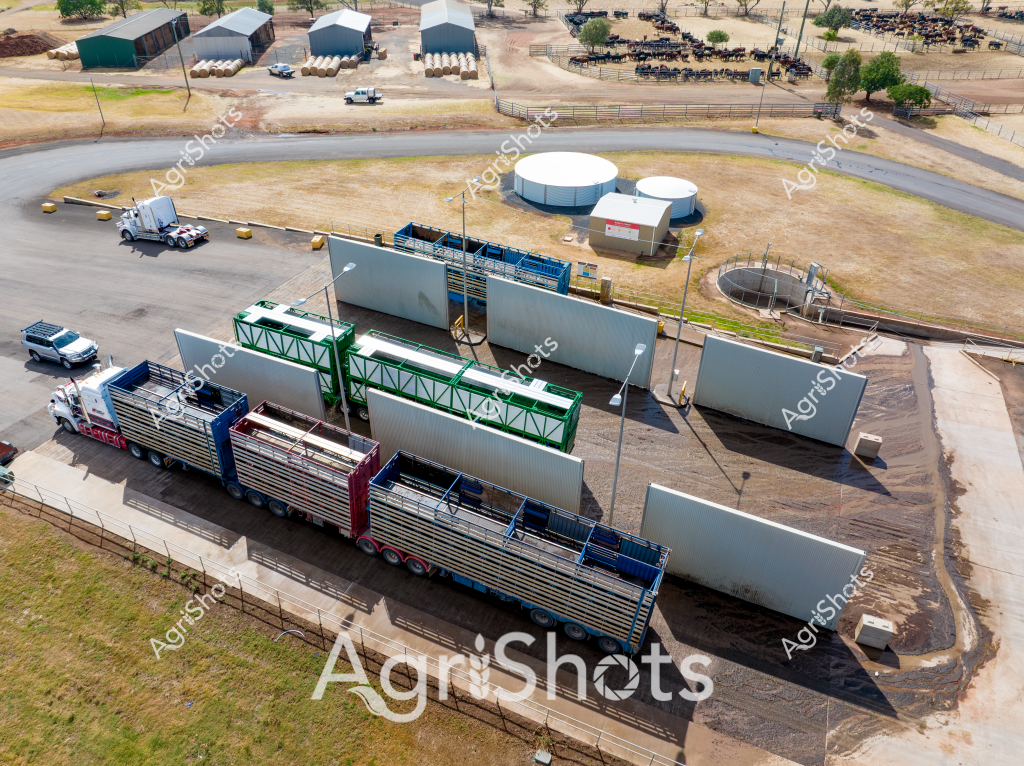
An aerial view of a livestock processing facility reveals a complex agricultural infrastructure designed for efficient cattle management. Large white modular walls and green-framed structures create a systematic loading and unloading area for semi-trailer trucks. White cylindrical water tanks and circular holding pens surround the central processing zone, indicating a modern cattle handling facility likely located in a dry, arid region with sparse vegetation and dusty ground. A semi-trailer truck is positioned within the loading zone, suggesting preparation for transporting livestock. The surrounding landscape features several industrial-style sheds with metal roofing in green and grey tones, and a series of fenced paddocks where numerous dark-colored cattle can be seen clustered together. The infrastructure demonstrates precision engineering typical of contemporary Australian agricultural operations, with carefully designed pathways, sturdy infrastructure, and strategic layout to maximize efficiency in livestock movement and processing. Gravel and concrete surfaces provide durable, functional spaces for heavy vehicle and animal traffic, reflecting the demanding environmental conditions of rural livestock production zones. The aerial perspective offers a comprehensive view of the facility's layout, highlighting the sophisticated systems developed to manage large-scale cattle operations in challenging agricultural environments.
Similar media
 Image
Image
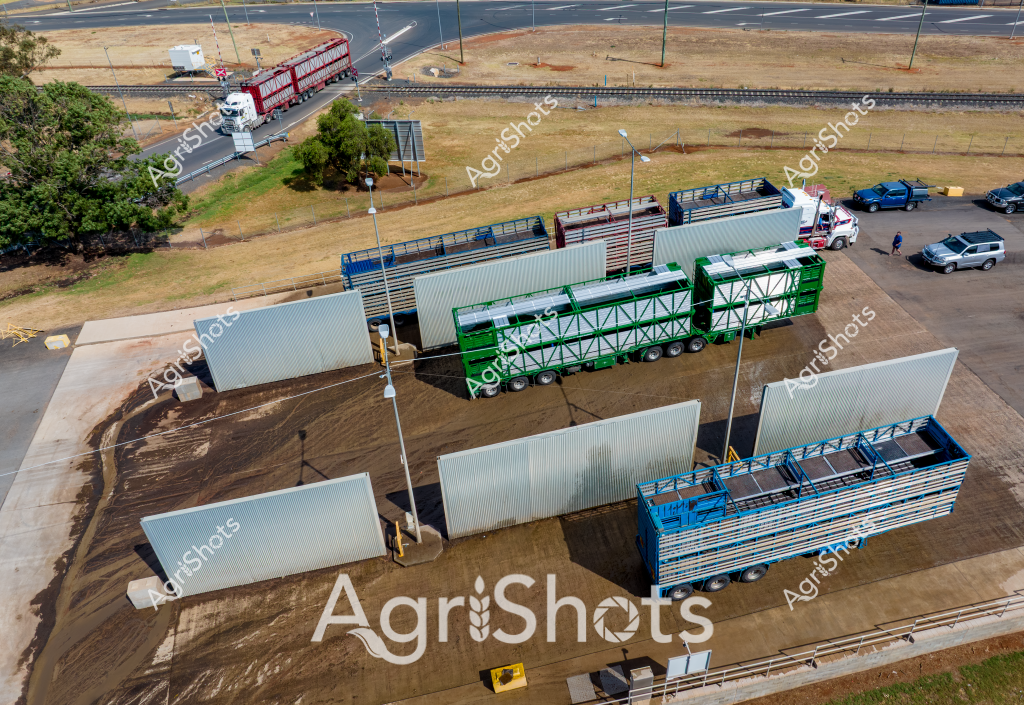
An aerial view of a transport and logistics hub showcases specialized livestock trailers designed for cattle transportation. Multiple multi-axle trucks with green, blue, and white animal transport containers are strategically positioned on a concrete hardstand area adjacent to railway lines. The scene reveals heavy-duty commercial vehicles with intricate steel framing and multiple decks, engineered to safely move livestock across Australian agricultural regions. Surrounding infrastructure includes grassy verges, bitumen roads, and railway tracks, indicating this is a professional livestock transportation staging area. Parked vehicles in the background suggest ongoing logistics operations, with the entire facility demonstrating the sophisticated infrastructure supporting Australia's cattle transport networks. The trailers feature robust steel construction with multiple levels, ventilation gaps, and secure railings - critical design elements for animal welfare during long-distance transportation. The green and blue color schemes of the trailers provide visual contrast against the dusty brown ground and gray infrastructure, highlighting the specialized nature of agricultural transport equipment.
 Image
Image
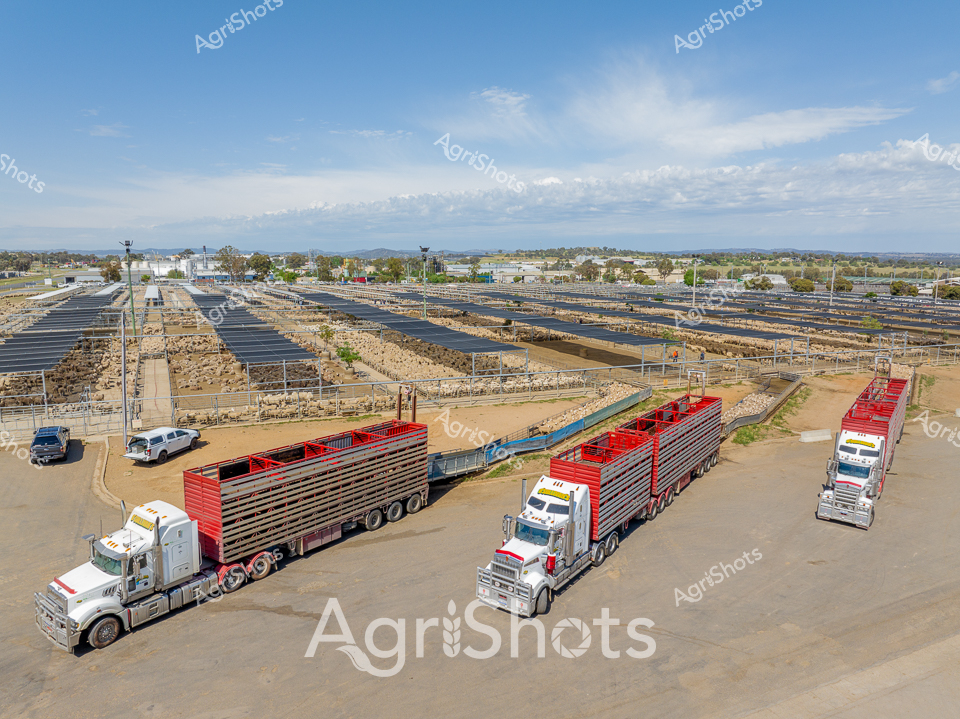
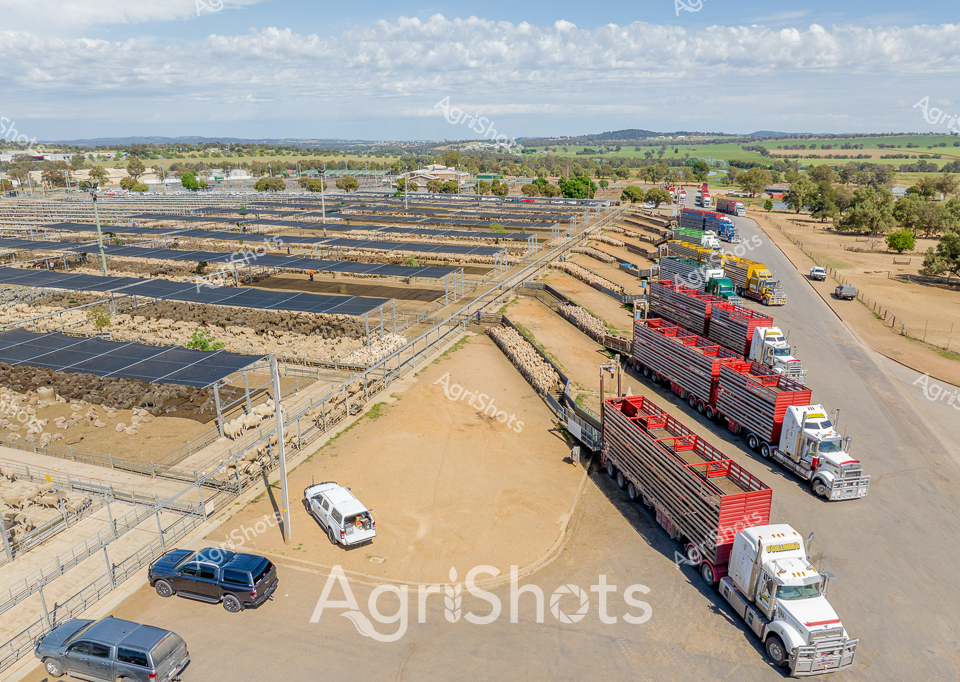
A crisp morning light bathes the Riverina livestock sale yards, where a line of gleaming livestock transport trucks stands ready to load. Neat, terraced holding pens stretch across the dusty rural landscape, their dark surfaces creating a geometric pattern against the golden earth and distant green paddocks. White and blue utility vehicles cluster near the central roundabout, suggesting the day's agricultural commerce is about to begin. Heavy-duty trucks with brilliant red and white stock crates wait patiently, their chrome bullbars and pristine paintwork reflecting the region's professional livestock trading culture. The expansive sky, soft with wispy clouds, frames a classic Australian agricultural scene that speaks to the precision and scale of modern livestock management. This aerial perspective captures the choreographed efficiency of a regional livestock sale - a critical moment in the agricultural supply chain where farmers, traders, and transporters converge to conduct business that sustains rural economies.
 Image
Image
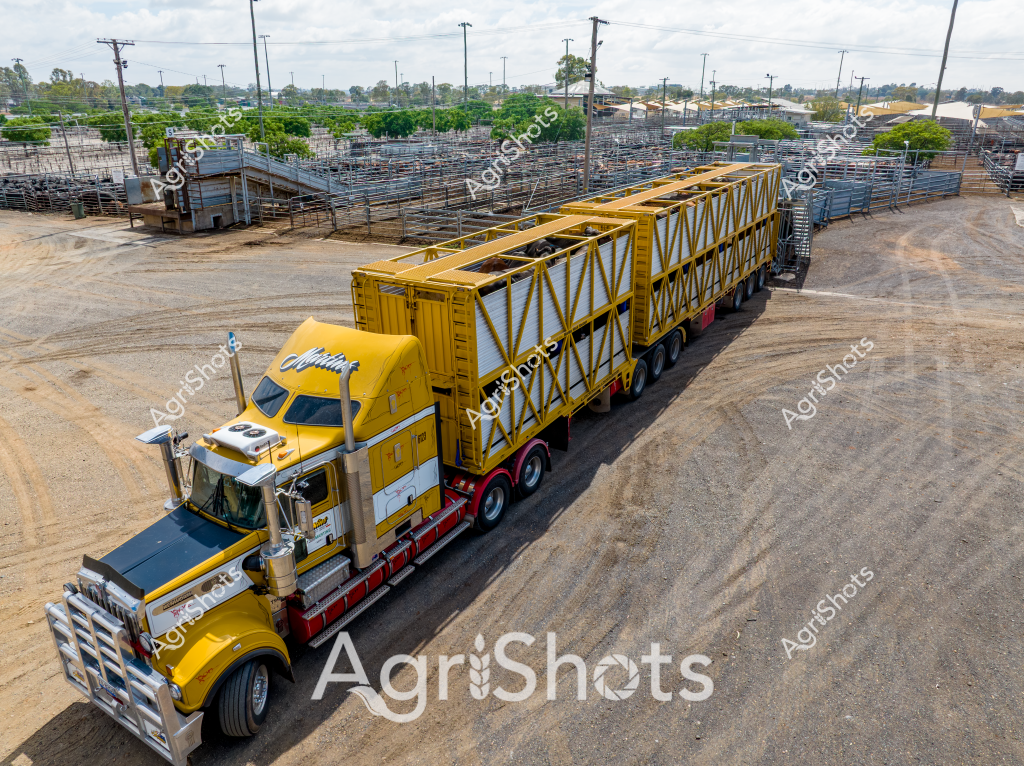
A powerful yellow road train truck stands ready in a rural livestock loading yard, its massive trailer configured for transporting livestock across vast Australian distances. The heavy-duty truck, featuring a striking yellow and white color scheme, is connected to an extended multi-tiered trailer designed specifically for cattle or sheep transportation. Surrounding the truck are multiple steel cattle yards with interconnected metal fencing, typical of large agricultural processing facilities in rural Australia. The dusty dirt ground and numerous utility poles in the background suggest this is a substantial livestock handling facility, likely located in a regional agricultural district. The truck's robust construction - with a prominent bullbar and high ground clearance - indicates it is purpose-built for challenging rural transportation routes across rugged Australian terrain. The expansive yard infrastructure and specialized transport vehicle represent the sophisticated livestock logistics systems that are critical to Australia's agricultural export industries.
 Image
Image
Gleaming white and red road trains stand poised at the expansive livestock saleyards, their massive stock crates ready to transport sheep across the Riverina region of New South Wales. The aerial view captures the precise geometric layout of the yards, with carefully designed pens stretching across the dusty ochre landscape under a vast blue Australian sky. Multiple articulated trucks with powerful prime movers wait alongside sorting races and holding paddocks, representing the critical infrastructure of agricultural logistics and livestock transportation. Scattered gum trees and distant industrial buildings frame the horizon, highlighting the sophisticated modern agricultural ecosystem that supports Australia's sheep farming industry. The metallic trucks contrast dramatically with the earthy tones of the holding yards, creating a striking visual representation of the intersection between rural production and transportation technology. This scene epitomizes the professional, strategic approach of contemporary Australian livestock trading - efficient, organized, and ready to move valuable agricultural assets across the vast rural landscape.
 Image
Image
A crisp, late morning aerial view captures the bustling livestock sale yards of the Riverina region in New South Wales, where rows of steel-framed pens stretch across dusty earthen grounds. Pristine white and navy trucks line up alongside the meticulously organized livestock holding areas, their vibrant red and yellow cab colors contrasting against the golden-brown landscape and distant green pastoral hills. Multiple semi-trailers with stock crates stand ready to transport sheep, revealing the critical infrastructure of Australia's agricultural supply chain. The expansive facility demonstrates the scale and professionalism of modern sheep trading, with carefully designed infrastructure allowing efficient movement and sorting of livestock. Fluffy clouds drift across a brilliant blue sky, casting soft shadows over the neat grid of livestock pens, highlighting the blend of precision engineering and traditional farming practices. This image encapsulates the heart of rural Australian agricultural commerce - a sophisticated, well-organized system that connects farmers, transporters, and markets with remarkable efficiency.
 Image
Image
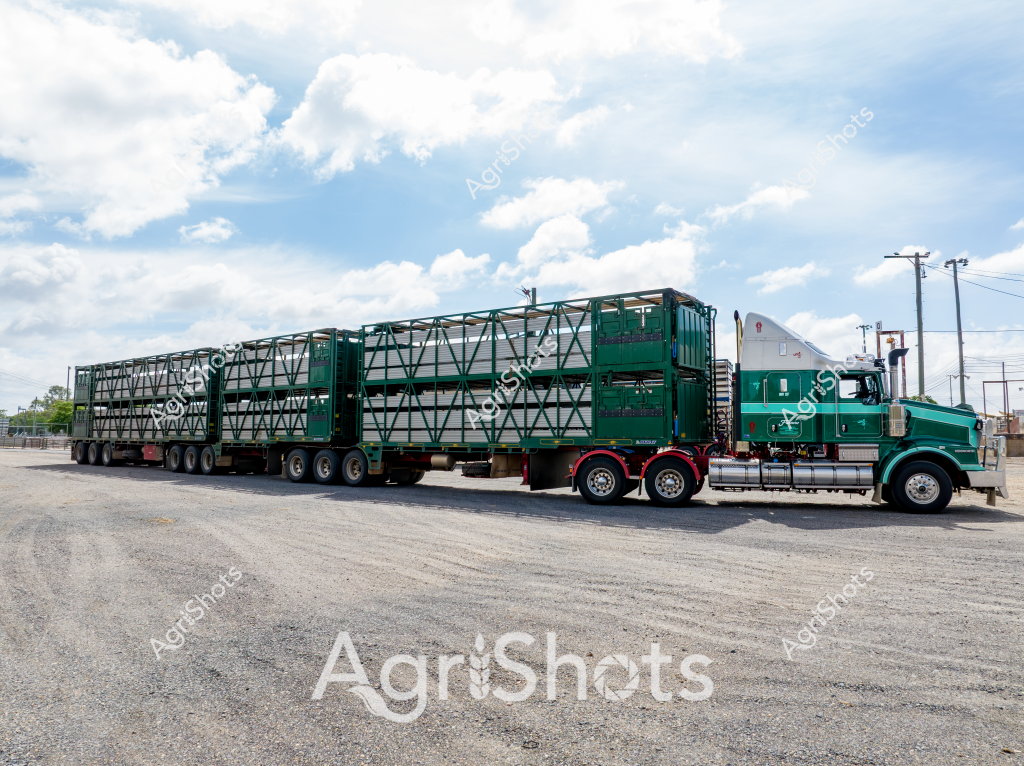
A massive green livestock transport truck with multiple trailers dominates this agricultural logistics scene. The heavy-duty truck, likely a Western Star model, is equipped with three-tiered stock crates designed for safely transporting large numbers of cattle or sheep across rural Australian landscapes. Parked on a gravelly yard with electrical poles and cloudy blue skies in the background, the truck represents the critical transportation infrastructure of Australia's livestock industry. The green and white color scheme of the truck and trailers suggests a professional livestock transport operation, with robust engineering specifically designed to handle long-distance animal transportation in challenging outback conditions. The multiple-trailer configuration indicates the truck's capacity to move significant numbers of livestock efficiently between stations, saleyards, or to market. The image captures the scale and specialized nature of agricultural transportation in Australia, where vast distances and large herds require sophisticated logistics and purpose-built equipment. The truck's sturdy construction and multi-axle design reflect the demanding requirements of moving livestock across some of the world's most challenging agricultural terrains.
 Image
Image
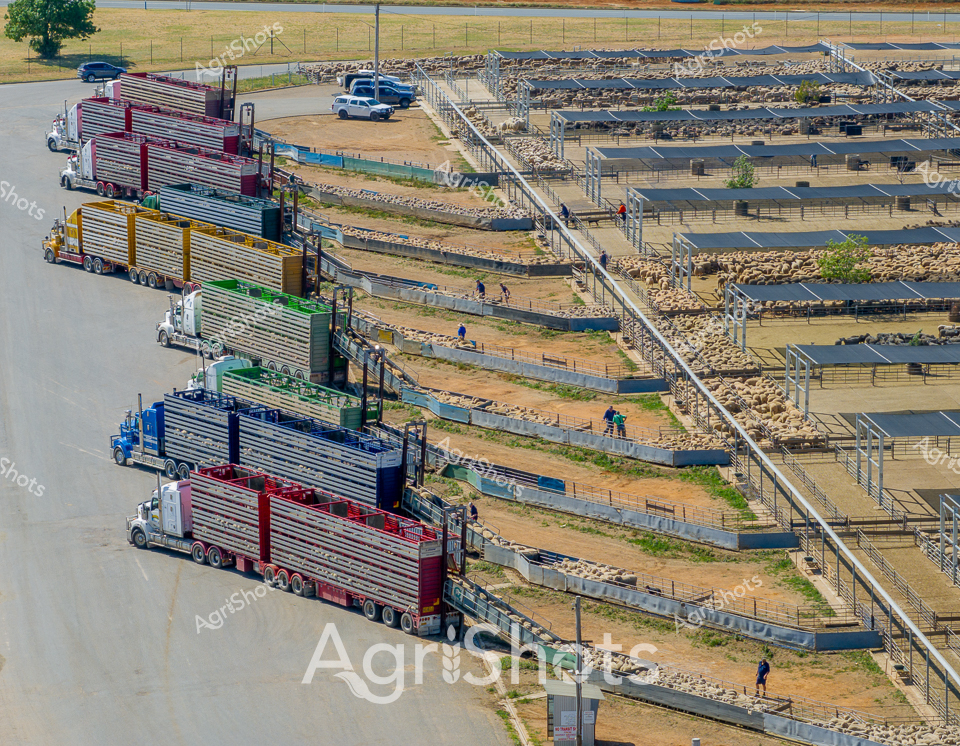
Vibrant livestock transport trucks line up at a modern sheep sale yard in the Riverina region of New South Wales, creating a precise agricultural logistics panorama. Multicolored trucks in red, blue, green, and yellow stand ready to load or unload their woolly cargo, the specialized livestock trailers featuring ventilated sides and multiple decks. The expansive concrete and steel infrastructure reveals a series of carefully designed terraced pens, each populated with compact groups of sheep, highlighting the systematic approach to livestock trading. Workers in blue uniforms move methodically between pen sections, managing the flow and assessment of the animals prior to auction. The dry, golden landscape surrounding the sale yards suggests a classic late summer or early autumn day in inland Australia, with clear skies and minimal vegetation. This meticulously organized scene captures the professional, efficient heart of Australian sheep trading - a critical moment in the agricultural supply chain where livestock are evaluated, traded, and prepared for their next destination.
 Image
Image
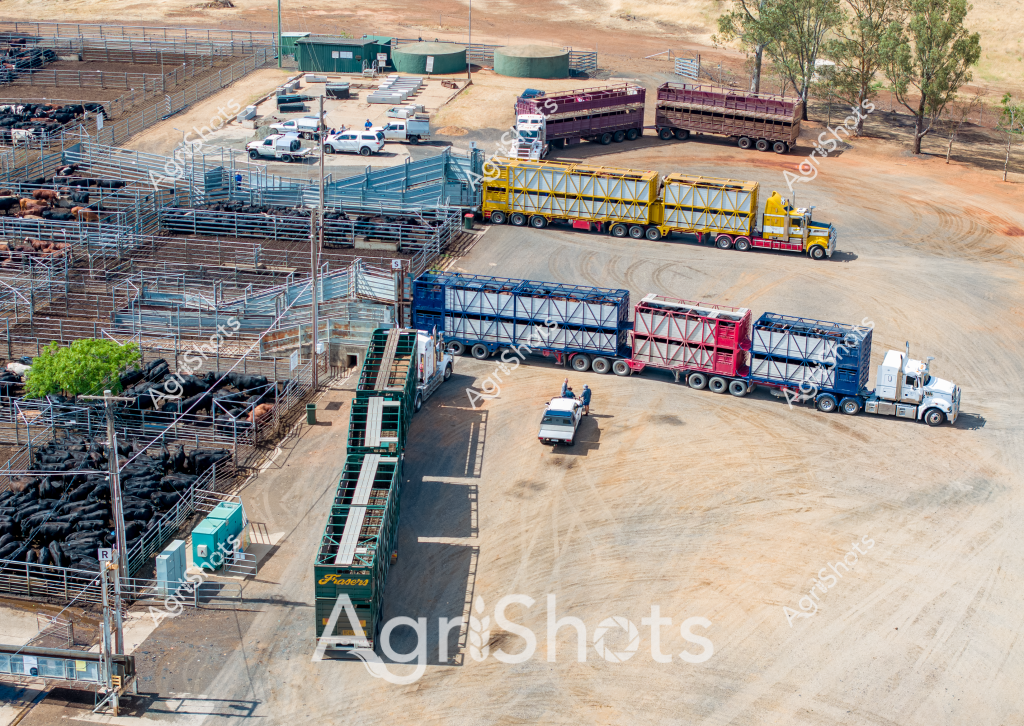
A bustling livestock transport hub captures the essence of Australia's robust cattle industry. Multiple large trucks with extended trailers are positioned within a dirt yard, surrounded by extensive metal cattle yards filled with black cattle. The scene is set in an arid landscape, with sparse trees and a green-roofed processing shed in the background, suggesting a remote cattle station in Western Australia or the Northern Territory. Yellow and white road trains with multiple linked trailers dominate the foreground, their robust design specifically engineered for long-distance livestock transportation across challenging rural terrain. The trucks are strategically parked near loading ramps, ready to transport cattle between properties or to processing facilities. Smaller utility vehicles are scattered around the yard, indicating active staff managing the livestock movement. The metal cattle yards are densely populated with black beef cattle, likely Angus or Wagyu breeds, standing in organized sections separated by robust galvanized steel fencing. The dusty, ochre-colored ground and sparse vegetation highlight the rugged environmental conditions typical of Australian cattle country. Sophisticated livestock handling infrastructure demonstrates the professional and efficient approach to cattle management in Australia's agricultural sector. This aerial view reveals the complex logistics and infrastructure required to support large-scale cattle transportation, showcasing the critical role of road transport in Australia's beef industry supply chain.