Results for “parched ground”
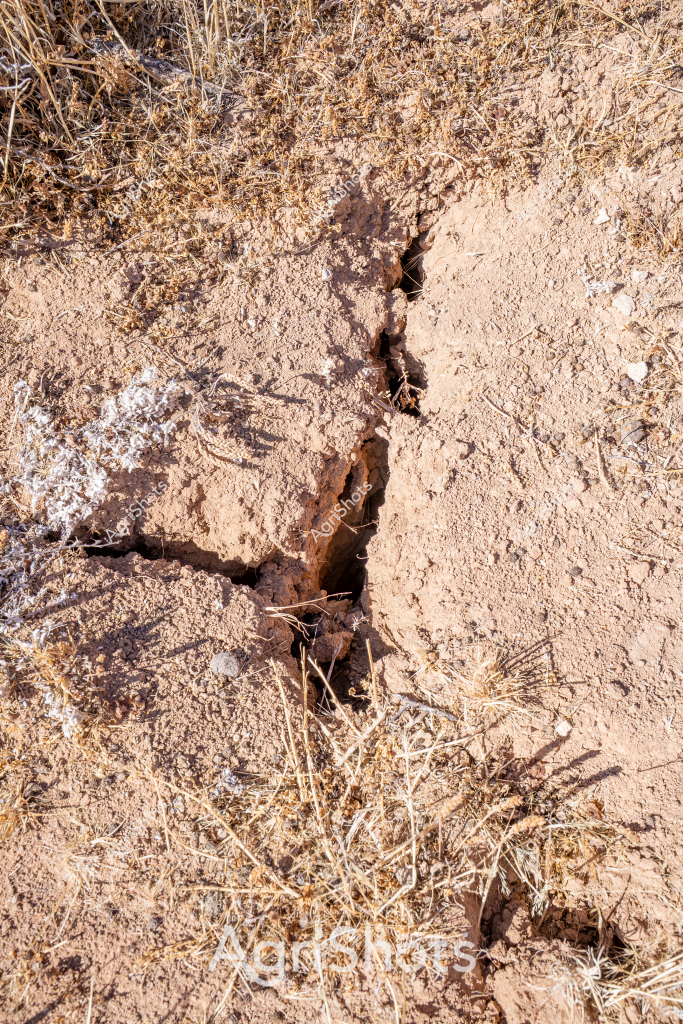
A deep, cracked earth reveals the harsh reality of drought conditions in this stark agricultural landscape. The ground is parched and fractured, with wide fissures splitting the dry, sandy soil, creating a network of deep crevices that stretch across the frame. Sparse, yellowed grass and dry vegetation cling to the edges of the cracking ground, highlighting the extreme dryness and water stress affecting the land. The earthy tones of tan, brown, and pale straw-colored vegetation emphasize the severity of the environmental conditions, presenting a raw and unforgiving portrayal of agricultural challenges during prolonged dry periods. This image powerfully captures the physical manifestation of drought, showing how the lack of moisture can literally tear the earth apart, creating a landscape that speaks to the resilience and hardship of Australian rural environments. Image

A deep, cracked earth reveals the harsh reality of drought conditions in this stark agricultural landscape. The ground is parched and fractured, with wide fissures splitting the dry, sandy soil, creating a network of deep crevices that stretch across the frame. Sparse, yellowed grass and dry vegetation cling to the edges of the cracking ground, highlighting the extreme dryness and water stress affecting the land. The earthy tones of tan, brown, and pale straw-colored vegetation emphasize the severity of the environmental conditions, presenting a raw and unforgiving portrayal of agricultural challenges during prolonged dry periods. This image powerfully captures the physical manifestation of drought, showing how the lack of moisture can literally tear the earth apart, creating a landscape that speaks to the resilience and hardship of Australian rural environments.
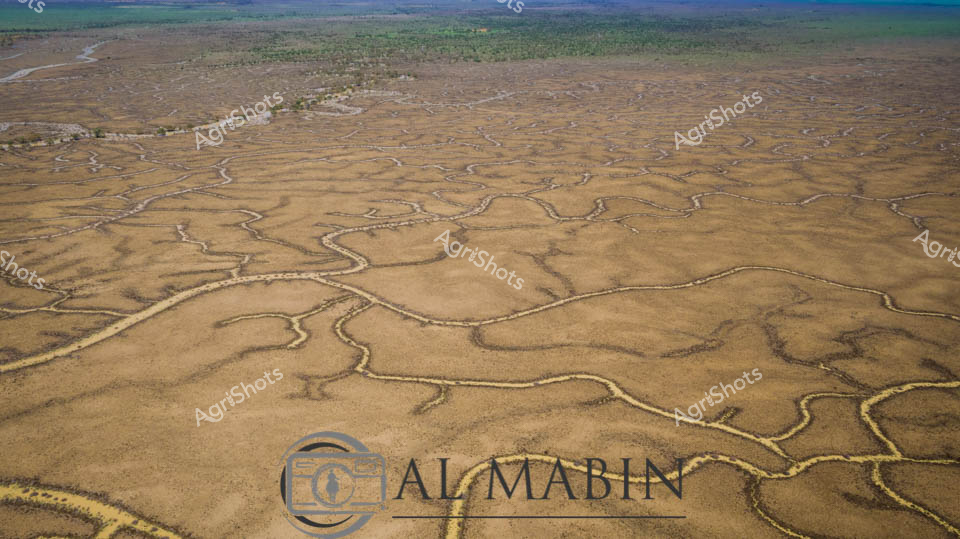
An aerial view reveals the intricate, serpentine waterways of Channel Country in Queensland, where dry creek beds and floodplains create a mesmerizing network of sinuous lines across the arid landscape. The branching water channels, etched into the dusty earth, showcase the complex hydrology of this remote Australian region, highlighting the resilient geography that supports pastoral activities during seasonal flooding. Green vegetation clusters along the horizon, contrasting with the golden-brown tones of the expansive, water-carved terrain. Image

An aerial view reveals the intricate, serpentine waterways of Channel Country in Queensland, where dry creek beds and floodplains create a mesmerizing network of sinuous lines across the arid landscape. The branching water channels, etched into the dusty earth, showcase the complex hydrology of this remote Australian region, highlighting the resilient geography that supports pastoral activities during seasonal flooding. Green vegetation clusters along the horizon, contrasting with the golden-brown tones of the expansive, water-carved terrain.
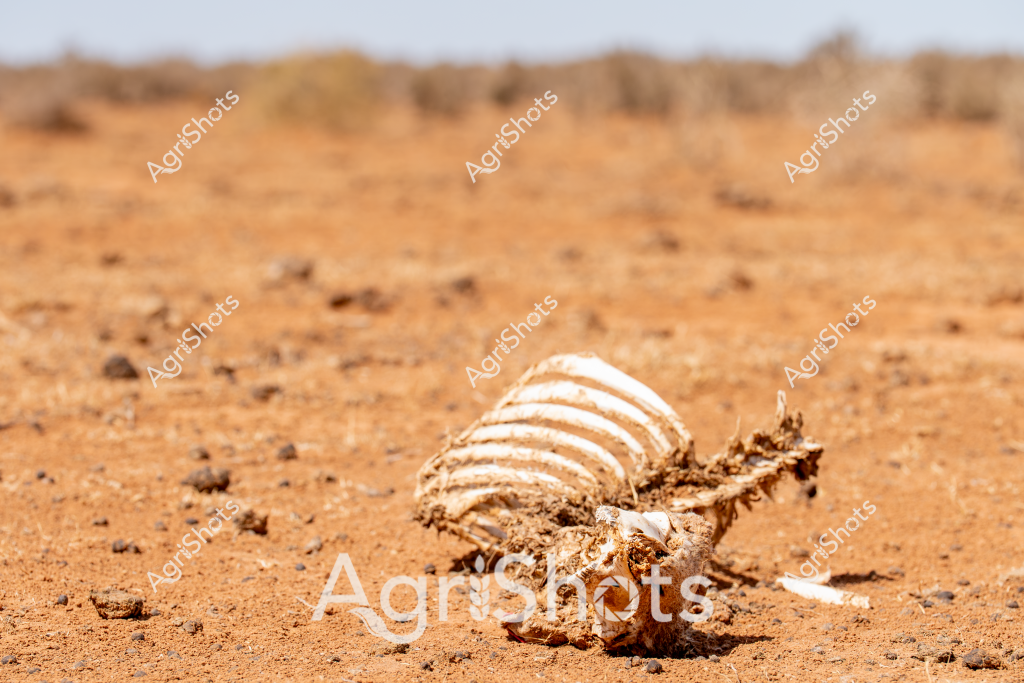
A bleached animal skeleton lies partially decomposed on a dry, reddish-orange desert landscape, revealing the stark ribcage and skeletal structure against the arid, rocky ground. The parched earth surrounding the bones is cracked and barren, with sparse vegetation and distant shrubs indicating an extreme drought environment typical of Australia's interior regions. Weathered and sun-bleached, the skeletal remains tell a grim story of survival and the unforgiving nature of the outback's harsh conditions. The monochromatic palette of rust-colored soil and white bone fragments creates a haunting visual that captures the raw, unrelenting reality of life and death in an uncompromising landscape. This image powerfully illustrates the challenging environmental conditions that test the resilience of both wildlife and agricultural systems in Australia's most arid zones. Image

A bleached animal skeleton lies partially decomposed on a dry, reddish-orange desert landscape, revealing the stark ribcage and skeletal structure against the arid, rocky ground. The parched earth surrounding the bones is cracked and barren, with sparse vegetation and distant shrubs indicating an extreme drought environment typical of Australia's interior regions. Weathered and sun-bleached, the skeletal remains tell a grim story of survival and the unforgiving nature of the outback's harsh conditions. The monochromatic palette of rust-colored soil and white bone fragments creates a haunting visual that captures the raw, unrelenting reality of life and death in an uncompromising landscape. This image powerfully illustrates the challenging environmental conditions that test the resilience of both wildlife and agricultural systems in Australia's most arid zones.
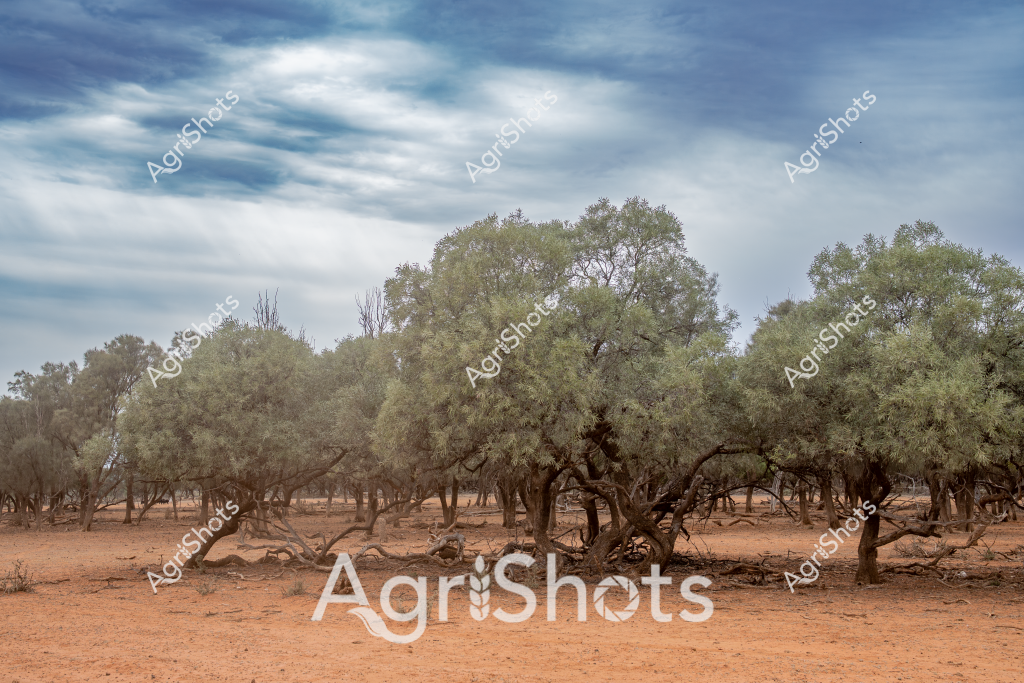
A gnarled grove of olive trees stands resilient in a stark, arid landscape, their silvery-green foliage contrasting dramatically with the rich terracotta-colored earth. The trees exhibit twisted, weathered branches that speak to years of surviving harsh drought conditions, their roots anchored deeply into the parched ground. Clouded blue skies drift overhead, creating a moody backdrop that emphasizes the landscape's challenging environment. The trees are spaced deliberately, suggesting this is likely an olive plantation in one of Australia's more arid agricultural regions, possibly in Western Australia or South Australia. The scene powerfully captures the resilience of Australian agricultural landscapes, where farmers and plant life alike must adapt to extreme and unforgiving conditions. The muted color palette of dusty browns, soft greens, and steel-blue skies creates a sense of both fragility and endurance characteristic of rural Australian ecosystems. Image

A gnarled grove of olive trees stands resilient in a stark, arid landscape, their silvery-green foliage contrasting dramatically with the rich terracotta-colored earth. The trees exhibit twisted, weathered branches that speak to years of surviving harsh drought conditions, their roots anchored deeply into the parched ground. Clouded blue skies drift overhead, creating a moody backdrop that emphasizes the landscape's challenging environment. The trees are spaced deliberately, suggesting this is likely an olive plantation in one of Australia's more arid agricultural regions, possibly in Western Australia or South Australia. The scene powerfully captures the resilience of Australian agricultural landscapes, where farmers and plant life alike must adapt to extreme and unforgiving conditions. The muted color palette of dusty browns, soft greens, and steel-blue skies creates a sense of both fragility and endurance characteristic of rural Australian ecosystems.
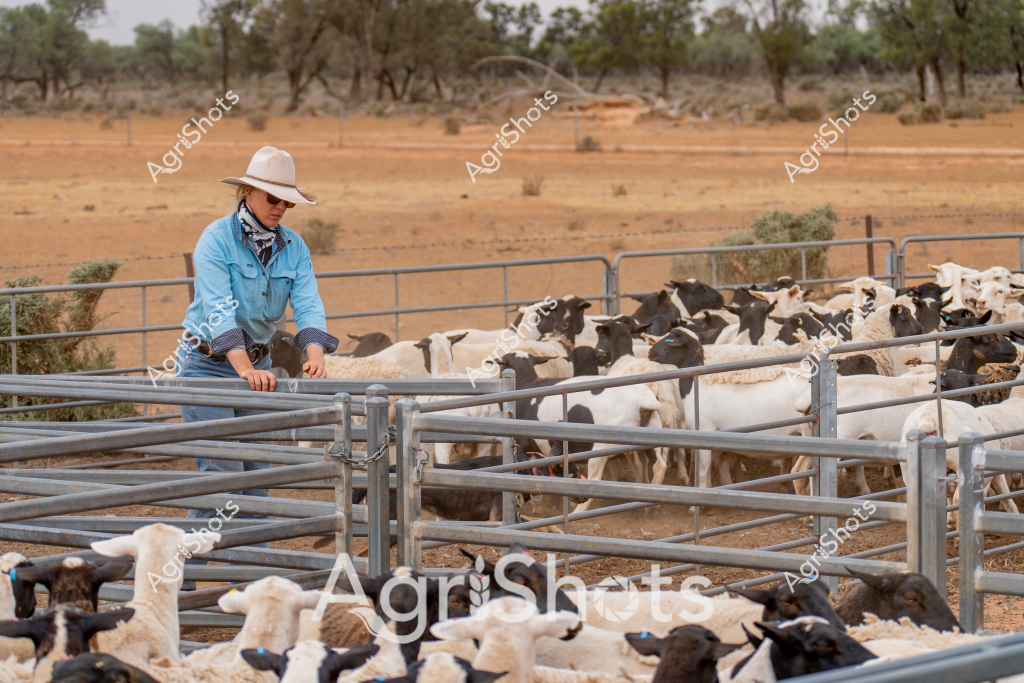
A woman stockman surveys a flock of mixed-breed goats in a dry, sparse paddock typical of Australian outback conditions. Wearing a light blue long-sleeved shirt, white wide-brimmed hat, and sunglasses, she leans against metal livestock yards with a series of interconnected gates. The goats - a mixture of white, black, and brown animals - are tightly packed within the metal fencing, their varied coat colors creating a textured scene against the golden-brown earth and scattered eucalyptus trees in the background. The landscape suggests a drought-affected region, with parched ground and sparse vegetation highlighting the challenging environmental conditions faced by Australian farmers. Her professional stance and careful positioning demonstrate the skill required in managing livestock in harsh rural environments. Image

A woman stockman surveys a flock of mixed-breed goats in a dry, sparse paddock typical of Australian outback conditions. Wearing a light blue long-sleeved shirt, white wide-brimmed hat, and sunglasses, she leans against metal livestock yards with a series of interconnected gates. The goats - a mixture of white, black, and brown animals - are tightly packed within the metal fencing, their varied coat colors creating a textured scene against the golden-brown earth and scattered eucalyptus trees in the background. The landscape suggests a drought-affected region, with parched ground and sparse vegetation highlighting the challenging environmental conditions faced by Australian farmers. Her professional stance and careful positioning demonstrate the skill required in managing livestock in harsh rural environments.
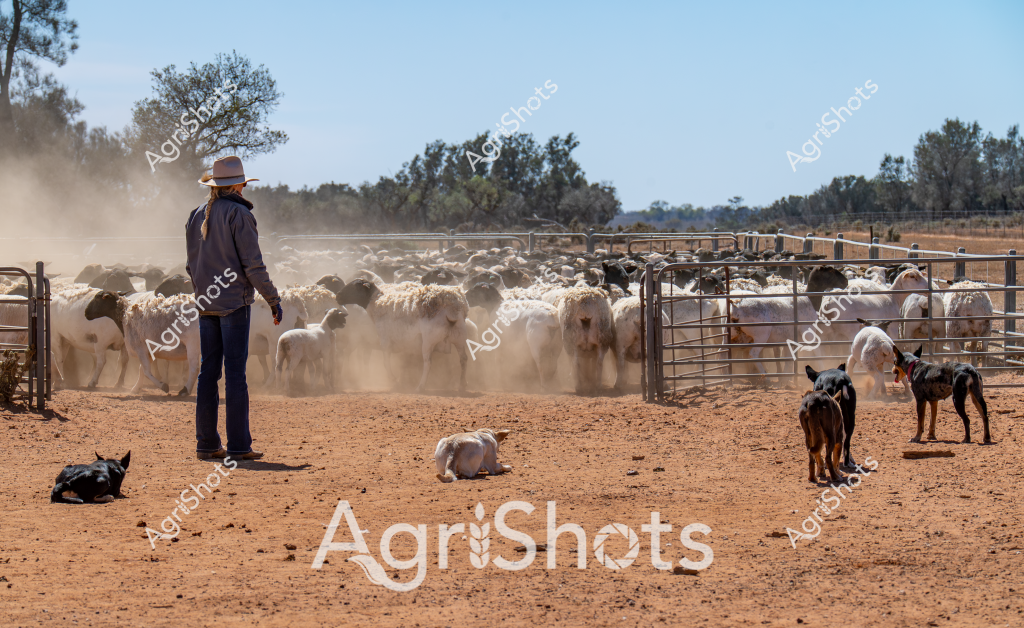
A stockman stands amid a dusty sheep paddock, overseeing a large flock of woolly sheep crowded into metal yard panels. Three working dogs are strategically positioned around the livestock - two standing alert and one resting on the dry, reddish earth. The scene captures a typical Australian sheep station environment, with sparse trees and bush landscape visible in the background under a clear blue sky.

The person is wearing a wide-brimmed hat and dark clothing, standing sideways and watching the tightly packed mob of sheep raising dust as they shuffle within the metal gates. The sheep appear to be a mix of white and darker-colored animals, tightly clustered together. Several young lambs are visible among the adult sheep, indicating this is likely a breeding flock.

The environment suggests an arid or semi-arid region, with the ground parched and covered in red dirt, characteristic of inland Australian pastoral landscapes. The working dogs - likely Australian Kelpies or similar herding breeds - demonstrate the critical role of canine assistance in managing large livestock mobs in challenging rural environments.

This image powerfully represents the traditional practices of Australian sheep farming, highlighting the interdependence between humans, dogs, and livestock in managing agricultural operations across vast and demanding terrains. Image

A stockman stands amid a dusty sheep paddock, overseeing a large flock of woolly sheep crowded into metal yard panels. Three working dogs are strategically positioned around the livestock - two standing alert and one resting on the dry, reddish earth. The scene captures a typical Australian sheep station environment, with sparse trees and bush landscape visible in the background under a clear blue sky. The person is wearing a wide-brimmed hat and dark clothing, standing sideways and watching the tightly packed mob of sheep raising dust as they shuffle within the metal gates. The sheep appear to be a mix of white and darker-colored animals, tightly clustered together. Several young lambs are visible among the adult sheep, indicating this is likely a breeding flock. The environment suggests an arid or semi-arid region, with the ground parched and covered in red dirt, characteristic of inland Australian pastoral landscapes. The working dogs - likely Australian Kelpies or similar herding breeds - demonstrate the critical role of canine assistance in managing large livestock mobs in challenging rural environments. This image powerfully represents the traditional practices of Australian sheep farming, highlighting the interdependence between humans, dogs, and livestock in managing agricultural operations across vast and demanding terrains.
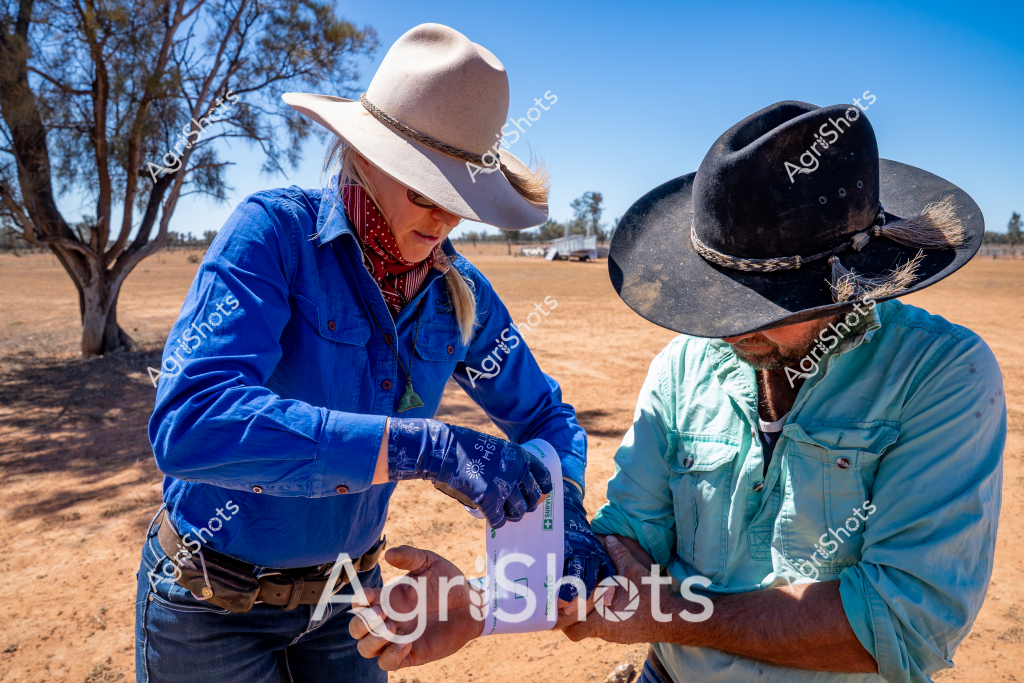
In the arid Australian outback, a woman in a bright blue work shirt and white wide-brimmed hat carefully handles what appears to be a sample or testing container alongside a man wearing a light turquoise shirt and a dark black stockman's hat. The dry, dusty landscape surrounds them, with a lone tree and parched ground stretching into the distance under a brilliant blue sky. Both workers are wearing protective gloves, suggesting they are conducting some form of agricultural testing or livestock health assessment. Their clothing - sturdy work shirts, robust hats, and practical work gear - speaks to the rugged nature of rural Australian agricultural work, where professionals must be prepared for harsh environmental conditions. The scene captures the essence of professional agricultural fieldwork, with careful attention to detail and protection against the unforgiving Australian rural environment. Image

In the arid Australian outback, a woman in a bright blue work shirt and white wide-brimmed hat carefully handles what appears to be a sample or testing container alongside a man wearing a light turquoise shirt and a dark black stockman's hat. The dry, dusty landscape surrounds them, with a lone tree and parched ground stretching into the distance under a brilliant blue sky. Both workers are wearing protective gloves, suggesting they are conducting some form of agricultural testing or livestock health assessment. Their clothing - sturdy work shirts, robust hats, and practical work gear - speaks to the rugged nature of rural Australian agricultural work, where professionals must be prepared for harsh environmental conditions. The scene captures the essence of professional agricultural fieldwork, with careful attention to detail and protection against the unforgiving Australian rural environment.
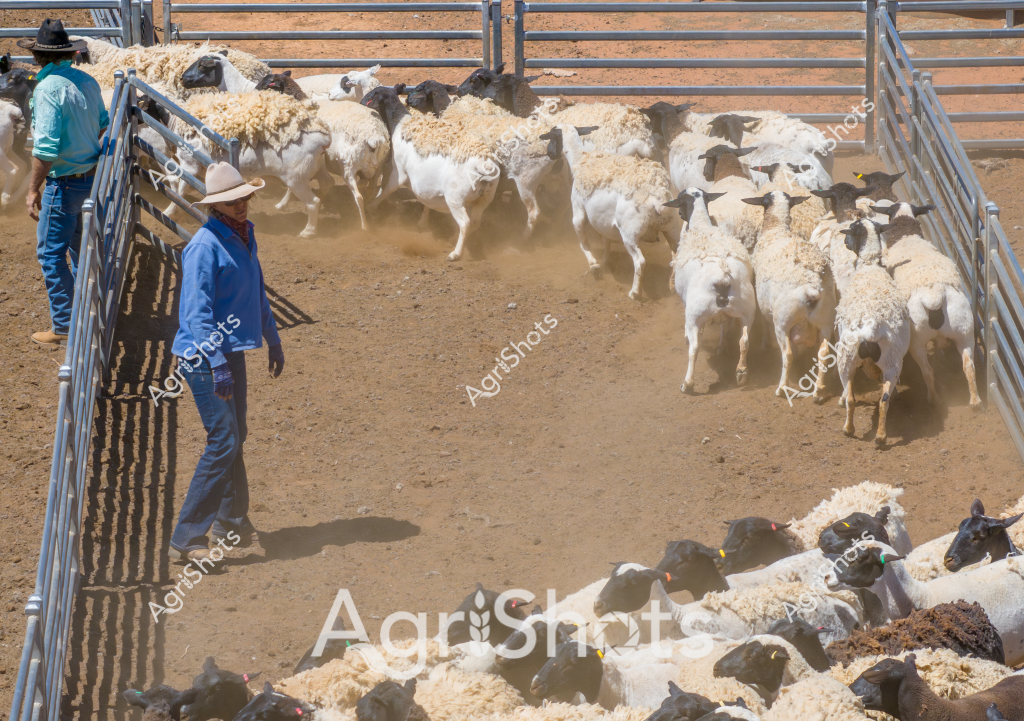
Two men in blue shirts and wide-brimmed hats manage a flock of white Merino sheep in a dusty livestock yard. The sheep, with their thick, woolly coats, are tightly packed into a metal-fenced holding area, kicking up clouds of dry earth as they move. One stockman stands near the fence, carefully observing the sheep's movement, while another assists in guiding the flock. The scene captures the intense activity of livestock management, with the animals tightly clustered and moving with nervous energy. Bright sunlight illuminates the yard, casting sharp shadows and highlighting the texture of the sheep's fleece against the parched ground. This image epitomizes the challenging and skilled work of Australian sheep farming, where careful handling and expert knowledge are crucial to managing livestock in arid conditions. Image

Two men in blue shirts and wide-brimmed hats manage a flock of white Merino sheep in a dusty livestock yard. The sheep, with their thick, woolly coats, are tightly packed into a metal-fenced holding area, kicking up clouds of dry earth as they move. One stockman stands near the fence, carefully observing the sheep's movement, while another assists in guiding the flock. The scene captures the intense activity of livestock management, with the animals tightly clustered and moving with nervous energy. Bright sunlight illuminates the yard, casting sharp shadows and highlighting the texture of the sheep's fleece against the parched ground. This image epitomizes the challenging and skilled work of Australian sheep farming, where careful handling and expert knowledge are crucial to managing livestock in arid conditions.
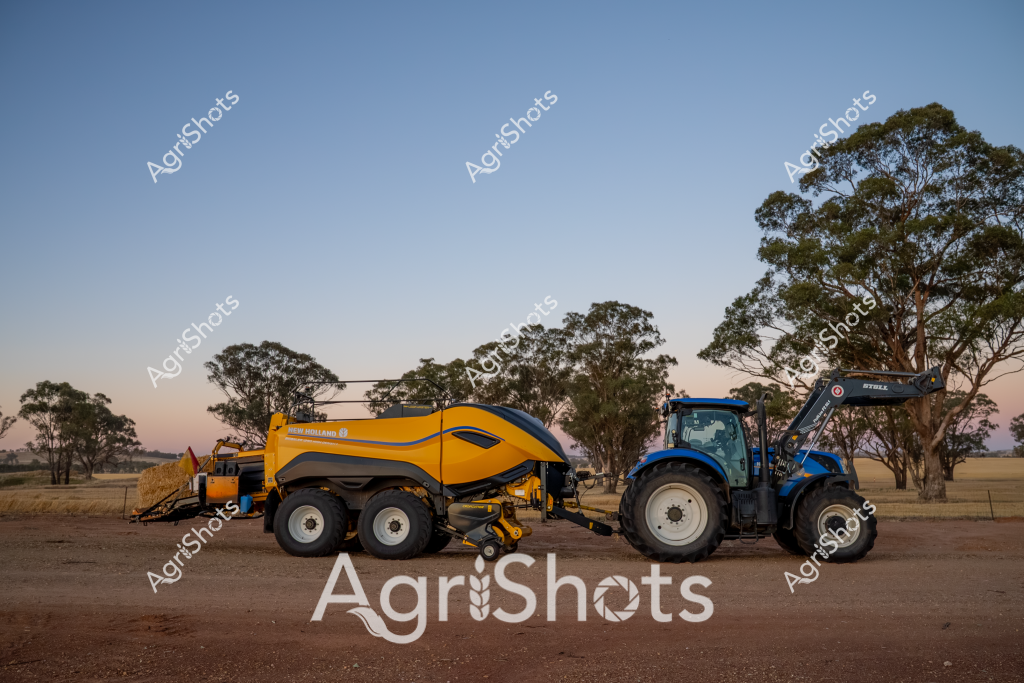
A New Holland tractor and large square baler stand ready in a dry, dusty rural paddock during the golden hour, capturing the essence of Australian agricultural harvesting. The bright blue tractor with a front-end loader is paired with a vibrant yellow and blue square baler, both positioned against a backdrop of mature eucalyptus trees and an expansive, arid landscape. The late afternoon light casts long shadows across the parched ground, highlighting the sophisticated farming equipment used in modern hay and crop production. This scene represents the precision and scale of contemporary agricultural machinery in Australian farming, where advanced equipment enables efficient harvesting even in challenging environmental conditions. The stark contrast between the modern, gleaming machinery and the rugged, sun-baked landscape epitomizes the resilience of Australian agricultural practices. Image

A New Holland tractor and large square baler stand ready in a dry, dusty rural paddock during the golden hour, capturing the essence of Australian agricultural harvesting. The bright blue tractor with a front-end loader is paired with a vibrant yellow and blue square baler, both positioned against a backdrop of mature eucalyptus trees and an expansive, arid landscape. The late afternoon light casts long shadows across the parched ground, highlighting the sophisticated farming equipment used in modern hay and crop production. This scene represents the precision and scale of contemporary agricultural machinery in Australian farming, where advanced equipment enables efficient harvesting even in challenging environmental conditions. The stark contrast between the modern, gleaming machinery and the rugged, sun-baked landscape epitomizes the resilience of Australian agricultural practices.
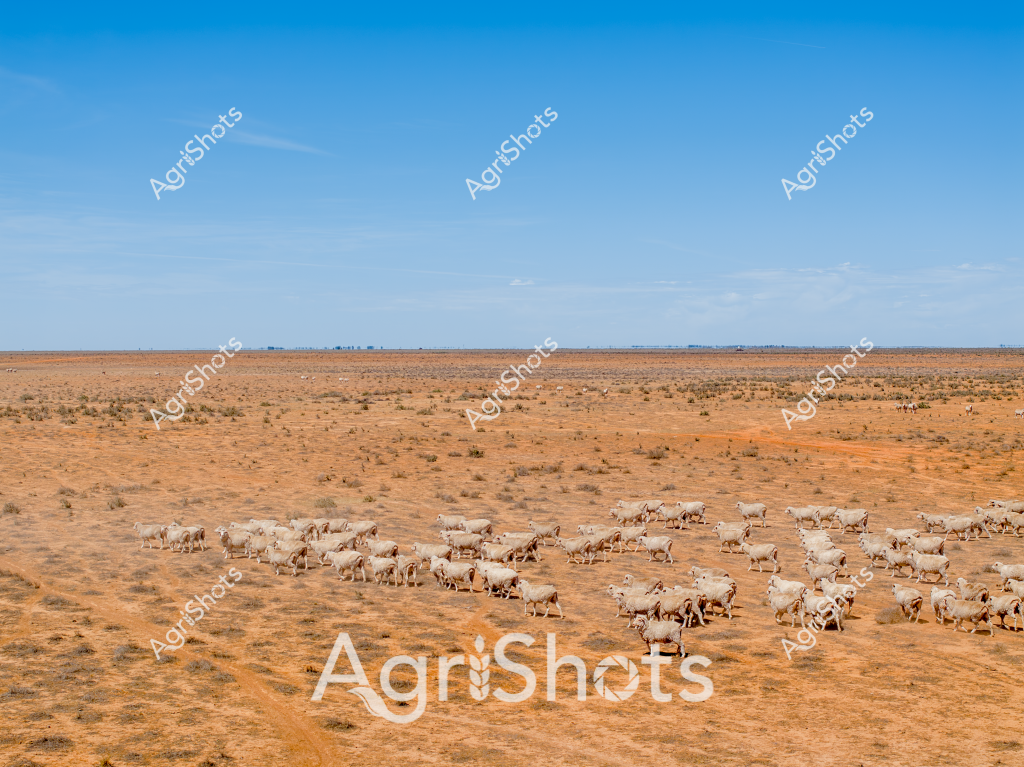
A vast, arid landscape stretches across the horizon, dotted with a substantial flock of white and brown sheep grazing on the dry, rusty-orange terrain. The sparse vegetation and expansive blue sky suggest this is a challenging drought-affected region, likely in outback Australia. The sheep, appearing to be a mixed breed of possibly Merino and crossbred stock, are clustered together, moving slowly across the parched ground in search of sparse vegetation. The landscape's monotone color palette - burnt oranges, pale yellows, and dusty browns - emphasizes the harsh environmental conditions these resilient livestock must endure. A distant line of low trees marks the horizon, providing the only break in the flat, unforgiving landscape that typifies many of Australia's extensive pastoral regions. Image

A vast, arid landscape stretches across the horizon, dotted with a substantial flock of white and brown sheep grazing on the dry, rusty-orange terrain. The sparse vegetation and expansive blue sky suggest this is a challenging drought-affected region, likely in outback Australia. The sheep, appearing to be a mixed breed of possibly Merino and crossbred stock, are clustered together, moving slowly across the parched ground in search of sparse vegetation. The landscape's monotone color palette - burnt oranges, pale yellows, and dusty browns - emphasizes the harsh environmental conditions these resilient livestock must endure. A distant line of low trees marks the horizon, providing the only break in the flat, unforgiving landscape that typifies many of Australia's extensive pastoral regions.
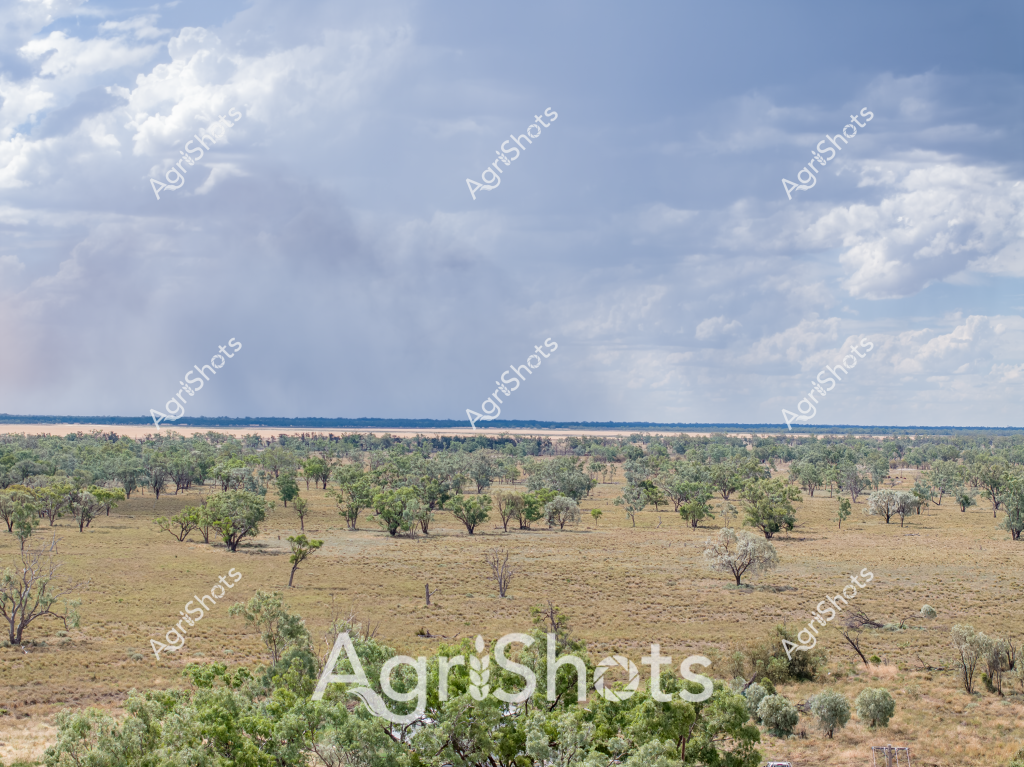
A vast Australian landscape unfolds under a dramatic cloudy sky, revealing a sparse woodland of widely scattered eucalyptus trees across a dry, golden-brown grassland. The terrain appears typical of an inland pastoral region, with scattered trees providing minimal shade across the expansive paddock. Sparse vegetation and the muted color palette suggest challenging environmental conditions, likely indicative of drought or dry seasonal conditions prevalent in many parts of rural Australia.

The landscape stretches to a distant horizon, where a hint of lighter terrain meets the softly clouded sky. Trees are distributed irregularly across the scene, their silvery-green foliage standing in stark contrast to the parched ground beneath them. Some trees appear more robust, while others look weathered and sparse, reflecting the harsh agricultural conditions of the region.

The image captures the quintessential Australian rural landscape - resilient, open, and characterized by wide-open spaces that demonstrate both the challenges and beauty of agricultural environments in arid and semi-arid zones. The scene speaks to the adaptability of Australian farming practices in marginal lands, where vegetation and livestock must endure significant environmental stress. Image

A vast Australian landscape unfolds under a dramatic cloudy sky, revealing a sparse woodland of widely scattered eucalyptus trees across a dry, golden-brown grassland. The terrain appears typical of an inland pastoral region, with scattered trees providing minimal shade across the expansive paddock. Sparse vegetation and the muted color palette suggest challenging environmental conditions, likely indicative of drought or dry seasonal conditions prevalent in many parts of rural Australia. The landscape stretches to a distant horizon, where a hint of lighter terrain meets the softly clouded sky. Trees are distributed irregularly across the scene, their silvery-green foliage standing in stark contrast to the parched ground beneath them. Some trees appear more robust, while others look weathered and sparse, reflecting the harsh agricultural conditions of the region. The image captures the quintessential Australian rural landscape - resilient, open, and characterized by wide-open spaces that demonstrate both the challenges and beauty of agricultural environments in arid and semi-arid zones. The scene speaks to the adaptability of Australian farming practices in marginal lands, where vegetation and livestock must endure significant environmental stress.
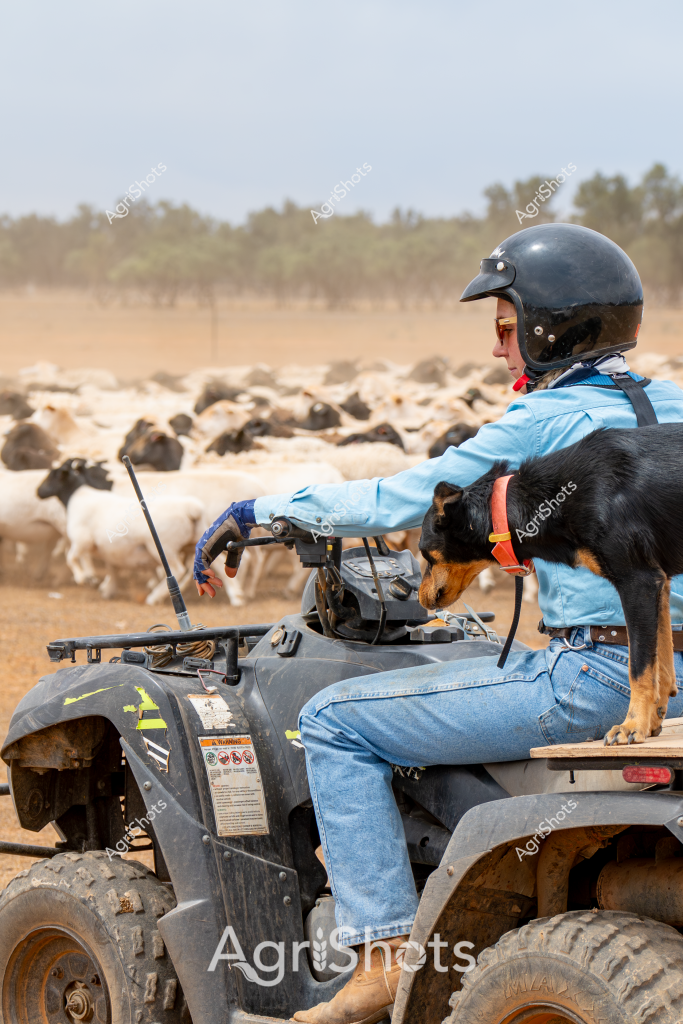
A skilled stockman sits on an all-terrain vehicle (ATV) in a dry, dusty paddock, carefully managing a large herd of sheep. Wearing a black safety helmet, blue work shirt, and denim jeans, the stockman is accompanied by a working dog, likely a trained Australian Kelpie, sitting beside him on the quad bike. The surrounding landscape is typical of an arid Australian rural setting, with scattered trees and sparse vegetation in the background, indicating potential drought conditions.

The herd of sheep, predominantly white with some darker individuals, are densely grouped together, creating a textured mass across the parched ground. The stockman's ATV is a robust, well-used machine, covered in dust and equipped with practical accessories for farm work. The scene captures the essence of Australian livestock management - a lone stockman using modern equipment and a skilled working dog to control and move a large flock across challenging terrain.

The muted color palette of browns, tans, and blues reflects the harsh rural environment, showcasing the resilience and adaptability required in Australian agricultural practices. This image epitomizes the day-to-day work of livestock management in remote, arid regions of Australia. Image

A skilled stockman sits on an all-terrain vehicle (ATV) in a dry, dusty paddock, carefully managing a large herd of sheep. Wearing a black safety helmet, blue work shirt, and denim jeans, the stockman is accompanied by a working dog, likely a trained Australian Kelpie, sitting beside him on the quad bike. The surrounding landscape is typical of an arid Australian rural setting, with scattered trees and sparse vegetation in the background, indicating potential drought conditions. The herd of sheep, predominantly white with some darker individuals, are densely grouped together, creating a textured mass across the parched ground. The stockman's ATV is a robust, well-used machine, covered in dust and equipped with practical accessories for farm work. The scene captures the essence of Australian livestock management - a lone stockman using modern equipment and a skilled working dog to control and move a large flock across challenging terrain. The muted color palette of browns, tans, and blues reflects the harsh rural environment, showcasing the resilience and adaptability required in Australian agricultural practices. This image epitomizes the day-to-day work of livestock management in remote, arid regions of Australia.
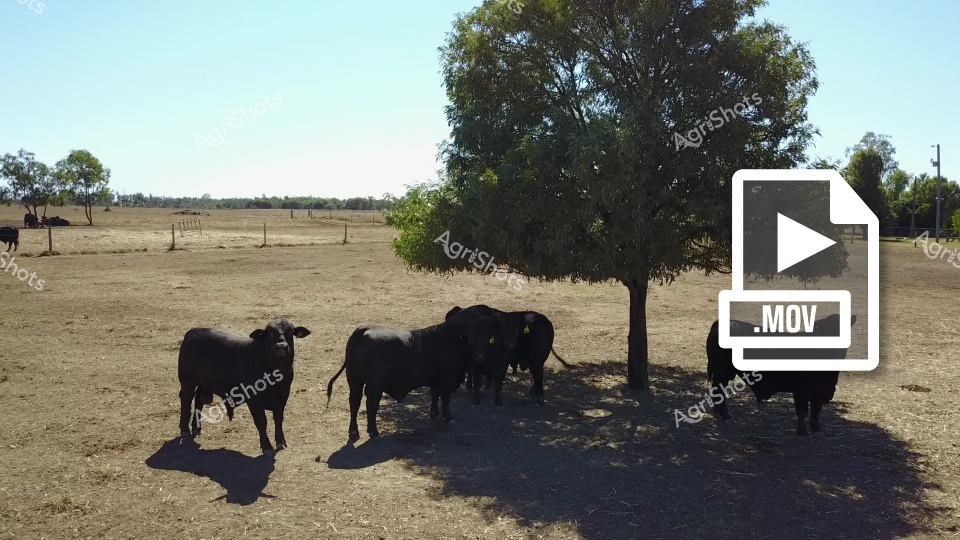
A small herd of black Angus cattle gather in the shade of a large tree in a dry, dusty paddock on a sunny day. The cattle stand close together on parched ground, with sparse grass and fenced pasture visible in the background, highlighting the arid farming conditions. ▶ Video

A small herd of black Angus cattle gather in the shade of a large tree in a dry, dusty paddock on a sunny day. The cattle stand close together on parched ground, with sparse grass and fenced pasture visible in the background, highlighting the arid farming conditions.

A vast stretch of the drought-affected landscape unfolds under a moody sky, where low-hanging clouds cast a soft, diffused light over the scene. The ochre-colored earth, cracked and dry, contrasts with the lush green pastures in the distance, highlighting the resilience of the land. A large herd of white cattle, their distinctive markings breaking the uniformity of their coats, moves in unison across the terrain, driven by a diligent farmer on horseback who wears a broad-brimmed hat to shield against the elements.

As the cattle graze on the sparse grass, the sound of hooves thuds softly against the parched ground, and the occasional low moo echoes through the air, contributing to an atmosphere of gentle but purposeful activity. The farmer, dressed in rugged denim and a light blue shirt, guides the herd with practiced ease, demonstrating the close bond and vital understanding between man and livestock, particularly in challenging conditions. 

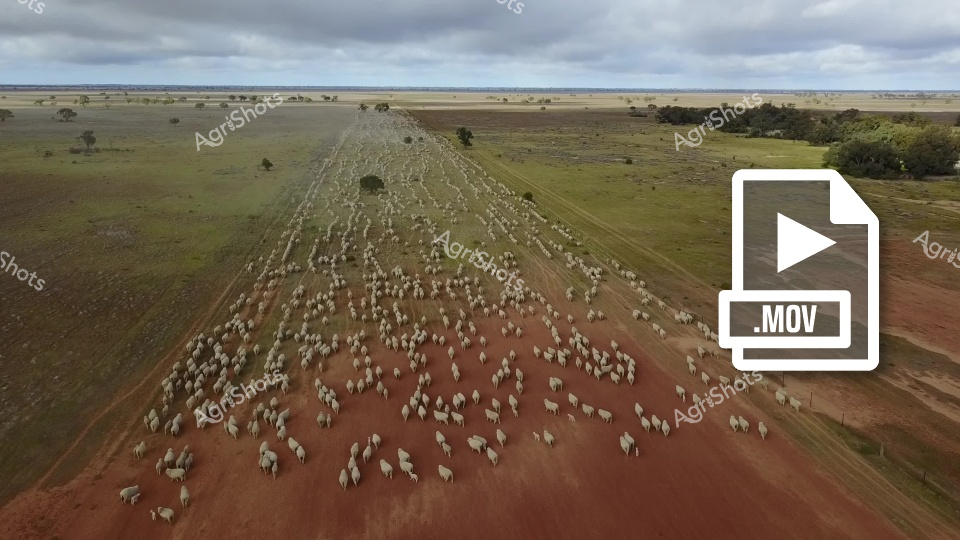
The horizon bends beneath an expansive sky tinted with grays and hints of muted blue, evoking a sense of unease blended with the beauty of rural life. The scene encapsulates the ongoing struggles and triumphs of Australian agriculture, where every day brings a renewed hope for sustainability and recovery. ▶ Video

A vast stretch of the drought-affected landscape unfolds under a moody sky, where low-hanging clouds cast a soft, diffused light over the scene. The ochre-colored earth, cracked and dry, contrasts with the lush green pastures in the distance, highlighting the resilience of the land. A large herd of white cattle, their distinctive markings breaking the uniformity of their coats, moves in unison across the terrain, driven by a diligent farmer on horseback who wears a broad-brimmed hat to shield against the elements. As the cattle graze on the sparse grass, the sound of hooves thuds softly against the parched ground, and the occasional low moo echoes through the air, contributing to an atmosphere of gentle but purposeful activity. The farmer, dressed in rugged denim and a light blue shirt, guides the herd with practiced ease, demonstrating the close bond and vital understanding between man and livestock, particularly in challenging conditions. The horizon bends beneath an expansive sky tinted with grays and hints of muted blue, evoking a sense of unease blended with the beauty of rural life. The scene encapsulates the ongoing struggles and triumphs of Australian agriculture, where every day brings a renewed hope for sustainability and recovery.
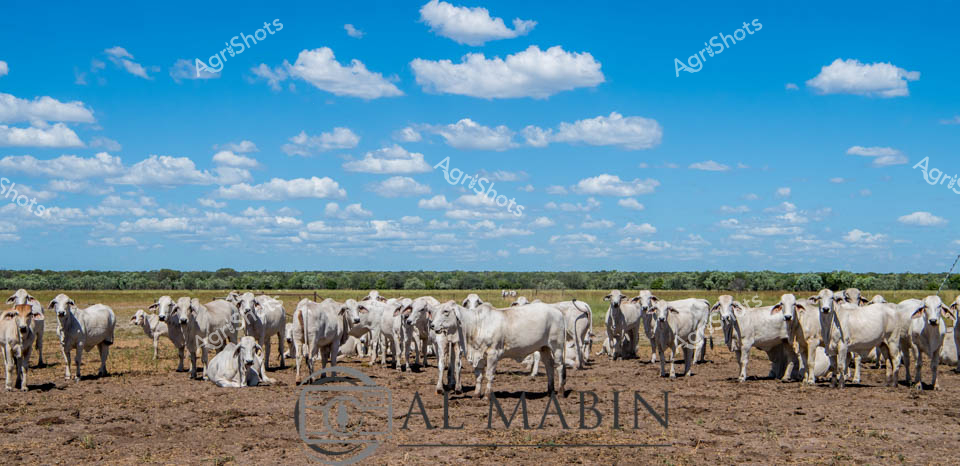
Brahman cattle dominate this expansive Northern Territory pastoral landscape, their distinctive white-grey coats gleaming under a brilliant blue sky punctuated by soft cumulus clouds. A robust herd of muscular cattle stands amid the dry earth, with a few individuals resting on the parched ground, showcasing the resilience of these heat-adapted bovines. The classic Brahman breed, renowned for their distinctive humps and loose skin, represents the backbone of Australia's northern beef production, perfectly suited to the challenging tropical environment. Stretching to the horizon, the landscape reveals a verdant treeline in the distance, contrasting sharply with the dusty foreground where the cattle are gathered. The scene epitomizes the rugged beauty of Australia's cattle industry - a testament to agricultural adaptation and the enduring spirit of rural enterprise. Image

Brahman cattle dominate this expansive Northern Territory pastoral landscape, their distinctive white-grey coats gleaming under a brilliant blue sky punctuated by soft cumulus clouds. A robust herd of muscular cattle stands amid the dry earth, with a few individuals resting on the parched ground, showcasing the resilience of these heat-adapted bovines. The classic Brahman breed, renowned for their distinctive humps and loose skin, represents the backbone of Australia's northern beef production, perfectly suited to the challenging tropical environment. Stretching to the horizon, the landscape reveals a verdant treeline in the distance, contrasting sharply with the dusty foreground where the cattle are gathered. The scene epitomizes the rugged beauty of Australia's cattle industry - a testament to agricultural adaptation and the enduring spirit of rural enterprise.

Burnished amber and charcoal-colored Senepol cattle cluster tightly on a dusty rural track, their muscular bodies creating a living canvas against the sun-bleached landscape of Victoria's pastoral heartland. Sprawling gum trees frame the scene, casting dappled shade on the herd during what appears to be a mid-morning muster. The cattle - a mix of rich rust-red and deep black coats - demonstrate the robust genetics of this heat-tolerant breed, perfectly adapted to Australia's challenging agricultural environments. Aerial perspective reveals the intricate choreography of livestock management, with the herd tightly grouped and controlled, showcasing the precision of modern cattle farming techniques. Shadows stretch across the parched ground, highlighting the textural contrast between the verdant tree lines and the weathered earth, capturing the resilience of both land and livestock. This compelling image encapsulates the essence of Australian beef production: strategic, efficient, and deeply connected to the rugged landscape. Image

Burnished amber and charcoal-colored Senepol cattle cluster tightly on a dusty rural track, their muscular bodies creating a living canvas against the sun-bleached landscape of Victoria's pastoral heartland. Sprawling gum trees frame the scene, casting dappled shade on the herd during what appears to be a mid-morning muster. The cattle - a mix of rich rust-red and deep black coats - demonstrate the robust genetics of this heat-tolerant breed, perfectly adapted to Australia's challenging agricultural environments. Aerial perspective reveals the intricate choreography of livestock management, with the herd tightly grouped and controlled, showcasing the precision of modern cattle farming techniques. Shadows stretch across the parched ground, highlighting the textural contrast between the verdant tree lines and the weathered earth, capturing the resilience of both land and livestock. This compelling image encapsulates the essence of Australian beef production: strategic, efficient, and deeply connected to the rugged landscape.
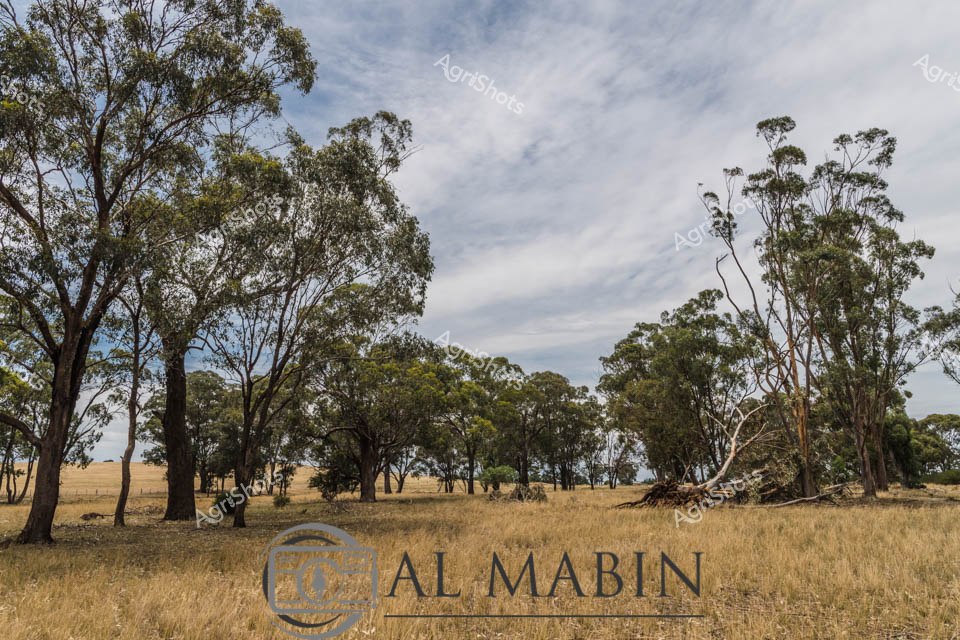
Golden grasslands stretch beneath a soft, clouded sky at The expansive pastoral property in Victoria. Mature eucalyptus trees with silvery-green foliage punctuate the dry summer landscape, creating a classic Australian rural scene of scattered woodland and open grazing terrain. Weathered tree trunks stand sentinel across the golden-brown pasture, their branches spreading wide and casting delicate shadows on the parched ground. The landscape speaks of resilience - a quintessential Australian agricultural environment where native trees coexist with farming landscapes, demonstrating the intricate balance between nature and agricultural production. Pale grasses ripple subtly in what appears to be a light breeze, suggesting the early stages of a warm day in the agricultural heartland of Victoria. Image

Golden grasslands stretch beneath a soft, clouded sky at The expansive pastoral property in Victoria. Mature eucalyptus trees with silvery-green foliage punctuate the dry summer landscape, creating a classic Australian rural scene of scattered woodland and open grazing terrain. Weathered tree trunks stand sentinel across the golden-brown pasture, their branches spreading wide and casting delicate shadows on the parched ground. The landscape speaks of resilience - a quintessential Australian agricultural environment where native trees coexist with farming landscapes, demonstrating the intricate balance between nature and agricultural production. Pale grasses ripple subtly in what appears to be a light breeze, suggesting the early stages of a warm day in the agricultural heartland of Victoria.
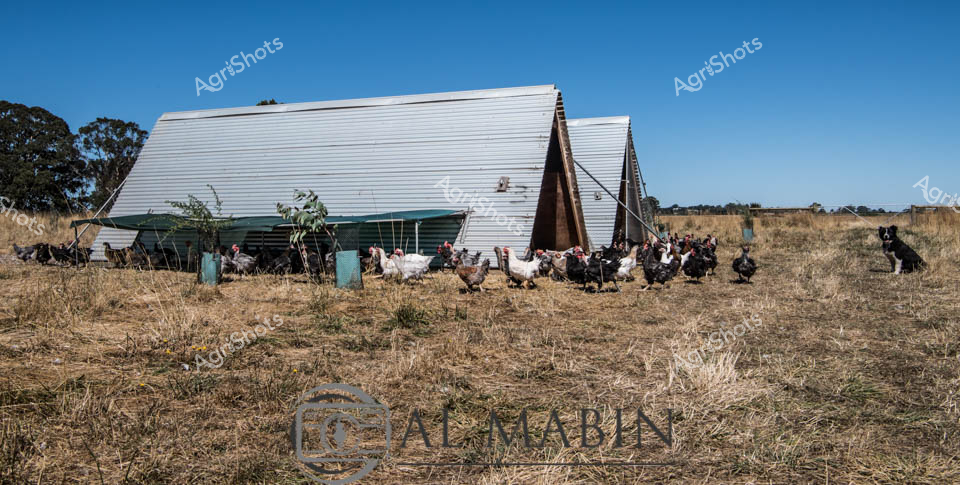
Free-range poultry farming thrives under the expansive blue skies of rural Victoria, where a weathered white corrugated shed provides shelter for a diverse flock of chickens. Scattered across a dry, golden grassland, hens and roosters of various breeds - white, black, and speckled - roam freely around their rustic enclosure. A vigilant border collie sits at the edge of the scene, keeping watchful guard over the scattered poultry. The A-frame shed, a classic Australian farm structure, offers protection and nesting areas, highlighting the small-scale, sustainable approach to chicken farming. Scrubby trees and distant paddocks frame the landscape, capturing the essence of a working farm where animals have space to move and behave naturally. The harsh sunlight and parched ground suggest a typical hot Australian summer day, underscoring the resilience of both the livestock and the agricultural infrastructure that supports them. Image

Free-range poultry farming thrives under the expansive blue skies of rural Victoria, where a weathered white corrugated shed provides shelter for a diverse flock of chickens. Scattered across a dry, golden grassland, hens and roosters of various breeds - white, black, and speckled - roam freely around their rustic enclosure. A vigilant border collie sits at the edge of the scene, keeping watchful guard over the scattered poultry. The A-frame shed, a classic Australian farm structure, offers protection and nesting areas, highlighting the small-scale, sustainable approach to chicken farming. Scrubby trees and distant paddocks frame the landscape, capturing the essence of a working farm where animals have space to move and behave naturally. The harsh sunlight and parched ground suggest a typical hot Australian summer day, underscoring the resilience of both the livestock and the agricultural infrastructure that supports them.
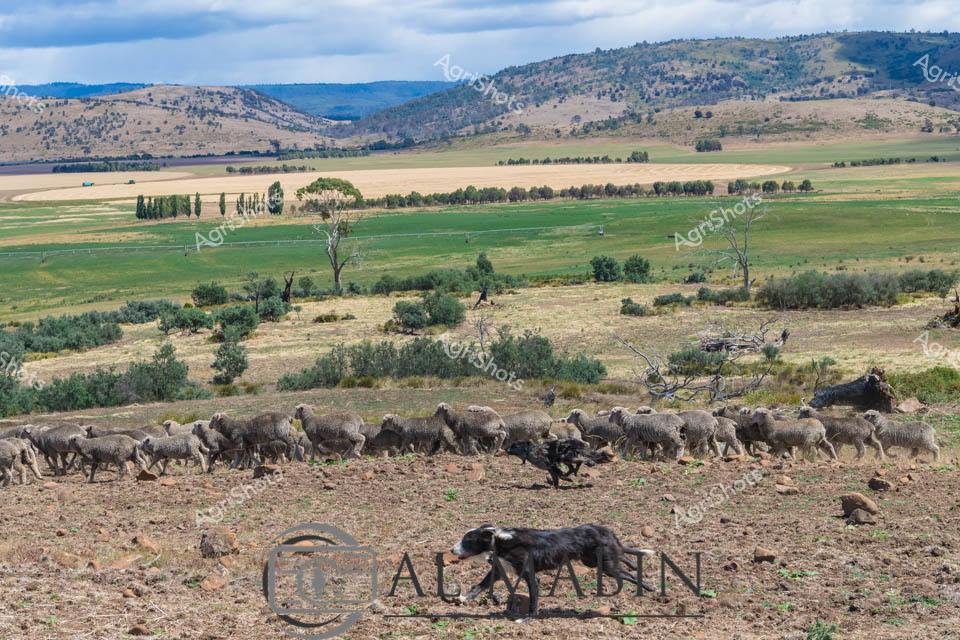
A flock of sheep graze across a dry paddock in Tasmania while working dogs assist with mustering operations. The pastoral landscape features rolling hills and scattered vegetation typical of Tasmanian grazing country, with green fields visible in the distance. The scene captures traditional livestock management practices as the sheep move across the parched ground under an overcast sky, demonstrating the essential role of working dogs in Australian sheep farming operations. Image

A flock of sheep graze across a dry paddock in Tasmania while working dogs assist with mustering operations. The pastoral landscape features rolling hills and scattered vegetation typical of Tasmanian grazing country, with green fields visible in the distance. The scene captures traditional livestock management practices as the sheep move across the parched ground under an overcast sky, demonstrating the essential role of working dogs in Australian sheep farming operations.
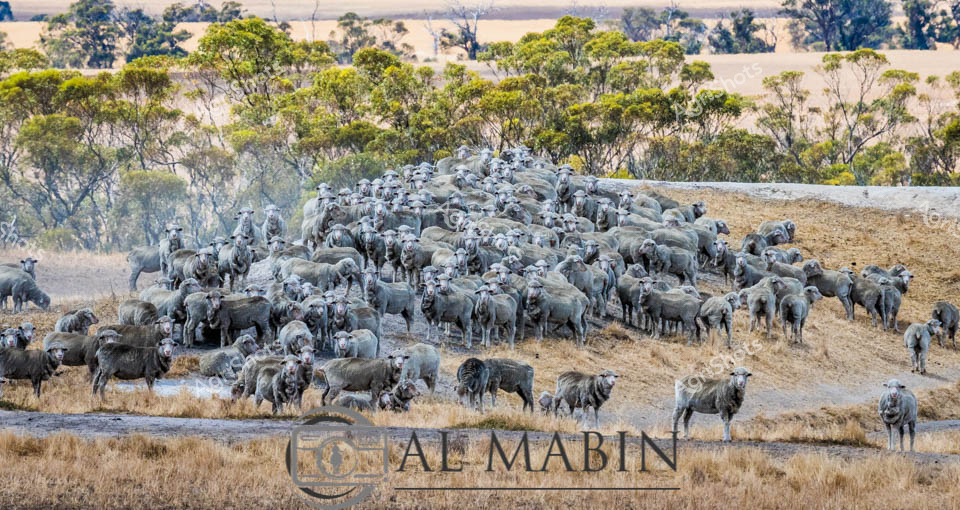
A massive flock of Merino sheep congregates in a dusty paddock in Western Australia, with hundreds of woolly animals clustered together across the golden grassland. The sheep appear to be gathering around water sources or feed areas, creating dense groups scattered throughout the dry landscape. Native Australian trees and shrubs dot the background, while the parched ground reflects typical pastoral conditions in WA's agricultural regions. This scene captures the scale of Australian sheep farming operations and the hardy Merino breed's adaptation to the continent's challenging rural environments. Image

A massive flock of Merino sheep congregates in a dusty paddock in Western Australia, with hundreds of woolly animals clustered together across the golden grassland. The sheep appear to be gathering around water sources or feed areas, creating dense groups scattered throughout the dry landscape. Native Australian trees and shrubs dot the background, while the parched ground reflects typical pastoral conditions in WA's agricultural regions. This scene captures the scale of Australian sheep farming operations and the hardy Merino breed's adaptation to the continent's challenging rural environments.
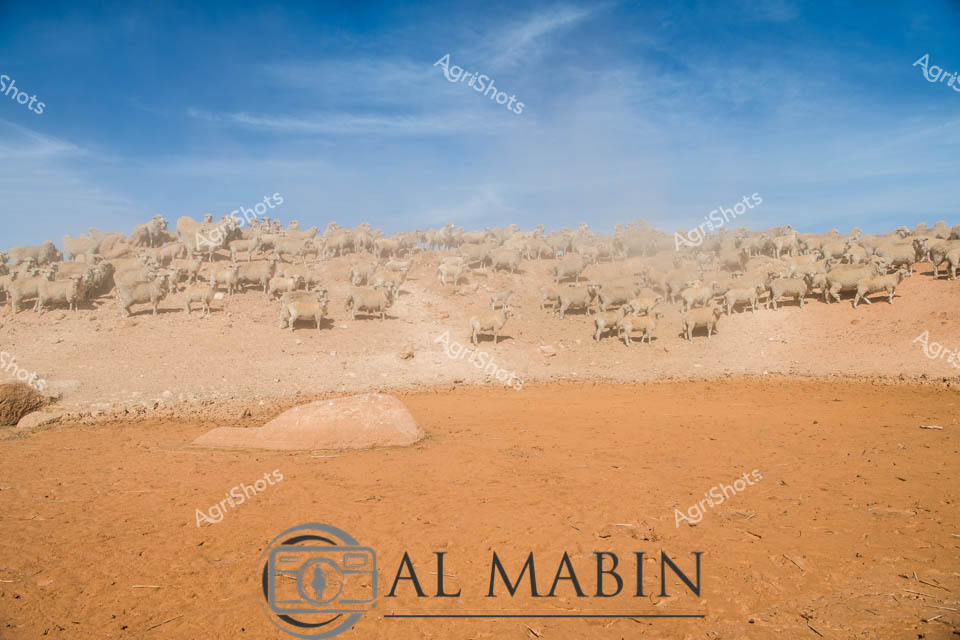
A large flock of sheep grazes across drought-affected land in South Australia's arid landscape, with the animals scattered across the dusty, barren terrain under a clear blue sky. The parched ground shows classic drought conditions with minimal vegetation and exposed sandy soil. A large boulder sits prominently in the foreground of this harsh pastoral scene on the Yorke Peninsula, highlighting the challenging conditions faced by livestock during extended dry periods. Image

A large flock of sheep grazes across drought-affected land in South Australia's arid landscape, with the animals scattered across the dusty, barren terrain under a clear blue sky. The parched ground shows classic drought conditions with minimal vegetation and exposed sandy soil. A large boulder sits prominently in the foreground of this harsh pastoral scene on the Yorke Peninsula, highlighting the challenging conditions faced by livestock during extended dry periods.
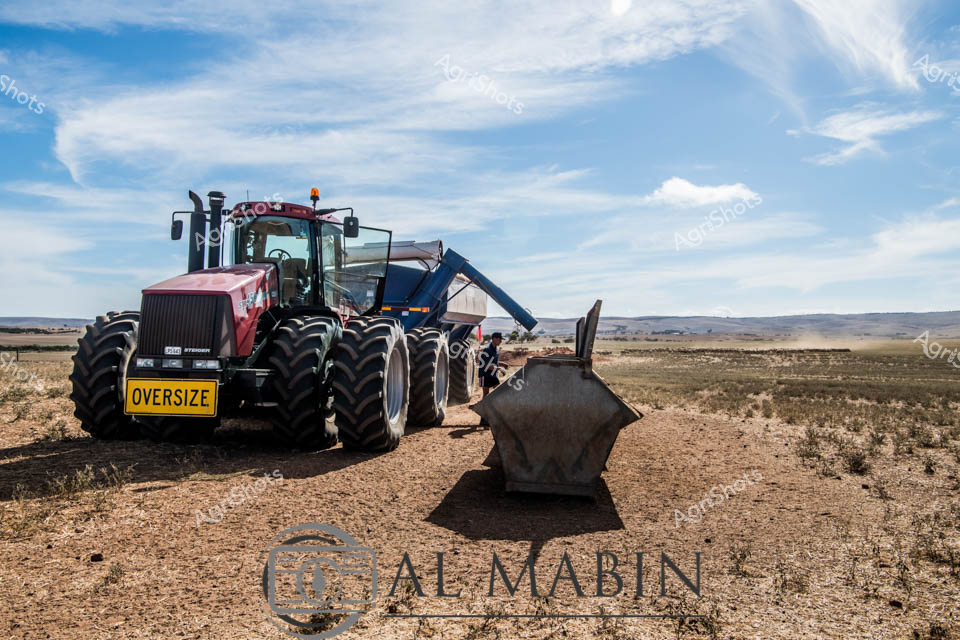
Massive Case IH articulated tractor dominates a stark, arid agricultural landscape on the Yorke Peninsula in South Australia. The deep red machine, marked with a prominent yellow "OVERSIZE" sign, sits poised against a backdrop of dusty, sparse terrain and expansive blue sky with wispy clouds. Alongside the tractor is a blue grain handling attachment, suggesting a critical moment in the grain harvest or feed preparation process. The enormous agricultural vehicle, with its towering dual-wheel configuration and rugged industrial design, represents the scale and technological sophistication of modern Australian broad-acre farming. Shadows stretch across the parched ground, highlighting the harsh environmental conditions where agricultural innovation meets challenging terrain. Image

Massive Case IH articulated tractor dominates a stark, arid agricultural landscape on the Yorke Peninsula in South Australia. The deep red machine, marked with a prominent yellow "OVERSIZE" sign, sits poised against a backdrop of dusty, sparse terrain and expansive blue sky with wispy clouds. Alongside the tractor is a blue grain handling attachment, suggesting a critical moment in the grain harvest or feed preparation process. The enormous agricultural vehicle, with its towering dual-wheel configuration and rugged industrial design, represents the scale and technological sophistication of modern Australian broad-acre farming. Shadows stretch across the parched ground, highlighting the harsh environmental conditions where agricultural innovation meets challenging terrain.
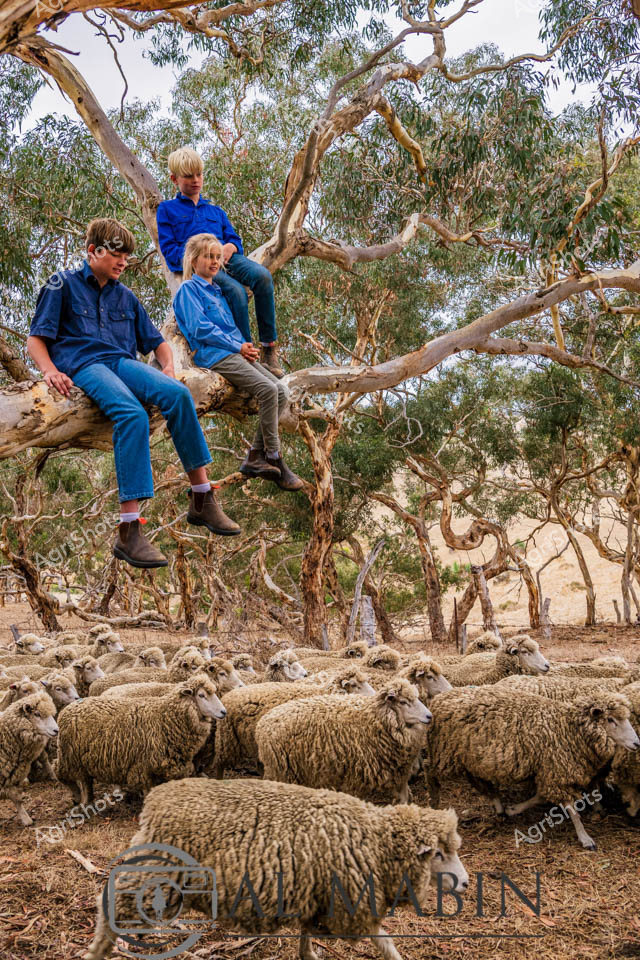
Perched high in a gnarled eucalyptus tree, three young stock managers survey the Corriedale flock beneath weathered, silvery branches. Dressed in matching blue work shirts, the children sit confidently among the twisted limbs, overlooking a dry landscape scattered with woolly sheep. The flock huddles tightly on parched ground, their thick fleeces a testament to resilience in harsh Australian agricultural conditions. Soft earth tones of the sheep contrast with the pale, peeling bark of the river red gums, creating a powerful tableau of rural endurance. The scene captures the generational connection to land and livestock, with the young guardians demonstrating an innate understanding of sheep husbandry and the challenging environment of rural South Australia. This image embodies the spirit of Australian pastoral life - a delicate balance of youth, nature, and agricultural heritage set against the unforgiving backdrop of a drought-affected landscape. Image

Perched high in a gnarled eucalyptus tree, three young stock managers survey the Corriedale flock beneath weathered, silvery branches. Dressed in matching blue work shirts, the children sit confidently among the twisted limbs, overlooking a dry landscape scattered with woolly sheep. The flock huddles tightly on parched ground, their thick fleeces a testament to resilience in harsh Australian agricultural conditions. Soft earth tones of the sheep contrast with the pale, peeling bark of the river red gums, creating a powerful tableau of rural endurance. The scene captures the generational connection to land and livestock, with the young guardians demonstrating an innate understanding of sheep husbandry and the challenging environment of rural South Australia. This image embodies the spirit of Australian pastoral life - a delicate balance of youth, nature, and agricultural heritage set against the unforgiving backdrop of a drought-affected landscape.
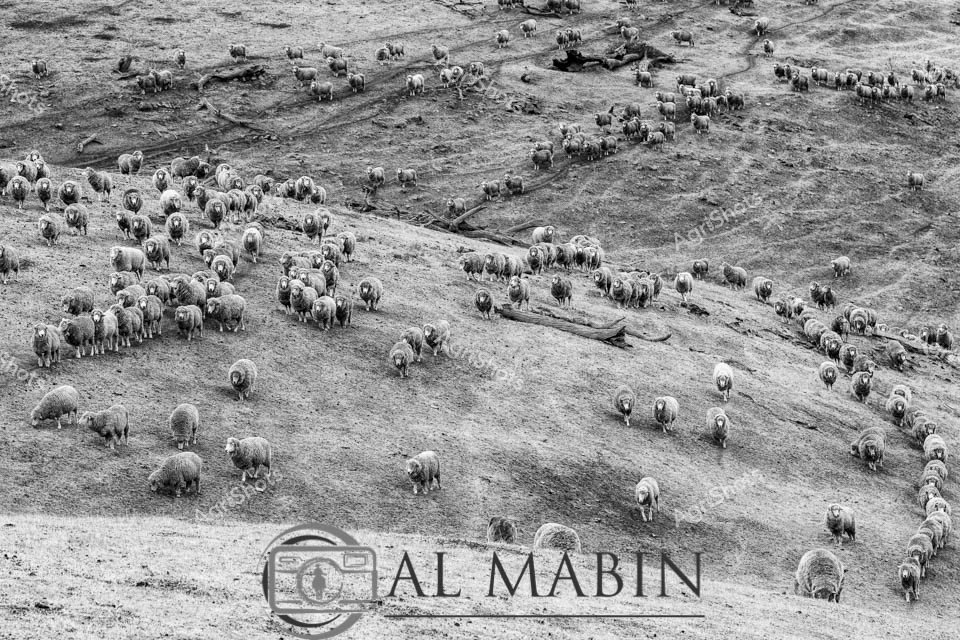
Weathered earth stretches across the frame, a stark canvas of drought-affected pasture where a vast flock of Corriedale sheep cluster and meander. Woolly bodies, shades of gray and white, create a living tapestry across the undulating landscape, their dense fleeces a testament to the resilience of pastoral life in South Australia. Subtle tracks and paths wind between the scattered groups, revealing the intricate patterns of movement during a muster - a choreography of survival and agricultural management. The black and white composition intensifies the textural quality of the scene, highlighting the rugged terrain's contours and the sheep's rounded forms against the parched ground. Each animal seems both isolated and part of a collective, embodying the harsh beauty of agricultural existence in a challenging environment. The photographic signature anchors the image, a testament to the documentation of Australian rural life with profound artistic sensitivity. Image

Weathered earth stretches across the frame, a stark canvas of drought-affected pasture where a vast flock of Corriedale sheep cluster and meander. Woolly bodies, shades of gray and white, create a living tapestry across the undulating landscape, their dense fleeces a testament to the resilience of pastoral life in South Australia. Subtle tracks and paths wind between the scattered groups, revealing the intricate patterns of movement during a muster - a choreography of survival and agricultural management. The black and white composition intensifies the textural quality of the scene, highlighting the rugged terrain's contours and the sheep's rounded forms against the parched ground. Each animal seems both isolated and part of a collective, embodying the harsh beauty of agricultural existence in a challenging environment. The photographic signature anchors the image, a testament to the documentation of Australian rural life with profound artistic sensitivity.