About this image
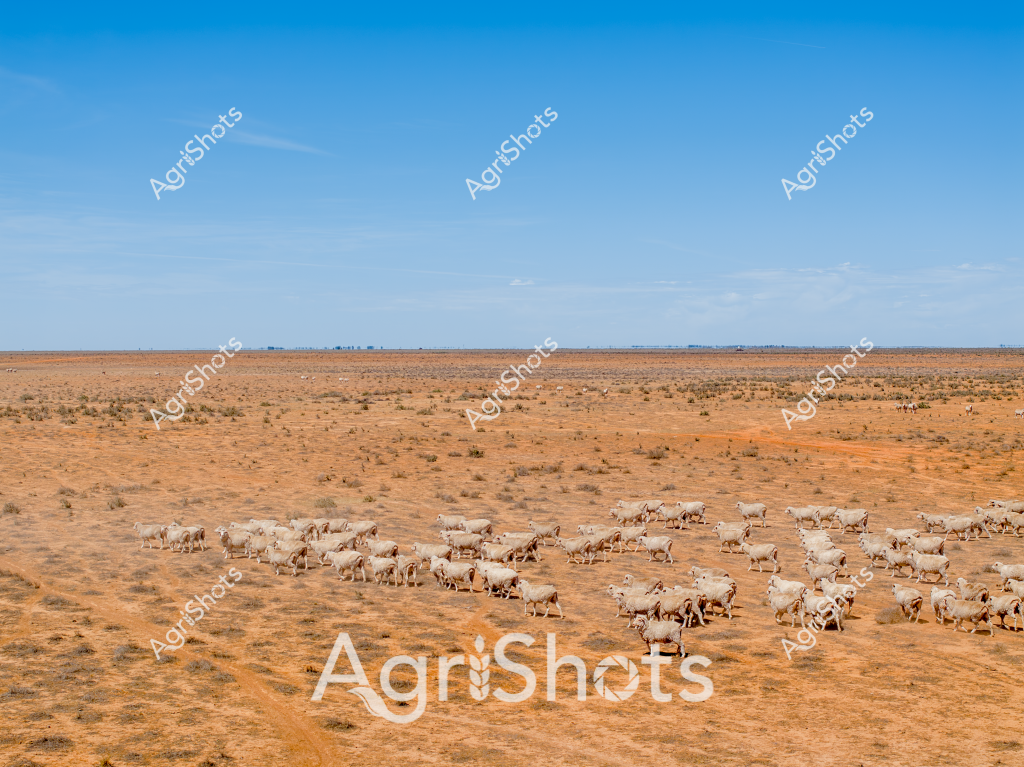
A vast, arid landscape stretches across the horizon, dotted with a substantial flock of white and brown sheep grazing on the dry, rusty-orange terrain. The sparse vegetation and expansive blue sky suggest this is a challenging drought-affected region, likely in outback Australia. The sheep, appearing to be a mixed breed of possibly Merino and crossbred stock, are clustered together, moving slowly across the parched ground in search of sparse vegetation. The landscape's monotone color palette - burnt oranges, pale yellows, and dusty browns - emphasizes the harsh environmental conditions these resilient livestock must endure. A distant line of low trees marks the horizon, providing the only break in the flat, unforgiving landscape that typifies many of Australia's extensive pastoral regions.
Similar media
 Image
Image
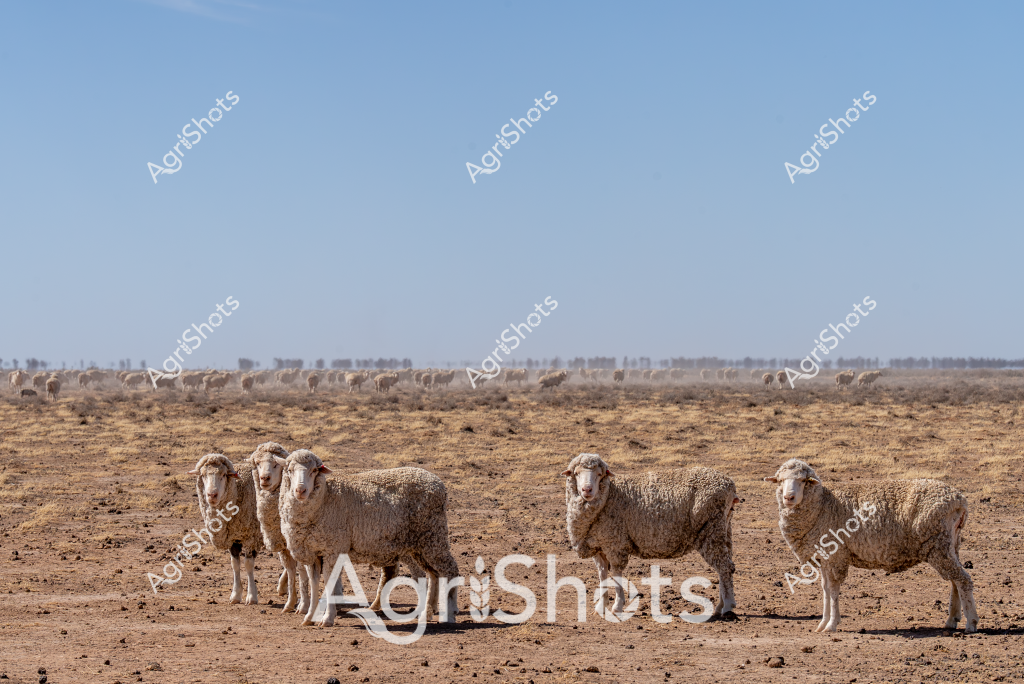
A small mob of Merino sheep stand clustered on a dry, dusty paddock under a clear blue sky, with more sheep visible in the distant background. The woolly white and cream-colored sheep appear hardy and well-conditioned, adapted to the arid Australian landscape. Sparse scrub and yellow-brown grassland stretch to the horizon, indicating challenging drought conditions typical of inland grazing regions. The sheep are standing relatively still, suggesting the harsh, unforgiving environment where water and feed are scarce. Their thick, dense fleece provides protection from the intense sunlight and heat, highlighting the resilience of Merino sheep in marginal agricultural zones. The expansive, open landscape communicates the vast scale of Australian sheep farming, where animals must survive in challenging terrain and climate conditions.
 Image
Image
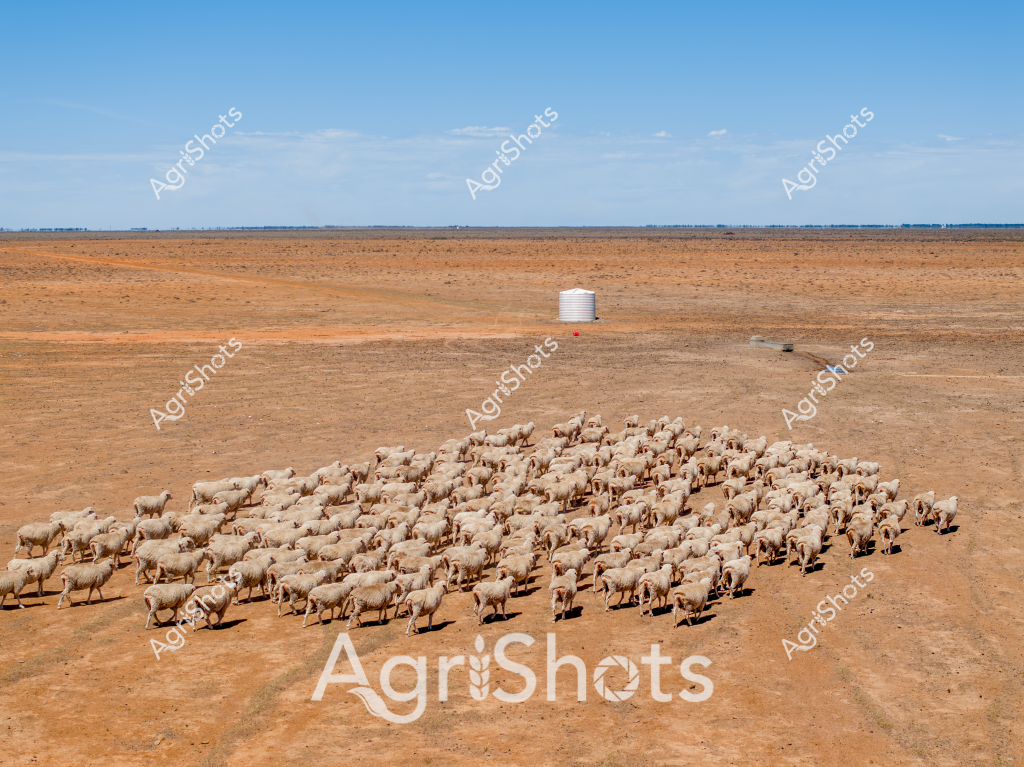
A large flock of Merino sheep huddles together in a stark, arid landscape under a clear blue sky. The dry, reddish-brown earth stretches to the horizon, punctuated by a single white water tank in the distance. The sheep appear tightly grouped, their woolly bodies creating a dense mass against the barren backdrop, highlighting the challenging drought conditions typical of Australian inland regions. A faint track leads toward the water tank, suggesting the animals are likely seeking hydration in this harsh environment. The image powerfully captures the resilience of Australian livestock farming, where animals must survive in extremely dry and unforgiving terrain. The uniform tan-colored landscape and the clustered sheep create a compelling visual narrative of survival and agricultural adaptation in one of the world's most challenging farming environments.
 Image
Image
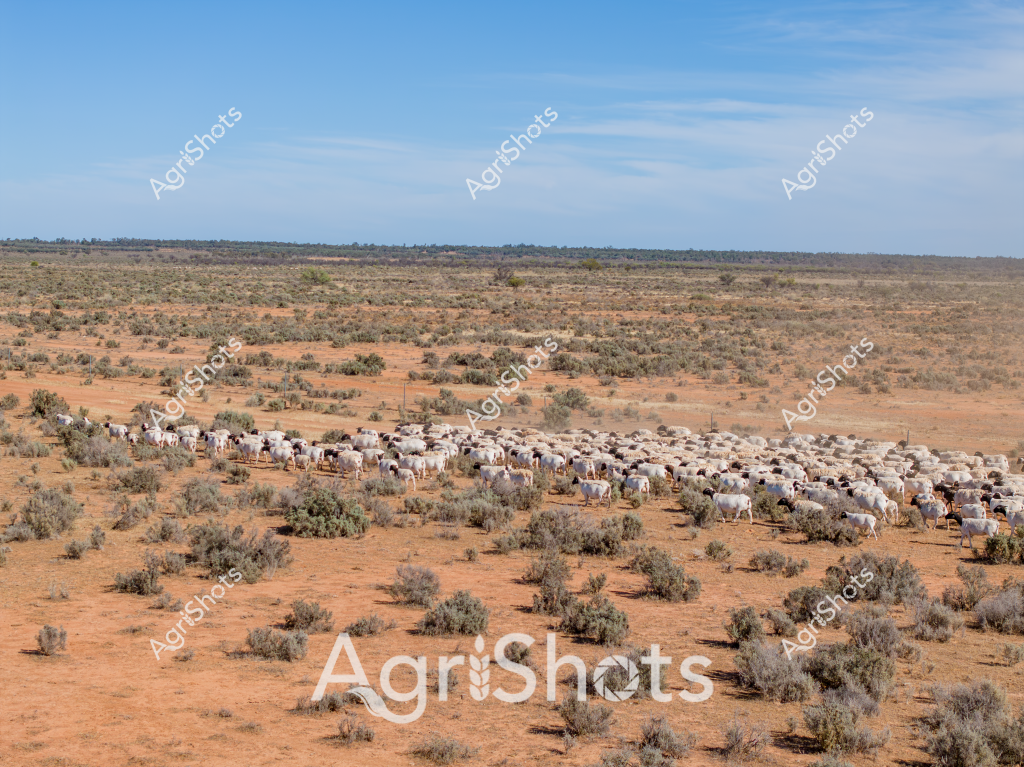
A large mob of white cattle graze across a vast, arid landscape in the Australian outback, their pale bodies standing out against the rusty orange soil and scattered gray-green scrubland. The expansive scene depicts a typical pastoral setting, with low saltbush and sparse vegetation stretching to a distant horizon under a soft blue sky. These appear to be Brahman or Brahman-cross cattle, well-adapted to the harsh conditions of Australia's inland regions, clustered together for protection and foraging across the dry pastoral station country. The landscape speaks to the challenging environmental conditions of central Australia, where livestock management requires resilience and strategic grazing practices. The wide-open terrain showcases the immense scale of Australian cattle stations, where herds roam across thousands of hectares of seemingly endless, rugged terrain.
 Image
Image
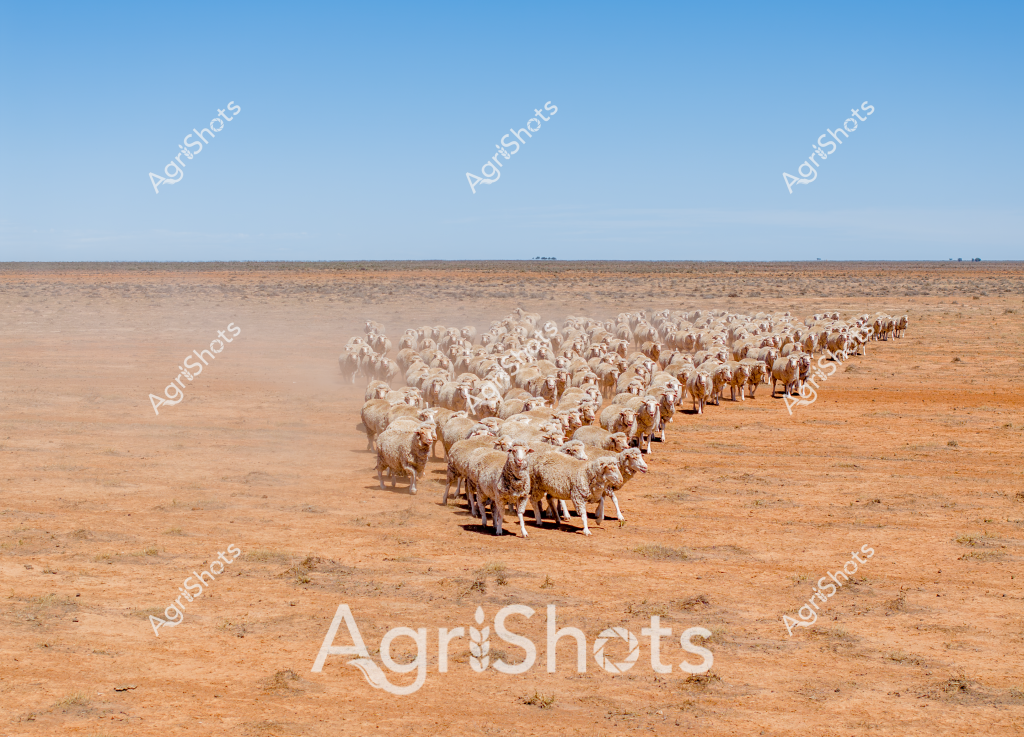
A large flock of Merino sheep stands tightly grouped in a stark, rust-colored landscape under a clear blue sky, showcasing the challenging conditions of an Australian outback station. The woolly white and cream-colored sheep create a dense, uniform mass against the arid, dusty ground, highlighting the resilience of both the animals and the agricultural enterprise. Sparse, low vegetation dots the surrounding terrain, emphasizing the harsh, dry environment typical of inland Australia. The sheep appear well-maintained, their thick fleeces suggesting they are being carefully managed despite the challenging drought-like conditions. The expansive horizon and flat landscape create a sense of isolation and vastness characteristic of large Australian pastoral properties. This image captures the essence of extensive sheep farming in Australia's challenging interior regions, where livestock management requires skill, persistence, and adaptation to extreme environmental conditions.
 Image
Image
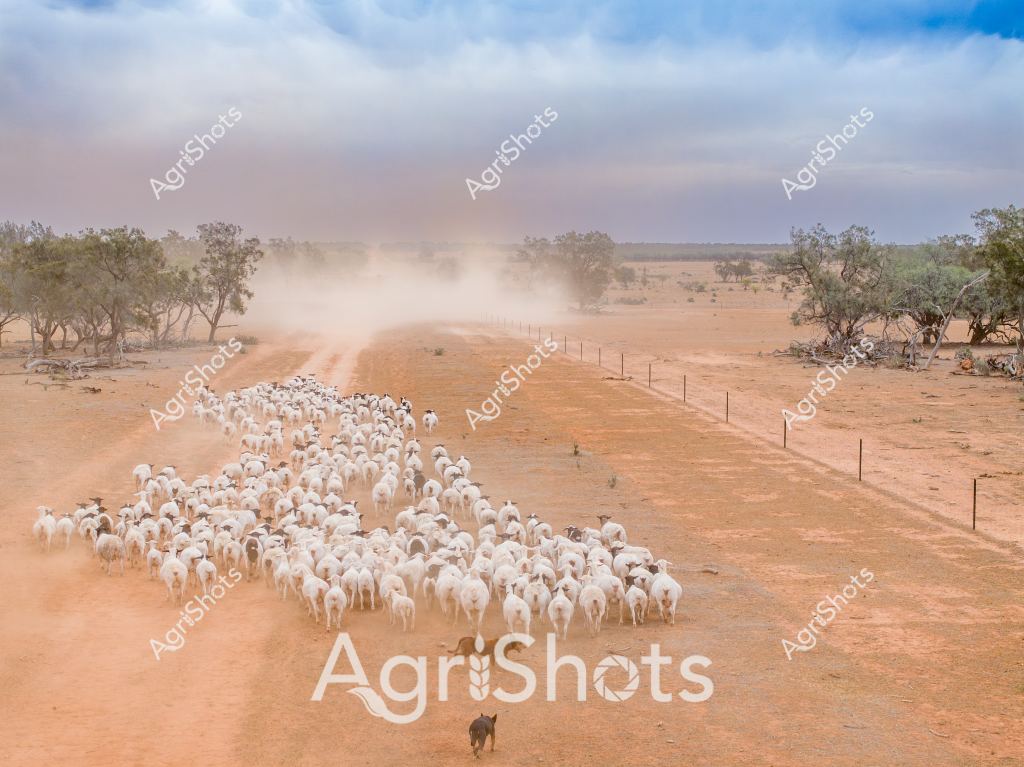
A vast, dusty landscape in outback Australia captures a large mob of white sheep being mustered along a dirt track, creating a billowing dust cloud behind the tightly packed herd. Sparse eucalyptus trees line the fenced road, their weathered branches framing the arid pastoral scene typical of inland grazing properties. A lone working dog trails behind the herd, helping to guide the sheep forward across the ochre-colored earth. The landscape speaks to the challenging conditions of Australian sheep farming, with the dry ground and sparse vegetation highlighting the resilience required to run livestock in this unforgiving environment. The sheep, likely Merino or a similar white-fleeced breed, move as a compact, woolly mass, kicking up a dramatic plume of red dust that softens the harsh landscape and creates a striking visual representation of cattle station life in rural Australia. The image powerfully captures the scale and drama of livestock mustering, showcasing the vast open spaces and the intricate process of moving sheep across remote pastoral lands. The fence line, dust, and sparse vegetation all tell a story of agricultural persistence in one of the world's most challenging farming environments.
 Image
Image
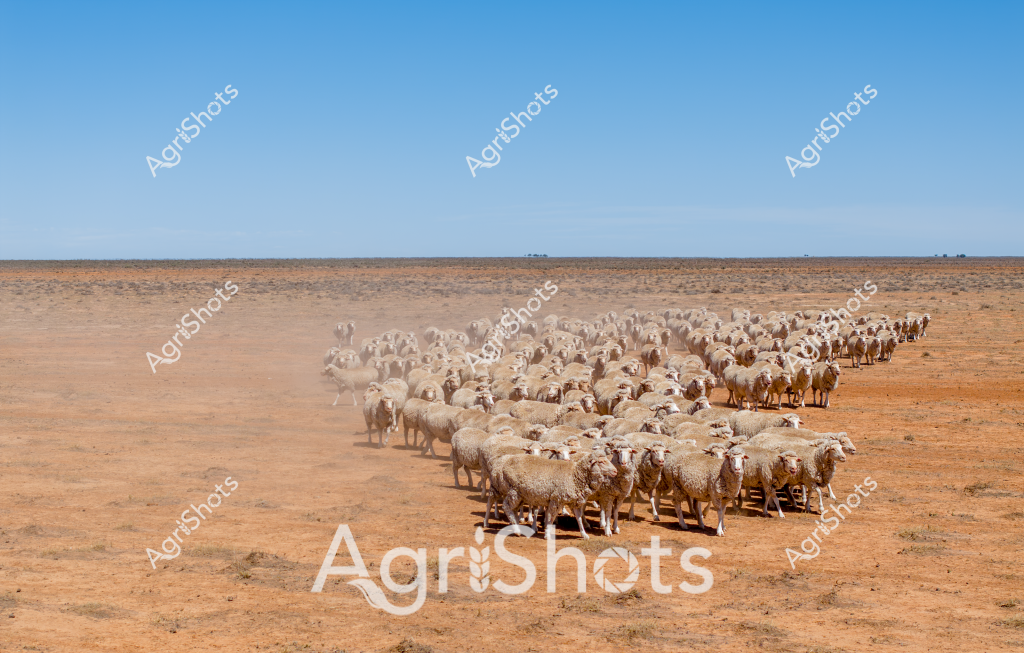
A large flock of Merino sheep traverses a dry, expansive pastoral landscape under a clear blue sky, kicking up dust as they move across the arid terrain. The densely packed mob of woolly sheep creates a tight, uniform group stretching across the ochre-colored ground, highlighting the resilience of Australian sheep farming in challenging drought conditions. The barren paddock extends to a distant horizon, with minimal vegetation and a stark landscape that emphasizes the harsh environmental conditions these livestock must endure. Dust billows around the sheep's legs, creating a misty effect that softens the edges of the flock and underscores the challenging dry environment typical of inland Australian grazing properties. The uniform white-cream coloration of the Merino sheep stands in sharp contrast to the reddish-brown earth, creating a powerful visual representation of Australia's extensive sheep farming industry and its ability to sustain livestock in marginal agricultural lands.
 Image
Image
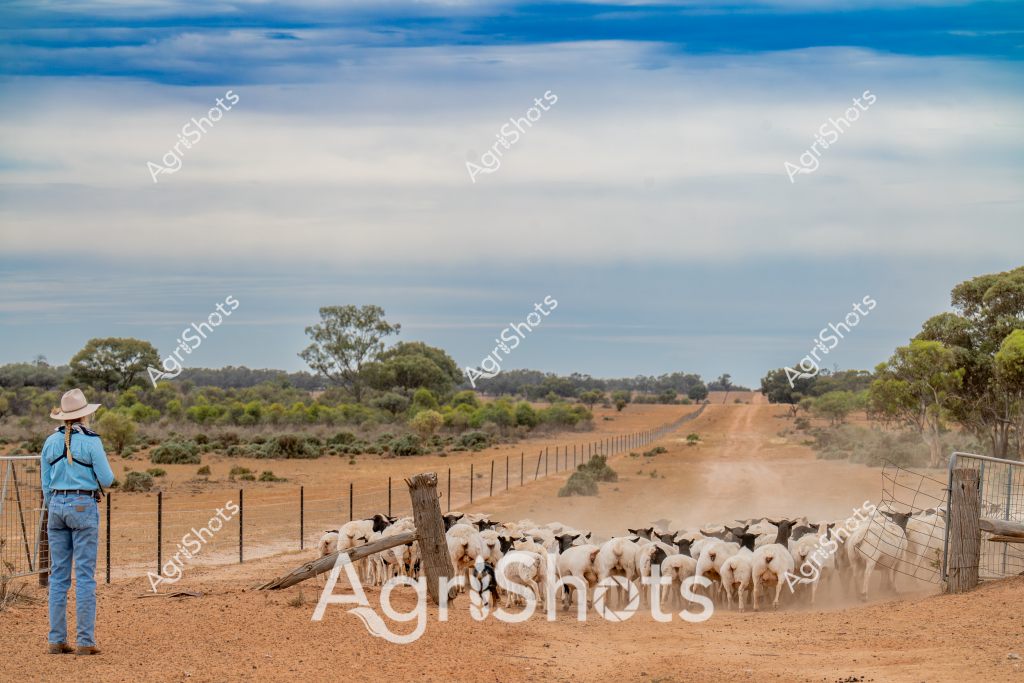
A seasoned stockman in a blue work shirt, wide-brimmed hat, and jeans stands observing a tightly clustered mob of white and black goats near a fence line on a dusty rural property. The goats are pressed against a wooden fence post, creating a dense cluster of woolly bodies in the dry, ochre-colored landscape. A long dirt track stretches into the distant horizon, lined with native eucalyptus trees and sparse bushland under a soft blue and cloudy sky. The scene captures the quintessential Australian pastoral setting - a vast, arid landscape where livestock management requires skill, patience, and intimate knowledge of the terrain. Dust rises subtly around the animals, suggesting recent movement or the inherent dryness of the environment. The composition highlights the connection between the lone stockman and the herd, embodying the resilience and solitary nature of agricultural work in remote Australian regions.
 Image
Image
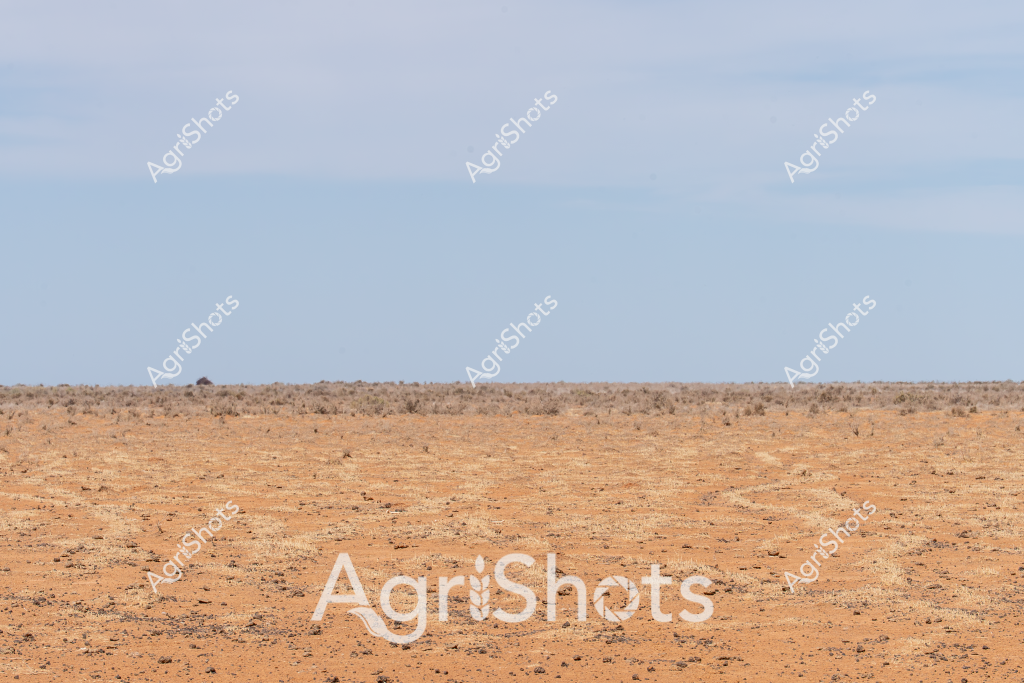
A barren, rust-colored landscape stretches beneath a pale blue sky, depicting an arid agricultural region experiencing severe drought conditions. The ground is parched and rocky, with sparse scattered low shrubs and minimal vegetation, creating a stark testimony to the harsh environmental challenges faced by Australian farmers. Small stones and compacted earth dominate the foreground, revealing a landscape that has been stripped of moisture and vitality. The horizon line is flat and uninterrupted, emphasizing the expansive and unforgiving nature of this drought-affected terrain. This image powerfully illustrates the environmental stress and resilience required in Australian agricultural landscapes, where farmers must constantly adapt to extreme climatic conditions. The scene captures the raw, uncompromising reality of drought - a critical challenge for agricultural production in Australia's interior regions. The monochromatic palette of burnt orange, dusty brown, and pale blue communicates the severity of water scarcity and its profound impact on rural ecosystems and agricultural sustainability.