Results for “livestock transport”
 Image
Image
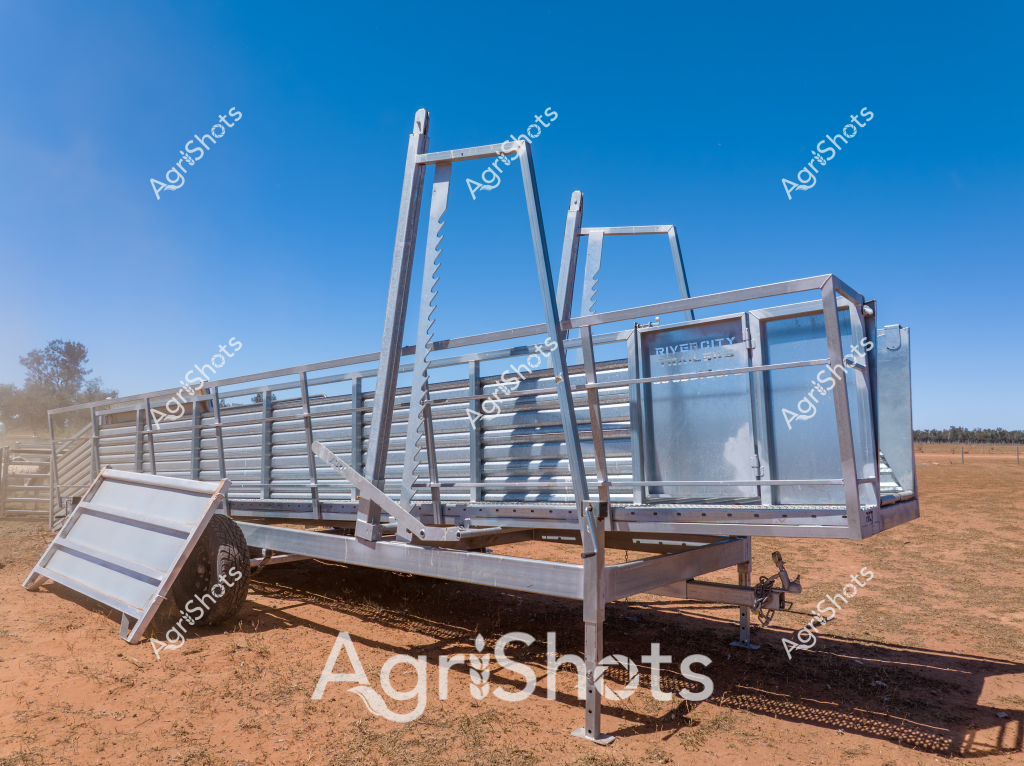
A River City livestock trailer sits ready on a dry, reddish-brown rural paddock under a brilliant blue Australian sky. This robust, all-aluminum stock trailer features multiple vertical support frames, adjustable gates, and a sturdy chassis designed for transporting livestock across challenging agricultural terrain. The trailer's metallic silver-gray construction suggests durability and professional-grade engineering, with carefully engineered loading ramps and side panels that provide ventilation and secure containment for cattle, sheep, or other farm animals. Its substantial build reflects the demanding requirements of Australian rural transportation, built to withstand harsh outback conditions and provide reliable stock movement for farmers and station managers. The clear, cloudless sky and arid ground indicate a typical dry season environment, characteristic of many agricultural regions across Australia's inland areas.
 Image
Image
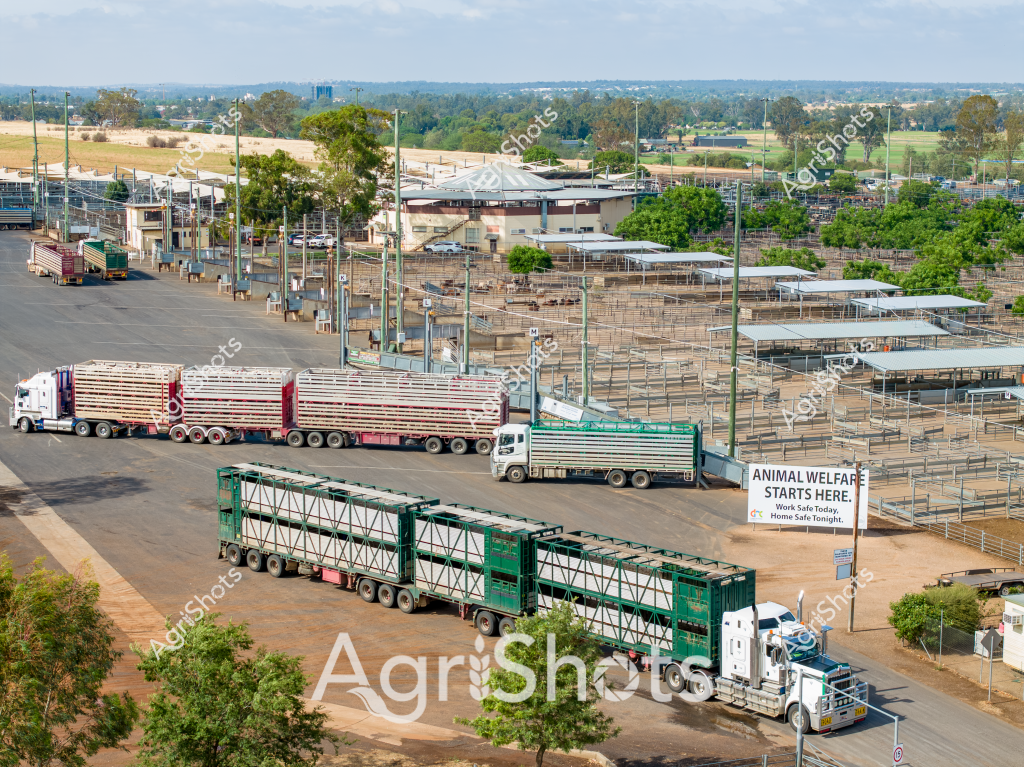
This image captures a comprehensive view of a modern livestock transportation and welfare facility, likely a livestock selling center or saleyards. Multiple large, multi-tiered livestock transport trucks are parked in the foreground, featuring green and white trailers specifically designed for animal transportation. The facility includes extensive metal livestock holding pens with white shade covers, creating a systematic layout for animal movement and management. A prominent "ANIMAL WELFARE STARTS HERE" sign emphasizes the facility's commitment to livestock care, with the additional text "Work Safe Today, Home Safe Tonight" suggesting a focus on both animal and worker safety. The surrounding landscape reveals a semi-rural setting with trees, distant buildings, and an expansive horizon typical of Australian agricultural regions. The transport trucks are heavy-duty, long-combination vehicles characteristic of Australian livestock logistics, engineered to safely transport large numbers of animals across vast distances. Multiple levels and compartments in the trailers allow for segregation and safe transport of different livestock groups. The facility's infrastructure demonstrates a highly organized approach to livestock management, with carefully designed infrastructure that prioritizes animal welfare and efficient transportation. The scene represents a critical node in Australia's livestock supply chain, where animals are prepared for transport, sale, or movement between agricultural properties. The meticulously planned layout and robust infrastructure highlight the professional standards of modern Australian livestock management.
 Image
Image
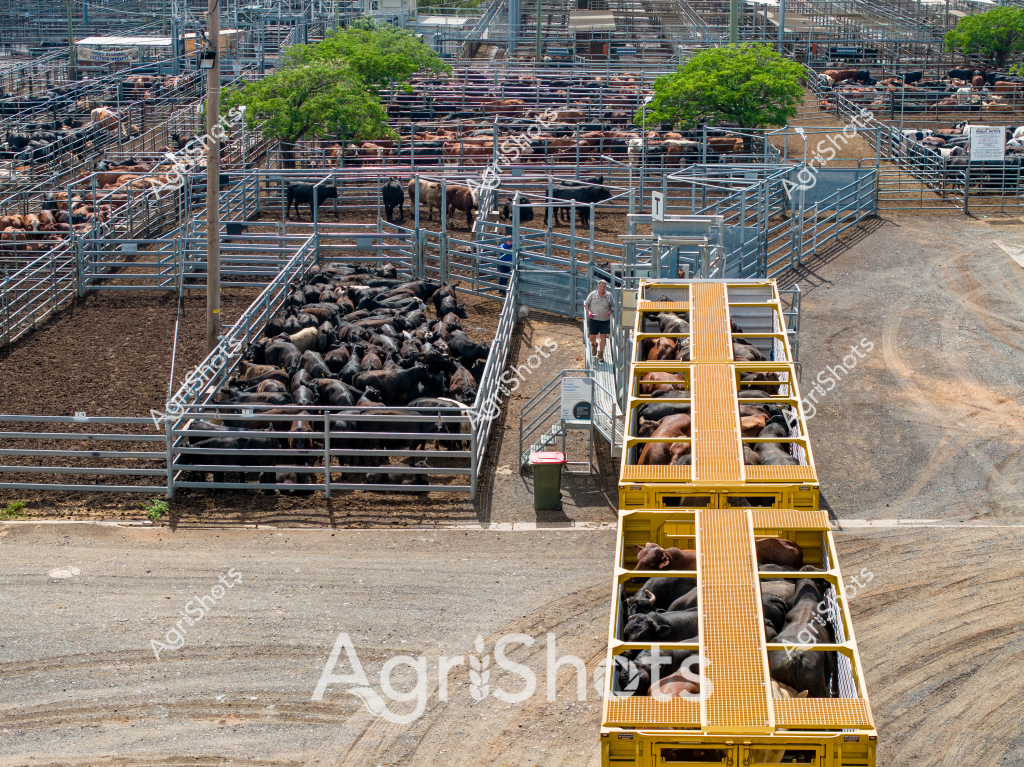
A bustling livestock processing facility showcases multiple pens of black cattle in a complex metal yard system. A series of bright yellow multi-level loading decks stand ready for animal transportation, with cattle carefully sorted and positioned on different compartment levels. A person wearing light-colored clothing can be seen standing on one of the elevated walkways, monitoring the livestock movement and sorting process. The facility appears meticulously organized, with multiple interconnected metal pen sections allowing efficient animal management and movement. Green trees punctuate the background, providing some natural contrast to the industrial agricultural infrastructure. The ground is dusty and compact, typical of a high-traffic livestock handling area, with precise metal fencing defining each processing zone. The scene represents a professional cattle handling operation, demonstrating the sophisticated infrastructure required for modern livestock transportation and management. The yellow transport decks and intricate metal pen system highlight the technical precision involved in moving and sorting livestock, showcasing Australia's advanced agricultural logistics and animal handling practices.
 Image
Image
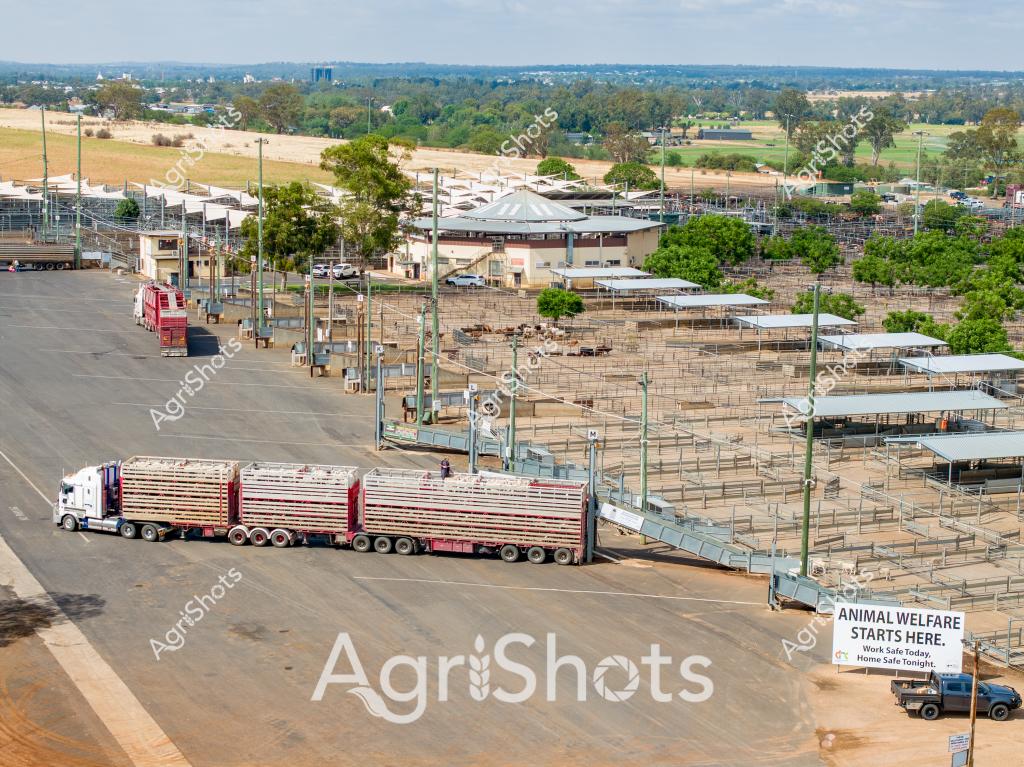
This image captures a comprehensive view of a livestock sale yard or agricultural processing facility, likely in an Australian rural setting. A large, multi-trailer livestock transport truck is positioned at the entry point of an expansive facility with multiple covered holding pens and infrastructure. The "Animal Welfare Starts Here" sign prominently indicates the facility's commitment to ethical livestock handling practices. The landscape reveals a broad agricultural setting with green trees and distant urban structures visible on the horizon, suggesting this is near a regional town or city. Multiple steel-framed holding pens with white shade covers are systematically arranged, demonstrating a modern, structured approach to livestock management. Green steel support poles create a grid-like framework throughout the facility, enabling efficient animal movement and processing. The transport truck appears to be a standard Australian road train configuration, with multiple trailers designed for long-distance livestock transportation, typical of cattle or sheep movements across vast pastoral regions. The facility's infrastructure suggests this is a sophisticated livestock sales yard, likely used for cattle or sheep auctions, with carefully designed loading ramps and holding areas to ensure animal welfare and efficient agricultural commerce. The scene represents a key node in Australia's agricultural supply chain, where livestock are professionally managed, transported, and traded with systematic precision and care.
 Image
Image
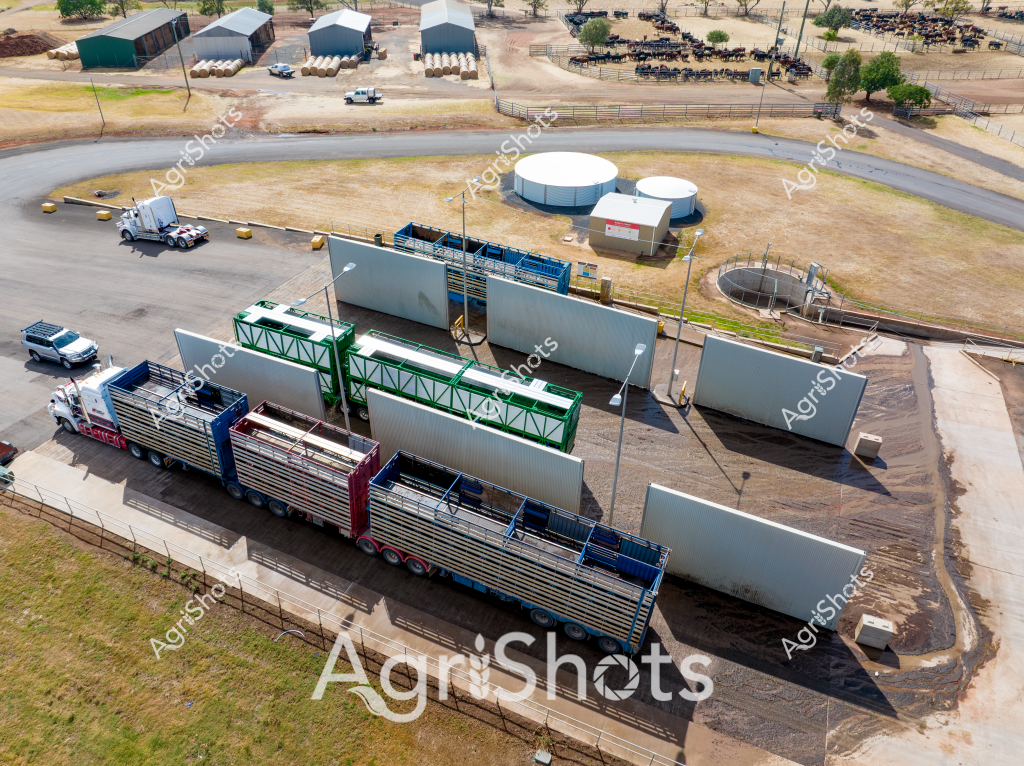
An aerial view of a livestock processing facility reveals a complex agricultural infrastructure designed for efficient cattle management. Large white modular walls and green-framed structures create a systematic loading and unloading area for semi-trailer trucks. White cylindrical water tanks and circular holding pens surround the central processing zone, indicating a modern cattle handling facility likely located in a dry, arid region with sparse vegetation and dusty ground. A semi-trailer truck is positioned within the loading zone, suggesting preparation for transporting livestock. The surrounding landscape features several industrial-style sheds with metal roofing in green and grey tones, and a series of fenced paddocks where numerous dark-colored cattle can be seen clustered together. The infrastructure demonstrates precision engineering typical of contemporary Australian agricultural operations, with carefully designed pathways, sturdy infrastructure, and strategic layout to maximize efficiency in livestock movement and processing. Gravel and concrete surfaces provide durable, functional spaces for heavy vehicle and animal traffic, reflecting the demanding environmental conditions of rural livestock production zones. The aerial perspective offers a comprehensive view of the facility's layout, highlighting the sophisticated systems developed to manage large-scale cattle operations in challenging agricultural environments.
 Image
Image
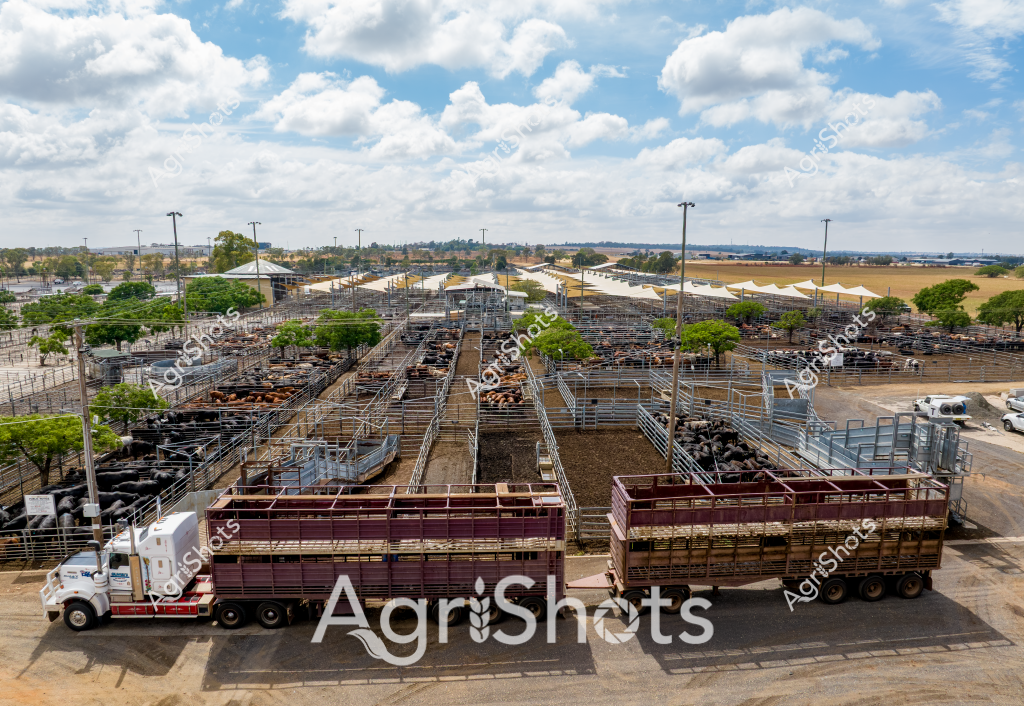
A sprawling livestock saleyard in an open rural landscape, with multiple metal cattle pens stretching across the scene under a bright, cloud-dotted sky. Rows of black cattle are penned in carefully organized enclosures, with green trees interspersed between the metal fencing and walkways. Two large livestock transport trucks with burgundy trailers are parked in the foreground, ready to load or unload cattle. The facility appears to be a modern, well-organized beef cattle operation, with high metal fencing, shade structures, and carefully planned infrastructure designed for efficient animal management. Tall light poles dot the landscape, providing illumination for round-the-clock operations, while the surrounding terrain shows a gently rolling horizon with farmland and distant treelines visible in the background. The scene captures the scale and precision of contemporary Australian cattle farming, showcasing the infrastructure required to manage large herds in a systematic and controlled environment. Metallic fencing, carefully arranged pens, and strategic placement of trees and shade structures demonstrate the sophisticated approach to livestock management in modern agricultural practices.
 Image
Image
A comprehensive livestock loading operation unfolds at a modern cattle saleyard, with multiple steel-railed livestock pens housing numerous beef cattle under white shade structures. Two large livestock transport trucks - one white and one burgundy - are positioned for loading, with men in work attire moving between the trailers and pens. The cattle, a mix of brown and black breeds, are carefully sorted across different paddocks with green trees providing background shade. Surrounding the facility is a dry, open landscape with golden-brown pastures stretching toward the horizon, typical of an Australian agricultural setting. The scene captures the systematic efficiency of commercial cattle transportation, with carefully designed infrastructure supporting the movement of livestock across vast agricultural territories.
 Image
Image
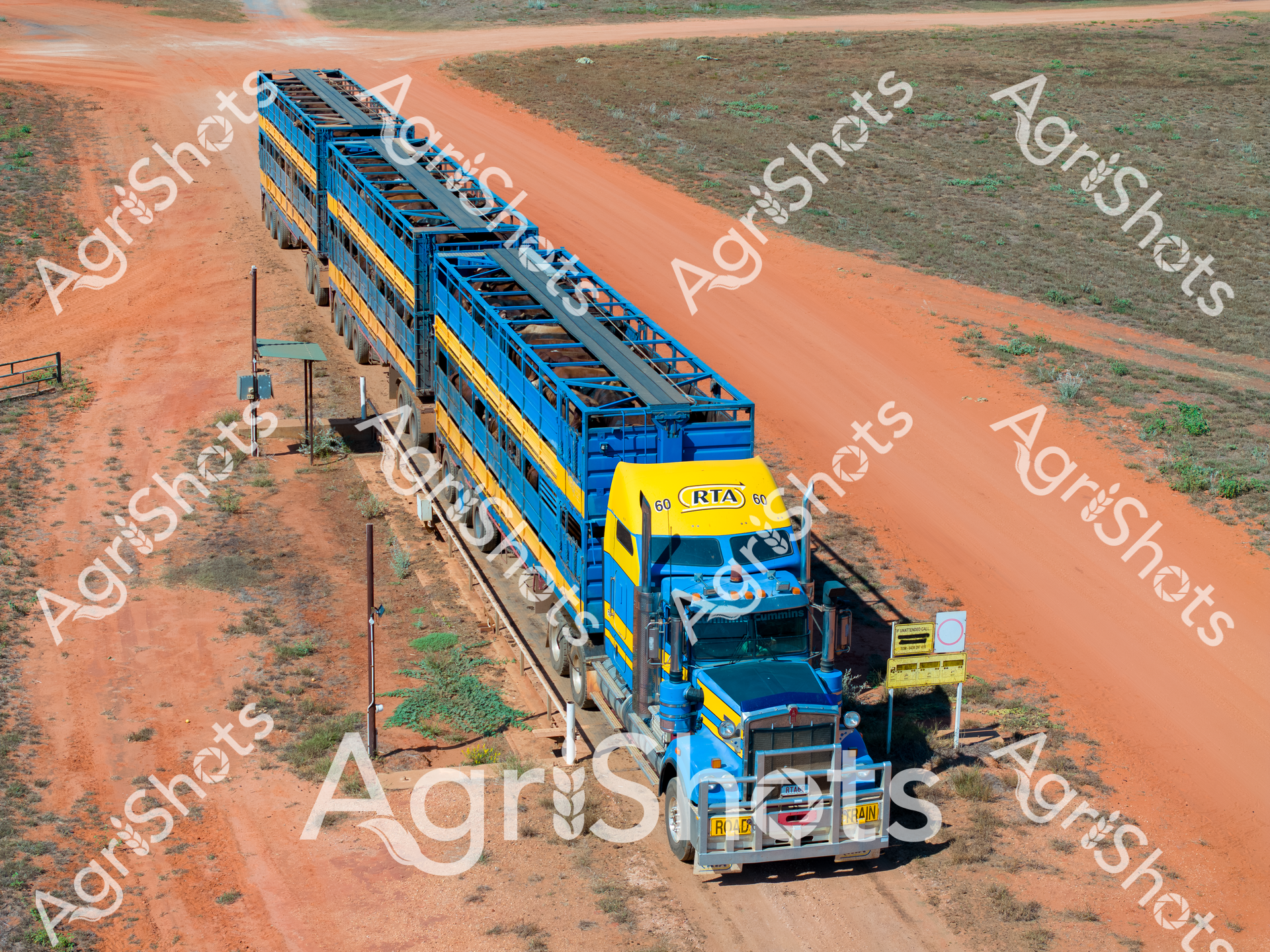
A massive blue and yellow RTA road train traverses the rusty-red dirt roads of Western Australia's Kimberley region, hauling multiple cattle trailers across the arid landscape. This heavy-duty truck, characteristic of the region's livestock transportation, navigates the remote station country with a load of cattle during the spring season.
 Image
Image
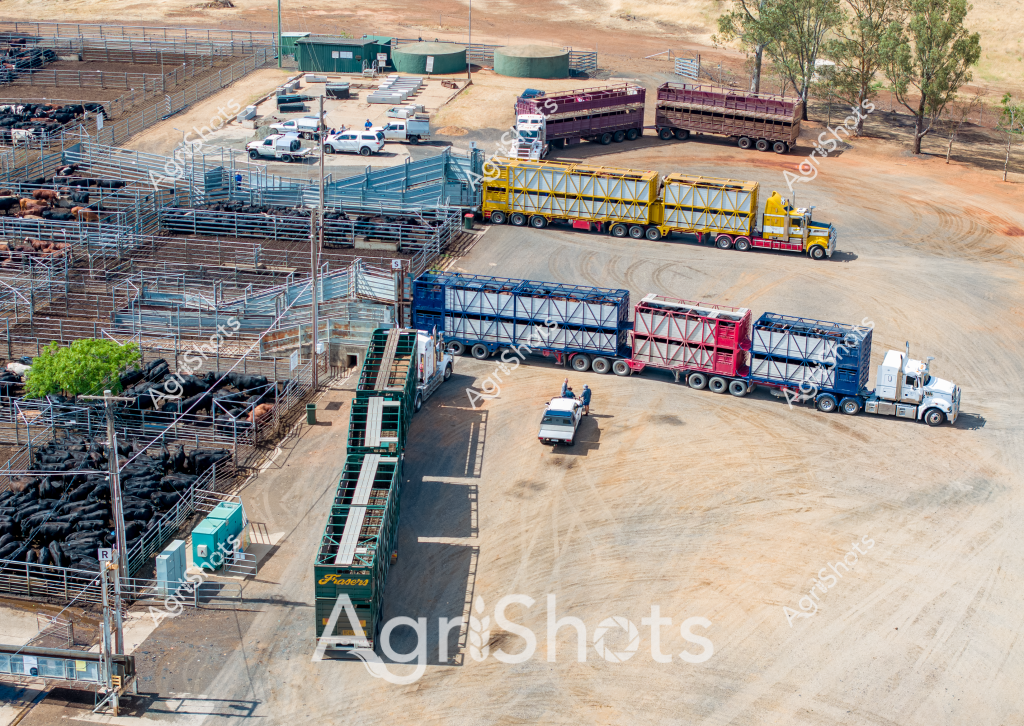
A bustling livestock transport hub captures the essence of Australia's robust cattle industry. Multiple large trucks with extended trailers are positioned within a dirt yard, surrounded by extensive metal cattle yards filled with black cattle. The scene is set in an arid landscape, with sparse trees and a green-roofed processing shed in the background, suggesting a remote cattle station in Western Australia or the Northern Territory. Yellow and white road trains with multiple linked trailers dominate the foreground, their robust design specifically engineered for long-distance livestock transportation across challenging rural terrain. The trucks are strategically parked near loading ramps, ready to transport cattle between properties or to processing facilities. Smaller utility vehicles are scattered around the yard, indicating active staff managing the livestock movement. The metal cattle yards are densely populated with black beef cattle, likely Angus or Wagyu breeds, standing in organized sections separated by robust galvanized steel fencing. The dusty, ochre-colored ground and sparse vegetation highlight the rugged environmental conditions typical of Australian cattle country. Sophisticated livestock handling infrastructure demonstrates the professional and efficient approach to cattle management in Australia's agricultural sector. This aerial view reveals the complex logistics and infrastructure required to support large-scale cattle transportation, showcasing the critical role of road transport in Australia's beef industry supply chain.
 Image
Image
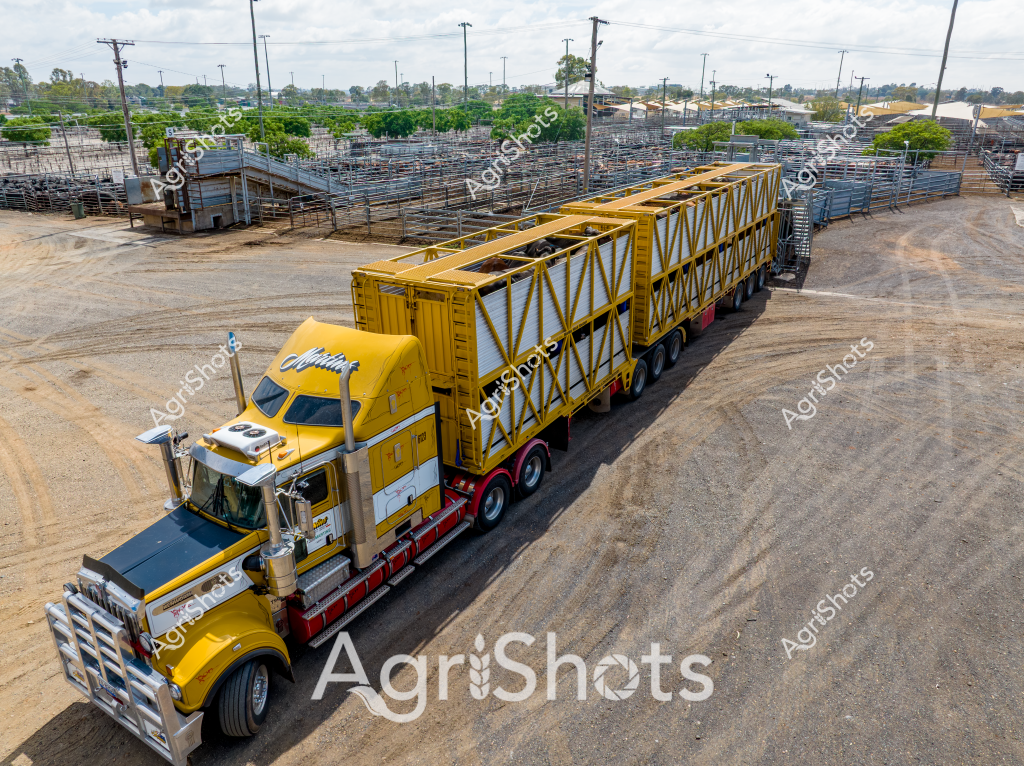
A powerful yellow road train truck stands ready in a rural livestock loading yard, its massive trailer configured for transporting livestock across vast Australian distances. The heavy-duty truck, featuring a striking yellow and white color scheme, is connected to an extended multi-tiered trailer designed specifically for cattle or sheep transportation. Surrounding the truck are multiple steel cattle yards with interconnected metal fencing, typical of large agricultural processing facilities in rural Australia. The dusty dirt ground and numerous utility poles in the background suggest this is a substantial livestock handling facility, likely located in a regional agricultural district. The truck's robust construction - with a prominent bullbar and high ground clearance - indicates it is purpose-built for challenging rural transportation routes across rugged Australian terrain. The expansive yard infrastructure and specialized transport vehicle represent the sophisticated livestock logistics systems that are critical to Australia's agricultural export industries.
 Image
Image
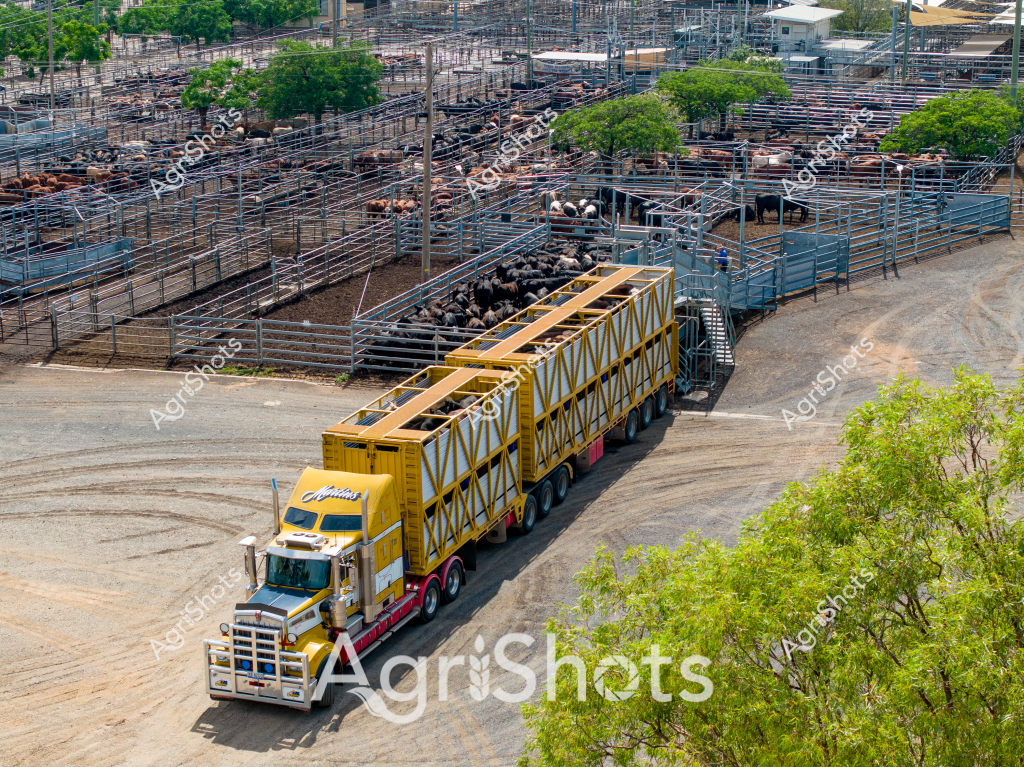
A sprawling cattle yard in the Australian outback features a striking yellow and white multi-axle livestock transport truck positioned amid numerous metal cattle pens. Numerous black beef cattle are densely grouped within the blue-gray metal holding yards, surrounded by trees and gravel roadways. The heavy-duty truck, likely a Kenworth or Western Star model designed for long-haul cattle transportation, has an extensive multi-level trailer configuration specifically engineered for moving large herds across vast distances. The industrial agricultural setting reveals the intricate infrastructure required for transporting livestock, with precisely engineered fencing, multiple interconnected yards, and specialized heavy transport vehicles purpose-built for the challenging Australian rural landscape. Mature green trees provide some natural backdrop to the intense industrial agricultural scene, highlighting the intersection of rugged terrain and sophisticated livestock management techniques. The yellow truck stands out dramatically against the earthy tones of the cattle yard, symbolizing the critical role of transportation in Australia's massive beef production industry.
 Image
Image
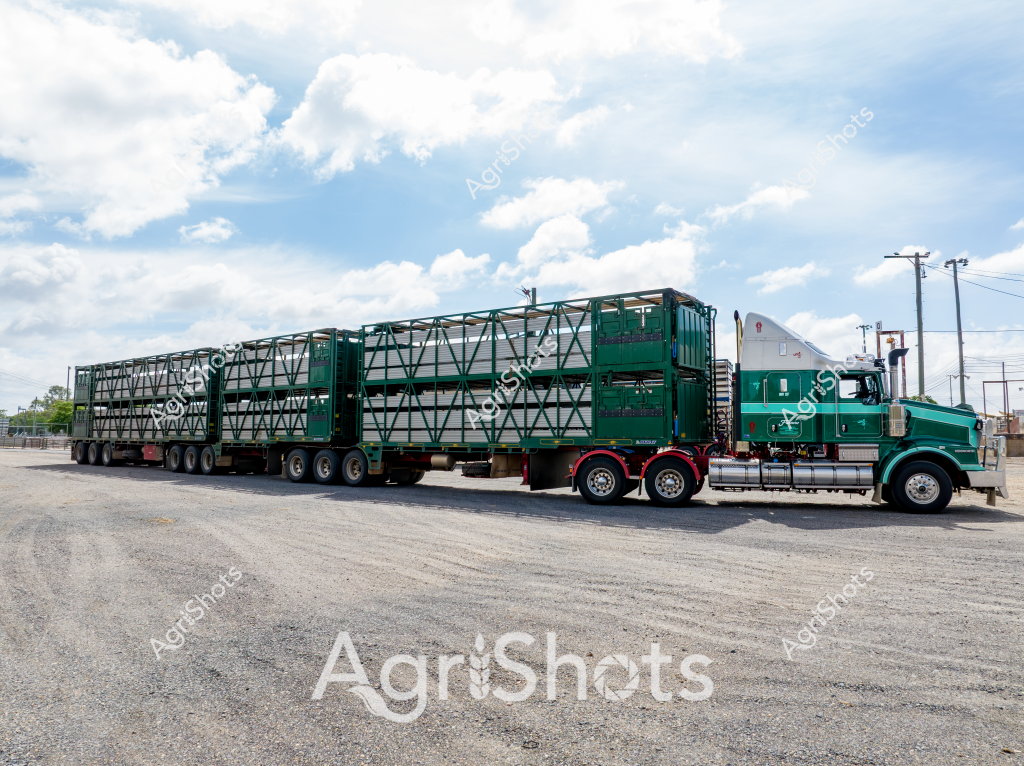
A massive green livestock transport truck with multiple trailers dominates this agricultural logistics scene. The heavy-duty truck, likely a Western Star model, is equipped with three-tiered stock crates designed for safely transporting large numbers of cattle or sheep across rural Australian landscapes. Parked on a gravelly yard with electrical poles and cloudy blue skies in the background, the truck represents the critical transportation infrastructure of Australia's livestock industry. The green and white color scheme of the truck and trailers suggests a professional livestock transport operation, with robust engineering specifically designed to handle long-distance animal transportation in challenging outback conditions. The multiple-trailer configuration indicates the truck's capacity to move significant numbers of livestock efficiently between stations, saleyards, or to market. The image captures the scale and specialized nature of agricultural transportation in Australia, where vast distances and large herds require sophisticated logistics and purpose-built equipment. The truck's sturdy construction and multi-axle design reflect the demanding requirements of moving livestock across some of the world's most challenging agricultural terrains.
 Image
Image
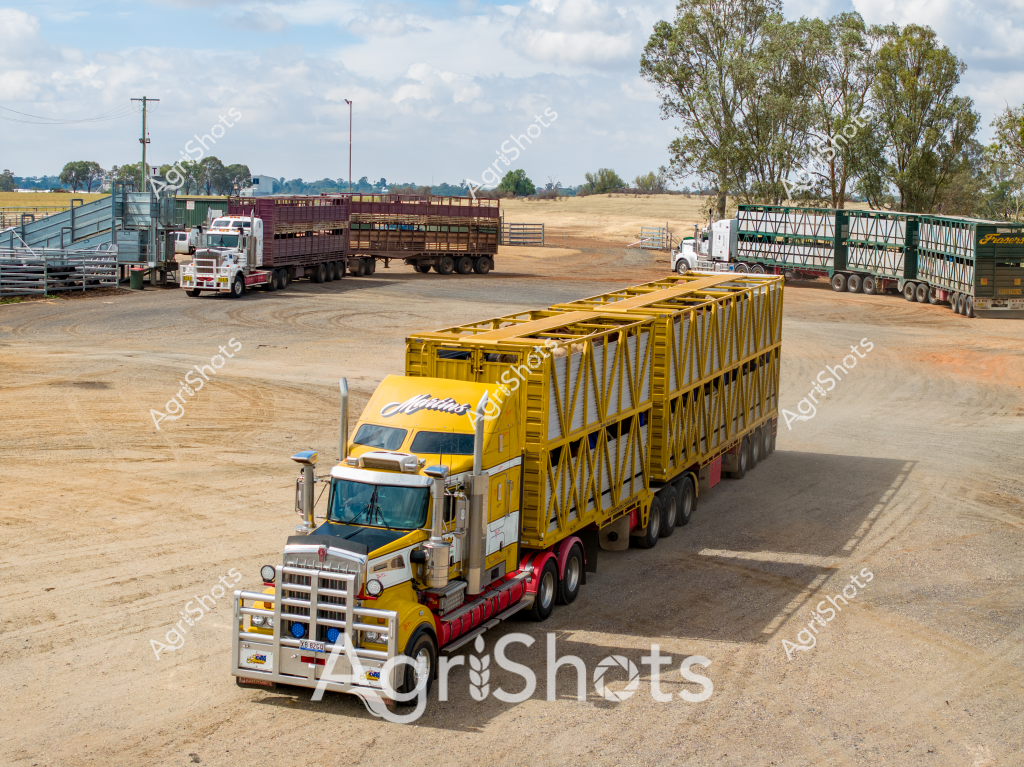
A bright yellow Roadtrain truck with an impressive multi-trailer livestock configuration dominates this rural transport yard in what appears to be an Australian agricultural setting. The heavy-duty truck, featuring a distinctive yellow cabin and robust bullbar, is hauling multiple yellow-framed stock crates designed for transporting livestock across long distances. Surrounding the truck are other similar livestock transport vehicles parked on a dusty, compacted earth yard, with eucalyptus trees and rural landscape visible in the background. Industrial livestock transportation infrastructure is evident, with loading ramps and gates positioned around the yard, highlighting the critical role of specialized trucks in moving cattle, sheep, or other farm animals across vast Australian agricultural regions. The scene captures the robust and essential nature of livestock logistics, showcasing the heavy-duty equipment required to support Australia's extensive agricultural supply chain.
 Image
Image
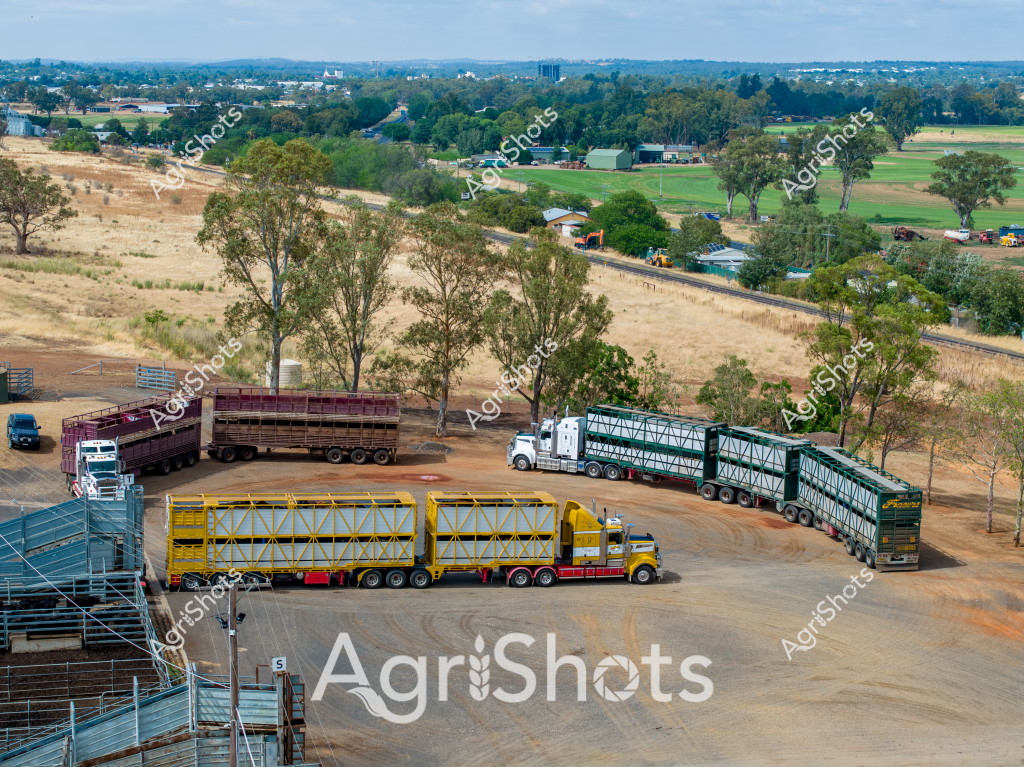
A detailed aerial view of a livestock transport depot in rural Australia, showcasing multiple large semi-trailers designed for cattle and livestock movement. The trucks feature distinctive yellow, white, and green trailers with multi-tiered livestock crates, parked on a dusty dirt yard surrounded by eucalyptus trees and expansive paddocks. The landscape reveals a patchwork of dry golden grasslands and green agricultural fields stretching to the distant horizon, with trees and rural infrastructure dotting the background. These specialized livestock transport vehicles, likely used for moving cattle between stations or to market, demonstrate the sophisticated logistics of Australia's extensive beef and livestock industry. The scene captures the scale and complexity of agricultural transportation in a typical rural Australian setting, with the multi-trailer trucks highlighting the substantial distances and specialized equipment required to move livestock across vast agricultural regions.
 Image
Image
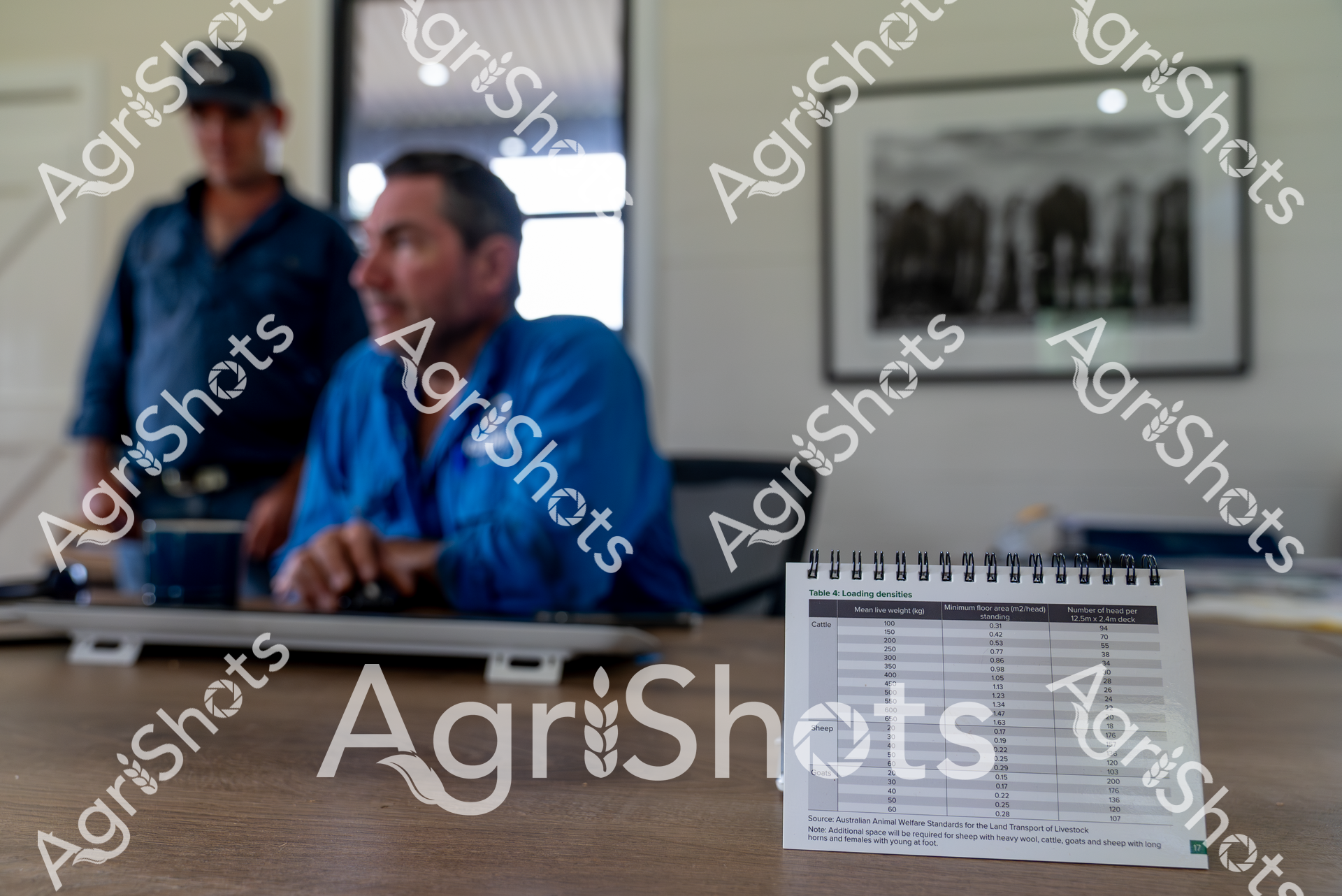
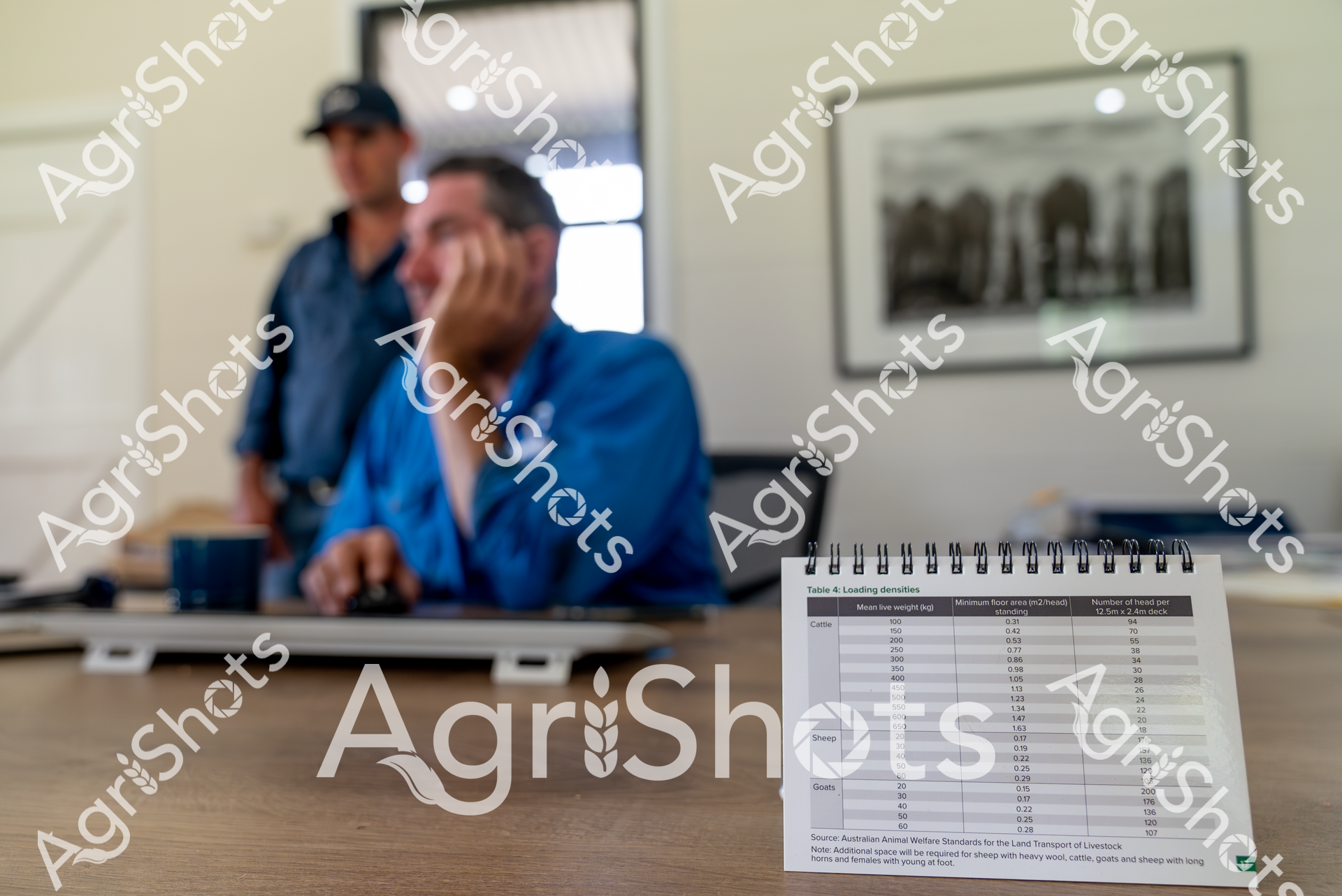
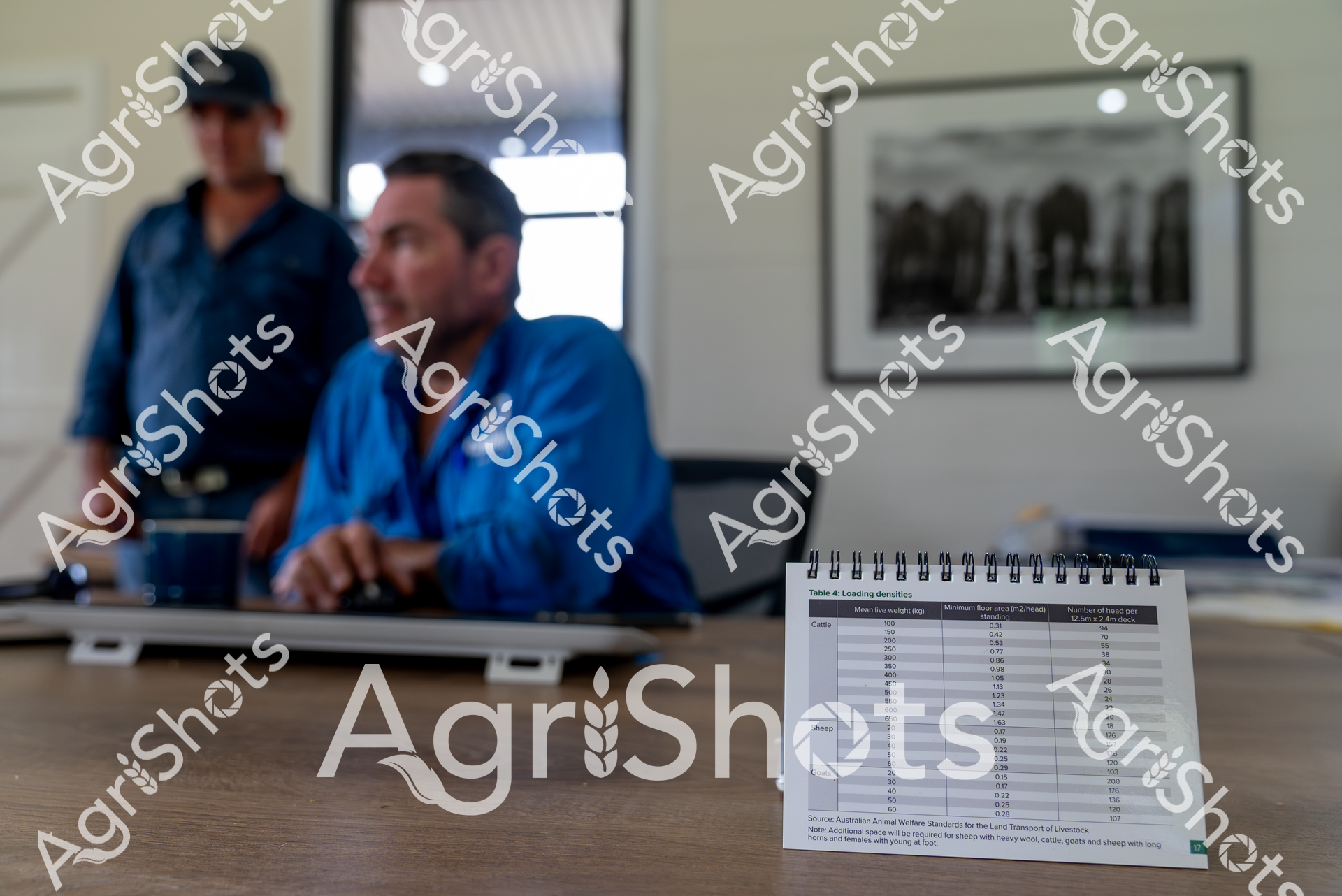
A pivotal moment of agricultural planning unfolds in a bright, professional office setting, where two workers in blue shirts collaborate over livestock transportation logistics. In the foreground, a detailed loading density chart for cattle provides critical data on transportation requirements, highlighting the precision and care inherent in modern livestock management. The image captures the strategic side of rural operations, with one worker seated and focused, while another stands attentively in the background, suggesting a collaborative approach to agricultural planning. Soft natural light filters through the windows, illuminating a framed black and white photograph that adds depth to the professional environment. The crisp blue uniforms and clean office space reflect the sophisticated, data-driven nature of contemporary agricultural operations, bridging traditional farming practices with advanced logistical planning.
 Image
Image
A focused professional in a vibrant blue work shirt sits at a desk, intently studying a livestock loading density chart that details critical animal transport specifications. Behind him, a colleague in a dark cap provides silent support, creating a sense of collaborative agricultural expertise. The crisp, well-lit office environment suggests a modern agricultural management setting, with a black and white photographic artwork of rural scenes hanging in the background, reinforcing the connection to farming heritage. The loading density table, meticulously printed and positioned prominently in the foreground, reveals precise calculations for transporting cattle of various weights, highlighting the technical precision required in livestock logistics. Soft natural light filters through the space, casting gentle shadows and emphasizing the careful, methodical approach to animal welfare and transportation planning. This image captures the intersection of agricultural science, professional expertise, and compassionate livestock management, embodying the meticulous standards of contemporary Australian agricultural practice.
 Image
Image
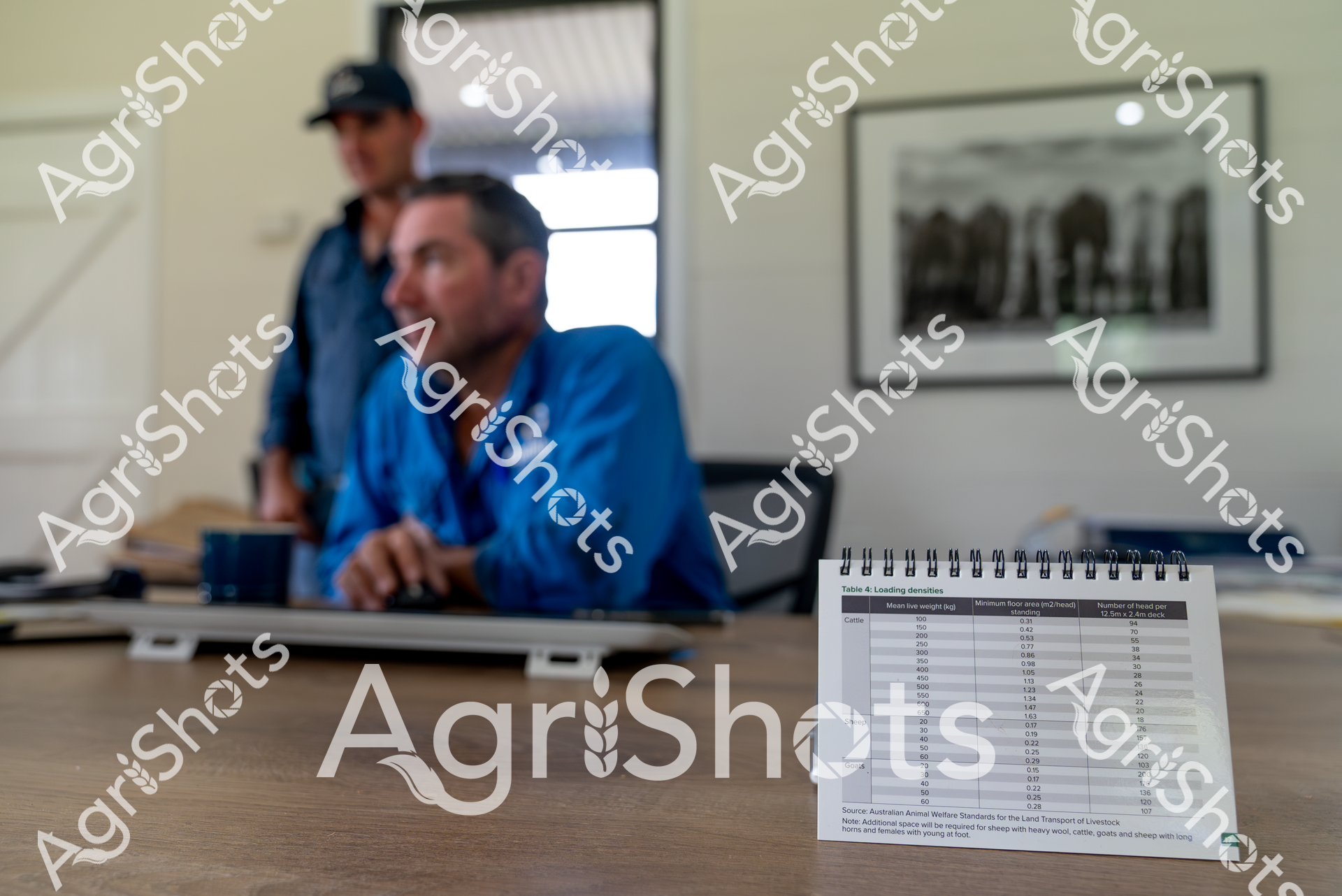
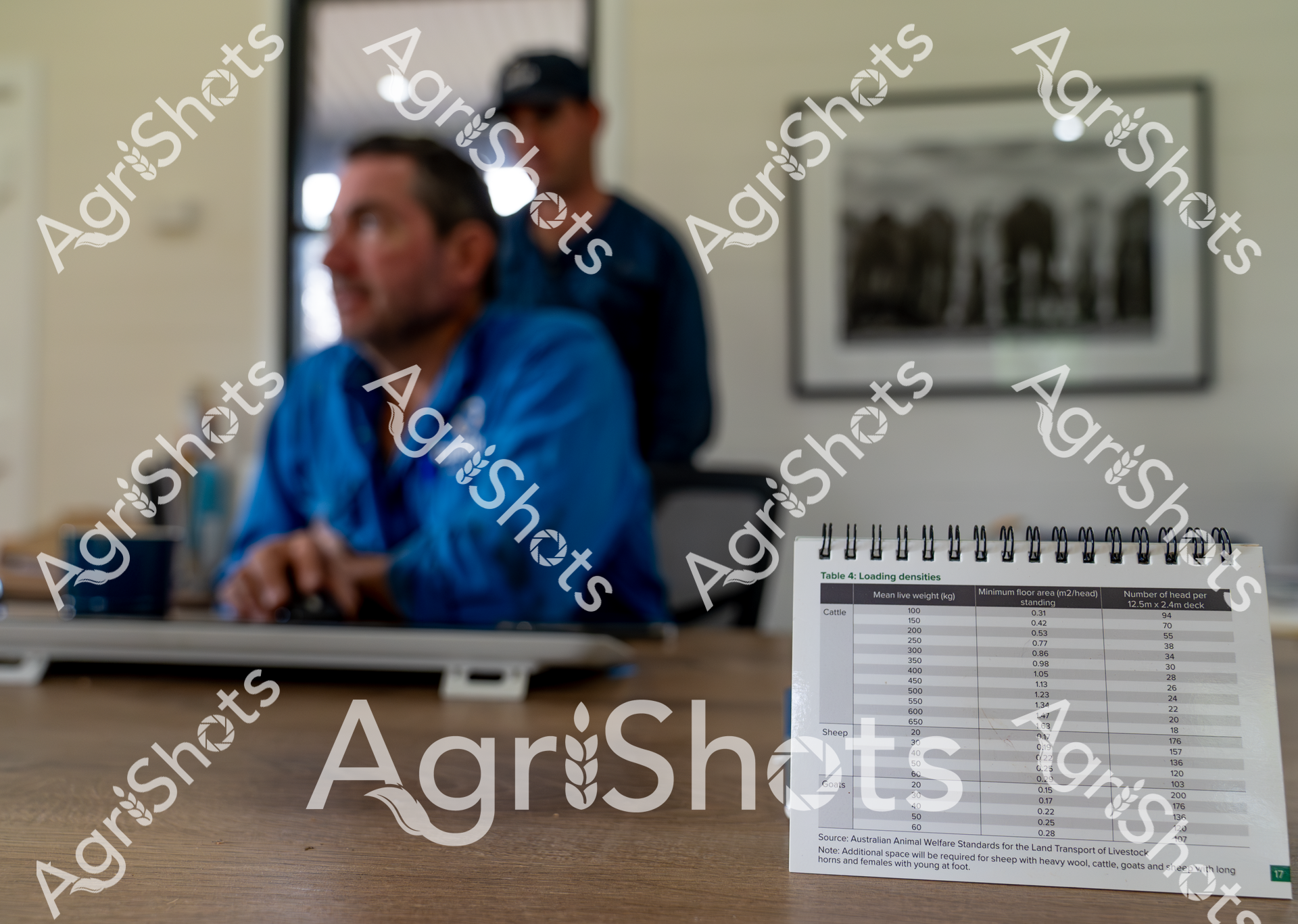
An agricultural specialist leans forward in concentration, studying a livestock loading density chart at a desk in a rural office. Wearing a blue work shirt, he appears deep in thought, with another worker standing in the background wearing a cap. A framed black and white photograph hangs on the wall, adding a sense of agricultural heritage to the professional setting. The detailed chart provides crucial information on maximum live weight, minimum floor area, and recommended head count for cattle, sheep, and goats during transportation, highlighting the meticulous planning required in livestock management. Soft natural light filters through a window, illuminating the workspace and casting a contemplative atmosphere over the scene. This image captures the careful consideration and expertise behind modern agricultural logistics, showcasing the behind-the-scenes planning that ensures animal welfare during transportation.
 Image
Image
In the crisp, professional setting of an agricultural office, a focused individual in a vibrant blue work shirt studies a detailed livestock loading density chart. The table, meticulously laid out, provides critical information on space requirements for cattle transport, ranging from 150kg to 600kg live weight. A colleague in a dark cap stands in the background, silhouetted against the soft, neutral tones of the office interior. A framed black and white photograph of what appears to be an agricultural scene hangs on the wall, adding depth and context to the workspace. The scene captures the precision and careful planning essential in modern livestock management, with the loading density chart serving as a key reference tool for ensuring animal welfare during transportation. The muted colors and sharp focus convey a sense of professionalism and attention to detail characteristic of contemporary agricultural practices in Queensland.
 Image
Image
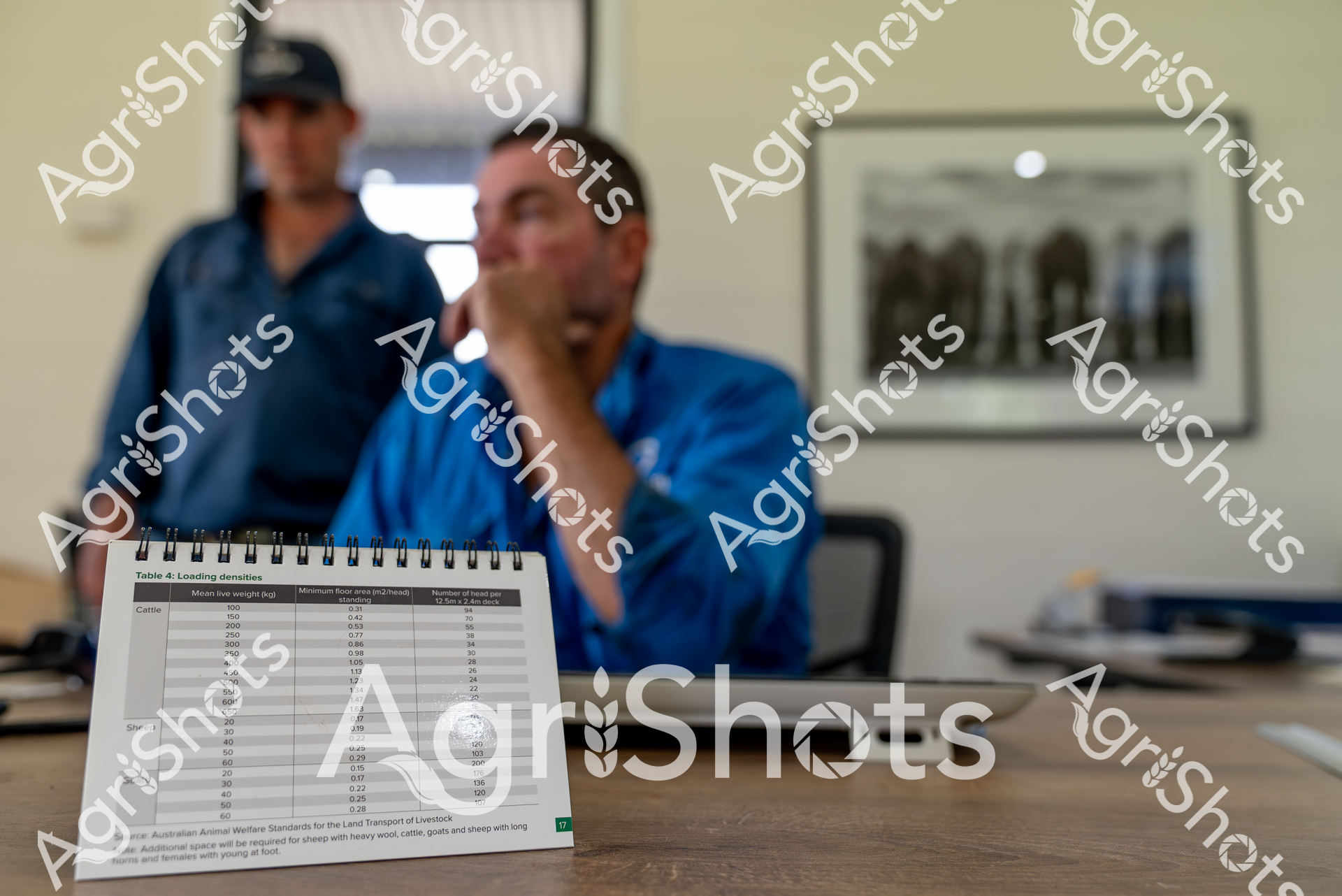
In the quiet intensity of a rural office, two agricultural professionals in deep blue uniforms huddle around a critical livestock transport reference document. The focal point is a detailed loading density chart for cattle, meticulously outlining space requirements for animals of varying weights and ages. Soft natural light filters through the space, highlighting the careful concentration of the workers as they review transportation standards. A framed photograph of what appears to be livestock or farm workers hangs subtly in the background, reinforcing the agricultural context. The scene captures the technical precision and careful planning essential to ethical and safe livestock transportation, with the chart serving as a key operational guide for ensuring animal welfare during transit. Every detail speaks to the professionalism and thoughtful approach of modern agricultural management, where scientific standards and compassionate practice intersect.
 Image
Image
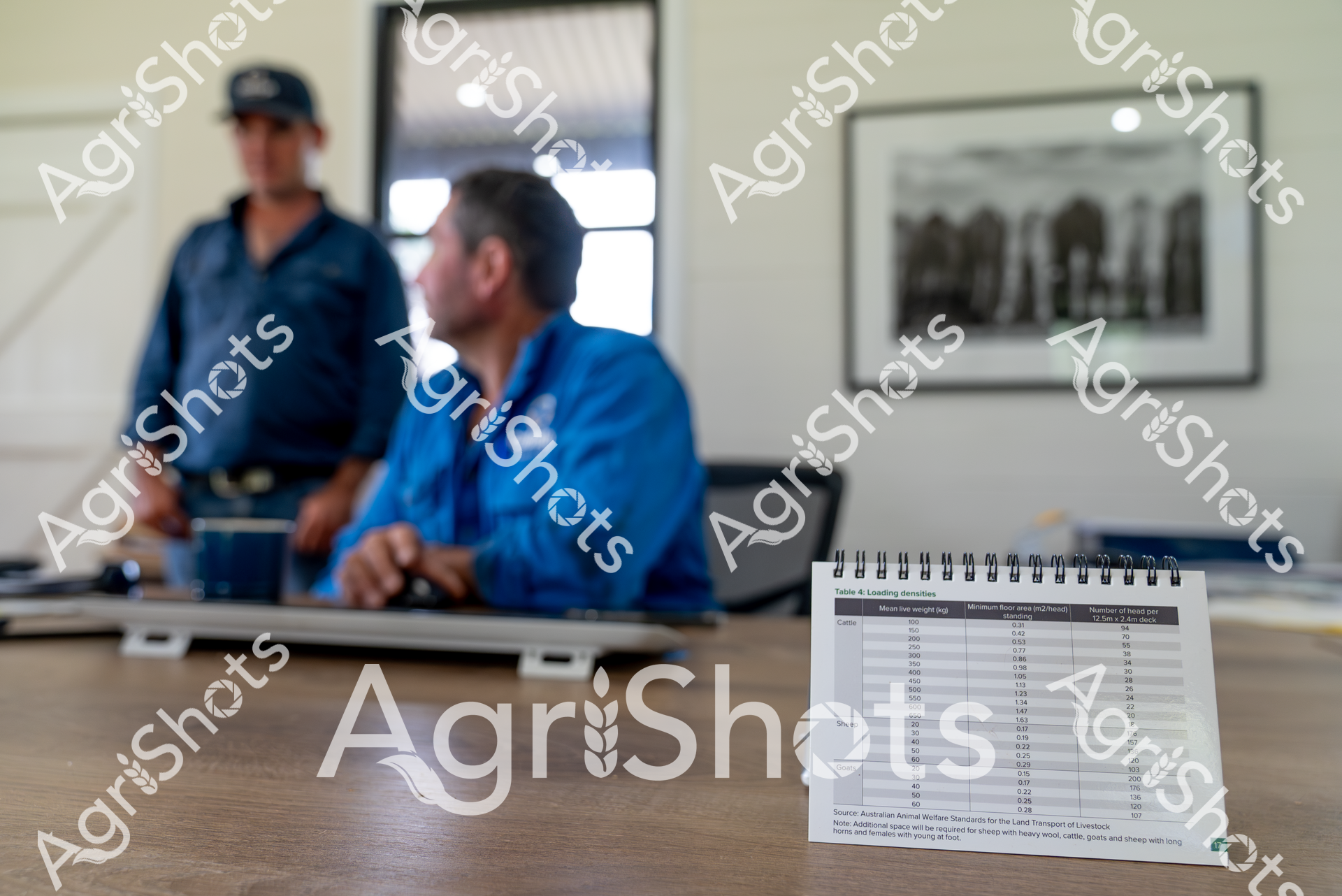
Australian livestock transport planning unfolds with precision in this agricultural management scene. Two professional workers in blue work attire collaborate in a crisp, well-lit office space, with a detailed cattle loading density chart prominently displayed in the foreground. The chart meticulously outlines transport specifications for different cattle weight categories, revealing the careful mathematical planning behind ethical livestock movement. Framed black and white photography of rural scenes hangs on the wall, subtly reinforcing the agricultural context of their work. A senior worker in a dark cap stands attentively, while another reviews documentation at a clean, modern workstation, suggesting a methodical approach to livestock logistics. The neutral color palette and sharp focus communicate a sense of professionalism, expertise, and the sophisticated management behind Australia's critical agricultural supply chain.
 Image
Image
Inside a contemporary agricultural office, two professionals in blue work shirts collaborate over livestock transportation logistics. A detailed loading density chart for cattle sits prominently in the foreground, revealing precise measurements for animal transport regulations. Soft natural light filters through windows, illuminating a professional workspace with a framed black and white photographic artwork hanging in the background. One individual appears to be seated at a desk, carefully reviewing documentation, while another stands nearby, suggesting a collaborative consultation about livestock welfare and transportation standards. The crisp blue uniforms and clean, organized environment communicate a sense of methodical professionalism characteristic of modern agricultural management. The chart's meticulous data reflects the Australian agricultural sector's commitment to animal welfare, detailing minimum floor space requirements and load densities for different livestock weights.
 ▶ Video
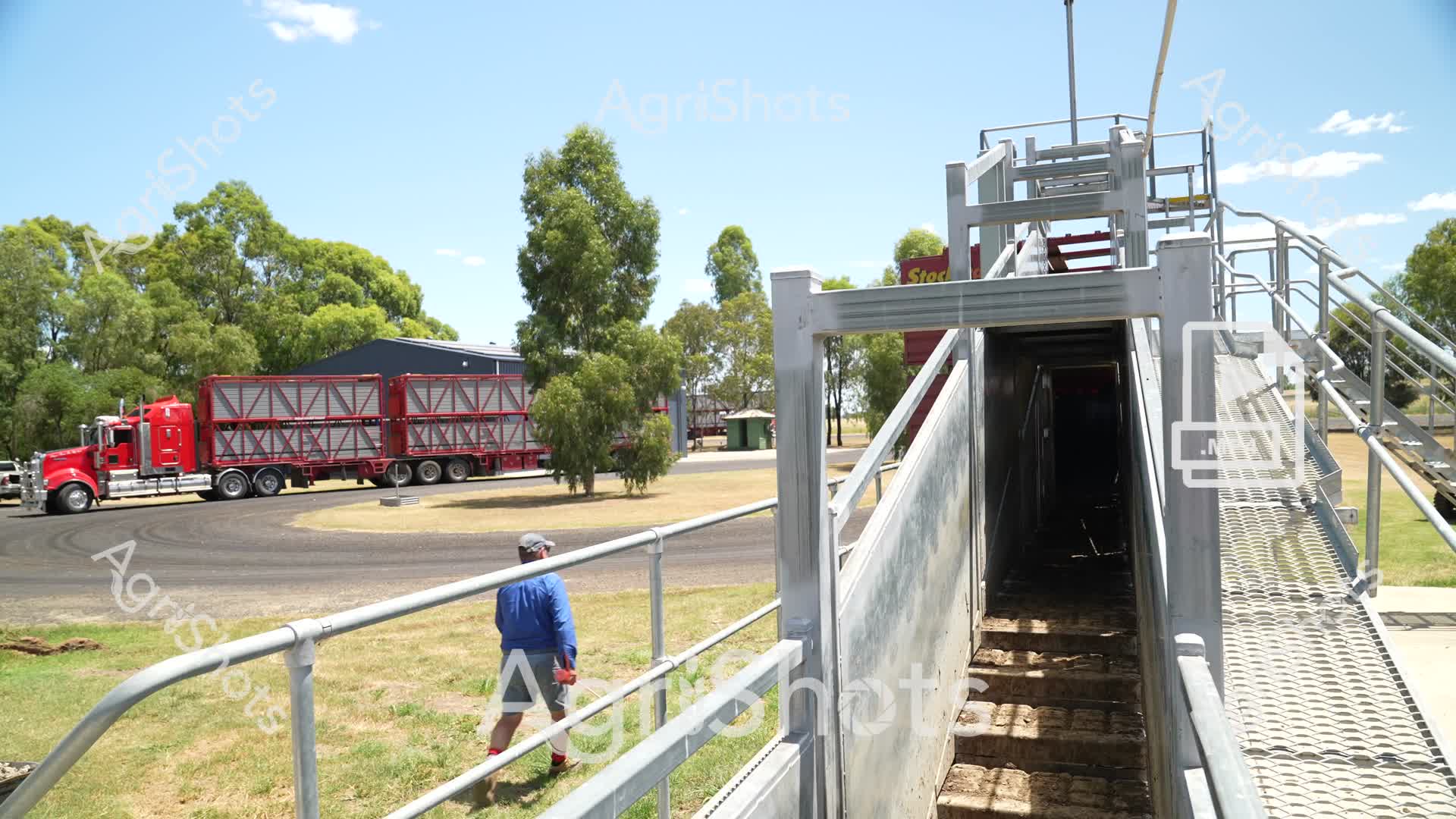
A crimson Kenworth prime mover with an expansive red livestock trailer stands poised at the rural livestock loading facility, casting a bold silhouette against the sun-drenched Australian pastoral landscape. A worker in a vivid blue shirt traverses the meticulously engineered metal loading ramp, a critical infrastructure point in the agricultural supply chain that facilitates the careful movement of livestock. Surrounding gum trees provide a lush green backdrop, their canopies softening the industrial precision of the steel infrastructure. The loading ramp - a marvel of agricultural engineering - features galvanized steel walkways, mesh flooring, and strategic railings designed to guide and support stock during transport, minimizing stress and ensuring animal welfare. Bright midday sunlight illuminates the scene, highlighting the operational readiness of this professional livestock handling station, where precision, safety, and efficiency converge in the critical process of moving agricultural assets. The immaculate condition of the truck and loading infrastructure speaks to the sophisticated, professional approach of modern Australian livestock transportation.
 ▶ Video
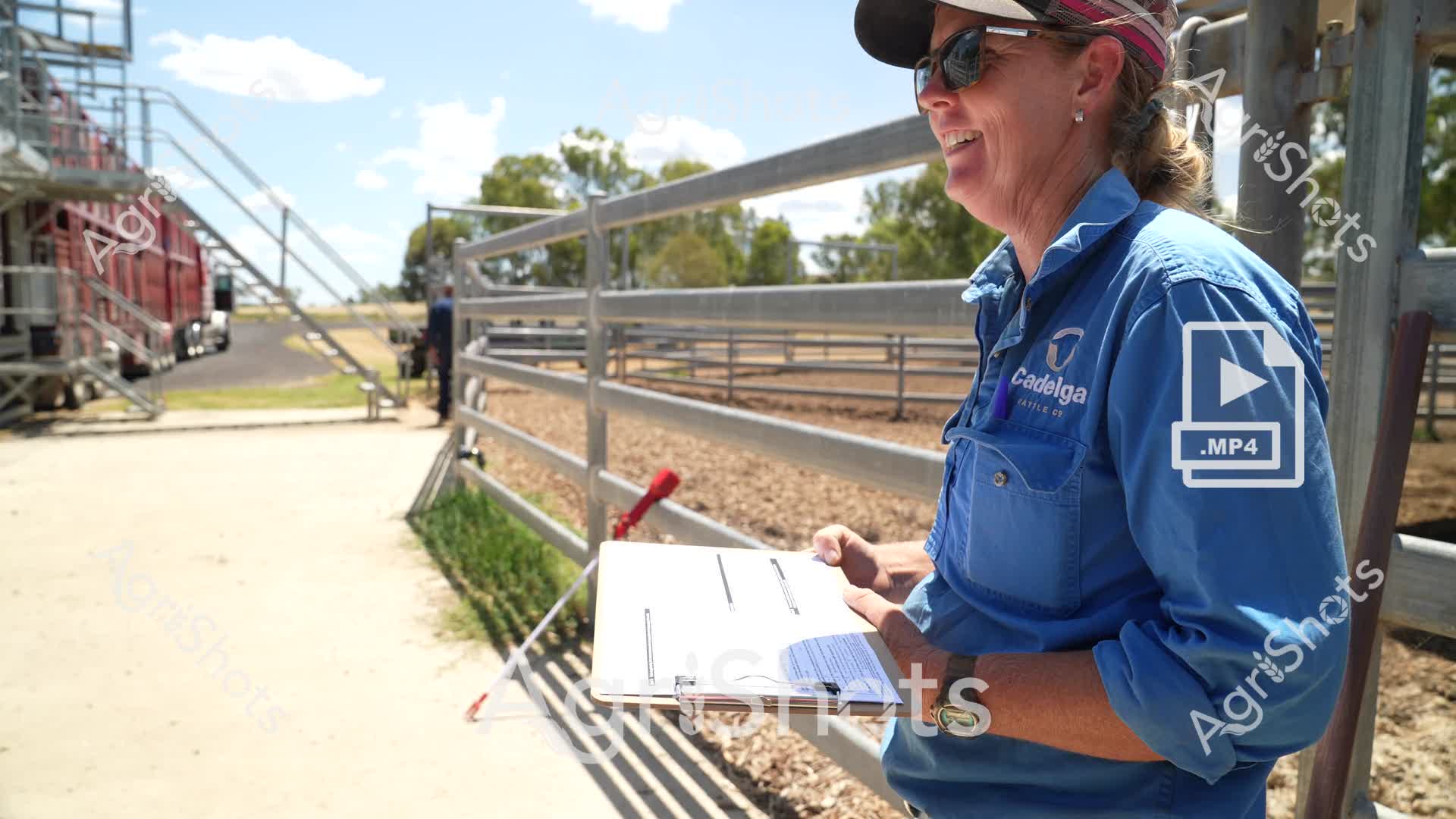
A Cadelga agricultural specialist meticulously reviews livestock transport documentation at a rural cattle loading facility. Wearing a crisp blue work shirt and protective sunglasses, she stands confidently beside a metal livestock loading ramp, her clipboard in hand. The bright midday sunlight illuminates the gravel pathway and steel infrastructure, highlighting the careful preparation involved in cattle transportation. Cattle loading facilities like these are critical infrastructure in Australia's beef production supply chain, ensuring animal welfare and regulatory compliance during transit. In the background, a livestock truck awaits, positioned strategically near the loading zone, ready to transport cattle to their next destination. The scene captures the professionalism and attention to detail characteristic of modern agricultural operations, where technology, regulatory knowledge, and practical expertise converge to support efficient livestock management.
 ▶ Video
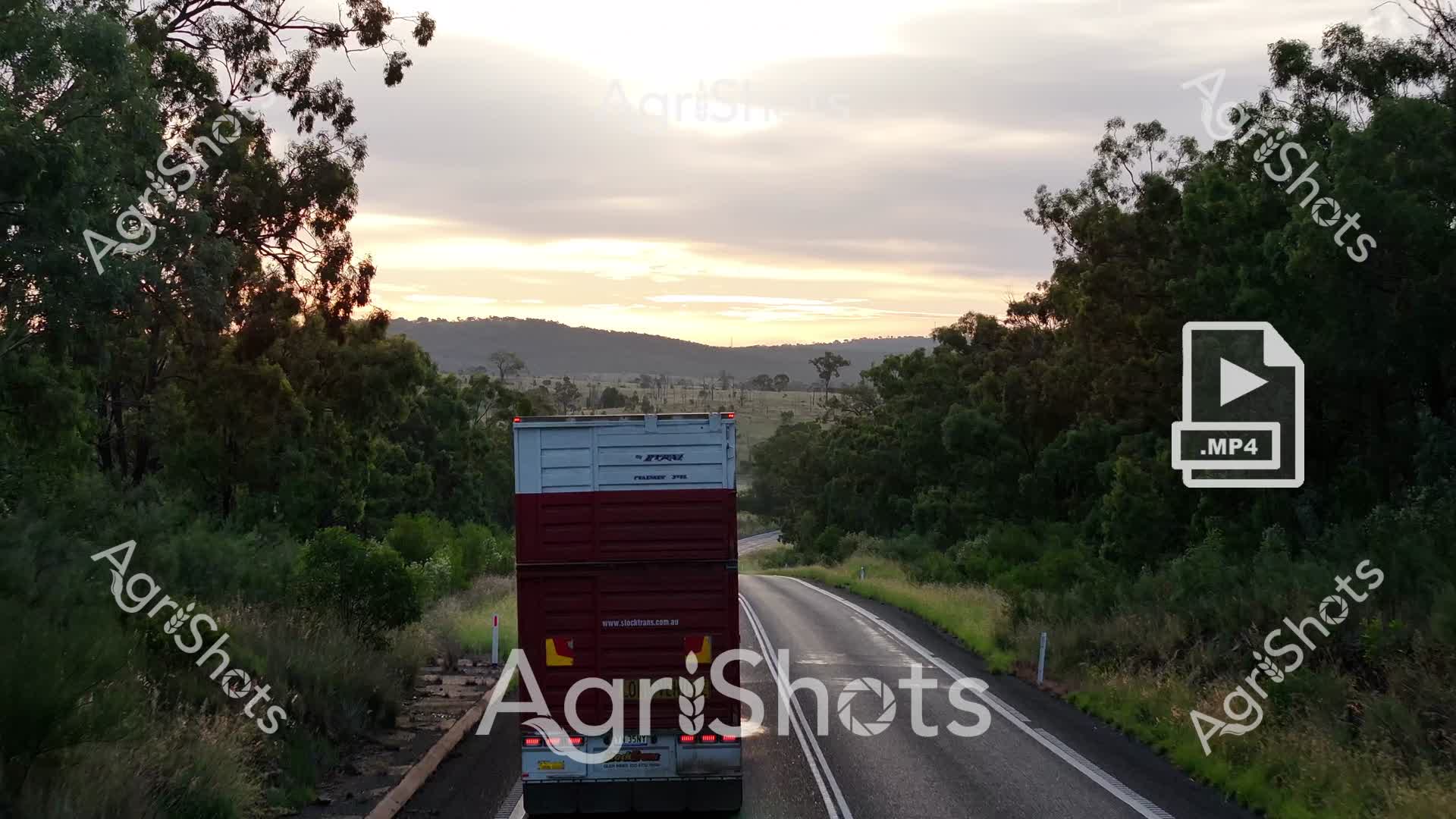
A livestock transport truck navigates a winding rural highway at sunset, capturing the quintessential Australian agricultural landscape. The two-level livestock trailer, painted in maroon and white, travels through a verdant corridor of eucalyptus trees and native bushland, with rolling hills silhouetted against the soft golden sky. The road winds gently through the landscape, marked by white edge lines and surrounded by dense vegetation that speaks to the Australian countryside's rugged beauty. Soft evening light bathes the scene, creating a serene atmosphere that highlights the critical role of transportation in agricultural supply chains. The truck appears to be carefully transporting cattle or sheep, a common sight in rural Queensland's expansive agricultural regions. This image encapsulates the interconnectedness of Australia's farming infrastructure, where long-distance transport is essential to moving livestock between properties, markets, and processing facilities.