Results for “insect”
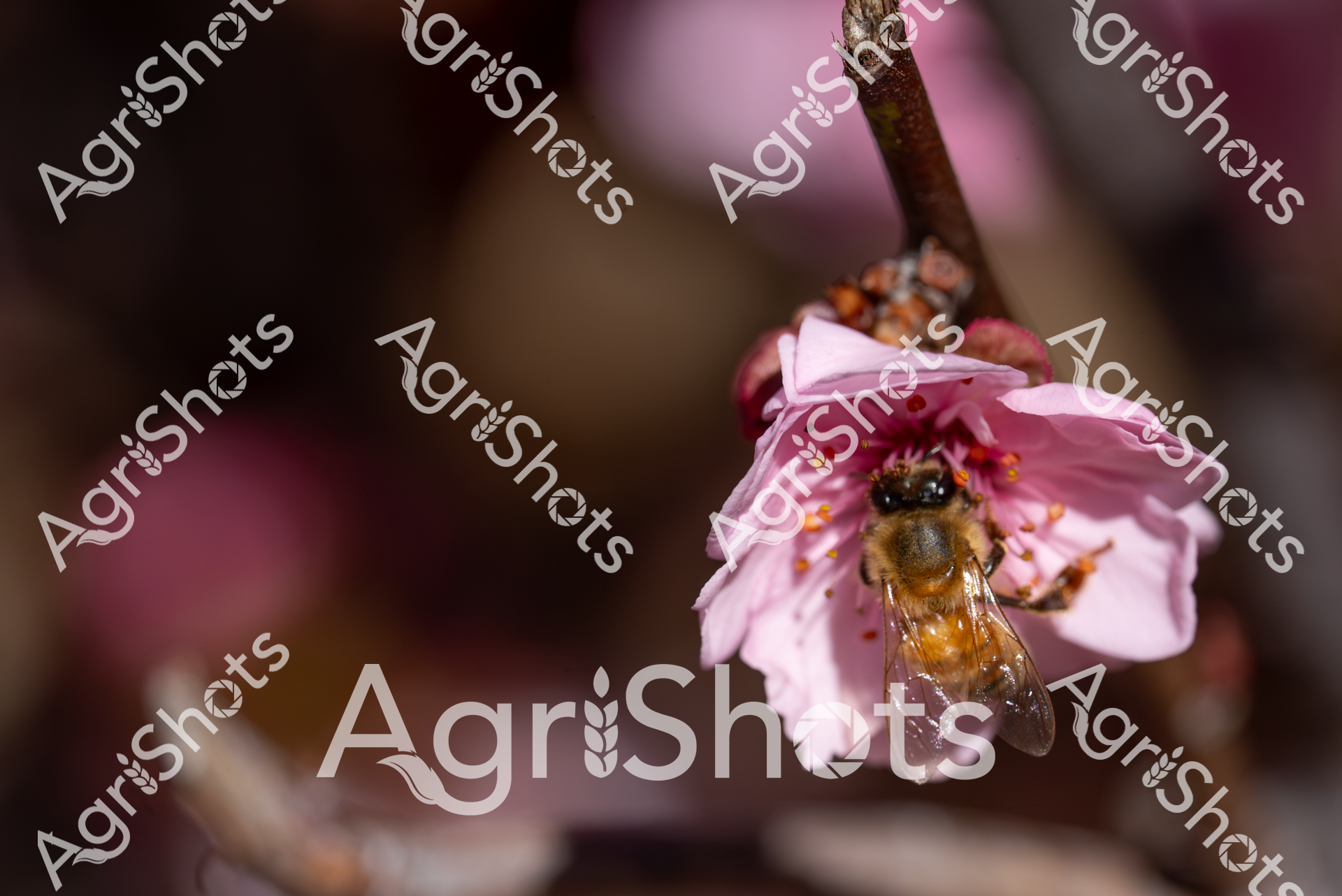
A honey bee delicately perches on a soft pink blossom, collecting pollen during the vibrant spring season in Western Australia. The detailed macro shot captures the intricate relationship between pollinators and flowering plants, showcasing the bee's fuzzy body against the delicate flower petals. Image

A honey bee delicately perches on a soft pink blossom, collecting pollen during the vibrant spring season in Western Australia. The detailed macro shot captures the intricate relationship between pollinators and flowering plants, showcasing the bee's fuzzy body against the delicate flower petals.
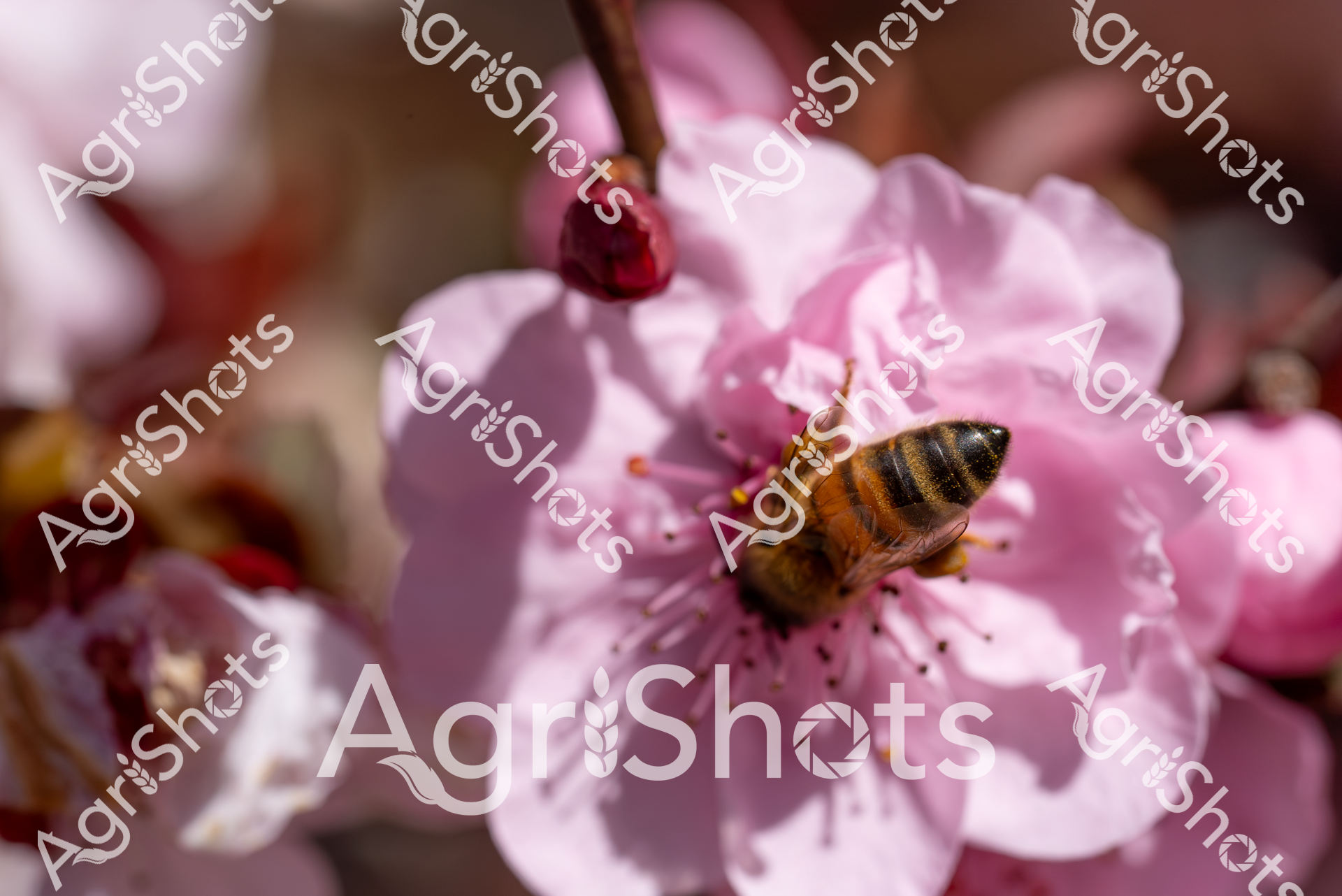
A honey bee collects nectar from delicate pink cherry or plum blossoms in full bloom during springtime. The image captures the intricate details of the bee's striped body against the soft, ruffled petals, highlighting the crucial role of pollinators in the natural ecosystem of Western Australia. Image

A honey bee collects nectar from delicate pink cherry or plum blossoms in full bloom during springtime. The image captures the intricate details of the bee's striped body against the soft, ruffled petals, highlighting the crucial role of pollinators in the natural ecosystem of Western Australia.
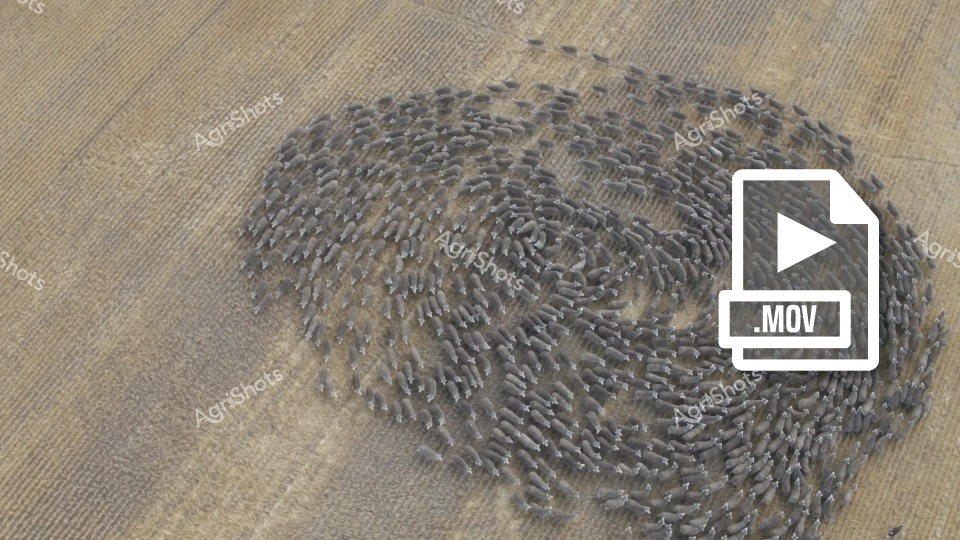
This remarkable aerial footage captures a fascinating swarm of locusts moving in an intricate, spiraling pattern across a dry agricultural landscape. The video clip reveals hundreds of insects clustering together, creating a mesmerizing circular formation that appears almost like a living, breathing organism against the dusty golden-brown ground. The swarm moves with collective intelligence, maintaining a dense, circular shape that demonstrates the remarkable behavioral patterns of these agricultural insects.

The footage provides a stunning overhead perspective, showing the locusts' coordinated movement across what seems to be a harvested crop field or dry paddock. Their grey-brown bodies create a dense, textured mass that undulates and shifts, revealing the incredible collective behavior of these insects. The circular pattern suggests a complex navigational strategy, with the swarm moving as a unified entity across the arid terrain.

The clip offers a remarkable view of a natural phenomenon that can have significant implications for agricultural landscapes, capturing the raw, somewhat unsettling beauty of a locust swarm in motion. The uniform color and synchronized movement of the insects create a mesmerizing visual spectacle that highlights the intricate dynamics of insect collective behavior in an agricultural setting. ▶ Video

This remarkable aerial footage captures a fascinating swarm of locusts moving in an intricate, spiraling pattern across a dry agricultural landscape. The video clip reveals hundreds of insects clustering together, creating a mesmerizing circular formation that appears almost like a living, breathing organism against the dusty golden-brown ground. The swarm moves with collective intelligence, maintaining a dense, circular shape that demonstrates the remarkable behavioral patterns of these agricultural insects. The footage provides a stunning overhead perspective, showing the locusts' coordinated movement across what seems to be a harvested crop field or dry paddock. Their grey-brown bodies create a dense, textured mass that undulates and shifts, revealing the incredible collective behavior of these insects. The circular pattern suggests a complex navigational strategy, with the swarm moving as a unified entity across the arid terrain. The clip offers a remarkable view of a natural phenomenon that can have significant implications for agricultural landscapes, capturing the raw, somewhat unsettling beauty of a locust swarm in motion. The uniform color and synchronized movement of the insects create a mesmerizing visual spectacle that highlights the intricate dynamics of insect collective behavior in an agricultural setting.
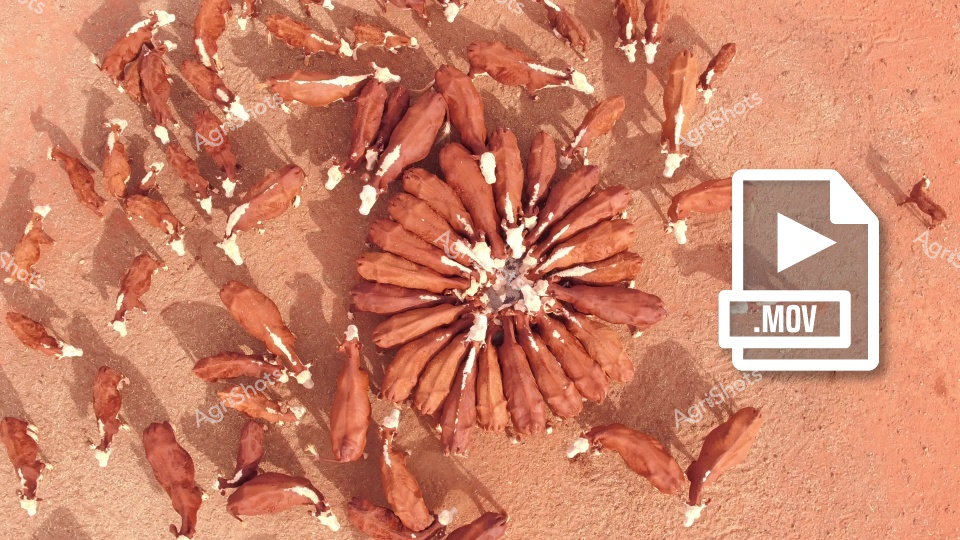
This fascinating video footage captures an extraordinary close-up of desert locust swarm dynamics, revealing intricate biomechanical patterns of collective movement. The clip features dozens of rusty-brown locusts arranged in a mesmerizing radial formation, with white-tipped antennae creating a delicate contrast against the terracotta-colored sandy ground. Each insect is precisely positioned, forming a living flower-like structure with a central point from which the bodies radiate outwards in an almost mathematically perfect arrangement.

The video likely documents a critical moment in locusts' swarming behavior, showcasing their remarkable organizational instincts and collective intelligence. The warm, earthy color palette suggests an arid environment typical of regions like northern Australia or the central desert zones where such swarm phenomena occur. The precise positioning and synchronicity of the insects hint at complex communication and navigation strategies that enable these creatures to move and organize with extraordinary precision.

This agricultural documentary footage provides a rare, intimate perspective on one of nature's most fascinating collective animal behaviors, offering researchers and viewers an unprecedented view of locust swarm mechanics and group movement patterns. The visual composition transforms what might typically be seen as a agricultural pest into a stunning display of natural geometry and collective animal intelligence. ▶ Video

This fascinating video footage captures an extraordinary close-up of desert locust swarm dynamics, revealing intricate biomechanical patterns of collective movement. The clip features dozens of rusty-brown locusts arranged in a mesmerizing radial formation, with white-tipped antennae creating a delicate contrast against the terracotta-colored sandy ground. Each insect is precisely positioned, forming a living flower-like structure with a central point from which the bodies radiate outwards in an almost mathematically perfect arrangement. The video likely documents a critical moment in locusts' swarming behavior, showcasing their remarkable organizational instincts and collective intelligence. The warm, earthy color palette suggests an arid environment typical of regions like northern Australia or the central desert zones where such swarm phenomena occur. The precise positioning and synchronicity of the insects hint at complex communication and navigation strategies that enable these creatures to move and organize with extraordinary precision. This agricultural documentary footage provides a rare, intimate perspective on one of nature's most fascinating collective animal behaviors, offering researchers and viewers an unprecedented view of locust swarm mechanics and group movement patterns. The visual composition transforms what might typically be seen as a agricultural pest into a stunning display of natural geometry and collective animal intelligence.
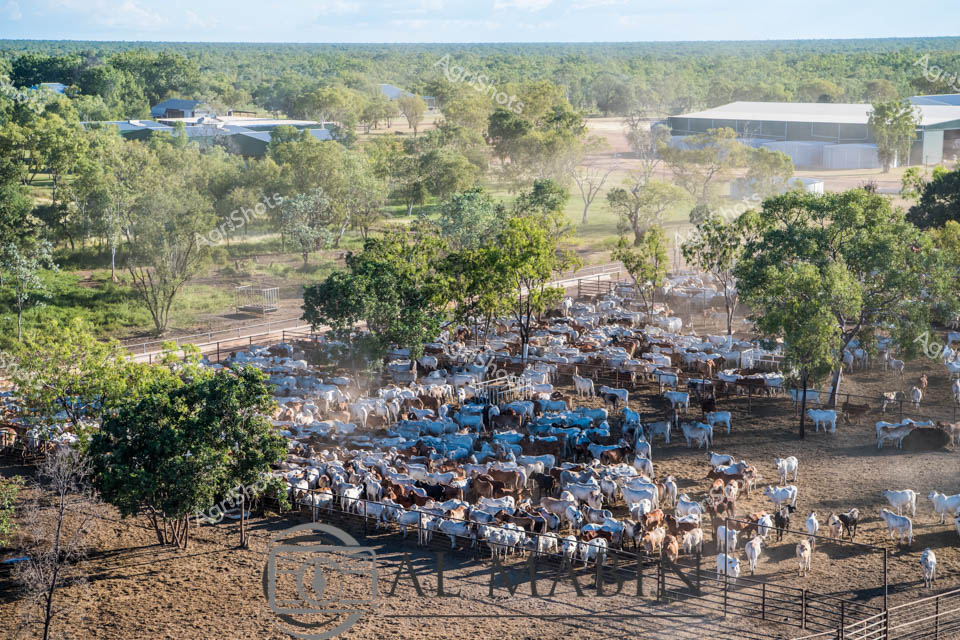
Brahman cattle cluster in a tightly packed stockyard under the golden morning light of the Northern Territory. Pristine white and light grey animals with distinctive humped shoulders stand clustered across the dusty red earth, framed by eucalyptus trees and rural infrastructure. The expansive pastoral landscape reveals a classic Australian cattle station, with multiple steel-framed cattle yards and large sheds scattered across a verdant woodland backdrop. These hardy Brahman cattle, renowned for their heat and insect resistance, represent the backbone of Australia's northern beef production, adaptable to challenging tropical environments. Soft dust hangs in the air, creating a hazy atmosphere that softens the edges of the scene and speaks to the dry season conditions. The strategic positioning of yards and infrastructure demonstrates sophisticated modern agricultural management, balancing animal welfare with efficient livestock handling in this remote and challenging agricultural frontier. Image

Brahman cattle cluster in a tightly packed stockyard under the golden morning light of the Northern Territory. Pristine white and light grey animals with distinctive humped shoulders stand clustered across the dusty red earth, framed by eucalyptus trees and rural infrastructure. The expansive pastoral landscape reveals a classic Australian cattle station, with multiple steel-framed cattle yards and large sheds scattered across a verdant woodland backdrop. These hardy Brahman cattle, renowned for their heat and insect resistance, represent the backbone of Australia's northern beef production, adaptable to challenging tropical environments. Soft dust hangs in the air, creating a hazy atmosphere that softens the edges of the scene and speaks to the dry season conditions. The strategic positioning of yards and infrastructure demonstrates sophisticated modern agricultural management, balancing animal welfare with efficient livestock handling in this remote and challenging agricultural frontier.
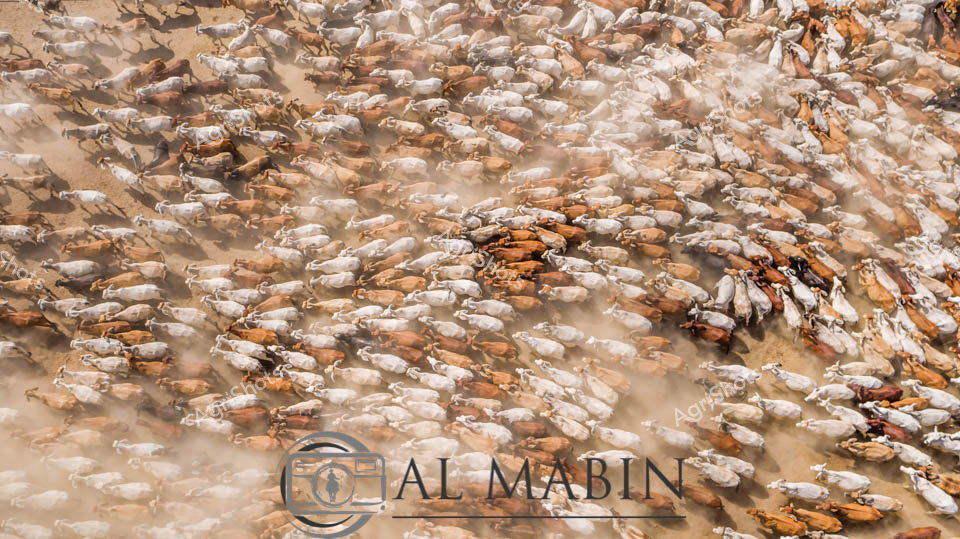
Herds of Brahman cattle cluster tightly in a dusty cattle yard, their distinctive humped shoulders and light-colored coats creating a dense, undulating landscape of livestock. Warm ochre and white tones dominate the scene, with cattle pressed closely together raising clouds of fine red earth that softens the boundaries between animals. The aerial perspective reveals the impressive scale of the Northern Territory cattle station, where hundreds of robust Brahman cattle - renowned for their heat and insect resistance - await processing or movement.

Swirling dust creates an atmospheric haze, filtering sunlight and casting a golden-brown palette across the scene, highlighting the resilience of these animals in Australia's challenging pastoral environments. The tightly packed yard suggests a moment of active cattle management, likely during mustering or preparation for transportation, demonstrating the complex logistics of northern Australian cattle production. Image

Herds of Brahman cattle cluster tightly in a dusty cattle yard, their distinctive humped shoulders and light-colored coats creating a dense, undulating landscape of livestock. Warm ochre and white tones dominate the scene, with cattle pressed closely together raising clouds of fine red earth that softens the boundaries between animals. The aerial perspective reveals the impressive scale of the Northern Territory cattle station, where hundreds of robust Brahman cattle - renowned for their heat and insect resistance - await processing or movement. Swirling dust creates an atmospheric haze, filtering sunlight and casting a golden-brown palette across the scene, highlighting the resilience of these animals in Australia's challenging pastoral environments. The tightly packed yard suggests a moment of active cattle management, likely during mustering or preparation for transportation, demonstrating the complex logistics of northern Australian cattle production.
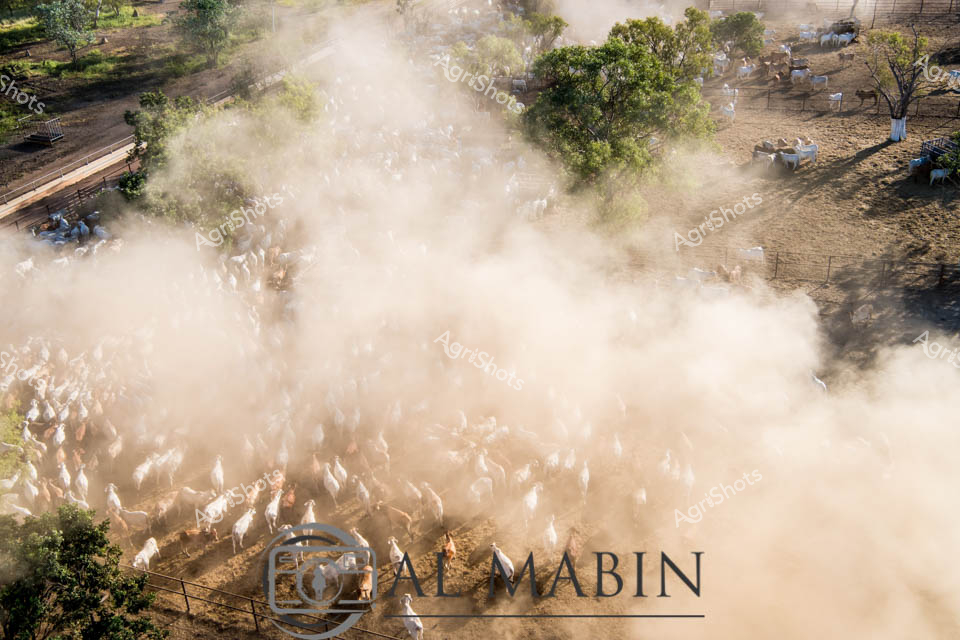
Brahman cattle surge through a dust-laden stockyard, their pale hides blending with the billowing ochre clouds of the Northern Territory landscape. A thundering mass of livestock moves with collective energy, kicking up a massive plume that obscures the surrounding paddock and scattered gum trees. The aerial perspective captures the raw dynamism of pastoral life, where massive herds are guided through yards with precision and skill. Sunlight filters through the dust, creating a golden-brown atmosphere that speaks to the harsh, beautiful environment of Australia's northern cattle stations. Fences and yards frame the movement, revealing the carefully designed infrastructure that manages these powerful animals. The scene embodies the resilience of cattle and cattlemen in one of Australia's most challenging agricultural terrains, where Brahman cattle - bred for heat tolerance and insect resistance - thrive in conditions that would defeat other breeds. Image

Brahman cattle surge through a dust-laden stockyard, their pale hides blending with the billowing ochre clouds of the Northern Territory landscape. A thundering mass of livestock moves with collective energy, kicking up a massive plume that obscures the surrounding paddock and scattered gum trees. The aerial perspective captures the raw dynamism of pastoral life, where massive herds are guided through yards with precision and skill. Sunlight filters through the dust, creating a golden-brown atmosphere that speaks to the harsh, beautiful environment of Australia's northern cattle stations. Fences and yards frame the movement, revealing the carefully designed infrastructure that manages these powerful animals. The scene embodies the resilience of cattle and cattlemen in one of Australia's most challenging agricultural terrains, where Brahman cattle - bred for heat tolerance and insect resistance - thrive in conditions that would defeat other breeds.
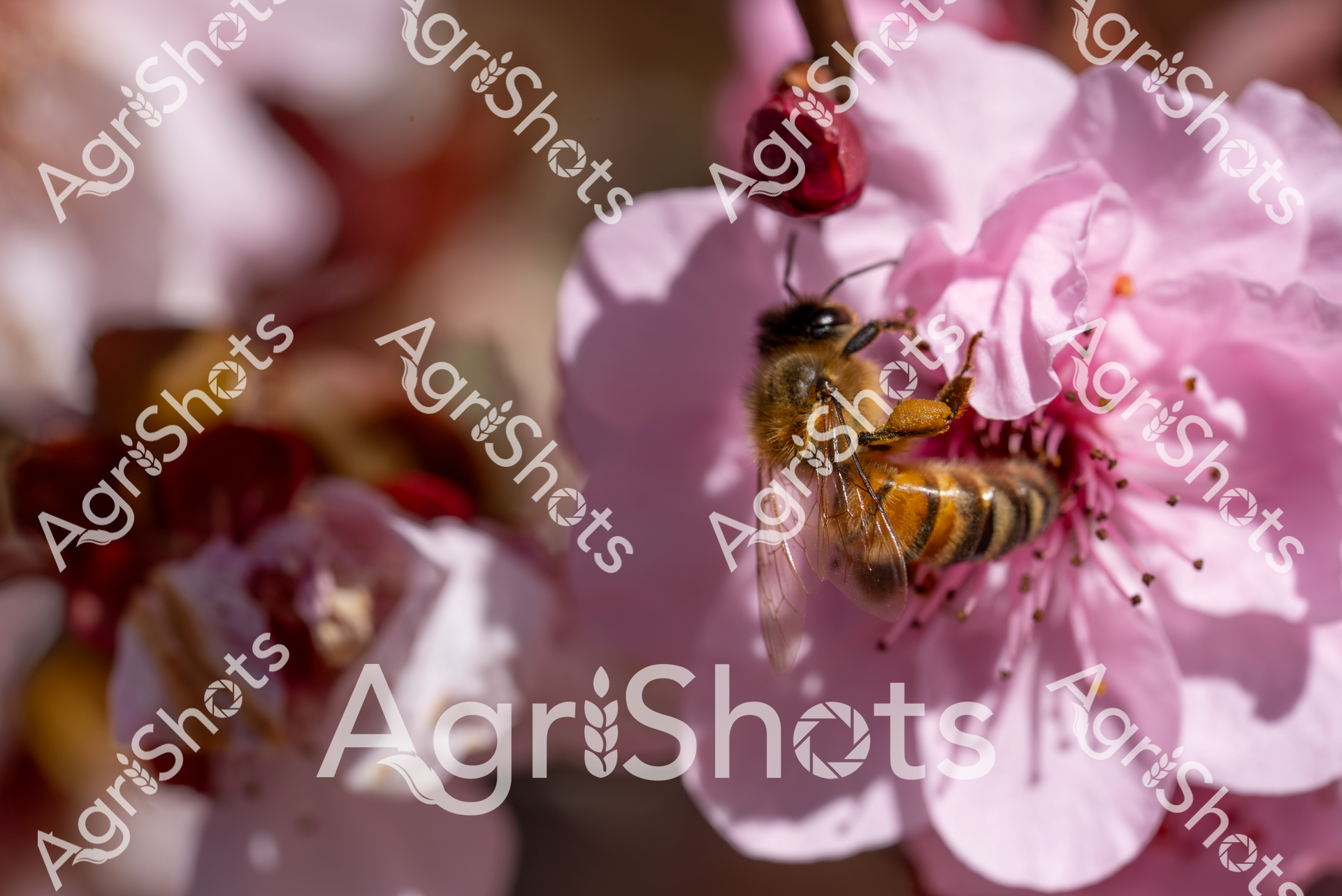
A honeybee collects pollen from a delicate pink blossom, showcasing the intricate process of pollination during springtime. The detailed image captures the bee's golden-striped body against the soft, unfurling petals, highlighting the vital role of pollinators in the natural ecosystem of Western Australia. Image

A honeybee collects pollen from a delicate pink blossom, showcasing the intricate process of pollination during springtime. The detailed image captures the bee's golden-striped body against the soft, unfurling petals, highlighting the vital role of pollinators in the natural ecosystem of Western Australia.
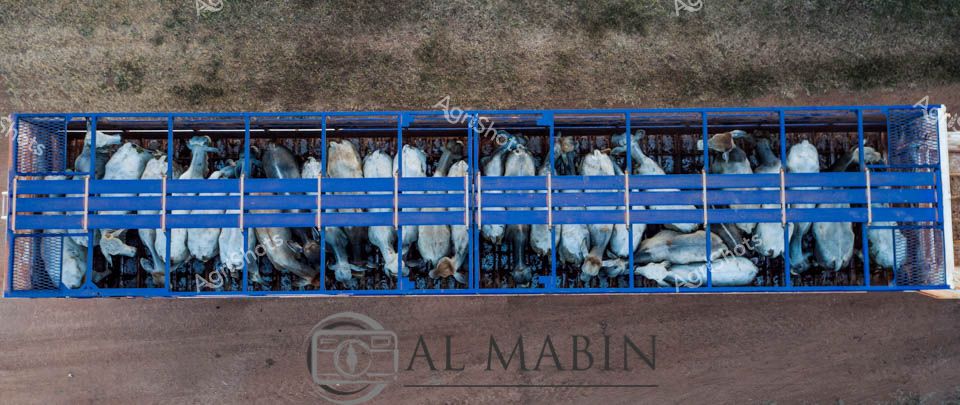
In the harsh, dusty landscapes of Australia's Northern Territory, a blue livestock transport trailer stands loaded with pale Brahman cattle, their distinctive humped backs and loose skin visible through the metal mesh compartments. The cattle are tightly packed, their pale hides contrasting sharply against the vibrant blue frame of the trailer, suggesting a journey across vast pastoral lands between cattle stations. Subtle brown and grey tones of the surrounding environment - likely a dirt road with sparse vegetation - frame the scene, highlighting the rugged infrastructure of Australia's beef production chain. The Brahman breed, renowned for its heat and insect resistance, represents a critical genetic adaptation to Australia's challenging tropical agricultural environments. This image encapsulates the resilience, scale, and logistical complexity of Australia's beef industry, where road trains like this traverse immense distances to move livestock across the continent's challenging terrain. Image

In the harsh, dusty landscapes of Australia's Northern Territory, a blue livestock transport trailer stands loaded with pale Brahman cattle, their distinctive humped backs and loose skin visible through the metal mesh compartments. The cattle are tightly packed, their pale hides contrasting sharply against the vibrant blue frame of the trailer, suggesting a journey across vast pastoral lands between cattle stations. Subtle brown and grey tones of the surrounding environment - likely a dirt road with sparse vegetation - frame the scene, highlighting the rugged infrastructure of Australia's beef production chain. The Brahman breed, renowned for its heat and insect resistance, represents a critical genetic adaptation to Australia's challenging tropical agricultural environments. This image encapsulates the resilience, scale, and logistical complexity of Australia's beef industry, where road trains like this traverse immense distances to move livestock across the continent's challenging terrain.

Young explorer crouches intently on arid pastoral ground, her teal and navy striped tank top contrasting against the dry, ochre-toned earth. Sparse golden grasses punctuate the dusty landscape, suggesting a late afternoon scene during the dry season in a remote Western Australian station. Her bare feet connect directly with the hard-packed soil, reflecting a natural curiosity and connection to the rugged rural environment. Soft late-day light casts gentle shadows, highlighting her concentrated expression as she examines something on the ground - perhaps investigating an interesting rock, insect, or subtle landscape detail. The image captures a moment of childhood wonder, embodying the resilient spirit of rural Australian children who grow up intimately connected to expansive, challenging agricultural landscapes. Her posture and engagement suggest an innate understanding of the land - a characteristic deeply ingrained in generations of station kids who learn to read and interact with their environment from an early age. Image

Young explorer crouches intently on arid pastoral ground, her teal and navy striped tank top contrasting against the dry, ochre-toned earth. Sparse golden grasses punctuate the dusty landscape, suggesting a late afternoon scene during the dry season in a remote Western Australian station. Her bare feet connect directly with the hard-packed soil, reflecting a natural curiosity and connection to the rugged rural environment. Soft late-day light casts gentle shadows, highlighting her concentrated expression as she examines something on the ground - perhaps investigating an interesting rock, insect, or subtle landscape detail. The image captures a moment of childhood wonder, embodying the resilient spirit of rural Australian children who grow up intimately connected to expansive, challenging agricultural landscapes. Her posture and engagement suggest an innate understanding of the land - a characteristic deeply ingrained in generations of station kids who learn to read and interact with their environment from an early age.

Golden hour bathes a tranquil Northern Territory cattle station in soft, rose-tinted light, where a herd of distinctive Brahman cattle congregates on a dusty track. The robust, light-colored cattle with their characteristic humps and loose skin stand clustered together, their pale sandy-pink coats glowing warmly against the muted greens and browns of the expansive grassland. Two smaller, lighter-colored calves stand slightly apart, creating a sense of gentle separation within the group. The backdrop reveals a dense treeline marking the horizon, with wispy clouds scattered across a pastel sky transitioning from soft blue to delicate lavender, signaling the approaching evening. These resilient Brahman cattle, bred for heat tolerance and insect resistance, represent the backbone of Australia's northern pastoral industry, perfectly adapted to the challenging tropical environment. The serene scene captures the essence of remote station life - a moment of quiet collectiveness as the day's heat subsides and the cattle prepare for the cooling evening ahead. Image

Golden hour bathes a tranquil Northern Territory cattle station in soft, rose-tinted light, where a herd of distinctive Brahman cattle congregates on a dusty track. The robust, light-colored cattle with their characteristic humps and loose skin stand clustered together, their pale sandy-pink coats glowing warmly against the muted greens and browns of the expansive grassland. Two smaller, lighter-colored calves stand slightly apart, creating a sense of gentle separation within the group. The backdrop reveals a dense treeline marking the horizon, with wispy clouds scattered across a pastel sky transitioning from soft blue to delicate lavender, signaling the approaching evening. These resilient Brahman cattle, bred for heat tolerance and insect resistance, represent the backbone of Australia's northern pastoral industry, perfectly adapted to the challenging tropical environment. The serene scene captures the essence of remote station life - a moment of quiet collectiveness as the day's heat subsides and the cattle prepare for the cooling evening ahead.
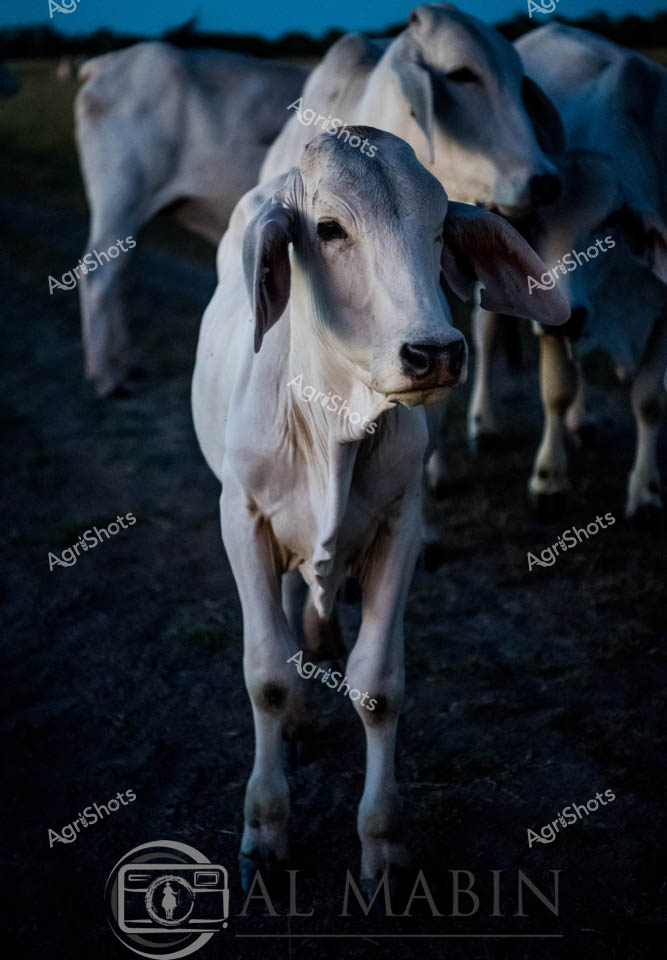
Alabaster sentinels of the northern pastoral landscape, these Brahman cattle stand resolute against the twilight's deep blue horizon. A lead bovine commands the foreground, its distinctive loose skin and prominent hump characteristic of the breed's adaptation to tropical climates. The animal's pale coat gleams with a silvery luminescence, highlighting the muscular frame and resilient physique that makes Brahmans renowned for their heat tolerance and insect resistance in Australia's challenging northern territories.

Soft evening light sculpts the cattle's forms, casting subtle shadows across their lean bodies and creating a sense of quiet strength and endurance. The dusty ground beneath their hooves speaks of arid station life, where these cattle represent not just livestock, but a critical component of Australia's agricultural heritage. Their alert postures and clustered formation suggest a herd moving with purpose, embodying the quiet discipline of cattle managed on vast northern stations.

The atmospheric composition captures the essence of Australian beef production - a blend of biological adaptation, agricultural skill, and the timeless connection between land, animal, and human enterprise. Each bovine appears simultaneously individual and part of a collective narrative of survival and productivity. Image

Alabaster sentinels of the northern pastoral landscape, these Brahman cattle stand resolute against the twilight's deep blue horizon. A lead bovine commands the foreground, its distinctive loose skin and prominent hump characteristic of the breed's adaptation to tropical climates. The animal's pale coat gleams with a silvery luminescence, highlighting the muscular frame and resilient physique that makes Brahmans renowned for their heat tolerance and insect resistance in Australia's challenging northern territories. Soft evening light sculpts the cattle's forms, casting subtle shadows across their lean bodies and creating a sense of quiet strength and endurance. The dusty ground beneath their hooves speaks of arid station life, where these cattle represent not just livestock, but a critical component of Australia's agricultural heritage. Their alert postures and clustered formation suggest a herd moving with purpose, embodying the quiet discipline of cattle managed on vast northern stations. The atmospheric composition captures the essence of Australian beef production - a blend of biological adaptation, agricultural skill, and the timeless connection between land, animal, and human enterprise. Each bovine appears simultaneously individual and part of a collective narrative of survival and productivity.

Golden light bathes a majestic herd of Brahman cattle standing resolute across a sun-drenched pastoral landscape, their distinctive muscular bodies and loose skin revealing generations of adaptation to Australia's harsh northern environments. The cattle - a mix of silvery-white and warm brown specimens - are silhouetted against a luminous sunset, casting long dramatic shadows across the dusty ground. These resilient Brahman breed, renowned for their heat tolerance and insect resistance, represent the backbone of Australia's northern beef industry, perfectly suited to the challenging terrain of the Northern Territory's expansive cattle stations. Each animal stands with a quiet strength, their broad heads and prominent humps highlighting the breed's genetic advantages for tropical agriculture. The low-angle light creates a painterly effect, transforming the scene into a living tableau that speaks to the enduring spirit of Australian pastoral life. This image captures the raw beauty of cattle farming - a testament to the skill of stockmen and the remarkable creatures that have shaped the economic and cultural landscape of rural Australia. Image

Golden light bathes a majestic herd of Brahman cattle standing resolute across a sun-drenched pastoral landscape, their distinctive muscular bodies and loose skin revealing generations of adaptation to Australia's harsh northern environments. The cattle - a mix of silvery-white and warm brown specimens - are silhouetted against a luminous sunset, casting long dramatic shadows across the dusty ground. These resilient Brahman breed, renowned for their heat tolerance and insect resistance, represent the backbone of Australia's northern beef industry, perfectly suited to the challenging terrain of the Northern Territory's expansive cattle stations. Each animal stands with a quiet strength, their broad heads and prominent humps highlighting the breed's genetic advantages for tropical agriculture. The low-angle light creates a painterly effect, transforming the scene into a living tableau that speaks to the enduring spirit of Australian pastoral life. This image captures the raw beauty of cattle farming - a testament to the skill of stockmen and the remarkable creatures that have shaped the economic and cultural landscape of rural Australia.

A honey bee collects pollen from a delicate pink cherry blossom in full bloom. The detailed macro shot captures the intricate relationship between pollinators and spring flowers, showcasing the bee's golden body against the soft pink petals of the flower. Image

A honey bee collects pollen from a delicate pink cherry blossom in full bloom. The detailed macro shot captures the intricate relationship between pollinators and spring flowers, showcasing the bee's golden body against the soft pink petals of the flower.

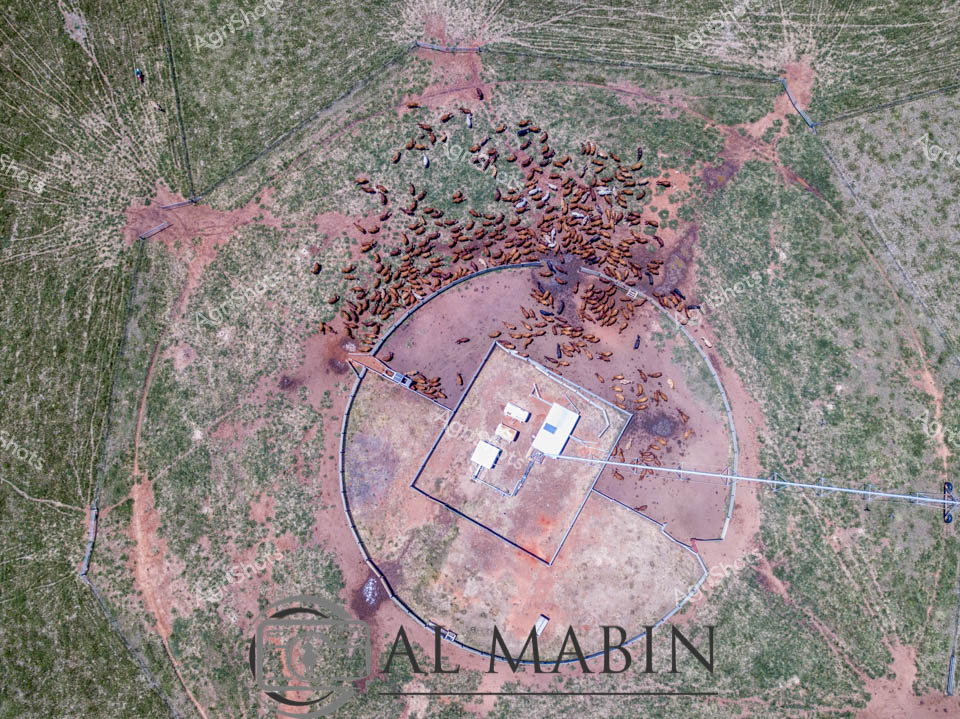
Blazing under the relentless Western Australian sun, a Centre Pivot Irrigation system creates concentric rings of emerald and rust-red earth in the Kimberley Region, surrounded by a dense herd of distinctive Brahman cattle. The aerial perspective reveals a tight cluster of robust, light-colored cattle with their signature humps and loose skin, congregated tightly around a central agricultural facility with white rectangular buildings. Rich ochre soils and sparse grasslands stretch in geometric patterns, highlighting the precision of modern agricultural infrastructure against the rugged landscape. The circular irrigation system demonstrates sophisticated water management techniques essential for sustaining cattle operations in this harsh, arid environment. Brahmans, bred for heat tolerance and insect resistance, stand as living testament to agricultural adaptation in one of Australia's most challenging pastoral zones. The image captures the intersection of technological innovation and traditional cattle farming, where human engineering and animal resilience combine to transform unforgiving terrain into productive agricultural landscape. Image

Blazing under the relentless Western Australian sun, a Centre Pivot Irrigation system creates concentric rings of emerald and rust-red earth in the Kimberley Region, surrounded by a dense herd of distinctive Brahman cattle. The aerial perspective reveals a tight cluster of robust, light-colored cattle with their signature humps and loose skin, congregated tightly around a central agricultural facility with white rectangular buildings. Rich ochre soils and sparse grasslands stretch in geometric patterns, highlighting the precision of modern agricultural infrastructure against the rugged landscape. The circular irrigation system demonstrates sophisticated water management techniques essential for sustaining cattle operations in this harsh, arid environment. Brahmans, bred for heat tolerance and insect resistance, stand as living testament to agricultural adaptation in one of Australia's most challenging pastoral zones. The image captures the intersection of technological innovation and traditional cattle farming, where human engineering and animal resilience combine to transform unforgiving terrain into productive agricultural landscape.
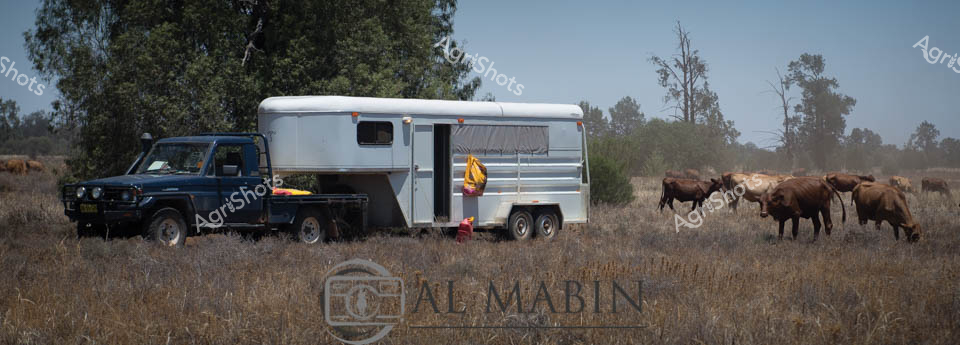
Brahman cattle amble across a sun-drenched grassland, their distinctive humped silhouettes moving through dry golden pasture beside a rugged blue Toyota landcruiser and a white horse float. The arid landscape speaks of central Queensland's harsh pastoral environments, where droving remains a timeless agricultural practice. Muscular white and brown Brahman cattle, bred for heat and insect resistance, demonstrate the resilience of Australia's beef industry in challenging terrain. Scattered eucalyptus trees provide sparse shade against a pale blue sky, capturing the unforgiving yet majestic nature of rural stock routes. A yellow safety vest hanging on the trailer suggests the careful preparation of stockmen managing livestock movement across vast distances. Image

Brahman cattle amble across a sun-drenched grassland, their distinctive humped silhouettes moving through dry golden pasture beside a rugged blue Toyota landcruiser and a white horse float. The arid landscape speaks of central Queensland's harsh pastoral environments, where droving remains a timeless agricultural practice. Muscular white and brown Brahman cattle, bred for heat and insect resistance, demonstrate the resilience of Australia's beef industry in challenging terrain. Scattered eucalyptus trees provide sparse shade against a pale blue sky, capturing the unforgiving yet majestic nature of rural stock routes. A yellow safety vest hanging on the trailer suggests the careful preparation of stockmen managing livestock movement across vast distances.
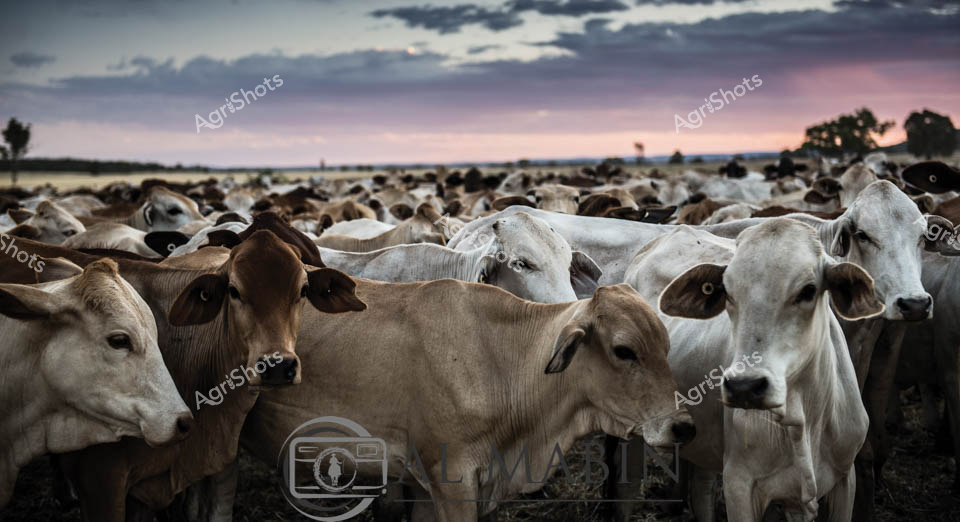
Dusty light bathes a vast cattle herd stretching across the horizon, capturing the timeless rhythm of Australia's cattle droving tradition. Brahman cattle - distinguished by their distinctive white-to-cream coloration and pendulous ears - cluster tightly together, their muscular bodies displaying the hardy breed's adaptation to harsh tropical landscapes. The evening sky bleeds soft pink and slate-grey, casting dramatic shadows across the dry pasture, suggesting the end of a long day's journey along a stock route. These resilient beasts, bred for heat tolerance and insect resistance, represent the backbone of northern Australian pastoral industries, their collective movement a living testament to generational agricultural practices. The herd's tight formation speaks to both survival instinct and the skilled management of drovers guiding them across expansive, unforgiving terrain. Every weathered hide and alert ear tells a story of endurance, echoing the deep connection between Australian cattlemen and the livestock. Image

Dusty light bathes a vast cattle herd stretching across the horizon, capturing the timeless rhythm of Australia's cattle droving tradition. Brahman cattle - distinguished by their distinctive white-to-cream coloration and pendulous ears - cluster tightly together, their muscular bodies displaying the hardy breed's adaptation to harsh tropical landscapes. The evening sky bleeds soft pink and slate-grey, casting dramatic shadows across the dry pasture, suggesting the end of a long day's journey along a stock route. These resilient beasts, bred for heat tolerance and insect resistance, represent the backbone of northern Australian pastoral industries, their collective movement a living testament to generational agricultural practices. The herd's tight formation speaks to both survival instinct and the skilled management of drovers guiding them across expansive, unforgiving terrain. Every weathered hide and alert ear tells a story of endurance, echoing the deep connection between Australian cattlemen and the livestock.
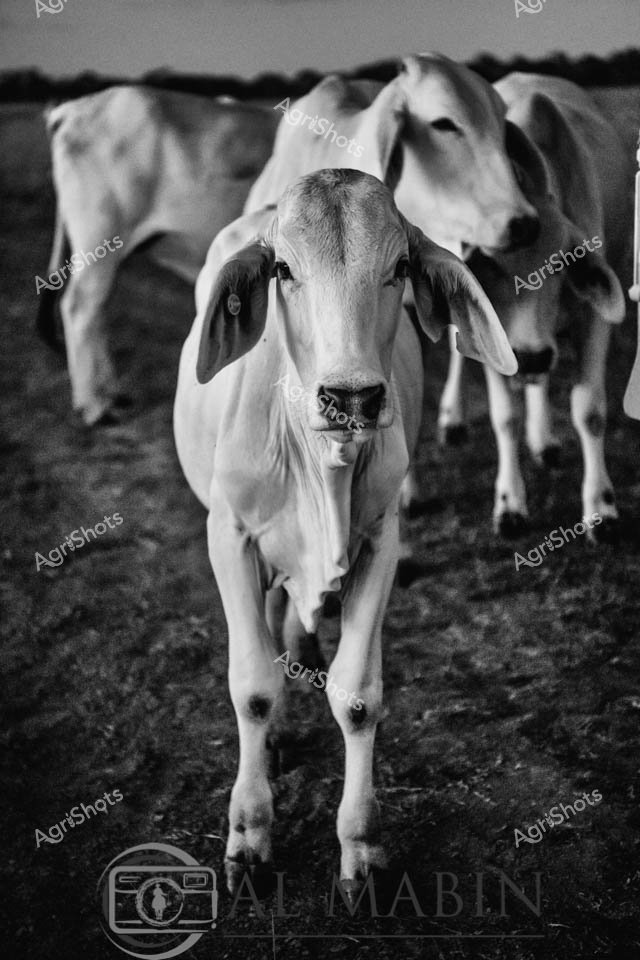
Alabaster Brahman cattle stand resolute on a dusty Northern Territory station, their distinctive large ears and loose skin catching the stark monochrome light. The lead cow moves with quiet purpose, her muscular frame and sleek hide highlighting the resilience of this iconic Australian beef breed perfectly adapted to tropical and subtropical conditions. Behind her, the herd blends into a subtle landscape of muted greys, emphasizing the animals' remarkable ability to thrive in challenging environments. These Brahmans - renowned for their heat tolerance and insect resistance - represent generations of careful breeding and agricultural innovation across Australia's northern pastoral regions. The black and white composition strips away distraction, focusing attention on the cattle's powerful physique and the subtle textures of hide, muscle, and ground. Every line and contour speaks to the endurance of both animal and landscape, a testament to the harsh beauty of Australian cattle country. Image

Alabaster Brahman cattle stand resolute on a dusty Northern Territory station, their distinctive large ears and loose skin catching the stark monochrome light. The lead cow moves with quiet purpose, her muscular frame and sleek hide highlighting the resilience of this iconic Australian beef breed perfectly adapted to tropical and subtropical conditions. Behind her, the herd blends into a subtle landscape of muted greys, emphasizing the animals' remarkable ability to thrive in challenging environments. These Brahmans - renowned for their heat tolerance and insect resistance - represent generations of careful breeding and agricultural innovation across Australia's northern pastoral regions. The black and white composition strips away distraction, focusing attention on the cattle's powerful physique and the subtle textures of hide, muscle, and ground. Every line and contour speaks to the endurance of both animal and landscape, a testament to the harsh beauty of Australian cattle country.
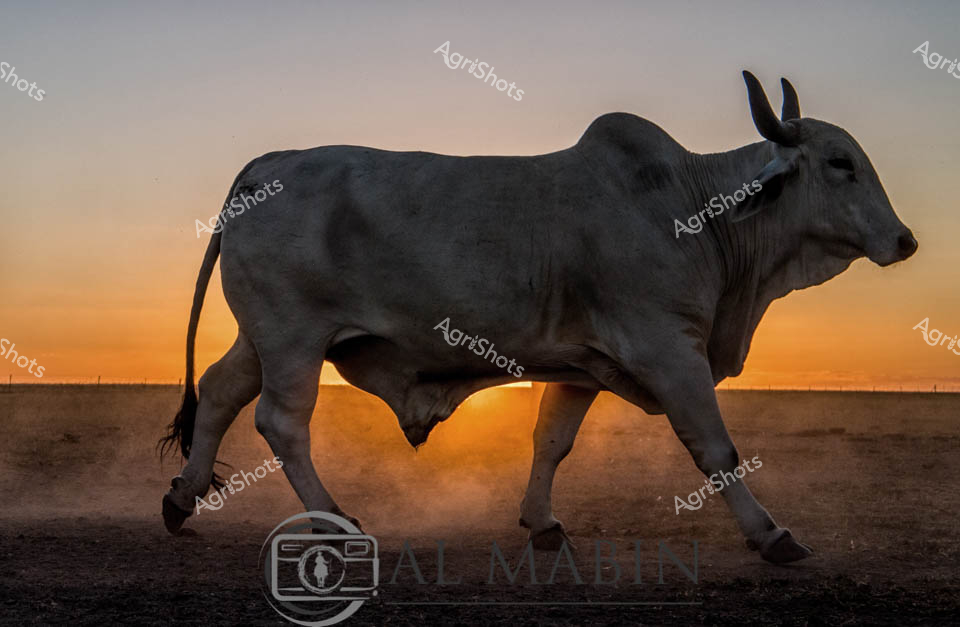
Silhouetted against a blazing Territory sunset, a powerful Brahman bull strides across the dusty plains, embodying the raw resilience of Australia's northern cattle country. His muscular frame, characterized by distinctive loose skin and prominent hump, moves with deliberate grace across the arid landscape, casting a dramatic shadow on the parched earth. The gradient sky burns with intense ochre and amber hues, transitioning from deep orange at the horizon to soft golden tones overhead, capturing the magical twilight moment of the tropical dry season. Every sinewy muscle and defined contour of the bull is highlighted by the backlighting, creating a stark graphic representation of pastoral strength and endurance. This magnificent Brahman - bred for heat tolerance and insect resistance - represents the backbone of northern Australian cattle stations, where these robust animals thrive in challenging environmental conditions. The image celebrates the iconic relationship between livestock and landscape, showcasing the beauty of agricultural life in the Northern Territory's expansive, unforgiving terrain. Image

Silhouetted against a blazing Territory sunset, a powerful Brahman bull strides across the dusty plains, embodying the raw resilience of Australia's northern cattle country. His muscular frame, characterized by distinctive loose skin and prominent hump, moves with deliberate grace across the arid landscape, casting a dramatic shadow on the parched earth. The gradient sky burns with intense ochre and amber hues, transitioning from deep orange at the horizon to soft golden tones overhead, capturing the magical twilight moment of the tropical dry season. Every sinewy muscle and defined contour of the bull is highlighted by the backlighting, creating a stark graphic representation of pastoral strength and endurance. This magnificent Brahman - bred for heat tolerance and insect resistance - represents the backbone of northern Australian cattle stations, where these robust animals thrive in challenging environmental conditions. The image celebrates the iconic relationship between livestock and landscape, showcasing the beauty of agricultural life in the Northern Territory's expansive, unforgiving terrain.
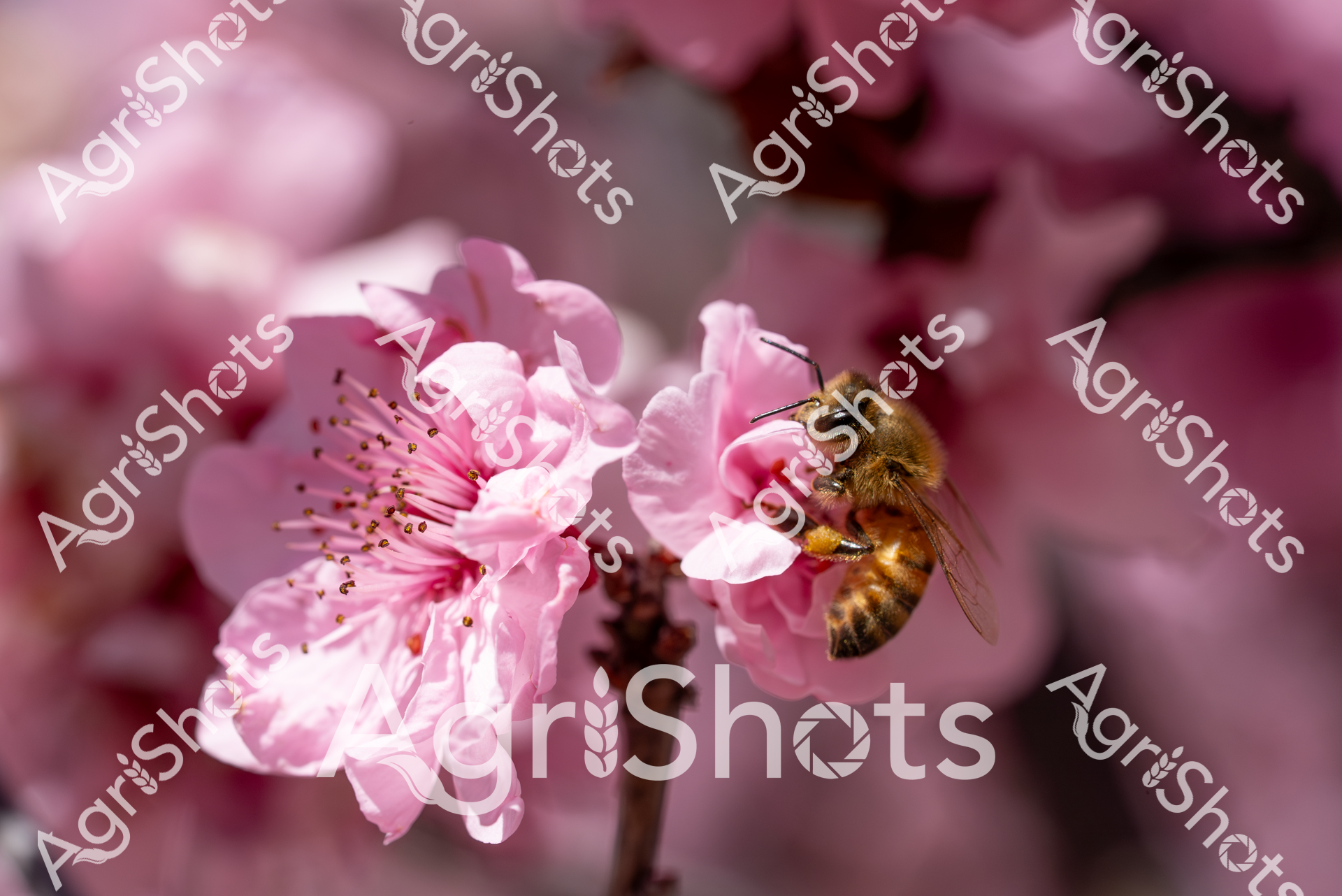
A honey bee collects nectar from delicate pink cherry blossoms in full bloom, showcasing the intricate pollination process of spring. The soft, pastel background highlights the detailed wings and fuzzy body of the bee as it works among the vibrant floral landscape, capturing the essence of renewal and natural beauty. Image

A honey bee collects nectar from delicate pink cherry blossoms in full bloom, showcasing the intricate pollination process of spring. The soft, pastel background highlights the detailed wings and fuzzy body of the bee as it works among the vibrant floral landscape, capturing the essence of renewal and natural beauty.
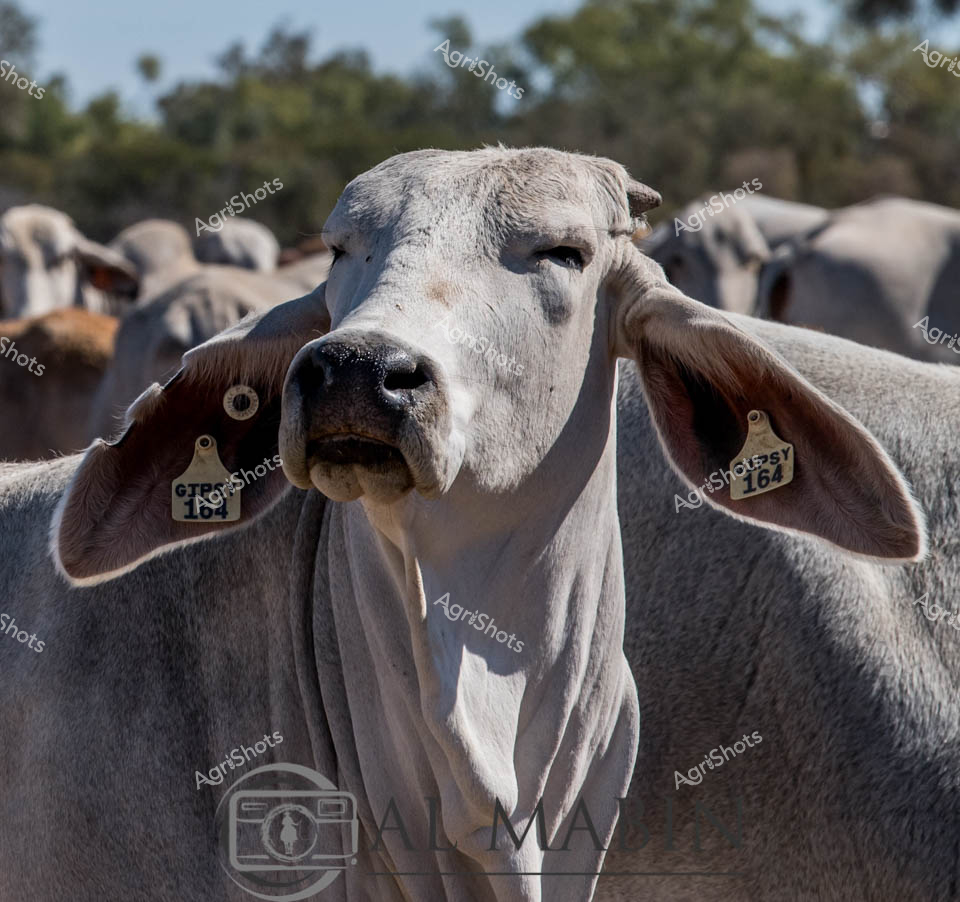
Dusty light bathes a stoic Brahman cattle steer, its distinctive loose, wrinkled skin and prominent ears marking the breed's tropical adaptations. Ear tags numbered 164 identify this animal within a large cattle herd, suggesting professional station management in Queensland's expansive northern rangelands. The beast's pale grey-white coat gleams against a backdrop of blurred cattle and sparse eucalyptus woodland, capturing the harsh yet beautiful Australian pastoral landscape. Muscular and alert, the steer represents the resilience of Brahman genetics - bred to thrive in challenging subtropical conditions with heat tolerance and insect resistance. Its direct gaze communicates a quiet strength, embodying generations of agricultural breeding and the enduring connection between land, livestock, and those who work with them. The crisp focus and careful composition reveal this as a professional stud cattle documentation, likely captured during the dry season when golden light and sparse vegetation define the agricultural aesthetic. Image

Dusty light bathes a stoic Brahman cattle steer, its distinctive loose, wrinkled skin and prominent ears marking the breed's tropical adaptations. Ear tags numbered 164 identify this animal within a large cattle herd, suggesting professional station management in Queensland's expansive northern rangelands. The beast's pale grey-white coat gleams against a backdrop of blurred cattle and sparse eucalyptus woodland, capturing the harsh yet beautiful Australian pastoral landscape. Muscular and alert, the steer represents the resilience of Brahman genetics - bred to thrive in challenging subtropical conditions with heat tolerance and insect resistance. Its direct gaze communicates a quiet strength, embodying generations of agricultural breeding and the enduring connection between land, livestock, and those who work with them. The crisp focus and careful composition reveal this as a professional stud cattle documentation, likely captured during the dry season when golden light and sparse vegetation define the agricultural aesthetic.
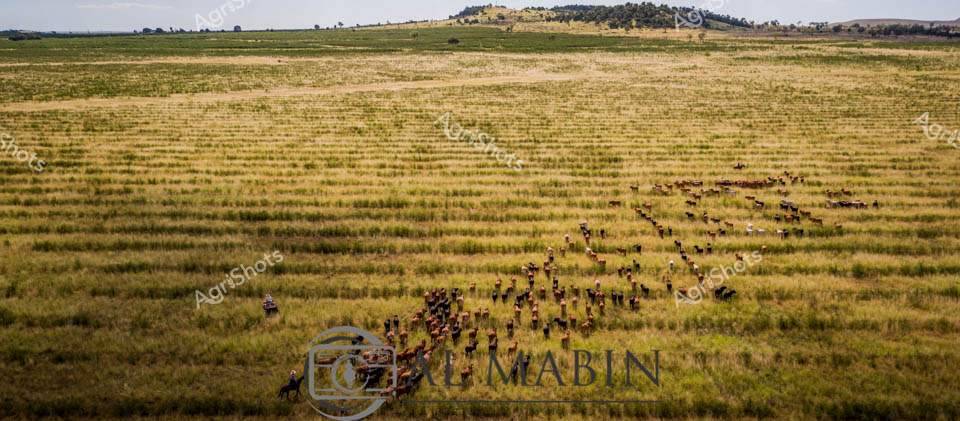
Brahman cattle stream across golden grasslands beneath an expansive Queensland sky, the herd guided by stockmen on horseback during a classic mustering operation. Rich amber and olive hues of the dry seasonal pasture contrast with the distinctive pale grey and white coats of the Brahman breed, renowned for their heat and insect resistance. Scattered cattle move in fluid formation, their muscular bodies reflecting generations of adaptation to Australia's challenging northern agricultural landscapes. In the distance, a rocky outcrop punctuates the horizon, highlighting the rugged terrain of this extensive grazing property. Pastoral workers navigate carefully through the herd, their measured movements guiding the livestock with generations of accumulated skill and understanding. This aerial perspective captures the rhythmic choreography of cattle management - a quintessential scene of Australian agricultural practice that speaks to the deep connection between land, livestock, and the people who work them. Image

Brahman cattle stream across golden grasslands beneath an expansive Queensland sky, the herd guided by stockmen on horseback during a classic mustering operation. Rich amber and olive hues of the dry seasonal pasture contrast with the distinctive pale grey and white coats of the Brahman breed, renowned for their heat and insect resistance. Scattered cattle move in fluid formation, their muscular bodies reflecting generations of adaptation to Australia's challenging northern agricultural landscapes. In the distance, a rocky outcrop punctuates the horizon, highlighting the rugged terrain of this extensive grazing property. Pastoral workers navigate carefully through the herd, their measured movements guiding the livestock with generations of accumulated skill and understanding. This aerial perspective captures the rhythmic choreography of cattle management - a quintessential scene of Australian agricultural practice that speaks to the deep connection between land, livestock, and the people who work them.
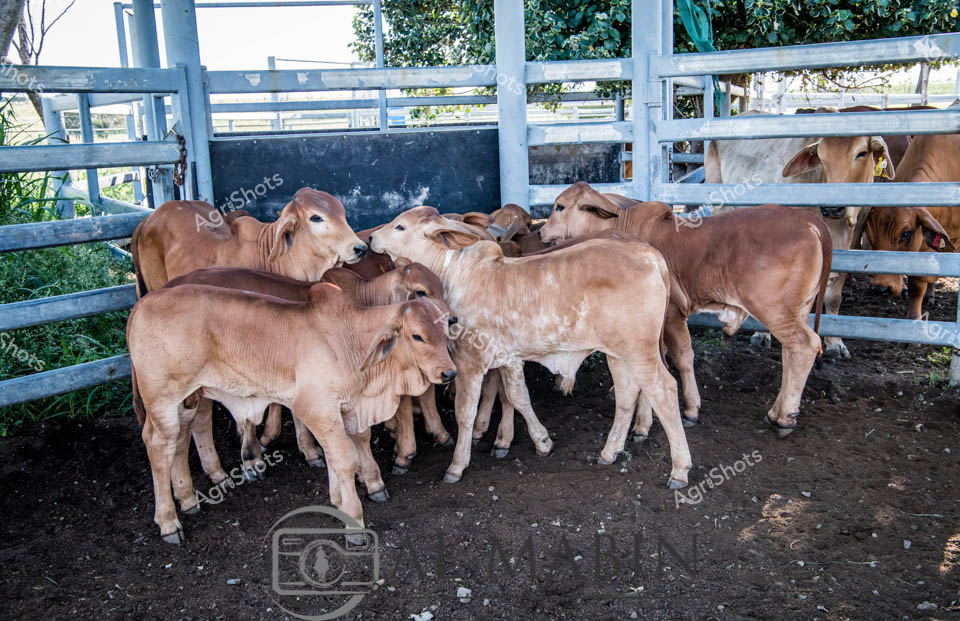
Brahman calves cluster together in a steel-railed cattle yard, their distinctive light tan to reddish-brown hides gleaming under the soft natural light. These young beef cattle, characteristic of Queensland's northern pastoral regions, huddle closely on packed earth, their muscular frames and prominent ear veins signaling the hardy Brahman breed's adaptation to tropical climates. Soft morning sunlight filters through surrounding green foliage, casting gentle shadows across the metal yard infrastructure with its sturdy galvanized gates and panels. The calves display typical Brahman traits - loose skin, large ears, and compact muscular bodies that represent generations of breeding for heat tolerance and insect resistance. Their proximity suggests a recent weaning or sorting process, with individual animals showing subtle variations in coat shade from pale cream to deep copper. The scene captures the quiet intensity of station life, where careful livestock management and breed selection are fundamental to northern Australian cattle production. Image

Brahman calves cluster together in a steel-railed cattle yard, their distinctive light tan to reddish-brown hides gleaming under the soft natural light. These young beef cattle, characteristic of Queensland's northern pastoral regions, huddle closely on packed earth, their muscular frames and prominent ear veins signaling the hardy Brahman breed's adaptation to tropical climates. Soft morning sunlight filters through surrounding green foliage, casting gentle shadows across the metal yard infrastructure with its sturdy galvanized gates and panels. The calves display typical Brahman traits - loose skin, large ears, and compact muscular bodies that represent generations of breeding for heat tolerance and insect resistance. Their proximity suggests a recent weaning or sorting process, with individual animals showing subtle variations in coat shade from pale cream to deep copper. The scene captures the quiet intensity of station life, where careful livestock management and breed selection are fundamental to northern Australian cattle production.
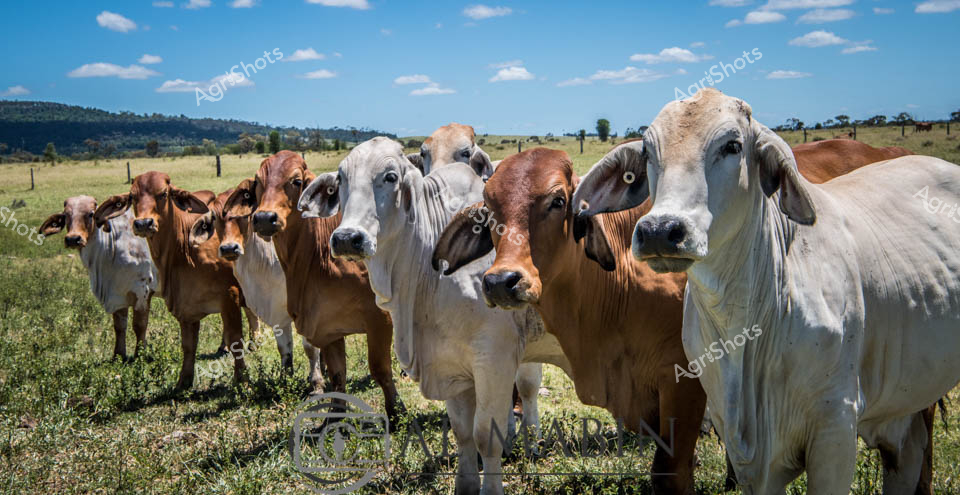
Brahman cattle stand resolute in a sun-drenched Queensland pasture, their distinctive loose, dewlap-rich skin and prominent ears marking them as quintessential Australian beef breed survivors. White and rich brown animals cluster together, their muscular frames reflecting generations of adaptation to harsh tropical grasslands. Rolling hills and distant tree lines frame the herd, suggesting a vast station landscape where these resilient animals graze under a crystalline blue sky scattered with soft cumulus clouds. The animals display the hallmark characteristics of Brahman genetics - alert expressions, robust physiques, and a calm collective presence that speaks to their reputation for heat tolerance and insect resistance. Each beast appears healthy and well-conditioned, representing the pinnacle of northern Australian cattle breeding strategies developed over decades of agricultural innovation. The lush green pasture beneath their hooves indicates recent rains and optimal grazing conditions, highlighting the intricate relationship between landscape, livestock, and the cyclical rhythms of pastoral enterprise. Image

Brahman cattle stand resolute in a sun-drenched Queensland pasture, their distinctive loose, dewlap-rich skin and prominent ears marking them as quintessential Australian beef breed survivors. White and rich brown animals cluster together, their muscular frames reflecting generations of adaptation to harsh tropical grasslands. Rolling hills and distant tree lines frame the herd, suggesting a vast station landscape where these resilient animals graze under a crystalline blue sky scattered with soft cumulus clouds. The animals display the hallmark characteristics of Brahman genetics - alert expressions, robust physiques, and a calm collective presence that speaks to their reputation for heat tolerance and insect resistance. Each beast appears healthy and well-conditioned, representing the pinnacle of northern Australian cattle breeding strategies developed over decades of agricultural innovation. The lush green pasture beneath their hooves indicates recent rains and optimal grazing conditions, highlighting the intricate relationship between landscape, livestock, and the cyclical rhythms of pastoral enterprise.