About this image
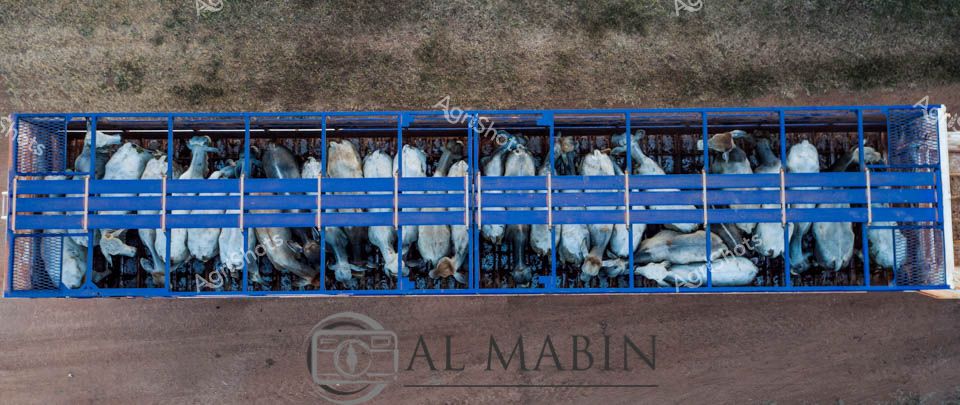
In the harsh, dusty landscapes of Australia's Northern Territory, a blue livestock transport trailer stands loaded with pale Brahman cattle, their distinctive humped backs and loose skin visible through the metal mesh compartments. The cattle are tightly packed, their pale hides contrasting sharply against the vibrant blue frame of the trailer, suggesting a journey across vast pastoral lands between cattle stations. Subtle brown and grey tones of the surrounding environment - likely a dirt road with sparse vegetation - frame the scene, highlighting the rugged infrastructure of Australia's beef production chain. The Brahman breed, renowned for its heat and insect resistance, represents a critical genetic adaptation to Australia's challenging tropical agricultural environments. This image encapsulates the resilience, scale, and logistical complexity of Australia's beef industry, where road trains like this traverse immense distances to move livestock across the continent's challenging terrain.
Similar media
 ▶ Video
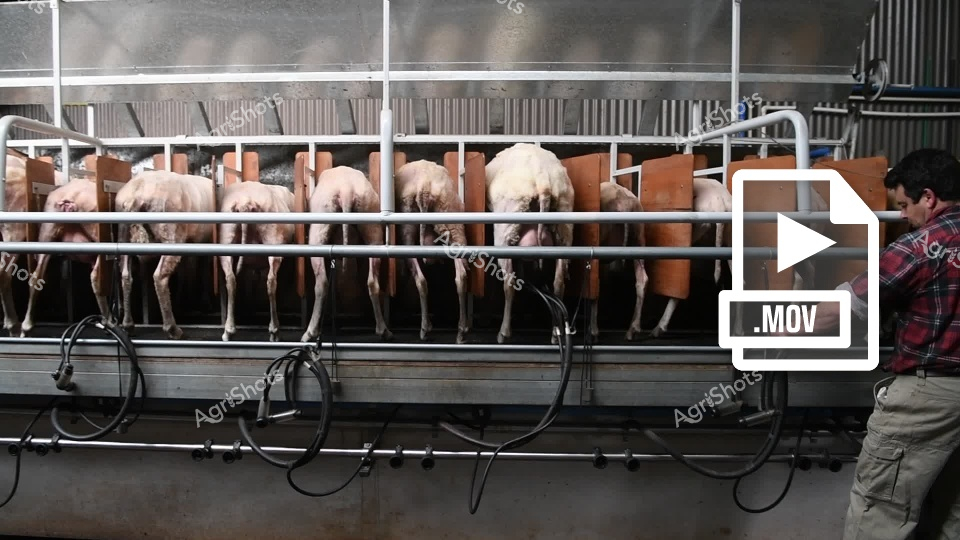
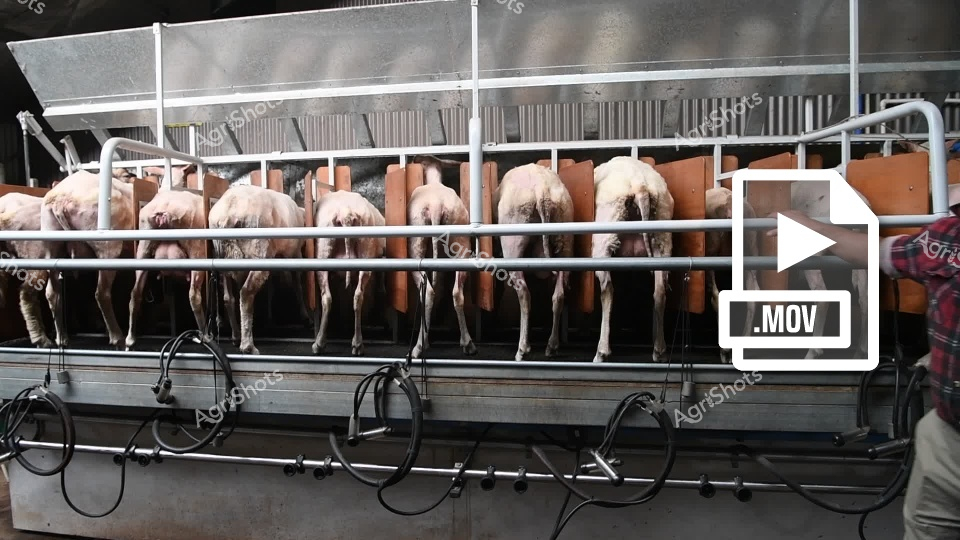
A row of dairy sheep stands in milking stalls within a modern dairy facility in New South Wales, with automatic milking cups attached beneath each animal. A man working as a dairy farmer monitors the milking process from the side, overseeing the efficient extraction of sheep milk. The organized milking parlor setup demonstrates the specialized equipment required for commercial sheep dairy operations, with metal railings containing the flock during the automated milking procedure.
 Image
Image
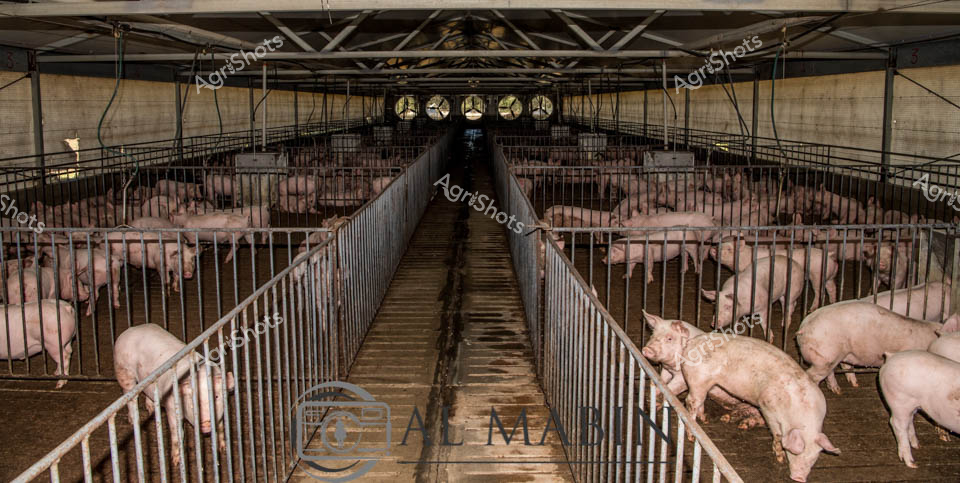
Industrial-scale pig production at a modern Queensland piggery, revealing the systematic precision of contemporary livestock management. Rows of metal pens stretch across a climate-controlled indoor facility, housing numerous pink-skinned pigs in densely arranged compartments. Ventilation fans mounted overhead ensure consistent environmental conditions, while a central concrete walkway provides access for monitoring and maintenance. The uniform pale coloration of the pigs and the metallic grey infrastructure create a stark, industrial aesthetic that speaks to efficient agricultural production methods. Soft ambient lighting illuminates the uniform environment, highlighting the regimented spacing and careful engineering of this large-scale farming approach. The image captures the scale and technological sophistication of large-scale animal husbandry, representing an important sector of Queensland's agricultural economy.
 Image
Image
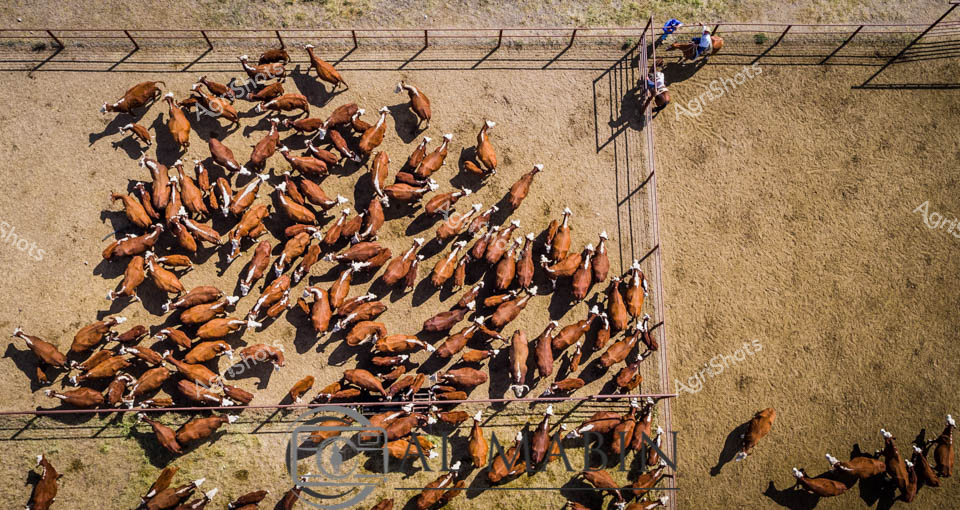
Aerial Cattle Muster: Dusty Precision on a Queensland Station Burnished copper and rust-red Hereford cattle cluster tightly within steel cattle yard boundaries, their muscular forms casting long shadows across parched golden earth. A bird's-eye view reveals the intricate choreography of mustering - stockmen strategically positioned at the yard's edge, guiding the herd's movement with calculated precision. The dry landscape speaks of inland Queensland's unforgiving terrain, where pastoral operations demand skill and resilience. Geometric fence lines slice through the ochre landscape, creating a structured canvas for the organic mass of cattle. A small team of workers, their blue and tan clothing a stark contrast against the earthy palette, work in coordinated harmony to manage the substantial herd. The overhead perspective captures the remarkable scale of Australian cattle operations, where thousands of hectares are managed with meticulous planning and generations of agricultural expertise. Harsh sunlight emphasizes every contour and texture - from the weathered fence posts to the varied coat colors of the Herefords, highlighting the raw beauty of station life in rural Australia. This image encapsulates the grit, skill, and expansive spirit of Queensland's pastoral traditions.
 Image
Image
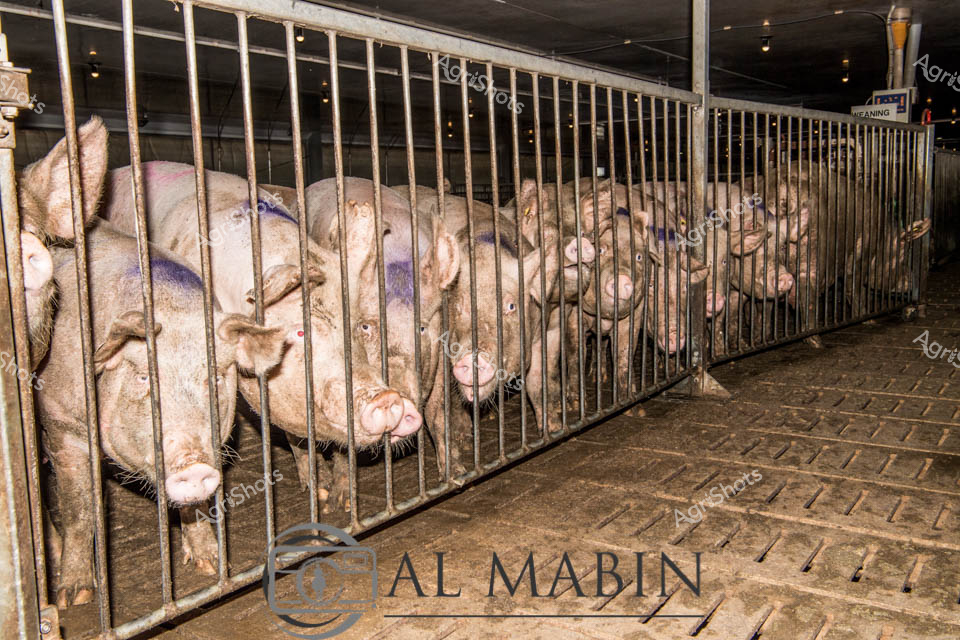
A group of pigs huddle together in a confined metal pen, their pale pink and grey bodies pressed tightly against metal bars at what appears to be a commercial livestock facility. The animals are packed closely, with limited movement space, standing on a textured concrete floor beneath overhead lighting. Purple markings are visible on some of the pigs, likely identification tags used in agricultural management. The metal barriers create a grid-like enclosure, typical of large-scale farming infrastructure. Several pigs turn their heads towards the camera, their distinctive snouts and ears visible through the narrow vertical bars, suggesting a standardized agricultural environment focused on efficient livestock production.
 ▶ Video
A mechanized milking system efficiently processes a line of dairy sheep in New South Wales, with milking cups attached to each ewe as they stand in the automated parlor. A man working as a dairy farmer monitors the operation from the side, ensuring the smooth milking process of the flock. The modern dairy equipment demonstrates the specialized infrastructure required for commercial sheep milk production, with multiple milking units working simultaneously to extract milk from the sheep.
 Image
Image
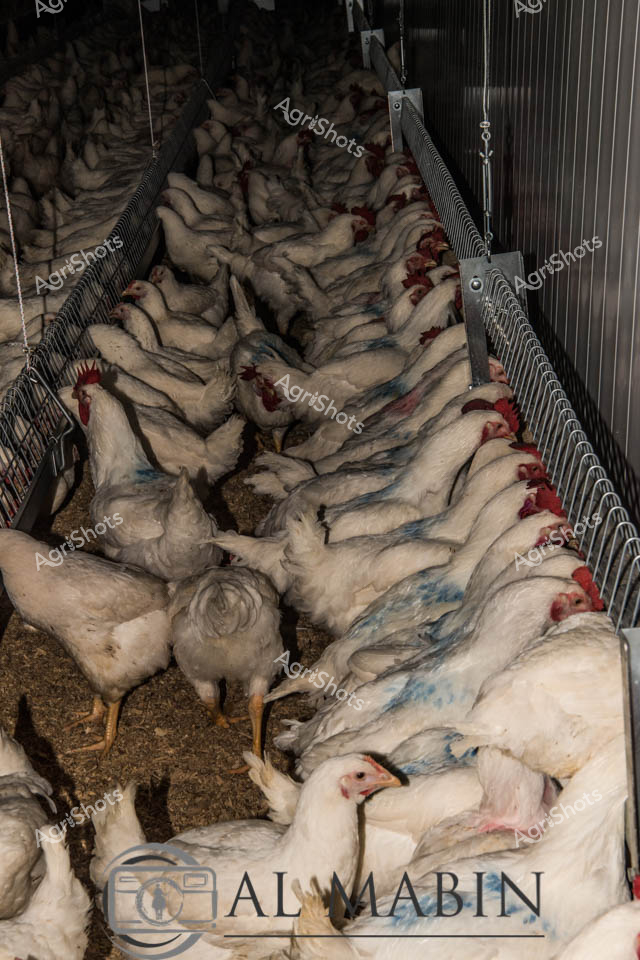
Battery-caged white leghorn chickens crowd tightly in narrow wire enclosures, their pale feathered bodies pressed against each other in a uniform mass. Stark industrial lighting illuminates the dense layers of poultry, revealing blue identification markings and bright red combs against their pristine white plumage. The metallic grid of cages creates rigid geometric lines, emphasizing the systematic and controlled environment of large-scale egg production. Each bird is positioned with minimal space, representing standard commercial farming practices for maximizing egg yield. The ground beneath is covered with feed and droppings, creating a textured base that underscores the industrial nature of this agricultural setting.
 Image
Image
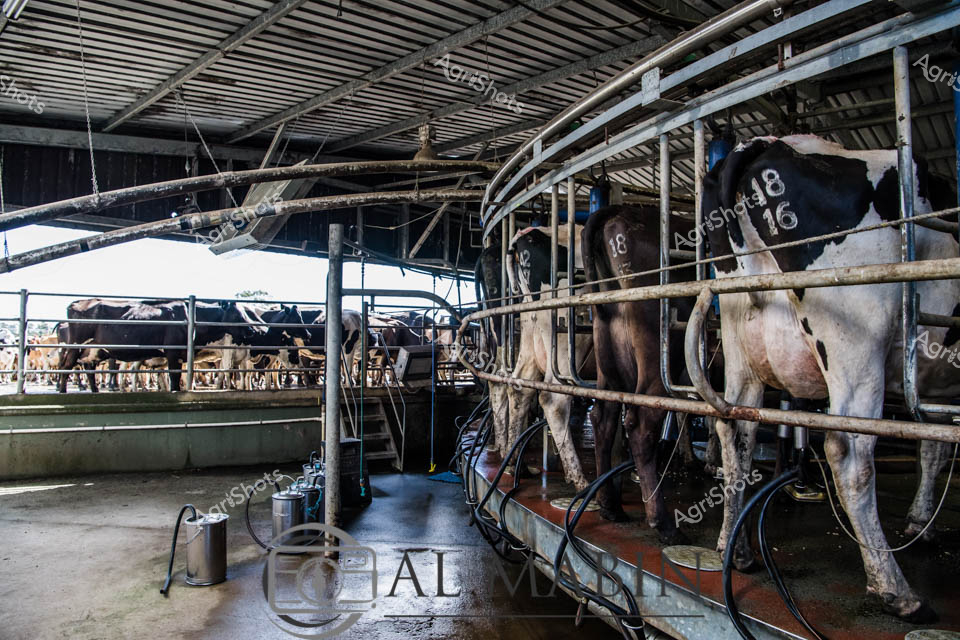
Industrial dairy milking carousel pulses with precision in a modern Gippsland shed, housing Holstein and Jersey dairy cows systematically arranged in numbered stalls. Gleaming metal infrastructure creates a choreographed rhythm of mechanical efficiency, with black and white cattle positioned symmetrically on a rotating platform designed for high-volume milk production. Metallic milking cups hang ready, connected to each cow's udders, transforming traditional agricultural practice into a streamlined technological process. Corrugated steel ceiling and structural supports frame the space, revealing an industrial aesthetic that speaks to contemporary agricultural engineering. The controlled environment suggests early morning - cool, crisp light filtering through the shed's openings, highlighting the polished surfaces and muscular forms of the dairy herd. Numbered stalls (16, 18) indicate a meticulously managed operation where each animal is tracked, monitored, and integrated into a precision agricultural system that maximizes productivity and animal welfare.
 Image
Image
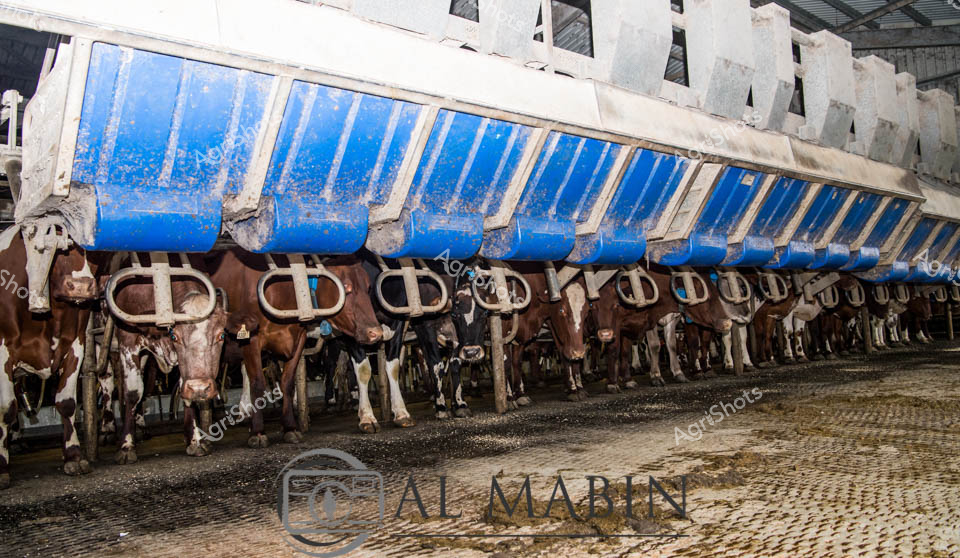
Rows of black and white Holstein dairy cows stand meticulously aligned beneath an expansive blue milking station, their muscular frames secured in precision-engineered metal stalls. The industrial dairy shed reveals a pristine yet hardworking agricultural environment, with gleaming blue milking equipment arching over the livestock in a rhythmic mechanical embrace. Concrete flooring and structured overhead infrastructure showcase the sophisticated technology of modern Australian dairy farming, where efficiency and animal care converge. Soft ambient light illuminates the rich brown and white coat patterns of the cattle, highlighting their robust physique and the systematic approach of professional livestock management. Each cow stands patiently, connected to sophisticated milking apparatus that represents generations of agricultural innovation in rural New South Wales.