About this image
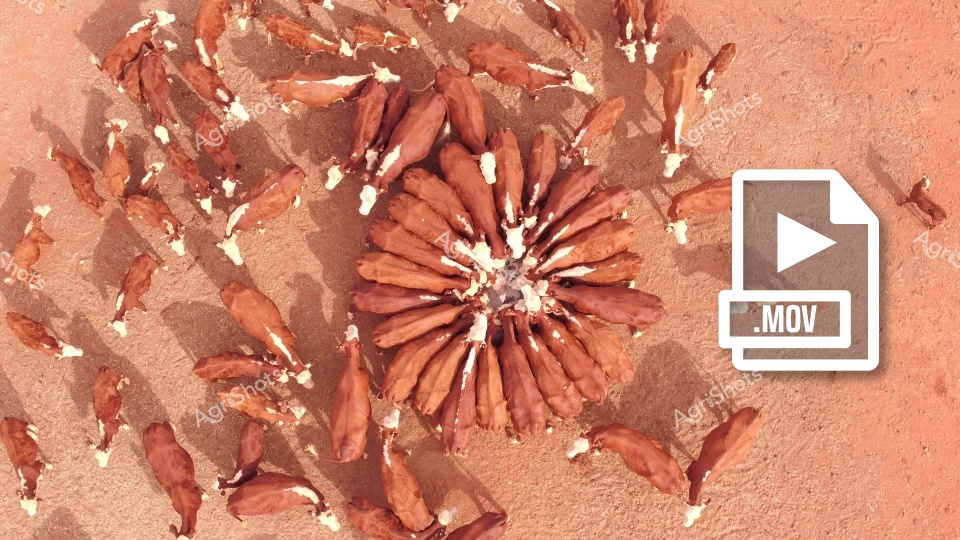
This fascinating video footage captures an extraordinary close-up of desert locust swarm dynamics, revealing intricate biomechanical patterns of collective movement. The clip features dozens of rusty-brown locusts arranged in a mesmerizing radial formation, with white-tipped antennae creating a delicate contrast against the terracotta-colored sandy ground. Each insect is precisely positioned, forming a living flower-like structure with a central point from which the bodies radiate outwards in an almost mathematically perfect arrangement. The video likely documents a critical moment in locusts' swarming behavior, showcasing their remarkable organizational instincts and collective intelligence. The warm, earthy color palette suggests an arid environment typical of regions like northern Australia or the central desert zones where such swarm phenomena occur. The precise positioning and synchronicity of the insects hint at complex communication and navigation strategies that enable these creatures to move and organize with extraordinary precision. This agricultural documentary footage provides a rare, intimate perspective on one of nature's most fascinating collective animal behaviors, offering researchers and viewers an unprecedented view of locust swarm mechanics and group movement patterns. The visual composition transforms what might typically be seen as a agricultural pest into a stunning display of natural geometry and collective animal intelligence.
Similar media
 ▶ Video
A radial arrangement of reddish-brown oyster mushrooms forms an intricate, flower-like pattern against a terracotta-colored background. The mushrooms are positioned with their caps pointing outward from a central point, creating a symmetrical design that resembles a biological mandala. Each mushroom shows distinctive white stems and reddish-brown caps, displaying the organic beauty and geometric precision of fungal growth.
 ▶ Video
A large herd of cattle, primarily in white and reddish-brown colors, are tightly clustered together raising dust in an arid, sandy landscape. The aerial view captures the animals moving as a dense, dynamic group, creating a swirling pattern of animals and kicked-up earth. The scene suggests cattle herding or migration across a dry, open terrain.
 ▶ Video
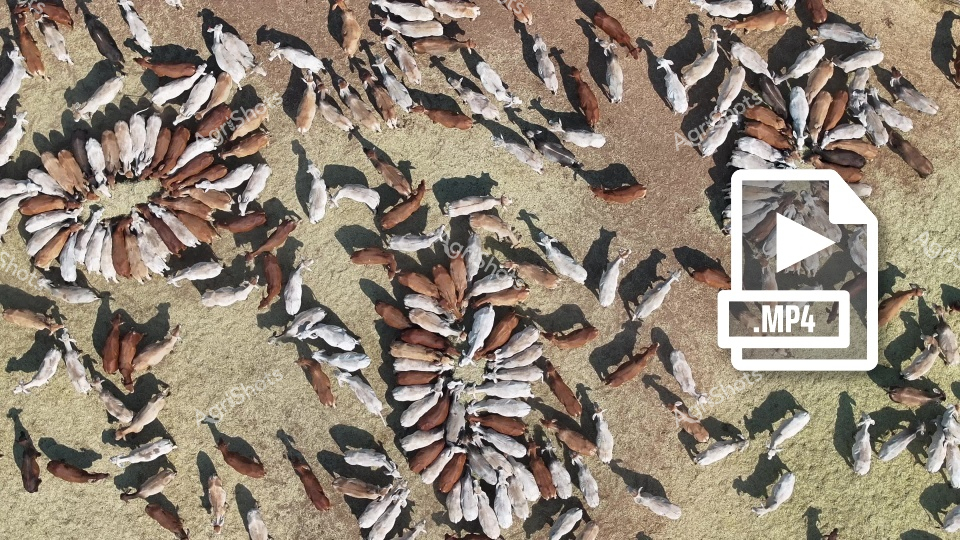
Brahman cattle cluster in intricate, living patterns across the dusty Northern Territory export yards near Adelaide River. Russet, white, and ash-grey bodies form organic radial formations, their shadows stretching beneath them in the soft autumn light. These heat-tolerant cattle, distinctive with their prominent humps and loose skin, huddle together with an almost choreographed precision, creating a mesmerizing aerial tableau of pastoral movement. The cattle's varied coat colors - from deep copper to pearl - reflect the rich genetic diversity of the Brahman breed, perfectly adapted to Australia's challenging tropical landscapes. Each animal stands with the quiet resilience characteristic of livestock raised in the Northern Territory's demanding environment, their positioning suggesting both individual presence and collective purpose. The raw video format captures this dynamic scene with an unfiltered authenticity, revealing the complex rhythms of Australia's live export industry and the essential role of these remarkable cattle in the nation's agricultural ecosystem.
 ▶ Video
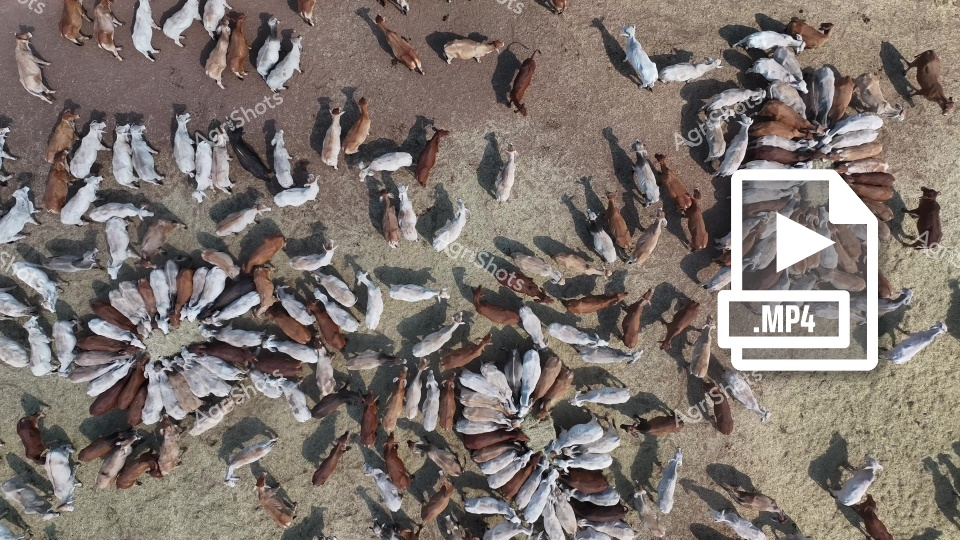
An aerial view of Brahman cattle clustered in circular formations at an export yard in the Northern Territory's Adelaide River region. The cattle, varying in shades of white, brown, and gray, are densely packed on a dusty ground, likely during autumn feeding time. This image captures the scale and organization of live cattle export operations in Australia's northern agricultural landscape.
 ▶ Video
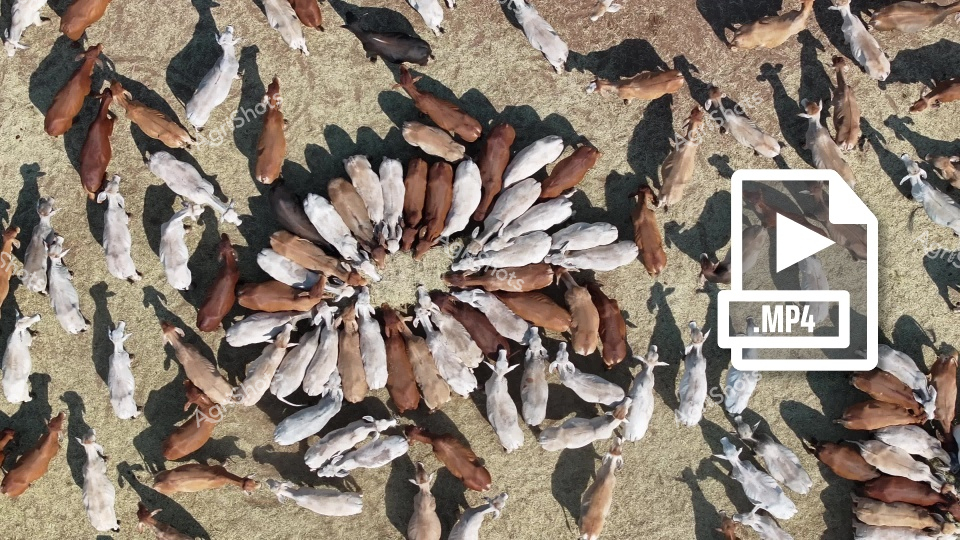
An aerial view of Brahman cattle clustered in a circular formation at an export yard in the Northern Territory's Adelaide River Region. The cattle, predominantly white and reddish-brown, are tightly grouped on a sandy ground, creating a radial pattern with their bodies and shadows. This image captures the cattle during feeding time, showcasing the live export industry's operations in Australia's tropical north.
 Image
Image
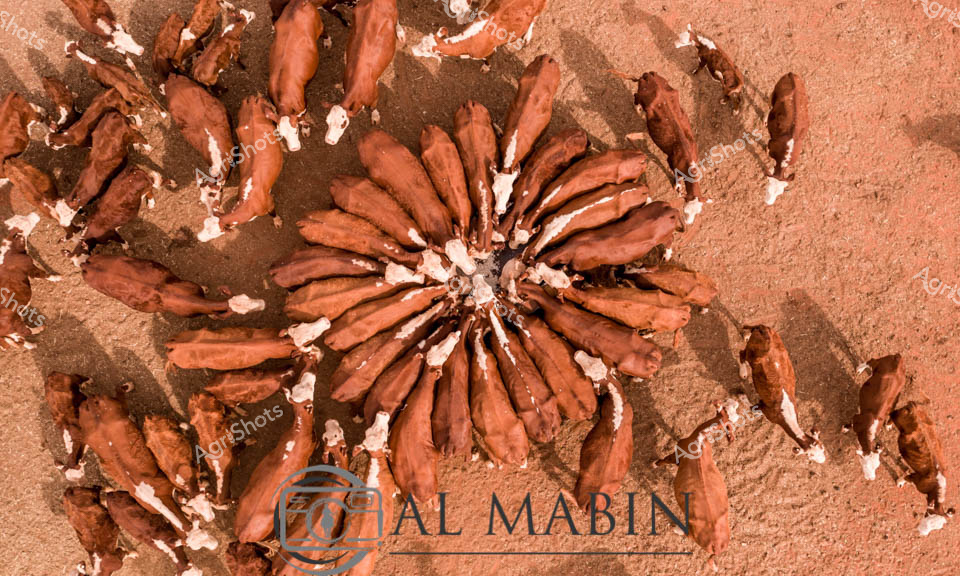
Clustered like a living mandala, recently weaned calves huddle tightly in a radial formation, consuming supplementary cotton seed feed during the harsh drought conditions of rural New South Wales. The terracotta-hued earth beneath them reflects the unforgiving arid landscape, each vulnerable animal positioned with precision around a central point, their reddish-brown bodies creating an almost geometric pattern of survival. White patches of feed contrast against the rusty ground, highlighting the critical nutritional intervention by farmers battling extreme environmental conditions. Each calf represents not just an individual animal, but a testament to agricultural persistence - carefully managed, strategically fed, surviving where only the most robust can endure. The overhead perspective transforms a practical feeding strategy into an almost artistic representation of agricultural survival, showcasing the intricate relationship between human intervention and animal husbandry in the Australian pastoral landscape.
 ▶ Video
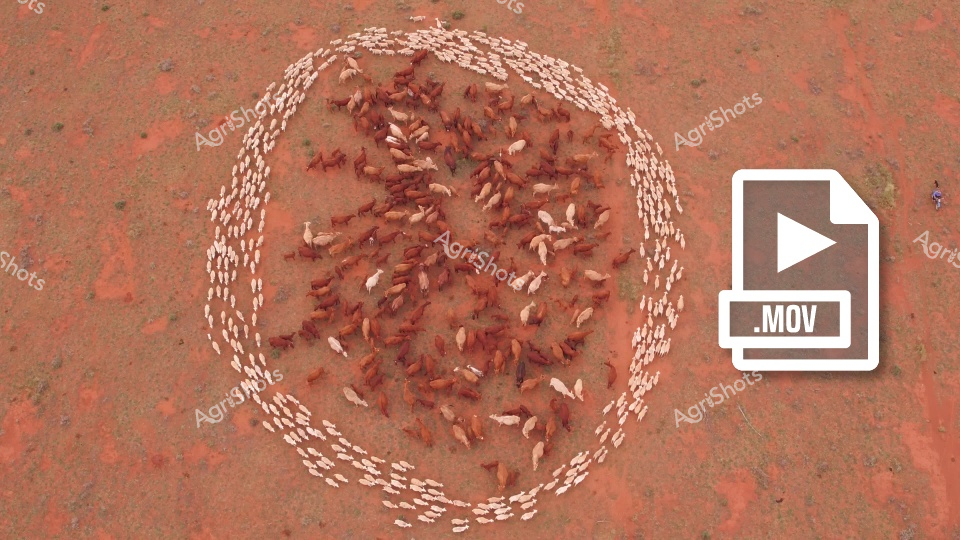
Aerial view of a cattle herd forming a circular pattern on a reddish-brown soil surface. The cattle, appearing to be various shades of red and brown, are clustered tightly in the center with a distinct ring of white/lighter-colored animals surrounding them. This unique overhead perspective showcases the herd's natural herding behavior and creates a visually striking circular formation against the earthy background.
 ▶ Video
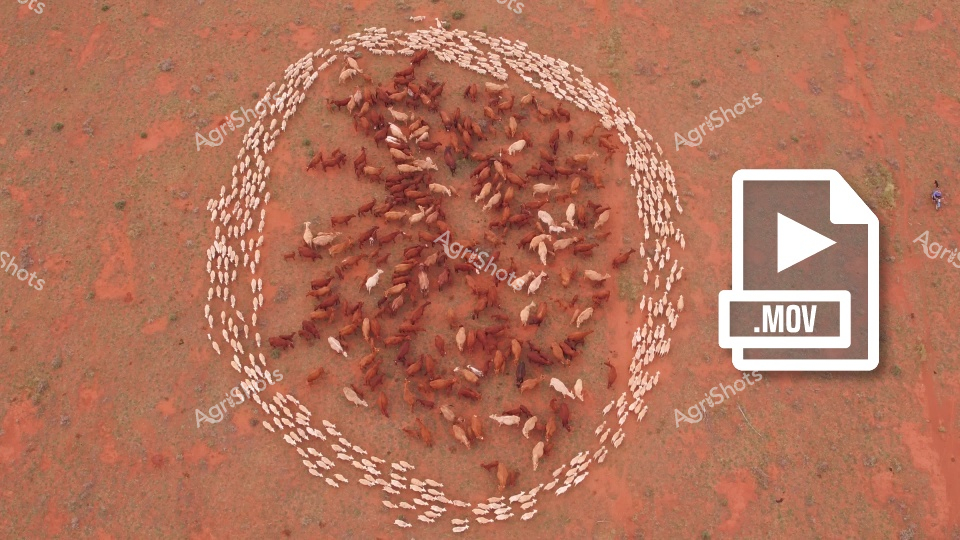
Sheep gather in a circular formation on red dirt ground in the Western Plains Region of New South Wales, creating an artistic pattern as stockmen on motorbikes and working dogs coordinate the muster. The Dorper sheep form a tight cluster within the circular boundary, demonstrating the precision of Australian livestock handling techniques. This aerial perspective captures the choreographed movement of cattle and sheep mustering operations, showcasing the collaborative effort between stockmen, dogs, and livestock on the rural station property.