Results for “infrastructure”
 Image
Image
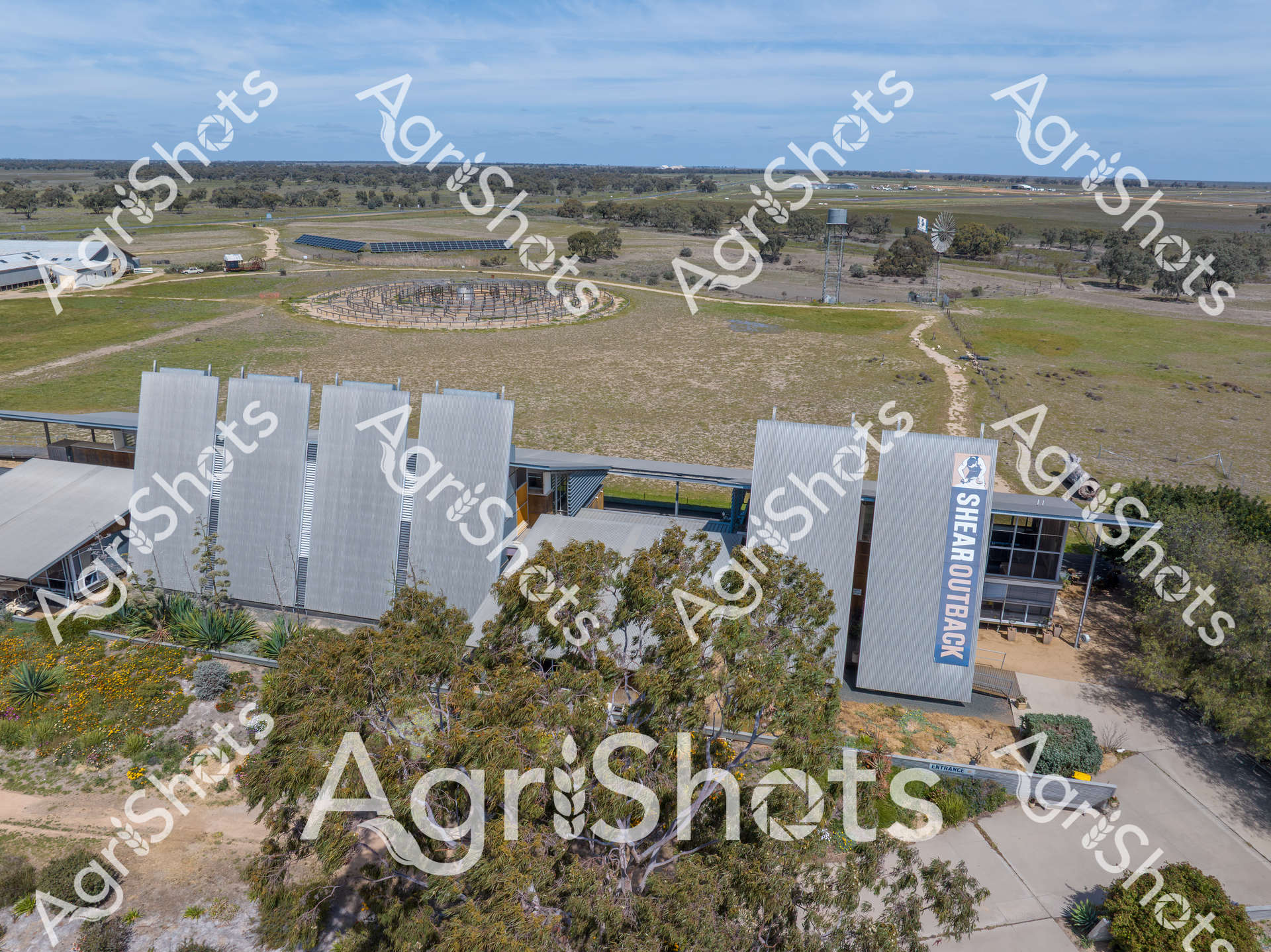
An aerial view of Shear Outback, a rural agricultural tourism site in New South Wales' Riverina region. The landscape features modern shearing facilities, solar panels, a circular sheep yard, and native trees, highlighting the area's sheep farming heritage and sustainable agricultural practices.
 Image
Image
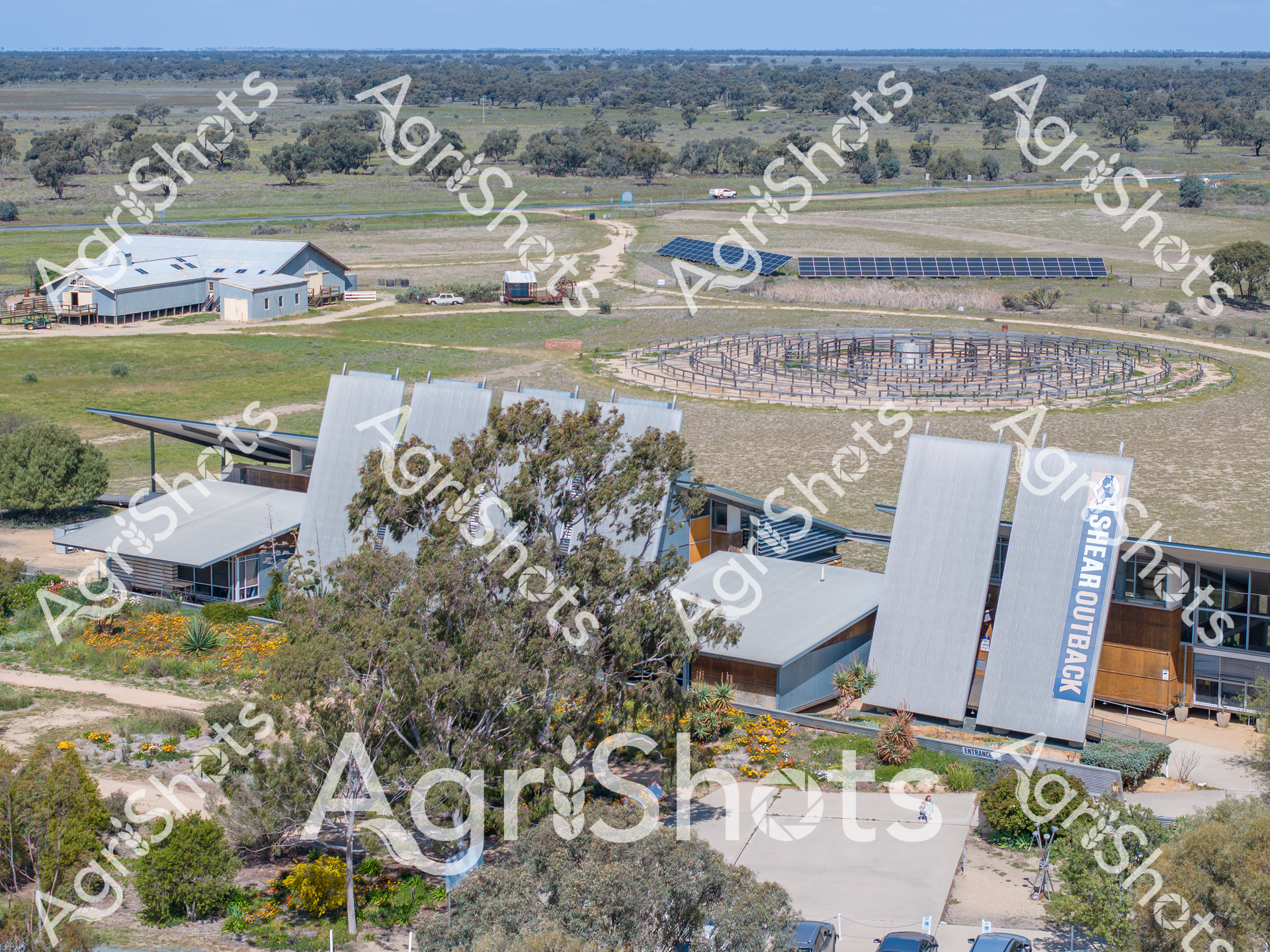
Scenic aerial view of Shear Outback, a premier agritourism destination in New South Wales' Riverina region. Modern architectural buildings blend with the expansive pastoral landscape, featuring solar panels, a circular livestock yard, and native Australian vegetation. The site showcases the region's rich sheep farming heritage, highlighting sustainable agricultural practices and cultural tourism.
 Image
Image
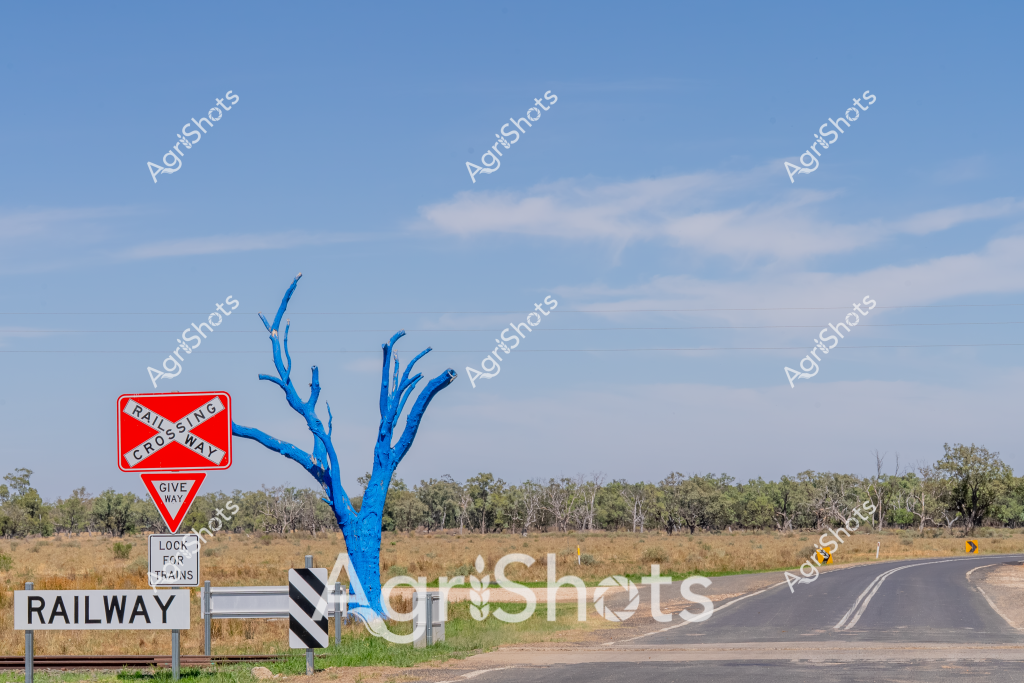
A striking blue tree stands beside a railway crossing sign in an expansive rural Australian landscape. A red triangular railway crossing sign with "GIVE WAY" and "RAILWAY" text warns travelers of the approaching train track, set against a backdrop of dry grasslands and scattered eucalyptus trees. The vivid blue tree appears to be an artistic installation or painted dead tree, creating a surreal contrast with the muted earth tones of the surrounding countryside. A curved bitumen road winds around the tree and railway signage, suggesting this is a remote rural intersection in an Australian agricultural region. The clear blue sky and open landscape capture the vast, sparse character of the Australian outback, where infrastructure and occasional artistic interventions punctuate the expansive natural environment.
 Image
Image
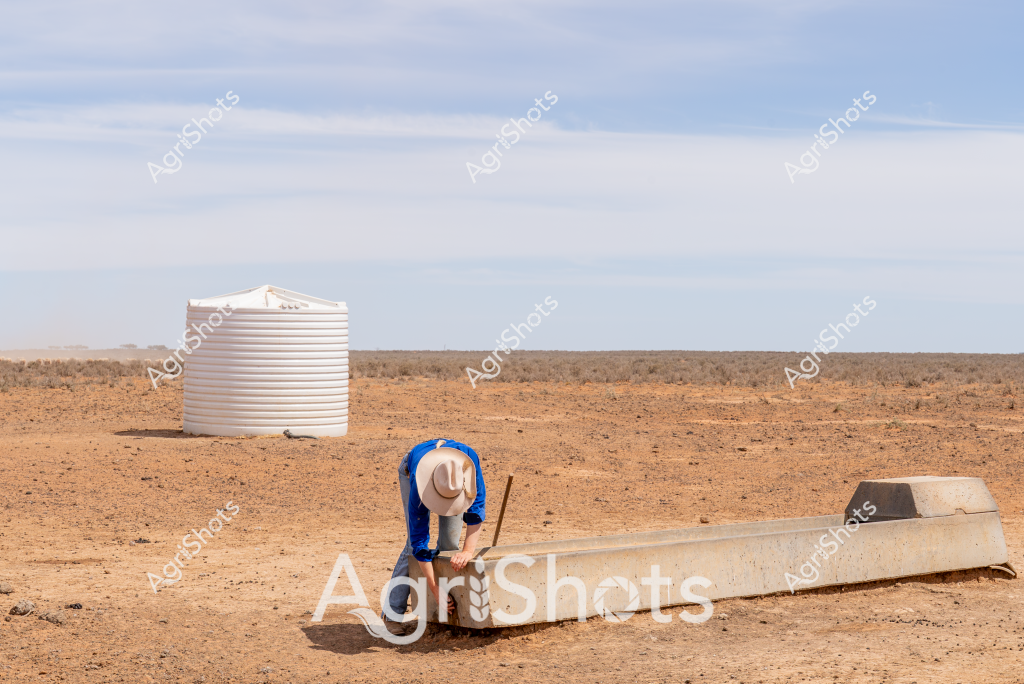
A man in a blue shirt and wide-brimmed hat bends over a concrete water trough in a sun-baked, arid landscape. The expansive paddock stretches to a distant horizon, with sparse, dry vegetation covering the reddish-brown earth. A large white water tank stands sentinel nearby, highlighting the critical importance of water infrastructure in this harsh, drought-affected environment. The scene captures the challenging conditions faced by farmers in rural Australia, with the lone figure working diligently to maintain essential water resources for livestock or agricultural needs. The pale blue sky and flat, open terrain emphasize the isolation and resilience required in such remote agricultural settings.
 Image
Image
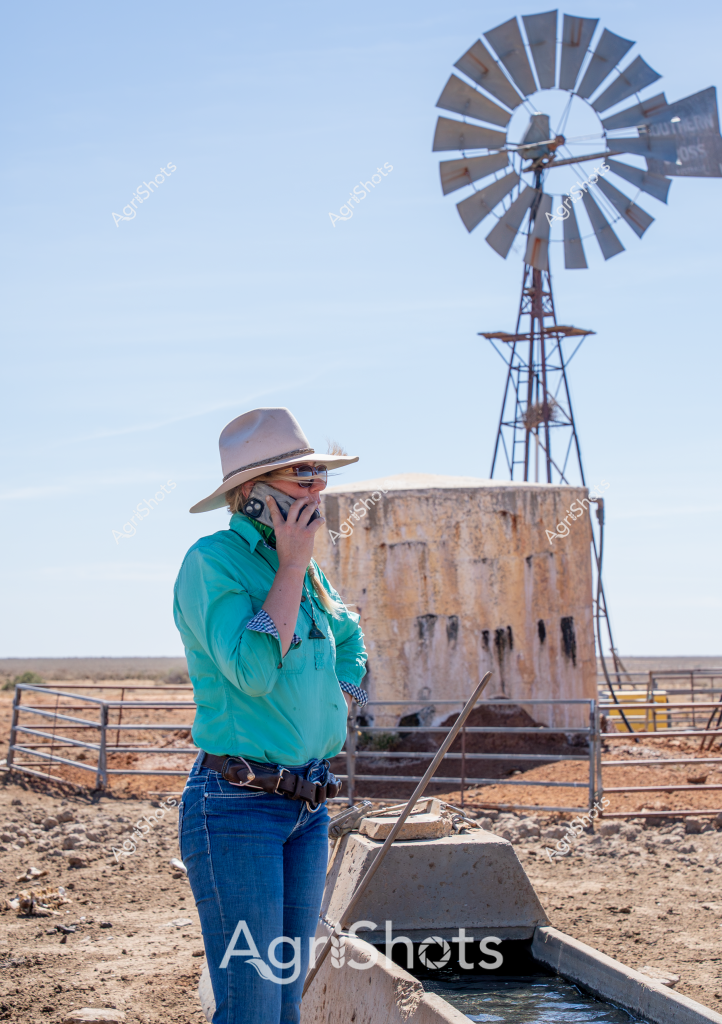
A woman farmer stands in a sun-bleached rural landscape, talking on a mobile phone beside a classic Australian windmill and water tank. Wearing a cream Akubra hat, turquoise long-sleeved shirt, and blue jeans, she appears to be managing a remote pastoral property. The metal windmill towers above a concrete water trough, with a rusted water storage tank visible in the background. The surrounding terrain is arid and rocky, typical of Australia's inland agricultural regions, with a clear blue sky suggesting a hot, dry day. Her stance and communication suggest she is coordinating farm operations or checking on livestock in this challenging outback environment. The scene captures the essence of contemporary rural Australian agriculture - a blend of traditional infrastructure like the windmill and modern communication technology, with a resilient farmer adapting to the demands of managing agricultural land in a harsh landscape.
 Image
Image
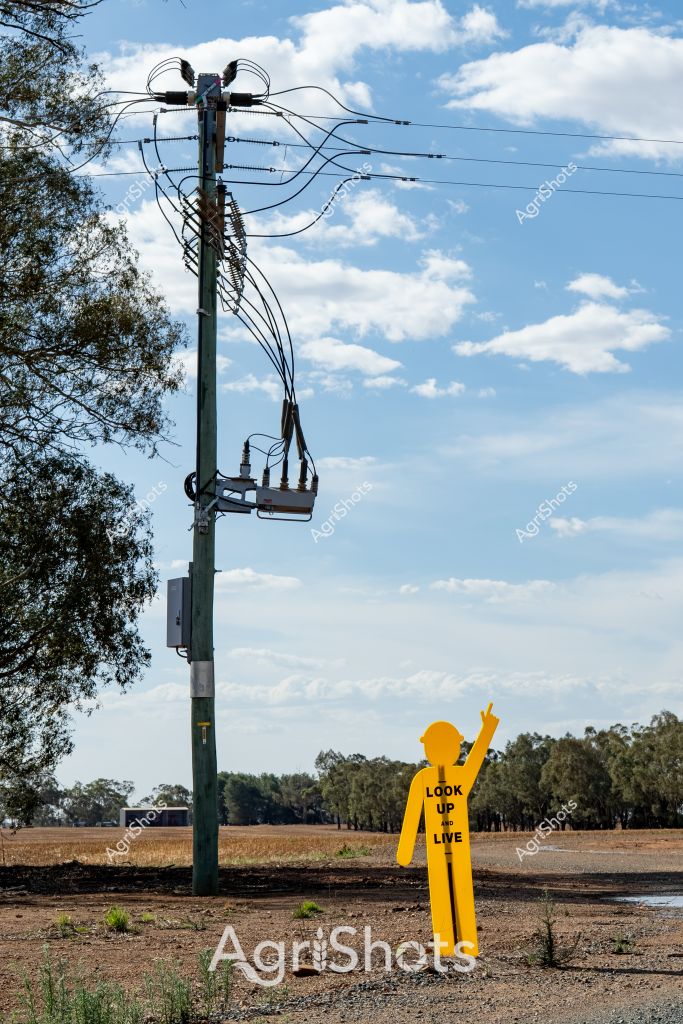
A striking safety awareness scene highlighting electrical hazard risks in rural Australia. A bright yellow silhouette of a safety figure stands near a power pole, with its "Look Up and Live" warning dramatically positioned against a backdrop of dry agricultural land and eucalyptus trees. The green power pole rises sharply against a blue sky with soft white clouds, its complex network of electrical cables and transformers demonstrating the intricate infrastructure that delivers electricity to remote farming regions. Sparse ground vegetation and a compacted dirt area surrounding the pole emphasize the harsh, arid landscape typical of Australian rural environments. The yellow safety figure's raised arm points upward, serving as a critical reminder of the potential dangers of electrical infrastructure and the importance of maintaining safe distances around power equipment.
 Image
Image
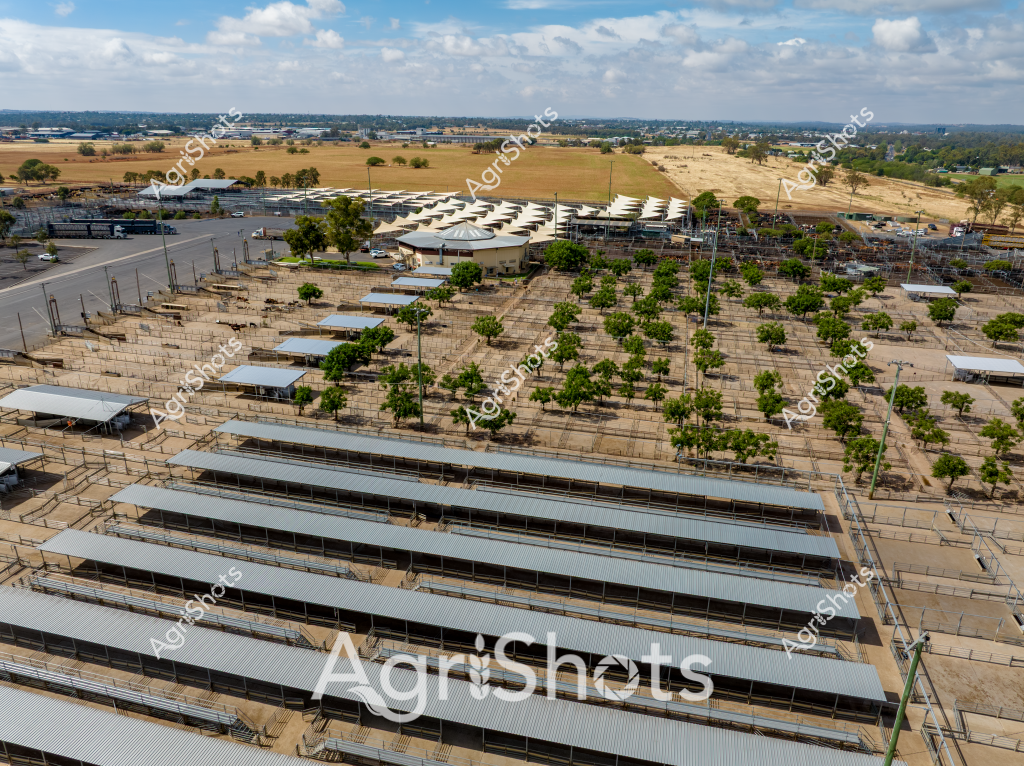
An expansive aerial view of a modern livestock facility reveals a systematic agricultural complex featuring multiple long, covered livestock sheds with metal roofing. Strategically planted trees are interspersed throughout the sandy-colored ground, providing shade and windbreaks across the extensive property. The facility appears designed for efficient animal management, with carefully constructed pens, walking areas, and sheltered spaces that maximize animal welfare and operational productivity. The landscape surrounding the facility is characterized by open paddocks and distant rural infrastructure, with a backdrop of golden fields and scattered trees extending to the horizon. Multiple metal-roofed structures of varying lengths are arranged in parallel rows, suggesting a highly organized approach to livestock management. Lightweight shade structures and carefully planned vegetation contribute to the facility's professional and considered design. The aerial perspective highlights the scale and precision of modern agricultural infrastructure, showcasing how contemporary farming operations integrate functional design with animal husbandry best practices. Fencing, access routes, and strategic building placement demonstrate a sophisticated approach to livestock management in what appears to be an arid or semi-arid Australian agricultural setting. The expansive view captures the intersection of engineering, animal care, and agricultural innovation, revealing a meticulously planned livestock facility that represents the advanced state of Australian agricultural practices.
 Image
Image
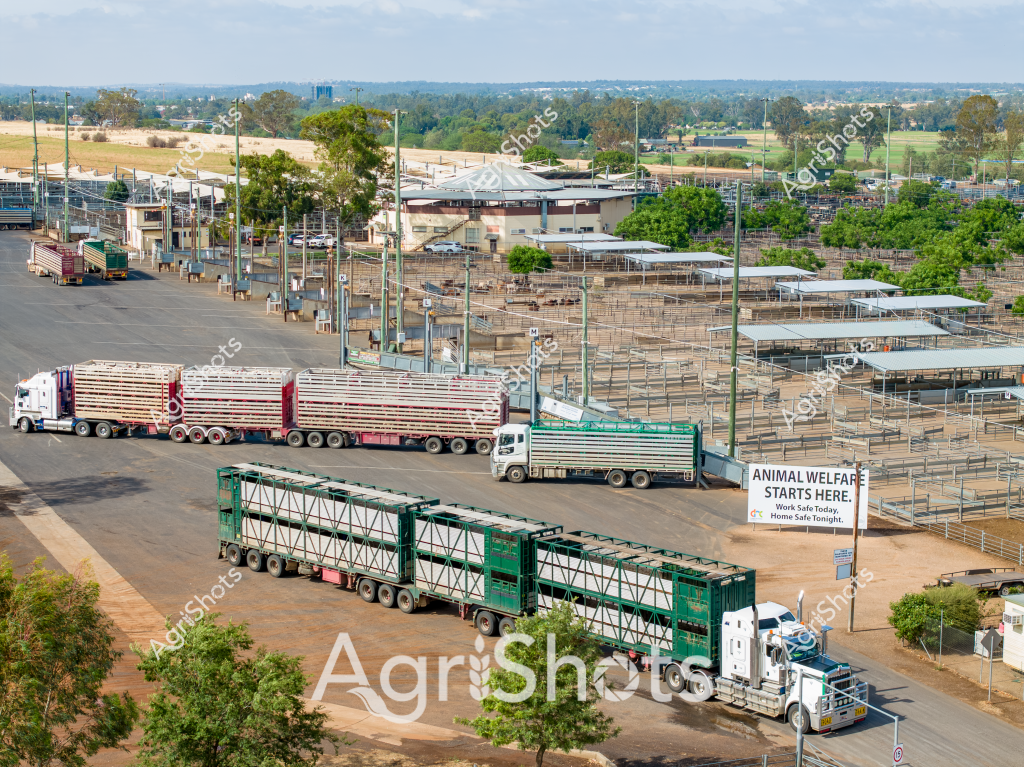
This image captures a comprehensive view of a modern livestock transportation and welfare facility, likely a livestock selling center or saleyards. Multiple large, multi-tiered livestock transport trucks are parked in the foreground, featuring green and white trailers specifically designed for animal transportation. The facility includes extensive metal livestock holding pens with white shade covers, creating a systematic layout for animal movement and management. A prominent "ANIMAL WELFARE STARTS HERE" sign emphasizes the facility's commitment to livestock care, with the additional text "Work Safe Today, Home Safe Tonight" suggesting a focus on both animal and worker safety. The surrounding landscape reveals a semi-rural setting with trees, distant buildings, and an expansive horizon typical of Australian agricultural regions. The transport trucks are heavy-duty, long-combination vehicles characteristic of Australian livestock logistics, engineered to safely transport large numbers of animals across vast distances. Multiple levels and compartments in the trailers allow for segregation and safe transport of different livestock groups. The facility's infrastructure demonstrates a highly organized approach to livestock management, with carefully designed infrastructure that prioritizes animal welfare and efficient transportation. The scene represents a critical node in Australia's livestock supply chain, where animals are prepared for transport, sale, or movement between agricultural properties. The meticulously planned layout and robust infrastructure highlight the professional standards of modern Australian livestock management.
 Image
Image
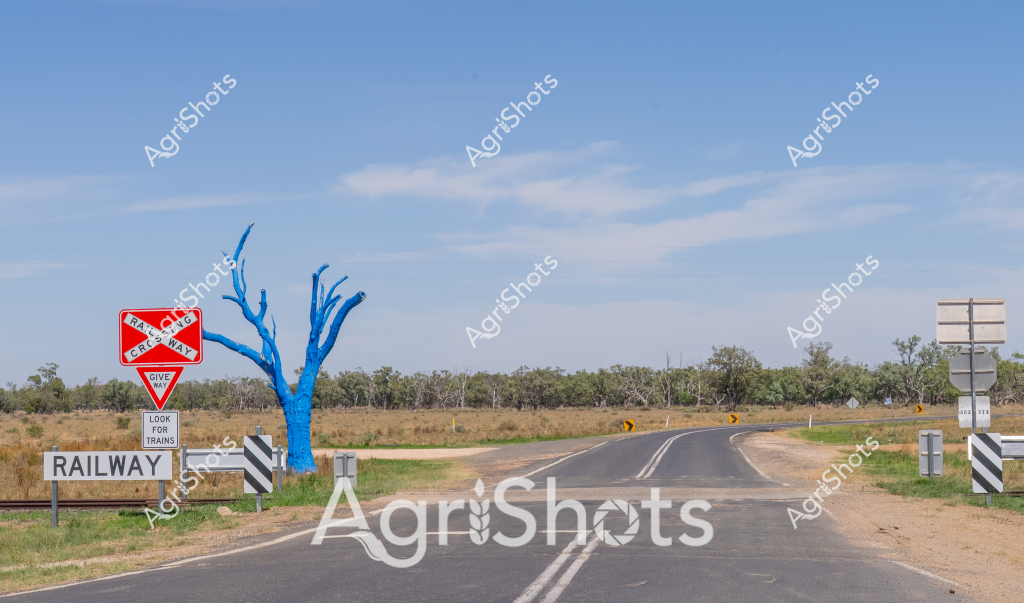
A striking rural railway crossing scene captures an isolated Australian landscape, with a vivid blue tree standing sentinel near a traffic sign. The winding asphalt road curves through a dry grassland setting, punctuated by roadside railway warning signs and distant eucalyptus trees. A "Give Way" and "Railway" sign alerts travelers to potential train crossings, emphasizing the safety infrastructure of rural transportation routes. The bright blue tree - likely an artistic installation or painted landmark - provides a surreal contrast against the muted landscape of golden grasses and soft blue sky. Roadside markers and gentle road curves suggest this is a remote agricultural region, typical of inland Australian terrain where transportation infrastructure connects sparse rural communities. The composition highlights the intersection of natural landscape and human-constructed pathways, with the unexpected blue tree adding an element of artistic intrigue to an otherwise utilitarian scene of rural road and rail infrastructure.
 Image
Image
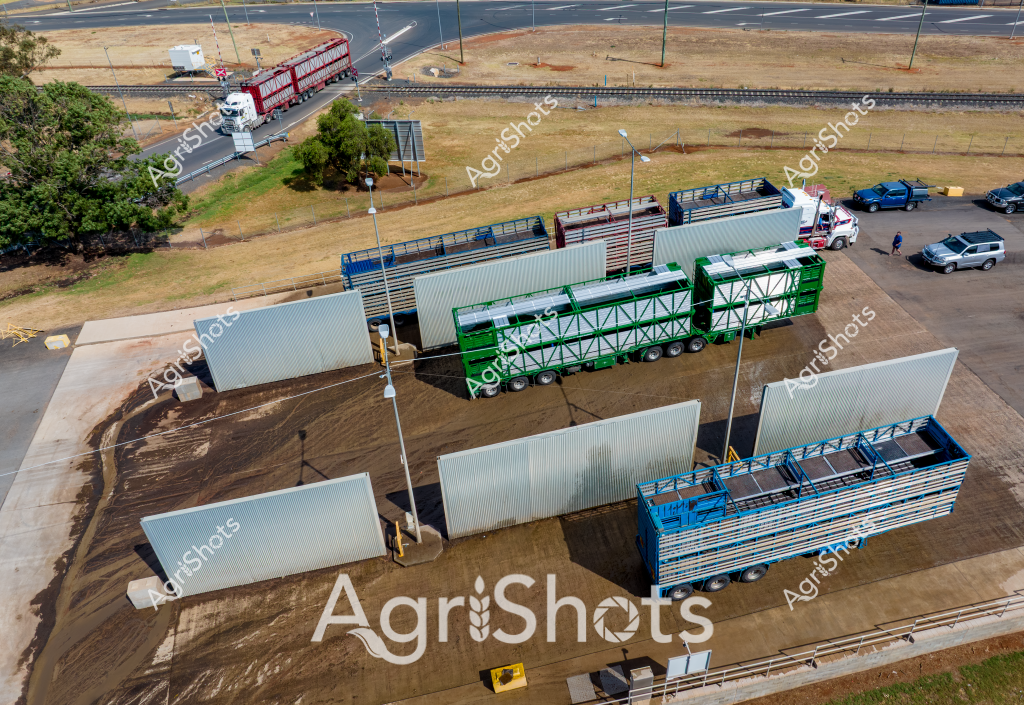
An aerial view of a transport and logistics hub showcases specialized livestock trailers designed for cattle transportation. Multiple multi-axle trucks with green, blue, and white animal transport containers are strategically positioned on a concrete hardstand area adjacent to railway lines. The scene reveals heavy-duty commercial vehicles with intricate steel framing and multiple decks, engineered to safely move livestock across Australian agricultural regions. Surrounding infrastructure includes grassy verges, bitumen roads, and railway tracks, indicating this is a professional livestock transportation staging area. Parked vehicles in the background suggest ongoing logistics operations, with the entire facility demonstrating the sophisticated infrastructure supporting Australia's cattle transport networks. The trailers feature robust steel construction with multiple levels, ventilation gaps, and secure railings - critical design elements for animal welfare during long-distance transportation. The green and blue color schemes of the trailers provide visual contrast against the dusty brown ground and gray infrastructure, highlighting the specialized nature of agricultural transport equipment.
 Image
Image
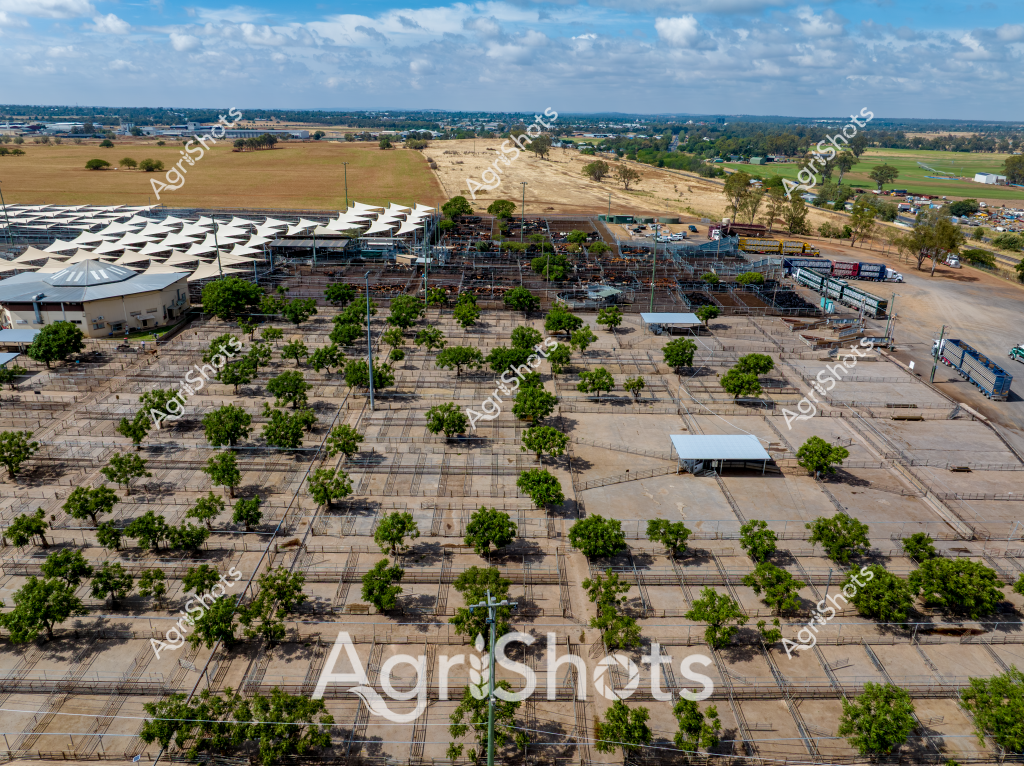
An expansive livestock processing facility captures the essence of Australian agricultural infrastructure, with a meticulously organized layout of multiple cattle yards and shade trees. The aerial view reveals a complex network of fenced paddocks, strategically positioned shelters, and a modern facility with distinctive white-peaked roofing structures. Mature trees are systematically planted throughout the concrete and dirt yards, providing natural shade and breaking up the geometric lines of the infrastructure. The surrounding landscape showcases a classic Australian rural setting, with golden dry paddocks extending to the horizon, punctuated by scattered trees and distant agricultural buildings. The facility appears to be a large-scale cattle processing center, with multiple holding yards, movement gates, and covered processing areas designed for efficient livestock management. The blue sky with scattered white clouds suggests a typical warm Australian day, highlighting the expansive nature of rural agricultural operations. Robust infrastructure and careful landscape design demonstrate the sophisticated approach to livestock management in contemporary Australian agriculture, balancing functional efficiency with environmental considerations. The image represents a sophisticated livestock processing facility that integrates architectural design, animal welfare considerations, and operational efficiency in a comprehensive agricultural setting.
 Image
Image
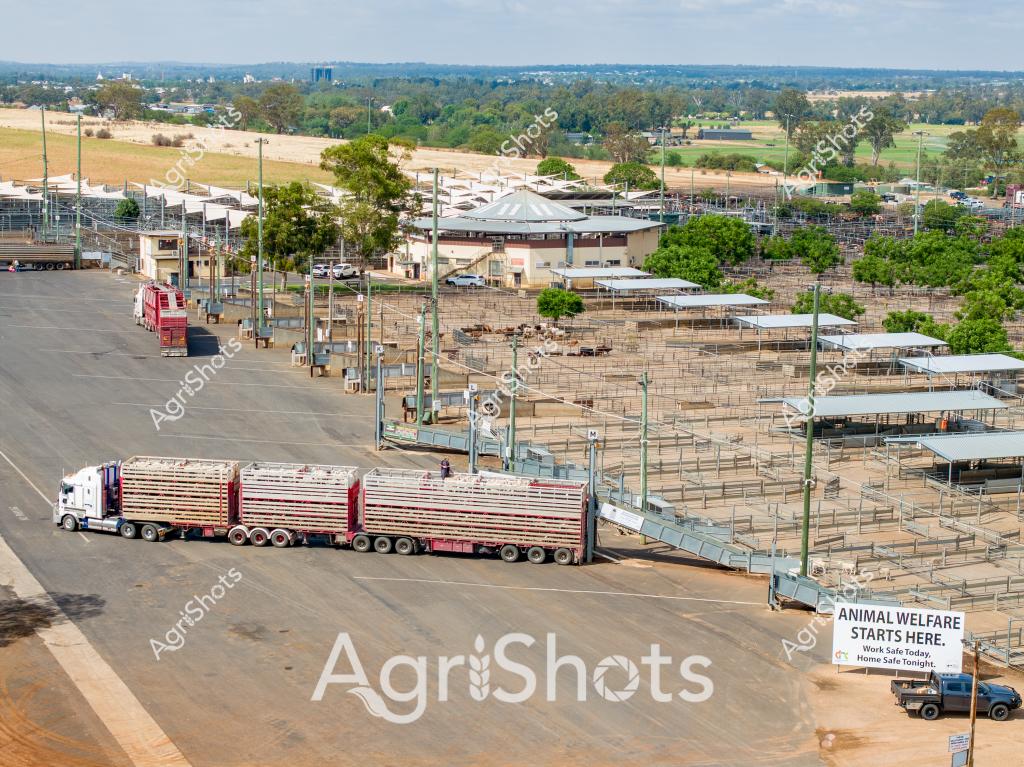
This image captures a comprehensive view of a livestock sale yard or agricultural processing facility, likely in an Australian rural setting. A large, multi-trailer livestock transport truck is positioned at the entry point of an expansive facility with multiple covered holding pens and infrastructure. The "Animal Welfare Starts Here" sign prominently indicates the facility's commitment to ethical livestock handling practices. The landscape reveals a broad agricultural setting with green trees and distant urban structures visible on the horizon, suggesting this is near a regional town or city. Multiple steel-framed holding pens with white shade covers are systematically arranged, demonstrating a modern, structured approach to livestock management. Green steel support poles create a grid-like framework throughout the facility, enabling efficient animal movement and processing. The transport truck appears to be a standard Australian road train configuration, with multiple trailers designed for long-distance livestock transportation, typical of cattle or sheep movements across vast pastoral regions. The facility's infrastructure suggests this is a sophisticated livestock sales yard, likely used for cattle or sheep auctions, with carefully designed loading ramps and holding areas to ensure animal welfare and efficient agricultural commerce. The scene represents a key node in Australia's agricultural supply chain, where livestock are professionally managed, transported, and traded with systematic precision and care.
 Image
Image
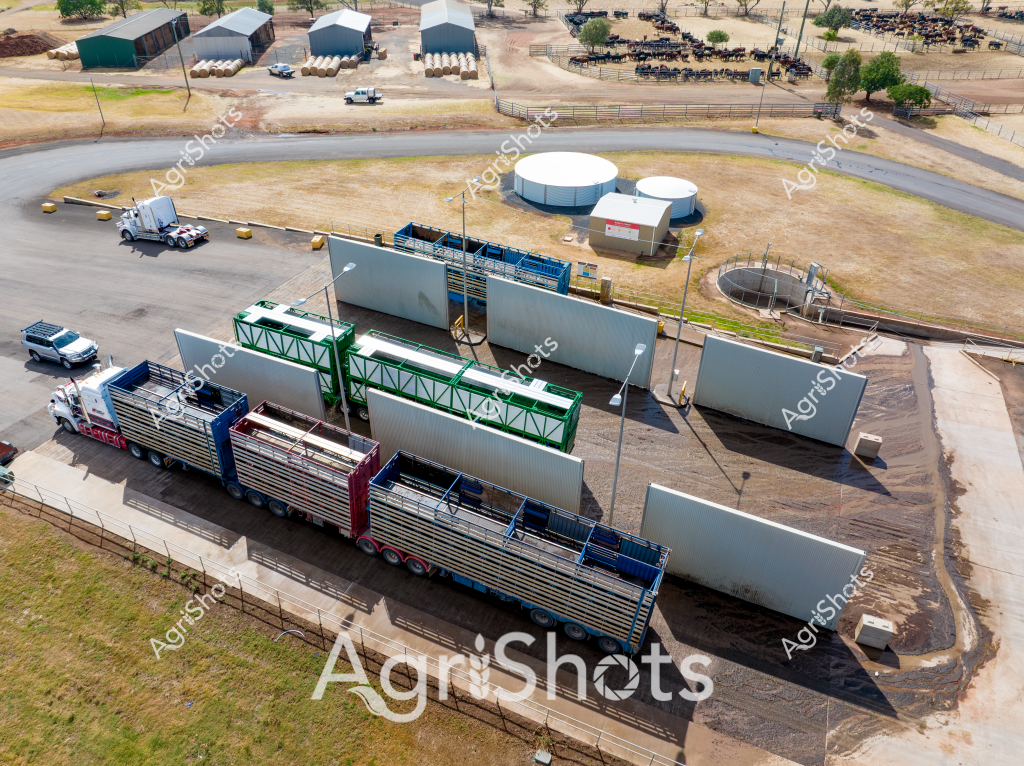
An aerial view of a livestock processing facility reveals a complex agricultural infrastructure designed for efficient cattle management. Large white modular walls and green-framed structures create a systematic loading and unloading area for semi-trailer trucks. White cylindrical water tanks and circular holding pens surround the central processing zone, indicating a modern cattle handling facility likely located in a dry, arid region with sparse vegetation and dusty ground. A semi-trailer truck is positioned within the loading zone, suggesting preparation for transporting livestock. The surrounding landscape features several industrial-style sheds with metal roofing in green and grey tones, and a series of fenced paddocks where numerous dark-colored cattle can be seen clustered together. The infrastructure demonstrates precision engineering typical of contemporary Australian agricultural operations, with carefully designed pathways, sturdy infrastructure, and strategic layout to maximize efficiency in livestock movement and processing. Gravel and concrete surfaces provide durable, functional spaces for heavy vehicle and animal traffic, reflecting the demanding environmental conditions of rural livestock production zones. The aerial perspective offers a comprehensive view of the facility's layout, highlighting the sophisticated systems developed to manage large-scale cattle operations in challenging agricultural environments.
 Image
Image
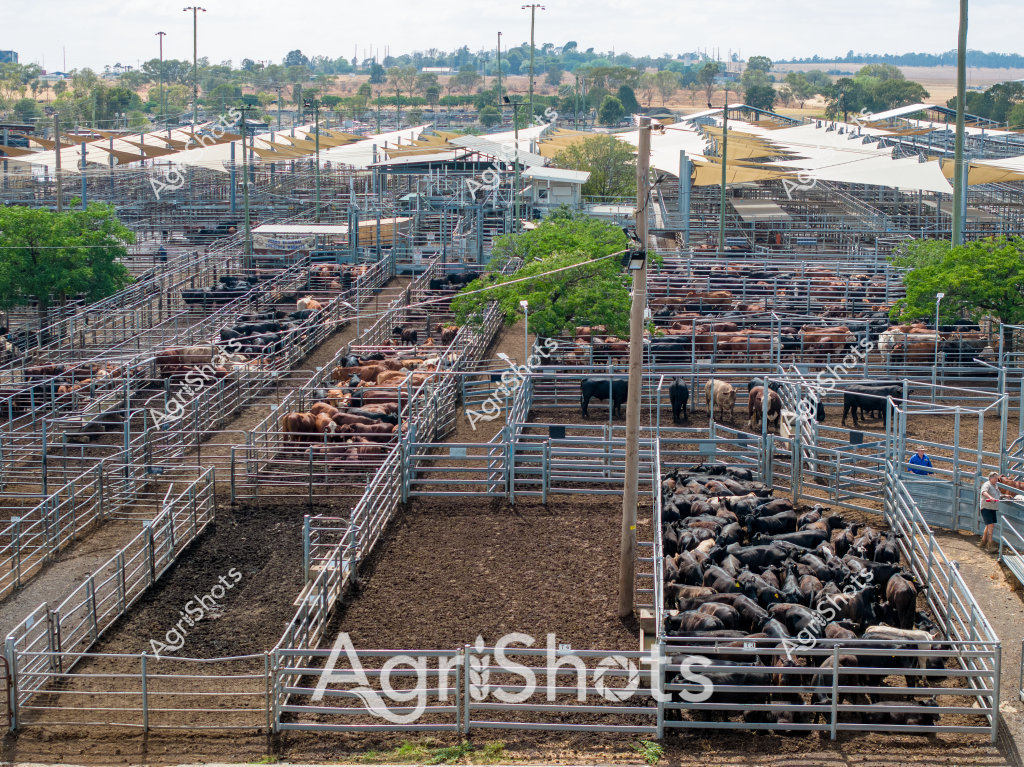
A vast cattle saleyard extends across the landscape, with multiple metal pen enclosures housing hundreds of black and brown cattle. The expansive facility features galvanized steel fencing dividing the pens, with shade structures in tan and white providing cover for the livestock. Densely packed groups of cattle occupy different sections, standing on bare dirt areas between green vegetation patches. Tall light poles and infrastructure buildings are visible in the background, indicating this is a large-scale commercial beef production facility. The scene captures the industrial scale of modern cattle farming, with precise grid-like pen arrangements and systematic livestock management. Multiple breeds and colors of cattle can be seen, suggesting a mixed herd being prepared for market.
 Image
Image
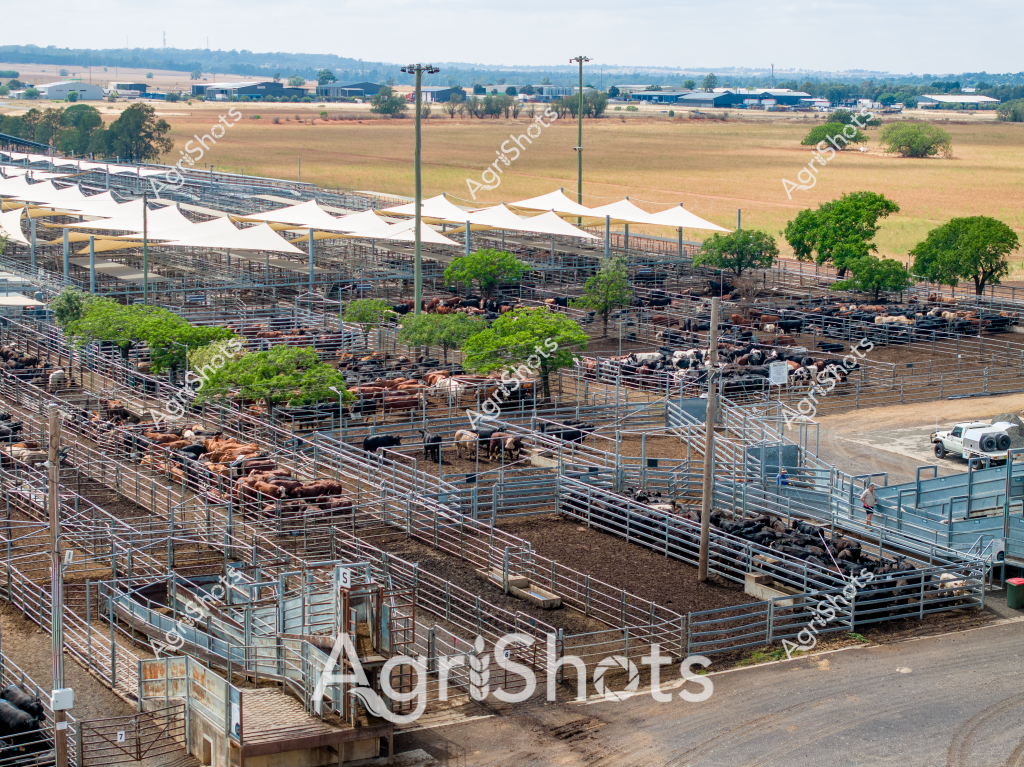
A comprehensive livestock holding facility spreads across a rural landscape, featuring multiple steel-fenced yards housing diverse cattle herds. White shade structures provide protection for the animals, while carefully positioned green trees offer additional shelter and visual breaks between the paddocks. Multiple breeds of cattle - including some with reddish-brown coats and others with darker markings - are grouped in separate enclosures, indicating a professional cattle management operation. Tall light poles provide illumination across the extensive yards, and a white utility vehicle is parked near the processing area, suggesting active agricultural management. The surrounding landscape reveals a broad, flat terrain with distant farm buildings and tree lines, typical of an Australian cattle station or agricultural precinct. The systematic layout demonstrates sophisticated livestock infrastructure, with meticulously organized zones for animal sorting, movement, and temporary holding.
 Image
Image
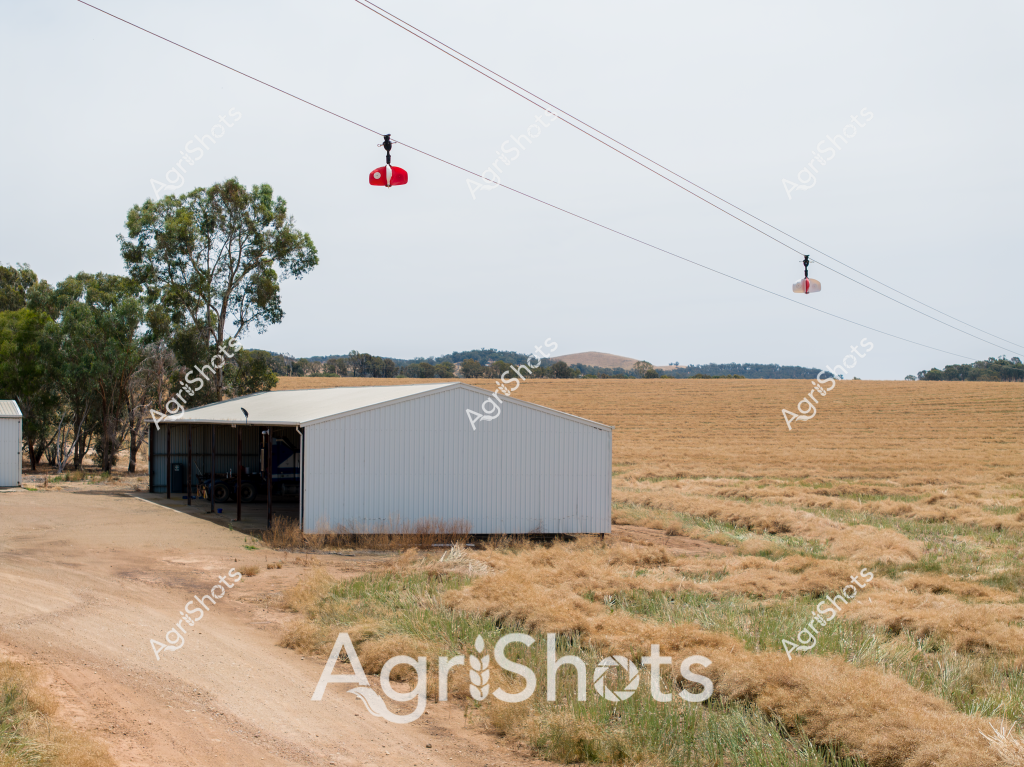
A rural agricultural scene capturing a classic farm shed set against a dry, golden landscape. Two red markers hang from overhead power lines, suggesting a potential livestock or crop monitoring system. The corrugated iron shed stands solidly beside a dirt track, with dried grass and sparse trees surrounding the structure. The landscape reveals rolling hills in the background, typical of an Australian agricultural region during a dry season. The muted color palette of browns, grays, and soft greens speaks to the challenging environmental conditions, likely indicating a period of drought or late summer when pastures have been heavily grazed or harvested. The landscape embodies the resilience of Australian farming - a stark, functional setting where infrastructure and environment coexist with minimal embellishment. The power lines, shed, and surrounding terrain create a composition that speaks to the practical, no-nonsense approach of rural agricultural operations.
 Image
Image
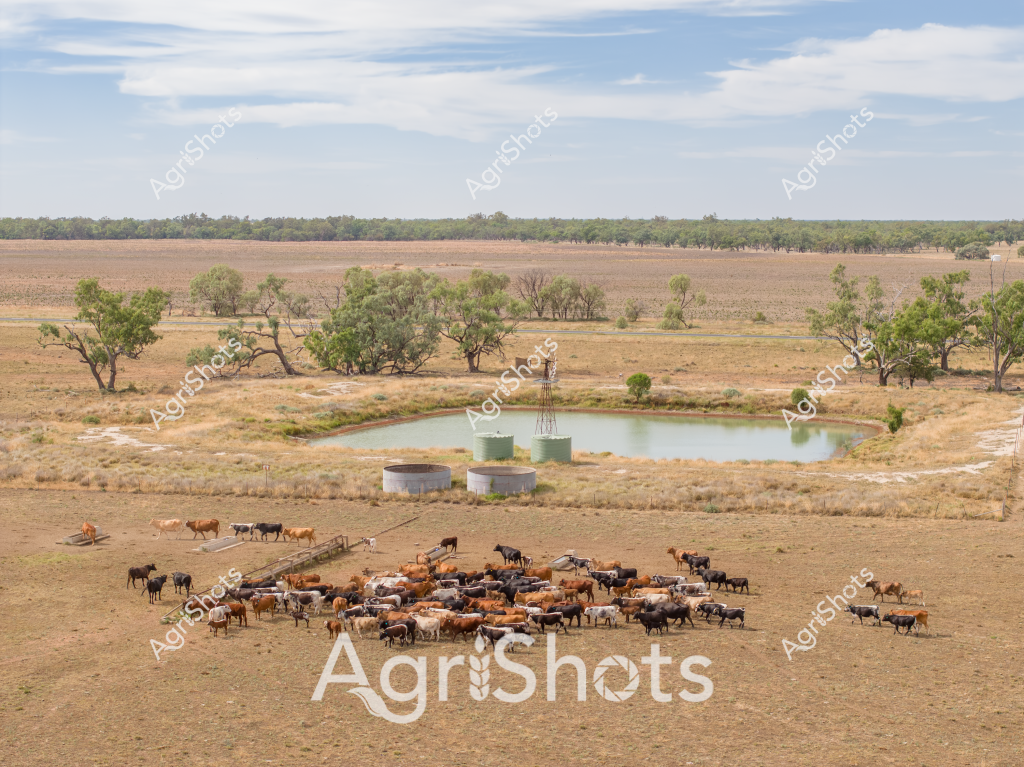
A classic Australian pastoral scene captures a small herd of mixed-breed cattle clustered around a water dam in a dry, expansive landscape. The circular water dam, accompanied by windmill and water storage tanks, sits in the center of a parched paddock with scattered eucalyptus trees and sparse grassland stretching toward distant tree lines. Multiple cattle breeds are represented - including black, brown, and white animals - huddled together near the water source in what appears to be a challenging dry season environment. The landscape suggests an inland Queensland or New South Wales pastoral station, with its characteristic wide-open terrain and minimal vegetation indicative of prolonged drought conditions. A windmill stands sentinel beside the water dam, a quintessential feature of Australian rural infrastructure, providing critical water access for livestock in arid agricultural regions. The scene powerfully illustrates the resilience of Australian cattle farming, where strategic water management is essential for survival during harsh environmental conditions.
 Image
Image
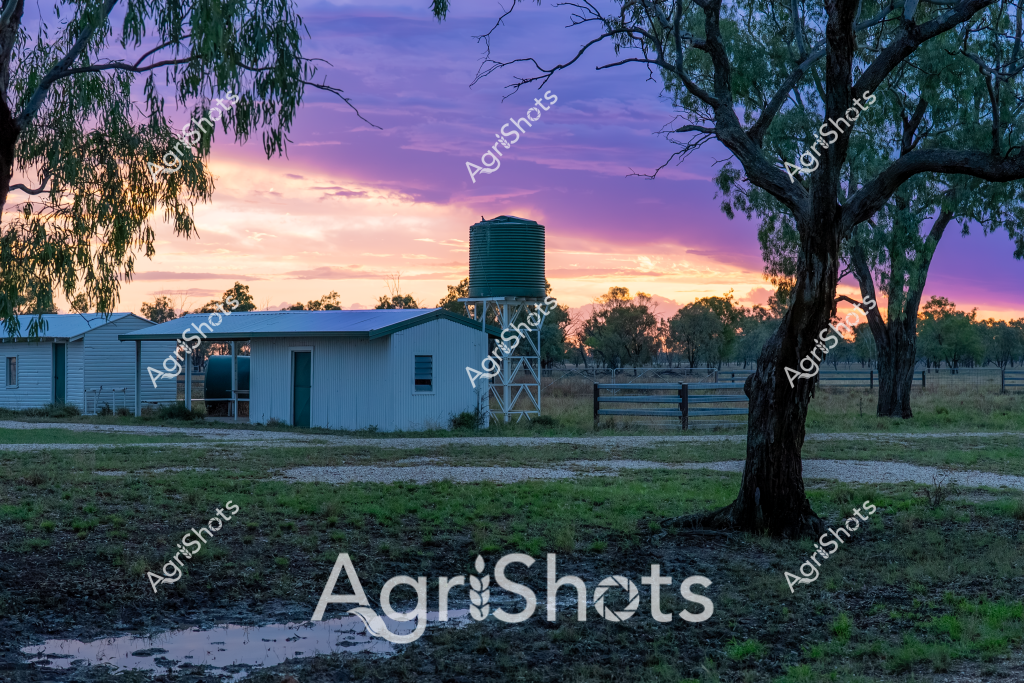
A tranquil rural sunset illuminates a quintessential Australian farm setting, with a green water tank standing prominently beside a weathered corrugated iron shed. Eucalyptus trees frame the landscape, their silhouettes etched against a stunning purple and orange sky that signals the day's end. The grassy paddock in the foreground shows signs of recent rainfall, with small puddles reflecting the dramatic twilight colors. A wooden fence line stretches into the distance, defining the property's boundary and adding depth to the pastoral scene. The water tank, mounted on a sturdy metal frame, represents critical infrastructure for rural water management, highlighting the importance of water resources in this agricultural environment. The soft evening light creates a serene atmosphere, capturing the quiet beauty of an Australian rural landscape at dusk.
 Image
Image
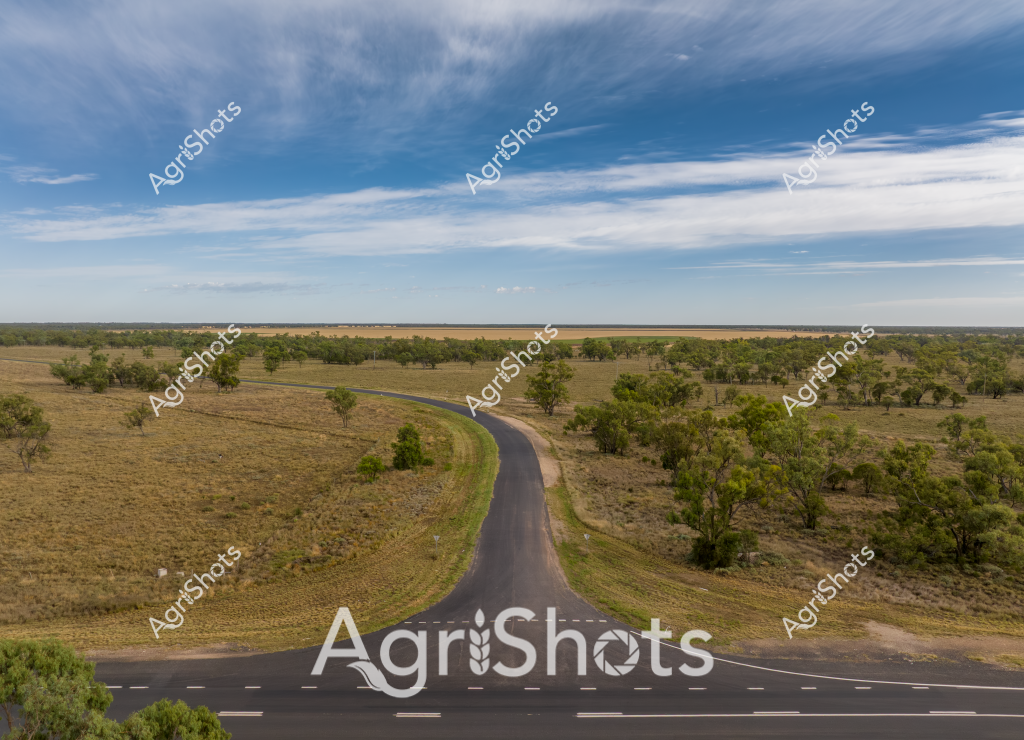
A winding rural road curves through a sprawling Australian landscape, cutting a smooth black asphalt path through golden grasslands and scattered eucalyptus woodland. The road follows a gentle bend, creating a striking visual perspective that draws the eye toward the distant horizon. Sparse trees dot the surrounding paddocks, their green canopies contrasting with the dry, sun-bleached grasses of what appears to be a typical Australian pastoral scene. Wispy cirrus clouds stretch across a vivid blue sky, creating a sense of expansive openness characteristic of the Australian countryside. The carefully constructed road suggests this is likely a key rural transport route, connecting agricultural properties and providing essential infrastructure for the region's farming communities. The landscape reveals the quintessential Australian rural terrain - a mix of open grazing land and scattered woodland, typical of regions across Queensland, New South Wales, or Western Australia's agricultural zones. The curving road's smooth surface and clear markings indicate careful infrastructure planning, essential for supporting the agricultural activities that define these regions.
 ▶ Video
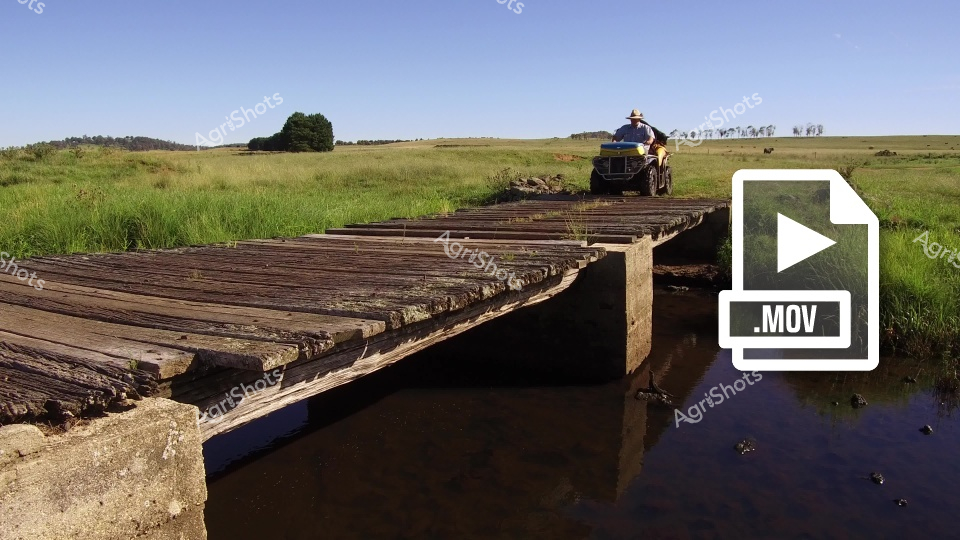
A weathered wooden bridge spans a creek crossing in the New South Wales countryside, providing rural infrastructure for agricultural access across the water. In the background, a man operates a tractor with an air cart attachment across the green pasture, while cattle graze peacefully in the distance. The pastoral landscape showcases typical farming operations, with the creek crossing serving as essential infrastructure for moving agricultural vehicles and equipment between paddocks during cattle and cropping activities.
 Image
Image
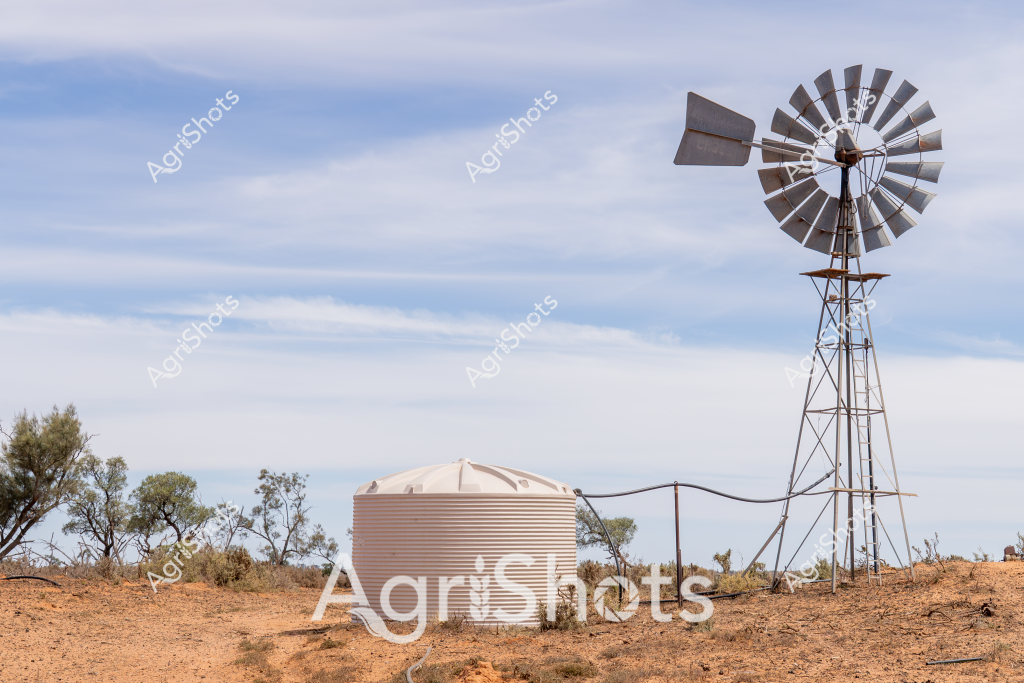
A classic Australian rural landscape captures a weathered windmill and water tank in an arid, drought-affected setting. The tall metal windmill stands prominently against a soft blue sky, its metal blades positioned to catch any available breeze. A corrugated steel water tank sits nearby, providing crucial water storage for the surrounding sparse landscape. Scattered native scrub and sparse trees dot the reddish-brown earth, highlighting the challenging environmental conditions typical of inland Australia. The scene embodies the resilience of rural infrastructure, with the windmill representing generations of agricultural adaptation to harsh, dry environments. The muted color palette of dusty browns, soft blues, and silvery metal tones speaks to the austere beauty of Australia's agricultural heartland.
 Image
Image
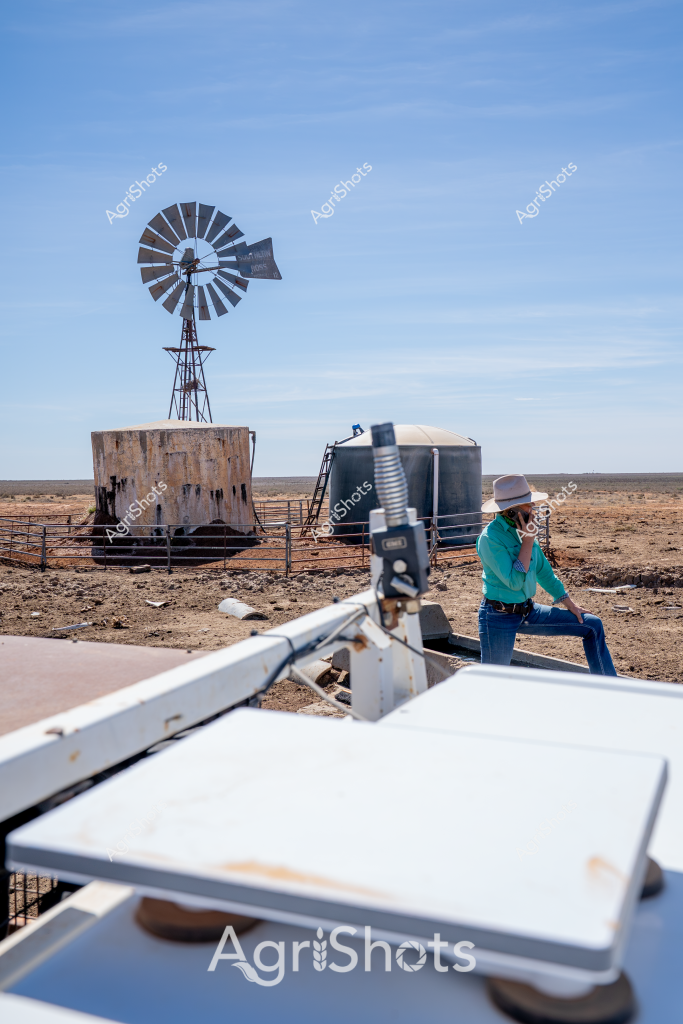
A windmill and water storage setup dominates this arid rural landscape, capturing the essence of remote Australian farming infrastructure. A person wearing a turquoise shirt and a wide-brimmed hat sits contemplatively near water tanks, surrounded by a stark, dusty terrain that stretches to a flat horizon under a clear blue sky. An old metal windmill stands prominently, its multiple blades positioned to catch even the slightest breeze, alongside a weathered concrete water storage tank enclosed by metal fencing. The scene epitomizes the resilience of agricultural operations in harsh, dry environments, where water management is critical for survival. Rusted equipment and minimal vegetation underscore the challenging conditions of this remote agricultural setting, highlighting the technological adaptations farmers use to sustain operations in Australia's unforgiving outback landscape.
 Image
Image
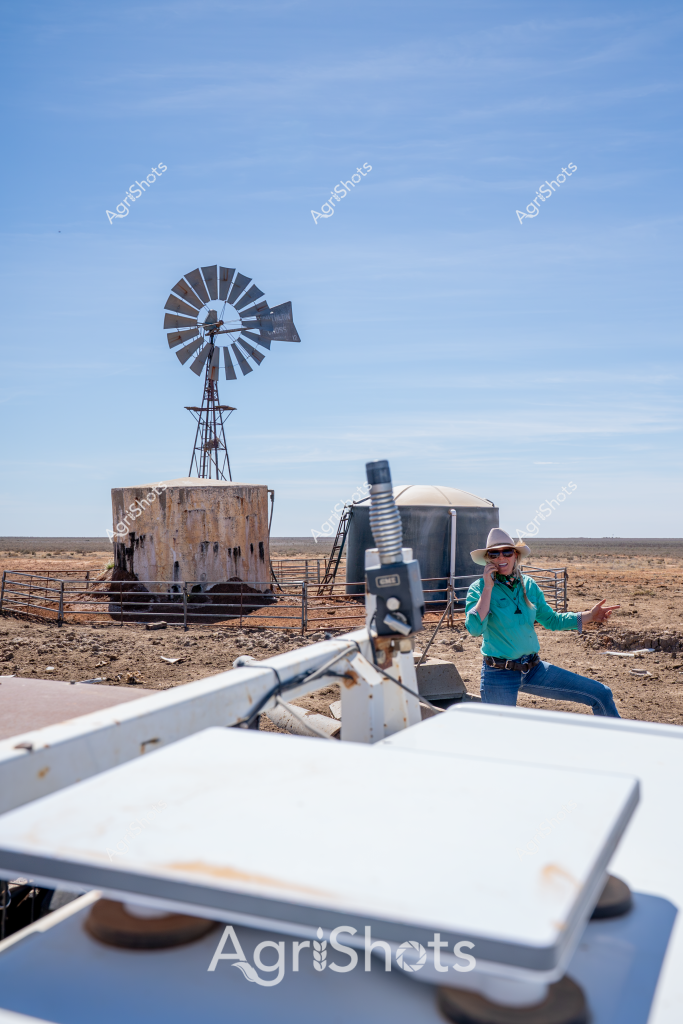
A woman in a turquoise shirt and wide-brimmed hat stands amid a stark, arid landscape, conducting agricultural field research or survey work near a classic windmill and water storage tank. The windmill, a quintessential feature of Australian rural infrastructure, rises against a clear blue sky, its metal blades poised to catch the slightest breeze. A white instrument or measurement device is mounted in the foreground, suggesting scientific data collection or environmental monitoring. The surrounding terrain is a palette of browns and tans - dry, compacted earth characteristic of drought-affected or semi-arid regions of Australia. This scene captures the resilience of agricultural workers and the essential infrastructure that supports farming in challenging environmental conditions, where water management and precise environmental measurements are critical to survival and productivity.
 Image
Image
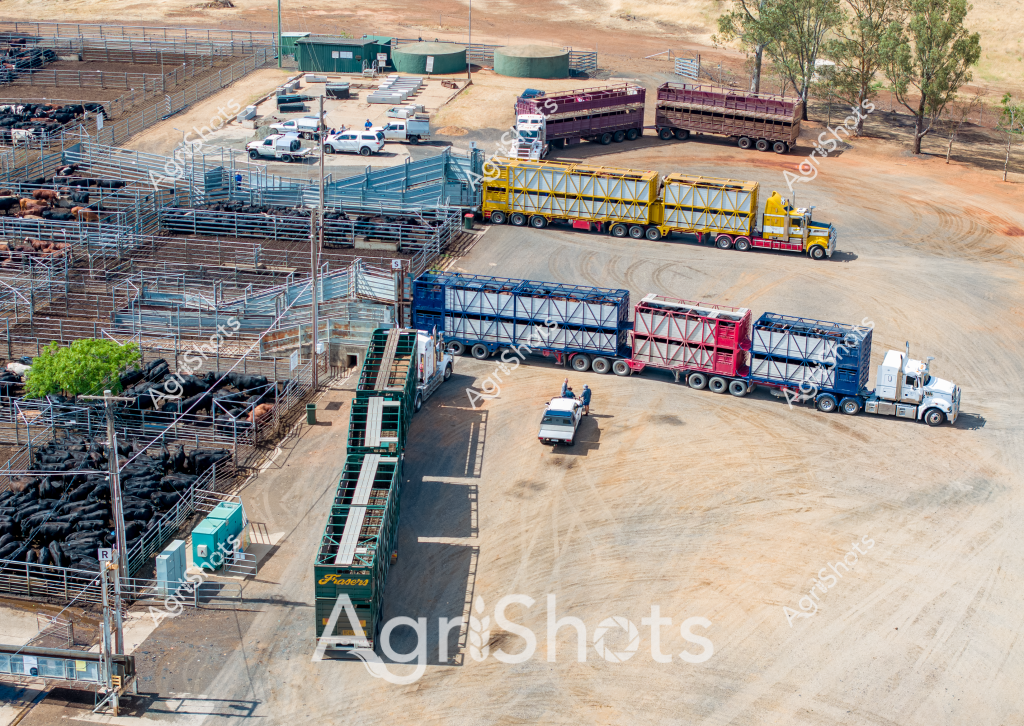
A bustling livestock transport hub captures the essence of Australia's robust cattle industry. Multiple large trucks with extended trailers are positioned within a dirt yard, surrounded by extensive metal cattle yards filled with black cattle. The scene is set in an arid landscape, with sparse trees and a green-roofed processing shed in the background, suggesting a remote cattle station in Western Australia or the Northern Territory. Yellow and white road trains with multiple linked trailers dominate the foreground, their robust design specifically engineered for long-distance livestock transportation across challenging rural terrain. The trucks are strategically parked near loading ramps, ready to transport cattle between properties or to processing facilities. Smaller utility vehicles are scattered around the yard, indicating active staff managing the livestock movement. The metal cattle yards are densely populated with black beef cattle, likely Angus or Wagyu breeds, standing in organized sections separated by robust galvanized steel fencing. The dusty, ochre-colored ground and sparse vegetation highlight the rugged environmental conditions typical of Australian cattle country. Sophisticated livestock handling infrastructure demonstrates the professional and efficient approach to cattle management in Australia's agricultural sector. This aerial view reveals the complex logistics and infrastructure required to support large-scale cattle transportation, showcasing the critical role of road transport in Australia's beef industry supply chain.