Results for “animal husbandry”
 Image
Image
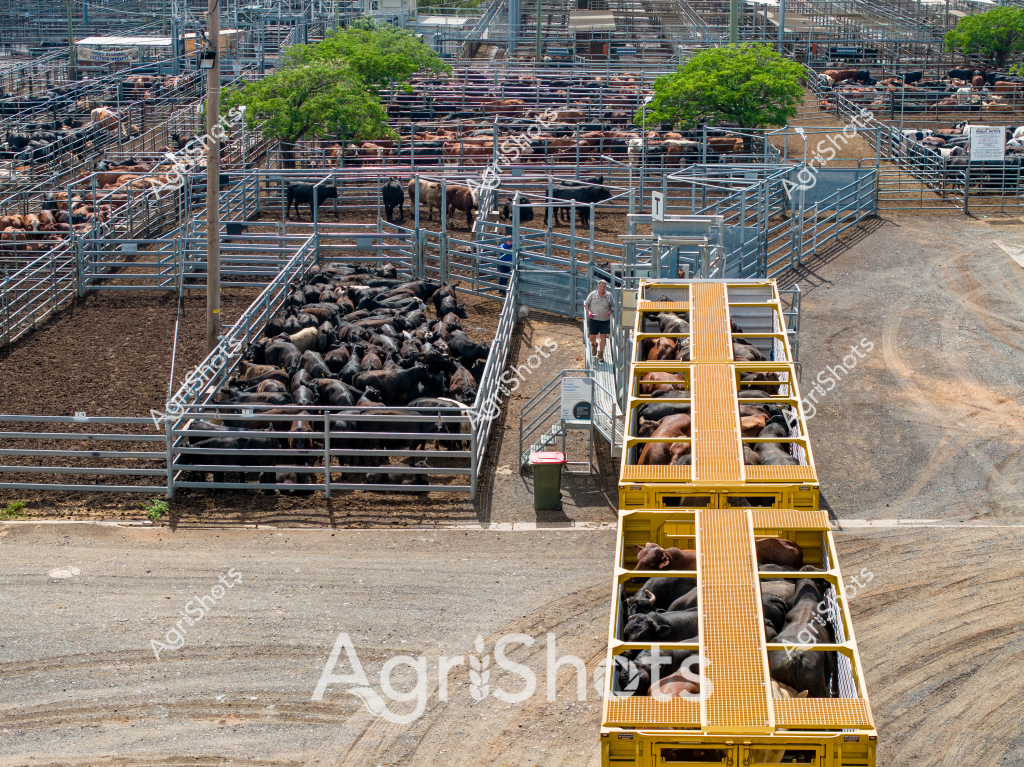
A bustling livestock processing facility showcases multiple pens of black cattle in a complex metal yard system. A series of bright yellow multi-level loading decks stand ready for animal transportation, with cattle carefully sorted and positioned on different compartment levels. A person wearing light-colored clothing can be seen standing on one of the elevated walkways, monitoring the livestock movement and sorting process. The facility appears meticulously organized, with multiple interconnected metal pen sections allowing efficient animal management and movement. Green trees punctuate the background, providing some natural contrast to the industrial agricultural infrastructure. The ground is dusty and compact, typical of a high-traffic livestock handling area, with precise metal fencing defining each processing zone. The scene represents a professional cattle handling operation, demonstrating the sophisticated infrastructure required for modern livestock transportation and management. The yellow transport decks and intricate metal pen system highlight the technical precision involved in moving and sorting livestock, showcasing Australia's advanced agricultural logistics and animal handling practices.
 Image
Image
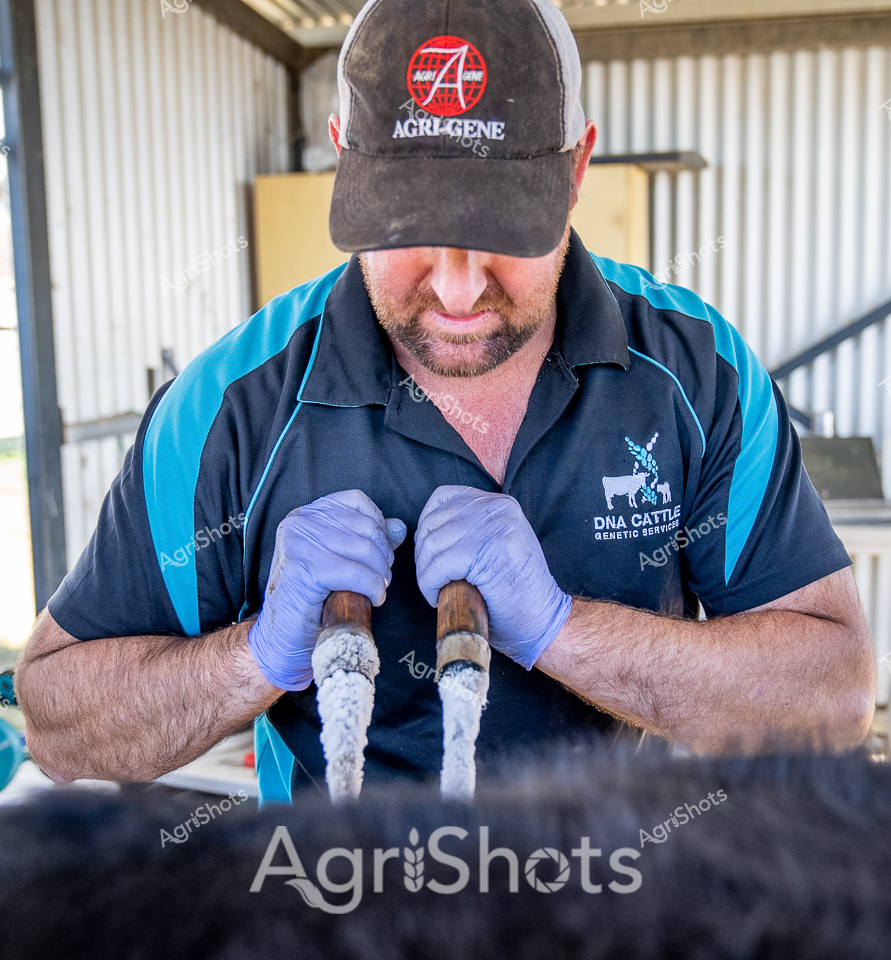
A skilled cattle genetic services professional carefully brands a young bull in a rural livestock yard. Wearing protective purple gloves and an Agri-Gene cap, the worker applies a precise branding technique using traditional metal branding irons. The carefully controlled process takes place in a typical corrugated iron shed, highlighting the technical expertise involved in modern cattle breeding and management.
 Image
Image
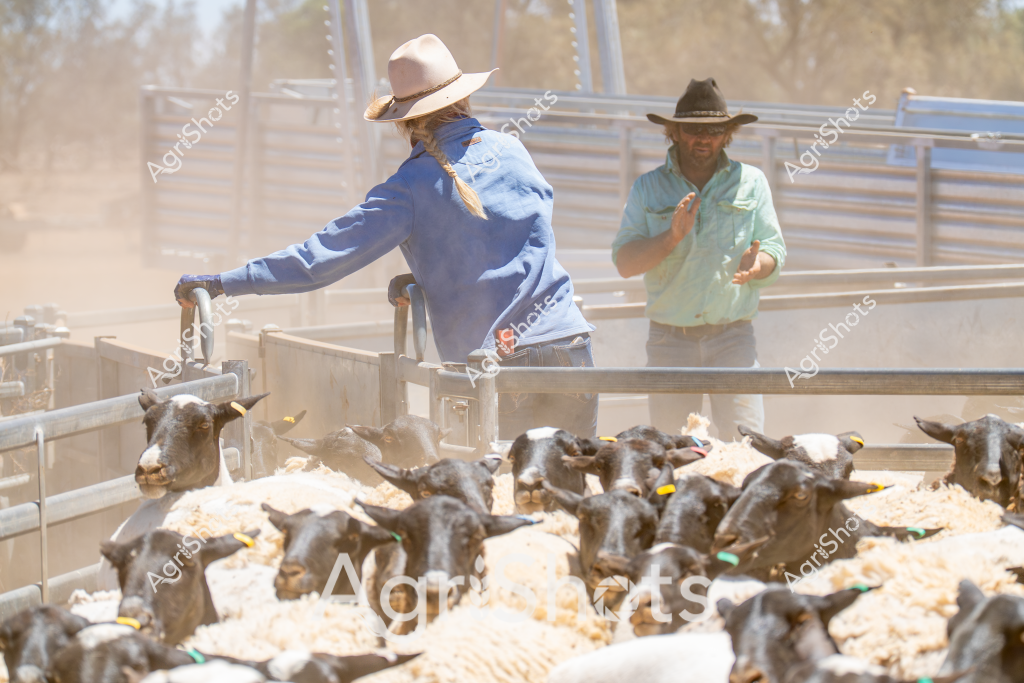
Two people manage a group of goats in a dusty livestock yard, with metal cattle panels creating a confined processing area. A woman wearing a blue jacket and wide-brimmed hat stands at one end of the pen, operating gate controls, while a man in a light green shirt stands nearby, appearing to assist with livestock movement. Multiple dark-colored goats are densely packed in the pen, their heads and bodies visible among wood shavings or straw bedding. Dust hangs in the air, suggesting active movement and handling of the animals, indicating this is likely a routine livestock management activity on an Australian farm or station. The metal yards provide a structured, professional environment for animal handling, with yellow ear tags visible on some of the goats, suggesting they are being sorted, counted, or prepared for veterinary treatment or sale.
 Image
Image
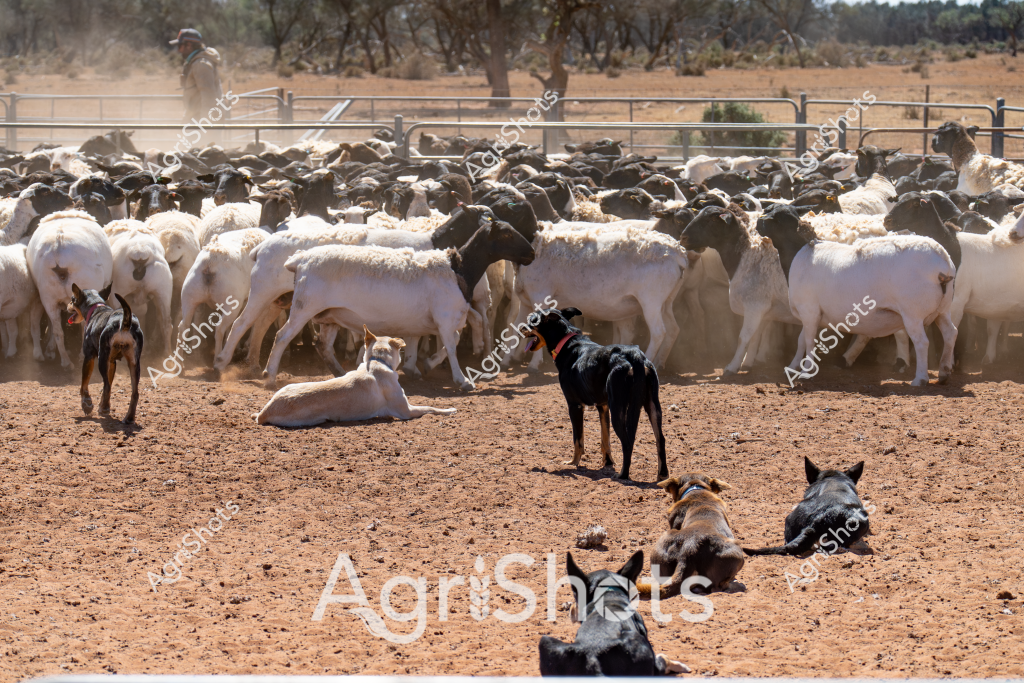
A large herd of predominantly white sheep with some black sheep are gathered in a dusty, fenced paddock with several working dogs managing the mob. A black and white dog stands alertly in the foreground, while others are resting on the dry, reddish-brown earth. In the background, a person on horseback can be seen behind the metal yard fencing, suggesting this is a typical Australian sheep station mustering scene. The bright white coats of the Dorper or White Dorper sheep stand out against the arid landscape, with sparse trees and shrubs visible in the distance. Multiple herding dogs of different colors are strategically positioned around the sheep, demonstrating their crucial role in controlling and moving the livestock across the challenging outback terrain. The harsh, dry environment and the coordinated effort of the stockman and dogs highlight the resilience required in Australian sheep farming.
 Image
Image
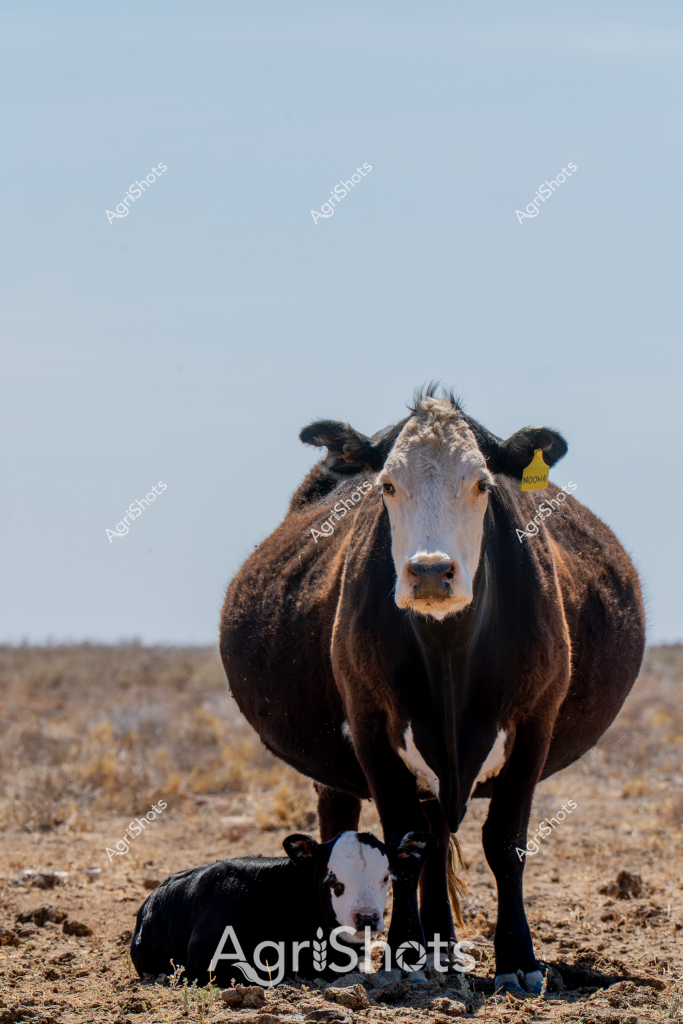
A robust black and white beef cow stands confidently in an arid, rocky landscape, with her newly born black and white calf resting at her feet. The mature cow wears a yellow ear tag, indicating she is part of a managed livestock herd, likely in a dry inland region of Australia. Her sturdy build and protective stance suggest she is a high-quality beef breed, possibly an Angus or Hereford cross, well-adapted to harsh pastoral conditions. The surrounding terrain is sparse and rocky, with minimal vegetation - characteristic of drought-affected or semi-arid grazing lands typical of central or western Australian cattle stations. The pale blue sky and flat horizon emphasize the expansive, unforgiving nature of the landscape. The cow's thick winter coat and the calf's close proximity to her mother hint at the challenges of survival in such an environment. The image captures a powerful moment of maternal protection and resilience, embodying the strength of Australian livestock and the enduring spirit of agricultural communities that thrive in challenging conditions. The close-up perspective allows viewers to appreciate the detailed markings, muscular structure, and stoic demeanor of this cattle breeding pair.
 Image
Image
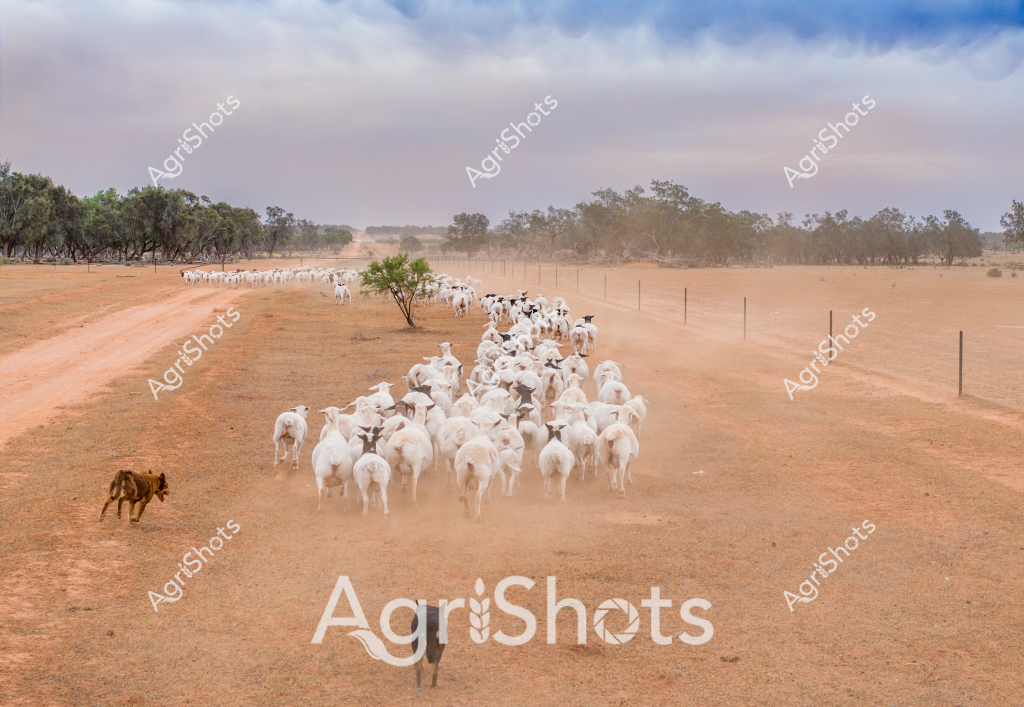
A large mob of white livestock - likely Merino sheep - are being expertly herded across a dry, dusty rural landscape by a working dog. The flock moves along a dirt track with sparse trees and fencing, creating a cloud of reddish-orange dust in their wake. A single working dog, likely a Kelpie, guides the sheep from behind, demonstrating the classic Australian pastoral scene of mustering livestock across an arid station property. The landscape suggests a drought-affected region, with minimal vegetation and a wide, open terrain typical of Australia's interior. Sparse eucalyptus trees line the distant horizon, breaking up the flat landscape and providing minimal shade. The image captures the challenging environmental conditions and the resilience of Australian agricultural practices, with the sheep moving steadily under the watchful eye of their canine handler across the seemingly endless paddock.
 Image
Image
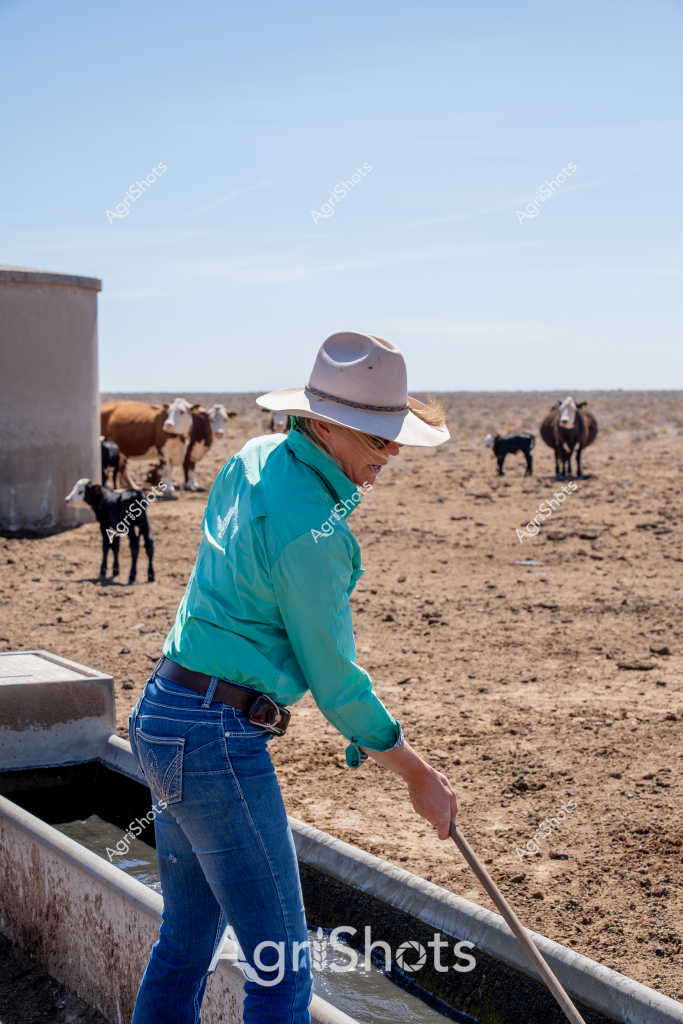
A woman livestock manager wearing a white wide-brimmed hat and bright turquoise long-sleeved shirt stands in a dry, arid landscape, carefully tending to the small herd of cattle and goats. The barren paddock surrounds a white water storage tank, with sparse, dusty ground stretching to the horizon. She leans over a concrete water trough, using a long pole to manage the water supply for her animals, demonstrating the challenging conditions of rural agricultural work. Several cattle and black goats are scattered around the tank, highlighting the sparse grazing conditions typical of drought-affected regions. Her blue jeans and cowboy hat suggest practical, hardworking attire designed for the harsh outdoor environment, while her careful attention to the livestock speaks to the resilience of Australian farmers managing stock in difficult conditions. The scene captures the essence of rural agricultural life - a careful balance of resource management, animal husbandry, and survival in an unforgiving landscape. The clear blue sky and open terrain emphasize the isolation and challenge of maintaining a livestock operation in what appears to be a particularly dry and demanding environment.
 Image
Image
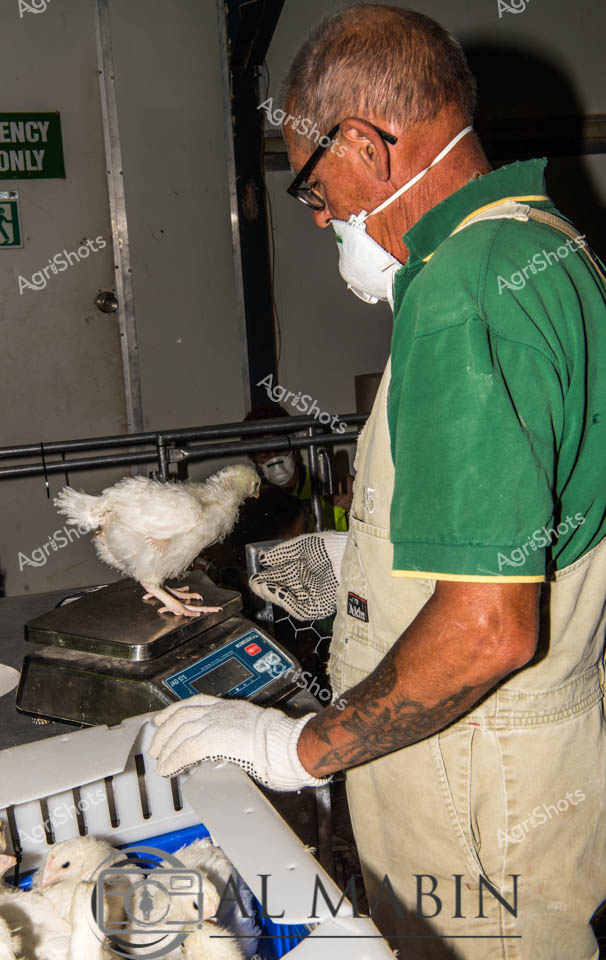
In a sterile agricultural processing facility, an experienced farm worker meticulously weighs and examines a young white chicken, demonstrating precise animal health management protocols. Wearing protective green and cream attire, with a white respiratory mask and gloves, the worker carefully handles the delicate bird on a digital scale, part of a systematic vaccination and monitoring procedure. The stark white of the chicken contrasts sharply with the industrial background, where an "Emergency Only" sign indicates the controlled environment of modern poultry production. An additional chicken waits in a nearby carrier, suggesting a methodical approach to livestock management typical of large-scale farming practices in New South Wales. The worker's tattooed arm and focused posture reveal years of professional experience in animal husbandry, highlighting the technical skill required in contemporary agricultural operations. This scene captures the intersection of scientific precision and animal care, showcasing the detailed processes behind commercial poultry production.
 Image
Image
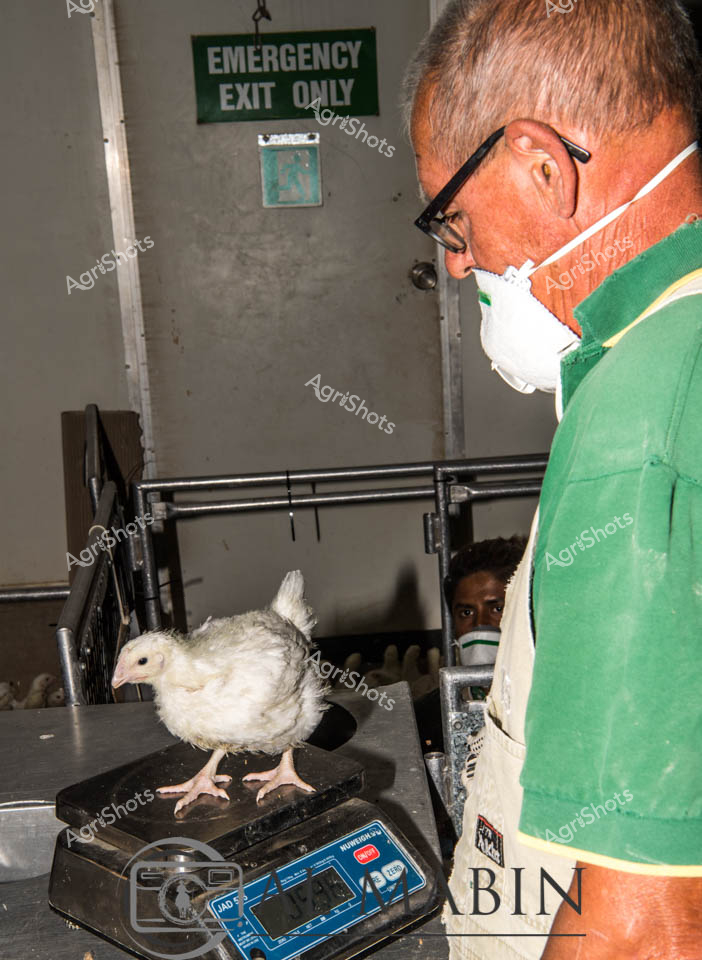
A young broiler chicken stands poised on a digital scale, its pristine white feathers contrasting against the industrial backdrop of a biosecure poultry facility. A worker wearing protective green clothing and a white face mask carefully monitors the bird's weight, part of a meticulous health and growth tracking process. An "Emergency Exit Only" sign hangs in the background, highlighting the controlled environment of modern large-scale farming operations. The precise digital readout and careful handling demonstrate the scientific approach to animal husbandry in contemporary Australian poultry production. Stainless steel equipment, crisp white protective gear, and the soft downy texture of the young bird create a clinical yet careful atmosphere that speaks to advanced agricultural practices. The scene captures the intersection of animal welfare, technological precision, and agricultural expertise typical of New South Wales' sophisticated poultry farming sector.
 Image
Image
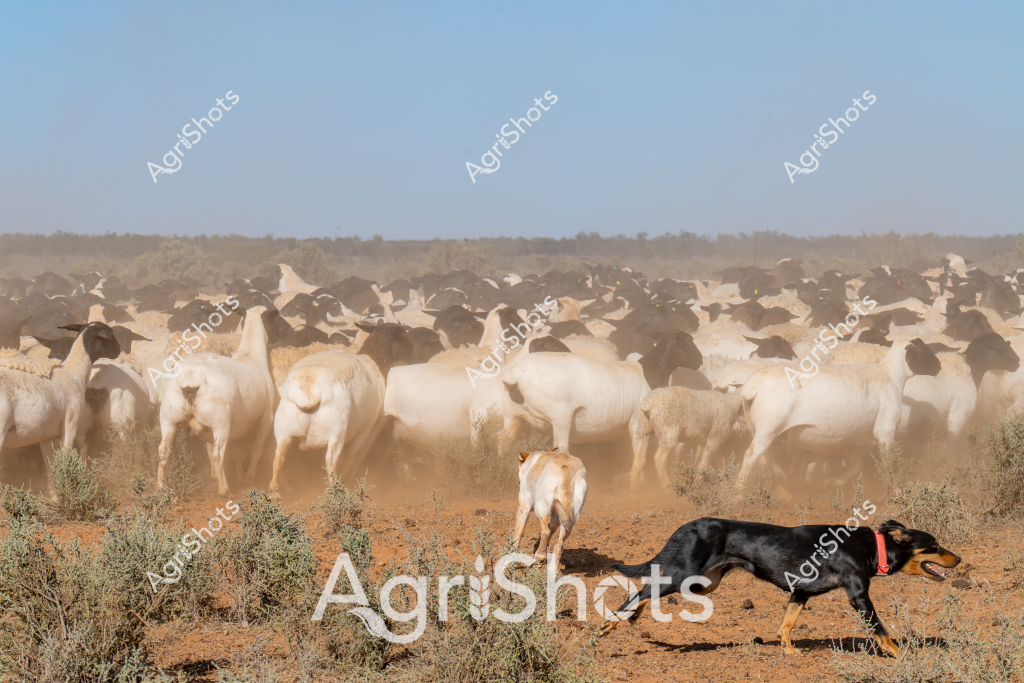
A large herd of light-colored sheep kicks up dust in a dry, arid landscape, with two working dogs herding the mob across a sparse, reddish-brown paddock. A black and tan dog runs alongside the herd, expertly guiding the sheep's movement with precision and skill. A lighter-colored dog stands slightly apart, also part of the mustering effort. The background reveals a line of trees and scrubby vegetation, creating a typical Australian outback pastoral scene. Dusty conditions and the tight grouping of the sheep suggest an experienced team of working dogs and likely a stockman managing this livestock movement across a challenging rural terrain. The image captures the essence of Australian sheep farming, highlighting the critical role of working dogs in managing large herds across expansive, dry landscapes.
 Image
Image
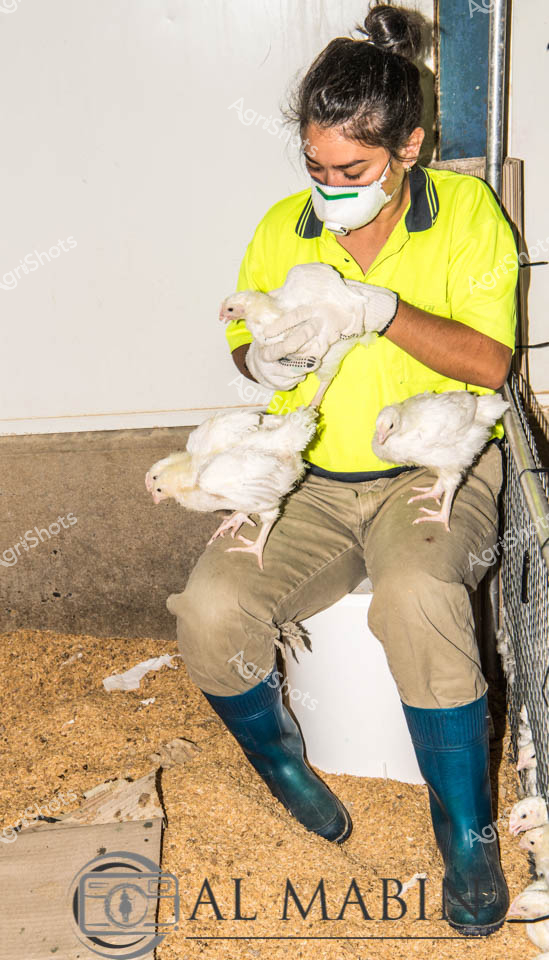
Nestled within an industrial poultry facility, a skilled agricultural worker tenderly manages a group of young white broiler chickens. Wearing high-visibility yellow safety shirt and protective respirator mask, the worker carefully handles multiple fluffy chicks, wearing blue rubber boots and khaki work pants. The sandy-colored floor and metal mesh enclosure suggest a controlled agricultural environment designed for precise animal husbandry and health management. Gloved hands gently support the fragile young birds, indicating a careful approach to livestock handling and welfare. The scene captures a critical moment in modern poultry production - likely a vaccination or health screening process that demonstrates professional agricultural practice. The crisp yellow and blue work attire contrasts with the soft white feathers of the chicks, highlighting the intersection of human expertise and animal care in contemporary Australian agricultural systems.
 Image
Image
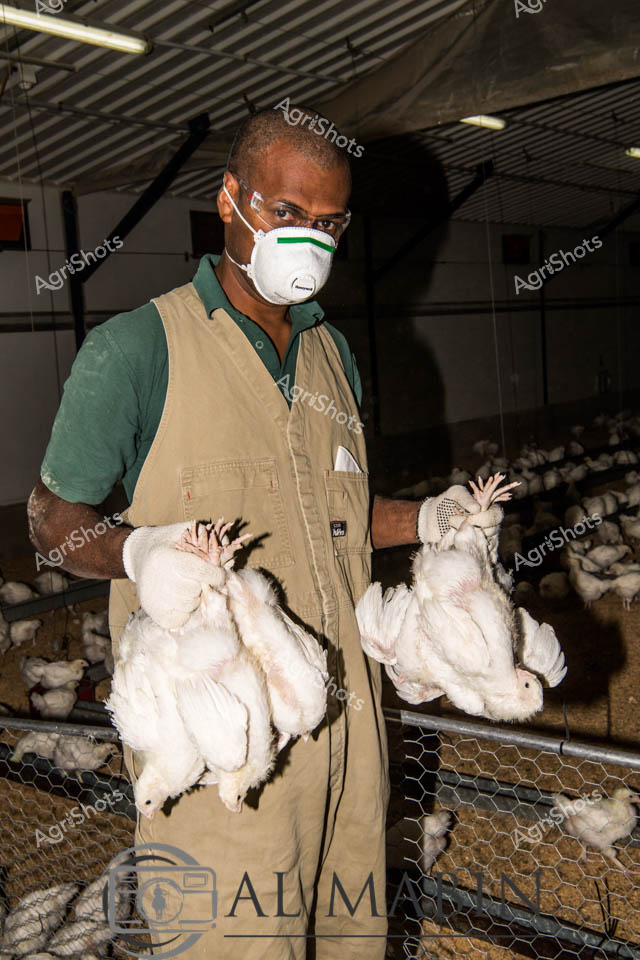
In a climate-controlled poultry shed, an agricultural worker carefully handles two white chickens, demonstrating professional livestock management techniques. Wearing protective gear including a dust mask and safety glasses, the worker is dressed in a khaki utility vest over a forest green shirt, reflecting standard biosecurity protocols in modern large-scale farming operations. The chickens appear healthy and robust, their pristine white feathers contrasting against the wire mesh enclosure and the worker's tan vest. Fluorescent lighting illuminates the controlled environment, highlighting the meticulous conditions of contemporary poultry production. Multiple chickens are visible in the background, suggesting this is a large-scale commercial breeding or production facility typical of New South Wales agricultural operations. The scene captures the intersection of animal husbandry, worker safety, and agricultural technology, representing the sophisticated approach to livestock management in Australian farming.
 Image
Image
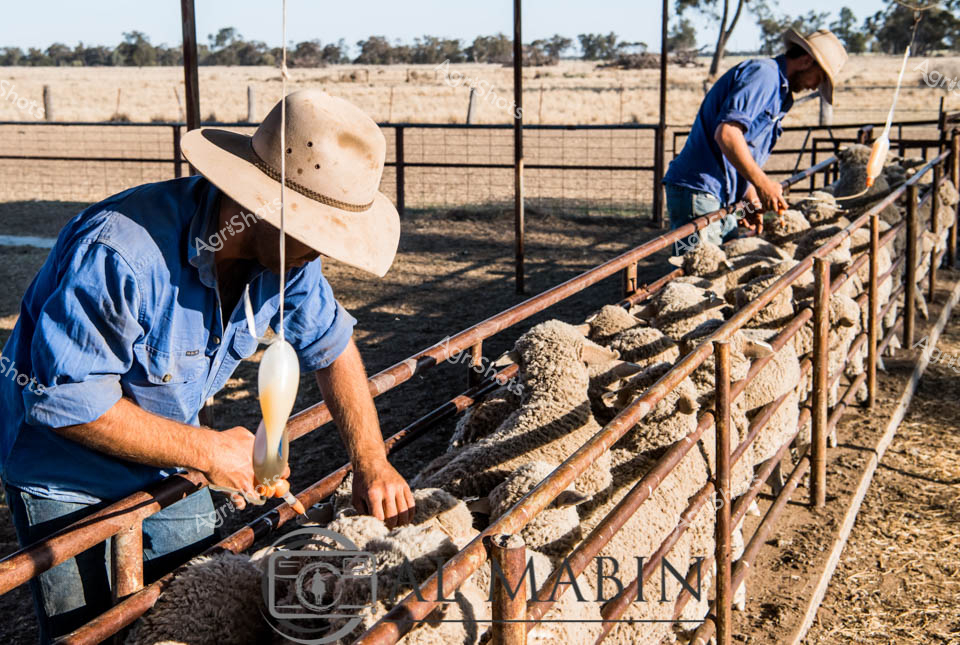
Merino wool producers work diligently in the harsh golden paddocks of rural New South Wales, carefully vaccinating a pen of woolly Merino lambs during shearing season. Wearing classic blue workshirts and wide-brimmed agricultural hats, the stockmen methodically move along the metal livestock yards, administering health treatments to each young sheep. The dry, dusty landscape stretches behind them, punctuated by sparse eucalyptus trees on the distant horizon, capturing the unforgiving yet beautiful Australian pastoral environment. Precise and practiced, one worker handles a vaccination tool while another manages the sheep's movement, their coordinated efforts reflecting generations of agricultural expertise. The lambs, tightly packed within the steel yard rails, represent the backbone of Australia's renowned wool industry - their dense, curling fleeces a testament to careful breeding and meticulous animal husbandry. Warm sunlight casts long shadows across the compacted earth, highlighting the textural details of woolly coats, weathered clothing, and rustic farm infrastructure.
 Image
Image
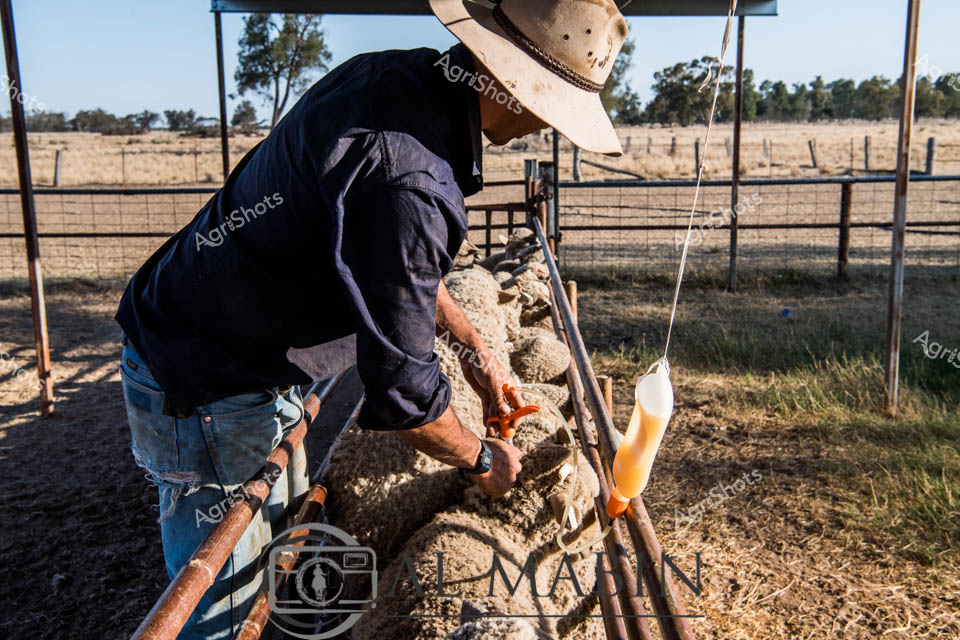
Merino lamb vaccination unfolds under the harsh midday sun of rural New South Wales, a quintessential moment of agricultural care. A weathered farmworker in a wide-brimmed khaki hat and navy work shirt carefully administers a health treatment to a cluster of woolly Merino lambs within sturdy metal livestock yards. Dusty golden paddocks and distant eucalyptus trees frame the scene, capturing the unforgiving yet beautiful Australian pastoral landscape. Rusted equipment and worn fence lines speak to generations of agricultural resilience, while the precise handling of the lamb demonstrates the skill and dedication of Australian farmers. The orange vaccination tool contrasts sharply with the soft cream and grey fleece of the Merino lambs, highlighting the critical intersection of animal husbandry and veterinary science. This image epitomizes the meticulous care and expertise required in maintaining the health of Australia's prized sheep flocks, a cornerstone of the nation's agricultural heritage.
 Image
Image
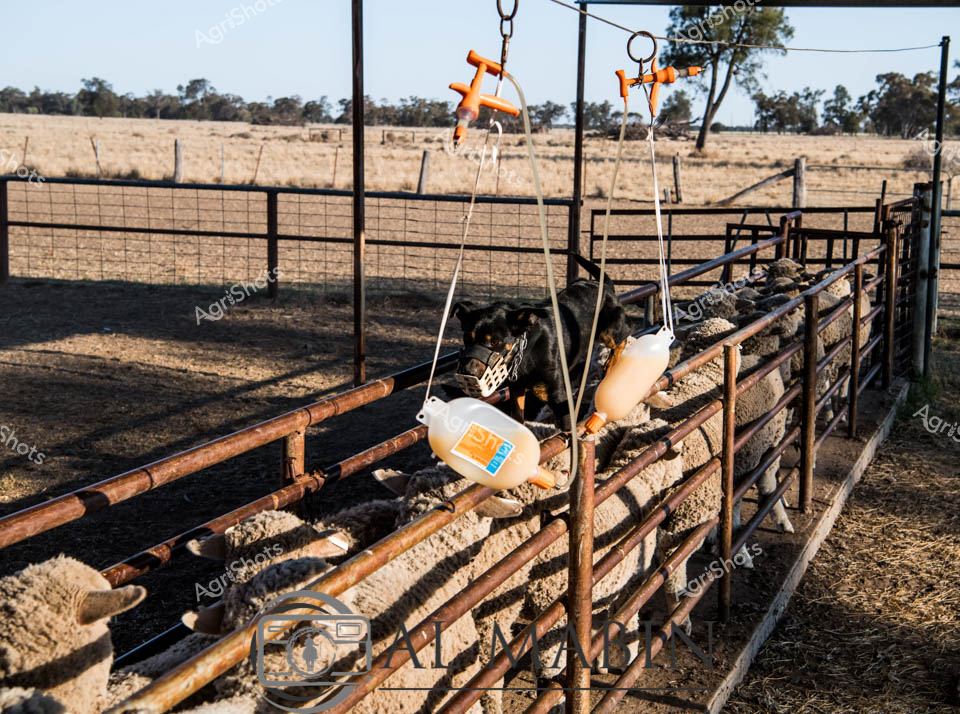
A dusty New South Wales sheep yard captures the essence of rural livestock management during the dry season. Merino lambs crowd together in rusty metal yards, their woolly backs a stark contrast against the parched golden pasture and sparse eucalyptus trees in the background. Hanging from the yard's infrastructure are orange-capped vaccination bottles, suspended strategically for efficient animal health management. The harsh sunlight casts long shadows across the compacted earth, highlighting the functional design of the stockyard's metal gates and rails. A working dog sits attentively in the background, ready to assist in moving and controlling the flock. The scene epitomizes the resilience of Australian agricultural practices, where careful animal husbandry meets the challenging environmental conditions of the inland pastoral regions.
 Image
Image
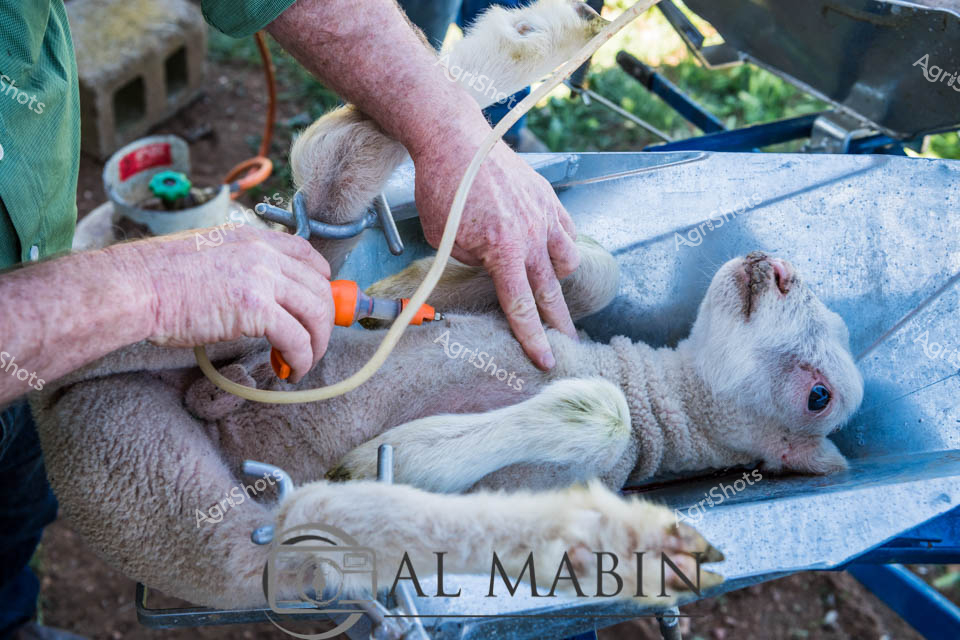
Expert agricultural livestock management unfolds in this candid farm scene. A skilled farmhand carefully administers veterinary care to a young lamb, nestled in a blue metal processing tray. Weathered, sun-tanned hands methodically handle medical equipment - an orange-tipped syringe and tubing - while professionally restraining the woolly white lamb during routine health procedures. The soft, dense fleece of the lamb contrasts against the metallic blue surface, with muted green agricultural workspace elements visible in the background. This precise moment captures the meticulous animal husbandry practices critical to Australian sheep farming, demonstrating the careful intersection of animal welfare and agricultural productivity. The image radiates a sense of calm expertise, with the farmworker's practiced movements reflecting generations of agricultural knowledge in managing livestock health and development.
 Image
Image
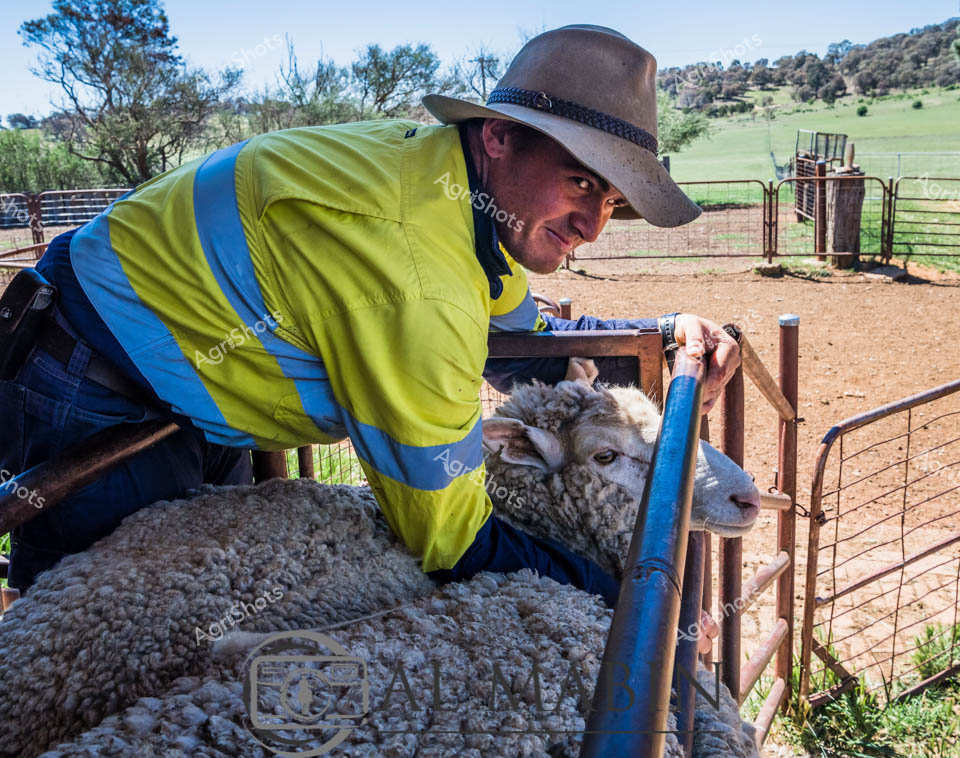
An agricultural worker in a high-visibility yellow and blue safety vest and classic rural felt hat tends to sheep in a rustic livestock holding yard. Set in the rolling pastoral landscape of rural New South Wales, the scene captures an intense moment of animal husbandry as the worker carefully manages a flock of woolly merino ewes. The dry, packed earthen yard surrounds a blue metal livestock handling gate, with verdant paddocks and sparse trees visible in the background. Precise and methodical, the worker is positioned closely with the sheep, likely performing a critical health inspection or treatment process such as backlining - a technique for protecting livestock from parasites. The rich texture of the sheep's dense fleece contrasts with the worker's modern safety equipment, symbolizing the blend of traditional farming practices and contemporary agricultural safety standards. Warm natural light illuminates the scene, suggesting a mid-morning workflow in the late winter or early spring season when sheep require careful management before shearing.
 Image
Image
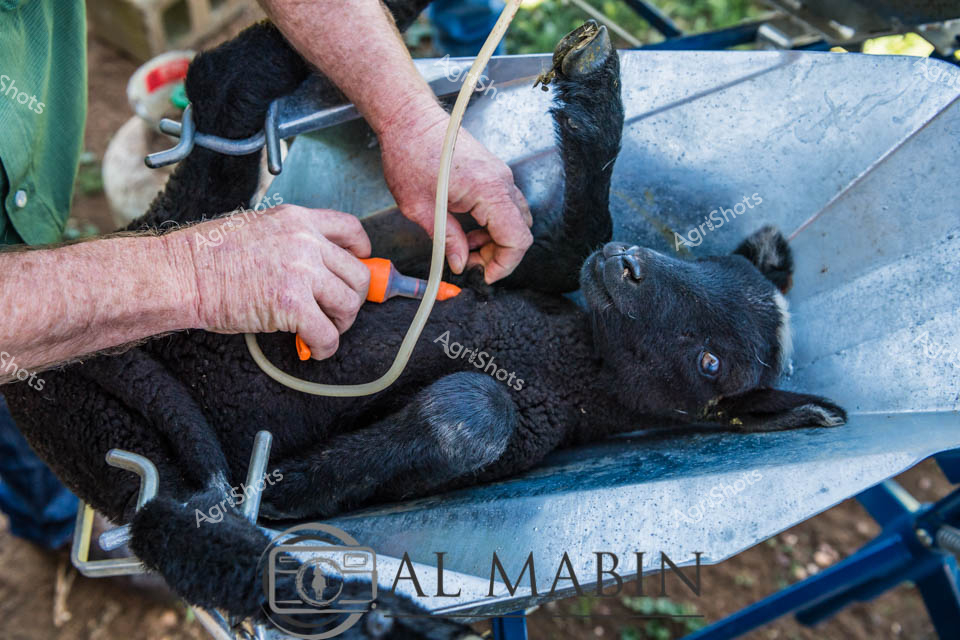
Merino lamb receives veterinary care during annual marking and health management procedures. Skilled hands administer vaccination using a precise orange-tipped syringe, with the young black lamb carefully restrained on a galvanized steel marking table. The lamb's dense, charcoal-black wool contrasts against the metallic blue-gray surface, capturing a critical moment of agricultural animal husbandry. Weathered, experienced hands guide the medical intervention with practiced efficiency, ensuring the lamb's health and future productivity. This routine represents a crucial stage in sheep management, where young lambs receive essential healthcare treatments in the rugged pastoral landscapes of regional New South Wales. The intimate, professional interaction reflects the careful stewardship and technical expertise fundamental to Australian sheep farming operations.
 Image
Image
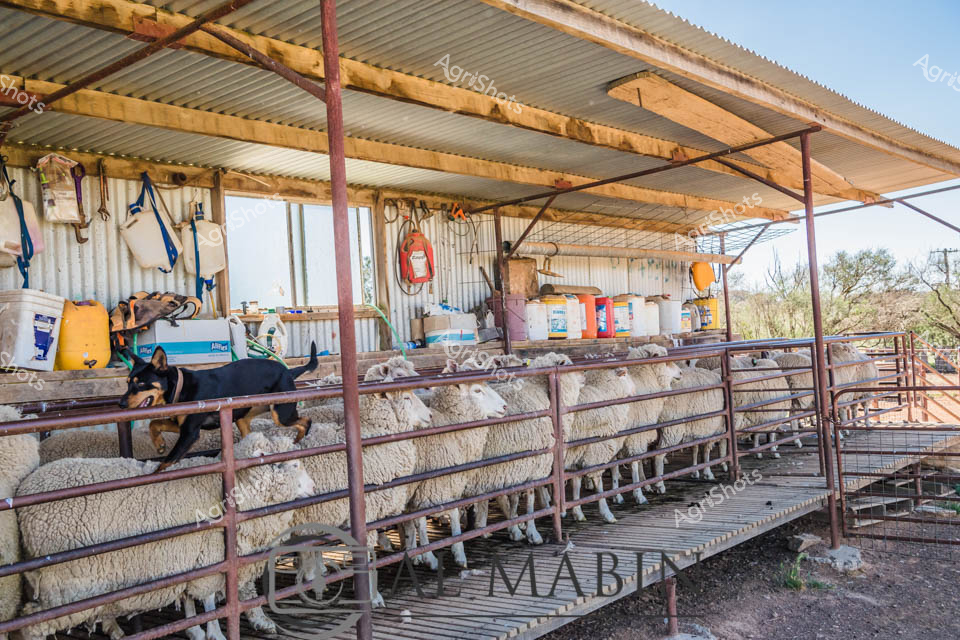
Merino ewes stand quietly in a rustic woolshed, their dense fleece gleaming against weathered steel and timber infrastructure. A working kelpie dog sits attentively along the metal railing, watching over the flock with typical Australian farm dog discipline. Yellow agricultural containers and equipment hang methodically on the corrugated iron walls, suggesting a well-organized rural workspace. Soft morning light filters through the shed's open sides, casting gentle shadows across the wooden platform and revealing the arid landscape beyond - likely a property in inland New South Wales. The yard's metal gates and raised platforms demonstrate sophisticated livestock management techniques, with each element carefully designed for efficient sheep handling. This scene captures the understated complexity of Australian sheep farming - a delicate balance of animal husbandry, practical infrastructure, and the enduring partnership between farmer, dog, and livestock.
 Image
Image
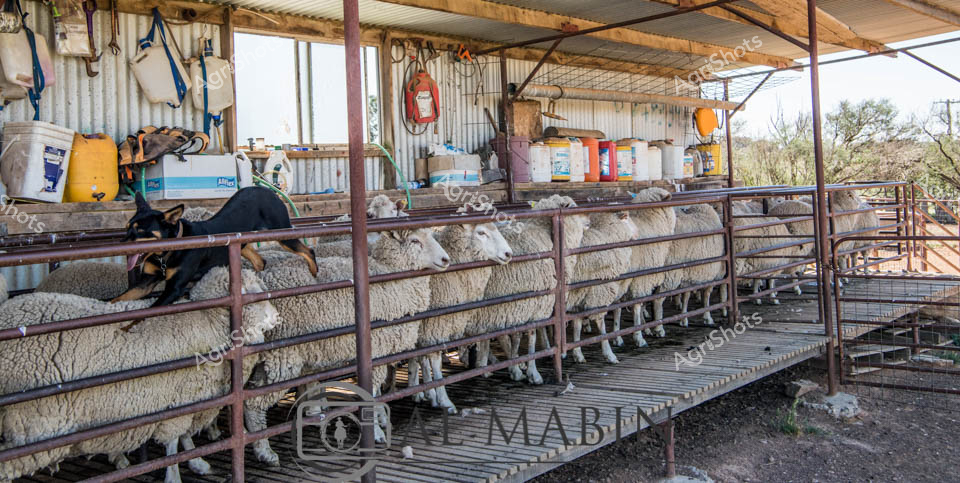
Merino ewes stand shoulder to shoulder in a rustic shearing shed, their dense white fleece contrasting against the weathered corrugated iron walls. A working dog rests watchfully on the raised wooden platform, an essential partner in the livestock management process. Industrial-grade containers and equipment line the shelves, suggesting a professional agricultural operation typical of rural New South Wales. The shed's sturdy metal framework and wooden walkways reveal generations of practical farm engineering, designed for efficiency and animal handling. Soft morning light filters through the shed's openings, casting gentle shadows across the uniform line of sheep, highlighting their robust health and uniform breeding. This tableau captures the quiet intensity of Australian sheep farming - a delicate balance of animal husbandry, skilled labor, and precision agricultural practice.
 Image
Image
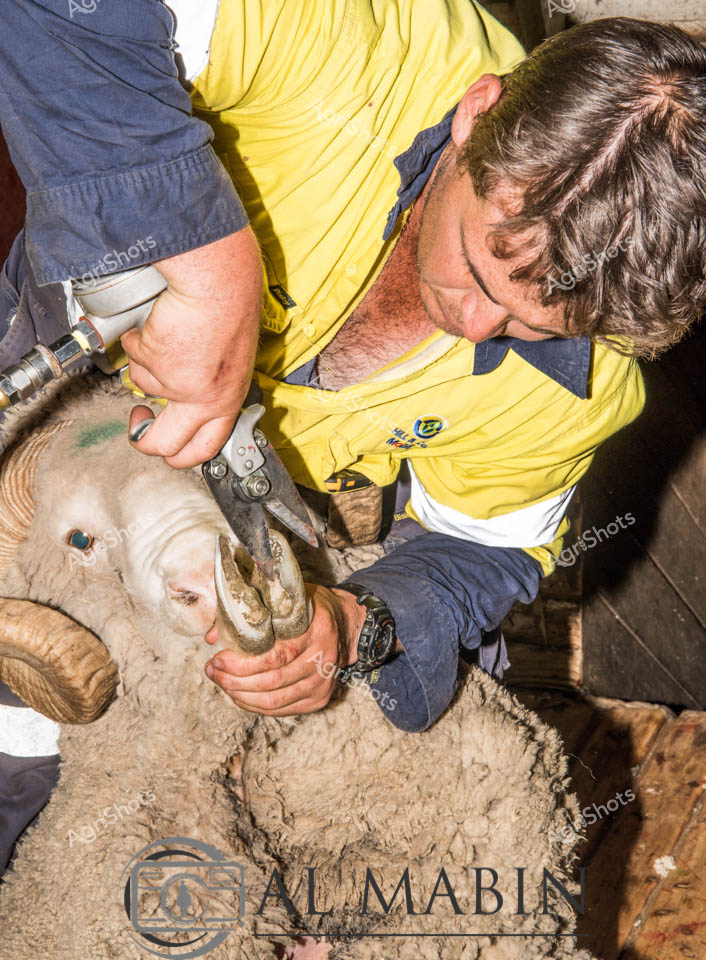
Sheep shearing season pulses with focused energy as a skilled farmhand in a high-visibility yellow and navy work shirt carefully trims the overgrown hooves of a mature Merino ram. Precise metal clippers grip the animal's leg, demonstrating the delicate veterinary procedure of foot maintenance critical to livestock health. The ram's dense, dusty wool cushions its body, characteristic of the robust Merino breed renowned for exceptional fleece quality in Australian agricultural landscapes. Weathered hands move with practiced efficiency, reflecting generations of agricultural expertise and animal husbandry knowledge passed through rural communities. Soft natural light illuminates the detailed interaction, capturing the intricate connection between farmer and livestock that underpins successful pastoral management. This intimate scene represents the meticulous care and professional skill integral to maintaining healthy, productive sheep flocks across Australia's expansive agricultural regions.
 Image
Image
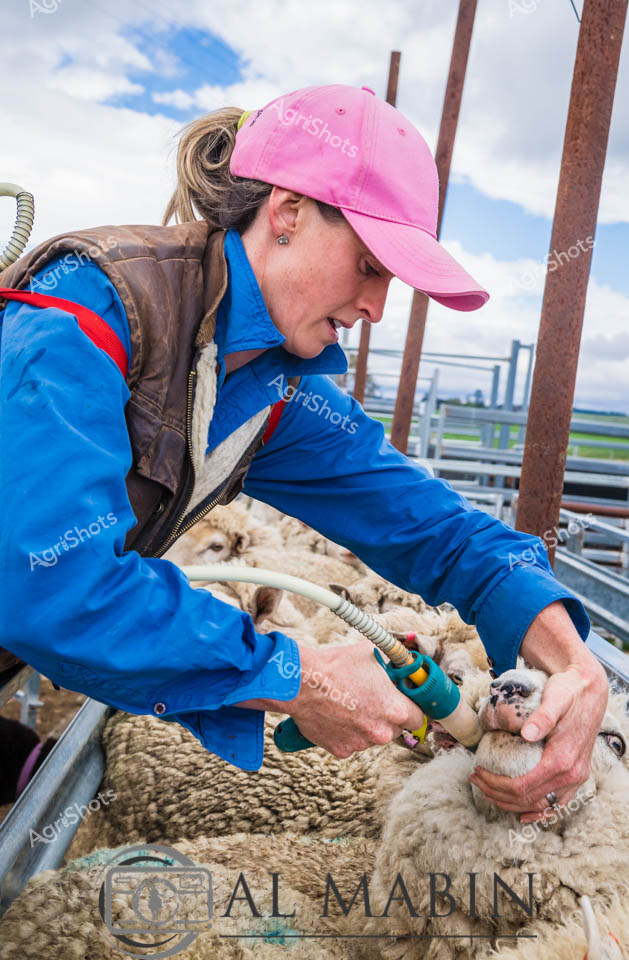
Expert wool industry professional performing routine sheep health management in a rural livestock facility. Wearing a vibrant blue waterproof jacket and pink cap, the worker carefully administers a drench medication to a woolly merino sheep within steel livestock yards. The precise drenching technique involves carefully restraining the sheep and using a specialized dosing gun to deliver animal health treatment, highlighting the meticulous care Australian farmers provide to maintain flock wellness. Cloudy skies and industrial metal yard infrastructure create a typical agricultural processing environment, capturing the pragmatic and essential nature of livestock management. The worker's focused expression and skilled handling demonstrate the expertise required in modern sheep farming, where animal welfare and systematic health interventions are critical to sustainable agricultural production. The image represents the intersection of veterinary science, animal husbandry, and professional agricultural practice in regional New South Wales.
 Image
Image
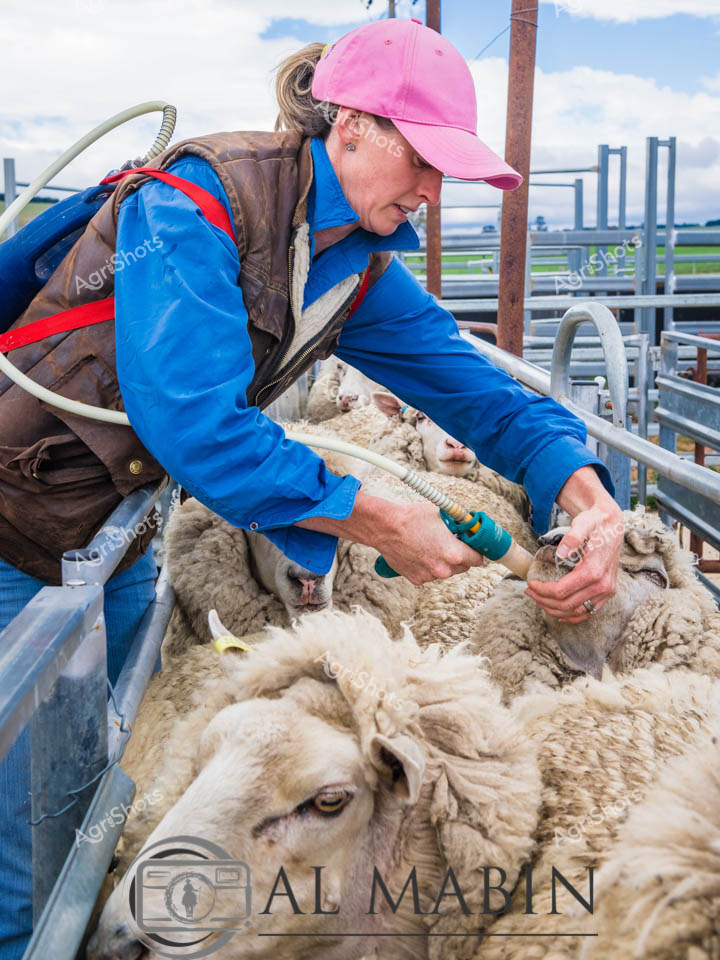
A dedicated farm worker in a vibrant blue jacket and pink cap carefully administers animal health treatment to a flock of merino sheep in a modern steel livestock yard. The worker skillfully drench-treats each sheep, methodically working through the woolly flock with practiced precision. Crisp winter light illuminates the metal yards, with green pastures visible in the background, suggesting this is a typical agricultural scene from rural New South Wales. The sheep's dense, creamy-white fleece stands out against the metallic yard infrastructure, highlighting the animal's robust condition and the meticulous care of modern livestock management. Wearing a brown vest and carrying specialized equipment, the worker demonstrates the hands-on expertise essential in Australian sheep farming - a blend of compassionate animal husbandry and scientific health management. The image captures the essence of contemporary agricultural practice: professional, technical, and deeply connected to the land.
 Image
Image
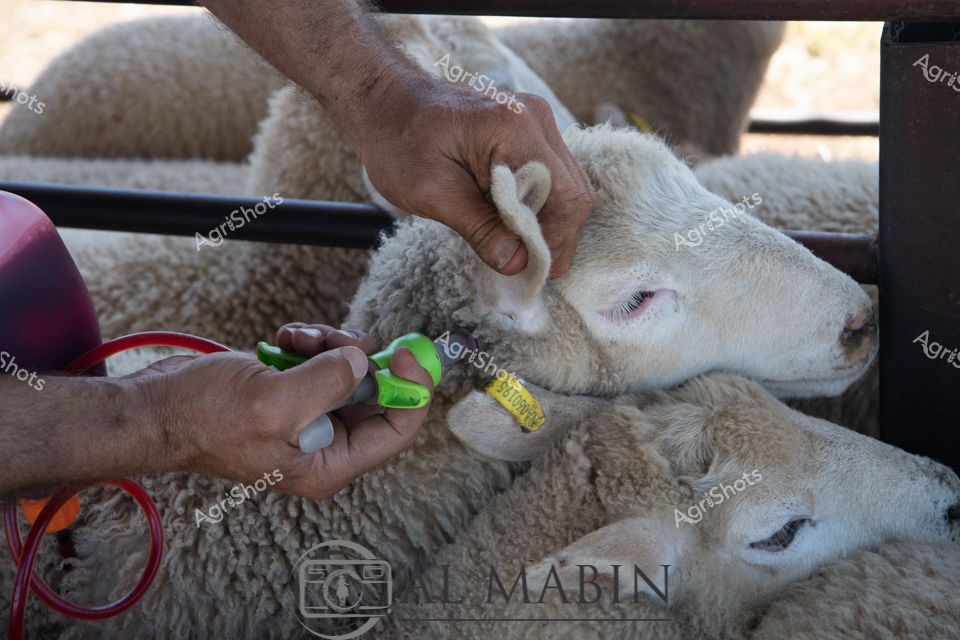
Lamb Health Management in Rural NSW Skilled hands deliver critical care in a sheep yard, administering vaccination to a young lamb. A weathered farm worker gently restrains the woolly white lamb, using precise technique to ensure accurate medical treatment. The bright green and yellow vaccination tool stands in sharp contrast to the soft, creamy fleece of the surrounding sheep. Multiple lambs huddle together, their dense, curled wool creating a textural landscape of soft greys and whites. A yellow ear tag identifies this lamb within the flock, a standard practice for livestock tracking and management. The scene captures the meticulous animal husbandry essential to Australian sheep farming - a blend of compassionate handling and professional healthcare that ensures the wellbeing of valuable livestock.