About this image
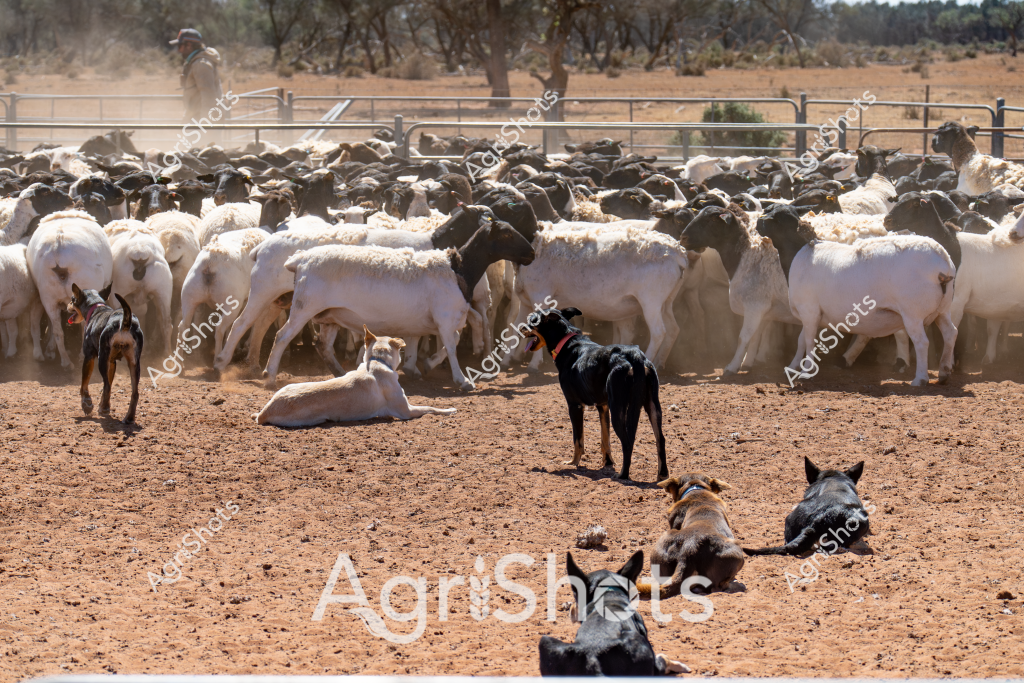
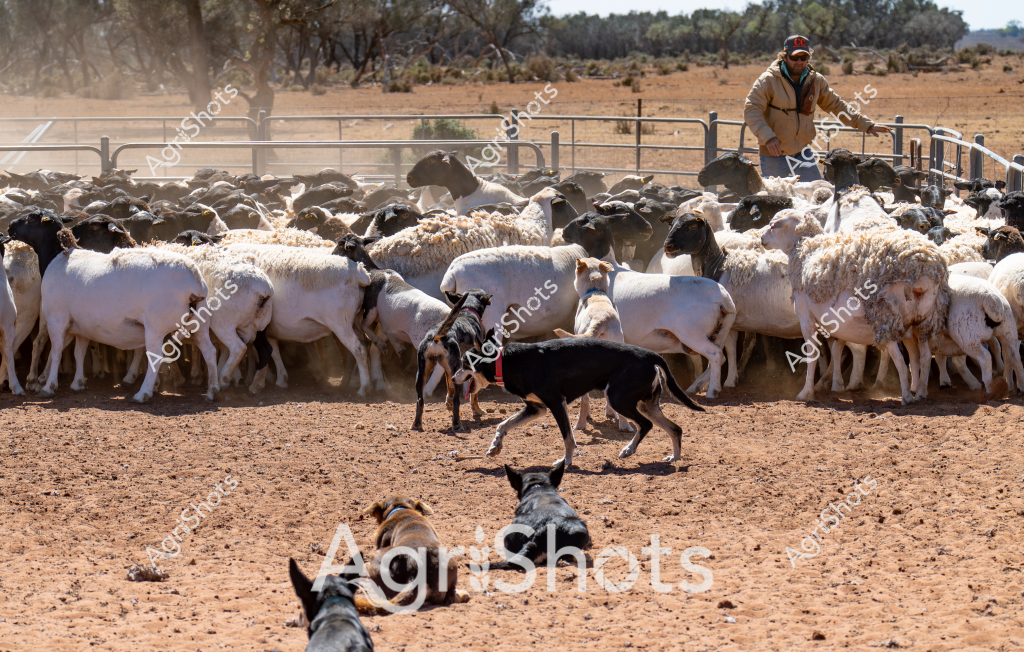
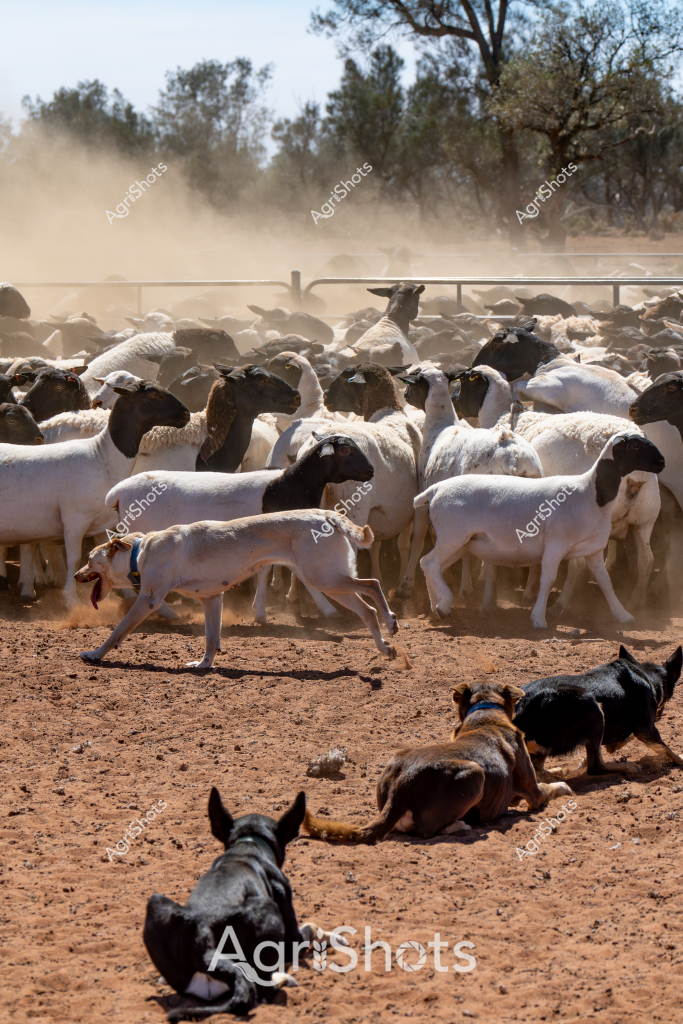
A large herd of predominantly white sheep with some black sheep are gathered in a dusty, fenced paddock with several working dogs managing the mob. A black and white dog stands alertly in the foreground, while others are resting on the dry, reddish-brown earth. In the background, a person on horseback can be seen behind the metal yard fencing, suggesting this is a typical Australian sheep station mustering scene. The bright white coats of the Dorper or White Dorper sheep stand out against the arid landscape, with sparse trees and shrubs visible in the distance. Multiple herding dogs of different colors are strategically positioned around the sheep, demonstrating their crucial role in controlling and moving the livestock across the challenging outback terrain. The harsh, dry environment and the coordinated effort of the stockman and dogs highlight the resilience required in Australian sheep farming.
Similar media
 Image
Image
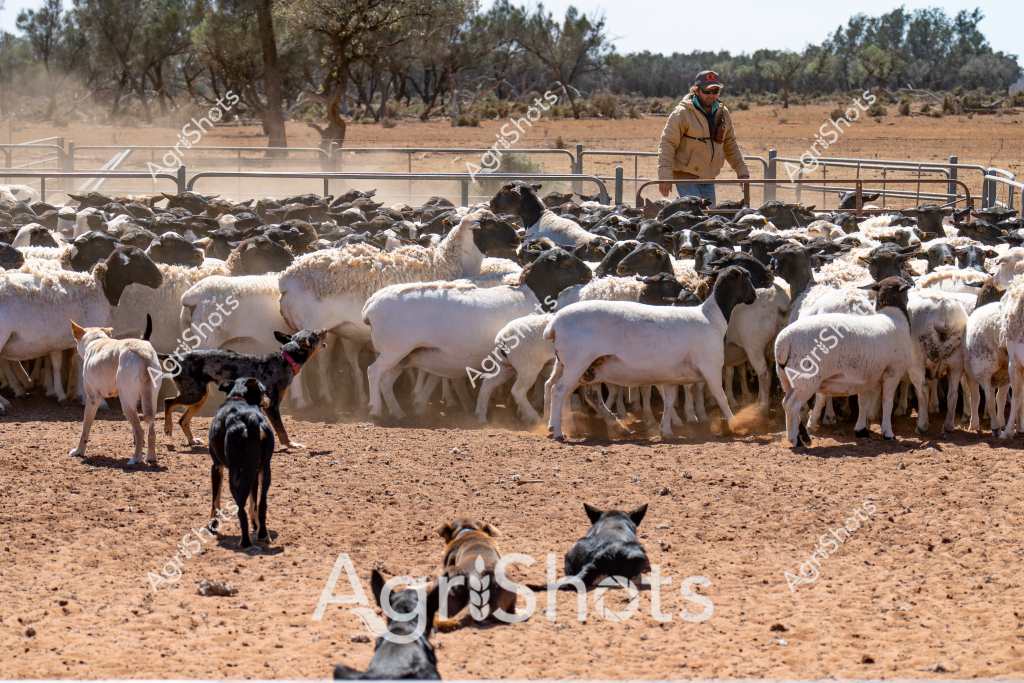
A skilled stockman manages a large flock of white and black sheep within a dusty, fenced yard in what appears to be an arid Australian pastoral region. Several working dogs, likely Australian Kelpies, are strategically positioned around the mob, helping control the tightly packed herd. The dry, reddish-brown ground and sparse trees in the background suggest this is a typical scene from a sheep station in inland Australia, possibly in Western Australia, Queensland, or the Northern Territory. The stockman, dressed in a tan jacket and cap, stands on the edge of the yard, overseeing the sheep herding process. The flock appears to be a mix of white-fleeced sheep, potentially Merino or crossbred lambs, and darker-colored animals. The working dogs are alert and positioned to assist in moving and containing the sheep, demonstrating the critical role of these intelligent canines in Australian livestock management. The scene captures the essence of rural Australian agricultural practice - a blend of human skill, working dog expertise, and livestock management in a challenging, dry landscape. Dust rising from the ground and the tightly clustered sheep suggest active movement and the ongoing process of mustering or yard work typical of sheep farming operations.
 Image
Image
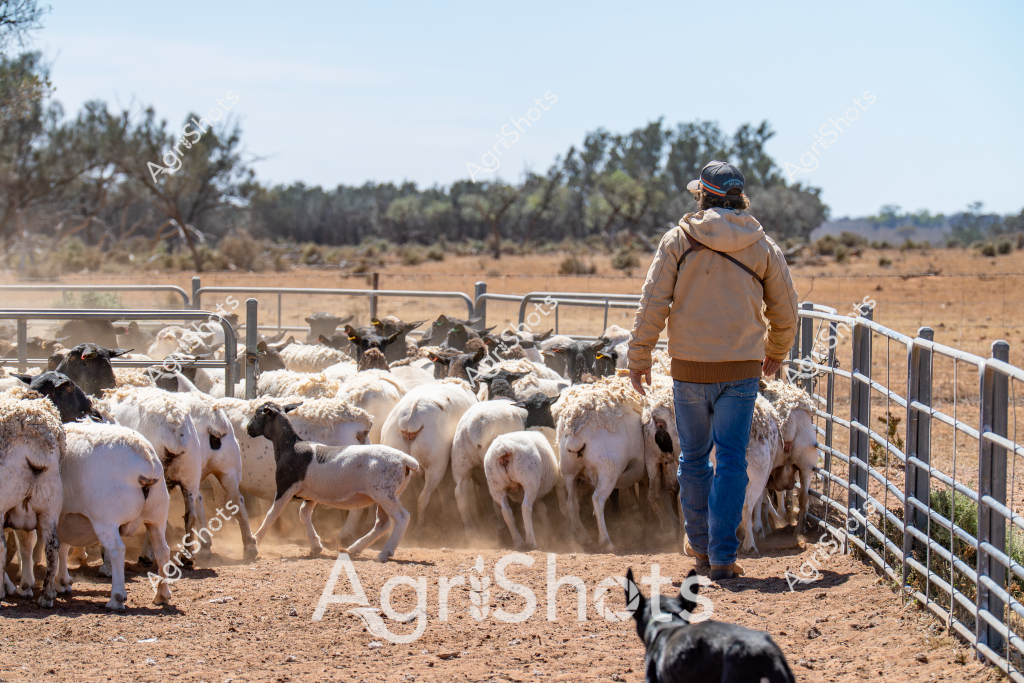
A man stockman guides a large flock of white and black sheep through a metal livestock yard in a dry, arid Australian agricultural landscape. Wearing a tan jacket and blue jeans, the stockman walks alongside the tightly packed mob of sheep, with dusty paddock ground beneath their feet and sparse eucalyptus trees visible in the background. A working dog sits attentively in the foreground, ready to assist with herding. The sheep appear to be a mix of white and darker-colored breeds, tightly clustered within the metal fencing, kicking up small clouds of dust as they move. The scene captures the typical rural agricultural setting of inland Australia, with its harsh, sun-bleached landscape and the essential role of livestock management in farming operations.
 Image
Image
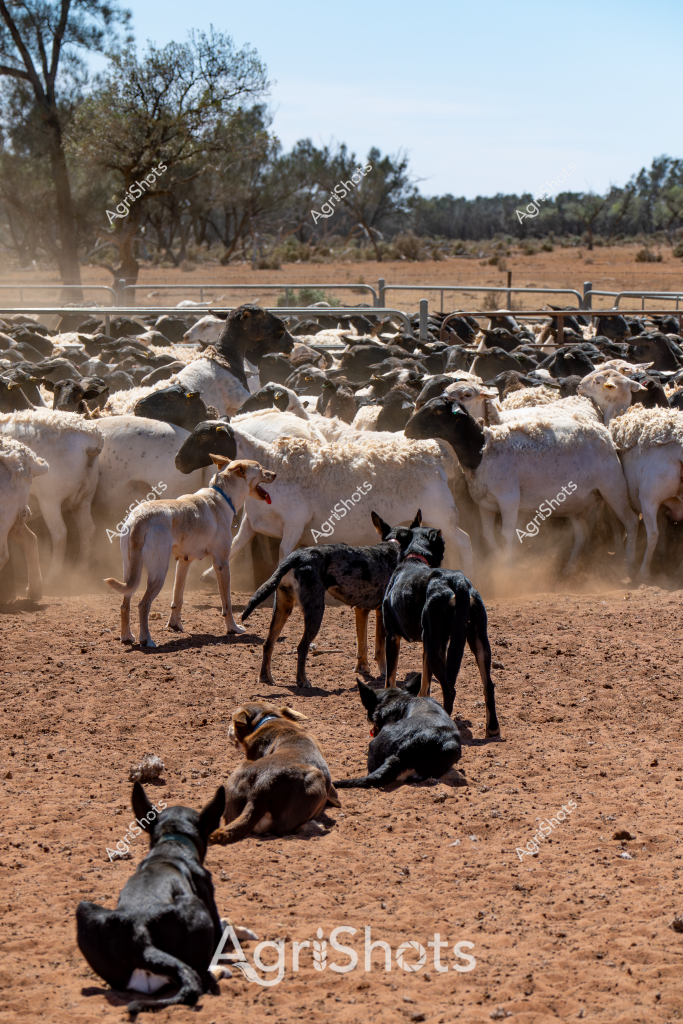
A classic Australian livestock mustering scene captures working dogs expertly managing a large flock of white and dark-colored sheep in a dusty, arid paddock. Several black and tan dogs are positioned strategically around the mob, some standing alert while others rest on the dry, reddish-brown earth. The sheep are densely packed within a metal yard fence, with trees and scrubland visible in the background, suggesting a typical Australian pastoral setting. The working dogs, likely Australian Kelpies or similar herding breeds, demonstrate the critical role of canine partners in managing livestock across vast rural properties. Their positioning shows practiced skill - some standing vigilant, others resting but ready to spring into action at a moment's notice. The dense dust cloud and tight grouping of sheep indicate active movement and controlled herding. The harsh, sunbaked landscape with its red soil and sparse vegetation is characteristic of inland Australian agricultural regions, likely in a state like Queensland or Western Australia. The scene captures the demanding nature of sheep farming in challenging environmental conditions, highlighting the resilience and expertise required in Australian pastoral agriculture.
 Image
Image
A skilled stockman and his working dogs expertly muster a large flock of white and dark-colored sheep in a dusty livestock yard in the Australian outback. Multiple black and tan Kelpie dogs move strategically around the densely packed sheep, guiding and controlling their movement within the metal yard gates. The dry, reddish-brown earth kicks up clouds of dust as the dogs weave between the sheep, demonstrating the precision and skill of Australian working dogs in managing livestock. A man in a tan work jacket stands on an elevated section of the yard, overseeing the mustering operation. The harsh, arid landscape with scattered trees in the background suggests this is a remote pastoral station in central or western Australia, typical of the challenging environments where sheep farming takes place. The scene captures the essential partnership between human, dog, and livestock that defines Australian agricultural practice.
 Image
Image
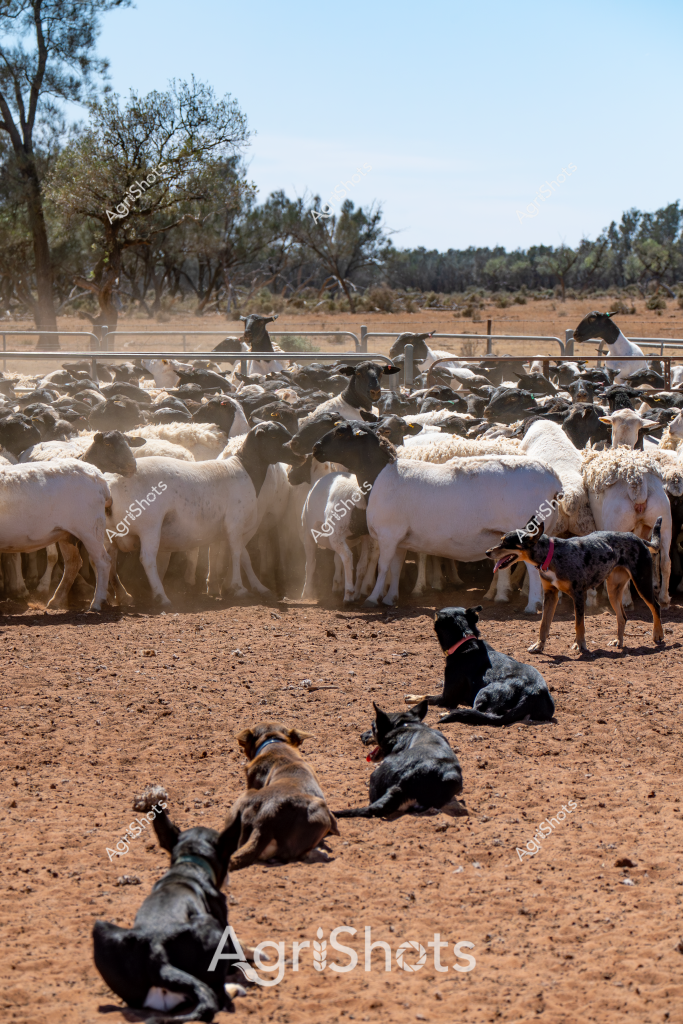
A typical Australian sheep station scene showcases a large mob of white sheep densely packed within a dusty yard, surrounded by metal livestock fencing. Several working dogs - black and brown in color - rest on the dry, reddish-brown earth in the foreground, vigilantly monitoring the flock. The dogs, appearing tired from mustering, are lying down in strategic positions around the yard, with some standing near the sheep. The landscape reveals a classic arid Australian setting, with sparse eucalyptus trees in the background and a clear blue sky overhead. The sheep, likely a Merino breed common in Australian agriculture, are tightly clustered, creating a cloud-like mass of white amid the swirling dust. A few dogs of different coat colors, including a black and a mottled grey/brown dog, are positioned to control and protect the herd. The image captures the essence of Australian pastoral farming - the hard work of livestock management, the partnership between skilled working dogs and farmers, and the challenging environmental conditions of rural Australia. The dry, compact ground and sparse vegetation highlight the resilience required in sheep farming across the continent's more arid regions.
 Image
Image
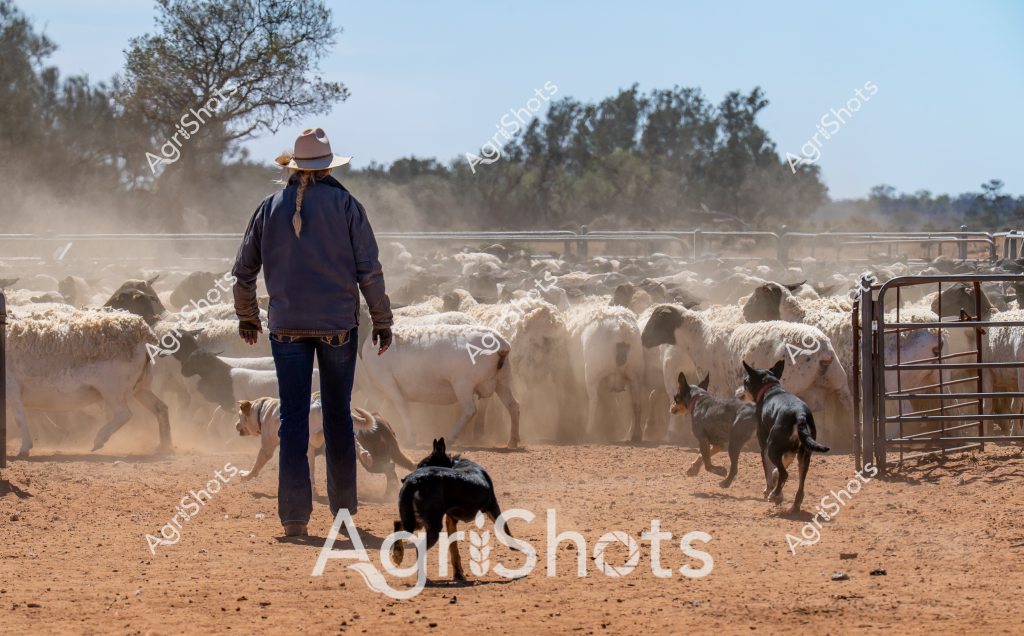
A seasoned stockman stands amid a dusty sheep yard, overseeing a large flock of white sheep during what appears to be a dry, hot mustering day in rural Australia. Wearing a wide-brimmed hat, dark jacket, and work pants, the stockman is accompanied by several working dogs - black and tan cattle dogs carefully managing the sheep's movement. The ground is a rich, rusty red color, kicking up thick clouds of dust as the sheep move between metal yard gates and fencing, creating a swirling, atmospheric scene typical of Australian livestock management. Two dogs are actively herding the sheep, with one positioned close to the stockman and another moving along the edge of the flock. The sheep appear to be Merino or crossbred wool sheep, tightly packed and generating significant dust as they move. Trees and scrub vegetation are visible in the background, suggesting this is likely a rural station or large agricultural property in an arid or semi-arid region of Australia. The image captures the intense, physical nature of livestock management - showcasing the skill of both the human stockman and the working dogs in controlling and moving the sheep. The dust, heat, and close coordination between human and animal highlight the challenging environment of Australian livestock farming.
 Image
Image
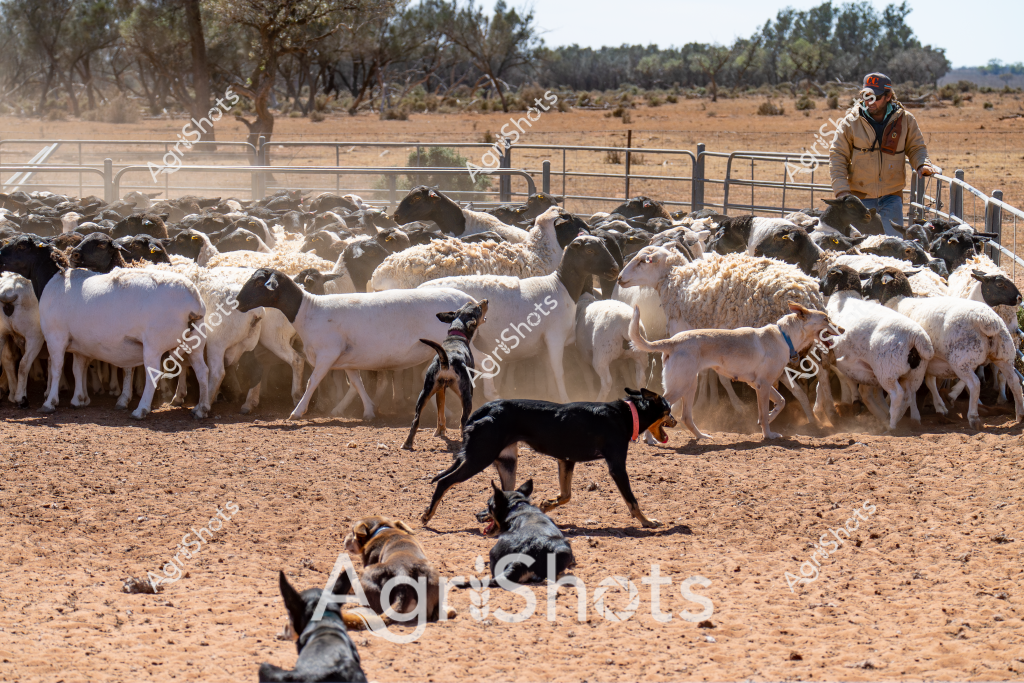
A skilled man livestock manager stands alongside a large mob of white and black sheep in a dry, dusty paddock in what appears to be an arid Australian agricultural setting. Several working dogs - black and tan kelpies - are positioned around the flock, helping to control and guide the sheep within metal yard fencing. The landscape is characterized by reddish-brown earth, sparse vegetation, and scattered eucalyptus trees in the background, suggesting this is likely a station or rural property in an inland region experiencing dry conditions. The sheep appear to be a mixed flock, predominantly white with some black-faced individuals, potentially a breed like Dorper or a crossbred meat sheep variety. The working dogs are intensely focused, moving strategically around the tightly packed group of animals to maintain their position and assist the livestock manager in mustering and controlling the flock. The scene captures the quintessential Australian agricultural landscape - a testament to the resilience of farmers and working animals in challenging environmental conditions. The man is dressed in practical work attire, including a tan jacket and hat, reflecting the functional approach to livestock management in rural Australia.
 Image
Image
A dusty livestock mustering scene captures a large flock of white and black sheep being herded by working dogs in a dry, arid paddock. Several black and brown working dogs strategically move around the tightly packed mob of sheep, kicking up red earth and creating a swirling dust cloud. The sheep appear to be a mixed breed, predominantly white with black faces, likely Dorper or Merino cross, tightly clustered within a metal yard fence. In the foreground, some dogs rest on the ground while others actively work to control the movement of the sheep, demonstrating the classic Australian livestock management technique of using highly trained herding dogs to manage stock in challenging outback conditions. The background shows sparse trees and a dry landscape typical of rural Australian grazing country, with the intense dust and close animal grouping suggesting hot, dry weather conditions during mustering season. The scene powerfully illustrates the critical role of working dogs in Australian agricultural practices, showcasing their skill, discipline, and importance in managing livestock across vast, harsh agricultural landscapes.