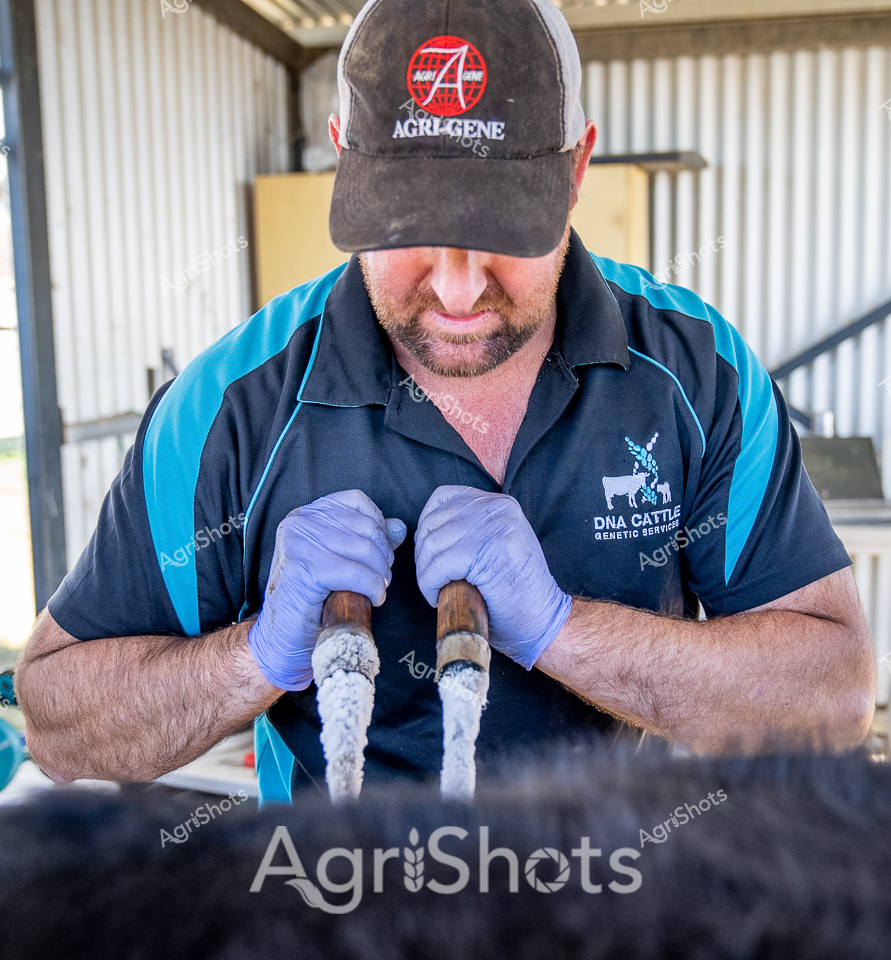
About this image
A skilled cattle genetic services professional carefully brands a young bull in a rural livestock yard. Wearing protective purple gloves and an Agri-Gene cap, the worker applies a precise branding technique using traditional metal branding irons. The carefully controlled process takes place in a typical corrugated iron shed, highlighting the technical expertise involved in modern cattle breeding and management.
Similar media
 Image
Image
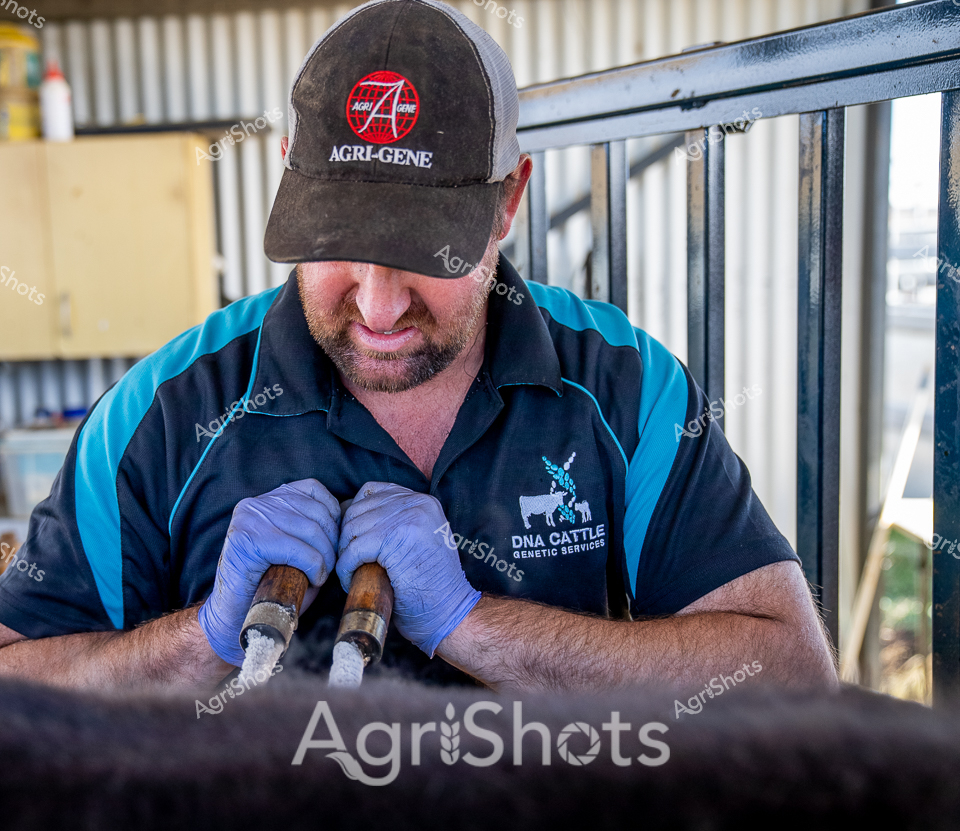
A skilled genetic services professional from DNA Cattle Genetic Services focuses intently on cattle management, wearing purple latex gloves and a navy and teal uniform adorned with the company's livestock branding. The Agri-Gene cap shields his eyes as he carefully handles specialized cattle handling equipment in a meticulously maintained agricultural shed. Precision and expertise radiate from his concentrated posture, reflecting the sophisticated world of modern cattle breeding and genetic selection. His protective workwear and professional demeanor underscore the technical, scientific approach to contemporary livestock management, where genetic potential is carefully evaluated and optimized. The corrugated metal background and professional branding suggest a high-performance agricultural environment dedicated to advancing cattle genetics and production capabilities. This image captures the intersection of agricultural expertise, scientific methodology, and hands-on farm management, highlighting the sophisticated techniques used in contemporary beef cattle production.
 Image
Image
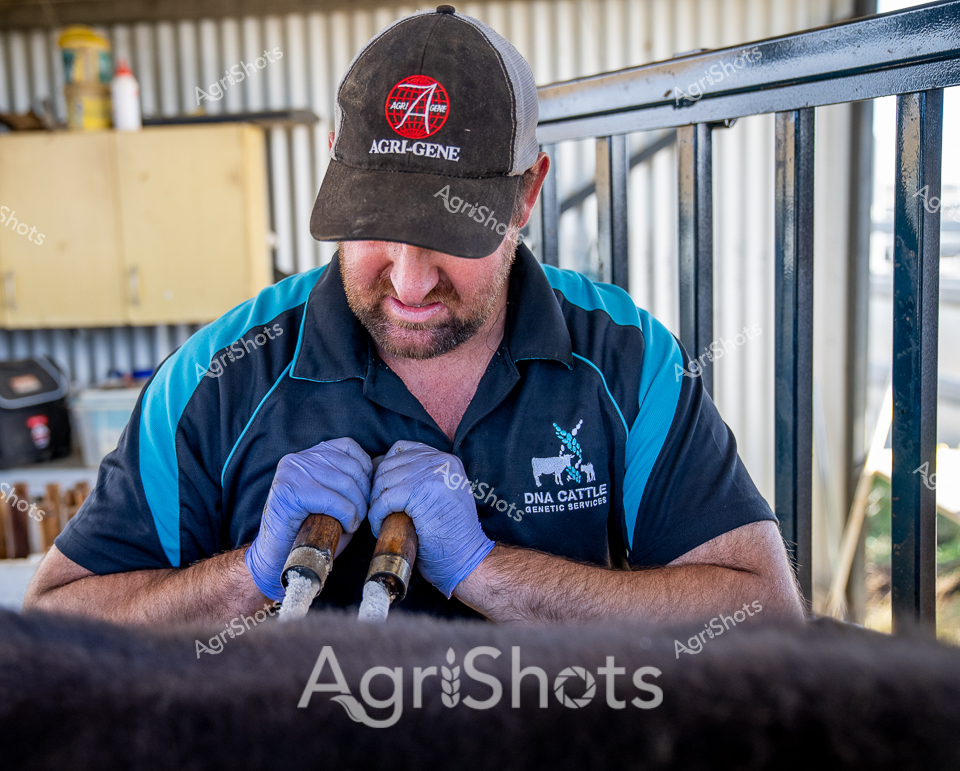
A dedicated cattle genetics professional focuses intently on his task, wearing protective blue nitrile gloves and a navy and turquoise DNA Cattle Genetic Services polo shirt. His Agri-Gene cap is pulled low, shielding his eyes as he works carefully with cattle equipment in a corrugated iron shed that speaks to the robust infrastructure of Australian rural enterprises. The worker's weathered hands grip wooden-handled tools, suggesting precise and experienced handling of livestock breeding technologies. His attire and branding - from the cap to the shirt logos - reflect the sophisticated, science-driven approach of modern agricultural genetics, bridging traditional farming practices with cutting-edge reproductive management. The muted blues and greys of his clothing complement the industrial setting, while the purple-tinted gloves signal meticulous attention to biosecurity and animal health standards. This image captures the essence of contemporary Australian cattle breeding: professional, technical, and deeply committed to genetic improvement in the beef production sector.
 Image
Image
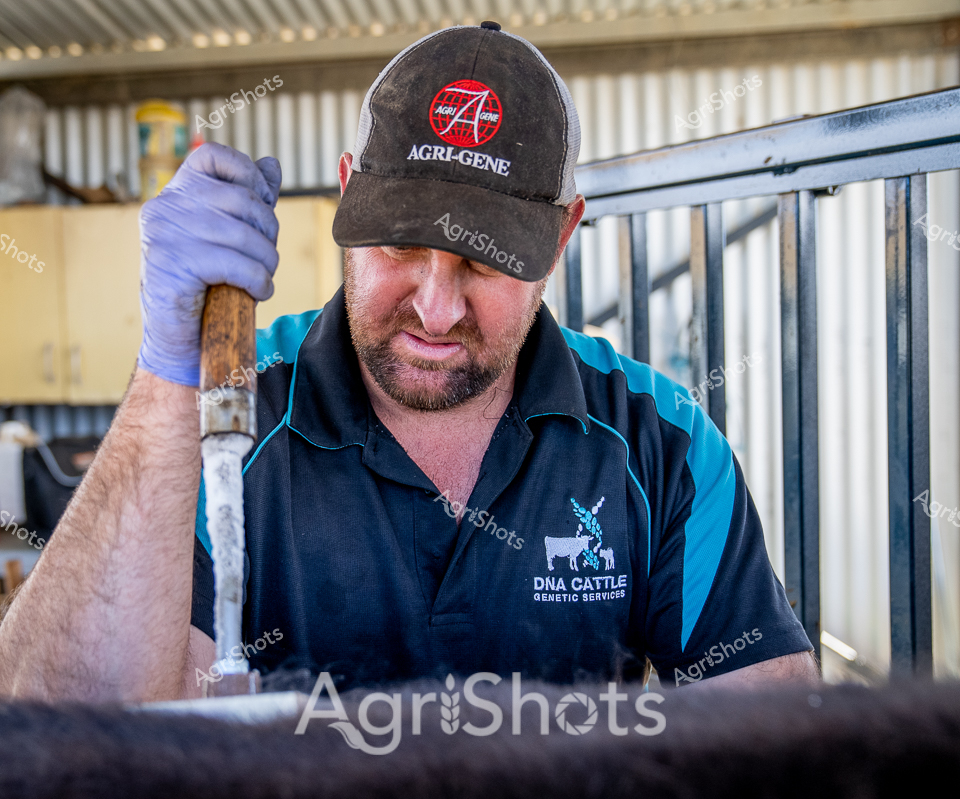
A dedicated cattle genetic services professional works meticulously in a rural livestock processing facility, wearing a navy and teal polo shirt emblazoned with the DNA Cattle Genetic Services logo. His purple latex gloves grip a tool as he focuses intently on a cattle management task, demonstrating the precision and care integral to modern agricultural breeding programs. The worn corrugated metal shed surrounds him, typical of Australian agricultural infrastructure, with soft natural light filtering across the workspace. An Agri-Gene cap shades his face, reflecting the specialized agricultural technology and genetic improvement sectors driving contemporary cattle production. The scene captures the intersection of scientific expertise and hands-on agricultural practice, highlighting the technical skill required in contemporary stud cattle breeding and genetic selection. Every detail - from the professional's focused expression to the carefully maintained working environment - speaks to the sophisticated, data-driven approach of modern Australian beef cattle management.
 Image
Image
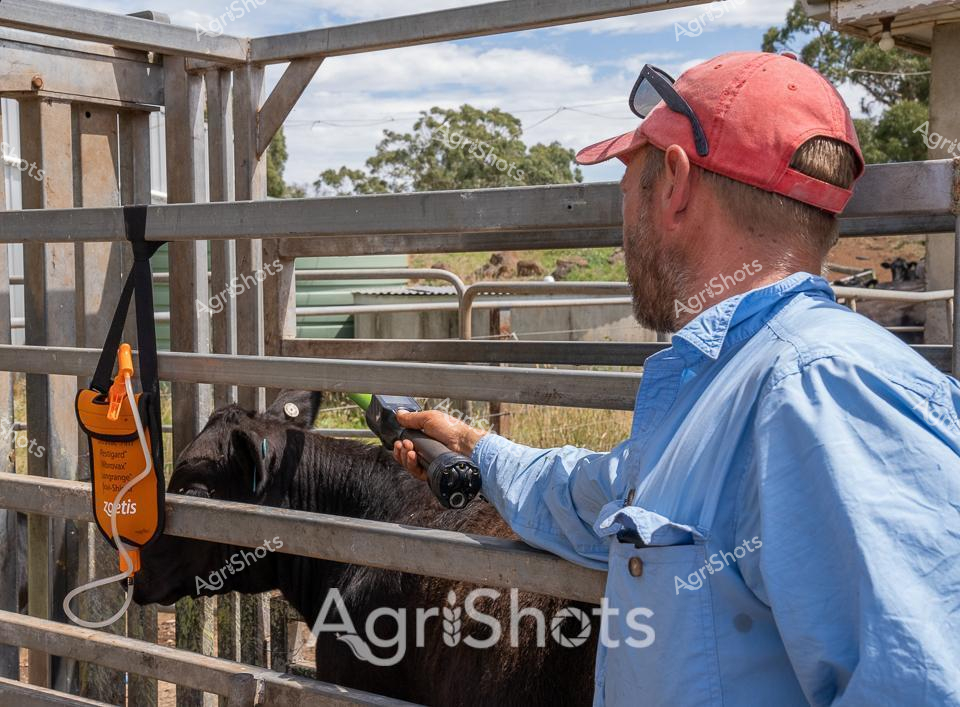
Branding cattle in the golden Victorian grasslands, a seasoned stockman delivers precise veterinary care to a restrained black Angus heifer. Wearing a faded red cap and crisp blue work shirt, he carefully administers a vaccination using the distinctive orange Zoetis animal health equipment hanging nearby. Steel cattle yards frame the scene, with native eucalyptus trees softening the background under a mild mid-morning sky. The animal remains calm and still, a testament to the handler's experienced and gentle approach to livestock management. Rich textures of weathered metal gates, smooth bovine hide, and worn denim capture the practical, no-nonsense ethos of Australian agricultural work. This moment represents the critical intersection of animal welfare, modern veterinary science, and generational farming expertise that sustains Australia's world-renowned beef production.
 Image
Image
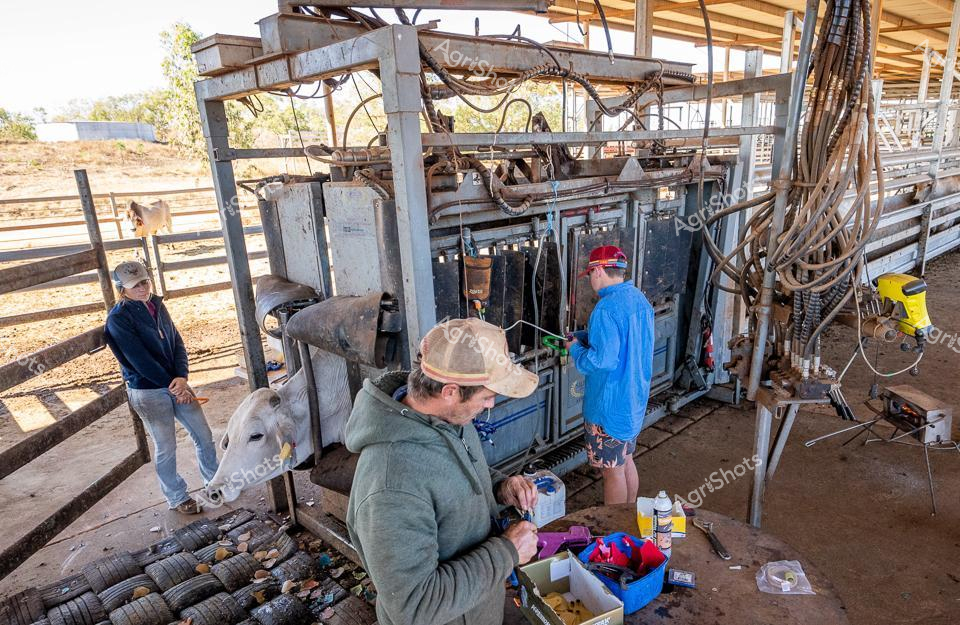
Scorching Northern Territory midday sun streams into a robust cattle processing facility, where seasoned station workers methodically manage a mob of pale Brahman cattle through an industrial hydraulic cattle crush. A worker in a sage green fleece carefully prepares medication or vaccination supplies, while another in a vivid blue shirt operates the complex machinery of the steel livestock handling equipment. The rugged metal infrastructure - with its intricate network of hydraulic pipes, gates, and mechanical components - reveals the precision engineering required to safely manage these powerful tropical cattle breeds. Worn rubber mats underfoot and scattered industrial supplies hint at the daily rhythms of pastoral work, where animal welfare and operational efficiency intersect. The weathered steel yards and specialized equipment demonstrate the technological sophistication of modern Australian cattle stations, where generations of knowledge combine with cutting-edge agricultural practices to manage livestock in challenging environments. The scene pulses with quiet concentration, the workers moving with practiced efficiency under the unforgiving Northern Territory sun.
 Image
Image
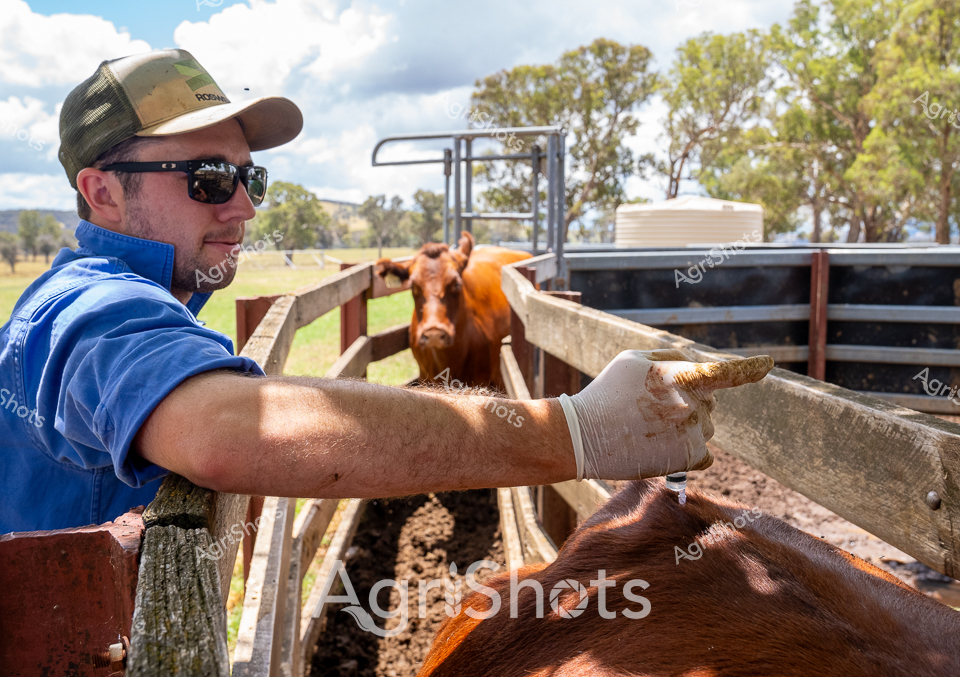
In the sun-drenched cattle yards of the Riverina region, a skilled livestock professional demonstrates precision animal health management during a hot summer day. Wearing a blue work shirt and a camouflage cap, the worker carefully administers a veterinary injection to a rich russet-colored bovine, his gloved hand steady and confident. The surrounding landscape reveals a classic Australian rural setting, with eucalyptus trees dotting the background and a water tank standing sentinel near the wooden livestock handling infrastructure. Precise and methodical, the worker's body language suggests years of experience in stud cattle management, his dark sunglasses and focused demeanor reflecting the serious yet routine nature of livestock care. The bright natural light highlights the textural details - from the weathered wooden yard rails to the sleek coat of the cattle, creating a vivid snapshot of agricultural expertise in action. This image captures the critical intersection of animal welfare, technical skill, and the enduring spirit of Australian agricultural practice.
 Image
Image
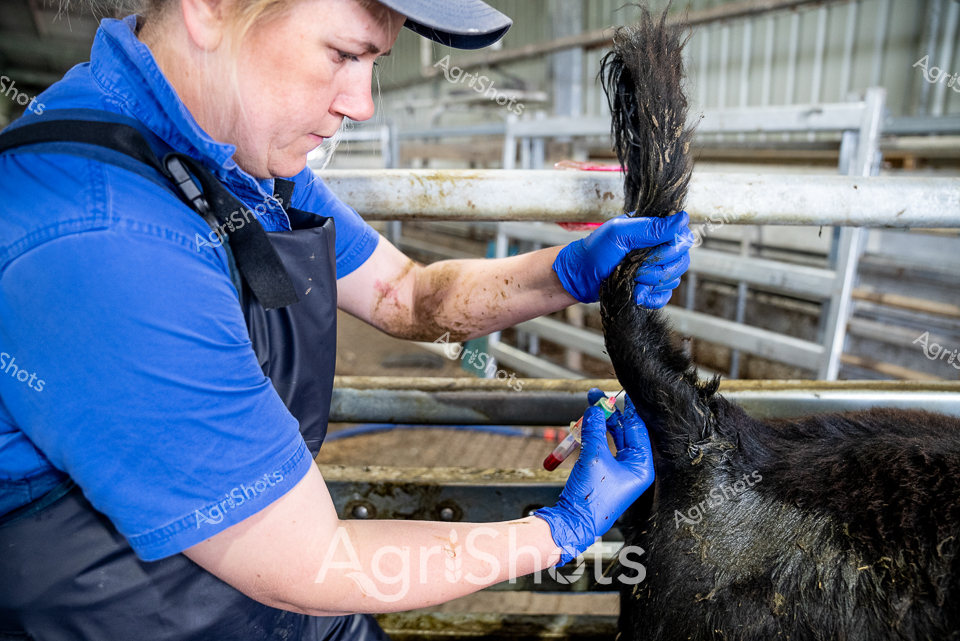
Veterinary precision unfolds in a steel-framed livestock shed, where a dedicated professional in a vibrant blue shirt and navy vest performs critical animal health diagnostics. Wearing protective royal blue nitrile gloves, she carefully handles a black Angus cattle specimen, drawing a blood sample with methodical expertise. Her focused gaze and steady hands reflect the meticulous nature of agricultural veterinary practice, capturing a moment of scientific intervention in rural animal management. The crisp, clinical environment contrasts with the rich, deep black coat of the cattle, highlighting the intersection of modern agricultural science and traditional livestock breeding. Metallic cattle handling infrastructure frames the scene, suggesting a contemporary, professional approach to animal welfare and health monitoring. The image embodies the precision, care, and technological sophistication of contemporary Australian agricultural practices, particularly in livestock veterinary diagnostics. Every element - from the protective equipment to the careful blood collection technique - communicates the professionalism and commitment of agricultural health specialists working to maintain the highest standards of animal care and production efficiency.
 Image
Image
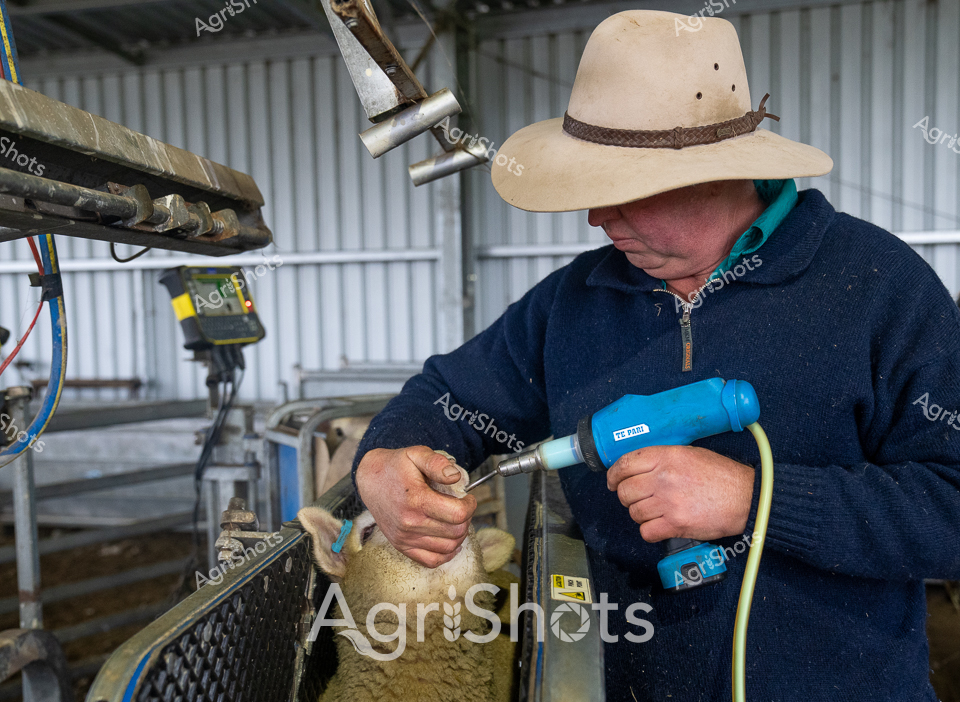
In the hushed steel-clad shed of a Victorian sheep station, a seasoned farmer tenderly manages a lamb during a routine health check. Wearing a classic cream-colored wide-brimmed hat and navy wool jacket, the worker carefully secures the young sheep in a Clipex livestock handler while wielding a blue Te Pari drench gun to administer medication. Metallic infrastructure surrounds them - scales, hydraulic gates, and technical equipment suggesting a modern, precision-driven approach to animal husbandry. The soft blue and gray tones of the equipment contrast with the earthy beige of the hat and the woolly cream of the lamb's coat, creating a harmonious scene of agricultural care. Winter's muted light filters through the shed, casting subtle shadows that highlight the farmer's focused, weathered hands and the delicate interaction between human and livestock. This moment captures the essence of contemporary Australian sheep farming - where technology, expertise, and compassionate animal management converge.