Results for “Perspective”
 Image
Image
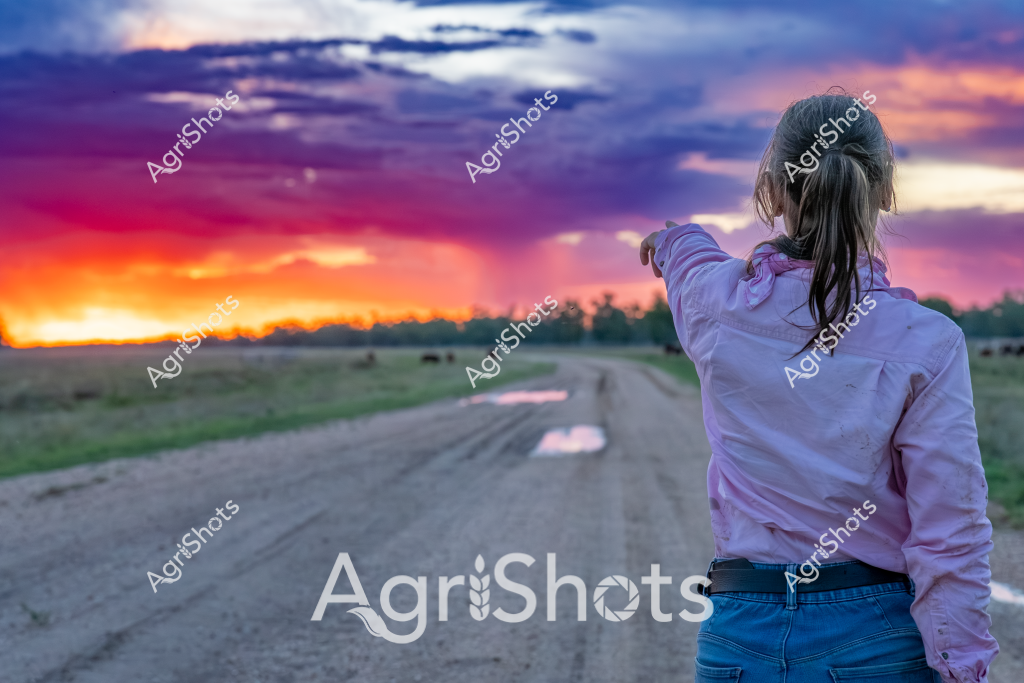
A woman stands with her back to the camera, gazing across a rural landscape at a breathtaking sunset. Her ponytailed hair and light purple long-sleeved shirt contrast against the dramatic sky, which explodes with vibrant colors - deep crimson, fiery orange, and rich burgundy clouds stretching across the horizon. The gravel road stretches into the distance, reflecting soft sunset hues, with grasslands and distant treelines creating a sense of expansive rural Australian terrain. Her outstretched arm suggests a moment of quiet contemplation, capturing the serene beauty of an evening in the countryside. The scene evokes a sense of solitude, wonder, and connection to the natural landscape, with the golden-orange sunlight casting a warm glow across the tranquil rural setting.
 Image
Image
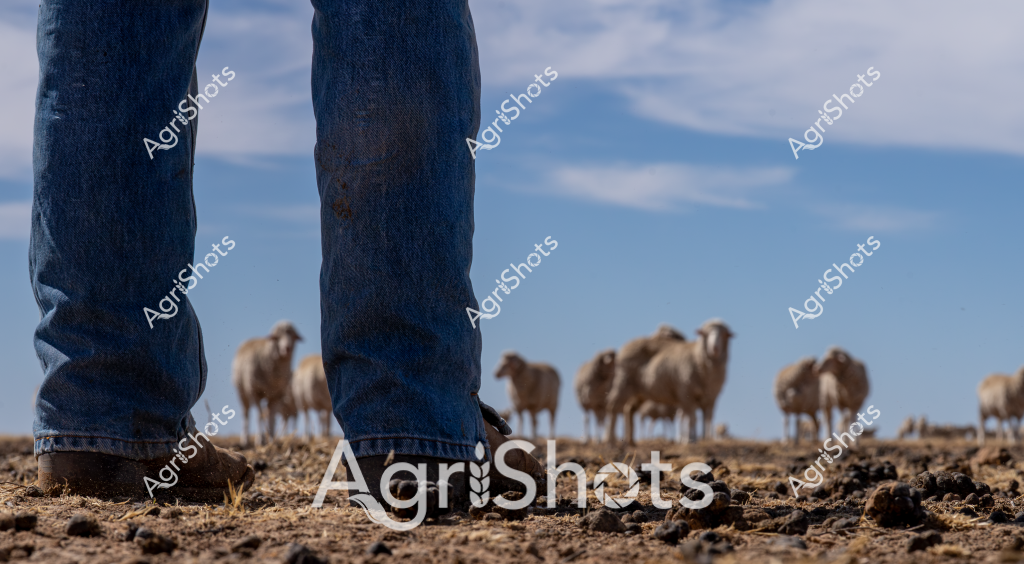
A close-up view of a man's denim-clad legs and boots stands in the foreground, with a flock of sheep grazing in the background under a soft blue sky. The ground is dry and rocky, typical of an arid Australian pastoral landscape, with sparse vegetation and a rugged terrain that stretches to the horizon. Several woolly sheep are clustered together, their tan and brown coats blending with the earthy tones of the paddock. The perspective emphasizes the scale of the landscape, with the human figure providing a sense of proportion against the expansive background. This image captures the essence of Australian sheep farming - the connection between the stockman and the flock, set against the challenging and beautiful rural environment.
 Image
Image
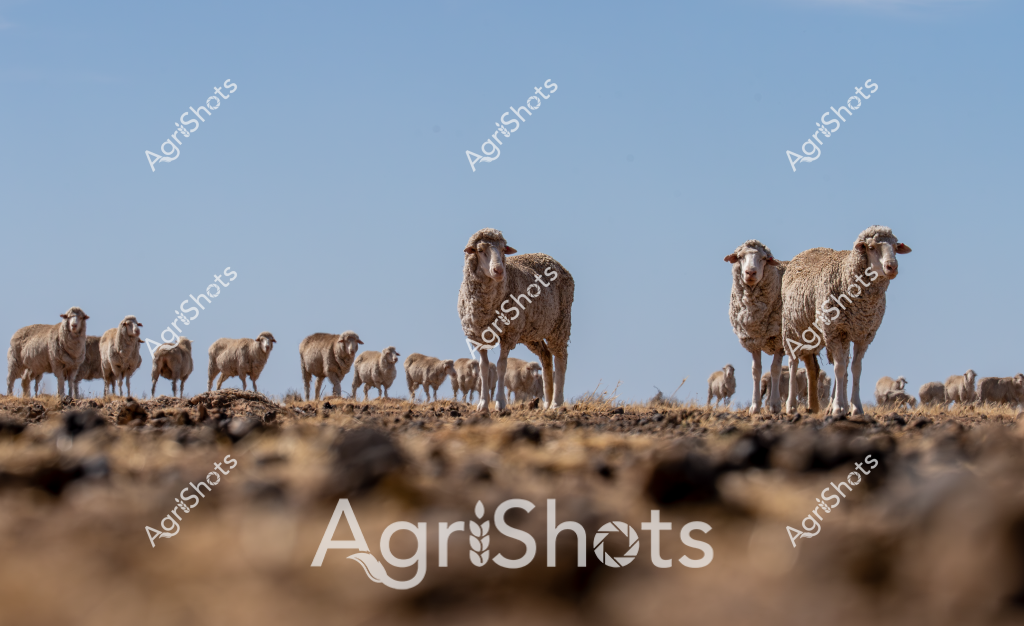
A flock of merino sheep stand confidently across a dry, rocky landscape under a clear blue sky. Several woolly sheep are positioned prominently in the foreground, with their dense, beige-colored fleece creating a textural contrast against the rugged ground. More sheep spread out behind them, creating a sense of depth and scale typical of Australian pastoral scenes. The animals appear alert, with some standing tall and others grazing, showcasing the hardy nature of merino sheep in challenging outback conditions. The low perspective emphasizes the sheep's robust form, with their muscular legs standing firmly on the weathered, stony terrain. This image captures the essence of Australian sheep farming - resilient animals adapted to harsh, arid environments that characterize much of the continent's agricultural landscape.
 Image
Image
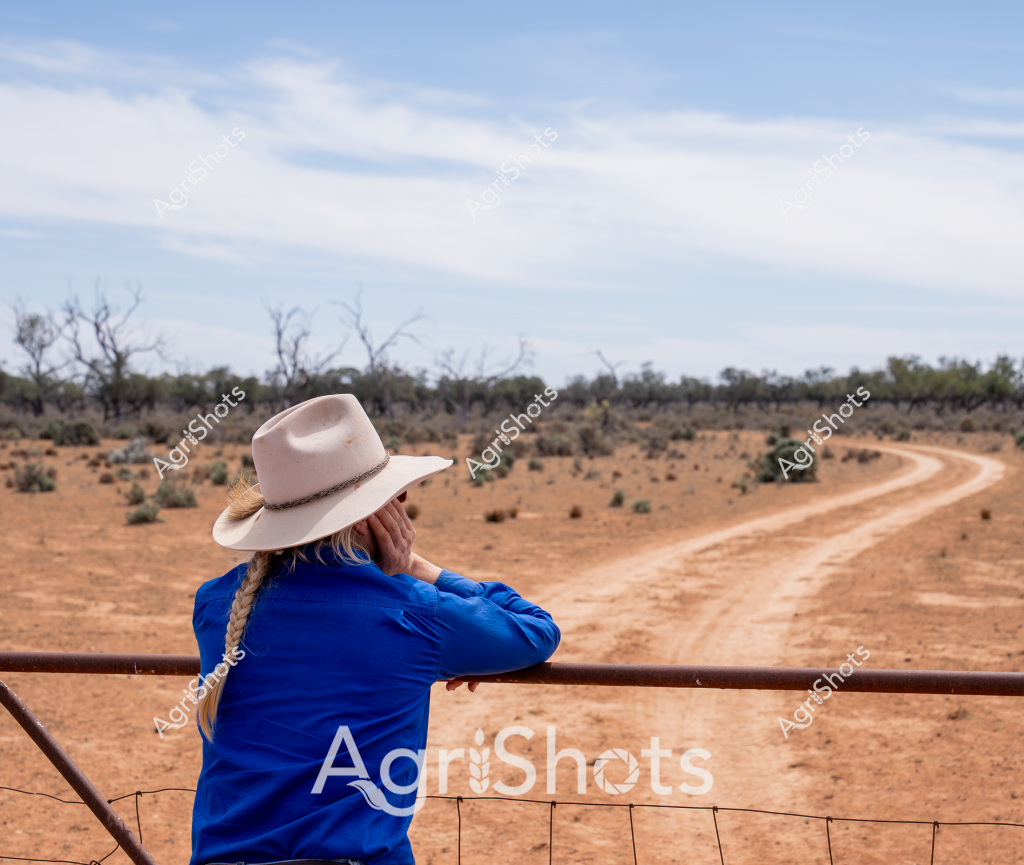
A woman in a bright blue shirt and wide-brimmed hat stands facing away from the camera, leaning against a fence and gazing out over a classic Australian outback landscape. The dusty red dirt track winds through sparse scrubland, with scattered trees and low vegetation stretching toward a pale blue sky with wispy clouds. Her braided hair is visible beneath her light-colored hat, and her posture suggests a moment of quiet contemplation of the vast, arid rural landscape. The scene captures the essence of rural Australian life - a sense of isolation, resilience, and connection to the harsh but beautiful inland environment. The fence in the foreground and the meandering dirt road create a strong sense of perspective, drawing the viewer's eye into the expansive, sunbaked terrain typical of Australia's interior regions.
 Image
Image
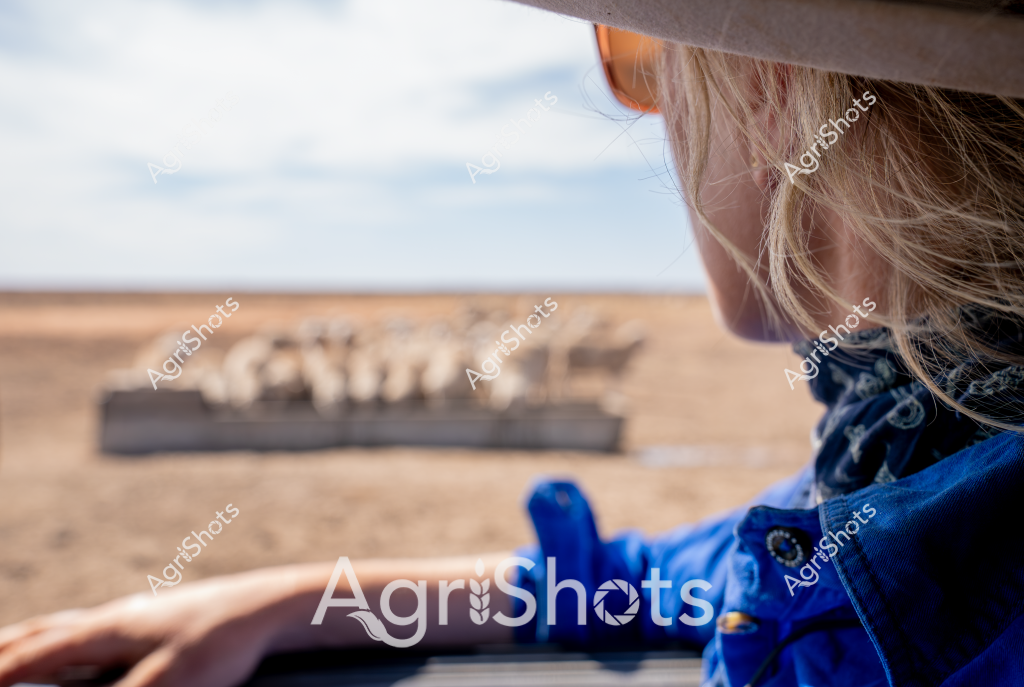
A woman in a blue jacket observes a flock of sheep in a dry, expansive landscape. She appears to be looking out over a dusty paddock where a group of light-colored sheep are standing near a long feeding trough. The background reveals a flat, arid terrain stretching to a pale, cloud-spotted horizon. The scene captures a moment of quiet observation, with the woman's perspective suggesting a connection to the agricultural landscape and the livestock. Her blonde hair is partially visible, and she seems to be monitoring the sheep, which are clustered together in the middle distance, highlighting the challenges of pastoral farming in an dry environment.
 Image
Image
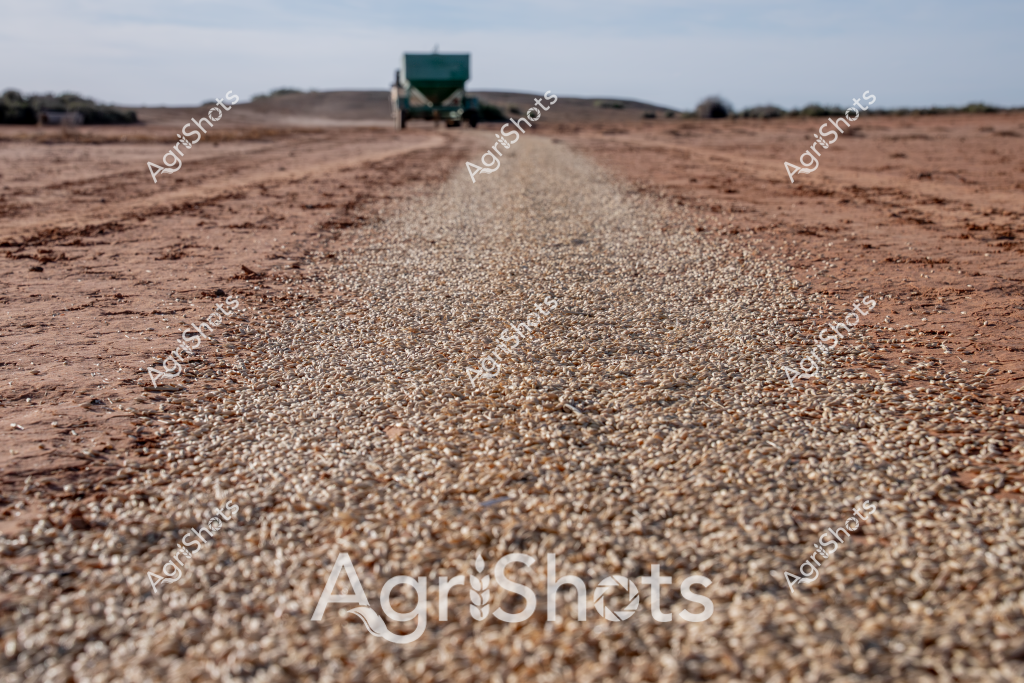
A green agricultural spreader traverses a long, narrow path of uniformly distributed gravel or seed across an arid, reddish-brown paddock landscape. The machine appears to be moving slowly, precisely dispersing its cargo in a controlled line that bisects the dry, textured terrain. The surrounding landscape consists of compacted earth in muted browns and tans, suggesting a drought-affected or semi-arid agricultural region. The horizon is flat and expansive, with a pale, overcast sky creating a sense of vastness and isolation typical of Australian rural environments. The image captures the precision of modern agricultural technology, where even in challenging environmental conditions, farmers use sophisticated equipment to manage crop planting or soil distribution with remarkable accuracy. The close-up perspective of the gravel/seed path provides a textural detail that emphasizes the methodical nature of agricultural practices in harsh landscapes.
 Image
Image
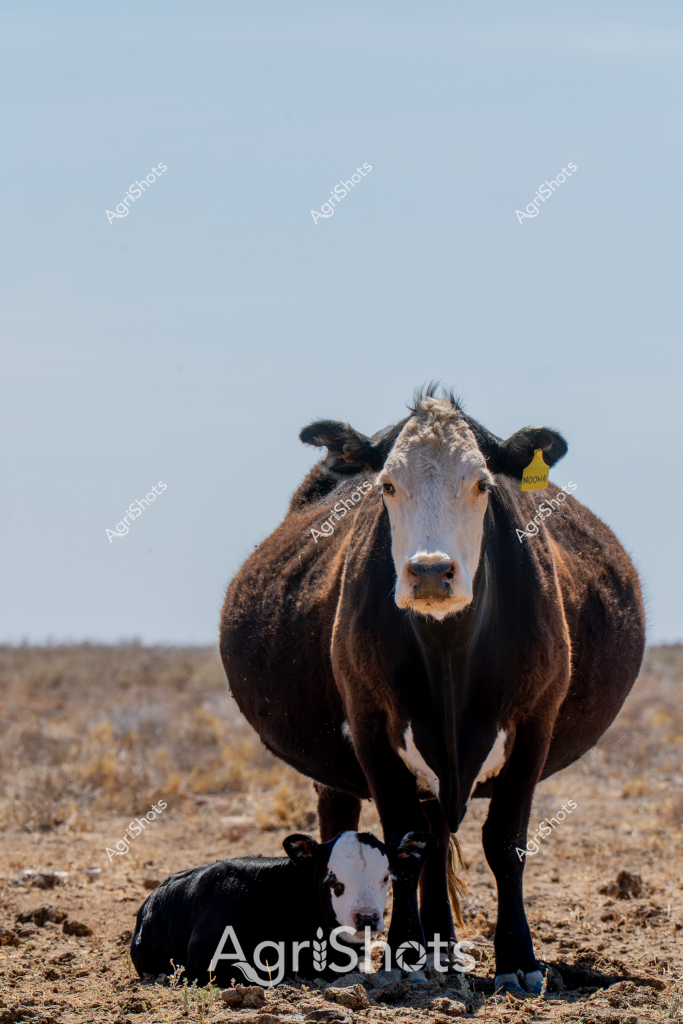
A robust black and white beef cow stands confidently in an arid, rocky landscape, with her newly born black and white calf resting at her feet. The mature cow wears a yellow ear tag, indicating she is part of a managed livestock herd, likely in a dry inland region of Australia. Her sturdy build and protective stance suggest she is a high-quality beef breed, possibly an Angus or Hereford cross, well-adapted to harsh pastoral conditions. The surrounding terrain is sparse and rocky, with minimal vegetation - characteristic of drought-affected or semi-arid grazing lands typical of central or western Australian cattle stations. The pale blue sky and flat horizon emphasize the expansive, unforgiving nature of the landscape. The cow's thick winter coat and the calf's close proximity to her mother hint at the challenges of survival in such an environment. The image captures a powerful moment of maternal protection and resilience, embodying the strength of Australian livestock and the enduring spirit of agricultural communities that thrive in challenging conditions. The close-up perspective allows viewers to appreciate the detailed markings, muscular structure, and stoic demeanor of this cattle breeding pair.
 Image
Image
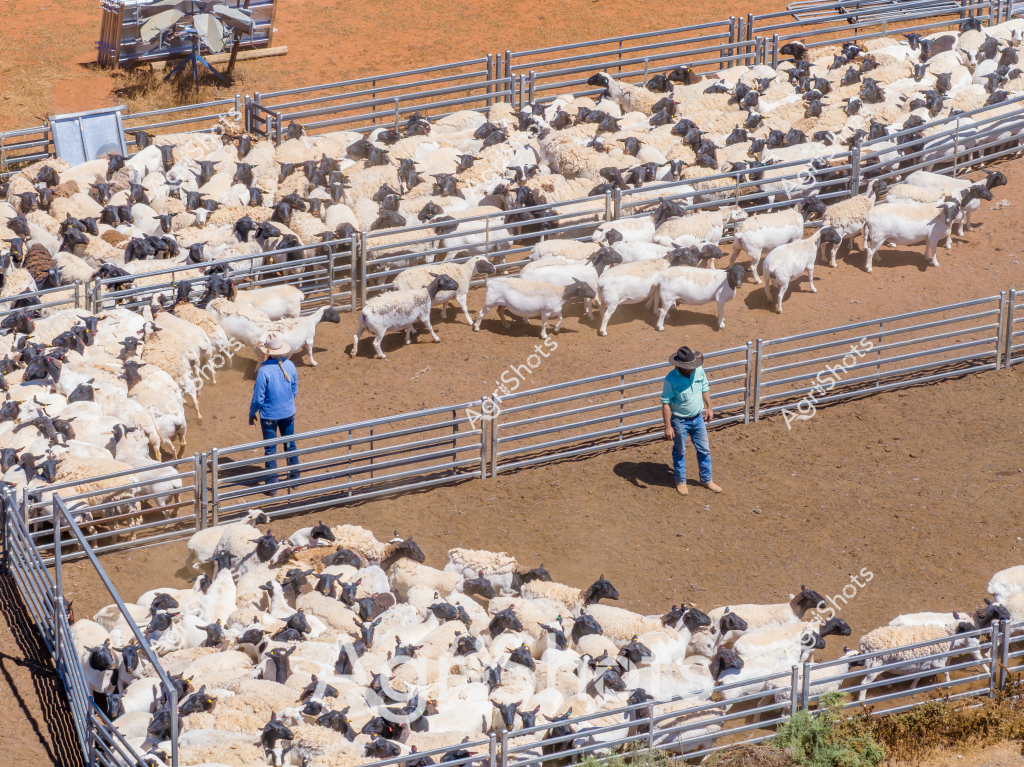
A large flock of white and dark-colored sheep are densely packed into multiple metal livestock yards under a bright, arid landscape. Two men in work attire - one wearing a blue shirt and the other in a teal-colored shirt - stand near the fenced pens, appearing to be managing the livestock gathering. The sandy-colored ground and metal yard infrastructure suggest this is a typical sheep farming scene, likely in an Australian inland or pastoral region. The sheep appear to be a mixed breed, with some showing distinct white wool and others having darker coloration, potentially representing a Merino or cross-bred flock. The tight arrangement of the animals and the systematic metal fencing highlight the organized approach to livestock management in Australian agriculture. The aerial perspective provides a comprehensive view of the scale of the sheep operation, showing how modern farming techniques utilize structured yards to control and manage large numbers of livestock efficiently. Shadows cast by the animals and the workers emphasize the midday lighting and the dry, open landscape typical of Australian sheep farming regions.
 Image
Image
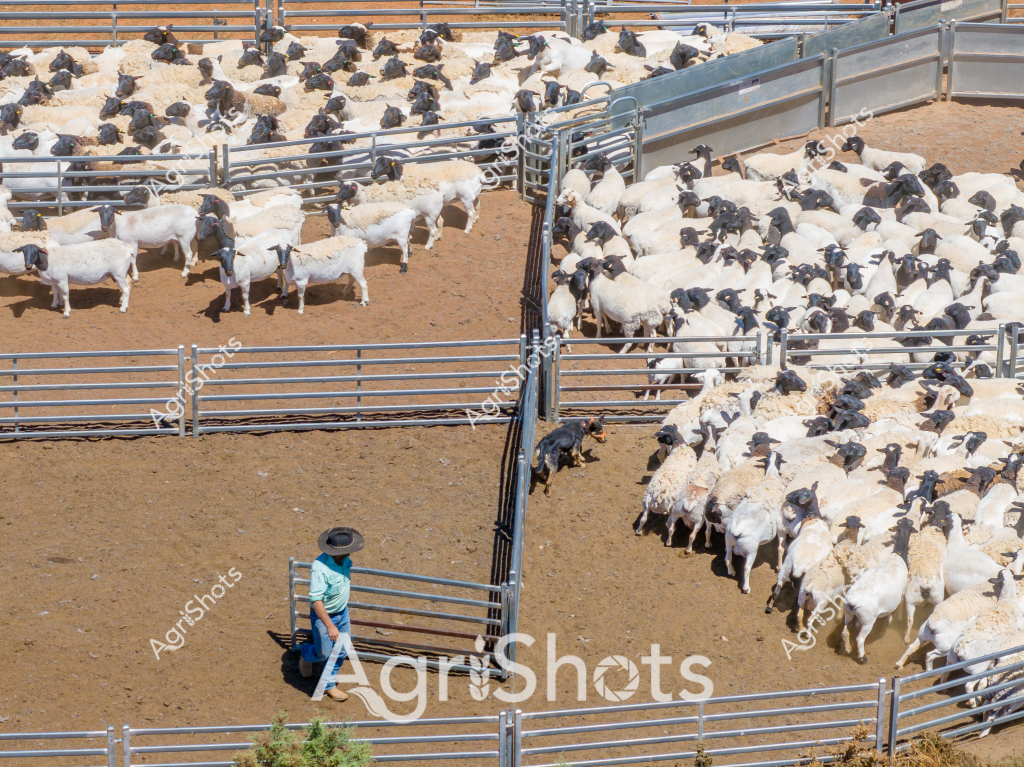
A large flock of black and white sheep are penned in a dry, sandy livestock yard, carefully managed by a stockman wearing a blue shirt and wide-brimmed hat. The sheep appear to be a mixed breed, with some pure white and others with distinct black heads and markings, typical of breeds like Dorper or Suffolk. Metal livestock panels divide the yard into separate pens, creating an organized system for sorting and managing the herd. The stockman stands near the fence, observing the tightly packed groups of sheep that fill multiple interconnected yards. The ground is a sandy brown color, suggesting an arid or semi-arid agricultural region, likely in inland Australia. The precise arrangement of the yards and the careful positioning of the livestock demonstrate professional farm management techniques used in Australian sheep production. The aerial perspective reveals the scale of the operation, with hundreds of sheep clustered together, their woolly bodies creating a textured landscape of white and gray against the earthy background. This scene captures the essence of Australian livestock farming - a blend of careful animal husbandry, strategic farm infrastructure, and adaptation to challenging rural environments.
 Image
Image
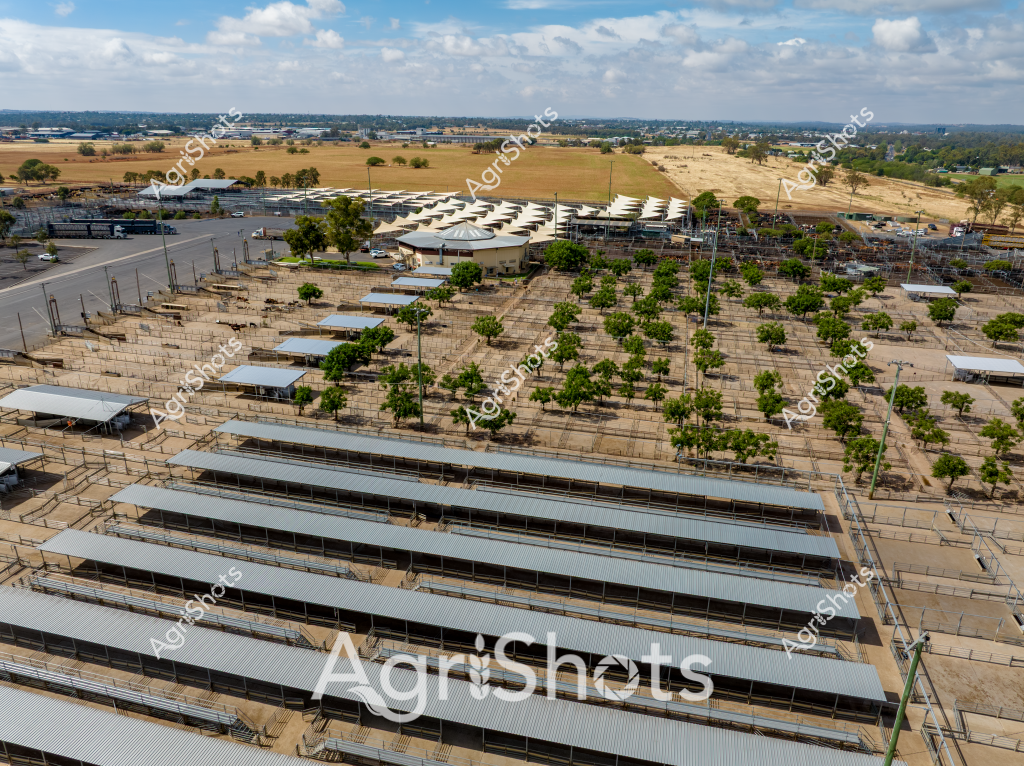
An expansive aerial view of a modern livestock facility reveals a systematic agricultural complex featuring multiple long, covered livestock sheds with metal roofing. Strategically planted trees are interspersed throughout the sandy-colored ground, providing shade and windbreaks across the extensive property. The facility appears designed for efficient animal management, with carefully constructed pens, walking areas, and sheltered spaces that maximize animal welfare and operational productivity. The landscape surrounding the facility is characterized by open paddocks and distant rural infrastructure, with a backdrop of golden fields and scattered trees extending to the horizon. Multiple metal-roofed structures of varying lengths are arranged in parallel rows, suggesting a highly organized approach to livestock management. Lightweight shade structures and carefully planned vegetation contribute to the facility's professional and considered design. The aerial perspective highlights the scale and precision of modern agricultural infrastructure, showcasing how contemporary farming operations integrate functional design with animal husbandry best practices. Fencing, access routes, and strategic building placement demonstrate a sophisticated approach to livestock management in what appears to be an arid or semi-arid Australian agricultural setting. The expansive view captures the intersection of engineering, animal care, and agricultural innovation, revealing a meticulously planned livestock facility that represents the advanced state of Australian agricultural practices.
 Image
Image
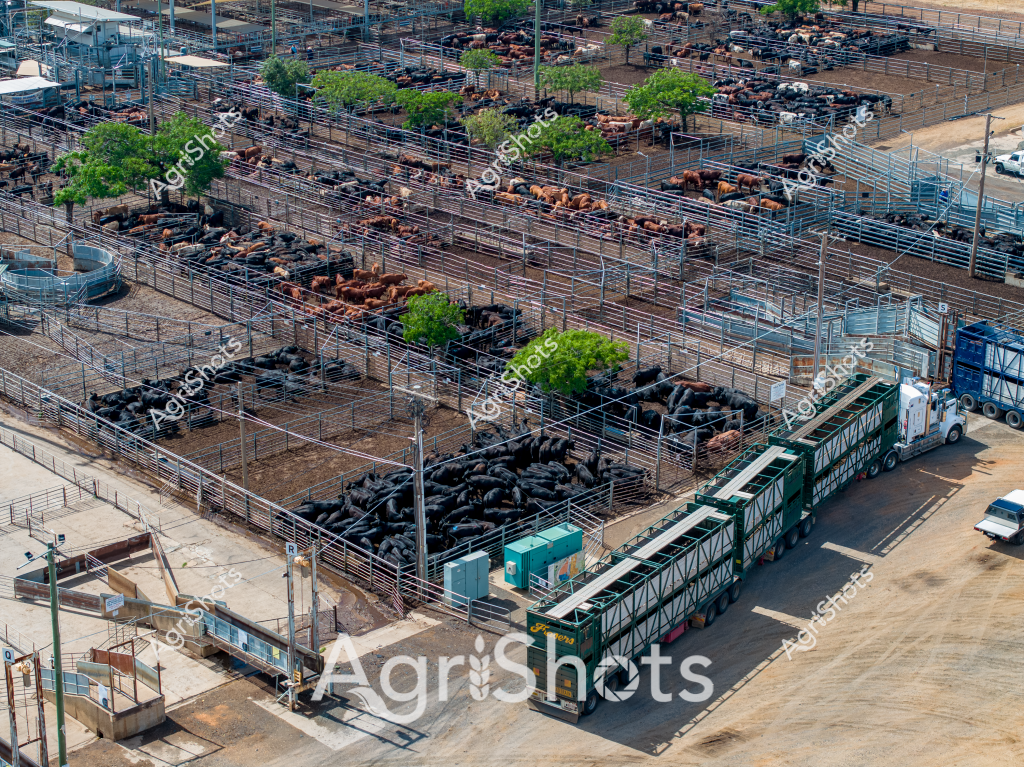
An expansive aerial view of a modern cattle saleyard reveals multiple interconnected metal-fenced paddocks densely populated with beef cattle. Rows of dark and reddish-brown cattle are strategically distributed across the compound, with small green trees and shade structures interspersed between the pens to provide relief from the harsh environment. A large green livestock transport trailer is positioned at the edge of the facility, ready for loading or unloading cattle, while industrial infrastructure including water tanks and processing equipment are visible throughout the site. The ground appears dry and compacted, typical of large-scale livestock management systems, with precise metal fencing creating a geometric pattern of controlled movement and segregation. The aerial perspective highlights the scale and industrial efficiency of modern beef cattle production, where large numbers of animals can be systematically managed, monitored, and prepared for market. Dusty earth tones and the structured layout emphasize the calculated approach to livestock farming in what appears to be an arid or semi-arid agricultural region.
 Image
Image
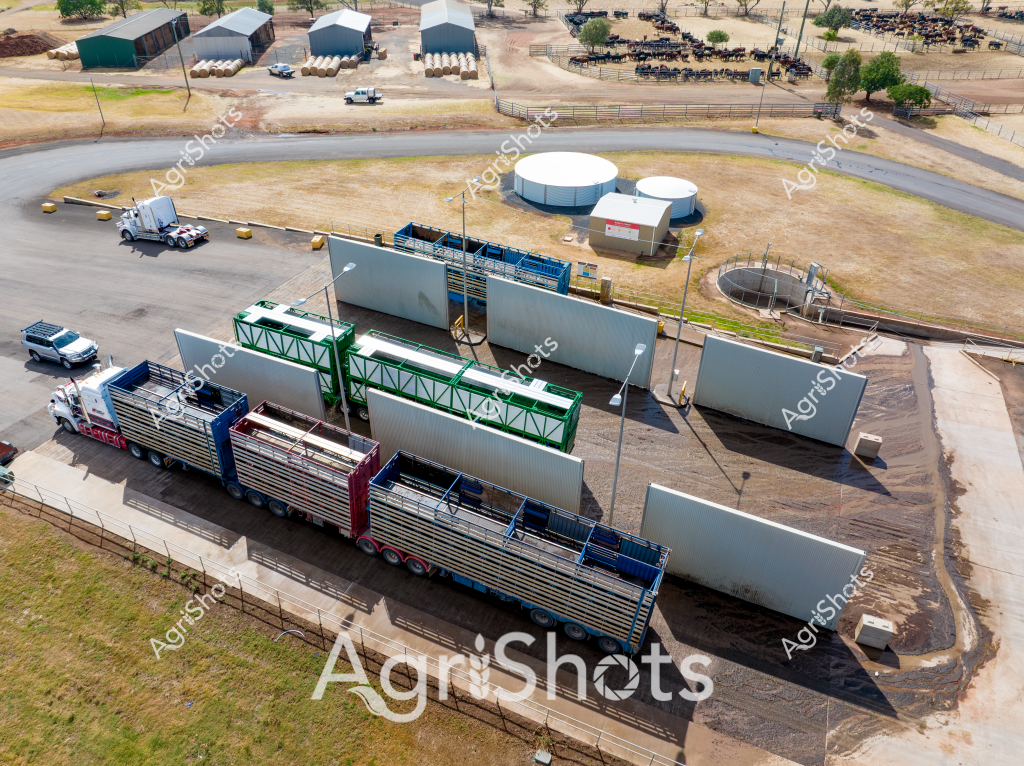
An aerial view of a livestock processing facility reveals a complex agricultural infrastructure designed for efficient cattle management. Large white modular walls and green-framed structures create a systematic loading and unloading area for semi-trailer trucks. White cylindrical water tanks and circular holding pens surround the central processing zone, indicating a modern cattle handling facility likely located in a dry, arid region with sparse vegetation and dusty ground. A semi-trailer truck is positioned within the loading zone, suggesting preparation for transporting livestock. The surrounding landscape features several industrial-style sheds with metal roofing in green and grey tones, and a series of fenced paddocks where numerous dark-colored cattle can be seen clustered together. The infrastructure demonstrates precision engineering typical of contemporary Australian agricultural operations, with carefully designed pathways, sturdy infrastructure, and strategic layout to maximize efficiency in livestock movement and processing. Gravel and concrete surfaces provide durable, functional spaces for heavy vehicle and animal traffic, reflecting the demanding environmental conditions of rural livestock production zones. The aerial perspective offers a comprehensive view of the facility's layout, highlighting the sophisticated systems developed to manage large-scale cattle operations in challenging agricultural environments.
 Image
Image
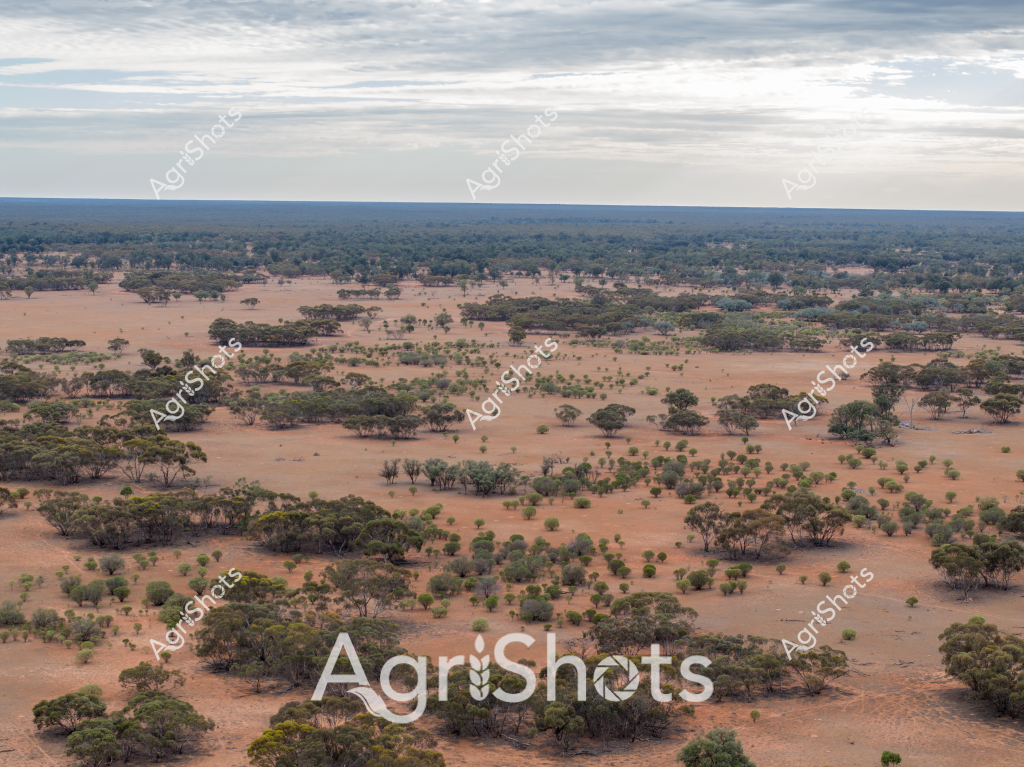
A vast, arid landscape stretches across the horizon, featuring scattered eucalyptus trees and sparse vegetation across a rich terracotta-colored soil. The expansive scene depicts a typical Australian outback landscape, with dense tree clusters breaking up the wide, open terrain under a soft, overcast sky. Multiple layers of vegetation create a textured view, with green trees standing in stark contrast against the dry, reddish-brown ground. Scattered tree groupings punctuate the landscape, showing resilient vegetation adapted to challenging environmental conditions. The image captures the essence of Australia's challenging agricultural environments, where vegetation survives in sparse, strategic clusters across seemingly inhospitable terrain. The wide-angle perspective emphasizes the immense scale and rugged beauty of the Australian landscape, revealing the natural resilience of plant life in a harsh, drought-prone ecosystem.
 Image
Image
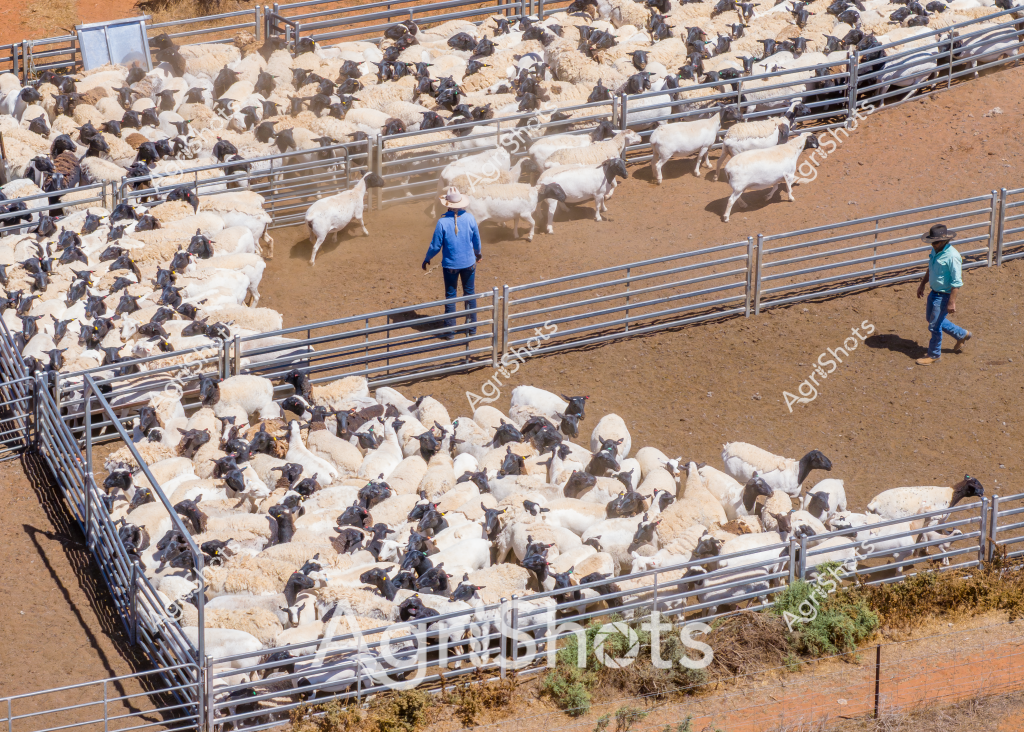
A large mob of white and dark-colored sheep are packed tightly into a series of metal livestock yards in a dry, arid landscape. Two men are working the yards - one wearing a blue shirt and the other in a teal-colored work shirt - carefully managing the sheep's movement between different pen sections. The ground is a dusty reddish-brown, typical of an Australian inland station or pastoral property, with sparse vegetation visible around the yard's perimeter. Metal stock fencing creates a systematic grid of pens, allowing for controlled livestock movement and management. The sheep appear to be a mixed flock, with predominantly white bodies and dark heads, likely a crossbreed or Merino-type breed common in Australian agriculture. The aerial perspective reveals the scale of the livestock operation, showcasing the precision and infrastructure required for managing large sheep herds in challenging rural environments.
 Image
Image
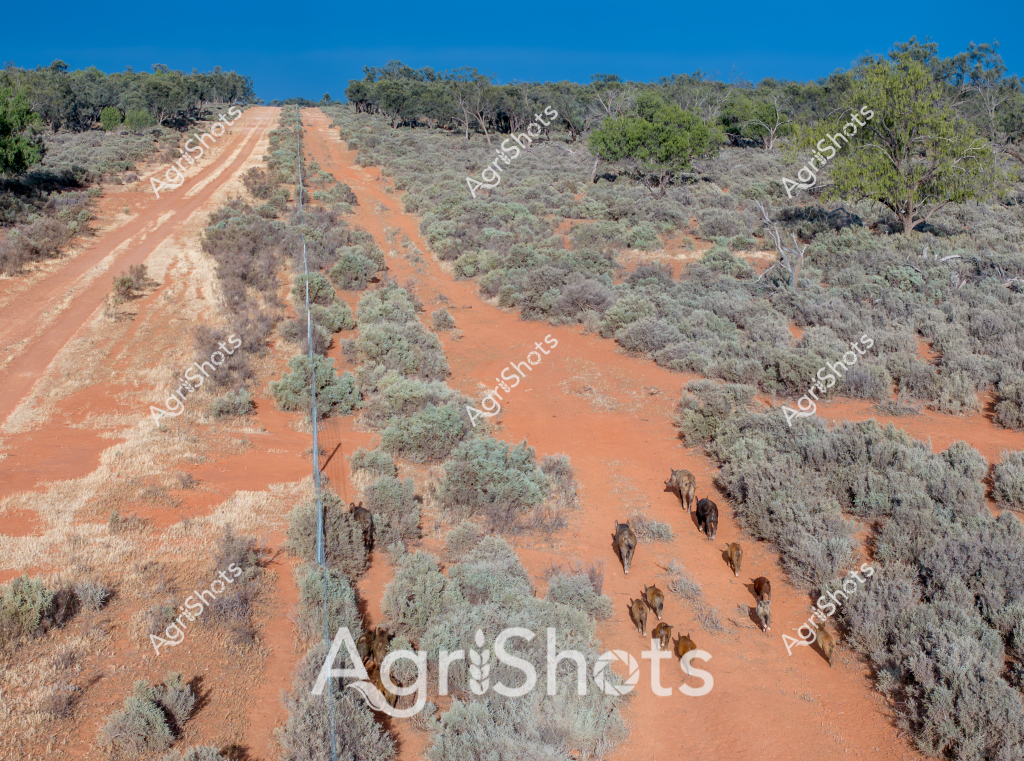
A stunning aerial view captures a small herd of cattle traversing a quintessential Australian outback dirt track, surrounded by rusty red earth and scattered grey-green shrubs. The unmade road cuts a stark line through the arid landscape, with native eucalyptus trees dotting the horizons and a deep blue sky overhead. Several cattle walk in single file along the track, their dark bodies creating a rhythmic pattern against the ochre-colored ground. The image exemplifies the vast, rugged terrain of inland Australia, where livestock management often involves navigating extensive, remote station country. Sparse vegetation and the characteristic red soil highlight the challenging environmental conditions of pastoral regions, showcasing the resilience required in Australian cattle farming. The aerial perspective provides a dramatic illustration of the immense scales and isolation inherent in Australian agricultural landscapes.
 Image
Image
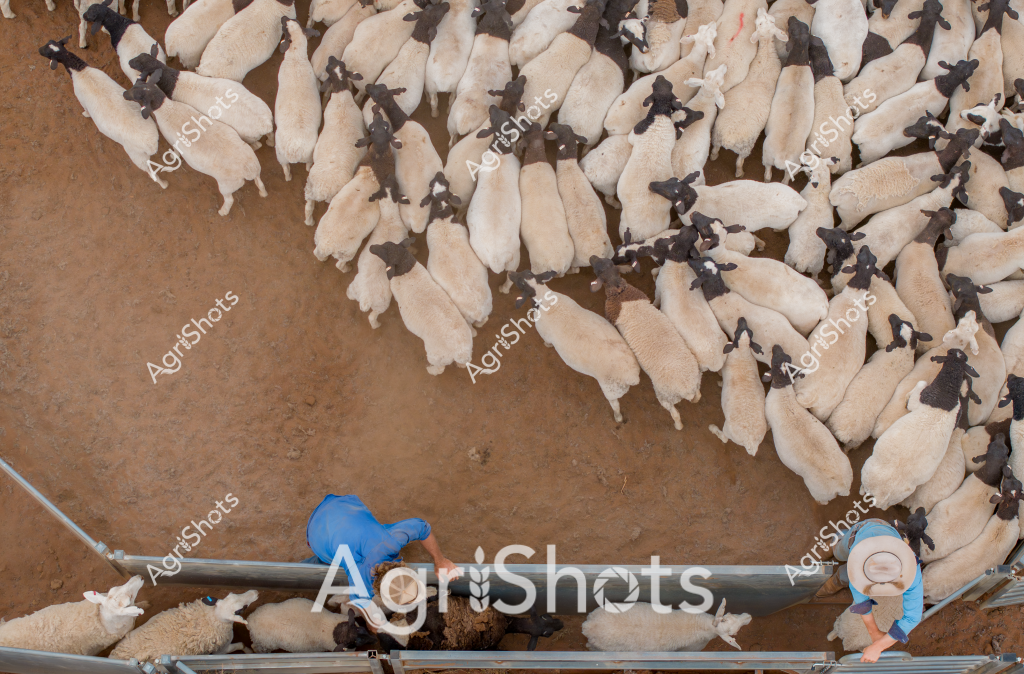
A large flock of black-and-white spotted sheep are densely packed in a holding yard, viewed from an overhead perspective. Two workers in blue clothing are positioned along a metal livestock handling rail, carefully managing the sheep during what appears to be a shearing or livestock processing operation. The ground is a rich brown earthen surface, providing contrast to the predominantly white woolly bodies of the sheep with their distinctive black faces and legs. One worker is wearing a light-colored hat, suggesting this is likely an Australian sheep station or farm environment, potentially in a region like Queensland or New South Wales. The tight clustering of the animals and the systematic handling infrastructure indicates a professional, well-organized livestock management approach typical of Australian agricultural practices. The image captures the precision and scale of modern sheep farming, with the overhead view revealing the impressive density and uniformity of the flock. The blue-clad workers demonstrate the hands-on nature of livestock management, working closely with the animals in a controlled, efficient manner.
 Image
Image
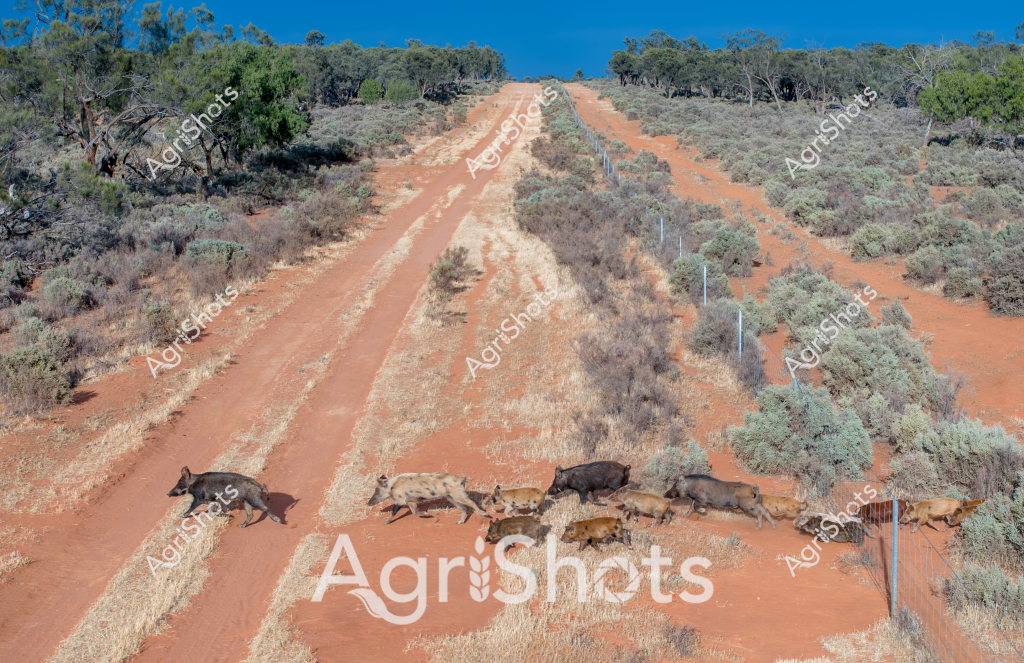
A group of feral pigs traverses a remote Australian dirt track, their dark and varied-colored bodies moving across the rusty-red earth. The landscape is classic Australian outback - sparse eucalyptus trees, silvery-green scrub vegetation, and a wide blue sky stretching across the horizon. These wild pigs, ranging in shades from dark brown to light tan, are crossing a well-worn rural access road that cuts through the arid landscape, likely moving between grazing areas. The surrounding terrain shows typical semi-arid vegetation with low shrubs and scattered trees, characteristic of inland Australian regions. The stark contrast between the reddish-orange soil and the muted green vegetation creates a visually striking scene that captures the rugged nature of Australia's interior landscapes. The image appears to be an aerial or drone perspective, providing a clear view of the pigs' movement across the landscape, highlighting the interaction between wildlife and the extensive rural infrastructure that connects remote areas. This scene represents the ongoing challenge of feral animal management in Australian agricultural regions, where introduced species like wild pigs can significantly impact native ecosystems and farming operations.
 Image
Image
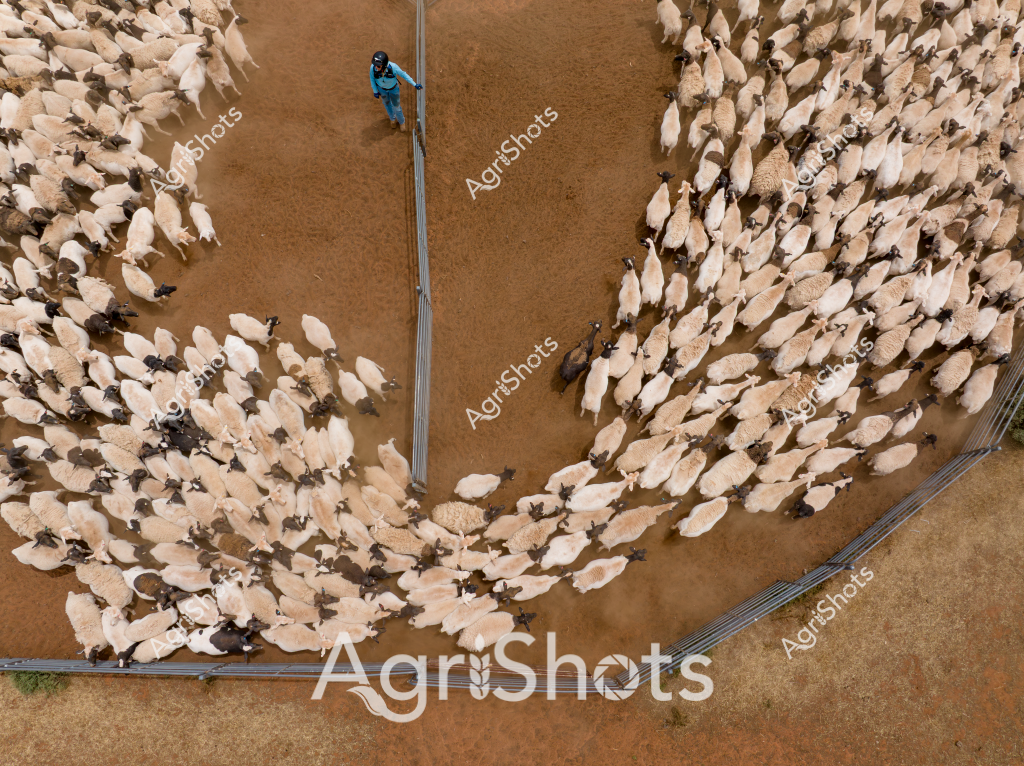
A striking aerial view captures a large flock of light-colored sheep being expertly guided through a curved livestock handling system by a person in a bright blue jacket. The sheep are densely packed, creating a flowing, organic pattern across the dry earth, with metal gates and fencing defining their movement corridor. The overhead perspective reveals the precision of livestock management, showing how a single person can effectively control and direct a large number of animals using strategic infrastructure. The earthy brown ground contrasts with the white and cream-colored wool of the sheep, some of which appear to be Merino or a similar breed common in Australian agriculture. Metal railings create a V-shaped channel that guides the animals, demonstrating the sophisticated approach to stock management in modern farming. The image captures the scale and complexity of sheep farming, highlighting the intersection of animal husbandry, agricultural engineering, and human skill in managing livestock. The blue-jacketed stockperson stands centrally, symbolizing the critical role of human expertise in guiding and controlling the herd's movement through this carefully designed agricultural system. The photograph offers a compelling bird's-eye view of agricultural practice, showcasing the intricate relationship between farmers, animals, and the carefully constructed infrastructure of modern sheep farming.
 Image
Image
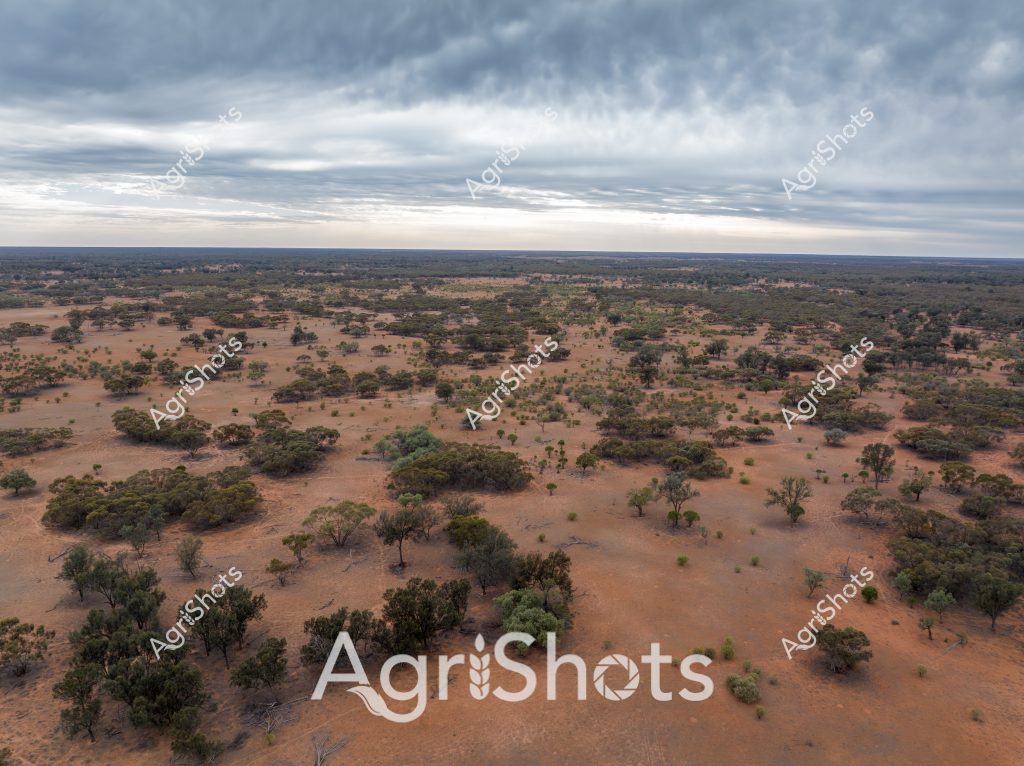
A vast, arid Australian landscape stretches beneath an overcast, moody sky, revealing a classic outback terrain of scattered eucalyptus trees and sparse vegetation across rust-red soil. The expansive scene captures the challenging environmental conditions typical of inland Australia, with dense tree clusters interrupting the otherwise open terrain. Muted green vegetation punctuates the reddish-brown ground, creating a textural mosaic that speaks to the resilience of plant life in drought-prone regions. Low-lying scrub and isolated trees are distributed across the landscape, demonstrating the sparse vegetation characteristic of semi-arid agricultural zones. The cloudy, subdued sky creates a sense of atmospheric tension, with layers of gray and silver clouds suggesting the possibility of rare rainfall in this harsh environment. This aerial perspective provides a compelling view of Australia's challenging agricultural landscape, highlighting the subtle beauty and environmental complexity of the continent's interior regions.
 Image
Image
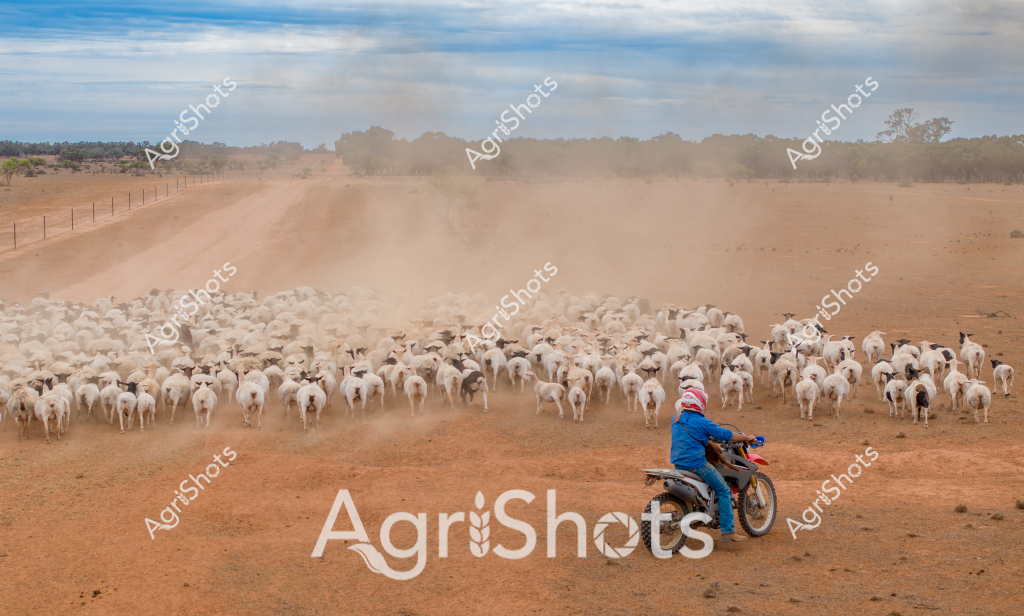
A man on a trail bike herds a large mob of white sheep across a dusty, arid landscape in what appears to be an expansive Australian pastoral setting. The rider, wearing a blue jacket and red cap, guides hundreds of sheep through a dry, reddish-brown paddock with sparse vegetation and a distant tree line. Clouds of ochre-colored dust rise behind the moving flock, creating a dramatic atmosphere that highlights the challenging environmental conditions. A fence line stretches into the distance, defining the property's boundary and adding perspective to the wide-open agricultural landscape. The image captures the essence of Australian sheep farming - a solitary stockman using modern transportation to muster livestock across a seemingly endless terrain, demonstrating the adaptability and resilience of rural agricultural practices. The scene powerfully illustrates the harsh beauty of Australian rangelands, where livestock management requires skill, determination, and the ability to work effectively in demanding environmental conditions. The motorcycle provides a nimble and efficient method of moving sheep, replacing traditional horse-based mustering with a more modern approach to rural work.
 Image
Image
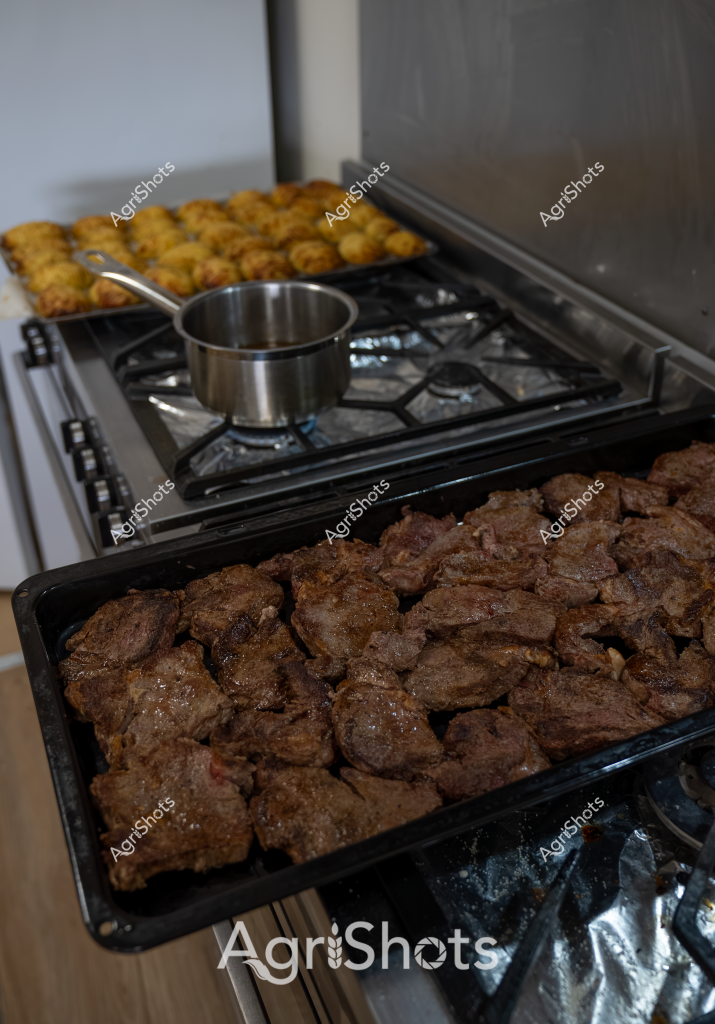
The image depicts a home kitchen stovetop scene focused on meat preparation, with two baking trays showing different stages of cooking. In the foreground, a dark baking tray is filled with browned meat pieces - likely beef chunks or steak cuts that have been seared to a rich, caramelized brown color. On the upper tray, golden-brown roasted or baked items (potentially potato or vegetable side dishes) complement the meat. A stainless steel saucepan sits on the gas stovetop, suggesting ongoing cooking or sauce preparation. The close-up perspective highlights the textural details of the cooked meats, with their crisp exterior and dense, substantial appearance indicating careful culinary preparation. The kitchen setting appears domestic and functional, with a professional-quality cooking approach evident in the precise arrangement and careful browning of the ingredients.
 Image
Image
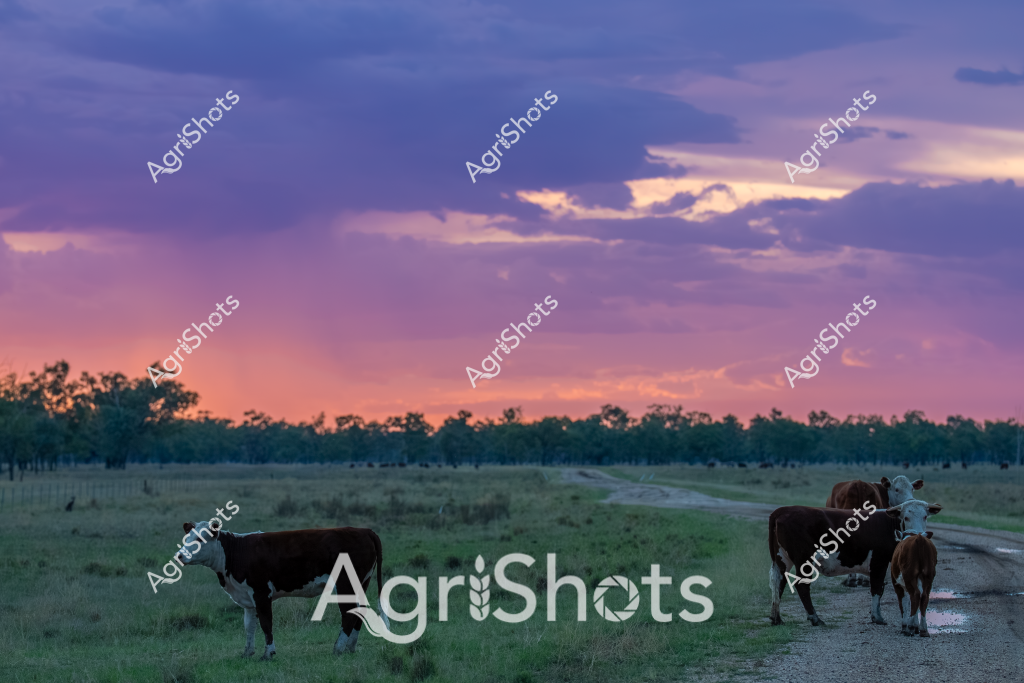
A serene twilight scene captures several black and white beef cattle standing on a dirt track alongside a lush green pasture. The evening sky blazes with a stunning palette of purple, blue, and salmon-pink hues, creating a dramatic backdrop of soft clouds and fading sunlight. Several cows are scattered across the foreground, some standing directly on the dirt road while others graze on the verdant grass, silhouetted against the vibrant sunset. Sparse trees line the distant horizon, creating depth and perspective in this quintessential Australian rural landscape. The tranquil moment represents the peaceful transition between day and night on a typical cattle station, highlighting the natural beauty of Australia's agricultural environments. The scene suggests late evening during the summer or early autumn season, with the soft light and rich colors indicating a classic pastoral setting. The mix of black and white cattle implies this might be a mixed breed herd, possibly on a property in Queensland or Northern Territory, where such expansive grasslands are common. The dirt track and surrounding vegetation provide context for the agricultural landscape, showcasing the broad, open spaces that characterize Australian rural areas.
 Image
Image
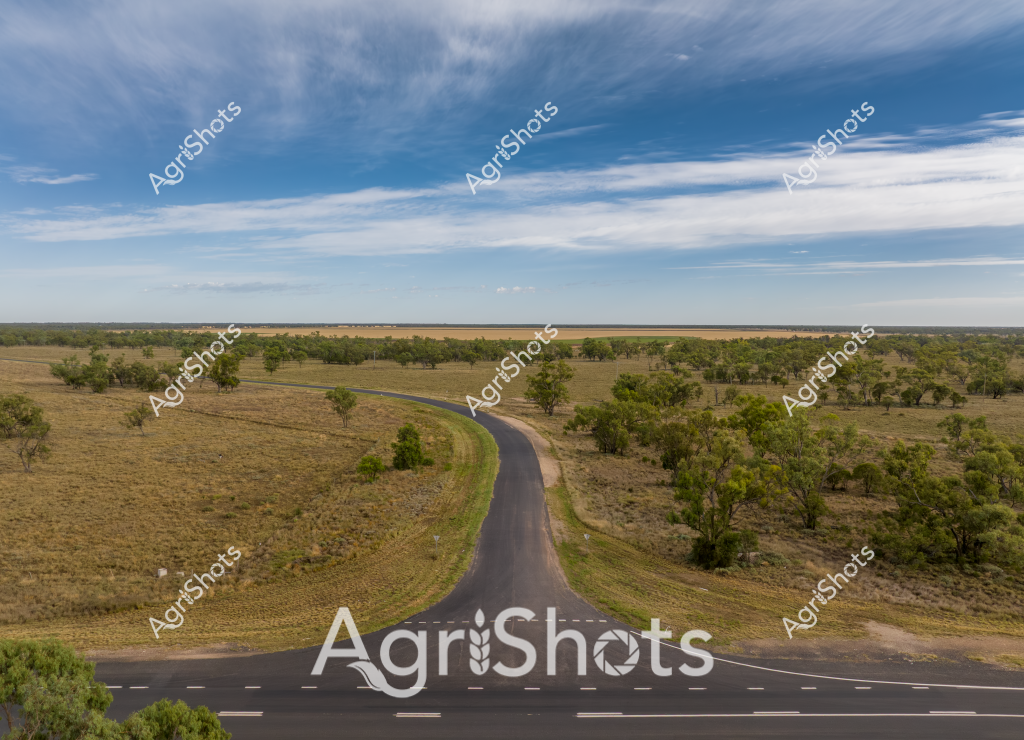
A winding rural road curves through a sprawling Australian landscape, cutting a smooth black asphalt path through golden grasslands and scattered eucalyptus woodland. The road follows a gentle bend, creating a striking visual perspective that draws the eye toward the distant horizon. Sparse trees dot the surrounding paddocks, their green canopies contrasting with the dry, sun-bleached grasses of what appears to be a typical Australian pastoral scene. Wispy cirrus clouds stretch across a vivid blue sky, creating a sense of expansive openness characteristic of the Australian countryside. The carefully constructed road suggests this is likely a key rural transport route, connecting agricultural properties and providing essential infrastructure for the region's farming communities. The landscape reveals the quintessential Australian rural terrain - a mix of open grazing land and scattered woodland, typical of regions across Queensland, New South Wales, or Western Australia's agricultural zones. The curving road's smooth surface and clear markings indicate careful infrastructure planning, essential for supporting the agricultural activities that define these regions.
 Image
Image
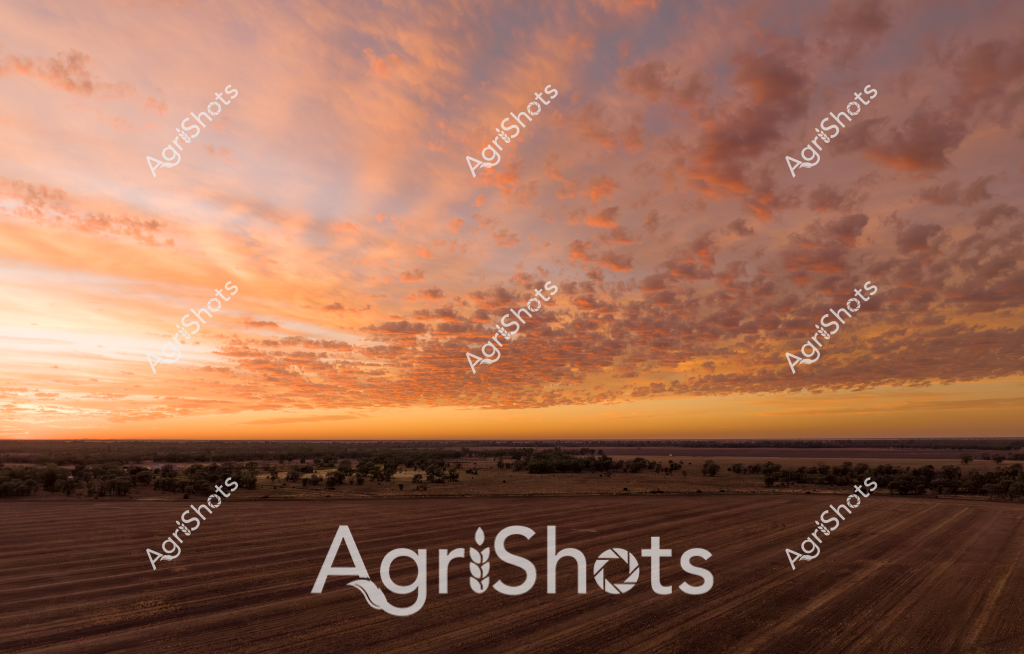
A stunning agricultural landscape captures a dramatic sunset over rural farmland, with an expansive sky painted in rich orange, golden, and salmon hues. Textured clouds spread across the horizon, creating a breathtaking canopy above meticulously prepared paddocks in the foreground. The agricultural field appears freshly plowed, with precise parallel lines stretching toward the distant treeline, demonstrating the careful land management typical of Australian broadacre farming. The landscape suggests a late autumn or early winter evening, with the low angle of light revealing the intricate textures of the cultivated earth and creating a sense of depth and perspective across the rural terrain. The warm color palette highlights the beauty of agricultural landscapes, where human intervention and natural elements create a harmonious, carefully structured environment. The dramatic sky and carefully prepared farmland together tell a story of agricultural resilience and the ongoing relationship between farmers and the land.