About this image
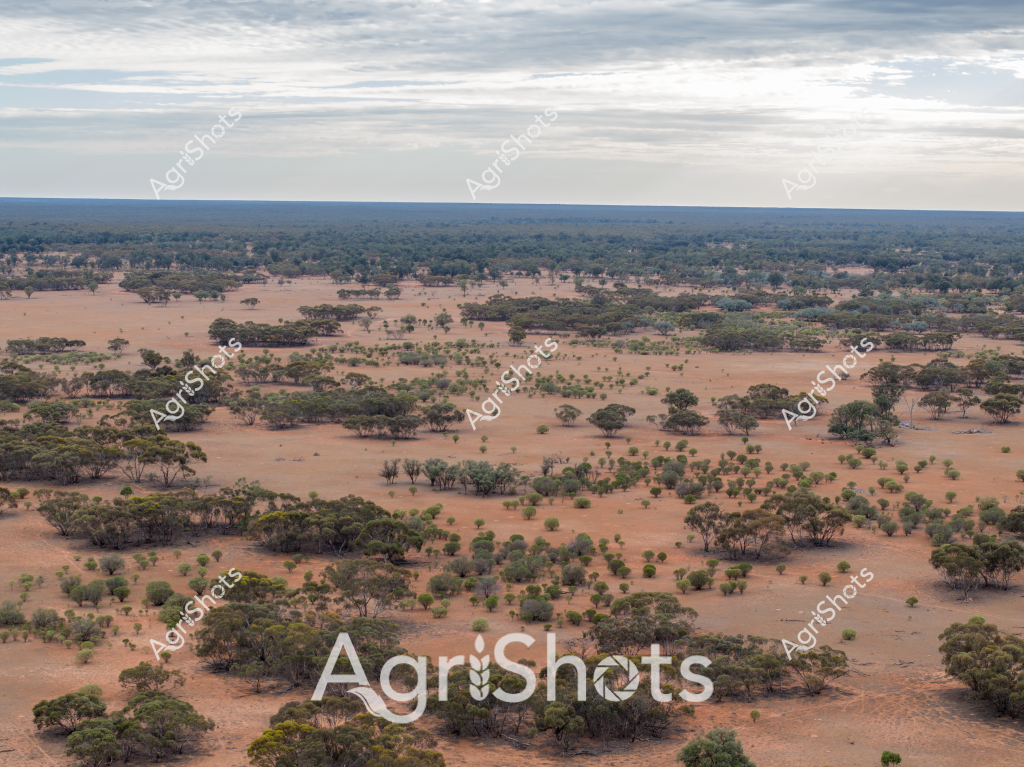
A vast, arid landscape stretches across the horizon, featuring scattered eucalyptus trees and sparse vegetation across a rich terracotta-colored soil. The expansive scene depicts a typical Australian outback landscape, with dense tree clusters breaking up the wide, open terrain under a soft, overcast sky. Multiple layers of vegetation create a textured view, with green trees standing in stark contrast against the dry, reddish-brown ground. Scattered tree groupings punctuate the landscape, showing resilient vegetation adapted to challenging environmental conditions. The image captures the essence of Australia's challenging agricultural environments, where vegetation survives in sparse, strategic clusters across seemingly inhospitable terrain. The wide-angle perspective emphasizes the immense scale and rugged beauty of the Australian landscape, revealing the natural resilience of plant life in a harsh, drought-prone ecosystem.
Similar media
 Image
Image
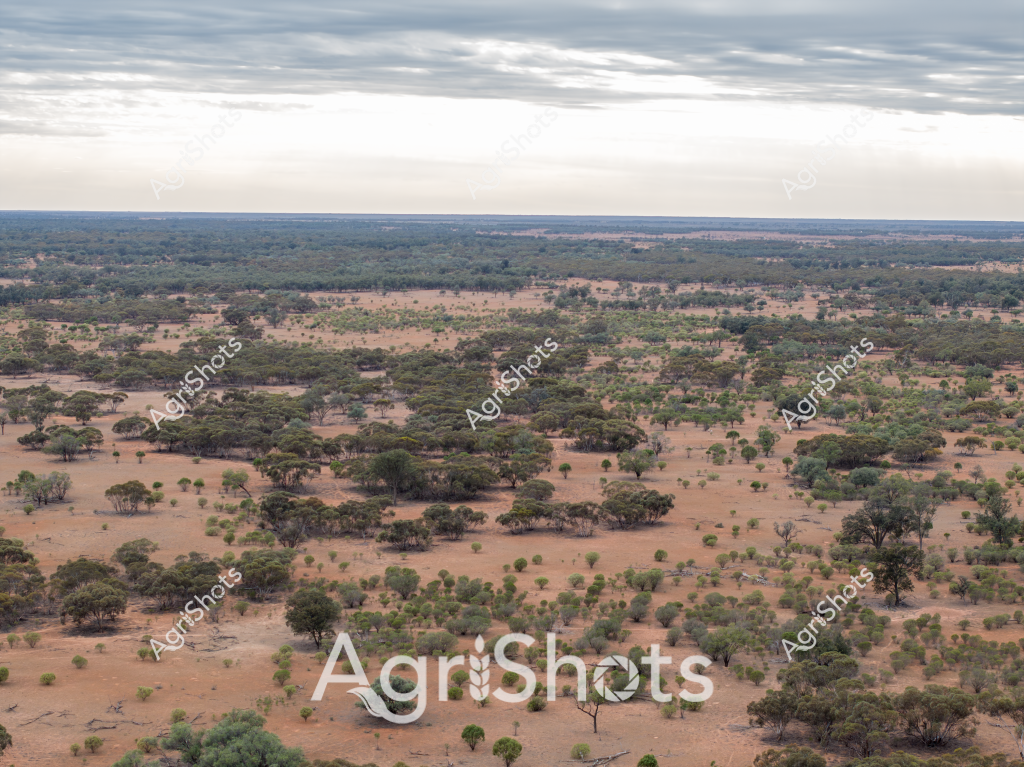
This landscape captures a classic Australian semi-arid savanna ecosystem, featuring a scattered woodland of eucalyptus and acacia trees spread across undulating terracotta-colored plains. The expansive view reveals a mosaic of green and russet vegetation, with dense tree clusters interspersed among sparse grasslands stretching toward a distant, clouded horizon. Soft gray clouds blanket the sky, creating a muted, atmospheric backdrop that emphasizes the subtle textures and nuanced color variations of the landscape. The terrain suggests a region experiencing moderate drought conditions, with patchy vegetation and reddish-brown ground indicating limited rainfall. Mature trees with broad canopies provide critical shelter and ecological diversity, their green foliage contrasting against the dry ground. The landscape's composition reflects the resilience of Australian woodland ecosystems, capable of surviving in challenging environmental conditions. This aerial perspective highlights the intricate balance of vegetation in arid to semi-arid Australian landscapes, showcasing the natural adaptability of native plant species. The scene represents a quintessential Australian rural landscape - vast, subtly colored, and demonstrating nature's capacity to thrive in seemingly harsh environments.
 Image
Image
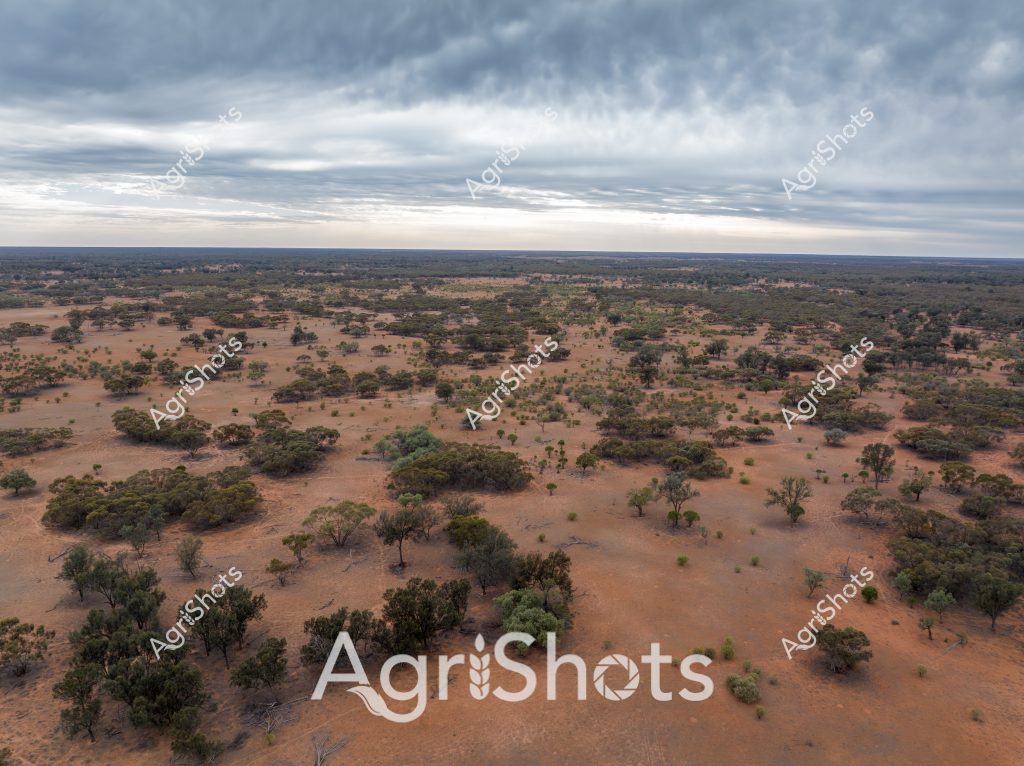
A vast, arid Australian landscape stretches beneath an overcast, moody sky, revealing a classic outback terrain of scattered eucalyptus trees and sparse vegetation across rust-red soil. The expansive scene captures the challenging environmental conditions typical of inland Australia, with dense tree clusters interrupting the otherwise open terrain. Muted green vegetation punctuates the reddish-brown ground, creating a textural mosaic that speaks to the resilience of plant life in drought-prone regions. Low-lying scrub and isolated trees are distributed across the landscape, demonstrating the sparse vegetation characteristic of semi-arid agricultural zones. The cloudy, subdued sky creates a sense of atmospheric tension, with layers of gray and silver clouds suggesting the possibility of rare rainfall in this harsh environment. This aerial perspective provides a compelling view of Australia's challenging agricultural landscape, highlighting the subtle beauty and environmental complexity of the continent's interior regions.
 Image
Image
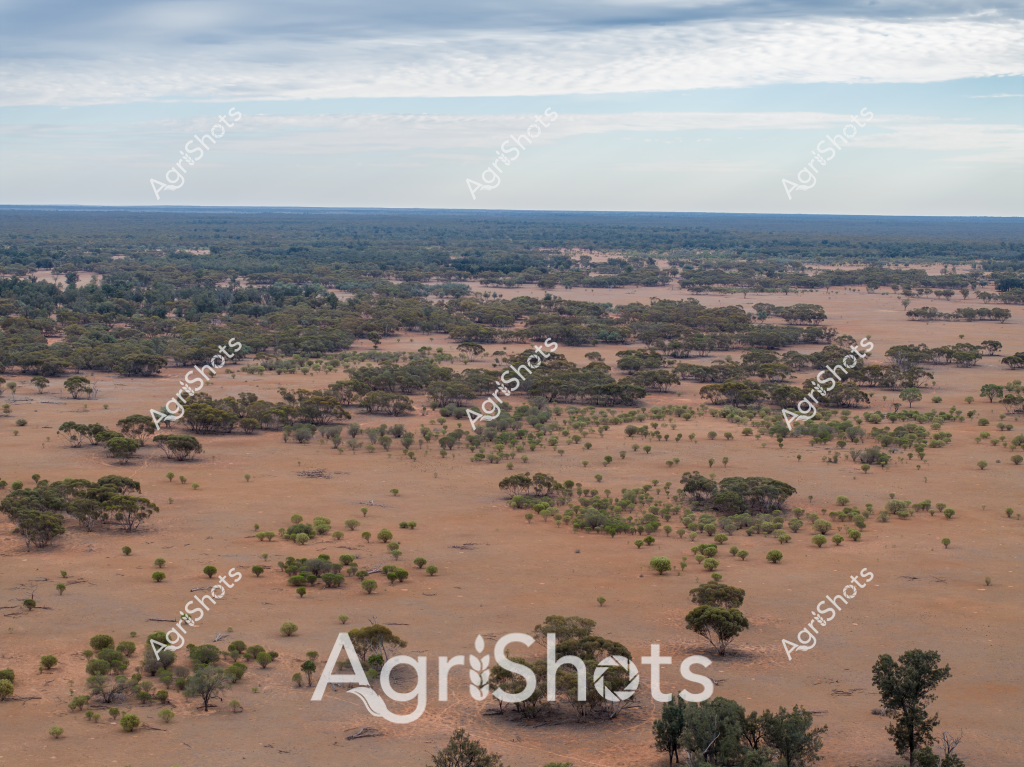
A vast, arid landscape stretches across the horizon, revealing a classic Australian savanna ecosystem with scattered acacia and eucalyptus trees dotting a sun-baked, reddish-brown terrain. The landscape demonstrates the harsh, drought-affected environment typical of Australia's interior regions, where sparse vegetation and wide-open spaces characterize the geography. Green trees cluster in small groups, creating natural islands of vegetation amid the dry, dusty ground, highlighting the resilience of plant life in challenging conditions. The overhead sky features soft, layered cloud formations in muted blues and greys, suggesting potential rainfall but also emphasizing the expansive, open nature of the landscape. This scene captures the raw, unforgiving beauty of Australia's agricultural hinterlands, where vegetation adapts to extreme environmental conditions and demonstrates the profound relationship between landscape and survival. The image provides a compelling visual narrative of ecological adaptation in one of the world's most challenging agricultural environments.
 Image
Image
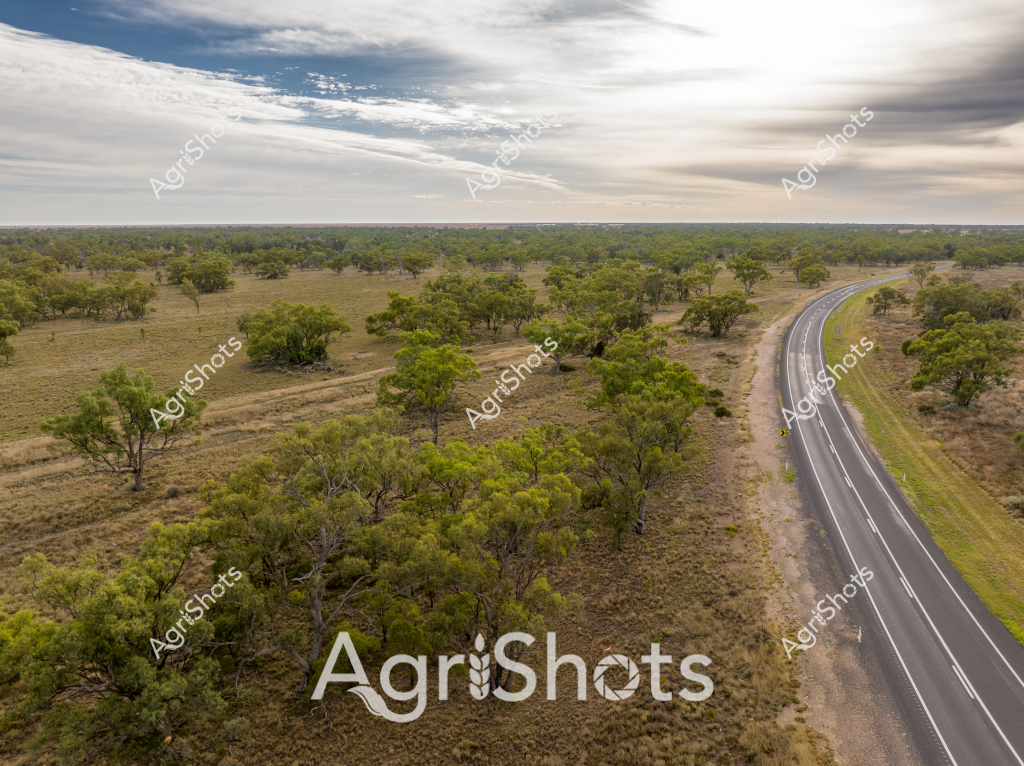
A sweeping rural landscape captures the essence of the Australian outback, with a winding bitumen road cutting through a sparse woodland setting. Scattered eucalyptus trees with silvery-green foliage dot the undulating terrain, creating a patchwork of grasslands and woodland. The landscape appears typical of inland Queensland or New South Wales, with a mix of open pasture and tree-covered areas. A gently curving highway stretches into the distance, its smooth black surface contrasting sharply with the muted greens and browns of the surrounding countryside. The sky is a dramatic canvas of soft cloud formations, with layers of white and blue creating a sense of depth and atmosphere. Subtle variations in the terrain suggest this is a gently rolling pastoral region, likely used for grazing or extensive agriculture. The trees appear drought-resistant, typical of Australian native species that can survive in challenging environmental conditions. The scene captures the vast, open nature of Australian rural landscapes - a sense of space, resilience, and natural beauty that defines the continent's agricultural heartlands. The road symbolizes connection, winding through the landscape and hinting at the distances traversed in rural Australia.
 Image
Image
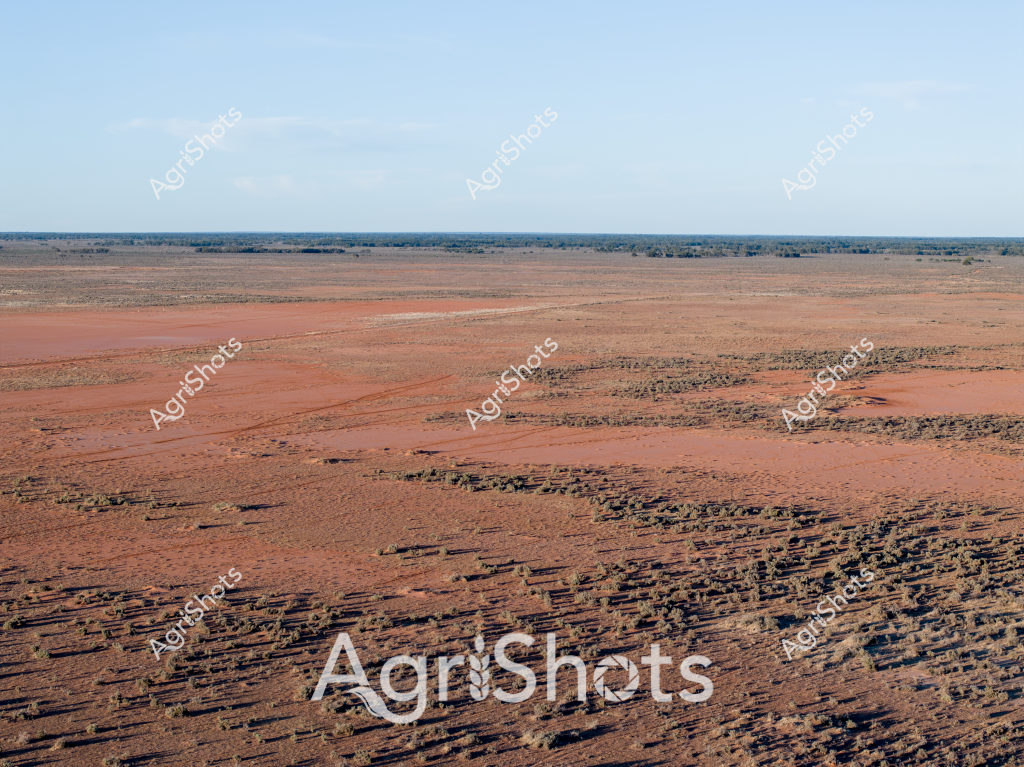
An expansive arid landscape stretches across the image, revealing the harsh, rust-colored terrain of the Australian outback. The ground appears deeply cracked and parched, with scattered low scrub and sparse vegetation breaking the monotony of the red-orange earth. Thin tracks cut across the landscape, indicating minimal human or vehicle movement through this challenging environment. The horizon is a flat line where reddish-brown ground meets a pale blue sky, creating a sense of vast, uninterrupted space typical of Australia's inland regions. This image powerfully captures the stark beauty and extreme conditions of a drought-affected agricultural landscape, demonstrating the challenging environment faced by farmers and graziers in Australia's interior. The texture of the ground suggests significant water stress, with intricate patterns of cracking and erosion visible across the wide-open space. Sparse, resilient vegetation clusters in small groups, highlighting the landscape's minimal moisture and harsh growing conditions. The scene epitomizes the resilience required in Australian agricultural practice, where farmers must adapt to some of the most challenging environmental conditions on the planet.
 Image
Image
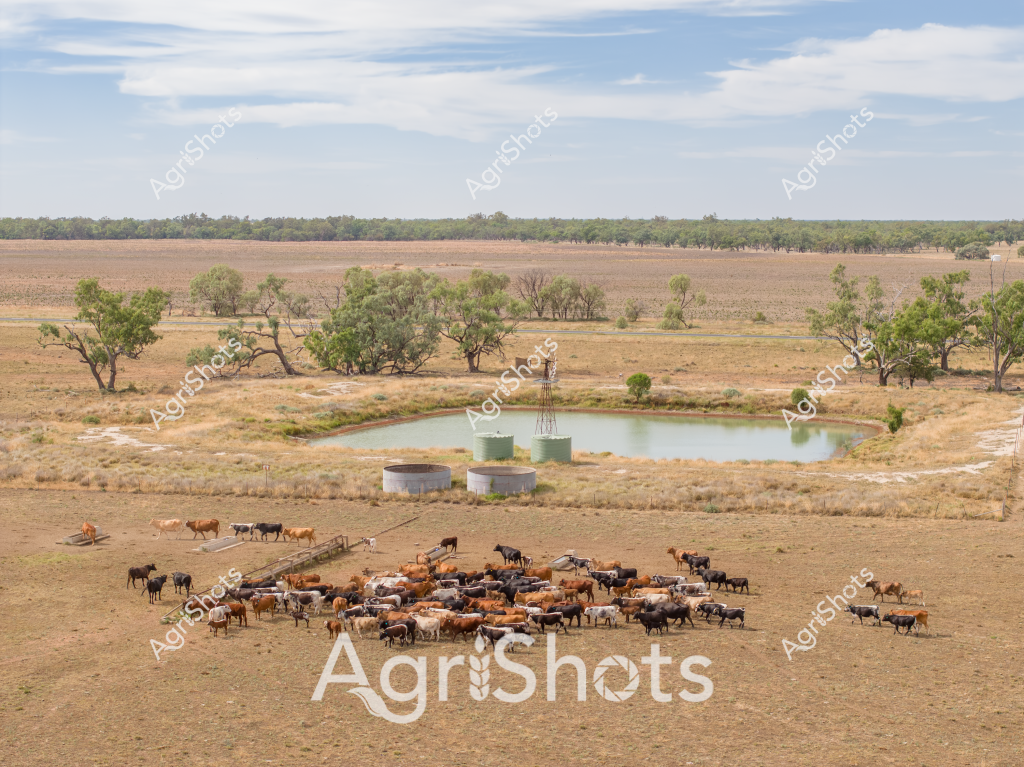
A classic Australian pastoral scene captures a small herd of mixed-breed cattle clustered around a water dam in a dry, expansive landscape. The circular water dam, accompanied by windmill and water storage tanks, sits in the center of a parched paddock with scattered eucalyptus trees and sparse grassland stretching toward distant tree lines. Multiple cattle breeds are represented - including black, brown, and white animals - huddled together near the water source in what appears to be a challenging dry season environment. The landscape suggests an inland Queensland or New South Wales pastoral station, with its characteristic wide-open terrain and minimal vegetation indicative of prolonged drought conditions. A windmill stands sentinel beside the water dam, a quintessential feature of Australian rural infrastructure, providing critical water access for livestock in arid agricultural regions. The scene powerfully illustrates the resilience of Australian cattle farming, where strategic water management is essential for survival during harsh environmental conditions.
 Image
Image
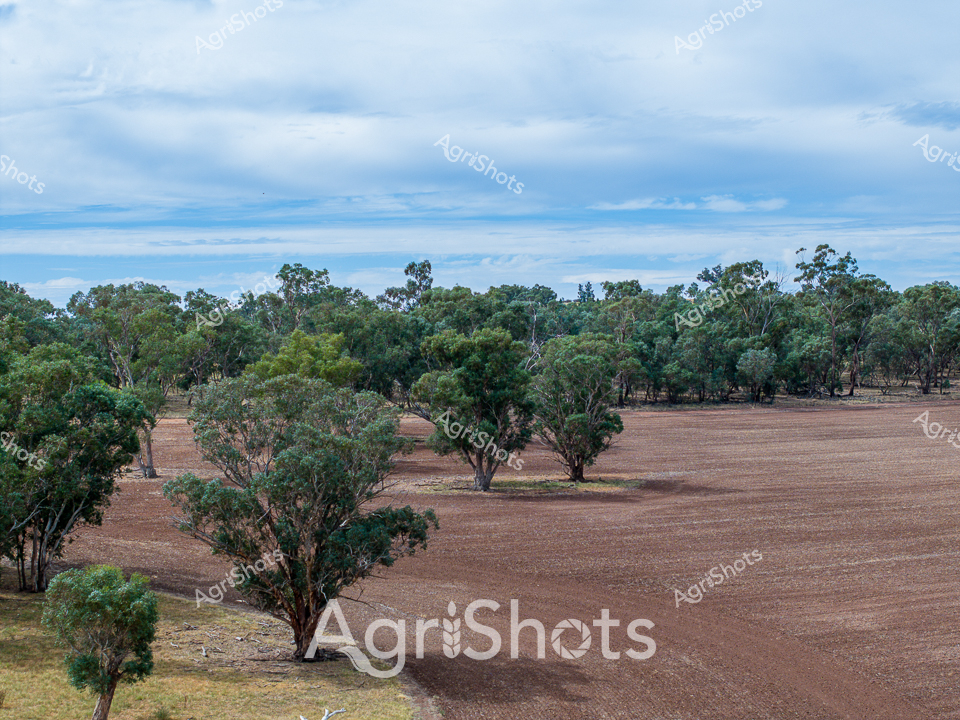
Burnished autumn light bathes the undulating Riverina landscape, revealing a meticulously prepared broadacre paddock ready for the next crop cycle. Scattered eucalyptus trees stand as silent sentinels across the rich, chocolate-brown earth, their silvery-green foliage providing gentle contrast against the freshly cultivated soil. The expansive field, recently worked by heavy machinery, displays precise parallel furrows stretching towards a distant treeline, capturing the disciplined approach of modern Australian agricultural practice. Soft blue-grey clouds drift across a wide sky, promising potential moisture for the dormant seeds soon to be sown in this carefully prepared ground. The scene epitomizes the rhythmic resilience of dryland farming in New South Wales, where generations of agricultural expertise transform rugged terrain into productive agricultural landscape. This image encapsulates the quiet determination of rural farmers who transform challenging environments through strategic land management and deep understanding of seasonal rhythms.
 Image
Image
Dusty golden light bathes the rugged Kimberley landscape, revealing a quintessential Western Australian cattle station scene of strategic livestock management. A dense mob of rust-colored Brahman cattle congregates within carefully constructed timber yards, their distinctive humped shoulders and heat-resistant coats perfectly adapted to this unforgiving terrain. Surrounding paddocks stretch toward distant horizons, punctuated by scattered eucalyptus trees and sparse woodland, with strategic dirt tracks winding through the expansive property. The aerial perspective captures the intricate infrastructure of the station - processing areas, water points, and carefully designed cattle movement pathways revealing generations of pastoral expertise. Weathered fencing and functional structures speak to the resilient agricultural practices that transform this arid landscape into a productive beef production ecosystem. The early morning light casts long shadows, highlighting the textured landscape and suggesting the day's mustering activities are about to commence, with horses and working dogs likely waiting just out of frame to guide these magnificent cattle.