Results for “Mustering”
 Image
Image
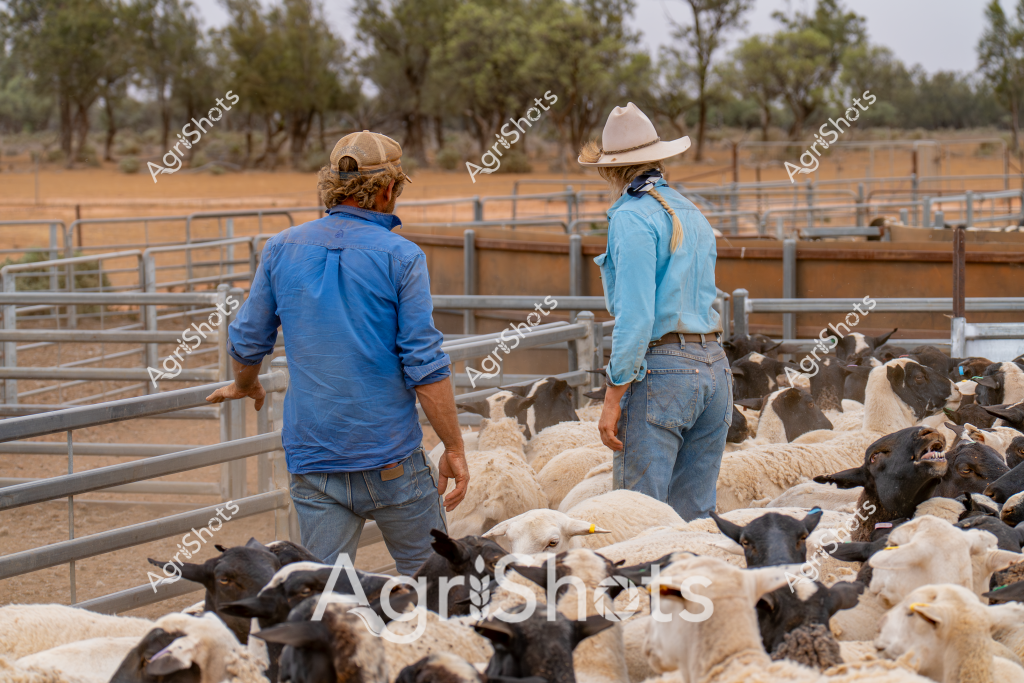
Two men in agricultural work attire stand among a mixed flock of white and black sheep within a metal livestock yard. Wearing blue long-sleeved shirts and denim jeans, they have their backs to the camera, observing the sheep clustered in the paddock. One wears a white broad-brimmed stockman's hat, while the other has a tan cap. The landscape behind them features eucalyptus trees and dry golden grasslands, typical of an Australian rural setting. The metal yard panels create structured boundaries, indicating a professional livestock management approach. The sheep - a mix of white and black-fleeced animals - are densely packed, suggesting they are being prepared for mustering, sorting, or transportation. The scene captures the quintessential Australian agricultural experience of livestock management, with experienced workers carefully monitoring the flock in an arid pastoral environment. The careful positioning of the men and the orderly arrangement of the yards demonstrate the precision and skill required in sheep farming.
 Image
Image
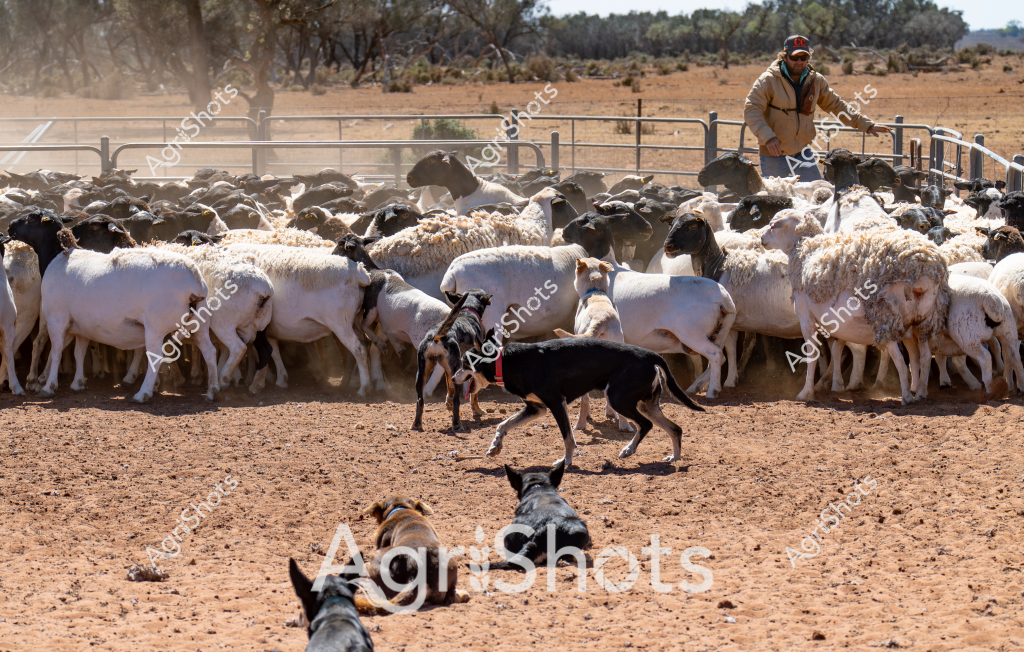
A skilled stockman and his working dogs expertly muster a large flock of white and dark-colored sheep in a dusty livestock yard in the Australian outback. Multiple black and tan Kelpie dogs move strategically around the densely packed sheep, guiding and controlling their movement within the metal yard gates. The dry, reddish-brown earth kicks up clouds of dust as the dogs weave between the sheep, demonstrating the precision and skill of Australian working dogs in managing livestock. A man in a tan work jacket stands on an elevated section of the yard, overseeing the mustering operation. The harsh, arid landscape with scattered trees in the background suggests this is a remote pastoral station in central or western Australia, typical of the challenging environments where sheep farming takes place. The scene captures the essential partnership between human, dog, and livestock that defines Australian agricultural practice.
 Image
Image
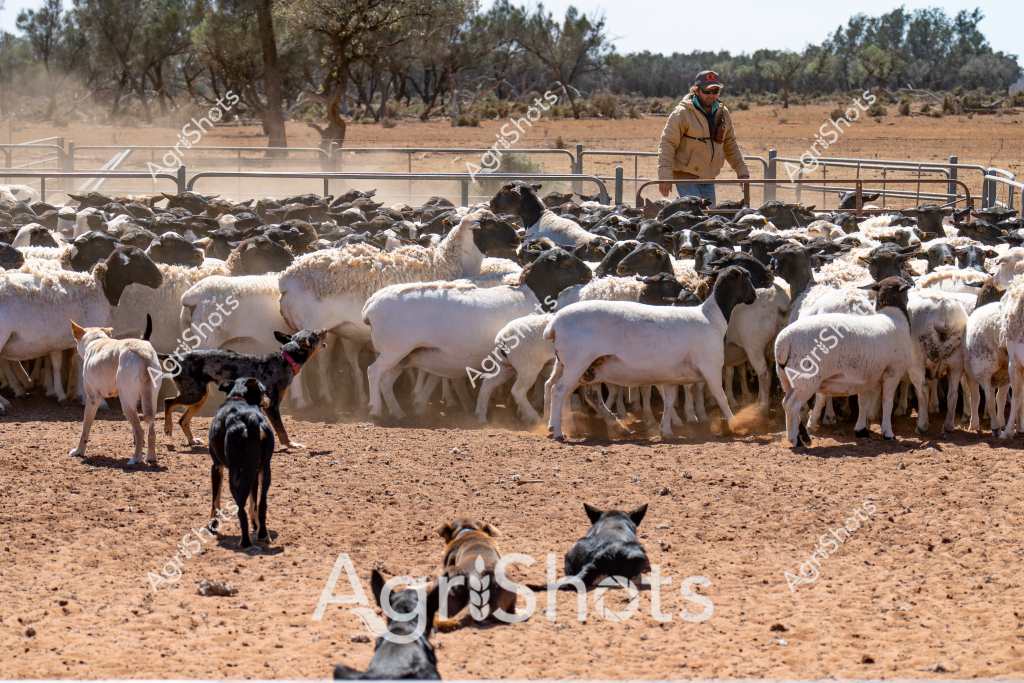
A skilled stockman manages a large flock of white and black sheep within a dusty, fenced yard in what appears to be an arid Australian pastoral region. Several working dogs, likely Australian Kelpies, are strategically positioned around the mob, helping control the tightly packed herd. The dry, reddish-brown ground and sparse trees in the background suggest this is a typical scene from a sheep station in inland Australia, possibly in Western Australia, Queensland, or the Northern Territory. The stockman, dressed in a tan jacket and cap, stands on the edge of the yard, overseeing the sheep herding process. The flock appears to be a mix of white-fleeced sheep, potentially Merino or crossbred lambs, and darker-colored animals. The working dogs are alert and positioned to assist in moving and containing the sheep, demonstrating the critical role of these intelligent canines in Australian livestock management. The scene captures the essence of rural Australian agricultural practice - a blend of human skill, working dog expertise, and livestock management in a challenging, dry landscape. Dust rising from the ground and the tightly clustered sheep suggest active movement and the ongoing process of mustering or yard work typical of sheep farming operations.
 Image
Image
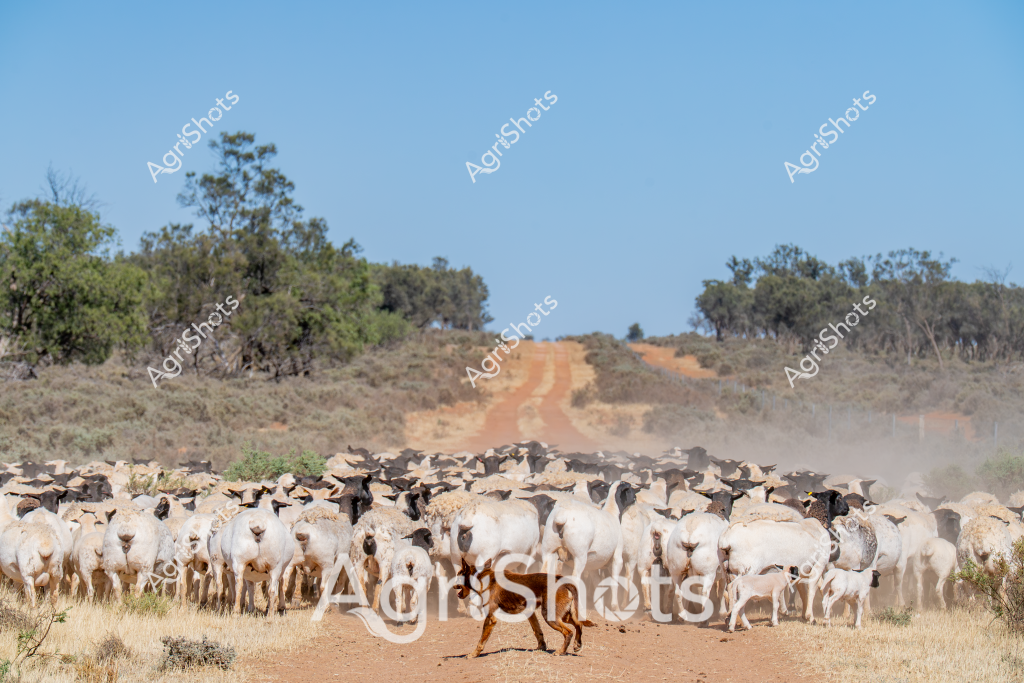
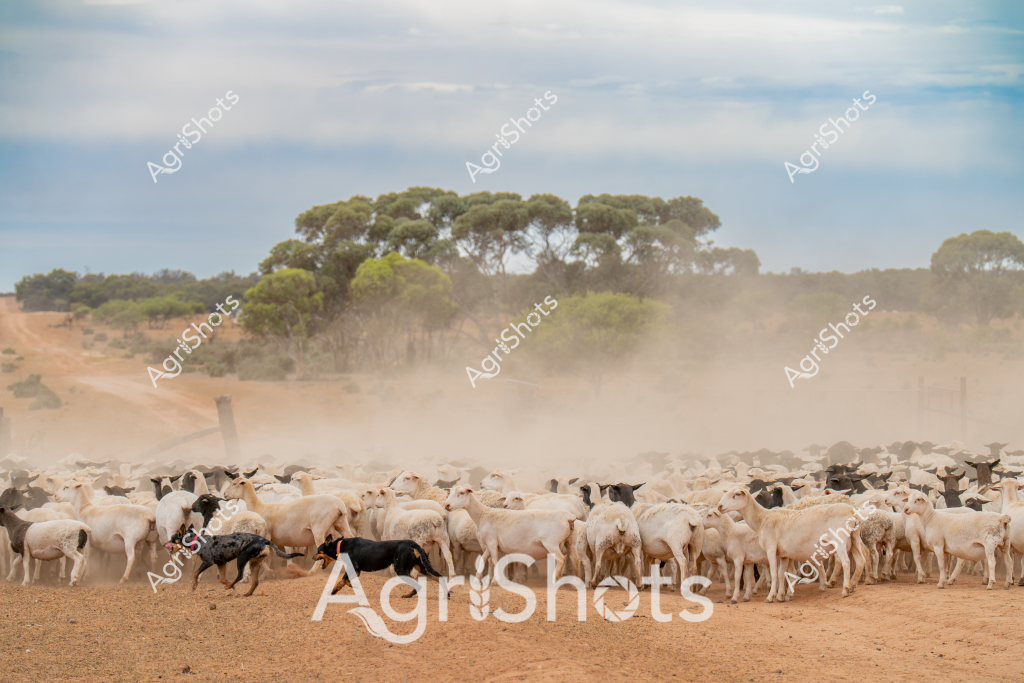
A large flock of white sheep occupies a dusty dirt road in a classic Australian outback landscape, with a working dog herding them across the terrain. Sparse eucalyptus trees and scrubland frame the scene, creating a golden-brown backdrop of dry grasslands typical of rural Australia. The compact mob of sheep - likely Merino or a similar white breed - are tightly clustered, creating a dense white mass against the ochre-colored earth. A lean, alert working dog, probably a Australian Kelpie, moves confidently in front of the flock, skillfully controlling their movement along the unsealed track. The clear blue sky and sparse vegetation suggest this is during a dry season, highlighting the challenging environmental conditions of pastoral regions. The image captures the quintessential Australian rural scene of livestock management, demonstrating the critical role of working dogs in mustering sheep across vast agricultural landscapes.
 Image
Image
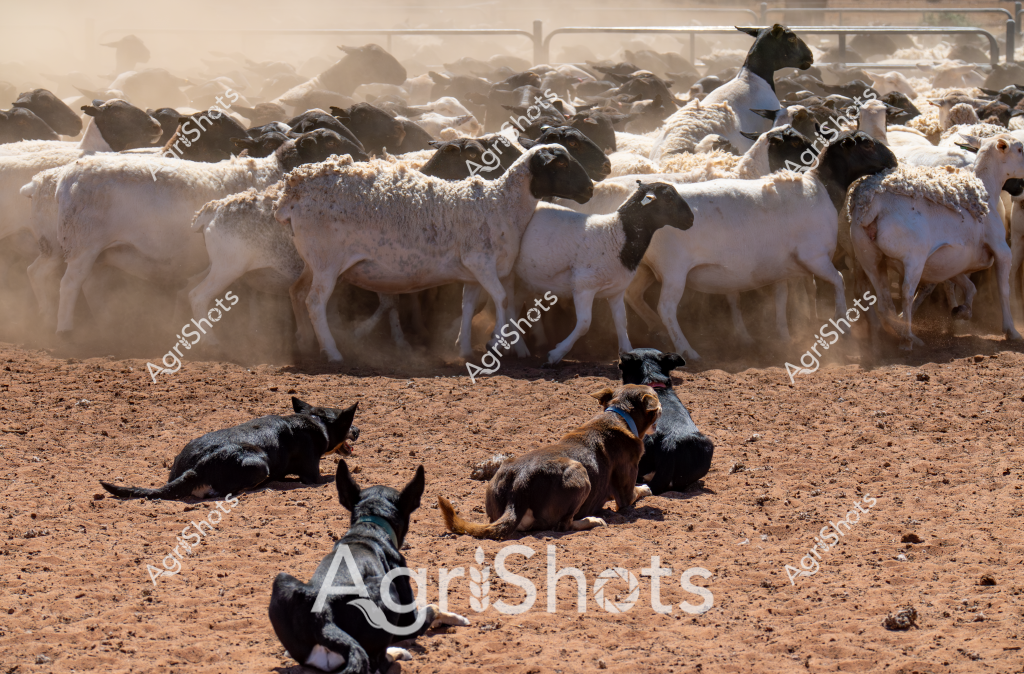
A large flock of white and black Dorper sheep stands tightly packed in a dusty livestock yard, kicking up a haze of dry earth in the background. In the foreground, several black working dogs lie resting on the reddish-brown dirt, cooling off after what appears to be an intense mustering session. The sheep, primarily white with black heads and markings typical of Dorper breed, are clustered together near metal yard fencing, creating a dense mass of woolly bodies. The scene captures the harsh conditions of an Australian pastoral setting, likely in a dry inland region such as Queensland or Western New South Wales. The ground is parched and cracked, indicating dry seasonal conditions, while the dust cloud suggests intense heat and arid environmental conditions. The working dogs, looking exhausted but alert, demonstrate the critical role of canine helpers in managing large livestock herds. The image powerfully illustrates the challenging environment of Australian sheep farming, where livestock management requires resilience and specialized skills. The tight grouping of the Dorper sheep and the strategically positioned working dogs showcase the coordinated effort required to handle livestock in demanding outback conditions.
 Image
Image
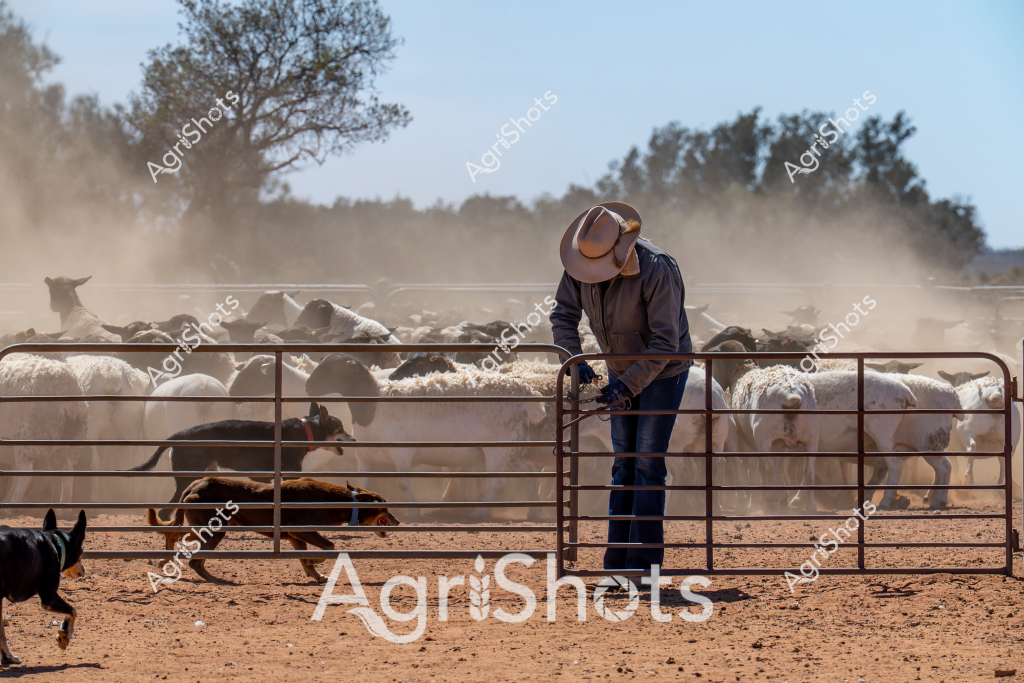
A man stockman wearing a wide-brimmed hat stands amid a dusty livestock yard, carefully managing a flock of white sheep and a few black and brown dogs. The scene captures a typical Australian sheep station during mustering, with dry, reddish-brown earth and sparse trees in the background creating a quintessential outback landscape. Dust rises around the metal livestock gates as the sheep crowd together, with the stockman's careful positioning and the working dogs suggesting an experienced team managing the herd. The man's dark clothing and sturdy stance reflect the challenging conditions of rural livestock management, where skill and precision are essential for moving and controlling sheep in arid environments. A gate separates different sections of the yard, allowing controlled movement and sorting of the animals during what appears to be a warm, dry day with minimal vegetation visible.
 Image
Image
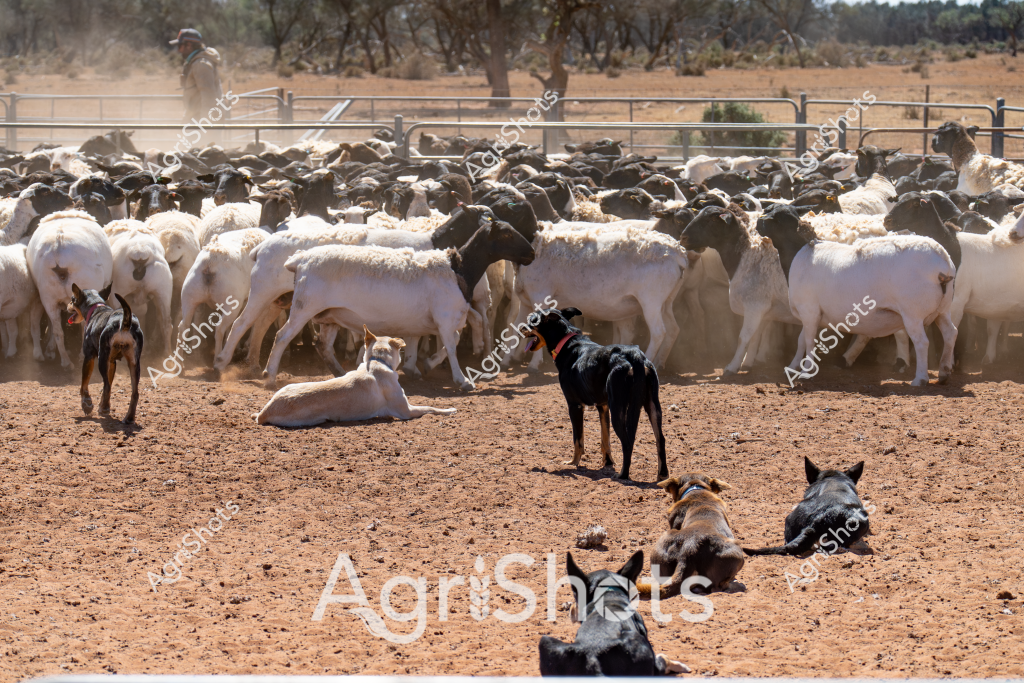
A large herd of predominantly white sheep with some black sheep are gathered in a dusty, fenced paddock with several working dogs managing the mob. A black and white dog stands alertly in the foreground, while others are resting on the dry, reddish-brown earth. In the background, a person on horseback can be seen behind the metal yard fencing, suggesting this is a typical Australian sheep station mustering scene. The bright white coats of the Dorper or White Dorper sheep stand out against the arid landscape, with sparse trees and shrubs visible in the distance. Multiple herding dogs of different colors are strategically positioned around the sheep, demonstrating their crucial role in controlling and moving the livestock across the challenging outback terrain. The harsh, dry environment and the coordinated effort of the stockman and dogs highlight the resilience required in Australian sheep farming.
 Image
Image
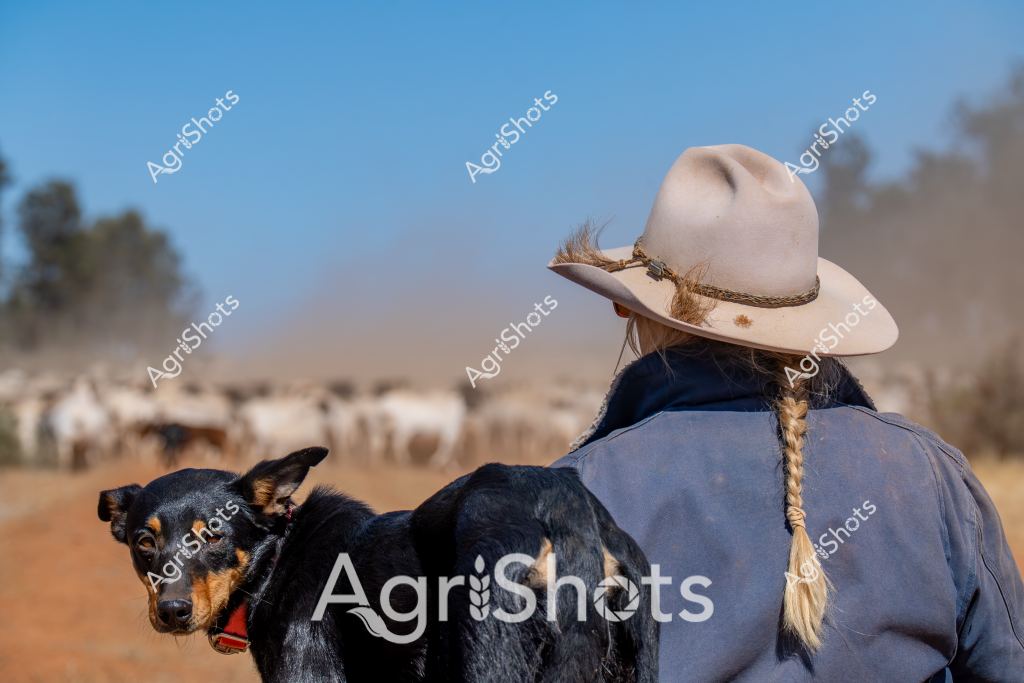
A woman stockman stands with her black and tan working dog, surveying a large herd of cattle in the dusty background of what appears to be an Australian cattle station. Wearing a classic wide-brimmed light-colored Akubra hat and a blue work jacket, she has her hair braided and is facing away from the camera, overlooking the expansive rural landscape. The ground is a rich reddish-brown, typical of inland Australian pastoral regions, with a few scattered trees and scrub visible on the distant horizon. A compact, alert working dog sits close to her, ready to assist with mustering or herding the cattle. The clear blue sky and dry environment suggest this is during the dry season, highlighting the challenging conditions of livestock management in rural Australia. The scene captures the essence of Australian pastoral life - a skilled stockwoman and her loyal canine companion managing cattle in a vast, arid landscape.
 Image
Image
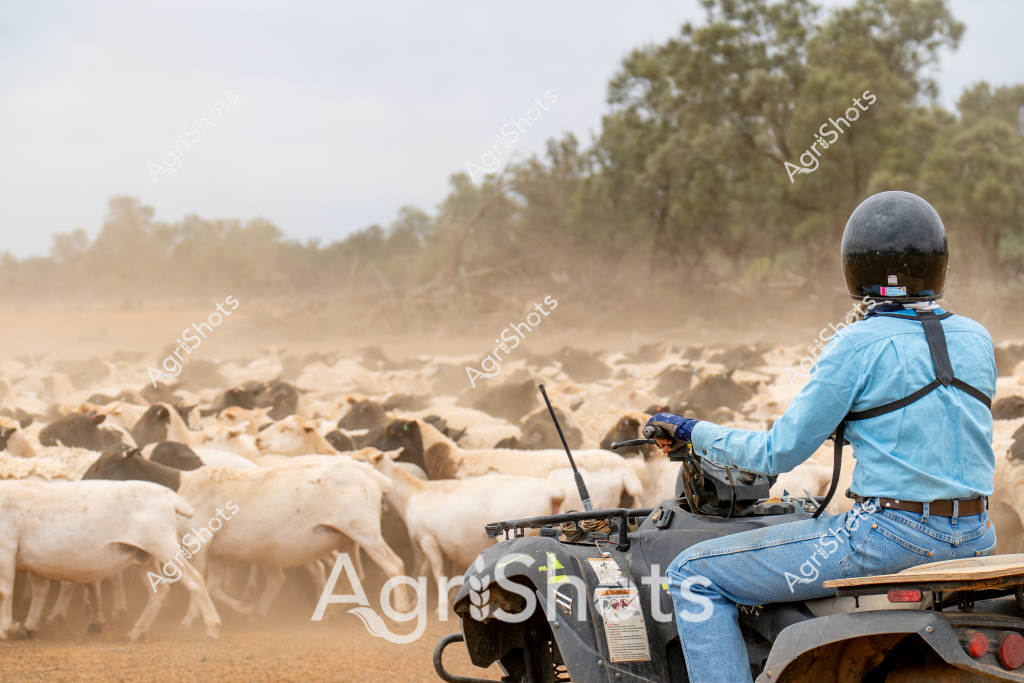
A man stockman seated on an all-terrain vehicle (ATV) manages a large herd of white and light-colored cattle in a dusty, tree-lined paddock. Wearing a blue shirt, jeans, and a protective helmet, he navigates the vehicle carefully among the densely packed livestock, raising a cloud of fine Australian dust. The cattle appear to be moving as a tight, cohesive group, suggesting an organized muster or stock movement typical of extensive pastoral operations. Trees line the distant horizon, creating a classic Australian rural landscape backdrop, while the dusty conditions hint at the dry, challenging environmental conditions often encountered in agricultural regions. The stockman's positioning on the ATV demonstrates modern livestock management techniques, replacing traditional horseback mustering with more efficient mechanized approaches. The scene captures the essence of Australian cattle farming - a blend of skill, technology, and adaptation to harsh rural environments. The dust, the dense herd, and the careful management by the stockman illustrate the demanding nature of livestock production in Australia's expansive agricultural landscapes.
 Image
Image
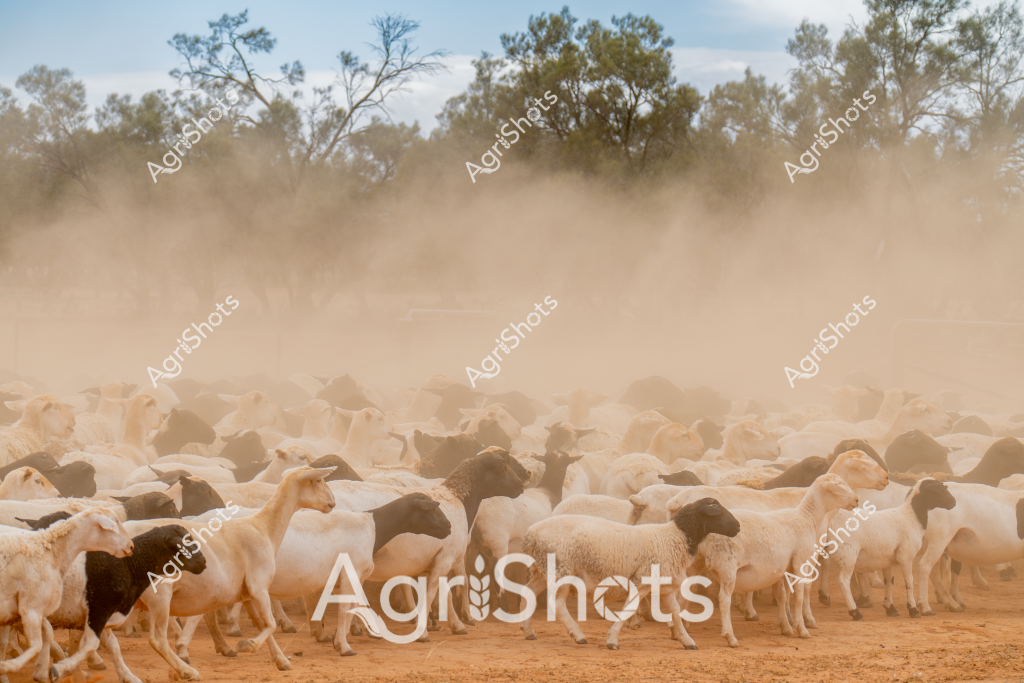
A large flock of mixed-breed sheep kicks up a massive dust cloud during mustering in the Australian outback. Merino and other white and black sheep are tightly clustered on a dry, reddish-brown earth paddock, surrounded by sparse eucalyptus trees in the background. The intense dust storm created by their movement obscures parts of the landscape, highlighting the dynamic nature of livestock management in arid regions. The sheep appear to be in motion, potentially being moved between pastures or preparing for sorting and handling. The scene captures the challenging environmental conditions of rural Australian livestock farming, where dust, heat, and vast open spaces are constant companions to shepherds and their flocks. The stark contrast between the light-colored sheep and the ochre earth creates a powerful visual representation of Australia's agricultural landscape.
 Image
Image
A large flock of white and black sheep gather tightly in a dusty, arid paddock, with several working dogs moving among them. The landscape is characteristic of an Australian rural setting, featuring sparse, golden-brown earth and eucalyptus trees clustered in the distant background. Dry soil kicks up a fine dust cloud around the mob of sheep, suggesting hot, dry conditions typical of an Australian summer or drought period. The working dogs, black and white in color, are actively herding and managing the sheep, weaving between the tightly packed animals with purpose and skill. These are likely Merino sheep, a breed renowned in Australian agriculture for their high-quality wool production. The dense clustering of the animals indicates they are being carefully controlled and directed, possibly during mustering, yard preparation, or movement between paddocks. The scene captures the essence of Australian pastoral farming - a landscape of sparse vegetation, resilient livestock, and the critical role of working dogs in managing large herds across challenging terrain. The muted color palette of beige earth, pale sky, and green-grey trees emphasizes the harsh but beautiful nature of rural agricultural environments.
 Image
Image
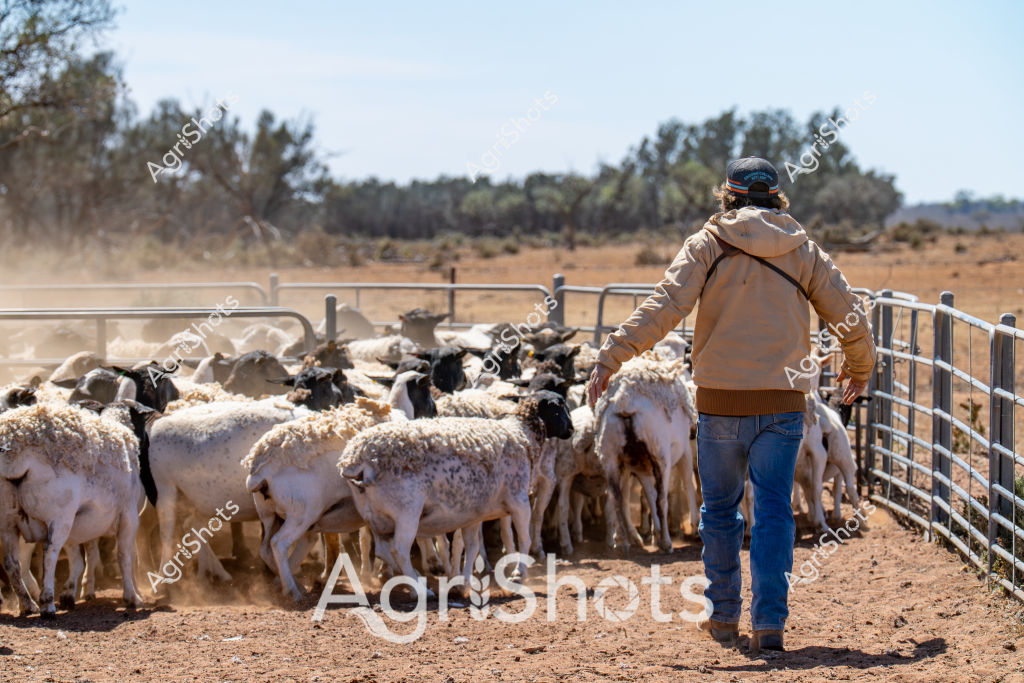
A skilled person managing a small flock of merino sheep through a dusty yards paddock in rural Australia. The stockman, wearing a tan jacket, blue jeans, and a knit cap, walks alongside the densely packed group of white and black sheep within metal livestock fencing. The surrounding landscape shows a dry, arid environment with sparse eucalyptus trees and golden-brown ground, typical of an Australian pastoral setting. Dust rises around the sheep's hooves as they move together, suggesting active mustering or yard management activities. The scene captures the everyday work of livestock management in a challenging rural landscape, highlighting the close relationship between farmers and their animals. The image reflects the resilience and practical skills required in Australian sheep farming, where careful handling and movement of livestock is critical to successful agricultural operations. The tight formation of the merino sheep and the controlled movement by the stockman demonstrate the expertise needed in managing livestock in harsh environmental conditions.
 Image
Image
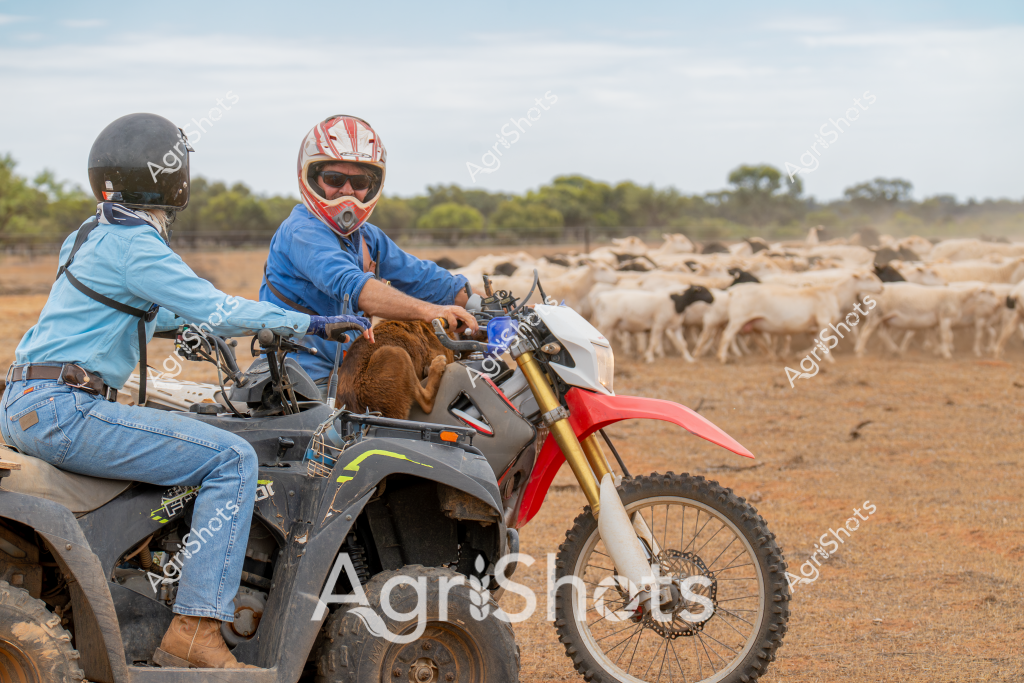
Two riders on off-road motorcycles guide a flock of white sheep across a dry, golden paddock in rural Australia. A woman in a light blue shirt and denim jeans sits on a quad bike, while a man in a blue shirt and red-and-white motocross helmet rides a dirt bike beside her. The landscape is typical of the Australian interior - sparse, dusty ground with scattered trees on the horizon and a herd of woolly sheep clustered in the background. The motorcycles appear well-equipped for farm work, with the dirt bike featuring a striking red and white color scheme and the quad bike looking robust and functional. Both riders are wearing protective gear, including helmets and sturdy clothing, suggesting they are actively mustering or moving the livestock across the property. The scene captures the essence of modern Australian livestock management, where motorized vehicles have replaced traditional horse-based mustering, demonstrating the evolving techniques of farm work in the contemporary agricultural landscape. The dry terrain and sparse vegetation hint at challenging environmental conditions typical of many Australian grazing regions.
 Image
Image
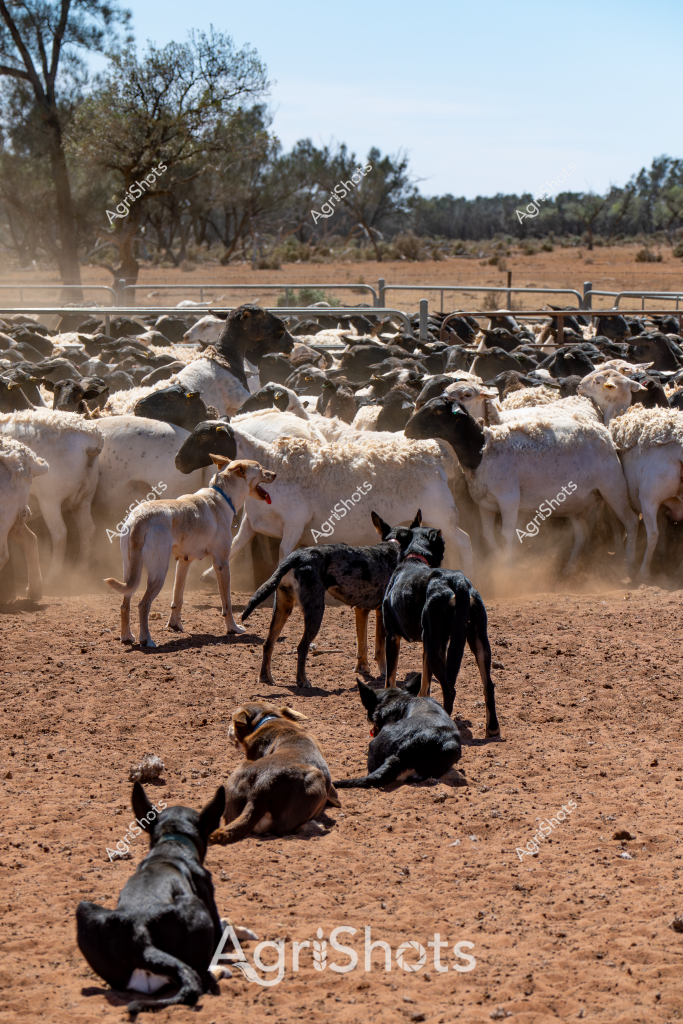
A classic Australian livestock mustering scene captures working dogs expertly managing a large flock of white and dark-colored sheep in a dusty, arid paddock. Several black and tan dogs are positioned strategically around the mob, some standing alert while others rest on the dry, reddish-brown earth. The sheep are densely packed within a metal yard fence, with trees and scrubland visible in the background, suggesting a typical Australian pastoral setting. The working dogs, likely Australian Kelpies or similar herding breeds, demonstrate the critical role of canine partners in managing livestock across vast rural properties. Their positioning shows practiced skill - some standing vigilant, others resting but ready to spring into action at a moment's notice. The dense dust cloud and tight grouping of sheep indicate active movement and controlled herding. The harsh, sunbaked landscape with its red soil and sparse vegetation is characteristic of inland Australian agricultural regions, likely in a state like Queensland or Western Australia. The scene captures the demanding nature of sheep farming in challenging environmental conditions, highlighting the resilience and expertise required in Australian pastoral agriculture.
 Image
Image
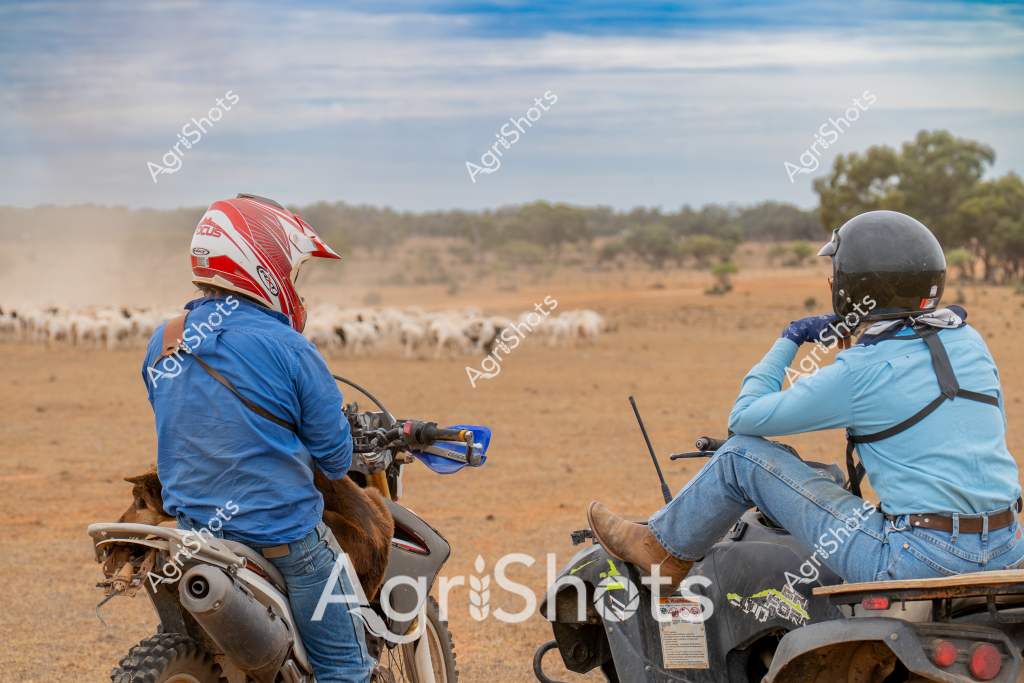
Two men on motorbikes survey a mob of white sheep across a dry, dusty paddock in rural Australia. The men wear blue shirts and protective helmets, with one in a red motocross helmet and the other in a black helmet, seated on an all-terrain vehicle and a motorcycle. The landscape is a typical Australian pastoral scene - golden-brown grass, sparse trees on the horizon, and a vast open sky with soft blue and white clouds. Several dozen sheep are grazing in the background, creating a light dust cloud as they move slowly across the arid terrain. The scene captures the essence of modern Australian livestock management, where motorcycles and quad bikes have replaced traditional horse-based mustering techniques. The dry conditions suggest this could be during a prolonged drought period, typical of many Australian agricultural regions.
 Image
Image
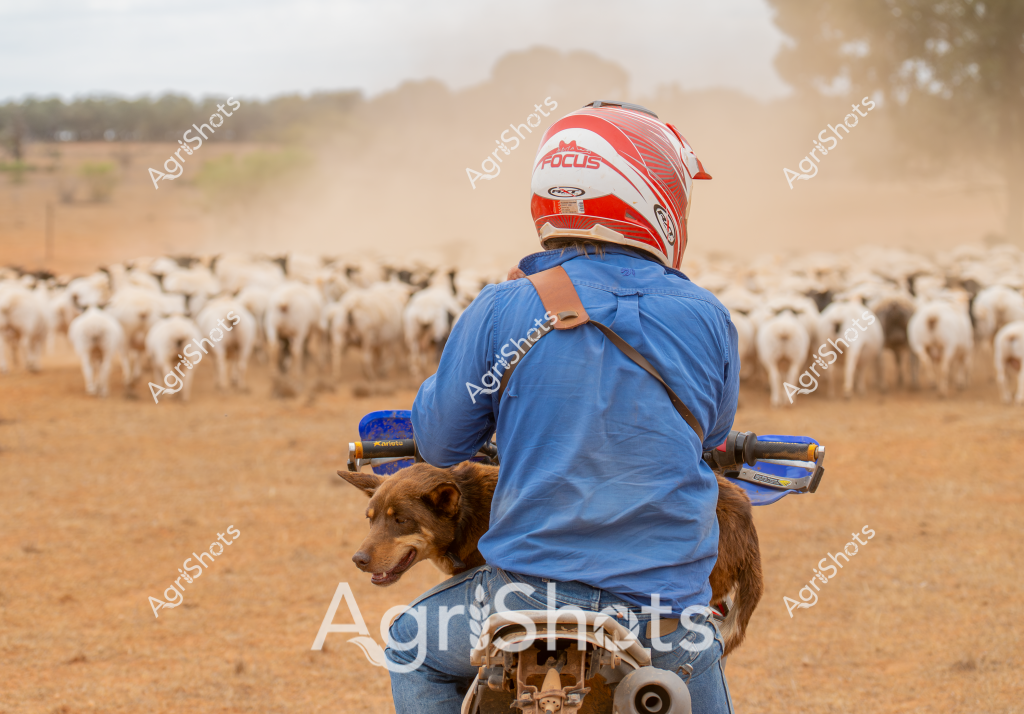
A man wearing a red motorcycle helmet and blue work shirt rides a motorbike through a dusty cattle yard, with a brown working dog seated behind him. A large herd of white cattle stands in the background, creating a cloud of dust across the dry, sun-baked landscape. The scene captures the typical Australian pastoral setting, with the stockman using a motorcycle and cattle dog to muster livestock across an arid paddock. The rider's protective helmet and steady posture suggest experienced handling of cattle in challenging rural conditions. Dust swirls around the scene, highlighting the dry environment and the dynamic movement of cattle and rider. The image exemplifies the modern approach to livestock management in Australia, where motorcycles and working dogs have largely replaced traditional horse-based mustering. The compact herd of light-colored cattle suggests they might be a breed well-adapted to dry conditions, such as Brahman or Drought Master cattle common in northern Australian stations.
 Image
Image
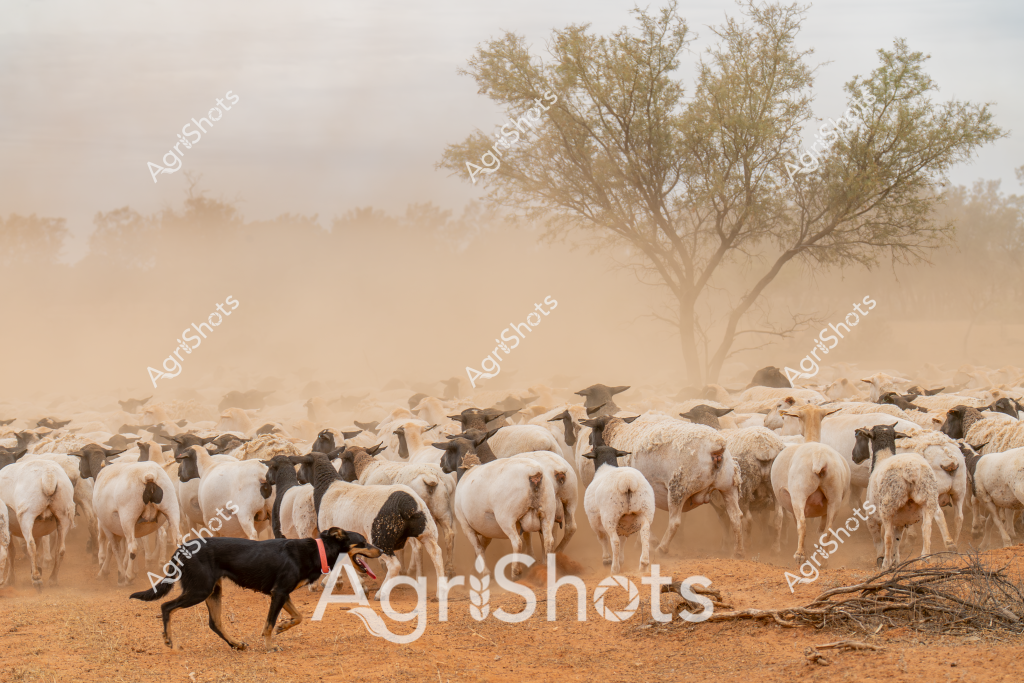
A dust-laden landscape reveals a tightly packed mob of white and black sheep being expertly herded by a black working dog with a red collar. The flock moves across a parched, reddish-brown earth paddock, kicking up a dense cloud of fine dust that softens the background trees and horizon. A solitary tree stands sentinel in the misty distance, its sparse foliage testament to the arid conditions. The sheep - a mix of white and dark-fleeced animals - are tightly clustered, their backs and rumps creating a uniform texture that stretches across the frame. The working dog, likely a skilled Australian Kelpie, moves with purpose alongside the flock, demonstrating the critical role of working dogs in mustering livestock across challenging Australian pastoral landscapes. The scene captures the harsh beauty of outback farming, where livestock management requires resilience and skill in unforgiving environmental conditions.
 Image
Image
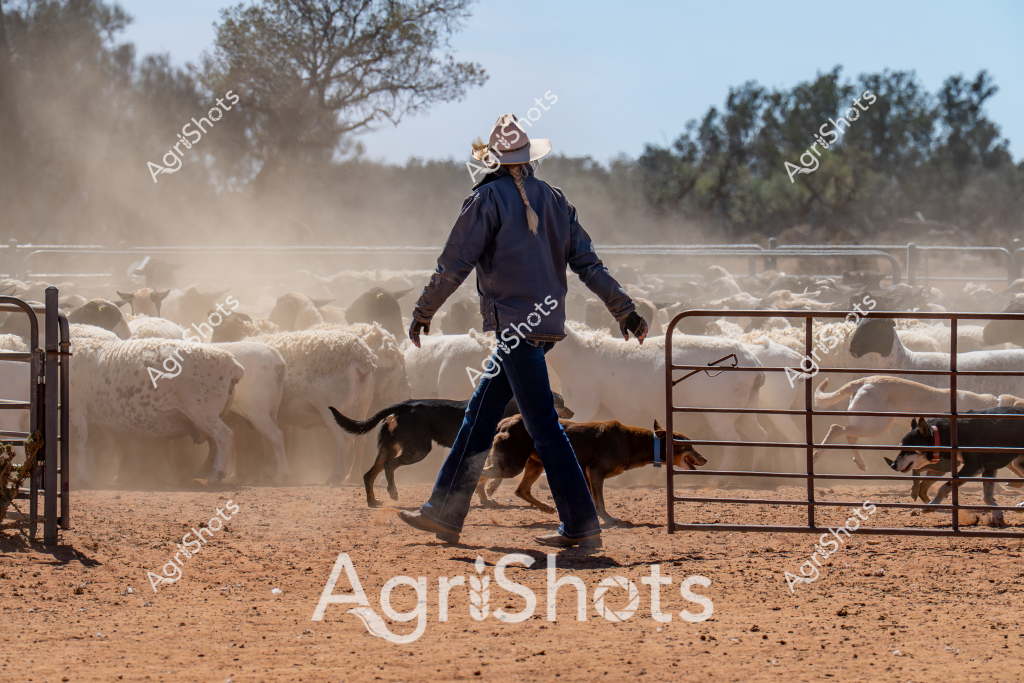
A stockman in a navy jacket and white hat stands amid a dusty sheep yard, managing a flock of white sheep during a muster. Several working dogs assist the stockman, weaving between the tightly clustered animals and metal gates. The dry, reddish-brown earth kicks up a fine dust cloud, highlighting the intense activity of livestock management in what appears to be an arid Australian pastoral setting. The sheep are densely packed, their woolly bodies creating a sea of white against the stark landscape, while trees and shrubs are visible in the background. The scene captures the skill and teamwork required in mustering livestock, with the stockman's deliberate movements and the dogs' precise herding demonstrating the practiced choreography of rural farm work.
 Image
Image
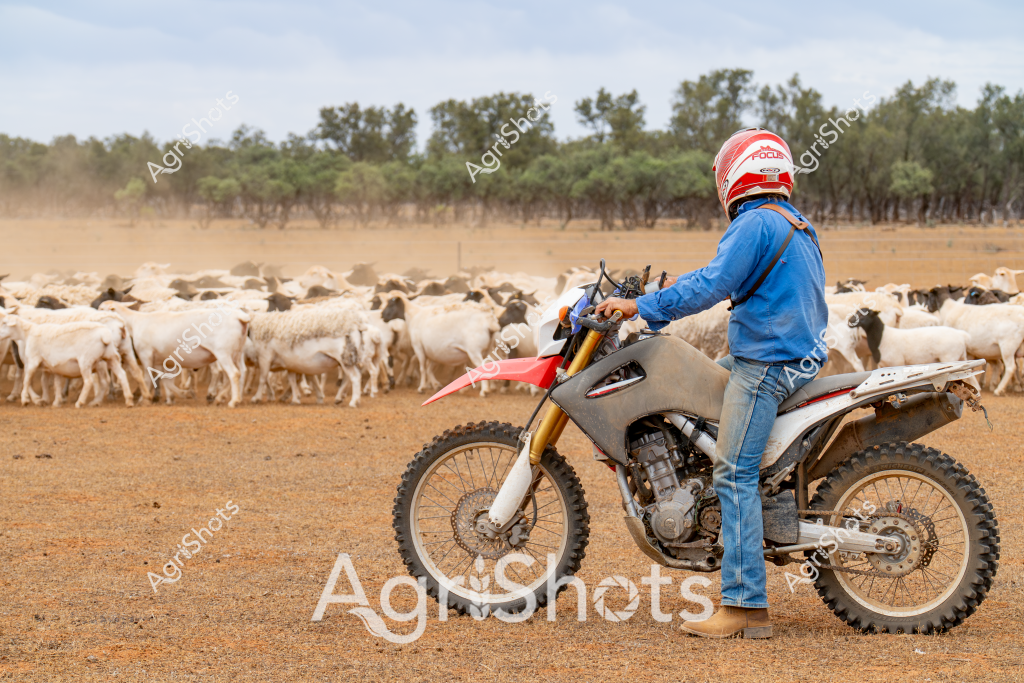
A man on a dirt bike manages a large herd of white goats in a dry, sparse landscape. Wearing a blue long-sleeved shirt, jeans, and a red and white protective helmet, the rider navigates his off-road motorcycle through the dusty paddock. A substantial mob of goats, predominantly white with some darker-colored animals, clusters together in the background, surrounded by sparse trees and scrubland. The arid environment suggests this is likely a station or large pastoral property in outback Australia, where motorcycles have become an essential tool for livestock management. The scene captures the modern approach to mustering and moving livestock, showcasing how technology and traditional farming practices intersect in rural Australian agriculture.
 Image
Image
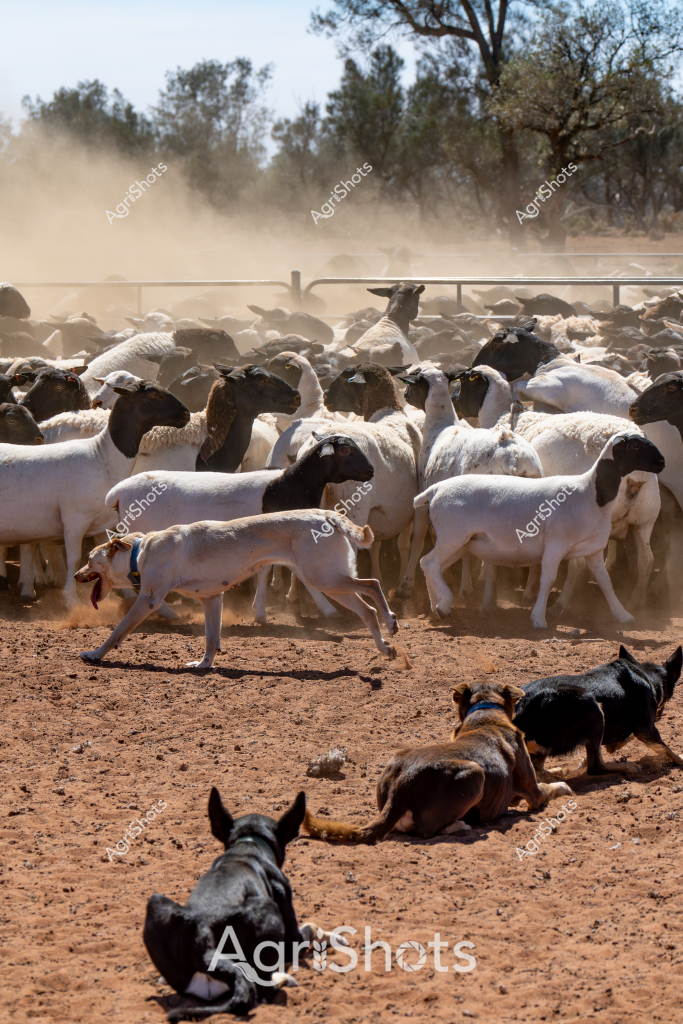
A dusty livestock mustering scene captures a large flock of white and black sheep being herded by working dogs in a dry, arid paddock. Several black and brown working dogs strategically move around the tightly packed mob of sheep, kicking up red earth and creating a swirling dust cloud. The sheep appear to be a mixed breed, predominantly white with black faces, likely Dorper or Merino cross, tightly clustered within a metal yard fence. In the foreground, some dogs rest on the ground while others actively work to control the movement of the sheep, demonstrating the classic Australian livestock management technique of using highly trained herding dogs to manage stock in challenging outback conditions. The background shows sparse trees and a dry landscape typical of rural Australian grazing country, with the intense dust and close animal grouping suggesting hot, dry weather conditions during mustering season. The scene powerfully illustrates the critical role of working dogs in Australian agricultural practices, showcasing their skill, discipline, and importance in managing livestock across vast, harsh agricultural landscapes.
 Image
Image
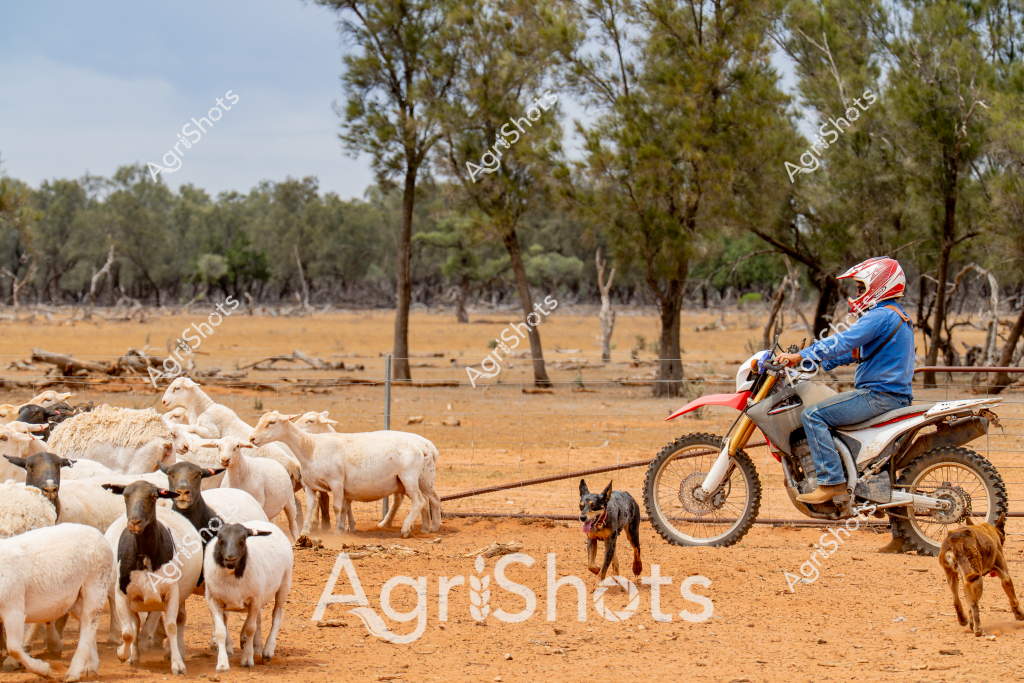
A man on a dirt bike herds a flock of white and black sheep across a dry, sparse paddock in what appears to be an arid Australian pastoral landscape. Accompanied by working dogs, he uses the motorcycle to navigate the dusty terrain, guiding the mixed-breed sheep through a grove of scattered eucalyptus trees. The rider, wearing a blue jacket and red motorcycle helmet, employs a long rope to help control the movement of the livestock, demonstrating a modern approach to mustering sheep in challenging drought-like conditions. Two alert working dogs - likely Australian Cattle Dogs or kelpies - assist in directing the sheep, running alongside the bike and helping to keep the flock together. The landscape is characterized by a golden-brown earth, sparse vegetation, and widely spaced trees, typical of inland Australian agricultural regions during dry seasons. This scene captures the adaptability of contemporary Australian farmers, using motorcycles and working dogs to manage livestock in harsh environmental conditions.
 Image
Image
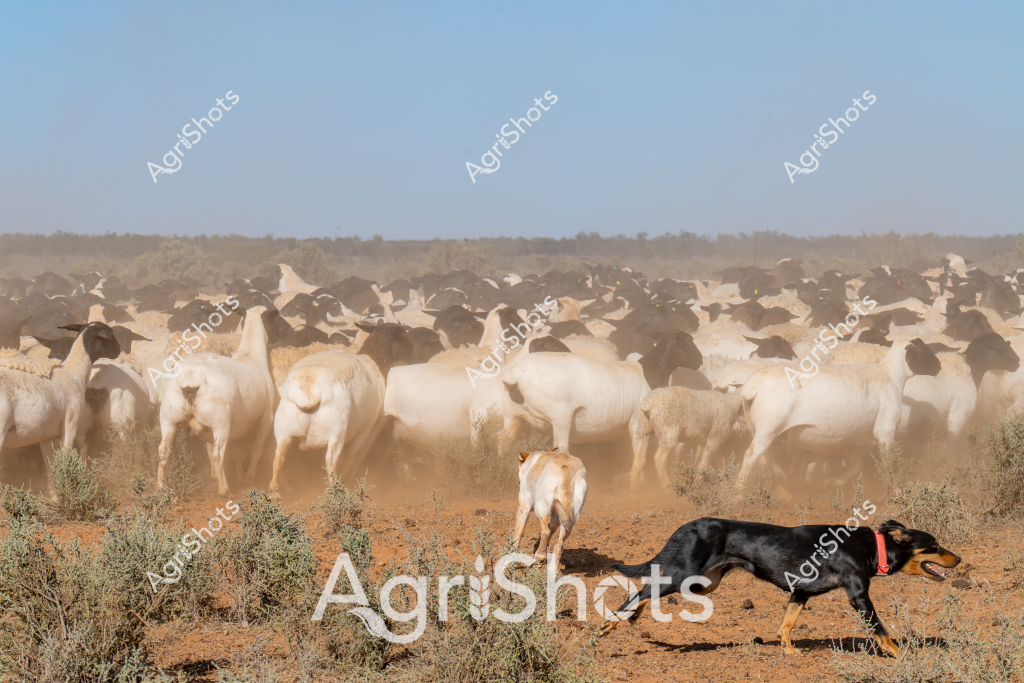
A large herd of light-colored sheep kicks up dust in a dry, arid landscape, with two working dogs herding the mob across a sparse, reddish-brown paddock. A black and tan dog runs alongside the herd, expertly guiding the sheep's movement with precision and skill. A lighter-colored dog stands slightly apart, also part of the mustering effort. The background reveals a line of trees and scrubby vegetation, creating a typical Australian outback pastoral scene. Dusty conditions and the tight grouping of the sheep suggest an experienced team of working dogs and likely a stockman managing this livestock movement across a challenging rural terrain. The image captures the essence of Australian sheep farming, highlighting the critical role of working dogs in managing large herds across expansive, dry landscapes.
 Image
Image
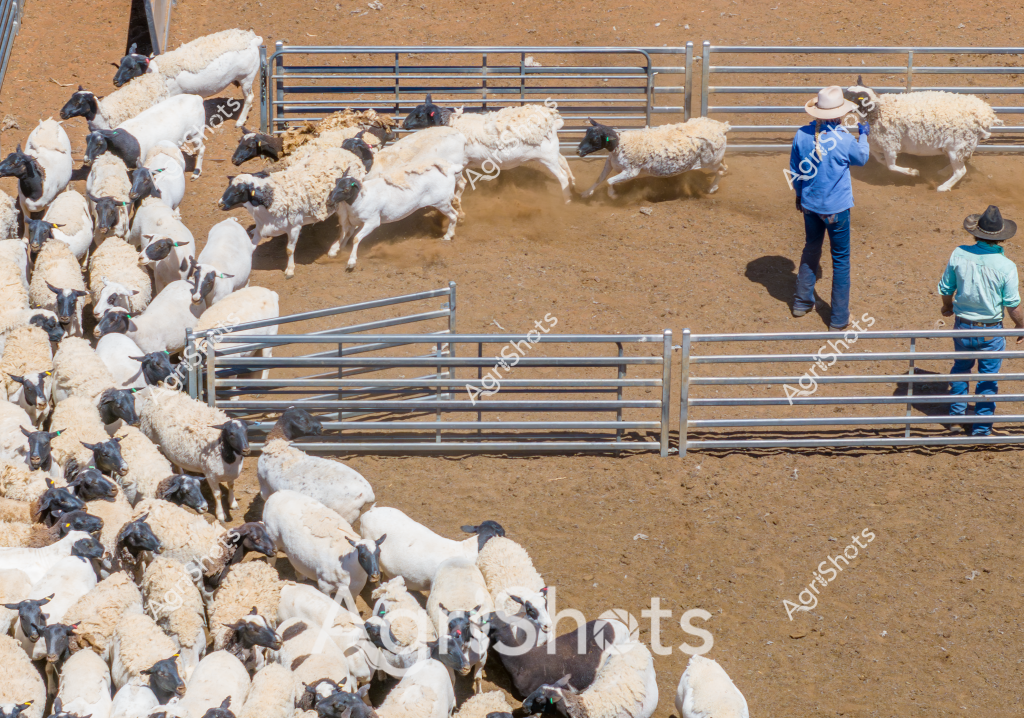
A dynamic sheep mustering scene unfolds in an arid Australian livestock yard, with a large flock of white and black-headed sheep moving through metal livestock gates. Two workers, a man in a blue shirt and another in a turquoise top and wide-brimmed hat, carefully manage the sheep's movement through the paddock's corral system. The sheep appear to be Dorper or Merino crossbreed, with distinctive black heads and white woolly bodies, clustered tightly and moving in coordinated groups across the dusty, sun-baked ground. The metal yard gates create a systematic pathway, guiding the livestock through different pens with precision. Shadows are sharp and defined, indicating bright midday sunlight typical of an Australian rural setting. The scene captures the expertise of stockmen in managing livestock, with their careful positioning and movement controlling the flow of the sheep herd. The environment suggests an inland pastoral station, with hard-packed earth and minimal vegetation, reflecting the challenging conditions of Australian sheep farming. The composition emphasizes the scale and complexity of sheep management, showcasing the critical role of skilled workers and infrastructure in moving and controlling livestock herds across vast agricultural landscapes.
 Image
Image
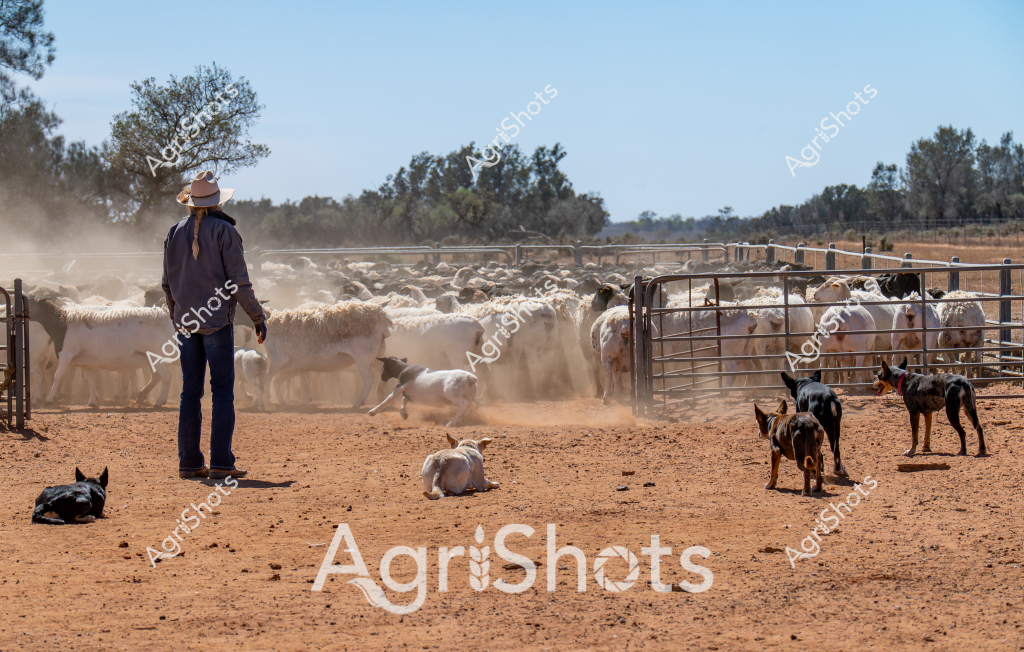
A man stockman stands amid a dusty livestock yard, surrounded by a large flock of white sheep and several working dogs. The scene captures a typical Australian sheep station during mustering, with dry, reddish-brown earth and metal yard fencing creating a stark backdrop. Multiple herding dogs of different colors are positioned around the yard, some sitting and some actively moving, assisting in controlling the tightly packed sheep mob. The stockman, wearing a wide-brimmed hat and dark clothing, stands facing away from the camera, observing the sheep as they move and kick up clouds of dust. Some sheep are pressed against the metal yard gates, while others mill about in the central area. The dogs appear to be working collaboratively, with some sitting attentively and others actively herding. In the background, sparse trees and shrubs line the horizon, typical of an arid or semi-arid Australian pastoral landscape. The bright, clear sky and harsh sunlight emphasize the dry conditions, suggesting this is likely during a hot summer day in one of Australia's inland sheep-farming regions. The scene powerfully illustrates the challenging environment and skilled work of Australian livestock management.