Results for “Male Farmers”
 Image
Image
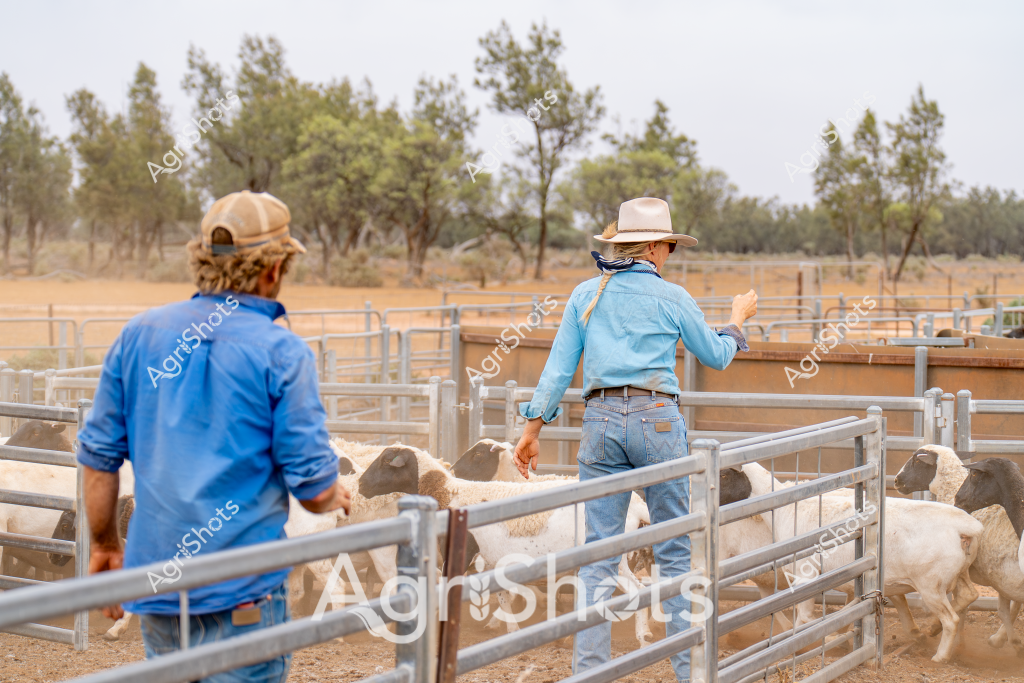
Two men working in a livestock yard, carefully managing a small herd of sheep within metal livestock pens. They are wearing typical rural workwear - blue long-sleeved shirts, wide-brimmed sun hats, and work jeans. One man faces away from the camera, standing near the metal gate, while the other is partially visible to the left side of the image. The setting appears to be a dry, arid paddock with sparse trees and scrubland in the background, suggesting this is likely in an inland Australian agricultural region. The metal yard panels create a systematic grid for controlling and moving the sheep, which appear to be light-colored, possibly Merino or other wool breed. The dusty ground and sparse vegetation indicate this could be during a dry season or in a drought-affected area. The scene captures the practical, no-nonsense approach of Australian livestock management, where farmers work efficiently to handle their stock in challenging environmental conditions.
 Image
Image
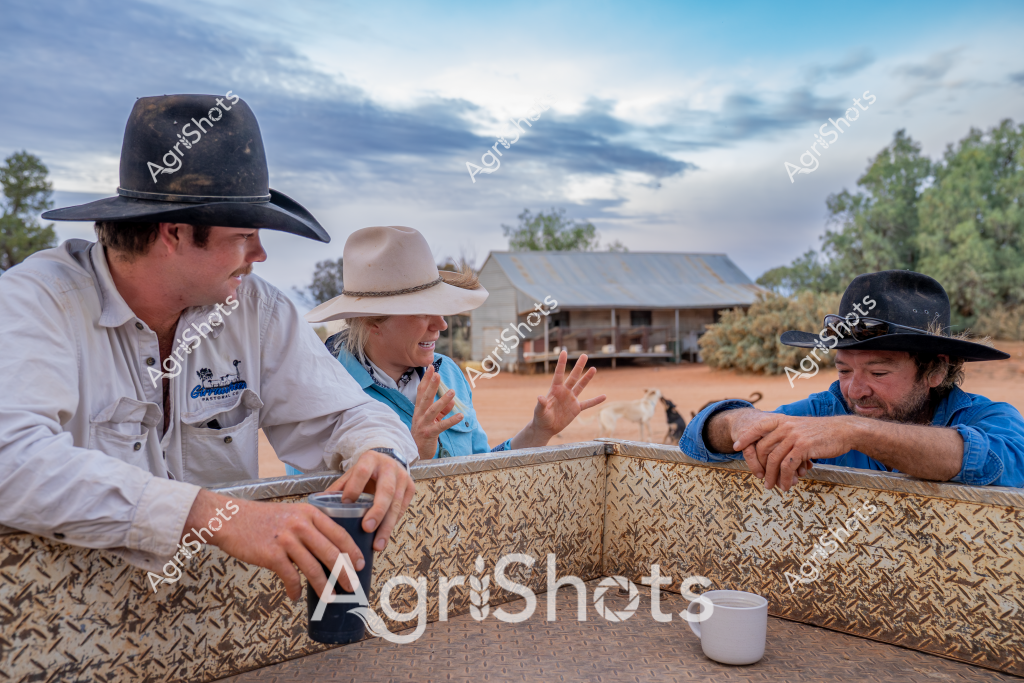
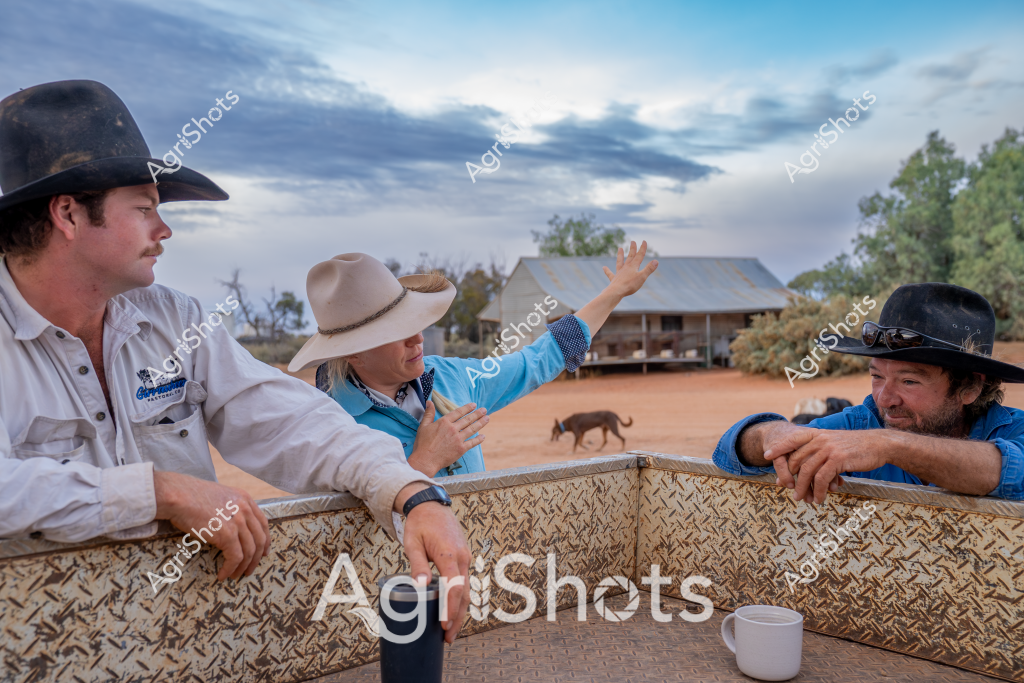
Three men in wide-brimmed Australian bush hats are engaged in conversation around a textured metal surface, with a rustic rural station building in the background. A white mug sits on the surface, suggesting an informal workplace discussion. The men are dressed in light-colored work shirts - white and blue - and appear to be agricultural workers or station hands, likely discussing daily operations or work plans. The setting looks like a remote Australian cattle station, with reddish dirt ground, scattered trees, and a corrugated iron shed, creating a quintessential outback rural atmosphere. The cloudy sky suggests early morning or late afternoon, with soft light casting subtle shadows across the landscape. Their body language and positioning indicate a collaborative, relaxed workplace interaction typical of Australian rural communities.
 Image
Image
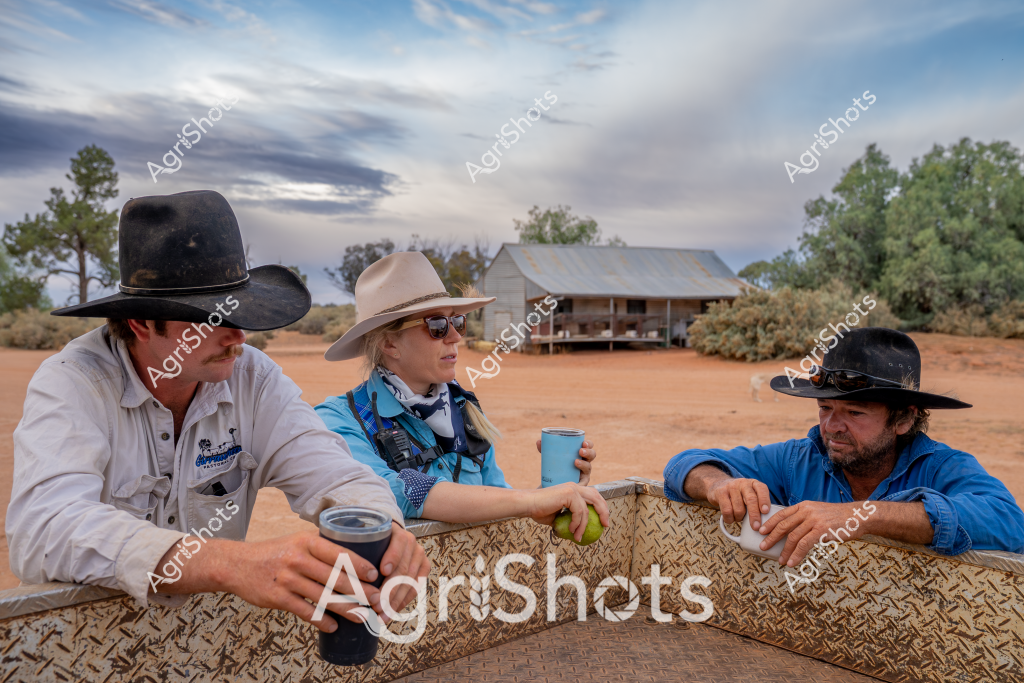
Three rural workers take a break at a remote outback station, sitting around a metal checkerplate surface with drinks and a piece of fruit. A weathered tin shed stands in the background amid sparse trees and reddish sandy ground, with dramatic cloudy skies overhead. The workers wear wide-brimmed bush hats - two black and one cream - and are dressed in work shirts in white and blue tones. A man on the left holds a dark beverage cup, a woman in the center wears sunglasses and holds a green apple, and a man on the right leans casually against the textured surface. Their relaxed postures and outdoor setting suggest a moment of rest during a long day of station work, capturing the resilient spirit of Australian rural life. The soft light and expansive landscape hint at the challenging but beautiful environment of the Australian agricultural interior.
 Image
Image
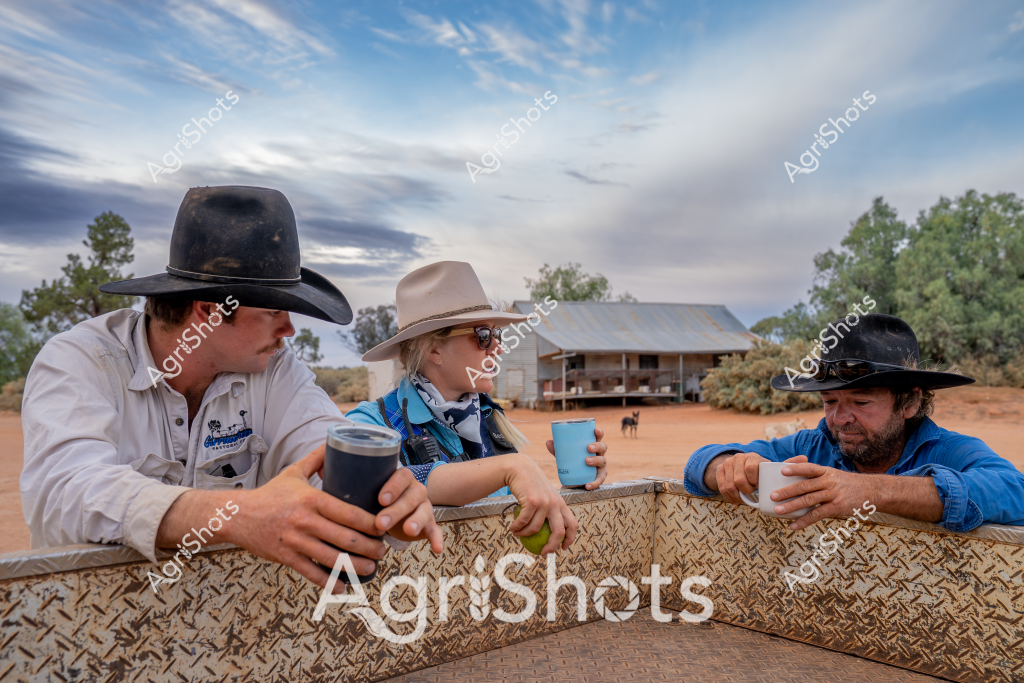
Three men wearing wide-brimmed Australian bush hats sit at a textured metal table in a remote rural setting, holding thermal mugs and sharing a moment of camaraderie. A weathered tin shed stands in the background, with sparse trees and an open dirt yard typical of an outback station or remote agricultural property. The sky is dramatic, with soft cloud formations creating a moody backdrop of blues and grays that suggest early morning or late afternoon light. The men are dressed in typical rural workwear - one in a white work shirt, another in a blue shirt, all wearing practical wide-brimmed hats that provide protection from the harsh Australian sun. Their posture and the shared moment around the table suggest a break from rural work, perhaps discussing the day's tasks or simply enjoying a moment of rest. A dog can be seen in the distant background, adding to the quintessential rural Australian scene. The landscape speaks of resilience - a dusty, open environment that characterizes much of Australia's agricultural heartland, where farming and station life demand strength and community. The textured metal table and the men's relaxed demeanor capture the essence of rural Australian working life, highlighting the social connections that are crucial to survival in challenging environments.
 Image
Image
A quintessential outback scene unfolds at a rural homestead, with three men in wide-brimmed hats gathered around a textured metal barrier. A dog wanders across the dusty red earth in the background, while a corrugated iron shed and sparse trees complete the landscape. A man in a white work shirt leans casually on the fence, while another in a blue shirt gestures animatedly, suggesting an ongoing conversation about station life. The third man, also wearing a black cowboy-style hat, listens intently. The cloudy sky and muted earth tones capture the rugged atmosphere of an Australian rural property, with the men's relaxed postures and bush attire reflecting the resilient spirit of outback workers. A white coffee mug sits on the fence, hinting at a moment of respite during a busy day of station work.
 Image
Image
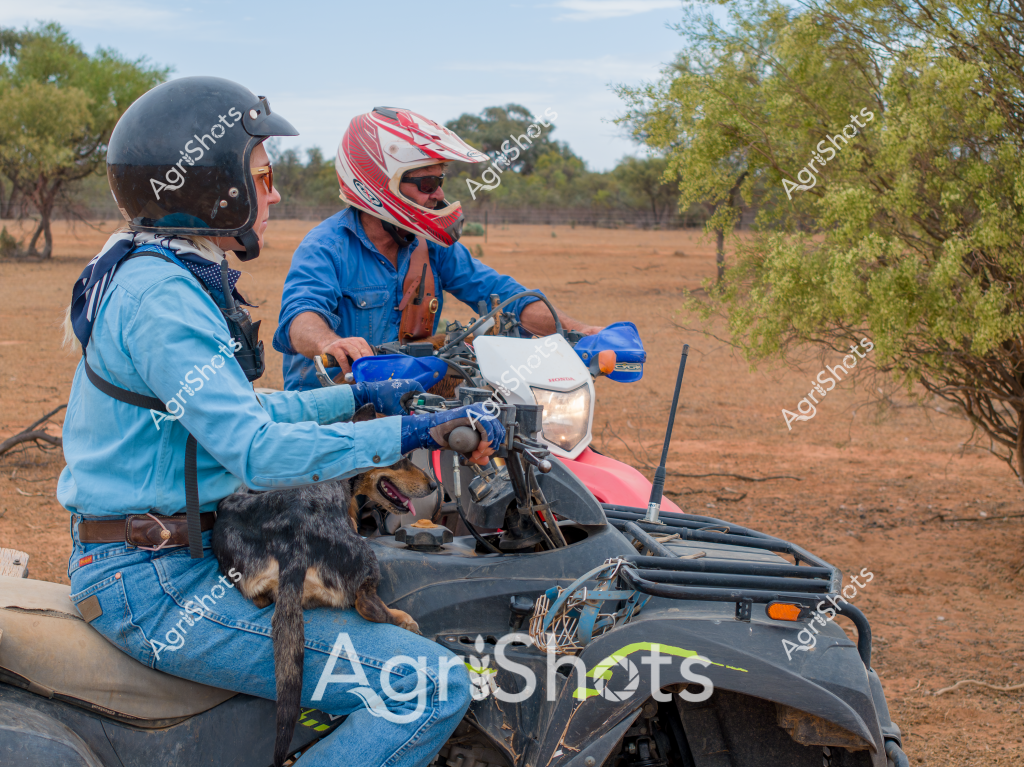
Two men on an all-terrain vehicle (ATV) traverse a dry, arid landscape with sparse trees and reddish-brown soil, typical of Australia's rural interior. One man wears a black helmet and a light blue long-sleeved shirt, while the other sports a red and white racing-style helmet and a blue work shirt. A small dark-colored dog sits on the ATV between them, suggesting this is a working vehicle used for farm or station duties. The rugged quad bike is equipped with additional storage racks and appears to be a robust model designed for challenging outback terrain. Protective gear like helmets and sturdy denim jeans indicate the serious approach to safety when navigating rough rural landscapes. The surrounding environment shows scattered acacia or eucalyptus trees, with a dry, dusty ground that hints at challenging environmental conditions typical of Australian agricultural regions. The scene captures the resilience and practical nature of rural workers, using specialized equipment to traverse vast, challenging landscapes in what seems to be a remote agricultural setting during what appears to be a dry season or drought-affected period.
 Image
Image
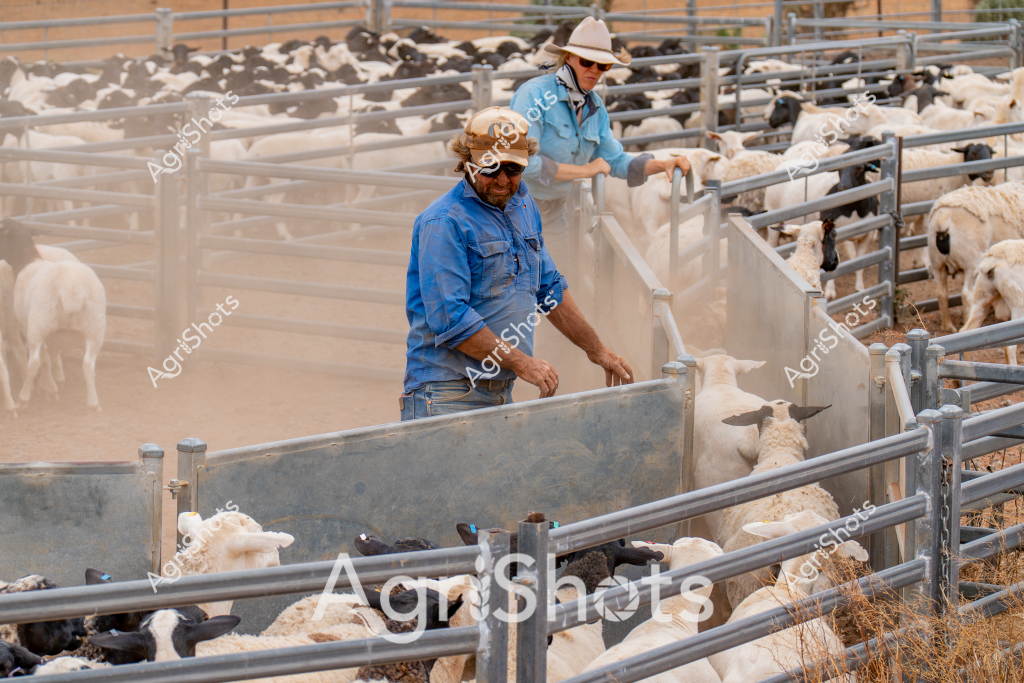
Two men working in a dusty sheep yard managing a flock of white and black sheep. One man in a blue work shirt stands in the foreground, carefully guiding sheep through metal livestock gates and fencing. Another man in a lighter blue shirt is positioned further back, helping to direct the movement of the animals. The yard appears to be a typical Australian farm setting, with dry ground and metal infrastructure designed for efficient livestock handling. Dust rises around the animals and workers, suggesting active movement and the challenging environmental conditions of rural agricultural operations. The workers wear wide-brimmed hats and sunglasses, standard protective gear for managing livestock in harsh Australian conditions. The metal yard system with multiple gates and sections allows for precise control and sorting of the sheep herd.
 Image
Image
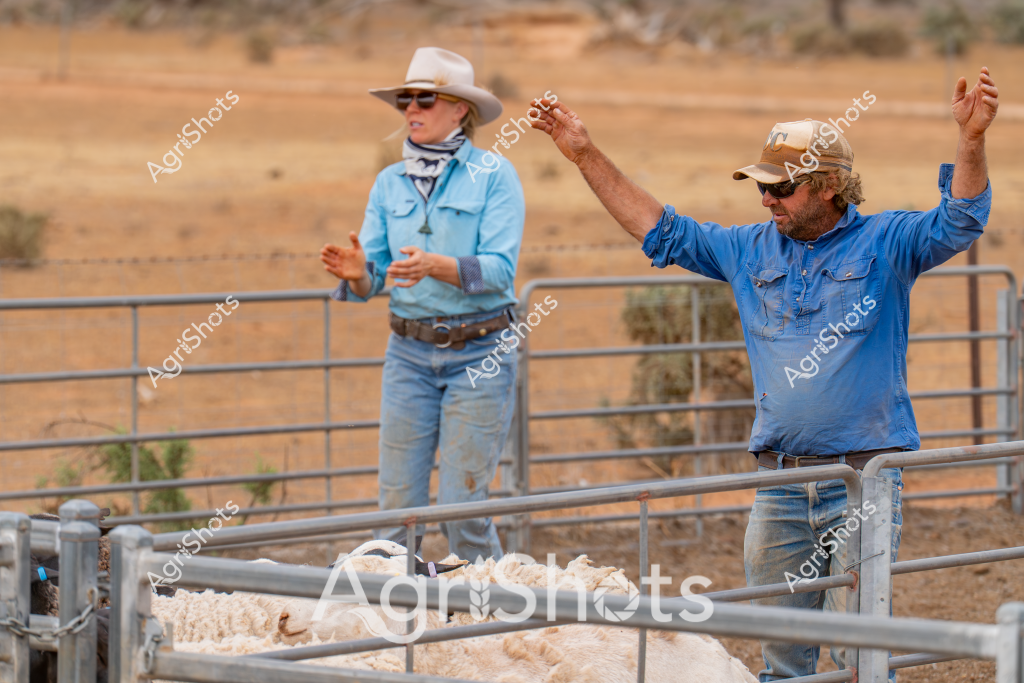
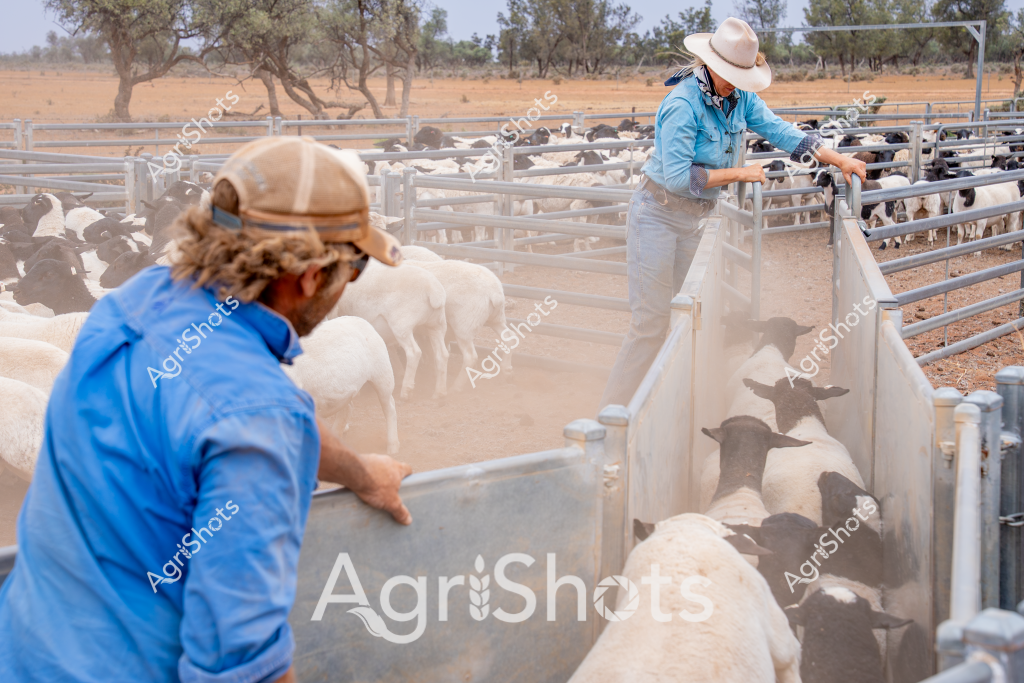
Two farm workers stand in a livestock yard during a dry, arid landscape setting. A woman wearing a light blue shirt, white cowboy hat, and neck scarf stands near a metal livestock pen, while a man in a blue work shirt and cap raises his arm in a gesture, seemingly directing or communicating about the sheep in the pen below. The background reveals a sparse, golden-brown landscape typical of Australian rural regions, with scattered scrub and desert-like terrain stretching to the horizon. The metal livestock yards provide a structured industrial element against the rugged natural environment, highlighting the challenging conditions of agricultural work in remote Australian settings. Their coordinated movements and attentive postures suggest they are managing a routine livestock handling operation, with the woolly sheep clustered within the sturdy metal pen railings.
 Image
Image
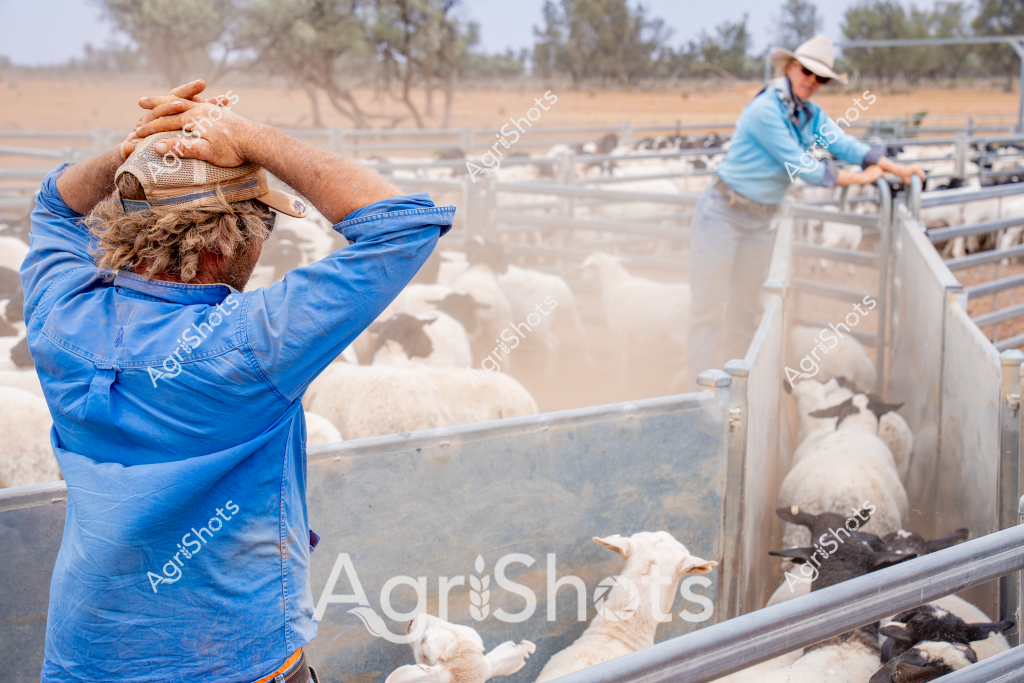
A woman in a blue shirt and wide-brimmed sun hat works in a dusty sheep yard, managing a flock of white sheep during what appears to be a warm, dry day. In the foreground, another worker wearing blue stands with hands clasped behind their head, suggesting physical exertion or momentary fatigue during the livestock management process. The metal livestock yards are filled with sheep, creating a cloud of dust as they move and shuffle within the confined space. Sparse trees and arid landscape are visible in the background, indicating this is likely a rural Australian farm setting during a dry season. The scene captures the demanding physical work of sheep farming, with workers managing livestock in challenging environmental conditions. The blue work shirts, wide-brimmed hats, and metal yard infrastructure are typical of Australian agricultural practices, highlighting the practical and resilient nature of rural farm work.
 Image
Image
Two rural workers in blue shirts and wide-brimmed hats manage a herd of white goats in a dry, dusty livestock yard. The yard features metal livestock gates and pens, with sparse trees and arid landscape visible in the background. A woman in a light-colored hat and blue long-sleeved shirt stands near the gate, carefully managing the goat movement through a narrow chute. Another worker in a blue shirt observes from a nearby position, suggesting a collaborative approach to livestock handling. The scene captures the challenging environment of Australian pastoral agriculture, with red earth, metallic infrastructure, and resilient livestock reflecting the tough conditions of rural stock management. The workers' protective clothing - long-sleeved shirts, wide-brimmed hats, and sturdy work pants - indicates careful preparation for working in harsh, sun-exposed conditions typical of Australia's agricultural regions.
 Image
Image
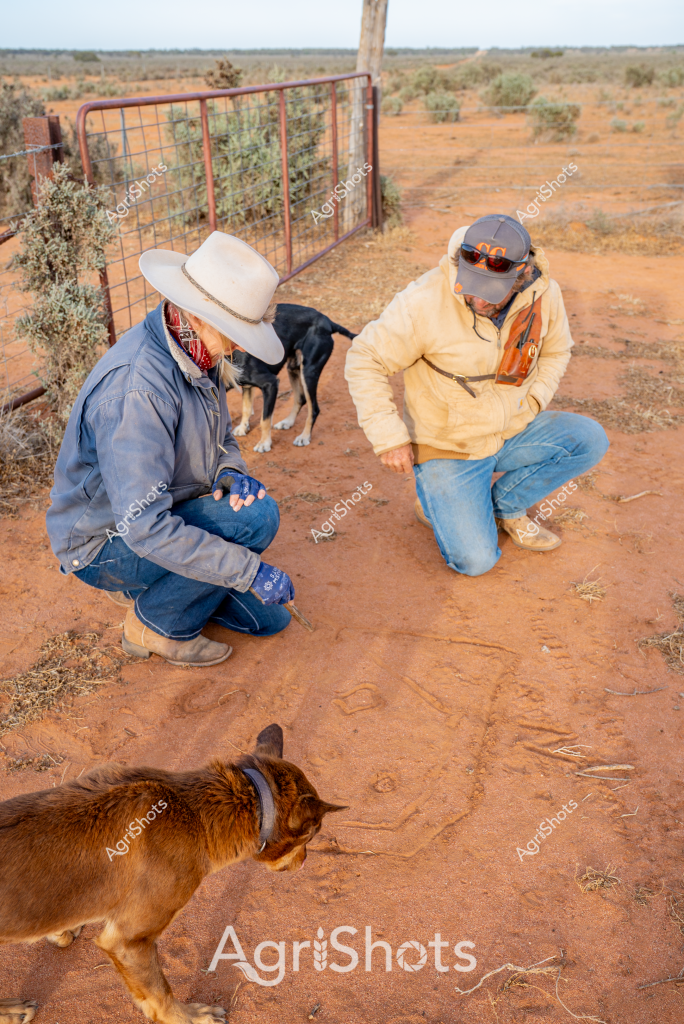
Two men work together in a dry, arid landscape, crouching on red earth surrounded by sparse desert vegetation. One wears a white wide-brimmed hat and blue denim work clothing, while the other is dressed in a light yellow jacket and wearing sunglasses and a cap. Multiple working dogs are present - a dark-colored dog and a reddish-brown dog with a collar, both attentive and close to their handlers. The scene captures a typical rural Australian outback setting, with a wire gate visible in the background and scrubby bushes dotting the reddish sandy ground. The men appear to be examining something on the ground, perhaps tracking, investigating animal signs, or discussing stock management. Their postures suggest collaboration and shared expertise in managing livestock or conducting rural work. The landscape is quintessentially Australian - a harsh, open terrain with minimal vegetation, characteristic of central or western regions where pastoral stations cover vast distances. The men's protective clothing - wide-brimmed hat, sunglasses, long sleeves - indicates adaptation to intense sunlight and challenging environmental conditions typical of remote agricultural areas. Their working dogs demonstrate the crucial role of canine companions in Australian rural work, likely trained for mustering, tracking, or providing support in managing livestock across expansive properties.
 Image
Image
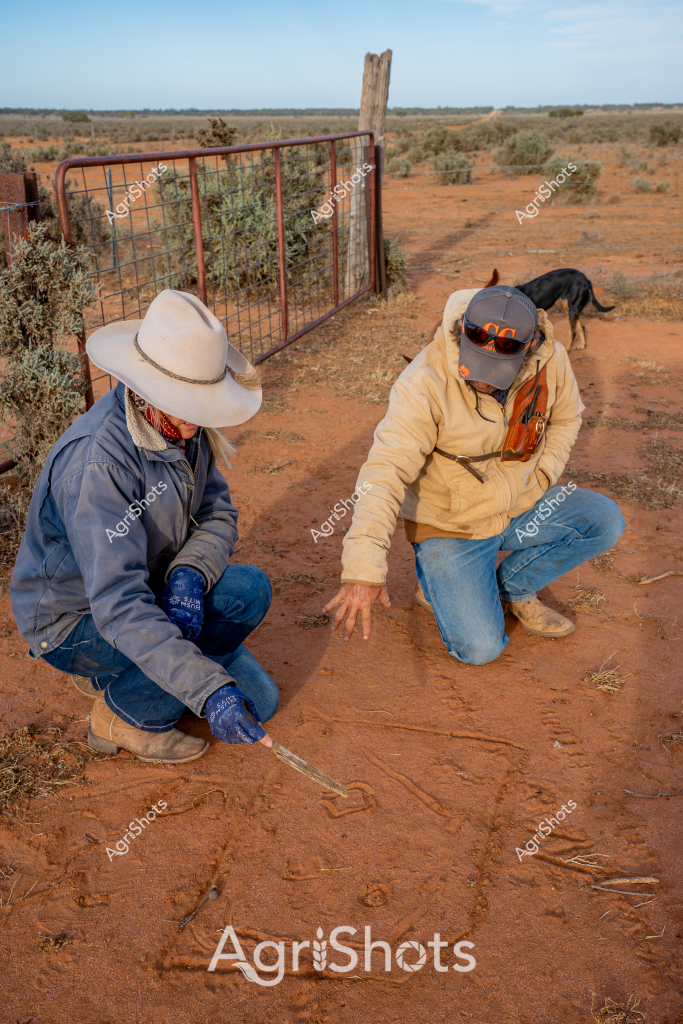
Two workers examine ground tracks in an arid Australian outback landscape, carefully studying animal or wildlife movement patterns. A man wearing a white wide-brimmed hat and blue work jacket and another worker in a light yellow jacket and cap crouch down on the deep rusty-red soil, intently tracing markings on the ground. A black dog stands in the background near a wire mesh gate, surveying the sparse landscape of low scrub and distant horizon. The environment suggests a remote station or rural property, with scattered saltbush and sparse vegetation typical of central Australian terrain. The workers appear to be conducting environmental tracking, wildlife monitoring, or land management research, demonstrating the meticulous observation skills required in rural Australian agricultural and conservation work. The scene captures the essence of outback fieldwork - two experienced professionals using close observation and local knowledge to understand subtle environmental indicators. Their careful postures and focused examination of ground tracks reveal the deep connection between agricultural workers and the landscape, highlighting the importance of detailed environmental understanding in managing remote Australian properties.
 Image
Image
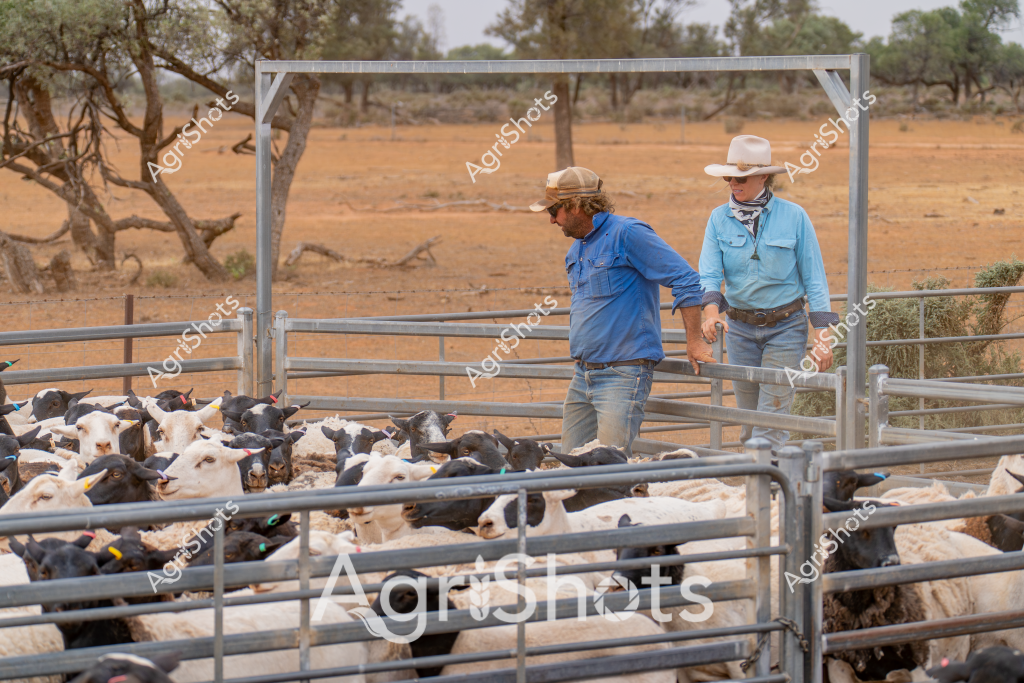
Two men farmers carefully manage a flock of mixed-breed sheep in a dry, arid paddock with scattered eucalyptus trees. Wearing broad-brimmed hats and rural workwear - one in a blue shirt, the other in a light blue top - they stand inside metal livestock yards with multiple pens. The sheep, a mix of white and dark-colored animals, are tightly clustered within the metal fencing, with yellow ear tags visible on many individuals. The landscape behind them is a classic Australian outback scene - reddish-brown earth, sparse vegetation, and twisted tree branches suggesting a drought-affected region. The metal yard structure provides a structured, controlled environment for managing the livestock, highlighting the careful husbandry practices of Australian farmers working in challenging environmental conditions. The scene captures the essence of rural agricultural management, with the farmers demonstrating close attention to the sheep herd in a harsh, sun-bleached landscape typical of inland Australian farming regions. Their positioning and calm demeanor suggest experienced stockmen working systematically to handle and potentially sort or prepare the flock for further processing or movement.
 Image
Image
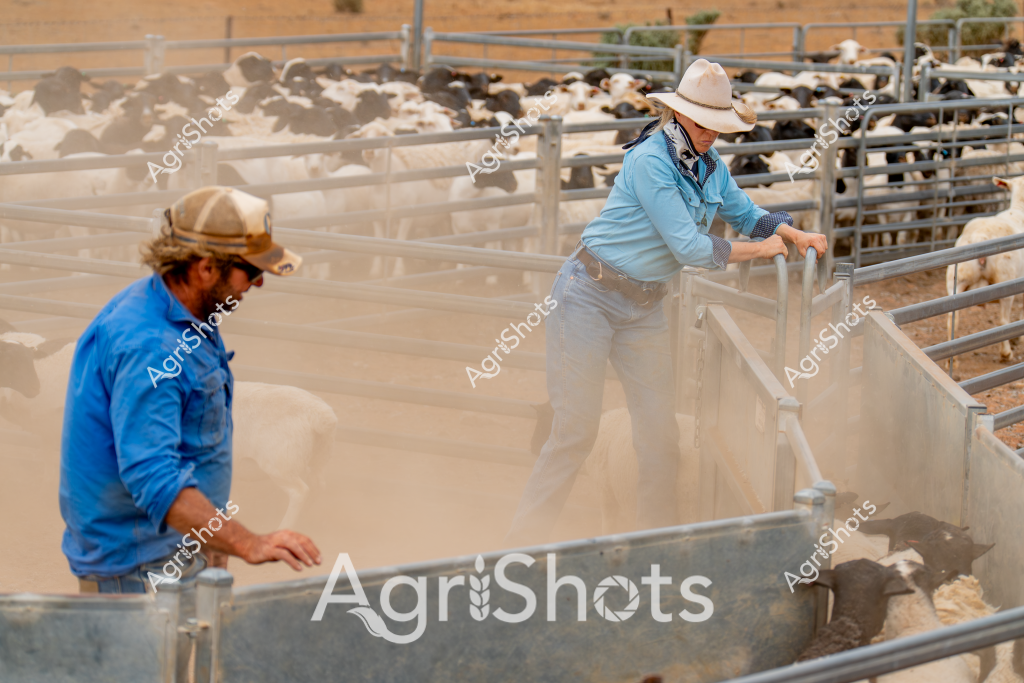
Two workers manage a dusty livestock holding yard in what appears to be an arid Australian agricultural setting. A woman in a blue long-sleeved shirt and light-colored wide-brimmed hat operates a metal gate in a livestock pen, while a man in a blue shirt and hat stands nearby, both working together to manage a large group of sheep or goats visible in the background behind metal livestock fencing. The environment is dry and sandy, with a pale brown landscape suggesting a drought-affected or inland region, potentially in Queensland or Western Australia. Dust rises around the workers, indicating active movement and handling of livestock in challenging environmental conditions. The workers' sturdy clothing - long-sleeved shirts, wide-brimmed hats, and practical work pants - reflects the standard attire for Australian rural agricultural workers managing livestock in harsh conditions.
 ▶ Video
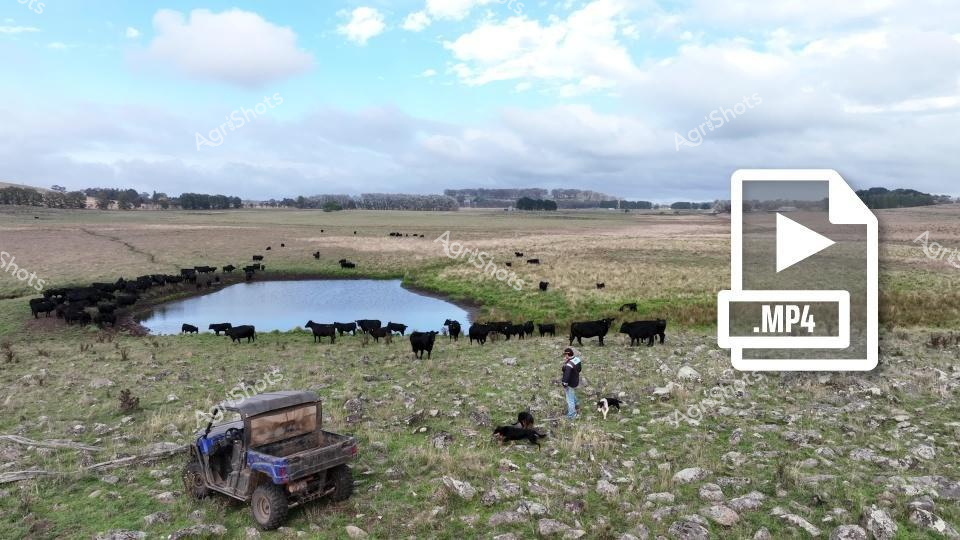
A compelling rural scene captures a typical Australian cattle management operation on a rocky, grassy paddock. A fleet of black Angus cattle cluster around a central water dam, their dark coats contrasting against the muted green and brown landscape. A male farmer stands alongside a utility vehicle, accompanied by a working dog, carefully monitoring the herd's watering activities. The rugged terrain suggests this is likely a broad-acre cattle station in a temperate agricultural region, with scattered rocky ground and distant tree lines marking the horizon. A blue utility vehicle, typical of rural Australian farm equipment, sits in the foreground, indicating the practical working nature of the scene. Wispy clouds drift across a soft blue and grey sky, creating a serene backdrop to this everyday agricultural landscape. The scene powerfully illustrates the essential task of livestock management, showing how farmers use strategic water points and mobility to care for cattle across expansive grazing lands. The careful positioning of the herd around the water dam demonstrates sophisticated pasture and animal husbandry techniques common in Australian beef production.
 ▶ Video
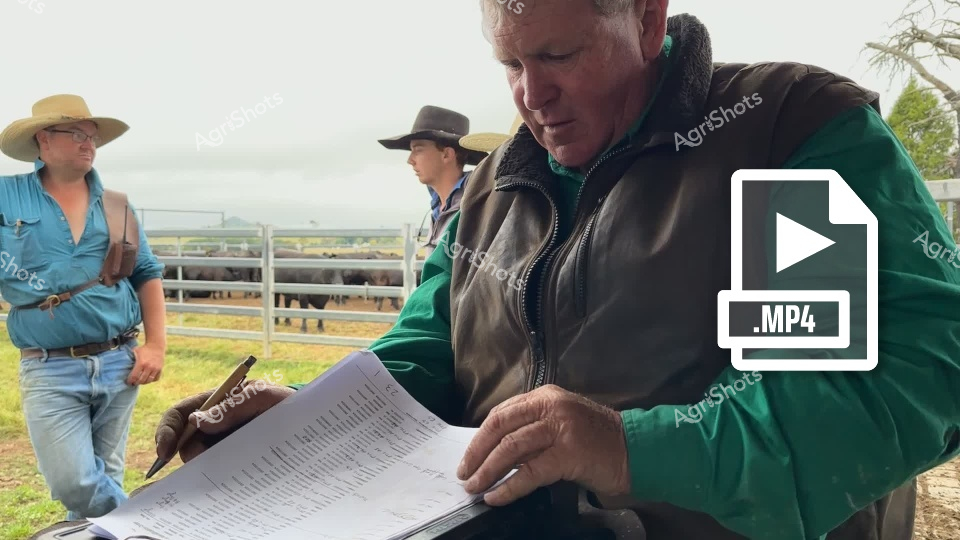
Three farmers stand in a rural livestock yard, reviewing documentation near a cattle pen. A male farmer in a green jacket and dark vest carefully examines paperwork, holding a pen and focusing intently on the document. To his left, another male farmer wearing a straw hat and blue shirt stands observing the scene, while a third farmer in a dark hat is positioned near the metal cattle yard fence. The background reveals a grassy paddock with cattle visible in the holding pens, suggesting this is a professional livestock management discussion. The scene captures a typical moment of agricultural planning, with experienced farmers collaborating and assessing livestock-related documentation in an open, rural setting.
 ▶ Video
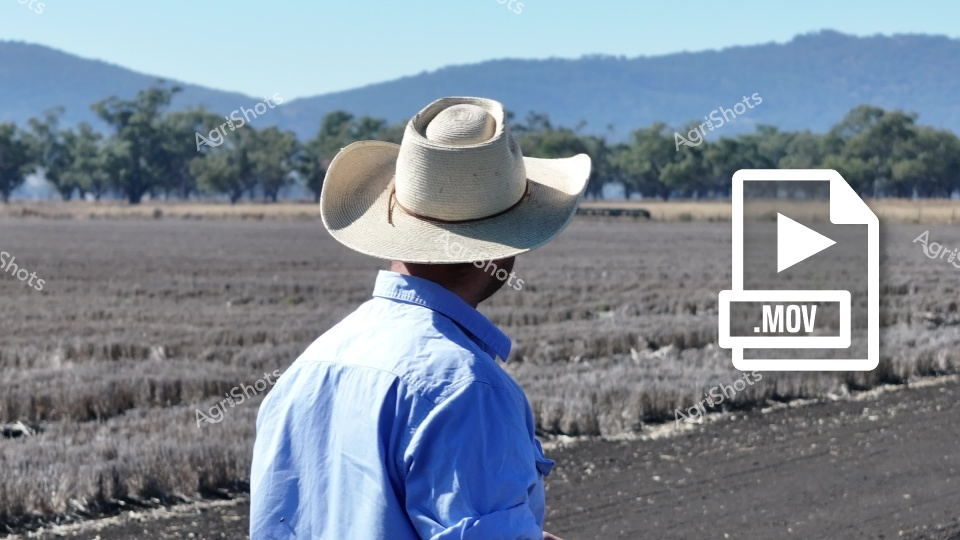
A male farmer stands in a rural landscape, wearing a wide-brimmed white hat and a blue long-sleeved shirt, surveying a dry, post-harvest paddock. The expansive field stretches out before him, revealing rows of stubble and recently harvested crop remnants, with distant blue mountains and eucalyptus trees forming a soft backdrop. The scene captures the quintessential Australian agricultural environment - a stark, dry landscape that speaks to the resilience of farming communities. The crisp blue sky and muted earth tones create a sense of quiet contemplation, with the farmer's posture suggesting careful observation of the land and its potential. Burnt-brown stubble covers the ground, indicating the end of a crop cycle and the ongoing challenges of managing agricultural lands in a variable climate.
 Image
Image
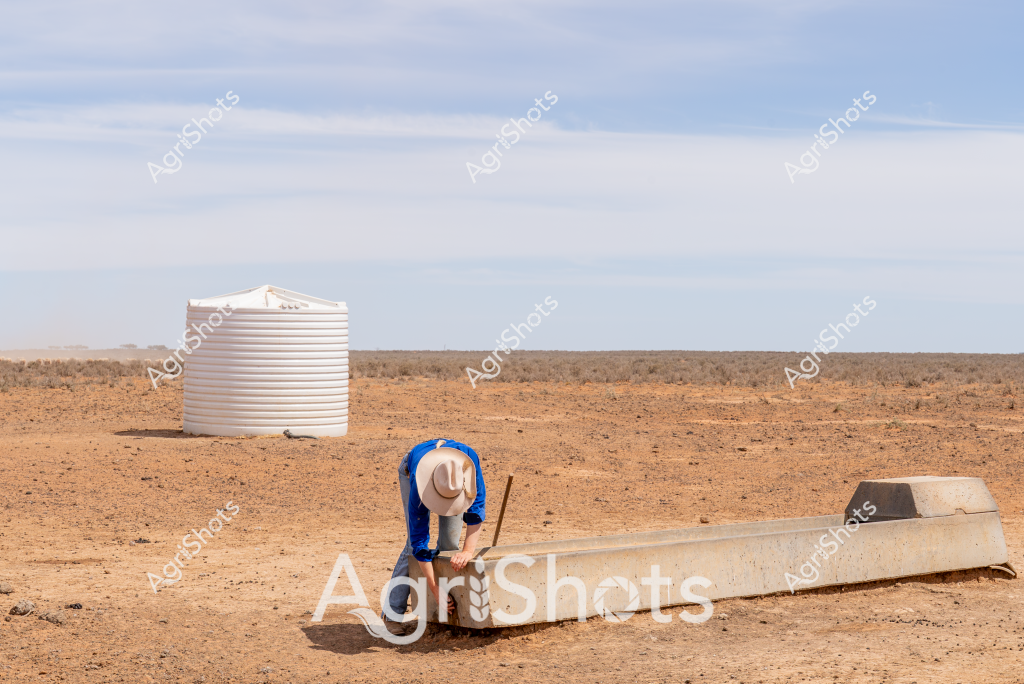
A man in a blue shirt and wide-brimmed hat bends over a concrete water trough in a sun-baked, arid landscape. The expansive paddock stretches to a distant horizon, with sparse, dry vegetation covering the reddish-brown earth. A large white water tank stands sentinel nearby, highlighting the critical importance of water infrastructure in this harsh, drought-affected environment. The scene captures the challenging conditions faced by farmers in rural Australia, with the lone figure working diligently to maintain essential water resources for livestock or agricultural needs. The pale blue sky and flat, open terrain emphasize the isolation and resilience required in such remote agricultural settings.
 Image
Image
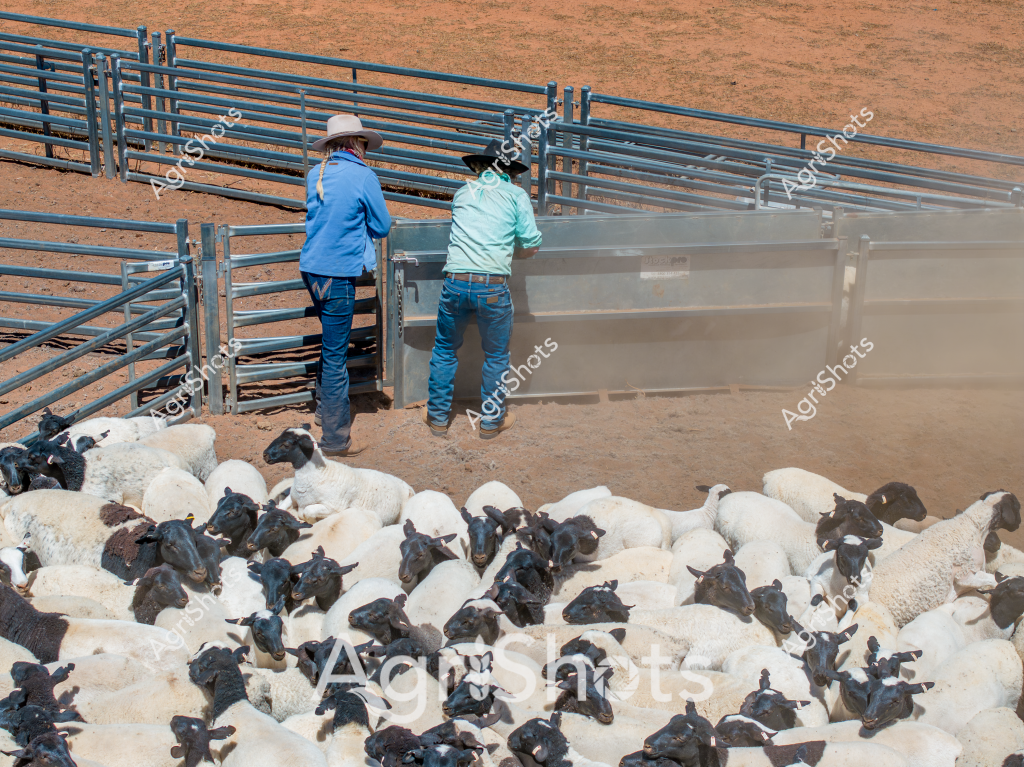
Two men in work attire operate a livestock handling system with a herd of black and white sheep clustered in the holding yards. The men, wearing blue shirts, jeans, and work hats, are positioned near a metal livestock chute and gate system on a dry, reddish-brown earth paddock. A dense group of sheep - predominantly white with black-faced individuals mixed throughout - are tightly packed in the lower portion of the image, waiting to be processed through the metal handling equipment. The metal gates and chute appear to be a standard design for efficiently moving and managing sheep, typical of Australian livestock management practices. The dusty environment and metal infrastructure suggest this is a working sheep station, likely in an arid or semi-arid region of Australia where sheep farming is a critical agricultural activity. The scene captures the methodical nature of livestock management, with the workers carefully positioning the animals through controlled infrastructure, demonstrating the precision and skill required in modern agricultural practices. The mix of white and black-faced sheep indicates a potentially diverse breeding program or mixed flock composition, which is common in Australian sheep production.
 Image
Image
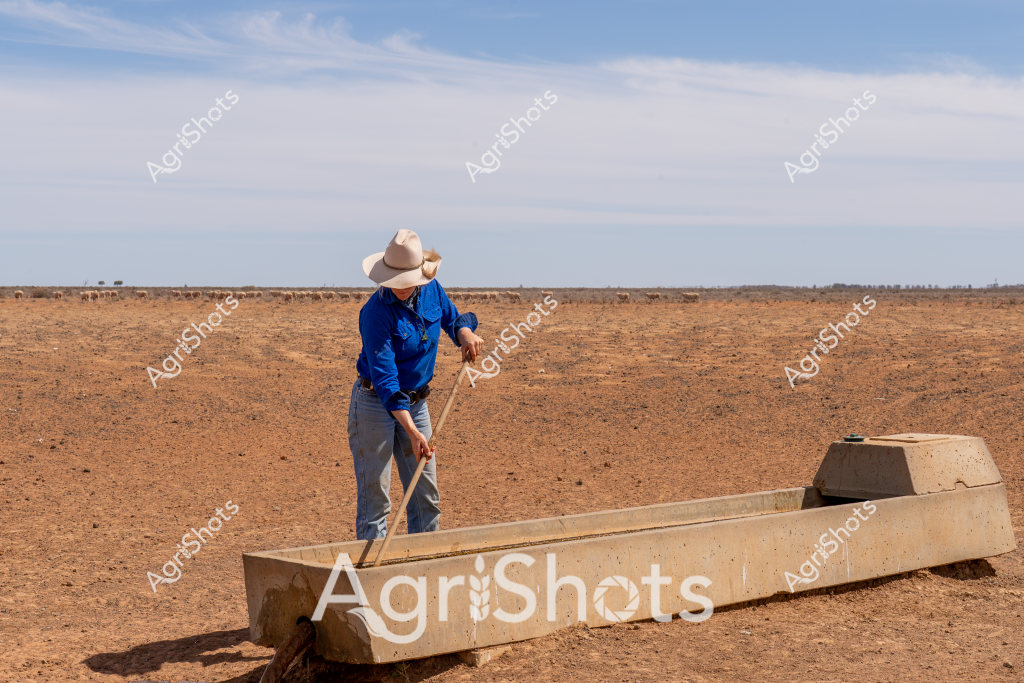
A man farmer stands beside a long concrete water trough in a dry, expansive pastoral landscape, wearing a light-colored wide-brimmed hat and a bright blue long-sleeved work shirt. The ground is a rich terracotta-colored earth, parched and cracked, stretching to a distant horizon where a small herd of cattle can be seen grazing. The concrete trough, a critical water infrastructure element, runs lengthwise across the foreground, with the farmer carefully using a long pole to manage or clean the water supply. The sky is a soft pale blue with wispy clouds, suggesting a hot, dry day typical of Australian agricultural regions during drought conditions. This image captures the resilience of farmers working in challenging environmental conditions, highlighting the importance of water management and infrastructure in sustaining livestock in arid landscapes.
 Image
Image
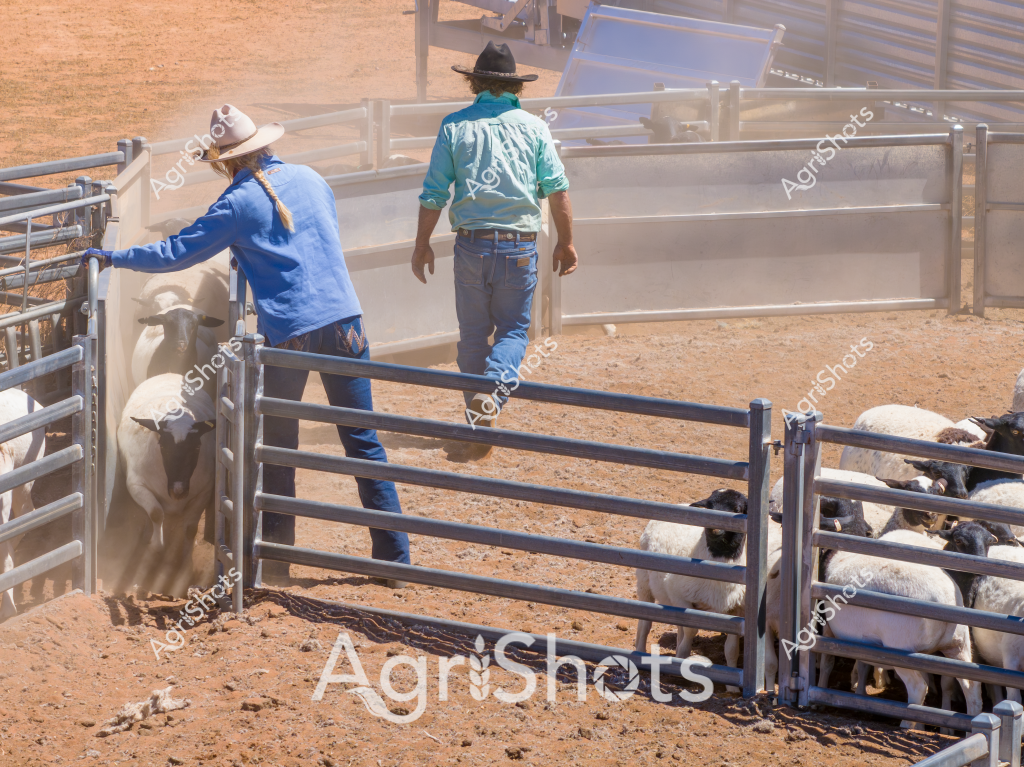
Two people work in a dusty livestock yard, managing sheep in metal holding pens. A woman in a blue jacket and a person in a turquoise shirt with a wide-brimmed hat are positioning themselves near the metal gates and fencing. The ground is a dry, packed earth color, typical of an arid Australian agricultural setting. Multiple white sheep are contained within the sturdy metal yard sections, suggesting this is a routine livestock management activity. The scene captures the practical, no-nonsense approach of Australian farm workers handling livestock in a challenging rural environment, with the metal infrastructure providing structured control and movement of the animals. The workers are positioned strategically around the pens, likely preparing to move, sort, or inspect the sheep. Their robust clothing - denim jeans, practical shirts, and protective hats - reflects the functional nature of agricultural work. The metallic gray of the livestock yards contrasts with the earthy tones of the ground and the white of the sheep, creating a typical Australian rural landscape scene focused on livestock management.
 Image
Image
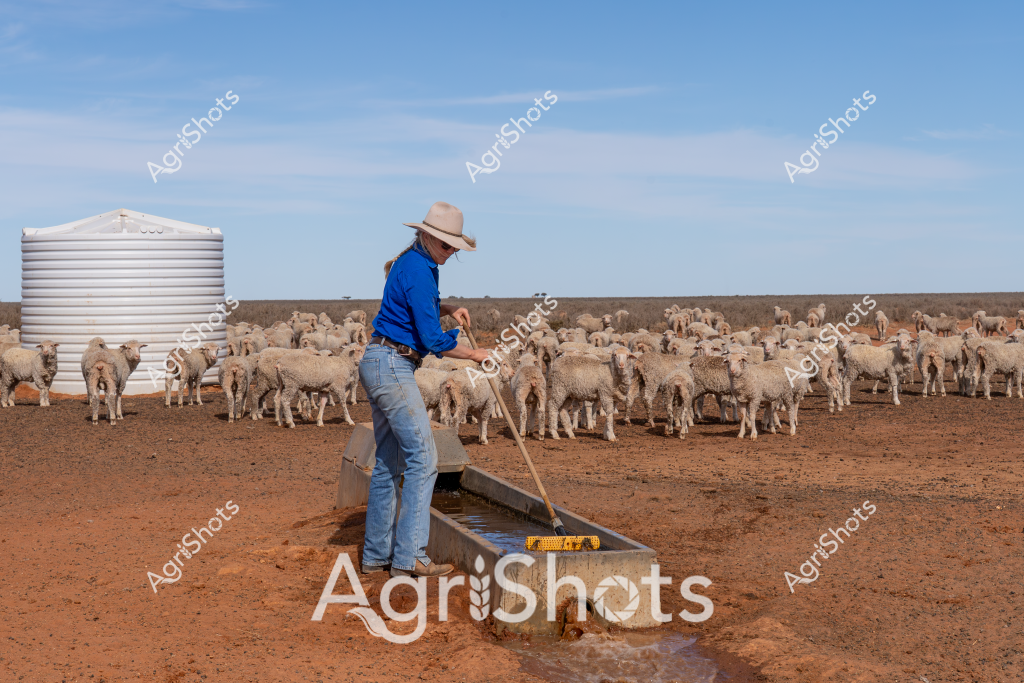
A woman in a blue long-sleeved shirt and wide-brimmed hat tends to a large flock of merino sheep in an arid Australian landscape. Standing beside a water trough near a large white water tank, she is surrounded by dozens of woolly sheep on a dry, reddish-brown earth paddock. The expansive background reveals a flat, sparse horizon typical of inland Australian pastoral regions, with a clear blue sky stretching overhead. Her stance suggests careful monitoring and management of the livestock, using the water trough to ensure the sheep remain hydrated in the harsh, dry environment. The white water tank and carefully positioned trough highlight the critical infrastructure required to support livestock in challenging agricultural conditions, demonstrating the resilience and strategic planning of Australian sheep farmers. The scene captures the essence of outback sheep farming - a solitary worker maintaining a flock in a demanding landscape, where water management and animal care are paramount to survival. The merino sheep, with their distinctive thick woolly coats, cluster around the water source, reflecting the symbiotic relationship between the farmer and the livestock in this unforgiving terrain.
 Image
Image
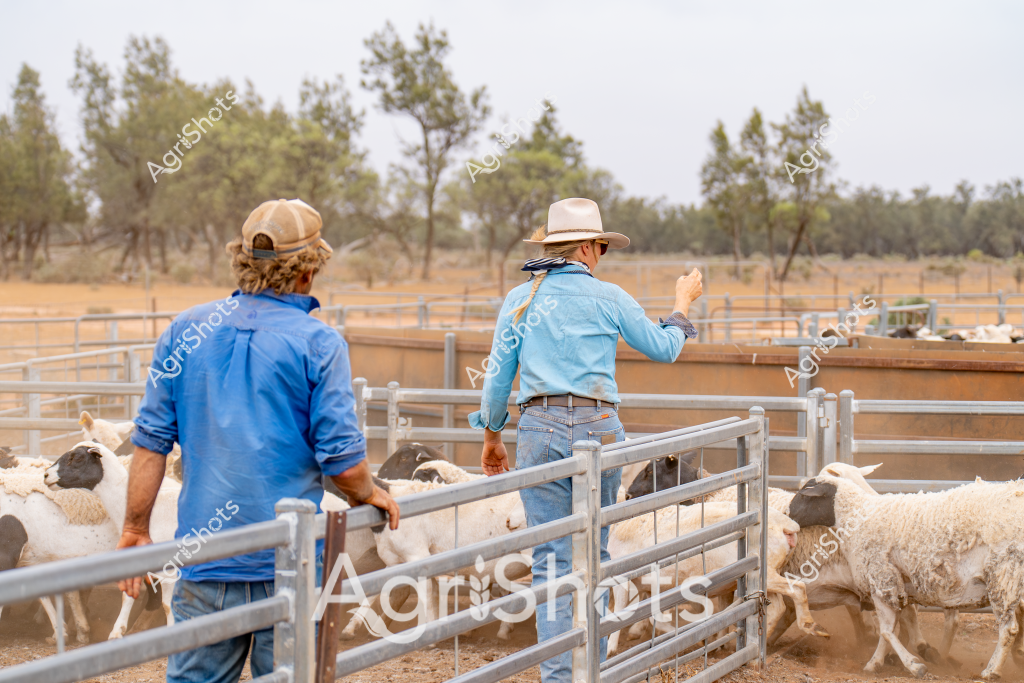
Two men farmers oversee a small flock of sheep in a dry, dusty livestock paddock surrounded by sparse eucalyptus trees. One man in a blue long-sleeved shirt and a tan cap stands near a metal livestock gate, while the other wearing a light blue shirt and wide-brimmed sun hat gestures toward the animals. Several white sheep with varying wool textures are visible within the metal stock yard fencing, highlighting the typical rural Australian agricultural setting. The landscape appears arid, with a muted color palette of golden-brown ground, gray-green trees, and washed-out sky, suggesting conditions typical of inland pastoral regions. The men's sturdy work clothing and attentive postures indicate an experienced approach to livestock management, carefully monitoring the small mob of sheep in their contained yard.
 Image
Image
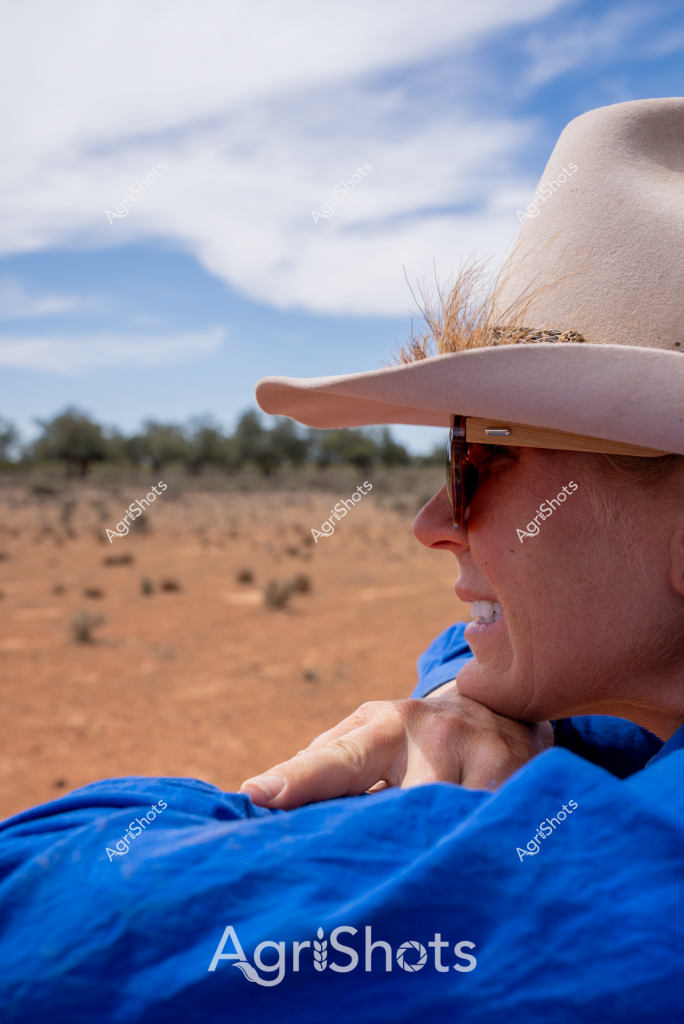
A woman stockman in a cream Akubra hat and sunglasses surveys a dry, rust-colored landscape from what appears to be an open vehicle or observation point. Wearing a bright blue shirt, she looks out across a sparse, arid paddock with scattered vegetation and distant tree lines under a soft blue sky with wispy clouds. Her profile reveals a confident, relaxed posture, suggesting extensive experience in rural Australian farming environments. The landscape hints at challenging drought conditions typical of inland Australian agricultural regions, with the woman's attentive gaze reflecting the resilience of farmers monitoring their land during difficult seasonal periods.