Results for “Livestock Movement”
 Image
Image
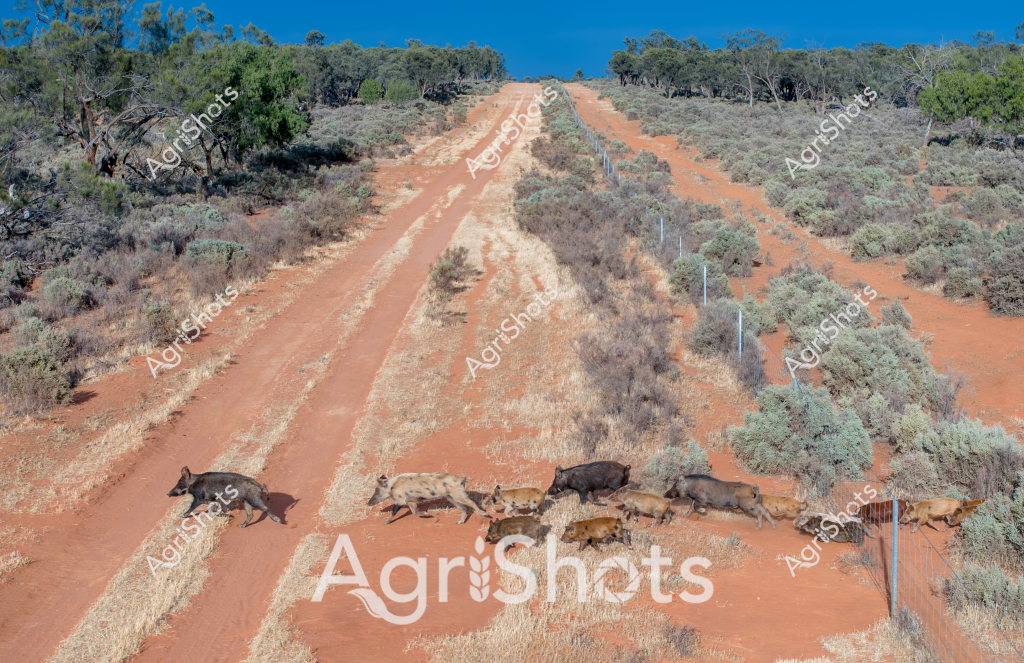
A group of feral pigs traverses a remote Australian dirt track, their dark and varied-colored bodies moving across the rusty-red earth. The landscape is classic Australian outback - sparse eucalyptus trees, silvery-green scrub vegetation, and a wide blue sky stretching across the horizon. These wild pigs, ranging in shades from dark brown to light tan, are crossing a well-worn rural access road that cuts through the arid landscape, likely moving between grazing areas. The surrounding terrain shows typical semi-arid vegetation with low shrubs and scattered trees, characteristic of inland Australian regions. The stark contrast between the reddish-orange soil and the muted green vegetation creates a visually striking scene that captures the rugged nature of Australia's interior landscapes. The image appears to be an aerial or drone perspective, providing a clear view of the pigs' movement across the landscape, highlighting the interaction between wildlife and the extensive rural infrastructure that connects remote areas. This scene represents the ongoing challenge of feral animal management in Australian agricultural regions, where introduced species like wild pigs can significantly impact native ecosystems and farming operations.
 Image
Image
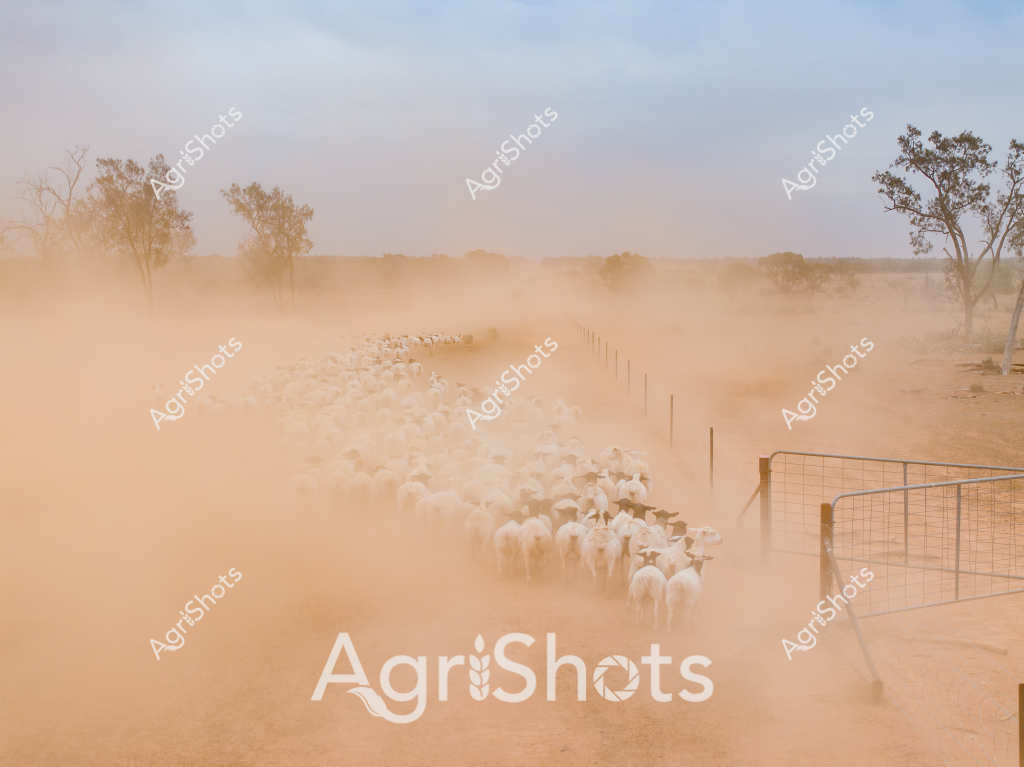
A dense flock of sheep moves through a dusty, arid landscape, creating a dramatic cloud of ochre-colored dust as they follow a narrow fenced pathway. Sparse eucalyptus trees line the horizon, their silhouettes barely visible through the thick dust raised by the moving livestock. The scene captures the challenging conditions of Australian outback farming, where livestock must be carefully managed and moved across vast, dry stations. The fence line guides the sheep precisely, demonstrating the careful stock management techniques required in harsh rural environments. Wooden fence posts and wire mesh create a defined route through the parched landscape, with the sheep moving in a tight, uniform line that stretches into the hazy distance. The early morning or late afternoon light softens the harsh landscape, casting a warm, golden tone across the dry earth and creating a powerful visual of agricultural life in remote Australia.
 Image
Image
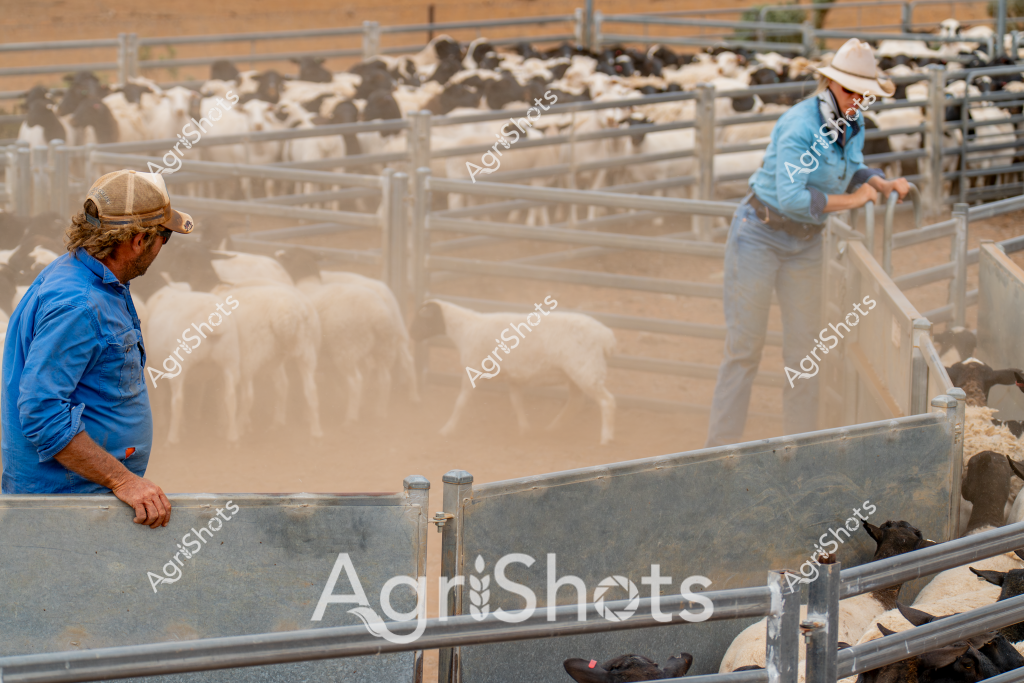
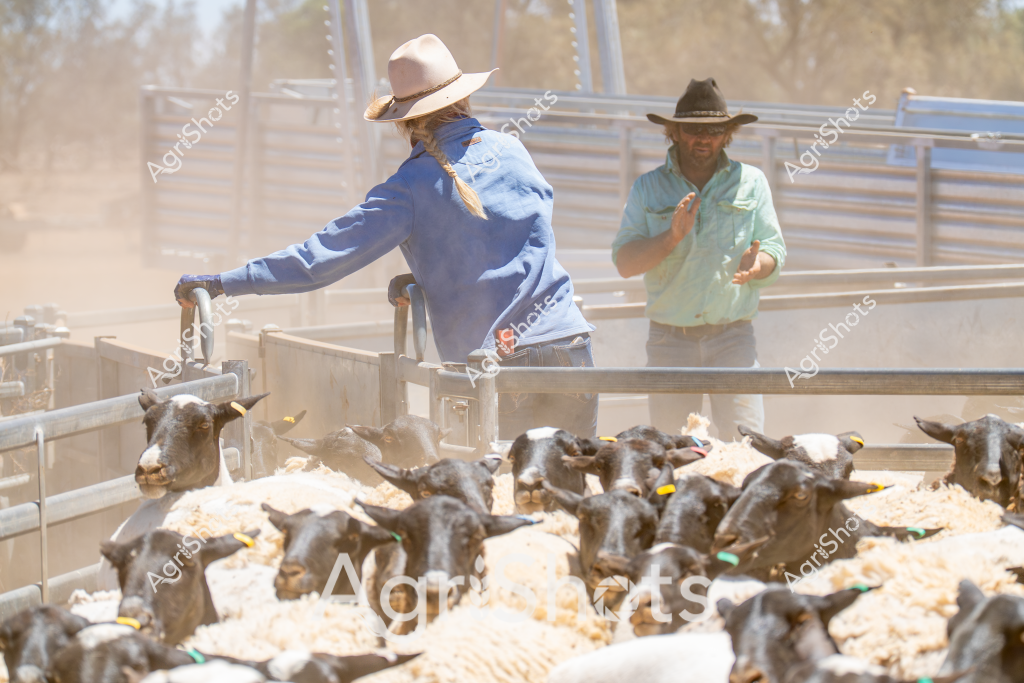
Two men working in a dusty livestock yard manage a flock of sheep, carefully guiding them through metal cattle yards under bright, arid conditions. A man in a blue long-sleeved shirt and tan cap stands near a metal gate, observing the livestock movement, while another man in a light blue shirt and white wide-brimmed hat actively manages the sheep behind metal fencing. The sheep - a mix of white and dark-colored animals - are clustered tightly in the holding pen, raising a fine cloud of dust around their woolly bodies. The landscape appears dry and sun-drenched, typical of Australian rural livestock management settings, with metal yard infrastructure providing structured containment for the animals. The workers' positioning and attentive postures suggest an experienced approach to stock handling, demonstrating the precise and methodical nature of sheep farming in challenging agricultural environments.
 Image
Image
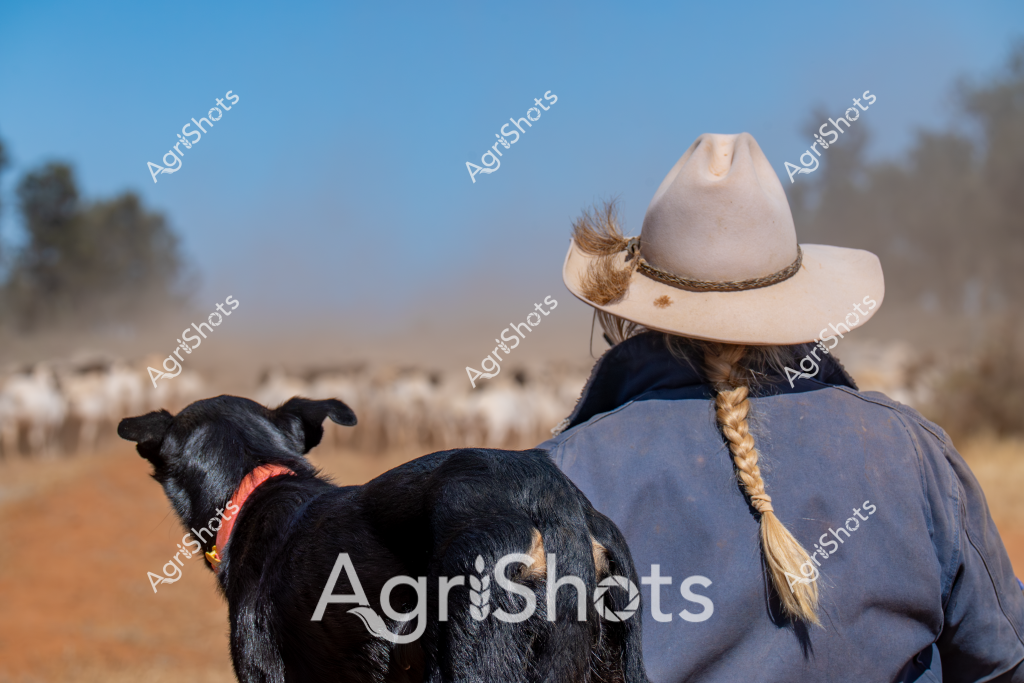
A woman stockman stands in a dusty rural landscape, wearing a light-colored wide-brimmed hat and blue jacket, with a black working dog beside her. In the background, a large herd of white sheep spreads across the dry paddock, creating a soft, misty horizon line. The woman's braided hair hangs down her back, and she and her dog appear to be quietly overseeing the livestock movement. The scene captures the quintessential Australian pastoral landscape - a sun-drenched field with sparse trees in the distance, highlighting the expansive nature of rural livestock management. The black dog, wearing a red collar, stands attentively beside the stockwoman, suggesting a close working relationship typical of Australian farm animal handling.
 Image
Image
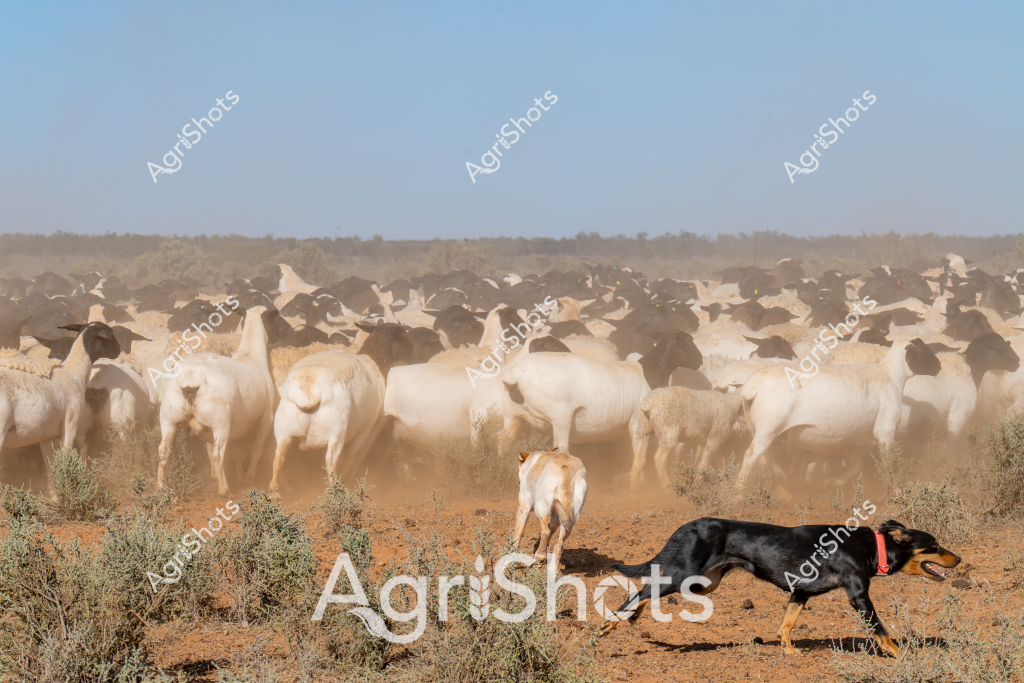
A large herd of light-colored sheep kicks up dust in a dry, arid landscape, with two working dogs herding the mob across a sparse, reddish-brown paddock. A black and tan dog runs alongside the herd, expertly guiding the sheep's movement with precision and skill. A lighter-colored dog stands slightly apart, also part of the mustering effort. The background reveals a line of trees and scrubby vegetation, creating a typical Australian outback pastoral scene. Dusty conditions and the tight grouping of the sheep suggest an experienced team of working dogs and likely a stockman managing this livestock movement across a challenging rural terrain. The image captures the essence of Australian sheep farming, highlighting the critical role of working dogs in managing large herds across expansive, dry landscapes.
 Image
Image
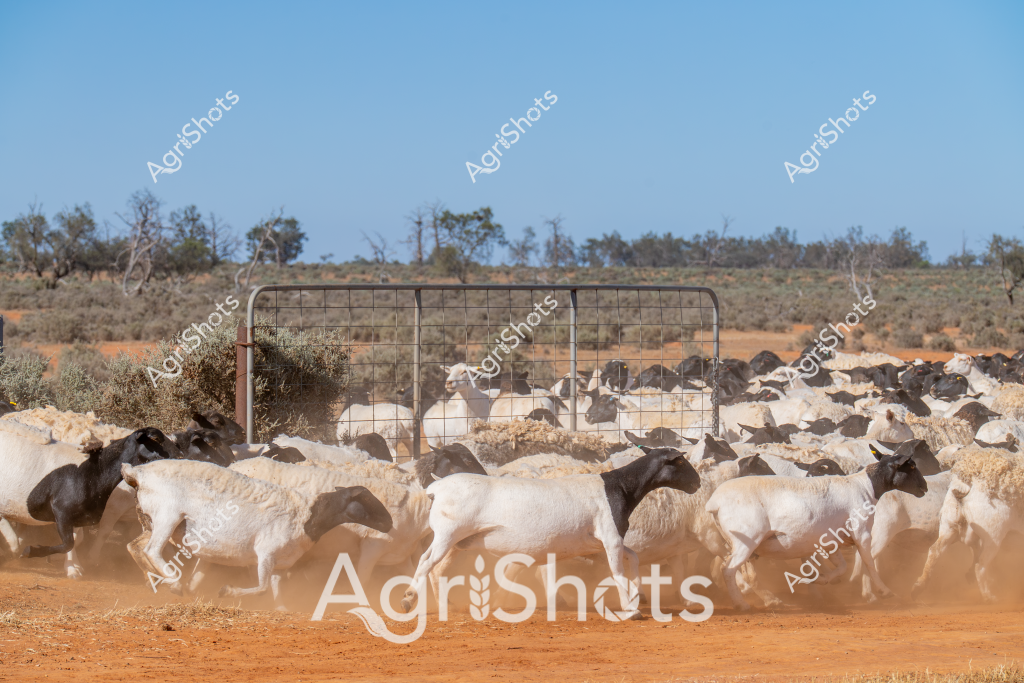
A large flock of white and black sheep crowds around a wire gate in a dusty, arid landscape typical of Australian outback stations. The mixed mob of sheep - likely a combination of Merino and potentially Black Dorper breeds - are kicking up red soil and fine dust as they move, creating a dynamic scene of rural agricultural activity. Sparse eucalyptus trees and low scrubland stretch across the background, with a clear blue sky overhead indicating a dry, hot day. The wire gate and surrounding fence suggest controlled livestock movement, a critical management technique in extensive grazing operations across remote Australian pastoral regions. The sheep's compact clustering and the surrounding landscape highlight the challenging environmental conditions of inland Australia, where careful stock management is essential for livestock survival and agricultural productivity.
 Image
Image
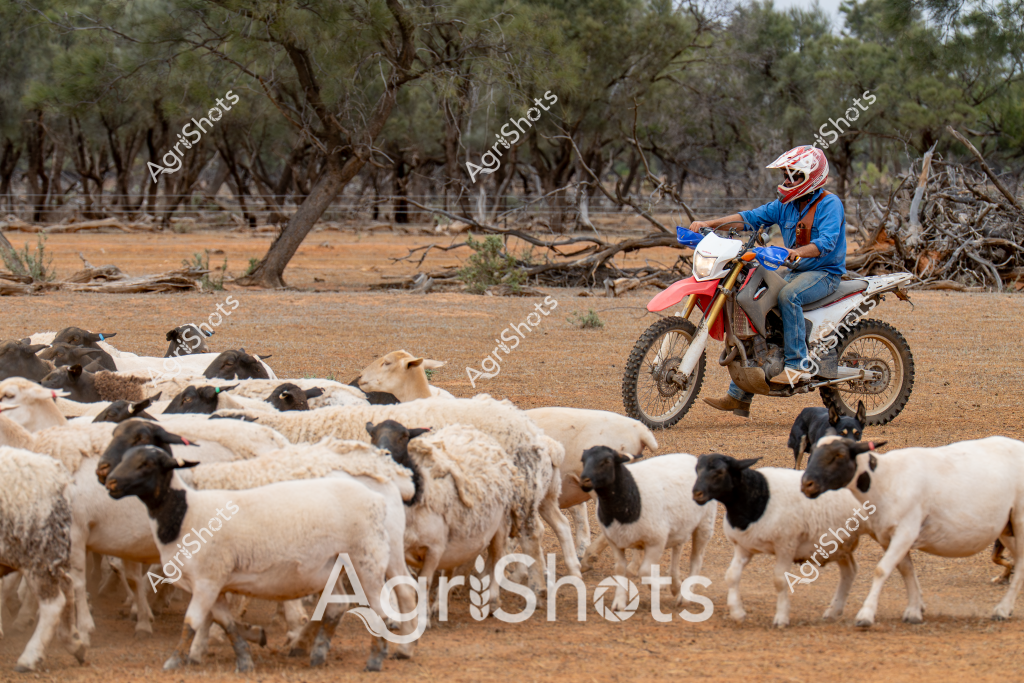
A man on a dirt bike carefully herds a flock of white and black-faced sheep across a dry, sparse landscape with scattered eucalyptus trees. Wearing a blue jacket, red and white helmet, and riding a red trail motorcycle, the rider navigates through the sheep, using the motorcycle as a herding tool in this rugged Australian rural setting. The sheep - which appear to be a breed like Dorper or Suffolk cross - are clustered together, creating a tight mob as they move across the dusty, tree-lined paddock. A small black dog can be seen near the motorcycle, potentially assisting with the livestock movement. The scene captures the adaptability of modern Australian farming, where motorcycles have become an efficient alternative to horses for mustering livestock across challenging terrain. The dry ground, sparse vegetation, and scattered fallen timber suggest this is likely in an inland region experiencing dry seasonal conditions.
 Image
Image
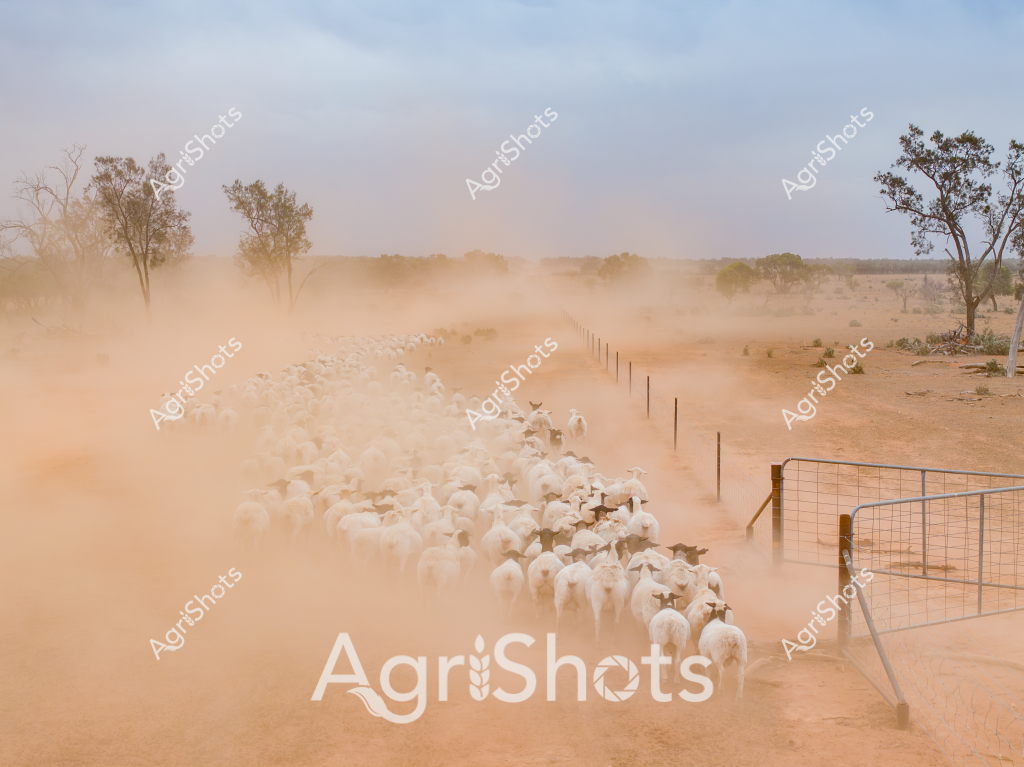
A large mob of white sheep moves through a dusty, arid landscape, kicking up a massive cloud of ochre-colored dust as they travel along a fenced paddock. Sparse eucalyptus trees frame the scene, their silhouettes barely visible through the thick dust haze. The sheep are tightly packed, moving in a long, disciplined line between fence posts that stretch toward the distant horizon. The dry, sunbaked ground and billowing dust clouds capture the harsh conditions of an Australian outback station, highlighting the resilience of both the livestock and the farmers who manage them. The landscape speaks to the challenging environment of inland Australia, where pastoral operations must navigate extreme drought and unforgiving terrain. The image powerfully illustrates the movement of livestock through a stark, unforgiving rural landscape, with the dust creating an almost ethereal atmosphere that softens the rugged details of the surrounding countryside.
 Image
Image
Two people manage a group of goats in a dusty livestock yard, with metal cattle panels creating a confined processing area. A woman wearing a blue jacket and wide-brimmed hat stands at one end of the pen, operating gate controls, while a man in a light green shirt stands nearby, appearing to assist with livestock movement. Multiple dark-colored goats are densely packed in the pen, their heads and bodies visible among wood shavings or straw bedding. Dust hangs in the air, suggesting active movement and handling of the animals, indicating this is likely a routine livestock management activity on an Australian farm or station. The metal yards provide a structured, professional environment for animal handling, with yellow ear tags visible on some of the goats, suggesting they are being sorted, counted, or prepared for veterinary treatment or sale.
 Image
Image
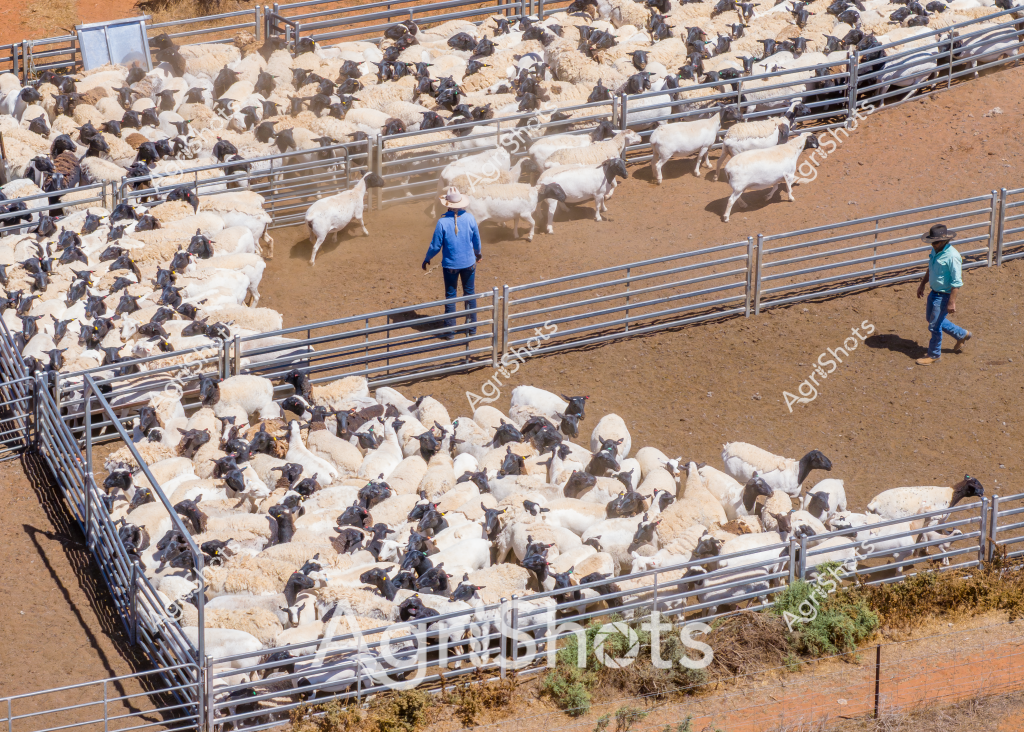
A large mob of white and dark-colored sheep are packed tightly into a series of metal livestock yards in a dry, arid landscape. Two men are working the yards - one wearing a blue shirt and the other in a teal-colored work shirt - carefully managing the sheep's movement between different pen sections. The ground is a dusty reddish-brown, typical of an Australian inland station or pastoral property, with sparse vegetation visible around the yard's perimeter. Metal stock fencing creates a systematic grid of pens, allowing for controlled livestock movement and management. The sheep appear to be a mixed flock, with predominantly white bodies and dark heads, likely a crossbreed or Merino-type breed common in Australian agriculture. The aerial perspective reveals the scale of the livestock operation, showcasing the precision and infrastructure required for managing large sheep herds in challenging rural environments.
 Image
Image
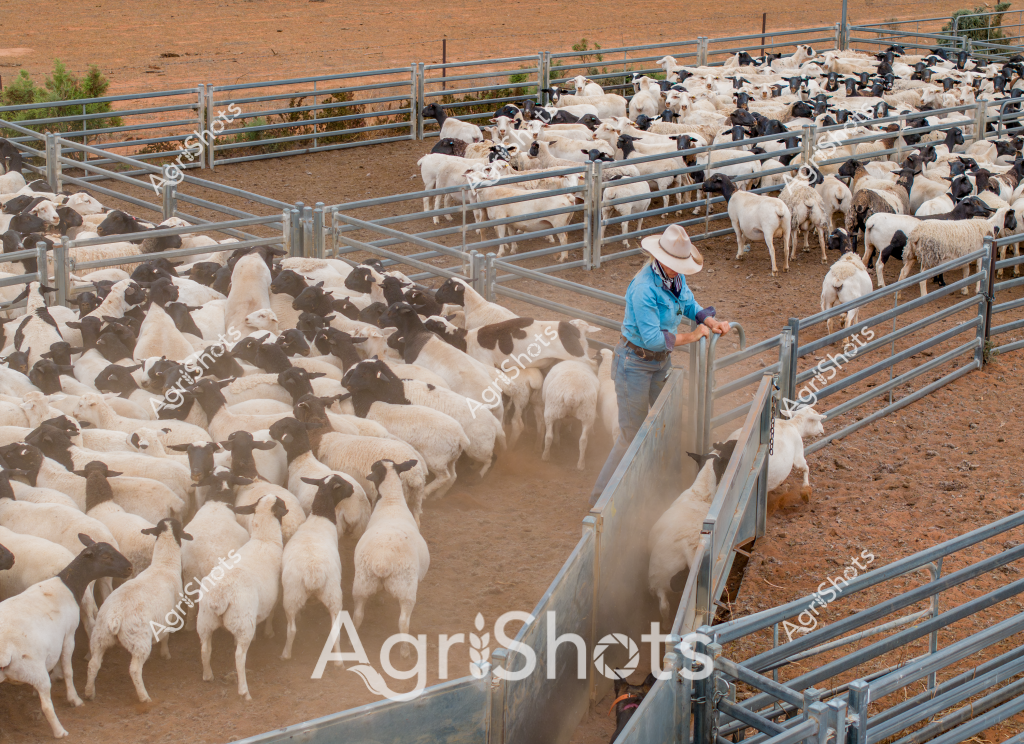
A man stockman wearing a wide-brimmed hat and blue work shirt manages a large mob of white and black-faced sheep in a metal livestock yard. The sheep - which appear to be a mix of Dorper and Merino breeds - are densely packed into interconnected metal cattle yards with a dusty, reddish-brown ground typical of Australian agricultural landscapes. The stockman carefully works the gate and sorting pens, guiding the sheep through the precise metal infrastructure designed for efficient livestock movement and management. Dozens of sheep with distinctive white bodies and black faces crowd together, creating a textured landscape of woolly forms and movement. The scene captures the precision and skill of Australian livestock management, with the man's controlled movements contrasting against the fluid, shifting mass of sheep. The environment suggests an arid or semi-arid region, with the bare earth and metal yards indicating a professional, well-maintained agricultural operation.
 Image
Image
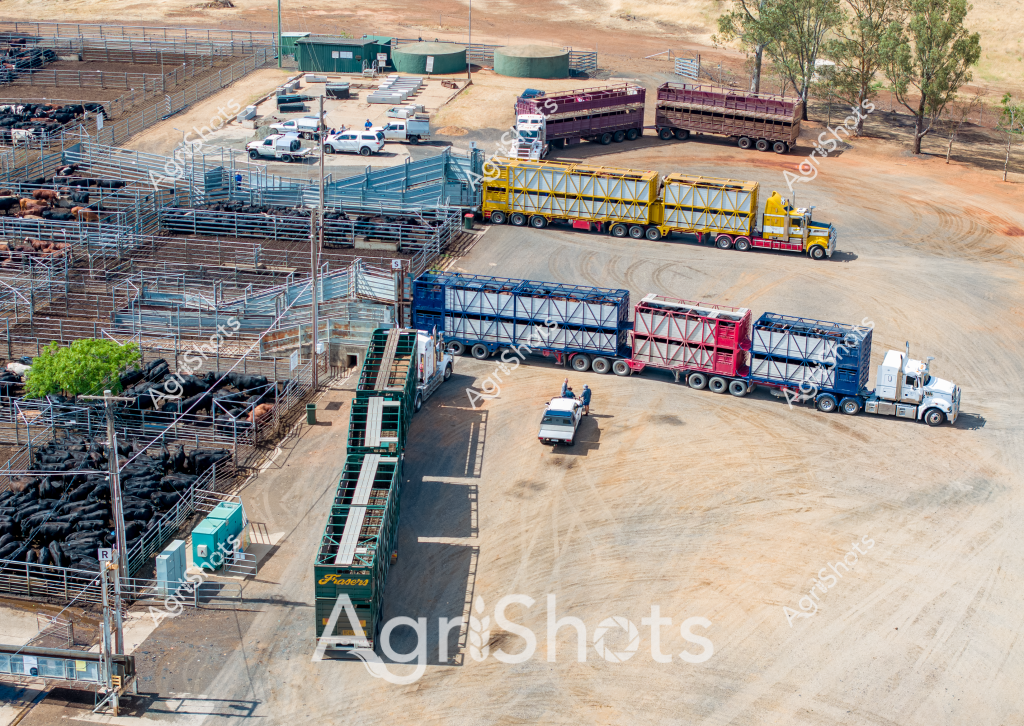
A bustling livestock transport hub captures the essence of Australia's robust cattle industry. Multiple large trucks with extended trailers are positioned within a dirt yard, surrounded by extensive metal cattle yards filled with black cattle. The scene is set in an arid landscape, with sparse trees and a green-roofed processing shed in the background, suggesting a remote cattle station in Western Australia or the Northern Territory. Yellow and white road trains with multiple linked trailers dominate the foreground, their robust design specifically engineered for long-distance livestock transportation across challenging rural terrain. The trucks are strategically parked near loading ramps, ready to transport cattle between properties or to processing facilities. Smaller utility vehicles are scattered around the yard, indicating active staff managing the livestock movement. The metal cattle yards are densely populated with black beef cattle, likely Angus or Wagyu breeds, standing in organized sections separated by robust galvanized steel fencing. The dusty, ochre-colored ground and sparse vegetation highlight the rugged environmental conditions typical of Australian cattle country. Sophisticated livestock handling infrastructure demonstrates the professional and efficient approach to cattle management in Australia's agricultural sector. This aerial view reveals the complex logistics and infrastructure required to support large-scale cattle transportation, showcasing the critical role of road transport in Australia's beef industry supply chain.
 Image
Image
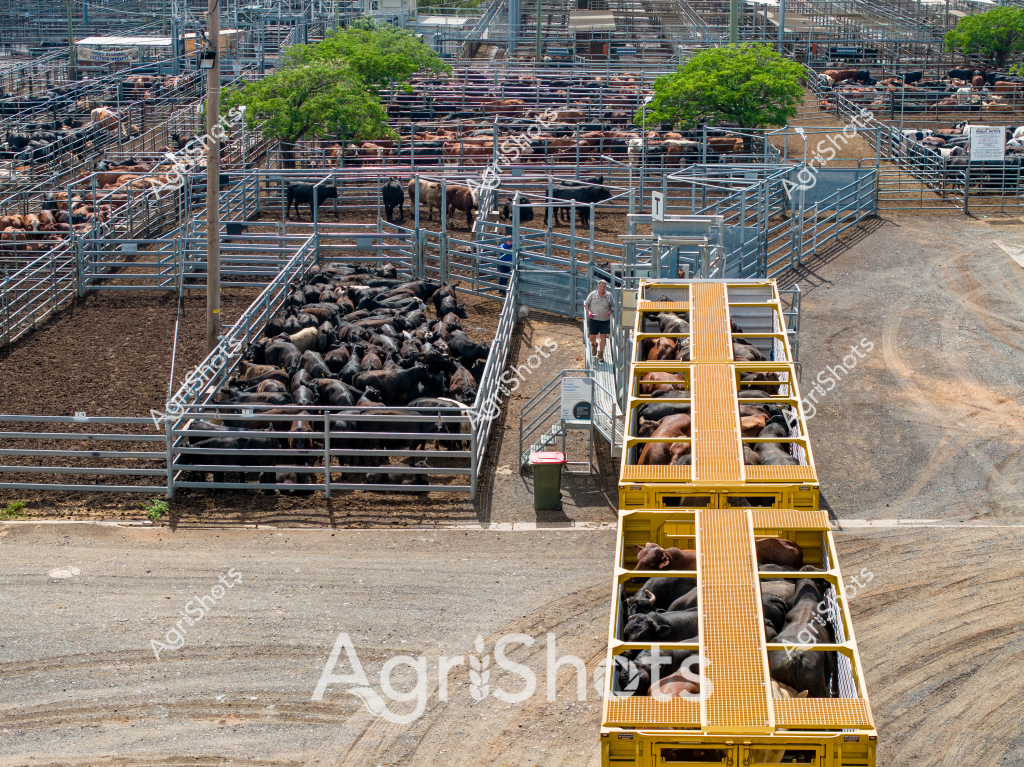
A bustling livestock processing facility showcases multiple pens of black cattle in a complex metal yard system. A series of bright yellow multi-level loading decks stand ready for animal transportation, with cattle carefully sorted and positioned on different compartment levels. A person wearing light-colored clothing can be seen standing on one of the elevated walkways, monitoring the livestock movement and sorting process. The facility appears meticulously organized, with multiple interconnected metal pen sections allowing efficient animal management and movement. Green trees punctuate the background, providing some natural contrast to the industrial agricultural infrastructure. The ground is dusty and compact, typical of a high-traffic livestock handling area, with precise metal fencing defining each processing zone. The scene represents a professional cattle handling operation, demonstrating the sophisticated infrastructure required for modern livestock transportation and management. The yellow transport decks and intricate metal pen system highlight the technical precision involved in moving and sorting livestock, showcasing Australia's advanced agricultural logistics and animal handling practices.
 Image
Image
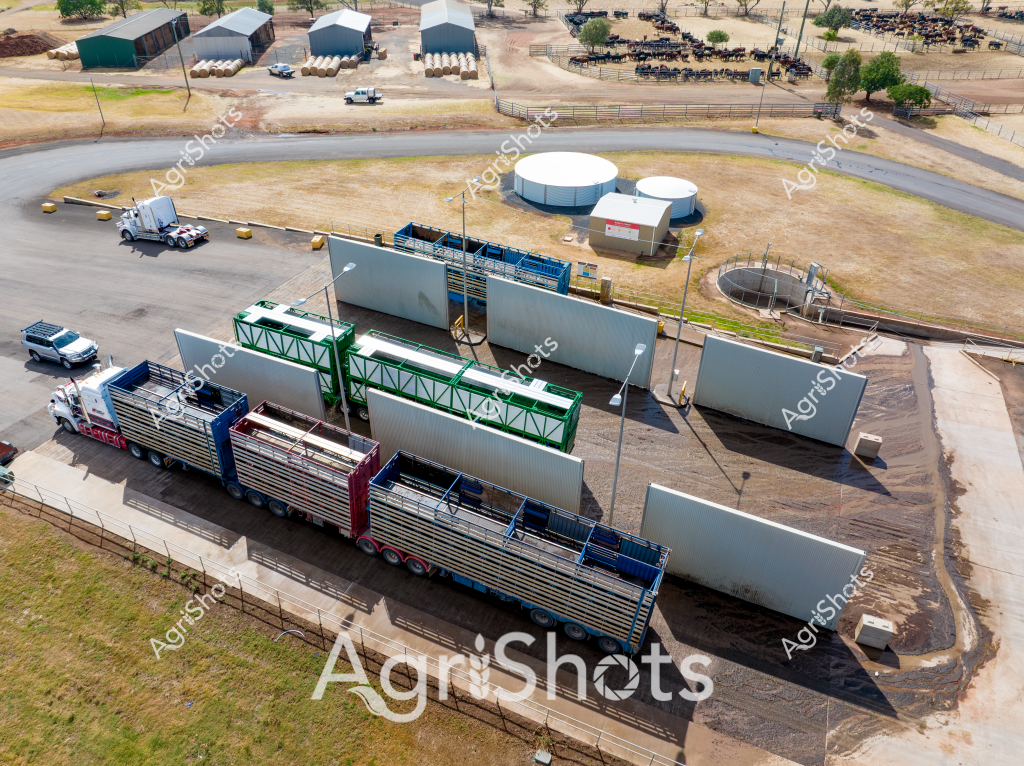
An aerial view of a livestock processing facility reveals a complex agricultural infrastructure designed for efficient cattle management. Large white modular walls and green-framed structures create a systematic loading and unloading area for semi-trailer trucks. White cylindrical water tanks and circular holding pens surround the central processing zone, indicating a modern cattle handling facility likely located in a dry, arid region with sparse vegetation and dusty ground. A semi-trailer truck is positioned within the loading zone, suggesting preparation for transporting livestock. The surrounding landscape features several industrial-style sheds with metal roofing in green and grey tones, and a series of fenced paddocks where numerous dark-colored cattle can be seen clustered together. The infrastructure demonstrates precision engineering typical of contemporary Australian agricultural operations, with carefully designed pathways, sturdy infrastructure, and strategic layout to maximize efficiency in livestock movement and processing. Gravel and concrete surfaces provide durable, functional spaces for heavy vehicle and animal traffic, reflecting the demanding environmental conditions of rural livestock production zones. The aerial perspective offers a comprehensive view of the facility's layout, highlighting the sophisticated systems developed to manage large-scale cattle operations in challenging agricultural environments.
 Image
Image
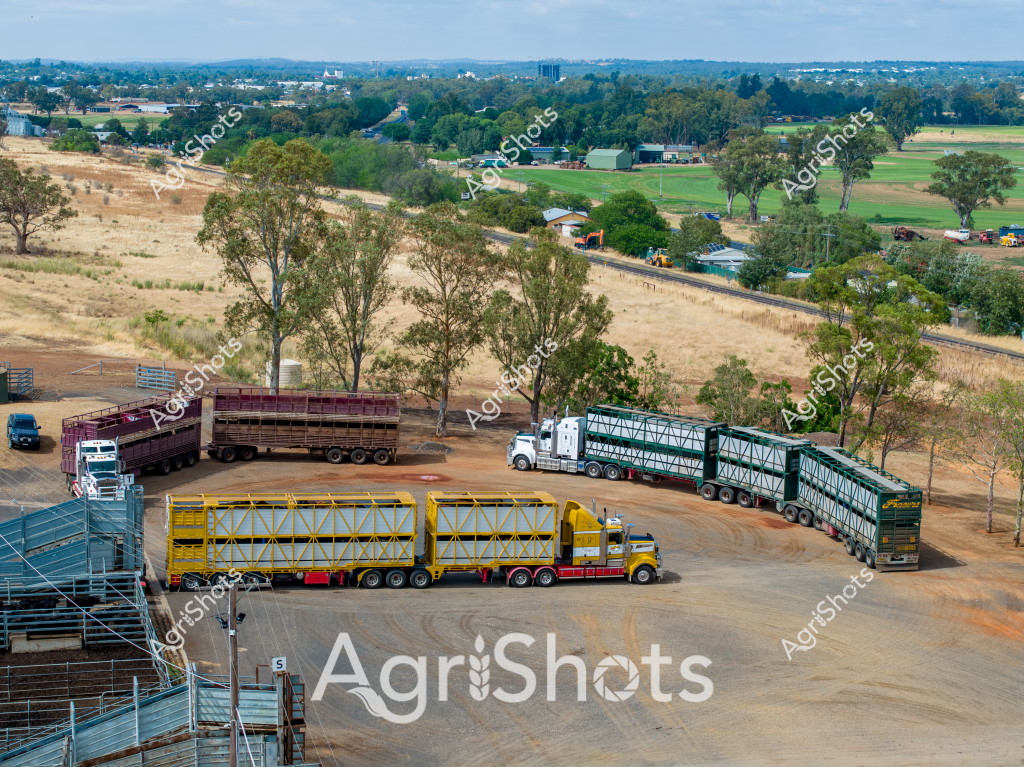
A detailed aerial view of a livestock transport depot in rural Australia, showcasing multiple large semi-trailers designed for cattle and livestock movement. The trucks feature distinctive yellow, white, and green trailers with multi-tiered livestock crates, parked on a dusty dirt yard surrounded by eucalyptus trees and expansive paddocks. The landscape reveals a patchwork of dry golden grasslands and green agricultural fields stretching to the distant horizon, with trees and rural infrastructure dotting the background. These specialized livestock transport vehicles, likely used for moving cattle between stations or to market, demonstrate the sophisticated logistics of Australia's extensive beef and livestock industry. The scene captures the scale and complexity of agricultural transportation in a typical rural Australian setting, with the multi-trailer trucks highlighting the substantial distances and specialized equipment required to move livestock across vast agricultural regions.
 Image
Image
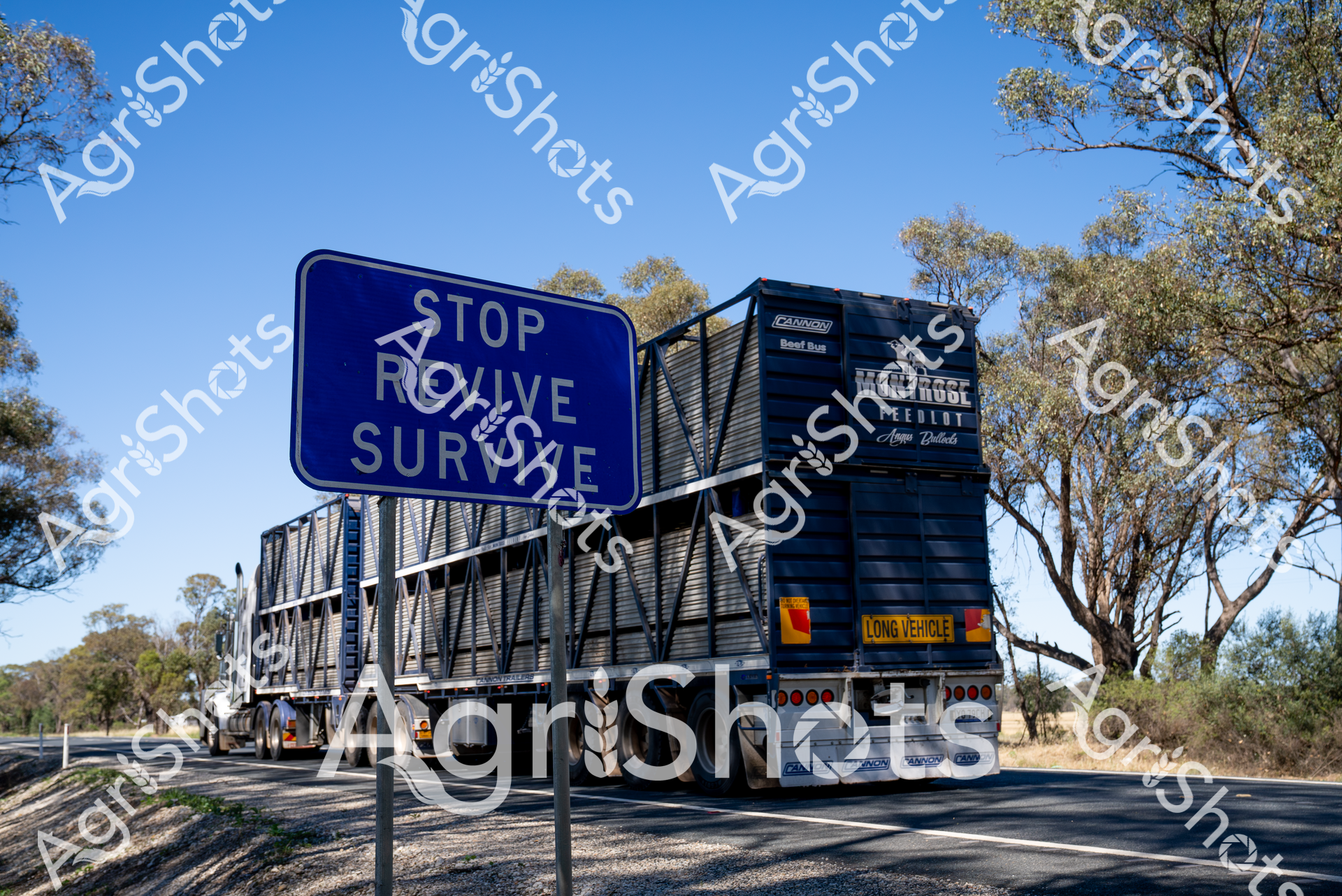
A powerful snapshot of rural Australian road safety unfolds along a sun-drenched highway in New South Wales. A deep blue "Stop Revive Survive" sign stands sentinel beside a massive Cannon livestock trailer, its dark navy and silver metallic surfaces gleaming under the crisp blue sky. Sprawling eucalyptus trees frame the roadside, their silvery-green foliage a classic Australian backdrop to this critical transport infrastructure moment. The long vehicle, marked with a bright yellow warning, carries the promise of livestock movement - a vital pulse of agricultural commerce threading through the expansive landscape. Meticulously maintained road conditions and the strategically placed driver fatigue warning sign speak to the sophisticated safety culture of Australian rural transport networks. This image captures the essence of long-haul freight transportation, where driver wellness and animal welfare intersect on the open roads connecting Australia's agricultural heartlands.
 Image
Image
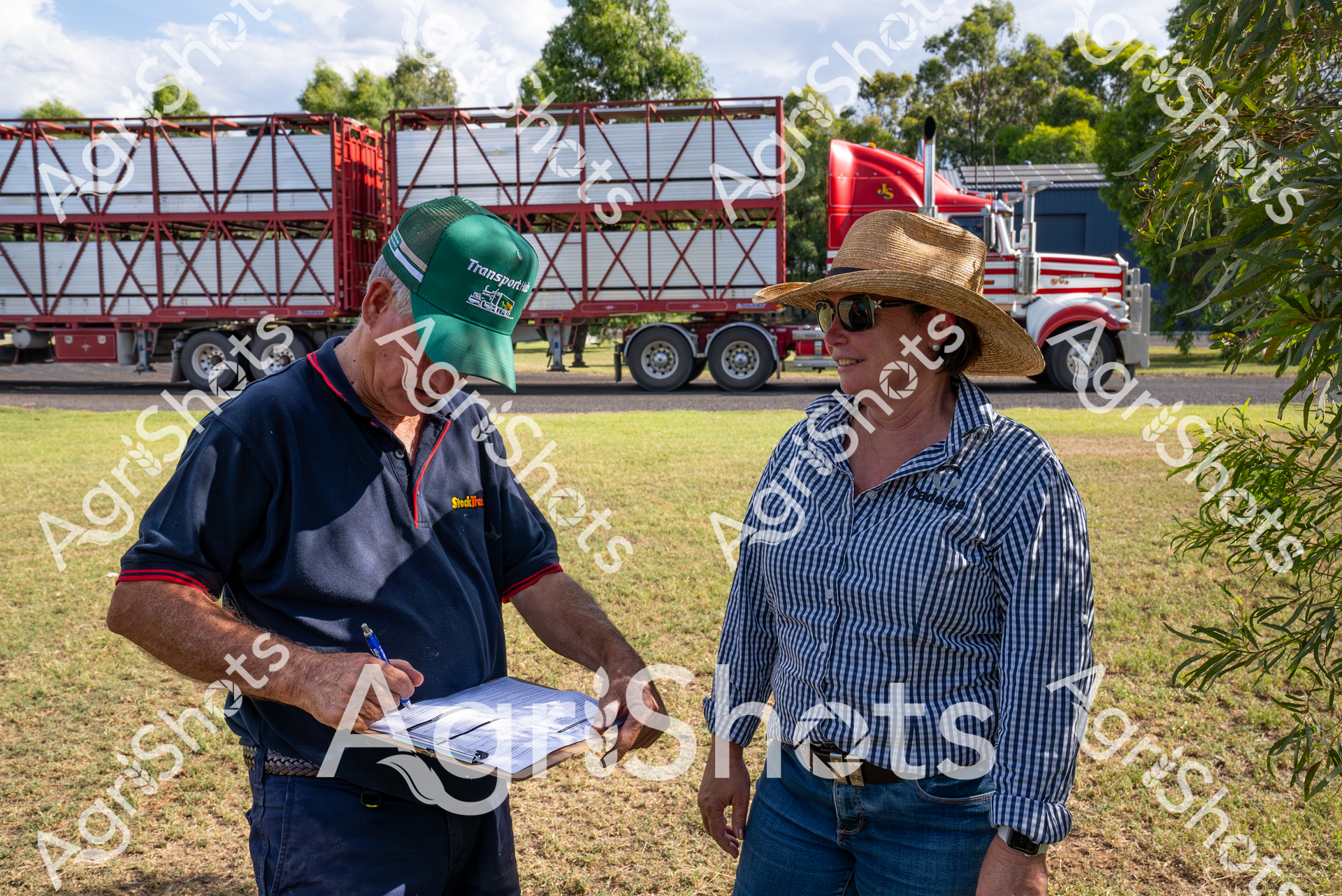
A seasoned transport operator in a green cap reviews paperwork alongside a woman wearing a wide-brimmed sun hat, standing against the backdrop of a gleaming red livestock truck with an expansive multi-tiered metal stock crate. The rural grassland setting captures the essence of Australian agricultural logistics, with native trees softening the edges of the scene under a bright, cloud-scattered summer sky. The man's navy polo and the woman's blue gingham shirt reflect the professional yet personable nature of rural transport and livestock management, while the detailed truck represents the critical infrastructure of agricultural supply chains. Their engaged conversation suggests the meticulous documentation and communication required in stock transport - likely discussing a vendor declaration or transport details crucial to livestock movement. The red truck, with its complex steel framework, stands as a powerful symbol of mobility and connectivity in the agricultural sector, representing the intricate network that moves Australia's livestock across vast distances. This image encapsulates the collaborative spirit, technical precision, and rugged resilience of contemporary agricultural transport professionals.
 Image
Image
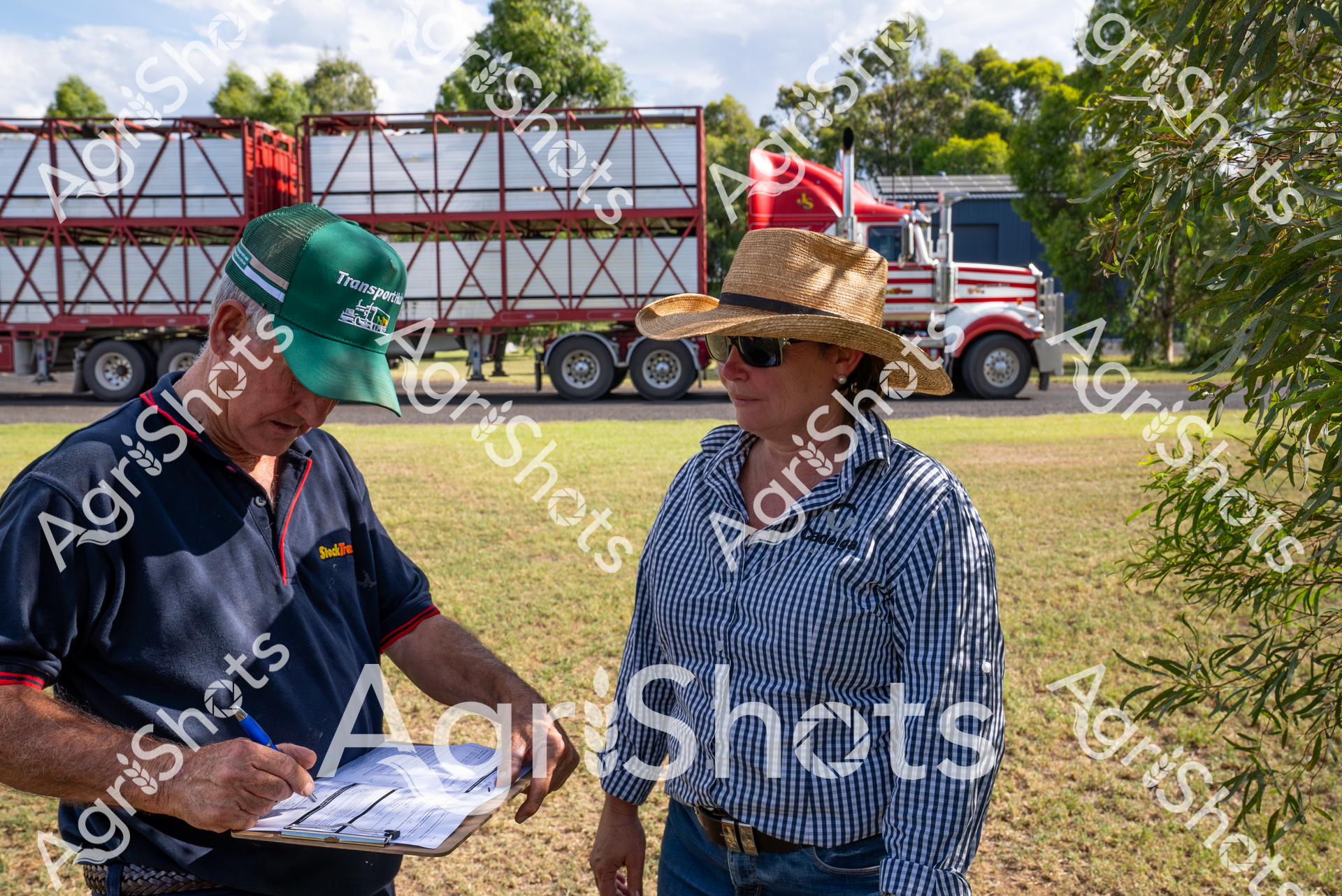
Rural transport professionals collaborate on a sun-drenched summer day, reviewing critical documentation beside a substantial livestock transport vehicle. A worker in a green Transport cap and navy polo carefully completes paperwork, while a woman in a checkered blue and white shirt and wide-brimmed straw hat looks on attentively. The red and white semi-trailer stands prominently in the background, its substantial metal livestock crate framed against a lush green paddock and distant eucalyptus trees. Their interaction suggests a meticulous exchange of information critical to agricultural supply chain logistics, with the vendor declaration form representing an essential step in livestock movement and compliance. The scene captures the precision and professionalism of modern Australian agricultural transport, where detailed record-keeping and collaborative communication are paramount. Bright natural light and the verdant landscape underscore the open, expansive nature of rural transport operations.
 Image
Image
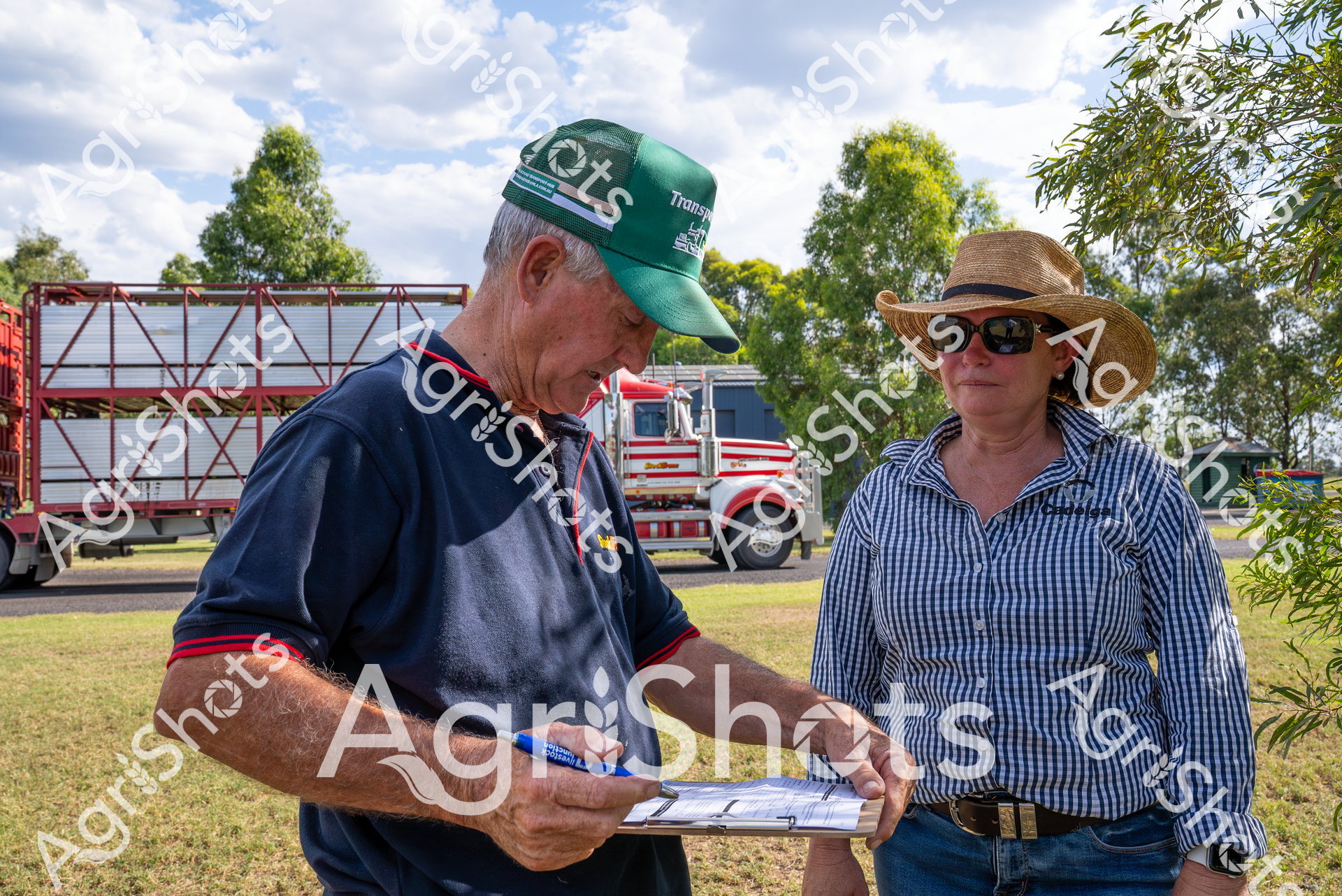
Seasoned livestock transport professionals collaborate on a sun-drenched summer day in rural New South Wales, preparing documentation for a livestock movement. A senior truck driver in a green transport cap and navy shirt carefully completes a vendor declaration form, while a woman in a crisp blue and white gingham shirt and straw sun hat stands alongside him. Behind them, a gleaming red livestock truck stands ready, its impressive steel livestock crate framing the scene against a backdrop of verdant gum trees and a soft, cloud-scattered sky. The pair's body language speaks of experienced collaboration, their focused demeanor reflecting the precision and care essential in agricultural transport logistics. Their attire - practical, sun-smart clothing in muted rural tones - tells a story of professional resilience in the challenging Australian agricultural sector. This image captures a quintessential moment of rural workflow, highlighting the behind-the-scenes expertise that keeps Australia's livestock supply chain moving efficiently.
 Image
Image
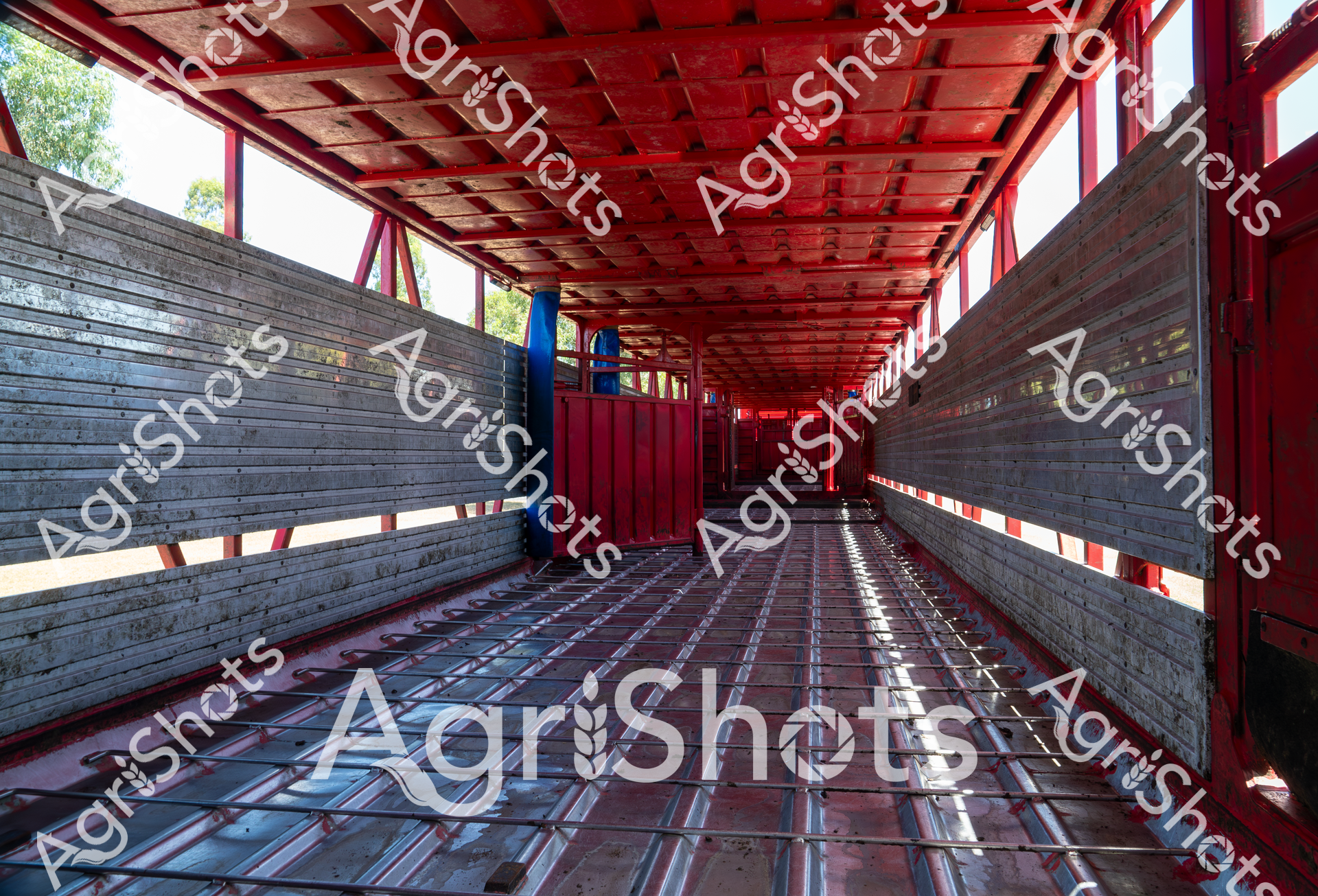
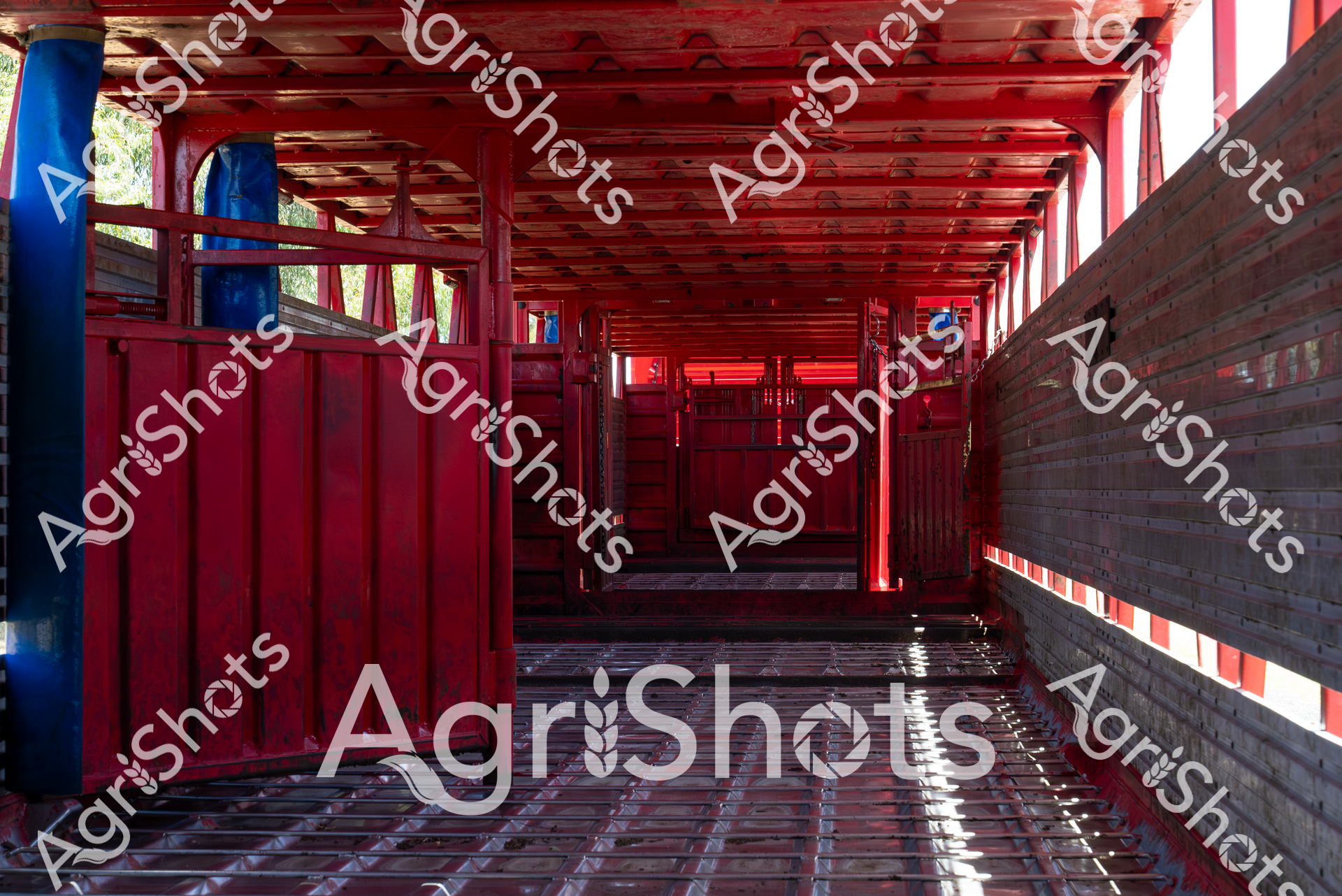
Inside a meticulously prepared livestock transport vehicle, the gleaming red overhead structure and polished steel-grey wooden side panels create a robust and professional framework for safe animal movement. The truck's interior reveals a precisely engineered deck with a grid-like metal floor, designed to provide secure footing and efficient drainage during agricultural transport. Bright sunlight filters through the slatted walls, casting crisp shadows and highlighting the immaculate condition of this purpose-built livestock carrier, typical of advanced Australian agricultural logistics. Clean, rust-free metal surfaces and carefully maintained wooden planking suggest this vehicle is ready for careful, professional livestock movement across rural New South Wales. The deck's strategic design includes multiple access points and sturdy containment sections, ensuring animal welfare and safe transit through potentially challenging rural terrains. Every detail speaks to the meticulous standards of modern Australian livestock transportation - a critical link in the agricultural supply chain that demands precision, cleanliness, and thoughtful engineering.
 Image
Image
Gleaming crimson steel defines this immaculate livestock transport compartment, revealing the precision and care of Australian agricultural logistics. The pristine truck deck stretches with geometric perfection, featuring robust red-painted walls and a meticulously cleaned slatted floor, ready to safely transport valuable livestock across New South Wales rural landscapes. Sunlight filters through the structured panels, casting warm highlights and creating a sense of readiness and professional preparation for animal transport. Clean blue supports accent the dominant red tones, suggesting a modern, well-maintained vehicle designed for efficient and humane livestock movement. The crisp, orderly configuration of gates and compartments demonstrates the agricultural industry's commitment to animal welfare and transportation standards. Every surface appears freshly sanitized, reflecting the meticulous attention to detail required in professional livestock trucking operations.
 Image
Image
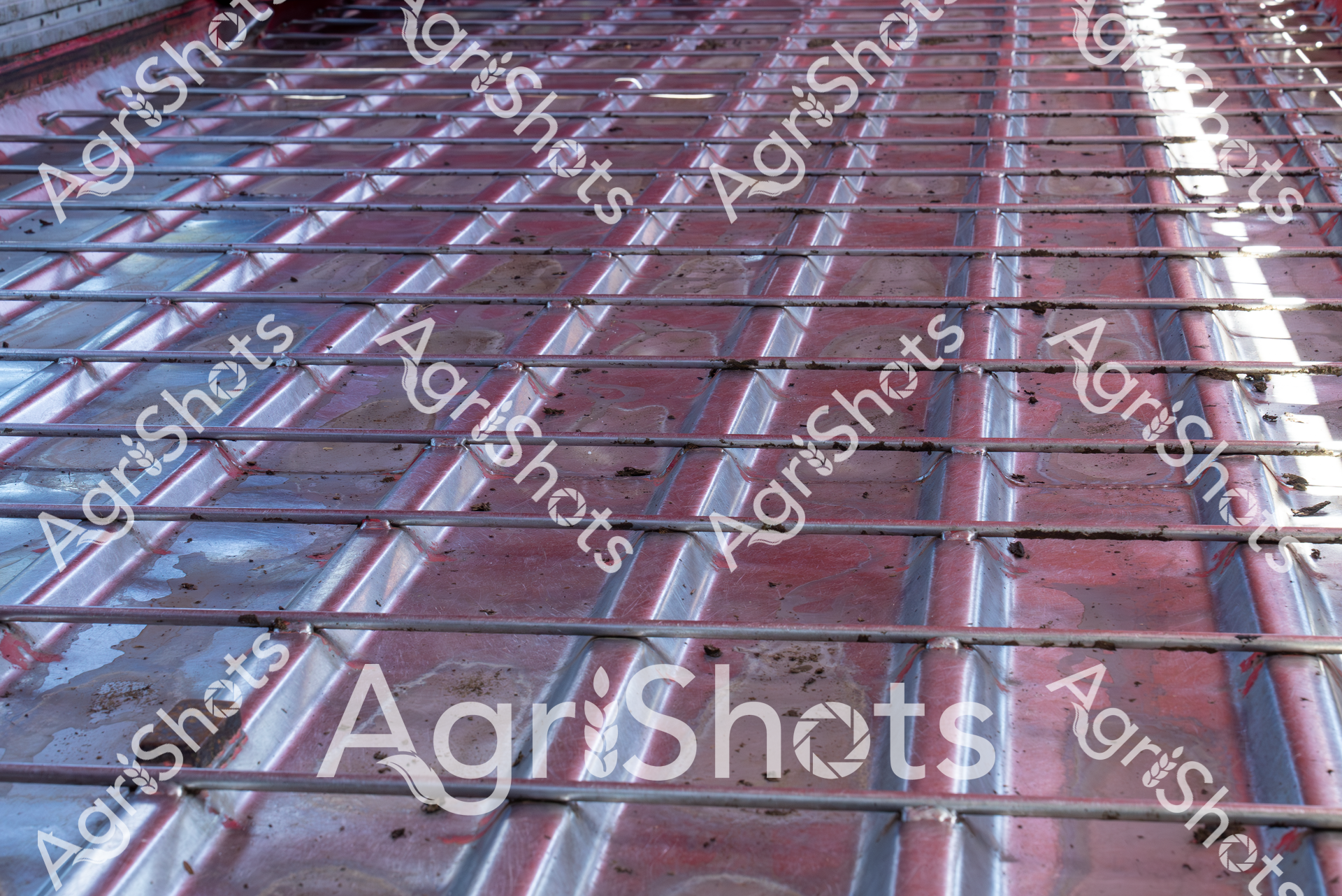
Precision-engineered livestock transport infrastructure reveals the meticulous standards of Australian agricultural logistics. Gleaming metal decking stretches across the truck bed, its corrugated surface meticulously cleaned and prepared for safe animal transport. Carefully welded steel bars create a grid of secure pens, each intersection revealing the calculated engineering that ensures livestock welfare during long-distance journeys. Soft reddish-pink undertones blend with the metallic silver framework, suggesting recent washing and thorough sanitization - a critical process in maintaining biosecurity standards. The crisp, geometric patterns of the deck demonstrate the sophisticated infrastructure that underpins Australia's world-class livestock export industry, where precision and animal care converge. Every surface speaks to a rigorous preparation process, capturing the professional standards of rural transport specialists who understand that successful livestock movement begins with immaculate equipment.
 Image
Image
Gleaming steel mesh flooring stretches across the interior of a livestock transport trailer, its pristine red and silvered surfaces reflecting bright sunlight through open doorways. Meticulously cleaned and prepared, the truck deck reveals a precision-engineered surface designed for safe and hygienic animal transportation - a crucial infrastructure of Australian agricultural logistics. The wire grid platform allows efficient drainage and ventilation, with robust metal walls providing structural integrity and protection during long-distance livestock movement. Worn wooden side panels suggest years of reliable service, while the immaculate deck demonstrates professional agricultural standards of equipment maintenance and biosecurity preparation. Crisp shadows cast by the midday summer light accentuate the geometric precision of the trailer's internal structure, highlighting the engineering sophistication behind rural transport systems. This image captures the unseen backbone of Australia's livestock industry - the carefully maintained vehicles that connect rural producers with broader agricultural markets.
 Image
Image
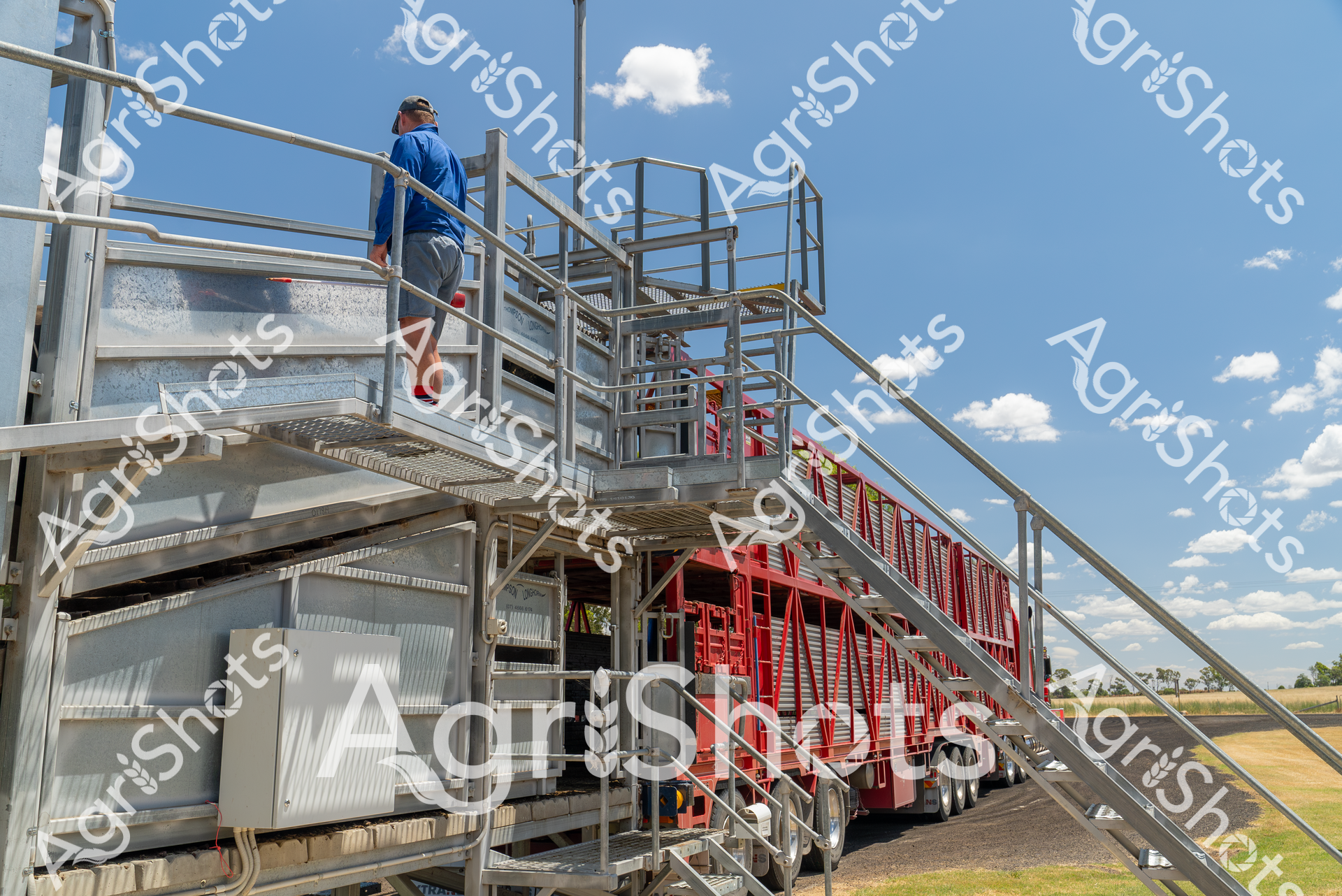
Beneath a vast, cloud-dappled blue sky, an industrial livestock loading platform stands ready for cattle transport. A worker in a vivid blue shirt and protective cap navigates the intricate metal walkways of the steel loading ramp, positioned adjacent to a striking red cattle truck. The sophisticated multi-level infrastructure demonstrates modern agricultural logistics, with carefully engineered access points and safety features designed to minimise stress during livestock movement. Galvanized steel walkways and railings create a geometric framework against the open pastoral landscape, where golden grasslands stretch to the distant treeline. The loading facility represents a critical junction in the agricultural supply chain, where precision engineering meets rural productivity. Crisp shadows and brilliant sunlight highlight the structural details, emphasizing the professional approach to livestock handling and transportation in contemporary Australian agriculture.