Results for “Death”
 Image
Image
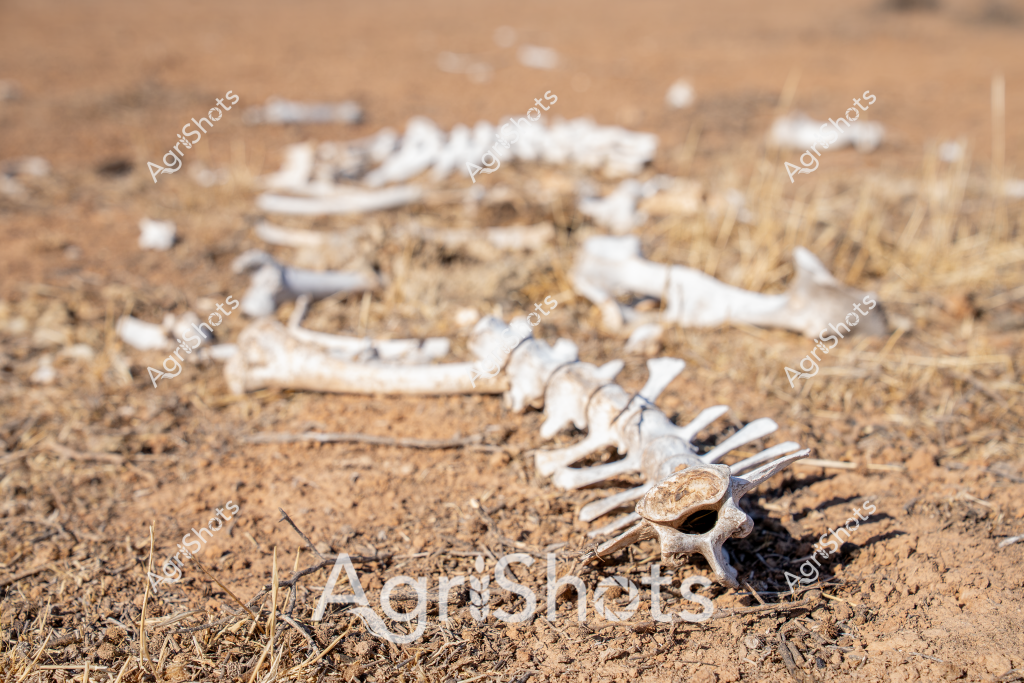
A haunting scene of scattered animal skeletal remains lies across a dry, dusty landscape with sparse grasses and sandy-brown earth. The bleached white bones are arranged in a fragmented, disarticulated pattern, suggesting the skeletal remains of a single animal that has decomposed over time. The stark white bones contrast sharply against the muted tan and brown tones of the ground, creating a poignant visual representation of environmental harshness and the cycle of life and death in an arid ecosystem. Each vertebra, rib, and bone fragment is weathered and sun-bleached, indicating prolonged exposure to the elements. The image evokes a sense of desolation and the unforgiving nature of drought-affected landscapes, where survival is a constant struggle and life can quickly fade into these fragile, skeletal reminders.
 Image
Image
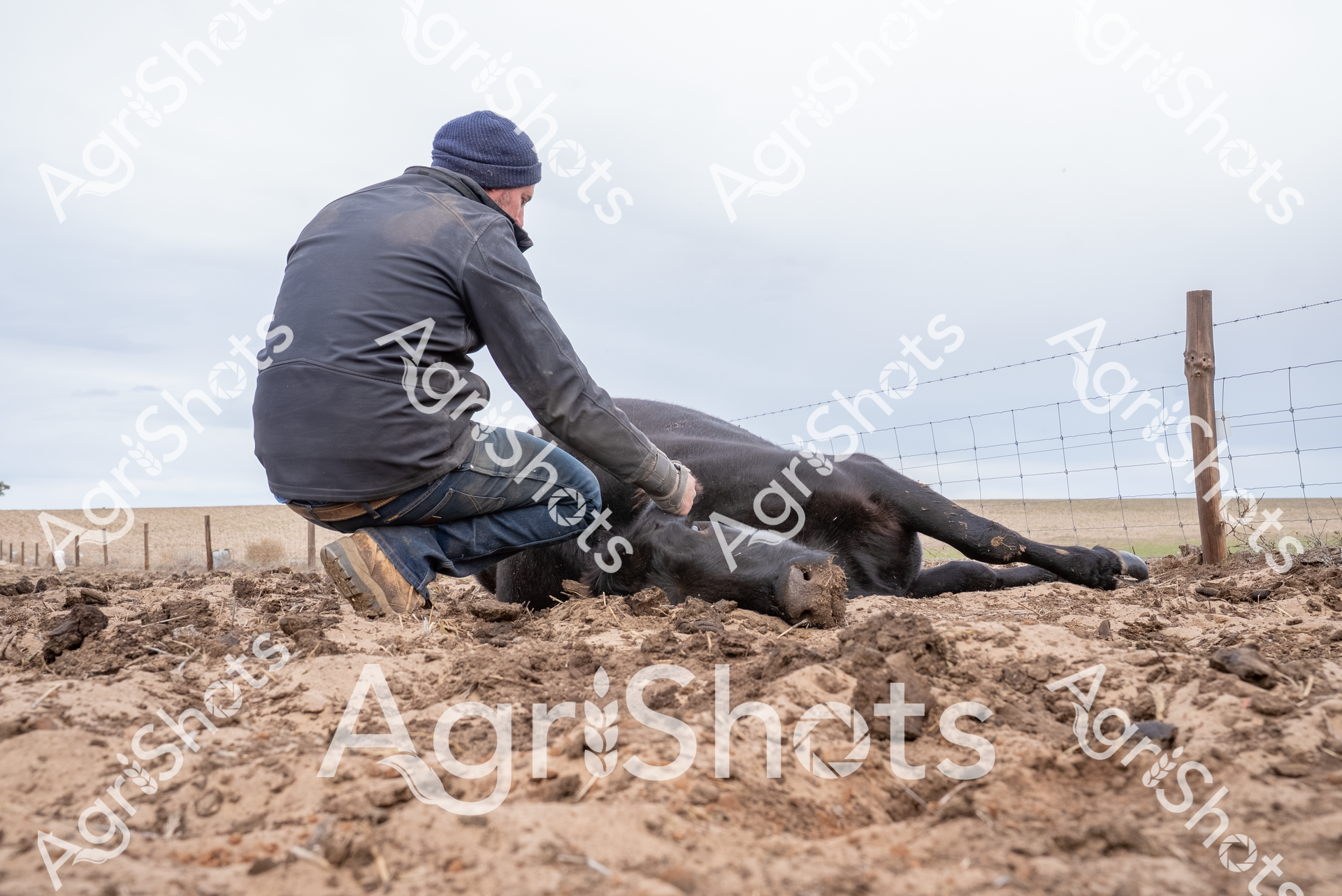
A stoic farmworker cradles a fallen black cow on parched, cracked earth, capturing the harsh realities of agricultural struggle during a severe drought. The worker, dressed in a navy beanie and charcoal jacket, kneels beside the stricken animal near a wire fence line, surrounded by a desolate landscape of dusty, broken ground and distant horizon. The cow's dark coat contrasts sharply with the bleached, barren soil, emphasizing the devastating impact of prolonged dry conditions on livestock and rural communities. Tension and compassion radiate from the scene, with the farmworker's careful, supportive posture suggesting both professional concern and deep emotional connection to the animal's plight. The muted grey-brown palette and flat lighting evoke the unforgiving nature of agricultural challenges, particularly during extreme environmental stress. This powerful image speaks to the resilience, vulnerability, and intimate bond between farmers and the livestock in the face of merciless natural conditions.
 Image
Image
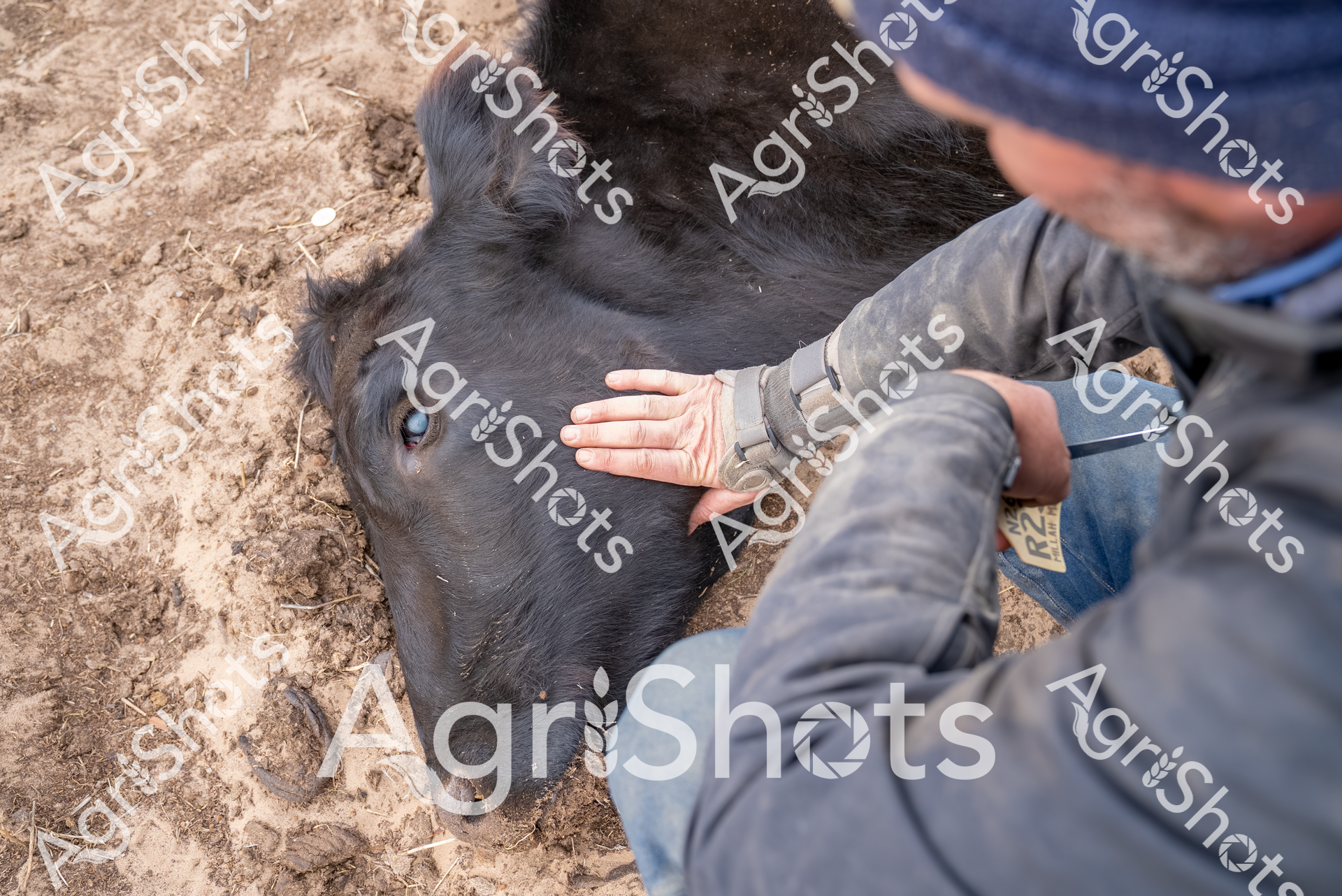
A veterinary professional tenderly supports a distressed black cattle beast lying on dusty, parched ground, revealing the harsh realities of livestock management during extreme environmental conditions. The animal's deep charcoal-colored coat appears dull and matted, indicating significant physiological stress, while the veterinarian's gloved hand provides a compassionate touch of medical intervention. Subdued earth tones of tan and brown dominate the surrounding landscape, emphasizing the arid, sun-bleached environment characteristic of severe drought conditions. The close-up perspective captures the profound vulnerability of the animal, with its glazed, weary eye suggesting exhaustion and potential critical health challenges. Layers of weathered agricultural workwear - blue denim, grey protective clothing, and sturdy work gloves - communicate the pragmatic, empathetic approach of rural healthcare professionals confronting the unforgiving demands of livestock management. This poignant image encapsulates the resilience required in Australian agricultural practice, where animal welfare and survival intersect during challenging environmental circumstances.
 Image
Image
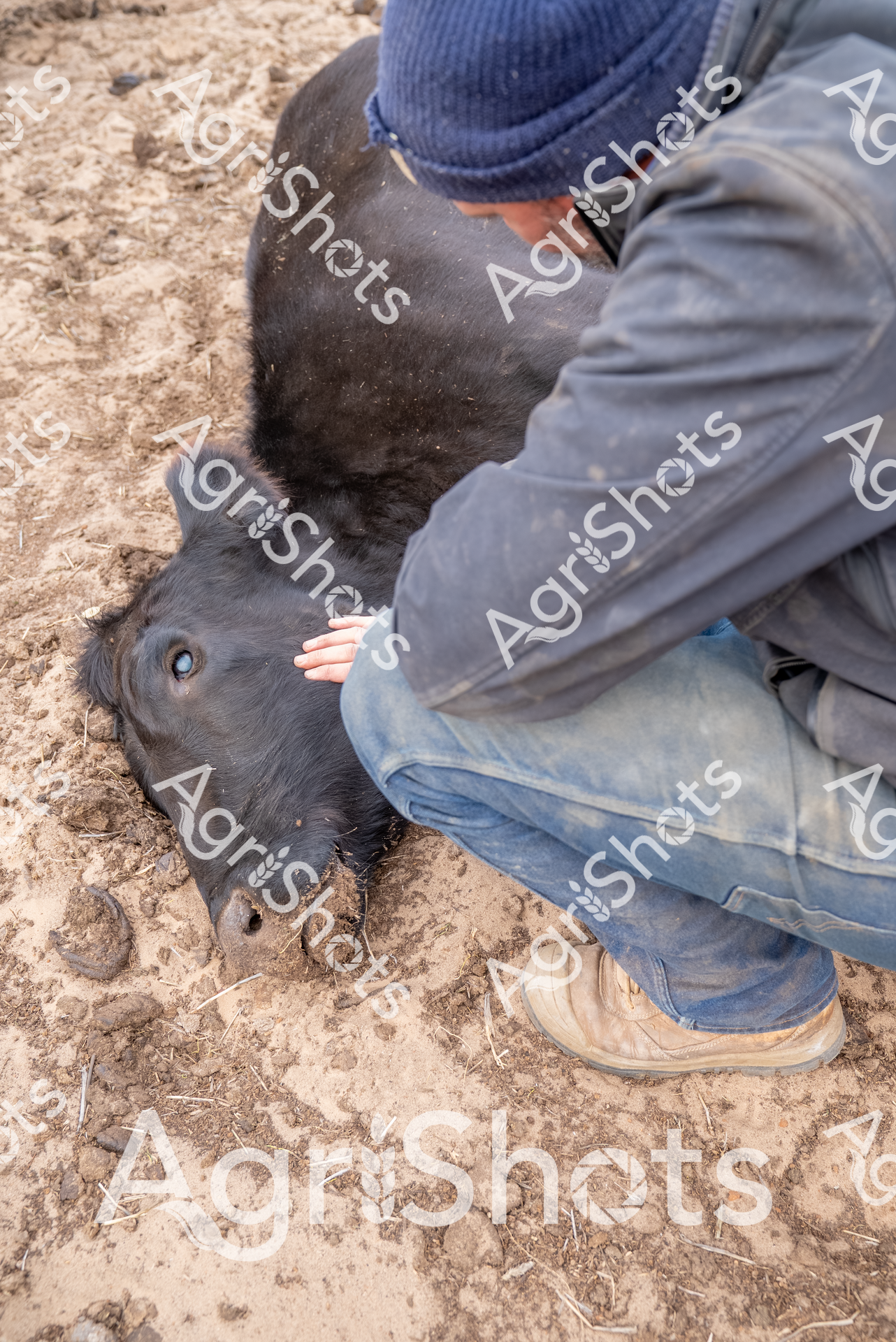
A veterinary professional provides compassionate care to a distressed cattle beast during a challenging drought season. Crouched in sandy, parched earth, the caregiver gently supports the dark-coated animal, which appears weakened and lying prone on the ground. Dressed in a navy blue beanie, grey jacket, and work boots, the caregiver's protective posture and tender touch communicate deep concern for the animal's welfare. The monochromatic landscape of dusty browns and greys emphasizes the harsh environmental conditions challenging livestock survival. This powerful image captures the profound connection between agricultural workers and the livestock, highlighting the emotional and physical demands of rural veterinary practice during extreme climatic stress. The scene powerfully illustrates the resilience and dedication required in Australian agricultural communities confronting environmental hardship.
 Image
Image
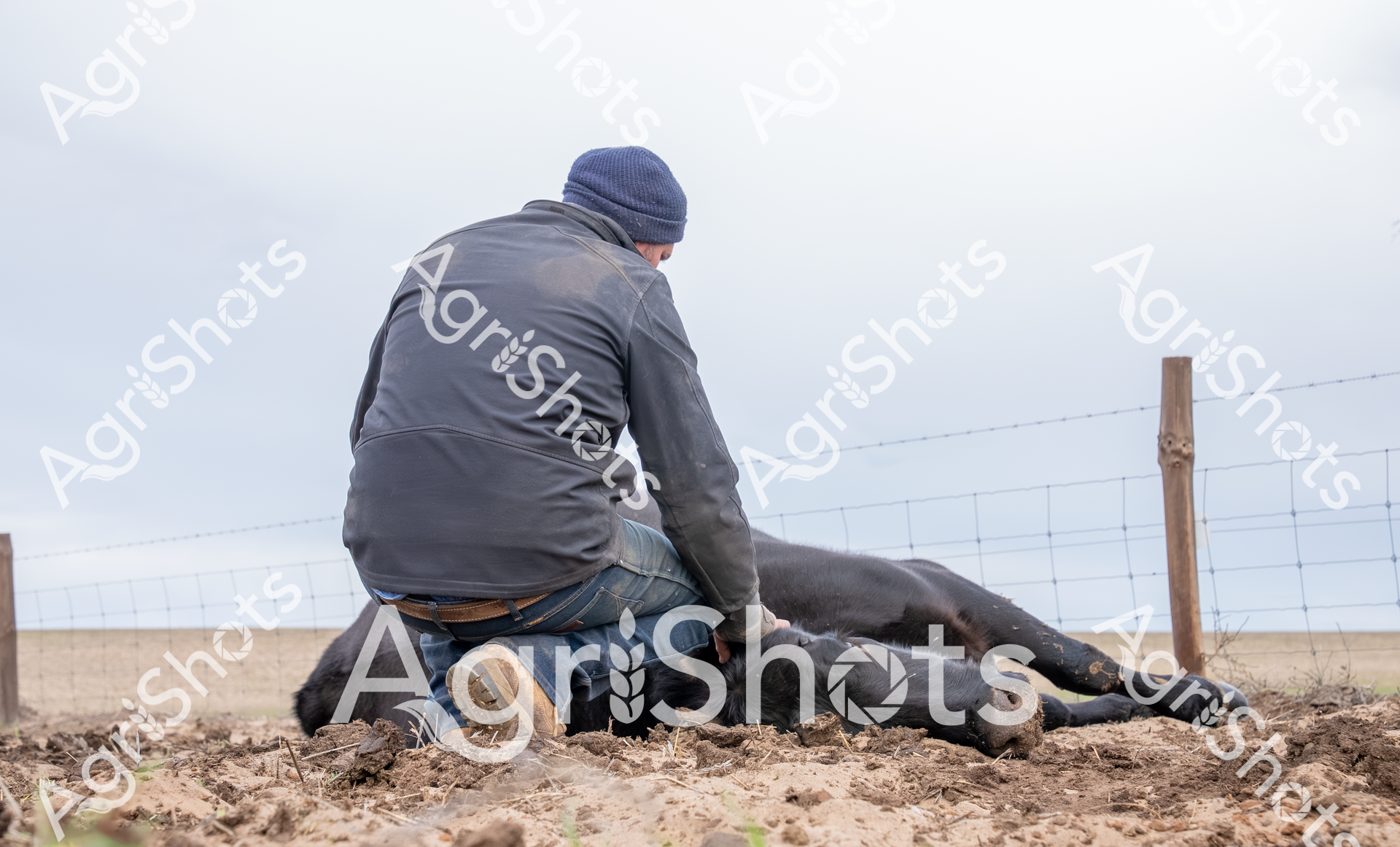
A stoic farm worker cradles a fallen young black cow in a barren, drought-affected paddock, his grey jacket and blue beanie reflecting the harsh rural landscape. The lean, lifeless animal lies motionless on parched, cracked earth, symbolizing the brutal challenges of agricultural survival in extreme conditions. Fencing in the background defines the boundaries of this unforgiving terrain, where every blade of grass and every animal represents critical economic and emotional investment. The muted palette of greys, browns, and washed-out blues captures the emotional weight of agricultural hardship, with the worker's protective posture suggesting both professional duty and deep compassion. This poignant moment encapsulates the raw vulnerability of livestock farming, where environmental pressures can swiftly and mercilessly transform potential into loss. The image speaks to resilience, the constant battle against nature's unpredictability, and the profound human connection to agricultural life.
 Image
Image
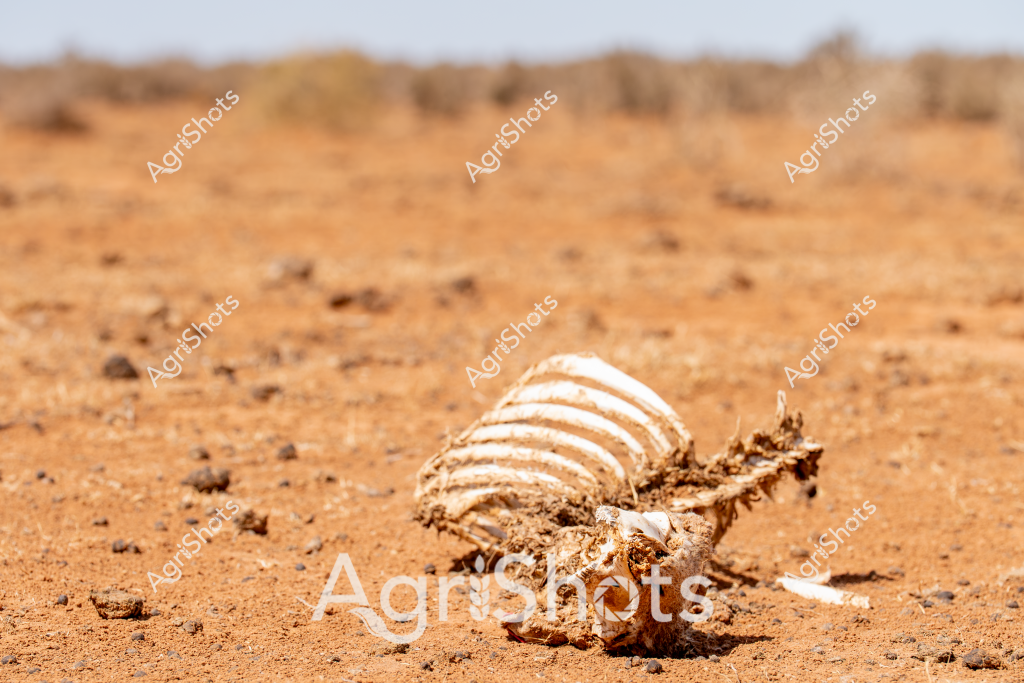
A bleached animal skeleton lies partially decomposed on a dry, reddish-orange desert landscape, revealing the stark ribcage and skeletal structure against the arid, rocky ground. The parched earth surrounding the bones is cracked and barren, with sparse vegetation and distant shrubs indicating an extreme drought environment typical of Australia's interior regions. Weathered and sun-bleached, the skeletal remains tell a grim story of survival and the unforgiving nature of the outback's harsh conditions. The monochromatic palette of rust-colored soil and white bone fragments creates a haunting visual that captures the raw, unrelenting reality of life and death in an uncompromising landscape. This image powerfully illustrates the challenging environmental conditions that test the resilience of both wildlife and agricultural systems in Australia's most arid zones.
 Image
Image
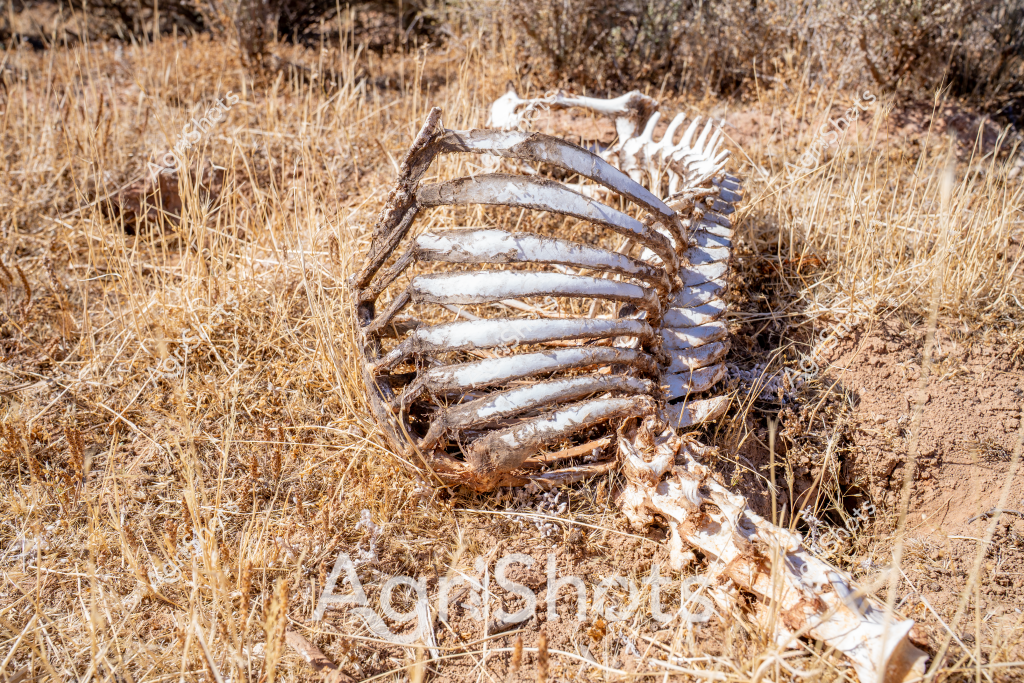
A skeletal ribcage of an animal, likely a large mammal, lies decomposing in dry golden grassland. The bleached white bones are fully exposed, with the curved ribs still connected to the spine, creating an arc-like structure against the sun-dried grass and sparse shrubs. The skeletal remains appear weathered and bleached by extended exposure to the elements, suggesting this is an arid or semi-arid landscape typical of Australian outback or pastoral regions. Scattered around the bones are tufts of dry, straw-colored grass, indicating a potentially drought-affected environment where vegetation is sparse and brittle. The stark white of the bones contrasts sharply with the muted browns and tans of the surrounding landscape, creating a powerful visual representation of the harsh ecological conditions and the cyclical nature of life and death in challenging agricultural terrain.
 Image
Image
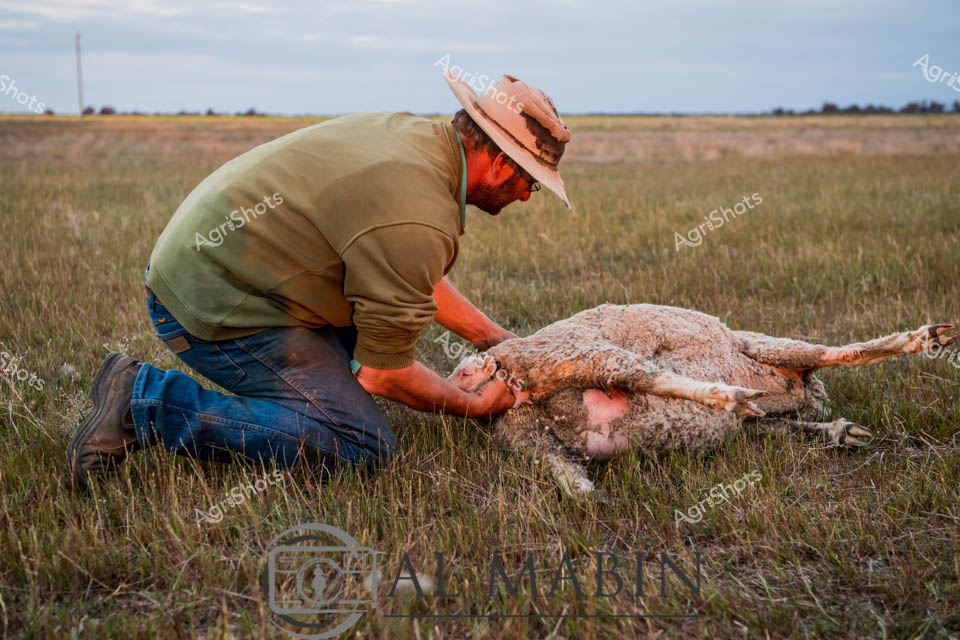
A seasoned farmer kneels attentively beside a distressed Merino ewe during lambing season, his weathered hands gently supporting the struggling animal across a windswept pasture in rural New South Wales. Dressed in a classic khaki sweater, faded blue jeans, and a protective wide-brimmed hat, the stockman demonstrates the compassionate care essential to successful sheep breeding. The muted gray-green grasslands stretch endlessly beneath an overcast sky, typical of the austral winter or early spring lambing period, when newborn lambs are most vulnerable. The soft texture of the sheep's woolly fleece contrasts with the rough grassland, highlighting the delicate nature of pastoral life. Every gesture speaks to generations of agricultural wisdom - the careful positioning, the protective stance, the intimate connection between farmer and flock. This moment captures the raw, unscripted reality of agricultural work, where survival depends on immediate, skilled intervention and a deep understanding of livestock behavior. The scene embodies the resilience of Australian agricultural communities, where individual attention can mean the difference between life and death for a young lamb and its mother.
 Image
Image
Rural safety conference in the golden wheat fields of the Riverina, New South Wales. Agricultural workers huddle around an emergency response training session, their high-visibility orange and blue work shirts contrasting against the sun-bleached summer landscape. An orange first aid and defibrillator kit sits prominently on the table, highlighting the critical importance of emergency preparedness in remote farming environments. A white road train truck stands sentinel in the background, while workers wearing wide-brimmed protective hats and sunglasses collaborate closely, demonstrating the collaborative safety culture of modern Australian agriculture. The scene captures the intense concentration of professionals reviewing critical emergency protocols, with dusty paddocks and scattered eucalyptus trees creating an authentic rural backdrop. This image powerfully illustrates the commitment to workplace safety and community resilience in agricultural settings, where rapid response can mean the difference between life and death.
 Image
Image
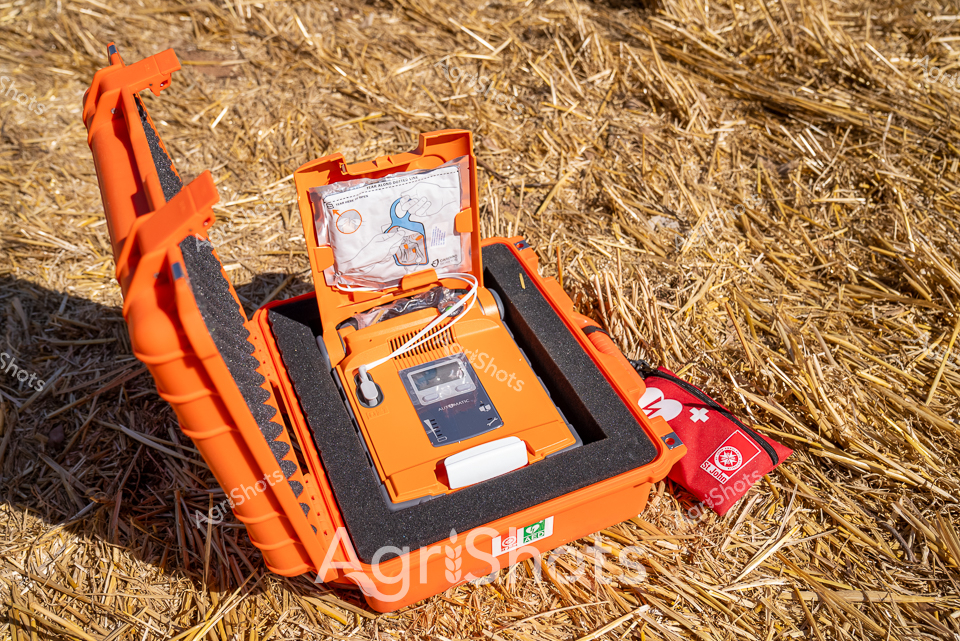
The rugged, waterproof case houses a sophisticated automated external defibrillator (AED), carefully nestled in custom foam padding, ready for rapid emergency response across remote agricultural settings. Complemented by a red first aid kit and integrated instructional materials, this precision medical device represents a lifeline for farming communities where rapid medical intervention can mean the difference between life and death. The brilliant orange case stands in stark contrast to the pale, textured straw-colored background, symbolizing agricultural preparedness and the critical importance of workplace safety in regional Australia. Every element of this meticulously arranged scene speaks to professional risk management and the agricultural sector's commitment to protecting its most valuable asset - its workers. The equipment embodies resilience, technological innovation, and a proactive approach to health and safety in challenging rural environments.
 Image
Image
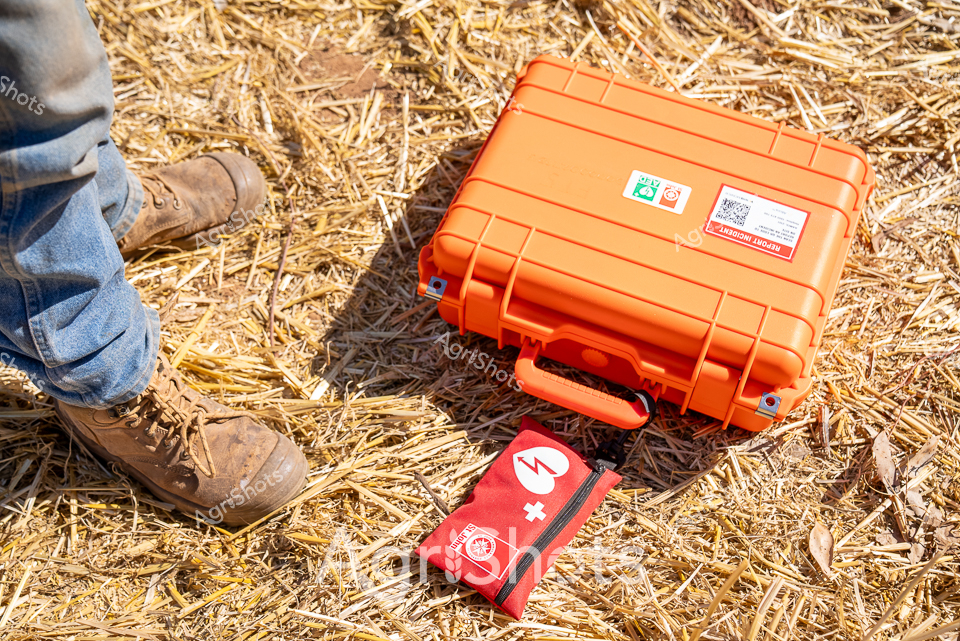
Rural Safety Preparedness: Emergency Response in the Wheat Fields Weathered work boots stand amid golden wheat stubble, anchoring a critical emergency preparedness scene. A vibrant orange protective hard case rests on the straw-strewn ground, designed to safeguard vital medical equipment in remote agricultural settings. Alongside the robust case, a striking red first aid kit bearing a medical cross symbol emphasizes the critical importance of immediate medical response in isolated farming environments. The robust, waterproof orange case suggests professional-grade protection for sensitive equipment, likely a defibrillator crucial for potential life-saving interventions in regions where medical assistance might be hours away. The textured wheat stubble backdrop and rugged work boot provide context of the challenging rural landscape where such emergency preparedness can mean the difference between life and death. Crisp labeling and QR codes on the equipment underscore a systematic, technologically informed approach to rural safety management.
 Image
Image
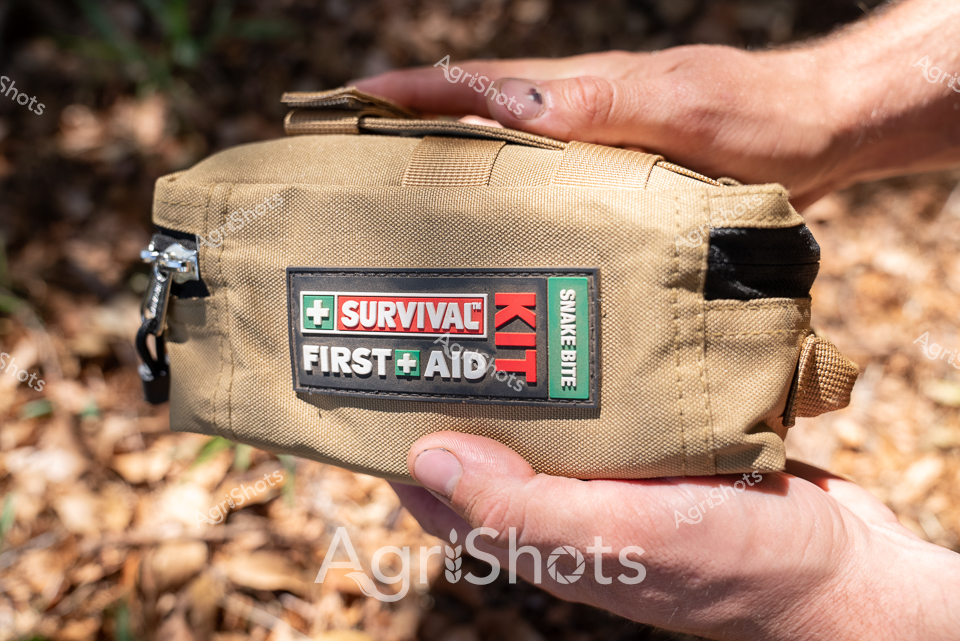
Rugged survival meets agricultural preparedness in this intimate snapshot of outback safety gear. A tan-colored tactical first aid kit, branded with a vivid "Survival First Aid Kit" patch, rests carefully between weathered hands against a backdrop of dried autumn leaves. The kit, marked with "Snake Bite" branding, represents the critical emergency preparedness essential for farmers and rural workers navigating challenging Australian landscapes. Its robust construction and military-inspired design speak to the serious potential hazards of working in remote agricultural environments, where rapid medical response can mean the difference between life and death. The muted khaki fabric and robust construction suggest durability and readiness, perfectly aligned with the resilient spirit of Australian agricultural workers who must always be prepared for unexpected challenges. This compact survival kit embodies the pragmatic, safety-conscious approach fundamental to working in harsh rural terrains of regions like New South Wales' Riverina.
 Image
Image
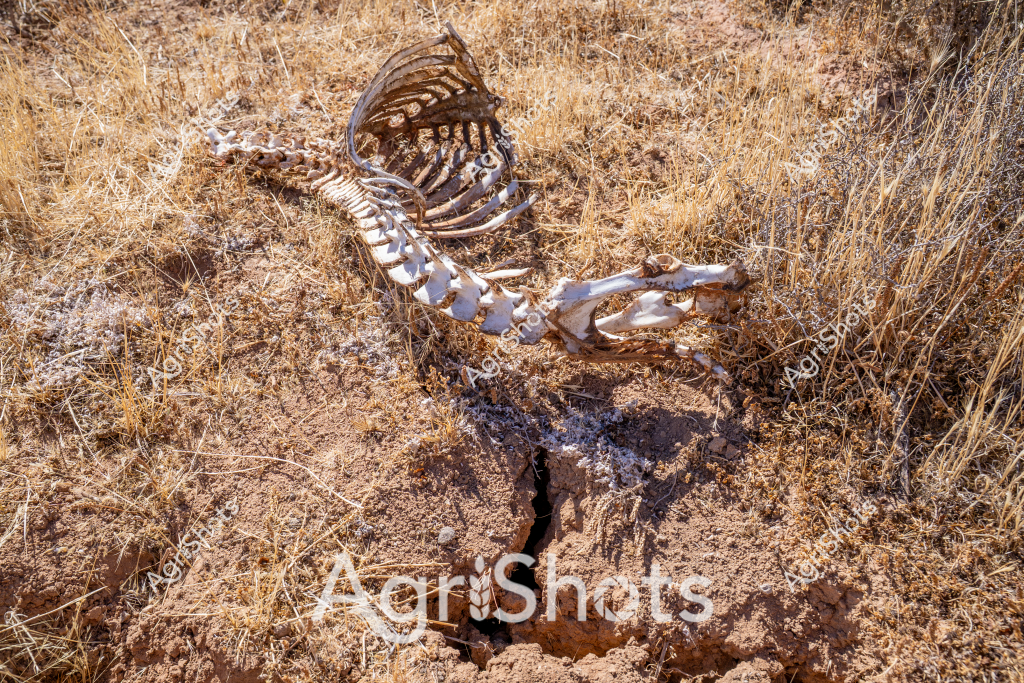
A skeletal remains of an animal lies exposed in a dry, golden grassland, partially nestled in a small eroded ground crack. The bleached white bones are fully articulated, showing the complete skeletal structure from skull to tail, with the ribcage prominently curved and limbs extended. Surrounding the skeleton is a landscape of drought-parched grass in shades of tan and brown, with sparse, weathered vegetation indicating harsh environmental conditions. The skeletal remains appear to have been naturally exposed by environmental processes, suggesting a potentially long period of decomposition in this arid setting. The stark white bones create a striking contrast against the muted, sun-bleached landscape, offering a raw and unfiltered glimpse of the natural cycle of life and death in an unforgiving ecosystem.
 Image
Image
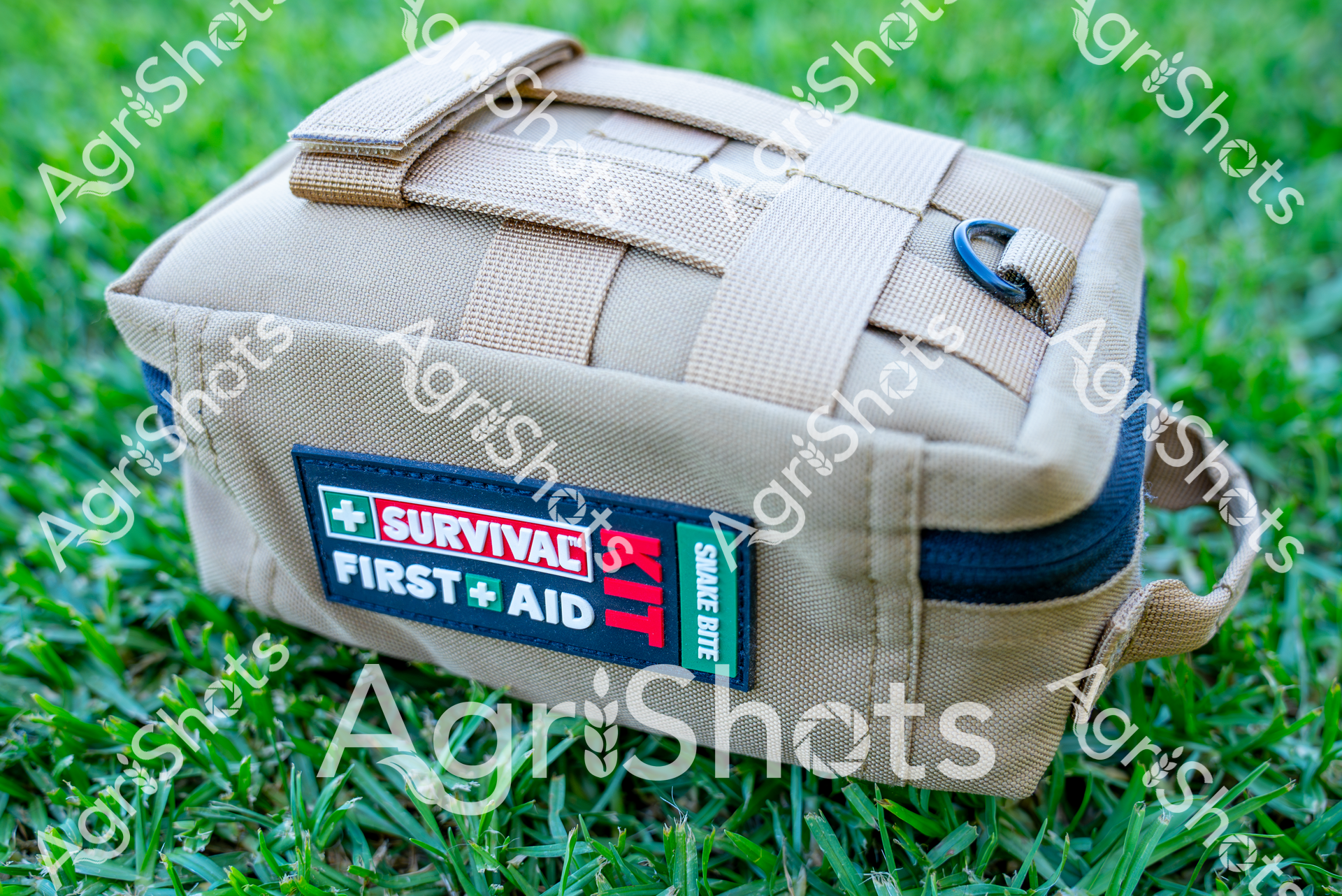
A rugged, high-visibility survival first aid kit rests against a lush grass backdrop, its sandy beige canvas construction highlighting the critical importance of emergency preparedness in remote agricultural environments. The kit, branded with a bold "SURVIVAL FIRST AID KIT" patch, features robust tactical-style webbing and reinforced stitching, designed to withstand harsh outdoor conditions typical of rural Australian landscapes. A distinctive blue accent and metal attachment loop suggest mobility and quick accessibility - essential characteristics for farm workers, rural healthcare providers, and adventurers navigating potentially dangerous terrain. The snake bite kit branding hints at the unique challenges of working in regions with venomous wildlife, underscoring the necessity of specialized medical equipment in agricultural settings. Positioned against vibrant green grass, the first aid kit represents a crucial safety tool that could mean the difference between life and death in remote locations across New South Wales. The precise, utilitarian design reflects the pragmatic and safety-conscious culture of Australian agricultural communities.
 Image
Image
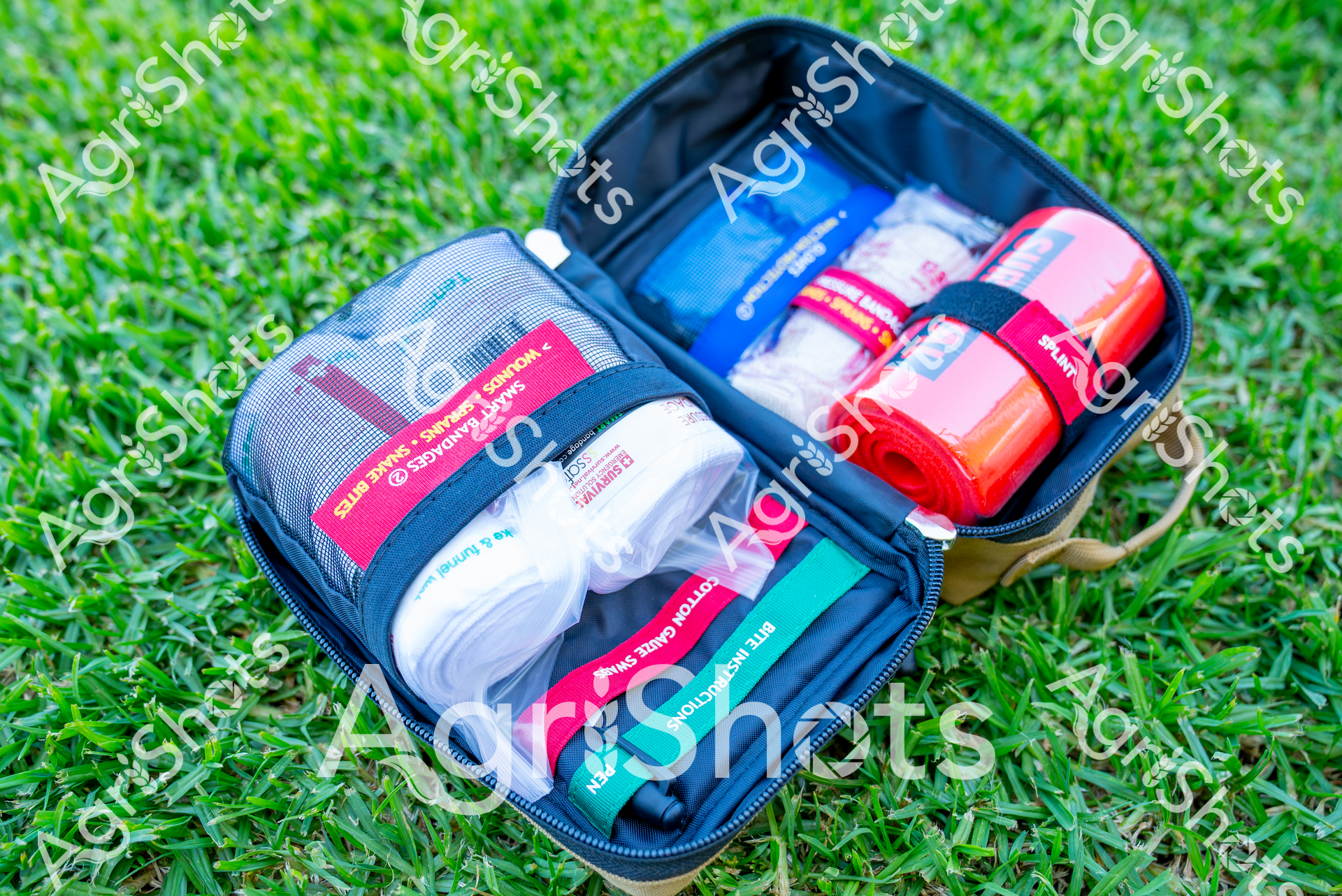
A first aid kit nestled in vibrant green grass reveals the critical preparedness essential to rural and agricultural life across Australia. The compact navy blue medical kit opens to display an array of carefully organized emergency supplies, with distinct red and white packages secured by color-coded straps. Mesh compartments and precise packing demonstrate the meticulous approach to safety required in remote agricultural settings, where rapid medical response can mean the difference between life and death. The snake bite kit, prominently featured, speaks to the unique environmental challenges faced by farmers, rural workers, and outdoor professionals in regions like New South Wales, where venomous wildlife poses a constant backdrop to daily work. Crisp, clean packaging and the kit's professional organization reflect the serious commitment to workplace safety and emergency preparedness inherent in Australian agricultural practice. The verdant grass backdrop suggests the kit is prepared and ready in the very environments where unexpected medical emergencies might occur - a silent guardian of rural safety.
 Image
Image
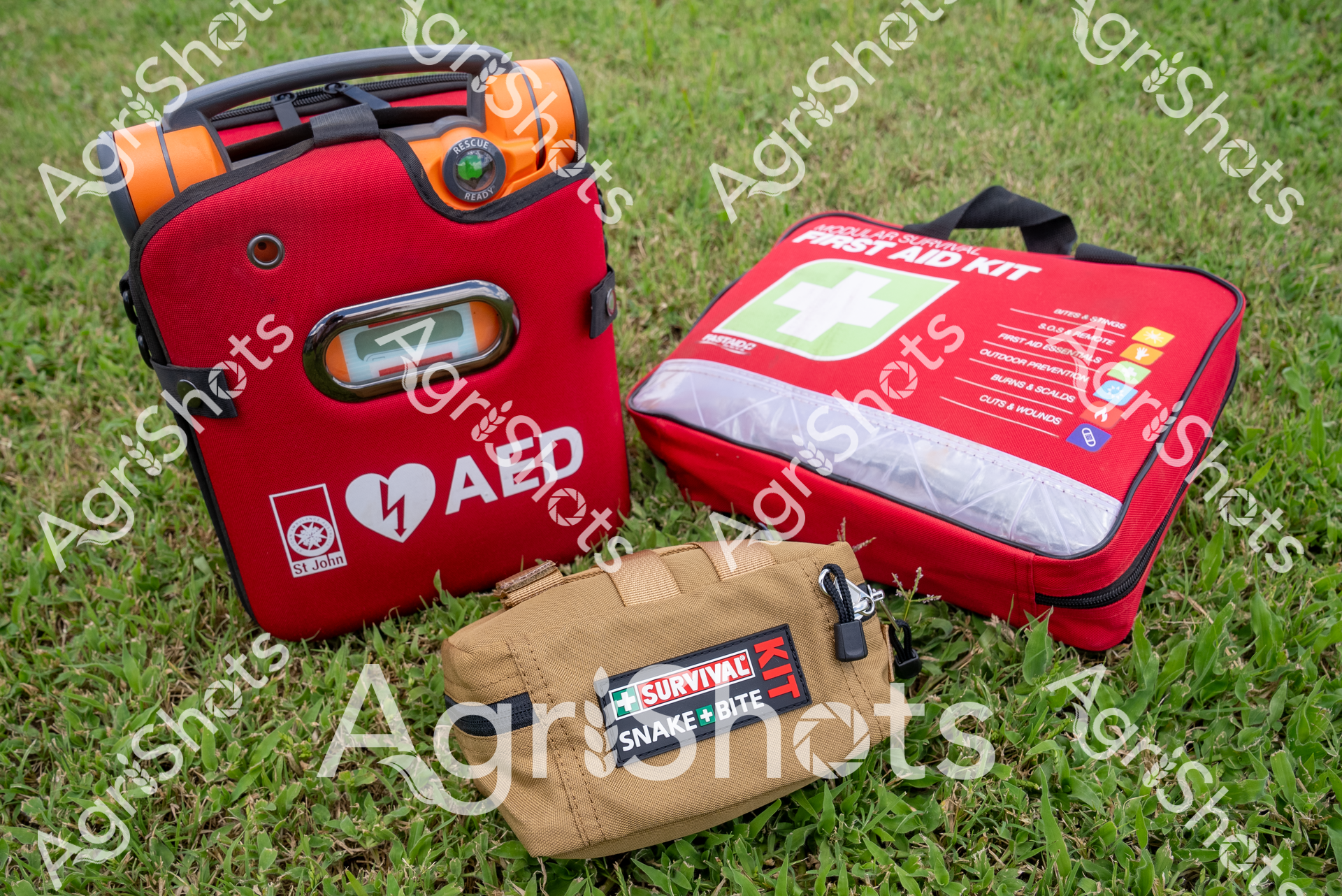
Emergency Medical Preparedness on Rural Terrain Vital safety equipment lies poised against a lush grassland backdrop, showcasing critical medical response tools for remote agricultural environments. A bright red AED (Automated External Defibrillator) unit from St. John stands prominently, its robust design indicating readiness for urgent cardiac interventions in isolated farming locations. Alongside the defibrillator, a comprehensive first aid kit in matching crimson promises comprehensive medical support, while a tan-colored snake bite survival kit underscores the unique hazards of Australian rural landscapes. The rugged, purposeful design of these emergency response tools reflects the resilience and preparedness essential in agricultural settings, where rapid medical intervention can mean the difference between life and death. Rich textures of canvas, robust zippers, and clear instructional labeling communicate professional-grade emergency preparedness, highlighting the critical intersection of safety technology and agricultural work environments.
 Image
Image
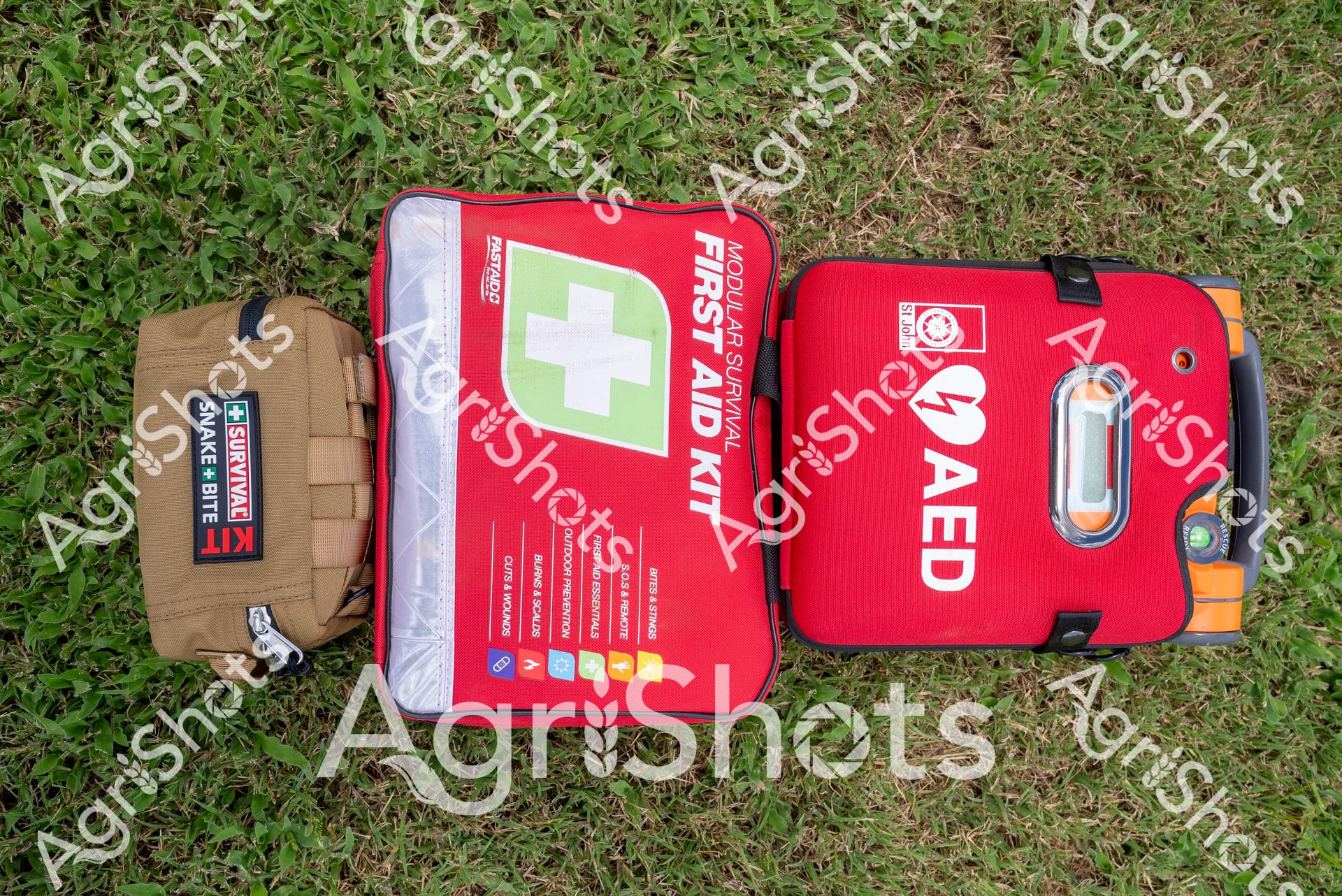
Emergency preparedness equipment rests on verdant grassland, showcasing three critical medical response kits essential for rural and remote Australian agricultural settings. A tan-colored snake bite kit stands alongside a comprehensive modular first aid kit in bright red, featuring a prominent white cross emblem, and an automated external defibrillator (AED) unit designed for immediate cardiac emergency intervention. The rugged, purpose-built cases reflect the robust nature of agricultural safety equipment, engineered to withstand harsh outdoor conditions and rapid deployment in potential life-threatening scenarios. Durable materials and high-visibility colors underscore the critical importance of having professional-grade medical resources readily accessible in isolated farming environments where rapid medical response can mean the difference between life and death. The lush green grass beneath the kits provides a stark contrast, symbolizing the vibrant life that these emergency tools are designed to protect and preserve in the challenging landscape of Australian agricultural work.
 Image
Image
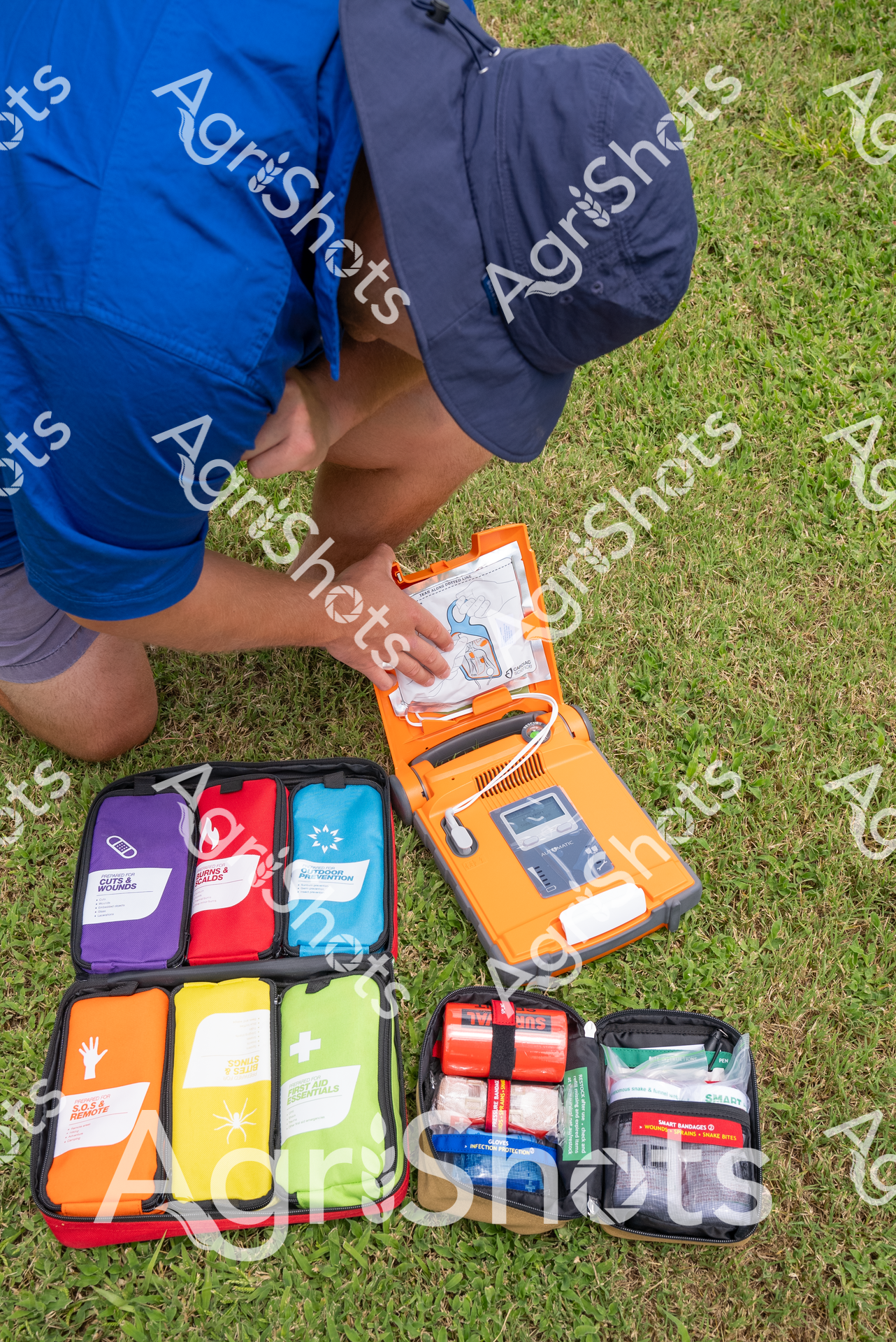
First aid preparedness takes center stage in this comprehensive field safety demonstration, showcasing the critical emergency response equipment used in remote agricultural settings. A collection of meticulously organized first aid kits sprawls across a grassy surface, with color-coded modules designed for specific medical scenarios - purple for cuts and wounds, red and yellow for different emergency protocols, and green for critical interventions. An advanced orange defibrillator sits prominently, representing the highest level of potential life-saving intervention available in isolated work environments. The scene captures the methodical approach of agricultural safety professionals, with branded blue and navy uniform elements suggesting a coordinated organizational response strategy. Specialized equipment like a snake bite kit highlights the unique medical challenges faced in Australian rural landscapes, where rapid and specialized first aid can mean the difference between life and death. The carefully arranged medical resources reflect a proactive safety culture, demonstrating rigorous preparation and commitment to worker protection in challenging agricultural work environments.
 Image
Image
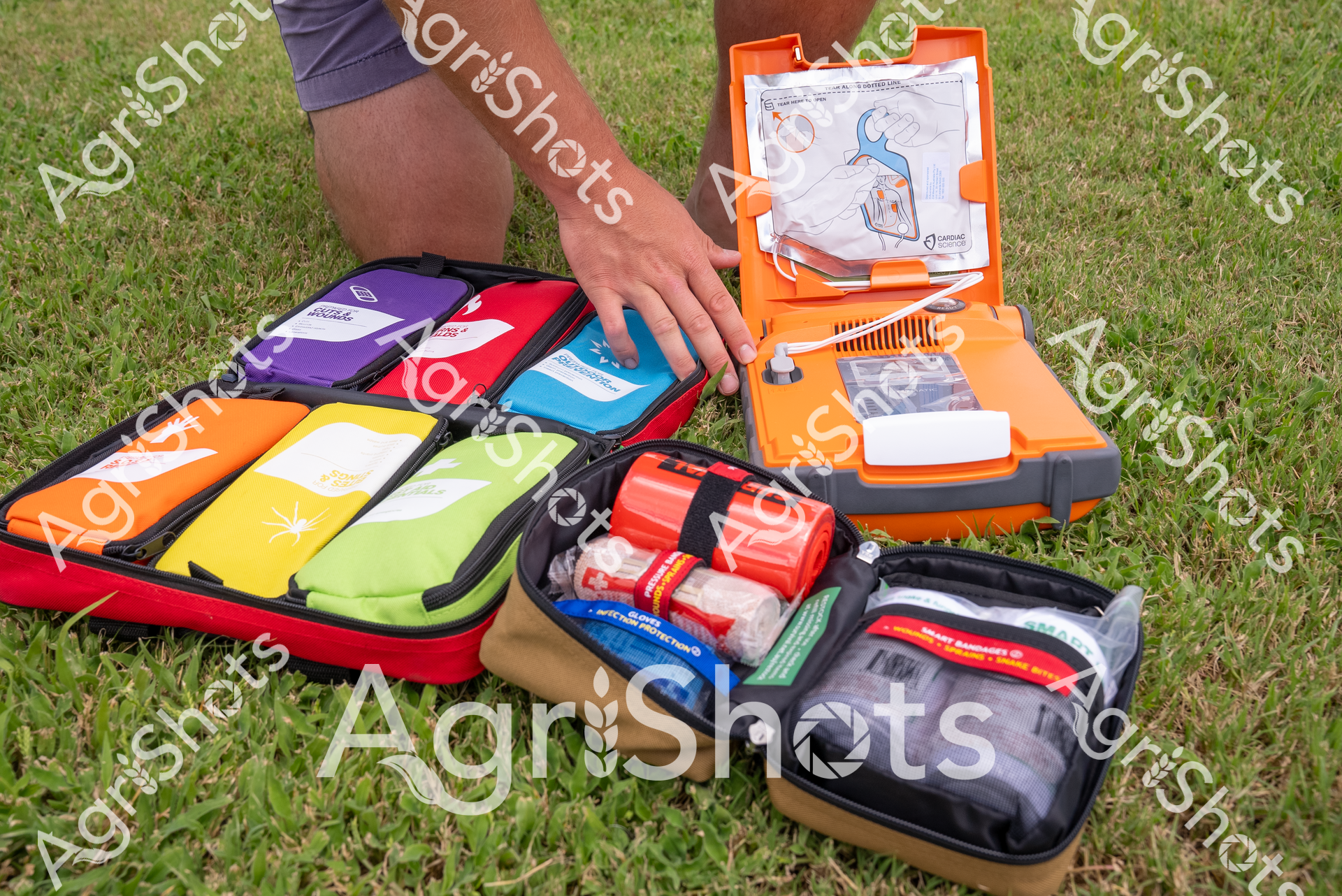
A critical medical preparedness scene unfolds on lush green grass, showcasing a comprehensive first aid and emergency response kit. A series of color-coded, meticulously organized compartments spread across the ground, revealing specialized medical supplies including a prominent orange snake bite kit and an automated external defibrillator (AED) instruction manual. Bright, easily identifiable pouches in red, yellow, green, blue, and purple suggest a systematic approach to emergency medical training or wilderness safety protocols. A hand reaches into the carefully arranged kit, highlighting the readiness and precision required in potential life-saving scenarios. The orange AED case stands open, displaying detailed instructional diagrams that underscore the importance of immediate and accurate emergency medical intervention. This image captures the essential preparedness needed in remote agricultural settings, where quick medical response can mean the difference between life and death.
 Image
Image
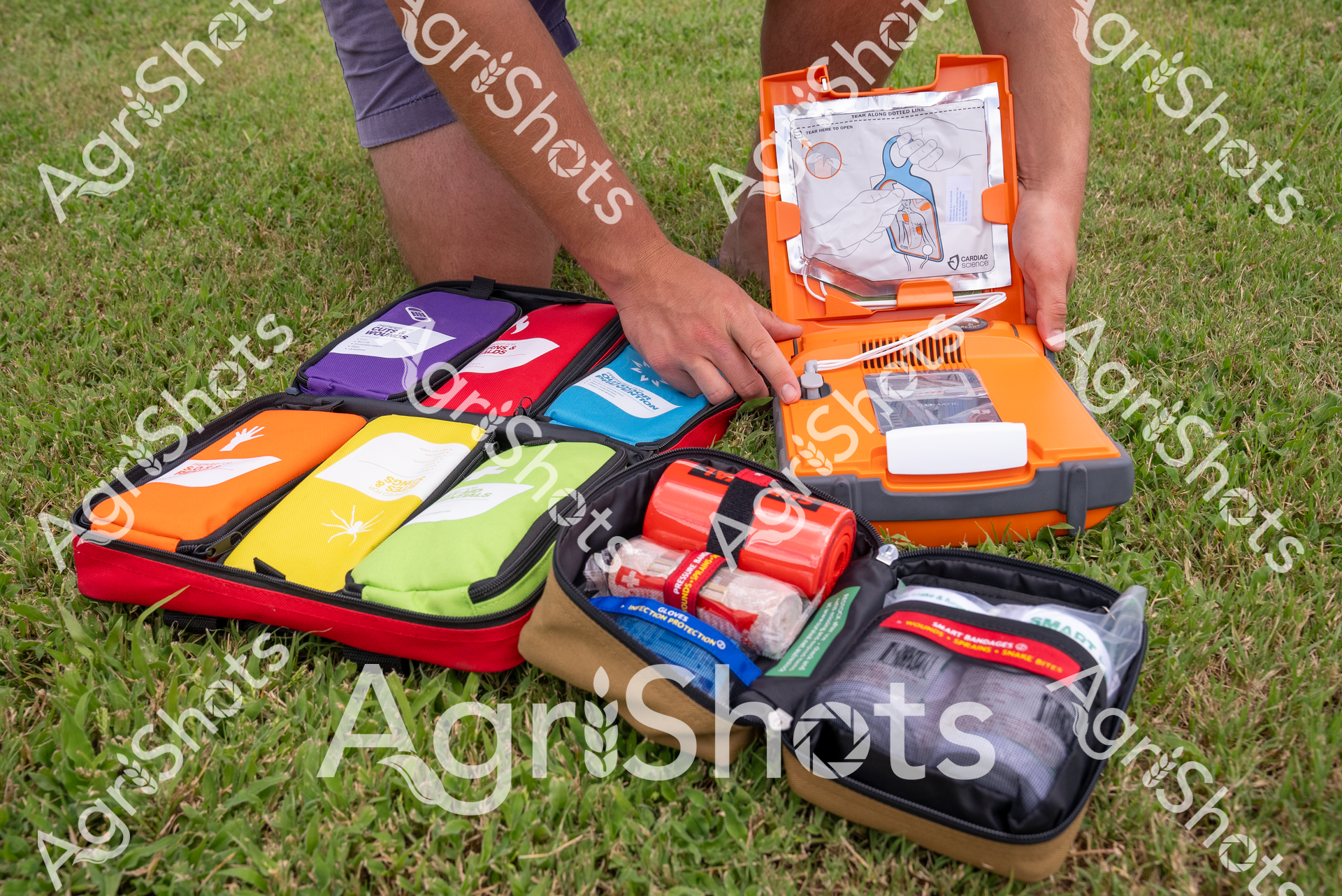
Expert emergency preparedness unfolds on a sun-dappled grass field, with a comprehensive first aid kit meticulously laid out. An orange medical kit stands prominently, displaying an instructional diagram for potential life-saving interventions, while a color-coded modular first aid system spreads across the verdant background. Carefully organized compartments in vivid hues - red, yellow, green, purple, and blue - suggest a systematic approach to medical response, with each segment potentially designed for specific types of emergencies or treatment protocols. A distinctive red emergency container hints at critical supplies like a snake bite kit, crucial for rural and agricultural environments where such risks are prevalent. The hands carefully arranging these vital medical resources convey a sense of professional readiness and methodical safety preparation, essential for remote work settings where immediate medical intervention can mean the difference between life and death. The meticulously arranged kit speaks to the Australian agricultural sector's commitment to worker safety and emergency preparedness.
 ▶ Video
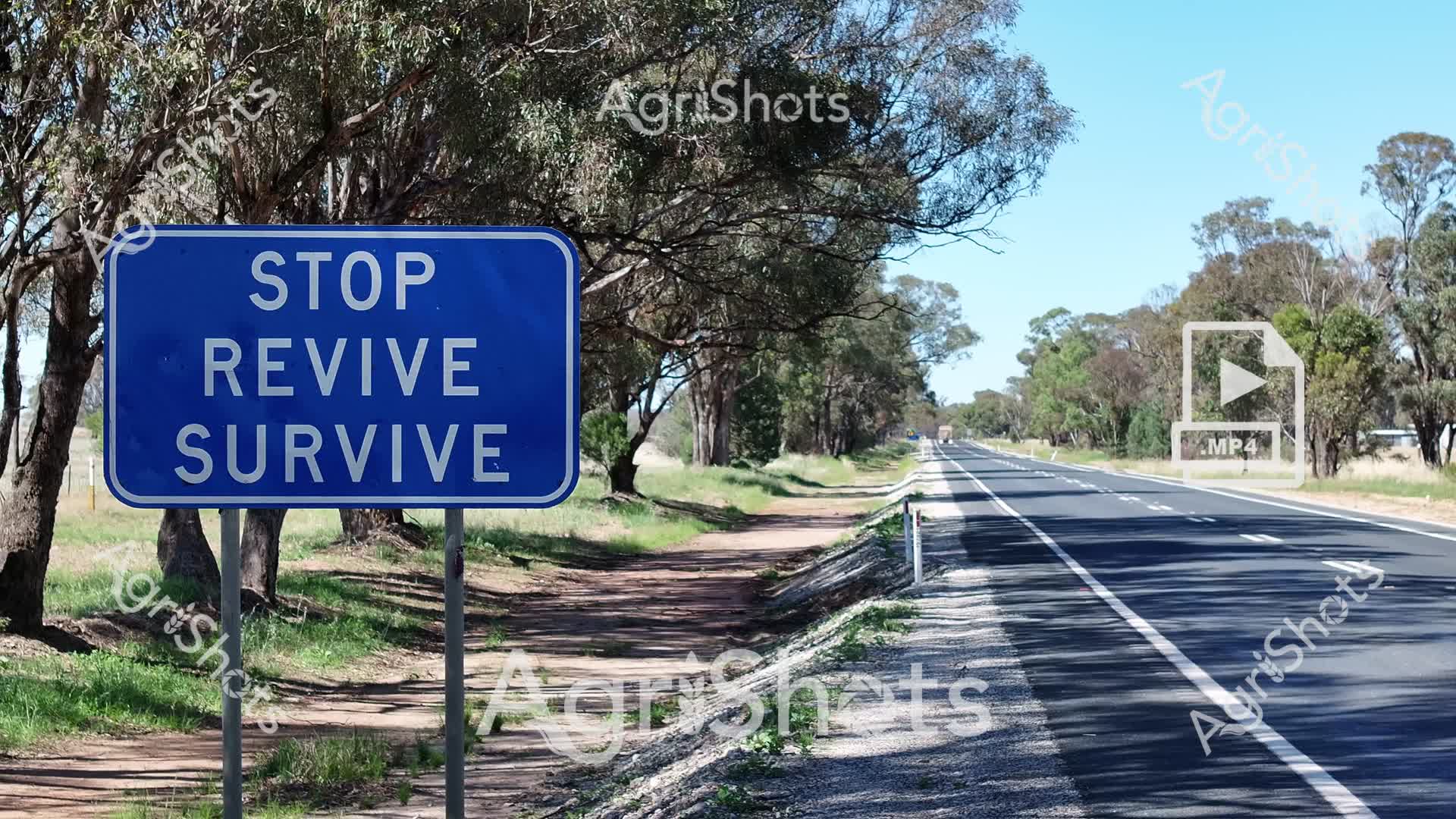
Capturing the stark resilience of rural Australian road safety, this powerful roadside scene embodies the "Stop Revive Survive" road safety campaign critical to long-distance travel in the Riverina region. A deep blue highway sign stands sentinel alongside a dusty country road lined with weathered eucalyptus trees, their silvery-green foliage casting dappled shadows on the sun-baked landscape. The sealed asphalt highway stretches into the distance, a lifeline cutting through the dry summer grasslands, highlighting the immense distances travelers must navigate across New South Wales. Roadside gravel and sparse vegetation underscore the challenging driving conditions that make driver fatigue a serious risk in rural Australia. The image speaks to the importance of road safety awareness, with the stark messaging serving as a vital reminder for truck drivers, travelers, and agricultural workers who traverse these expansive rural highways. The crisp blue sky and golden-green landscape capture the unforgiving beauty of the Australian summer, where staying alert can mean the difference between life and death.