Results for “Cattle Transport”
 Image
Image
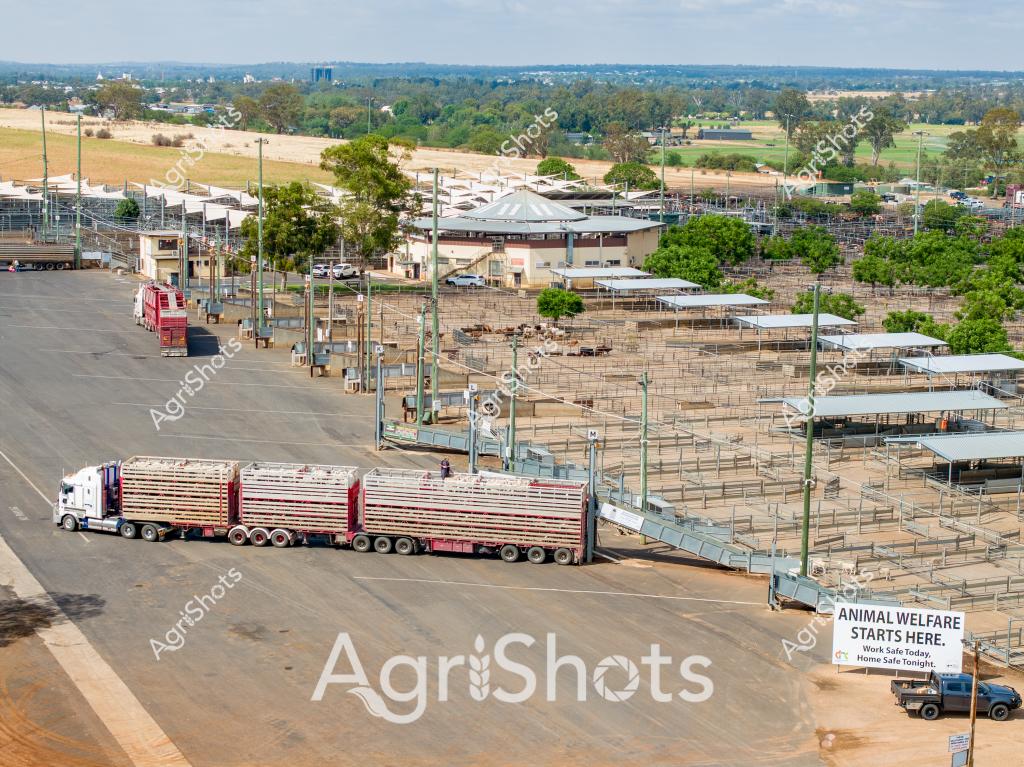
This image captures a comprehensive view of a livestock sale yard or agricultural processing facility, likely in an Australian rural setting. A large, multi-trailer livestock transport truck is positioned at the entry point of an expansive facility with multiple covered holding pens and infrastructure. The "Animal Welfare Starts Here" sign prominently indicates the facility's commitment to ethical livestock handling practices. The landscape reveals a broad agricultural setting with green trees and distant urban structures visible on the horizon, suggesting this is near a regional town or city. Multiple steel-framed holding pens with white shade covers are systematically arranged, demonstrating a modern, structured approach to livestock management. Green steel support poles create a grid-like framework throughout the facility, enabling efficient animal movement and processing. The transport truck appears to be a standard Australian road train configuration, with multiple trailers designed for long-distance livestock transportation, typical of cattle or sheep movements across vast pastoral regions. The facility's infrastructure suggests this is a sophisticated livestock sales yard, likely used for cattle or sheep auctions, with carefully designed loading ramps and holding areas to ensure animal welfare and efficient agricultural commerce. The scene represents a key node in Australia's agricultural supply chain, where livestock are professionally managed, transported, and traded with systematic precision and care.
 Image
Image
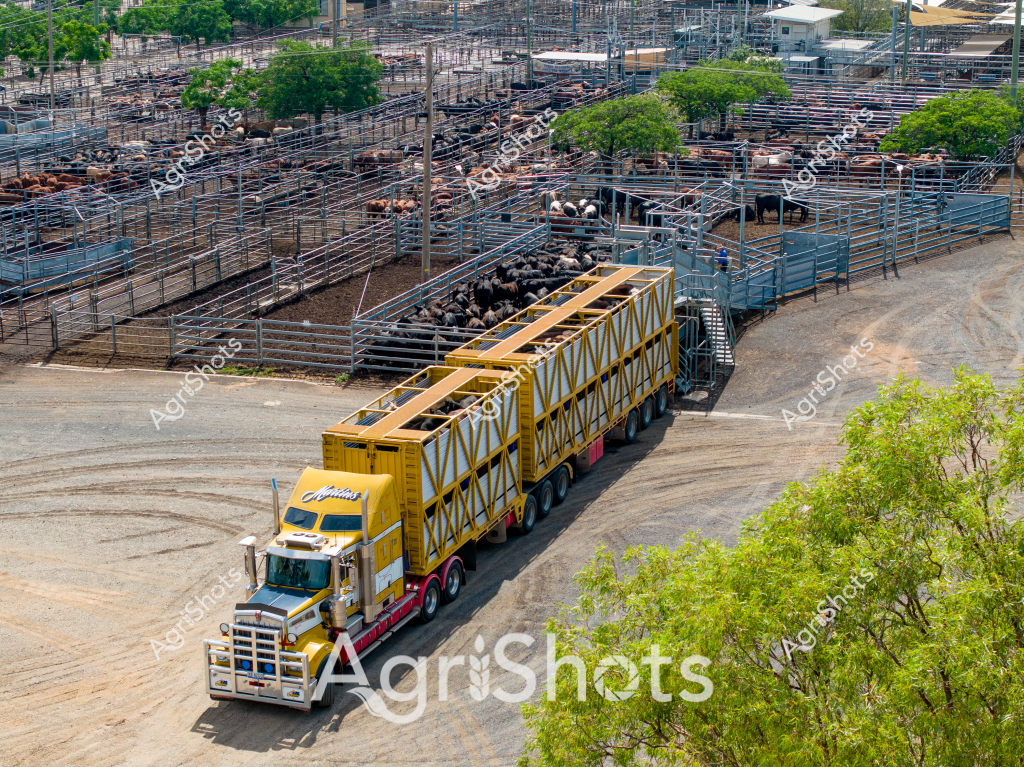
A sprawling cattle yard in the Australian outback features a striking yellow and white multi-axle livestock transport truck positioned amid numerous metal cattle pens. Numerous black beef cattle are densely grouped within the blue-gray metal holding yards, surrounded by trees and gravel roadways. The heavy-duty truck, likely a Kenworth or Western Star model designed for long-haul cattle transportation, has an extensive multi-level trailer configuration specifically engineered for moving large herds across vast distances. The industrial agricultural setting reveals the intricate infrastructure required for transporting livestock, with precisely engineered fencing, multiple interconnected yards, and specialized heavy transport vehicles purpose-built for the challenging Australian rural landscape. Mature green trees provide some natural backdrop to the intense industrial agricultural scene, highlighting the intersection of rugged terrain and sophisticated livestock management techniques. The yellow truck stands out dramatically against the earthy tones of the cattle yard, symbolizing the critical role of transportation in Australia's massive beef production industry.
 Image
Image
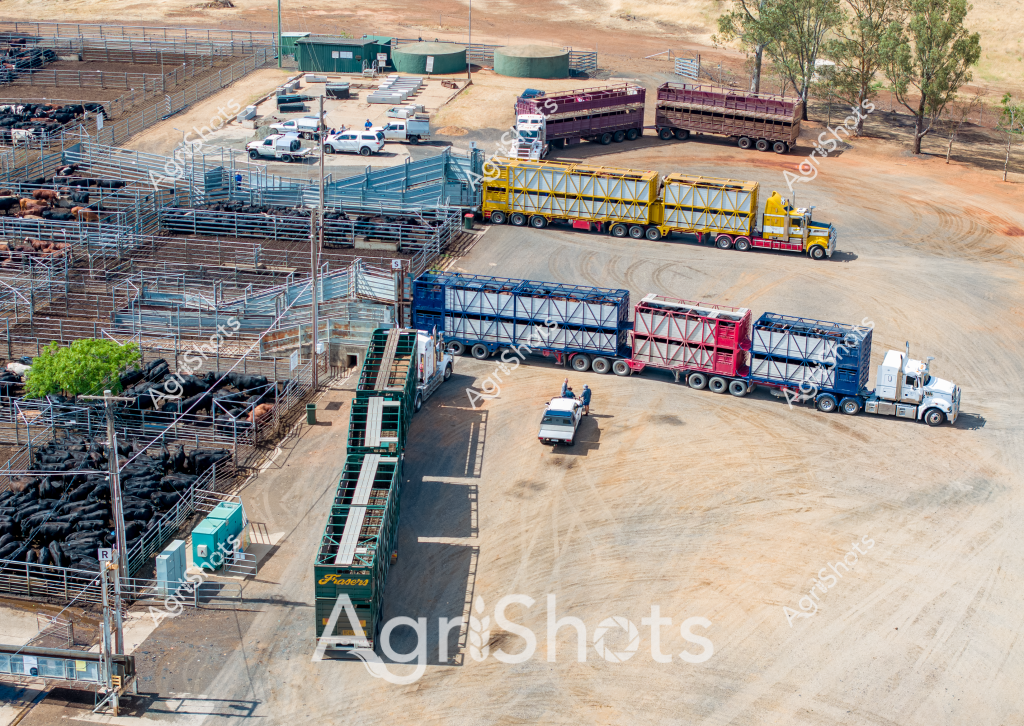
A bustling livestock transport hub captures the essence of Australia's robust cattle industry. Multiple large trucks with extended trailers are positioned within a dirt yard, surrounded by extensive metal cattle yards filled with black cattle. The scene is set in an arid landscape, with sparse trees and a green-roofed processing shed in the background, suggesting a remote cattle station in Western Australia or the Northern Territory. Yellow and white road trains with multiple linked trailers dominate the foreground, their robust design specifically engineered for long-distance livestock transportation across challenging rural terrain. The trucks are strategically parked near loading ramps, ready to transport cattle between properties or to processing facilities. Smaller utility vehicles are scattered around the yard, indicating active staff managing the livestock movement. The metal cattle yards are densely populated with black beef cattle, likely Angus or Wagyu breeds, standing in organized sections separated by robust galvanized steel fencing. The dusty, ochre-colored ground and sparse vegetation highlight the rugged environmental conditions typical of Australian cattle country. Sophisticated livestock handling infrastructure demonstrates the professional and efficient approach to cattle management in Australia's agricultural sector. This aerial view reveals the complex logistics and infrastructure required to support large-scale cattle transportation, showcasing the critical role of road transport in Australia's beef industry supply chain.
 Image
Image
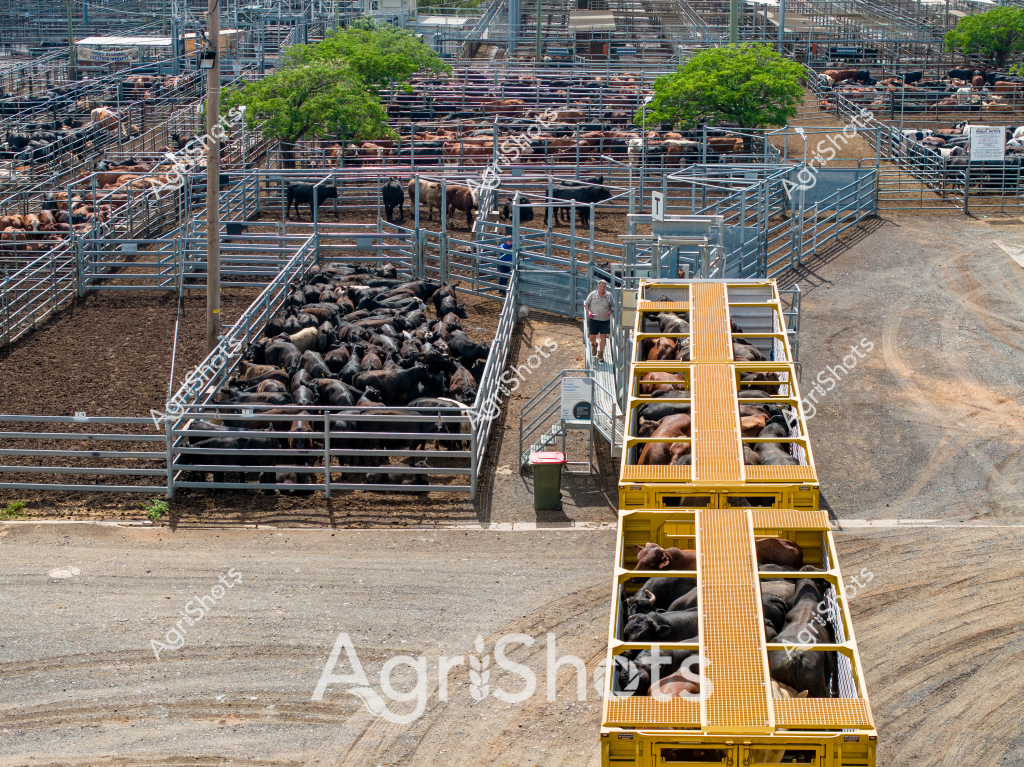
A bustling livestock processing facility showcases multiple pens of black cattle in a complex metal yard system. A series of bright yellow multi-level loading decks stand ready for animal transportation, with cattle carefully sorted and positioned on different compartment levels. A person wearing light-colored clothing can be seen standing on one of the elevated walkways, monitoring the livestock movement and sorting process. The facility appears meticulously organized, with multiple interconnected metal pen sections allowing efficient animal management and movement. Green trees punctuate the background, providing some natural contrast to the industrial agricultural infrastructure. The ground is dusty and compact, typical of a high-traffic livestock handling area, with precise metal fencing defining each processing zone. The scene represents a professional cattle handling operation, demonstrating the sophisticated infrastructure required for modern livestock transportation and management. The yellow transport decks and intricate metal pen system highlight the technical precision involved in moving and sorting livestock, showcasing Australia's advanced agricultural logistics and animal handling practices.
 Image
Image
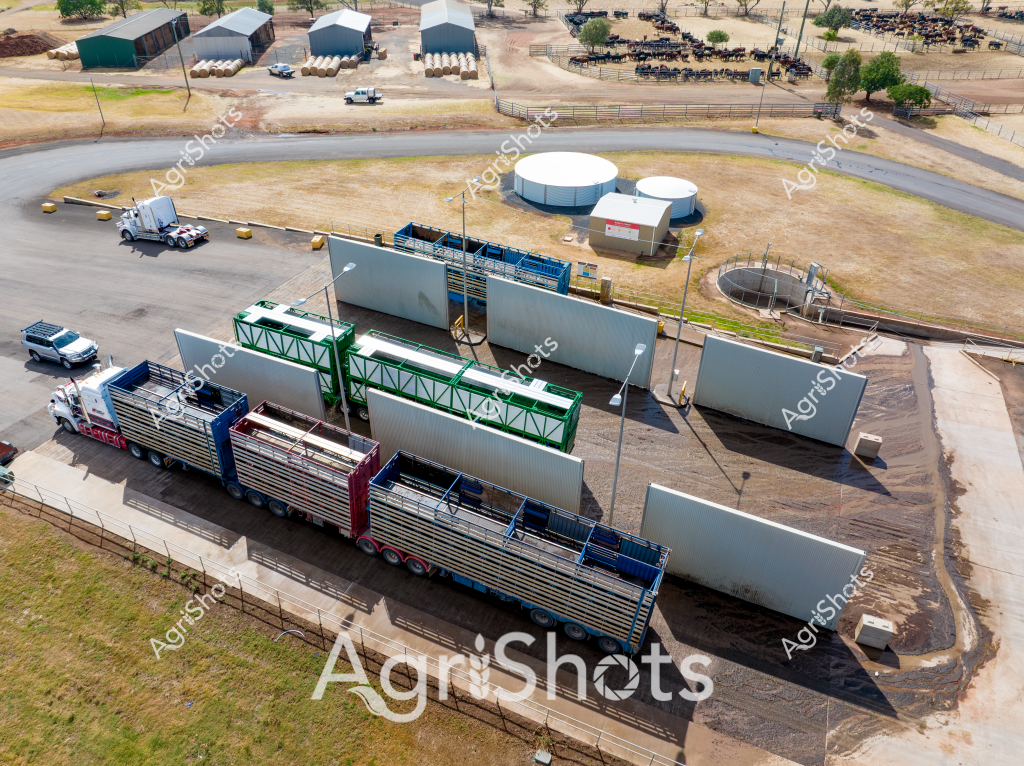
An aerial view of a livestock processing facility reveals a complex agricultural infrastructure designed for efficient cattle management. Large white modular walls and green-framed structures create a systematic loading and unloading area for semi-trailer trucks. White cylindrical water tanks and circular holding pens surround the central processing zone, indicating a modern cattle handling facility likely located in a dry, arid region with sparse vegetation and dusty ground. A semi-trailer truck is positioned within the loading zone, suggesting preparation for transporting livestock. The surrounding landscape features several industrial-style sheds with metal roofing in green and grey tones, and a series of fenced paddocks where numerous dark-colored cattle can be seen clustered together. The infrastructure demonstrates precision engineering typical of contemporary Australian agricultural operations, with carefully designed pathways, sturdy infrastructure, and strategic layout to maximize efficiency in livestock movement and processing. Gravel and concrete surfaces provide durable, functional spaces for heavy vehicle and animal traffic, reflecting the demanding environmental conditions of rural livestock production zones. The aerial perspective offers a comprehensive view of the facility's layout, highlighting the sophisticated systems developed to manage large-scale cattle operations in challenging agricultural environments.
 Image
Image
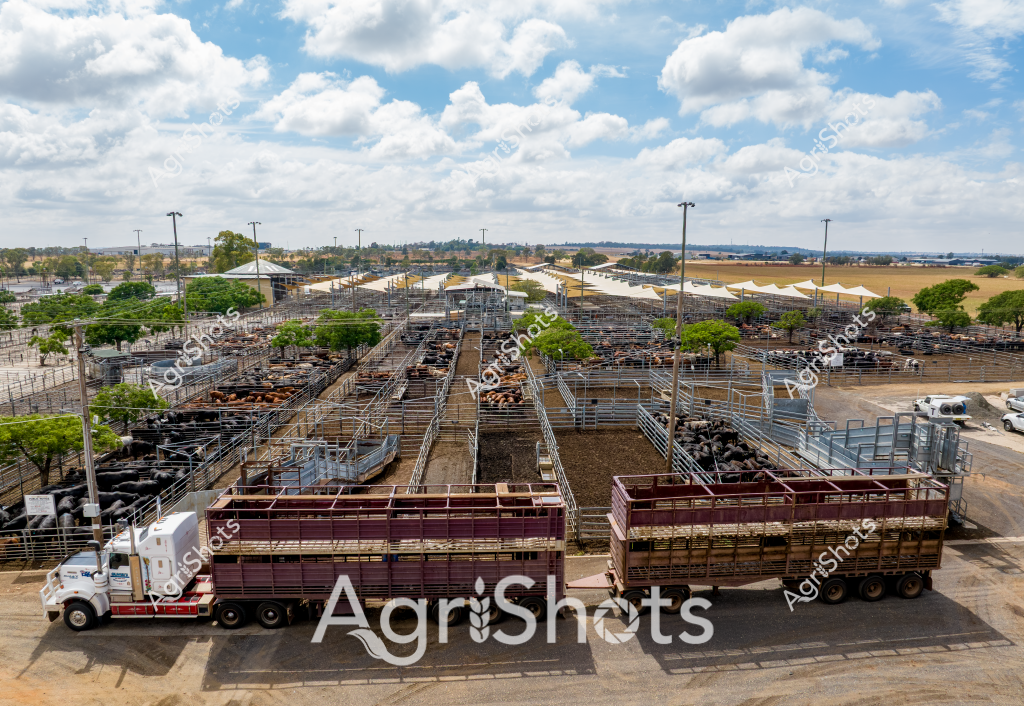
A sprawling livestock saleyard in an open rural landscape, with multiple metal cattle pens stretching across the scene under a bright, cloud-dotted sky. Rows of black cattle are penned in carefully organized enclosures, with green trees interspersed between the metal fencing and walkways. Two large livestock transport trucks with burgundy trailers are parked in the foreground, ready to load or unload cattle. The facility appears to be a modern, well-organized beef cattle operation, with high metal fencing, shade structures, and carefully planned infrastructure designed for efficient animal management. Tall light poles dot the landscape, providing illumination for round-the-clock operations, while the surrounding terrain shows a gently rolling horizon with farmland and distant treelines visible in the background. The scene captures the scale and precision of contemporary Australian cattle farming, showcasing the infrastructure required to manage large herds in a systematic and controlled environment. Metallic fencing, carefully arranged pens, and strategic placement of trees and shade structures demonstrate the sophisticated approach to livestock management in modern agricultural practices.
 Image
Image
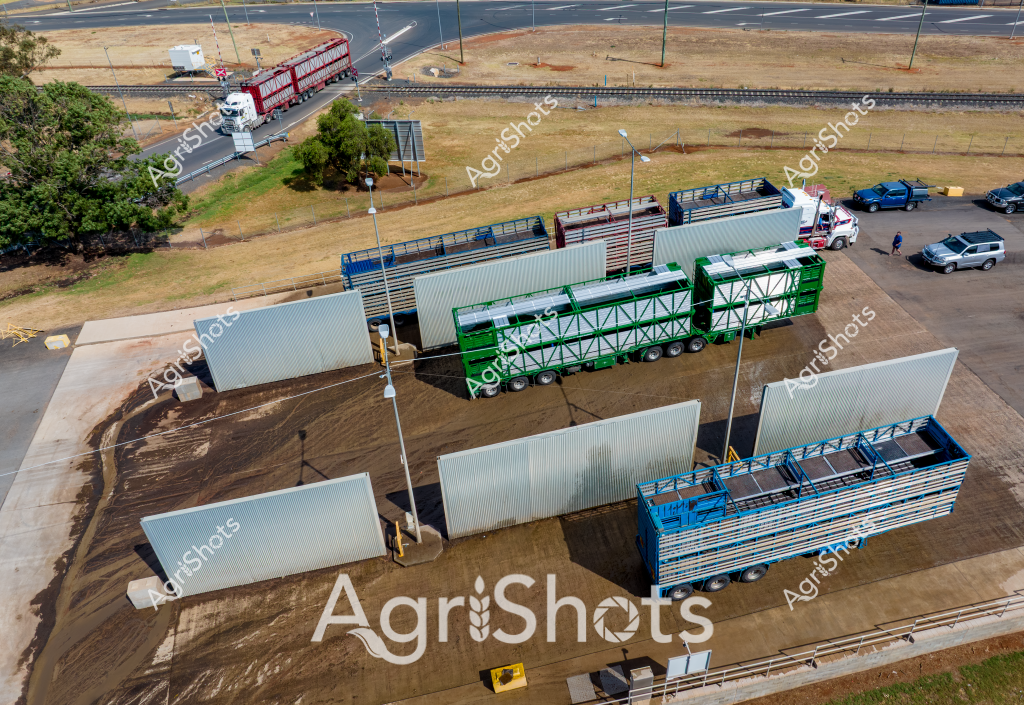
An aerial view of a transport and logistics hub showcases specialized livestock trailers designed for cattle transportation. Multiple multi-axle trucks with green, blue, and white animal transport containers are strategically positioned on a concrete hardstand area adjacent to railway lines. The scene reveals heavy-duty commercial vehicles with intricate steel framing and multiple decks, engineered to safely move livestock across Australian agricultural regions. Surrounding infrastructure includes grassy verges, bitumen roads, and railway tracks, indicating this is a professional livestock transportation staging area. Parked vehicles in the background suggest ongoing logistics operations, with the entire facility demonstrating the sophisticated infrastructure supporting Australia's cattle transport networks. The trailers feature robust steel construction with multiple levels, ventilation gaps, and secure railings - critical design elements for animal welfare during long-distance transportation. The green and blue color schemes of the trailers provide visual contrast against the dusty brown ground and gray infrastructure, highlighting the specialized nature of agricultural transport equipment.
 ▶ Video
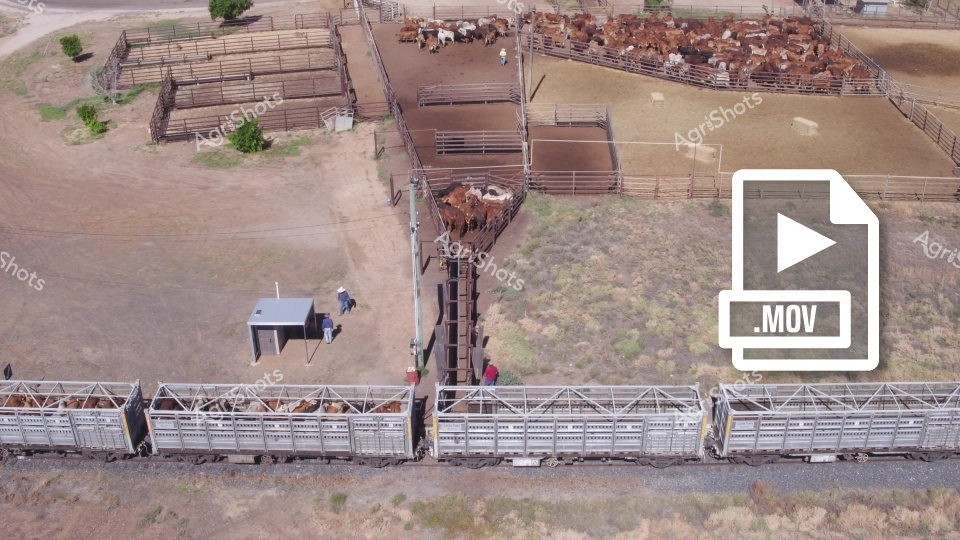
An aerial view captures cattle yards in Central West Queensland where a road train is positioned alongside the sale yards facility. The expansive cattle yards feature metal rail fencing systems designed for managing beef cattle, with loading ramps and walkways connecting different sections of the facility. The road train truck and trailer combination sits ready for cattle transport, highlighting the essential logistics infrastructure that connects remote Queensland cattle stations to market. Shadows cast across the dusty yards emphasize the industrial scale of this cattle handling operation in the region's beef industry.
 ▶ Video
An aerial view captures cattle stockyards in Queensland's Central West region, where hundreds of beef cattle are penned in various yards while a road train waits alongside the sale yards facility. The expansive cattle operation shows multiple holding pens with brown and reddish cattle separated into different groups, with people working as stockmen visible managing the livestock. The large multi-trailer road train positioned at the loading ramp demonstrates the scale of cattle transport operations, ready to move cattle from these rural sale yards across the vast Queensland landscape.
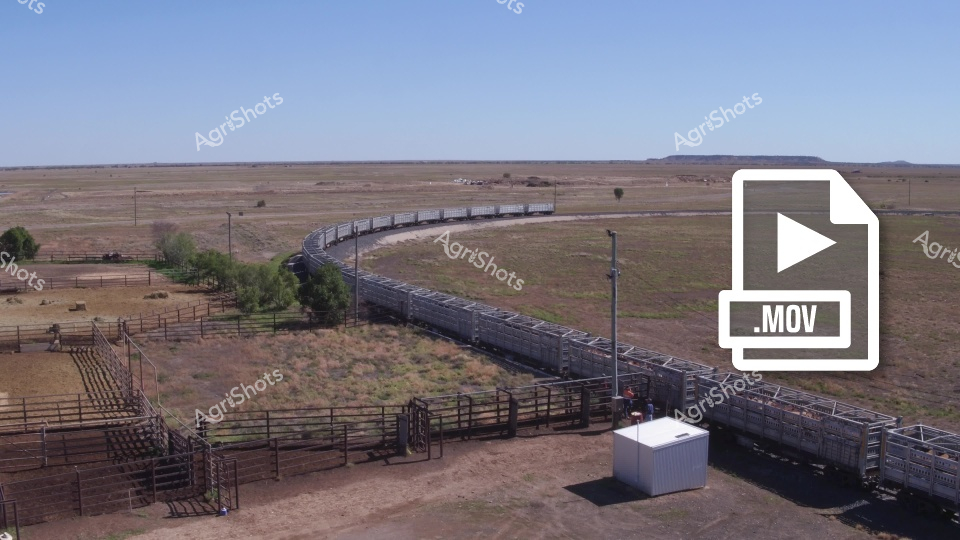 ▶ Video
A comprehensive cattle yards facility stretches across the Queensland landscape, featuring extensive metal rail systems and holding pens designed for efficient livestock handling. The curved rail infrastructure guides cattle through the yards, while a small white building serves as the operational center for station hands managing the beef cattle operations. A road train is positioned at the loading area, ready for cattle transport across the Central West Queensland region. The expansive rural setting showcases the scale of Australian beef industry operations, with the yards strategically designed for safe and efficient cattle movement during sale and transport activities.
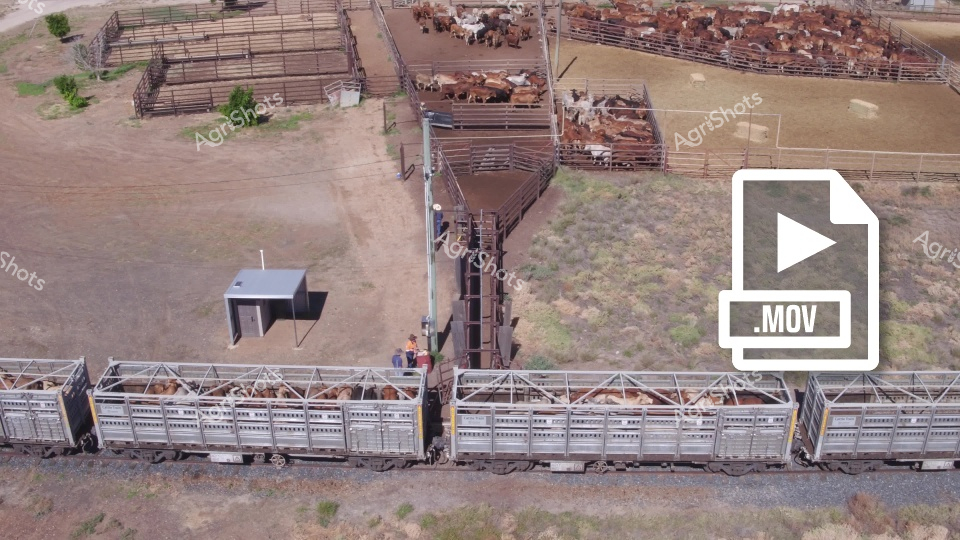 ▶ Video
An aerial view captures a busy cattle loading operation at Queensland sale yards, where hundreds of beef cattle are held in extensive wooden yard systems. A long road train with multiple livestock trailers is positioned alongside the loading ramp, ready to transport cattle to their next destination. The organized yard complex features numerous holding pens filled with cattle of various colors, while the surrounding landscape shows typical Central West Queensland terrain with sparse vegetation and dusty ground conditions.
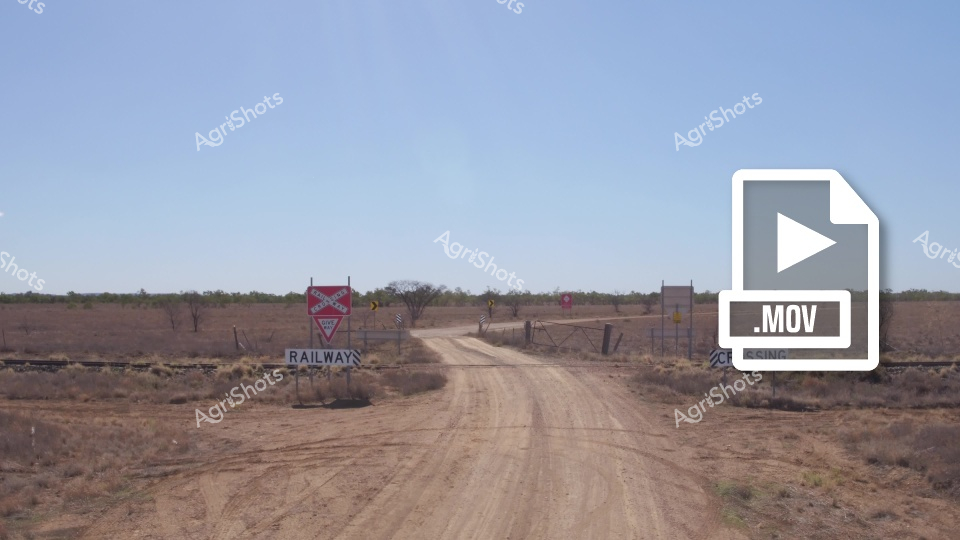 ▶ Video
A dusty gravel road stretches toward railway crossing infrastructure in the Central West Queensland region, with red warning signs marking the intersection where road trains transport cattle between stations and sale yards. The remote outback landscape features sparse vegetation under clear blue skies, highlighting the essential transport corridors that connect beef cattle operations across Queensland's vast pastoral areas. Railway lines cross this rural route, creating a critical junction for both road and rail transport of livestock in this cattle-producing region.
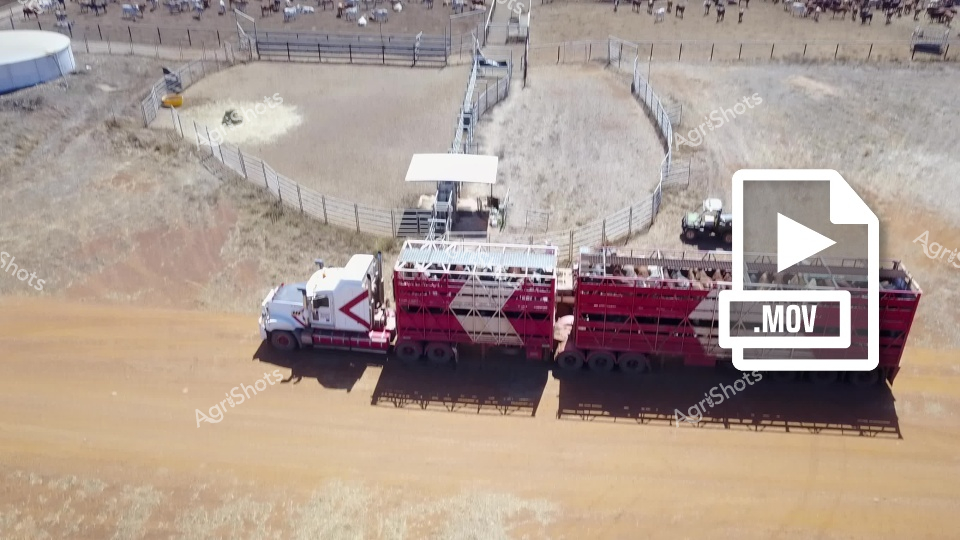 ▶ Video
A massive road train with red cattle transport trailers maneuvers through a Queensland feedlot facility, where organized pens contain hundreds of beef cattle across the expansive operation. The truck driver navigates the dusty yard system while cattle graze in sectioned paddocks, highlighting the scale of modern livestock transportation and feeding operations. This aerial perspective captures the systematic layout of the feedlot infrastructure, with metal fencing creating organized areas for efficient cattle management in the rural Queensland landscape.
 ▶ Video
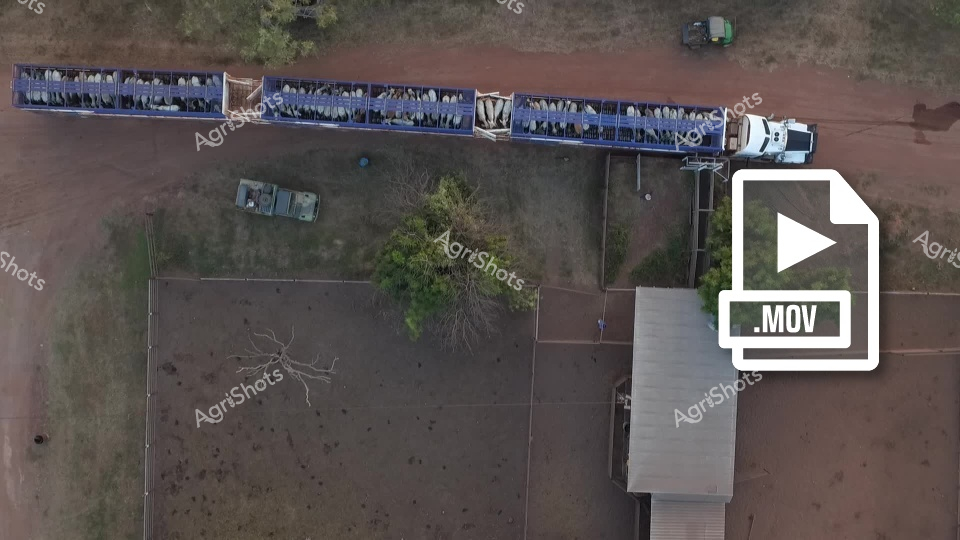
Aerial footage captures a long road train with multiple cattle trailers positioned alongside cattle yards in the Northern Territory, with hundreds of Brahman cattle visible in the holding pens. The distinctive humped Brahman beef cattle are densely packed in the blue-railed yards, creating clouds of dust as they move about the station facilities. A white Kenworth truck cab sits at the front of the impressive multi-trailer configuration, ready to transport cattle across the vast distances typical of NT cattle stations. Trees and rural infrastructure dot the landscape around this bustling livestock operation.
 Image
Image
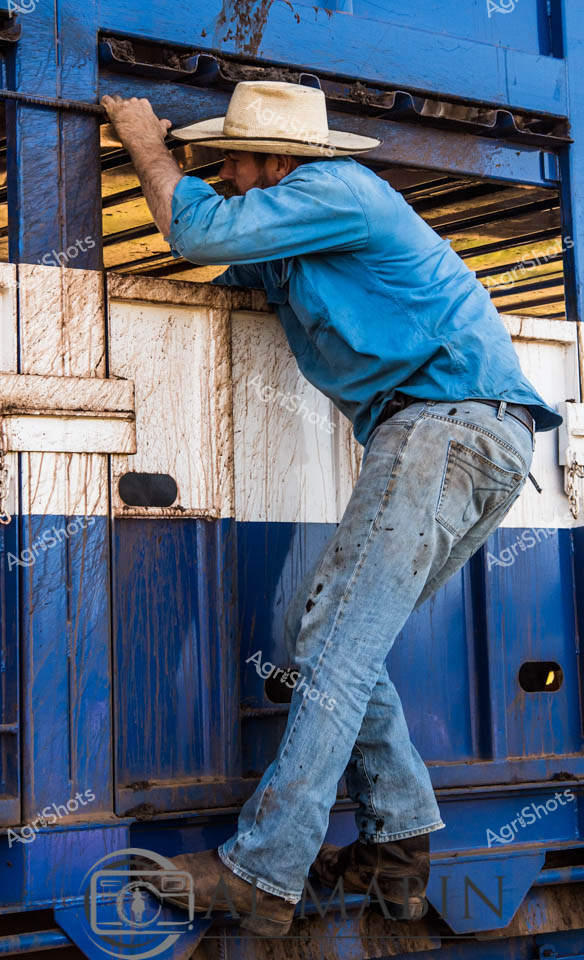
A man working as a stockman climbs onto the side of a weathered blue road train in the Northern Territory cattle yards. The worker, wearing a light blue shirt, cowboy hat, and denim jeans, demonstrates the hands-on nature of cattle station operations as he accesses the truck's loading compartments. The dusty, sun-beaten road train shows the rugged conditions of Northern Territory beef cattle transport, with its painted blue exterior weathered from countless journeys across the outback. This scene captures the essential logistics of moving Brahman cattle from remote stations to market, highlighting the physical demands and practical skills required in Australia's extensive beef cattle industry.
 Image
Image
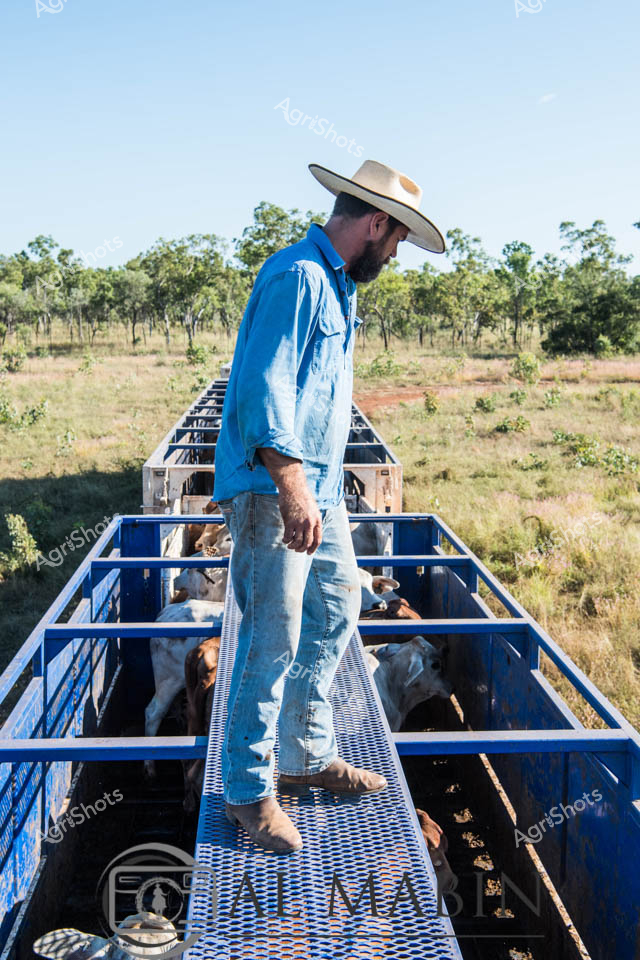
A man working as a station hand walks along the blue metal walkway of cattle yards in the Northern Territory, overseeing Brahman cattle below. The distinctive humped Brahman beef cattle move through the blue steel yards beneath him, their light-colored coats catching the sunlight. Sparse trees dot the arid landscape beyond the yards, typical of Northern Territory cattle station country. The scene captures the essential work of cattle handling in Australia's remote pastoral regions, where road trains transport cattle across vast distances.
 Image
Image
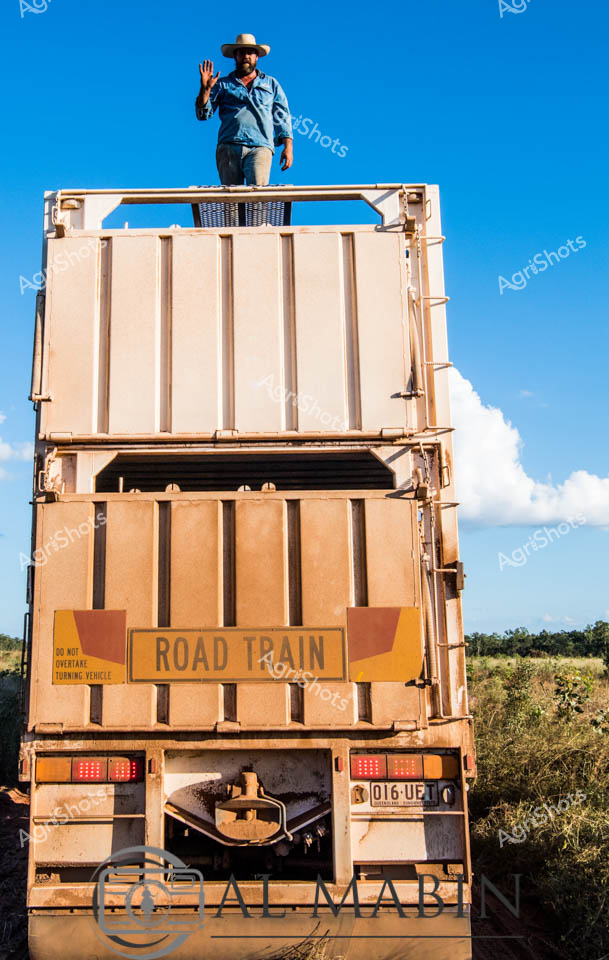
A man in work clothes and hat waves from atop a large road train truck loaded with cattle transport trailers in the Northern Territory. The massive vehicle, clearly marked as a "ROAD TRAIN," represents the essential livestock transport infrastructure connecting remote cattle stations across Australia's vast outback. Against a brilliant blue sky dotted with white clouds, this scene captures the scale and logistics required to move beef cattle from station yards to processing facilities across the Territory's expansive pastoral regions. The towering truck configuration demonstrates the specialized equipment needed for long-distance cattle transport in Australia's remote agricultural areas.
 Image
Image
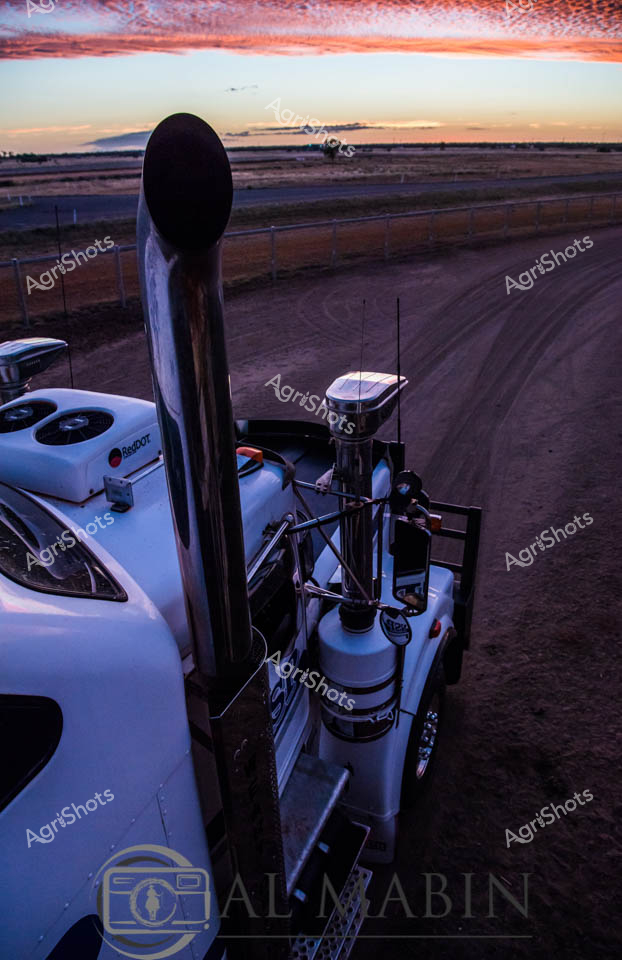
Twilight descends on a remote Northern Territory cattle station, casting a dramatic pink and orange sky over the dusty landscape. A sleek white Kenworth truck sits poised at the cattle yards, its vertical exhaust pipe standing tall like a sentinel against the fading light. Precision agricultural technology is evident in the truck's sophisticated equipment, with gleaming metal components and electronic monitoring systems highlighting the modern approach to cattle transport. The rugged terrain stretches out behind the vehicle, revealing the endless horizons typical of Australia's northern cattle country. Tire tracks in the foreground suggest recent movement, hinting at the continuous work of mustering and transporting livestock across vast pastoral lands. The scene captures the intersection of traditional cattle farming and contemporary agricultural technology, symbolizing the resilience and innovation of Australia's beef industry against the breathtaking backdrop of an outback sunset.
 Image
Image
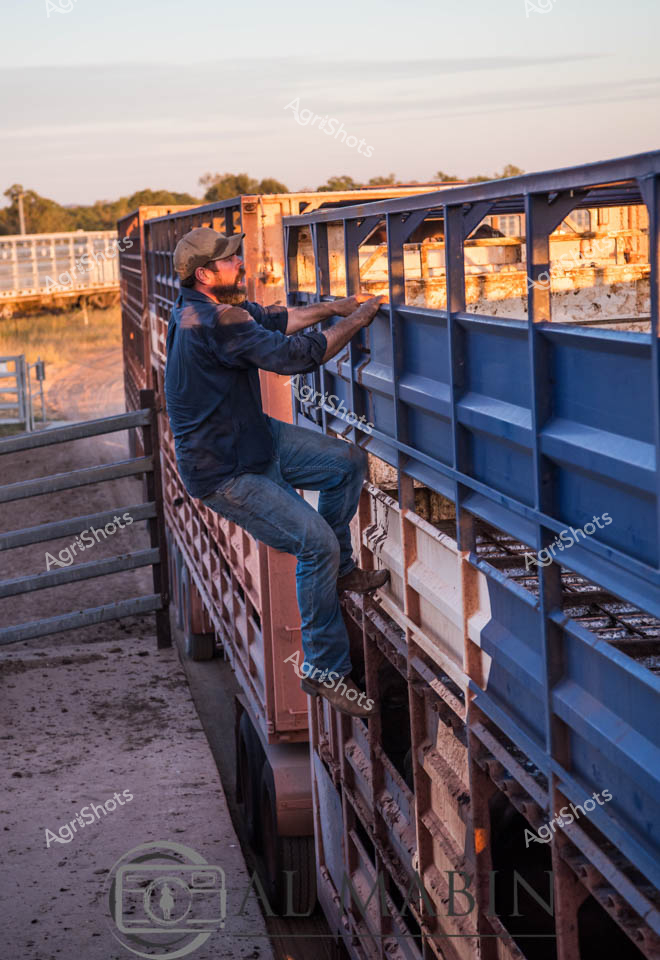
A farm worker climbs onto a road train trailer at a cattle station during golden sunset hours in the Northern Territory. The worker is positioned between the blue metal cattle crates of the truck, preparing for cattle loading operations in the dusty station yards. Brahman cattle can be seen in the background pens, with trees silhouetted against the warm evening sky. This scene captures the essential logistics of beef cattle transport, where road trains move livestock across the vast distances of Australia's pastoral regions.
 Image
Image
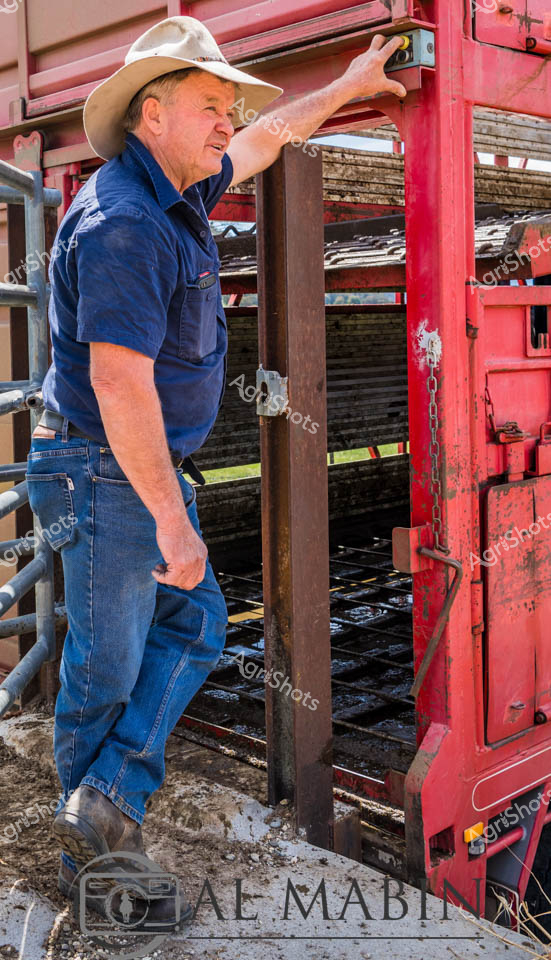
A stockman in a blue work shirt and cowboy hat operates a cattle loading gate at a red cattle transport truck in Victoria. The man carefully manages the loading mechanism as Hereford cattle move through the yards behind him. The dusty ground and metal railings highlight the practical infrastructure essential for beef cattle transport operations. This scene captures the hands-on work required in modern Australian livestock logistics.
 Image
Image
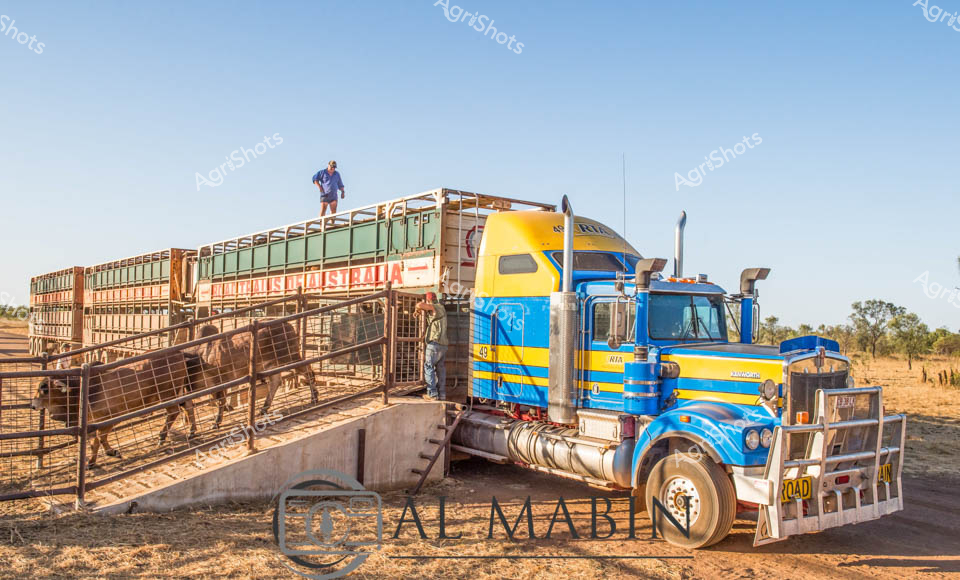
Bathed in the golden light of a late afternoon in the Northern Territory, a vibrant blue and yellow Kenworth road train stands ready for cattle transport at a rural loading yard. Sturdy Brahman cattle, with their distinctive humped shoulders and loose skin, await loading into the multi-tiered stock trailer, their pale gray-white coats contrasting against the dusty, ochre landscape. A worker stands atop the trailer, surveying the loading process against a backdrop of sparse woodland and clear azure skies, embodying the resilience of Australia's pastoral industry. The heavy-duty truck, equipped with robust bullbars and multiple exhaust stacks, represents the lifeline of cattle transportation across vast, remote Australian landscapes, bridging remote cattle stations with processing facilities. The intricate metal loading ramps and sturdy cattle yards speak to the precision and infrastructure required in large-scale cattle operations, where every detail is carefully engineered to manage livestock efficiently and safely. This scene captures the quintessential spirit of the Northern Territory's beef industry - tough, pragmatic, and deeply connected to the harsh yet beautiful Australian outback.
 Image
Image
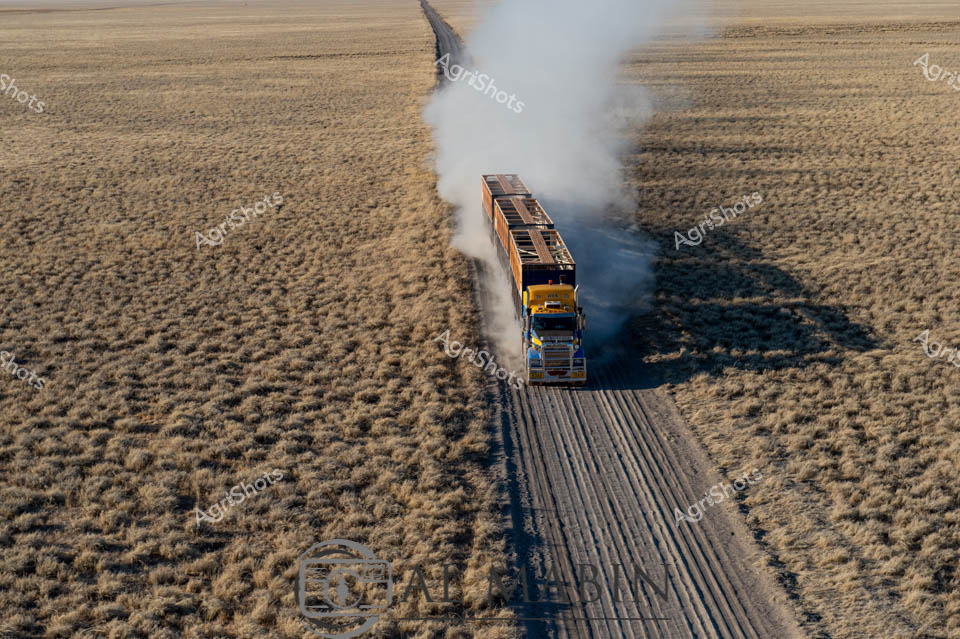
Thundering across the arid Northern Territory landscape, a golden road train carves a dusty path through the sparse saltbush and spinifex grasslands. The massive truck, loaded with cattle, churns up a billowing cloud of ochre dust against the muted browns and greys of the expansive station country. Its powerful diesel engine leaves a trailing plume of smoke, a testament to the challenging conditions of long-haul livestock transport in Australia's rugged interior. The perfectly aligned track cuts a stark line through the windswept terrain, highlighting the precision and resilience required in transporting cattle across vast pastoral stations. This iconic road train represents the lifeblood of the beef industry, connecting remote cattle stations to markets and processing facilities thousands of kilometers away. The early morning light accentuates the truck's weathered yellow paint and robust design, purpose-built to endure the unforgiving outback environment. A powerful visual narrative of agricultural logistics, this image captures the raw essence of Australia's cattle transport infrastructure - a critical link in the nation's beef production chain that connects remote northern stations to the global food supply.
 Image
Image
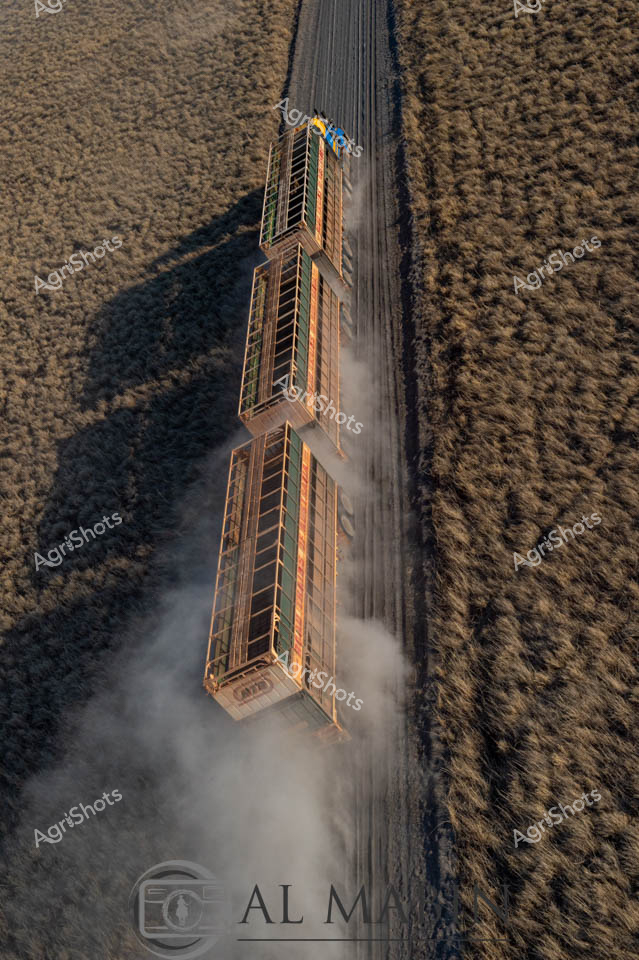
Thundering across the ochre plains of the Northern Territory, a massive road train cleaves through dusty scrubland, its triple-trailer configuration casting long shadows on the arid landscape. Billowing clouds of fine red dust erupt around the articulated truck, creating an ethereal veil that softens the harsh outback terrain. The golden-hued trailers, stacked with precision, represent the lifeline of cattle transport in Australia's remote cattle stations - a critical link in the beef supply chain that connects isolated pastoral properties to distant markets. The aerial perspective captures the raw power and isolation of agricultural logistics, with the road train appearing almost like a mechanical serpent traversing the monochromatic brown and rust-colored wilderness. Wisps of dust swirl beneath and around the vehicle, highlighting the immense ground clearance and robust engineering required to navigate these unforgiving landscapes. This image embodies the spirit of Australian agricultural resilience - machinery and human determination conquering vast, challenging terrains to sustain one of the nation's most important primary industries.
 ▶ Video
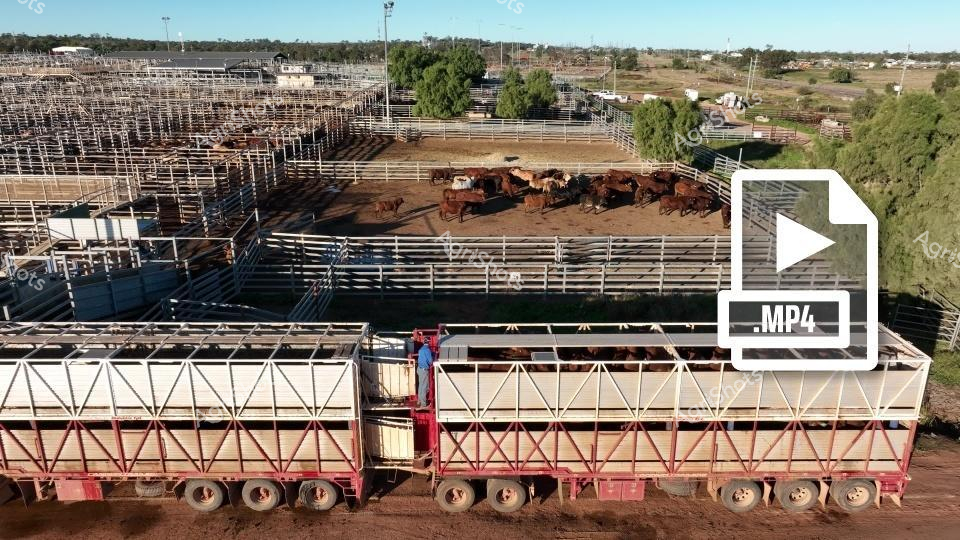
Dusty golden light bathes the expansive cattle sale yards in Queensland, capturing a quintessential moment of Australia's livestock trading culture. A fleet of heavy-duty cattle transport trailers stands ready beside intricate wooden livestock pens, their red and white metal framework gleaming under the late afternoon sun. A herd of rich chocolate and reddish-brown Brahman cattle clusters together in the holding yard, their distinctive humped shoulders and loose skin reflecting generations of adaptation to harsh Australian conditions. The aerial perspective reveals the meticulous infrastructure of this agricultural hub - a complex network of sturdy timber fencing and carefully designed holding areas that facilitate the critical process of livestock trading. Surrounding paddocks and distant treelines frame the scene, highlighting the vast, open landscape that defines rural Queensland. These sale yards represent more than a transaction point; they are a vital artery in Australia's beef production ecosystem, where farmers, agents, and buyers converge to negotiate and transfer livestock. The MP4 video icon suggests this is a dynamic, motion-captured moment - a living, breathing snapshot of Australia's agricultural heartland in progress.