Results for “Bone”
 Image
Image
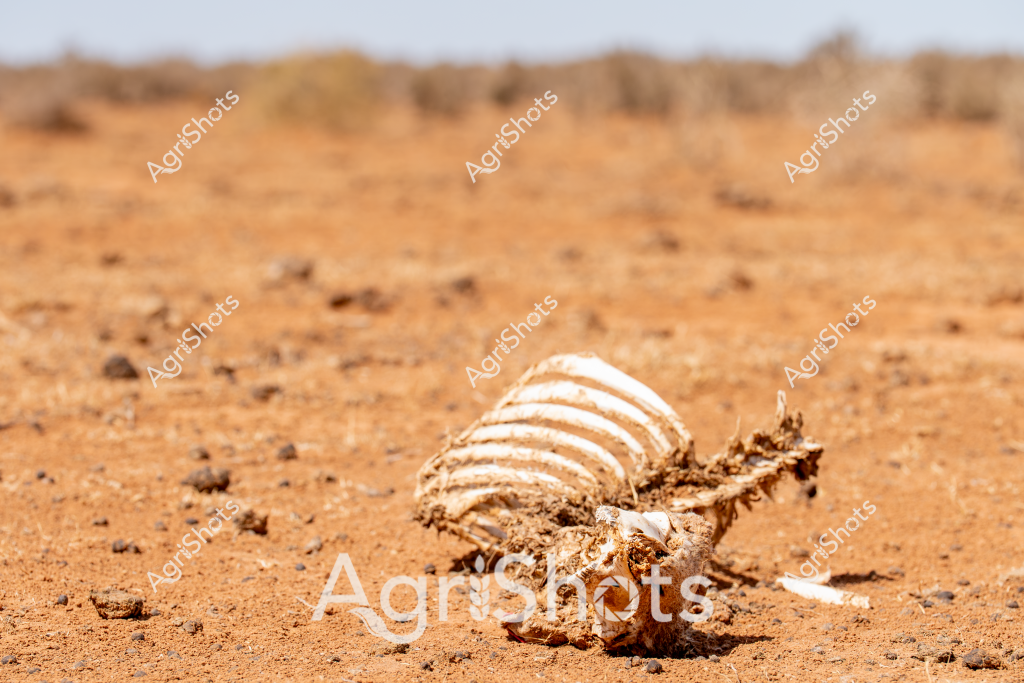
A bleached animal skeleton lies partially decomposed on a dry, reddish-orange desert landscape, revealing the stark ribcage and skeletal structure against the arid, rocky ground. The parched earth surrounding the bones is cracked and barren, with sparse vegetation and distant shrubs indicating an extreme drought environment typical of Australia's interior regions. Weathered and sun-bleached, the skeletal remains tell a grim story of survival and the unforgiving nature of the outback's harsh conditions. The monochromatic palette of rust-colored soil and white bone fragments creates a haunting visual that captures the raw, unrelenting reality of life and death in an uncompromising landscape. This image powerfully illustrates the challenging environmental conditions that test the resilience of both wildlife and agricultural systems in Australia's most arid zones.
 Image
Image
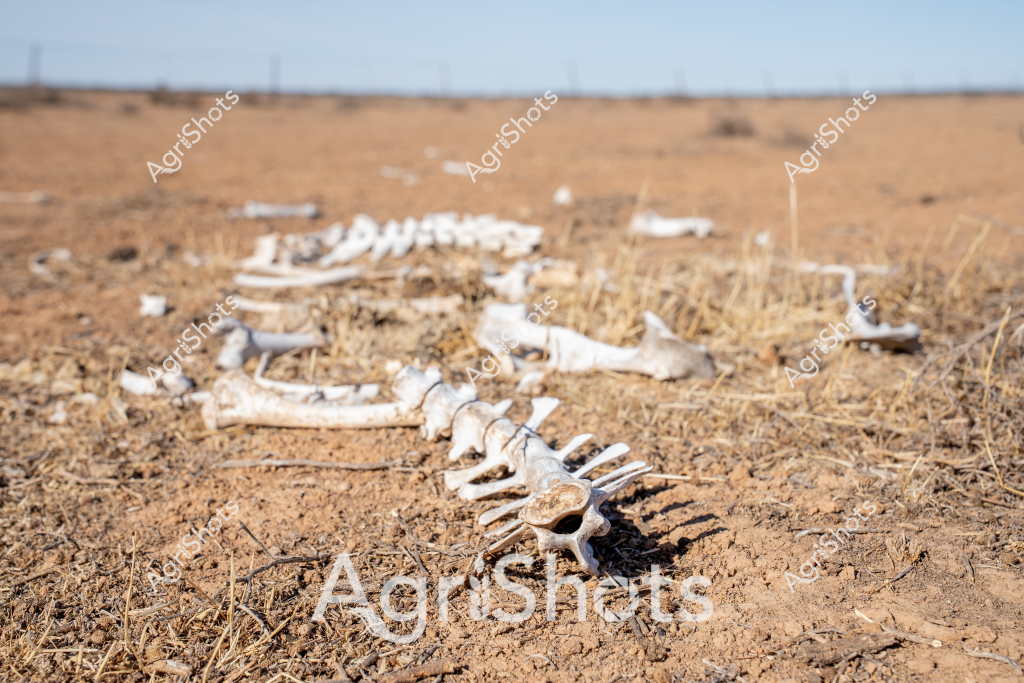
Based on the image and our agricultural stock photography guidelines, here's a detailed description: Skeletal remains of an animal are scattered across a dry, arid landscape, revealing the harsh realities of drought conditions in the Australian outback. Bleached white bones are carefully positioned against the parched, reddish-brown earth, with sparse dry grasses and scattered stones surrounding the skeletal fragments. The barren terrain stretches to a distant horizon, punctuated by faint power lines or fence posts, creating a stark visual representation of environmental stress. The bone structure appears to be from a large mammal, possibly cattle or a large wild animal, with vertebrae and other skeletal elements spread across the ground in a fragmented pattern. The image captures the unforgiving nature of extreme drought, where life struggles to survive and the landscape becomes a bleached memorial to the challenges of survival in Australia's most challenging agricultural regions. The scene powerfully illustrates the impact of prolonged dry conditions on livestock and wildlife, serving as a stark reminder of the environmental challenges faced by Australian farmers and graziers in arid and semi-arid zones.
 Image
Image
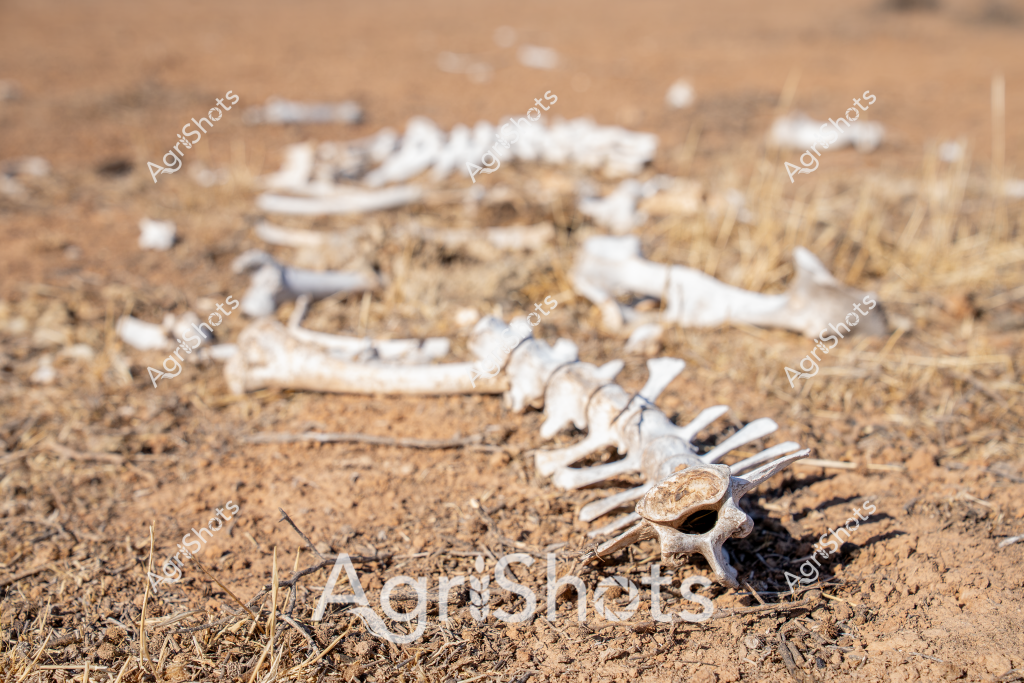
A haunting scene of scattered animal skeletal remains lies across a dry, dusty landscape with sparse grasses and sandy-brown earth. The bleached white bones are arranged in a fragmented, disarticulated pattern, suggesting the skeletal remains of a single animal that has decomposed over time. The stark white bones contrast sharply against the muted tan and brown tones of the ground, creating a poignant visual representation of environmental harshness and the cycle of life and death in an arid ecosystem. Each vertebra, rib, and bone fragment is weathered and sun-bleached, indicating prolonged exposure to the elements. The image evokes a sense of desolation and the unforgiving nature of drought-affected landscapes, where survival is a constant struggle and life can quickly fade into these fragile, skeletal reminders.
 Image
Image
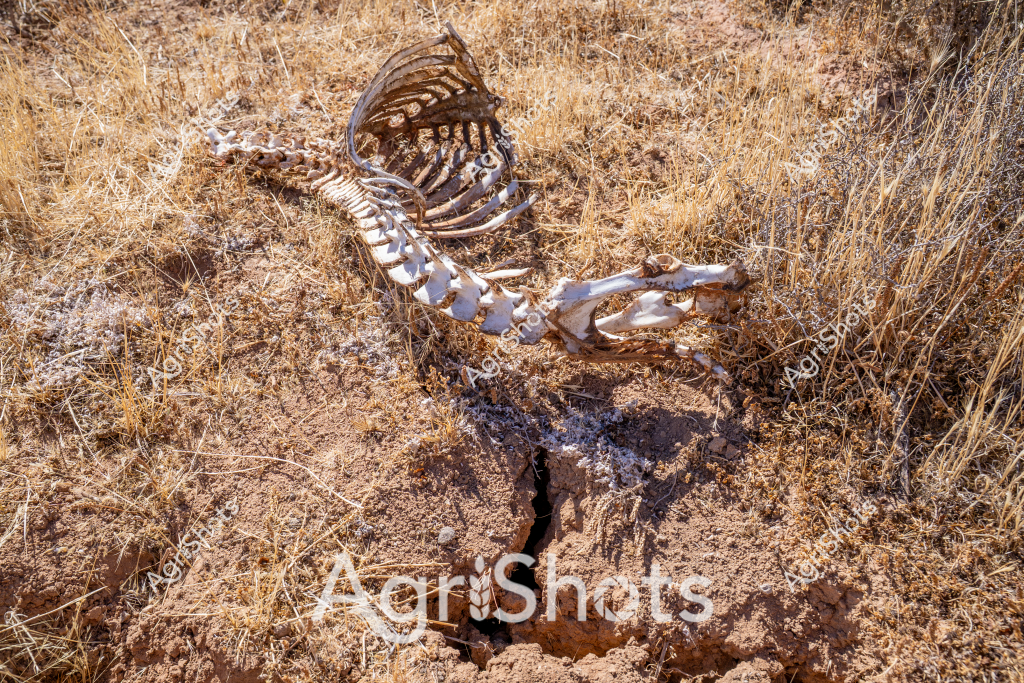
A skeletal remains of an animal lies exposed in a dry, golden grassland, partially nestled in a small eroded ground crack. The bleached white bones are fully articulated, showing the complete skeletal structure from skull to tail, with the ribcage prominently curved and limbs extended. Surrounding the skeleton is a landscape of drought-parched grass in shades of tan and brown, with sparse, weathered vegetation indicating harsh environmental conditions. The skeletal remains appear to have been naturally exposed by environmental processes, suggesting a potentially long period of decomposition in this arid setting. The stark white bones create a striking contrast against the muted, sun-bleached landscape, offering a raw and unfiltered glimpse of the natural cycle of life and death in an unforgiving ecosystem.
 Image
Image
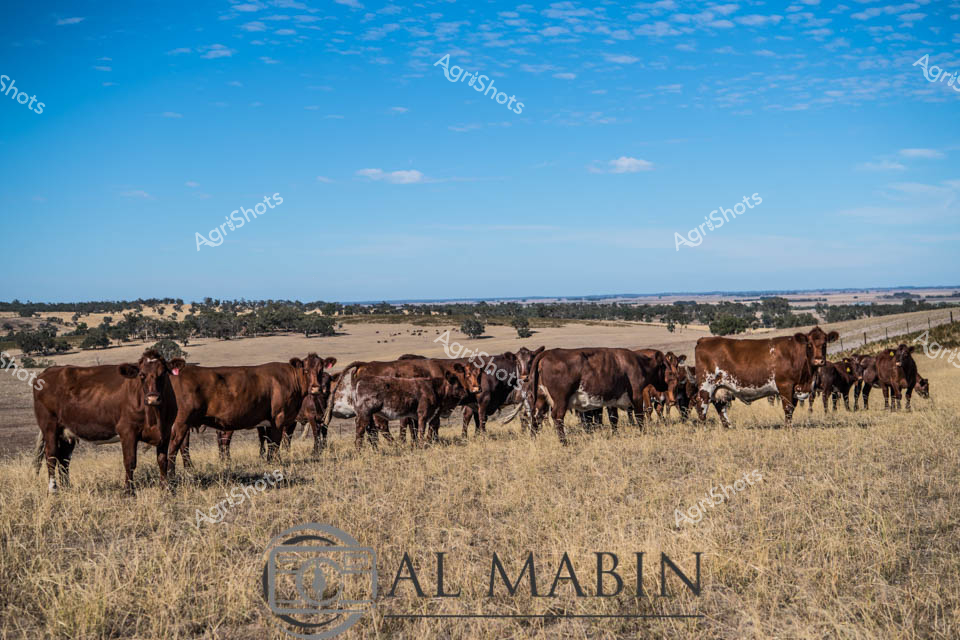
Rust-red Shorthorn cattle graze across a golden-hued pastoral landscape under a luminous blue sky dappled with soft white clouds. The herd stands resolute in dry summer grasslands, representing the robust genetics of a carefully managed agricultural bloodline. Mature cows and younger stock cluster together, their rich mahogany and chestnut coats gleaming in the bright Australian sunlight, highlighting the muscular confirmation typical of this resilient beef breed. The undulating terrain stretches to distant treelines, with scattered eucalypts marking the horizon, capturing the quintessential South Australian rural panorama. Each animal displays the hallmark traits of the Shorthorn breed - substantial build, strong bone structure, and calm temperament, reflecting generations of selective breeding for meat production.
 Image
Image
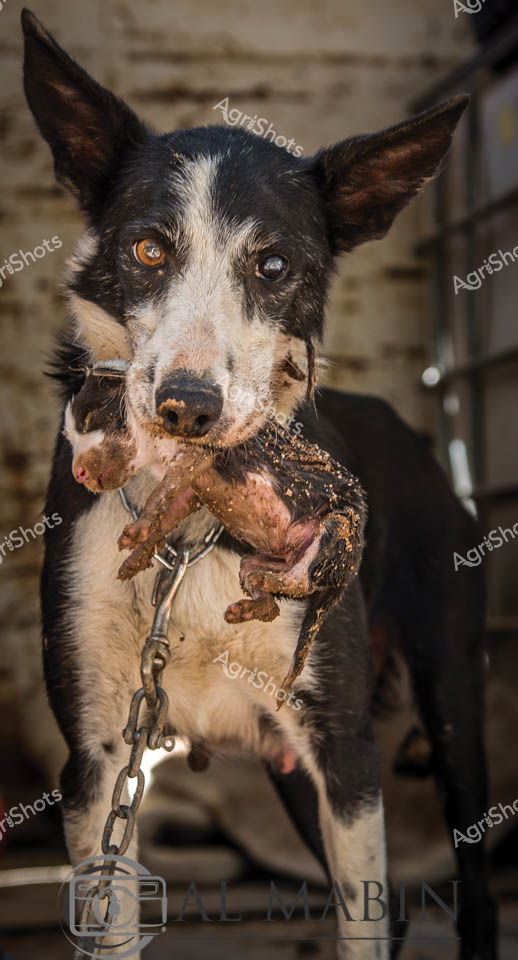
A weathered black and white working dog with alert amber eyes holds a muddy stick or bone in its mouth, showcasing the hardy nature of droving dogs used on Australian cattle stations. The dog's intelligent expression and sturdy build reflect the resilience required for life on the stock routes, where these loyal companions assist with mustering and moving livestock across vast rural properties. Dirt and debris on the dog's coat tell the story of long days working in dusty paddocks and along traditional droving paths.
 Image
Image
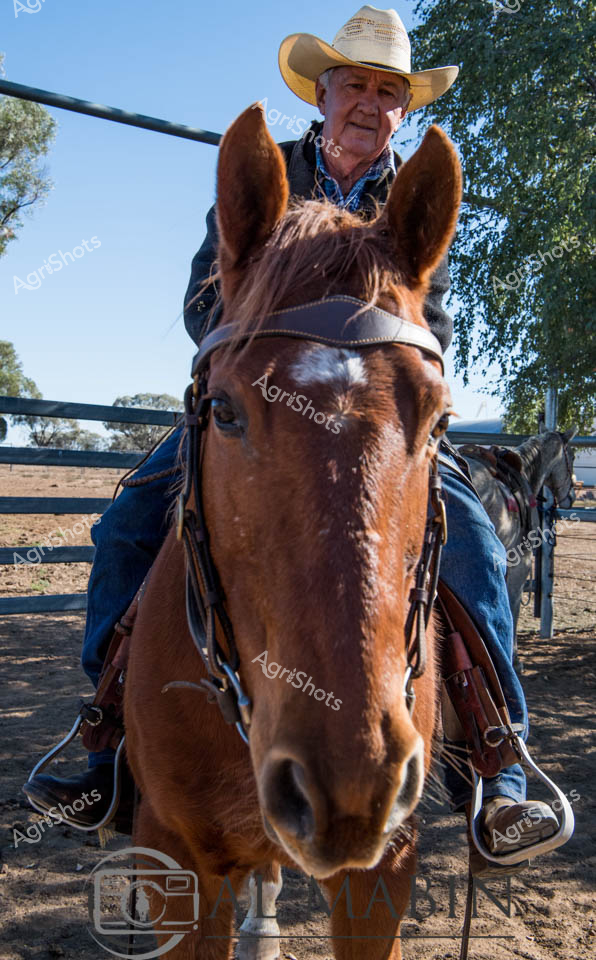
Weathered and wise, a seasoned stockman sits astride a rich bay horse within a sun-drenched Queensland cattle station paddock. The horse's muscular frame and attentive ears reflect years of mustering experience, wearing an intricate leather bridle that speaks to traditional pastoral craftsmanship. Dressed in a classic straw akubra and well-worn blue work attire, the stockman embodies the resilient spirit of Australian rural life, his posture relaxed yet alert against the backdrop of sparse eucalyptus trees and steel cattle yards. The close perspective captures the intimate connection between rider and mount, highlighting the horse's intelligent eyes and refined bone structure typical of station working horses. Dusty earth tones dominate the scene - the warm browns of horseflesh, the weathered tan of the stockman's hat, and the parched ground beneath - creating a tableau that resonates with the enduring character of Australia's agricultural heartland. This image encapsulates the quiet dignity of generational farming knowledge and the symbiotic relationship between humans and horses in managing vast pastoral landscapes.
 Image
Image
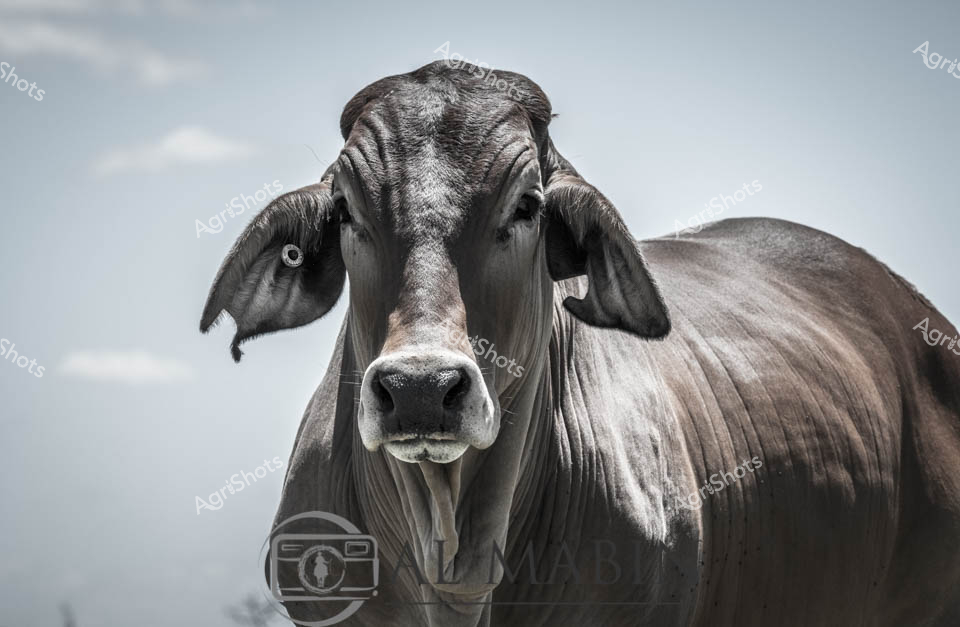
Brahman Cattle: Stoic Sentinel of the Northern Pastoral Landscape A magnificent Brahman bull stands resolute against the pale Queensland sky, his distinctive wrinkled hide and prominent dewlap epitomizing the resilience of cattle bred for harsh tropical conditions. The silvery-grey beast, with his powerful muscular frame and alert ears, represents the quintessential adaptation of Bos indicus genetics to Australia's challenging northern agricultural regions. His intense gaze speaks to generations of selective breeding that have produced these heat-tolerant, tick-resistant cattle critical to Queensland's beef industry. The subtle texture of his skin, rendered in monochromatic tones, reveals intricate details of muscle and bone structure that underscore the breed's remarkable functionality. This portrait captures the essence of pastoral strength - a living testament to the agricultural innovation that has transformed marginal landscapes into productive cattle stations. The bull's commanding presence embodies the spirit of northern Australian agriculture: resilient, robust, and beautifully adapted to survival.
 Image
Image
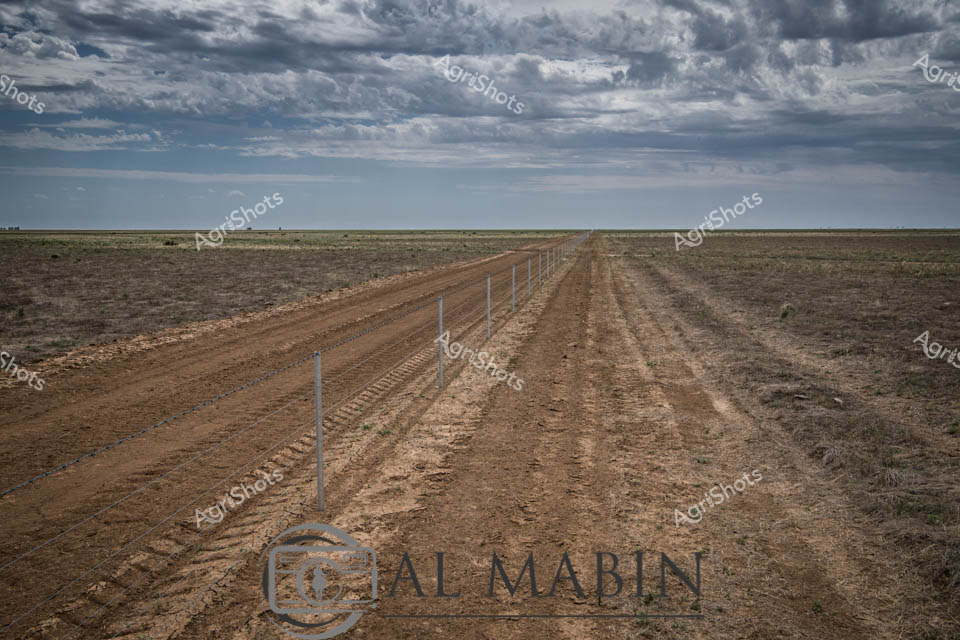
Endless dusty miles stretch beneath a turbulent sky of slate and pewter, a quintessential Australian pastoral landscape revealing the harsh realities of rural resilience. A precisely aligned fence line bisects the arid paddock, steel posts standing resolute against the unforgiving terrain, marking boundaries in a landscape seemingly untouched by recent rain. The ground bears witness to prolonged drought - compacted earth the color of weathered bone, with sparse vegetation clinging tenaciously to the cracked surface. Tire tracks and hoof prints tell silent stories of mustering and survival, etched into the ground like ancient hieroglyphs of agricultural persistence. Distant horizons blur between earth and brooding cloudscape, creating a sense of infinite space that is simultaneously beautiful and uncompromising. This image captures the raw essence of agricultural life in inland Australia - a testament to the endurance of farmers and the livestock in some of the world's most challenging agricultural environments.
 Image
Image
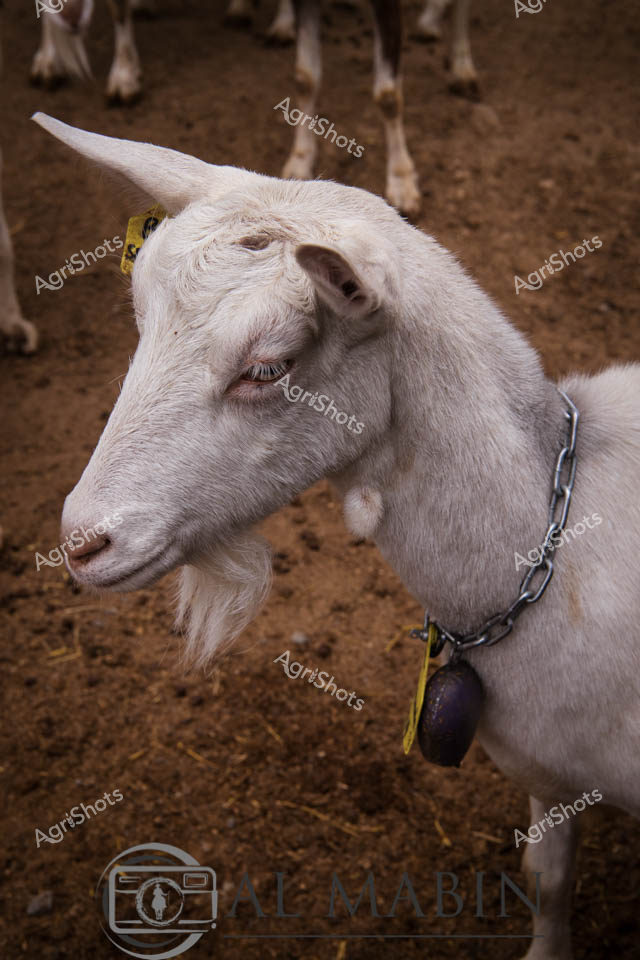
White Saanen dairy goat stands in contemplative profile against a rich brown earth backdrop, her pristine coat gleaming with soft, subtle curls. A metallic chain encircles her neck, punctuated by a deep purple bell that sways gently with her movements, signaling her presence in the herd. Her delicate features and alert ear posture suggest the refined breeding characteristic of high-quality dairy goat stock common throughout New South Wales agricultural regions. The close-up perspective captures intricate textural details - the fine hair, the nuanced curve of her horn, the weathered ground beneath her hooves - revealing the intimate connection between livestock and the land. Soft, diffused lighting emphasizes the goat's elegant bone structure and highlights the subtle gradations of white and cream in her coat. This portrait embodies the quiet dignity of Australian dairy goat farming, where precision breeding and attentive husbandry produce exceptional milk-producing animals integral to rural economic sustainability.
 Image
Image
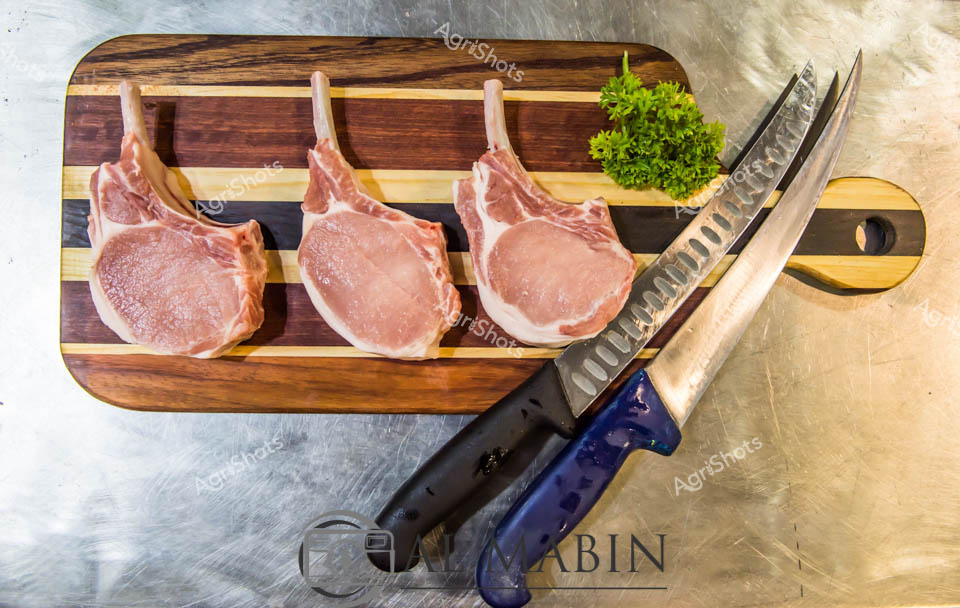
Premium Cut Pork Chops: Farm to Butcher Block Raw, bone-in pork chops rest elegantly on a multicolored wooden cutting board, revealing the pristine quality of premium Australian livestock production. The meat - pale pink and beautifully trimmed - represents Queensland's renowned pork industry, displaying three perfectly symmetrical cuts with delicate bone handles. A professional butcher's knife with a blue handle sits alongside the chops, its precision blade reflecting the meticulous craftsmanship of meat preparation. A small sprig of fresh parsley adds a vibrant green accent, suggesting culinary sophistication and farm-fresh quality. The striped wooden board, with its rich tones of blonde and deep brown timbers, creates a rustic yet professional backdrop that celebrates the artisan butchery tradition. This image captures the intersection of agricultural excellence and gastronomic precision, highlighting the care and skill involved in transforming livestock into premium meat products ready for discerning kitchens.
 Image
Image
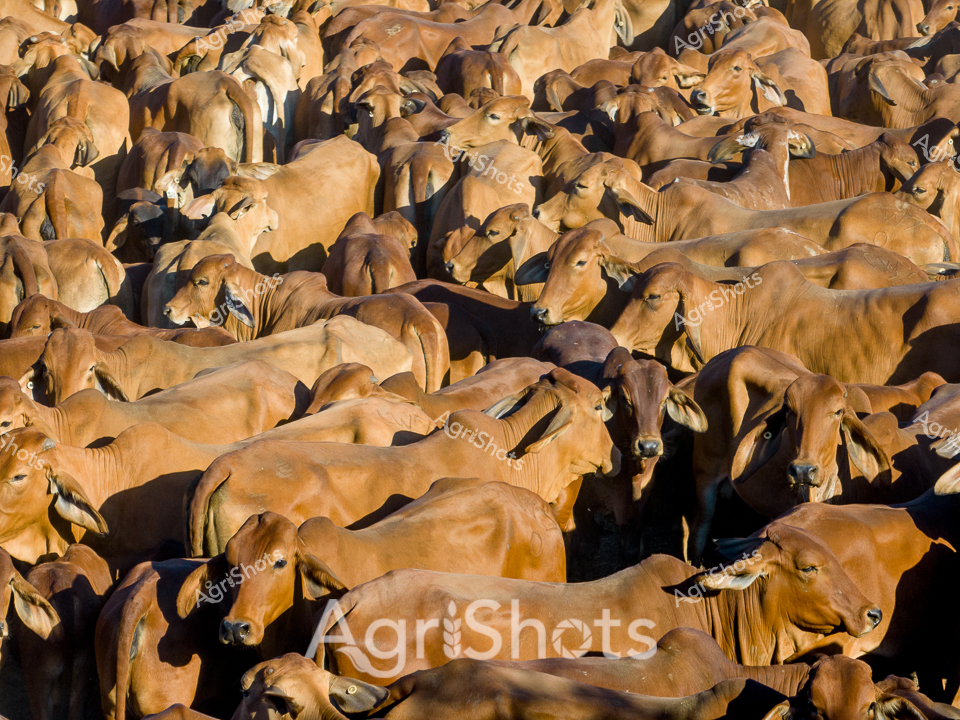
Burnished bronze bodies radiate across the cattle yard, a dense sea of Brahman cattle packed tightly under the stark Western Australian sunlight. These robust beef cattle, with their distinctive loose skin and prominent humps, represent the quintessential Kimberley Station livestock - hardy survivors of Australia's unforgiving northern landscapes. Rich amber and chestnut hues dominate the herd, their muscular frames casting intricate shadows that highlight the contours of muscle and bone. The tight clustering suggests an active mustering moment, with animals tightly grouped during yards processing or pre-transport preparation. Subtle variations in coat tone - from pale fawn to deep russet - create a living tapestry that speaks to generations of selective breeding and adaptation to harsh pastoral conditions. This image captures the raw essence of Australian beef production: resilient cattle, uncompromising terrain, and the intricate choreography of station management that has defined rural Western Australian agriculture for generations.
 Image
Image
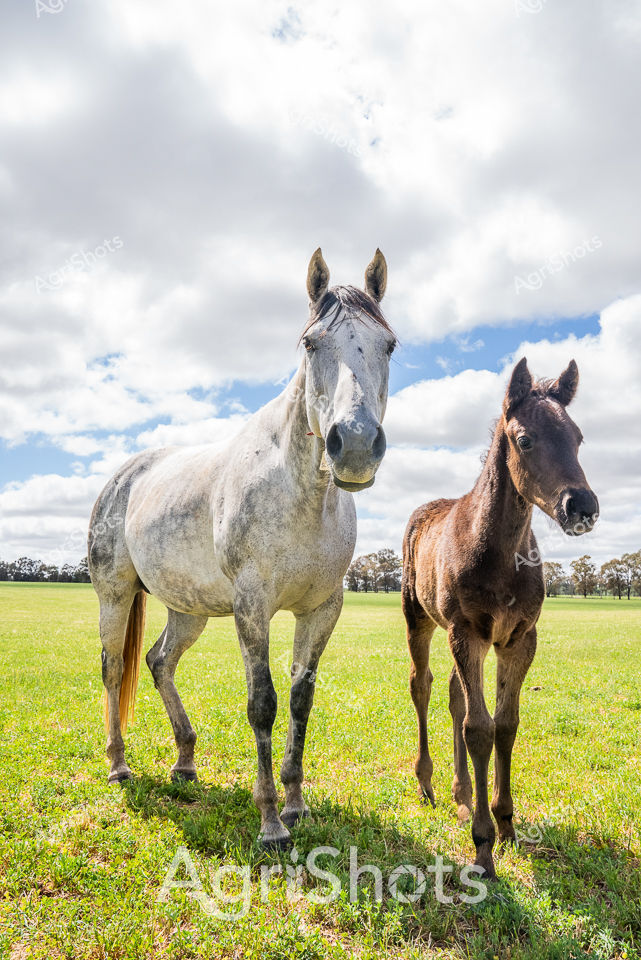
Dappled sunlight cascades across a lush pasture, illuminating a majestic white mare and her rich bay foal standing sentinel in the sprawling paddocks of rural New South Wales. The senior mare, a seasoned Thoroughbred with a silvery-grey coat marked by subtle dappling, stands proudly with an alert posture, her muscular frame testament to generations of carefully curated bloodlines. Her younger companion, a sturdy brown foal with delicate legs and a curious demeanor, stands close yet slightly behind, embodying the next generation of this distinguished bloodline. The landscape unfolds in soft, verdant greens, with distant eucalyptus trees framing a clouded sky that speaks of potential afternoon rain - a quintessential Australian pastoral scene. Soft light highlights the horses' sleek coats, revealing intricate details of muscle, bone structure, and the subtle variations in their coloration. This image captures the quiet dignity of thoroughbred horse breeding, a sophisticated agricultural enterprise that represents precision, genetic excellence, and the timeless connection between humans and these magnificent animals. The horses stand in quiet communion, their stance suggesting both strength and gentleness, embodying the proud tradition of Australian horse breeding and the meticulous care invested in developing world-class equine stock.
 Image
Image
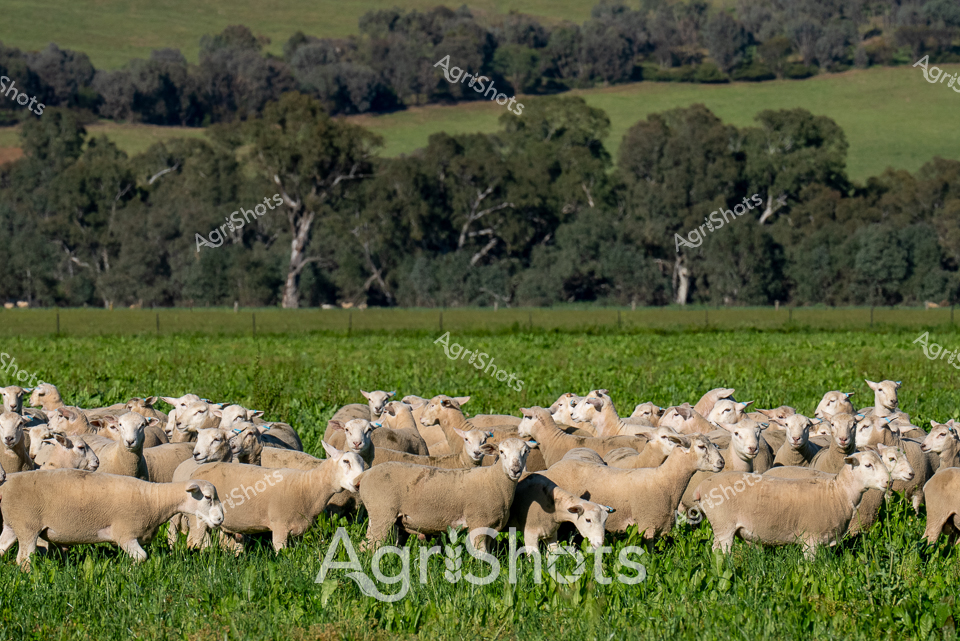
Merino rams cluster across a lush green chicory pasture, their cream-colored woolly coats creating a dense, undulating flock against the verdant paddock. Backed by a dense eucalyptus woodland of silvery-green trees, the robust breeding stock stands clustered in tight formation, representing the pinnacle of pastoral genetics. The mid-morning sunlight casts sharp definition across their muscular frames, highlighting the careful selection and breeding of these prime stud rams. Each animal displays the hallmark characteristics of superior Merino bloodlines - compact bodies, strong bone structure, and dense, high-quality fleece that speaks to generations of agricultural expertise. The landscape epitomizes the rich agricultural heritage of New South Wales, where precision livestock breeding meets expansive, fertile grazing lands. This scene captures the quiet dignity of Australian pastoral farming - a testament to generational knowledge, environmental stewardship, and the ongoing refinement of world-class agricultural stock.
 Image
Image
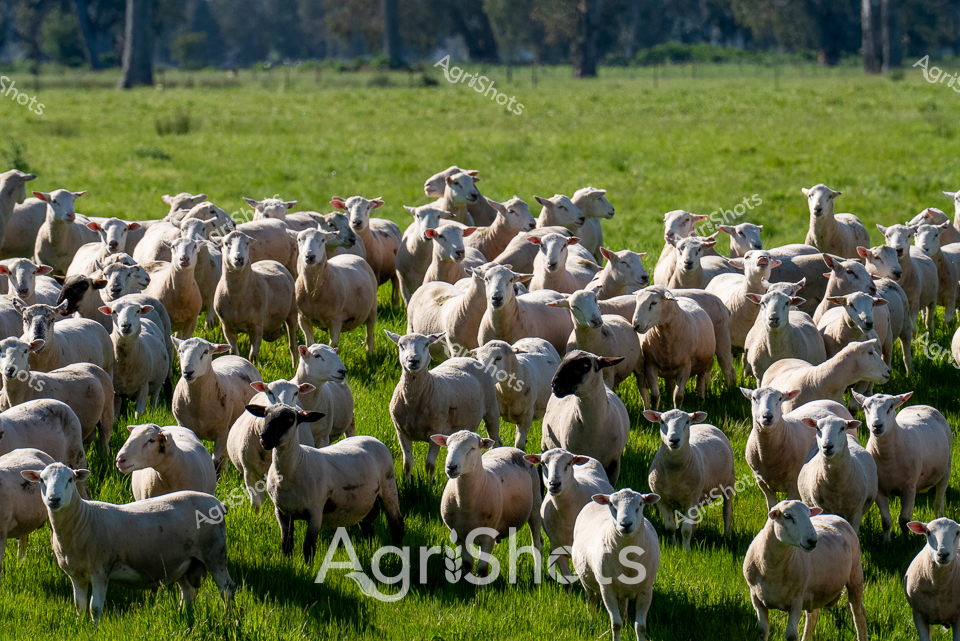
A dense flock of prime Dorset rams blankets a lush green pasture in the heart of New South Wales' Riverina region. Pristine white bodies cluster together, creating a living carpet against the vibrant emerald grass, with scattered trees forming a soft backdrop of muted greens and grays. Each muscular ram displays the hallmark characteristics of a high-quality stud breeding line - compact bodies, strong bone structure, and alert expressions that speak to generations of careful genetic selection. The late morning sunlight bathes the flock in a crisp, even light, highlighting the uniform fleece and robust health of these exceptional breeding animals. This pastoral scene captures the essence of Australian agricultural excellence, where precision breeding and optimal grazing conditions produce world-class livestock. The tightly grouped rams suggest both the social nature of the breed and the strategic management of a sophisticated agricultural enterprise, representing the pinnacle of sheep husbandry in the Riverina.
 Image
Image
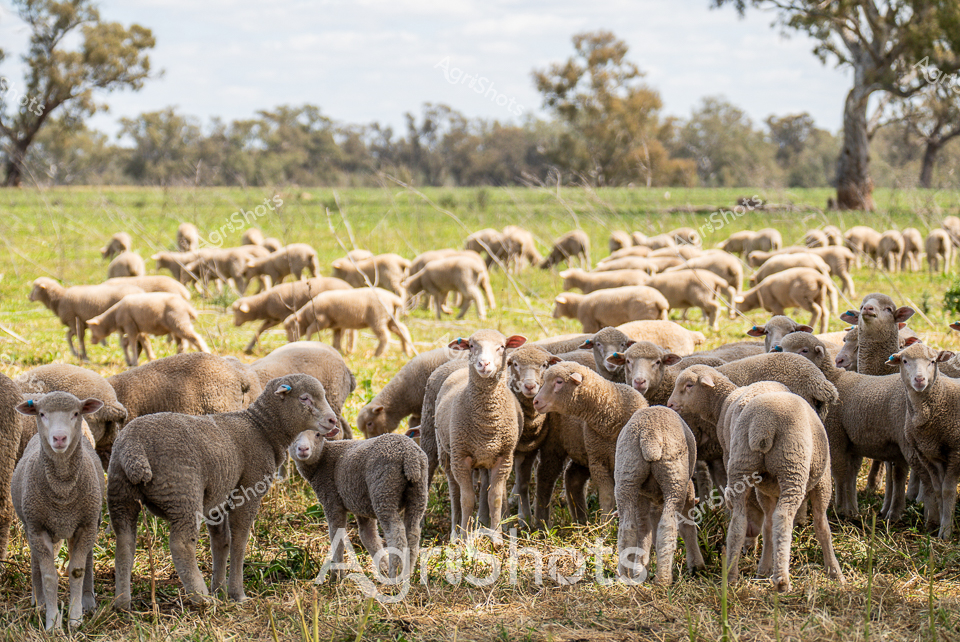
Merino lambs cluster across a verdant pasture in central New South Wales, their dense woolly coats ranging from pale cream to soft dove-gray. The late morning light filters through scattered eucalyptus trees, casting a gentle warmth over the expansive paddock where generations of pastoral farming have shaped this quintessential Australian landscape. These young sheep, prized for their exceptionally fine and resilient wool, stand clustered in tight groups, their alert ears and muscular frames testament to careful breeding and meticulous agricultural management. Soft ground cover of native grasses provides rich nutrition, while mature trees in the background offer occasional shade and windbreak for the flock. Each lamb displays the characteristic Merino traits - compact bodies, fine bone structure, and thick, even fleece that represents one of Australia's most valuable agricultural exports. The scene captures the quiet industry of sheep farming - a landscape of patient husbandry, where generations of agricultural expertise are reflected in every carefully tended animal.
 Image
Image
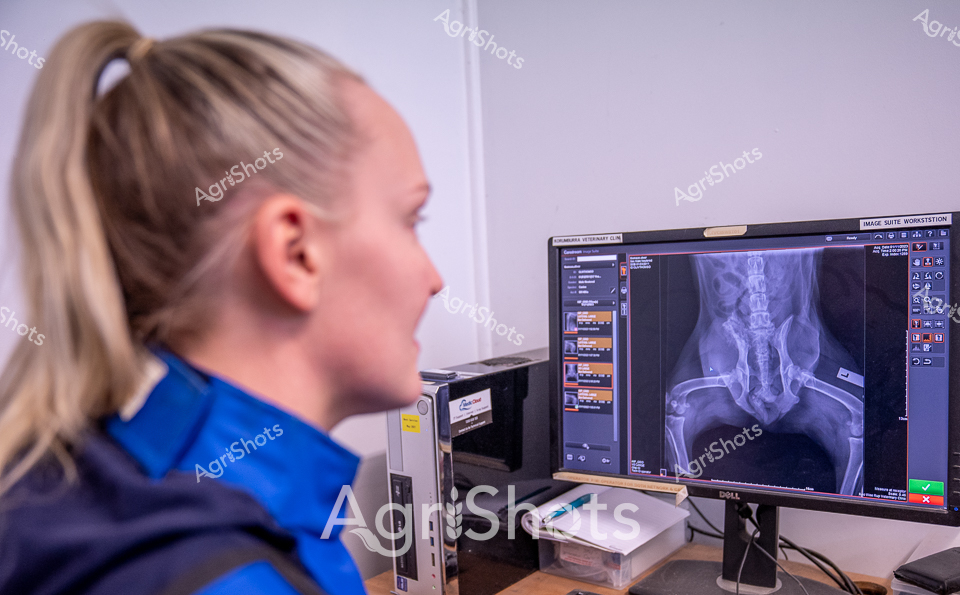
In a crisp veterinary diagnostic suite, a professional in a blue and navy medical jacket studies a detailed radiographic image of what appears to be an animal skeleton on a high-resolution computer monitor. The precise digital workstation, equipped with advanced medical imaging software, reveals intricate bone structure details typical of veterinary diagnostic procedures. Soft overhead lighting illuminates the sophisticated medical technology, highlighting the careful analytical process of animal health assessment. The professional, with blonde hair pulled back in a neat ponytail, leans forward intently, demonstrating the meticulous approach required in agricultural animal healthcare and diagnostic investigation. The cool tones of blue medical attire and gray-scale X-ray imagery create a clinical yet focused atmosphere, representing the sophisticated intersection of agricultural science and veterinary medicine. This scene captures the critical behind-the-scenes work of animal health professionals who ensure the wellbeing of livestock through advanced medical diagnostics.
 Image
Image
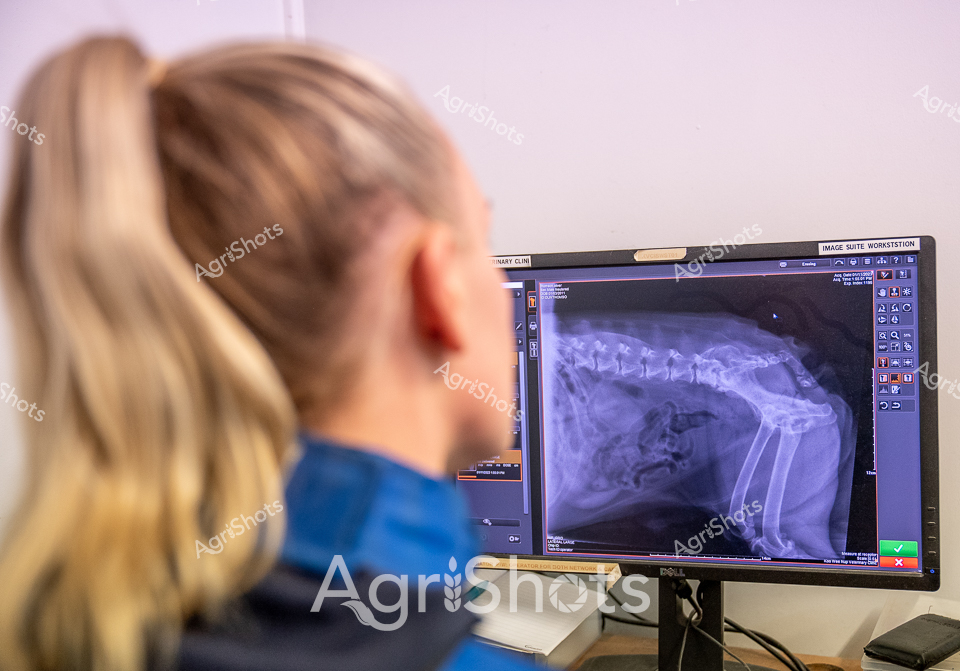
Veterinary Radiography Expertise A skilled veterinary professional studies an intricate digital x-ray of an animal patient, revealing the precise skeletal structure on a high-resolution computer monitor. Her blonde hair pulled back, she wears a deep blue uniform that speaks to her professional role, carefully analyzing the detailed radiographic image with clinical precision. The x-ray screen displays a remarkable side-profile view of what appears to be a canine patient, with each vertebra and bone structure rendered in sharp monochromatic detail. Modern diagnostic technology transforms animal healthcare, allowing veterinarians to explore internal anatomy with unprecedented clarity and insight. The crisp medical imaging workstation represents the sophisticated intersection of agricultural animal care and advanced medical technology, highlighting the critical role of professional veterinary diagnostics in maintaining animal health and welfare. This scene captures the meticulous attention and scientific expertise required in contemporary veterinary medicine, where technology enables deeper understanding of animal physiology and treatment.
 Image
Image
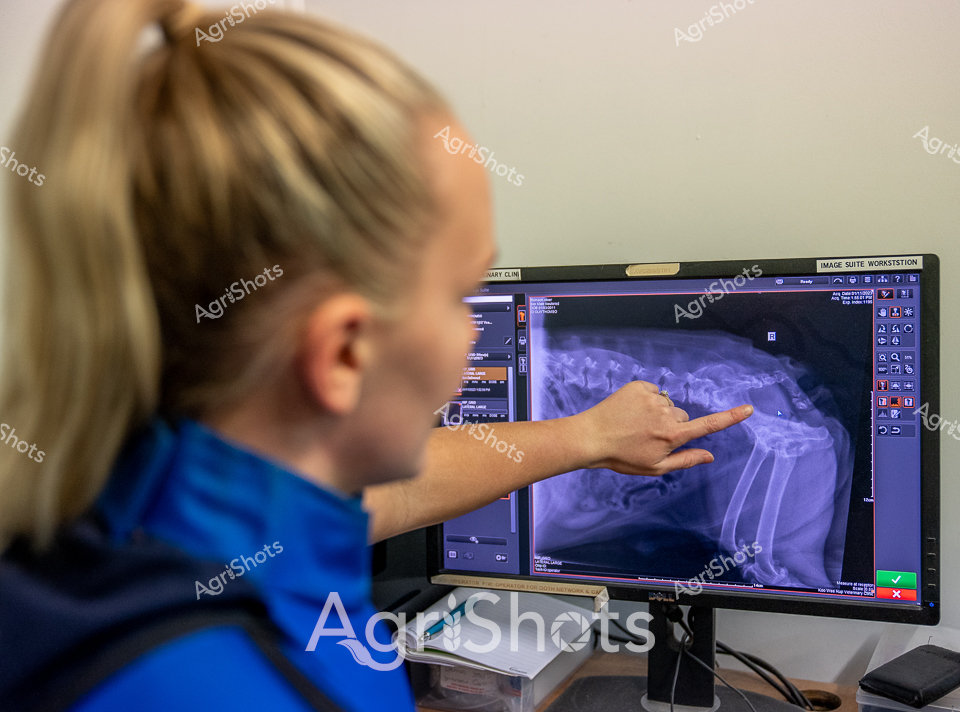
A veterinary professional in a vivid blue uniform studies an animal X-ray with precision, her blonde hair pulled back as she points to specific details on the diagnostic screen. The high-resolution monitor displays a grayscale skeletal image, revealing the intricate anatomical structure of what appears to be a veterinary patient - likely a small animal or livestock specimen. Cutting-edge medical imaging technology enables detailed analysis, with the veterinarian carefully examining bone structure, potential fractures, or internal abnormalities using advanced diagnostic software. The clinical environment suggests a modern veterinary practice equipped with state-of-the-art digital diagnostic tools, highlighting the sophisticated approach to animal healthcare in agricultural and companion animal medicine. Crisp, clean lines of the computer workstation and the focused posture of the professional underscore the technical expertise and compassionate care central to modern veterinary practice. This image captures the intersection of technology, medical expertise, and animal health, showcasing the critical role of diagnostic imaging in contemporary veterinary science.
 Image
Image
Merino rams cluster together in a golden grassland, their pristine white fleeces contrasting against drought-stressed pasture and weathered eucalyptus woodland. The flock stands resolute on compacted earth, representing the resilience of Australian sheep breeding in the challenging Orana Region of New South Wales. Late afternoon sunlight casts long shadows across the dry landscape, highlighting the muscular frames and alert postures of these carefully selected stud rams. Each animal displays the hallmark characteristics of superior genetic lines - compact bodies, strong bone structure, and dense, uniform wool coverage that speaks to generations of careful agricultural management. The scene captures a moment of quiet strength, where these rams embody the principles of regenerative farming: sustainability, genetic diversity, and adaptation to harsh environmental conditions. This image represents the backbone of Australia's agricultural heritage - a testament to the skill of pastoral farmers who nurture livestock through challenging climatic extremes.
 Image
Image
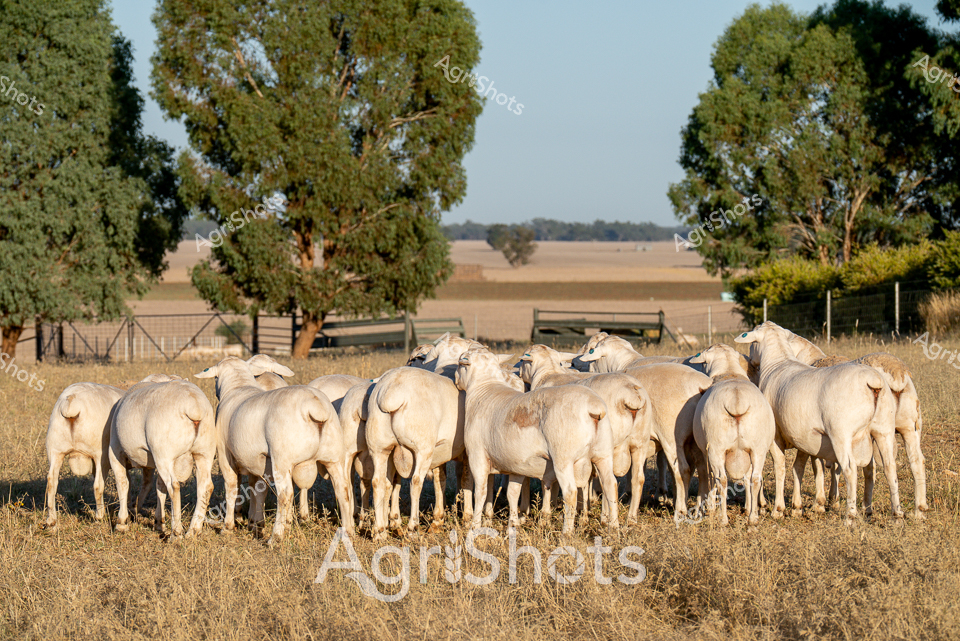
Golden afternoon sunlight bathes a tranquil Central West NSW paddock, where a robust flock of Aussie White rams stands closely gathered. Their pristine white coats gleam against the dry, wheat-colored grass of what appears to be late summer or early autumn, creating a striking visual contrast. Muscular and uniform, these stud-quality rams display the exceptional breeding characteristics prized by Australian sheep farmers - broad, muscular hindquarters, clean bone structure, and a robust frame indicative of superior genetic lines. Mature gum trees frame the pastoral landscape, their silvery-green foliage providing a natural boundary to the fenced grazing area. The background reveals the expansive, undulating agricultural terrain typical of New South Wales' central farming regions - a patchwork of harvested fields and intermittent tree lines stretching towards a soft, pale horizon. Each ram stands solidly, facing away from the camera, their collective posture suggesting a calm, well-managed herd with strong genetic consistency. This image captures the essence of Australian agricultural excellence: meticulous livestock breeding, careful herd management, and the timeless connection between farmer, land, and animal that defines rural enterprise.
 Image
Image
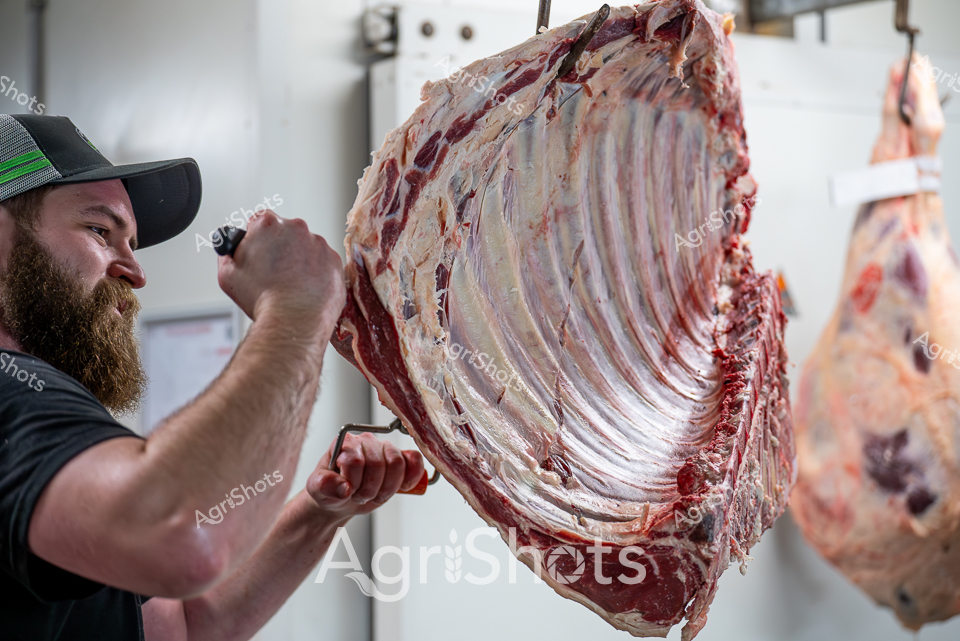
Precision and strength define this intimate moment in a Queensland butcher shop during the crisp winter season. A bearded butcher in a black cap and dark shirt carefully prepares a substantial beef carcass, his muscular forearm guiding a specialized cutting tool along the rich, marbled meat. The large beef quarter hangs suspended from a stainless steel hook, revealing an intricate landscape of muscle, fat, and bone - a testament to the quality of livestock from the Darling Downs region. Soft white light fills the clean, professional workspace, highlighting the deep crimson and pale flesh tones of the freshly processed meat. Every movement speaks to generations of skilled craftsmanship, where butchery is both an art and a precise technical skill, transforming whole animal carcasses into premium cuts for local markets and discerning consumers. The scene captures the raw beauty of Australia's meat processing industry - a crucial link in the agricultural supply chain that connects rural producers with urban dining tables.
 Image
Image
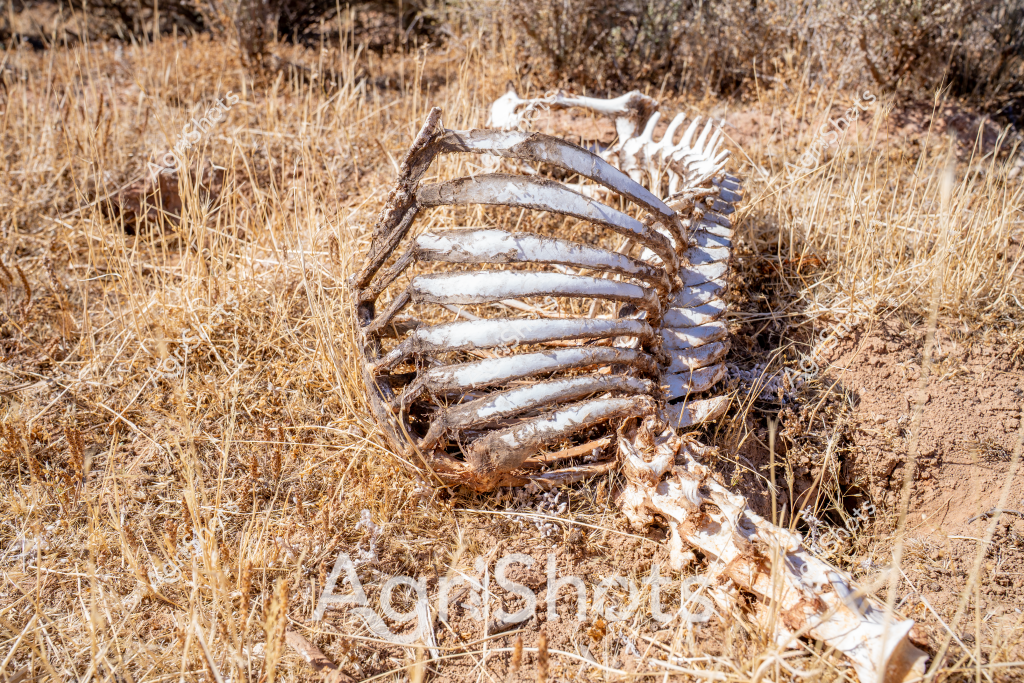
A skeletal ribcage of an animal, likely a large mammal, lies decomposing in dry golden grassland. The bleached white bones are fully exposed, with the curved ribs still connected to the spine, creating an arc-like structure against the sun-dried grass and sparse shrubs. The skeletal remains appear weathered and bleached by extended exposure to the elements, suggesting this is an arid or semi-arid landscape typical of Australian outback or pastoral regions. Scattered around the bones are tufts of dry, straw-colored grass, indicating a potentially drought-affected environment where vegetation is sparse and brittle. The stark white of the bones contrasts sharply with the muted browns and tans of the surrounding landscape, creating a powerful visual representation of the harsh ecological conditions and the cyclical nature of life and death in challenging agricultural terrain.
 Image
Image
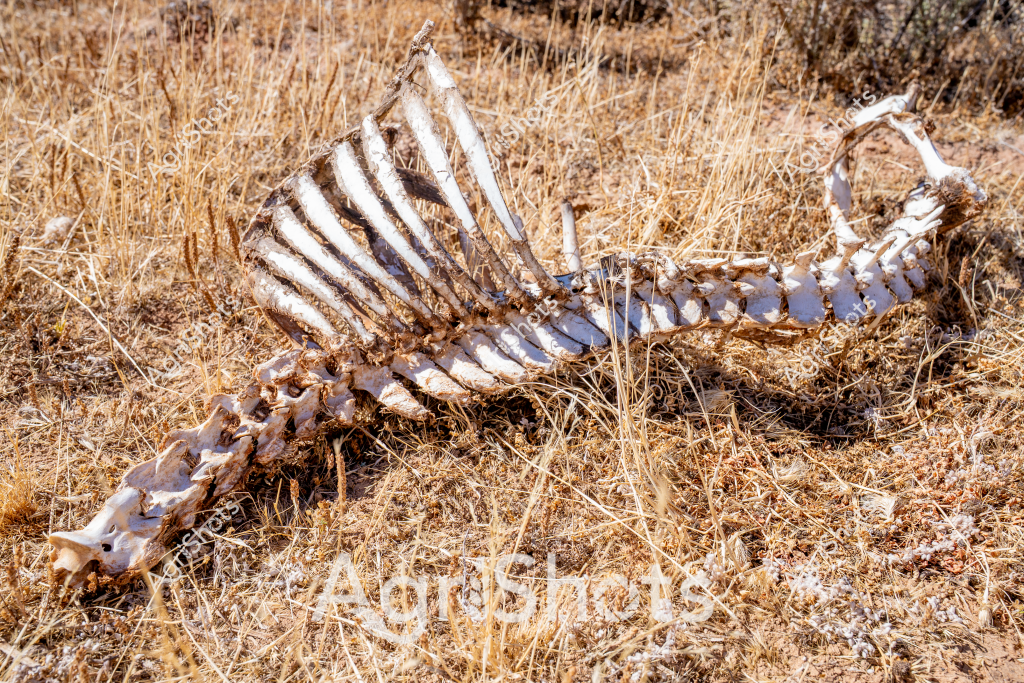
A skeletal remains of an animal, likely a large mammal, lies decomposing in dry golden grasslands. The bleached white bones are completely exposed, with vertebrae, ribs, and skeletal structure clearly visible against the sun-bleached grass and sparse shrubs. The skeleton appears weathered and scattered, suggesting it has been exposed to the elements for an extended period. The arid, drought-like environment indicates a harsh landscape where animal mortality is a natural part of the ecosystem's cycle. Subtle earth tones of browns and tans dominate the scene, creating a stark and somber portrait of the raw, unforgiving nature of an agricultural or wilderness landscape.