Results for “Agricultural Livestock”
 Image
Image
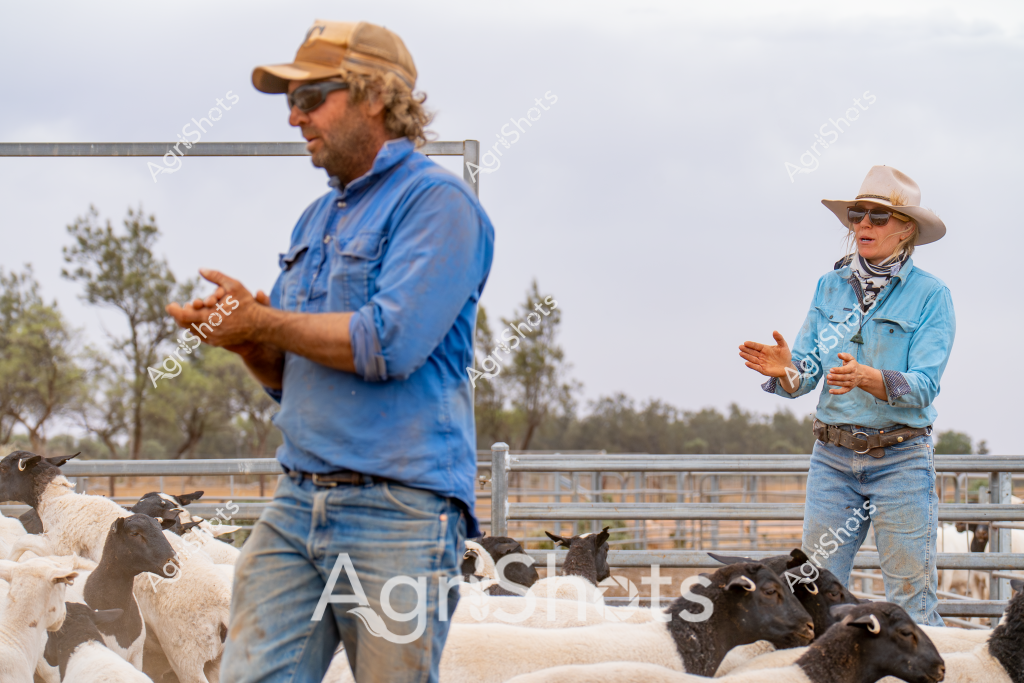
Two experienced farmers in blue work shirts and wide-brimmed hats manage a mixed flock of black and white sheep in a rural livestock yard. A man and a woman stand on opposite sides of a metal livestock pen, both using hand gestures to guide and control the movement of the sheep. The sheep appear to be a mix of dark and light-colored breeds, clustered tightly within the metal gate enclosure. The background reveals a sparse rural landscape with scattered trees and an overcast sky, typical of Australian agricultural settings. Both farmers are wearing practical farm attire - blue chambray shirts, denim jeans, and protective wide-brimmed hats with sunglasses, indicating their professional approach to livestock management. The scene captures the collaborative nature of sheep farming, where coordinated human interaction and careful animal handling are essential skills.
 Image
Image
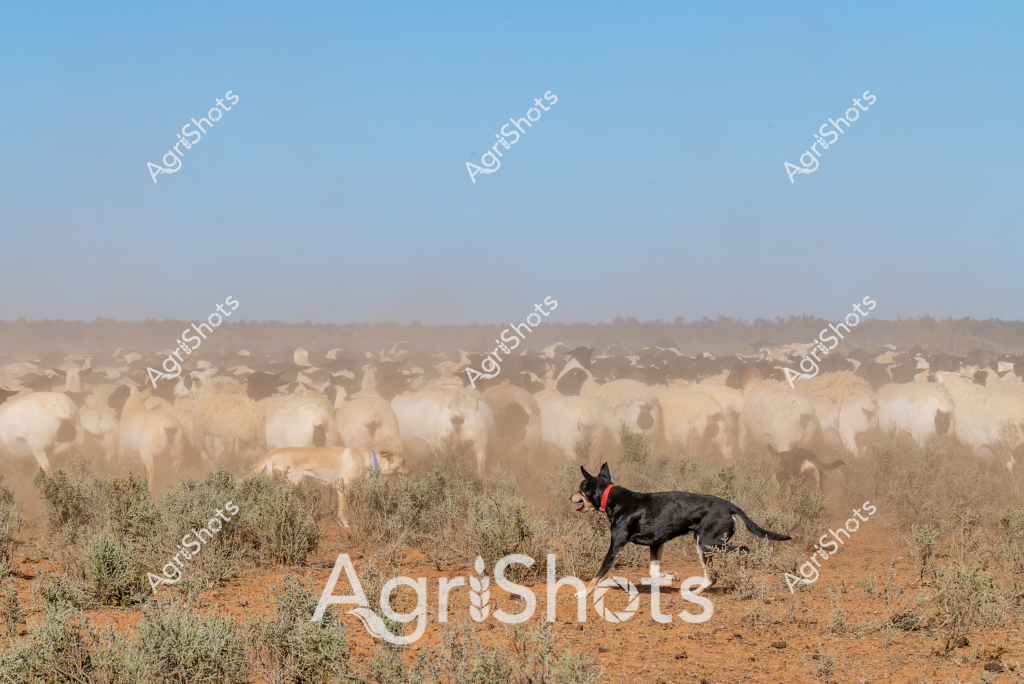
A black working dog expertly herds a large mob of light-colored goats through a dusty, arid landscape in rural Australia. The dense herd kicks up a substantial cloud of red dirt and dust, creating a hazy atmosphere across the sparse, scrubby terrain. Scattered low bushes and saltbush punctuate the reddish-orange ground, while a pale blue sky stretches overhead. The agile black dog, wearing a bright red collar, moves with precision around the goat herd, demonstrating the critical role of working dogs in managing livestock across challenging Australian outback environments. The scene captures the intense movement and dynamic interaction between the herding dog and the tightly clustered goats, highlighting the skill and partnership required in managing livestock across vast, challenging pastoral landscapes.
 Image
Image
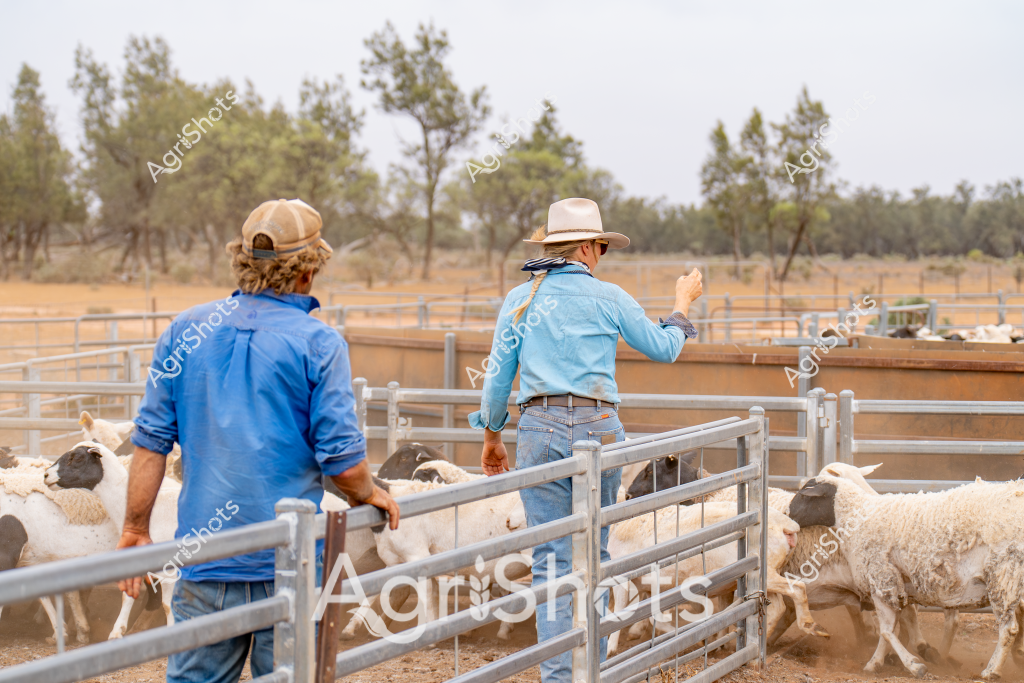
Two men farmers oversee a small flock of sheep in a dry, dusty livestock paddock surrounded by sparse eucalyptus trees. One man in a blue long-sleeved shirt and a tan cap stands near a metal livestock gate, while the other wearing a light blue shirt and wide-brimmed sun hat gestures toward the animals. Several white sheep with varying wool textures are visible within the metal stock yard fencing, highlighting the typical rural Australian agricultural setting. The landscape appears arid, with a muted color palette of golden-brown ground, gray-green trees, and washed-out sky, suggesting conditions typical of inland pastoral regions. The men's sturdy work clothing and attentive postures indicate an experienced approach to livestock management, carefully monitoring the small mob of sheep in their contained yard.
 Image
Image
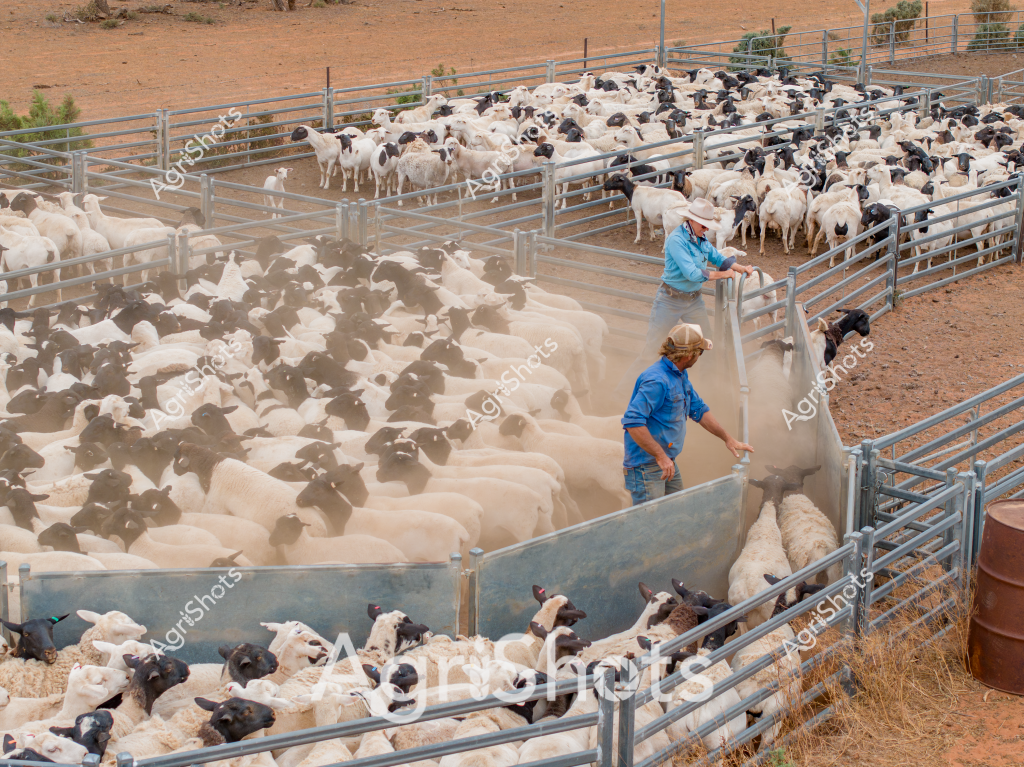
In this arid Australian pastoral scene, two experienced livestock managers work together to manage a large flock of black and white sheep in a metal yard system. A woman in a bright blue shirt and a man in a similar shirt are carefully guiding and sorting the sheep through metal gates and pens, creating swirling clouds of red dust beneath their feet. The landscape is a classic dry outback setting, with reddish-brown earth, sparse vegetation, and metal livestock yards that stretch across the frame. The sheep - likely a mixed breed of black-headed and white-bodied stock - are densely packed into the different paddock sections, demonstrating a typical mustering and sorting operation common in Australian sheep farming. The dust and controlled movement highlight the skill and experience of the livestock managers in handling large numbers of animals in challenging environmental conditions. A rusty metal barrel sits to the side, adding to the authentic rural Australian agricultural atmosphere of the scene.
 Image
Image
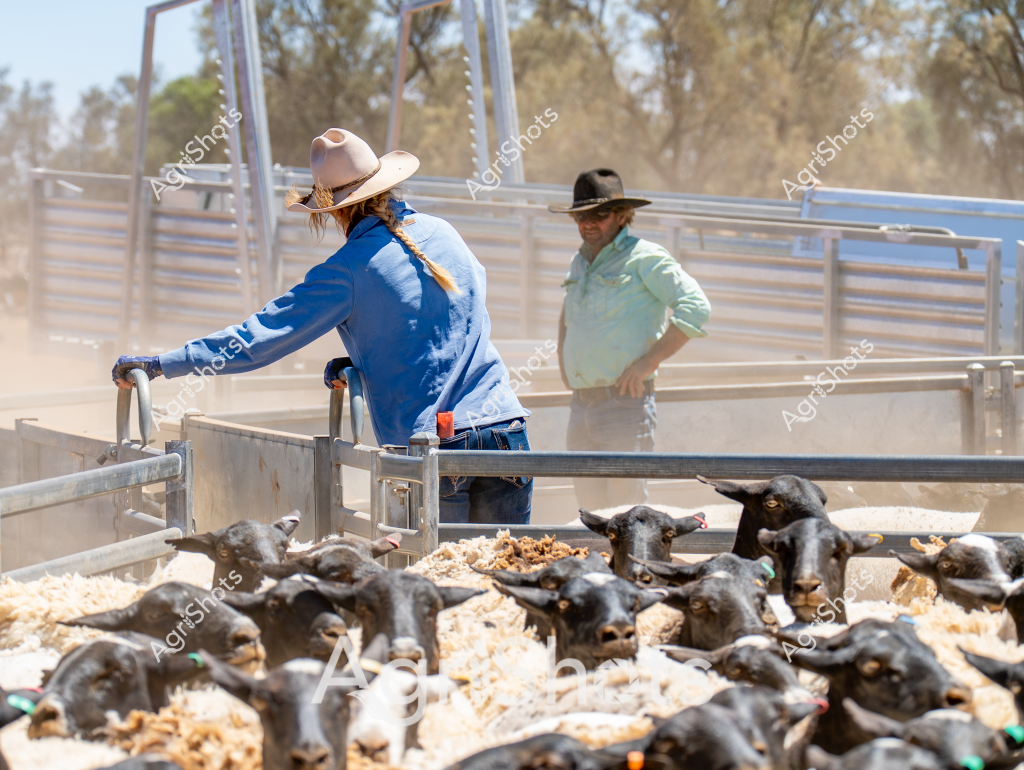
Two workers manage a group of black goats in a dusty livestock yard, with metal cattle panels and handling facilities surrounding them. A woman in a blue jacket and wide-brimmed hat operates the gate control, while a man in a light green shirt stands nearby observing the livestock. Multiple young black goats are clustered on straw bedding within the metal yard, some with colored ear tags indicating they are part of a managed herd. The scene is dry and sun-drenched, with trees and yard infrastructure visible in the background, suggesting this is a typical agricultural livestock management setting in rural Australia. Dust hangs in the air, highlighting the movement and activity of the goat handling process. The workers' attire - wide-brimmed hats, long-sleeved shirts, and practical work clothing - indicates professional agricultural practice and protection from the harsh Australian sun.
 Image
Image
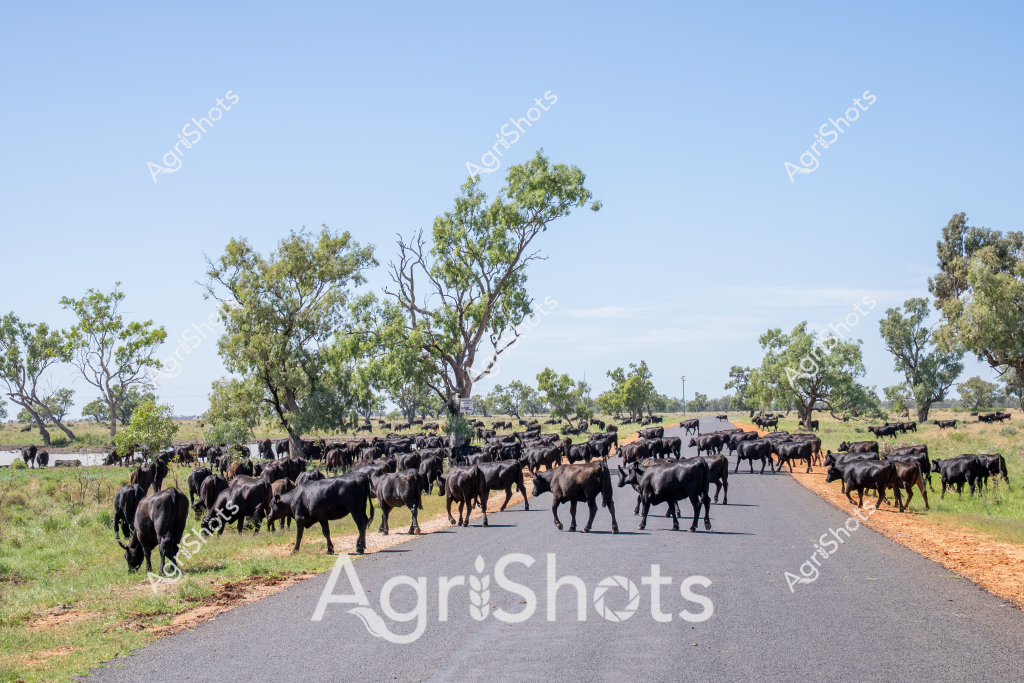
Here's a detailed description capturing the agricultural livestock scene: A large herd of black Angus cattle traverses a rural bitumen road, creating a classic cattle movement scene typical of Australian agricultural landscapes. The cattle, numbering around 50-60 head, spread across the sealed road and adjacent grassy paddocks, surrounded by scattered eucalyptus trees under a clear blue sky. The landscape appears to be a typical inland pastoral setting, with sparse grey-green trees and dry grasslands suggesting a warm, potentially late summer or early autumn environment. The black cattle move casually, some crossing the road while others graze on the roadside grass, demonstrating a relaxed mustering or transportation process. The paved road cuts through the landscape with a distinctive orange-dirt verge, providing a strong visual contrast against the dark cattle and green-grey vegetation. This scene represents a quintessential Australian rural moment, showcasing the movement of livestock across vast agricultural properties.
 Image
Image
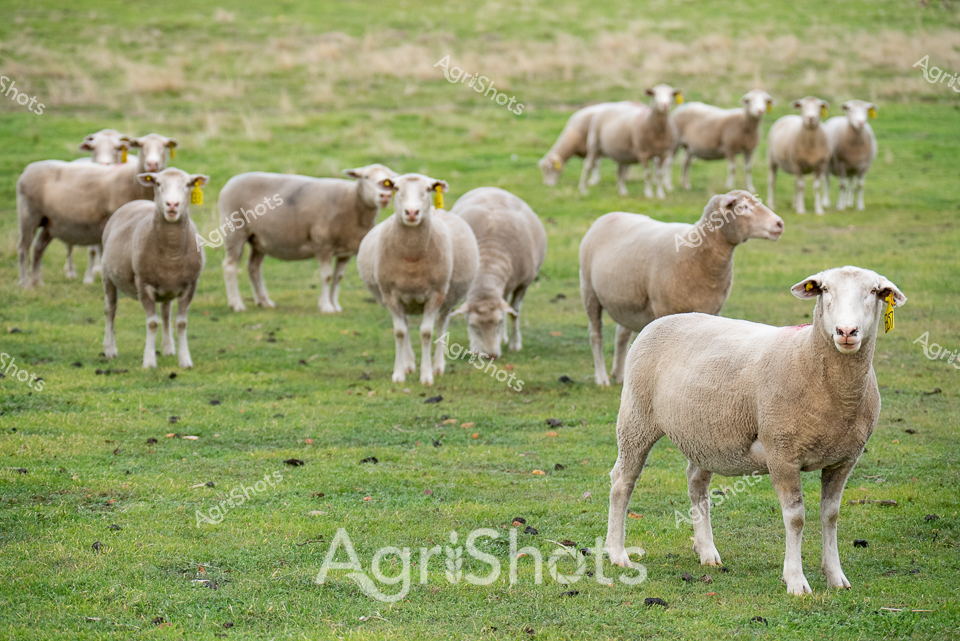
A serene flock of Poll Dorset ewes grazes contentedly across a verdant pasture in Western Australia's Wheatbelt region. The woolly sheep, each sporting a distinctive yellow ear tag, stand clustered together in various relaxed poses against a lush green backdrop. Their uniform cream-colored fleeces and alert postures highlight the quality of this stud sheep breeding operation, capturing the essence of professional agricultural livestock management.
 Image
Image
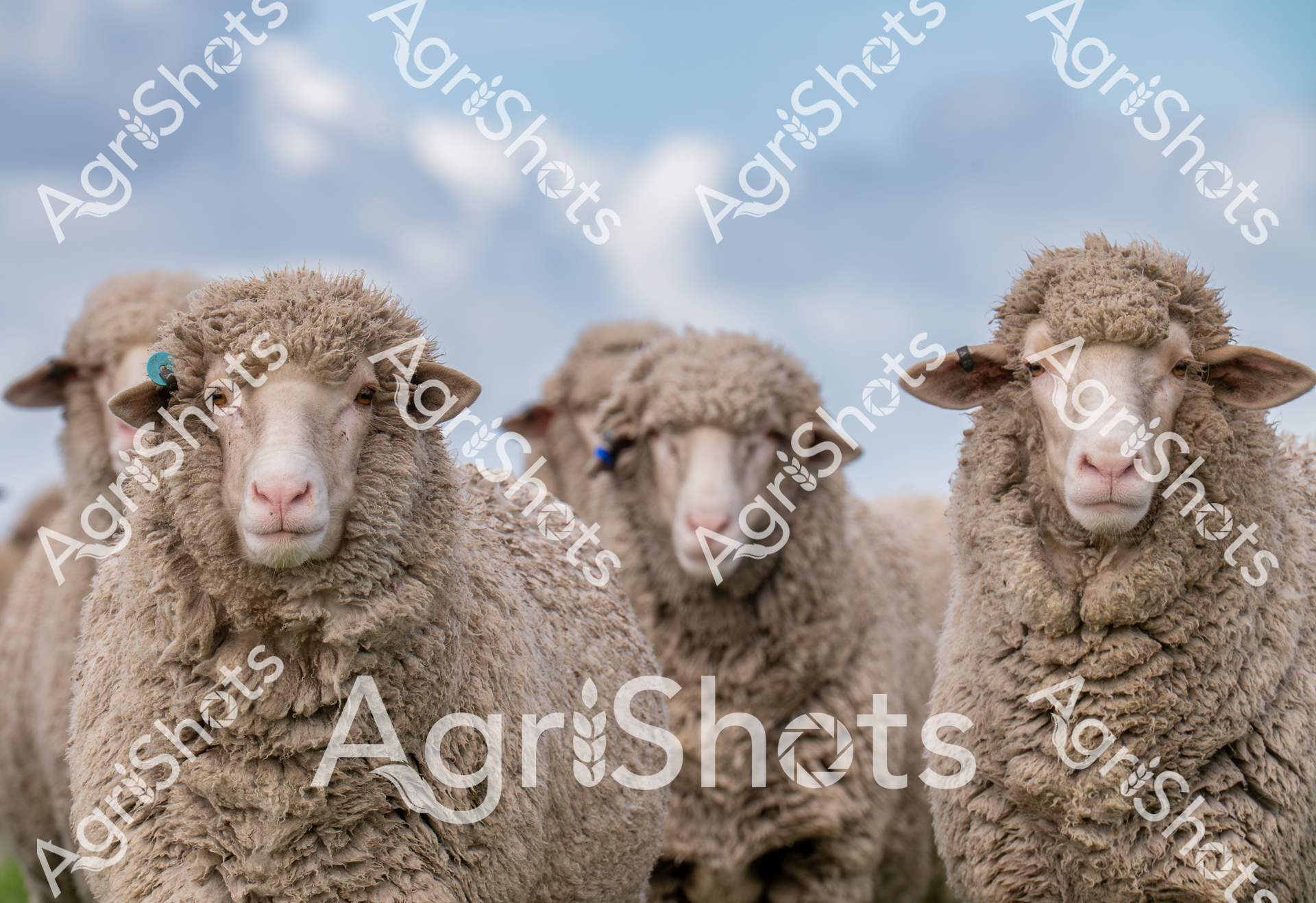
A flock of robust Merino sheep stands together in a lush green pasture during the winter season in South Australia's picturesque South East Region. These woolly ewes, with their dense, fine fleece, showcase the breed's characteristic thick, curly coat and alert expressions, highlighting the quality of agricultural livestock in the area.
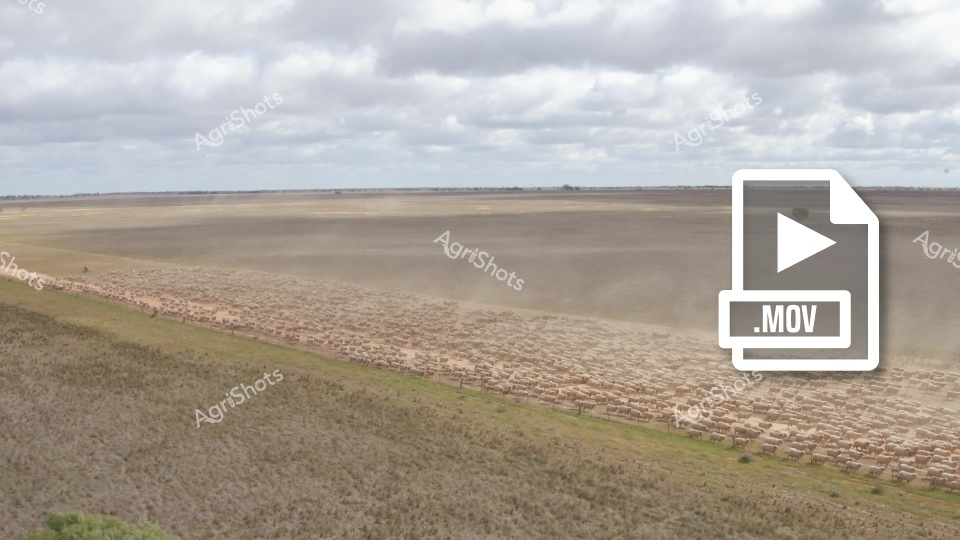 ▶ Video
A vast, expansive landscape showing a massive flock of sheep moving across a dry, dusty agricultural field. The herd stretches in a long, dense line across the terrain, creating a striking visual of agricultural livestock management. Overcast skies and muted earth tones emphasize the arid, open grassland environment typical of large-scale sheep farming.
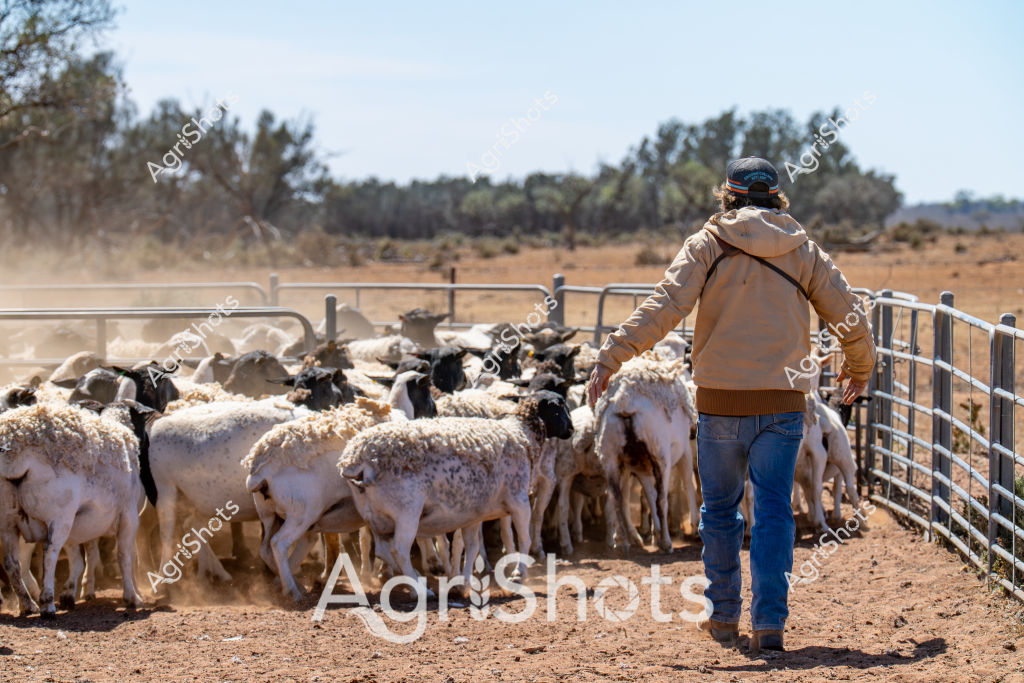 Image
Image
A skilled person managing a small flock of merino sheep through a dusty yards paddock in rural Australia. The stockman, wearing a tan jacket, blue jeans, and a knit cap, walks alongside the densely packed group of white and black sheep within metal livestock fencing. The surrounding landscape shows a dry, arid environment with sparse eucalyptus trees and golden-brown ground, typical of an Australian pastoral setting. Dust rises around the sheep's hooves as they move together, suggesting active mustering or yard management activities. The scene captures the everyday work of livestock management in a challenging rural landscape, highlighting the close relationship between farmers and their animals. The image reflects the resilience and practical skills required in Australian sheep farming, where careful handling and movement of livestock is critical to successful agricultural operations. The tight formation of the merino sheep and the controlled movement by the stockman demonstrate the expertise needed in managing livestock in harsh environmental conditions.
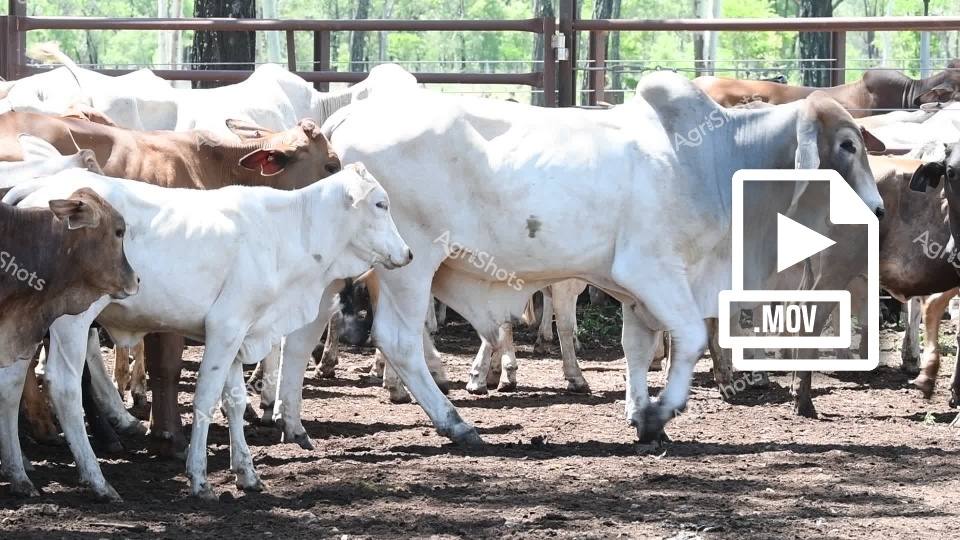 ▶ Video
A herd of white and brown cattle stand in a dusty corral with wooden fencing, showcasing what appears to be a Brahman or Brahma breed known for their distinctive light coloration and heat tolerance. The cattle are clustered together on packed earth, with some animals standing close and others moving slightly, suggesting a typical livestock holding area. The background reveals trees and additional fencing, indicating this is likely a ranch or agricultural livestock management facility.
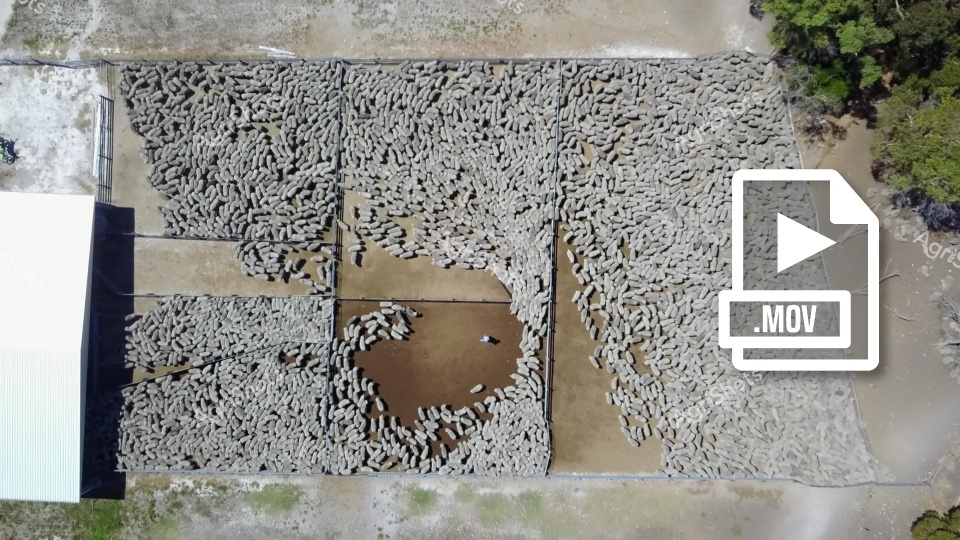 ▶ Video
An aerial view of a large livestock enclosure shows a dense herd of sheep tightly packed across multiple concrete pen sections, with some areas creating circular formations. The sheep appear to be uniform in color, likely a light gray or tan, and are clustered closely together on what seems to be a concrete cattle yards or holding area. Trees and landscape are visible around the edges of the concrete pens, suggesting this is an agricultural livestock management facility.
 ▶ Video
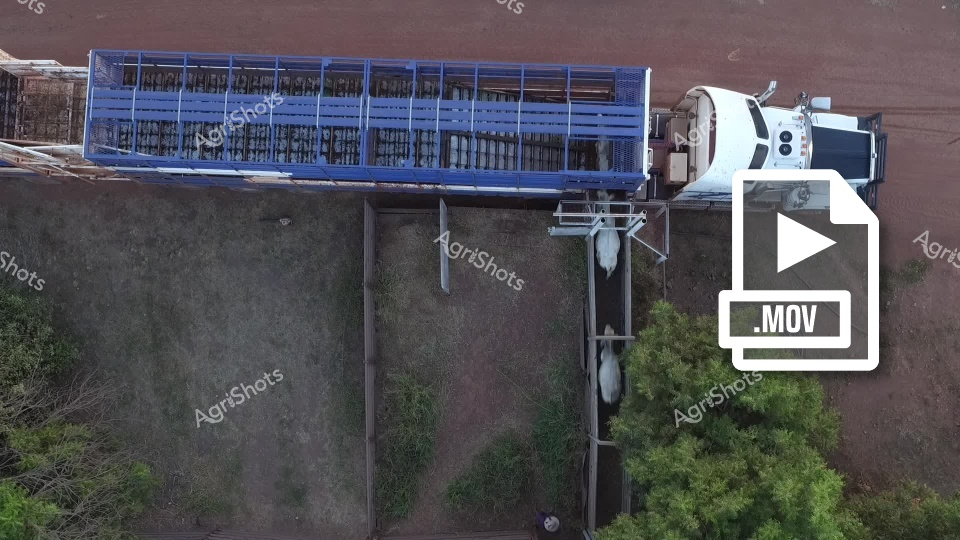
Aerial view of a blue livestock trailer mounted on a concrete wall, with a white transport vehicle attached. The trailer appears designed for animal transport, positioned next to some green vegetation and trees. The image is taken from above, showing the trailer's metal mesh sides and sturdy construction typical of agricultural livestock handling equipment.
 ▶ Video
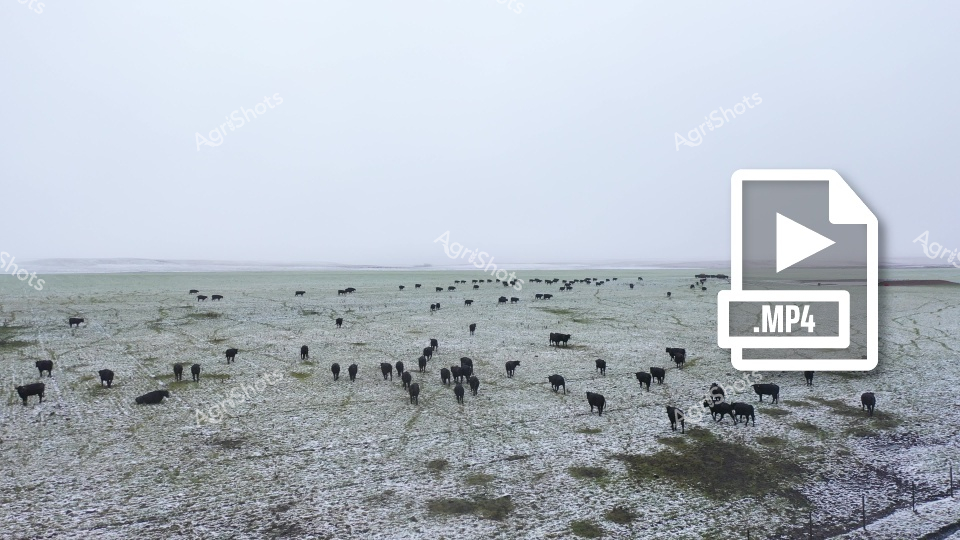
In the frosty landscape of New South Wales' Monaro region, a herd of black Angus cattle graze across a snow-dusted pasture. These robust beef cattle, scattered across the stark winter terrain, showcase the resilience of Australian agricultural livestock during challenging weather conditions. The expansive station provides a dramatic backdrop of white and muted green, highlighting the traditional cattle farming practices of the region.
 ▶ Video
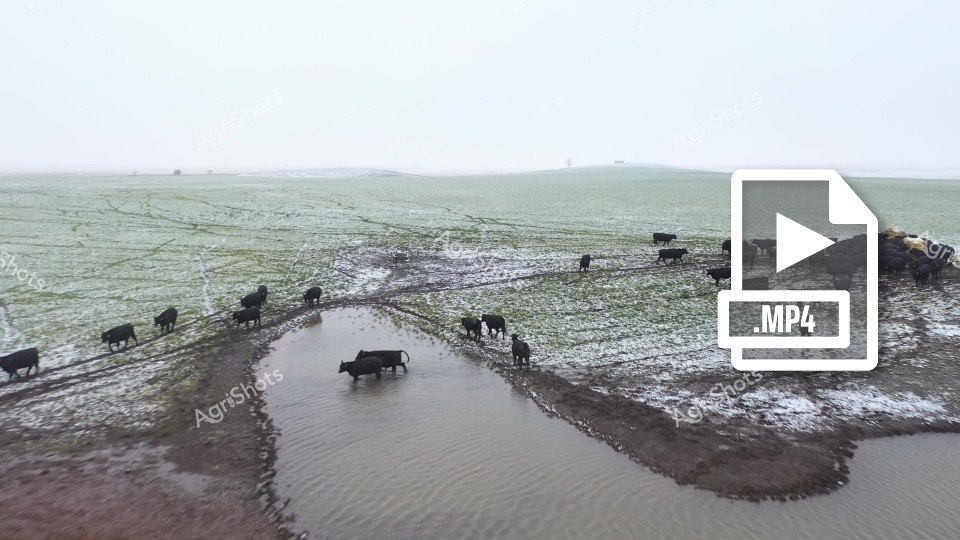
A drone view captures a stark winter landscape in the Monaro region of New South Wales, showing a herd of black Angus cattle navigating a snow-covered paddock with a winding water channel. The cattle, likely heifers from a local beef stud, create a striking contrast against the frosty, muted terrain, showcasing the resilience of Australian agricultural livestock during harsh winter conditions.
 Image
Image
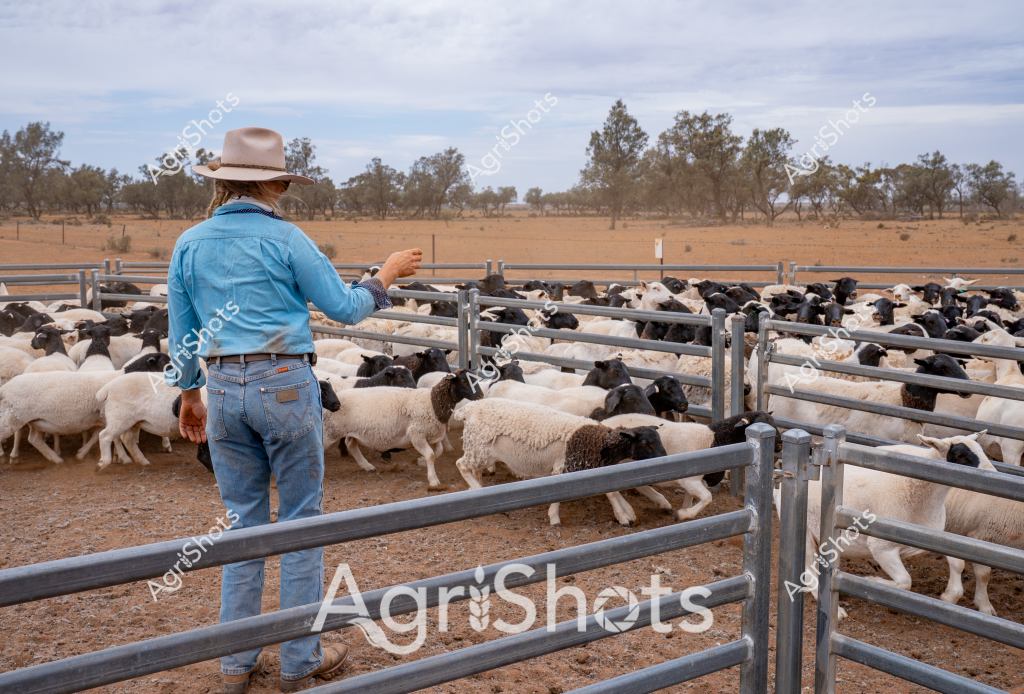
A man stockman stands in a dry, arid landscape, overseeing a large flock of black and white sheep within a metal livestock yard. Wearing a light blue long-sleeved shirt, faded blue jeans, and a wide-brimmed tan hat, he appears to be managing the mob of sheep in what looks like a typical Australian outback setting. Sparse eucalyptus trees dot the background, highlighting the sparse, golden-brown landscape that speaks to the challenging drought conditions of the region. The sheep - a mix of white and black-faced breeds, likely Dorper or Suffolk cross - are tightly packed within the steel paneled yards, creating a dense cluster of woolly bodies. The ground is dry and compacted, with minimal vegetation, emphasizing the harsh environmental conditions. The stockman's posture suggests careful observation and management, with one arm raised, potentially signaling or directing the movement of the livestock. This image captures the resilience of Australian agriculture, showcasing how farmers adapt to challenging landscapes and maintain the livestock operations under difficult environmental conditions. The scene epitomizes the daily work of a rural stockman, managing sheep in the unforgiving Australian interior.
 Image
Image
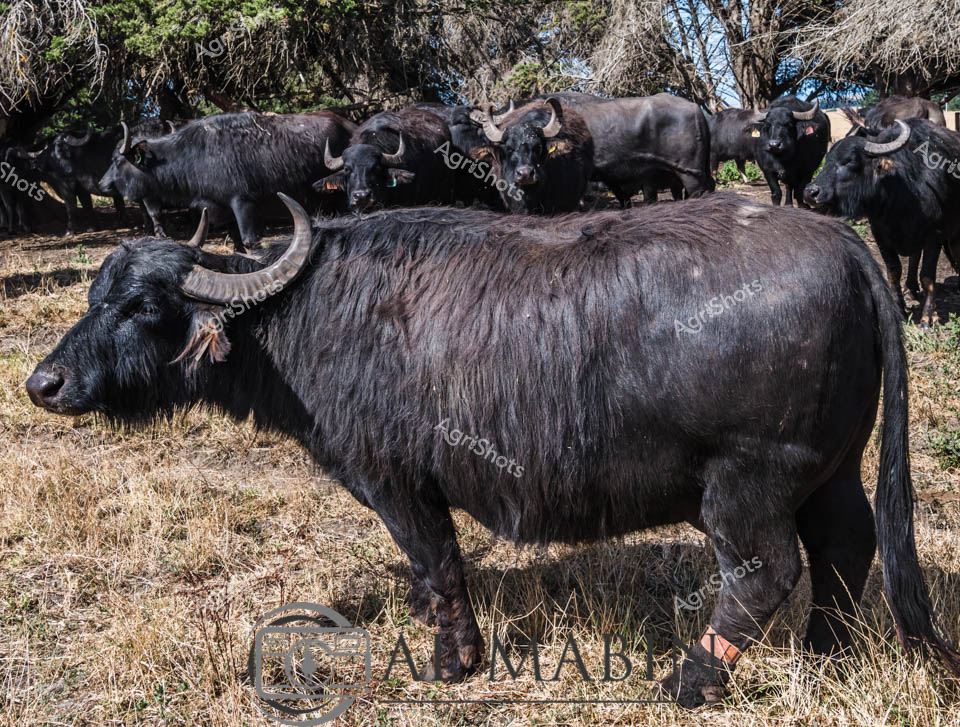
Water buffalo cluster in a dry, sun-dappled paddock, their massive dark forms standing in sharp contrast against weathered golden grass and sparse tree cover. These robust Murrah breed animals display impressive curved horns and thick, dense coats of deep charcoal black, revealing the muscular physiques that make them prized dairy and agricultural livestock across northern Victoria. The lead buffalo dominates the foreground, its powerful muscular frame and distinctive curved horns embodying the resilience of these animals in challenging Australian pastoral landscapes. Each buffalo bears subtle individual markings and ear tags, indicating careful livestock management typical of progressive dairy and agricultural operations in the Barwon South region. Filtered sunlight highlights the textural complexity of their thick, slightly matted coats, suggesting the animals have been grazing through the day in this semi-arid environment. The scene captures the quiet strength and communal nature of water buffalo herds, showcasing their adaptation to Australian agricultural terrains.
 Image
Image
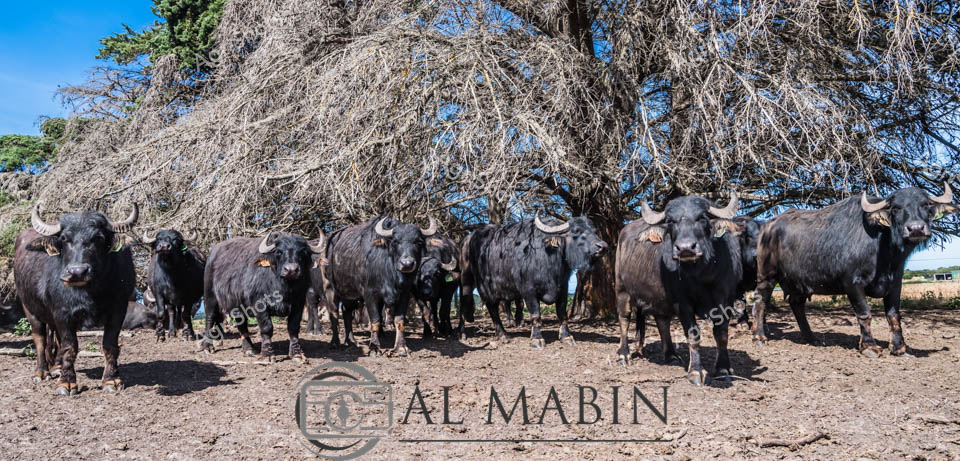
Water buffalo cluster in the shade of a weathered, sprawling tree, their dark hides glistening under the harsh midday sun. The robust herd stands firmly on dusty ground, their curved horns and muscular frames testament to the resilience of these remarkable livestock. Each buffalo displays the characteristic stocky build and deep black coloration of the breed, perfectly adapted to challenging agricultural environments. Soft blue sky and sparse vegetation in the background suggest an arid or semi-arid setting, highlighting the animals' capacity to thrive in demanding conditions. The tight grouping of the buffalo under the tree demonstrates the herd instinct and collective survival strategy, a powerful visual narrative of agricultural livestock management.
 Image
Image
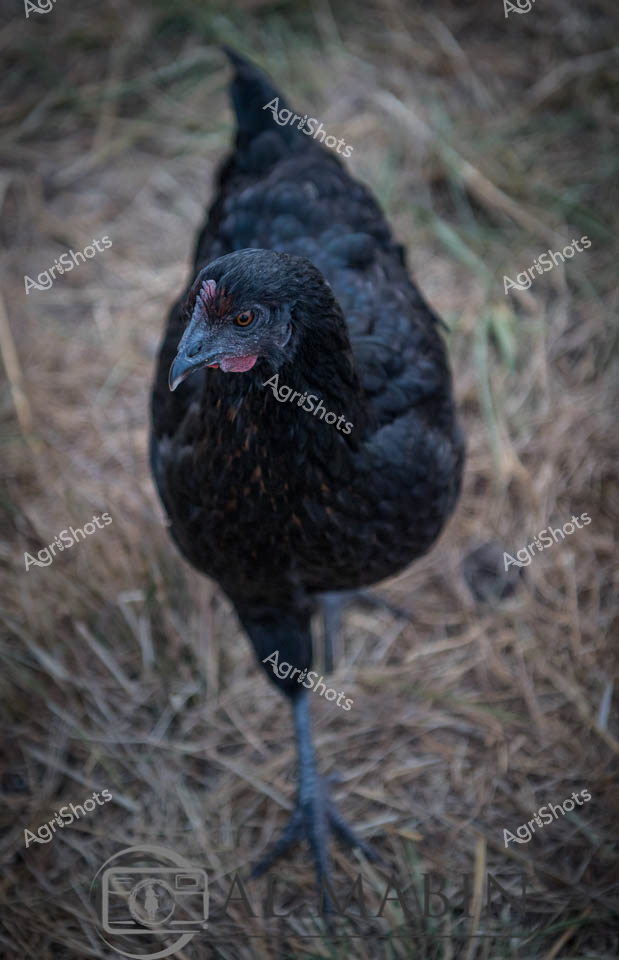
Midnight Australorp: A Study in Obsidian Plumage An Australorp hen stands sentinel in her weathered grassland domain, her midnight-black feathers absorbing the muted light of what appears to be an early morning or late afternoon. Her sleek, deep-bodied form epitomizes the quintessential Australian heritage breed, renowned for exceptional egg production and remarkable hardiness. Gleaming onyx plumage cascades over her robust frame, punctuated by a sharp, alert eye and a delicate pink comb that provides a striking contrast against her dark coloration. The textured backdrop of dry grass and straw suggests a free-range environment, typical of small-scale Victorian poultry operations where these birds thrive in natural, minimally structured settings. Her precise, upright posture and penetrating gaze communicate a sense of quiet determination - a living embodiment of the resilient spirit of Australian agricultural livestock. This Australorp represents more than just a chicken; she is a genetic legacy, a testament to generations of careful breeding and agricultural innovation.
 Image
Image
Nestled in the straw-lined farrowing pen, a sow tenderly nurses her newborn piglets in the Heathcote region of Victoria. The young piglets, a mix of solid black and striking black-and-white spotted coats, huddle closely against their mother's warm body, their delicate pink ears and soft snouts pressed intimately against her. The rich, golden straw provides a natural bedding that cushions and insulates the young litter, creating a safe and nurturing environment typical of free-range pig farming practices. Each piglet displays unique markings - some nearly coal-black, others adorned with distinctive cream-colored patches that break up their dark coats, highlighting the genetic diversity within this small family group. The intimate scene captures the raw, primal connection between a mother pig and her offspring, showcasing the gentle side of agricultural livestock raising. Soft morning light filters across the scene, emphasizing the textural details of the straw and the piglets' varied skin tones, creating a serene snapshot of new life in a Victorian piggery.
 Image
Image
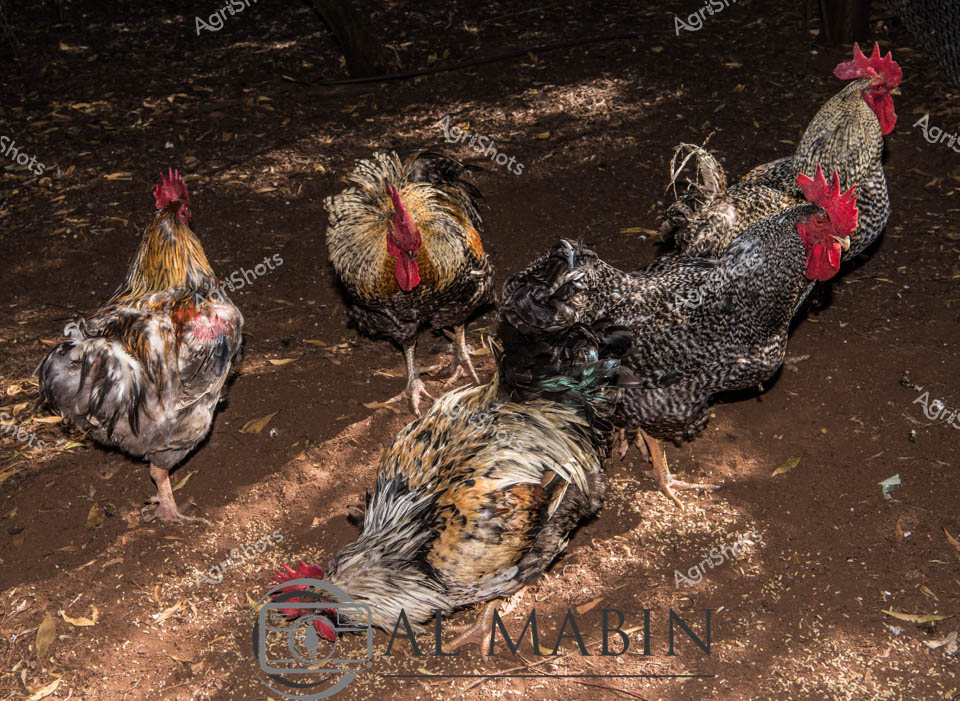
At the heart of a rustic Victorian farmyard, five roosters showcase the rich diversity of free-range poultry breeding. Varying in plumage from golden-brown to speckled black and white, these magnificent birds display distinct breed characteristics across their robust forms. One proud rooster stands tall with a vibrant red comb, while another rests among scattered leaves and dirt, embodying the raw, unfiltered environment of small-scale agricultural livestock management. The earthy brown ground and muted background suggest an early morning or late afternoon setting, with soft natural light highlighting the intricate feather patterns and muscular physiques of these barnyard sentinels. Each bird represents a different genetic lineage, reflecting the careful breeding and preservation of heritage chicken breeds typical of Australian small farming practices. The scene captures the essence of traditional poultry farming - unconfined, natural, and intimately connected to the land.
 Image
Image
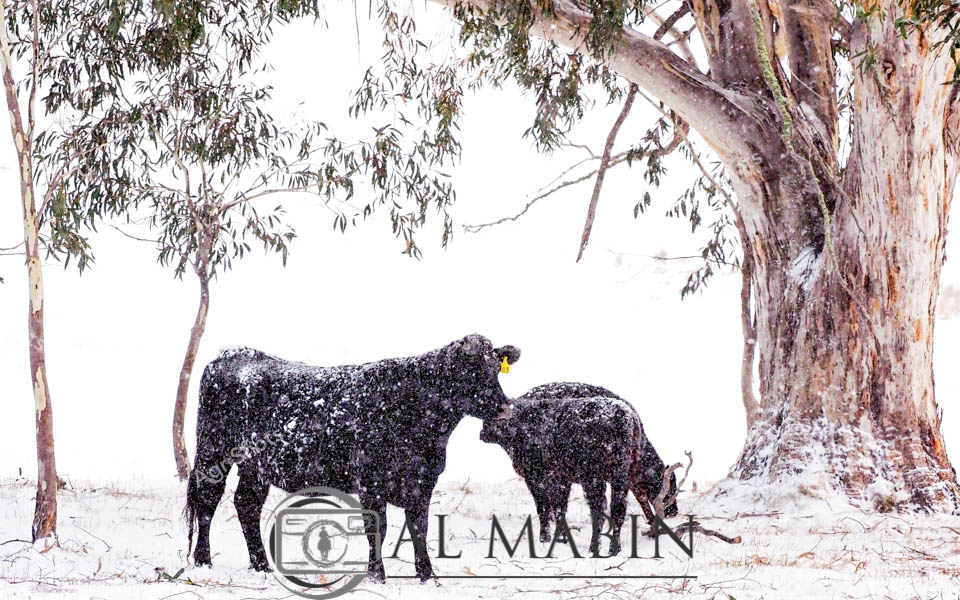
Angus cattle stand resolute amidst a stark winter landscape in rural Victoria, snow falling softly around their dark silhouettes. Two robust beef animals - one standing alert, the other grazing - create a powerful tableau against a backdrop of weathered eucalyptus trees with silvery bark and delicate hanging foliage. The snowfall blankets the ground in pristine white, transforming the pastoral scene into a breathtaking monochromatic composition that speaks to the resilience of Australian agricultural livestock. The larger beast bears a distinctive yellow ear tag, a subtle marker of careful herd management, while the falling snow highlights the dense, glossy black coat characteristic of the Angus breed. This moment captures the quiet fortitude of cattle farming in challenging alpine conditions, where animals must endure and thrive in extreme seasonal variations.
 Image
Image
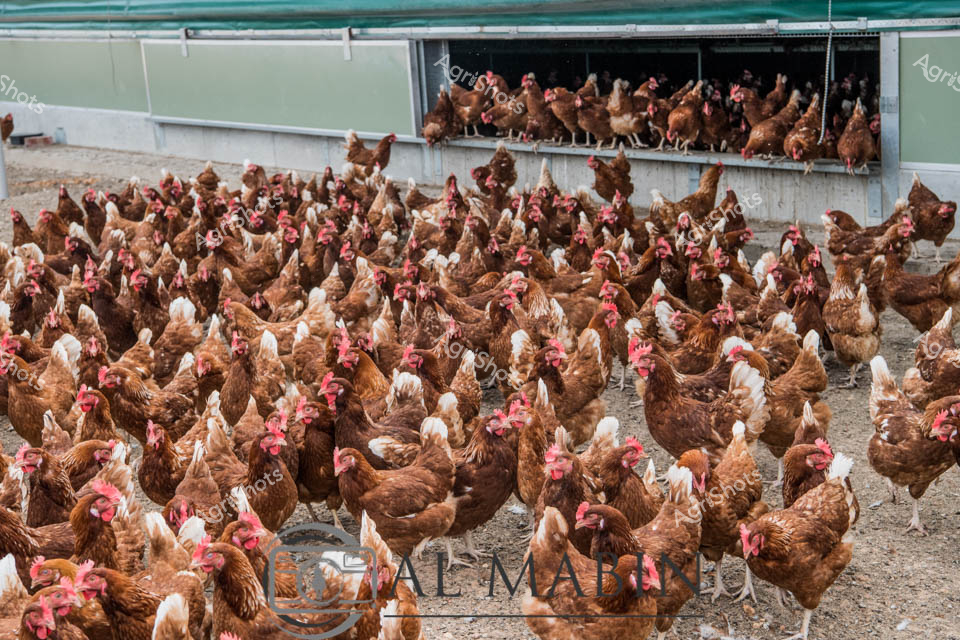
Brown-feathered laying hens populate a commercial poultry farm, densely clustered across a gravel yard and tucked into a steel-framed shed. Warm russet and white plumage dominates the scene, with bright red combs providing vivid accent color against the pale green shed walls. The chickens represent a typical large-scale egg production setup, with hundreds of birds occupying a structured agricultural environment designed for efficient livestock management. Chickens mill and move across the ground, some perched in the shed's open-sided sheltered area, demonstrating the controlled but not completely confined nature of this farming operation. The image captures the scale of modern agricultural livestock production, with uniform breeds carefully selected for maximum egg-laying productivity.
 Image
Image
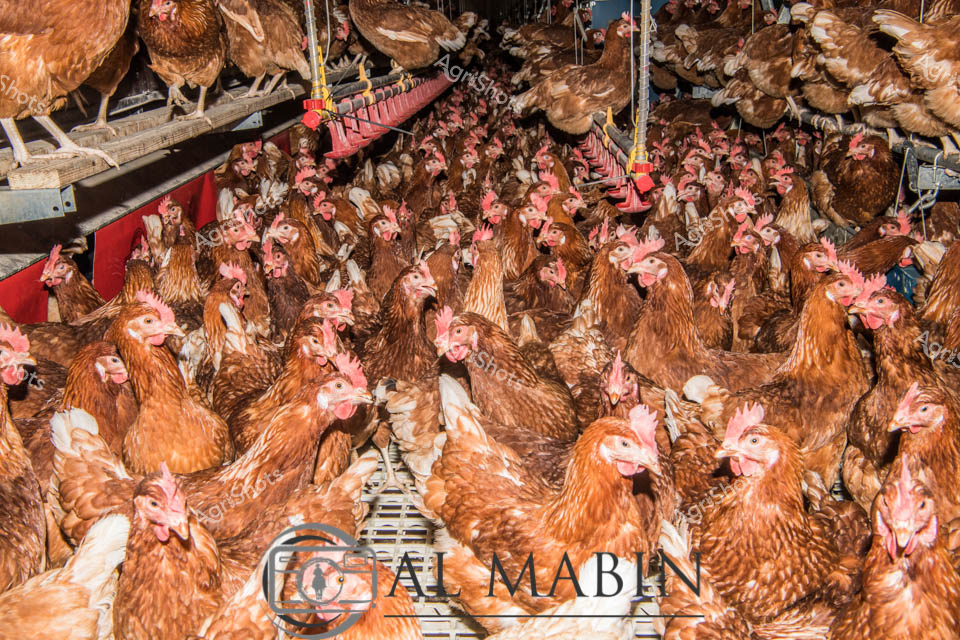
Battery-caged laying hens crowd tightly within a mechanized industrial poultry facility, their golden-brown feathered bodies packed densely across multiple levels of wire platforms. Bright red feeding troughs run through the center of the confined space, providing controlled access to feed for the large flock of commercial egg-laying chickens. Metallic infrastructure supports the complex vertical housing system, with systematic rows of hanging water dispensers and structured metal framing defining the industrial agricultural environment. The chickens, predominantly rich auburn and chestnut-colored Rhode Island Red or similar hybrid breeds, demonstrate the high-density production model common in large-scale egg production facilities. Harsh overhead lighting accentuates the tightly packed birds, revealing their uniform appearance and the systematic nature of modern agricultural livestock management.