About this image
A herd of white and brown cattle stand in a dusty corral with wooden fencing, showcasing what appears to be a Brahman or Brahma breed known for their distinctive light coloration and heat tolerance. The cattle are clustered together on packed earth, with some animals standing close and others moving slightly, suggesting a typical livestock holding area. The background reveals trees and additional fencing, indicating this is likely a ranch or agricultural livestock management facility.
Similar media
 ▶ Video
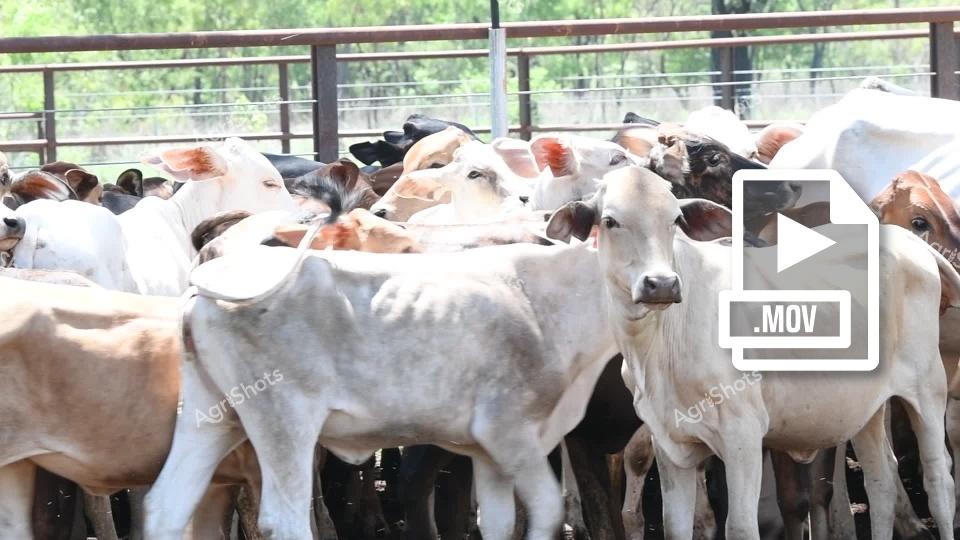
The footage captures a tightly clustered herd of white and light-colored cattle standing in a metal yard with metal fencing, revealing a typical Australian livestock management scene. The video clip showcases a group of Brahman or Brahman-cross cattle, characterized by their distinctive light-colored coats and prominent ears, densely packed together in what appears to be a holding pen or processing area. Multiple animals display varying shades of white, cream, and pale tan, with some showing subtle markings and variations in their coat coloration. The background suggests a rural agricultural setting, with green vegetation visible beyond the metal infrastructure, indicating this is likely a well-maintained cattle station or cattle yards. The close proximity of the animals and the structured metal environment highlight the professional approach to livestock handling in contemporary Australian agricultural practices. The video appears to be filmed during a mild day, possibly in a subtropical or tropical region, with soft green foliage visible in the background suggesting good seasonal conditions. The cattle stand closely together, demonstrating their calm demeanor in a managed agricultural environment, with several individuals facing different directions within the confined space.
 ▶ Video
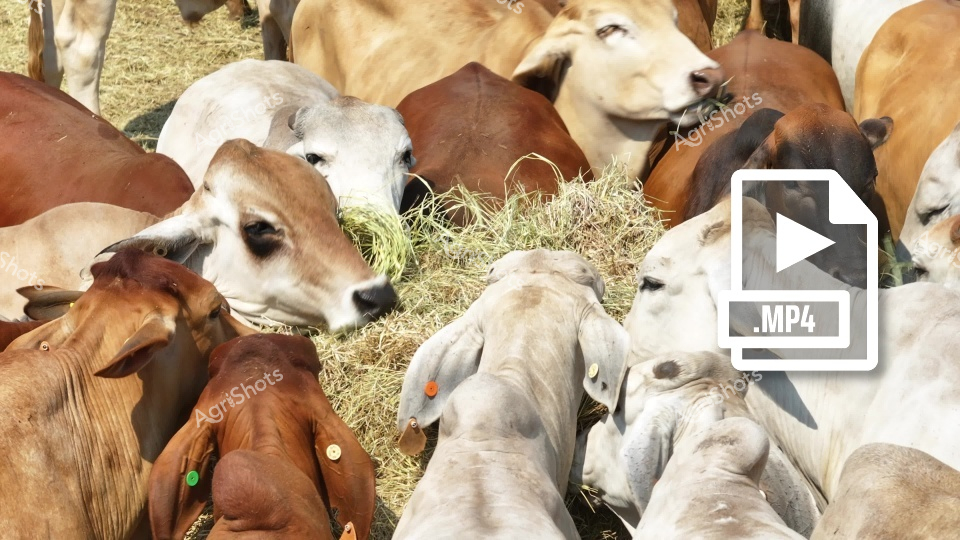
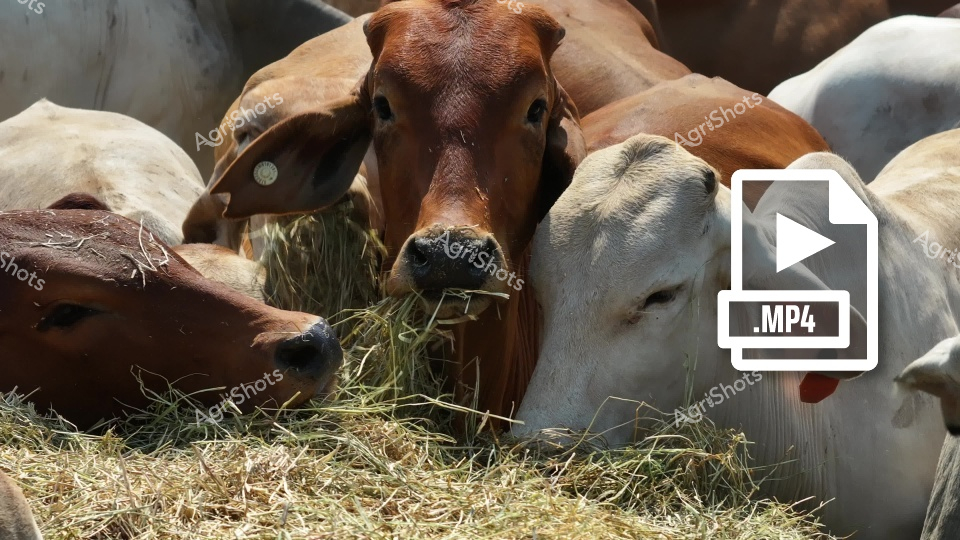
A densely packed group of Brahman cattle huddle together on hay in a cattle yard, showcasing the distinctive humped breed typical of Northern Territory's live export industry. The cattle, ranging in colors from white to reddish-brown, are closely clustered, highlighting the tight management of livestock in the Adelaide River region during autumn.
 ▶ Video
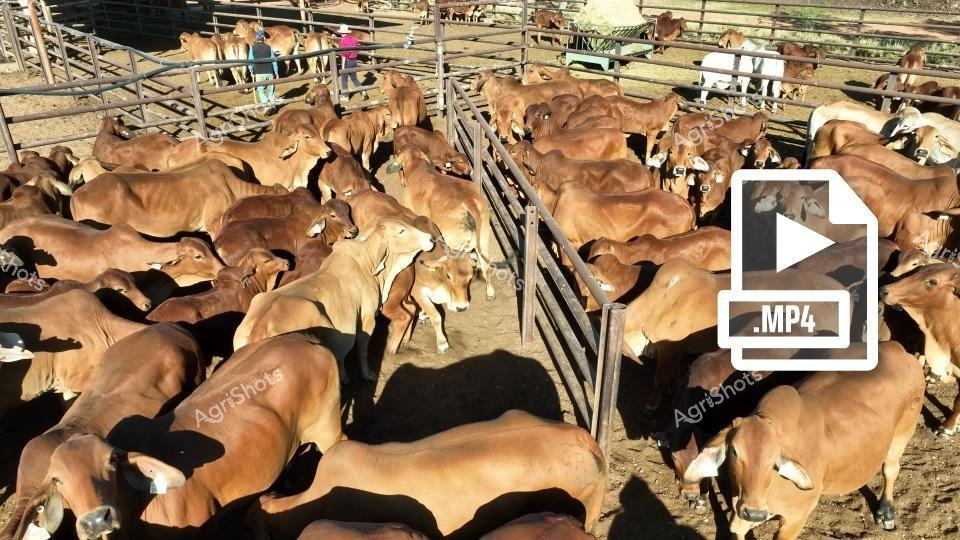
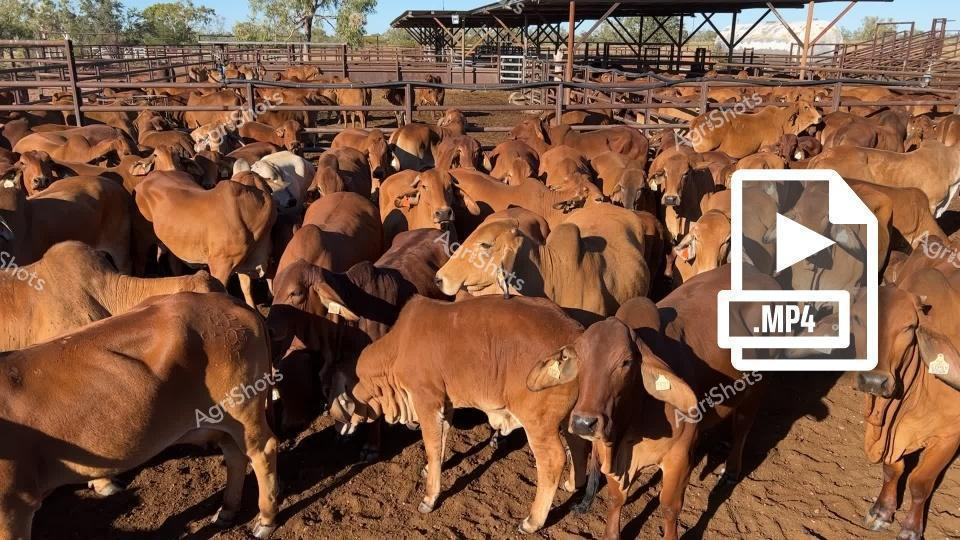
Brahman cattle pack tightly into dusty steel cattle yards under the harsh midday Queensland sun. Rich golden-brown bodies gleam with muscular definition, their distinctive humped shoulders and loose skin revealing their tropical breed heritage. Tight metal yard panels create geometric divisions, channeling the herd with precision while casting long angular shadows across the packed earthen ground. A few individuals near the yard's edge stand slightly apart, their alert ears and steady gaze suggesting an awareness of impending movement or sorting. The scene pulses with a quiet tension - these are prime stud beef cattle, carefully bred and managed, representing significant agricultural investment and expertise. The video format overlay suggests this is raw, unedited footage capturing an authentic moment in cattle management, likely during mustering season when herds are gathered, sorted, and prepared for sale or further agricultural processing.
 ▶ Video
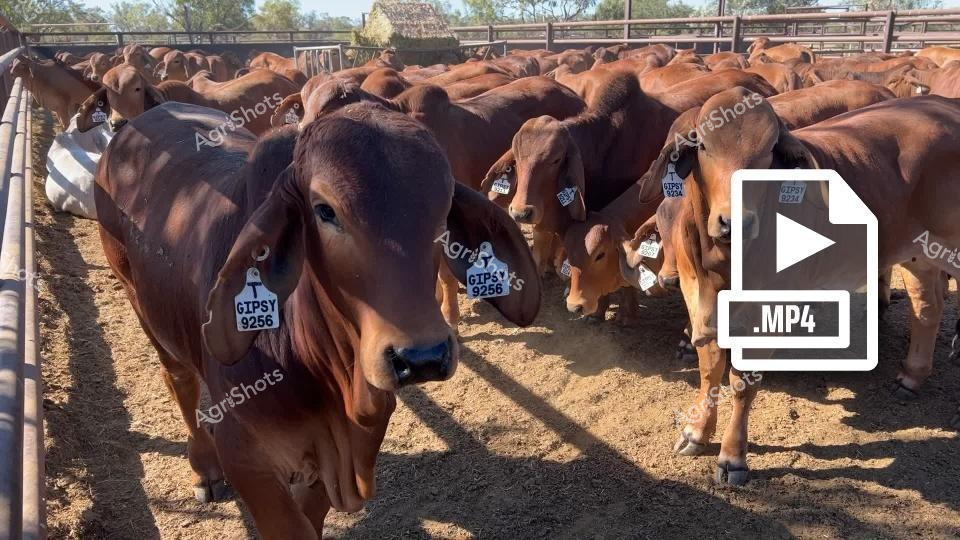
A large group of Brahman cattle, identifiable by their distinctive reddish-brown coloration and muscular build, are gathered in a fenced cattle yard in Queensland. These weaner calves have individual identification tags and appear to be part of a stud breeding program, standing on dry, dusty ground with wooden fencing and sparse vegetation in the background. The image captures a typical scene of cattle management during the weaning process in rural Australian agricultural settings.
 ▶ Video
A cluster of Brahman cattle huddle together on a bed of hay, highlighting the breed's distinctive reddish-brown and white coloration. These cattle, typical of the Northern Territory's Adelaide River region, appear to be in an export yard, showing the animals closely packed and feeding together during the autumn season.
 ▶ Video
A large herd of reddish-brown Brahman cattle is tightly packed inside a metal cattle yard in Queensland, Australia. These weaner cattle, characterized by their distinctive humped backs and loose skin, are part of a cattle station's mustering and weaning process, with a covered shed visible in the background under a bright, clear sky.
 ▶ Video
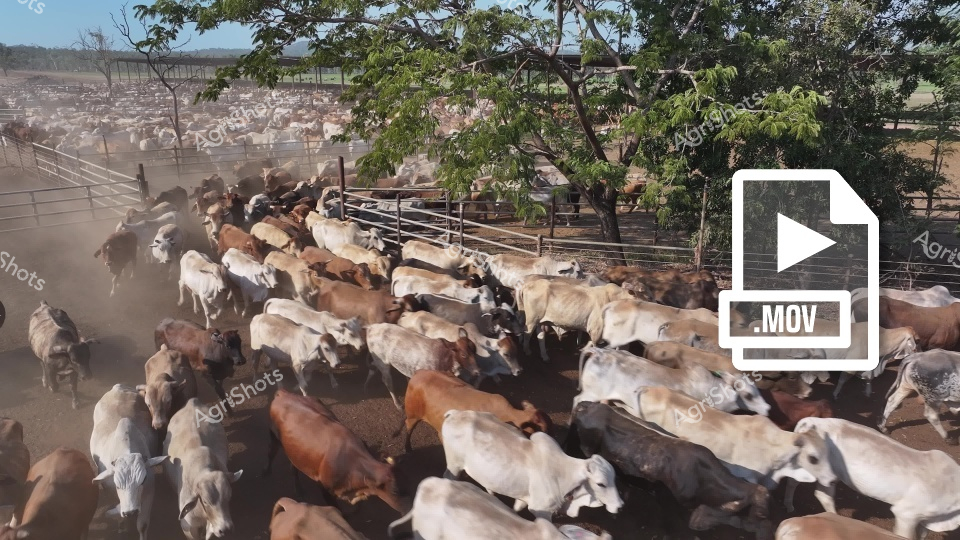
A large herd of mixed-breed cattle, predominantly white and brown Brahman and crossbreed cattle, are densely packed in a dusty livestock yard in the Northern Territory's Adelaide River region. The cattle are contained within metal fenced paddocks with trees providing some shade, capturing a typical scene of cattle farming in Australia's northern pastoral landscapes during the autumn season.
 ▶ Video
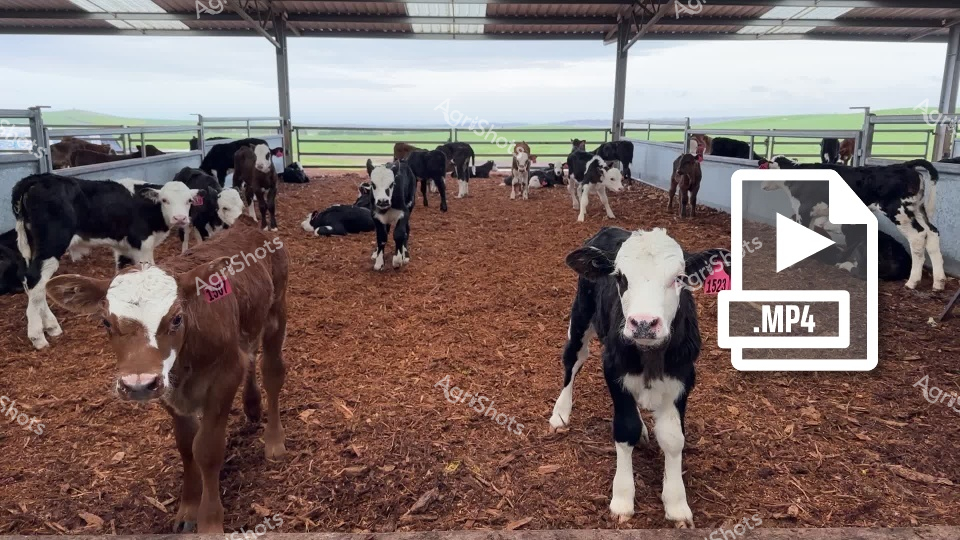
Young dairy calves gather in a sheltered indoor pen during the crisp Tasmanian winter, their black and white coats creating a patchwork against the rich reddish-brown wood chip bedding. Ranging from weeks to a few months old, these Holstein and Friesian crossbred calves represent the future of a productive dairy operation, standing or resting in small groups under a translucent-roofed shelter that allows soft, diffused winter light to illuminate their space. Some calves stand alert, ears perked and curious, while others rest quietly, demonstrating the calm environment of modern agricultural calf-rearing facilities. The spacious, clean pen with its sturdy metal barriers and wood chip substrate shows contemporary best practices in livestock management, ensuring these young animals have protection from harsh winter conditions while maintaining optimal health and growth potential. Each calf bears a distinctive ear tag, a small but important marker of individual tracking and management in a sophisticated dairy breeding program. The scene captures the quiet promise of agricultural renewal - these young animals representing the next generation of Tasmania's vital dairy industry.