Browse the collection
 Image
Thundering hooves and billowing dust clouds mark the pulse of pastoral life in Western Australia's rugged Kimberley region. A vast mob of burnished Brahman cattle surge across the golden grasslands, their muscular bodies creating a living river of burnished copper and tan stretching across the arid landscape. Stockmen on horseback guide the herd with practiced precision, navigating the sparse woodland and rust-colored earth with generations of inherited skill. The aerial perspective captures the dramatic scale of the muster, revealing the intricate choreography between riders and cattle against a backdrop of weathered gum trees and endless horizons. Soft blue skies and the muted palette of the dry season frame this quintessential Australian agricultural scene, where the rhythm of cattle production has shaped the landscape for generations. This image breathes with the raw energy of the north, where pastoral traditions continue to define the cultural and economic heartbeat of remote Western Australian stations.
 Image
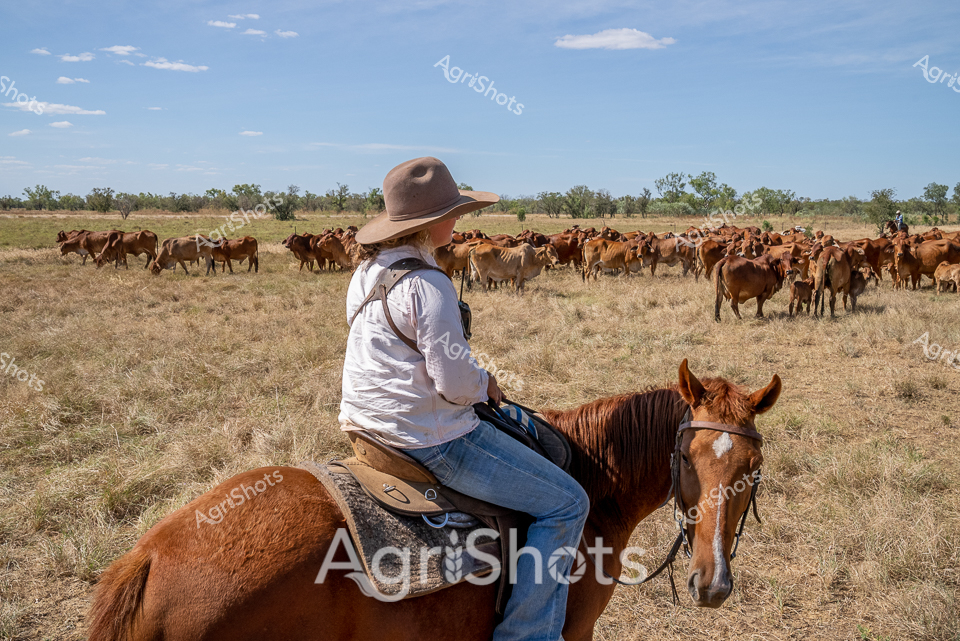
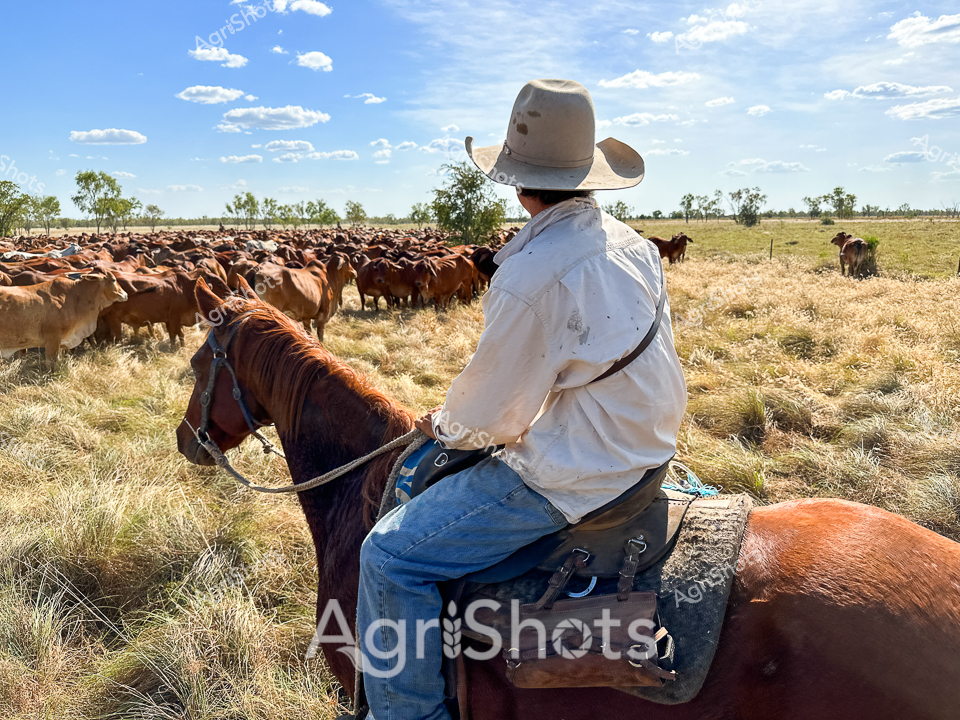
Atop a chestnut mare, a stockwoman surveys the herd of russet-coated Brahman cattle across the sun-drenched pastures of Western Australia's rugged Kimberley region. Dressed in a crisp white long-sleeved shirt, well-worn blue jeans, and a classic Australian bush hat, she sits confidently in the saddle, embodying the resilient spirit of rural agricultural life. The dry grasslands stretch out before her, dotted with scattered eucalyptus trees under a vast, cloud-speckled blue sky - a quintessential landscape of the northern Australian rangelands. Her horse stands steady as dozens of lean Brahman cattle, known for their heat tolerance and distinctive humps, graze and mill about the paddock. The scene captures the essence of station life - a careful, patient approach to cattle mustering that requires skill, endurance, and a deep connection to the land. The muted earth tones of the landscape - golden grasses, reddish-brown cattle, and the stockwoman's earthy attire - create a harmonious palette that speaks to the adaptability and strength of Australian agricultural practices. This image encapsulates the quiet determination of women in agriculture, highlighting their critical role in managing vast pastoral landscapes and maintaining Australia's vital beef production industry.
 Image
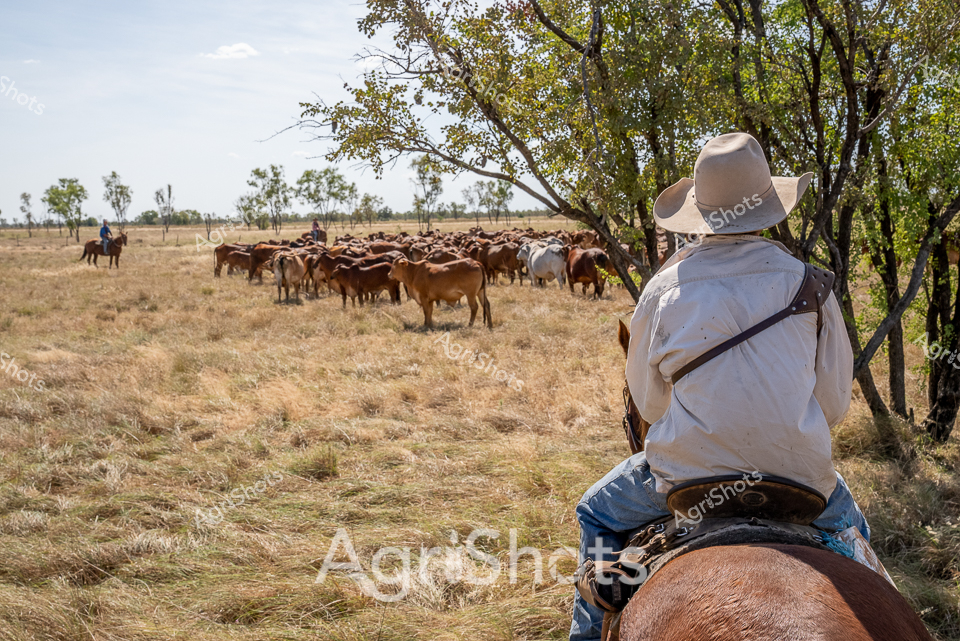
Stockmen guide a herd of rich-hued Brahman cattle across a sun-drenched pastoral landscape in Western Australia's rugged Kimberley region. Dusty golden grasslands stretch beneath sparse eucalyptus trees, creating a quintessential Australian cattle station scene. One stockman, dressed in a classic wide-brimmed akubra and light working shirt, sits astride a chestnut horse, carefully monitoring the herd's movement. Muscular brown and white Brahman cattle - renowned for their distinctive humps and heat-tolerant genetics - cluster together, their compact bodies a testament to generations of breeding adapted to harsh northern Australian conditions. Another stockman on horseback provides support, working collaboratively to gently direct the livestock across the dry seasonal landscape. The image captures the timeless rhythm of cattle mustering - a fundamental practice of Australian pastoral agriculture that blends traditional skills, animal husbandry, and an intimate connection between stockmen, horses, and livestock under the vast open skies of the continent's northern territories.
 Image
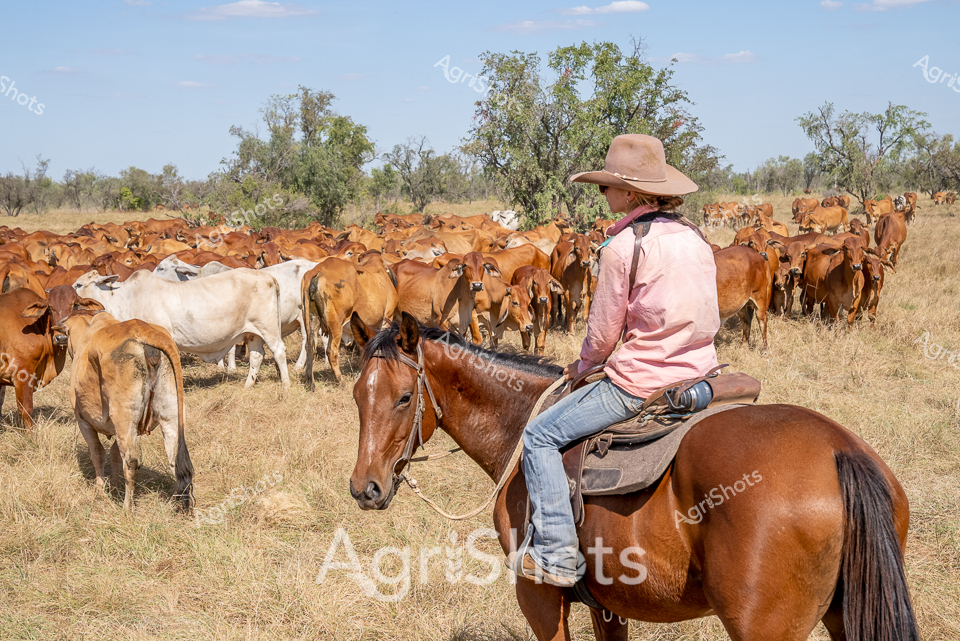
Stockman on horseback guides a vast herd of russet and ivory Brahman cattle across the sun-drenched grasslands of Western Australia's Kimberley region. Perched atop a chestnut horse, the rider - dressed in a soft pink long-sleeved shirt, blue jeans, and an iconic wide-brimmed outback hat - surveys the undulating landscape of sparse eucalyptus trees and golden dry season pastures. The cattle, predominantly a rich copper-brown typical of Brahman breed, move with a steady momentum, their muscular bodies a testament to the resilience required in this harsh pastoral environment. Scattered white cattle break the uniform rust-colored mass, creating a natural mosaic against the muted landscape. The scene captures the quintessential spirit of Australian cattle mustering - a delicate dance of human skill, animal instinct, and vast open spaces that defines the agricultural heartland of northwestern Australia. The soft blue sky and scattered clouds provide a gentle backdrop to this timeless scene of rural industry and connection to the land.
 Image
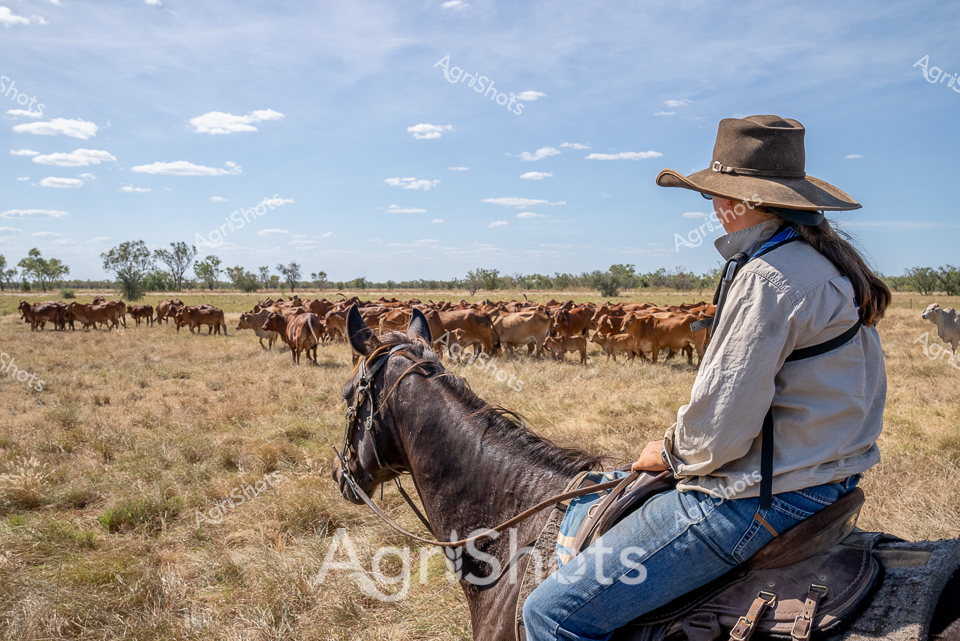
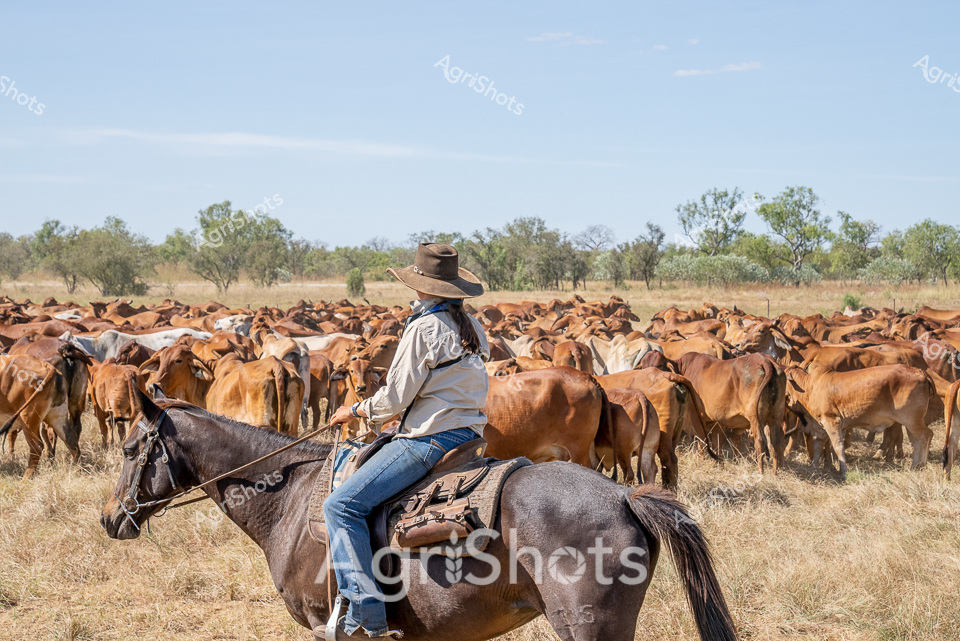
Stockwoman astride a dark horse surveys a sunbaked pastoral landscape in Western Australia's rugged Kimberley region, overseeing a herd of tawny Brahman cattle grazing on dry golden grasslands. Wearing a classic wide-brimmed outback hat, light-colored long-sleeved shirt, and blue jeans, she embodies the resilient spirit of Australian agricultural workers. The expansive sky is a soft azure, scattered with wispy white clouds, stretching above sparse woodland and an endless horizon of sparse grassland. Her horse stands steady, ears alert, as the cattle cluster across the arid paddock - a testament to generations of pastoral management in one of Australia's most challenging agricultural environments. The scene captures the quintessential rhythm of cattle mustering, where skill, patience, and an intimate understanding of the land converge. This image celebrates the crucial role of women in agriculture, showcasing the quiet strength and expertise required to manage livestock in Australia's remote and unforgiving interior.
 Image
Dust rises from weathered hooves as a stockwoman guides her dark bay horse through a vast herd of russet-colored cattle. Set against the sun-bleached landscape of Western Australia's Kimberley region, this quintessential pastoral scene captures the essence of remote cattle station life. Her wide-brimmed akubra shading her from the intense midday heat, the rider moves with practiced ease, her posture relaxed yet alert, seamlessly communicating with the herd during a classic cattle muster. Brahman cattle, distinguished by their distinctive humps and heat-resistant coats, cluster across the golden grasslands, their burnished copper-brown bodies creating a living carpet against the sparse woodland backdrop. Sparse eucalyptus trees punctuate the horizon, their muted greens contrasting with the pale blue sky, highlighting the harsh beauty of Australia's northern agricultural landscape. The stockwoman's weathered work shirt, dusty jeans, and well-worn riding gear speak to the demanding yet deeply connected lifestyle of women in agriculture, embodying resilience, skill, and an intimate understanding of the land.
 Image
Stockman in a wide-brimmed akubra hat guides his chestnut stock horse through a sun-drenched paddock of golden grasslands, surrounded by scattered gum trees in the vast Kimberley region of Western Australia. A herd of light brown Brahman cattle grazes in the background, their distinctive humped silhouettes marking this as a classic beef cattle station landscape. The stockman wears a crisp white long-sleeved shirt and leather shoulder harness, embodying the timeless tradition of cattle mustering - a critical agricultural practice that defines the rugged pastoral life of northern Australia. His horse moves with quiet confidence, ears alert and mane catching the soft light filtering through the sparse woodland. The scene captures the essence of Australian cattle farming: a delicate dance of human skill, animal partnership, and unforgiving landscape under the expansive sky. This image speaks to generations of pastoral heritage, where stockmen and the horses are the lifeblood of Australia's beef production industry, carefully managing herds across immense, challenging terrains.
 Image
Burnished copper-hued Brahman cattle crowd together in a dense mass, their muscular bodies pressed tightly in a sun-drenched cattle yard against the rugged landscape of Western Australia's Kimberley region. The lean, heat-adapted cattle with their distinctive hanging dewlaps and prominent humps reflect the robust breeding lines developed for survival in harsh tropical environments. Fenced by weathered timber posts and wire, the herd stretches across the frame, their uniformly tawny coats creating a mesmerizing texture of muscle and sinew under the harsh midday light. Sparse trees and dry scrubland frame the background, highlighting the harsh pastoral terrain that defines northern Australian cattle country. Each animal displays the genetic hallmarks of the Brahman breed - muscular frames, loose skin, and large ears that help dissipate heat in the unforgiving climate. This image captures the essence of Australian cattle production - resilient livestock perfectly adapted to challenging agricultural landscapes, representing generations of selective breeding and pastoral tradition.
 Image
A lone stockwoman astride her horse surveys a vast herd of burnished red Brahman cattle across the golden grasslands of Western Australia's Kimberley region. Her pink long-sleeved shirt and wide-brimmed akubra hat contrast against the dusty ochre landscape, capturing the essence of rural agricultural life. Scattered eucalyptus trees punctuate the distant horizon, framing a clear blue sky that speaks of the dry season's unrelenting heat. The cattle—predominantly rich reddish-brown Brahmans with their distinctive humps and loose skin—stand packed tightly, their muscular bodies a testament to the robust beef cattle breeding of northern Australia. From her vantage point on horseback, the stockwoman appears to be conducting a cattle muster, a critical task in managing large pastoral stations where livestock are moved, counted, and assessed. Her position amid the herd reflects generations of agricultural skill, showcasing the pivotal role of women in Australian agricultural operations and the enduring connection between human, horse, and livestock in this challenging landscape.
 Image
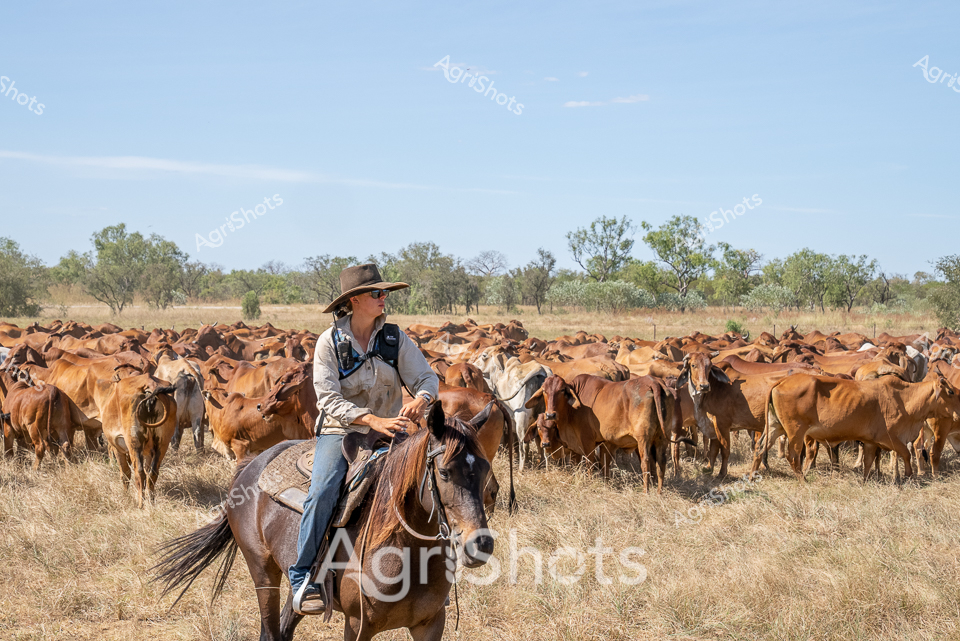
Sunlight bathes the golden grasslands of Western Australia's Kimberley region as a skilled station worker surveys the landscape. Wearing a classic wide-brimmed bush hat and dark sunglasses, she stands ready with a two-way radio, her light-colored work shirt crisp against the dry pastoral backdrop. In the distance, another rider on horseback moves steadily across the sparse woodland, part of a coordinated cattle mustering operation typical of these expansive northern stations. The scene captures the essence of modern agricultural work - technical, precise, and deeply connected to the rugged landscape. Sparse eucalyptus trees punctuate the horizon, their silvery-green foliage a subtle contrast to the straw-colored grasslands that stretch towards the distant treeline. This image embodies the resilience and expertise of women in agriculture, showcasing the critical role they play in managing vast cattle stations across Australia's challenging rural terrain.
 Image
Thundering hooves and a sea of burnished copper-red coats stretch across the arid Kimberley grasslands, where a stockwoman guides her horse through a dense herd of Brahman cattle. Wearing a wide-brimmed akubra and lightweight station wear, she sits confidently in the saddle, her horse moving with practiced ease among the muscular cattle. The landscape is quintessentially West Australian - sparse eucalyptus trees dotting a golden dry pasture under a vast, pale blue sky, capturing the rugged essence of northern Australian cattle country. Brahman cattle, with their distinctive humps and loose skin adapted to harsh tropical conditions, cluster tightly together, their uniform reddish-brown coats creating a living carpet across the undulating terrain. This scene epitomizes the resilience and skill of Australian agricultural workers, particularly women, who play critical roles in managing vast pastoral stations. The image speaks to generations of pastoral tradition, where horsemanship, cattle management, and an intimate understanding of challenging landscapes combine in a timeless dance of human and animal.
 Image
Sun-drenched western Queensland pastoral landscape comes alive with a classic cattle muster. A stockwoman mounted on a bay horse surveys a herd of rust-red Brahman cattle, her pink long-sleeved shirt and wide-brimmed akubra hat contrasting against the golden dry grasslands and scattered eucalyptus trees. These heat-tolerant Brahman cattle, with their distinctive humps and loose skin, are perfectly adapted to the harsh Australian rangelands, slowly grazing across the sun-bleached paddock while other riders can be seen in the distant background managing the herd's movement. The scene captures the essence of Australian cattle station life - a timeless ritual of mustering where skill, patience, and connection to the land are paramount. Her back is turned, focusing intently on guiding and monitoring the cattle, embodying the quiet determination of rural women who are integral to Australia's agricultural workforce. The wide-open landscape speaks of immense space, resilience, and the ongoing relationship between pastoral workers and the livestock under the vast, clear Western Australian sky.
 Image
Stockman on Horseback Mustering Brahman Cattle in the Kimberley A lone stockman rides atop a chestnut horse, surveying a vast herd of rust-red Brahman cattle grazing across the golden grasslands of Western Australia's rugged Kimberley region. Dressed in a vivid blue workshirt and pale denim jeans, the rider wears a crisp white safety helmet, signaling the modern approach to traditional cattle station work. The herd, predominantly Brahman cattle with their distinctive humped shoulders and loose skin, spreads across the dry seasonal landscape dotted with scattered eucalyptus trees and sparse ground vegetation. The wide-open terrain stretches beneath a pale blue sky, capturing the expansive nature of Australian pastoral agriculture. This scene epitomizes the timeless connection between stockmen, horses, and cattle that has defined Australia's agricultural heritage, blending centuries-old mustering techniques with contemporary safety practices. The image speaks to the resilience and skill required to manage livestock across the challenging and beautiful landscapes of Western Australia's northern cattle country.
 Image
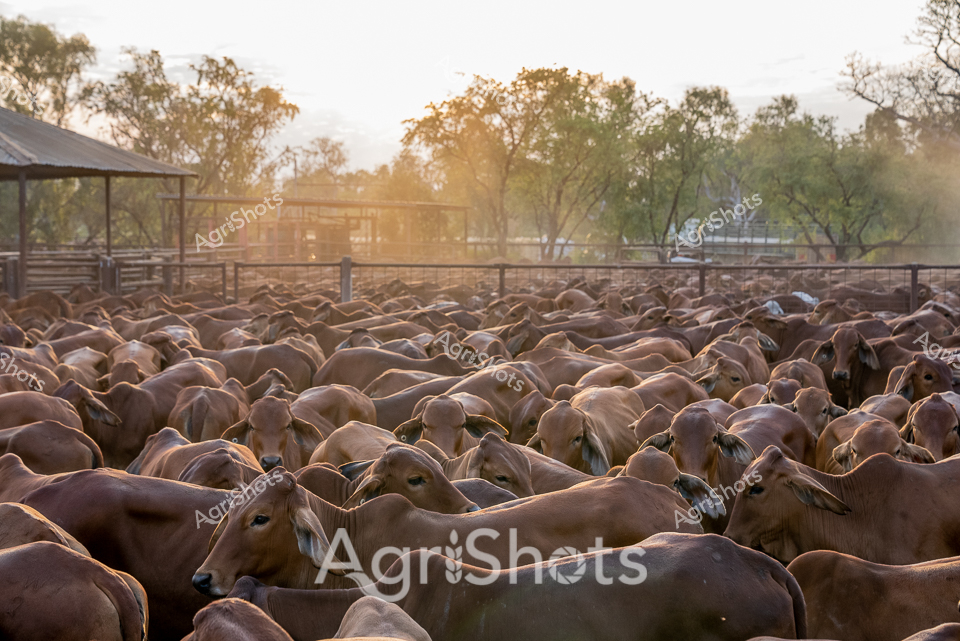
Golden light bathes a dense herd of Brahman cattle tightly packed within sturdy metal cattle yards, capturing the quintessential early morning atmosphere of a West Australian cattle station in the Kimberley region. The distinctive bronze-colored cattle, with their characteristic humps and loose skin, stand closely together, their muscular bodies creating a sea of warm, earthy tones against the soft green-grey backdrop of eucalyptus trees and rustic timber and wire livestock infrastructure. Soft dawn sunlight filters through the trees, casting long shadows and creating a misty, atmospheric quality that highlights the pastoral scene's raw beauty and the disciplined organization of cattle management. These robust Brahman cattle, renowned for their heat tolerance and resilience in challenging Australian landscapes, represent the backbone of northern Australian beef production, embodying generations of agricultural expertise and connection to the land. The tight, controlled configuration of the cattle yards demonstrates the precision and skill of station workers in managing large herds, with the early morning light suggesting the beginning of another day of mustering and livestock management in this remote, challenging environment.
 Image
Golden light spills across the dusty cattle yards, silhouetting a majestic baobab tree as two stockmen perch on the metal rail fence. A mob of sleek Brahman cattle, their distinctive humped backs and loose skin gleaming in warm brown tones, cluster together in the yard's confined space. The early morning sun casts long shadows across the dry earth, capturing a quintessential moment of Western Australian pastoral life in the Kimberley region. Wearing blue and neutral-toned work shirts, the stockmen survey the herd with the quiet concentration of experienced cattlemen, their postures relaxed yet alert. The metal yards create a geometric framework against the soft natural landscape, highlighting the precision and structure of cattle station management. This image breathes with the raw authenticity of Australian cattle country - a timeless scene of livestock, landscape, and the skilled workers who shape the northern pastoral economy.
 Image
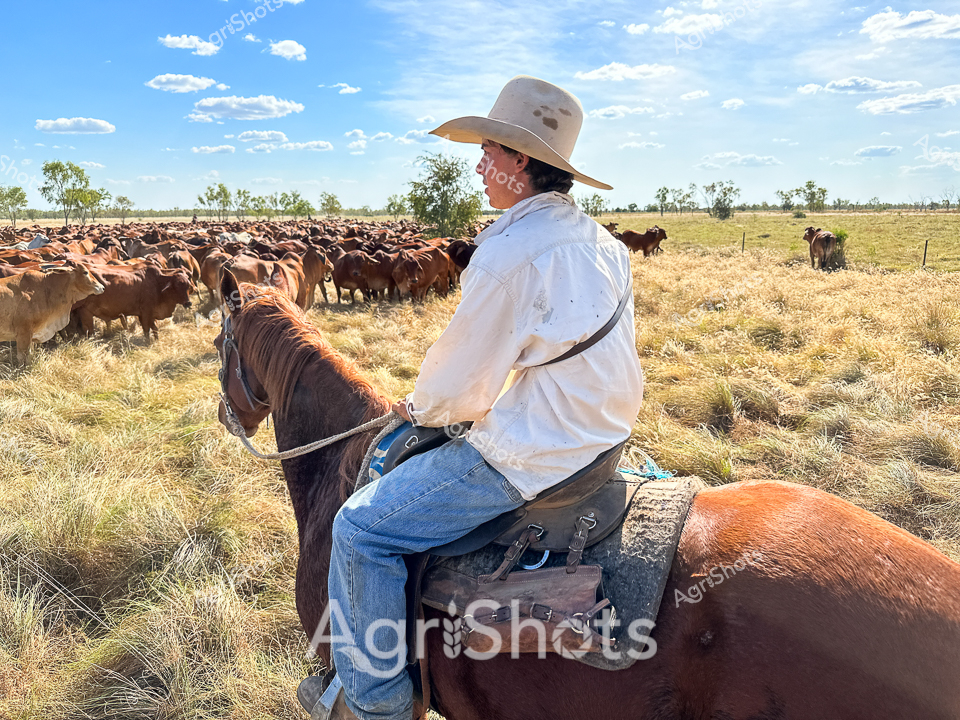
Australian cattle mustering captures the rugged essence of pastoral life in the Kimberley region of Western Australia. A stockman sits astride a chestnut horse, surveying a vast herd of rust-red Brahman cattle grazing across golden grasslands under a brilliant blue sky scattered with soft white clouds. His white long-sleeved shirt and wide-brimmed protective hat contrast against the sun-bleached landscape, while denim jeans and stock saddle speak to the practical attire of remote station work. The expansive paddock stretches to a distant treeline, dotted with sparse eucalyptus, highlighting the immense scale of cattle operations in this harsh yet beautiful terrain. Disciplined herds of muscular Brahman cattle - renowned for their heat and insect resistance - cluster together, their distinctive humps and loose skin adapted perfectly to the unforgiving northern Australian environment. This scene epitomizes the skill, patience, and connection to land that defines generational pastoral culture, where horse and rider work in harmony to manage livestock across impossibly wide horizons.
 Image
Kimberley cattle muster: A stockwoman astride a dark horse surveys a sprawling herd of rust-colored Brahman cattle across the sun-drenched grasslands of Western Australia. Her crisp white work shirt and wide-brimmed akubra hat mark her as an experienced station hand, blending seamlessly with the rugged pastoral landscape. Scraggly eucalyptus trees punctuate the distant horizon under a pale blue sky scattered with wispy clouds, capturing the expansive emptiness of the northern Australian rangelands. The hardy Brahman cattle, with their distinctive humped shoulders and loose skin, are perfectly adapted to this harsh environment, standing clustered in a tight formation across the dry golden pasture. Her horse stands steady, ears alert, as they monitor the herd's movement - a timeless scene of Australian agricultural skill and connection to the land. The image embodies the resilience, expertise, and quiet determination of rural workers managing livestock in one of Australia's most challenging agricultural regions.
 Image
Drover's Companion: Kimberley Cattle Muster A stockwoman sits astride her mount, surveying a vast golden grassland dotted with rich mahogany-colored Brahman cattle. Wearing a classic wide-brimmed Australian bush hat and crisp white long-sleeved shirt, she grips a blue water bottle - essential hydration during the demanding work of cattle mustering in Western Australia's rugged Kimberley region. In the distance, another rider guides the herd across the sun-drenched landscape, where sparse trees punctuate the horizon beneath a crystalline blue sky scattered with soft white clouds. The dry season landscape shimmers with heat, the parched grasses a testament to the harsh beauty of the station country. Her stance is relaxed yet alert, a seasoned drover comfortable in the expansive wilderness, embodying the resilience and skill of women in agriculture who play a critical role in Australia's pastoral industries. The scene captures the timeless rhythm of cattle management - a delicate dance of human, horse, and livestock across an unforgiving yet magnificent terrain.
 Image
Dusty ochre plains stretch beneath a sea of scattered eucalyptus trees, where a massive herd of Brahman cattle moves in a dense, undulating mass across the rugged Kimberley landscape. Stockmen on horseback guide the mob with practiced precision, their blue shirts and wide-brimmed hats a stark contrast against the golden grasslands. Wisps of fine red dirt billow around the herd, creating a dynamic tableau of pastoral life in Western Australia's remote north. The cattle - predominantly rich brown Brahmans with their distinctive humps and loose skin - cluster tightly, their movement controlled by skilled riders who weave expertly between the sparse, wind-sculpted trees. This aerial perspective captures the immense scale of Australian cattle station operations, where mustering represents a critical and time-honored agricultural practice that transforms the seemingly empty landscape into a living, breathing ecosystem of livestock and human skill. The scene breathes with the raw energy of generations of pastoral tradition, a testament to the endurance and connection between land, animals, and those who work them.
 Image
Dusty golden grasslands stretch across the Kimberley station, where a dark-coated stock horse stands sentinel alongside a herd of burnished copper-red Brahman cattle. The lean, muscular horse wears traditional leather working tack, its bridle and reins carefully adjusted for the day's mustering work. In the background, the robust cattle cluster together, their distinctive humped shoulders and loose skin typical of the heat-tolerant Brahman breed perfectly adapted to Western Australia's harsh pastoral landscapes. Sparse gum trees dot the distant horizon, casting minimal shade across the dry seasonal paddock. The image captures the quintessential rhythm of northern Australian cattle station life - a moment of quiet concentration where horse and handler work in silent partnership to manage the livestock across vast, unforgiving terrain. Soft grey-blue sky and weathered brown earth frame this timeless scene of agricultural endeavour, where generations of pastoral tradition are written into every dusty hoofprint and watchful gesture.
 Image
Golden Kimberley Twilight Liquid mercury floods the river valley, transforming the landscape into a mirror of burnished light as the sun descends across the Western Australian wilderness. Soft amber and slate clouds fracture the evening sky, casting luminous reflections across the water's glassy surface, where scattered golden cloudforms drift like ethereal islands. The serpentine river winds through dense eucalyptus woodland, its banks lined with verdant grasslands that speak to the resilient ecosystems of the Kimberley region. Sublime gradients of warmth radiate from the horizon, capturing the transcendent moment when day surrenders to twilight, bathing the entire landscape in a soft, elemental glow. Ancient river systems like these are the lifeblood of remote pastoral stations, sustaining cattle operations and wildlife through the harsh dry seasons. This breathtaking vista encapsulates the raw, untamed beauty of Western Australia's northern territories - a landscape of profound silence and infinite horizons.
 Image
Beneath an expansive Kimberley sky studded with cotton-wool clouds, a stockman guides his chestnut horse through a sweeping grassland paddock, surrounded by a dense herd of rust-colored Brahman cattle. Wearing the quintessential attire of outback cattle work - a crisp white long-sleeved shirt, well-worn blue jeans, and a wide-brimmed akubra hat - the stockman sits atop his mount, surveying the herd with quiet concentration. The landscape stretches endlessly, a sea of golden spinifex and dry season grasses punctuated by sparse eucalyptus trees, typical of Western Australia's rugged northern terrain. His horse stands steady, trained to move with minimal direction, as hundreds of Brahman cattle - renowned for their heat and insect resistance - cluster together, their distinctive humped shoulders and loose skin reflecting generations of adaptation to harsh tropical conditions. This is the timeless ritual of mustering, an intricate dance of human, horse, and livestock that has defined Australian pastoral life for generations, capturing the raw essence of agricultural work in one of the world's most unforgiving yet beautiful landscapes.
 Image
Winding through the arid pastoral landscape of Western Australia, a serene river reflects the soft morning light, its banks lined with silvery-green eucalyptus and paperback trees. The meandering waterway cuts a vibrant path through the sparse grasslands, creating a lifeline for the surrounding station country. A flock of white birds drifts across the river's surface, their delicate forms contrasting against the mirror-like water that captures the billowing clouds overhead. The terrain transitions from dense river vegetation to open, sun-bleached grasslands, revealing the harsh yet beautiful ecosystem of the inland region. Soft blue skies with scattered clouds suggest early spring or late winter, when the landscape begins to awaken from its dry season dormancy. This aerial perspective captures the essential relationship between water and survival in the vast, remote agricultural landscapes of Western Australia, highlighting the resilience of both the natural environment and the pastoral communities that call this challenging terrain home.
 Image
Brahman cattle cluster together in the soft light of dawn at a Western Australian cattle station in the Kimberley region. The deep russet-brown herd stands tightly packed within sturdy yard fencing, their distinctive large ears and loose skin typical of this heat-tolerant breed. Soft morning mist hangs in the background, silhouetting sparse trees and a weathered station building, capturing the quiet moment before the day's mustering begins. These robust cattle, bred for survival in Australia's harsh northern landscapes, showcase the resilience of beef production in one of the world's most challenging agricultural environments. Their uniform copper-colored coats gleam with health, revealing meticulous station management and expert livestock care. The image epitomizes the quiet strength of Australian pastoral life - a testament to generations of agricultural expertise in transforming challenging terrain into productive cattle country.