About this image
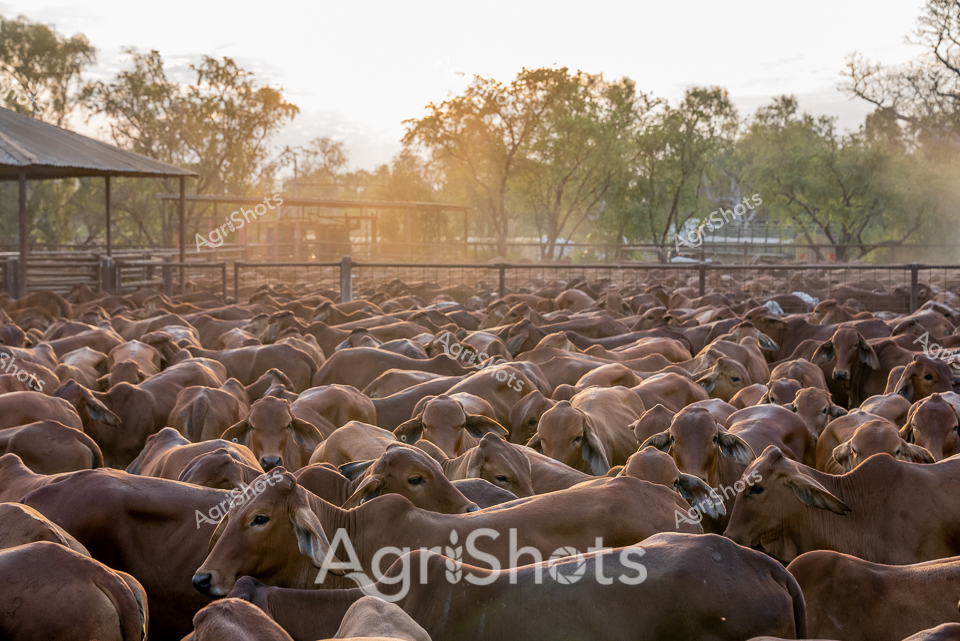
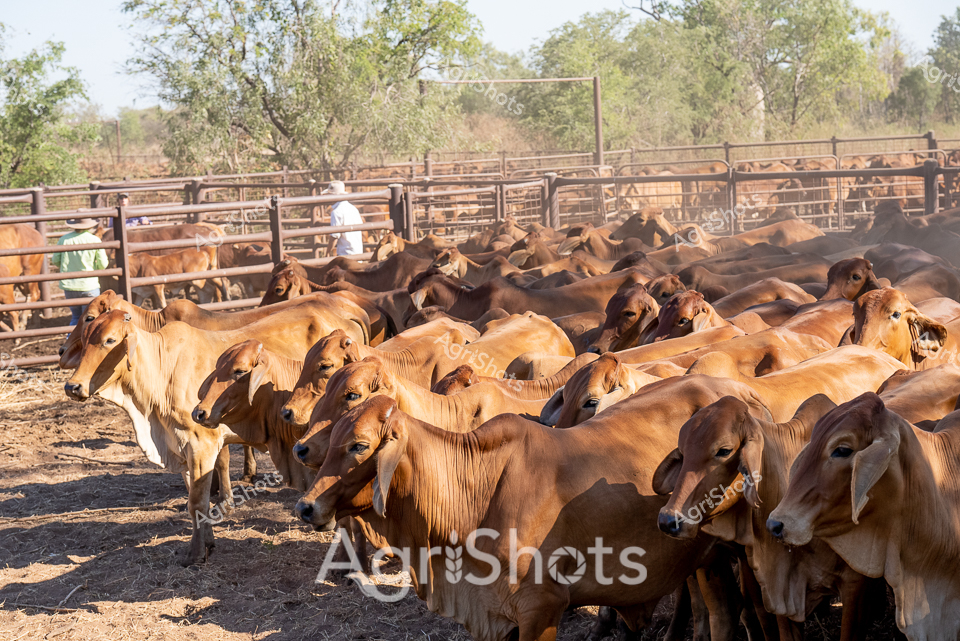
Golden light bathes a dense herd of Brahman cattle tightly packed within sturdy metal cattle yards, capturing the quintessential early morning atmosphere of a West Australian cattle station in the Kimberley region. The distinctive bronze-colored cattle, with their characteristic humps and loose skin, stand closely together, their muscular bodies creating a sea of warm, earthy tones against the soft green-grey backdrop of eucalyptus trees and rustic timber and wire livestock infrastructure. Soft dawn sunlight filters through the trees, casting long shadows and creating a misty, atmospheric quality that highlights the pastoral scene's raw beauty and the disciplined organization of cattle management. These robust Brahman cattle, renowned for their heat tolerance and resilience in challenging Australian landscapes, represent the backbone of northern Australian beef production, embodying generations of agricultural expertise and connection to the land. The tight, controlled configuration of the cattle yards demonstrates the precision and skill of station workers in managing large herds, with the early morning light suggesting the beginning of another day of mustering and livestock management in this remote, challenging environment.
Similar media
 Image
Image
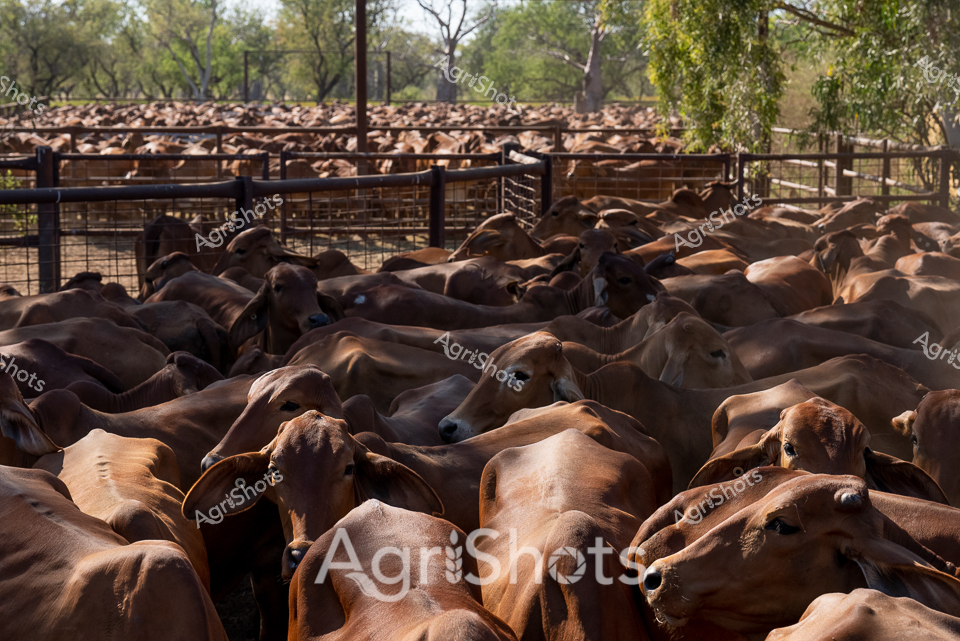
Brahman cattle crowd the steel-railed yards of a West Australian cattle station, their rich tawny-copper hides gleaming in the late morning sunlight. Tightly packed within the mesh-sided holding pens, these robust tropical beef cattle showcase the distinctive large ears and loose skin characteristic of the Brahman breed, perfectly adapted to Australia's harsh northern landscapes. Surrounding trees cast dappled shade, suggesting this is likely during the dry season when mustering operations are in full swing. The dense clustering of animals reveals the scale of modern pastoral operations, with hundreds of muscular bodies pressed closely together, demonstrating the efficient management of large herds across Western Australia's expansive cattle stations. Each animal's sleek form reflects the careful breeding and nutritional management that defines contemporary Australian beef production, highlighting the intersection of traditional pastoral skills and advanced agricultural techniques. The tight composition emphasizes the impressive density and uniformity of these resilient cattle, bred to thrive in challenging environmental conditions.
 Image
Image
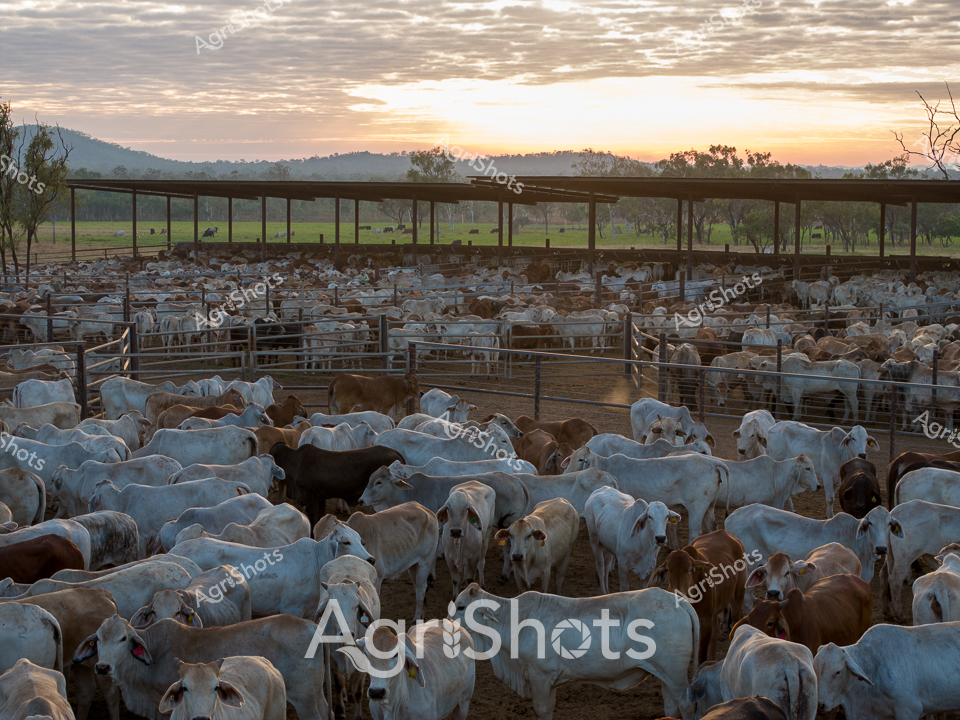
Brahman cattle crowd a steel-fenced cattle yards under a soft dawn sky, the misty winter light of Victoria's Moorabloo region casting golden hues across the landscape. Muscular white and chestnut-colored beef cattle stand shoulder-to-shoulder, their distinctive humped shoulders and loose skin characteristic of the hardy Brahman breed adapted to Australia's challenging agricultural environments. A long sheltered feeding structure stretches across the background, with scattered gum trees and distant hills completing the pastoral scene. The cattle's varied coat colors - from pale ash-white to rich coffee-brown - create a textured mosaic of livestock, highlighting the genetic diversity crucial to modern cattle breeding. Early morning shadows and soft cloud formations transform the cattle yards into a living canvas, capturing the intricate relationship between agricultural infrastructure and the natural landscape. This image epitomizes the scale and precision of contemporary Australian cattle production, where careful management and advanced breeding techniques converge to sustain one of the nation's most important agricultural sectors.
 Image
Image
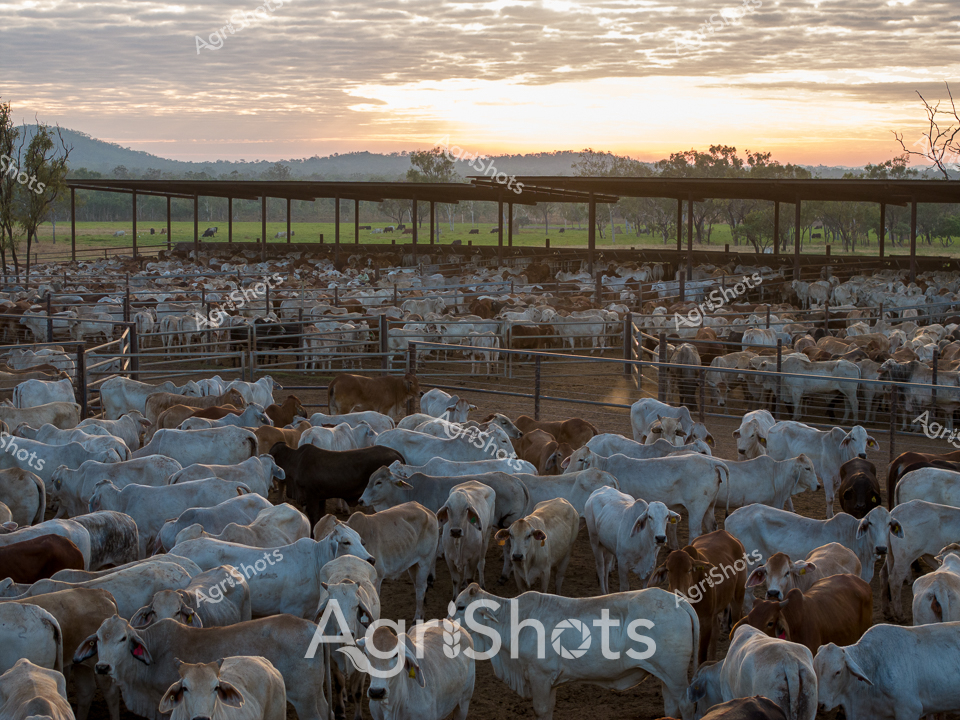
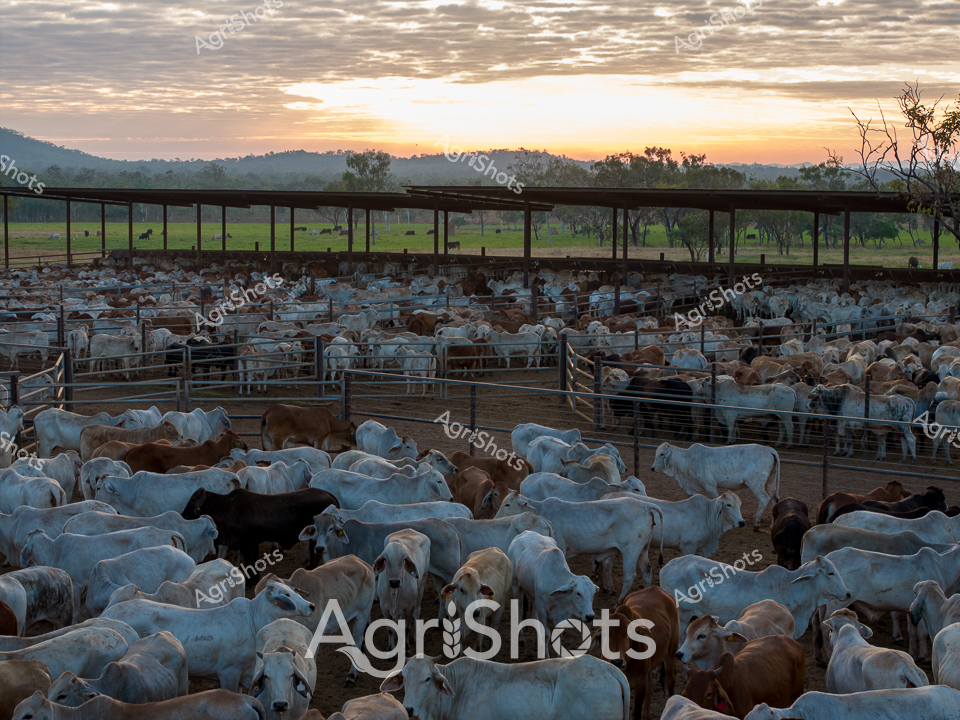
Golden light breaks across the horizon, illuminating a vast cattle yard filled with pristine Brahman cattle. The early morning sunrise casts a soft, textured glow over hundreds of white and rich brown cattle, tightly packed within steel rail enclosures. These robust, muscular cattle - hallmarks of Northern Territory pastoral landscapes - stand clustered together, their distinctive humped shoulders and loose skin reflecting the Adelaide River region's rugged agricultural heritage. Skeletal gum trees punctuate the distant treeline, silhouetted against a layered cloudscape of muted greys and warm amber tones. The expansive export yards stretch across the foreground, representing Australia's critical live cattle export infrastructure, with neat metal pens containing these carefully managed herds. This panoramic scene captures the essence of northern Australian cattle production - a testament to the resilience of pastoral agriculture in one of the continent's most challenging environments.
 Image
Image
Dawn breaks over a bustling cattle yard in the Adelaide River Region of Northern Territory, casting a soft golden light across a sea of Brahman cattle. The expansive yard is densely packed with hundreds of white and brown cattle, their distinctive humped shoulders and loose skin characteristic of this heat-tolerant breed perfectly suited to Australia's northern landscape. Sturdy steel rail fences divide the yards, with a long sheltered walkway stretching across the background, silhouetted against the misty morning horizon dotted with sparse eucalyptus trees. The cattle stand closely together, their varied shades of white, grey, and rich brown creating a textured landscape of muscular bodies and gentle movements. Soft morning clouds streak the sky, creating a muted palette of yellows, greys, and soft blues that complement the pastoral scene. This is quintessential Northern Territory cattle country - a snapshot of Australia's live export industry at first light, where generations of agricultural expertise are captured in a single, powerful moment of rural industry and landscape. The scene breathes with the quiet energy of preparation, suggesting these cattle are about to begin their journey, embodying the resilience and scale of Australia's northern agricultural enterprises.
 Image
Image
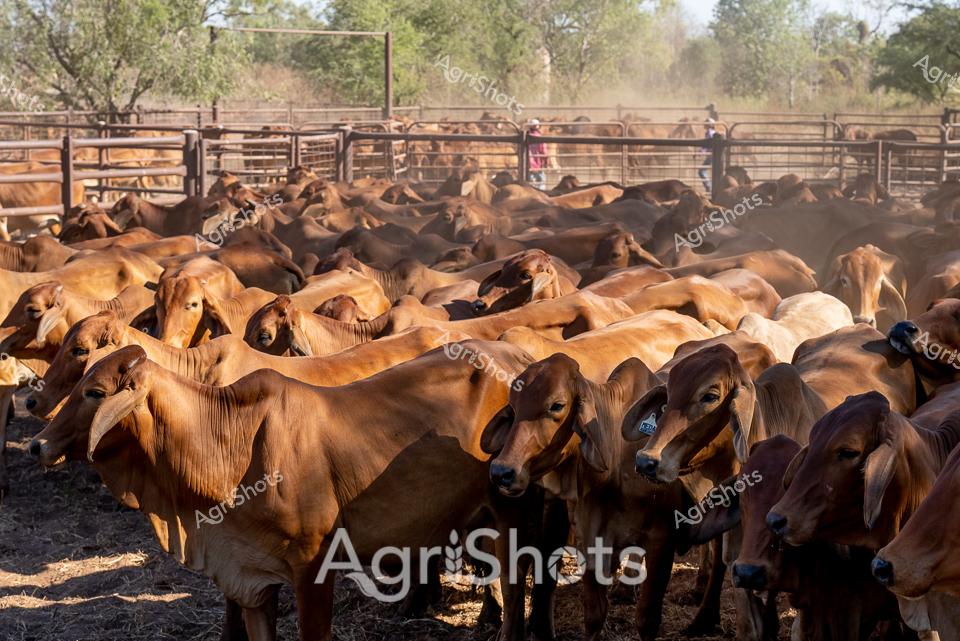
Brahman cattle cluster tightly in sun-drenched yards, their burnished copper-gold coats gleaming against weathered steel panel fencing. Dusty earth and scattered trees frame this quintessential Kimberley cattle station scene, where the dense herd radiates the heat and energy of mustering season in Western Australia. These robust Brahman cattle, renowned for their distinctive large ears and loose skin adapted to tropical conditions, stand shoulder-to-shoulder, their muscular bodies testament to generations of pastoral breeding and management. A hint of movement suggests stockworkers positioned around the yards, orchestrating this carefully managed livestock operation with generations of inherited skill. The harsh landscape backdrop speaks to the challenging environment of northern Western Australia, where pastoral enterprises demand resilience from both animals and humans. Soft morning light casts long shadows, highlighting the powerful physique of these cattle and the intricate dance of agricultural production that defines Australia's northern cattle country.
 Image
Image
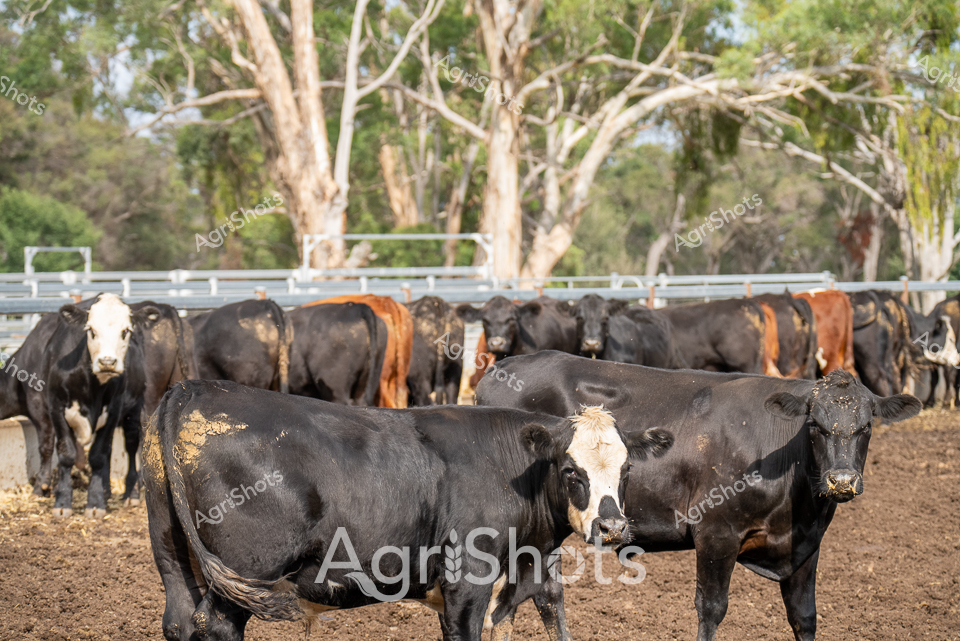
Black Angus and crossbred cattle cluster in a compact feedlot, nestled beneath silvery eucalyptus trees in the New England region of New South Wales. The mature herd stands on packed earthen ground, with a white rail fence defining the paddock boundaries in the background. Predominantly black cattle with a few russet-colored individuals showcase the genetic diversity of Australian beef production, their muscular frames indicating prime meat stock. Soft afternoon light filters through the gum trees, casting dappled shadows across the yard and highlighting the sleek, well-conditioned coats of the animals. The scene captures the precision of modern cattle management, where carefully controlled nutrition and environment produce high-quality livestock for Australia's robust beef industry. This image epitomizes the intersection of agricultural expertise and natural landscape, representing the sophisticated cattle farming practices of rural New South Wales.
 Image
Image
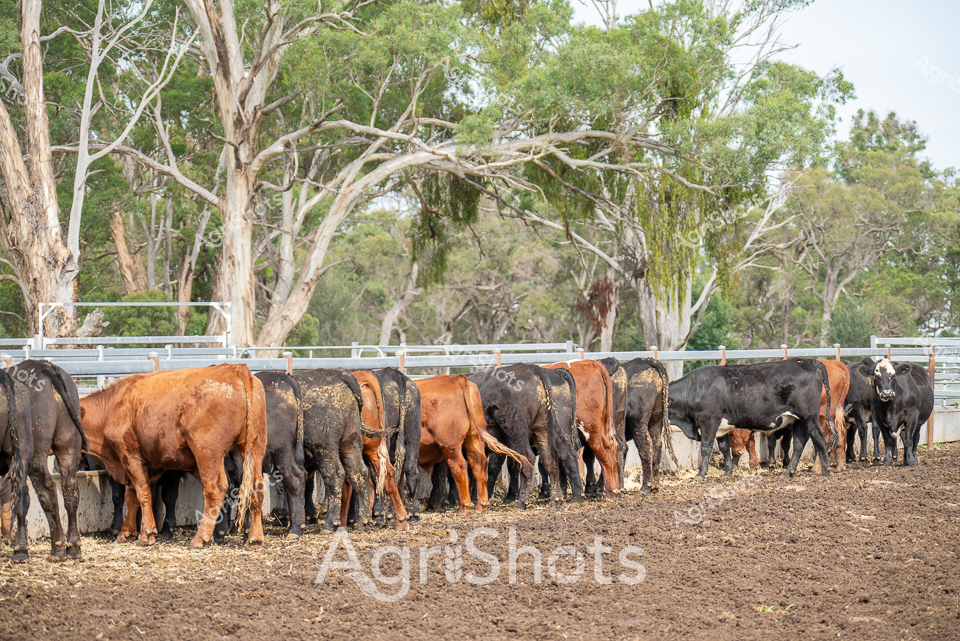
Muscled beef cattle line up at a feed bunker, their rich tapestry of colors ranging from deep charcoal to burnished copper and russet brown. Positioned in a classic New England Region feedlot, the animals stand flanked by weathered eucalyptus trees, their pale bark and twisting branches creating a quintessential Australian agricultural backdrop. The dry, packed earth beneath their hooves speaks to the summer season, with a dusty, compact surface typical of livestock management in regional New South Wales. Each animal stands purposefully, heads down at the feed barrier, showcasing the disciplined efficiency of modern cattle production. The mix of breeds - likely Angus, Hereford, and crossbred stock - demonstrates the genetic diversity of contemporary beef herds. Sturdy metal yards and feed infrastructure frame the scene, highlighting the industrial precision of contemporary agricultural practices. The soft filtered light suggests early morning, with soft shadows cast by the surrounding tree line. Hints of straw and feed mix create textural contrasts against the cattle's varied coat colors, capturing a moment of routine sustenance in the Australian cattle industry's rhythmic cycle.
 Image
Image
Brahman cattle cluster tightly in russet-toned herds within dusty steel cattle yards, their distinctive loose skin and prominent humps revealing their tropical breeding adaptations. The arid Kimberley landscape of Western Australia stretches behind the yards, sparse trees and shrub vegetation indicating the harsh pastoral environment. Golden-brown cattle with wrinkled necks and alert ears press against wooden fence railings, their uniform coloration broken only by subtle variations in hide texture and depth of bronze-like shading. A station worker in light clothing stands near the herd, overseeing the careful management of these resilient beef cattle bred to thrive in challenging northern Australian conditions. The scene pulses with quiet industry - a snapshot of agricultural production where generations of selective breeding and expert animal husbandry converge in this sun-drenched, red-earthed landscape. Dust hangs in the air, creating a soft atmospheric haze that speaks to the heat and movement of cattle being prepared for market or pastoral rotation.