About this image
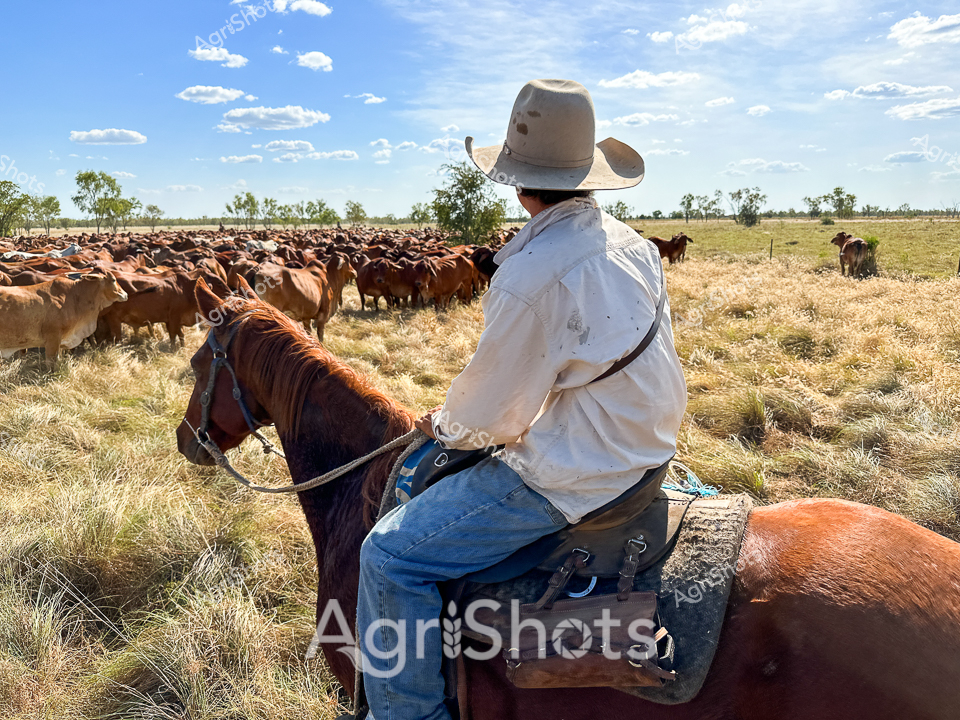
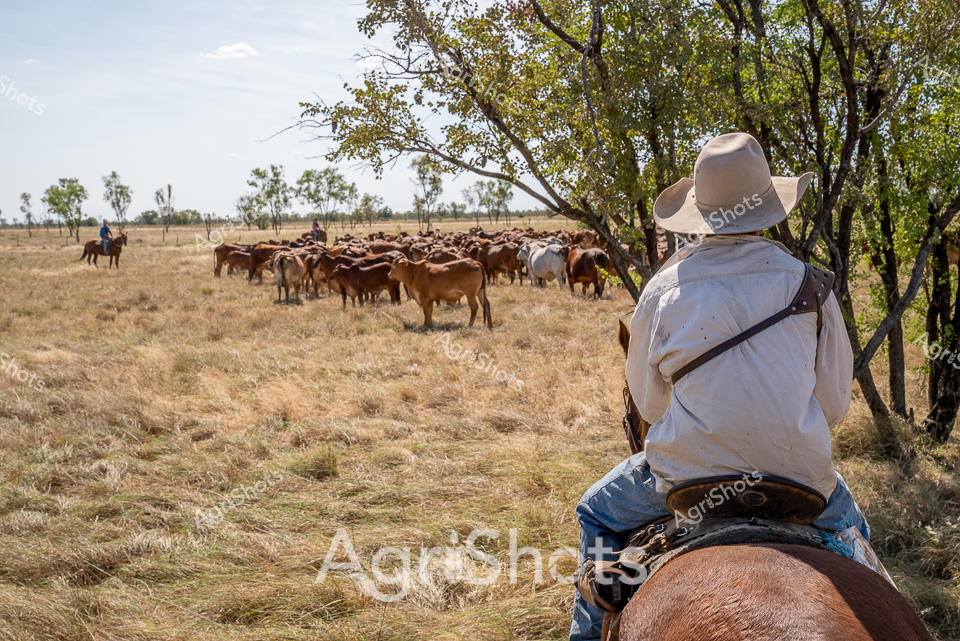
Beneath an expansive Kimberley sky studded with cotton-wool clouds, a stockman guides his chestnut horse through a sweeping grassland paddock, surrounded by a dense herd of rust-colored Brahman cattle. Wearing the quintessential attire of outback cattle work - a crisp white long-sleeved shirt, well-worn blue jeans, and a wide-brimmed akubra hat - the stockman sits atop his mount, surveying the herd with quiet concentration. The landscape stretches endlessly, a sea of golden spinifex and dry season grasses punctuated by sparse eucalyptus trees, typical of Western Australia's rugged northern terrain. His horse stands steady, trained to move with minimal direction, as hundreds of Brahman cattle - renowned for their heat and insect resistance - cluster together, their distinctive humped shoulders and loose skin reflecting generations of adaptation to harsh tropical conditions. This is the timeless ritual of mustering, an intricate dance of human, horse, and livestock that has defined Australian pastoral life for generations, capturing the raw essence of agricultural work in one of the world's most unforgiving yet beautiful landscapes.
Similar media
 Image
Image
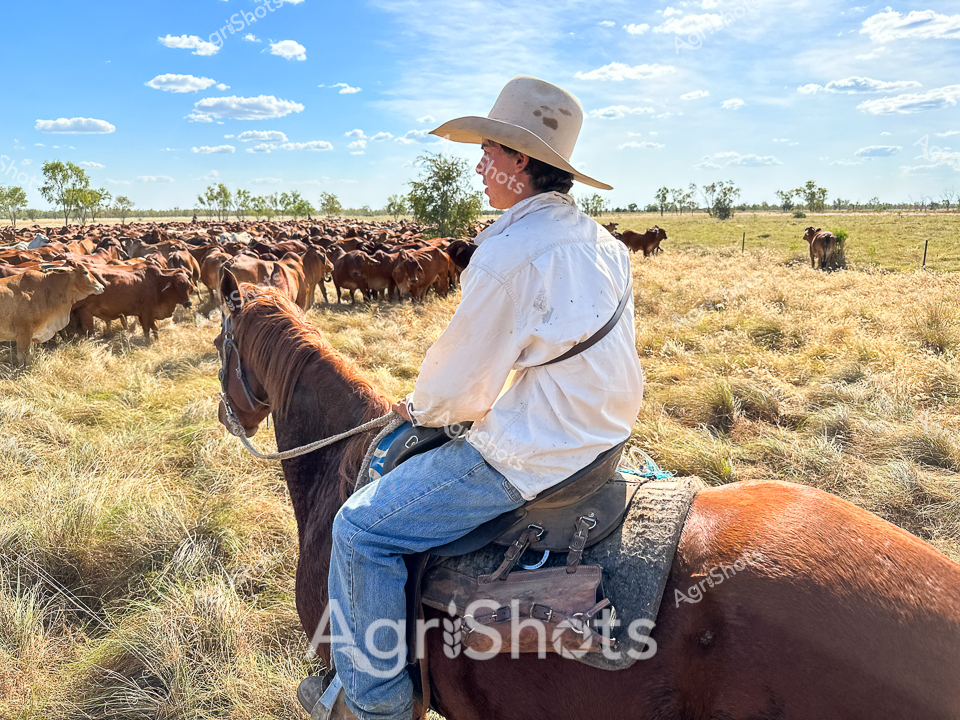
Australian cattle mustering captures the rugged essence of pastoral life in the Kimberley region of Western Australia. A stockman sits astride a chestnut horse, surveying a vast herd of rust-red Brahman cattle grazing across golden grasslands under a brilliant blue sky scattered with soft white clouds. His white long-sleeved shirt and wide-brimmed protective hat contrast against the sun-bleached landscape, while denim jeans and stock saddle speak to the practical attire of remote station work. The expansive paddock stretches to a distant treeline, dotted with sparse eucalyptus, highlighting the immense scale of cattle operations in this harsh yet beautiful terrain. Disciplined herds of muscular Brahman cattle - renowned for their heat and insect resistance - cluster together, their distinctive humps and loose skin adapted perfectly to the unforgiving northern Australian environment. This scene epitomizes the skill, patience, and connection to land that defines generational pastoral culture, where horse and rider work in harmony to manage livestock across impossibly wide horizons.
 Image
Image
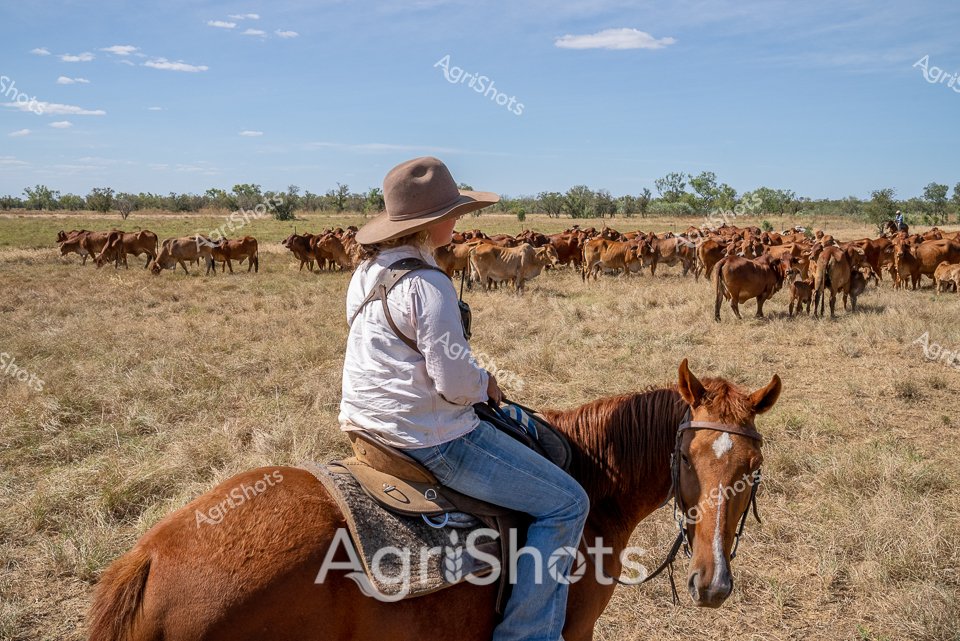
Atop a chestnut mare, a stockwoman surveys the herd of russet-coated Brahman cattle across the sun-drenched pastures of Western Australia's rugged Kimberley region. Dressed in a crisp white long-sleeved shirt, well-worn blue jeans, and a classic Australian bush hat, she sits confidently in the saddle, embodying the resilient spirit of rural agricultural life. The dry grasslands stretch out before her, dotted with scattered eucalyptus trees under a vast, cloud-speckled blue sky - a quintessential landscape of the northern Australian rangelands. Her horse stands steady as dozens of lean Brahman cattle, known for their heat tolerance and distinctive humps, graze and mill about the paddock. The scene captures the essence of station life - a careful, patient approach to cattle mustering that requires skill, endurance, and a deep connection to the land. The muted earth tones of the landscape - golden grasses, reddish-brown cattle, and the stockwoman's earthy attire - create a harmonious palette that speaks to the adaptability and strength of Australian agricultural practices. This image encapsulates the quiet determination of women in agriculture, highlighting their critical role in managing vast pastoral landscapes and maintaining Australia's vital beef production industry.
 Image
Image
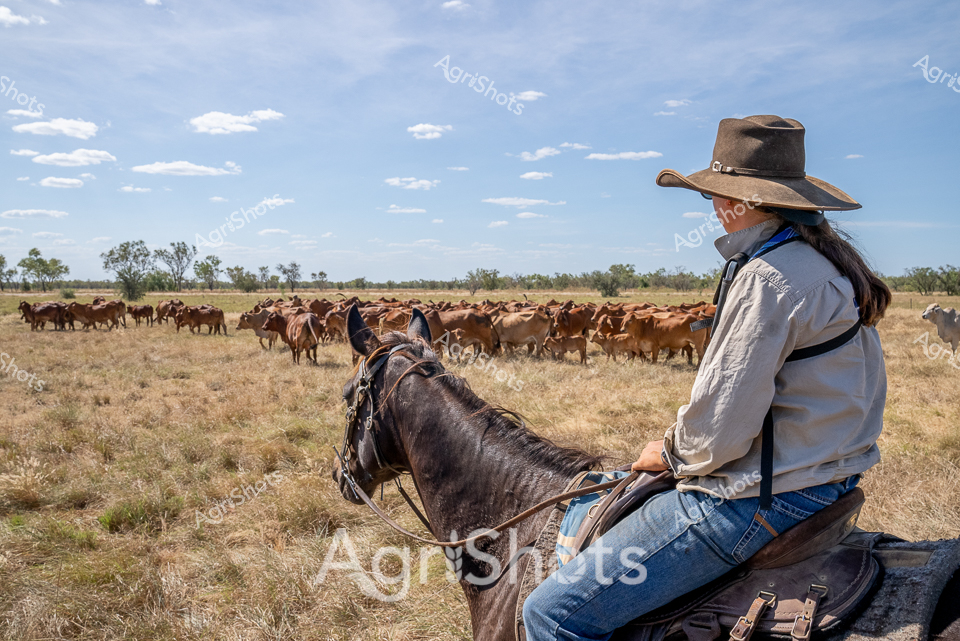
Stockwoman astride a dark horse surveys a sunbaked pastoral landscape in Western Australia's rugged Kimberley region, overseeing a herd of tawny Brahman cattle grazing on dry golden grasslands. Wearing a classic wide-brimmed outback hat, light-colored long-sleeved shirt, and blue jeans, she embodies the resilient spirit of Australian agricultural workers. The expansive sky is a soft azure, scattered with wispy white clouds, stretching above sparse woodland and an endless horizon of sparse grassland. Her horse stands steady, ears alert, as the cattle cluster across the arid paddock - a testament to generations of pastoral management in one of Australia's most challenging agricultural environments. The scene captures the quintessential rhythm of cattle mustering, where skill, patience, and an intimate understanding of the land converge. This image celebrates the crucial role of women in agriculture, showcasing the quiet strength and expertise required to manage livestock in Australia's remote and unforgiving interior.
 Image
Image
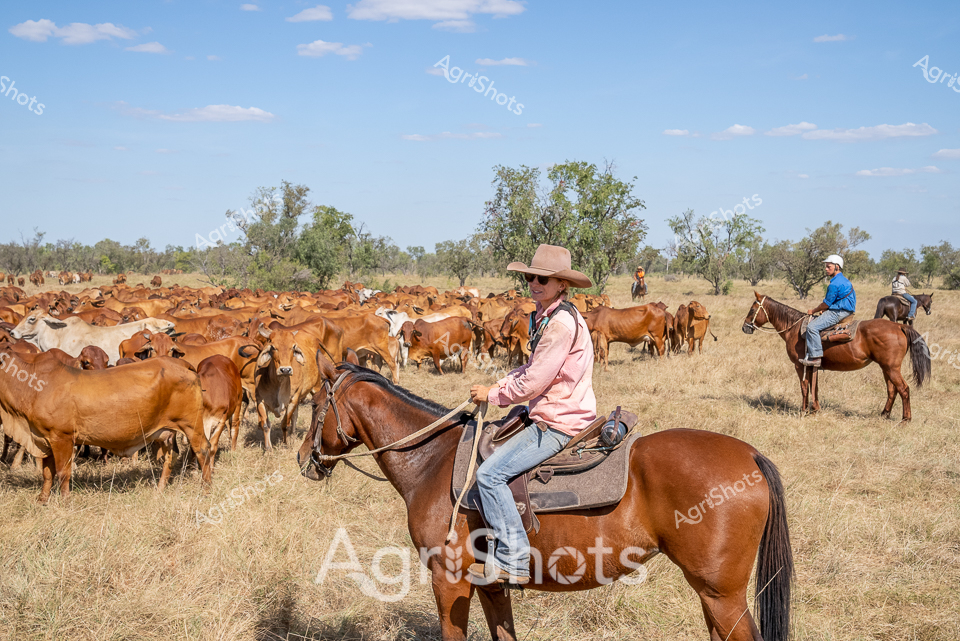
Stockmen on horseback guide a herd of burnished copper-red Brahman cattle across the sun-drenched grasslands of Western Australia's rugged Kimberley region. The expansive golden pasture stretches beneath a pale blue sky dotted with wispy clouds, with scattered gum trees providing sparse shade on the horizon. A rider in a pink long-sleeved shirt and wide-brimmed hat sits confidently atop a rich chestnut horse, carefully navigating through the dense mob of cattle. Another stockman in a blue shirt rides nearby, both expertly controlling the movement of the herd with subtle shifts and gentle guidance. The cattle - a mix of deep reddish-brown and white specimens - display the characteristic humped shoulders and loose skin of the Brahman breed, perfectly adapted to the harsh Australian pastoral landscape. This scene captures the timeless rhythm of cattle mustering, a quintessential practice of northern Australian agriculture that blends traditional stockmanship with the demanding environment of the continent's remote cattle stations.
 Image
Image
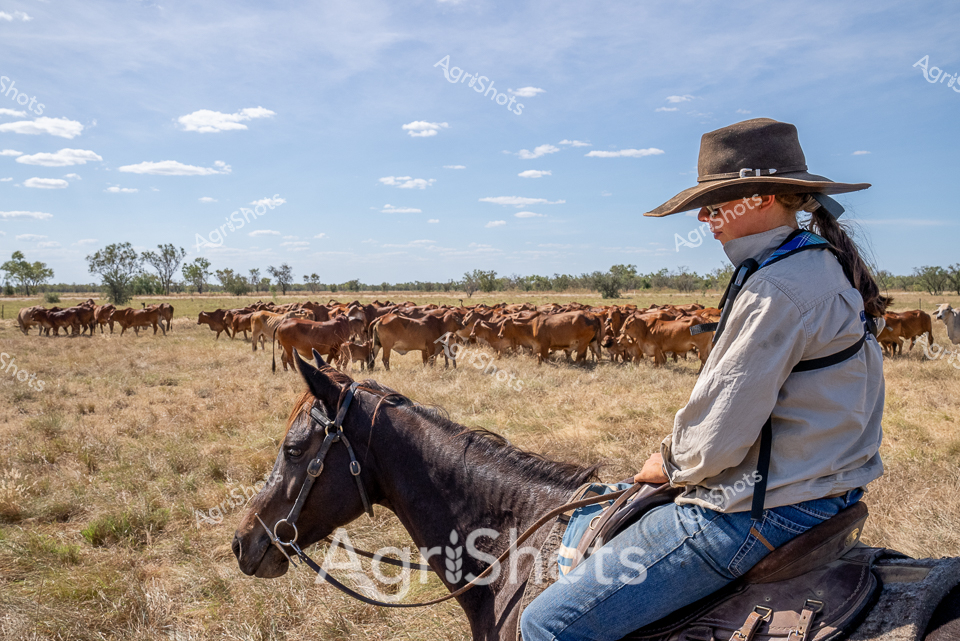
Mustering Brahman cattle across the sun-drenched grasslands of Western Australia's Kimberley region, a stockwoman sits astride a dark bay horse, her weathered akubra casting a shadow over keen eyes scanning the herd. Russet-colored Brahman cattle, with their distinctive humps and loose skin, cluster together in the dry pasture, their lean bodies adapted to the harsh tropical landscape. The wide-open sky stretches azure and pale, dotted with wispy clouds, while sparse trees punctuate the distant horizon, telling a story of resilience and endurance. Her light-colored work shirt and denim jeans speak to the practical attire of station life, with stockman's suspenders holding her steady in the saddle. The scene captures the essence of Australian pastoral life - a moment of quiet concentration where generations of agricultural knowledge are embodied in a single rider's connection to land and livestock. This image represents the strength and skill of women in agriculture, highlighting the critical role they play in managing vast cattle stations across Australia's rugged northern territories.
 Image
Image
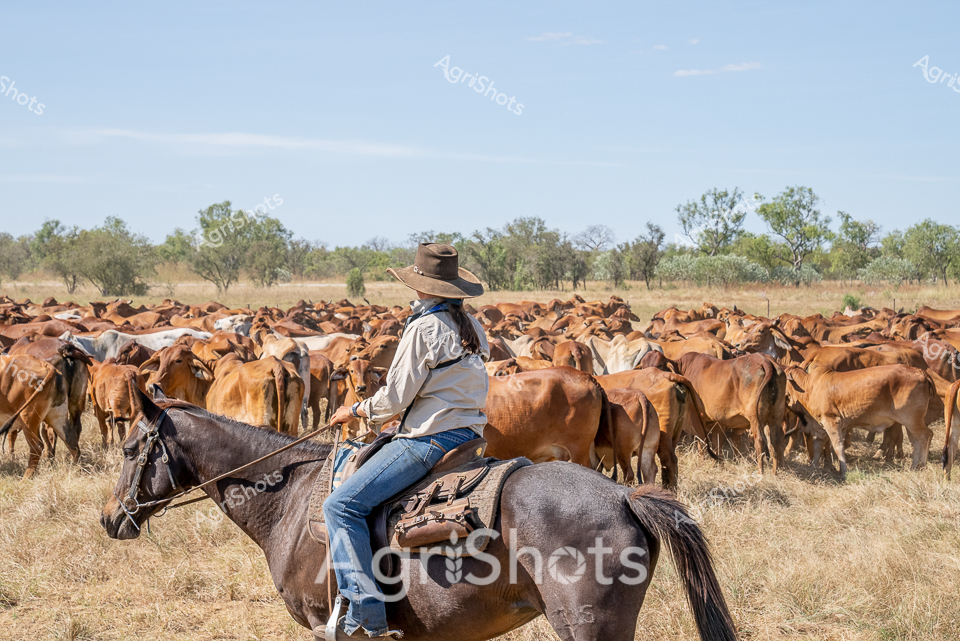
Dust rises from weathered hooves as a stockwoman guides her dark bay horse through a vast herd of russet-colored cattle. Set against the sun-bleached landscape of Western Australia's Kimberley region, this quintessential pastoral scene captures the essence of remote cattle station life. Her wide-brimmed akubra shading her from the intense midday heat, the rider moves with practiced ease, her posture relaxed yet alert, seamlessly communicating with the herd during a classic cattle muster. Brahman cattle, distinguished by their distinctive humps and heat-resistant coats, cluster across the golden grasslands, their burnished copper-brown bodies creating a living carpet against the sparse woodland backdrop. Sparse eucalyptus trees punctuate the horizon, their muted greens contrasting with the pale blue sky, highlighting the harsh beauty of Australia's northern agricultural landscape. The stockwoman's weathered work shirt, dusty jeans, and well-worn riding gear speak to the demanding yet deeply connected lifestyle of women in agriculture, embodying resilience, skill, and an intimate understanding of the land.
 Image
Image
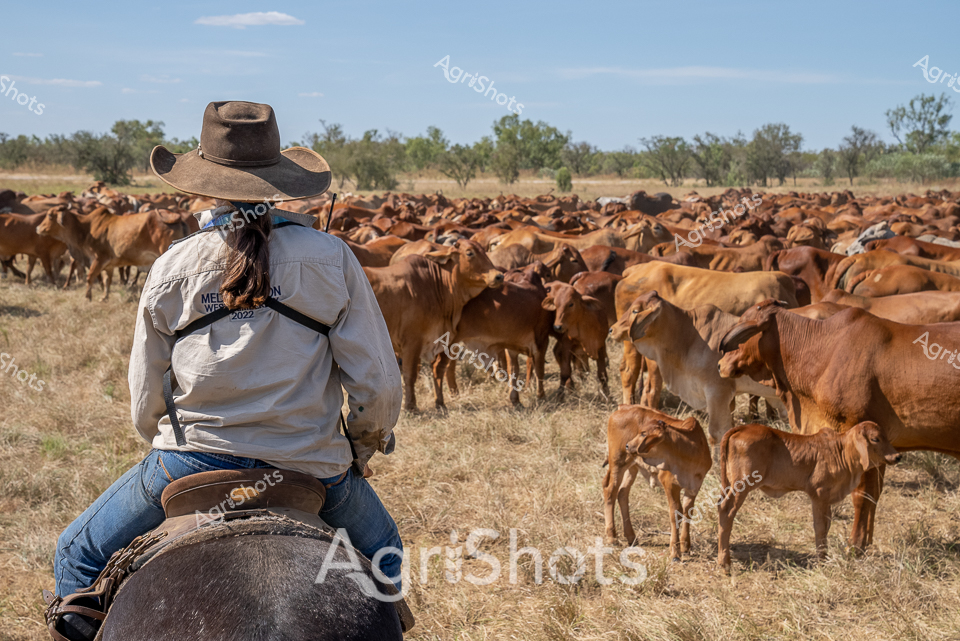
Brahman cattle crowd the dusty paddock under a pale blue Kimberley sky, their rust-red coats gleaming in the harsh midday light. A stockwoman perches atop a dark horse, her crisp white shirt and wide-brimmed akubra marking her as an experienced station worker. From her back-facing position, she surveys the herd - a dense mass of muscular bodies and small calves clustered together on the sparse grasslands. Scattered gum trees punctuate the distant horizon, offering minimal shade in this unforgiving landscape. The cattle represent the robust Brahman breed, perfectly adapted to the challenging environmental conditions of Western Australia's northern regions. This scene captures the essence of pastoral life - a solitary worker managing a large livestock herd with quiet concentration, embodying the resilience and skill required in Australia's vast agricultural frontiers.
 Image
Image
Stockmen guide a herd of rich-hued Brahman cattle across a sun-drenched pastoral landscape in Western Australia's rugged Kimberley region. Dusty golden grasslands stretch beneath sparse eucalyptus trees, creating a quintessential Australian cattle station scene. One stockman, dressed in a classic wide-brimmed akubra and light working shirt, sits astride a chestnut horse, carefully monitoring the herd's movement. Muscular brown and white Brahman cattle - renowned for their distinctive humps and heat-tolerant genetics - cluster together, their compact bodies a testament to generations of breeding adapted to harsh northern Australian conditions. Another stockman on horseback provides support, working collaboratively to gently direct the livestock across the dry seasonal landscape. The image captures the timeless rhythm of cattle mustering - a fundamental practice of Australian pastoral agriculture that blends traditional skills, animal husbandry, and an intimate connection between stockmen, horses, and livestock under the vast open skies of the continent's northern territories.