Browse the collection
 Image
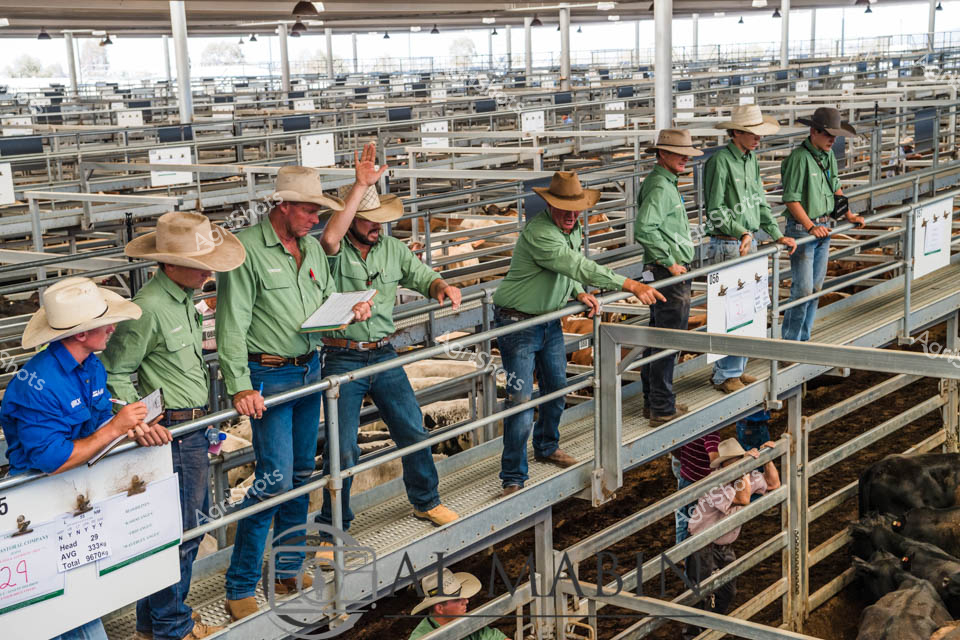
Livestock agents survey the morning's cattle auction from a raised steel walkway, their uniform of sage green shirts and wide-brimmed straw hats signaling decades of agricultural expertise. Meticulously arranged steel pens stretch below them, housing groups of cattle awaiting sale, with white identification boards marking each pen's lot details. One agent in a blue shirt takes notes while another raises a hand, potentially signaling a bid or communicating with colleagues across the expansive sale yard. The structured metal infrastructure of the livestock market reflects the precision and organization of Australia's beef industry, with multiple levels allowing agents to carefully assess each animal's potential. Cool morning light filters through the industrial shed, highlighting the weathered denim and sun-creased faces of professionals who have dedicated their lives to agricultural trading. This scene captures the rhythmic, systematic nature of rural livestock commerce in the New England region of New South Wales, where generations of agricultural knowledge converge in a single, methodical moment.
 Image
Merino ewes and lambs huddle beneath the cooling canopy of a sprawling gum tree, seeking respite from the harsh midday sun in the New England region of New South Wales. The dry, reddish-brown earth of the paddock stretches out around them, punctuated by the tree's silvery-green foliage and the woolly bodies of the flock. Wooden fencing and distant farm infrastructure frame the scene, capturing the stark beauty of Australian pastoral life. The sheep cluster tightly, their varied shades of cream, tan, and light brown creating a textural mosaic against the dusty ground. Sparse trees on the horizon suggest the challenging landscape of this inland farming region, where shade and shelter are precious resources. The image speaks to the resilience of both livestock and farmers in managing livestock in an often unforgiving agricultural environment, showcasing the delicate balance between animal welfare and the realities of free-range farming.
 Image
The expansive aerial photograph captures the rugged beauty of the New England region in New South Wales, revealing a sweeping pastoral landscape where golden summer-dried grasslands stretch between forested mountain ranges. Scattered eucalyptus trees punctuate the undulating terrain, casting delicate shadows across the parched paddocks that speak to the challenging agricultural conditions of this high-country district. The landscape transitions dramatically from dense woodland on the left to open grazing country, with subtle contours and remnant tree lines indicating generations of careful land management and agricultural practice. Distant blue-green mountains create a majestic backdrop, their silhouettes softening the horizon and providing a dramatic contrast to the ochre and wheat-colored plains in the foreground. Subtle tracks and fence lines trace delicate patterns across the landscape, revealing the human intervention that shapes this working agricultural environment. The panoramic view captures the essence of Australian rural resilience - a landscape simultaneously stark and beautiful, where farmers navigate complex ecological systems with skill and determination.
 Image
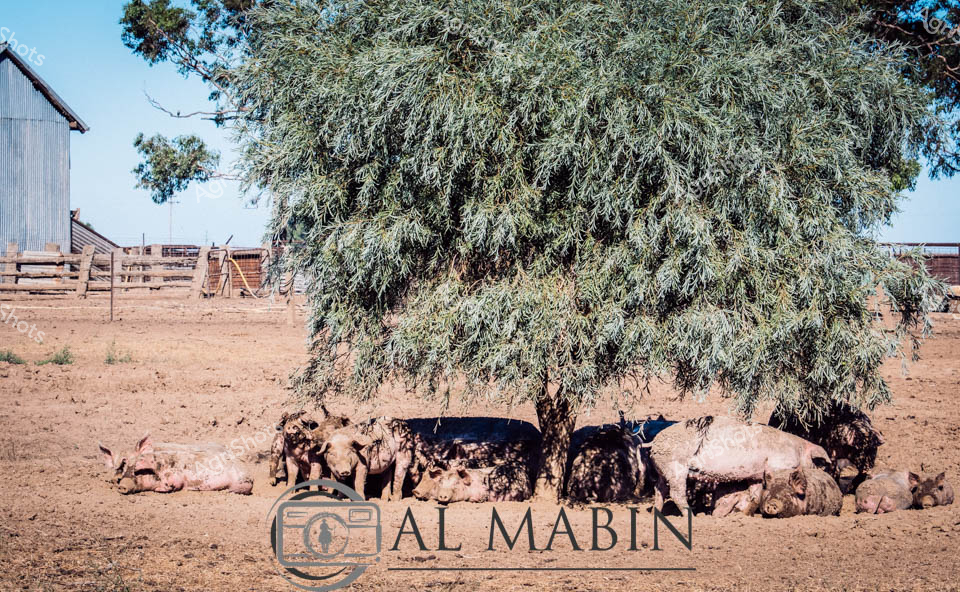
Piglets cluster beneath a sprawling gum tree, seeking refuge from the harsh midday sun on a dusty New England tablelands farm. The robust, pink-skinned youngsters huddle in the dappled shade, their bodies pressing against each other for comfort in the arid landscape. Weathered wooden fencing and a corrugated iron shed frame the scene, telling a story of generations of agricultural resilience in rural New South Wales. The dry, ochre earth contrasts sharply with the silvery-green foliage overhead, creating a quintessential Australian farm landscape that speaks to the challenges of free-range pig farming in an unforgiving climate. The lens captures the raw essence of pastoral life - the delicate balance between animal welfare and agricultural productivity. These piglets represent the future of the farm, resting momentarily before continuing their curious exploration of their rural domain.
 Image
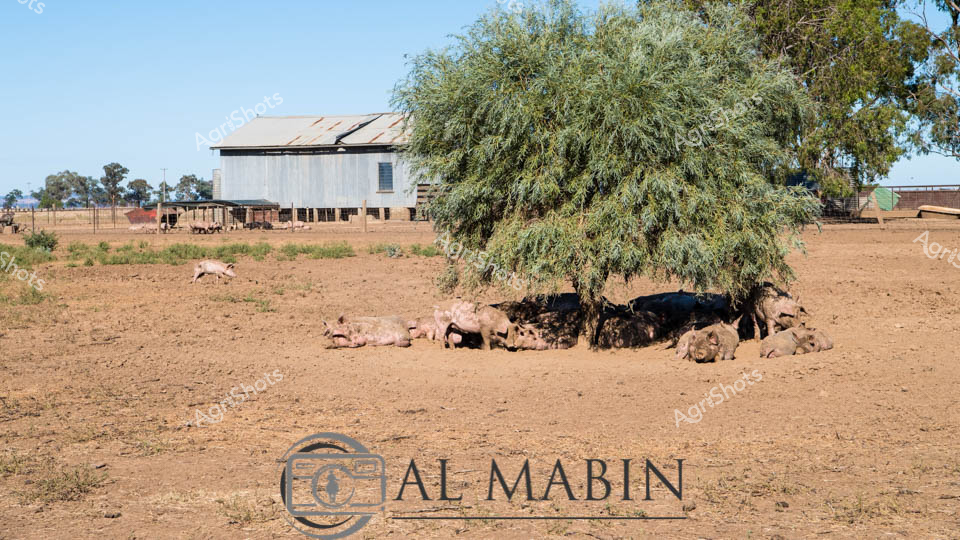
Dusty paddock shadows stretch across a sun-drenched pig farm in New England, New South Wales, where young piglets cluster beneath a sprawling shade tree. The dry, ochre-colored ground contrasts sharply with the lush green foliage offering sanctuary from the intense midday heat. A weathered agricultural shed stands in the background, typical of rural NSW farming infrastructure, while several pink-skinned piglets rest in tight groups, their soft bodies pressed against each other for comfort and coolness. The piglets appear healthy and relaxed, sheltering from the harsh sunlight, embodying the balance between large-scale farming practices and animal welfare. Sparse vegetation and the rustic metal shed speak to the resilient agricultural landscape of northern NSW, where farmers navigate challenging environmental conditions. The scene represents a moment of pastoral tranquility - young livestock finding respite, the subtle interplay of natural and constructed environments, and the quiet resilience of Australian agricultural life. Soft pink bodies, earthy browns, and deep green shadows create a nuanced visual narrative of contemporary farming.
 Image
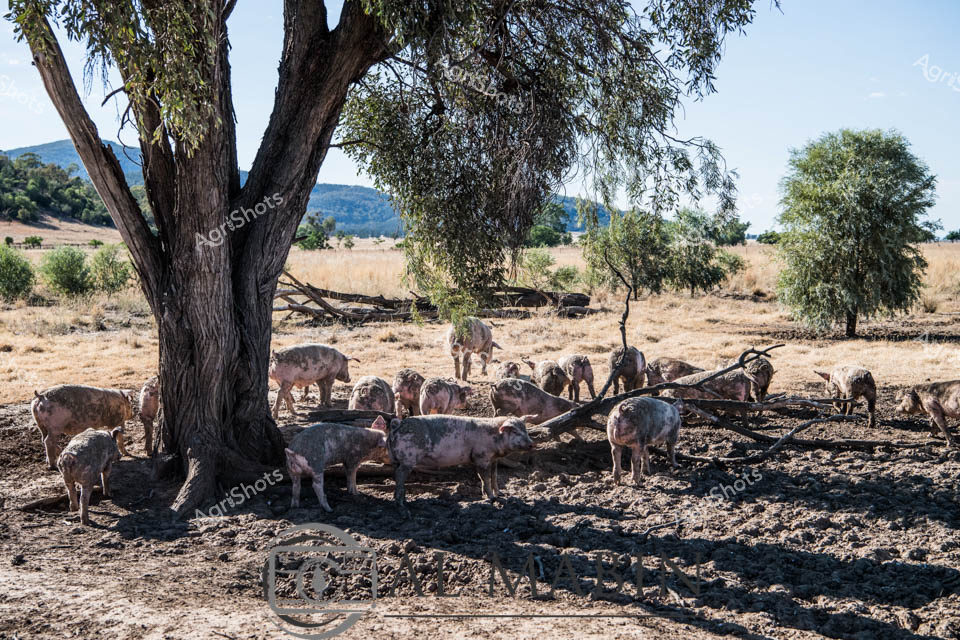
Sun-drenched paddock in the New England region of New South Wales reveals a classic free-range pig farming landscape. A magnificent, gnarled eucalyptus tree provides critical shade for a herd of mature pigs, their dusty pink and grey bodies scattered across a dry, compacted earth area. The sparse grassland and distant rolling hills speak to the challenging agricultural terrain of inland NSW, where livestock farming demands resilience and adaptability. These robust pigs appear to be heritage breed stock, possibly Large White or Duroc crosses, their varied skin tones and muscular frames indicating a well-managed extensive farming operation. Fallen timber and sparse ground cover suggest late summer conditions, with the landscape baked to a golden-brown palette punctuated by the rich bark and green foliage of the central shade tree. The scene captures the authentic intersection of animal welfare and agricultural practice - livestock granted space to roam, seek shelter, and express natural behaviors within a carefully managed rural ecosystem.
 Image
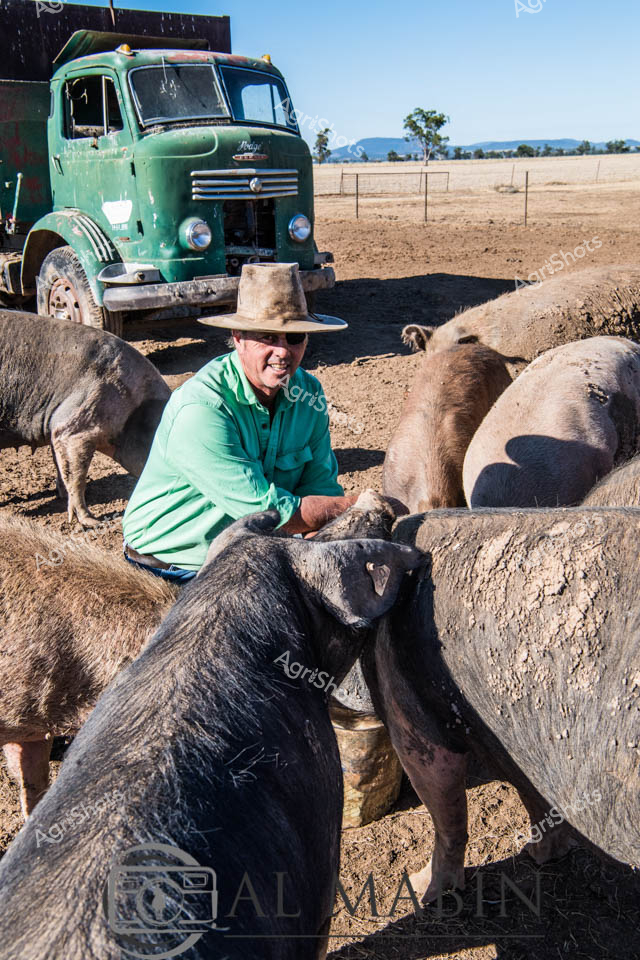
Weathered green vintage truck stands sentinel over a dusty livestock paddock, framing a seasoned farmer tending to a herd of robust, mud-caked pigs. Wearing a broad-brimmed akubra and a bright lime-green shirt, the farmer moves confidently among the animals, demonstrating the close connection between agricultural workers and the livestock. The arid landscape stretches out behind him, with distant mountains and sparse trees suggesting the New England region of New South Wales during a dry season. Massive black and grey pigs crowd around the farmer, their thick hides caked with rich earth, highlighting the free-range nature of this piggery. The animals appear healthy and well-muscled, testament to careful husbandry and robust farming practices. The vintage truck - likely a mid-20th century model with its distinctive cab-over design - adds a nostalgic touch, representing generations of agricultural heritage and the enduring spirit of rural Australian farming. The harsh sunlight casts sharp shadows, emphasizing the textural details of both the landscape and the livestock, creating a raw, authentic scene that speaks to the challenging yet rewarding life of regional farmers.
 Image
Dusty sunlight bathes a classic green Mercedes-Benz L series farm truck against a parched rural landscape, while a seasoned farmer in a sage green shirt and weathered wide-brimmed hat tends to a group of mature pigs. The vintage truck, with its distinctive rounded cab and worn green paintwork, stands as a testament to decades of agricultural resilience, perfectly complementing the rugged terrain and the farmer's hands-on approach to livestock management. Large, mud-caked pigs cluster around the farmer, their substantial bodies creating a textural landscape of earthy browns and grey-pink skin. The animals appear calm and accustomed to human interaction, suggesting an experienced handler who understands livestock behavior. Bare paddock surrounds them, with distant fencelines and mountain ranges hinting at the expansive New England region of New South Wales. The scene captures the quintessential spirit of Australian rural life - practical, hardworking, and intimately connected to the land. Weathered equipment, stoic animals, and a farmer's quiet concentration communicate generations of agricultural knowledge distilled into a single, powerful moment of everyday farm work.
 Image
Aerial survey of the agricultural complex, revealing the intricate design of a modern piggery nestled in the arid landscapes of New South Wales. Weathered earth tones dominate the scene, with a sparse, golden-brown paddock surrounding precision-engineered livestock infrastructure. A substantial white-clad shelter anchors the composition, its metallic surface casting long shadows across the dry terrain, while mature trees provide strategic shade and windbreak for the agricultural operation. Carefully constructed fencing delineates different zones of the property, suggesting a methodical approach to free-range and controlled farming environments. The overhead perspective captures the harmonious balance between utilitarian agricultural architecture and the harsh, minimalist Australian rural landscape, highlighting the resilience and strategic planning required in contemporary livestock management. Stark sunlight emphasizes the textural contrasts between the manufactured structures and the natural surroundings, creating a compelling visual narrative of agricultural innovation in challenging environmental conditions.
 Image
A robust pink-skinned pig rests heavily on sun-baked earth, its muddy and textured hide reflecting the harsh conditions of an Australian rural landscape. Standing nearby in classic agricultural attire, a farmer in a wide-brimmed hat, light button-up shirt, and well-worn blue jeans surveys the dry paddock with a sense of calm professional assessment. Distant gum trees and mountain ranges frame the horizon, suggesting the New England region of New South Wales, where farming resilience is a way of life. The ground is parched and cracked, indicating an extended dry season that challenges livestock and agricultural production. The pig appears robust and well-conditioned despite the austere surroundings, a testament to careful animal husbandry and management practices.
 Image
Sun-drenched pastoral grace defines this quintessential Australian farm scene, capturing the heart of rural livestock management in New South Wales' New England region. A seasoned farmer in a vivid mint-green work shirt and wide-brimmed hat cradles a young white piglet with weathered, gentle hands, his warm smile reflecting decades of agricultural experience. Behind him, a rustic wooden pig shelter frames dark mature pigs resting in the dappled shade of a gnarled native tree, creating a rich tableau of free-range animal husbandry. The farmer's one-eyed gaze and confident posture speak to the resilience and character of regional agricultural workers, his attire and environment harmonizing in earthy tones of green, blue, and brown. This image embodies the intimate connection between farmers and livestock, showcasing the nuanced care and personal relationships that underpin successful modern piggery operations. The composition beautifully illustrates the balance of traditional farming practices and contemporary agricultural standards, highlighting the New England region's rich farming heritage.
 Image
Australian pig farming illuminates rural resilience in this evocative agricultural scene. A weathered green classic truck stands sentinel in a dusty paddock, framing a close-up of robust black and pink pigs clustered near their handler. The farmer, dressed in a bright green work shirt and well-worn hat, stands amid the livestock with the quiet confidence of generations of agricultural experience. The sun-baked New England region landscape stretches behind him - fenced paddocks and distant mountain ranges creating a quintessential Australian pastoral backdrop. This image captures the pragmatic relationship between farmer and livestock, highlighting the essential work of small-scale pig production in regional New South Wales. The vintage truck and the farmer's traditional attire speak to a continuity of agricultural practice, where modern farming meets generational knowledge and hands-on management of livestock.
 Image
Free Range Pig Farming in New England, New South Wales A robust scene of mixed-breed pigs roaming a weathered earth paddock reveals the nuanced realities of contemporary Australian pig production. Dark, mature sows with textured, sun-weathered skin nestle alongside clusters of pale pink piglets, their small forms creating delicate contrast against the dusty, compacted ground. The landscape suggests late summer in the New England region - dry, sparse vegetation and hard-baked soil indicating challenging agricultural conditions. Mature sows display varying coat colors from charcoal grey to mottled black, representing diverse breeding lines selected for resilience and productivity. The piglets move with characteristic curiosity, some huddling close to maternal figures, others exploring the immediate environment with the uninhibited energy of youth. This frame captures the raw, unfiltered essence of free-range animal husbandry - a delicate balance between natural behaviors and managed agricultural practice.
 Image
Deeply weathered and textured, this black and white close-up captures the extraordinary details of a mature pig resting in a rustic farmyard setting. Mud-caked and worn, the animal's face reveals a profound sense of quiet endurance characteristic of free-range livestock in the New England region of New South Wales. Coarse, matted fur catches the light, creating a rich tapestry of shadows and highlights that speak to the harsh yet nurturing environment of traditional Australian pig farming. The pig's compressed features and weary expression suggest a moment of deep rural tranquility, embodying the resilience of agricultural life where every creature plays a vital role in the farm's ecosystem. Gritty and unfiltered, the image strips away romanticized notions of farming, presenting instead an authentic portrait of animal husbandry that celebrates the raw beauty of livestock in their natural habitat. The monochromatic treatment emphasizes texture and form, transforming an ordinary farmyard scene into a powerful agricultural narrative.
 Image
Rugged rural vitality radiates from this candid agricultural portrait of a seasoned farmer and a young piglet nestled in the dappled sunlight of a pastoral setting. Wearing a weathered wide-brimmed hat and vibrant green button-up shirt, the farmer cradles a pale pink piglet with tender expertise, his sun-weathered skin and broad smile reflecting generations of livestock experience. The verdant backdrop of tree branches suggests a late spring or early summer morning, with soft filtered light creating a sense of nurturing and connection between farmer and animal. The piglet, small and delicate, appears calm and secure in the strong, work-roughened hands that support it, embodying the careful husbandry practices of sustainable pig farming in the New England region of New South Wales. His eye patch hints at a lifetime of hard work and resilience typical of Australian agricultural professionals who maintain intimate connections with the livestock. This image captures the essence of free-range pig farming - a relationship built on care, respect, and generations of agricultural knowledge passed down through hands-on experience.
 Image
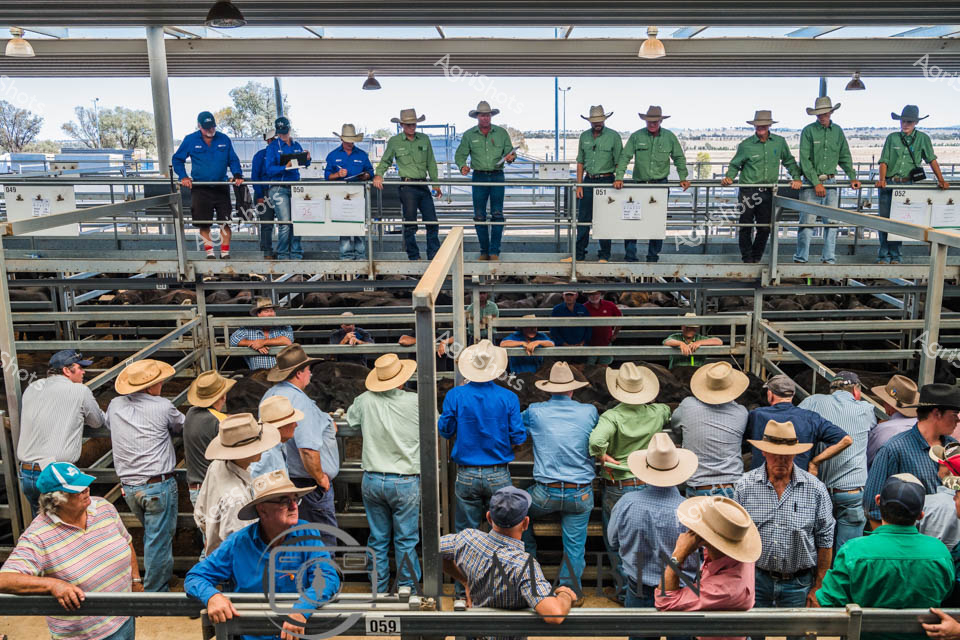
Cattle buyers and agents converge at the New England Region livestock sale yards, a bustling hub of agricultural commerce. Rows of stockmen in wide-brimmed akubra hats - a palette of blues, greens, and neutrals - crowd the multi-tiered metal pens, intently focused on assessing the quality of cattle below. The overhead industrial shed provides shelter, with natural light filtering through, illuminating the rhythmic process of rural livestock trading. Professionally dressed agents in blue uniforms stand on the upper level, clipboard and stock lists in hand, while farmers and buyers in classic rural attire examine potential purchases from multiple angles. This scene captures the precise, methodical nature of Australian cattle trading - a critical moment in the agricultural supply chain where livestock value is determined through expert evaluation and negotiation. The dense arrangement of hat-wearing professionals, the structured metal infrastructure, and the controlled environment reflect the sophisticated, business-like approach to primary industry in regional New South Wales.
 Image
Young piglets huddle together in a tight cluster, sleeping soundly on the dusty earth floor of a farm shelter. Their pale pink bodies, soft and nearly translucent, create an organic mosaic of vulnerable forms pressed closely against one another for warmth and security. The rough, textured wall above suggests a rustic agricultural environment, likely a traditional pig shelter in the New England region of New South Wales. These newborn piglets appear to be resting during the warm midday hours, their tiny bodies relaxed and intertwined in a protective group formation typical of young livestock. The earthy brown tones of the ground contrast sharply with the delicate pink skin of the piglets, highlighting the raw, unfiltered nature of farm life.
 Image
Nestled in the dusty paddock of a New England region piggery, a robust sow rests amidst her lively litter of pink-skinned piglets. The mature pig, mottled in shades of grey and white, lies sprawled on the compact earth, providing a stark contrast to the energetic young piglets clustered around her. Bare ground and wire fencing frame the scene, revealing an large-scale farming environment typical of New South Wales agricultural landscapes. These young free-range piglets, each with distinctive pink skin and alert red ears, explore their immediate surroundings with curiosity, some grazing close to their mother while others venture tentatively across the enclosure. The harsh midday sunlight casts sharp shadows, highlighting the textural details of the ground and the smooth, delicate skin of the young animals.
 Image
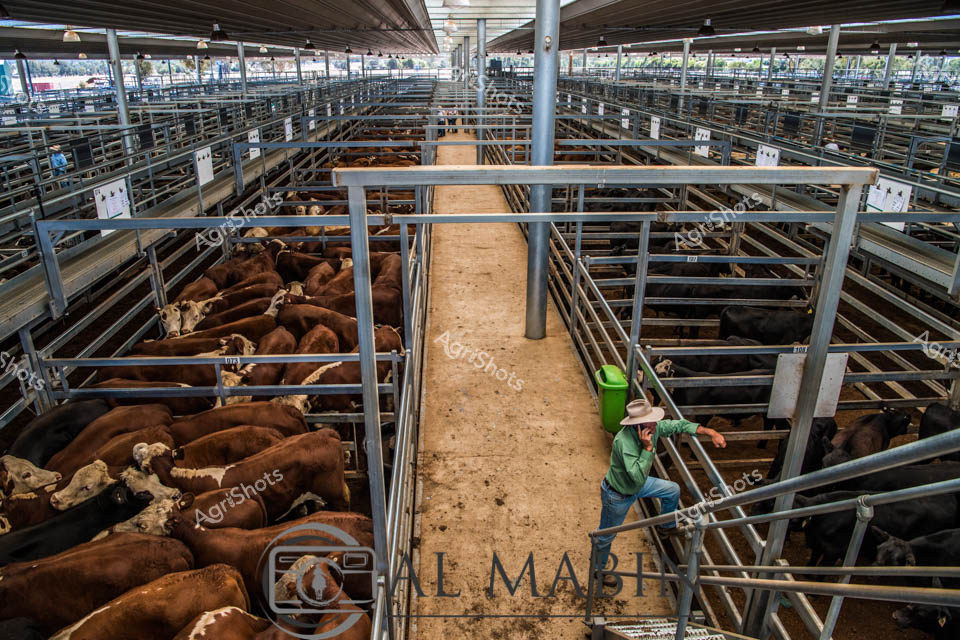
Corralled cattle stand shoulder to shoulder in neat metal pens at a bustling livestock sale yard, likely in the New England Region of New South Wales. A stockyard worker in a green shirt and wide-brimmed hat moves purposefully between the rows, navigating the narrow walkway separating dense groups of reddish-brown beef cattle. The expansive indoor facility features a grid of metallic fencing and support pillars, creating a systematic environment for agricultural commerce. Overhead lighting illuminates the sandy-colored floor and the varied tones of the cattle, from rich mahogany to lighter tan, highlighting their muscular frames and calm demeanor. This scene captures the rhythm of rural agricultural trading, where livestock are carefully sorted, assessed, and prepared for sale in a professional, structured setting. The methodical arrangement and controlled movement reflect the precision of modern cattle trading in Australian agricultural markets.
 Image
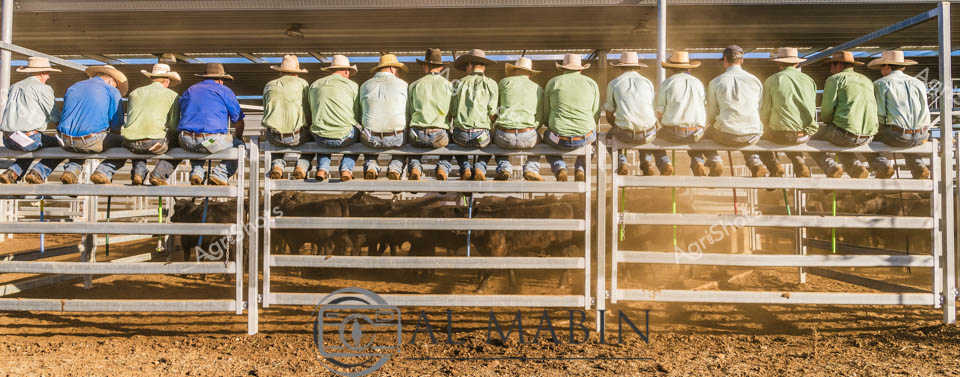
Sun-drenched sale yards in New England, New South Wales, where seasoned livestock agents perch in silent concentration along the metal railings. A uniform sea of pastoral professionalism unfolds - wide-brimmed agricultural hats in soft sage, blue, and cream tones create a rhythmic visual pattern against the industrial steel pens. Cattle wait below, their muscular forms representing the lifeblood of this rural economy, while the agents survey potential purchases with practiced scrutiny. The harsh afternoon light casts long shadows across the dusty ground, highlighting the stoic postures of men deeply connected to the agricultural trading rhythms that have shaped rural Australian communities for generations. Each agent sits shoulder-to-shoulder, a testament to the collective understanding and unspoken communication that defines livestock trading culture. The Ti Marin branding subtly visible in the foreground hints at the professional infrastructure supporting this quintessential rural transaction.
 Image
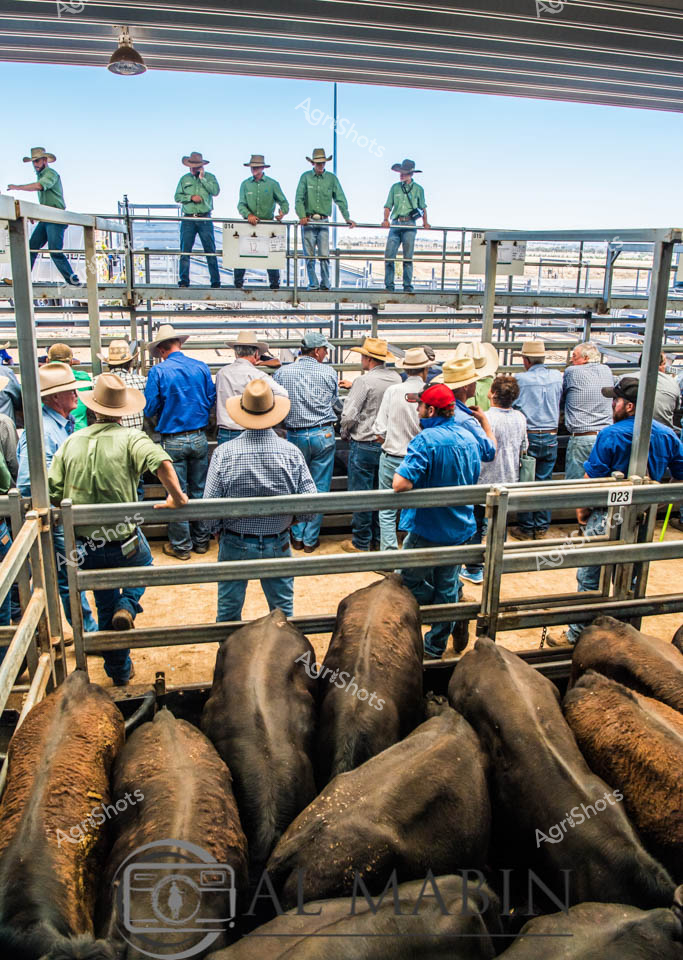
Cattle auctioneers and buyers converge at a bustling livestock sale yard in New South Wales' New England Region, a quintessential scene of rural agricultural commerce. Five professional agents in crisp green shirts and wide-brimmed hats survey the proceedings from an elevated metal walkway, overlooking a pen filled with robust beef cattle. Below them, a crowd of potential buyers dressed in classic rural attire - checkered shirts, denim jeans, and an array of straw and felt hats in shades of tan and cream - listen intently to the auction details. The cattle, a mix of rich brown and darker-coated animals, stand closely packed in a metal holding pen, their muscular forms a testament to the region's significant beef production. Harsh overhead lighting and the metallic infrastructure create a stark, utilitarian environment that speaks to the serious business of livestock trading. The scene captures the essence of Australian agricultural trade - methodical, professional, and deeply connected to the rural economic landscape.
 Image
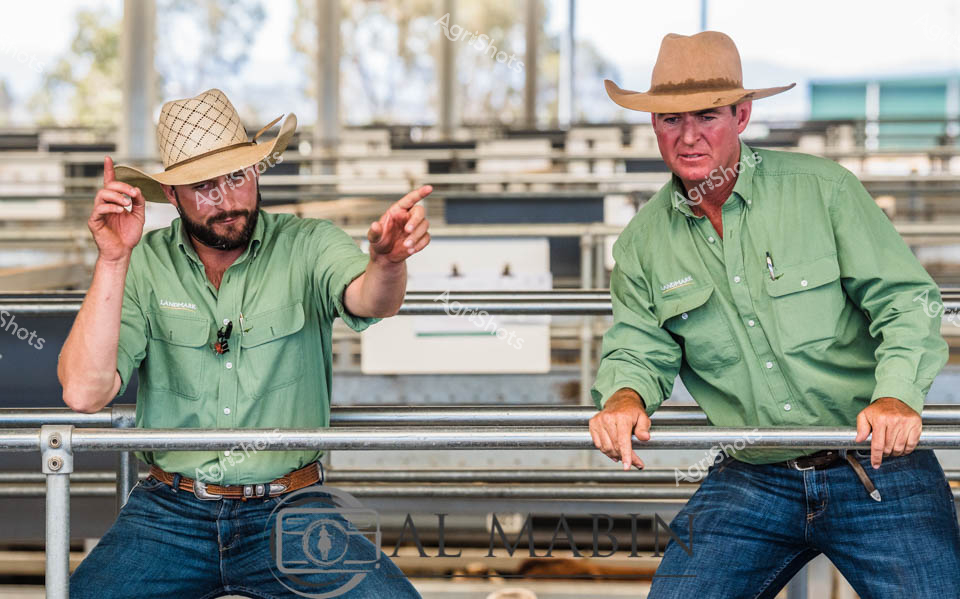
Two experienced livestock agents stand poised at the cattle sale yards of New England, New South Wales, their weathered presence embodying generations of agricultural expertise. Dressed in matching sage green work shirts and classic wide-brimmed akubra hats, they lean against the metal railings with a practiced, relaxed stance that speaks to countless cattle auctions. The agent on the left, sporting a salt-and-pepper beard, gestures with purpose, his straw hat tilted slightly as he appears to be discussing details of an upcoming sale. His companion, a seasoned cattleman with a stern, sun-weathered complexion, grips the railing with hands that tell stories of decades in the livestock trade. The sale yard's metal infrastructure stretches behind them, a testament to the systematic and professional nature of Australian cattle trading. Their coordinated green attire and confident body language capture the essence of rural professional collaboration, representing the backbone of Australia's robust beef industry.
 Image
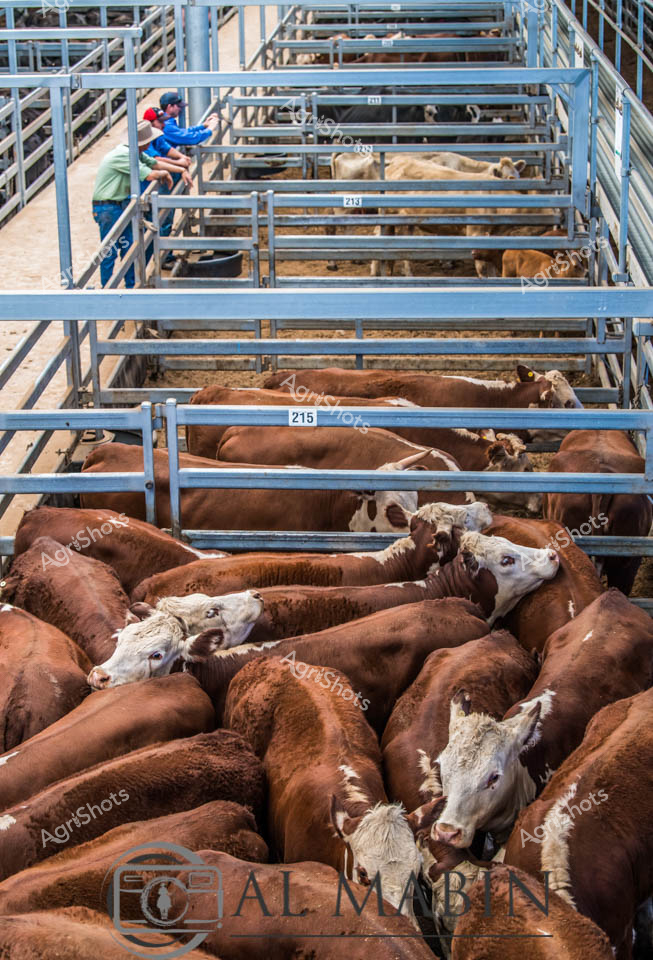
Hereford and mixed-breed cattle crowd tightly into numbered blue metal livestock pens at a regional sale yard in New England, New South Wales. The densely packed cattle - predominantly rich reddish-brown with white faces - huddle closely together, their muscular bodies creating a textured landscape of bovine forms. In the upper section of the image, agricultural workers wearing blue and green clothing sit observing the sale preparations, their postures relaxed yet attentive. Numbered pen tags (213, 215) indicate a systematic approach to livestock trading, highlighting the structured nature of rural agricultural commerce. The blue metal fencing creates geometric lines and divisions, contrasting sharply with the organic shapes of the cattle, while capturing the methodical process of livestock trading. This scene represents a quintessential moment in Australian agricultural commerce - a cattle auction where farmers, traders, and buyers converge to negotiate and trade livestock, embodying the economic heartbeat of rural agricultural communities.
 Image
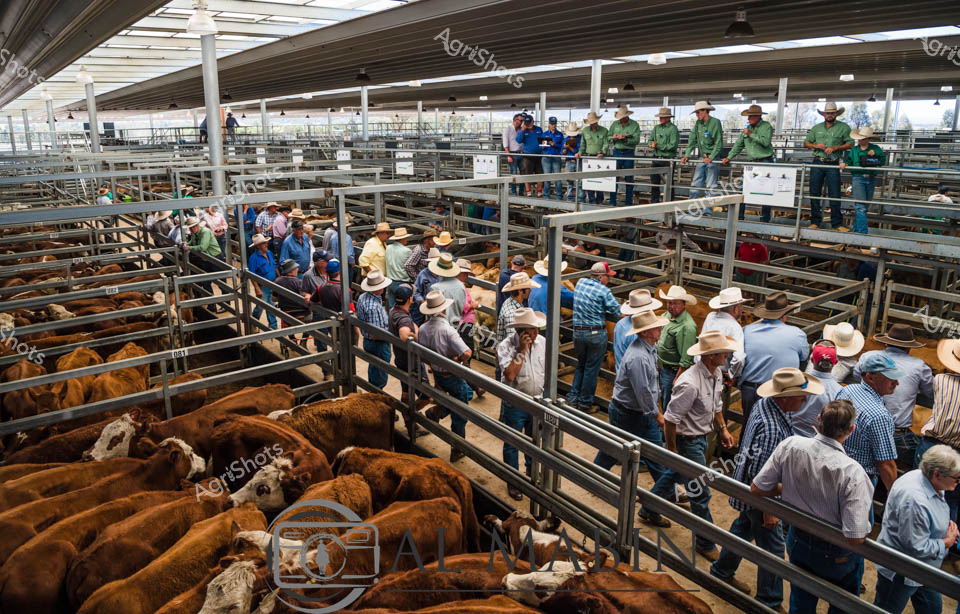
Australian cattle sale yards pulse with energy as seasoned graziers and livestock agents converge for a prime beef auction. Rows of steel cattle pens overflow with rich, russet-colored beef cattle - predominantly Hereford and Angus breeds - carefully sorted and positioned for evaluation. Clusters of professionals in wide-brimmed akubra hats, checked shirts, and working attire move methodically through the covered livestock marketplace, their stances deliberate and focused as they assess each animal's potential. The New England Region's agricultural heartland provides a classic backdrop of industrial precision meeting pastoral tradition, with overhead steel frameworks and natural light creating a cathedral-like atmosphere of commercial agricultural exchange. Buyers and sellers communicate through subtle gestures and experienced eye contact, their collective expertise driving the economic rhythm of rural Queensland and New South Wales. The scene captures the quintessential Australian livestock trading environment - a carefully choreographed ballet of commerce, animal husbandry, and generational agricultural knowledge.