About this image
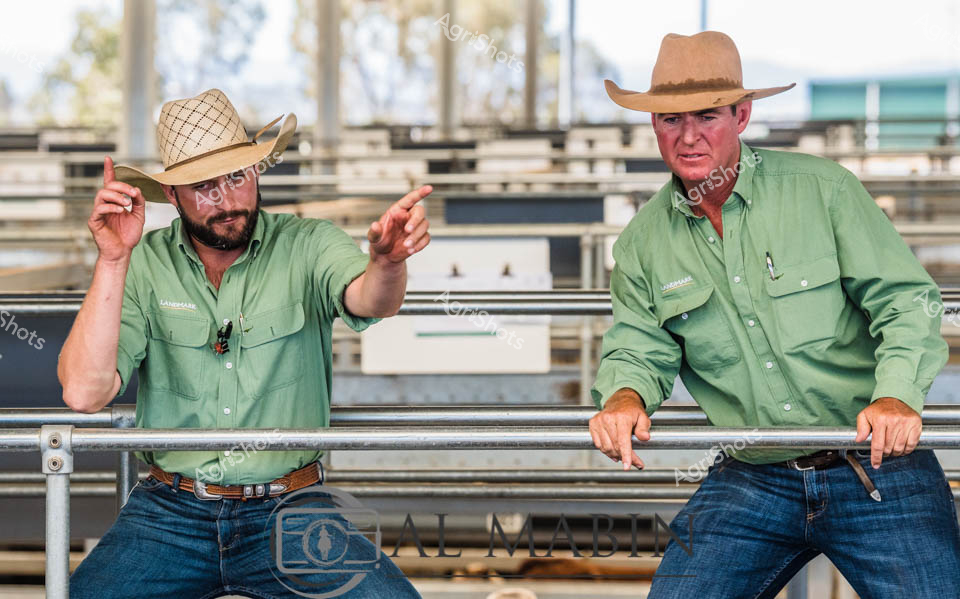
Two experienced livestock agents stand poised at the cattle sale yards of New England, New South Wales, their weathered presence embodying generations of agricultural expertise. Dressed in matching sage green work shirts and classic wide-brimmed akubra hats, they lean against the metal railings with a practiced, relaxed stance that speaks to countless cattle auctions. The agent on the left, sporting a salt-and-pepper beard, gestures with purpose, his straw hat tilted slightly as he appears to be discussing details of an upcoming sale. His companion, a seasoned cattleman with a stern, sun-weathered complexion, grips the railing with hands that tell stories of decades in the livestock trade. The sale yard's metal infrastructure stretches behind them, a testament to the systematic and professional nature of Australian cattle trading. Their coordinated green attire and confident body language capture the essence of rural professional collaboration, representing the backbone of Australia's robust beef industry.
Similar media
 Image
Image
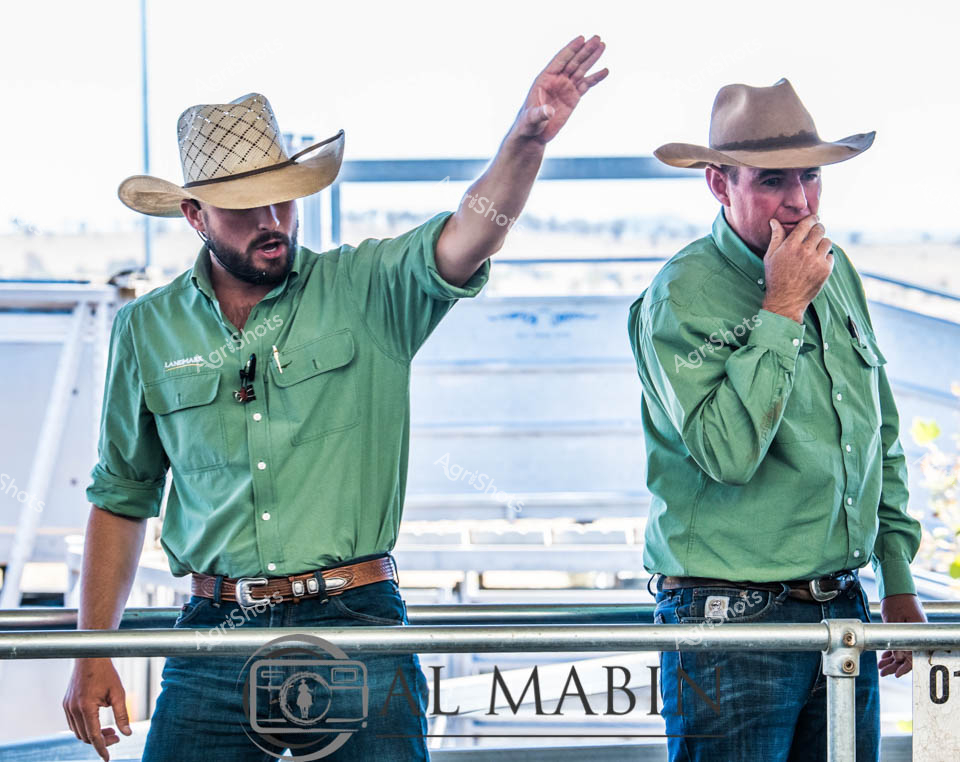
Two seasoned livestock agents stand poised at the sale yards, their coordinated green work shirts and wide-brimmed cattle country hats reflecting generations of agricultural expertise. One gestures decisively with an outstretched arm, likely signaling a bid or communicating subtle market insights, while his colleague thoughtfully rests his hand near his mouth, surveying the livestock auction environment. The New England Region's distinctive rural infrastructure frames their professional stance, with metallic railings and a crisp background suggesting a typical winter's morning in New South Wales. Their matching attire—pressed green shirts, blue denim jeans, and carefully worn stockman's hats—speaks to a long-standing professional culture of practical, no-nonsense rural business. Weathered leather belts and a confident demeanor underscore their deep understanding of cattle trading dynamics. This moment captures the nuanced communication and unspoken understanding that define successful livestock commerce in Australia's agricultural heartland.
 Image
Image
Landmark agents survey the livestock sale yards with practiced expertise, their sage green work shirts emblematic of professional agricultural management. Standing against a stark metal railing, these seasoned cattlemen communicate with subtle gestures and concentrated expressions, their broad-brimmed hats casting shadows across weathered faces. One agent in a straw hat and intricate leather belt leans forward, gesturing with authority, while his colleague in a felt brown hat maintains a measured stance, both embodying the quiet intensity of rural livestock trading. The New England region's crisp light illuminates their professional demeanor, highlighting the nuanced communication of cattle market professionals who negotiate complex transactions with minimal movement. Their coordinated Landmark branded workwear speaks to the sophisticated systems underlying Australia's beef industry, where decades of experience translate into subtle signals and unspoken understanding. The sale yards backdrop suggests a moment of strategic assessment, capturing the precise choreography of agricultural commerce.
 Image
Image
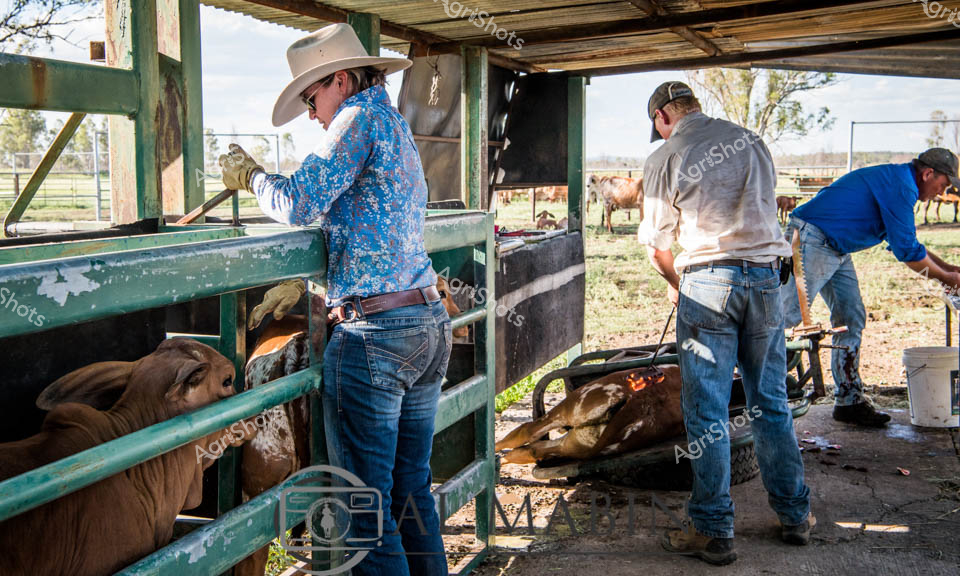
Rural Queensland cattle branding unfolds in a rustic yard bathed in warm midday light. A weathered stockman in a crisp blue floral shirt and white stockman's hat carefully manages cattle within green metal yards, with Brahman cattle displaying their distinctive pale coats and distinctive humps. The rough-hewn timber shelter provides shade for the essential agricultural work of identifying and marking young calves, with stockmen moving methodically and deliberately through their practiced routine. Worn denim, leather work gloves, and dusty boots speak to the physical nature of station life, while the surrounding grasslands and distant fence lines capture the expansive Queensland landscape. The scene pulses with quiet concentration - a timeless moment of pastoral industry where generational knowledge and careful animal handling come together in the rhythmic work of the cattle station.
 Image
Image
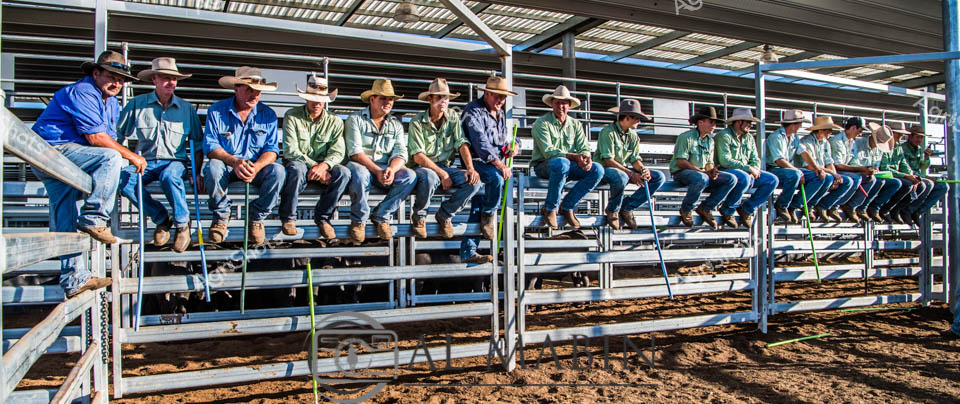
Rural rhythms pulse through this quintessential Australian livestock sale yard, capturing a line of seasoned stock agents perched methodically on steel cattle yards' viewing platforms. Dressed in the uniform of the bush - pressed moleskin jeans, crisp collared shirts, and wide-brimmed akubra hats ranging from dusty blues to soft khakis - these men represent generations of agricultural expertise. The metallic yard infrastructure creates a structured backdrop against the rich earthen ground, with precise rows of agents surveying potential livestock purchases with practiced, discerning gazes. Soft morning light filters through the corrugated steel roof, casting subtle shadows across their weathered faces and sturdy work attire. Each agent sits with a particular posture - relaxed yet alert - reflecting decades of rural market experience in the New England region of New South Wales. Their collective presence embodies the quiet professionalism of Australia's livestock trading culture, where subtle nods and minimal gestures can represent significant financial transactions. The composition speaks to the unspoken communication and deep understanding that characterizes these agricultural marketplaces - a timeless ritual of rural commerce where stock agents play a crucial intermediary role between producers and buyers, maintaining the complex economic ecosystem of Australian pastoral industries.
 Image
Image
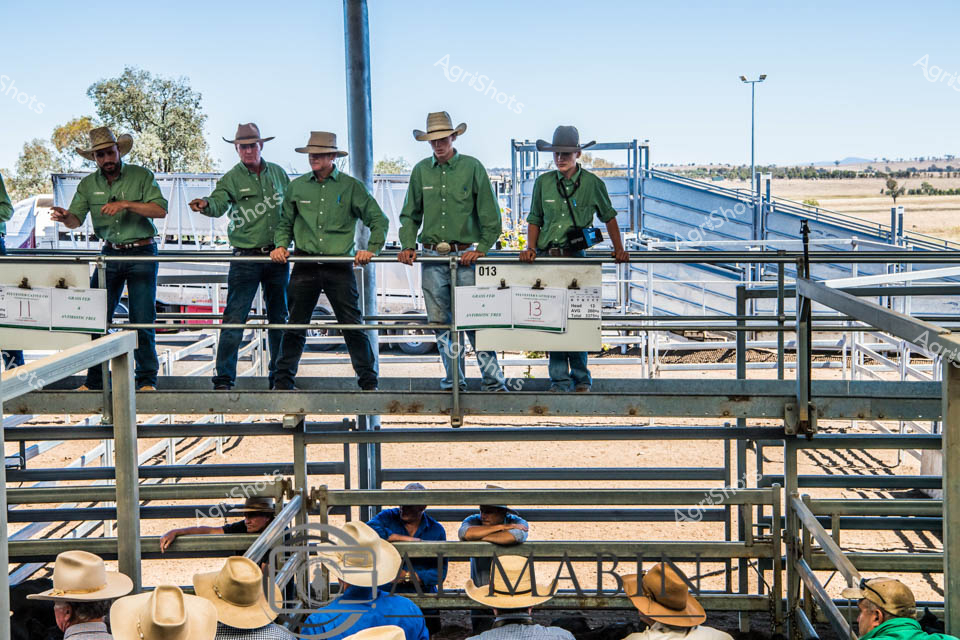
Rural auction dynamics unfold at a classic Australian livestock sale yard, capturing the essence of agricultural commerce in the New England or Riverina regions of New South Wales. Uniformed agents in sage green shirts and wide-brimmed hats stand positioned on a raised platform, overlooking the proceedings with professional scrutiny. In the foreground, three cattlemen wearing traditional wide-brimmed stockman's hats - in shades of straw, tan, and golden weave - sit with backs turned, their plaid and dotted shirts reflecting the classic rural fashion. The steel-and-corrugated infrastructure frames the scene, with numbered panels suggesting an organized, systematic approach to livestock trading. The atmosphere pulses with quiet intensity, a testament to the measured precision of agricultural transactions where significant economic decisions are made with minimal fanfare. Soft shadows and neutral tones communicate the pragmatic, no-nonsense environment of a cattle sale, where generations of farming knowledge converge in a single, crucial moment of economic exchange.
 Image
Image
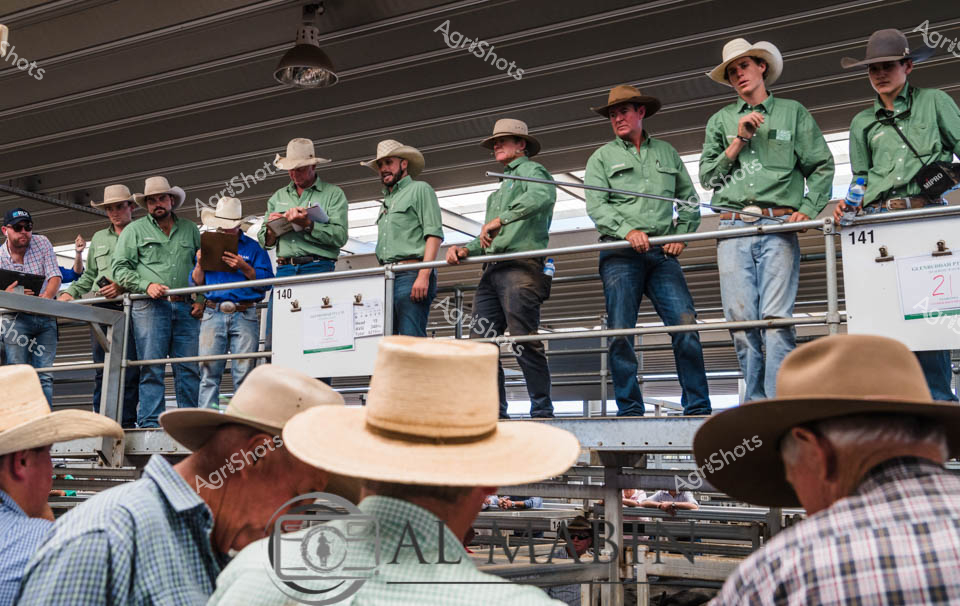
Livestock auctioneers stand sentinel in matching forest green work shirts and wide-brimmed bush hats, surveying the bustling sale yards of New England, New South Wales. Perched on elevated metal walkways above the holding pens, these agricultural professionals represent the critical interface between livestock producers and buyers in a quintessential Australian rural marketplace. The harsh midday sunlight casts sharp shadows across the dusty yards, highlighting the structured steel infrastructure and the sea of neutral-toned cowboy hats belonging to farmers and buyers below. Precise and methodical, the agents lean against the railings, ready to facilitate the complex dance of livestock trading that underpins the region's beef cattle economy. Their uniform attire - crisp green shirts, sturdy denim, and protective wide-brimmed hats - speaks to both professionalism and the practical demands of working in exposed agricultural environments. The scene captures a moment of focused anticipation, where generations of agricultural knowledge and commercial acumen converge in the timeless ritual of livestock trading.
 Image
Image
Rural livestock auction at a modern cattle sale yard in New England, New South Wales. Seasoned agricultural agents in coordinated sage green shirts and wide-brimmed straw hats stand on a multi-level steel viewing platform, surveying livestock pens below. The professionals cluster in small groups, leaning casually against railings marked with lot numbers, their postures reflecting years of collective experience in cattle trading. A sea of similar straw hats fills the lower viewing area, representing local farmers and regional buyers intently focused on the upcoming sale. The structured, industrial steel architecture of the sale yards contrasts with the traditional rural attire, symbolizing the blend of modern agricultural business practices and enduring pastoral traditions. Soft neutral tones of beige, green, and denim blue dominate the scene, creating a harmonious visual palette that speaks to the understated professionalism of Australian livestock trading.
 Image
Image
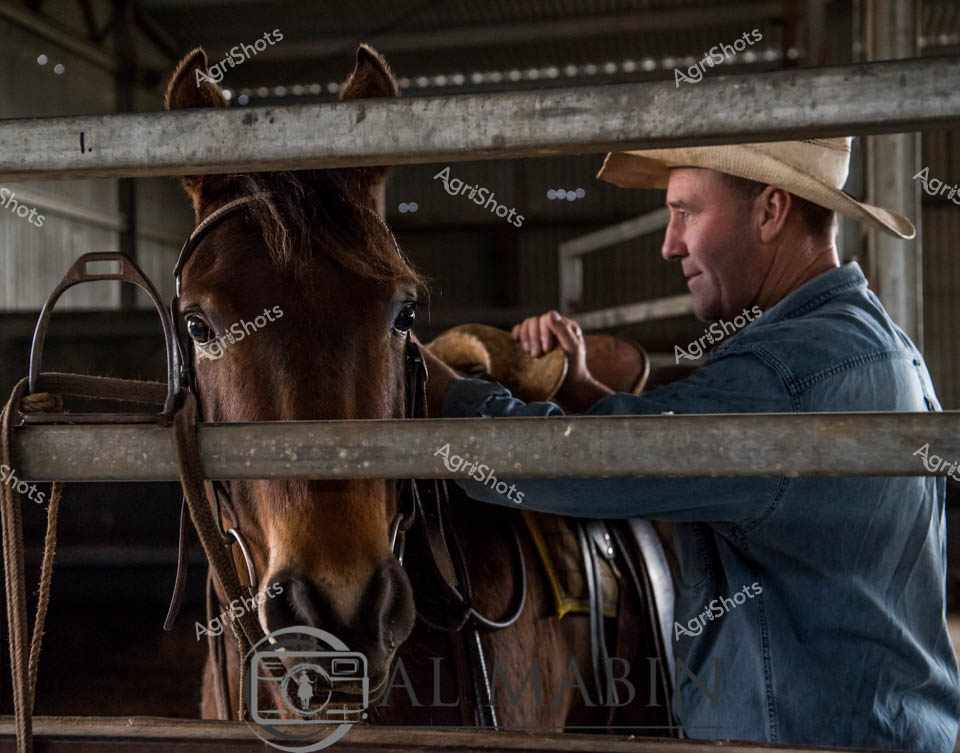
In the cool, shadowed interior of a rustic horse stable, a seasoned stockman in a weathered denim shirt and classic wide-brimmed Australian sun hat tenderly prepares his horse for the day's work. The rich chestnut-colored horse stands quietly, its deep brown coat gleaming softly in the filtered light, wearing well-worn leather tack that speaks to countless hours of mustering across rugged New South Wales pastoral landscapes. Muscular and alert, the horse maintains a calm connection with the stockman, their mutual trust evident in the gentle way he adjusts the bridle and checks the equipment. Sturdy metal railings frame the scene, reflecting the solid, practical infrastructure of Australian agricultural life, where precision and partnership between human and animal are essential to managing vast cattle stations. The muted blues and browns create a timeless atmosphere of quiet preparation, capturing the essence of rural work rhythms that have defined Australian farming culture for generations. Every detail - from the careful hand positioning to the horse's attentive stance - communicates the deep respect and professional intimacy between a stockman and his most trusted working companion.