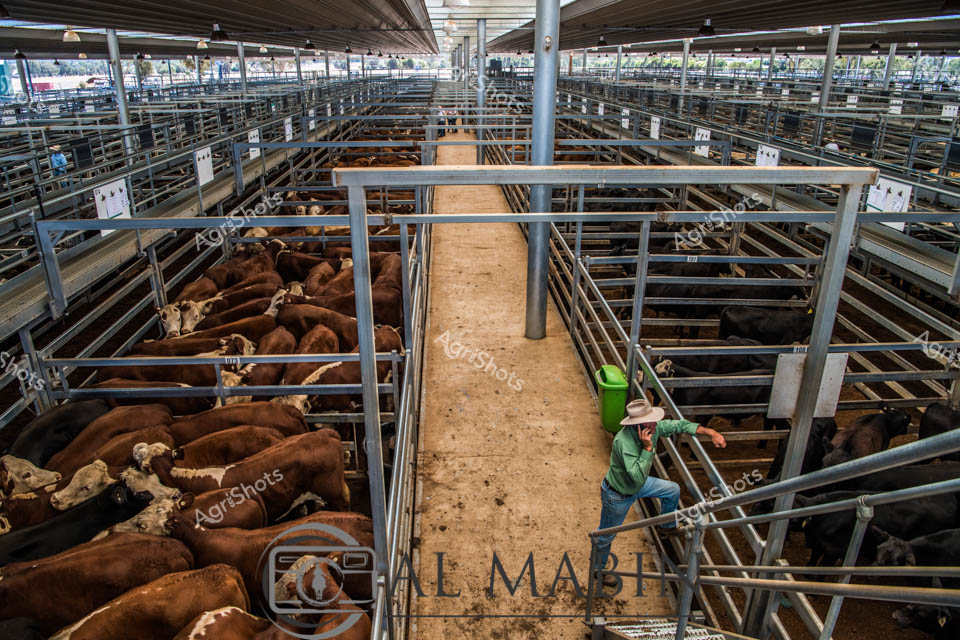
About this image
Corralled cattle stand shoulder to shoulder in neat metal pens at a bustling livestock sale yard, likely in the New England Region of New South Wales. A stockyard worker in a green shirt and wide-brimmed hat moves purposefully between the rows, navigating the narrow walkway separating dense groups of reddish-brown beef cattle. The expansive indoor facility features a grid of metallic fencing and support pillars, creating a systematic environment for agricultural commerce. Overhead lighting illuminates the sandy-colored floor and the varied tones of the cattle, from rich mahogany to lighter tan, highlighting their muscular frames and calm demeanor. This scene captures the rhythm of rural agricultural trading, where livestock are carefully sorted, assessed, and prepared for sale in a professional, structured setting. The methodical arrangement and controlled movement reflect the precision of modern cattle trading in Australian agricultural markets.
Similar media
 Image
Image
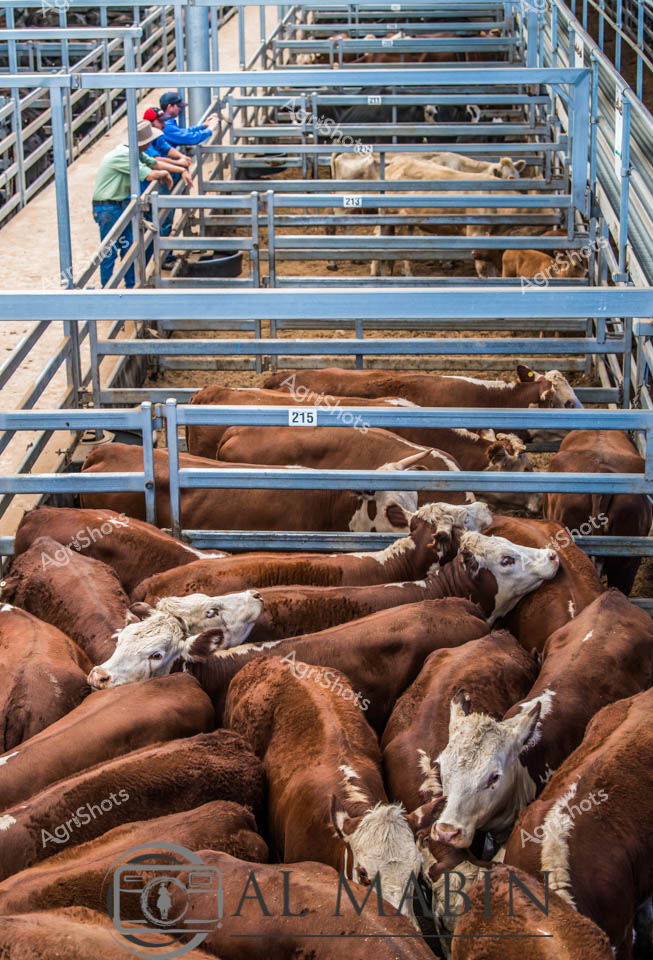
Hereford and mixed-breed cattle crowd tightly into numbered blue metal livestock pens at a regional sale yard in New England, New South Wales. The densely packed cattle - predominantly rich reddish-brown with white faces - huddle closely together, their muscular bodies creating a textured landscape of bovine forms. In the upper section of the image, agricultural workers wearing blue and green clothing sit observing the sale preparations, their postures relaxed yet attentive. Numbered pen tags (213, 215) indicate a systematic approach to livestock trading, highlighting the structured nature of rural agricultural commerce. The blue metal fencing creates geometric lines and divisions, contrasting sharply with the organic shapes of the cattle, while capturing the methodical process of livestock trading. This scene represents a quintessential moment in Australian agricultural commerce - a cattle auction where farmers, traders, and buyers converge to negotiate and trade livestock, embodying the economic heartbeat of rural agricultural communities.
 Image
Image
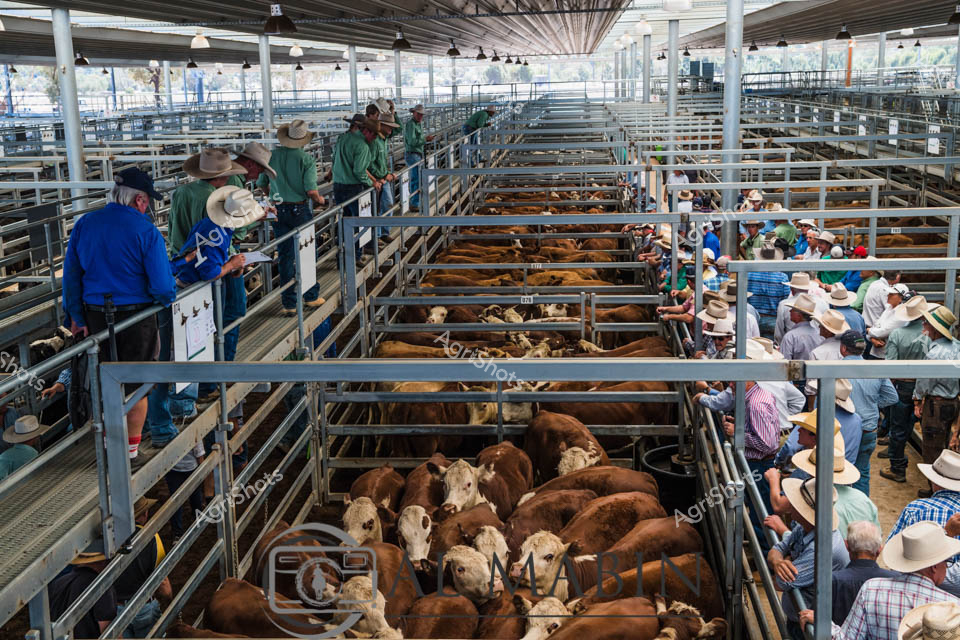
Cattle surge through steel-railed pens at a bustling regional livestock sale yard, capturing the dynamic heart of Australia's beef trading ecosystem. Rich auburn and cream-colored beef cattle cluster tightly, their muscular frames testament to careful breeding and pastoral management. Stockmen in classic Australian rural attire - wide-brimmed akubra hats, crisp work shirts in blue, green, and checked patterns - move purposefully along elevated walkways, monitoring the auction's progression. The industrial-scale steel infrastructure, with its precise grid of pens and overhead lighting, provides a stark mechanical contrast to the organic movement of livestock below. Buyers and agents cluster in small groups, their body language and positioning suggesting intense professional assessment of each animal's potential. This scene represents a crucial economic moment in Australia's agricultural supply chain - where individual beasts are evaluated, traded, and their genetic potential and market value determined through generations of agricultural expertise.
 Image
Image
SmartDairy's cutting-edge rotary milking shed captures the precision of modern Australian dairy production. Holstein-Friesian dairy cows stand transfixed in gleaming metal gates, their distinctive black and white coats contrasting against the industrial steel infrastructure. Overhead structural beams and massive circular mechanical components frame the sophisticated milking platform, which rotates slowly, allowing each cow to be efficiently milked in turn. The galvanized steel railings and high-tech SmartDairy monitoring equipment represent the pinnacle of agricultural technology, transforming traditional farming into a streamlined, data-driven operation. Soft filtered light bathes the interior, highlighting the clean, systematic design of this state-of-the-art dairy facility. Every element speaks to the careful balance of animal welfare and technological innovation that defines contemporary Australian agricultural practice.
 Image
Image
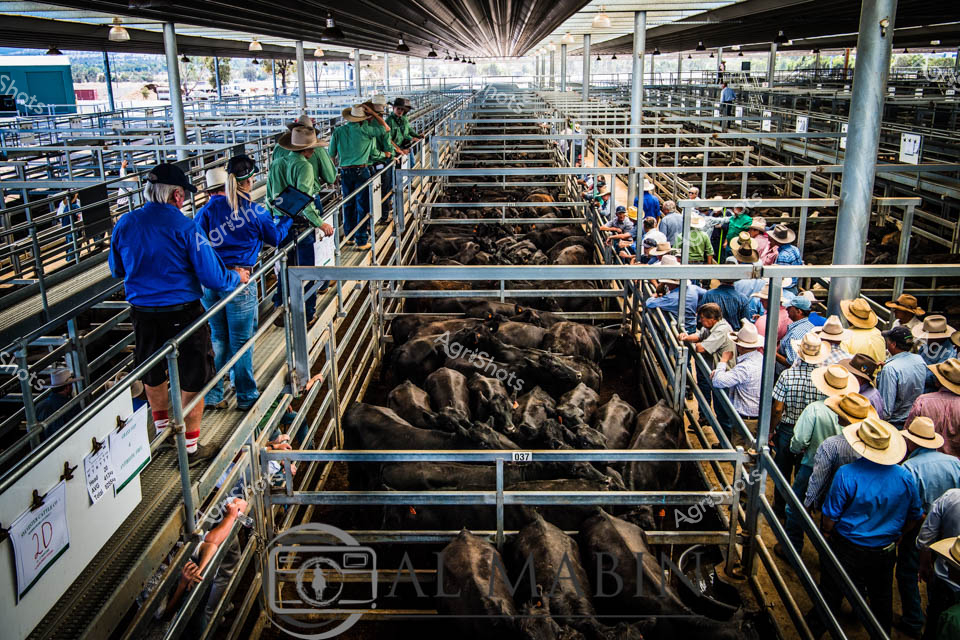
Australian cattle sale yards pulse with agricultural energy - a quintessential rural marketplace where livestock commerce unfolds. Black Angus cattle are densely packed into steel-railed pens, representing prime beef stock awaiting auction. Experienced agents and farmers crowd the elevated walkways, wearing a uniform of wide-brimmed akubra hats in earthy tones - green, blue, and straw-colored - scanning the livestock with practiced eyes. The industrial infrastructure of metal walkways and systematic pens creates a structured environment, with numbered sections and strategic viewing platforms allowing thorough livestock assessment. Natural light filters through the covered pavilion, highlighting the muscular frames and dark coats of the cattle, while the crowd's concentrated expressions reveal the serious business of agricultural trading. This scene epitomizes the critical connection between rural producers and market systems, capturing a moment of economic and agricultural significance in the New England region of New South Wales.
 Image
Image
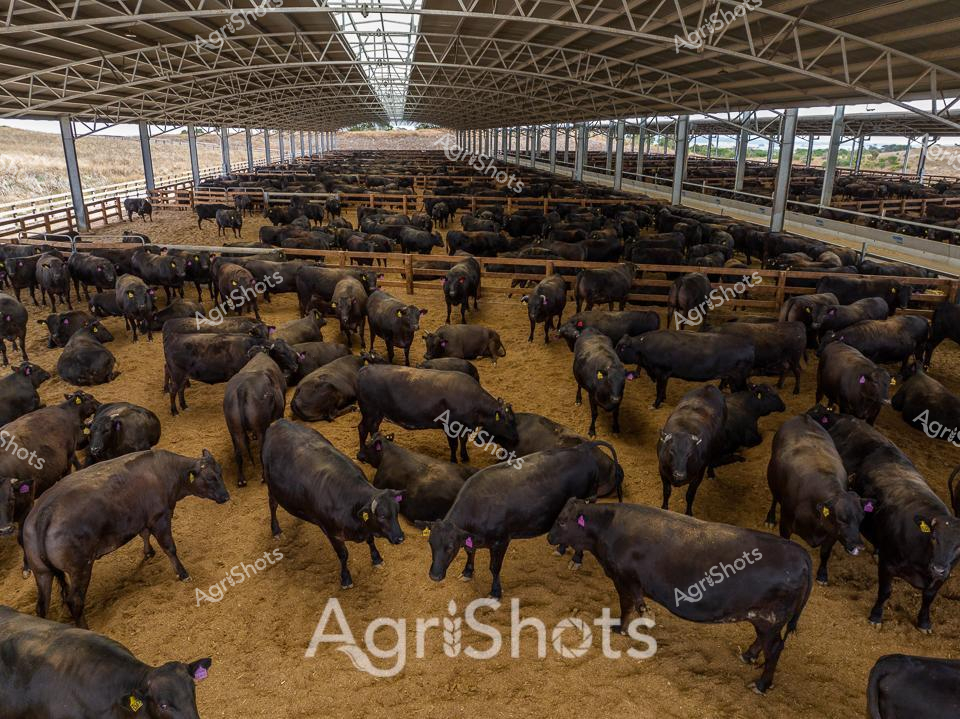
Black Wagyu cattle stand densely packed in a spacious, metal-framed feedlot with sandy ground, representing precision modern beef production in South Australia. The expansive indoor facility stretches long and uniform, with multiple pen sections housing dozens of muscular, dark-coated cattle with distinctive purple ear tags. Soft natural light filters through the high-arched roof, creating subtle shadows across the uniform dark bovine bodies, highlighting their robust musculature and sleek black coats. These premium beef cattle, renowned for their exceptional marbling and genetic quality, demonstrate the sophisticated agricultural infrastructure of Australian cattle farming. Each animal appears calm and well-conditioned, standing or resting on the carefully maintained sandy surface, representing the pinnacle of controlled livestock management. The geometric structural lines of the feedlot contrast beautifully with the organic forms of the cattle, embodying the intersection of agricultural engineering and animal husbandry.
 Image
Image
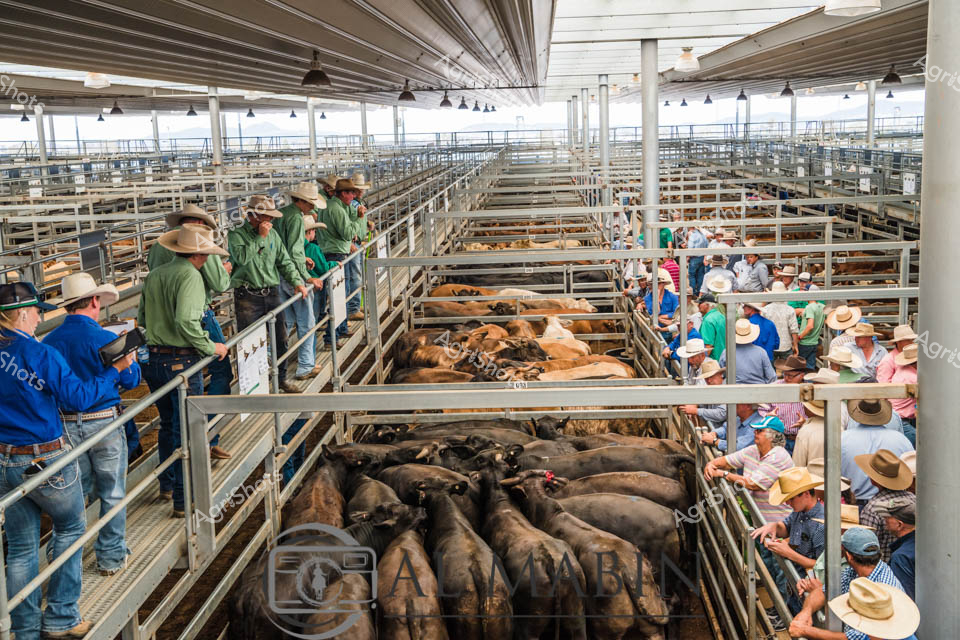
Australian cattle sale yards pulse with economic vitality as dozens of ranchers and livestock agents converge around densely packed cattle pens. Rich brown and black beef cattle cluster tightly in metal-railed holding areas, representing prime livestock ready for market. Stockmen wearing classic Australian rural attire - wide-brimmed protective sun hats in neutral tones, sturdy work shirts in greens and blues, and practical denim - stand observing and assessing the animals. The expansive indoor facility features multiple tiered levels with industrial metal infrastructure, overhead lighting, and strategic viewing platforms where agents can evaluate stock before bidding. This New England Region sale yard represents a critical node in Australia's beef production supply chain, where rural professionals conduct essential agricultural commerce. The scene captures a moment of concentrated professional assessment, with agents scanning herds, discussing potential purchases, and preparing for auction - a quintessential snapshot of Australia's robust livestock trading culture.
 Image
Image
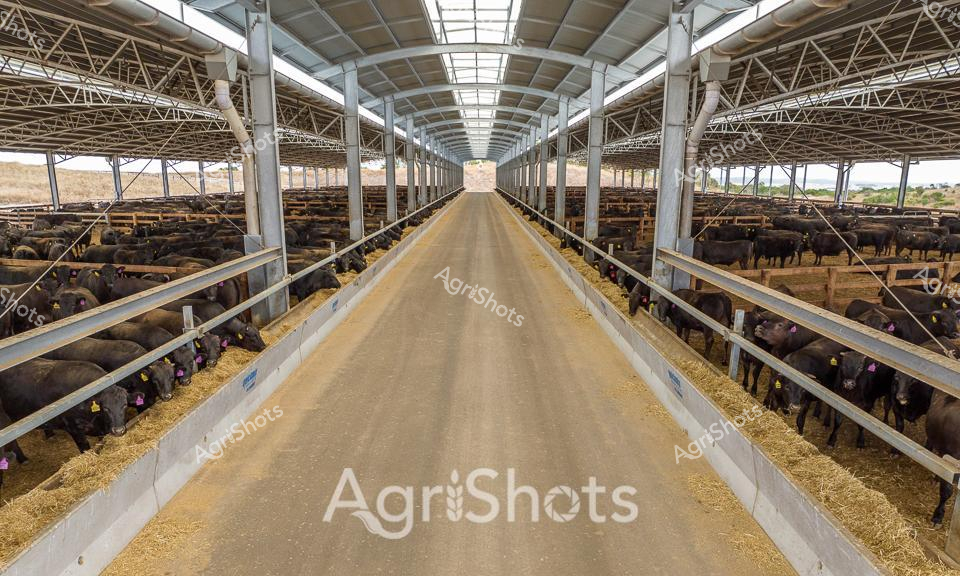
Black Angus and Wagyu cattle crowd the expansive steel-framed feedlot, nestled in the arid landscape of South Australia. Straw-lined concrete feed lanes divide neat rows of muscular beef cattle, each tagged with a distinctive purple marker, signaling careful herd management. Overhead, a sophisticated steel truss roof with translucent skylights provides ventilation and natural light, creating an engineered environment optimized for livestock performance. The cattle stand shoulder-to-shoulder, their dark coats gleaming, representing a pinnacle of agricultural precision where genetics, nutrition, and systematic husbandry converge. Soft natural light filters through the structure, casting long shadows and highlighting the uniform layout of this modern agricultural facility. This image captures the industrial scale and meticulous organization of contemporary beef production, where every element is designed for maximum efficiency and animal welfare.
 Image
Image
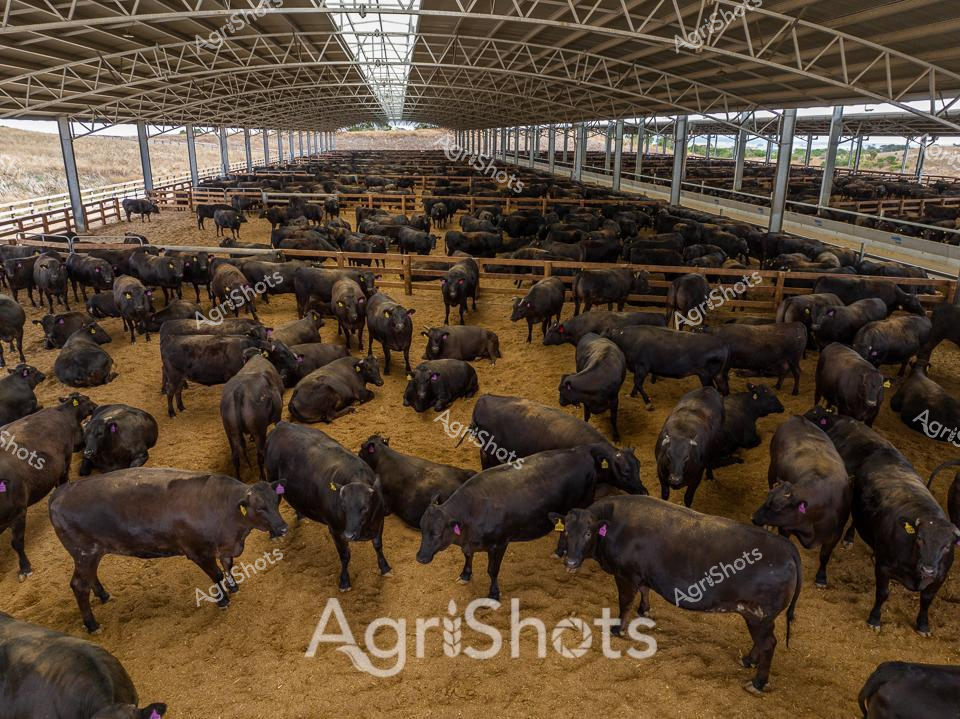
Black Wagyu cattle fill a massive, open-sided steel-framed feedlot facility, their dark, glossy coats contrasting against the golden sandy ground. Densely packed within wooden-railed pens, the muscular cattle stand and rest, their robust frames highlighting the premium genetic lines of this high-value beef breed. Yellow ear tags mark each animal, indicating careful livestock management and tracking protocols typical of modern agricultural operations. The structured steel framework of the feedlot provides comprehensive shelter, with natural light filtering through the high translucent roof, creating an efficient and controlled environment for cattle conditioning. These Wagyu, renowned for their exceptional marbling and meat quality, represent a significant investment in South Australia's premium beef production sector. The systematic arrangement of the pens, the uniform appearance of the cattle, and the clean, organized infrastructure reflect the precision and scientific approach of contemporary large-scale livestock farming.